Blog Post 215 – Recovering Magical Lore

Greetings!


In a recent discussion on our Patreon Discord channel, we had a really smart question from listener Fergus. He was noting that both Laine and I often mention bits of folk magic we remember from our families and wondered what we did to gather that lore. Broadly speaking, I think both Laine and I have been incredibly lucky in that as we discuss different magical practices and folklore, we are reminded of things from our childhood and upbringing that relate to magical topics at hand.


However, it’s not always an easy process to get at magical folklore from your family or your community. With it being Pride Month, we are often reminded intensely that many people are cut off from their families and from their friends and neighbors by prejudice and bigotry. That means that opening the doors to magical discovery can feel a bit like an impossible quest.


For others, they may have strong family bonds, but figuring out how to ask about magic specifically is hard because any use of that word (or “spells” or “witchcraft” or similar terms) will instantly get shut down due to deeply-held religious convictions or other social stigmas. (Also, please note that while I’m using the term “family,” the term “community” is just as relevant–your local social environment can provide a LOT of lore, as can any chosen family to which you belong).


So what’s a person to do when they want to learn more about their own magical history (which is important, because we often see huge problems arise when people try to nab someone else’s magical history or invent a magical history out of whole cloth)?


(image via Pixabay)


Thankfully, as I’ve been working on my upcoming book for Llewellyn, I’ve also been thinking about that question, and for one of my chapters I came up with some exercises that I think would be extremely valuable to anyone trying to recover community or family lore. The big trick? Don’t focus on the magic and make sure you listen. Here are some practical exercises you might be able to try:


1. Ask for stories. Don’t focus on magical stories, mind you, but instead stories from a person’s life. In particular, you might try spending time with elders from your family or your community, and seeing what stories they have to tell. Get them to tell you about what life was like  when they were growing up. Ask about their time at school, and what they remember about friends and neighbors growing up. Get them talking and truly listen to what they have to say. Write it down if you can (record it if they’ll let you, and donate that to a local  archive! There’s a magnificent resource for doing this sort of ethnographic interviewing available from the Library of Congress called Folklife & Fieldwork: An Introduction to Cultural Documentation, by Steve Winick and Peter Bartis at the American Folklife Center. The full text of it is available as a PDF here, and they often will mail you a print copy for no more than the cost of postage). Remember that these interviews are about building a relationship. Make it a habit to ask questions and take an interest in them and their life. Even if they say things you don’t always agree with, try to be generous in your listening and pay  attention to what emerges from these conversations. Over time, you’re going to find that there are stories that involve “a way of doing things” that doesn’t follow any rational structure, which is frequently an indicator of magical thinking and practice.


When I was growing up, one of the places I often visited with my Dad as part of his church choir duties was a local nursing home, and I found lots of people there who wanted to share their stories. I learned patient listening and got some good tales (and jokes) out of that, as well as making a few good friends, too.


2. Tell your own story. Get someone to interview you. Don’t think about the magical side of it or even focus on that part. Just let them ask questions about your life and the world you grew up in, and see what you say. Get them to record you, and listen back to your words  later (I know, no one likes hearing themselves played back, so pretend it’s someone else if  you must). Use the same prompts as in suggestion one above and see just where your  stories lead. You’ll likely surprise yourself with how many little bits of magic, superstition, and folk belief you uncover with this process. I once did an interview with someone for my Krampuslauf research involving their role as a musical participant. They later told me that my interview opened up a whole cache of experiences, memories, and family connections that they hadn’t been thinking about, and it was a powerful emotional experience. That research involved a parade, but uncovered a good bit of magical and ritual material as well, some of which emerged during interviews without me ever raising those topics.


3. Focus on specific folklore-rich topics. You’ll often find as you do interviews and discuss lore that there are key subjects that generate more magical lore than others (even if, or especially if you don’t actually mention anything about magic). Some of the best topics to ask about include:

These subjects frequently involve subtle forms of folk magic, or point you in the direction of magical lore.


(image via Pixabay)


4. Pay attention to how people in your community respond to issues of stress. While major life events are great fonts of lore for general customs and beliefs, the way people deal with  problems often involves a weaving together of rational and non-rational responses. Injuries, even something as small as a scrape on the sidewalk, often makes magic suddenly pop out in the form of a kiss or a gentle blow on the wound after the bandage is applied. How does the community or family around you respond when someone loses a job or faces a sudden loss? Are they turning to prayer? Are those around them doing so? Are they adding them to prayer lists, or giving them foods or objects of comfort? Do people trying to get a job have a lucky token they take with them to interviews? This is not an admonition to suddenly put on your social scientist glasses when you see someone suffering–far from it! Offering succor in times of strain is valuable, so if you can do so I encourage it, but also keep your eyes and mind open to what you can learn about the cosmology and enchantment in the world around  you in those moments.


5. Finally, visit your local library! Do some research! Go to the archives! Libraries, and by extension local historical archives, often have absolutely scads of records, documents, diaries, and books of lore tied into the community around you. Remember, your magical practices are not solely about kinship, but community, and your teachers and magical heritage come from the places and people surrounding you. Dig into local lore and legends, and see what they tell you about the landscape you see every day. Are there places reputed to be haunted or cursed? Spots where wonders have been observed, or local legends of people who might have had magical powers? I happen to live in Pennsylvania at the moment, and this state loves its history and archives, which in turn allows for a lot of lore recovery. The lovely Urglaawe community–a regionally-based Pennsylvania German Heathen group–has been able to rebuild an immense amount of its lore and practices through research and interviews. Check into the folklore collections housed at your library, and look for local lore in particular. Does the library have genealogical records you can look into to  find more information? Can you visit the places you read about, or even leave some flowers on the grave of an accused witch?


This is hardly a complete list of what you could do, but if you’ve been struggling with the ways you might get in tune with your own ancestral magic, consider giving these methods a try. I’ve been doing interviews for years now and my favorite thing about them is how often I find people want to keep talking long after the mic is turned off–we are a creature of narrative, and we love sharing stories. Remember that in no case should you approach this sort of research as an opportunity to exploit the people you talk to or study, but instead use these interviews and deep-diving inquiries to develop relationships and understand how you fit into your own magical (and cultural) landscape. You may be surprised just how rich it is.


Thanks for reading!

-Cory

Episode 145 – Glamour and Beauty Magic

Summary:
We’re talking about the ways folk magic gets used for purposes of beauty-enhancement and attraction this time. We start with a little game of folklore fear factor (sort of), then discuss things like magical bathing and weaving a bit of magic into your wardrobe. (Apologies for some occasional sound/editing weirdness in this one)
Please check out our Patreon page! You can help support the show for as little as a dollar a month, and get some awesome rewards at the same time.  Even if you can’t give, spread the word and let others know, and maybe we can make New World Witchery even better than it is now.
Producers for this show: Heather, WisdomQueen, Regina, Jen Rue of Rue & Hyssop, Little Wren, Khristopher, Tanner, Fergus from Queer as Folk Magic, Achija of Spellbound Bookbinding,  Johnathan at the ModernSouthernPolytheist, Catherine, Patrick, Carole, Payton, Staci, Debra, Montine, Cynara at The Auburn Skye, WickedScense, Moma Sarah at ConjuredCardea, Jody, Josette, Hazel, Amy, Victoria, Sherry, Tarsha, Jennifer, Clever Kim’s Curios, Donald, Jenni Love of Broom Book & Candle, & AthenaBeth. (if we missed you this episode, we’ll make sure you’re in the next one!). Big thanks to everyone supporting us!
Play:
 -Sources-
Our folklore game is largely based on lore taken from Harry M. Hyatt’s Folklore from Adams County. We also reference a couple of works and ideas by Laura Tempest Zakroff, including her idea of the “bathtub cauldron” in The Witch’s Cauldron and her discussion of tattoos in Sigil Witchery
 
Cory mentions glam witch Chaewon Koo’s “Witches & Wine” YouTube channel, and we briefly bring up our “Ritual of Gestures” episode.
In off-topic rambles, we also mention the recent MET gala, the excellent book Jitterbug Perfume by Tom Robbins, and a lady who just wants you to bathe in her milk (which, it turns out, are part of a performance art piece).
If you have feedback you’d like to share, email us or leave a comment. We’d love to hear from you!
Don’t forget to follow us at Twitter! And check out our Facebook page! For those who are interested, we also now have a page on Pinterest you might like, called “The Olde Broom.” You can follow us on Instagram or check out our new YouTube channel with back episodes of the podcast and new “Everyday Magic” videos, too (as well as most of our contest announcements)! Have something you want to say? Leave us a voice mail on our official NWW hotline: (442) 999-4824 (that’s 442-99-WITCH, if it helps).
Promos & Music
Title and closing music is “Homebound,” by Bluesboy Jag, and is used under license from Magnatune.
If you like us AND you like Buffy the Vampire Slayer, you will love our new show: Myth Taken: A Buffy the Vampire Slayer Podcast, now available through all the podcatchers!
Please think about checking out our Audible Trial program. Visit Audibletrial.com/newworldwitchery to get your free trial of Audible, where you can download over 180,000 titles (including some narrated by Cory). Your purchases help support this show, and there’s no obligation to continue after the free trial

Episode 144 – Southern Cunning with Aaron Oberon

Summary:
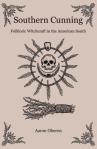
We’re talking about life as a swamp witch today with author Aaron Oberon! Aaron takes us through his work with “folkloric witchcraft” and the ways he both draws on his Southern roots and adapts them to meet contemporary needs. He’ll share his perspective on the Devil’s wife, making magical tools, and Queer identity in a Southern magical context.
Please check out our Patreon page! You can help support the show for as little as a dollar a month, and get some awesome rewards at the same time.  Even if you can’t give, spread the word and let others know, and maybe we can make New World Witchery even better than it is now.
Producers for this show: Heather, WisdomQueen, Regina, Jen Rue of Rue & Hyssop, Little Wren, Khristopher, Tanner, Fergus from Queer as Folk Magic, Achija of Spellbound Bookbinding,  Johnathan at the ModernSouthernPolytheist, Catherine, Patrick, Carole, Payton, Staci, Debra, Montine, Cynara at The Auburn Skye, WickedScense, Moma Sarah at ConjuredCardea, Jody, Josette, Hazel, Amy, Victoria, Sherry, Tarsha, Jennifer, Clever Kim’s Curios, Donald, Jenni Love of Broom Book & Candle, & AthenaBeth. (if we missed you this episode, we’ll make sure you’re in the next one!). Big thanks to everyone supporting us!
Play:
 -Sources-
You should definitely check out Aaron’s upcoming book, Southern Cunningavailable for pre-order! You can also find his work in the book Queer Magic and listen to him on the Broomsticks in the Bayou podcast.
Aaron’s work references the book The Silver Bullet by Hubert Davis, as well as an essay Cory wrote for Three Hands Press in the book Hands of Apostasy.
If you have feedback you’d like to share, email us or leave a comment. We’d love to hear from you!
Don’t forget to follow us at Twitter! And check out our Facebook page! For those who are interested, we also now have a page on Pinterest you might like, called “The Olde Broom.” You can follow us on Instagram or check out our new YouTube channel with back episodes of the podcast and new “Everyday Magic” videos, too (as well as most of our contest announcements)! Have something you want to say? Leave us a voice mail on our official NWW hotline: (442) 999-4824 (that’s 442-99-WITCH, if it helps).
Promos & Music
Title and closing music is “Homebound,” by Bluesboy Jag, and is used under license from Magnatune. Additional songs are “Dill Pickle Rag,” by The Joy Drops (via a CC Attribution license on SoundCloud); “Shady Grove,” by Doc Watson & Jack Lawrence (from the public Florida Folklife Collection); and “Out of Your League,” by Ninety Pounds of Ugly (licensed from Magnatune).
If you like us AND you like Buffy the Vampire Slayer, you will love our new show: Myth Taken: A Buffy the Vampire Slayer Podcast, now available through all the podcatchers!
Please think about checking out our Audible Trial program. Visit Audibletrial.com/newworldwitchery to get your free trial of Audible, where you can download over 180,000 titles (including some narrated by Cory). Your purchases help support this show, and there’s no obligation to continue after the free trial

Blog Post 214 – The Naked Witch

And ye shall all be freed from slavery,
And so ye shall be free in everything;
And as the sign that ye are truly free,
Ye shall be naked in your rites, both men
And women also: this shall last until
The last of your oppressors shall be dead;
-From Aradia: Gospel of the Witches, by Charles G. Leland

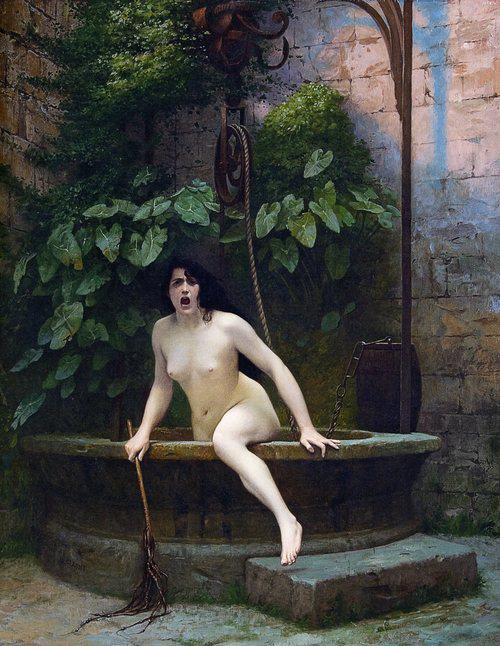
Truth Coming Out of Her Well to Shame Mankind, by Jean-Léon Gérôme 1896 [Public domain] (via Wikimedia Commons)

A lot of modern witchcraft intersects with our bodies. We expect to experience magic as a visceral force, dance ecstatically, use the remnants of bodies–both plant and animal–in our spells, or alternately slather or dab our bodies with magical concoctions to gain a little advantage in a harsh world. In particular, some branches of witchcraft religion, such as British Traditional Wicca, emphasize the importance of bodily acceptance and embrace the human body as a source of power. That power, according to Wiccan progenitor Gerald Gardner, is pulled from the freeing of an “electromagnetic field” by the removal of clothing (although Gardner did allow that he thought “slips or Bikinis could be worn without unduly causing loss of power,” for what that is worth (and please note, I’m not particularly taking Gardner to task here, nor disavowing the traditions he launched, but pointing out that his theories about nudity were influenced largely by his own ideas and experiences).


Recently, people engaged with magic–especially magic and ritual where engagement means contact with other people–have been raising their voices over systematic and ongoing abuse at the hands of elders and community members. Women and young people seem particularly vulnerable as targets of groping, unwanted pressure for sexual initiation, or having bodies simultaneously treated as sacred and sexualized as objects. I am not going to recapitulate the entire discussion of these abuses here, although I will highly recommend spending some time really processing posts like the tough-but-vital ones posted by Sarah Lawless in recent months. Her writing has been excellent and influential, and I have seen countless victims (including many men who experience abuse in neo-Pagan circles) step forward to talk about what has happened to them and insist that it stop (and stop it should!).


That is not my aim today, however, although my topic is tangled into the net of that discussion. I was curious about the role of the witch’s body, specifically the witch’s naked body, as a component of her power or her craft. I knew well the line from Leland’s Aradia quoted above, but I also know that Leland’s sources do not always speak to a broad experience (or even an historically verifiable one, although I value much of his work). Leland’s goddess insists that nudity is an unshackling from the bonds of slavery and a sign of freedom, and Gardner seems to have run with nudity as a liberating experience as well within his own coven. Yet we also see nudity being used to degrade witches, shame them, or force them into the role of living succubus or “red woman” seductress. Where does nudity fit into a New World magical practice? Are there precedents for nude practice, does nudity have any value in practical magic, and does nudity still matter today?


There are essentially two situations in which witches might practice nude in New World witchcraft: alone and in groups. However, even here there are some gray areas, because when a witch is “alone,” they are often not entirely alone. They may be meeting an Otherworldly entity for an initiation rite, for example, and be expected to offer their body up for sexual congress, or even a simple washing ritual. In Appalachian lore, however, the favors were not always sexual, as some initiation rites involved offering a literal piece of one’s body, where “the devil is granted your soul in exchange for some talent, gift, or magical power, it is thought that he then receives some gift of the body in return. This could be a fingernail or even a withered finger.”


Just as often, these initiation rites involve a solitary witch stripping bare, but only as a precursor to other solitary action: cursing or shooting at the moon or (more practically) wading into a river or stream to wash away a previous baptism in some symbolic way. The sexualization of the witch in these encounters is virtually nil, except as perhaps a titillating detail for the listener or a matter of practical necessity for the witch. The act itself is symbolic because the witch is abandoning a previous life–usually a Christian one–and the removal of clothing is much like the washing away of the baptism.


Other parts of the New World also held that witches might strip bare on their own as an abandonment of social order. That was the common perception in Puritan New England, where witches were believed to travel into the woods to meet with “devils” or “Indians” (who were sometimes regarded by European colonists as essentially interchangeable). The idea that witches practiced magic in the buff, however, varied immensely from place to place. Sometimes it is included as a detail in stories of hag-riding, for example, especially in cases where the witch needed to apply a flying ointment of some kind before taking off.


AnonymousUnknown author [Public domain] (via Wikimedia Commons)

Group rituals are often a mixed bag as well, since witches might work in conjunction with another witch at times or meet up with a number of other witches for special events (such as during Walpurgisnacht-type celebrations). In one Ozark story, a would-be witch undergoes her initiation when she “removes every stitch of clothing, which she hangs on an infidel’s [non-believer’s] tombstone.” This rite is witnessed by two other nude initiates, but the sexual congress is relegated solely to the witch and “the Devil,” and not any human initiates. One tale of a pair of sister-witches on Roan Mountain in the Smokies tells of two witches removing their clothing before greasing up and flying up the chimney, for example. Other accounts describe groups of women slipping out of their clothes–or more potently, their skins–before flying off to perform dances. Details of sexual congress appear in European accounts, but are often minimized in North American ones, and frequently even the more diabolical descriptions of group nudity tend not to emphasize sexuality. A number of African tales about witches do indicate that they might have traveled naked to do their work (which was often desecrating graves or hunting children, work that hopefully contemporary witches are not doing). In these cases, however, the nudity was often solitary and never sexual, as the emphasis was on the witch’s wildness and cannibalistic nature rather than her sexual one. I’d also note that in cases where groups of nude witches meet, they are often all one gender (with the exception being the presence of an Otherworldly figure like the Devil), and that when someone intrudes on magical nudity–as happens in the Roan Mountain story–that person is usually punished.


In Zora Neale Hurston’s Mules & Men, she recounts an initiation ceremony experienced at the hands of Louisiana conjure-man Luke Turner (who claimed a lineage with Marie Leveau). In that ritual, Hurston was indeed stripped of her clothing and required to lie on a couch with no food for three days while she waited for a spirit to claim her. Then she was carefully bathed and had a symbol painted upon her, and finally “dressed in new underwear and a white veil…placed over [her] head” after which no one was allowed to speak to her until the ritual was concluded. The nakedness here is again symbolic, but Hurston very much demonstrates that there is no sexual component to it. She is most powerful during the ritual when she is veiled, then eventually has the veil lifted and she is given a “crown of power.”


Some of the most sensational accounts that involve witchcraft-like practices and nudity are those that come out of places like New Orleans in the nineteenth and twentieth centuries or out of Europe in the early Modern period around the time of the Reformation and the Enlightenment. In both cases, one group sought to exoticize another group and ascribing their rituals with depraved sexual fantasies made the stories of witchcraft all the more thrilling (in the same way that many horror films use flesh to both allure and repulse). Simply reading the Malleus Maleficarum opens up a realm of psychosexual fixations that reflect far more on the priest writing the stories than on any reported activities of witches. Scholar Ronald Hutton links some of these concerns to the long entanglement of witches as magic workers to night-stalking demons like succubi, who stole semen from sleeping men and tormented them with sexual dreams. The New Orleans press, in a similar vein, frequently featured stories of “primitive” African American “voodoo dances,” in which scores of naked or nearly-naked black men would dance. The scandal of these stories would escalate–often with particularly dire consequences to the black men–when papers reported white women joining the dances, again often nude. In these sensationalized accounts, the stripping of the body was highly sexualized and often showed the readers of such stories that magic, witchcraft, voodoo, or other forbidden topics would inevitably corrupt those who came too close. Those who know much about Vodoun as a religion, however, know that nudity is not typical to the formal celebrations and rituals to honor the lwa or invite them into a practitioner’s body. Clothing is often very specifically a part of the rites, with specific colors like white being appropriate when performing music or dance or offerings to invite divine interactions.


As often as there are stories of witches removing clothing, there are stories of witches slipping their skins off entirely–something I imagine most witches today won’t do readily–or donning animal skins as a precursor to shapeshifting, as often happened with the skinwalkers of Dine/Navajo tradition. Such practices were also echoed by those who hunted witches, as in Zuni rituals designed to help cleanse a community of witches when witch-hunters wore bear skins to enable them to track witches wearing the skins of creatures like coyotes. It’s worth noting as well that in the Zuni world, many of the accused witches were men, and contact with them required a special water-cleansing ceremony in which those afflicted with witchcraft would be stripped and bathed.
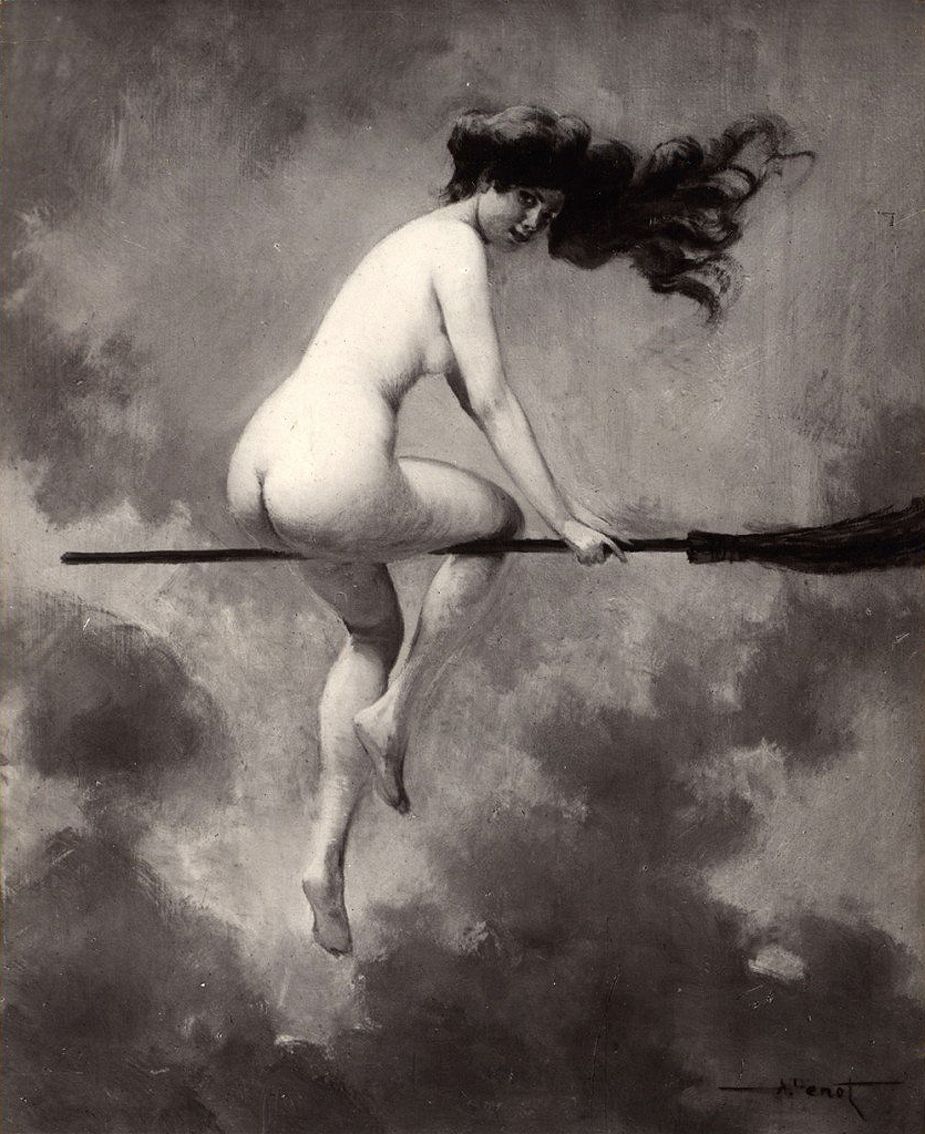
 

Albert Joseph Penot [Public domain] (via Wikimedia Commons)


So do witches go about in the nude? Absolutely. There’s no reason to think that they don’t. At the same time, do they have to go around in the nude? Absolutely not. Plenty of stories show witches putting on special clothing such as a fur or a veil in order to work witchcraft, and it does not seem to interfere at all with Gardener’s “electromagnetic field” (which, to be fair, even he conceded was not absolutely bound by clothing). Most crucially, except in sensationalized accounts, the nudity involved with witch stories is not particularly sexualized in the New World. There are many tales in which a magic worker might be bare but their nakedness is a symbolic act for them alone, and never an invitation for another person to violate their body. There are always exceptions, of course, but in most cases, we see examples like Hurston’s where a nude witch (or magical practitioner) is treated with extreme reverence and respect, rather than objectified for their body. Only when the nude witch is caught in the gaze of someone outside of her practice (and by someone untrustworthy) does her nakedness become a sexual problem, which seems to say much more about the one doing the gazing (and I, for one, am all for reviving a Euripedes-esque tearing asunder of those who would impose themselves on any gathering of witches in any state of undress).


Naked or not, the witch is powerful. Naked or not, the witch is not to be messed with. Naked or not, the witch does her work, and it is best to let her be.


Thanks for reading!

-Cory

References & Further Reading
  1. Breslaw, Elaine G., ed. Witches of the Atlantic World. NYU Press, 2000.
  2. Brown, Karen McCarthy. Mama Lola: A Vodou Priestess in Brooklyn. Univ. of California Press, 2011 ed.
  3. Courlander, Harold. A Treasury of Afro-American Folklore. DaCapo Press, 1996.
  4. Darling, Andrew. “Mass Inhumation & the Execution of Witches in the American Southwest.” American Anthropologist 100 (3), 1998. 732-52.
  5. Deren, Maya. Divine Horsemen: The Living Gods of Haiti. McPherson, 1998 ed.
  6. Gates, Jr., Henry Louis, and Maria Tatar. The Annotated African American Folktales. Liveright, 2017.
  7. Gardner, Gerald B. Witchcraft Today. Citadel, 2004 ed.
  8. Hurston, Zora Neale. Mules & Men. HarperCollins, 2009 ed.
  9. Hurston, Zora Neale. Tell My Horse: Voodoo in Haiti and Jamaica. HarperCollins, 2008 ed.
  10. Leland, Charles. Aradia: Gospel of the Witches. Witches’ Almanac, 2010 ed.
  11. Milnes, Gerald C. Signs, Cures, & Witchery. Univ. of Tenn. Press, 2012 ed.
  12. Paddon, Peter. Visceral Magic. Pendraig, 2011.
  13. Randolph, Vance. Ozark Magic & Folklore. Dover, 1964.
  14. Russell, Randy, and Janet Barnett. The Granny Curse and Other Ghosts and Legends from East Tennessee. Blair, 1999.
  15. Sprenger, James, and Henry Kramer. Malleus Maleficarum. Public Domain (Sacred-texts.com)
  16. Tallant, Robert. Voodoo in New Orleans. Pelican, 1984 ed.

Episode 141 – New Years Divininations Revisited

Summary:
We return to our divination workings from back at the beginning of 2018 to see how everything came together (or in some cases, didn’t). Then we throw some cards to see what the year ahead will bring.
Please check out our Patreon page! You can help support the show for as little as a dollar a month, and get some awesome rewards at the same time.  Even if you can’t give, spread the word and let others know, and maybe we can make New World Witchery even better than it is now.
Producers for this show: Heather, WisdomQueen, Regina, Jen Rue of Rue & Hyssop, Little Wren, Khristopher, Tanner, Fergus from Queer as Folk Magic, Achija of Spellbound Bookbinding,  Johnathan at the ModernSouthernPolytheist, Catherine, Patrick, Carole, Payton, Staci, Debra, Montine, Cynara at The Auburn Skye, WickedScense, Moma Sarah at ConjuredCardea, Jody, Josette, Amy, Victoria, Sherry, Tarsha, Jennifer, Donald, Jenni Love of Broom Book & Candle, & AthenaBeth. (if we missed you this episode, we’ll make sure you’re in the next one!). Big thanks to everyone supporting us!
Play:
 –Sources
We base a lot of this episode on the readings we did in Episode 122 – Divining the New Year. Some of the divination tools we used in that episode were:
This year we use some of the following tools:
Big thanks to listener Rorie for reminding us to do this episode!
If you have feedback you’d like to share, email us or leave a comment. We’d love to hear from you!
Don’t forget to follow us at Twitter! And check out our Facebook page! For those who are interested, we also now have a page on Pinterest you might like, called “The Olde Broom.” You can follow us on Instagram or check out our new YouTube channel with back episodes of the podcast and new “Everyday Magic” videos, too (as well as most of our contest announcements)! Have something you want to say? Leave us a voice mail on our official NWW hotline: (442) 999-4824 (that’s 442-99-WITCH, if it helps).
Promos & Music
  • Title and closing music is “Homebound,” by Bluesboy Jag, and is used under license from Magnatune.
  • If you like us AND you like Buffy the Vampire Slayer, you will love our new show: Myth Taken: A Buffy the Vampire Slayer Podcast, now available through all the podcatchers!
  • Please think about checking out our Audible Trial program. Visit Audibletrial.com/newworldwitchery to get your free trial of Audible, where you can download over 180,000 titles (including some narrated by Cory). Your purchases help support this show, and there’s no obligation to continue after the free trial

Episode 140 – Culture and Witchcraft with Lilith Dorsey

Summary
We interview author and blogger Lilith Dorsey about her recent response to an article on “Black witches” in The Atlantic, as well as the role traditions and pop culture play in shaping contemporary witchcraft and folk magic.
Please check out our Patreon page! You can help support the show for as little as a dollar a month, and get some awesome rewards at the same time.  Even if you can’t give, spread the word and let others know, and maybe we can make New World Witchery even better than it is now.
Producers for this show: Heather, WisdomQueen, Regina, Jen Rue of Rue & Hyssop, Little Wren, Khristopher, Tanner, Achija of Spellbound Bookbinding,  Johnathan at the ModernSouthernPolytheist, Catherine, Patrick, Carole, Debra, Montine, Cynara at The Auburn Skye, WickedScense, Moma Sarah at ConjuredCardea, Jody, Josette, Amy, Victoria, Sherry, Tarsha, Donald, Jenni Love of Broom Book & Candle, & AthenaBeth. (if we missed you this episode, we’ll make sure you’re in the next one!). Big thanks to everyone supporting us!
Play
 -Sources-
If you have feedback you’d like to share, email us or leave a comment. We’d love to hear from you!
Don’t forget to follow us at Twitter! And check out our Facebook page! For those who are interested, we also now have a page on Pinterest you might like, called “The Olde Broom.” You can follow us on Instagram or check out our new YouTube channel with back episodes of the podcast and new “Everyday Magic” videos, too (as well as most of our contest announcements)! Have something you want to say? Leave us a voice mail on our official NWW hotline: (442) 999-4824 (that’s 442-99-WITCH, if it helps).
 Promos & Music
Title and closing music is “Homebound,” by Bluesboy Jag, and is used under license from Magnatune. Additional song is “When,” by Anthony Salvo, also licensed from Magnatune.
Please think about checking out our Audible Trial program. Visit Audibletrial.com/newworldwitchery to get your free trial of Audible, where you can download over 180,000 titles (including some narrated by Cory). Your purchases help support this show, and there’s no obligation to continue after the free trial

Blog Post 213 – A 2018 Magical Media Retrospective Roundup

I read. A lot.

Who doesn’t like alliteration?

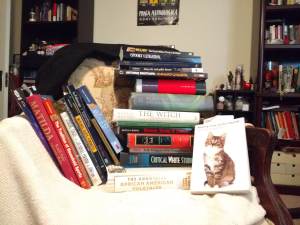
At the beginning of 2019, if you were following me/us on social media, then you saw me post a photo of a stack of books and a long list of everything I had read over the course of 2018. A number of the items on that list are books that I’ve not really had the time to review or discuss on the site or the show, or that would be worth revisiting because they’re so good. So today I’m doing a brief(ish) roundup of some of the magical media I liked best in the past year, particularly the stuff that relates to folk magic, folklore, and witchcraft (although I’m sure I’ll stray a bit here and there from the beaten path, but I have a feeling if I’m interested in something at least a few of you are, too). The year 2018 was a good one for magic and enchantment in the public eye (and in the right nooks and crannies of our own little folksy corner of the internet), so there’s a lot to recommend. I hope this is useful to some of you!


Books

When it comes to books, there were tons to choose from that made my folklorist/magical whiskers twitch. I’m going to divide this list into two categories: books about witchcraft and magic, and books about folklore that are probably of interest to people who read this site.

Witchy Books

  • The Witch: A History of Fear from Ancient Times to The Present, by Ronald L. Hutton – I reviewed this book professionally for the journal Western Folklore, and while I do have a few issues with it (Hutton sometimes pulls from anthropology in ways that don’t make sense or paints with some overly broad brushstrokes), for the most part I find this book gives a very comprehensive overview of the concept of “witchcraft” as it developed from Ancient Rome into contemporary times. The focus here is on Europe (and even more so on the British Isles), but it still offers insights into everything from shamanic practices to the cunning folk and the role that secularization played in fanning the flames of witch trials, so to speak. A solid, if sometimes dense, read.
  • Folk Religion of the Pennsylvania Dutch, by Richard Orth – There seem to be more and more books looking seriously at the Pennsylvania German cultural region, and some of them are seeing that the practice of magic (even if it isn’t called that explicitly) forms a piece of the greater patchwork of that culture. Orth, the director of the American Folklife Instituted, has written a book that takes a scholarly-but-not-dismissive look at the witchcraft and magic of the PA-Dutch and covers areas of interest ranging from the physical objects of deitsch magic to key figures like Mountain Mary. If you like learning about powwow and braucherei, this is absolutely a read for you.
  • Sigil Witchery, by Laura Tempest Zakroff – Zakroff has been on our show before and we’ve talked about her fresh and original take on both cauldrons and sigils, but I haven’t had time to do a full review on her book about sigil magic. My completely biased two cents? Buy it. Immediately. It was absolutely perfect for getting me thinking about magical symbols in new and creative ways, while still seeing them rooted to a variety of cultures that use them (without directly stealing anything from those cultures). Her latest release, Weave the Liminal, is also worth reading, although it’s a 2019 book so I will hope to do a full review later on.
  • Six Ways, by Aidan Wachter – I did manage to review this one on our site when it came out, so I reiterate here that this is a book worth reading, worth writing in, worth dragging with you outside under a tree, worth stuffing into your backpack or briefcase, and worth giving to others when you’re done. It’s a remarkably unique and resourceful approach to practical witchcraft rooted in Wachter’s own experiences, but written in a way to make the work he’s doing accessible for anyone. It will likely get you doing magic in different ways and discovering enchantment in things you hadn’t noticed before, and that’s a mighty accomplishment.
  • Besom, Stang, and Sword, by Chris Orapello and Tara-Love Maguire – More guests from our show doing great things! I made a point in my review of Besom, Stang, and Sword that it provides an eerie complementary text to Wachter’s Six Ways, because both are about a rooted practice building on an animistic understanding of the world. Orapello and Maguire open up their own traditional witchcraft practices here, and show the deep connections they have built up in their own spaces, while offering a reader so many (SO MANY!) good rituals and tools to do the same in their spaces. We’ll likely have them on to talk about this more, but it’s 100% worth reading.
  • Witches, Sluts, and Feminists, by Kristen Sollee – This one is less directly about practical witchcraft and much more about the role of witches in society. I don’t love Sollee’s somewhat fast-and-loose recounting of witchcraft history, but she does try to keep the roots of her discussion grounded in fact rather than sensationalism. She also makes some truly excellent points about the deep connections between women’s bodies, sexual identity, and the use of the labels “witch” and “slut” over time to exercise control over them. Her point? That women can and do take power from those labels eventually, and that witchcraft can be something that helps women exercise their personal authority in ways that rational, hierarchical systems can’t. It’s a lot of social theory rather than witchcraft-proper, but if you are into that line of thought you might find value in this one.


Folklore and Witchcraft-Adjacent Books

  • Border Lore, by David Bowles – We had Bowles on the show this year, and there are actually lots of books he’s written that I could recommend. I start with this one because Border Lore hits the right notes of folklore, magic, witchcraft, and storytelling for me. It talks about La Llorona and lechuzas, spooky roadside encounters and dances with the devil, and it’s a helluva lot of fun to read.
  • Every Tongue Got to Confess, by Zora Neale Hurston – This is a new-to-me collection that actually came out ten years ago, but it contains an immense amount of Hurston’s research and folklore work from her time in the Gulf States working for the WPA. She covers a lot of material, including plenty of stories about folk devils and witchcraft that would be worth reading for anyone who likes the things we do. As an added bonus, if you happen to be an Audible member, you can get this as an audiobook narrated by Ruby Dee and Ozzie Davis (which is an AMAZING combination).
  • The Annotated African American Folktales, edited by Henry Louis Gates, Jr. and Maria Tatar – If you know much about African American studies or folk and fairy tale studies, then the names of this book’s editors should have you rushing to buy it already. Gates, famous for his work on African American history (and his role hosting the PBS genealogy show Finding Your Roots) and Tatar, Harvard’s resident fairy tale expert, have compiled a tremendous collection of African American lore and added insightful notes on the stories. The magical lore isn’t extensive, but it’s there in the stories, and provides a strong sense of the cosmology that has been so influential on the American psyche for hundreds of years. An excellent addition to your library.
  • The Old Gods Waken, by Manly Wade Wellman – This was a recommendation from a listener and I was very impressed by it. In it, an Appalachian bard and a Native American shaman have to save a folklorist and her love interest from a family of New World druids (why do folklorists always get into these kinds of scrapes?). There are lots of folk magical tidbits mixed in, and the story (it’s fiction, by the way) is generally fast-moving and compelling, with a real flavor of Appalachian language in the text.
  • Who by Water, by Victoria Raschke – This is the first in a trilogy of books set in Slovenia and in it an expat named Jo Wiley suddenly discovers a dormant power to speak with the dead, including her mother and her murdered lover. This leads her on a quest through Slovenian myth and mystery as she evades people–and forces–that fear or want to use her power. It’s engaging and fun, and exposes you to an area of the world you might not know much about in a way that feels exciting. Definitely worth it!


Movies, TV, and Other Media

This section is a bit of a catch-all, in that the recommendations here are more connected to things I’ve watched and enjoyed, although there’s also at least one book in this category, too (and some of the TV shows have double-lives in print and screen, but that will make more sense in a moment). I don’t expect everyone to agree with me on some of these, but I do think all of these are worth watching and forming your own opinion about.


  • Hilda (Netflix Original Series) – My family and I fell in love with this series and are hungry for more when it comes back later this year. It’s about an impetuous girl in Scandinavia who must move to the city of Trollberg with her mom after they lose their house in the distant countryside. Hilda (the girl) has always been good at relating to the strange creatures around her, including giants, trolls, woffs (flying dog-like puffballs), and elves (who love paperwork more than anything). There is so much magic in this series, and it’s beautiful. We also have devoured the graphic novels by Luke Pearson the series was based upon, and found that they often have even more wonderful lore in them. This is one of my highest recommendations.
  • We Don’t Go Back: A Watcher’s Guide to Folk Horror, by Michael D. Ingham – Okay, this is also a book, so why is it here in media? Mostly because it is a book about film and television that any fan of the uncanny, bizarre, magical world that haunts us would like to watch. Ingham’s book is wonderful not just in the way it offers a reader a chance to discover so many unknown gems of cinema and TV that fit the “folk horror” category, but in the way the author makes no bones about the stuff that doesn’t work, is generally terrible, or exploits people in some way. At the same time, his recommendations are rooted in a deep appreciation of the genre and a love for the rural and urban weirdness that fascinates so many of us. What is folk horror, by the way? It’s a genre that deals with strange mysteries and hidden pagan pasts intruding on our modern (and often ill-equipped) world. If you like films like The Wicker Man or Pan’s Labyrinth, you will probably get some good new things to add to your watch list out of this book.
  • The Chilling Adventures of Sabrina (Netflix Original Series) – Really, this is probably the most controversial inclusion here. If I’m honest, it took me about seven episodes to enjoy this series, and even then I’m not sure I really love it in the way some people do. It’s problematic and messy at times in the way that a number of teen dramas can be, and it really, really digs into the trope of the Satanic witch in ways that will put some people off. The cosmology behind it, however, makes sense if you think of this as a show that says “What if the Puritans were right and Satanic witches were around all along? How would their society have evolved alongside (or under) our own?” It’s not a perfect show, and frankly I got a lot more pleasure out of reading the comics upon which this new Sabrina reboot is based, but I don’t judge it as harshly because it is still baby-stepping its way forward and taking risks while it does so. After all, if I judged Buffy by its first season alone, I don’t think I’d ever have thought twice about it. I want to give this series more of a chance and hope it finds its feet, because there really is some good stuff in here, so I’m including it here with a tentative recommendation (and a huge grain of salt with which to take many of its more off-putting elements).
  • Hereditary (Film, A24 Studios) – This one is likely to be a bit controversial as well. You will either love or hate this film, and either way I completely understand why. The story follows the strangely cursed lives of the Graham family, including artist mother Annie (Toni Collette) and doting-but-often-clueless father Steve (Gabriel Byrne). When their daughter, Charlie (Milly Shapiro) begins to have eerie visits from Annie’s dead mother, things go from bad to worse, and the family soon finds itself in the clutches of a generational curse brought about by familial witchcraft associations. It can get really gruesome at times (and I mean stomach-turningly so), but the effect of impending dread and the way magic is presented here both worked for me. Things are seldom completely flashy, but rather almost grind forward in a relentless advance, and that makes the ending (as strangely mysterious and confusing as it can be) feel like a breath of relief. One that makes you almost feel guilty for taking it.
  • Errementari: The Blacksmith and the Devil (Film, Kinoskopik) – Based on a folktale with iterations found around the world, this Basque film tells the story of a blacksmith whose deal with the devil (in actuality not the Devil, but a devil) leads to a twisted road of consequences, horror, and bloodshed. The folk roots of this story are done beautifully, and it’s gorgeous to watch. It is in the Basque language, but there are English subtitles as well. It’s available on Netflix and I definitely enjoyed watching it.


Whew! That’s seriously a LOT of magic to pack into one year, right? And I’ve actually only just scratched the surface! There are tons of things I’m missing here (including the Charmed reboot, which I’ve watched a bit of and mostly enjoyed so far, as well as the Hulu original show Light as a Feather, which I liked a bit less). I have a feeling that we’ll be seeing a lot of magical media coming out this year, too, and I’m hoping to keep on top of it and share recommendations as much as I can.

What about you? What enchantments did you brush up against or bump into (or run full tilt towards) in 2018? What are you looking forward to in 2019? Let us know by email, social media (Facebook, Twitter, and Instagram are our top public spots), or in the comments below!

Thanks for reading!

-Cory

Sneak Peek: Myth Taken Episode 0-0

Hello everyone!

We mentioned in our last show that we would be launching a new podcast soon, and today we’re getting the first episode out there! It’s called Myth Taken: A Buffy the Vampire Slayer Podcast, and you can probably guess what our main subject will be. This really is just an introduction to us, but we also talk about how we’ll be approaching the series, so if the Buffyverse interests you, check it out and see if you want to tag along with us as we delve into Buffy, bad puns, good stories, weird monsters, folklore, mythology, mixed metaphors, and wild tangents.

Also, don’t feel any obligation to subscribe to the new show if Buffy isn’t your thing. We totally get that, and we won’t be sharing all that much about it on the New World Witchery site. So if you’re here for the folk magic and the Buffy stuff is not your cup of blood-and-Wheetabix, no worries!

Okay, on to the show notes for this one!


Summary

This is our first episode, so we introduce ourselves and let you know a little bit about us and about where we’ll be coming from in terms of the show.

Listen

Download: Episode 0-0 – Introductions

Play: 

Links

This is where we’ll usually share any relevant links for the episode. This time around, we’d recommend you check out:

  • New World Witchery – Our other podcast on folk magic in North America
  • Buffy on Hulu – In case you need to watch the episodes (we don’t get anything from recommending Hulu, they just tend to have good versions of the episodes)
  • Still Pretty – One of our other favorite Buffy shows
  • Buffering the Vampire Slayer – One of our other OTHER favorite Buffy shows

You can follow us on Twitter or Facebook for now (more social media will be coming soon).

You can also always email us with your thoughts, questions, and ideas! We love hearing from you!

Music

Music for this episode is “Digging a Grave,” by Shadows from the Underground, and is used under license from Magnatune.

Episode 138 – A New Year and Magical Self Care

Summary:

We look back at 2018’s witchy highlights and talk about some of our upcoming projects for the new year, then discuss folk magical approaches to self care for the new year as well.


Please check out our Patreon page! You can help support the show for as little as a dollar a month, and get some awesome rewards at the same time.  Even if you can’t give, spread the word and let others know, and maybe we can make New World Witchery even better than it is now.


Producers for this show: Heather, WisdomQueen, Regina, Jen Rue of Rue & Hyssop, Little Wren, Khristopher, Tanner, Achija of Spellbound Bookbinding,  Johnathan at the ModernSouthernPolytheist, Catherine, Patrick, Carole, Debra, Montine, Cynara at The Auburn Skye, WickedScense, Moma Sarah at ConjuredCardea, Jody, Josette, Amy, Victoria, Sherry, Tarsha, Donald, Jenni Love of Broom Book & Candle, & AthenaBeth. (if we missed you this episode, we’ll make sure you’re in the next one!). Big thanks to everyone supporting us!


Play:

Download: Episode 138 – A New Year and Magical Self Care

Play: 


 -Sources-

Huge thanks to everyone who made 2018 so wonderful! We had a great year with over twenty total episodes, plus lots of fun bonus stuff as well.

Cory mentions a few of his favorite books from the past year, which includes several books by Laura Tempest Zakroff (who we interviewed last year), the book Six Ways by Aidan Wachter, and Besom, Stang, & Sword by Chris Orapello and Tara-Love Maguire. He also mentions loving the Hilda series on Netflix and the graphic novels it’s based upon, and there’s a little bit of discussion of the Chilling Adventures of Sabrina as well. Laine mentions American Horror Story: Apocalypse as another good witchy show for the past year.

In the realm of magical self care, Laine draws from Cunningham’s Earth, Air, Fire, & Water. Cory is largely drawing from folklore related to magical cleansing rites and cutting and clearing away negative influences in your life, which have been the focus of several articles on the site, including:

If you have feedback you’d like to share, email us or leave a comment. We’d love to hear from you!

Don’t forget to follow us at Twitter! And check out our Facebook page! For those who are interested, we also now have a page on Pinterest you might like, called “The Olde Broom.” You can follow us on Instagram or check out our new YouTube channel with back episodes of the podcast and new “Everyday Magic” videos, too (as well as most of our contest announcements)! Have something you want to say? Leave us a voice mail on our official NWW hotline: (442) 999-4824 (that’s 442-99-WITCH, if it helps).


 Promos & Music

Title and closing music is “Homebound,” by Bluesboy Jag, and is used under license from Magnatune.


Please think about checking out our Audible Trial program. Visit Audibletrial.com/newworldwitchery to get your free trial of Audible, where you can download over 180,000 titles (including some narrated by Cory). Your purchases help support this show, and there’s no obligation to continue after the free trial

Blog Post 212 – Book Review: Besom, Stang, and Sword by Chris Orapello and Tara-Love Maguire

If you listen to Down at the Crossroads (and you should, in fact, listen to that show, as it taps into some great magical wisdom and practice), you will find yourself quickly saying, “I know that rite!” when you get to Chapter One of Besom, Stang, and Sword. That is, of course, no accident, as the hosts of the podcast and the authors of the book are one and the same. Chris Orapello (going by Christopher Orapello in the book’s byline) and Tara-Love Maguire are already well-known to the magical community, but they have been weaving spells over the years that many of us are only just now seeing as the book emerges to laud and praise. That praise is rightly bestowed, as this book does a phenomenal job of conveying a real sense of the couple’s locally-rooted magical tradition while also inviting any and all readers curious about where to start with traditional witchcraft in a modern world to join them for a cup of…well, best not question the proffered cuppa too much.


With Besom, Stang, and Sword, Chris and Tara open the doors to their own practices, laying out the materials of magic for all to see. The results drive home the central point that magic—specifically witchcraft—is available to anyone, but that it requires time, effort, patience, and thought along with a dose of fate and a sizable amount of risk. They build a hexagram of approachable practices that asks anyone picking up this work to root their magic in the land surrounding them and their own personal history, rather than taking secondhand sorcery from others. Chris and Tara reveal their Blacktree tradition without pretense or artifice, but instead with clarity, insight, and acid wit, which testifies to their talents as both seasoned occultists and engaging writers. This is a book that will reshape a reader’s encounters with magic and the landscape around them. They make the point that the landscape is “hidden,” but not in any sense inaccessible. No, the landscape is there, has always been there, waiting to teach you, they say. All you need to do is take a breath and pay attention to the “flutter in the gut coming up through your own roots…and you will automatically know if the land there welcomes you with a friendly warmth, or if it is repulsed and angry at your intrusion” (158). That immediate connection to your surroundings defines the Blacktree tradition and the approach Orapello and Maguire take to all magic–it must be rooted and connected, but it must also have the freedom to grown in its own way (indeed, one of their crucial variations upon the Witches’ Pyramid is the addition of the dictum, “to grow”).


The book is broken into twelve official chapters (with an Introduction serving as the thirteenth member of their verbal coven). Each chapter lays out some fundamental aspect of their practice, complete with spells and rituals, incantations, tools, and techniques that they have tried and tested in their own lives. Within the first few chapters, you are creating a ritual cord, crafting a witches’ broom (the titular “besom”), acquiring a (genius loci-approved) Token of the Land, and raising an ancestral altar. Chapters conclude with a highly selective and generally very thoughtful “further reading” list to guide you deeper into topics that spark your interest the strongest, thus creating a practice rooted in history and the experiences shared by others but never restricting your own exploration and creation of magic. Techniques build upon one another–you access the Hidden Landscape of Chapter Seven by using the above-mentioned Token tool created in Chapter Two, for example. At the same time, once you read the first chapter of the book, the rest is generally readable in any order, and your own interests can guide you to the methods and tools they use in a winding, crooked path through traditional witchcraft (and the reference to Peter Paddon there is very much intentional, as his spirit lingers in many of the pages of this book). They draw influences from Robert Cochrane, Michael Howard, and Nigel Aldcroft Jackson, while also incorporating research from academics like Éva Pócs, Carlo Ginzburg, and Emma Wilby, giving it intellectual roots that run deep and hold tight.


In some ways, the book smirks a bit at tradition, too, by revising or reinventing it. One prime example is the way Orapello and Maguire reconfigure runes, pentagrams, and the oft-spun “wheel of the year” found in so many books on modern magical religion. There are frequent repetitions of sixes within the work: six points on their version of the World Tree (the Black Tree); six key ideas within the Witches’ Hexagram (to know, to will, to dare, to be silent, to go, to grow); six key holiday points in the annual cycle (leaving off the equinoxes in their version). Besom, Stang, and Sword bears some resemblance to Aidan Wachter’s  recent book Six Ways in that respect, but the two books approach the topic of witch-work differently. Wachter’s book looks inward to the author’s personal experiences and years of practice immersed in a sort of background radiation of magic (the “Field” as he describes it) and draws out a series of universalized principles, weaving them into the acts of breathing and the sound of poetry. Orapello and Maguire turn their own experiences into tools through which a magical practitioner connects their personal experience of enchantment to the very real and immediate landscape around them. That’s not to say either book is “right” or “wrong,” but rather that they have an almost eerie synchronicity in their approaches. They complement each other beautifully. Both demand real, dirt-under-the-nails work. Both honor tradition while also practicing the art of reverent improvisation based on particular circumstances. Tradition is not discarded here, but re-imagined in a way that takes it out of the past and situates it in a living, thriving continuum of practice.


Besom, Stang, and Sword combs through the materials of modern life and shows the reader how and where to poke to raise the dragons of sorcery wisely and well. One particularly memorable moment in the book guides the reader through the orgiastic sabbatic rites of the modern dance club and ties them to Dionysian revels while not attempting to diminish the ecstatic frenzy of either the rituals of Ancient Greece or the Saturday night sweat-and-sex of the discotheque (they thankfully do not use the word discotheque, by the way). As they build their own calendar of lunar magic with a Crow Moon in March or a Cricket Moon in August, they also make a subtle note that in a world continually being shaped by human influence on climate change, those moons may change as well. There are echoes of Peter Grey’s Apocalyptic Witchcraft here, but they do not dwell on witches as midwives of death and rebirth on a planetary scale. Instead, they show you how to root the adaptations you make to your own experience of the moon in your immediate landscape, even as that landscape shifts around you.

From the east, I go to west.

About to north.

And then to south.

Crossing roads as I go about.

Laying the ground for a witch’s work.

Down at the crossroads is where I vow,

To meet with she and he and they and thou


You’ve been greeted with those words for years in Chris Orapello’s lovely baritone if you’re a listener to the show he and Maguire have worked so hard on. The spell they weave is real, and as they lay each of their tools–a broom, a staff, and a blade–down across one another, they create six points, a star, a tree, a crooked path, a serpent, a year… They make a crossroads for you in this book, and then show you how to build your own. They meet you in the pages, and you get a very real sense of who they are and what they do, but then they send you off on your own way to make some witchcraft and lay some ground for others. They uncover a hidden landscape and in doing so, call up more mysteries than you could ever solve (but you’ll have great fun trying). They give you magic that works in a moonlit forest, a city full of humming concrete, a farmstead a century ago, or the flooded coastal plains of tomorrow. Besom, Stang, and Sword also creates a rune with roots running deep and branches that reach for the sky. Let it work its spell on you, and you will see traditional witchcraft in new ways every day.


I hope you enjoy reading the book as much as I did, and thank you for stopping by and reading this review!

-Cory


*[Full disclosure: I received a copy of this book for review and as a potential endorser, and part of this review has been used in the opening endorsements of the book. I will also note that the authors are personal friends of mine. Chris and Tara did not pressure me for an endorsement, and I am proud to recommend their work, but in the interest of being completely transparent I wish to include this note]