Hi folks! Just a brief update about some online course we’ve put up for Summer 2026.
It’s time to book your trip to witchy and magical summer camp! We’ve got a few courses coming up that may be of interest to those of you with a yen for folk magic. We’ll be offering one of our multi-session classes on cartomancy as well as a few one-off classes on specific folk magical topics. We’re going to be offering the following classes over the course of July and August:
54 Devils – July 2026 Cartomancy Class (July 12th, 19th, and 26th). This is a three-session course that teaches you the lore and practice of using playing cards for divination. You get access to the live sessions, video recordings, online classroom, bonus materials, and more! ($64 for non-Patreon members)
Wicked Games: Occult Games and Supernatural Play(Wed. July 1st at 8pm). This one-session class looks at the history and lore of supernatural games as we explore divination games from the past five centuries. Includes live session and online classroom access, downloadable slides, and more! ($13 for non-Patreon members)
Killing the Moon: Witchcraft Initiations in Folklore(Wed. July 15th at 8pm). We look to folklore to see what makes a witch become a witch, including rituals, tools, familiars, and more. Includes live session and online classroom access, downloadable slides, and more! ($13 for non-Patreon members)
A Dimpled Chin and the Devil Within: Magical Body Lore(Wed. August 5th at 8pm). We’ll look to the human body for its many magical applications, including divining by body markings, folk palmistry, the lore of bodily fluids, and even corpse lore. Includes live session and online classroom access, downloadable slides, and more! ($13 for non-Patreon members)
The classes all run about 90 minutes long with time for Q&A at the end of each session. Those who attend live can participate in the in-class Q&A, but even if you can’t make the date you get the video recording and online classroom access to ask your questions there. Plus each course comes with downloadable bonus materials like slides or PDFs to help you learn.
The 3-session cartomancy course is $64, and the single-session courses are all $13 each. You can purchase them by following the link in our bio and clicking on “Classes, Workshops, and Events” or find them on our Patreon page at patreon.com/newworldwitchery.
Looking forward to sharing folk magic with you soon!
For those who are interested in attending the upcoming 54 Devils Cartomancy Class but who may not be able to do so for financial reasons, we have a solution!
We’re offering a lottery-style scholarship to five (5) people that will let you attend the course for free. There are a few general conditions you’ll need to be able to meet:
You must be able to attend at least the first live session (on July 7th from 7-9pm Central Time). You can do the video recordings for the last two if you need to, but are highly encouraged to attend all live sessions.
You must be able to access the Google classroom independently (have your own Google account) and agree to not share the information from the class with anyone outside the class without express written permission.
You must abide by class rules which will be sent out to all students (of course).
You are requested to participate in at least half of the discussion posts in the Google classroom.
I would very much like you to fill out the end-of-course survey as well!
With this you’ll get access to the class, a digital copy of 54 Devils, and all the bonus content that comes with the course, too.
We’ll pick five random winners from the pool of applicants by Sunday, July 6th, and contact you via email with further information (please make sure to enter your email address correctly when you apply). You do not have to disclose any financial information to be eligible for this scholarship, either.
If you’d like to apply, just fill out the Scholarship Application by no later than midnight on Friday, July 4th!
Have you ever wanted to learn practical cartomancy (fortune-telling with playing cards)? Well here’s your chance!
We’re running a 3-class course on card reading (and more) and you can sign up at our website! Link in bio or visit http://www.newworldwitchery.com
Greetings all!
As some of you may know, Cory wrote a book some ten-plus years ago called Fifty-four Devils: The Art and Folklore of Fortune-telling with Playing Cards. Last year, he released the Tenth Anniversary revised edition, which expanded the original text to include more depth on readings, revised options for non-binary readers and clients, ways to read playing cards in conjunction with other divination methods, and even some guidance on spellwork with cards!
Early in 2025, Cory also test-ran a three-session cartomancy course for New World Witchery Patreon supporters, which got some great reviews!
Cory Hutcheson’s The Fifty-Four Devils cartomancy course was a delight from start to finish. Cory is a very knowledgeable and experienced playing card reader who has devised a method that is simple, effective and practical. He also teaches the system in a clear and engaging manner with lots of humor and charm. Besides learning the card reading system, you get history, folklore, mythology, and magic! It is a great way to expand your cartomantic reading skills -Karen C.
So now we’re opening that course to the public! Here’s the details:
Dates: July 7, July 14, July 21 (Monday evenings 7pm-9pm Central Time) – All classes are held by Zoom and recorded so if you miss one you’ll be able to watch it later
Cost: $64 per student*. That includes:
Three live and video-recorded sessions covering the history, folklore, and practice of playing card cartomancy
Access to our online classroom which will include discussion forums, practice prompts, no-pressure quizzes to self-check your learning progress, and more!
A copy of the e-book version of the Tenth Anniversary Edition of Fifty-four Devils
Additional bonus materials like video sample readings and printable PDFs
How Do I Register?
Good question! All you need to do is go to our Patreon page and purchase the post “54 Devils Cartomancy Class.” (You don’t have to be a monthly Patreon supporter to purchase this class, as you can do just a one-time purchase). When you purchase that post you’ll be able to open the entire thing and get the link to our online classroom to join us!
Registration will stay open until the first day of class, July 7th, 2025.
I already knew that Cory is an exceptional teacher and storyteller, but I was still pleasantly surprised by how skilled he was at engaging with the class and making cartomancy feel accessible and fun. The after-class lessons and quizzes he provided made me think carefully about readings and how to practically apply these new skills. -T. King
The course will be limited to a cap of fifty students for the sake of manageability. If you want to take the course but know you can’t afford it at this time, never fear! We’ll have a scholarship option available soon and open up five no-pay slots for students who will be selected at random from our pool of scholarship applicants.
If you’ve ever wanted to learn to do practical cartomancy with someone who’s been reading cards for decades while also engaging with a cartomancy learning community and getting some additional bonuses and perks, this class will be the one for you!
I hope to see you there!
Be well,
-Cory
*Please note that while the flat fee for the class is $64, some apps and platforms (such as iOS apps) may charge additional processing fees. The best way to ensure you get the $64 price is to visit the Patreon purchase site from a web browser.
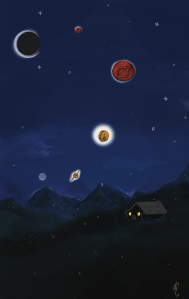
We look at the magical lore of the planets in our night sky
All images (c) Cory Thomas Hutcheson 2025
If you’re reading this in early 2025, lucky you! Because in January and February, there’s a beautiful procession of planets across our night sky. We mentioned this in one of our recent Folk Magician’s Notebook episodes, saying:
“Venus will shine brightly near the southern horizon for the whole month and should be fairly easy to spot. If you look just a bit south of Venus, you’ll also be able to see a visible (if fainter) Saturn below it which will remain there for the first half of the month (it will technically still be there even in the last half of February but will get harder to see). Looking up, you can find Jupiter glowing very brightly near the Pleiades, and if you have binoculars or a telescope you can even see some of Jupiter’s moons like Ganymede, Callisto, and Europa! Finally, look a bit to the east and find the glowing reddish dot–that’s Mars! If you still have that telescope out you can even see Phobos and Deimos, the Martian moons!. Late in the month, you can also find Mercury rising over the horizon where Saturn was (and technically you could see them both at the same time if you get the timing right–around Feb. 24th–and have a telescope). Uranus and Neptune are also in the sky, although seeing them without a telescope is very difficult, but it’s still good to know they’re there! The beginning of the month will have the least lunar light so you’ll see the most planets and moons, but most of February will be a beautiful time to watch the planetary parade in the hour or so after sunset!”
A few nights ago, I went out when the sky was clear and the moon no more than a sliver and was so awed by the experience of seeing Saturn, Venus, Jupiter, and Mars that I immediately summoned my eldest teenager away from her computer to come see. If you know much about teens, you will be duly impressed by the fact that my enthusiasm over the event was contagious and we both stood and marveled for a few moments at that astounding arc of planets overhead.
While bewitching the younger generation is a magical power unto itself, the planets have also held a special place in magical thought and practice for millennia. Astronomical and astrological observation of these movements shows up in some of our most ancient cultures, including Ancient Grecian, Mayan, Babylonian, and Chinese civilizations. Some schools of thought place charting the motions and influences of the planets firmly in the hands of an educated elite class of nobles, kings, and/or priests, but one of the joys of astronomy is that when it comes to several of these planets anyone can observe them and share in their wonder. The planets have been thought to influence people and been associated with powerful deities in popular astrological thought (just ask anyone somewhat knowledgeable about their “Saturn return” and they’ll tell you how tumultuous their mid-twenties were). They have also been a part of folk magical thought in North American as well. So I thought it might be good to take a little solar system tour and see what sorts of enchantment gets attributed to our celestial neighbors.
A quick note: in the interest of keeping things brief and brisk, I’m only going to talk about the planets commonly named in folkloric texts. That means poor, lonely Pluto gets only a brief mention and bodies like the dwarf planet Ceres are not going to get any attention. Similarly, the outer planets are going to have significantly less magical lore than the inner ones because they just aren’t easily visible. Additionally, I’m not going to talk about the Sun, Earth, Moon, comets/asteroids, or other heavenly bodies since 1) we’ve done some articles on things like comets and eclipses already and 2) I would like to sleep again someday and if I try to cover everything I will probably be writing for a very long time to come. Healthy boundaries make for good New World Witchery articles.
On to the celestial dance!
GENERAL LORE
Broadly speaking, much of the lore regarding planets comes from the more “learnéd astronomer” types and depends on written manuals of magic. We find grimoires laced with planetary lore that assigns different planets particular spirits and intelligences. However, a few standard manuals that found their way into folk magic included texts like Nicholas Culpepper’s Complete Herbal, which took the more formal astrological associations and assigned planetary correspondences to plants. Culpepper even introduces his text with the following note about why planets and plants are so intimately linked:
“And herein let me premise a word or two. The Herbs, Plants, &c. are now in the book appropriated to their proper planets. Therefore, first, consider what planet causeth the disease; that thou mayest find it in my aforesaid Judgment of Diseases.
Secondly, Consider what part of the body is afflicted by the disease, and whether it lies in the flesh, or blood, or bones, or ventricles.
Thirdly, Consider by what planet the afflicted part of the body is governed: that my Judgment of Diseases will inform you also.
Fourthly, You may oppose diseases by Herbs of the planet, opposite to the planet that causes them: as diseases of Jupiter by herbs of Mercury, and the contrary; diseases of the Luminaries by the herbs of Saturn, and the contrary; diseases of Mars by herbs of Venus, and the contrary.
Fifthly, There is a way to cure diseases sometimes by Sympathy, and so every planet cures his own disease; as the Sun and Moon by their Herbs cure the Eyes, Saturn the Spleen, Jupiter the liver, Mars the Gall and diseases of choler, and Venus diseases in the instruments of Generation.”
In the same way that Culpepper’s Herbal held a great deal of sway over folk magical thought on herbs and folk medicine, so too did many of the almanacs produced over the years influence folk magicians in their practice. So many almanacs were produced it would be daunting to list them all here, but many were valuable because they provided astrological guidance for agriculture, weather, and much more. Some of that material also derived from older grimoires and texts on “natural philosophy” that linked planets to colors, days of the week, and other correspondences that then became accepted as fact within folk magic. For example, one encyclopedia of folklore notes that:
“The Babylonians believed that
the five planets, Mercury, Venus,
Mars, Jupiter and Saturn, were
“interpreters of human fate,” and
foretold events by the rising and
setting and by their colors.”
That same source also makes the point that Uranus and Neptune weren’t known during earlier times (and even goes on to mock natural philosophers like Emanuel Swedenborg who claimed to have visits from planetary spirits, but only ones from known planets and strangely not from Uranus and Neptune).
Still, the common beliefs about planetary influence were widespread enough that many beliefs about the roles particular planets played in our lives stuck around.
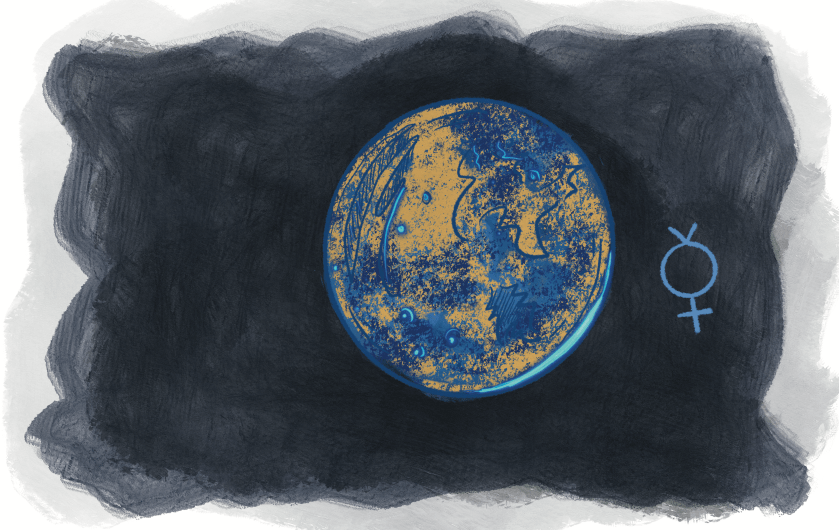
MERCURY
The first planet from the Sun is Mercury, taking its name from the Roman god for messengers, thieves, commerce, and travel (and by extension through his earlier Greek counterpart Hermes, a psychopomp who guided the souls of the dead on their final journey into the Underworld). Mercury has a rapid orbit, something early astronomers likely noticed, and engages in solar transits on a fairly predictable schedule. In magical thought, planetary Mercury also oversees many of the spheres that fell into the Roman god’s purview. Jewish astrologers, for example, used Ptolemaic astrological guidance to create tables assigning the planets particular traits, and Mercury held sway over “wisdom, intelligence, learning, trades, and occupations” (Trachtenberg 252). The planet is also associated with the archangel Raphael in some Jewish and Christian traditions, known as Israfil in Islam. Raphael is often depicted as a messenger angel and is one of only a few angels given a name in biblical and talmudic texts.
Mercury was associated with the color blue in astrological texts, and sometimes thought to have dominion over water or ice (at least before the discovery of Neptune, that is). It rules both Gemini and Virgo, making those two signs ones marked by intellectualism, study, wanderlust, and communication (full disclosure, the author is a Gemini with a PhD who has lived on more than one continent and who, obviously, writes). A thirteenth-century astrological manual called the Early South-English Legendary says of those ruled by Mercury that:
In books he shall be studious
And in writing curious…
He loveth ease, he loveth rest,
So is he not the worthiest ;
But yet with a little business
His heart is set upon riches [author’s transliteration]
So those ruled by Mercury may not be the most industrious, but manage to be clever enough to get more done with less–doing with one hand what others might do with two, one could say.
In folk belief, Mercury is thought to rule over aspects of the body that might be linked to the mind and movement: the brain and nervous system of course, but also the respiratory system as well as hands and arms, throat, mouth, and ears. Culpepper lists several herbs that are linked to treatments of the nerves and respiratory system as Mercurial. For example, mountain mint is ruled by Mercury and Culpepper notes it is “excellent good in all afflictions of the brain.” He says the same of herbs like dill and germander, also ruled by Mercury. Curiously, he makes a note that Mercury-ruled hazelnuts are thought to be good for the lungs by their association, but then digresses to say “if this be true, as it is, then why should the vulgar so familiarly affirm, that eating nuts causes shortness of breath, than which nothing is falser? For, how can that which strengthens the lungs, cause shortness of breath?” As someone who is the parent of a child with tree nut allergies, I can very easily see why using hazelnuts to strengthen the lungs would be a bad idea in many cases (and I note that such tree nut allergies are not a new phenomenon as they are being described in quite an old book).
Perhaps no other aspect of Mercury is so widely known in folk magical thought as its tendency to wreak havoc when it is in retrograde. Because Mercury rules areas of communication–and by proxy much of the technology we use regularly–its retrograde periods are times when many will attribute any failure in their smartphone, laptop, or relationship to that wily planet. In truth, a retrograde is simply a period of time when a planet appears to move backward because of our own perspective. Thus it might actually be better for folk magicians to think of Mercury’s retrograde as a time for reflection and contemplation (although it might also be an effective time to curse someone’s Tesla should the impulse strike you).
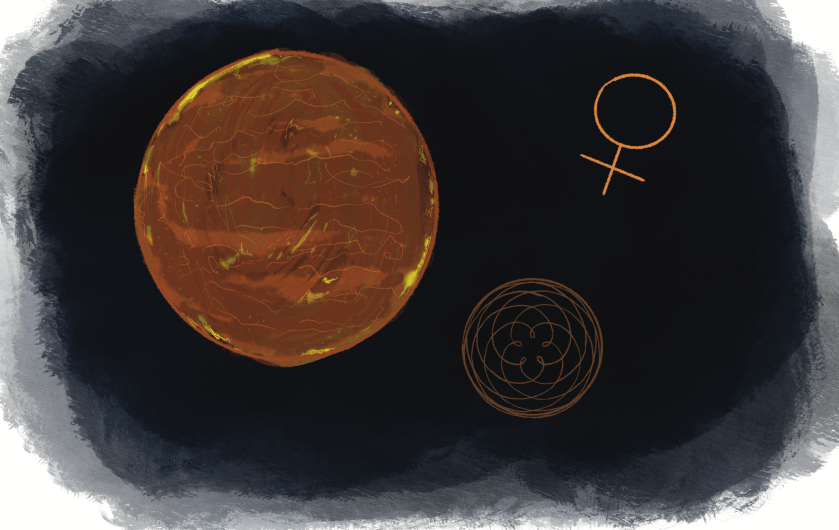
VENUS
Venus is probably the planet with the most lore in our night sky, not least because it holds the honor of being both the Morning Star and the Evening Star. It is, of course, a planet and not a star but it shines very brightly and consistently appears near the horizon at both morning and evening. Folk astrologers list its color as white likely because it shines so clearly and brightly in the night sky. Interestingly, the orbital path of Venus means that it does an eight-year dance that–when mapped out–creates a pretty profound shape: a five-pointed star or five-petaled flower. These “petals of Venus” make the planet–named after the Goddess of love and beauty–a powerful influence over our emotional lives. English poet Alfred, Lord Tennyson described Venus as “the planet of Love” in his sensual poem “Maud,” describing her morning arrival as “In a bed of daffodil sky, To faint in the light of the sun she loves, To faint in his light, and to die.”
Tennyson’s association of Venus with dying also appears in his long lament, “In Memoriam: A.H.H.,” written after the death of his close friend (and possibly livelong love) Arthur Hallam. There Tennyson calls Venus “Hesper-Phosphor,” names for the morning and evening stars, and says ““Sweet Hesper-Phosphor, double name/ For what is one, the first, the last,/ Thou, like my present and my past,/ Thy place is changed; thou art the same,” meaning that death leaves his love for his friend untouched, although it may look different through grief. That mournful aspect of Venus is echoed in some Australian lore as well:
That same source also notes that the Burmese people call Venus the “stars of death” who are thought to be lights that guide the way into the underworld.
Christian symbolism adopted Venus as well, with Jesus taking on the title of “Morning Star” (and eventually passing that ascription on to Satan/Lucifer, since the Luciferian name of “Light Bringer” was already connected to Venus in Ancient Roman thought). A bit of lore from New England notes that “Pagans considered Friday a lucky day, for the ‘fortunate planet,’” because “Venus influences the world on that day.” Of course, that source also notes that Christianity turned the joy of Friday on its head because Christ died on a Friday (Cahill 38).
Folk medical astrology associates Venus with the “Instruments of Generation” as noted above, meaning pretty much anything you do with your no-no square is covered by Venutian power: sex, urination, kidneys, reproductive health more generally, etc. Culpepper notes that some of the plants ruled by Venus include alder, beans, lady’s bedstraw, birch, burdock, cherries, daisies, foxgloves, goldenrod, artichokes, lady’s mantle, mint, mugwort, peaches, pears, pennyroyal, plums, meadowsweet, some roses (although interestingly red roses fall to Jupiter), strawberries, thyme, and vervain. The last of these is also known as the “witch’s herb,” and it may be worth noting that many of the Venutian plants have witchy associations. Birch, for example, is connected to witch-goddesses like Perchta/Berchta, mugwort is good for psychic dreaming, and foxglove can cause sensations of flying due to its effects on the heart (it is lethal depending on the dosage, though, and not one to play around with, unless you’re trying to find out about those connections between Venus and death).
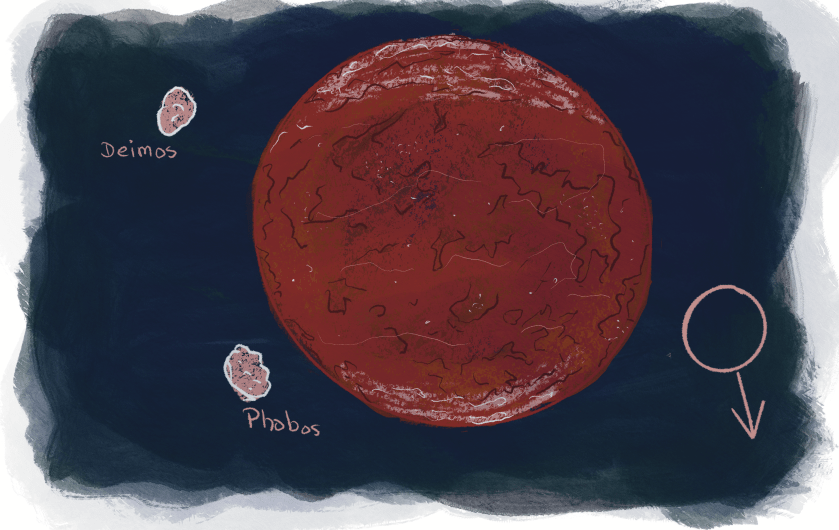
MARS
Our bright red neighbor is named after the god of war, and is seen by many as a planet of assertiveness. Astrologer (and early Harvard graduate) John Forster claimed in his 1680 almanac that Mars was “hot and dry in excess, causing [extreme] heat in Summer, and warm air in Winter, likewise Storms of Rain, Hail, Thunder, Lightning.” This hot, turbulent effect extended beyond atmospheric conditions, though. Almanacs of the period also saw a link between Martian influence and illness. An outbreak of “sweating sickness” (likely a novel viral outbreak of some kind) in 15th century England was linked to “a notable Conjunction of Saturn and Mars” (Hall 60). This association with poor health seems quite old, as a fourth century C.E. text by theologian Firmicus Maternus noted that a person born when “Mars receives rays from a waxing moon” could expect to “die violently” (Copenhaver 187). Such a link seems to have lingered on for nearly two millennia, as an informant in West Virginia was recorded in the twentieth century as noting “if the moon is afflicted by Mars…at the time fo the child’s birth, he will go blind” (Brown 126). Jewish lore associated Mars with the angel Samael, and with attributes of “blood, the sword, evil, war, enmity, envy and destruction” (Trachtenberg 251-2). That’s a lot to pile on a planet that just sits there in our night sky giving of a lovely orangey-pink glow!
Not everything was bad about Mars, though. In the Latin Picatrix–a thirteenth century magic manual translated from a likely eleventh-century predecessor–Mars is personified through the first “decan” or degree progression of Aries as “a restless black man with a large body and red eyes, holding a cutting axe in his hand and belted with a white garment, and this is of great excellence in itself. It is a face of courage, serenity, and unashamed excellence” (Copenhaver 288).
William Lilly, a well-known 17th-century occultist and astrologer, provided a series of correspondences that linked Martian influence with warm, windy weather (including thunder and lightning) as well as connecting all herbs that “ come near to [redness], whose leaves are pointed and sharp” and “whose taste is [caustic] and burning.” Among the many he highlights are most forms of thorn and chestnut, as well as nettles, spurge, onion, ginger, leeks, and pepper (Baker 346). A trip for some Thai food would be very Martial in nature, then, it seems!
JUPITER
Jupiter is of course named for the King of the Gods, the latinized name of Zeus (derived from “Ieus” or “Deus” which referred to Zeus’ status as a sky god and “pater” meaning “father”). Jupiter’s presence as a planet was seen as very fortuitous, especially when he shone brightly as he’s doing this month.
Our biggest planet is also one that has provided magicians with all the good stuff. According to the Key of Solomon Jupiter could “reveal hidden treasures,” and through the use of Jupiterian symbols one could gain “glory, honours, dignities, riches, and all kinds of good, together with great tranquility of mind” (Dillinger 90). Lilly notes that Jupiter is connected to “the Sweet or well scented Odours,” as well (Baker 347), while Culpepper’s Herbal connects Jupiter to the sense of taste. Culpepper also links Jupiter to agrimony, betony, borage, cinquefoil, and dandelion, which Culpepper notes to be “of an opening and cleansing quality, and therefore very effectual for the obstructions of the liver, gall and spleen” (which feels kind of shady given that Jupiter’s Greek counterpart, Zeus, had an eagle tearing out poor Prometheus’ liver every day).
Jewish lore connects Jupiter to to “life, peace, joy, wealth, honor,” and “sovereignty.” One source links Jupiter’s influence to weddings in Jewish culture, and comments that wedding rings were often procured and inscribed with a blessing under Jupiter’s influence (Trachtenberg 252; Daniels 1002). Also, I’d be remiss if I didn’t mention that in rewatching Twin Peaks the celestial clock that counts down to the opening of the spooky and sorcerous Black Lodge comes when Jupiter comes into conjunction with Saturn. So there’s that.
Which, I think, means it’s time to head to our next planet!
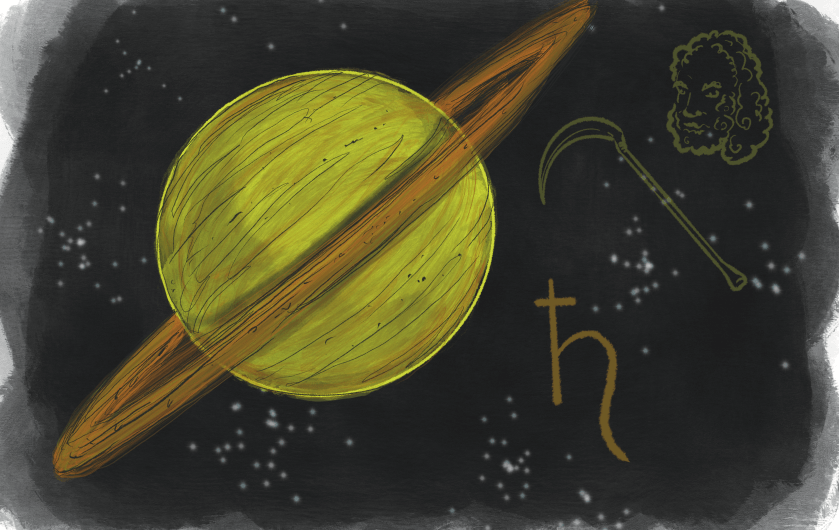
SATURN
Listen, the Saturn return is no joke. The upheaval that comes in one’s late 20s can be chaotic, and there’s a reason we associate the 50s with “midlife crisis.” Saturn’s influence is often thought to be a bit dark, with one source even noting that “Saturn is a very evil planet to be born under” and stating that those who are so fated will be “wranglers, chiders, and they will never forgive until they are avenged of their wrongs” (Daniels 1001). Which actually sounds like they’d make some pretty terrific anti-heros, right?
In Trachtenberg’s Jewish Magic and Superstition, Saturn is associated with “poverty, wounds, illness, and death,” so nobody’s having a good time with this planet. This is also found in other lore, as one source records a Hindu belief that when Saturn aligns with Mars it will “produce putrid diseases” and that while it rules by itself it prompts “much theft and little charity” (Daniels 1001. The power of conjunction is a major part of Saturn’s magical lore. One astrologer from the Royal Society of England, John Flamsteed, noted that in 1682-83 that when Saturn and Jupiter formed several conjunctions, “the Common People have admired to see the two Superior Planets Saturn and Jupiter continue so near” but that “our Astrologers have affrighted them with fearful Predictions of direful events” (Stahlman 556-7).
Culpepper notes that herbs ruled by Saturn include the elm tree, the poplar tree, holly, ivy, and hemp, as well as a number of poisonous plants like hellebore, henbane, and nightshade, further linking it to death (or giving those anti-heroes some useful tools, maybe).
THE LONELY PLANETS (URANUS, NEPTUNE, & PLUTO)
The lore of the outer planets is scarce, mostly due to their discovery so late as compared to the more “visible” planets already listed. However there is a bit of lore that these planets might influence people to become “very learned, cautious and require a reason for everything. They are fond of history, and liable to have headache and stomach Troubles” (Daniels 1001).
And then there’s poor Pluto, no longer a planet officially. But somehow it’s hard not to identify a little bit with this lonely little planetoid. It always makes me think of the famous “pale blue dot” photo taken by the Voyager I spacecraft as it passed Pluto and exited our solar system (sort of, since the photo was taken in 1990 and Voyager 1 finally left the actual range of our sun’s heliosphere in 2012, which should give you an idea just how big space is). Carl Sagan suggested that the craft take that last photo, turning back to face us before its exit, and in 1994 he shared his thoughts on what those farthest reaches of space say about us:
“From this distant vantage point, the Earth might not seem of any particular interest. But for us, it’s different. Consider again that dot. That’s here. That’s home. That’s us. On it everyone you love, everyone you know, everyone you ever heard of, every human being who ever was, lived out their lives. The aggregate of our joy and suffering, thousands of confident religions, ideologies, and economic doctrines, every hunter and forager, every hero and coward, every creator and destroyer of civilization, every king and peasant, every young couple in love, every mother and father, hopeful child, inventor and explorer, every teacher of morals, every corrupt politician, every “superstar”, every “supreme leader”, every saint and sinner in the history of our species lived there – on a mote of dust suspended in a sunbeam.”
Maybe that’s not folk magic, but there’s something enchanting about that all the same.
And so we end our tour of the planets. I know this hardly scratches the surface of the many ways these planets have been incorporated into magical thought and lore, but even this quick look shows you how much there is. Knowing everything about these planets is wonderful, perhaps, but if you can try to get outside and look up while they are all dancing in our sky. That’s really the most magical thing. To me, anyway.
Happy star-gazing everyone. Thanks for reading. And be well.
Wait, do you not celebrate Summerween? Or even know what Summerween is? You could be forgiven for missing this, as it’s more of a tongue-in-cheek nod to those of us who can’t get enough spookiness in our lives and find that the long, languid days of summer drag out the time before Halloween. In truth, the actual name “Summerween” derives primarily from an episode of the Disney animated series Gravity Falls, which is sort of a cartoon version of the X-Files with a lot more weirdness, humor, and satire. Cousins Dipper and Mabel Pines are spending their summer with their Great Uncle (or “Grunkle”) Stan, who runs a huckster’s tourist trap museum featuring all the oddball weirdness of the Pacific Northwest. The town of Gravity Falls, Oregon (a fictional place) is known for its surplus of gnomes, zombies, creepy child televangelists, mermen, and mind demons, which leads to a number of adventures as the kids slowly unravel the area’s secrets over two seasons (I will pause momentarily to say that this is an excellent show and I always highly recommend it). In an episode from Season One, the kids and Grunkle Stan decide to celebrate Summerween, a sort of “extra” Halloween because the town loves weirdness so much. Instead of pumpkins, locals carve Jack-o-Melons out of watermelons, and most of the candy is the “garbage candy” that no one wants to eat–black licorice and circus peanuts, for example. Trick-or-treating is done in costumes, and there’s even a local urban legend about a “Summerween Trickster” who eats children that don’t show adequate Summerween spirit.
In recent years, Summerween seems to have picked up a bit of traction, and some social media accounts proudly display their own Jack-o-Melons and other Summerween decorations. All of that got me thinking, “How could we make Summerween a real, witchy thing?” Obviously there’s always going to be a bit of the wry wink-and-nod nature to the holiday, but as I unpacked it I realized it is entirely possible to add some folk magic, spookiness, and darkness even to the longest days of the year. So today, I’ll be looking at some of the components that could be used to make a Summerween happen. We’ll see that there are some fun elements of folklore you could put into play here, and maybe you can design your own Summerween festival to help you manage until the heat breaks and we can get to the lovely crisp, cool autumn days once more.
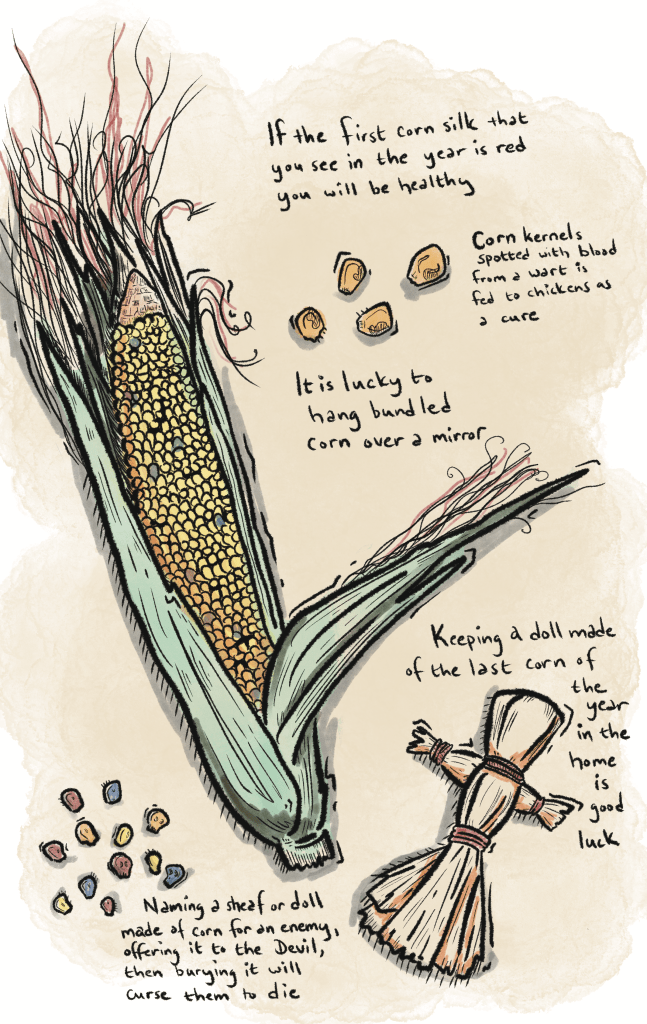
Corn has many folk magical uses. (image (c) Cory Thomas Hutcheson, 2024)
Corn
There’s more than a bushel full of folklore when it comes to corn. It’s worth remembering that outside of the United States, “corn” is used in English to refer to most grain crops, while “maize” would be specific to what Americans think of as “corn.” We’ve done a full post on corn before, but still, there is plenty of lore about corn we didn’t get to. Some has to do with growing or harvesting it, such as these beliefs:
At harvesting time, if the shucks on corn are thin, it is a sign of a warm winter.
Cut corn in the decrease of the moon [while it is waning], to keep it from spoiling.
Plant corn when poplar leaves are big as squirrel ears. [Or in some lore, when oak leaves are as big as a mouse’s ears]
When three black crows fly east over the field, harvest the corn the next day.
Tobacco should be planted with corn as an offering to keep it healthy all season.
Corn also has a lot of luck lore in connection with it, including a strong throughline connected to corn and the various colors of kernels and tassels:
If the first corn silk you see in the year is red, you will be healthy; but if it is white, you will be sickly.
If two ears of corn grow together and you get the ear at table, you will hear of a death that day.
It is lucky to hang a bunch of cornstalks over a looking-glass.
If while husking you find a blue-spotted ear of corn (sometimes known as Sally corn), you will be lucky.
It is good luck to find a red ear at a cornshucking.
Give a sick cow a red ear of corn, and she will get well.
When a person is shucking corn and a number of grains come off in his hands, he will have bad luck.
Carrying a piece of corn in your shoe or pocket is thought to bring you good luck.
To dream of gathering corn indicates you will be lucky in everything.
There are also some slightly eerier folk beliefs and workings that tie into things like charming, witchcraft, and even curses!
If a farmer fails to plant a row of corn in the corn field by oversight, some member of his family will die before the harvest time.
If corn stalks, with dirt on the roots, are hung on branches of fruit trees, the frost will not kill the blooms.
Having trouble with a bewitched gun while hunting? You can pour corn over the weapon, then feed the corn to hogs to remove the bewitchment and pass it on to them (assuming they will be slaughtered soon).
Plait your horse’s mane with corn shucks to prevent witches from riding him.
Jaybirds go to hell every Friday with a grain of corn.
Scratching a wart and rubbing the blood onto corn kernels, then feeding the kernels to chickens is supposed to make your warts go away.
To bury a sheaf of corn with a certain form of malediction and dedication to Satan, will cause your enemy to die as the corn decays. They practice this in certain parts of Ireland.
To bind up the last gleanings of the last field into the rude figure of a human being, and take it home and keep it, will insure a good corn crop the following year, and corn will be plenty until that time. [Basically make a corn dolly and keep it in your home for good luck and plentiful corn next year, a concept very akin to the butzeman of Pennsylvania German lore]. This is sometimes called a Spite Doll, according to Ozark folk magician Brandon Weston.
These last two really run the gamut of applications between making the most of your harvest for better or worse!
Watermelons
What would summer be without a cold slice of watermelon and a seed-spitting contest? Since the iconic Jack-o-Melon is a quintessential part of the Summerween experience, I thought I’d gather up a handful of entries that cover melon-based lore:
If you plant watermelons or any kind of vines three days after the change of the moon, they will do better.
Planting watermelons receives a plethora of advice about when to do it according to folklore. Ideal dates include Good Friday, in April when the south winds are blowing, on the first of May, every Saturday in May, during a New Moon, after apple trees bloom, during the lunar signs of Gemini, Cancer, or Aquarius, and before sunrise.
It is considered bad luck to point at or count your melons, which will make them fall off. Similarly, stepping over the vine before the melons are ripe will also cause them to rot or fall off the vine.
Several stories mention the idea of putting up poles around your watermelon patch with string or twine attached to them, which will work better to keep birds off than a scarecrow, according to the lore.
One bit of lore says that you can wash your face with melon rind to cure freckles.
A Pennsylvania German cure for kidney ailments involves making a tea out of watermelon seeds by steeping dried ones in boiling water and drinking it (after it’s not boiling anymore, of course–you all know how tea works).
If a child is having trouble with bed wetting, a bit of Ozark folklore says to feed them watermelon seeds before bedtime.
Gunpowder and Fireworks
We’ve already written a good bit about gunpowder, which is what makes fireworks do what they do. There’s also a long-standing tradition of “shooting in” times like the new year by firing guns loaded with just powder or blanks in the air (live ammo was sometimes used, but obviously that is highly dangerous). Gunpowder was mixed into hot-footing recipes and jinx-breaking ones, as well as used to make a barrier around someone or their property to keep them from harm. There are a few additional uses of gunpowder we could add here, too:
Pennsylvania German lore says that a cure for homesickness is to sew a good charge of gunpowder on the inside of the shirt near the neck.
In some places a dose of gunpowder was mixed with milk to help speed the delivery of a child (NOT recommended and NOT medical advice).
Another rather dangerous cure involves putting gunpowder in a bleeding wound. One entry even mentions that it should then be “exploded” (likely just ignited to create a fast cauterization, but again NOT recommended and NOT medical advice as this could cause a number of problems).
Gunpowder was sometimes made into a paste by mixing it with egg whites and used to treat acne, boils, and canker sores.
Gunpowder has anti-witchcraft properties as well. Some folks would scorch gunpowder in a pan to drive witches away, and one story tells of a man loading a gun with salt and black powder then shooting all around someone’s house to break witchcraft curse set upon the family that lived there.
Odds and Ends
Finally, I had to share a few of the creepier, eerier, or more esoteric bits of summer lore I found as I was researching. If these don’t add a little Halloween energy to your late July days, I don’t know what will!
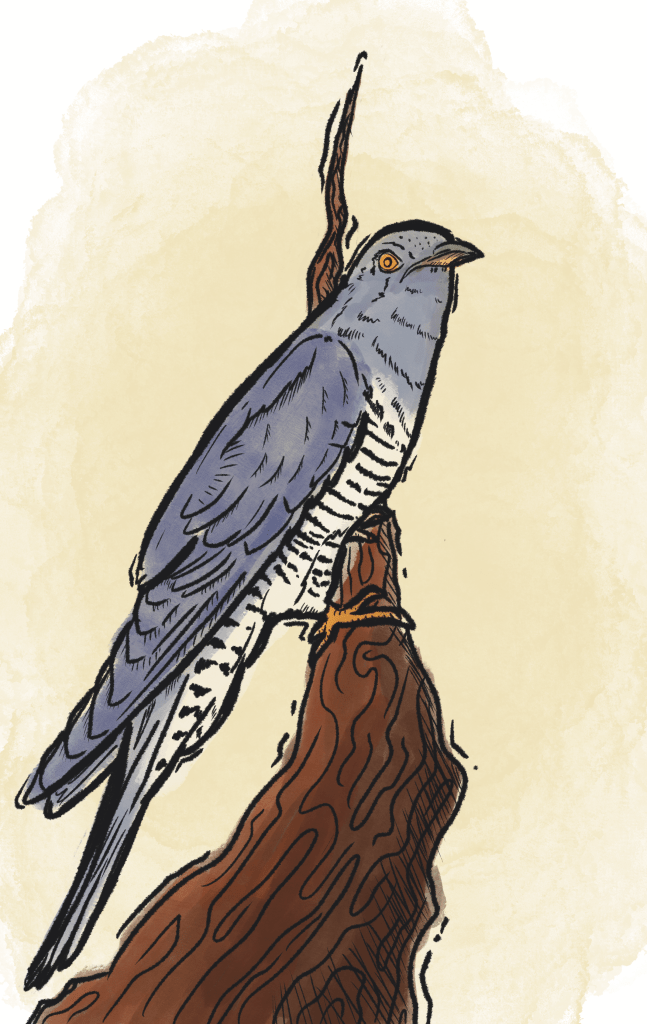
“In Exmoor, if an old woman hears a cuckoo on midsummer’s day, she will not be alive at that time next year.”
“If, on a summer morning, a flock of chickens lie low with wings outspread, sunning themselves in a row, it is a sign that they are measuring a grave.”
“Myths must not be told during the day nor in summer, for snakes will come to hear them, if told at such times.”
“In very ancient times the ladies used to carry balls of crystal in the hand to enjoy their delicious coolness in the summer, as well as to gaze in the depths to see what their lovers were doing.”
The “Dog Days” of summer (which run from July to August and historically coincided with the rising of the “Dog Star” Sirius in the sky) are dangerous times: mad dogs are thought to be more common, as is rabies in general. In some places, there is a belief that even the water in the ground will turn bitter or poisonous during this time period.
“If an old woman hears a cuckoo on midsummer’s day, she will not be alive at that time next year.” Have you ever seen a bird look so smug? (image (c) Cory Thomas Hutcheson, 2024)
There’s more than enough there to launch your own folk horror version of a Summerween festival! You could easily dress your house in corn dollies along with your Jack-o-Melons, carry crystal balls and corn kernels in your pockets, and do an evening of fireworks with photos of exes you’d like to “rocket” out of your life! There are plenty of creepy ways to make the summer yours–just make sure to wear your sunscreen!
Festivals
You don’t necessarily need to invent a Summerween from whole cloth, either. Plenty of festivals and celebrations already happen during the summer and have a magical or spooky side to them. In the Gravity Falls episode about Summerween, Grunkle Stan displays a calendar that notes the holiday seems to occur in late June, but without a fixed date you could connect your own Summerween festivities to a number of other fetes that occur over the sunnier months.
There is, of course, Midsummer and the associated St. John’s Eve. We’ve written a good bit about those before, and we have a fairly recent Folk Magician’s Notebook episode that shares tales associated with St. John’s Eve as celebrated in New Orleans. In those stories, we often hear about “Voodoo Queen” Marie Laveau hosting celebrations on Lake Pontchartrain with her enormous snake draped around her neck as she emerged from the waters. While the stories may be a bit sensationalized, Midsummer and St. John’s Eve festivities are already stuffed full of fairy lore, magic, and witchcraft that ranges from the Shakespearean to the surreal (such as gathering “fern seeds” on Midsummer Eve).
(image (c) Cory Thomas Hutcheson, 2024)
In the Ancient world, the middle of summer was also typically the celebration of Kronia (sometimes also Cronia) a festival honoring Cronus/Kronos, the progenitor of the Olympian gods later associated with Saturn in Roman mythology. If you know the story about Cronus swallowing his children at birth then you can already guess there’s some eeriness to this day, which was sort of seen as a lesser version of Saturnalia with its inversion of social order. Rather than the full flip of Saturnalia where slaves took the role of masters for a day and vice versa, during Kronia slaves were simply allowed to act as freedmen for a day, sit at their masters’ tables, and join in games, drinking, and festivities. We know little more than that of the festival, but given how little Cronus was celebrated in religious life among the Ancients, this is likely a good day to work with Saturnine forces–casting long-term spells, harvesting or culling things from your life using a sickle (symbolic of both Saturn and Cronus), or putting a metaphorical dragon in charge of guarding your treasure by doing financial security magic. Hanging sickles from your door does seem like a good way to keep tax collectors away, after all.
Also from the Ancient world, we’ve got the celebration of Fortuna, which falls typically around June 24th. The goddess of fortune–both good and bad, mind you–Fortuna is frequently shown with a ship’s rudder (to steer the ship of destiny), a ball or wheel (like the Wheel of Fortune tarot card), or a cornucopia (symbolizing the hoped for abundance she could provide, but also recognizing that a harvest must be reaped AND sown, and that everything comes in seasons and cycles). Propitiation of Fortuna can be as simple as setting up an altar to her with symbols like balls, wheels, boats, coins, money, and so forth. I like to keep bay leaves on my altar to her to recognize her role in success, and often ask that as her wheel turns I can “bend without breaking” when I need to endure a low point on that wheel. You might easily incorporate some of her symbolism in your Summerween: wheels, cornucopias, boats, and so forth, but also some of the creatures frequently shown on the Wheel of Fortune tarot card like sphinxes, lions, phoenixes/eagles, or devils. You could easily host a costume party where people dress as any of the “Fortuna” figures to get a Summerween celebration going!
Fortuna was celebrated in Ancient Rome during the Summer months. (image (c) Cory Thomas Hutcheson, 2024)
Later in the summer, we have Lammas and Lughnassah, both celebrated in early August. Fellow folk witch Via Hedera calls this time “Highsummer,” which also makes sense, and it’s a time for harvesting and heat, which also means a time for bread. Doing bread-based divinations (something we’ve written about and discussed on the show) could be a wonderful way to add some Summerween fun into your life. There’s also the “crying the neck” ritual that involves tossing a sickle at a sheaf of wheat until it is cut. This ties into the folk tradition of “John Barleycorn” and his sacrifice, burial, and resurrection as both bread and fermented bread–er, beer. Once again sickles work well for a symbol here, and a good spooky game of “chuck the sickle at the wheat sheaf” feels like an extremely Summerween sort of sport.
The summer also means regional food and folk festivals. I could hardly get into all of them, but in your area you’re likely to have some kind of festival celebrating a locally produced food. There are gala days for things like strawberries, chile peppers, garlic, and just about anything you could imagine. Finding out what is feted near you could involve digging into some history and folklore about that particular piece of produce and using it in your magical work and decor (maybe by braiding them into ristras to hang around your home for protection in the case of chile peppers or garlic, for example). Folk festivals are equally abundant. Depending on where you are, you may be connected to any of a number of ethnic festivals such as the Kutztown Folk Festival (celebrating Pennsylvania German folk culture, including a bit of magic and healing from the braucherei tradition), a variety of Scottish festivals like the Virginia Scottish Games or the Middle Tennessee Highland Games, or the Nordic Fest in Decorah, Iowa (a three-day event commemorating the town’s Norse heritage). And of course there’s Juneteenth, celebrating the Emancipation of African Americans in many parts of the United States, which comes with a wide variety of traditions for those who are invited to participate.
There are some very particular holidays that you might connect with, too. In the U.S. Virgin Islands, for example, the fourth Monday in July is Hurricane Supplication Day, in which offerings and prayers are made to protect the islands from hurricanes. For those with an Irish background, you might look to Puck Fair, a festival from County Kerry that involves making a goat king for a day and dressing both it and everyone else up in ribbons and festival decorations, ultimately culminating in a trip up the local mountain for a Reek Sunday mass (if you are so inclined). Or you might celebrate Tanabata (Star Festival) if you’re from a Japanese heritage, putting out bright decorations made from colorful origami to honor the stars on July 7th (or August 7th if you are in/from Okinawa).
Finally, even Wall Street has its own slightly spooky holidays that can connect to the Summerween spirit. Folklorist Jack Santino noted that the stock market has its own version of curses in the form of something called Triple Witching Days. According to his book All Around the Year, “On Friday, September 19, 1986, newspapers and television programs carried stories of the Wall Street phenomenon called the triple witching hour, when the stock market undergoes an hour of unusually unpredictable shifts. The term refers not to broomsticks but to a time when ‘stock index futures and options on individual stocks expire simultaneously.’ The results of this are mercurial, unpredictable swings in the underlying value of most stocks. These ‘Triple Witching Days’ occur four times a year, on the third Fridays of September, December, March, and June” (45). Santino links this to beliefs about the role of threes (with these events occurring on the third Friday of every third month) and the fact that three types of stocks expire at the same time (stock index futures, stock index options, and individual stock options). So when someone describes themselves as a “financial wizard,” perhaps we should believe them!
A later section in Santino talks about the eruption of the Satanic Panic and how many of the reported incidents related to it were tied directly to the summer solstice. He notes, “[W]hen the sheriff of a small midwestern town orders the exhumation of supposed sacrifices of ritual murders on the eve of the summer solstice (his sources told him there would be more killings on June 20 or 21), we are witnessing behavior motivated by folk belief surrounding the longest day of the year, a day traditionally associated with magic.” This passage is in reference to a Satanic Panic scare that took place on June 21, 1985, in Spencer Township, Ohio in which the head of local law enforcement followed a rumor mill that led him to excavate a rural spot that was supposedly the site of “an orgy of human sacrifice.” The digging turned up a headless doll and a rusty knife, but absolutely no bodies. The sheriff still proceeded to describe the doll as “decapitated” and indicated that the knife was somehow proof that some sort of diabolical activities must have been going on, but that the Satanists had just been a bit too clever in getting the bodies out of there before he could find them. Oh those tricksy Satanists, right?
The Satanic Panic and its horrifying legacies aside, we really do have plenty of folk material we can call upon in the summer months to put together a richly spooky and magical experience if we wish to. So today let’s dive into some of those Summerween features and see what sort of warm-weather witchery we can make!
It’s a good time to put on some scary movies! (image (c) Cory Thomas Hutcheson, 2023)
Other Ways to Celebrate
If you’re looking for other ways to enjoy the Summerween spirit, what about spooky stories with a warm-weather atmosphere? While most of our fears go bump in the night when we read a ghost story or watch a horror film, there are more than enough “daylight horror” narratives that they even have their own genre (which is, of course, “daylight horror”). Since we’re a folk magic-positive site, here are a few that have a bit of good folklore and roots-based enchantment woven in among the creaking doors and rattling chains.
The Birds (1963) – This Hitchcock film made Tippi Hedren a household name and its marketing irritated a number of grammar teachers (“The Birds is coming”). Where’s the folklore? It’s based on a story by Daphne du Maurier of Rebecca fame, and she was well-attuned to English lore. Birds, especially birds that get indoors, are often seen as a portent of death.
The Wicker Man (1973) – A distinctly daylight horror original. This film is set around Beltane and the welcoming in of summer, complete with naked dancing pagans, a Hand of Glory, and a maypole!
Wake Wood (2009) – This Irish folk horror story initially seems like a Pet Semetary variation, but gets a good bit darker and deeper than that. Pagan rituals and magic spells are used to resurrect the dead child of a grieving couple so that they can have three more days with her, only to discover that maybe they don’t exactly want her back anymore.
Midsommar (2009) – A24 and Ari Aster have become the surest ways to get me to a movie theater these days, and Midsommar is a good example of why. It’s brutal and a “don’t-look-away” story that chills your heart (and may turn your stomach), about Dani, a young woman mourning the loss of her family, who accompanies her gaslighting boyfriend on an anthropology trip to Sweden to study a pagan ritual. They, of course, get in much deeper than they had anticipated. Tons of great folk magic shows up here, including the use of menstrual blood in food as part of a love (or lust) spell, and oh, there’s another maypole, too.
Lamb (2021) – This creepy Icelandic film involves a rural family who find that their ewe has given birth to a strange creature that is half-sheep, half-human. They decide to raise the child, and a variety of twisted events begin to collapse all their suppositions about the world they live in. This one is based very much on the lore of the “monstrous birth” portending momentous change for those who were near when it happened.
Gravity Falls (2012-2016) – Yes this is a television show, and yes, it’s a Disney animated show ostensibly for kids. But there’s a lot more to this one than that. After all, this is where we get the concept of Summerween at all! If you enjoy things like the X-Files, Outer Limits, Buffy the Vampire Slayer, Riverdale, or the Twilight Zone, this show has something for you. The stories and characters are fun and make for good casual watching, but there’s also a massive connected story that covers the whole two-season series involving a handshake-deal making mind demon, a creepily adorable televangelist, aliens, portals, secret codes (which the show runs with, including secret codes in every episode that you can crack to get deeper show lore). It’s pretty phenomenal, and has even featured voices from people like Linda Cardellini (Freaks & Geeks and The Avengers), J.K. Simmons (of Spider-Man and Whiplash), Alfred Molina (also in Spider-Man), Jon Stewart (of the Daily Show fame), Weird Al Yankovic, Kyle MacLachlan (Twin Peaks), Mark Hamill (you know, Luke Skywalker?), Patton Oswalt (Ratatouille), Lance Bass (‘NSYNC), and even Matt Chapman (the person behind the internet phenomenon Homestar Runner and breakout character Strongbad). This show holds a rare 100% positive rating on Rotten Tomatoes for a good reason–it’s phenomenal, and it will definitely get you in the Summerween spirit!
And finally, if you want to put all that daylight behind you, consider making the most of the nighttime, too. From late July through mid-August, if you look up you may catch a glimpse of one of the most abundant meteor showers visible in North America, the Perseids. They are named this because they seem to originate from the constellation of Perseus (found between the slightly more recognizable Casseopeia and Taurus constellations). During the peak of the shower, which in 2024 is around the 12th and 13th of August, you might see up to one hundred meteors per hour! That’s a lot of potential wishes made on shooting stars, and definitely something a little bit magical to enjoy as you’re putting out your Jack-o-Melon candle.
Whatever you do for your Summerween, we hope it gets you through the last of the season and through until Autumn and Halloween proper. For now, though, we wish you a magical celebration and we hope you find a way to appease the Summerween Trickster before the night is through (we hear five hundred pieces of candy including Gummy Chairs and Mr. Adequate Bars will do the trick)!
You can blame this one on the book club. We recently finished reading and discussing Robin Wall Kimmerer’s Braiding Sweetgrass for our Patreon book club, which is a beautiful series of essays on ecology, indigeneity, motherhood, science, spirit, and stewardship that I thoroughly recommend. Kimmerer is a botanist by trade, and a bryologist by specific discipline, which means she specializes in the study of mosses. I listened to a fascinating interview with her on the podcast Ologies with Allie Ward in which she describes the miniscule rain forests that exist within the carpeted world of mosses and their cousins, lichens.
Spending the time with Kimmerer through her work and her hypnotic voice (seriously, go listen to her interviews or essays) must have put me in a receptive mood, because I’ve been noticing mosses and lichens popping up in my folklore texts a lot recently. So today I thought I’d share a bit about that folklore from a more magical perspective. I’m also rolling in ferns, since both can be found together in forests, as well. It also helps that ferns have a good deal of magical lore, too. I should also note that my aim here is not a strict botanical examination of these plants, so there are going to be some “mosses” and “fern” related items that might not strictly fit the scientific classifications.
I will, however, start with a scientific note. One of the first points to address is some of the most common lore about mosses: that you can always figure out what direction north is since moss always grows on the north side of trees. Strictly speaking, this is not universally true. What mosses like is moisture, and moisture lingers longest in shady spots rather than sunny ones. As Tristan Gooley puts it in his excellent guide to observing the natural landscape entitled The Lost Art of Reading Nature’s Signs, “[m]osses need water to reproduce and so are a dependable indicator of places that retain moisture…shady places are moister than sunny ones; these are more common on north-facing surface and so, if you have eliminated other causes of moisture, then mosses can point the way north” (my emphasis). So yes, if you’re lost in the woods, moss is better than nothing, but remember there’s potentially a lot of moisture around and the moss should be only one tool in your natural-compass arsenal. An interesting bit of lore from Harry M. Hyatt’s Folklore from Adams County, Illinois inverts the north-growing moss trope and says that “A hard winter always follows the appearance of moss on the South side of trees in autumn.” Moss also helped predict weather based upon its own moisture content, at least in this snippet of lore: “When the mountain moss is soft and limpid, expect rain. When mountain moss is dry and brittle, expect clear weather” (Daniels, p. 819)
Moss is also used as folk medicine by some. In Pennsylvania German folk practices, one remedy for diarrhea recommends boiling tree moss in red wine and drinking it to relieve the problem (Harms/Hohman, p. 68). Its soft, spongy nature also made it useful for dressing wounds in some situations, as well. That texture also makes it a popular filling for dolls and poppets, too. One of the best known applications of this is the use of Spanish moss in the creation of doll baby spells in Southern folk magic. Strictly speaking, Spanish moss isn’t actually a moss, but a flowering plant, but in folk thought if it looks like a moss and squishes like a moss, well…I mean just look at the name! (Of course, it’s also not Spanish in origin, so maybe don’t look too closely at the name).
(Spanish Moss draped from trees. Photo by Huron H. Smith, 1908. via Wikimedia Commons)
One of the more interesting magical connections is between moss and the dead. Several bits of folklore describe gathering “skull moss,” which is simply moss or lichen scraped off of a gravestone or human remains. Scott Cunningham recommends carrying moss scraped from a gravestone for good luck, “especially financial luck” (p. 156). This lore is echoed in The Encyclopedia of Superstitions and the Occult as well, which also notes that An old superstition says that when a robin redbreast finds a dead body, it will cover up at least the face, with leaves or moss” (p. 687). Moss softens and blankets, which may contribute to this lore, and offering the dead a bit of comfort in the form of moss may be where the luck aspect of this comes from. Stranger still is a fragment of North Carolina folklore that notes “White moss from the skull of a murdered man, picked in a graveyard at the full o the moon, and tied in a piece of blue cotton cloth around the neck, will win any man” (Brown, p. 574).
(Image (c) Cory Thomas Hutcheson, CC 2.0 License)
Moss also shows up in the famed “Language of Flowers,” and is used to encode messages to recipients who understood the meaning of different kinds of moss in a bouquet or arrangement:
Iceland moss represented health
Wood moss represented maternal love or ennui
Lichen represented dejection and solitude (Daniels, p. 794-95)
The widely varying range of meanings here may have something to do with the many varieties of moss, but it could also be rooted in the way moss appears to interact with its environment–the green lushness of moss could signify health for many people, for example, while the way lichens can “hide” on trees and rocks could connect to the solitude meaning. The clinging nature of moss also makes it fit the feelings of connection and love. We’ve already mentioned that Irish moss is sometimes put in the corners of shops to make them more prosperous in our post on occupational folk magic, largely because of the way Irish moss feels abundant.
(Ferns are often associated with fairy folklore, especially around Midsummer. Photo: Antoni Piotrowski, Public domain, via Wikimedia Commons)
Ferns are also richly folkloric, and connect to the Otherworld, although more through the realms of Faerie than the dead specifically. In renowned folklorist Katherine Briggs’ work, Pale Hecate’s Team which examines fairy lore in England, she notes that “fern-seed” was considered to be a powerful magical ingredient: “A famous herb[…] was fern-seed, which, gathered at the right time and with the right ceremonies, made the man who wore some about him invisible.” She also points out that its power came with risks, because “It seems to have been almost as difficult to secure fern-seed as to draw up a mandrake from the ground, a herb even more renowned than fern-seed” (p. 169-70). Anyone who knows about ferns knows that they don’t actually have seeds, though. Instead they reproduce using spores released from the undersides of their leaves, which may be what “fern-seed” refers to. Possessing fern-seed offered you a number of powers. Invisibility, as mentioned above, was one of the most common, and is even mentioned as common lore in Shakespeare’s Henry IV, Part I. Other lore indicated that it would allow you to understand the language of fairies. In much lore, the fern-seed had to be procured specifically at midnight on Midsummer’s Eve (the night before the Summer Solstice, although it is also popularly celebrated on June 23rd). One bit of lore also said that this magical supply, when brought by the Devil for the price of one human soul on Christmas night, would make ap person as strong as “twenty or thirty men” (Daniels, p. 784). One should be careful when gathering fern, however, as plucking it at times other than prescribed will invite thunderstorms in Polish lore, or even cause one to be pursued by snakes and serpents.
Fern could also be used to ward off witchcraft and evil. One superstition says that “It was formerly customary for waggoners to place a bunch of fern over the horse’s ears or on the horse-collar, to ‘keep the devil away’ and to ‘baffle witches’” (Opie & Tatem, p. 147). Cunningham notes that “Ferns can be planted inside or outside the home for protection, thrown on hot coals to exorcize evil spirits or worn to guide the bearer to treasure” (p. 102). Ferns, despite their association with fairies and devils, can also be used to drive them away, and kept on one’s person can break illusion spells and render incantations powerless, too.
(Ferns were thought to be useful for everything from warding off witches to enhancing beauty to improving dental health. Image (c) Cory Thomas Hutcheson, CC 2.0 License)
Maidenhair fern has its own unique lore associated with beauty, likely owing to its name and appearance. Cunningham describes putting maidenhair fern in water, then using the water as a sprinkle to endow one with grace, beauty and charm. It could also be turned into a rinse for hair to make it silkier and more lustrous.
One of the better-known ferns is the popular Rose of Jericho (also known as the Resurrection Plant). This fern can dry out completely and curl itself into a tight brown ball, almost like a tumbleweed. Then, when given water, it will bloom over the course of a day or so and become verdant and lively again. Using the water from a Rose of Jericho–which would symbolically be infused with vivacity and not a little bit of the miraculous what with the resurrecting bit–is thought to boost prosperity when sprinkled around cash registers or shop doors. Catherine yronwode notes that the water should be added to the plant on Fridays, and then used throughout the week.
(The Rose of Jericho fern is also known as the Resurrection Plant and can survive long periods without water. Image (c) Cory Thomas Hutcheson, CC 2.0 License)
One final bit of lore about fern strangely connects it with teeth. A piece of Tyrolean superstition says that placing fern over one’s door ensures that you will have good dental health all year. Cornish lore states that “if you bite with your teeth from the ground the first fern you see in the spring, you will have no toothache all the year” (Daniels, p. 784).
I’ll close with a little rhyme that doesn’t seem to be directly related to any fern lore, but which is too charming to resist:
“When the fern is as high as a spoon
You may sleep an hour at noon,
When the fern is as high as a ladle,
You may sleep as long as you’re able,
When the fern begins to look red,
Then milk is good with brown bread.”
(Daniels, p. 784)
So if you head out into the forest for a hike this summer (or visit a moss-grown graveyard), keep your eyes peeled for ferns and mosses. You never know what kind of magic you’ll find, even in the humblest of plants.
We hope you’ve survived the eclipse in one piece and are looking forward to the moon waning again.
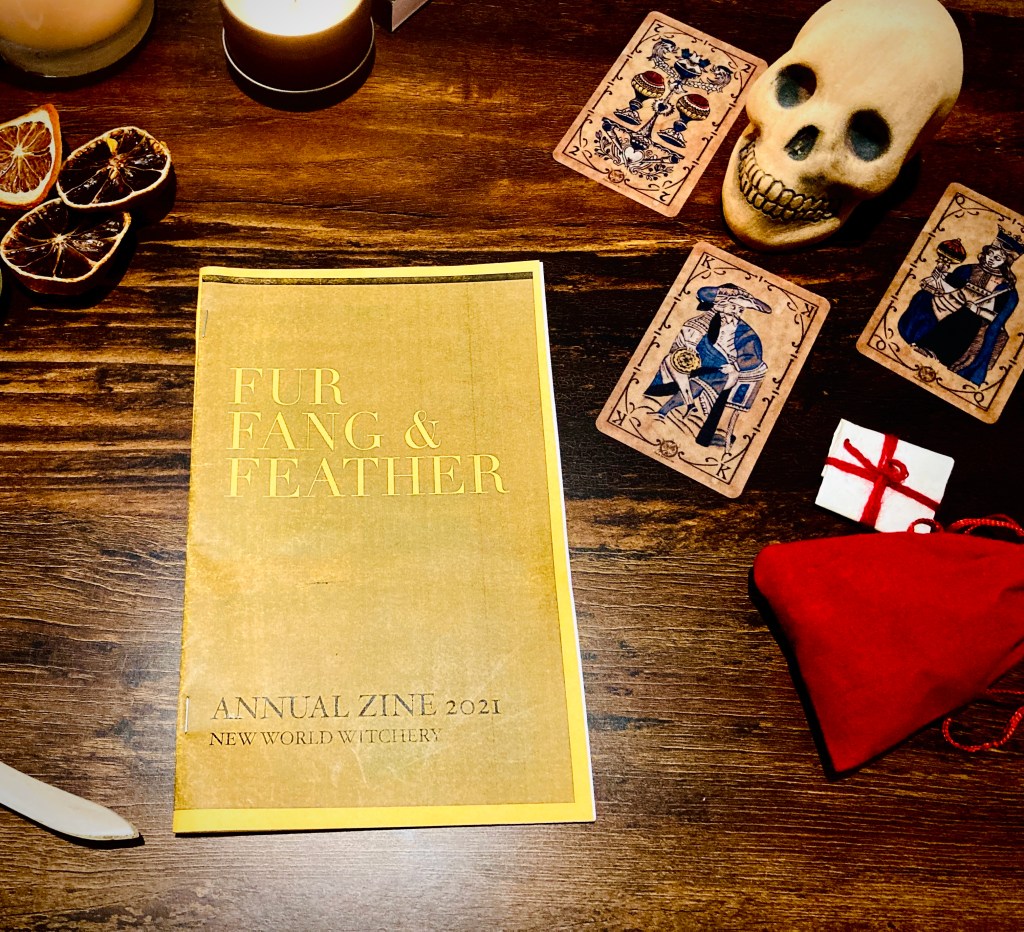
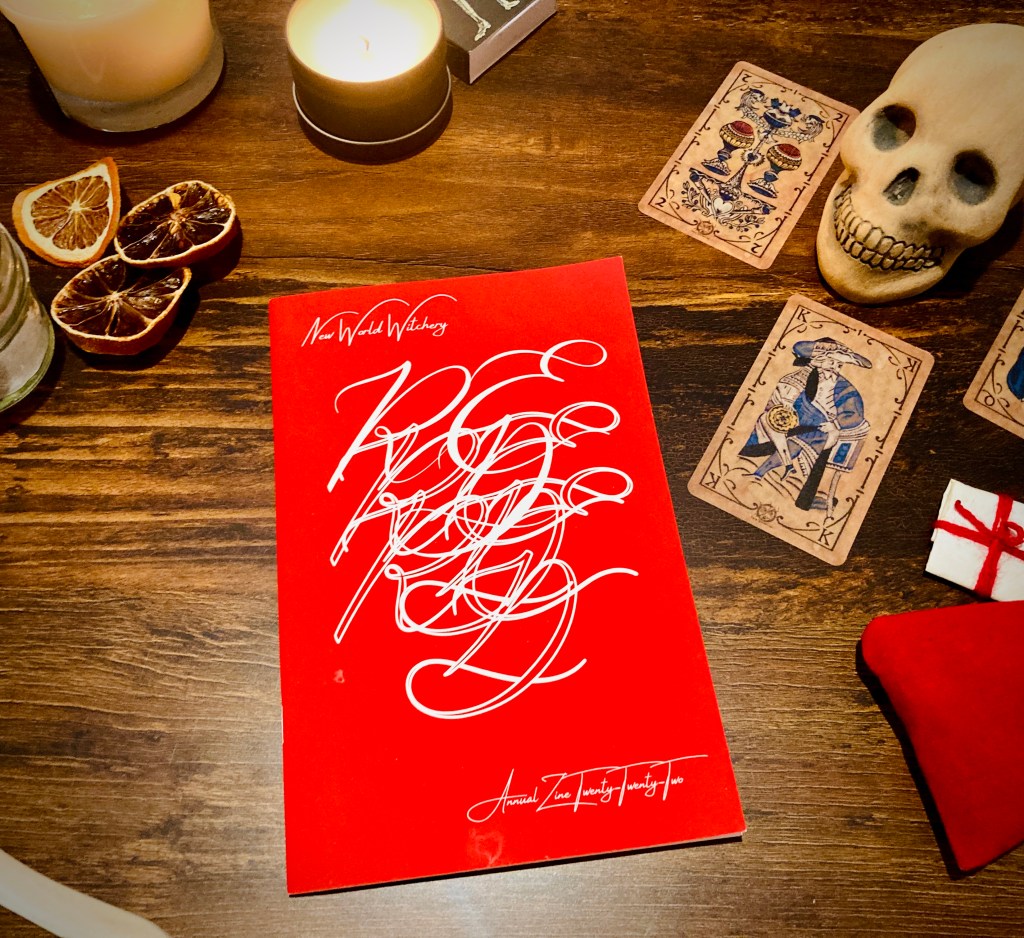
Since we’re in the celebrating spirit and all, we wanted to share with you that we’ve got something new going on. For those of you who support us on Patreon, you know that we usually produce something called an Annual ‘Zine for our patrons (typically sometime in the Spring, and yes, we know what 90s kids we are). Patrons at the $5 level get a digital copy of it, and patrons at the $10+ levels get a physical copy mailed to them. We’re in the midst of sending out our 2023 and 2024 ‘zines (we missed last year due to life circumstances but did a double ‘zine this year to make up for it), and until now we’ve made the ‘zines something available only to patrons as a bonus perk of supporting us. However, in order to support some of our efforts and the rising costs associated with our work, we have decided to put ‘zines from previous years on sale in case anyone in the general public is interested in acquiring them.
We are selling both digital copies of the ‘zines (for $5 each) and physical copies (price varying by materials). The physical copies are from our overstock, so quantities are limited there and once they are gone, they are gone. They are available on our Etsy shop (just because that’s the easiest place to sell them from). Right now we’re selling two Annual ‘Zines:
Fur, Fang, & Feather (2021) – A look at animals and magic including a personal essay from Laine, some bird folklore, animal-based charms, and a “trash familiar manifesto” from Cory. It’s 23 pages long and the physical copy is printed on good ole standard ‘zine copier paper. Digital copies are $5 and physical copies are $10 plus shipping.
RED (2022) – Our look at the folklore and magic of a crimson hue. We talk about red thread in magic, review some red-themed divination decks, look at a few (in)famous red books in magic, examine the housle or Red Meal in traditional witchcraft, and more. It’s a 31-page long ‘zine printed on recycled 80lb paper with a red paperboard cover. Digital copies are $5 and physical copies are $13 plus shipping.
These are definitely a limited-quantity offering, so if you’re interested in them please check them out sooner rather than later!
We will eventually make our 2023 and 2024 overstocks available, too, but we’re making sure everyone who was a supporter prior to the cutoff date gets a copy first. If you want to make sure you don’t miss a future ‘zine (and that you get a discount on purchasing past ‘zines), you can always join our supporters on Patreon, too!
Even if you don’t buy a ‘zine, we’re grateful to you for being a part of our readership and listenerhood (is that a word? well, it is now…). Thank you for your ongoing encouragement and support, and happy reading!
Doomsdays, weather forecasts, making noise, and hidden treasures
(Image source: Conrad Heingartner (Main), Public domain, via Wikimedia Commons)
On April 8, 2024, contiguous North America will get its last glimpse of a full solar eclipse for twenty years (the next one is due 2044). When we last had the opportunity to glimpse this astronomical wonder in 2017, Laine and I put out an episode focusing on some of the lore and significance of eclipses, and we just released an episode of our Folk Magician’s Notebook that features a lot of eclipse lore as well. We thought it might also be a good idea to compile some of that lore for readers, too, who would be interested in having it to hand as the big day approaches (or just in general out of folkloric curiosity, which is often the best reason to do anything!). So today we’re sharing a few of our favorite tidbits of eclipse-based lore. We should note that much of this material will reference eclipses broadly, so they could be solar or lunar, although we’ll try to be as specific as we can when sources allow. Let’s do some shadow-dancing, then!
Probably the single most pervasive belief about eclipses is that they are portents of some kind. In most cases, they seem to be viewed as fearsome ones, forewarning of doom or calamity of some kind to follow. Biblical prophecies regarding eclipses lean into this, as any Ghostbusters fan knows:
And I beheld when he had opened the sixth seal, and, lo, there was a great earthquake; and the sun became black as sackcloth of hair, and the moon became as blood (Revelation 6:12, KJV)
And when I shall put thee out, I will cover the heaven, and make the stars thereof dark; I will cover the sun with a cloud, and the moon shall not give her light. (Ezekiel 32:7, KJV)
In these contexts eclipses are associated with wrath and judgment and destruction and just generally a bad time had by all. It’s important to note, though, that Christianity hardly has a monopoly on eclipses and doomsaying. According to Joshua Trachtenberg’s book, Jewish Magic and Superstition, the Jewish people also get quite anxious about eclipses: “Eclipses of the moon were taken to be especially ominous for the Jewish people. Eclipses of the sun which occurred on October 26, 1147 and September 4, 1187 threw German Jewry into consternation; later it was learned that on these days German crusaders had suffered serious reverses in Palestine” (pp. 251-52).
One particularly colorful Christian belief about eclipses has to do with a secret planet full of saints:
“There is a planet called Adamida, on which reside the unborn spirits of saints, martyrs and believers. There they remain, awaiting their time to be born into this world. When a martyr is recognized by us, we know that he came from Adamida, the planet of unborn souls. At the crucifixion, Uriel, the angel of the sun, was ordered to interpose this planet between the earth and the sun, thus producing a total eclipse. This is mentioned in the description by the apostles. They say ‘the sun was darkened’”
That may seem like a LOT to derive from a four word biblical passage, but then there has been plenty of ink (and blood) spilled over any number of scriptural excerpts, so a magical planet full of holy people that occasionally blocks out the sun seems somehow almost charming.
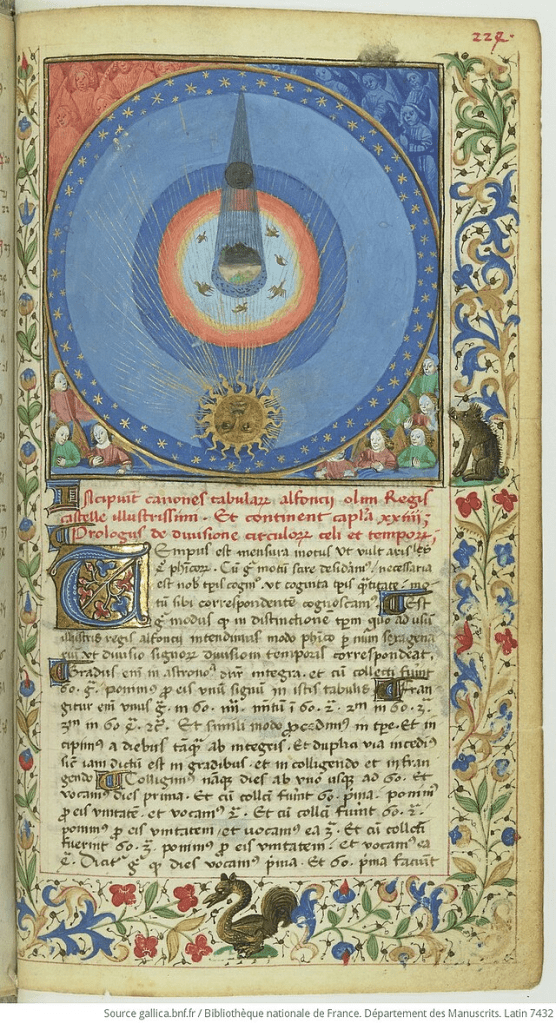
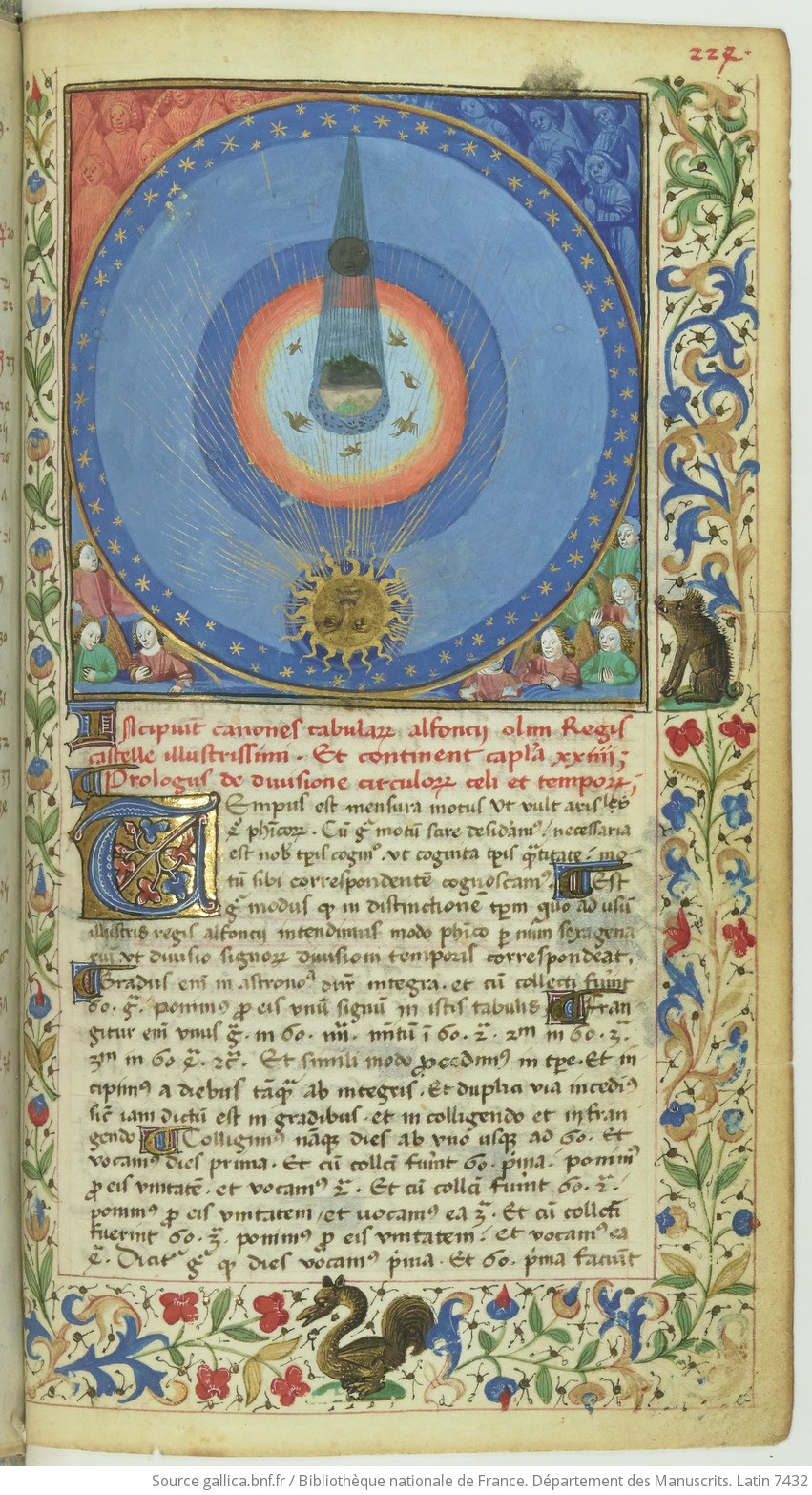
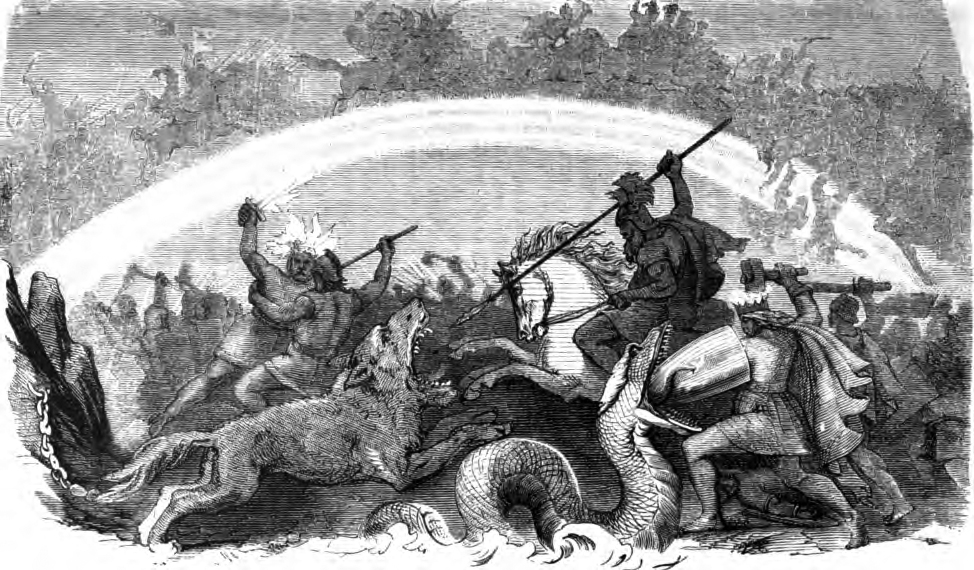
Less charming, of course, is the end of the world. Norse mythology features an eclipse event associated with Ragna Rok, or the Doom of the Gods, in the Prose Edda. A volva (seeress) prophecies that as the gods begin to clash with one another, “Then happens what will seem a great miracle, that the wolf devours the sun, and this will seem a great loss. The other wolf will devour the moon, and this too will cause great mischief. The stars shall be hurled from heaven. Then it shall come to pass that the earth and the mountains will shake so violently that trees will be torn up by the roots, the mountains will topple down, and all bonds and fetters will be broken and snapped” (Abridged from the Prose Edda, Penguin Edition, Trans. by Rasmus B. Andersen). As we pointed out during the reading of this passage in our podcast episode, though, the Ragnarok section is immediately followed by a Regeneration section that foresees a renewed earth emerging “green and fair.”
(Image source: Friedrich Wilhelm Heine (1845-1921)., Public domain, via Wikimedia Commons)
Other religions shared this approach, connecting eclipses with mighty powers but not dwelling on them as fearsome. In Islam, a sunnah (saying of the Prophet Muhammad) collected in the third century by an historian named Bukhari noted that the Prophet once said that “The sun and the moon do not eclipse because of the death of someone from the people but they are two signs amongst the signs of Allah. When you see them stand up and pray” (Volume 2, Book 18, Number 151).
Still, in the minds of the folk, eclipses frequently meant one thing: trouble. In the Frank C. Brown Collection of North Carolina Folklore, one entry puts it quite succinctly, saying “When the sun goes into eclipse, it is a sign of some great disaster.” This sentiment gets echoed in folklore collections from Canada to Mexico and back again, although the nature of the disaster is often not specified. In at least one case, an eclipse on 13 April 1140 was taken as a portent that the current king, King Stephen, would soon be removed from rule. An eclipse followed by a “halo” around the sun or moon in the following days was also thought at one time to portend diseases soon to follow (Daniels 941-43).
(Image source: By Ji-Elle – Own work, CC BY-SA 4.0, Wikimedia Commons)
Some of the lore, however, does tie eclipses to specific events, namely weather-related ones:
In addition to an association with storms, there’s a rather “stormy” character associated with eclipses in North American nautical lore (do eclipses also improve segues? So it seems!). In tales of Alfred Bulltop Stormalong, also known asOld Stormy, a character who was the sailing equivalent to John Henry, the legendary mariner is said to continue working the docks and seas well into the afterlife. According to the Encyclopedia of American Folklore:
Even in the afterlife, Old Stormalong is said to be building ships in the sky, where he carries on his maritime career navigating the heavens rather than the oceans. For this reason, some tales explain that an eclipse is caused by the shadow cast by Old Stormalong’s great ship, and shooting stars occur when they are struck by the movement of Stormalong’s harpoon (Watts)
Leaving aside Old Stormy, what could a person do if an eclipse did seem like a portent of doom to them? Fortunately, numerous cultures came to the same conclusion about what to do: get loud. To forestall any negative eclipse effects, you can beat your pots and pans loudly and shout to scare away anything that might be trying to unleash some wickedness in your home–this is a method used in Ancient Rome, Ancient China, France, Ireland, and Wales. In at least one account of Hindu eclipse beliefs, the text notes that eclipses were a time to give alms to the poor, which would help “relieve the pain which the sun and moon [endure] while being swallowed” (Daniels 943).
(Image source: Joseph Norman Lockyer, Public domain, via Wikimedia Commons)
There are also a few activities that benefit from eclipses. The same source that describes Hindu almsgiving and the pot-and-pan noisemaker methods also says that while starting a lawful enterprise during an eclipse would doom it to failure, starting something illicit would ensure its success. Additionally, beginning a journey during an eclipse (lunar or solar) ensured its success. And finally, you might just get rich if you had the right bouquet on you:
“During an eclipse, all hidden treasures are open, and if you are wise enough to carry a primrose with you, you will be able to help yourself to any of them”
(Daniels 941)
So that’s a brief look at some of the widespread folklore around eclipses. We hope that you’ll go enjoy this year’s celestial obscuring with care and caution, but also a bit of wonder as you think about what they might mean to you as well. And maybe keep a primrose or two handy, just in case there’s some buried treasure nearby.
Thanks for reading!
-Cory
References
Anderson, Rasmus B. The Prose Edda. Penguin Books/Sacred-Texts, 1936.
Our book, Conjuring the Commonplace–which looks at the folklore and magical uses of a wide variety of household objects–is now available for e-book preorder!
It’s a very cottage-y, cozy sort of book that will let you see the magic in a cup of tea or a butter cookie tin full of buttons, and we’re incredibly proud of it. If you’ve ever wanted to know about fortune telling based on falling silverware, love divinations with burning matches, or the myriad portable spell ingredients in your purse at this very moment, this book will be one you want to pick up. We collaborated on every chapter and Cory did most of the internal illustrations, too, so this is really a labor of love (and maybe a hint of enchantment).
You can order e-book copies during pre-release from: