Blog Post 198 – Dolls

In one of our recent holiday episodes, we discussed the way that toys, dolls in particular, seem to embody the uncanny. Dolls, doll babies, dollies, poppets—whatever you call them, figural toys seem to have the power to evoke fear in people and act as powerful proxies for magical work. I decided to cover the topic in part because several podcasts I frequently download (namely LORE and Stuff You Missed in History) have recently mentioned Robert the Doll in Key West, Florida. Robert’s story is full of creepy twists and turns, but nicely captures how dolls can be both innocent (as Robert is when he acts as a best friend to his young owner, Gene) and terrifying (as Robert is when he shows up on a subsequent owner’s bed, brandishing a kitchen knife). Still, most tales of dolls and magic in the New World are not as spectacular as Robert’s. That doesn’t mean there aren’t some very interesting uses for dolls in American folk magic. There most definitely are, and in this article, we’ll look at some of the ones that I find most interesting.

Robert the Doll, in Key West, Florida. Creepy, right? By Cayobo from Key West, The Conch Republic (Robert The Doll Uploaded by LongLiveRock) [CC BY 2.0 (http://creativecommons.org/licenses/by/2.0)%5D, via Wikimedia Commons
We can start in Salem, during the famous witchcraft trials of the early 1690s. A slave from Barbados named Candy was the focus of one early investigation (although her fate was not, as far as we know, the gallows). Candy confessed her use of folk magic, including the use of a handkerchief which she transformed into a doll:

“Candy stated that her knowledge of witchcraft came from her experience in Salem and not from her home in Barbados. The magical items possessed by Candy bear closer analysis and provide evidence for a possible connection to African or Afro- Caribbean beliefs. The knotted handkerchief was obviously a doll to stick with pins or to rend to inflict pain on others. The pieces of cloth were possibly shreds of clothing to be used to identify the dolls with a particular victim, as is common in the sympathetic magic which makes up part of voodoo belief” (McMillan 104-5)

Comments about “voodoo belief” aside (here I think McMillian is simply conflating “voodoo” with the folk magic of African Caribbeans), Candy’s use of the knotted handkerchief gets at some of the main reasons that doll magic seems to be popular and widespread. Firstly, it involves easily found or acquired resources—in this case cloth from the intended target, making the materials doubly enticing. Secondly, doll magic is sympathetic magic, and the connection is easy to see. If I make a piece of someone’s long johns look like a person, particularly the person whose backside the doll so recently covered, it seems likely that those two things will share a connection.

This point, that something that looks human but isn’t has uncanny powers, gets echoed in a lot of folklore as well, some of which connects to the folk magical systems of early Americans. Imported stories, such as tales about Anansi, refer to the use of dolls as agents of trickery. One account of Anansi tells how he tricked Tiger, and Tiger avenged himself on Anansi by putting a gumdoll in a field. Anansi gets angry when the doll won’t respond to him, and strikes it, becoming stuck to it. This tale is likely best known by American audiences as the tale of Brer Rabbit and the Tar Baby, of course, which replaces Anansi with the wily trickster rabbit and uses tar in place of tree gum. An Apache tale recasts the narrative as Coyote fighting with a lump of pitch, placed in a field by a “white man” to catch the sneaky food thief. The story keeps reappearing across different cultural backdrops, with new characters but the same basic structure. In all cases, the doll in question does nothing—that is one of the reasons Brer Rabbit and his compatriots dislike the thing—but still manages to get the best of its target.

Illustration of Brer Rabbit & the Tar Baby. A. B. Frost [Public domain], via Wikimedia Commons
Dolls, much like the Tar Baby or gumdoll, don’t necessarily have to do anything to be effective in folk magic, either. Jason Miller recounts a story in his Protection & Reversal Magic in which a doll’s effect is clearly psychological, but nonetheless potent:

“A santera I know was having problems with her neighbor being loud and obnoxious at all hours of the night and leaving garbage on her lawn. She asked her madrina (her teacher) what she should do. The madrina told her to make a doll that looked like the neighbor, blindfold it, tie its arms and legs, and nail it to the tree in her yard facing her neighbor’s front door. My friend was a bit shocked and said, “Good Lord! I don’t want to hurt him! What will happen?”

“Nothing” replied her madrina, “but it will scare the living crap out of him!”” (Miller 30)

Miller’s account of the santera’s doll experience resembles other accounts in American folk history. Newbell Niles Puckett references a similar incident in his Folk Beliefs of the Southern Negro. In the cases Puckett describes, the dolls may or may not actually have a magical effect, or they might simply convey the sender’s sentiments about how they wish to see the recipeient suffer: “Very common also was the practice of putting small black caskets, often with skull and crossbones upon the cover, in front of a person’s door. Sometimes these would contain a small doll with pins run through the heart and with a burned-out candle at the head and another at the foot, doubtless a case of sympathetic magic, indicating a desire that the person be “laid out” according to the Catholic rites.” (Puckett 227-8).

Dolls that do nothing, however are not as much fun as dolls that do something. Fairy tales like “Vasalissa the Beautiful” from Russian lore offer dolls that seem to do little, but in fact act as powerful fetishes of protection to those that carry them. Vasilissa is protected by her mother’s doll, which carries a maternal blessing and performs tasks while the young girl and the old witch Baba Yaga are sleeping at night. Baba Yaga is always disappointed by Vasilissa’s completion of her tasks, which she knows must be done by magic but cannot figure out. Eventually the ancient cannibal witch decides not to eat the girl and instead sends her away with a magical gift when she learns that Vasilissa is protected by her mother’s blessing (although she never does puzzle out the secret of the doll).

Just as in fairy tales, dolls can have powerful magical agency, according to folklore. Several authors, including the aforementioned Jason Miller, suggest using dolls or poppets in spells, just as Candy was said to have done in Salem. Miller recommends a mirror box spell using a doll which will turn any harmful magic back on its sender or protect one from magical attack. Dorothy Morrison makes similar suggestions in her book on baneful magic, and even talks about using dollar store Barbie knockoffs stuffed with personal materials or herbs as a way of simplifying the doll-making process.

When it comes to making dolls, however, kids seem to have a knack for doing it with whatever’s at hand, which as I mentioned above, may be part of why dolls are both so ubiquitous and so powerful. Coming from materials which are already familiar to the doll-maker through use and contact, the relationship with the doll itself can be very deep once the figure has been created. Adults do sometimes craft dolls and other toys with what is around, but they are also likely to purchase materials:

“Folk toys are made of any convenient materials, including wood, clay, plants, paper, fabric, metal, sand, or snow. If made by children, they most often utilize recycled or “found” materials (as when rubberbands are saved to make a “Chinese jump rope”). Adults, especially those who make toys for sale, are more likely to purchase new materials as needed. Folk toys come in many varieties: Dolls are common (often made of natural materials such as nuts, apples, or corncobs dressed in scraps of fabric).” (Leeds-Hurwitz 1477)

The fabrication of toys and dolls, including ones used for ritual or magical purposes, is not limited to post-European contact in the New World, either. According to scholar Yvonne Milspaw, Native cultures would create paper-type dolls out of natural materials with magic in mind: ““Other reported uses of paper and bark cutting among Native Americans include carefully worded reports of sorcery and cut-paper dolls among some Mexican people like the Otomi” (MIlspaw 1134). Some of these traditions may have shaped latter-day practices like the creation of skeletal papier mache dolls for Day of the Dead/Dia de Muertos celebrations in Mexican and Mexican American culture.

So dolls can be made from lots of materials, and can be active or passive in the use of magic, as we’ve seen. They also frequently come with their own rules or taboos about how they can be used, deployed, or even simply treated. When it comes to folk magic, African American conjure traditions emphasized the choice of materials as a matter of import. Dolls are often crafted with local flora (and occasionally fauna) for a combination of practical and symbolic reasons. Spanish moss is frequently used to stuff or wrap doll babies in Delta-area conjure practices both because it grows ubiquitously on trees in the region and because as a plant it acts semi-parasitically (it doesn’t actually feed off of the oak trees it grows upon directly, but it can limit their growth), thereby sharing life with a host as a doll is supposed to. Even more potent than Spanish moss, however, are doll components that come directly from the intended target, such as pieces of their clothing, as illustrated by this example from African American folklore:

“My husband was very jealous of me, he was just insane jealous. He was always telling me he was going to put a spell on me. I was afraid of him. I went to a house where he didn’t want me to go, because a man was at that house he was jealous of. He was going away to get work…and told me not to go there. He went and took a piece of my bloomers and made a rag doll out of them, stuff it, worked black eyes like mine with silk thread; then put in the head — a needle, some of my hair, pins, rain water and a shingle nail, then sewed up the head. After that he took a small picture of me and put it on the left side of the rag doll, about where my heart is; then he filled the doll just full of pins and needles all over. He then put it in a pint jar and buried it under that house, where he didn’t want me to go — without anyone knowing it — and left town. I started to getting sick just as soon as he left, was sick all the time, could not find out what was wrong. I would start over to the house, but I could not make it. Something kept me from going. I went on this way for about a month, I was getting weaker and weaker, when one day some children playing around this house, digging, dug up this rag doll. They [the people at the house] knew right away it was to cast a spell over me, because they knew my picture was on the doll, and he was always saying he was going to make me suffer. We took the rag doll, jar and all, put it on the fire and burnt it all up; and I started to getting better right away and got well. And my husband got stab in about a month time; we threw the spell back on him by burning up everything, and he died and I am well.” (Hyatt 456)

A number of writers on conjure similarly describe the use of clothing from the intented target, including Yvonne Chireau, Starr Casas, Denise Alvarado, and Jefferey Anderson. While a doll sculpted from scratch certainly seems to be preferred in many magical practices, it is not the only way to operate. Much as Dorothy Morrison mentions using dollar-store plastic dolls to do work, Zora Neale Hurston records the repurposing of children’s toys for magical purposes in Southern African American hoodoo:

“To Keep a Person Down. Write name on paper with black ink. Rip open back of a doll and put the names in it. Sew it up with black thread. Put aloes, cayenne pepper in doll along with names. Tie the hands of the doll behind her and place her in a kneeling position in a corner, and keep her there where nobody will interrupt. They will be frustrated as long as she is not disturbed. Tie a black veil on her face and knot it in the back, so that the person will be blind and always do the things to keep himself from progressing” (Hurston 384).

"Voodoo Doll," featured at the Louvre, Paris. © Marie-Lan Nguyen / Wikimedia Commons, via Wikimedia Commons
“Voodoo Doll,” featured at the Louvre, Paris. © Marie-Lan Nguyen / Wikimedia Commons, via Wikimedia Commons

In addition to the lore of creepy dolls and the lore about how to use dolls magically, there seem to be a few taboos about dolls which thread through different American cultural landscapes as well. For instance, many Amish communities have strict rules about children’s dolls, insisting that they cannot have faces on them for fear of violating the “graven images” commandment in the Bible (the rule also extends to things like snowmen and usually paintings as well). Hyatt notes that one superstition about dolls involves naming: “If a girl changes the name of her doll, the doll will break.” (Hyatt, p.268). He also records a much more sinister taboo about dolls which I cannot help but share here:

“A little girl died that was three years old, and her mother put a doll and a little horse in the coffin that she always played with. I said to the mother, ‘I would not do that, for there is an old saying, never bury anything with a corpse.’ And in a few weeks this little girl’s mother and sister died.” (Hyatt 374)

This last bit of folklore is fascinating to me simply because it seems to be a powerful impulse in human beings to bury toys with children when they are tragically lost. Many early human graves contain burial goods, and children’s burial goods often seem to be toys. Dolls, though, might have a special exemption from burial because of their close resemblance to a living person, although that does not seem to be a universal taboo.

Dolls today have a lot of the same stigmas attached to them: they are objects of fear and superstition as well as simple objects of play. Magically, they can be used for a number of purposes which resemble and also modify the traditional folk uses I’ve outlined here. One of our readers shared a story with us about a sloth doll she uses to overcome issues with chronic lethargy, letting the doll absorb any feelings of laziness from her (she also shared her very terrifying experiences with an American Girls doll, so that tradition is alive and well, too). The film Toy Story and its many sequels and similar movies all play upon the idea of toys having a “secret life,” which involves humans not being around, but being the prime object of the dolls’ attention. In theaters as of the date of this post, one can also see the film The Boy, about a very Robert the Doll-esque figure which seems to have a (sinister) life of its own.

All of which is to say, dolls are a big part of magical lore and practice, and don’t seem to be going anywhere soon. And they watch you while you sleep. So sweet dreams and all.

Thanks for reading!

-Cory

References

  1. Alvarado, Denise. The Day of the Dead Handbook (CreateSpace Publishing, 2012).
  2. The Voodoo Doll Spellbook: A Compendium of Ancient Spells and Rituals (Weiser Books, 2014).
  3. Anderson, Jeffrey E. Conjure in African American Society (LSU Press, 2008).
  4. Casas, Starr. The Conjure Workbook, Vol. 1: Working the Root (Pendraig Publishing, 2013).
  5. Chireau, Yvonne P. Black Magic: Religion and the African American Conjuring Tradition (Univ. of California Press, 2006).
  6. Crowley, Daniel J. “Anansi.” In American Folklore: An Encyclopedia, ed. Jan Brunvand (New York: Garland), 1998. 50-1.
  7. Goldberg, Christine. “Witchcraft.” In American Folklore: An Encyclopedia, ed. Jan Brunvand (New York: Garland), 1998. 1560-64.
  8. Hyatt, Henry M. Folklore of Adams County, Illinois (Alma Egan Hyatt Foundation, 1935).
  9. Hurston, Zora Neale. “Hoodoo in America.” In Journal of American Folklore (Fall 1931). 317-417.
  10. Kirkland, James W. “Folk Medicine.” In American Folklore: An Encyclopedia, ed. Jan Brunvand (New York: Garland), 1998. 983-89.
  11. Leeds-Hurwitz, Wendy. “Toys, Folk.” In American Folklore: An Encyclopedia, ed. Jan Brunvand (New York: Garland), 1998. 1477-80.
  12. McMillan, Timothy. “Black Magic: Witchcraft, Race, & Resistance in Colonial New England.” In Journal of Black Studies (Sept. 1994). 99-117.
  13. Miller, Jason. Protection & Reversal Magick (Franklin Lakes, NJ: New Page Books), 2006.
  14. Milspaw, Yvonne J. “Paper Cutting.” In American Folklore: An Encyclopedia, ed. Jan Brunvand (New York: Garland), 1998. 1132-35.
  15. Morrison, Dorothy. Utterly Wicked: Curses, Hexes, & Other Unsavory Notions (St. Louis: WillowTree Press, 2010.
  16. Puckett, Newbell Niles. Folk Beliefs of the Southern Negro (New York: Dover, 1970).
  17. R. D. Personal correspondence via email. 23 Dec. 2015.
  18. Yolen, Jane, ed. “Coyote Fights a Lump of Pitch.” In Favorite Folktales from Around the World (New York: Random House, 1986).

Episode 84 – Dolls and Magic

NWWLogoUpdated2015small

Episode 84 – Dolls and Magic

Summary:

This episode is a season-appropriate discussion of toys in magic, particularly dolls. We’ll talk about how dolls and poppets get used magically, as well as why they tend to show up in folk and popular horror so often.


Please check out our Patreon page! You can help support the show for as little as a dollar a month, and get some awesome rewards at the same time. Even if you can’t give, spread the word and let others know, and maybe we can make New World Witchery even better than it is now.


Producers for this show: Diana Garino, Renee Odders, Ye Olde Magic Shoppe, Raven Dark Moon, Ivory, The Witches View Podcast, Sarah, Molly, Catherine, AthenaBeth, & Jen Rue of Rue & Hyssop (if we missed you this episode, we’ll make sure you’re in the next one!). Big thanks to everyone supporting us!


Play:

Download: Episode 84 – Dolls and Magic


-Sources-

This episode’s material comes from a wide mix of popular, literary, and folk sources, including:

-Books-

-Film & TV-

We also mention Robert the Doll in Key West, Florida, who has been featured on recent episodes of the podcasts LORE and Stuff You Missed in History Class.


If you have feedback you’d like to share, email us or leave a comment. We’d love to hear from you!

Don’t forget to follow us at Twitter! And check out our Facebook page! For those who are interested, we also now have a page on Pinterest you might like, called “The Olde Broom.”


Promos & Music

Title music:  “Homebound,” by Jag, from Cypress Grove Blues.  From Magnatune.

Music: “The Feast of Krampus,” by S.J. Tucker.

Podcast recommendation: Gordon over at Rune Soup has finally started putting out a podcast, which is definitely worth listening to. Subjects are often deeply philosophical and get at the roots of magical practices with an eye towards history as well. Good stuff!

Update – Aidan Wachter’s Talismanic Jewelry

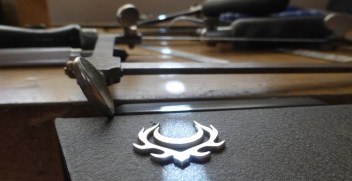
Talismanic Jewelry by Aidan Wachter (Photo from http://www.aidanwachter.com)

If you haven’t seen Aidan Wachter Talismanic Jeweler‘s magnificent Pagan- and magical-themed creations in silver (http://www.aidanwachter.com/), you should absolutely look at what he’s got to offer. The jewelry is hand-made in his workshop, and he’s constantly working on new designs from a variety of magical sources, including angelic work, grimoires, folk magic, and runestaves. He also does work to empower and enchant his creations, which is right up our alley.

He’s even offered a special sale (his first ever!!!) to our supporters and listeners. Simply use the code “Witchery” (without the quotation marks) when you check out at his site and get 10% off of your order. Do be aware that since this is work of a highly personalized nature he is currently turning orders around to ship in about 8 weeks.

A big Thank You to Aidan for making this available to our listeners!

Episode 81 – Magical Occupations Revisited

NWWLogoUpdated2015small

Episode 81 – Magical Occupations Revisited

Summary:

We launch our super-exciting and fun Patreon campaign! Come support us and help us grow (and get cool stuff at the same time)! We also revisit one of the topics we enjoyed most in our early days, Magical Occupations, and add some ‘new’ jobs to the list, as well as some new folklore to explore.


Play:

Download: Episode 81 – Magical Occupations Revisited


-Sources-

We have to give a very special thanks to YOU! Our listeners! You sent in the emails and comments which we used to think about magical occupations a second time around, and added so much brilliant insight to the discussion. Thank you!

Other sources include:

For a look at the folklore in J. K. Rowling’s wizarding world, check out The Sorcerer’s Companion: A Guide to the Magical World of Harry Potter.

Some resources based on the various “new” jobs discussed:


  • Nurses: Barbara Brennan’s Hands of Light is a book which uses energy healing in a nursing context
  • Hairdressers: Carolyn Morrow Long’s bio of Marie Laveau, A Voudou Priestess, addresses some of the hairdressing lore.

Cory also enthusiastically recommends the film Gypsy 83.

Please, please, please, check out our new Patreon page! You can help support the show for as little as a dollar a month, and get some awesome rewards at the same time. Even if you can’t give, spread the word and let others know, and maybe we can make New World Witchery even better than it is now.


If you have feedback you’d like to share, email us or leave a comment. We’d love to hear from you!

Don’t forget to follow us at Twitter! And check out our Facebook page! For those who are interested, we also now have a page on Pinterest you might like, called “The Olde Broom.”


Promos & Music

Title music:  “Homebound,” by Jag, from Cypress Grove Blues.  From Magnatune.

Incidental music in this episode is selected from the emerging genre of Witchhouse. The band you hear samples from is Salem, from their free album “I Buried My Heart Inna Wounded Knee.”

Podcast recommendation: Dusted! A Buffy the Vampire Slayer Podcast (which both Cory & Laine have been listening to far too often)

Blog Post 196 – Body Lore & Magic

Hans van Hayek, The Fortuneteller, 1892 (via Wikimedia)

“My ears are burning; who’s talking about me?”

“If your nose is itching, someone wants to kiss you.”

“Your feet itch? You must be about to go somewhere.”

I remember my mother often sharing the little bits of proverbial wisdom throughout my childhood.

Usually they were delivered with a wink or a wry smile, and I don’t think she took them particularly seriously, but then she also wouldn’t have been surprised to find out that any one of these tokens had borne some fruit in the real world. If you think about it, assumptions about the intimate connection between a person’s body and the world around him or her are not anything new or unusual. Plenty of people have an uncle whose bunions predict snowstorms, or a grandmother whose arthritis tells of coming rain, or headaches that detect heatwaves moving in. There are plenty of other ways one’s body might help one prepare for a day outdoors, according to American lore:

Beyond those sorts of weather-related phenomena, however, bodies are reputed to be in touch with all sorts of esoteric information. Of course, obtaining pieces of a person’s body is a primary way of gaining magical control over him or her, but that, I fear, goes beyond the scope of this article. Instead, this brief examination will focus on the body as a giver or receiver of information, rather than a source of spell ingredients. For example, often the physical features of a person imply certain characteristics about their intellect or psychology, according to American lore:

  • A fat person is believed to have a good disposition and a friendly nature
  • A big head can be the sign of great intelligence, provided it’s not too big (which would mean a person of no wit whatsoever)
  • A person with a “long head” is thought to be someone of dubious morality and “unscrupulous” character
  • A person with a broad face is thought to be warm and friendly, while a narrow face indicates shrewdness and insensitivity
  • “Dimple on the chin,/ Devil within” – A dimpled chin indicates a troublemaking personality
  • Long arms indicate someone with a “grasping” nature, someone who will do whatever it takes to geth what he or she wants
  • Trimming a baby’s fingernails will turn it into a thief
  • And of course, cold hands mean a warm heart.

What do all of these sorts of lore have in common, then? They all seem to operate off of the ever-present Doctrine of Signatures, which we’ve seen before, and which fundamentally states that like affects like. By that logic, we can see how things like “broad face” and “big head” can be indicators of abundance with regard to particular character traits (I can only assume that the same sort of logic applies to the “fat person,” in that they have general abundance in their figure and thus must have some in their disposition towards others as well). More interesting are the less direct connections between things like trimming fingernails and later thievery in life. I would suggest that because a baby is supposed to undergo very little “reduction” during the first year or so of life (a period when their hair, body, and in some cases, teeth, are all growing more abundant), that trimming something off of the baby’s hand will make it always look for something to fill the void. That, in turn, might lead the baby to fill it with other people’s things, and thus the fear of thievery is attached to the belief. Makes sense? Coming with me on that one? (It’s fine if you don’t, of course, as these sorts of lore-bits often can have multiple meanings and origins).

Some of my favorite bodily predictors come in the form of love (and lust) lore, because they seem so appropriate to connect to how we experience our fleshly existence. I always heard that if your nose itched, someone wanted to kiss you, as I noted above (which may indicate either a lustful flag of interest if one subscribes to the nose/penis symbolism that some folklorists do, or a simple sense of “rooting out” such a person, as indicated in the paragraph on itching below). Another fairly common bit of folklore says that “a hair in your mouth means someone wants to kiss you.” Hair can have very sexual connotations (which is why it frequently gets associated with sexuality in Abrahamic religions), so its presence in the mouth would be a very reasonable indicator of lustful intent. Another bit of lore deals more with what to do if your paramour wanders off: “Throwing nail parings into a fire is a way to call a lover back to you” (okay, so this is more of a spell, but it does seem as though the nail trimmings are communicating with the other person, so I’m calling it a fit).

Itches or burning sensations on the body are of particular importance, and seem to offer very particular meaning depending on where they occur. Some examples from Kentucky lore:

  • If your ears burn some one is talking ill of you, while if your hand itches you will receive a present, or shake hands with a stranger.
  • If your right foot itches, you are to go on a journey; if the left, you are going where you are not wanted.
  • When your nose itches, some one is coming. If it is when you are away from home, you may know you are wanted at home.
  • If your right eye itches, you will cry; if the left, you will laugh.

Again, we see elements of the Doctrine of Signatures, in that ears receive the voice of others in most circumstances, so if they act in an uncharacteristic manner, they must indicate an unheard voice somewhere out in the world. Feet carry us on journies, of course, so the interesting element in that superstition is the association with particular feet and the type of journey. With the long-standing stigma against “sinister” (the original meaning of that word being “left-sided”) use of limbs, the connection between the left foot and an unpleasant journey makes some sense. The less obvious one is the nose, although we may make some guesses about why a nose would be a barometer for upcoming human contact. We might think of proverbial phrases like “sticking one’s nose where it doesn’t belong” or a “nosy person,” and understand that noses are believed to be the body part which roots for information, particularly about the lives of others, and so the nasal connection does have some precedent.

In Mexican-American folklore, bodily functions are often regulated by “hot” or “cold” natures (not dissimilar from Ayurvedic medicine). Because of those temperature associations, people can figure out important information about a person’s state of well-being based on whether small signs on the body indicate larger imbalances within the person. A great example would be hair, which is thought to be “hot” while it grows. A person whose “heat” dies away quickly, however, will likely begin to go gray, as though his or her vitality were turning to ash on his or her head. Having long hair can also help one lose weight in this estimation, because longer hair burns off more energy, thus depleting the body of its energetic fat stores.

Surprisingly few death omens connected to anything body related. This likely reflects an anxiety that bodily warnings are incredibly frequent and common, and that death should be a rare and unusual occurance, rather than anything commonplace. One of the few bits of bodily lore connected to death has to do with the loss of a limb and its disposal. Supposedly, if one loses a limb through combat or other misfortune, and fails to take off any shoes or other vestments on the detatched extension, the person will experience phantom pains so long as the problem is not corrected.

Vance Randolph collected some interesting lore which borders on a divinatory method using the appearance of spots on fingernails:

“White spots on fingernails are supposed to represent lies, and little boys often hide their hands to avoid betraying falsehoods. However, there is a fortunetelling rhyme children use when counting these white spots :

A gift, a ghost, a friend, a foe, A letter to come, a journey to go.

Some people say that a large white spot means a journey.”

These sorts of counting-out rhymes often figure in children’s play, sometimes as a means of selecting play partners and sometimes with more occult connotations, as in the spot-counting rhyme above. Why white spots should indicate lies remains open to interpretation, but if I had to guess I’d assume that the spots are thought to be the actual lies trapped beneath the glass-like surface of the nail, demonstrating that lies always come up for air, sooner or later.

I’ll close today with a little tidbit from a somewhat older book (originally published in England, but likely in circulation throughout the British colonies), which is devoted to divination via dreams and moles on the body. The entire second half of the pamphlet is about moles and their meanings, and often provides startlingly specific and inalienable interpretations of mole size, shape, and position. One such indicator: “If a Mole is on the crown of the head, it shews another on the nape of the neck, and the party witty, and to have good natural parts: but that he will die poor.” I would say that indicates that a pair of moles is a bit of a mixed bag, wouldn’t you? I think I’ll go back to being a bit heavyset and being perceived as friendly, then.

Thanks for reading!

-Cory

Sources:

  1. Bronner, Simon J. Explaining Traditions. 2011.
  2. Bronner, Simon J. American Children’s Folklore. 2006.
  3. “Dreams & Moles, with their Interpretation & Signification.” Published by the Royal Society of London, 1750.
  4. Dundes, Alan. Interpreting Folklore. 1980.
  5. Hyatt, Harry M. Folklore of Adams County, Illinois. 1935.
  6. Ingham, John M. “On Mexican Folk Medicine.” American Anthropologist. 17, (1): 76-87.
  7. Price, Sadie F. “Kentucky Folklore.” The Journal of American Folklore. 14, (52): 30-38.
  8. Randolph, Vance. Ozark Magic & Folklore. 1964.
  9. Smith, Grace. “Folklore from ‘Egypt.’” Hoosier Folklore. 5, (2): 45-70.

Podcast 76 – Spring Symbols

Summary:

Today we’re tackling a hodgepodge of springtime symbols, including rabbits, eggs, maypoles, and flowers. We’ll discuss some of the myths and folklore surrounding these icons of spring, as well as some of the spells and magic that use these elements.

Play:

Download: New World Witchery – Episode 76

-Sources-

We draw upon several sources for this episode, including some of our own blog posts:

A nice skeptical analysis of the Easter/Eostre fakelore can be found here.

Rabbit books/text mentioned include Watership Down and the Uncle Remus Tales.

An excellent source on the limpia egg cleansing is the Curious Curandera’s site.

Some springtime symbols in fiction that might be of interest include Louisa May Alcott’s “May Flowers“ and Nathaniel Hawthorne’s “The May-pole of Merry Mount.”

Friends:

Sindy Todo of Todomojo.com is hosting the Northwest Crossroads Retreat soon. Check it out!

Big thanks again to Atticus Hob, who recently announced that his show is indefinitely off the air, but who did a marvelous job as our co-host last month. Check out his Orphan’s Almanac site for updates.

Also, check out the Spring Lore 2015 contest, and win one of three great prizes!

If you have feedback you’d like to share, email us or leave a comment. We’d love to hear from you!

Don’t forget to follow us at Twitter! And check out our Facebook page! For those who are interested, we also now have a page on Pinterest you might like, called “The Olde Broom.”

Promos & Music
Title music:  “Homebound,” by Jag, from Cypress Grove Blues.  From Magnatune.

Promos:

  1. Welcome to Night Vale
  2. The Wigglian Way

Podcast 75 – Moon Magic

Summary:
We’re back with our eyes on the sky, talking about the role of the moon in magic. We’ll discuss the divinity, folklore, and practical spellwork we associate with our lovely satellite, and make a plan for kick-starting our witchy engines in the moonlight. Plus, a new contest!
Play:
Download: New World Witchery – Episode 75

-Sources-
Please continue to keep Laine in your thoughts and prayers, as she is dealing with a serious (but thankfully not life-threatening) medical issue.

Books Mentioned:


Friends:
Sindy Todo of Todomojo.com is hosting the Northwest Crossroads Retreat soon. Check it out!

Big thanks again to Atticus Hob, who recently announced that his show is indefinitely off the air, but who did a marvelous job as our co-host last month. Check out his Orphan’s Almanac site for updates.

We talk about the concept of moon calendar names, a subject derived from a recent discussion on Betwixt & Between.

Our apologies for the technical glitch in the middle of the episode. We’ll try harder next time, we promise!

Also, check out the Spring Lore 2015 contest, and win one of three great prizes!

If you have feedback you’d like to share, email us or leave a comment. We’d love to hear from you!

Don’t forget to follow us at Twitter! And check out our Facebook page! For those who are interested, we also now have a page on Pinterest you might like, called “The Olde Broom.”

Promos & Music
Title music:  “Homebound,” by Jag, from Cypress Grove Blues.  From Magnatune. Incidental music is “Calling the Moon,” by Dar Williams and “Channel Z,” by the B-52’s.

Promos:

  1. The Irish & Celtic Music Podcast
  2. Druidcast

Podcast 74 – Grimoires with Atticus Hob

Summary:

For February 2015, we bring Atticus Hob on as our guest co-host to discuss magical book traditions, especially grimoires old and new.

Play:

Download: New World Witchery – Episode 74

-Sources-

Please keep Laine in your thoughts and prayers, as she is dealing with a serious (but thankfully not life-threatening) medical issue.

Some of the old grimoires we mention in this episode include The Black Pullet, The 6th & 7th Book of Moses, The Petit Albert, The Key of Solomon and the Goetia, the Romanus Buchlein, Secrets of Albertus Magnus, the Enchiridion of Pope Leo, and of course, the Bible.

Some of the smaller modern grimoire presses we mention are Hadean Press, Scarlet Imprint, Troy Books, Three Hands Press, and Xoanon Publishing.

You can find Cory’s article on magical books, including Joshua Gordon’s Commonplace Book, in Witches & Pagans magazine. He also mentions Rob Chapman’s Pow-wow Grimoire, and both discuss Grimoires by Owen Davies. We also both recommended the recend Llewellyn edition of Hohman’s Long-lost Friend, edited by Daniel Harms. Hob highly recommends Jim Baker’s Cunning Man’s Handbook.

Please stop by Hob’s current website, the Orphan’s Almanac, which is a wonderful fusion of the esoteric, the poetic, and the curious.

If you have feedback you’d like to share, email us or leave a comment. We’d love to hear from you!

Don’t forget to follow us at Twitter! And check out our Facebook page!

Promos & Music

Title music:  “Homebound,” by Jag, from Cypress Grove Blues.  From Magnatune.

Promos:

  1. Lamplighter Blues
  2. Backstory Radio

Podcast 73 – Protection Magic

Podcast 73 – Protection Magic

Summary:
We begin 2015 wih a look at protection spells, as well as some talismans of interest. We also have an adorable background guest star visitng us.
Play:
Download: New World Witchery – Episode 73

-Sources-
Books mentioned include: James & the Giant Peach, by Roald Dahl; The Encyclopedia of 5000 Spells, by Judika Illes; and Earth Power, by Scott Cunningham

Some of the various protective charms and talismans we discuss include: horsehoes, silver (including Mercury dimes), salt, iron, evil eye beads, the ojo de dios/God’s eye, dreamcatchers, gargoyles, the rowan cross, the SATOR and Abracadabra charms, and High John root.

I mention (and recommend) the Sweet Dreams oil from Mrs. Oddly

If you have feedback you’d like to share, email us or leave a comment. We’d love to hear from you!
Don’t forget to follow us at Twitter! And check out our Facebook page!
Promos & Music
Title music:  “Homebound,” by Jag, from Cypress Grove Blues.  From Magnatune.

Promos:

  1. Lakefront Pagan Voice
  2. Betwixt & Between

Blog Post 191 – Book Review: The Voodoo Doll Spellbook, by Denise Alvarado

[Author’s disclaimer: I received this book as a review copy from Red Wheel/Weiser Books. They have neither paid nor coerced me in any way to write this review, and the opinions stated herein are my own, and do not reflect the position of the publisher.]


I am absolutely certain that a number of people will see the title of Denise Alvarado’s latest title from Red Wheel/Weiser Books and simply ignore its existence. That is a downright shame, because the book proves to be a personal and anthropological tour through an area of magic that can be very easy to misunderstand, work with dolls and effigies. Alvarado confronts the issue of the ‘Voodoo doll’ early in her text, laying its negative cultural cache at the feet of “Hollywood and the media” and noting that despite its origins as a “fusion of folk-lore with science fiction…the image of the pin-stuck doll is so embedded in the collective psyche of the general public that the thought of using a Voodoo doll any differently seems to defy all logic” (p. 2). Alvarado’s book is a repository of doll magic, some of it very interesting and useful, some merely edifying or even occasionally confusing, but it certainly deserves consideration beyond its titular associations.

The book is broken up into twenty-one chapters, generally grouping spells by expected outcome, not much different than other spellbooks in the genre, really. There are chapters on “Money Spells,” “Spells for Good Luck, Success, & Gambling,” and of course, “Spells for Love & Romance.” Alvarado really sets herself apart with the amount of space she devotes to the less savory workings of doll magic, with chapters like “Bend-Over Spells,” “Binding Spells,” “Break Up Spells,” and most especially an extensive chapter on “Curses, Hexes & Spells for Revenge.” Her work draws upon myriad traditions, not solely Vodoun, hoodoo, or Southern Conjure—the fields she clearly connects with best, at least personally. She also brings in chapters on doll magic from the Ancient world, such as dream dolls drawn from Greco-Egyptian magical papyri. One of the truly standout chapters is a section called “Japanese Voodoo Spells,” which actually looks at two types of effigy magic found in Japanese practice, even connecting them to the popular youth culture there: “Aggressive marketing campaigns advertising Ushi no Koku Mairi [Japanese cursing dolls] kits that contain a straw doll, a hammer, a couple of candles, and fifteen-centimeter-long nails are targeted to the young Japanese demographic” and she notes an increasing presence of these dolls in “anime episodes, online games, and videos that promote cyber cursing” on sites like YouTube (p. 172). Alvarado brings in Goetic spells involving dolls, and influences from Christian magical practice via Catholic and Psalm workings. She even includes a doll spell to prevent pets from getting lost.

Sources for The Voodoo Doll Spellbook range from the scholarly to the questionable (ghost hunting websites and a book on Mexican magic which tenuously reframes Hispanic folk ceremonies in a Wiccan context, for example), but generally speaking, Alvarado speaks authoritatively and presents her material well. Several spells are guest-contributed by conjure worker Carolina Dean, which prove to be some of the high points in the text. In some cases, the reason for lumping some spells into separate chapters is unclear, as in the “Binding Spells” section, of which a reprint of Psalm 94 takes up a full twenty percent of the pages. Still, when she is on-target, as with her two Mississippi cursing dolls (pp. 36-38), the quality of the work is apparent, and the spells make a useful compendium of doll magic.

The relatively few other doll-baby work books available (Starr Casas’ slim-but-potent one comes to mind, which seems to be out of print, sadly) mean that Alvarado’s book fills a major niche in practical magical writing. In many ways, what she accomplishes with The Voodoo Doll Spellbook is quite similar to work done by Judika Illes in her books—this is the notebook of a collector of spells. What plagues the text the most is its title, which seems to relegate it to a very specific subcategory of magical work, and which undermines its authority in the minds of educated readers. The material contained within is useful, if occasionally uneven (I’m currently working with one of her money doll spells, for example—I’ll let you know how that goes). While I could consider this book neither a definitive text nor a weak entry in the field, I can certainly point to its utility and some of its unusual offerings as a recommendation to read it and be satisfied.

If you’ve read this book, or have others to recommend on the topic of doll magic, I’d love to hear them!

Thanks for reading!

-Cory