Podcast 43 – Solitary, Partner, or Coven

Summary

On our first episode back from summer break, we are looking at practicing magic alone, with a friend, or in a group. Plus we talk about finding teachers and styles of magical learning.

Play:
Download: New World Witchery – Episode 43

 -Sources-
Some of the sources we discuss:

Don’t forget to follow us at Twitter!

 Promos & Music
Title music:  “Homebound,” by Jag, from Cypress Grove Blues.  From Magnatune.

Promo 1 – The Infinite & the Beyond
Promo 2 – Iron Powoqa Radio

Episode 43 – Solitary, Partner, or Coven

New World Witchery – Episode 43
Working alone, with a friend, or in a group, plus styles of magical learning.
(complete shownotes at http://www.newworldwitchery.com)

Podcast Special – Magical Saints

-SHOWNOTES FOR PODCAST SPECIAL-

Summary
In our only June 2012 episode (sorry! I’ll be back from school soon!) Cory tells a few tales of magical saints. The saints range from canonical choices to folk tales to at least one very American folk saint.

Play:

Download:  Special Episode – Magical Saints

-Sources-

The sources today come mostly from the following books:

Promos & Music
“Grifos Muertos” by Jeffery Luck Lucas, from his album What We Whisper, on Magnatune.com

All incidental music comes from the group Zephyrus, on Magnatune (except for one incidental bumper which I sampled from YouTube)

(also, I used Audacity instead of GarageBand for this episode, so the sound may be a bit different)

Special Episode – Magical Saints

Special Episode – Magical Saints
Cory tells you tales of magical saints, both canonical and very non-canonical.

(complete shownotes at http://www.newworldwitchery.com)

Blog Post 160 – Summer Saints, part I

Hello everyone!

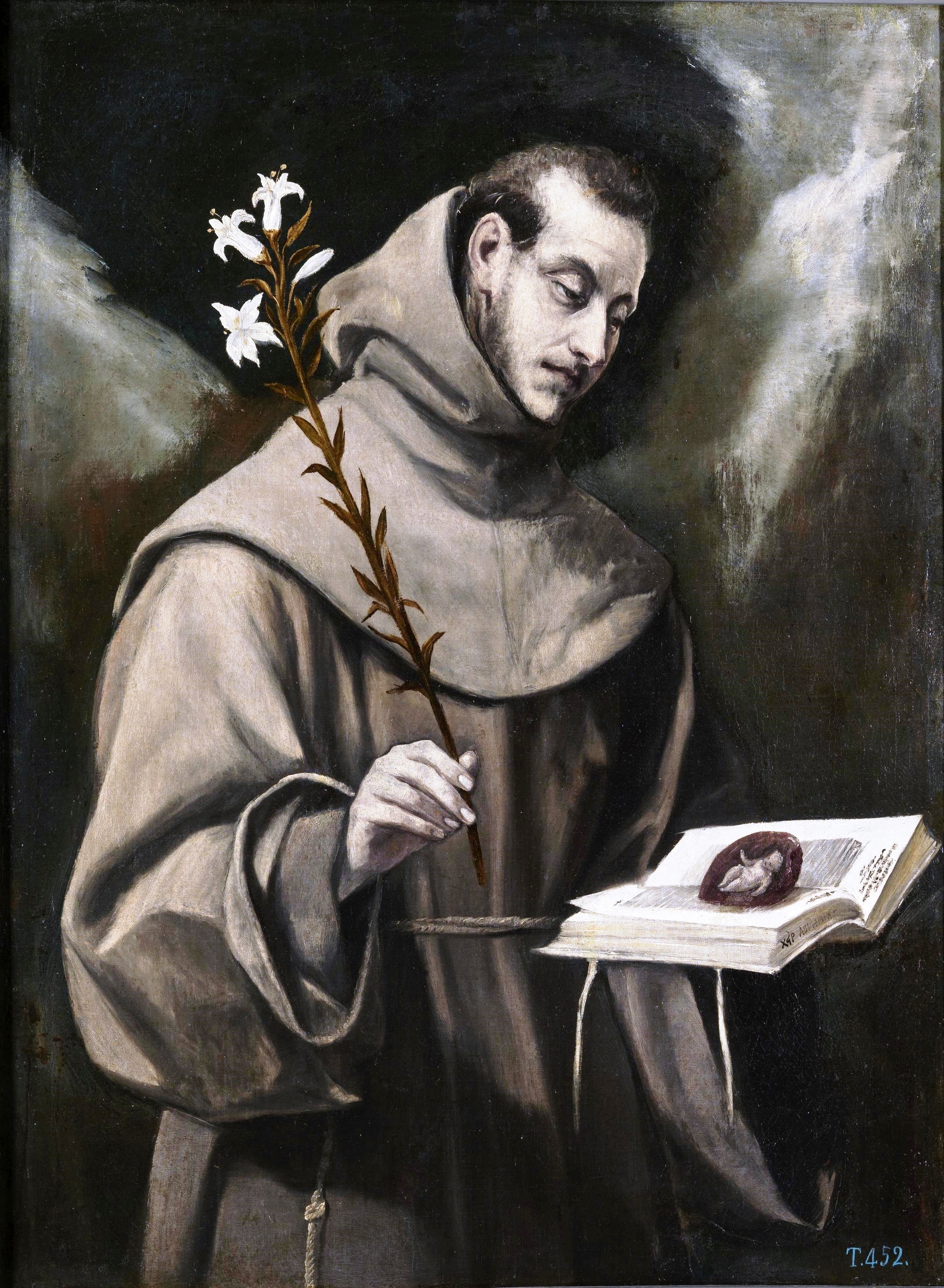
Today is the feast day of St. Anthony of Padua, one of the saints for whom I maintain an altar. There are a number of saints who have feast days during the summer months, and most of them also have some sort of magical practice associated with their specific day(s) of reverence. I know not everyone reading this is disposed to work with saints, so if they’re not your cup of tea (or sacramental wine), I completely understand if you skip this post. For those of you left reading, I hope this will be an interesting glance at the “summer saints.” I tend to think of folk Catholicism as a strong magical presence in certain areas of the New World, and one that has lingered from the early days of New France and New Spain into the modern day, so maybe some of you all out there feel the same. At any rate, on to the saints!

In this particular calendar (which I’m basing primarily on the current Roman Catholic feast day assignments), I’m only including saints who have specific magical rituals or practices associated with their holy days, as otherwise the list would be quite extensive. I also include a few of the ‘folk saints,’ ones that have not gone through the process of official canonization yet. None of these are going to be particularly in-depth examinations of the saints listed or their stories (but there may be more on that front later, hint, hint), but instead I’ll focus on telling you a one-to-two sentence biography of the saint, a little about the symbols and offeratory items involved in working with those saints, and then I’ll list any relevant folk rituals, crafts, or charms associated with that saint.

Unless otherwise noted, the spells are referenced from Judika Illes’ Encyclopedia of Mystic, Saints, & Sages (Harper One, 2011).

Joan d’Arc (Joan of Arc) – May 30th
St. Joan was only officially canonized in 1920, more than 500 years after her execution as a religious heretic. Famed as a military leader, a divinely led warrior, a mystic, and a woman of tremendous influence, Joan of Arc has become a national symbol for France and a patroness for a number of people and causes. Her official saint’s day is May 30th, but she’s also celebrated as a secular French heroine on May 8th.

Patronage: prisoners, rape victims, soldiers, horses, doves
Symbols:  horses, doves, armor, swords, a military banner
Offerings: French food (especially rustic things like bread), toy horses or knights, swords, water (esp. if offering her a candle, as she was burned at the stake, so offer refreshment if using fire in her rituals)

St. Joan Home Protection Spell:
-Ingredients-
Small (“chime”) candles, in gray, white, or silver – one for each member of the household
A knife or sharp tool to inscribe the candles

  1. Name each candle for a member of your household, and carve that person’s name into the wax
  2. Petition Joan with a prayer, once for each candle
  3. Repeat for a total of nine nights

 St. Anthony of Padua – June 13th
St. Anthony is the famous “finder of lost things,” which can include lost people, lost souls, etc. He’s also a devout helper of the poor and needy, and frequently depicted warmly jostling a child Christ in his arms.

Patronage: Anyone who’s lost anything – amputees (lost limbs), orphans (lost parents), Native Americans (lost homeland), etc. Also patron of the oppressed, draftees, expectant mothers, the infertile, the elderly, spice merchants, fishermen, travel agents, shopkeepers, and (paradoxically) thieves
Symbols: lily flowers, a baby (in the arms of a monk, especially), fish, bread
Offerings: bread, olive oil, lilies, heart-shaped Milagros, charitable donations to the poor and hungry, cigars, whiskey/rum/wine, coffee

Because he’s one of my especial favorites, I’m going to share several  of the magical workings associated with St. Anthony. I’ve mentioned the famous “Tony, Tony, please come down…” lost-object finding charm before, so I’ll skip that one today, but here are three other ways to work with St. Anthony in magical practice.

  1. Judika Illes recommends a simple way to gain St. Anthony’s blessing and protection: call his name nine times aloud in succession.
  2. A cure for male impotence, from Reginald Scot’s The Discoverie of Witchcraft:

“Item, one Katharine Loe (having a husband not so readilie disposed that waie as she wished him to be) made a waxen image to the likenes of hir husbands bewitched member, and offered it up at S. Anthonies altar; so as, through the holinesse of the masse it might be sanctified, to be more couragious, and of better disposition and abilitie, &c.” (Chapter VII)

  1. Denise Alvarado gives this spell, for getting someone to return a borrowed object to you:

“If you wish something returned to you, turn an image of St. Anthony upside down by a St. Anthony candle. Carry the amulet and pray to St. Anthony until your request is granted” (Voodoo Hoodoo Spellbook 67).

 St. Vitus – June 15th
The patron saint of Prague (and thus one for whom I have a fondness), St. Vitus is most famous for his association with a very strange disease known as St. Vitus Dance, which caused its victims to jitter and jive and generally look like they were dancing until they literally died from it. Explanations of this disease vary, with everything from ergot poisoning (that old standby of witchcraft accusations) to religious ecstasy getting the blame, but whatever the case, St. Vitus is firmly associated with this peculiar phenomenon, now known as chorea.

Patronage: actors, theater folk, dancers (of course), comedians, vagabonds, vaudevillians, brewers, tinkers, coppersmiths, travelers (and to some extend Gypsies because of this association), vintners, pharmacists, roosters, mushroom growers, epileptics (whose affliction is sometimes called St. Vitus Dance in folk medicine)
Symbols: a palm branch, a cauldron (ahem), a rooster, dogs, lions, in some circles the fly agaric mushroom is associated with him
Offerings: dancing, donations to animal shelters (he loved dogs, apparently), candles, incense, Czech glass decorations

To Gain a Year of Good Health

  1. Find a statue or church of St. Vitus (very easy if you live in Prague)
  2. Dance before it on June 15th, preferably for an entire night
  3. Finish by falling at the foot of the statue or at the door of the church, asking for the blessing of St. Vitus

Judika Illes also mentions that you can perform a form of curse by pointing at someone and saying “Let St. Vitus take you!” in order to afflict them with his strange dancing disease.

St. Lazarus – June 21st
Frequently confused with the biblical Lazarus raised from the dead by Jesus in the Gospel of John, this Lazarus is often depicted as a decrepit old man leaning on a crutch and being followed by a faithful dog (or two). He’s a leper who receives a miraculous healing in a Christian parable, and who is frequently syncretized to the Vodoun lwa of Babalu Aye (and sometimes with Papa Legba). He’s now strongly associated with helping victims of HIV and AIDS.

Patronage: sufferers of long-term illness, especially diseases like leprosy, AIDS, smallpox, etc. He guards dogs as well, and is frequently venerated as a patron of Cuba.
Symbols: a walking stick or crutch, beggar, dogs, the Hermit tarot card
Offerings: Milagros shaped like an afflicted body part, candles, water, offerings to the poor or homeless, popcorn. Do not give him wine (according to Illes: “if it spills, it hurts his sores” (428)).

For Healing of Chronic Affliction
-Ingredients-
Milagro or symbol of afflicted part
St. Lazarus candle or a new crutch/cane
A little dry dog food

  1. Take a symbol of the afflicted body part (like a milagro, or a cookie baked into the appropriate shape) to a crossroads, especially on the evening of June 21st
  2. Place the symbol, the candle (lit if you can, but DO NOT leave a burning candle unattended in a place where it could start a fire or be a road hazard), and/or the crutch all as close to the center of the crossroad as possible without it being dangerous to oncoming traffic
  3. Leave the offering at a crossroads, praying and asking St. Lazarus to come by and “pick up” your affliction to take with him
  4. Put a little dog food out for his dogs to boost his favorability toward you
  5. Return home without looking back

That takes us up through late June, and there are still a lot of days and workings to cover! You may have noticed I stopped just shy of one of the big days in New Orleans Voodoo celebrations, St. John’s Eve, which I hope to pick up in the next post. Then I’m hoping to do the saints remaning in June, July, and August, but of course the best laid plans of mice and men…

Speaking of, I’m reading Of Mice and Men (again) as one of the approximatel 20 books I’ve been assigned for my six-week summer graduate seminar, which I’ve just begun. So please do bear with me if I suddenly become a hermit and say nothing on Twitter or the blog or the podcast for a few weeks—I still exist, and will resurface once my eyeballs stop throbbing from all the reading. I will be trying to get occasional posts up, too, so do stay tuned.

Thanks for reading!
-Cory
Blog Post 159 – Birthday Superstitions

Hi all! No, this is not a shameless effort to harvest as many birthday wishes as I can, but today happens to be my birthday and I remembered a bit of magical lore that says it is particularly good luck to receive white flowers on one’s birthday.  That got me to thinking about some of the other fun birthday folklore and little bits of magic, and so I thought I’d do a little compilation post on the topic. Some of this has likely been covered in our show on New Year’s, Anniversaries, & Birthdays, but I think I’ll get into some new material, too, so I hope you enjoy!

Starting with probably the most unpleasant aspect of birthday folklore, the birthday spanking, let’s look at a fairly detailed explanation of this superstition, which I am pulling from Kentucky Superstitions, by Daniel & Lindsey Thomas:

“On a child’s birthday, he should receive a blow with a switch or other instrument of pain for each year of his life. Each blow should be accompanied by the pronouncing of one line of the following or a similar incantation, adapted to fit the age of the child:

One to live on;

One to grow on ;

One to eat on;

One to be happy on;

One to get married on” (#96)

Building on the “instrument of pain” idea, Thomas also records this rather morbid tidbit:

“If you let your birthday pass without thinking of it, you will die before the next birthday” (Thomas #2854)

Here are several bits of birthday lore in the form of admonitions about what not to do on your birthday, from Europe and the Caucasus regions:

  • One should not celebrate one’s birthday before the actual date of one’s birth. It will bring bad luck.
  • It is bad luck to be wished a happy birthday if one is over the age of 40 (instead, many people will have parties on their ‘name day’ instead, which is the feast day of the Saint with whom they share a name).
  • If you stumble with your right leg, and your birthday is an odd day, it is good luck. If you stumble with the left and your birthday is an even day, it is good luck. But stumbling with the wrong combination (right leg, even day or left leg, odd day) is very bad luck.
  • You should always have an odd number of candles on the cake or pie for a birthday, even if you have to add an extra candle.

Of course, almost everyone knows that blowing out your candles brings you good luck and wishes, but they can also be divinatory tools. In an article which probably has my favorite title of any folklore article (“Signs & Superstitions Collected from American College Girls,” by Martha W. Beckwith), I found this bit of birthday augury:

“Blowing out the candles on a birthday cake will tell you how many years it will be before you are married:

(a) By the number of times you have to blow to put them all out.

(b) By the number of candles left lighted after the first blow.”

This latter belief is supported by superstition from Kentucky as well (Thomas #246, #247), so perhaps the birthday folklore from Kentucky isn’t all bad news. Vance Randolph notes that Ozark natives regard birthdays as powerfully divinatory days, especially in terms of determining bad luck:

“The typical hillman is upset by any trifling piece of ill luck which happens on his birthday, knowing that  one who is unfortunate on this particular day is likely to have bad luck all year” (Randolph 66).

Randolph also records a wonderful method of bibliomancy related to one’s birthday:

“Many hillfolk tell fortunes and predict marriages by means of certain quotations from the Bible. For example, the twentyfirst and thirty-first chapters of Proverbs have thirty-one verses each. Chapter 21 is man’s birthday chapter; chapter 31 is woman’s birthday chapter. A boy looks up his proper verse in the man’s chapter, according to the date of his birth. A man born on the twenty-third of any month, for example, reads Proverbs 21 : 23 the content of this verse is supposed to be especially significant to him” (Randolph 184).

My particular verse using this method (and the King James) is: “The thoughts of the diligent tend only to plenteousness; but of every one that is hasty only to want.” So apparently, I should spend some time in diligent thought, today? Hmm, I’ll need to think on that a bit.

A fairly common divination performed for young children is to place a number of items around them on their first birthday and see which one they pick up. That will determine their future occupation. Harry M. Hyatt records this belief in several forms:

“3529. On a boy’s first birthday lay before him on the floor a deck of cards, a bottle, a Bible and a piece of money: if the deck of cards is selected, he will be a gambler; if the bottle, a drunkard; if the Bible, a  preacher; and if the money, a hard worker.

3530. The day a boy is a year old put down before him on the floor a pocket- book, a whiskey bottle and a deck of cards: if he reaches for the pocketbook, he will be opulent; if for the bottle, a drunkard; and if for the cards, a gambler.

3531. A boy’s future can be discovered on his first birthday by laying in front of him on the floor a book, a dollar and a hat: if he clutches the book, he will be a good learner; if the dollar, a miser; and if the hat, a stylish dresser” (Folklore from Adams Co.)

Hyatt also records an interesting variation on the birthday-candle-wish belief, saying “The person whose candle burns out first at a birthday party may make a wish,” which indicates that perhaps each party guest lights one of the birthday candles on the cake (Hyatt #8715).

Mixing the good with the bad, American Folklore: An Encyclopedia shares these pieces of birthday folk belief:

  • The best day to start a business is on your birthday
  • If a slice of birthday cake tips over on your plate, you will not marry
  • You should put a pat of butter on your nose on your birthday for good luck (Brunvand 170-2)

The book also mentions the carnival-esque atmosphere of birthdays, in which an ordinary person might become “Queen” or “Boss” for the day—echoing the elevation of the Fool during Carnival and Mardi Gras celebrations, and the idea of baking a birthday cake with little divinatory charms inside echoes the “King Cake.”

So there’s a bit of fun birthday lore for you. I don’t know which of these I’ll try out this year, though I might just secretly be hoping for that birthday spanking. One to grow on and all that. It’s all in the name of folklore, I promise.

Thanks for reading!

-Cory

Blog Post 158 – The Doctrine of Signatures

Greetings everyone!

In this entry, I want to talk a little bit about a concept that can get very sticky, and which may very well put me at the outer limits of credibility. Before I dig into the meat of the subject, however, I think I should remind everyone that THIS IS NOT A MEDICAL BLOG. NO INFORMATION PRESENTED HERE IS INTENDED TO DIAGNOSE, TREAT, OR OTHERWISE PROVIDE MEDICAL ADVICE FOR ANY ILLNESS, AILMENT, OR CONDITION. IF YOU HAVE A MEDICAL NEED, PLEASE SEE YOUR PHYSICIAN OR QUALIFIED HEALTH PROVIDER. ALL INFORMATION CONTAINED HEREIN IS STRICTLY IN THE INTEREST OF PRESENTING FOLKLORE AND PERSONAL OPINION.

Now that the big, scary, all-caps part of the post is done, let’s talk about the Doctrine of Signatures. I was actually rather surprised after our last episode to hear from several people that the concept of the DOS was unfamiliar to them. I realized at some point that the ideas founding the DOS were so internalized, and I was assuming that most people who worked with herbs had heard of those concepts. Now I’m thinking that I may have just been sort of lucky to have picked that information up early on (I know my mother shared a bit of that with me based on herbs she grew and I learned a lot of it from my first few years as a practicing neo-Pagan hanging around rock and herb shops).

So what is the Doctrine of Signatures? In this case, I think I’ll leave the general explanation to better folklorists than myself. First, I’m going to quote a somewhat neutral (though erring on the side of skepticism) article by folklorist Wayland D. Hand:

“Advocates of nature’s way in natural and organically grown foods, probably still have a lingering belief in the doctrine that for every illness with which man is afflicted God himself has provided a healing agent. All one has to do is to learn to seek out these wondrous plants. It was on this essential premise that the Doctrine of Signatures was enunciated by Paracelsus, Giambattista Porta and the early botanists. This theory is most ably stated by William Turner, an English botanist, who in his The New Herbal of 1551, wrote: ‘God hath imprinted upon plants, herbs, and flowers, as it were, a hieroglyphic, the very  signature of their vertues, as on the nutmeg, which, being cut, resembles the brain.’ Writing a half a century later, Johannes Franck, one of the leading German botanists of his day, compiled a book which  he called Signature, that is, a Basic and True Description of Plants Created by God and Nature. This doctrine went somewhat beyond the shape and color of plants to their activity and function. One of the earliest examples of this kind of sympathetic connection is found in the writings of Pliny the Elder who flourished in the first century, A.D. Calcifrage was recommended to combat the stone. This prescription  comes form the fact that this hardy plant which could penetrate the fissures of the hardest face of a cliff, would certainly be able to break up kidney and gallstones, as the name of the plant itself suggests:  calci-frage, ‘stone breaking.’” (Hand, “Magical Medicine,” Western Folklore)

Next, let’s look at a much older (and much more cynical) opinion about this idea, from plant folk-lorist T.F. Thiselton-Dyer, whose Folk Lore of Plants is something of a classic:

“The old medical theory, which supposed that plants by their external character indicated the particular diseases for which Nature had intended them as remedies, was simply a development of the much older notion of a real connection between object and image. Thus, on this principle, it was asserted that the properties of substances were frequently denoted by their colour; hence, white was regarded as refrigerant, and red as hot. In the same way, for disorders of the blood, burnt purple, pomegranate seeds, mulberries, and other red ingredients were dissolved in the patient’s drink; and for liver complaints yellow substances were recommended. But this fanciful and erroneous notion ‘led to serious errors in practice,’ and was occasionally productive of the most fatal results.” (Dyer, TFLOP, Chapter XVI)

The idea of plants bearing the divine mark which indicated their use is a very old concept. Hand notes that Pliny the Elder recorded such an idea, and it was debated even in his time with question to the validity of this method.  The idea—in one form or another—appears in herbal medicinal systems throughout the world, including Chinese traditional herbalism and Indian Ayurvedic medicine.  Many people swear by it, and a number of ‘yarb doctors’ have treated ailments with it for centuries with relative success. Yet at the same time, the doctrine has been misused, misapplied, or just plain wrong in some cases and has caused an increase in illness or injury.

I bring up the DOS at all because it’s so fundamental to New World magical concepts. The idea that God, the Creator, or some other spiritual force has set in motion a world which bears hallmarks of its design seems to have been taken as de facto truth among many early settlers in America, particularly poor folks with limited access to medical treatment. An entire profession of folk herbalism, or “yarb doctors” arose in the Appalachians, and similar practices (such as curanderismo in the Southwest) appeared elsewhere. In most cases, these medicine men and women did not make their primary living off of their knowledge of herbs and plants, but rather in many cases refused payment for such services, feeling that it was their God-given duty to render help when help was needed. Of course, such high-mindedness was not universal, but even in cases where money or goods changed hands, yarb doctors cost less than a typical doctor in most instances.

Determining which plants have which signatures is a strange and murky process. For instance, an herb with heart-shaped leaves might be good for treating a physical heart problem, an emotional disorder, working a love charm, etc. The hairy stems of mint might indicate that it has the ability to ‘prickle’ the lungs and stimulate respiration, or they might signal that rubbing mint on one’s scalp would stimulate hair growth. The tall and showy joe pye weed, which has the nickname ‘gravel root,’ is used to treat kidney stones—frequently referred to as ‘gravel’—but its hollow stems might signal a use in treating sore throats as well as problems of the urinary tract, which both feature hollow tubes leading to external orifices. In this latter case, we can see another important aspect of the Doctrine, in which many plants receive their folk names based on their folk medical uses (boneset, feverfew, eyebright, etc.). Critics of the DOS sometimes point out that the retroactive ascription of signs to the plants, such as noticing that joe pye weed has hollow stems and therefore would be good for urinary problems, does not indicate a heavenly marking of use, but rather makes for an easy mnemonic device for remembering what plants are good for what ailments.  Further complicating the matter, some signatures are not visual markings, but rather based on sounds the plant makes when shaken, for example, or perhaps on a specific odor the plant emits.

There are also potential problems separating out a ‘signature’ from a legendary or mythical ascription of plant demarcation. Passionflower, which I’ve written about previously, is a good example of layered interpretation, with the numerical and color symbology of the plant being so closely linked to Christian mythology that the flower essentially contains a sermon. Was passionflower marked, given its unusual structure by a Creator to illustrate a story? Likewise, a number of plants are reputed to have some tie to the Crucifixion in Christian myth, such as the holly berry. Thiselton-Dyer also records a similar blood-staining myth related to poppies, in which they have been dyed by the blood of St. Margaret. In these cases, the plants are ‘marked,’ but not necessarily for use. They bear the signs of an interested and involved divine power, but are not strictly Doctrine of Signatures material since those signs illustrate a story and not a practical application. Yet, by a stretch of imagination, one could link the poppy’s use as an opiate and intoxicant to the story of St. Margaret, who famously battled a dragon. Since the use of poppy-derived-opium (and its relative, heroin) was known for a time as “chasing the dragon,” the connection does, by a bizarre happenstance, make some degree of sense. But was the flower marked with foreknowledge of the phrase, and thus was it pre-figurative? Or is all of this just strange coincidence?

It’s probably time for me to come clean, as I’ve been sort of dancing around my opinion on the Doctrine of Signatures. I’m a believer. Not a hard-and-fast, every-plant-bears-a-signature-and-medical-science-is-quackery kind of believer, but I tend to think that the DOS has some validity. My personal work with herbs and plants has led me to see the connections between their form and their functions. I don’t think that we necessarily understand every signature in every plant, and I do think that we frequently misinterpret the signs we see, but I do think that there’s an element of deliberate design within most flora that has to do with its use. This probably hedges a bit close to the Intelligent Design argument for some folks, and I don’t want to get bogged down in that discussion. I don’t make claims as to who marked the plants—perhaps they mark themselves in some way, for all I know. And I don’t necessarily think that I could wander into a meadow, find a foot-shaped plant, and use it to treat bunions and corns. I tend to agree with the skeptics about the retro ascription of plant signatures that human understanding of the plant signatures comes after we figure out what they are used for. But that does not diminish—to me—the idea that the design is implicitly connected to the use. It only emphasizes that we should be paying much more attention to what plants have to teach us, and to the hidden language of the world working around us.

So that’s my nutshell version of the Doctrine of Signatures. There are many authors who discuss this concept more handily than I have here, so please do some research and see what you think of the whole thing. Have you ever noticed signatures in plants (or even in animals, weather phenomena, etc., which are sometimes included in an extended version of this doctrine)?

Thanks for reading!

-Cory

Podcast 42 – Plants and Witchcraft

Summary
On this episode of New World Witchery, we look at the world of plants and how it affects the world of witchcraft. We talk about sourcing herbs and roots, wild vs. cultivated plants, and whether you need to work with them at all.

Play:
Download: New World Witchery – Episode 42

 -Sources-
We don’t cite a whole lot of sources, so I’m just going to list a few of the herbal books/resources we discuss or which I turn to regularly:

The Encyclopedia of Magical Herbs, by Scott Cunningham
Hoodoo Herb & Root Magic, by Cat Yronwode
The Folk-lore of Plants, by T. F. Thiselton-Dyer
Jude’s Herbal Home Remedies, by Jude C. Todd, M.H
The Complete Book of Herbs, by Lesley Bremness
Complete Herbal, by Nicholas Culpepper
A Modern Herbal, by Mrs. M. Grieve (also known as botanical.com)

We mention Mountain Rose Herbs as a great source for buying herbs, and we make several failing attempts to recommend our shop, the Compass & Key Apothecary. You should also check out Sarah Lawless’s great herbal supply shop, Forest Grove Botanica.

You can now request Card Readings from Cory via email, if you are so inclined.

Don’t forget to follow us at Twitter!

 Promos & Music
Title music:  “Homebound,” by Jag, from Cypress Grove Blues.  From Magnatune.

Promo 1 – Inciting a Riot
Promo 2 – The Infinite & the Beyond
Promo 3 – The Pagan Homesteader

Episode 42 – Plants and Witchcraft

New World Witchery – Episode 42
Plants and Witchcraft
(complete shownotes at http://www.newworldwitchery.com)

Blog Post 157 – Peaches

I love a good summer peach. Or peach cobbler. Or homemade peach ice cream. And I can’t tell you how much I miss my mother’s homemade brandied peaches (which were amazing over some hand-churned vanilla). If you live in North America, it’s likely you’ve encountered peaches everywhere from grocery stores to roadside stands to neighbors’ backyards. They’re ubiquitous, which also means they’ve been a major player in the foodways of America.

Today I’m going to briefly look at the peach from another folkloric perspective, focusing on its relevance in magical lore as opposed to its purely culinary uses (though I imagine the two are not ever to be completely disentangled from one another).

The flesh of the peach is frequently regarded as a nearly sacred food in its homeland of China, where it is thought to aid immortality. The lore of the peach is extensive there, with every part of the tree and fruit making an appearance. Peach pits are worn as amulets to ward off demons, while blossoms are used to enhance love, luck, & beauty. Peaches are left in family shrines, and feature prominently in the literature and art of China. You can read a good deal more about the role of the peach in Chinese lore here and here.

Peaches were highly valued in places like the Appalachian Mountains, too.  According to the third Foxfire book, one of the most common varieties was the Indian peach, a shrubby variety with small, firm peaches:

“Indian peaches are small trees, spreading with scraggly branches, said to be descendants of those trees planted by the Cherokees around their villages…The fruit of the Indian peach is white with a rosy cheek, white-meated with a red heart…All have a most delicious flavor, raw or cooked. Peaches are rich in iron, and peach leaf tea was a medicine for bladder troubles or used as a sedative” (Foxfire 3 303)

In North American folklore, all parts of the peach have their value as well. In Folk Medicine in Southern Appalachia, one of the author’s informants says this of the peach tree:  “The peach tree was justifiably described by herbalist Tommie Bass of northern Alabama as ‘a drugstore on its own’ in recognition of its many medicinal uses” (Cavender 64-5). Below you’ll see a sampling of the many different magical and/or medicinal uses of the peach and its parts:

Tree/Wood

  • “A baby that refuses to come can be brought at once and the labor pains will stop, if the woman drinks tea made from bark scraped downwards off a young peach tree.” (Hyatt #2972) Hyatt also states in several other places that peach branches were used to help bring a baby into the world by magical means.
  • “Peach tree root or bark was also commonly used [to treat diarrhea]” (Cavender 88)
  • Peach wood can be used in a magical cure for warts by cutting as many notches in a peach branch as one has warts (Thomas #1493) (see also “Leaves”)
  • Peach wood is one of the reputed choices for making dowsing forks, according to many sources (Thomas #105; Brunvand 432, Steiner 271, Randolph 83)
  • Ozark lore specifies that peach bark scraped upward prevents vomiting and/or diarrhea, but scraped downward it is a strong emetic (Randolph 95)
  • “A mess of peach roots, ground up and mixed with lard, is said to cure the seven-year itch” (Randolph 109)

Fruit

  • A piece of Kentucky lore states that twinned peaches found together indicate that you will be married soon (Thomas #593)
  • Eating a peach pecked by a bird is said to lead to poisoning (Steiner 267)

Pit

  • John George Hohman mentions the use of “peach-stones” as a cure for “gravel” (kidney stones). He attests to it especially because it cured him of his own gravel (Long-Lost Friend #84)
  • Hohman attests that peach pits can also be taken to remedy drunkenness (#185)
  • The seeds reputedly can help stimulate hair growth in some people (Todd 55)
  • Vance Randolph describes an Ozark love charm consisting of a carved peach stone filled with “some pinkish, soap-like material” which he could not identify (Randolph 166)
  • Both Randolph and Newbell Niles Puckett mention the peach-pit charm as a powerful one, akin to the lucky rabbit’s foot charm (Puckett 437)

Leaves

  • Peach leaves were thought to be a Colonial-era cure for worms (Black 199)
  • Cat Yronwode mentions using dried peach leaves in wisdom oil blends to help students focus on studies (HHRM 143)
  • Kentucky lore says that rubbing warts with peach-leaves, then burying them will remove warts (Thomas #1492)
  • The leaves were frequently made into a poultice, which could be used to treat headaches, bruises, and “pumpknots (bumps caused by a blow or knock to the head)” (Cavender 98, 109)
  • One of the Foxfire informants recommended a peach leave poultice mixed with salt and cornmeal to treat an abscessed tooth (Foxfire 9 70).
  • Herbalist Jude C. Todd recommends the use of peach leaves as a part of a dandruff treatment (Todd 53)

Flowers

  • Hohman says that “The flowers of the peach-tree, prepared like salad, opens the bowels, and is of use in the dropsy” (Long-Lost Friend #185)
  • Hohman also recommends the use of the flowers as a cure for worms and constipation (#185)
  • Girls in the Ozarks pierce their ears when peaches are in bloom, believing that piercing them any other time will lead to infection (Randolph 164)

Vance Randolph has a great bit of lore regarding the planting of peaches as well:

“In planting peach trees, it is always well to bury old shoes or boots near the roots. Not far from Little  Rock, Arkansas, I have known farmers to drive into town and search the refuse piles for old shoes to be buried in peach orchards. The older and more decayed the leather, the better it works as fertilizer” (Randolph 39)

From my own perspective, I really like the dowsing power of the peach, but I also have a great fondness for the carved peach pit charms. They seem like they would be beautiful and incognito ways of carrying natural amulets about on one’s person. I can also easily see using the flesh of a peach like the flesh of an apple, carving things into it before eating to absorb those qualities. The peachy pulp, which bears such a strong resemblance in so many ways to human flesh, also suggests a use as a makeshift dolly. When the “heart” of the peach, its stone, is considered, this is likely a very apt application of magic to the rosy-golden fruit.

I thought I’d finish up today with something non-magical, but which certainly has an enchanting power: brandied peaches like my mother used to make (I sadly do not have her exact recipe anymore, so the one I’m sharing is adapted from the excellent Putting Food By, by Greene, Herzberg, & Vaughan). We used to have a spoonful of these over ice cream after dinner sometimes, and they were simply otherworldly. They’re not as sweet as you might think, but that’s part of their charm. Plus, you can’t go wrong with a little booze in your dessert. I hope you enjoy!

Ingredients:
Peaches (1 lb.)
1 cup sugar
1 cup water
Good brandy
Whole cloves (optional)
Whole cinnamon sticks (optional)

Clean & dry your one-pint canning jars. Score skin of peaches, then blanch them in boiling water and dunk them into an ice bath. Slip the skins off and slice the peaches into halves and quarters (removing stones).

Make a simple syrup by boiling the cup of sugar with the water. Cook the peaches in the sugar syrup for about 5 minutes, then transfer peaches into individual jars. To each jar add 1-3 cloves  (optional), 1 cinnamon stick (optional), and 2-3 tablespoons of brandy. Seal jars and process in a hot water bath for about 20-25 minutes, then carefully remove the jars and allow them to seal.

I hope you’ve enjoyed this look at peaches. If you have any other ideas about using peaches in magic, please leave them in here or drop us a line.

Thanks for reading!

-Cory