Episode 66 – Sacred Artistry with Bri Saussy
In this episode, we discuss Sacred Artistry and an Enchanted Worldview with Bri Saussy of Milagro Roots.
(complete shownotes at http://www.newworldwitchery.com)
Author: newworldwitchery
Podcast 65 – The Slender Man Discussion (with Fire Lyte)
Summary:
This episode features an extended discussion with Fire Lyte of Inciting a Riot about the recent Slender Man stabbing incident, mental health and treatment, folk belief, and faith-directed action in the magical spirituality community.
Play:
Download: New World Witchery – Episode 65
-Sources-
While the discussion ranges widely, here are some highlights:
- If you don’t already listen to Fire Lyte’s show, Inciting a Riot, you should check it out
- The primary story we’re discussing is the Slender Man stabbing incident. While I cannot guarantee every subsection of the NBC news feed on the subject protects the rights of the minors involved, at least at a high level it doesn’t seem to broadcast names, so I’m linking there if you want more on that incident.
- If you want to know more about Slender Man, I’d recommend the Wikipedia page, the Something Awful form (NSFW), and/or Creepypasta. Just please remember, this is an internet meme/netlore. Please DO NOT take these sites as gospel or hurt anyone because of what you find on them. They are ENTERTAINMENT ONLY.
- Fire Lyte mentions and recommends the skeptical inquiry show Oh No Ross and Carrie
- Fire Lyte cites an article on auditory hallucinations in schizophrenia.
- Cory talks about auto-flaggelation and self-immolation (specifically Thich Quang Duc) as an aspect of darker faith-based action which complicates our understanding of ‘right’ and ‘wrong’ action.
Keep watching for information on the next Pagan Podkin Supermoot, hosted by Fire Lyte in Chicago (in conjunction with the Pagan Pride Day up there).
If you have feedback you’d like to share, email us or leave a comment. We’d love to hear from you!
Don’t forget to follow us at Twitter! And check out our Facebook page!
Promos & Music
Title music: “Homebound,” by Jag, from Cypress Grove Blues. From Magnatune.
Promos:
1) Inciting a Riot
2) Betwixt and Between
Episode 65 – The Slender Man Discussion (with Fire Lyte)
Episode 65 – The Slender Man Discussion (with Fire Lyte)
This show features a special extended discussion with Fire Lyte of Inciting a Riot. We will look at the recent Slender Man stabbing case, mental health, and folk faith and action in the magical spirituality community.
(complete shownotes at http://www.newworldwitchery.com)
Podcast 64 – Sex and Magic
Podcast 64 – Sex and Magic
Summary:
In this show, we discuss the use of sex as a magical tool (as well as magical tools that can be used for sex), and the ethics of mixing sex and magic from our points of view.
Play:
Download: New World Witchery – Episode 64
-Sources-
Some of the things discussed today include:
- Cory mentions the book, The Joy of Sex, by Alex Comfort
- The discussion of sex and scent brings up bay rum scented items, Bourbon French Parfums in New Orleans, and vanilla (oh, and you should also check out the scent-and-sex heavy book Jitterbug Perfume by Tom Robbins)
- In Peter Paddon’s book, Grimoire for Modern Cunning Folk, the deluxe edition has some additional material on sexual fluids in magic. He also has a podcast discussion on sex magic that is excellent.
- Cory mentions the use of Damiana liqueur as an aphrodisiac
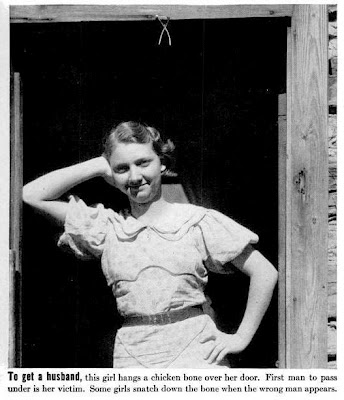
- We talk about using turkey bones in the Ozarks as a sexual magnet. You can find a picture about it here, and lots about it in Ozark Magic & Folklore, by Vance Randolph.
- The Crowley quote about masturbation comes from his book Magick.
- Cory mentions he’s been watching the occult series called Salem on WGN, and that our previous guest Papa Toad Bone may have a role on it at some point.
Keep watching for information on the next Pagan Podkin Supermoot, hosted by Fire Lyte in Chicago (in conjunction with the Pagan Pride Day up there).
If you have feedback you’d like to share, email us or leave a comment. We’d love to hear from you!
Don’t forget to follow us at Twitter! And check out our Facebook page!
Promos & Music
Title music: “Homebound,” by Jag, from Cypress Grove Blues. From Magnatune. Alternate title music was “Love Warrior,” from FOB, and can be found on MusicAlley.com.
Promos:
1) The Crooked Path Podcast
2) Lakefront Pagan Voice
3) Down at the Crossroads
Episode 64 – Sex and Magic
Episode 64 – Sex and Magic
In this show we look at using sex as a magical tool, and we discuss the ethics of mingling sex and magic.
(complete shownotes at http://www.newworldwitchery.com)
Blog Post 190 – Some Military Superstitions

With the timing of Memorial Day (for those reading in the U.S., that is) and my brother’s recent entry into the American Armed Forces (he’s been in for just under a year), I thought it might be worthwhile to highlight a few of the superstitions surrounding life as a soldier, sailor, pilot, or marine. Some of these practices are magical in nature, and some simply traditional or an interesting way of adding a layer of significance to the world from folks who already make significant contributions to it. I will not attempt to paint any glossy pictures of military service, nor will I touch on some of the lore which might be construed as highly disrespectful in light of the holiday. I also doubt I’ll cover even a fraction of the total lore around these branches of service, as that could easily fill volumes, and I’m going to attempt to keep this under two thousand words.
For the sake of simplicity, I will look at the beliefs more or less by branch, although in fact it will essentially be by domain—land, sea, and sky. The Marines, while ostensibly a seafaring force and part of the Naval Department, are for all intents and purposes the force that crosses those three boundaries (although I should note that in the modern military, an Air Force pilot on a Naval carrier would not be unusual, and other service members work across branches frequently). I will basically be looking at lore for soldiers, sailors, and pilots, and cross-pollination of belief can be inferred as appropriate.
Soldier Lore
Some of the chief superstitions surrounding life in the Army focus on protection in battle, naturally. Protection from bullets, mortars, bombs, and any of the other myriad dangers on the battlefield is essential, and here are some of the magical methods used:
- Soldiers would often wear bibles “tucked or pinned over the portion of a uniform covering the soldier’s heart” to fend off bullets (Watts 419).
- Soldiers in World War I would sew black cats onto their uniforms for good luck (contrary to the traditional ‘bad luck’ association with the animal)
- Mistletoe could provide protection for a solder, when pinned inside his or her uniform
- “[S]hells etched with the soldier’s name” were considered lucky amulets (Brunvand 766)
- The 91st Psalm would be carried or worn inside a uniform for luck and protection
- Hair, clothing, or jewelry from a loved one back home would sometimes offer some safety from harm
- A bit of clothing from a personal or national hero could be worn to provide vigor, courage, and insulation from battle damage
- A soldier should always eat all the food on his plate before battle to ensure he survives it
In addition to tokens and talismans, a number of stories circulated surrounding apparitions which portended good or bad fortune for soldiers during wartime. For example:
“Legends about folk saints defending soldiers and citizens abounded. Variations include the saint appearing as an old man before or during battle, prayers by the soldier or a family member resulting in miracles, the saint healing injuries and aiding prisoners of war to survive or escape, or the saint appearing in a dream. Saints were also credited with disabling enemy weapons and altering the direction of enemy planes and missiles” (Brunvand 766).
Some of the saints to whom a soldier might appeal would include Saint Michael Archangel, for victory in battle, or Saint Christopher, for a safe journey back home. A Cross of Caravaca might also be worn to symbolize such divine protection.
One of the entities who seemed to travel everywhere the soldiers did was the astounding Kilroy. With his eyes, nose, and fingers peeping over the top of a fence, he was always first on the scene, and became something of a traditional bit of graffiti for soldiers:
“Kilroy lore calls for GIs to place drawings of the character in the most remote and unlikely locations, signifying the power and reach of the U.S. military. It is also customary for soldiers to claim that the marking was discovered rather than placed, making Kilroy always the first to arrive at a host of sites. He is rumored to adorn a range of places from the Statue of Liberty’s torch to the surface of the Moon” (Watts 237).
In addition to protective and comical apparitions (or drawings, in Kilroy’s case), there were also the less pleasant ‘death tokens’ which precluded a loss in battle or the death of a soldier. One such creature is the Ghost Dog of Flordia Island in Guadalcanal, essentially a derivation of the ‘Black Shuck’ figure of British lore, a demond dog who spells doom for those who see him.
A good bit of lore sprang up around soldiers who wanted to get a quick discharge from their unit, including such strange techniques as “eating a large stack of pancakes or sleeping with soap under both armpits” (Brunvand 767). Often, these were essentially hazing techniques other soldiers would use on those with cold feet rather than rituals that could actually earn a fast pass out of service.
Civilians could aslo help soldiers in their efforts in some cases, using magical methods. Children during World War II would jump on cracks in the belief that every time they did so, a Nazi soldier would fall. Wives of soldiers were told not to ask about missions, including ones the soldier had survived, and to refrain from watching their soldiers as they left for their tour of duty. Even the symbolic act of saluting or showing a ‘V for Victory’ with the hands and fingers was thought to bolster the soldier’s strength (and his or her morale).
Perhaps the saddest lore surrounding soldiers involves the fallen ones. There are many stories of ghost soldiers and even entire ghost units still fighting battles long after the wars are over (I had a personal experience with a group of Civil War soldiers, which I believe I mentioned on the show, for example). Akira Kurosawa’s film Dreams, features a vignette of just such an occurance, where a lone soldier returning from battle meets his entire platoon of fallen comrades and tries to explain what happened to them.
Finally, I can’t resist mentioning the story of the “Soldier’s Almanack & Prayer Book,” in which a soldier accused of keeping gambling accessories (i.e. playing cards) defends himself by demonstrating that the deck actually functions as an almanac of sorts and a reminder of biblical stories and prayers. There’s a full account of it in the appendix of my book, 54 Devils, and you can find a slightly longer description of it with links to additional material in the short version of that book, “The New World Witchery Guide to Cartomancy.”
Sailor Lore
There are so many superstitions and customs surrounding the life of a sailor, it’s hard to know where to begin. We’ve covered a few of these in previous articles, notably the post on “Seaside Sorcery,” so I’ll try to mostly stick with new material here, but if I repeat myself please pardon the gaffe.
I will start with one reiterated bit of lore on cauls, the thin membrane which surrounds the head of some newborn babies. I did discuss these items briefly in the above-mentioned post, but I found a bit of expanded lore on them which I thought would be appropriate here:
“Many captains and crews would not leave port unless a cawl from a recently born baby was aboard the ship they were to be sailing on. Cawls were often traded from one vessel to another, as one ship came home and another sailed off to distant lands. Having a cawl aboard was a guarantee that the ship wouldn’t sink, and they were often sold to sea captains and shipowners for large sums of money” (Cahill 15).
The part that most interested me in this was the trading from one ship to another, a sort of ‘passing of luck’ from one boat to another. I imagine that to those who used such tools, a caul which had kept a crew safe through one set of voyages would seem doubly powerful to the next crew to inherit it. The enormous cost of the cauls is also worth noting, especially in the context of it being a captain’s purchase—I can imagine some sailors taking it as a bad sign that a captain was too stingy to purchase such an elementary piece of luck for their ship.
Among some of the other pertinent bits of folk belief for life onboard ship we find a similar theme to the soldiers—protection—with the added need for charms which allow a ship stuck in the doldrums to make its way out before the crew starve or go mad. Some of the most popular beliefs:
- Perhaps the best known bit of sailor lore: Shooting an albatross as bad luck (see Coleridge’s “Rime of the Ancient Mariner”).
- A bucket lost at sea was a bad omen of impending drowning
- A broom or a mop would likewise have been an ill omen if lost
- Wearing gold earrings prevent drowning (so THAT’S why pirates have them!)
- Eggs have a bad luck connotation to them, as they are reputed to conjure up bad storms and winds. The taboo is so strong that in some cases, sailors might not even say the word ‘egg,’ but instead use a euphemism, such as calling it a ‘roundabout.’
- Other taboo words: Knife, salt, rat, mouse, salmon, and rabbit or hare.
- Speaking of knives, a knife stuck in the main mast would summon a wind leading whichever direction the handle of the knife pointed
- Pigs were sometimes kept on old ships because it was believed that a pig in water would always swim directly to the nearest land, even if it couldn’t see it. A ship off its navigational course would toss a pig overboard and follow the pig.
Animals on a ship have much lore surrounding them. Many people probably know about the idea of rats fleeing a sinking ship (sometimes even before that ship left port), but what about cats? There is a strange mix of lore surrounding cats, with some sailors claiming that you could raise a wind (or storm) by throwing a cat overboard (which might be good news for a becalmed ship during the days of sail power) and the somewhat more broadly accepted belief that a cat who drowned portended very bad luck for an entire voyage.
The weather was and is a major consideration for those out to sea, and sailors developed an extensive body of lore around buying wind (see the Seaside Sorcery post for more on that) and raising or quelling storms and predicting the weather. Whistling on board a ship was very bad most of the time, because it would stir up the wind and storms. However, if a ship were unable to move, whistling might be turned to as a way of encouraging the sea to offer up some wind. The best and luckiest day to go to sea was on a Sunday, especially if you could wait until after the morning service to embark. In fact, a counterpart to the famous ‘Red skies at morning…’ rhyme is the less-known but far more interesting: Sunday sail, never fail; Friday sail, bad luck and gales” (Cahill 14).
The final bit of lore concerns mermaids:
“It may be for this reason [mermaids acting as sirens to lure sailors to their doom] that a mermaid sighting is frequently regarded as a portent of imminent danger. The mermaid’s influence is not always unfortunate, however, and in some cases she holds the power and disposition to grant the sailor wishes” (Watts 266)
All of these superstitions barely begin to scratch the surface of maritime lore, and the sheer volume of traditions, practices, and omens observed by sailors throughout history fills a number of books.

Aviator Lore
Since the Air Force has been around significantly less time than the Army, Navy, or Marines, its body of lore is somewhat less robust in terms of sheer volume. What it lacks in quantity, however, it certainly makes up for in quality, as some of the most ritualistic performances of folk belief appear in Air Force stories. Some of the best ones:
- Like soldiers, a pilot frequently keeps a bible or verse on his person as a protective talisman
- “Aviators wore mismatched socks and shoes from successful missions, but they avoided apparel from fliers who had been shot down” (Brunvand 766)
- A pilot would not allow a photograph to be taken of him immediately before flying a mission
- The pre-flight toast or drink glass should always be tossed in the fire or smashed prior to take-off to ensure safe return
- Carrying a silver dollar from a year with numbers adding up to thirteen (e.g. a 1903 silver dollar, as 1+9+0+3 = 13) would prevent harm from befalling an aviator
- A plane with the word ‘boomerang’ somewhere in its name would always fly home safely (e.g. the B-29 Boomerang)
Perhaps one of the most interesting bits of Air Force lore is the ‘clinker’ plane—an aircraft in such bad shape it seems destined to crash right after liftoff. Any pilot who can safely get the plane out on a mission and back again would have been thought to be charmed for life and a safe bet to fly with.
A number of superstitions for airmen and women are more highly personal—a piece of clothing they might insist upon wearing every mission, or a standard phrase or action done immediately before takeoff (similar to the smashing of the glass).
And I would be remiss, of course, if I didn’t mention my favorite bit of superstition and otherworldly interference for pilots: gremlins. No, not the ones from the 1980s movie, but the ones described by numerous air force pilots as intentionally climbing out over moving aircraft parts to destroy and sabotage them midflight. Children’s author Roald Dahl served as a member of the Royal Air Force in Britain and wrote a book about the little creatures (at one time the book was to be made into a Disney cartoon, but in the end its designs and general gist wound up as part of a Bugs Bunny short). The gremlins are sometimes thought to be monsters, and sometimes thought to be aliens, but almost always they are not of earthly realms.
I should also say that if I were to branch off from the magical side of the Air Force superstitions and into the alien-and-UFO side of things, there would be no shortage of material to share. If that’s something you’re interested in, I highly encourage you to look into it further!
So how’d I do? Let’s see, about 2,400 words, so I think that’s enough for this time around. But what about you? Do you know any interesting lore from the Armed Forces? Have you served in the military and heard any of these superstitions, or any ones not included here? I would love to hear them!
Thanks so much for reading,
-Cory
Sources:
- Brunvand, Jan, ed. The Encyclopedia of American Folklore (1996).
- Cahill, Robert Ellis. Olde New England’s Strange Superstitions (1990).
- Dorson, Richard. Buying the Wind (1972).
- “Gremlins, The.” Wikipedia. http://en.wikipedia.org/wiki/The_Gremlins
- Klesius, Michael. “One More for the Checklist,” Air & Space Magazine (2010).
- Opie, Iona, and Moira Tatem, eds. A Dictionary of Superstitions (1989).
- Wallrich, T/Sgt. Bill. “Superstition & the Air Force,” Western Folklore (1960).
- Watts, Linda S, ed. The Encyclopedia of American Folklore (2007).
Blog Post 189 – New World Witchery Cartulary No. 6

Greetings everyone,
It’s been almost five months since my last cartulary post, so I thought I’d touch base a bit on the various magical, folkloric, and otherwise quirky corners of the world that have caught my attention (and my be of interest to my readers).
I’ll start with a little shameless self-promotion and note that the upcoming Three Hands Press anthology, Hands of Apostasy, will have my essay on witchcraft initiation rituals of the Southern mountains in it. It’s edited by Daniel A. Schulke (Magister of the Cultus Sabbati) and Mike Howard (editor of The Cauldron), and contains eighteen essays on historical and traditional witchcraft, both from a practical and scholarly perspective. Some of the phenomenal authors contributing to this tome include David Rankine, Cecil Williamson, and even a posthumous essay by Andrew Chumbley. There will likely be more information on the Three Hands Press website as the release date approaches (sometime in the next few months).
As a side-note, I’ve been placing essays with The Cauldron for some time now, covering a variety of topics in North American folk magic, and frequently alongside art and articles by some top-notch folks (the aforementioned Howard, Chris Bilardi, Sarah Lawless, and Emma Wilby, for example). If you have any interest in folklore, magic, and little-or-big-P paganism, it’s worth subscribing.
Moving on from shameless self-promotion to the fine work of others, I’ve recently been getting very into botany and horticulture (I can’t have a garden this year since we’re moving, so that might explain it). I completed a really lovely little book called The Drunken Botanist, which looks at the plant kingdom through a shot glass, providing history, growing tips, and drink recipes along the way. I’ve also been reading The Founding Gardeners, a book which places Washington, Adams, Madison, Jefferson, and other notable American patriarchs in the context of their horticultural interests, which were plentiful and various. It turns out Washington was an excellent farmer (in no small part due to slave labor, it should be noted), and Jefferson was more theoretical (and also extensively used slave labor). I also read Bill Bryson’s At Home, a microhistory of Anglo-American culture as seen through a series of rooms in his house, which featured a nice chapter on the garden—it put me on the scent of Wulf’s Founding Gardeners, in fact. And if you can’t get enough botany, I’m going to very highly recommend a favorite book entitled Botany in a Day, which is a wonderful introduction to plant taxonomy and identification that teaches you how to build an understanding of plants intuitively based on stem and leaf shape, color, size, petal count, etc. If you are at all interested in identifying wild plants, this is a great foundational text.
Since we’re already in the garden, I’m also going to recommend you stop and smell the roses with my dear friend Jen Rue on the latest episode of Lamplighter Blues, where Hob, Dean, and Jen talk about working with what’s around and growing your own supplies. Sarah Lawless also recently (well, as recently as possible considering she did just have a baby and all) looked at the idea of what’s immediately available to magical and shamanic practitioner in an extensive article on ‘Bioregional Animism’ which I highly recommend.
In the world of gratuitous pop-culture witch-fluff, the Season of Witch continues. A recent, if unnecessary, television remake of Rosemary’s Baby aired over a few weeks recently, which I’ve not seen but which is on my watch list. I won’t say I’m particularly excited about it, as I love the original Polanski film, but if this one turns out all right, I may change my tune. A decadently dark and occult series called Salem has been airing on WGN, and while I cannot recommend it for historical accuracy (of which there’s none), its tone and deep-and-dark witchy atmosphere is just very hard to turn away from. It will do absolutely nothing to improve the image of witches, folk magicians, or really anyone, but if you want to get a little jolt of wickedness it is a lot of fun. The second season of Witches of East End will also be airing starting in July on Lifetime—the first season was another fun and guilty pleasure like Salem, so I imagine I’ll give round two a try. Oh, and Maleficent is coming out, apparently (if I’m being honest, it’s one of the few magical enchantress stories I’m not interested in, but I’ll probably see it anyway).
Moving away from the inaccuracies of popular television and back to the realm of folklore, I had a listener recently write in to ask about why our Dark Mother tribute episode featured the somewhat more docile version of the fairy tale, “The Juniper Tree,” from the Brothers Grimm. In truth, I mostly chose that version because it was at hand and fit the time frame of the show nicely, but I am absolutely at fault for not pointing out that there is a much darker (and possibly more enjoyable because of it) version of the tale. You can read it at the Sur La Lune fairy tale site if you want to get a glimpse of a very Dark Mother. While you are there, you should also check out their versions of a few of the other tales I considered for that episode, but ultimately decided against due to time, including “Snow White & Rose Red,” and “Hansel & Gretel.”
Finally, I generally try to keep these cartularies more centered on things I’m reading, doing, and so forth, but I do want to take a moment to forward a request from a friend of our site and show, Mrs. Oddly, who is dealing with some difficult legal and financial situations centering on a custody battle. She’s set up a crowdfunding campaign which needs support, so if you have a few dollars you can spare, please consider helping her out. She’s brought some real magic to my world, and she is asking for whatever help we can give.
We’ve got a number of guests lined up for upcoming shows, and I’ve got a few one-off shows I’m hoping to do as well that might be fun, too, so stay tuned to the podcast! I’ll do my best to keep adding things to the website as well, for those that like reading the articles on folk magic here.
Thanks for Reading!
-Cory
Podcast 63 – The Dark Mother
Shownotes for Podcast 63 – The Dark Mother
Summary:
This episode is a tribute to the figure of the Dark Mother, with songs, stories, and poetry (by a special guest!). Feel free to send in any thoughts you have about the darker aspects of the feminine divine, particularly those found in folk and fairy tales!
Play:
Download: New World Witchery – Episode 63
-Sources-
In this show we’re featuring several stories and a few poems as well as the music listed below. Stories are:
1) “The Juniper Tree” – by the Brothers Grimm, from Fairy Tales
2) “Lilith’s Cave” – recorded by Howard Schwartz, from Lilith’s Cave
3) “Leyenda de La Llorona” – recorded by Richard Dorson, in Buying the Wind
4) “Inuit Myth of Sedna” – collected by Leeming & Page, from Myths, Legends, & Folktales of America
Poems are all courtesy of Peter Paddon, host of the Crooked Path podcast, and proprietor of the excellent Pendraig Publishing company.
If you have feedback you’d like to share, email us or leave a comment. We’d love to hear from you!
Don’t forget to follow us at Twitter! And check out our Facebook page!
Promos & Music
Title music: “Homebound,” by Jag, from Cypress Grove Blues. From Magnatune.
Song List:
1) Heather Dale – Mordred’s Lullabye (Avalon)
2) SJ Tucker – Kashkash (Solace & Sorrow)
3) Leslie Fish – Hymn to the NIght Mare (Avalon is Risen)
4) Casey Redmond – Mother’s Acting Strange (MusicAlley.com)
5) Wendy Rule – Creator/Destroyer (Wolf Moon) and Singing to the Bones (World between Worlds)
Incidental music was by SJ Tucker (from the Ember Days soundtrack) and Disparition.
Episode 63 – The Dark Mother
Episode 63 – The Dark Mother
Tonight we’re featuring a tribute to the figure of the Dark Mother, with songs, stories, and poetry by a special guest!
(complete shownotes at http://www.newworldwitchery.com)
Blog Post 188 – Visitors, Guests, & Strangers
And Moses was content to dwell with the man: and he gave Moses Zipporah his daughter. And she bare him a son, and he called his name Gershom: for he said, I have been a stranger in a strange land. (Exodus 2:22)
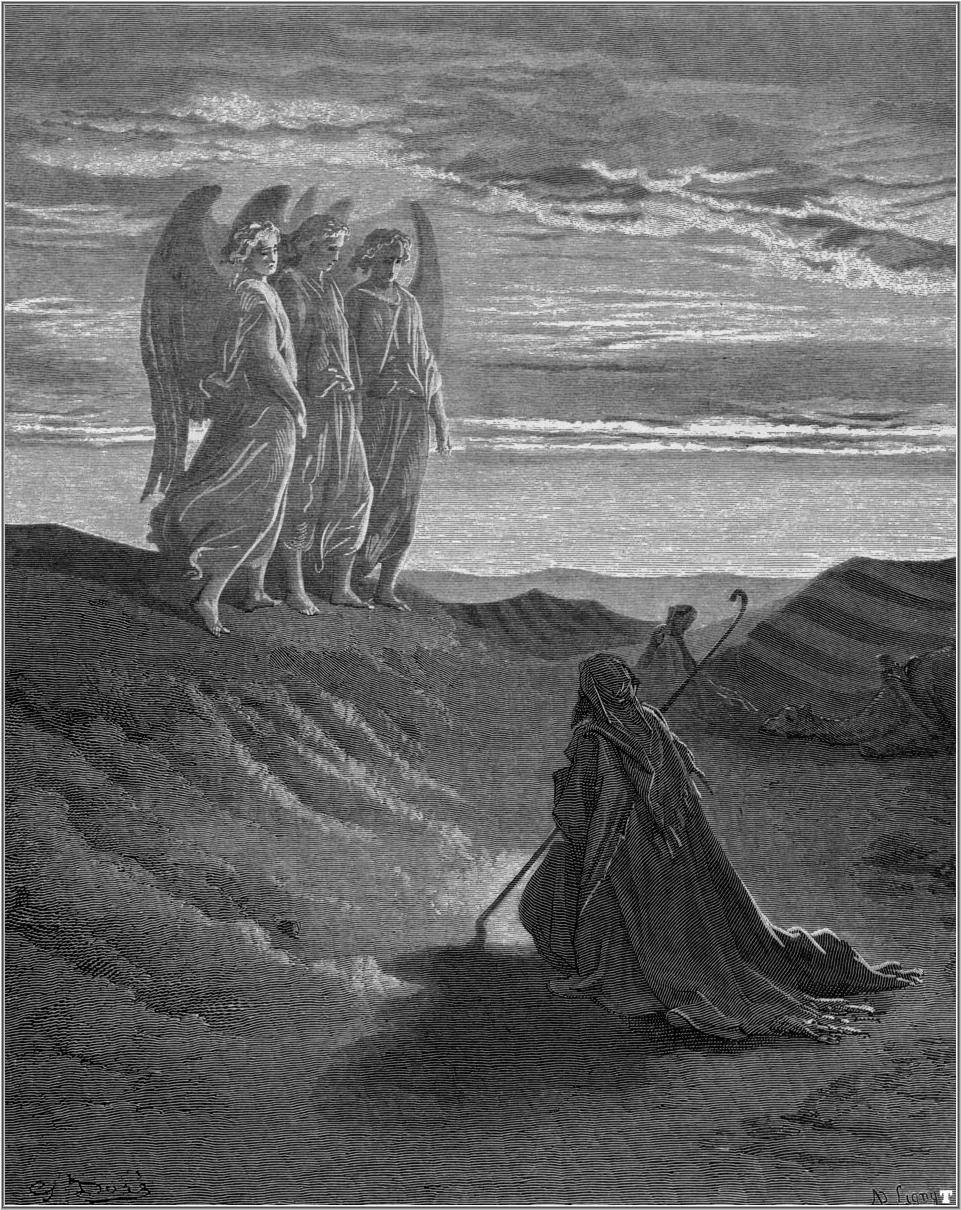
And he lift up his eyes and looked, and, lo, three men stood by him: and when he saw them, he ran to meet them from the tent door, and bowed himself toward the ground, And said, My Lord, if now I have found favour in thy sight, pass not away, I pray thee, from thy servant: Let a little water, I pray you, be fetched, and wash your feet, and rest yourselves under the tree: And I will fetch a morsel of bread, and comfort ye your hearts; after that ye shall pass on: for therefore are ye come to your servant. And they said, So do, as thou hast said. And Abraham hastened into the tent unto Sarah, and said, Make ready quickly three measures of fine meal, knead it, and make cakes upon the hearth. And Abraham ran unto the herd, and fetcht a calf tender and good, and gave it unto a young man; and he hasted to dress it. And he took butter, and milk, and the calf which he had dressed, and set it before them; and he stood by them under the tree, and they did eat (Genesis 18:2-8).
Southerners are famous for their hospitality, so much so that the words are coupled together idiomatically in the phrase ‘Southern hospitality.’ Leaving aside potentially ironic implications of that expression (let us not forget that the ‘genteel’ South also maintained a bevvy of Jim Crow laws aimed at making life inordinately inhospitable for Southern Blacks), the concept of being a good host and treating those who arrive at one’s doorstep with dignity, warmth, and grace does have strong roots in American soil. Those roots are not exclusive to that soil, of course; the Ancient Greeks placed a tremendous value on the guest/host relationship, evidenced by numerous ancient writings and even the term the Greeks used for the practice of being a good guest/host, ghosti. Likewise, Hebraic culture values the right treatment of the stranger or alien in one’s land, as in the scriptural passages which launched this article, as well as dozens of other examples throughout the Bible. On American ground, however, this relationship found a variety of expressions among numerous peoples. While the performance of hospitality is inevitably different depending on its cultural context, the surprising homogeneity of value placed on hospitable action speaks to a core of humanity.
The practice of hosting and honoring the unknown guest also appears in a number of folk narratives with a distinctively supernatural bent—hosting angels unwares, so to speak, although in some tales the beings hosted are decidedly non-angelic. In this article we shall see some examples of these supernatural interactions, the rewards and risks involved, and some potential interpretations of the practical application of unearthly hospitality. We will also look at some of the rituals and traditions surrounding hospitality towards mortal beings, which is where we shall begin our examination.
In the Appalachian Mountains, traditions of hospitatlity are very strong, of course, but often mountain people might not see much of others except at major events. Being a good host extends to some of the most private moments in life, including the first night of marriage. The concept of a spontaneous wedding reception, called an ‘infare’ can be summed up thusly: ‘The word infare comes from Old English: in plus faran, to go in. It was a reception held in the home of the newly-married couple. Word was ‘spread around;’ no invitations wer issued, but people in the community knew that they were invited. Refreshments were served and games were played very much as at the play-party [essentially a bridal shower]. Neighbors often brought gifts of food and other things to be used in the home of the newly-wed couple’ (Gainer 32-33). The infare is a concept similar to the charivari or shivaree, which involved friends and neighbors of the newlyweds waking them the morning after with banging pots and pans, bells, whistles, hoots, and a number of innuendos about the wedding night. The function of these hospitality rites centers on a few concepts: celebration of a new union, blessing the happy couple, and community integration.
Sometimes extends to the idea of hospitality as an aspect of place versus people: ‘When you return to the house for something that has been forgotten, sit down in a chair before leaving again to avoid bad luck’ (Gainer 127). In a story from Hoosier folklore, it is neither a person nor place with an expectation of hospitality, but an object—a stove, in this case:
An old lady in St. Francisville sold her cookstove to a man who promised to pay her funeral expenses instead of giving her the price of the stove in ready cash. He didn’t do as he promised. Every time his wife tried to get a meal and cook on the stove, the stove lids would fly off. So he went to the priest and told him about it. “Have you made any promises lately?” asked the priest. Then the man had to confess that he had promised to pay the old woman’s funeral expenses in return for the stove but that he hadn’t done it yet. Then the priest told him to go right away and pay off his debt as quickly as he could. So the man did this and after that he and his wife had no more trouble about being able to cook on the stove, and the stovelids never flew off again (Smith 50).
This last example is essentially a haunting tale, although the aspect of returning a promised favor lets me slip it in edgewise to this look at hospitality. Weddings and ghosts aside, many examples of good housekeeping between the mundane and supernatural realms do follow the ‘angelic’ mode more closely.
In folklore from Mormon sources in the western United States, several stories center on visits from saints and angels. One of the best known versions of such tales is that of the “Three Nephites.”
According to the Book of Mormon, Christ, upon his coming to the American continent, had twelve apostles. When it came time for him to leave, he asked them if there was any wish that he might give them. Nine of them asked to go with him. The other three remained silent. They were told that they would never suffer death. Since then they have roamed the earth in a sort of immortal state. They appear at frequent intervals to give aid to those in distress or to give advice. Mormon literature is full of accounts concerning the mysterious appearance of one of these men and the wonderful things that they have done…Oral versions can be heard in almost every Mormon community (Dorson 500-502).
Dorson then recounts two different versions of the Three Nephites tale. In one, a sick brother is brought back from the brink of death on an isolated plot of land by a wandering stranger, who disappears almost the moment he leaves the house. Other Mormon tales include “The White Bread on the White Cloth,” in which an angelic visitor cures a sick baby from a hospitable household and “The Hungry Missionaries,” which tells the story of a pair of missionary Mormons near starvation who are gifted bread by a kindly stranger, only to find that their parents had given bread to a needy stranger that same night hundreds of miles away. Another version of the visitor tale that pops up frequently in Mormon lore involves the appearance of a “wee small voice” which provided emergency guidance in spiritually challenging situations. Some folklorists have equated the wandering Nephite tales with the tales of the “wandering Jew” found in some European legends (see Gustav Meyrink’s The Green Face for a fictionalized version). While the “wandering Jew” tales frequently bear at least a small amount of anti-Semitic language or tone, Jewish custom also has its own version of the guest, with the empty plate set for Elijah during holy meals. My wife and I adopted a similar custom after seeing Christmas Eve practices in Prague.
Returning to the South, there are a few other places where strangers traveling in strange lands find succor among the locals. In Southern Protestant church circles, there are frequently tales of the wandering preacher being hosted by congregational family members, particularly for meals after Sunday service, often dining with a family while sharing extended prayers, blessings, and occasional sermons. Eventually, he becomes something of a comic character, giving rise to the popular proverb: “When the preacher come by for Sunday dinner it make[s] the chickens cry” (Courlander 500). In some versions, the preacher’s role can be turned into an abuse of power, even something evil or diabolical. Literary examples include Flannery O’Connor’s “Good Country People” and Randall Kennan’s Let the Dead Bury Their Dead. In addition to men (and occasionally women) of the cloth, African American communities put emphasis on the value of storytellers who would move between communities sharing lore and news. In this way, they were similar to a wandering bard figure, but more often the storytellers would be found in a centralized location (porch of a local mercantile—also becomes a literary figure, and a central piece of the narrative in Hurston’s Mules & Men).
The traditions surrounding hospitality, whether Southern or more broadly interpreted, form a core piece of American cosmology. Since one never knows just who one is hosting, graciousness is always a wise decision.
Thanks for reading!
-Cory
 New World Witchery - The Search for American Traditional Witchcraft