Blog Post 121 – Watching Birds

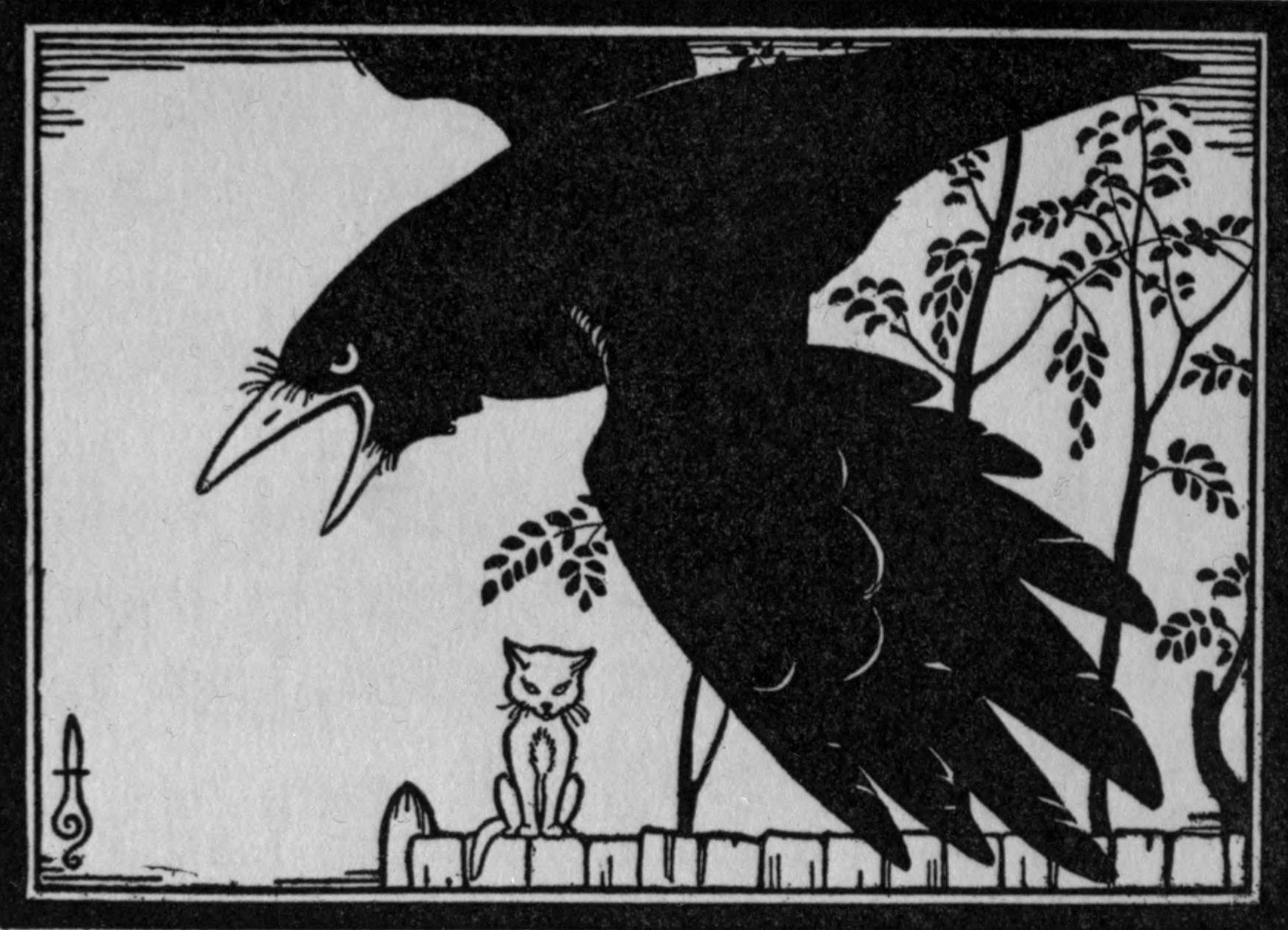
Today we’ll be looking at birds and their place as divinatory aids in the New World, something we touched on briefly in the second post on Magical Animals.  Birds have historically been turned to by humans for secret knowledge, largely owing to their unfettered freedom to fly from place to place.  Virtually all mythologies have some tale of a great mythic bird:  the Roc in the Arabian Nights’ Entertainments, Zeus’s swan-form, the Thunderbird of some Native American stories, and the haunting Crane Dance of Japan are some of the better-known examples. A creation myth of the Haida people of the Queen Charlotte Islands says that a raven, lonely in his long flight, spit upon a clam and opened it up, freeing the first humans (see Magical Creatures by E. Pepper & B. Stacy for more on this).  What have birds to do with divination, though?  Many readers probably already know about the branch of fortune-telling known as augury, but for those who haven’t heard of it, it simply means predicting fate by observing the flights of birds.

So how does one go about performing augury?  Here things get a bit fuzzy—in some cases, the future comes as a vision released by a relaxed mind observing with detachment the loops and turns of soaring birds.  Portuguese writer Paulo Coelho incorporates this type of augury into his novella, The Alchemist when he has a young shepherd accidentally catch a glimpse of coming war while he watches two hawks diving over desert sands.  The other method, and the one which makes up a good bit of North American lore, simply involves noting the behavior of birds and interpreting it by means of known connotations.  This sort of augury has numerous manifestations, and is especially prominent in Appalachian lore.  Folklorist W. L. McAtee recorded a number of bird-related divinations in an essay from 1955:

From “Odds & Ends on North American Folklore on Birds,” by W. L. McAtee:

  • “[I]f ever a bird builds in your shoe or pocket, or any of your clothes, you may prepare to die within the year.”
  • “The loon, a favorite with folklorists, is called ‘Bad Luck Bird’ by the natives [of the Sea Islands of Georgia], who will not speak of it, or if possible even look at it when they meet it in a journey by water.”
  • “While recording the common beliefs as to the storm petrels, that ‘Their appearance portends bad weather,’ Mrs. Simcoe [McAtee’s informant] adds: ‘To kill them is unlucky. Each bird is supposed . . . to contain the soul of a dead sailor.’
  • “The Reverend J. H. Linsley in his Birds of Connecticut (1843) noted that the cry of the bittern is a cause of superstitious fear and recorded that one man hearing it ran a mile, saying, that the Devil was after him.”
  • “’A token,’ said Archibald Rutledge [another informant], writing of the Santee Country, South Carolina, ‘is an apparition foretelling death,’ and cites as examples an eagle feeding with black vultures, a wild turkey standing alone under a certain great oak tree, and an albino robin.”
  • “[An] Abundance of people here look upon [whip-poor-wills] . . . as birds of ill omen, and they are very melancholy if one of them happens to light upon their house, or near their door, and set up his cry (as they will sometimes upon the very threshold) for they firmly believe one of the family will die very soon after.”
  • “Canada Jays are supposed to embody the souls of hunters or lumbermen who die in the north woods and it, therefore, brings bad luck to kill them.”
  • “In western North Carolina, it means seven years of bad luck to kill a raven.”
  • “To end this section on a more cheerful note, we cite the Ozark fancy that ‘If a redbird flies across a girl’s path . . . she will be kissed before night.’”

Other mountain lore about birds tends to focus on weather prediction (a subject we’ve covered in our posts on Signs & Omens to some extent, but you can never have enough weather-prediction lore).  Patrick Gainer observes: “When the geese wander on the hills and fly homeward squawking, there will be a storm within twenty-four hours,” and “When the red birds call in the morning, it will rain before night.”  Vance Randolph records some Ozark lore along the same lines:

  • Chickens or turkeys standing with their backs to the wind and with ruffled feathers mean a storm’s coming.
  • A rooster crowing at nightfall portends rain through the dark hours.
  • A sudden burst of robin-song foretells of bad weather.
  • Kingfishers nesting near the water mean a dry season to come.

Birds seem indelibly linked with concepts of luck and death, too.  Anyone who’s seen the 90’s cult film The Crow probably remembers the voice-over at the movie’s opening telling a pseudomyth about how people once believed that a crow ferried souls between the land of the living and the land of the dead, and occasionally allowed one to come back for vengeance (I call this a pseudomyth not because there’s no truth in it, but rather that I’ve never been able to find exactly that myth borne out in folklore, though there are certainly close correlatives to it—corvids are often associated with death).  There are many other pieces of Appalachian lore in this vein:

  • Barn swallows bring good luck where they nest, and it is bad luck to shoot one. (Randolph, OM&F)
  • Redbirds or roosters lingering near one’s doors or windows tend to mean tragedy will come soon after. (Randolph, OM&F)
  • Whippoorwills nesting at a home mean death will soon come to it. (Randolph, OM&F)
  • If a bird flies in the window, someone in the family will die. (Gainer, WG&S)
  • It is bad luck for a hen to crow. (Gainer, WG&S)
  • “Owls are omens of great ill.  If you spot one nearby while you are inside your home, the direction in which it flies away is an indication of the fate of your household.  If it flies off to the left of the cabin, very bad luck can be expected, but if it flies off to the right, it indicates an evil influence has chosen to pass you by.”(Edain McCoy, In a Graveyard at Midnight)
  • “Many western occult traditions regard peacocks as omens of ill fortune and their feathers as tokens of bad luck.” (Pepper & Stacy, MC)

Finally, in the category of “Odds & Ends,” there are some really spectacularly unique bits of North American folklore about birds which come from all over:

  • Buzzards will vomit upon anyone guilty of incest. (Randolph, OM&F)
  • “When you hear the first robin sing in the spring, sit down on a rock and take off your left stocking.  If there is a hair in it, your sweetheart will call on you soon.” (Gainer, WG&S)
  • “If a bird flies down and gets tangled in your hair, it is an indication that the bird has linked itself with your soul, and whatever befalls the bird is likely to befall you also.” (McCoy, IaGaM)
  • Richard Dorson records a legend in Buying the Wind found amongst Illinois “Egyptians” (or what many would call “Gypsies”) about a mouse, a bird, and a sausage who all keep house together until the sausage is eaten and the mouse accidentally kills himself that feels like it must have some embedded magical meaning, though I’ve yet to figure it out.

That’s it for our bird-watching entry.  If you’ve got lore you’d like to share about birds, we’d love to hear it!  It certainly gives me a good reason to keep watching the skies, so please feel free to comment with any augury methods you’ve got.

As always, thanks so much for reading!

-Cory

Podcast 22 – Yuletide Cheer!

Summary

Happy Yule!  Today we have our favorite carols, poems, recipes, and even a little lore for the winter holidays.  Have a blessed and happy holiday season!

Play:


Download:  New World Witchery – Episode 22

-Sources-
A Visit from St. Nicholas,” attributed to Clement Clark Moore, but likely written by Henry Livingston, Jr.
The Oxen,” by Thomas Hardy.

Recipes for Tom & Jerrys, Reindeer Food, and Gingerbread cookies.

Holiday animal lore can be found here.

Promos & Music
Nearly every song can be found on CDBaby.com or iTunes.  Below I’ve attempted to link directly to the artist pages where possible.

  1. I Saw Three Ships – West of Eden
  2. Gods Rest Ye Merry Paganfolk – The Pagan Carolers
  3. Hark the Herald Angels Sing – Doug Smith
  4. Wren in the Furze – Shira Kammen
  5. Silver Bells – Steve Martin & Paul Simon (Live recording from SNL)
  6. A Soalin’/Soul Cake – Pagan Carolers
  7. Holly & The Ivy – Howl-O
  8. Good King Wenceslas – The Trail Band
  9. Cherry Tree Carol – Rose & Thistle Band
  10. Bring the Torch Jeanette Isabella – Trifolkal
  11. Boars Head Carol – Pagan Carolers
  12. Come Landlord Fill the Flowing Bowl – The Limeybirds
  13. Gloucester Wassail – Pagan Carolers
  14. Carol of the Bells – Ross Moore
  15. Stille Nacht/Silent Night – Katie McMahon
  16. Snowbird – Maidens Three
  17. Da Day Dawn – Samantha Gillogly
  18. O Tannenbaum – Antique Music Box Christmas Collection
  19. O Holy Night – Indigo Girls
  20. This Endris Night – Heather Dale
  21. Go Tell It On the Mountain – Easy Anthems
  22. Patapan – Bittersweet & Briers
  23. Welcome Yule – Renaissance Revelers
  24. Little Drummer Boy – Men of Worth
  25. Angels We Have Heard on High – Skye Pixton
  26. Auld Lang Syne – Marc Gunn

Holiday wishes from (in no particular order) Saturn Darkhope, Oraia Sphinx, Scarlet at LPV, Gillian the Iron Powaqa, Rianna Stone the Pagan Homesteader, & Kathleen at Borealis Meditation.

Blog Post 108 – Holiday Magic in the Kitchen

Today I thought I’d look at some of the holiday lore surrounding baking and cooking.  What would the holidays be without the smells of cinnamon and nutmeg and clove and allspice slowly seeping out of the hot oven?  And who imagines a holiday home without the presence of gingerbread or ginger cake of some kind?  Chocolate and peppermint add extra luxury to an already indulgent season.  In short, much of the magic of Christmastime and Yuletide seems to come from the kitchen (I’m sure many kitchen witches reading that chuckle in amusement that such sentiments even need to be typed out).

So let’s start by looking at some of the ingredients in those festive holiday treats:

Cinnamon – This handy kitchen spice has lots of magical uses.  Cat Yronwode recommends it as a business drawing and gambling botanical.  It can be used to make a wash-water which one would then use to scrub down the walkways in front of a business.  This has the effect of drawing in new clients.  In Jim Haskin’s Voodoo & Hoodoo, cinnamon is mixed with sugar and sprinkled in the shoes to increase gambling fortunes.  Draja Mickaharic describes cinnamon as “calming” with a “protective vibration” and also cites its money-making properties in his Century of Spells (which refers not to a unit of time, but rather a unit of enumeration—a century representing the roughly 100 spells found in the book).  Mickaharic also notes that “it has a claming and quieting effect on young children,” though I imagine in cookie form this may not be the case.

Cloves – Mickaharic says these are “psychically protective,” and keep “negative thoughtforms out of the place where it is burned.”  Presumably including cloves in any baked or cooked dish would involve at least heating them, thus releasing some of this power into the kitchen and home.  Yronwode says that “cloves appear in spells for money-drawing, prosperity, room-renting, and friendship” (HHRM, p. 73).  These are also used to make pomanders, clove-studded oranges rolled in orris root powder and hung as protective talismans in the home (well, protective talismans and lovely nosegays to help imbue the house with that sweet, spicy holiday scent).

Nutmeg – This botanical has a mild narcotic effect and has been a staple of magic for some time.  An old hoodoo charm found in Harry Hyatt’s work and later disseminated by other authors involves sealing a small amount of liquid mercury inside a drilled nutmeg, then carrying the charm around as a gambling mojo (this is NOT RECOMMENDED as mercury is highly poisonous—DO NOT DO IT!!!).  Mickaharic describes nutmeg as an herb which inspires conviviality and jovial behavior, and promotes an air of happy friendship in the home.

Allspice – “Good for social gatherings; increases the flow of conversation and the rapport between people” says Mickaharic (CoS, p.50).  These hard, dried berries can also be soaked for a few hours, then strung as a type of herbal rosary using a needle and thread.  Carrying this can help relieve stress and provide peace of mind.  Yronwode recommends this for business and gambling (there’s a pattern here), and also describes a floor wash one can make with ground allspice.   Mixed with cinnamon and burned as incense, Mickaharic says it “places a smooth and witty feeling” in the home.

Ginger – This fiery herb is used to “heat up” or enhance the potency of various other magical ingredients, and also provides a little kick in spells for love or money (HHRM, p.103).  The root can be used as a poppet due to its shape and sometimes-resemblance to a human body, and would be especially effective in a love or lust working.  It can also be carried for protection.

Sugar – Sweetening!  This can be used to add a “sweet” or happy vibration to the home where it is burned (though it can smell very sharp when burned, too…baking it may not have the same oomph as burning it, but will smell better in the long run).  Of course one can keep all of one’s visiting relatives’ name papers in the sugar jar in order to better provide a happy, congenial home during the holidays, but offering them lots of sugary sweets might help ply a good attitude out of them, too.

As you can see, most of these herbs have to do with prosperity and getting along with one another (and a little protection thrown in for good measure).  This makes sense during a season where money might be tight, tension runs high, and houses are full of dangerous things like fire and hot ovens.  So when doing the holiday baking, it might be worth throwing an extra pinch or two of these spices in to up the magical ante of your confections.

I mentioned gingerbread earlier, and it made me think of a couple of stories from early American folklore about bakers whose experiences with cookies certainly have a magical bent:

The Baker’s Dozen” – A piece of reputed folklore recorded by Charles M. Skinner in 1896, this story revolves around a stingy baker and his encounters with an old crone who bewitches his bakery.  Only through the magnanimous efforts of St. Nicolaus (and by swearing better behavior on a gingerbread cookie shaped like him) does he manage to break the spell.

The Gingerbread Man” – This famous story tells of a gingerbread man come to life who flees his baker and eludes capture by the people and animals of the village.  He meets his match in the swift (and often crafty, in various retellings) fox, who finally devours him.

Finally, I’ll leave you with my family recipe for gingerbread:

1 c. sugar
1 c. shortening
1 c. molasses
½ c. hot water
1 Tbs. cinnamon (or to taste)
1 Tbs. ginger (or to taste)
½ tsp. salt
1 tsp. baking soda
1 egg
7 c. flour, plus a little extra for rolling dough

Preheat oven to 350 degrees. Sift flour and mix in dry ingredients.  Add egg, molasses, and shortening and mix.  Slowly add hot water, mixing as you go.  When dough is sticky, begin to work it into a ball.  Dust a flat surface with flour and begin rolling out the dough, working it until you get it about ¼ inch thick.  Cut out shapes with cookie cutters or a knife.   Bake cookies on a lightly greased cookie sheet for about 15 minutes (or until they are crisp at the edges and fully cooked.  Cool on a wire rack, decorate, and eat!

My mother and I used to bake several batches (rather, a whole day’s worth) of gingerbread, then spend time making the finished products into houses, sleighs, people, and animals.  We gave them as gifts, decorated with royal icing and candy, and were often very popular around the holidays.  I hope you enjoy!  It’ll be like taking a little bite out of your New World Witchery host during the holiday season.

Wait, that probably sounds kind of creepy.  Enjoy anyway!

Thanks for reading!

-Cory
Blog Post 102 – 15 Books

Hello everyone!

I recently saw a rather interesting post from a friend on a social networking site in which she listed her “Top 15 Most Influential Books” when it comes to witchcraft.  Since I posted a book review last week (and since most book reviews going forward will likely be shared between this site and the Pagan Bookworm site), I thought that continuing that “bookish” trend might be good.  So this week I will be posting about various texts which have a place North American magical traditions.  Some will be of the grimoire type, and others may just be good reads, but hopefully all of them will be tomes you get much pleasure and use from if you crack the spines and turn the pages.

To start with, however, I’m going to re-use that meme and list my own Top 15 Most Influential (Witchcraft) Books.  These are not necessarily books that I think of as “great,” or even in some cases “good” books.  Many have erroneous information or are, at best, a good starting place for further exploration.  All of them, however, have help shape my study of magic, folklore, and witchcraft in some way, and that’s what this list is really all about.  I’m presenting them in a (roughly) chronological order, since that’s how I best remember them.

TOP 15 MOST INFLUENTIAL (WITCHCRAFT) BOOKS
(2010 Edition)

  1. The Encyclopedia of White Magic by Paddy Slade.  This book was the first book of “real” magic I ever procured.  I’ve talked about it on the show, but the short version is that I was about 11 or so, and I pestered my mother into buying it for me.  Since then, I’ve definitely grown away from its ideas, though I periodically return to it for nostalgic reasons.  It also got me thinking about magic as a folklore-based thing, rather than a sci-fi/fantasy phenomenon.
  2. Earth Power/Earth, Air, Fire & Water by Scott Cunningham.  I know there are lots of folks who regard Cunningham with disdain, but I’m not one of them.   His two books of folk magic, focused on practical spellwork using natural elements, absolutely cemented my interest in spellwork as something more than an esoteric psychological tool.  I still find some of his spells useful, though I’m no longer in tune with his particular worldview or ethical stance.  Moreover, I think that there are far worse books with which one could begin one’s magical studies.  I’ve found over the years that many folkloric sources bear out the techniques described by Cunningham, and I still regard his work fondly.  There are certainly weak points in these books, but winnowing the chaff away is fairly easy with a little work.
  3. Cunningham’s Encyclopedia of Magical Herbs by Scott Cunningham.  I’ll not launch into another defense of the author, but instead say that this book (and to a lesser extent, his Complete Book of Incense, Oils, & Brews) augmented my practice of magic again and helped me to start making my own spell ingredients.  It also helped me to cultivate an interest in gardening, for which I am most grateful.  This book also has one other great thing going for it: an amazing bibliography.  While it obviously pulls from sources like Culpepper’s Herbal, it also contained references to things like Vance Randolph’s Ozark Magic & Folklore (which is also on this list).  So I am quite thankful to this book, and this author.
  4. Jude’s Herbal Home Remedies by Jude C. Todd.  This was an impulse buy to augment my growing interest in herbs after I had eagerly devoured the Cunningham tomes.  It’s not a magical book, per se, but focuses mostly on the physical properties of herbs and their applications as health and beauty aids.  It provided a wonderful resource for learning how to interact with various herbs and brew potions, ointments, tinctures, etc. at home.  I still turn to it sometimes for home remedies, and it also has a place because later encounters with books like J.G. Hohman’s Long Lost Friend reminded me that most magical workers had plenty of practical, non-magical herbal info at their fingertips, too.  Jude’s book filled that role for me.
  5. Magical Tales: The Storytelling Tradition by R.J. Stewart.  In my sophomore year of university, I participated in a storytelling class that changed my life.  It took fairy and folktales off of the written page and showed me something deeply vital about them emerges when they are shared with others.  I also happened to be taking classes in things like fairy and folklore interpretation using academic studies like Bruno Bettelheim’s The Uses of Enchantment and Mary Louise von Franz’s The Interpretation of Fairy Tales.  Into this mix came R.J. Stewart’s book, which looked at the phenomenon of storytelling from the point of view of a magical practitioner.  I know a lot of folks were influenced by Stewart’s The Underworld Initiation, and I think that book is absolutely wonderful.  As far as my own personal influence goes, though, this is the one I’d say really connected to me.   It convinced me that stories contain more than just helpful magical tidbits, but sometimes are magical rituals in disguise, if you’re willing to work through them.
  6. Treasury of Irish Myth, Legend, & Folklore by Lady Gregory & William Butler Yeats.  I couldn’t have really appreciated this book prior to encountering book no. 5 on this list (and going through the courses I did at the same time).  I actually had picked up this text years before because of a passing interest in Ireland which I inherited from my mother (we have family ties back to County Mayo).  After I began to understand fairy tales as something more than fanciful stories, however, this book became an absolute mother lode of good magical material.  I’ve since discovered many of the tales have parallels or retellings in Appalachian and Southern folklore, too, which makes me feel even closer to it.
  7. The Complete Fairy Tales of the Brothers Grimm by Jacob & Wilhelm Grimm, Jack Zipes trans.  I actually borrowed this specific collection from a girlfriend, and its completeness stuck with me.  It included a number of tales often omitted, and several tale fragments I’ve not seen in most editions.  Particular variants aside, this collection falls into the same category as nos. 5 & 6 on the list.  Again, I didn’t know what I had until long after I had it, and now I don’t think I could live without it.
  8. The Marriage of Cadmus & Harmony by Roberto Calasso.  At some point, I became a bit of a mythology junkie, particularly Greek myths.  I read and re-read Edith Hamilton, Bulfinch, and the textbooks from my college classes on the topic.  I went to source material by Hesiod, Homer, Euripides, Aeschylus, and anyone else I could find.  I’m definitely not an expert, but as enthusiastic amateurs go, I foment with glee when I encounter new Hellenic tales.  When I got to Calasso’s book, however, I was taking an advanced course on mythology at school, and everything completely changed.  It was this book that taught me one fundamental thing about mythology (and likewise storytelling and therefore magic):  it changes.  More importantly, there is no “true” or “right” version of any story, but simply the stories themselves.  Mythology isn’t linear, but a web of tales—sometimes they contradict each other, sometimes they conflict with what we think about the culture, and sometimes they don’t make much sense to us.  In all cases, though, the tales are true at a level not related to cross-referencing and documentation, but someplace deeply human.  Calasso showed me that by bombarding me with the stories over and over again in his book, every time a little different, but all connected together, until I got it.  I really do need to send him a thank-you note for that.
  9. Aradia, or The Gospel of the Witches, by Charles Godfrey Leland.  Encountering Leland, for me, was like having someone splash very cold water on my face by the bucketful.  I devoured his work Etruscan Roman Remains and his Gypsy Sorcery & Fortune-Telling, of course, with all the tenacity of a budding folklorist.  It was Aradia, however, that really sent me sailing when I read it.  At the time, I was studying with the outer court of a Gardenerian coven, and had to read things like Gardener, Dion Fortune, and other modern occult classics.  When I got to Leland’s book, though, it felt so different, so authentic that I refused to believe its wild claims and actually got angry at it for deceiving me so well.  I’ve since, however, learned that this book is something special—neither entirely true nor entirely false.  More importantly, it is useful, and its mythos grips me in a very strange way.  I can’t come down in favor of Aradia as a piece of unsullied witchlore, historical to its last printed letter.  But I can say that figuratively, it’s as close to a witch’s gospel as I’ve seen yet.  In short, it just “feels” witchy, and makes me feel the same every time I read it.
  10. Call of the Horned Piper by Nigel A. Jackson.  As I branched out and away from Wicca, looking for something I could connect with better, I began to find a lot about something called “Traditional Witchcraft.”  There were dozens of websites, letters (mostly from Robert Cochrane), and books which I suddenly had to read, and in a very brief period I managed to get through most of them.  While there have been a number of very influential and powerful works in the Trad Craft vein that I love, one stands out to me.  Nigel Jackson’s tome is slim, barely the width of a pencil.  It’s a chapbook, really, yet it contains so much information that I can’t imagine life without it (much less because finding a copy is becoming harder and harder to do).  This book is probably more responsible for my religious magical practices than any other, and encapsulates in about 150 pages what many books cannot in 300 or more.
  11. Ozark Magic & Folklore by Vance Randolph.  This is a book that I found first by accident while seeking information on weather lore, then again by chance looking for an herbal reference.  Finally, I was browsing one of Cunningham’s books and saw this title again in the bibliography, and realized I needed to seek it out.  I’ve since read it many times, and it always offers up a plethora of magical information to me.  Randoph’s book is not a how-to, but one could build a complete magical system out of his work.  Yet it also guides one to several other magical books and traditions as well.  This is the book that made me realize North America is full of occult power and lore, if I was only willing to dig for it a bit.
  12. Hoodoo Herb & Root Magic by Catherine Yronwode.  I’ve referenced this book and the accompanying website (Lucky Mojo Co.) so much on this blog and in the show you probably don’t need me to tell you it’s been an influence.  I’ll just reiterate what a valuable piece of work it is and suggest that without it, I’d probably be fairly lost when it comes to making hoodoo charms, mojos, potions, and formulae.
  13. The Silver Bullet by Hubert J. Davis.  Following the ideas gleaned from Vance Randolph, I began looking for other folklore collections from America which might contain a few sprinklings of witchcraft.  A friend suggested I look into The Silver Bullet, and it truly was a revelatory experience.  In the pages of Davis’ book, the complete repertoire of the American witch dances out.  The book’s segments on what witches do, how to become a witch, and what to do to counter curse read like thinly veiled instructions on American witchery taken right out of a cauldron.  Like Randolph, a person could likely develop a complete magical system based on what this book contains.  It is a marvelous book, and one I turn to repeatedly for witchlore.
  14. The Encyclopedia of 5000 Spells by Judika Illes.  This is another one I constantly reference.  Its real influence on me lies in the fact that I share a love of it with Laine.  We both get so much out of it that it acts as a sort of magical bridge between us.  The Secret Garden likewise strengthens that bond—it’s one of her favorite books and another example of magic buried in storytelling which appeals to me—but Judika’s wonderful book (books really—they’re all quite good—but I decided to go with this one as we use it the most) really is our default grimoire at this point.
  15. The Bible.  This one is the last on my list because I’ve only been able to really understand it as a book of magic recently.  I’ve known that certain metaphorical elements of the Bible have always had parallels in world mythology, but it’s only since working with things like Psalms, the Blood Verse (Ezekiel 16:6), and folk Catholic prayers that I’ve come to understand it as a sort of grimoire.  Magic pervades the text, though it often must be disentangled from a lot of theology, history, folklore, etc.  And while I do use the Bible as a sourcebook for magic, I also am not a monotheist, so I have to struggle with certain elements of it.  This is rewarding in its own way, though, and I tend to think of the Bible as a “family” book—since most of my immediate predecessors were Christian (and mostly Catholic), my use of that magic ties me to them, even though I’m not worshiping the same deities they did, exactly.    I also prefer to work with some of the deuterocanonical books, such as the Book of Wisdom found in the Catholic Bible, or the Book of Enoch which is mostly found in the Coptic or Ethiopian Orthodox Bible.  But that’s just a personal preference.

So that’s my list!  Long, I know, and probably way too much commentary, but maybe it will give you some insight into the places I’ve come from and the type of magical person I am.  Or maybe it will give you a reason to catalogue your own influences.  If you do that, I’d love to see them!  Please let me know what books influenced your path, and feel free to post your lists (or a link to your blog if you do a list there) on the comments.

Thanks so much for reading!

-Cory

Podcast Special – Mother Hicks

-SHOWNOTES FOR PODCAST SPECIAL-
Summary
A tale of a famous witch from Maine, adapted from Richard Dorson’s “Buying the Wind”

Play:

Download: New World Witchery Special – Mother Hicks

-Sources-
Based on tales found in Buying the Wind, by Richard Dorson.


Promos & Music
“Grifos Muertos” by Jeffery Luck Lucas, from his album What We Whisper, on Magnatune.com

Podcast 18 – Ghosts!

-SHOWNOTES FOR EPISODE 18-


Summary
Today we discuss ghosts and things that go BUMP! in the night.  We talk about a famous haunting or two, then give our own ghostly tales and finish up with a little chat about spooky films we like.
Play:

Download:  New World Witchery – Episode 18
-Sources-
Winchester Mystery House website
Encyclopedia of Ghosts & Spirits by Rosemary Ellen Guiley
Official Bell Witch website
Movies mentioned: Lake Mungo, The Ring, Rosemary’s Baby, Paranormal Activity, 6th Sense, Blair Witch Project, 28 Days Later, & Blindness


Promos & Music
Title music:  “Homebound,” by Jag, from Cypress Grove Blues.  From Magnatune.
Promo 1 – Iron Powaqa
Promo 2 – Forest Grove Botanica
Promo 3 – Media Astra ac Terra

Podcast Special – The Boo Hag

-SHOWNOTES FOR PODCAST SPECIAL-


Summary
This tale relates the events of a marriage that takes a turn for the worse when the husband finds out his new bride is a skin-shedding witch.

Play:

Download:  New World Witchery – Special – The Boo Hag

-Sources-
“The Boo Hag,” retold by S.E. Schlosser, in her collection Spooky North Carolina. Also available on her website.


Promos & Music
“Grifos Muertos” by Jeffery Luck Lucas, from his album What We Whisper, on Magnatune.com

Podcast Special – The Devil’s Marriage

-SHOWNOTES FOR PODCAST SPECIAL-


Summary
The story of a brother, a sister, the devil, and a helpful witch.  From the folklore of North Carolina.

Play:

Download:  New World Witchery Special – The Devils Marriage

-Sources-
Tales from Guilford County, North Carolina,” by Elsie Clews Parsons.  In The Journal of American Folklore, v. 30, no. 116, 1917.
“The Devil’s Marriage,” retold by S.E. Schlosser, in her collection Spooky South.


Promos & Music
“Grifos Muertos” by Jeffery Luck Lucas, from his album What We Whisper, on Magnatune.com

Podcast Special – The Black Cat Murders

-SHOWNOTES FOR PODCAST SPECIAL-


Summary
A short retelling of “The Black Cat Murders” to help set the stage for Halloween!

Play:

Download:  New World Witchery Special – The Black Cat Murders

-Sources-
Witches, Ghosts, & Signs by Patrick Gainer


Promos & Music
“Grifos Muertos” by Jeffery Luck Lucas, from his album What We Whisper, on Magnatune.com

Special Episode – The Black Cat Murders

New World Witchery Special – The Black Cat Murders
A short retelling of “The Black Cat Murders” to help set the stage for Halloween! (complete shownotes at https://newworldwitchery.wordpress.com)