Blog Post 30 – Who’s Who in Hoodoo (Intro, Part II)

Today we’ll be looking at some famous personalities from the root working world.  These are not comprehensive biographies, by any means.  But they should at least give you some cursory information and enough information to look into the interesting lives of these conjure-folk further if you desire.

So, without further adieu, here’s Who’s Who in Hoodoo:

Historical Hoodoo Figures

Marie Laveau – Known as the “Voodoo Queen of New Orleans,” there is much folklore and little fact surrounding the powerful figure of Marie Laveau.  She was a free woman of color living in New Orleans during most of the 19th century, living to be nearly 100 years old herself.  She was flamboyant—holding large dances in Congo Square and appearing frequently with a large snake which she had named Gran Zombi—but surprisingly also very devout, often attending Catholic mass on a regular basis.  While she is best known for her Voodoo associations, Laveau had a tremendous gift for magic, and was said to maintain control of the city through a network of informants and a healthy dose of sorcery.  Zora Neale Hurston, who studied hoodooo (and Voodoo) with Laveau’s alleged nephew, Luke Turner, wrote about Laveau’s  intense magical power:

“The police hear so much about Marie Leveau that they come to her house in St. Anne Street to put her in jail. First one come, she stretch out her left hand and he turn round and round and never stop until some one come lead him away. Then two come together…she put them to running and barking like dogs. Four come and she put them to beating each other with night sticks. The whole station force come. They knock at her door. She know who they are before she ever look. She did work at her altar and they all went to sleep on her steps” (Hurston, Mules and Men, Part II, Chapter 2)

Today, many people—magical practitioners or not—visit her grave in New Orleans, leaving her offerings and asking her for favors, a practice not uncommon in hoodoo. (additional info gathered from Wikipedia and R.E. Guiley’s Encyclopedia of Witches and Witchcraft).

Doc Buzzard – There are many who claim the name “Doc” Buzzard, but the most famous one is a South Carolina root doctor from the late 19th and early 20th centuries. He was a famed magician and healer, and was much sought after for his cures.  He was also white, which sometimes surprises people.  There were many inheritors to the name “Doc Buzzard,” one of the best known being a rather unscrupulous character who was eventually reigned in by…

Sheriff James McTeer – According to Jack Montgomery, who spent a good bit of time interviewing McTeer:

“Sheriff McTeer recounted a…conclusion to a psychic war he had with the famous Doctor Buzzard. McTeer ordered Dr. Buzzard to stop selling potions. This particular war of curse and counter-curses ended with the drowning death of Dr. Buzzard’s son. Soon after, Dr Buzzard visited McTeer and the two men made peace and became friends of a sort.” (Montgomery, American Shamans, Chapter 1)

McTeer was a gifted hoodoo in his own way, though he was less focused on the prefabricated potions which made hoodoo a viable commercial enterprise throughout the 20th century.

Aunt Caroline Dye – A famed hoodoo woman from Arkansas, Aunt Caroline Dye was another long-lived magical practitioner (supposedly living to the ripe old age of 108).  She was cited in Harry Hyatt’s encyclopedic text on hoodoo as being a great jinx-breaker, and the Lucky Mojo page on her cites several blues songs devoted to her legendary gifts.

Henri Gamache – A pseudonym for an otherwise unnamed author, Henri Gamache is the name associated with many of the most influential texts in mid-20th century hoodoo.  His “Philosophy of Fire” as outlined in The Master Book of Candle Burning is a foundational text for conjure candle rituals, and includes a good number of psalm rituals as well.  Other key texts authored by Gamache include Terrors of the Evil Eye Exposed and Mystery of the Long Lost 8th, 9th, and 10th Books of Moses.

Moses – Speaking of Moses…  There are many who look on Moses as the first conjure man.  He was imbued with holy power by G-d, and used several commonplace tools to create miracles, not unlike the conjure men and women of recent times.  Some of his “tricks” include:

  • Transforming his staff into a serpent (Exodus 7)
  • Turning the Nile into blood (Exodus 7)
  • Summoning the Plagues of Egypt (Exodus 7-12)
  • Parting the Red Sea (Exodus 14)
  • Bringing water from the rock with his staff (Exodus 17)
  • Mounting a bronze serpent on a staff to cure venomous snake bites among the Israelites (Numbers 21)

Zora Neale Hurston was a major proponent of this view of Moses, making it a central theme in her book Moses, Man of the Mountain.  In Mules and Men, Hurston describes Moses as:

“The first man who ever learned God’s power-compelling words and it took him forty years to learn ten words.  So he made ten plagues and ten commandments.  But God gave him His rod for a present and showed him the back part of His glory.  Then too, Moses could walk out of the sight of man” (Hurston, Mules and Men, Part II, Chapter 1).

Of course, this is not the common view of Moses, but I like to at least consider the idea…but then I like to take a generally unorthodox view of lots of Judeo-Christian mythology, myself.

Zora Neale Hurston – To end, I thought I should at least mention the woman I’ve cited several times today.  Zora Neale Hurston is a folklorist from the mid-20th century whose most famous book is Their Eyes Were Watching God.  However much of her best work is in the study of hoodoo and Voodoo in books such as Mules and Men and Tell My Horse.  While many of her stories are elaborations or even (possibly) completely fictional constructs, they nonetheless provide a lot of good hoodoo techniques, recipes, and philosophies.  Taken with a hefty grain of salt, her work is a great way to explore hoodoo as it grew within the African-American community during the twentieth century.

That’s it for today.  Tomorrow I hope to get into contemporary rootworkers.  Until then…

Thanks for reading!

-Cory

Blog Post 29 – An Introduction to Hoodoo, Part I

This week I’ll be focusing on something that seems to generate a lot of interest:  hoodoo.  This is one of my personal favorites when it comes to magical systems, because it is incredibly practical and anyone can do it.  Plus, it doesn’t shy away from the less savory side of magic, but fully acknowledges that curses exist and must be dealt with (and sometimes dealt out when other attempts at justice have failed).

A (VERY Brief) History
Let’s start by getting the confusing terminology out of the way.  Often, the terms “hoodoo,” “conjure,” and “root work” or “rootwork” will appear as synonyms.  Adding to the confusion, most people also mix “voodoo” into this lexical stewpot.  Hoodoo, however, is NOT Voodoo/Vodoun—the former is a magical system not particularly affiliated with any specific religion, and the latter is a very distinct religion.  The confusion between the two stems from the fact that both are outgrowths of something called African Traditional Religion (or ATR for short).  There are other ATR’s which exist, primarily in South America and the Caribbean, but I’ll leave a discussion of those to someone more knowledgeable than myself.  When African slaves were brought to the West Indies, their native religion mixed with the folk practices of the indigenous tribes on the islands and the Christianity of their European captors.  Vodoun evolved over time, primarily in places like Haiti, as well as coming onto American soil through places like New Orleans.

Many modern Vodoun practitioners are very committed to the ATR religious powers, such as Legba, Oshun, and Yemaya (variants on spelling and pronunciation occur depending on where you are and to whom you’re speaking).  The Voodoo which grew up in New Orleans is quite different from the Vodoun in Haiti, though they do share many common elements.  Zora Neale Hurston’s excellent book Mules and Men details much of this overlap (though I advise readers to take this book with a grain of salt, as some of her folklore is a bit embellished and may not present an accurate picture of her subjects).

A big part of Voodoo, though, was a belief in magic and animism.  While Catholicism (dominant in the islands and French-and-Spanish-influenced Southern coastal regions) was fairly adoptive of these ideas so long as they were couched in terminology like “miracles” and “Saints,” slaves transplanted to Protestant-dominated areas found the religious side of Voodoo quashed.  The numerous spirits and beings found in Voodoo’s pantheon were stripped away, and what was left was a magical system detached from its religious side.  Other ATR’s also met the same fate as they moved into the white, Protestant-dominated sections of the United States.  Beliefs in “witchcrafting” and other magical practices go back to at least the beginning of the 19th century among African-American populations, completely removed from any ATR associations, or any deeply religious connection at all.  Only the practical side of the work was still available to the slaves brutally oppressed in Colonial America, as it was often their only real recourse to justice in any way.

Once this practical magic started working its mojo, so to speak, it began to grow in new ways.  It encountered new herbs via contact with another overrun people, the Native Americans.  European folklore, especially German and Anglo-Irish tales, provided new fodder for the developing system.  And the availability of particular regional curios and ingredients shaped the evolving practice.

So is it Hoodoo, Conjure, or Root Work?
In general, the terms “hoodoo,” “conjure,” and “root  work” still get used interchangeably.  “Hoodoo” is common in the gulf coastal regions, “conjure” in places like Memphis and the mid-South, and “root work” in the Atlantic coastal regions.  All terms, however, can be generally found in all places, so don’t be surprised at the overlap.  Additionally, spelling may vary (I’ve seen at least one WPA folklore collection from Tennessee showing this practice called “cunjur” instead of “conjure”).

In my own mind, I do see a slight difference in the three terms:

  • Hoodoo is the general name for the system of African-American and Southern magic using herbs, roots, and everyday objects to influence people and events in one’s life.
  • Conjure is more specifically related to working with spirits, but also uses much of the same magic hoodoo does.  It also relates to faith-healing (to me, anyway).
  • Root work has to do with the crafting of herbal and curio-filled spell objects, or with the use of such things to heal or harm a target.

There’s not a single consensus on where the actual term “hoodoo” comes from.  Some think it is a corruption of “Voodoo,” but this is not a majority opinion.  Catherine Yronwode has a great discussion of this topic on her website, outlining much of this history in more detail.

Hoodoo Now
During the early-to-mid twentieth century, hoodoo underwent another evolution.  It moved, along with Southern blacks, into cities and became urbanized.  Many merchants began to supply hoodoo practitioners with the oils, herbs, candles and other items they needed to do their work.  A number of these suppliers were Jewish, and a strong Jewish presence can still be seen in hoodoo, mostly in the use of talismans and charms imported from European grimoires like The Black Pullet.  Some, such as scholar Eoghan Ballard, have even made convincing arguments that the word “hoodoo” comes from a particular pronunciation of the word “Jewish.”

The terms Voodoo and hoodoo are still confused, even by those who are in the know.  The very reputable and knowledgeable author Jim Haskins even titled his book about hoodoo Voodoo and Hoodoo.

Modern hoodoo is still growing and changing.  Some of the major centers of hoodoo are Forestville, CA (where Cat Yronwode runs her Lucky Mojo Curio Co.), the Gullah region of South Carolina (discussed in Jack Montgomery’s American Shamans in the section on Sheriff McTeer), cities like Memphis and Savannah, and of course New Orleans.  It is also present in rural areas, like the swamps of Mississippi.  And the general practice of root work seems to have spread to other countries as well, as Sarah from the Forest Grove Botanica in Canada uses many root working techniques in her magic.

As this week goes on, we’ll get into more on those techniques, as well as the specific herbs, roots, and curios found in hoodoo.  For now, though, I think I’ll stop before I write a whole book here.

Thanks for reading!

-Cory

Blog Post 28 – Sign, Sign, Everywhere a Sign…

Do I date myself by referencing that song in the title of this blog post?  Oh well…
I thought I’d wrap up the week with a few more examples of signs, tokens, and omens from American folklore.  We’ll be up in the mountains today, both the Appalachians and the Ozarks.
From the Appalachian History blog:

News Bees

“In both Appalachian and Ozarks folklore, news bees appear as omens to those wise enough to read them.”

News bees are not actually bees, but flower flies from the Syrphidae family.  They are marked with bands of black and yellow, much like bees, but are harmless.  They do look an awful lot like sweat bees, however, which can sting a person (though not as severely as other bees or wasps).

News bees, which also go by names like “sand hornets,” “sweat flies,” or “Russian hornets” derive their folk name from the belief that these hovering insects watch the events of humanity unfold, then fly off to deliver their news to others.  According to the folklore, “There are yellow news bees, which mean that good things are in the offing– it’s good luck if you can get one to perch on your finger–and black news bees, which warn of imminent death. The black news bees fly in the windows and out again, and fly straight for the nearest cemetery; they hover making a sound like a human being talking.” (Tabler, par.2)

From Vance Randolph’s Ozark Magic and Folklore:

Some Animal Lore

“It is very generally believed that the appearance of an albino deer is a bad sign ; some hillfolk think it has something to do with witches’ work, others that it is an indication of disease among the deer, and that venison will be unwholesome for seven years” (p. 241)

“Groundhogs are hunted by boys with dogs, and young groundhogs are very good eating. But some of the old-timers frown on the modern practice of shooting groundhogs. They don’t mind if city sportsmen do it but often forbid their own children to shoot groundhogs, because it is supposed to bring bad luck” (p. 243)

Household Signs & Omens

“The Ozark housewife seldom begins to make a garment on Friday never unless she is sure that she can finish it the same day. Many a mountain man is reluctant to start any sort of job on Saturday, in the belief that he will ‘piddle around’ for six additional Saturdays before he gets it done” (p. 69)

“It is bad luck to burn floor sweepings or shavings that have been produced inside the house. An old-time Ozark housewife seldom sweeps her cabin after dark, and she never sweeps anything out at the front door” (p. 70)

The fantastic Appalachian blog Blind Pig and the Acorn has a fascinating entry on a death omen called a “belled buzzard.”

Belled Buzzards

According to the site, which cites a newspaper story about this phenomenon, in King George County, VA, a buzzard was observed flying low by houses with a bell around its neck and streamers tied to its body.  Similarly adorned birds figure in tales from the Carolinas, Tennessee, Alabama, and Arkansas.  According to the blog’s author:

“Most of the sightings or ‘hearings’ caused folks to believe the belled buzzards foretold death. One legend even tells the story of a belled buzzard harassing a man after he killed his wife-to the point of the man turning himself in for her murder” (Tipper par.2).

So if you happen to see any big birds around your neighborhood with bells, chimes, or any musical instrument on their person, take heed!

Personal Lore

Finally, today, I thought I’d share a few of the things I was brought up believing.  Most of this information is from my mother.

  • When cooking soups, stews, and sauces, she’d often include a bay leaf in the pot.  Whoever found the bay leaf was thought to be in for some good luck.
  • If rain broke out of a clear sky, my mother always said that “the Devil is beating his wife.”
  • She taught me that if your ears burn, someone’s talking about you.  If your nose itches, someone wants to kiss you.  And if your hands itch, money’s coming your way soon.
  • You should never kill a spider or a frog indoors, as it will bring bad luck, she always said.  Unless the spider was a black widow or brown recluse.  Then it seemed to be okay.
  • She always kept an aloe plant in her kitchen window, both for an easy source of bug-bite and sunburn treatment and to bless the house in general with good fortune.

Okay, that will do it for today, I think.  Please feel free to share your own lore.  I’m always eager to hear it!

Thanks for reading!

-Cory

Podcast Special – Witch Bottles

-SHOWNOTES FOR SPECIAL – WITCH BOTTLES-

Summary
This is the first of (hopefully) many mini-episode specials in which we’ll explore particular practical topics in American Witchcraft.  Today, we’re looking at the history, lore, and making of Witch Bottles.  Plus we’ll share our own experiences with them.

Play:

Download:  New World Witchery – Podcast Special – Witch Bottles

-Sources-
*The Wikipedia entry on “witch bottles.”
*Apotropaios – An excellent site with scholarly history of many occult objects, including Witch Bottles.
*The Lucky Mojo page on “Bottle Spells” has lots of great information on the various kinds of magical bottle workings done around the world.
*The Appalachian History blog has an excellent entry on “Bottle Trees.”
*The Encyclopedia of Witches and Witchcraft, by Rosemary Ellen Guiley, has a good article on “witch bottles.”
*The Encyclopedia of 5000 Spells, by Judika Illes, is another tome with lots of magical information, including some on Witch Bottles.

Music
“Grifos Muertos” by Jeffery Luck Lucas, from his album What We Whisper, on Magnatune.com

Blog Post 26 – Gravel Root/Joe Pye Weed

Today I’d like to discuss an ingredient found in both Native American medicinal practices and Southern conjure and root work.  The flowering herb known as both Gravel Root and Joe Pye Weed can be found throughout most of the eastern half of North America, including portions of Canada, Texas, and Florida.  Its botanical name is Eupatorium purpureum, and it is also sometimes known as Purple Boneset or Queen of the Meadow.

The story behind Joe Pye Weed stems back to a Native American named, aptly enough, Joe Pye, who used the root to heal typhus.  It’s been used in tisane form—both root and flower—to help with kidney problems (though I will recommend here that if you are considering drinking ANY tea made from an herb to consult with a health professional and be SURE you know what you’re drinking).  Foxfire 11 gives some good information on the traditional medicinal use of this wild herb.

The plant itself is often found as a wildflower in fields and “waste” spaces like construction zones (though it doesn’t last as long here).  It’s a perennial so if you cultivate it instead of wildcrafting you should see it coming back regularly.  Joe Pye can reach heights around four feet, so take that into account when planting it.  It can also reseed, so you might want to thin them occasionally.  It has flowers which range from white to pinkish to lavender and purple, and butterflies love it.

Its magical uses tend to be split depending on what part of the plant you’re using.  The leaves and flowers are considered “Queen of the Meadow,” and are not particularly used in traditional hoodoo, though I’ve seen it show up in a spell for success.  Catherine Yronwode mentions putting the flowers in a glass of water next to a burning candle to attract spirits and visions.  The root, which is often the most sought-after part of the plant, is a fantastic help in job-search, success, and luck magic.  I recently used a bit of Gravel Root in a mojo hand along with High John and a copy of Psalm 65 in order to help procure some magical aid with an academic pursuit, which turned out very well.

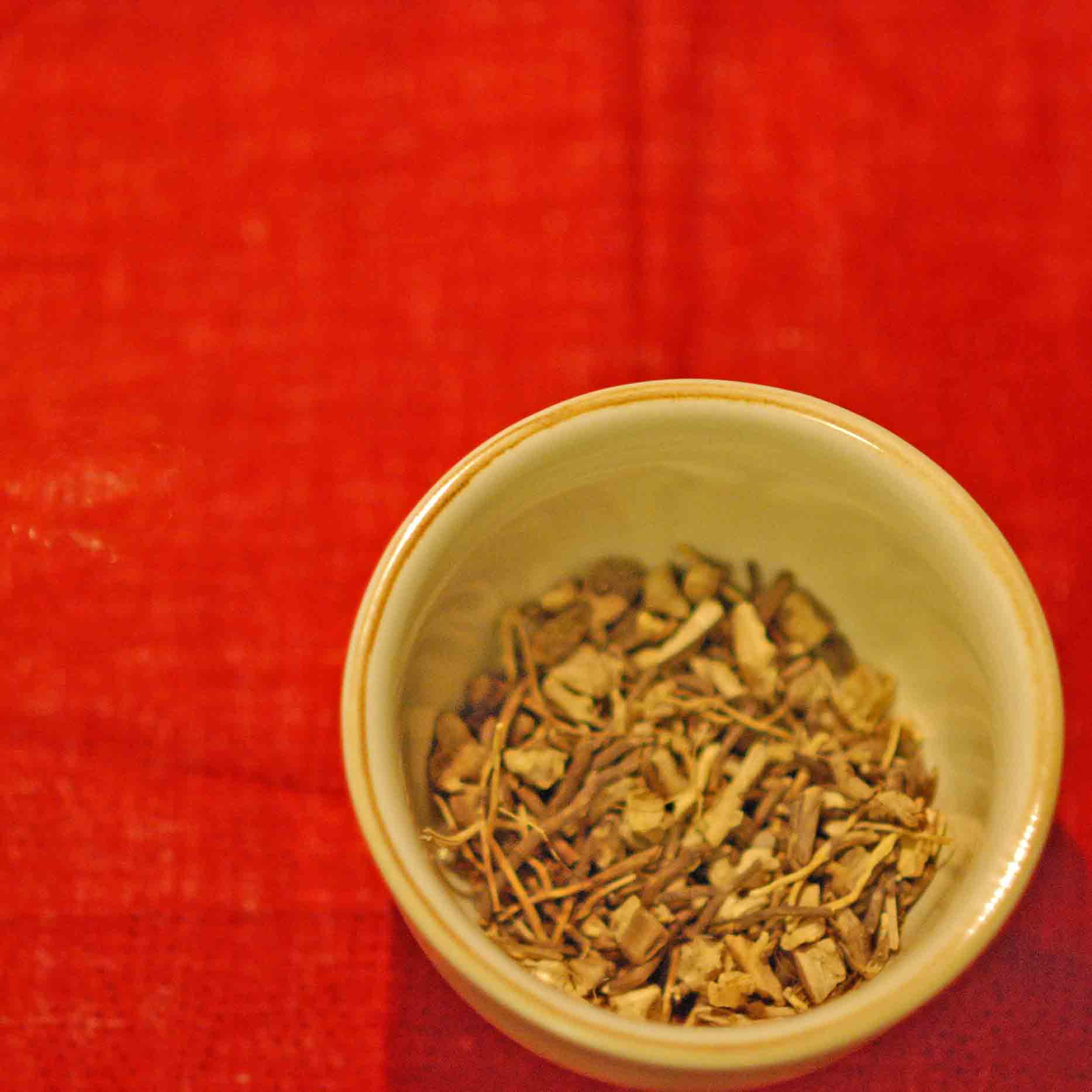
Joe Pye Root

You can find more on this herb/root in Catherine Yronwode’s Hoodoo Herb and Root Magic, as well as the websites listed below.

Thanks for reading!

-Cory

More information:

Medicinal and identification information – http://www.altnature.com/gallery/joe_pye_weed.htm

Cultivation and propagation information – http://oldfashionedliving.com/joe-pye-weed.html

Folklore and Appalachian history – http://appalachianhistory.blogspot.com/2007/08/queen-of-meadow-cures-all.html

Blog Post 24 – Book Review

Hello everyone,

So today I’d like to offer a review of a book I’ve cited several times on the blog already, Richard Dorson’s Buying the Wind.  It’s a book of folklore divided by region and focusing on the different stories, beliefs, and practices of those who inhabit those regions.  The regions he covers are broken down as follows:

  • Maine Down-Easters
  • Pennsylvania Dutchmen
  • Southern Mountaineers
  • Louisiana Cajuns
  • Illinois Egyptians
  • Southwest Mexicans
  • Utah Mormons

Each section then goes into further detail regarding the specific folklore of the regional group examined.  For example, under Southwest Mexicans, there is a section called “Proverbios” which contains the bits of folk wisdom like:

Dar atole con el dedo.

“To give gruel with the finger.”  (To deceive with words or acts, especially to deceive one’s husband).

Entre menos burros, mas olotes.

“The fewer donkeys, the more cobs.”  (The fewer, the better…corncobs, dried as well as green, are given burros to eat).

And under Louisiana Cajuns, in the section “Riddles,” we find:

What has a tongue and does not speak?  A shoe

What has teeth but does not bite?  A comb

If a man can lift two hundred and fifty barrels of rice when it is not raining, what can he lift during a rain?  An umbrella

Each section has its own unique attributes.  Some have the songs and proverbs of their region, some have stories and even some loose versions of “spells.”  I say loose because they aren’t exactly how-to’s on spellcraft, but provide some information that could be turned into a how-to pretty easily.  For example, the Louisiana Cajuns section has information on Hoodoo, including a tale from one informant who described a luck mojo bag that “was a little bag of linen and it had like nerves and then bones.”  The nerves are from a vulture, and the bones from a snake, which both could be used in a lucky mojo hand (though I’ve never heard of nerves being used, per se, but that’s what makes these accounts so interesting—their variety).

The entire book is loaded with bits of magic like this, as well as stories of witchcraft and magic which, while more fanciful, give insight into what the occult practices of those areas might be.  In the Southern Mountaineers section, for instance, there’s an interesting account of a “witch-ball,” which is a bit of hair, wax, and other substances rolled into a ball and “shot” at a victim to curse them.  I’ve seen similar stories in other books of American folklore, especially based in the Appalachian areas, so it’s interesting to me to see how prominent such a magical tool seems to be in that area, though it is largely forgotten elsewhere.

I learned a great deal from this book—the entire section on Illinois Egyptians, for example, was a revelation to me, and has opened up a whole new area of interest for me regarding New World Witchery.  And the stories, songs, and proverbs are fantastic!  I can’t get enough of the Southern “Jack” tales!

I should point out that Dorson uses the Aarne-Thompson system of folklore classification, which divides tales into various types for ease of cross-referencing.  It is definitely a book aimed at folklorists and not particularly at a wide audience, but I think anyone can get a great deal from reading it.  And it may open up a whole new love of folklore as a field of study for some folks.

I’ve been reading a borrowed copy from my public library, and it’s just about due to go back there, which was going to be a sad loss, as I still find myself referencing Buying the Wind frequently.  But thanks to a generous donation from reader/listener Amber (many, many thanks to her!), we’ll be able to procure a copy for future reference now.  So hooray for Amber!

That’s all for now!  Thanks for reading!

-Cory

Blog Post 21– Final Call for Contest Entries!

Hi everyone!

Only a little less than three days left in our first-ever contest!  We’re giving a copy of Cat Yronwode’s Hoodoo Root & Herb Magic to one randomly chosen reader/listener who provides us with a little bit of weather folk lore from his or her family or region.  All you have to do is email us or leave a comment on Blog Post 10 – Weather Work with your general area (you can say “South” or “East Coast” if you like) and a tidbit about what folks say about the weather in your neck of the woods.  The deadline is February 28th at midnight, Central Time, so please get your submissions in before then.  We’ll be using these entries for a podcast on weather magic and folklore, so please write in!

Good luck!

Thanks for reading!

-Cory

Blog Post 17 – Contest Reminder

Hi everyone!

Just a quick reminder that there’s only a little over a week left in our first giveaway.  We’re offering a copy of Cat Yronwode’s Hoodoo Root & Herb Magic to one randomly chosen reader/listener.  All you have to do is email us or leave a comment on Blog Post 10 – Weather Work with some weather lore, preferably from your area or family.  The deadline is February 28th at midnight, Central Time, so please get your submissions in before then.  We’ll likely be putting together a show on weather lore soon and we’d love to have some field reports from out there in the wider magical community.

So good luck, and we look forward to hearing from you!

Thanks for reading!

-Cory

Blog Post 16 – An Introduction to Pow-wow, Part III

Hi folks!  Here is the final installment in my introductory Pow-wow series.  I hope you’re enjoying them!  Now, on to the magic!

Where can I find out more about Pow-wow?

There are many phenomenal resources on this subject.  Here are some of the books I like:

The Red Church, by Chris Bilardi
American Shamans, by Jack Montgomery
Signs, Cures, & Witchery, by Gerald C. Milne
Buying the Wind, by Richard M. Dorson (chapter on “Pennsylvania Dutchmen”)

And, of course, Pow-wows; or The Long Lost Friend, by John George Hohman (also available free at sacred-texts.com).

Additionally, I like this website and its accompanying newsletter:
Three Sisters Center for the Healing Arts

There are other books and resources which I’ve encountered either by proxy or by reputation which I’d also recommend seeking out, though I cannot give a strong opinion on their validity myself, yet:

Strange Experience: The Autobiography of a Hexenmeister, by Lee R. Gandee
Hex and Spellwork, by Karl Herr
The Pennsylvania German Broadside, by Don Yoder
The Pennsylvania German Society

Some Pow-wow Charms & Proverbs

Finally, as promised, here are some Pow-wow charms you can try out yourself.  I’d love to hear how they work for you, so please feel free to leave comments or email us about your results!  Please also note that I provide these for cultural, spiritual, and magical value.  They do not replace conventional medical or legal advice; please see a professional if you have needs in those areas.

First, a few from Hohman’s book:

HOW TO BANISH THE FEVER.

Write the following words upon a paper and wrap it up in knot-grass, and then tie it upon the body of the person who has the fever:

Potmat sineat,
Potmat sineat,
Potmat sineat.

TO STOP BLEEDING.

I walk through a green forest;
There I find three wells, cool and cold;
The first is called courage,
The second is called good,
And the third is called stop the blood

TO REMOVE BRUISES AND PAINS.

Bruise, thou shalt not heat;
Bruise, thou shalt not sweat;
Bruise, thou shalt not run,
No-more than Virgin Mary shall bring forth another son.
+ + +

(The three “+” signs at the end indicate making three crosses in the air over the patient or afflicted area, also sometimes saying the three High Names of the Father, the Son, and the Holy Ghost)

ANOTHER WAY TO STILL-BIND THIEVES.

Ye thieves, I conjure you, to be obedient like Jesus Christ, who obeyed his Heavenly Father unto the cross, and to stand without moving out of my sight, in the name of the Trinity. I command you by the power of God and the incarnation of Jesus Christ, not to move out of my sight, + + + like Jesus Christ was standing on Jordan’s stormy banks to be baptized by John. And furthermore, I conjure you, horse and rider, to stand still and not to move out of my sight, like Jesus Christ did stand when he was about to be nailed to the cross to release the fathers of the church from the bonds of hell.. Ye thieves, I bind you with the same bonds with which Jesus our Lord has bound hell; and thus ye shall be bound; + + + and the same words that bind you shall also release you.

(The conventional wisdom on releasing the thief is that the entire spell must be read backwards.  It’s nice to hold all the cards sometimes.  This charm is almost entirely lifted from entry #22 of the Romanus Buchlein, or Little Book of the Roma, a late 18th century grimoire and prayer book).

Here is a pair of charms which I am citing from Jack Montgomery’s American Shamans, but which he cites from an article entitled “Magical Medical Practice in South Carolina,” from Popular Science Monthly, 1907:

TO HEAL A SPRAIN

Christian Version

“Our Lord rode, his foal’s foot slade [slid],
Down he lighted, his foal’s foot righted,
Bone to bone,
Sinew to sinew,
Flesh to flesh,
Heal, in the name of the Father, the Son, and the Holy Ghost.  Amen”

Pagan Version

“Phol and Woden went to the wood, there was Balder’s colt his foot wrenched,
Then Sinthgunt charmed it and Sunna her sister,
Then Frua charmed it and Volla her sister, then Woden charmed it as he well could,
As well the bone-wrench,
As the blood-wrench,
Bone to bone,
Blood to blood,
Joint to joint,
As if they were glued together.”

(Montgomery, American Shamans, p. 102)

A classic Pow-wow blood-stopping charm, also from Jack Montgomery (and derived from a passage in Ezekiel, I believe):

And when I passed by thee and saw thee polluted in thine own blood, I said unto thee when thou wast in thy blood, Live; yea, I said unto thee when thou wast in thy blood, Live. (p. 253)

Here’s a more modern charm for protection during automobile travel:

“This is a written prayer that is used for protecting cars and other vehicles.  It can be simply folded and placed in the glovebox.

Our Heavenly Father, we ask this day a particular blessing.  As we take the wheel of our car, grant us safe passage through all the perils of trouble.  Shelter those who accompany us and provide us from harm by Thy mercy.  Steady our hands and quicken our eyes that we may never take another’s life.  Guide us to our destination safely, confident in the knowledge that Thy blessing be with us through darkness and light, sunshine and showers, forever and ever.  Amen.” (Bilardi, The Red Church, p. 284)

And I’ll conclude with a few proverbs from the Pennsylvania Dutch, as recorded in Buying the Wind, by Richard M. Dorson (pp.138-141).  Note that “German” here connotes the Pennsylvania-German dialect, not necessarily European German.

-German:  D’r hammer wert aus faerm ambos.
-English:  The anvil outlasts the hammer.

-German:  Waers erscht in di mil kummt grikt’s erscht gimale.
-English:  He that cometh first to the mill, grindeth first.

-German:  En blini sau finnt a alsemol en echel.
-English:  Even a blind pig will sometimes find an acorn.

I hope this series has been informative to you!  This won’t be the last time Pow-wow comes up here, of course, but I think it may be enough to get your feet wet on the subject.  If you try out any of these charms and have results to report or have any thoughts on the different folklore and opinions recorded here, I hope you will leave a comment or send an email and share them with us.

Thanks for reading!

-Cory

Blog Post 13 – Crown of Success

One of the things I hope to do on this blog is provide information on specific tools, formulae, ingredients, and objects used in American folk magic.  I hope that these blogs and podcasts will help the eager American witch to develop his or her practice by incorporating these components, or at the very least educate him or her about the different products available in the folk magic marketplace.

Today, I thought I’d focus on the hoodoo formula known as Crown of Success.  I’ve been using that one a lot lately, and it’s one of the ones I almost always have on hand or steeping in my pantry.  I’m sure many people could use a bit more success in their lives, so it’s a good one to have around for quick spellwork.

The recipe varies a bit from maker to maker, but almost all have a few ingredients in common:

  • Bay (as in bay laurel, not the bay which provides Jamaican bay rum)
  • Frankincense
  • Iron pyrite (“fool’s gold”)

There are several ingredients I’ve seen used interchangeably with key ingredients; lodestone can be used instead of pyrite, for example, since it acts as an “attractant” curio.  Likewise, some folks add gold flakes or glitter to the formula because of the association between gold and money/glory/success.  Additional herbs, roots, and curios can include things like master-of-the-woods, deer’s tongue, cinquefoil (also known as five-finger grass), sandalwood, vetiver, dragon’s-blood, etc.

Harry M. Hyatt records an informant in his Hoodoo – Conjuration – Witchcraft – Rootwork compendium who describes a mojo bag for success containing a lodestone, liquid mercury/quicksilver, iron filings, and a black cat bone (Volume 2, p. 1506).  WARNING!  Do NOT use liquid mercury under any circumstances—it is highly toxic and will cause damage or death if handled.  The black cat bone referred to is likely the magical talisman obtained (rather cruelly) by boiling a black cat alive in a magical ceremony and then collecting the bone in a special ritual.  I do NOT advise this, merely present it as a piece of folklore.  The modern formulae for Crown of Success do not depend on either deadly mercury or ritualized animal slaughter.

As far as how to use this particular formula, Lucky Mojo has an excellent page on Crown of Success formula at their site so I won’t go into much detail here.  Very generally, anything that involves gaining favor or accomplishing a goal—things like acing job interviews, applying for loans or grants, or mastering a new skill—can benefit from the inclusion of this product.

My own personal formulation of this recipe (for the oil version of it)  includes the following:

  • Bay leaves & oil
  • Cinquefoil
  • Frankincense tears & oil
  • Sandalwood chips & oil
  • Vetivert (herb & oil, if available)

In the master jar I also keep a rolled piece of paper with this line from Psalm 65 on it:

“Thou crownest the year with thy goodness; And thy paths drop fatness.” (Ps. 65:11)

There are several reliable sources for this oil out there.  I have to plug our shop, Compass & Key Apothecary, of course (forgive the rather paltry site, we’ll be revamping it soon, but you can certainly order any of our oils there).  But I would also heartily recommend Lucky Mojo’s Crown of Success products and Music City Mojo’s oils or mojo hands.  Based on the reputation of the root workers (as opposed to the individual products which I’ve used in the previous two examples), I would also go out on a limb and say that Toad’s Bone Apotheca and Forest Grove Botanica could both mix up a good blend of success formula if you ask them nicely.

One product I will recommend avoiding is Anna Riva’s Crown of Success.  It doesn’t smell “right,” and I’ve never had much luck using her oils in general.  Your mileage may vary, of course, and if you’ve had good luck with her products, I’d love to know about it.

That’s about it for this root work formula.  If you’d like to share your stories about working with it, we’re always happy to hear them.

Thanks for reading!

-Cory