Blog Post 196 – Body Lore & Magic

Hans van Hayek, The Fortuneteller, 1892 (via Wikimedia)

“My ears are burning; who’s talking about me?”

“If your nose is itching, someone wants to kiss you.”

“Your feet itch? You must be about to go somewhere.”

I remember my mother often sharing the little bits of proverbial wisdom throughout my childhood.

Usually they were delivered with a wink or a wry smile, and I don’t think she took them particularly seriously, but then she also wouldn’t have been surprised to find out that any one of these tokens had borne some fruit in the real world. If you think about it, assumptions about the intimate connection between a person’s body and the world around him or her are not anything new or unusual. Plenty of people have an uncle whose bunions predict snowstorms, or a grandmother whose arthritis tells of coming rain, or headaches that detect heatwaves moving in. There are plenty of other ways one’s body might help one prepare for a day outdoors, according to American lore:

Beyond those sorts of weather-related phenomena, however, bodies are reputed to be in touch with all sorts of esoteric information. Of course, obtaining pieces of a person’s body is a primary way of gaining magical control over him or her, but that, I fear, goes beyond the scope of this article. Instead, this brief examination will focus on the body as a giver or receiver of information, rather than a source of spell ingredients. For example, often the physical features of a person imply certain characteristics about their intellect or psychology, according to American lore:

  • A fat person is believed to have a good disposition and a friendly nature
  • A big head can be the sign of great intelligence, provided it’s not too big (which would mean a person of no wit whatsoever)
  • A person with a “long head” is thought to be someone of dubious morality and “unscrupulous” character
  • A person with a broad face is thought to be warm and friendly, while a narrow face indicates shrewdness and insensitivity
  • “Dimple on the chin,/ Devil within” – A dimpled chin indicates a troublemaking personality
  • Long arms indicate someone with a “grasping” nature, someone who will do whatever it takes to geth what he or she wants
  • Trimming a baby’s fingernails will turn it into a thief
  • And of course, cold hands mean a warm heart.

What do all of these sorts of lore have in common, then? They all seem to operate off of the ever-present Doctrine of Signatures, which we’ve seen before, and which fundamentally states that like affects like. By that logic, we can see how things like “broad face” and “big head” can be indicators of abundance with regard to particular character traits (I can only assume that the same sort of logic applies to the “fat person,” in that they have general abundance in their figure and thus must have some in their disposition towards others as well). More interesting are the less direct connections between things like trimming fingernails and later thievery in life. I would suggest that because a baby is supposed to undergo very little “reduction” during the first year or so of life (a period when their hair, body, and in some cases, teeth, are all growing more abundant), that trimming something off of the baby’s hand will make it always look for something to fill the void. That, in turn, might lead the baby to fill it with other people’s things, and thus the fear of thievery is attached to the belief. Makes sense? Coming with me on that one? (It’s fine if you don’t, of course, as these sorts of lore-bits often can have multiple meanings and origins).

Some of my favorite bodily predictors come in the form of love (and lust) lore, because they seem so appropriate to connect to how we experience our fleshly existence. I always heard that if your nose itched, someone wanted to kiss you, as I noted above (which may indicate either a lustful flag of interest if one subscribes to the nose/penis symbolism that some folklorists do, or a simple sense of “rooting out” such a person, as indicated in the paragraph on itching below). Another fairly common bit of folklore says that “a hair in your mouth means someone wants to kiss you.” Hair can have very sexual connotations (which is why it frequently gets associated with sexuality in Abrahamic religions), so its presence in the mouth would be a very reasonable indicator of lustful intent. Another bit of lore deals more with what to do if your paramour wanders off: “Throwing nail parings into a fire is a way to call a lover back to you” (okay, so this is more of a spell, but it does seem as though the nail trimmings are communicating with the other person, so I’m calling it a fit).

Itches or burning sensations on the body are of particular importance, and seem to offer very particular meaning depending on where they occur. Some examples from Kentucky lore:

  • If your ears burn some one is talking ill of you, while if your hand itches you will receive a present, or shake hands with a stranger.
  • If your right foot itches, you are to go on a journey; if the left, you are going where you are not wanted.
  • When your nose itches, some one is coming. If it is when you are away from home, you may know you are wanted at home.
  • If your right eye itches, you will cry; if the left, you will laugh.

Again, we see elements of the Doctrine of Signatures, in that ears receive the voice of others in most circumstances, so if they act in an uncharacteristic manner, they must indicate an unheard voice somewhere out in the world. Feet carry us on journies, of course, so the interesting element in that superstition is the association with particular feet and the type of journey. With the long-standing stigma against “sinister” (the original meaning of that word being “left-sided”) use of limbs, the connection between the left foot and an unpleasant journey makes some sense. The less obvious one is the nose, although we may make some guesses about why a nose would be a barometer for upcoming human contact. We might think of proverbial phrases like “sticking one’s nose where it doesn’t belong” or a “nosy person,” and understand that noses are believed to be the body part which roots for information, particularly about the lives of others, and so the nasal connection does have some precedent.

In Mexican-American folklore, bodily functions are often regulated by “hot” or “cold” natures (not dissimilar from Ayurvedic medicine). Because of those temperature associations, people can figure out important information about a person’s state of well-being based on whether small signs on the body indicate larger imbalances within the person. A great example would be hair, which is thought to be “hot” while it grows. A person whose “heat” dies away quickly, however, will likely begin to go gray, as though his or her vitality were turning to ash on his or her head. Having long hair can also help one lose weight in this estimation, because longer hair burns off more energy, thus depleting the body of its energetic fat stores.

Surprisingly few death omens connected to anything body related. This likely reflects an anxiety that bodily warnings are incredibly frequent and common, and that death should be a rare and unusual occurance, rather than anything commonplace. One of the few bits of bodily lore connected to death has to do with the loss of a limb and its disposal. Supposedly, if one loses a limb through combat or other misfortune, and fails to take off any shoes or other vestments on the detatched extension, the person will experience phantom pains so long as the problem is not corrected.

Vance Randolph collected some interesting lore which borders on a divinatory method using the appearance of spots on fingernails:

“White spots on fingernails are supposed to represent lies, and little boys often hide their hands to avoid betraying falsehoods. However, there is a fortunetelling rhyme children use when counting these white spots :

A gift, a ghost, a friend, a foe, A letter to come, a journey to go.

Some people say that a large white spot means a journey.”

These sorts of counting-out rhymes often figure in children’s play, sometimes as a means of selecting play partners and sometimes with more occult connotations, as in the spot-counting rhyme above. Why white spots should indicate lies remains open to interpretation, but if I had to guess I’d assume that the spots are thought to be the actual lies trapped beneath the glass-like surface of the nail, demonstrating that lies always come up for air, sooner or later.

I’ll close today with a little tidbit from a somewhat older book (originally published in England, but likely in circulation throughout the British colonies), which is devoted to divination via dreams and moles on the body. The entire second half of the pamphlet is about moles and their meanings, and often provides startlingly specific and inalienable interpretations of mole size, shape, and position. One such indicator: “If a Mole is on the crown of the head, it shews another on the nape of the neck, and the party witty, and to have good natural parts: but that he will die poor.” I would say that indicates that a pair of moles is a bit of a mixed bag, wouldn’t you? I think I’ll go back to being a bit heavyset and being perceived as friendly, then.

Thanks for reading!

-Cory

Sources:

  1. Bronner, Simon J. Explaining Traditions. 2011.
  2. Bronner, Simon J. American Children’s Folklore. 2006.
  3. “Dreams & Moles, with their Interpretation & Signification.” Published by the Royal Society of London, 1750.
  4. Dundes, Alan. Interpreting Folklore. 1980.
  5. Hyatt, Harry M. Folklore of Adams County, Illinois. 1935.
  6. Ingham, John M. “On Mexican Folk Medicine.” American Anthropologist. 17, (1): 76-87.
  7. Price, Sadie F. “Kentucky Folklore.” The Journal of American Folklore. 14, (52): 30-38.
  8. Randolph, Vance. Ozark Magic & Folklore. 1964.
  9. Smith, Grace. “Folklore from ‘Egypt.’” Hoosier Folklore. 5, (2): 45-70.

Podcast 76 – Spring Symbols

Summary:

Today we’re tackling a hodgepodge of springtime symbols, including rabbits, eggs, maypoles, and flowers. We’ll discuss some of the myths and folklore surrounding these icons of spring, as well as some of the spells and magic that use these elements.

Play:

Download: New World Witchery – Episode 76

-Sources-

We draw upon several sources for this episode, including some of our own blog posts:

A nice skeptical analysis of the Easter/Eostre fakelore can be found here.

Rabbit books/text mentioned include Watership Down and the Uncle Remus Tales.

An excellent source on the limpia egg cleansing is the Curious Curandera’s site.

Some springtime symbols in fiction that might be of interest include Louisa May Alcott’s “May Flowers“ and Nathaniel Hawthorne’s “The May-pole of Merry Mount.”

Friends:

Sindy Todo of Todomojo.com is hosting the Northwest Crossroads Retreat soon. Check it out!

Big thanks again to Atticus Hob, who recently announced that his show is indefinitely off the air, but who did a marvelous job as our co-host last month. Check out his Orphan’s Almanac site for updates.

Also, check out the Spring Lore 2015 contest, and win one of three great prizes!

If you have feedback you’d like to share, email us or leave a comment. We’d love to hear from you!

Don’t forget to follow us at Twitter! And check out our Facebook page! For those who are interested, we also now have a page on Pinterest you might like, called “The Olde Broom.”

Promos & Music
Title music:  “Homebound,” by Jag, from Cypress Grove Blues.  From Magnatune.

Promos:

  1. Welcome to Night Vale
  2. The Wigglian Way

Blog Post 194 – Plugging (Healing with Trees)

Kirkridge Shelter sign, Appalachian Trail near Fox Gap, Monroe and Northampton Counties. Photo by Nicholas A. Tonelli (Wikimedia)

Exploring American folk magic means looking under lots of stones, poking about in the weeds on the roadside, and scaring furry little critters out of their hiding spots as we try to discover the methods that have been used to solve problems throughout the years. Whether it’s using potatoes to cure warts or making your spare change break an incoming hex, the techniques of folk magic demonstrate a masterful application of resources at hand to get the results a body needs. Which brings me to the subject of this article, the practice of “plugging” to heal disease.

Largely found in the mountain regions of America, although it also appears in a few other places as well, the basic practice of plugging consists of measuring a person against a tree, boring a hole in the tree, then filling and stuffing the hole (or “plugging” it, obviously). Some folks also call the practice “pegging” rather than “plugging,” since the bored out chunk of tree forms a natural peg (and since the image of a peg may have a more biblical connotation to some practitioners, since a tent peg is used in the Book of Judges to kill an enemy of the Israelites). Once the person measured against the tree grows past the height of the hole, he or she should be cured of the disease. Of course, this means that the person must still be growing, which essentially means this method is used to help children with chronic illness rather than adults. There are a few variants in the practice, which we’ll get to, and some of those provide relief for adults, but for now let’s look at some of the typical examples:

“Drill a hole in a black oak or sourwood tree just above the head of the victim [of asthma], and put a lock of his hair in the hole. When he passes that spot in height, he will be cured. (Another person told us that if the person died, the tree would also.)” –Foxfire Book, p. 231

This is probably the most basic version of the method, although it is more specific about the tree than many versions. For the most part, the remedies simply say “a tree,” although some will indicate a preferred species to affect a cure. One Southern spell says that “chills can be driven away by boring a deep hole in the sunny side of an oak tree, blowing your breath into it, and plugging up the hole, with the result that the tree dies” (Botkin, Treasury of Southern Folklore, p. 630). Variants from the Foxfire 40th Anniversary book also say you can do the remedy with a black gum tree, and interestingly, you can use a detached form of the plugging remedy: “Take a sourwood stick the size [height] of the child when he’s two or three years old. Put it in the top of the house where it won’t get wet. When the child outgrows the stick, the asthma will be gone. This also works for hay fever, and some say it can be done with any “dry stick” by placing it “under the doorstep” (p. 349). The last examples show that the power to heal is not directly tied to a living tree, but simply to the qualities of wood, since the twigs are detached form their trunk before use in the spell.

Plugging is hardly an Appalachian phenomenon, however. A bit of lore from Indiana is very similar to the mountain method: “Measure the baby’s height on a tree and make a hole at this point in the tree. Then cut off a lock of the baby’s hair and put it in the hole. When the bark of the tree grows so as to cover the place, the baby will be well” (Grace Smith, “Folklore from ‘Egypt’,” p. 70). John George Hohman reports a version of plugging which resembles the detached plugging in the sourwood stick example above: “Cut three small twigs from a tree — each to be cut off in one cut — rub one end of each twig in the wound, and wrap them separately in a piece of white paper, and put them in a warm and dry place” (Hohman, Long-lost Friend). One collection of lore from Louisiana is rife with examples of plugging:

379. To cure a child of asthma stand him up by a post and lay a knife on his head and run it into the post. When the child grows above this knife he will no longer have asthma.
380. Negroes cure asthma by taking some of the victim’s hair, tying it up in red flannel, and putting it in the crack of the door.
381. To cure a child of asthma stand him up against a tree and bore a hole just above his head. Into this hole put some of the child’s hair and then stop it up. When the child grows above the hair he will no longer have the asthma.
382. To cure a child of croup stand him up against a tree and run a knife through his hair into the tree burying some of his hair. When the child grows above the hair he will no longer have the croup…
385. A way to cure croup is to bore a hole in the wall behind a door at the height of the child’s head. Put some of the child’s hair into the hole and cork it up. The child will no longer have croup…
389. To keep a child from having whooping-cough take him to a house that is just being built, stand him against the wall, and bore a small hole in it just above his head. Then put some of his hair into it, plug up the hole, and cut the hair off. As he grows above this he will not have the whooping-cough. (Hilda Roberts, “Louisiana Superstitions”)

Many of these are in “Superstitions from Oregon,” by Donald Hines, demonstrating that the practice is hardly a unilocal one. Henry Middleton Hyatt recorded dozens of incidents of plugging in his “Folklore of Adams Co., Illinois” collection. One such example somewhat resembles the practice of plugging without the use of a tree mentioned in the collection above:

  1. “If you have asthma, take and stand the person up against a door — the door must be an outside door — bore a hole in the door at the top of their head, save the sawdust, then put a lock of their hair in this hole, then the sawdust, then the plug. When the person grows above that hole, they will be well. Do you see that hole in the kitchen door over there? Well, that is where we tried this on my niece, and she got well.” (Hyatt).

The use of the wall or door as a substitute for a tree may stem from the fact that—at least in most homes prior to very recent times—these objects would have all been made of wood, and so might have retained the general properties of trees. Since it is unlikely that those doing the boring would know exactly what wood their walls or doors are made of (although in some older cases they might have known), I think this demonstrates the point that the type of tree used for the cure was less important than the fact that it was a tree.

While a number of these techniques do specifically apply to children, in some cases the practice was extended to adult patients as well. In several of Hyatt’s examples, plugging is used to cure excessive bleeding without any relationship to the patient’s growth:

  1. Profuse bleeding in a horse is stopped by boring a hole into a tree, putting in it some of the blood, and plugging up the hole with a wooden peg.”
  2. To check a bleeding caused by a cut, bore a hole into a soft maple tree and plug up in this hole some of the blood”

In this pair of examples, we can see a general sympathetic magical principle at work, since the stopping of the hole represents the stopping of the wound, and the symbolic transfer of the hurt to the tree. In many cases, the plugging action creates a symbiotic enchantment between the patient and the tree. Several accounts claim that if the tree sickens and dies at some point in the future, so will the person healed by its intervention.

Healing is not always the aim of the plugging, either. One Appalachian plugging says, “When you pull a tooth, drive it in an apple tree, and good luck will follow” (Gainer, 125). Likewise, the healing accomplished in some cases may not be physical, but mental. Some Appalachian lore says that putting hair from a recent haircut under a rock will prevent headaches, a sort of form of plugging (probably because birds can’t get the hair and weave it into their nests, which is believed to cause headaches or madness). Surprisingly, plugging has received little attention as a magical practice (although I somewhat suspect that its lack of marketability and a general inclination against drilling holes in things in the modern age have something to do with that). I hope this brief glimpse into the practice gives readers a chance to explore plugging a bit further, as we really only have the very tip of a rather large iceberg here. If you have additional information on plugging you’d like to share, we’d love to hear it!

Thanks for reading,

-Cory

Podcast 75 – Moon Magic

Summary:
We’re back with our eyes on the sky, talking about the role of the moon in magic. We’ll discuss the divinity, folklore, and practical spellwork we associate with our lovely satellite, and make a plan for kick-starting our witchy engines in the moonlight. Plus, a new contest!
Play:
Download: New World Witchery – Episode 75

-Sources-
Please continue to keep Laine in your thoughts and prayers, as she is dealing with a serious (but thankfully not life-threatening) medical issue.

Books Mentioned:


Friends:
Sindy Todo of Todomojo.com is hosting the Northwest Crossroads Retreat soon. Check it out!

Big thanks again to Atticus Hob, who recently announced that his show is indefinitely off the air, but who did a marvelous job as our co-host last month. Check out his Orphan’s Almanac site for updates.

We talk about the concept of moon calendar names, a subject derived from a recent discussion on Betwixt & Between.

Our apologies for the technical glitch in the middle of the episode. We’ll try harder next time, we promise!

Also, check out the Spring Lore 2015 contest, and win one of three great prizes!

If you have feedback you’d like to share, email us or leave a comment. We’d love to hear from you!

Don’t forget to follow us at Twitter! And check out our Facebook page! For those who are interested, we also now have a page on Pinterest you might like, called “The Olde Broom.”

Promos & Music
Title music:  “Homebound,” by Jag, from Cypress Grove Blues.  From Magnatune. Incidental music is “Calling the Moon,” by Dar Williams and “Channel Z,” by the B-52’s.

Promos:

  1. The Irish & Celtic Music Podcast
  2. Druidcast

Blog Post 190 – Magical Gift Giving

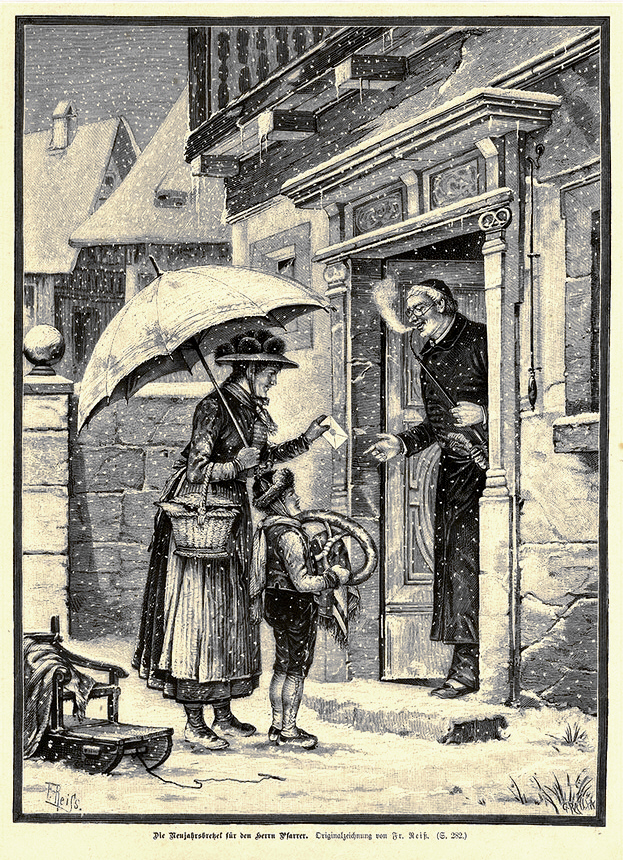
“Die Neujahrsbretzel für den Herrn Pfarrer”, 1884 (via Wikimedia Commons)

I’ve had several people recommend a book to me called The Five Love Languages, by Gary Chapman. It’s a book that looks at the various ways in which people give and receive love. It gets into a lot of psychology and interpersonal communication theories, but in a nutshell it assumes that people tend to give or receive affection via physical touch, loving words, acts of kindness or service, quality time, or gifts. I am definitely a gift-giver when it comes to expressing my feelings—I will work for weeks to handcraft something for someone I care about. When my lovely wife and I were courting, I put hundreds of sticky notes all over her apartment with love messages so that she would constantly find them for months and months afterwords. Even when we ship products out of our Etsy shop, I tend to add layers of Spanish moss to the packing material, as well as little lagniappe touches to the shipment to make it feel magical for the person who opens the box. None of this is to brag, but simply to frame the point that giving gifts is a major part of my connection to others.

Giving gifts has been an important aspect of human relationships for a very lnog time. The Ancient Roman patronage system essentially operated on a large-scale gifting economy. In North America, giving gifts with a magical bent appears time and again. A number of superstitions and rituals surround the acts of gifting and receiving gifts. Possibly one of the gifts most beset by magical rules is the knife:

  • One must not give a friend a knife or other sharp instrument, as it “cuts love.” (Price 34).
  • “Giving a knife as a gift is bad luck as it cuts the friendship” (Hines 12).
  • A present of knives will break the friendship between you (the giver) and the recipient of the gift. (Hines 13)
  • No hillman would think of giving a steel blade to a friend such a gift is sure to sever their friendship (Randolph 58).

The ‘hillman’described in the last point would have been obliged to pay for a knife if he received it as a gift, in order to abate any potential tragedies:

Whenever a knife changes hands, it must be paid for, even if the sum is merely nominal. I have seen a salesman, a graduate of the University of Missouri, present his son with a valuable hunting knife but he never let it out of his hand till the boy had given him a penny (Randolph 58).

This is a sentiment I’ve seen echoed through other traditions as well, including some Wiccan circles and their beliefs about gifting athames. I have also seen contrary points, insisting that Wiccan ritual blades must never be purchased, but only gifted.

Knives, however, are only scratching the surface of the myriad taboos, beliefs, and customs surrounding giving and receiving. In the following paragraphs, I hope to lay out some of these traditions (though certainly not all of them… The concept of Christmas and birthday gifts is well outside the scope of a single survey article, for example, and the topic is much larger than a 2,000 word synopsis could handle). What I hope that you will see is the sheer humanity of this process. People seem to develop an entire language around gifting (see the Victorians and their flowers, for example), and understanding that language, especially within a magical context, expands the conversation on American folk magic immensely.

Since we’ve started in the domestic realm with knives, let’s continue in that vein. In the Ozarks, even very small gifts can have great significance:

A button received as a gift is always lucky, no matter what the color. Years ago, many an Ozark girl collectedbuttons from her friends and strung them together into a sort of necklace called a charm string. A charm string not only brought good fortune to the owner but also served as a sort of memory book for women who could not read one button recalled a beloved aunt, another a friend’s wedding, still another a dance or a quilting party or an apple-peelin’ or some other pleasant occasion. (Randolph 61)

These little tokens often represent a greater whole. In the example Randolph cites the ‘memory book’ aspect of the charm pushes it out of the realm of luck and into a broader realm of personal narrative. It tells the story of where the girl has been. The luck may then be a cumulative blessing from all those around her, an assembly of good wishes designed to attract further goodness into her life. Similarly, some fairly small gifts can act as predictors or insurance of future blessings, as in these two examples from Louisiana:

  • A midwife should plant a flower for a baby at its birth.
  • It is good luck for visitors to place a silver coin in a baby’s hand (Roberts 150).

Here we see blessings which ensure growth and health (the flower) and insurance against poverty (the coin) passed onto a baby, with the hopes that the child will grow and prosper in the future.

Of course, there are just as many taboos on gifting as there are joyous customs. As we saw with knives, some of those can be firmly established and nigh universal at times. Let’s look at another domestic commonplace with strong taboos:

  • Never borrow salt or you will have bad luck (Hines 12).
  • Never return salt that has been borrowed (Roberts 178)

Why salt? In my family, we frequently gave salt as a component of a new house blessing for people we knew, which as I understood it derived from Polish traditions (after investigating this a bit, I’m reasonably sure this was adopted from a similar Jewish custom picked up by my family in the area on the border between Lithuania and Poland). We give a jar of salt with some bread and a penny in it, ‘So that the family may never be hungry (bread), never be poor (penny), and their lives may never lack flavor (salt).” The salt, then, can be seen as the experience and cumulative personality of the family, its seasoning or flavor which makes it distinct. Borrowing someone else’s flavor would, in essence, give them power over you, especially when the salt is returned carrying traces of your own eau de familie. It could also be that by taking one family’s wisdom and experience, then returning it, you set off a disruptive cycle whereby your two families will be struggling to rebalance power for a long time, which definitely sounds like bad luck. A similar Louisiana superstition says ‘Don’t give spades, etc., to your neighbors; you will have a fuss if you do (Roberts 174). In that case, the tool is symbolic of a person’s work and labor, and to lend it out cheaply doesn’t bode well for anyone (and makes me think of Homer Simpson borrowing essentially every tool in Ned Flanders’ garage…a very bad neighbor).

The issue of when a gift is given can also impact its significance and magical qualities. While I will avoid holidays and the like here, there are plenty of other occasions when gift-giving is an expectation, such as at baby showers:

  • At a baby shower, the giver of the seventh gift to be unwrapped will be the next to have a baby (Hines 14).

In this example, the gift-giver receives the magical benefit of a prediction. I suppose that if you are not in the market to start a family, this superstition could seem more like a taboo than a blessing. Another key occasion for giving gifts is after a new family moves into a new home. I mentioned my family’s custom for making a house-blessing from my Polish roots, but it turns out that the general concept of the house-warming may come from the other side of my family tree in the British Isles. The hint of magic behind this tradition comes from the original house-warming present, which actually served to warm a new home:

“As poet John Greenleaf Whittier noted…’The Irish who settled here about the year 1720, they brought indeed with them, among other strange matters, potatoes and fairies.’…The Scots [who were also early settlers in America, particularly in the Mid-Atlantic region and parts of Appalachia]…believed in ‘brownies,’ a more subdued version of the leprechaun. Brownies lived in the kitchen fireplace, and the belief was that the owners of the house had a responsibility to always keep these fairy-creatures warm by keeping a constant fire in the hearth. The Yankees noted that Scots-Americans, when moving from one house to another, would always remove burning embers from the old house to the new, to provide a warm home for the brownies that would move in right along with the family. This was how the tradition of ‘house-warmings’ started” (Cahill 32).

I tend to think this is a bit of fancy on Cahill’s part, and that the giving of gifts to new homeowners is something much older and less literal than a brownie’s ‘house-warming,’ but I would be completely unsurprised to find that the actual practice of moving hearth coals to entice fairy-beings to move houses exists in the Old World or the New.

Marriage also features a number of gift-giving customs, some with superstitious components. For example, in Kansas groups of Russian-German emigrants pin money to the bridal skirt as a way of blessing the bride and groom with prosperity. Additionally, a fun game is made of the best man’s gift, and the “custom of some young buck’s stealing the shoe of the bride. The best man had to redeem the shoe with cash, which went into the household fund” (Tallman 227-8). The best man might contribute some or all of the money, with the remainder raised by good-natured begging of the wedding guests.

A number of tales from Appalachia and New England, including stories from Hubert Davis’ The Silver Bullet and other collections of supernatural American folklore, indicate that magical gifts have particular rules when it comes to witches. For example, a witch might offer a very low price for some livestock or sundries she fancies from a local homestead. If she is refused the gift—which is all such a lowballed agreement could be seen as—she curses whatever it is she wanted, rendering it useless to the family that has it. Often she will curse a cow so it won’t produce milk, or she might even curse an entire herd of pigs or sheep rather than just the one she wanted. On the flip-side, a witch should never be given a present of anything from the household, or she could use it to harm those who dwell within. One story features a housewife who loans the local witch-woman a cup of sugar in a neighborly—if cautious—manner, only to find her butter won’t come when she churns it afterwords. She summons a local witch-doctor who takes a piece of hot silver and drops it in the churn, then spills cream on the fire and whips a pan of the scalded dairy until they hear shrieks from the direction of the witch-woman’s home. She, of course, suffers great pains and bears the marks of a whipping and burning the next day, and everyone knows just what’s what. Oh, and the butter is fine after that, too, of course.

Not all witches or magical practitioners are conniving and dangerous when it comes time to share the wealth, though. For example, many witch-doctors and conjurers in the Southern Mountains will not take direct payment for their work, but only offers of gifts made in-kind, such as foodstuffs, clothing, or other necessities. Vance Randloph noted that one witch woman in the Ozarks did not ask a fee for her work, but would accept such donations: “This woman makes no charge for her services, but if somebody offers her a present, such as a new dress or a side of bacon, she seldom refuses the gift” (Randolph 126).

Lest you think all these magical gifting traditions are limited to the realm of humanity, here’s a bit of lore from John George Hohman’s Long Lost Friend to show otherwise:

A GOOD METHOD OF DESTROYING RATS AND MICE.

Every time you bring grain into your barn, you must, in putting down the three first sheaves, repeat the following words: “Rats and mice, these three sheaves I give to you, in order that you may not destroy any of my wheat.” The name of the kind of grain must also be mentioned. (Hohman 70).

Here we see the old idea of “one for the rabbit, one for the crow, one to rot, and one to sow” extended from nursery rhyme to magical practice. Giving the animals a bit of the household bounty seems to be a way to stave off any thievery on their part, at least in this example.

Finally, I can’t help but offer up a humorous story from Maryland which shows animals getting in on the gift-giving action:

It seems that Mrs. Morison’s uncle and her father went fishing one time and as always they carried their [moonshine] jug along. They came to this water moccasin who was just about ready to swallow a frog. So Mrs. Morison’s father took a forked stick and clamped it down over the snake’s head and took it [the frog] away ‘cause they wanted to use it for bait.

Well, that snake looked so darn downhearted that they gave him a drink of moonshine, and off he went. So they went on with their fishing and about an hour later one of them felt a tug on his leg. He looked down and there was that snake back with another frog. All I can say is, that must have been awful good moonshine” (Carey 31).

I’m not sure if the ‘magic’ in that tale is so much in the moonshine or the moccasin, but I couldn’t resist sharing it with you.

I’m sure there are many other magical giving traditions I’m missing here, so if you have any you want to share, please do!

Thanks for reading,

-Cory

Sources

  1. Cahill, Robert Ellis. Olde New England’s Strange Superstitions (1990).
  2. Carey, George G. Maryland Folklore (Tidewater Pub.: 1989).
  3. Davis, Hubert J. The Silver Bullet, & Other American Witch Stories (Jonathan David Pub.: 1975).
  4. Hines, Donald M. “Superstitions from Oregon,” Western Folklore, Jan. 1965.
  5. Hohman, John George. The Long-Lost Friend (Llewellyn, 2012).
  6. Price, Sadie. “Kentucky Folklore,” Journal of American Folklore, Jan-Mar 1901.
  7. Randolph, Vance. Ozark Magic & Folklore (Dover: 1964).
  8. Roberts, Hilda. “Louisiana Superstitions,” Journal of American Folklore, Apr-Jun 1927.
  9. Tallman, Marjorie. Dictionary of American Folklore (Philosophical Library, NYC: 1959).

Blog Post 188 – Visitors, Guests, & Strangers

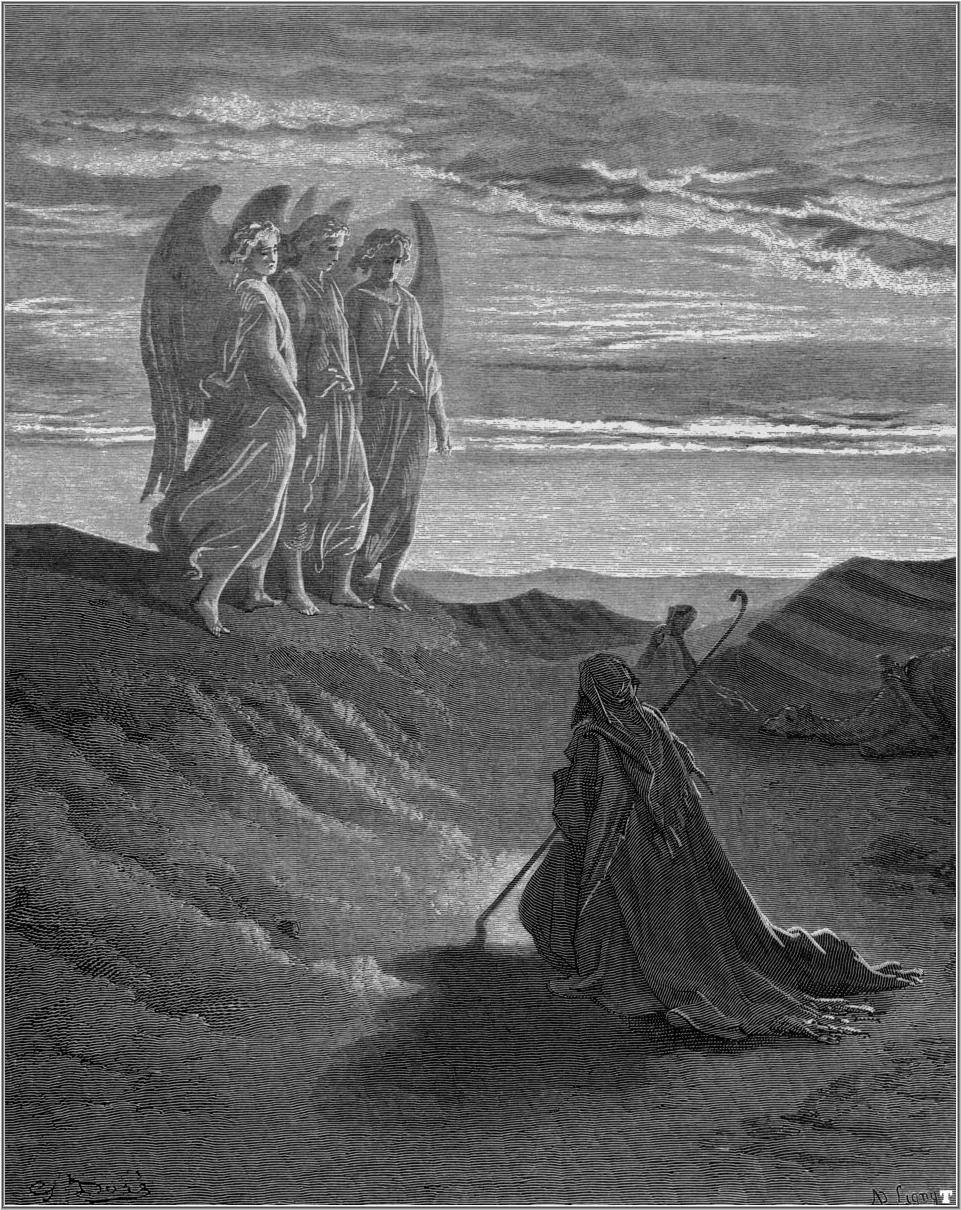
Abraham and the Three Angels, by Gustave Dore (via Wikimedia Commons)

And Moses was content to dwell with the man: and he gave Moses Zipporah his daughter. And she bare him a son, and he called his name Gershom: for he said, I have been a stranger in a strange land. (Exodus 2:22)

And he lift up his eyes and looked, and, lo, three men stood by him: and when he saw them, he ran to meet them from the tent door, and bowed himself toward the ground, And said, My Lord, if now I have found favour in thy sight, pass not away, I pray thee, from thy servant: Let a little water, I pray you, be fetched, and wash your feet, and rest yourselves under the tree: And I will fetch a morsel of bread, and comfort ye your hearts; after that ye shall pass on: for therefore are ye come to your servant. And they said, So do, as thou hast said. And Abraham hastened into the tent unto Sarah, and said, Make ready quickly three measures of fine meal, knead it, and make cakes upon the hearth. And Abraham ran unto the herd, and fetcht a calf tender and good, and gave it unto a young man; and he hasted to dress it. And he took butter, and milk, and the calf which he had dressed, and set it before them; and he stood by them under the tree, and they did eat (Genesis 18:2-8).

Southerners are famous for their hospitality, so much so that the words are coupled together idiomatically in the phrase ‘Southern hospitality.’ Leaving aside potentially ironic implications of that expression (let us not forget that the ‘genteel’ South also maintained a bevvy of Jim Crow laws aimed at making life inordinately inhospitable for Southern Blacks), the concept of being a good host and treating those who arrive at one’s doorstep with dignity, warmth, and grace does have strong roots in American soil. Those roots are not exclusive to that soil, of course; the Ancient Greeks placed a tremendous value on the guest/host relationship, evidenced by numerous ancient writings and even the term the Greeks used for the practice of being a good guest/host, ghosti. Likewise, Hebraic culture values the right treatment of the stranger or alien in one’s land, as in the scriptural passages which launched this article, as well as dozens of other examples throughout the Bible. On American ground, however, this relationship found a variety of expressions among numerous peoples. While the performance of hospitality is inevitably different depending on its cultural context, the surprising homogeneity of value placed on hospitable action speaks to a core of humanity.

The practice of hosting and honoring the unknown guest also appears in a number of folk narratives with a distinctively supernatural bent—hosting angels unwares, so to speak, although in some tales the beings hosted are decidedly non-angelic. In this article we shall see some examples of these supernatural interactions, the rewards and risks involved, and some potential interpretations of the practical application of unearthly hospitality. We will also look at some of the rituals and traditions surrounding hospitality towards mortal beings, which is where we shall begin our examination.

In the Appalachian Mountains, traditions of hospitatlity are very strong, of course, but often mountain people might not see much of others except at major events. Being a good host extends to some of the most private moments in life, including the first night of marriage. The concept of a spontaneous wedding reception, called an ‘infare’ can be summed up thusly: ‘The word infare comes from Old English: in plus faran, to go in. It was a reception held in the home of the newly-married couple. Word was ‘spread around;’ no invitations wer issued, but people in the community knew that they were invited. Refreshments were served and games were played very much as at the play-party [essentially a bridal shower]. Neighbors often brought gifts of food and other things to be used in the home of the newly-wed couple’ (Gainer 32-33). The infare is a concept similar to the charivari or shivaree, which involved friends and neighbors of the newlyweds waking them the morning after with banging pots and pans, bells, whistles, hoots, and a number of innuendos about the wedding night. The function of these hospitality rites centers on a few concepts: celebration of a new union, blessing the happy couple, and community integration.

Sometimes extends to the idea of hospitality as an aspect of place versus people: ‘When you return to the house for something that has been forgotten, sit down in a chair before leaving again to avoid bad luck’ (Gainer 127). In a story from Hoosier folklore, it is neither a person nor place with an expectation of hospitality, but an object—a stove, in this case:

An old lady in St. Francisville sold her cookstove to a man who promised to pay her funeral expenses instead of giving her the price of the stove in ready cash. He didn’t do as he promised. Every time his wife tried to get a meal and cook on the stove, the stove lids would fly off. So he went to the priest and told him about it. “Have you made any promises lately?” asked the priest. Then the man had to confess that he had promised to pay the old woman’s funeral expenses in return for the stove but that he hadn’t done it yet. Then the priest told him to go right away and pay off his debt as quickly as he could. So the man did this and after that he and his wife had no more trouble about being able to cook on the stove, and the stovelids never flew off again (Smith 50).

This last example is essentially a haunting tale, although the aspect of returning a promised favor lets me slip it in edgewise to this look at hospitality. Weddings and ghosts aside, many examples of good housekeeping between the mundane and supernatural realms do follow the ‘angelic’ mode more closely.

In folklore from Mormon sources in the western United States, several stories center on visits from saints and angels. One of the best known versions of such tales is that of the “Three Nephites.”

According to the Book of Mormon, Christ, upon his coming to the American continent, had twelve apostles. When it came time for him to leave, he asked them if there was any wish that he might give them. Nine of them asked to go with him. The other three remained silent. They were told that they would never suffer death. Since then they have roamed the earth in a sort of immortal state. They appear at frequent intervals to give aid to those in distress or to give advice. Mormon literature is full of accounts concerning the mysterious appearance of one of these men and the wonderful things that they have done…Oral versions can be heard in almost every Mormon community (Dorson 500-502).

Dorson then recounts two different versions of the Three Nephites tale. In one, a sick brother is brought back from the brink of death on an isolated plot of land by a wandering stranger, who disappears almost the moment he leaves the house. Other Mormon tales include “The White Bread on the White Cloth,” in which an angelic visitor cures a sick baby from a hospitable household and “The Hungry Missionaries,” which tells the story of a pair of missionary Mormons near starvation who are gifted bread by a kindly stranger, only to find that their parents had given bread to a needy stranger that same night hundreds of miles away. Another version of the visitor tale that pops up frequently in Mormon lore involves the appearance of a “wee small voice” which provided emergency guidance in spiritually challenging situations. Some folklorists have equated the wandering Nephite tales with the tales of the “wandering Jew” found in some European legends (see Gustav Meyrink’s The Green Face for a fictionalized version). While the “wandering Jew” tales frequently bear at least a small amount of anti-Semitic language or tone, Jewish custom also has its own version of the guest, with the empty plate set for Elijah during holy meals. My wife and I adopted a similar custom after seeing Christmas Eve practices in Prague.

Returning to the South, there are a few other places where strangers traveling in strange lands find succor among the locals. In Southern Protestant church circles, there are frequently tales of the wandering preacher being hosted by congregational family members, particularly for meals after Sunday service, often dining with a family while sharing extended prayers, blessings, and occasional sermons. Eventually, he becomes something of a comic character, giving rise to the popular proverb: “When the preacher come by for Sunday dinner it make[s] the chickens cry” (Courlander 500). In some versions, the preacher’s role can be turned into an abuse of power, even something evil or diabolical. Literary examples include Flannery O’Connor’s “Good Country People” and Randall Kennan’s Let the Dead Bury Their Dead. In addition to men (and occasionally women) of the cloth, African American communities put emphasis on the value of storytellers who would move between communities sharing lore and news. In this way, they were similar to a wandering bard figure, but more often the storytellers would be found in a centralized location (porch of a local mercantile—also becomes a literary figure, and a central piece of the narrative in Hurston’s Mules & Men).

The traditions surrounding hospitality, whether Southern or more broadly interpreted, form a core piece of American cosmology. Since one never knows just who one is hosting, graciousness is always a wise decision.

Thanks for reading!

-Cory


Podcast 62 – Pregnancy and Birth Lore

Shownotes for Podcast 62 – Pregnancy and Birth Lore

Summary:
In this episode we’re trying out the wedding ring test, asking about spicy foods, and trying not to scare any birthmarks onto Laine’s baby as we talk about the lore and folk customs surrounding pregnancy and childbirth.

Play:

Download: New World Witchery – Episode 62

-Sources-

We mostly mention various lore we remember without citing sources, but I do mention a few books:

Pagan Podkin Super Moot 5 is going to be in Chicago! Watch Fire Lyte’s page for more detail to come.

Cory is going to be moving to Pennsylvania in the Fall, which may impact the show and blog a bit (but probably for the better in the long run)

If you have feedback you’d like to share, email us or leave a comment. We’d love to hear from you!

Don’t forget to follow us at Twitter! And check out our Facebook page!

Promos & Music

Title music:  “Homebound,” by Jag, from Cypress Grove Blues.  From Magnatune.

Promos:

  1. Lamplighter Blues
  2. Welcome to Night Vale

Blog Post 187 – Magical Hats

Cowboy hats for sale in Austin, TX (photo by Nika Vee, via Wikimedia Commons)

There’s a line from the classic (well, sort of) movie Smokey & the Bandit in which Burt Reynolds’s character explains to his lady of the film that he only takes his hat off for one thing, to which his female companion (Sally Field), of course, replies: ‘Take off your hat.’

Costume is frequently a reflection of ceremonial, ritual, or even magical operation, an outer manifestation of inner desire or power. A nun’s habit or a burqa can both represent a commitment to religious life, and inspire reactions from those around them. The ceremonial robes of a Thelemic magician frequently conform to specific standards to enhance invocations and rituals. The Encyclopedia of American Folklore notes:

Folklorists who discuss adornment have concentrated on costume’s socializing force and its relationship to the maintenance of individual and group identities. According to Don Yoder (1972), folk costume expresses identity in a symbolic way; functioning as an outward “badge” of community identity and expressing an individual’s manifold relationships to and within that community (Brunvand 341).

One of the items frequently associated with magicians is the magic hat—whether it’s the shiny tophat of a stage magician concealing a rabbit in its depths or the pointy, star-spangled adornment of a fantasy wizard. In American lore the hat has a special place as a magical item, frequently providing either symbolic guidance, otherworldly taboo, or a method of deployment in spell-casting.

When people think of American hats, possibly the most iconic is the cowboy’s ten-gallon hat (which, of course, does not hold ten gallons, but the galon hatband worn by Southwestern vaqueros). I remember teaching overseas and asking about impressions of America, and the most common response was that we tend to wear cowboy hats and smile a lot.

The cowboy hat—as well as a number of other elements of ‘rugged’ American folk costume—was borrowed from other cultures:

Many specifically American types of costume emerged from the interaction of diverse costume traditions in dialogue with indigenous materials and environments. Recognizable forms in Western regional costume, for example, are creolized forms resulting from the interaction of different traditions of dress. The costume of mountain men who charted new Western territory—fringed buckskin coats, breeches and shirts, fur “coonskin” hats, and thick, colorful blanket jackets—was an adaptation of Native American costume forms suitable for native environments and constructed with indigenous materials. The occupational costume of the American cowboy was also the result of the interaction of various cultural forms in dialogue with the demands of occupation and environment. Many of the recognizable elements of the classic American cowboy costume, such as spurs, hat, boots, and chaps, were the result of cultural exchanges between working Anglo and Mexican cowboys, known as vaqueros. Vaqueros were known by their wide-brimmed hats, short jackets, colorful neckerchiefs, red sashes, elaborate spurs, and protective leather leggings (Brunvand 343)

Given the emblematic nature of the Stetson and its kin and the frequently superstitious nature of life in the Old West, it is hardly surprising that lore has arisen surrounding this headgear. Probably the most common belief surrounding the cowboy hat has to do with what to do when you’re not wearing it. There seems to be an absolute taboo on placing a hat on the bed, which appears in everything from Southwestern rodeo lore to Oregon folk belief.

In both the American South and West, a particular custom of hat-burning following the birth of the first baby (or sometimes only the firstborn son) of a miner prevails. From Vance Randolph’s Ozark Magic & Folklore comes the following account:

In some clans, when a baby boy is born, a sister of the babe’s father comes to the house, looks at the child, and then burns the first hat she finds. No matter whose it is, nor how valuable, she just picks up a hat and throws it into the fireplace. Many people laugh at this and pretend to take it lightly, but it is never omitted in certain families. I know of one case where there was some doubt about the child’s paternity, and the husband’s family were by no means friendly to the young mother, but despite all this one of the sisters came and burned the hat; she did it silently and grudgingly and most ungraciously, but she did it. This practice is never discussed with outsiders, but it is sufficiently known that a series of funny stories has grownup about hats being burned by mistake, strangers’ hats missing, doctors leaving their hats at home, and so on (Randolph 205)

This practice was also found in California by folklorist Wayland Hand, where “[o]n occasion of a miner’s first trip to the mine after the arrival of the firstborn, his comrades simply seize his hat and burn it despite any resistance or protests offered” (Hand 52). This act functions both as an initiatory rite and as a method of preventing bad luck for the child. Hand also notes that the baby was usually made to touch the hat if possible prior to its cremation. A soldier’s hat could also be worn by a woman in labor to give her strength during the birth, furthering the link between children and hats.

A number of traditions from African American folklore have been attached to hats. In most cases, headgear serves as a method for the transference of contagious magic, sometimes almost in a medical sense: “if one borrows a hat from a diseased person, and the wearer sweats round the forehead where the hat rests, he will take the disease” (Steiner 267). Harry Hyatt recorded a string of beliefs among African Americans surrounding hat lore:

9750. If a girl puts a man’s hat on her head, she desires him to kiss her; if a man puts his hat on a girl’s head, he desires to kiss her.
9751. A girl should never put a man’s hat on her head; it will cause quarrels with him.
9752. The girl who tries on a man’s hat will not get him for a husband.
9753. If a woman throws her hat and gloves on a man’s bed, she wants to sleep with him; if a man throws his hat on a woman’s bed, he wants to sleep with her.
9754. A girl can strengthen a sweetheart’s love by laying his hat on her bed when he comes to see her.
9755. The significance of a beau refusing to hand his hat to his girl when he calls on her is love growing cold. 9756. A girl stepping on a man’s hat will soon marry the owner.
9757. “The girls did this when I was young: in the spring stamp with your thumb in the palm of your hand the first twenty-seven straw hats you see and you will meet your beau.”
9758. If a girl takes the bow out of the hat of each man liked, she will marry the owner of the seventh hat.
9759. Let a girl take as many bows as possible from the hats of men liked and wear them on her garter; the bow staying on longest will reveal who among these men loves her best (Hyatt 231)

Clearly some of these are contradictory, as in the piece about one gender wearing the other’s hat breeding either contempt or desire. There does seem to be a very strong connection between hats and sexuality, however, perhaps because the hat sits so close to the brain and retains the warmth of the head, it may be seen to cause ‘feverish’ behavior, such as love, lust, or even fighting. The divinatory rites surrounding hats are also interesting, although I suspect these performances have less to do with any direct effect upon the mind and more to do with other counting rituals related to love forecasting. Several tricks in the practice of old-style hoodoo involve acquiring the band from a man’s chapeau and using it to deploy any number of tricks, mostly designed to influence him in love (or occasionally business).

A bit of lore from the Southern mountains tells about how a person can reverse bad luck caused by unfortunate omens (in particular a fearsome rabbit crossing one’s path): [If a] Rabbit runs cross yur path, turn yur hat ‘roun’. (Wear your hat with the back part in front.)” (Duncan 236). This is not much different from the idea of turning around if a black cat crosses one’s path or even turning a key or coin over in one’s pocket after seeing an unlucky sign. In an era when hats are frequently worn backward (if worn at all), this sort of act is probably much less out of place today than it would have been half a century or so ago.

Hats, then, can be deeply magical objects to those that wear them. It’s hardly surprising that Lyle Lovett sings of his size-7 Stetson, “Well if it’s her you want, I don’t care about that/ You can have my girl, but don’t touch my hat.”

So what about you? Do you have any hat-related lore? What kinds of hats hold particular magic for you? The pointy costume ‘witch’ hat? A trucker’s cap owned by a favorite grandfather? I’d love to hear what makes your hat special and whether you ever ascribe anything magical to it.

Thanks for reading!

-Cory

Blog Post 183 –Lost in the Supermarket (Part II)

Last time, I looked at a few of the standard products found in a typical supermarket which could be easily used within a folk magical context. I’m continuing that theme today, and while I’ll still be doing my best to stay out of the ubiquitous enchanted spice aisle, I will be touching on a few ingestibles. Please note, however, that as I frequently say: THIS IS NOT A MEDICAL BLOG, AND NO INFORMATION PRESENTED HERE SHOULD BE TAKEN AS MEDICAL OR LEGAL ADVICE. Before you start popping things into your mouth or rubbing them on your skin, you should make sure with your doctor that doing so will not lead to genetic mutation, pestilence, plague, or ennui of any kind.

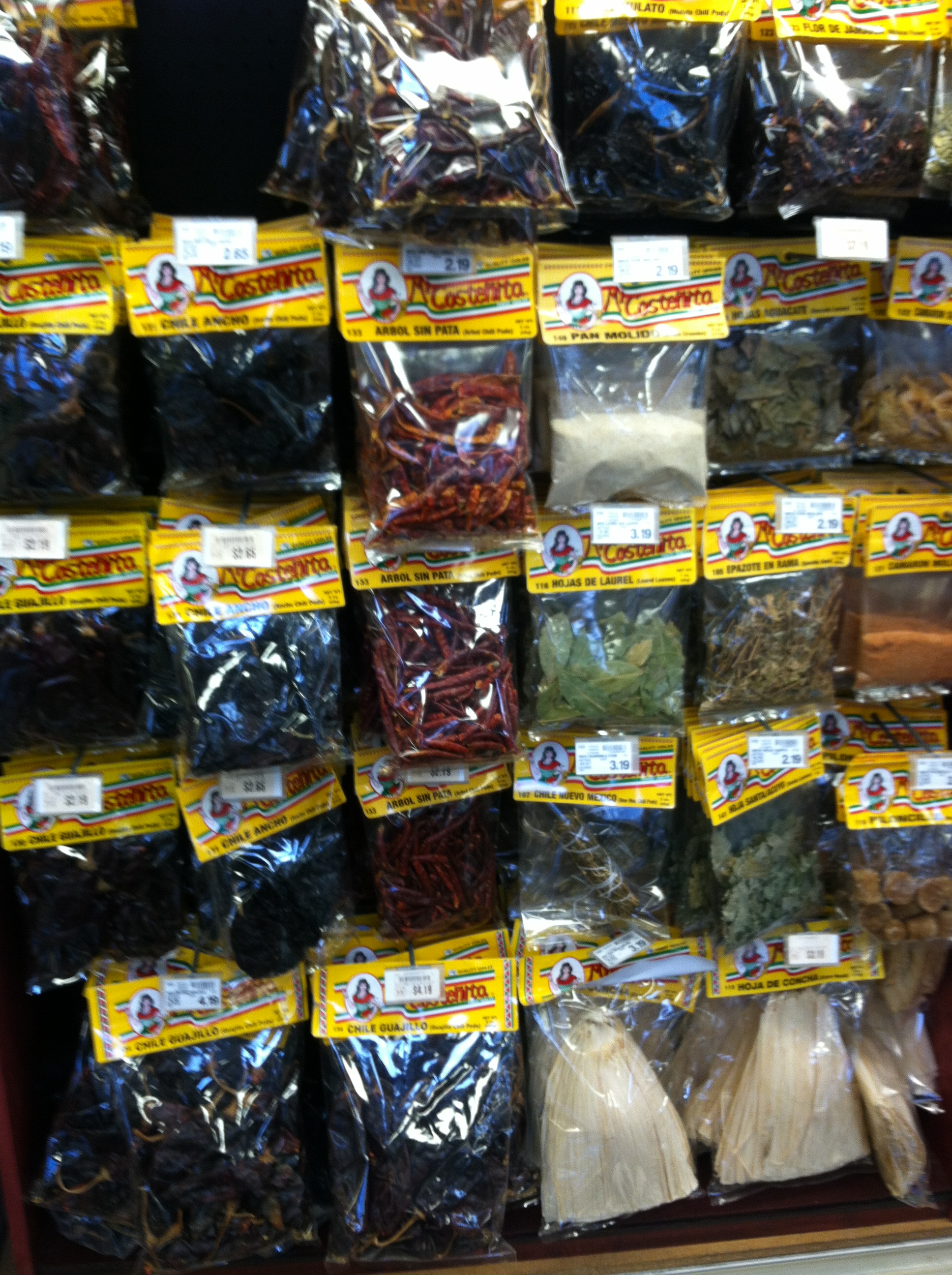
supermarket_herbs_spices

I’m going to start in what my part of the country likes to think of as the “ethnic foods” section, which generally speaking involves a portion of the produce area and an aisle with Asian, Hispanic, and perhaps Italian meal ingredients. It’s where I found the candles I showed in the previous post, but in most of the grocery stores around here, despite the obviously oblivious marginalization that comes with a label like “ethnic” or “international” cuisine, the diversity of the consumer population has made a lot of once-rare items much easier to find. The section of these stores directed at Hispanic consumers provides a number of tools for folk magic that fall under the practices of curanderismo and/or brujeria. I’ve covered supermarket staples like eggs already, so today I thought I’d look at three somewhat more distinctive items: corn husks, hot peppers, and coconuts.

Corn Husks

The papery, stiff-but-pliant corn husk is absolutely essential for making really good tamales. Usually these come in huge packs (because if you’re going to go to the trouble of making tamales, you may as well make a lot of them), and they’re often dirt cheap. In fact, in the late summer, I frequently fine freshly stripped corn husks in buckets next to the corn displays, and few grocery store managers care if you grab a sackful to take home with you for free. So what sorts of magical mischief can you get up to with all those husks?

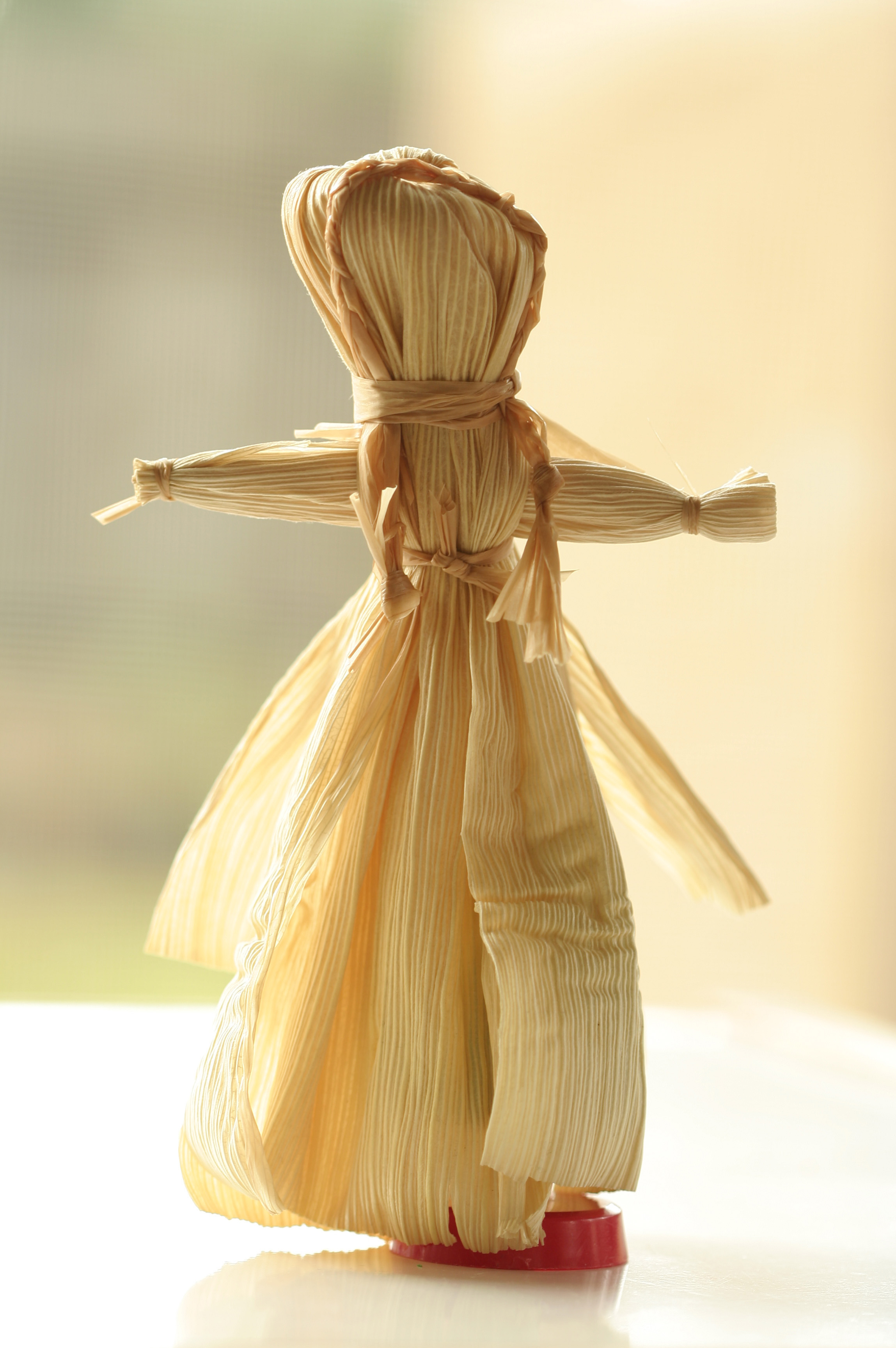
Corn dolly folk art (via Wikimedia Commons)

If you’re not making ensorcelled tamales, you might consider saving a few husks and turning them into doll babies for working various kinds of poppet magic. In some cases, the husks would be bound to the cob, along with various herbs and things like hair or clothing from the intended target to work a spell on them. Texan rootworker Starr Casas describes one such baby in The Conjure Workbook, vol. 1:

“When I was caring my daughter [sic] I was very ill. I was put on bed rest for five months. My Grandma knew this lady and asked her to come to my house and help me during the week. She treated people who were ill. I think that due to her efforts my daughter is alive today. I trusted her because my Grandma trusted her…She prayed over me every day; one day she asked if she could have some of my hair. She could have just taken the hair from my brush, at this time my hair was very long. She told me the hair needed to come from the crown of my head.

A few days later she came with this Dollie. This was the first time I had ever seen a doll like this. The body of the doll was a corn cob and the doll was covered in corn husk. When I asked her what it was for all she told me was to keep me and my baby safe. After I had my daughter the Dollie disappeared. When I asked her about the missing doll she told me the doll wasn’t needed anymore. I have never seen another Conjure doll like that one again” (Casas 246-7).

Starr’s encounter with this type of doll is not typical of conjure practice, something even she notes, but the use of doll baby magic is fairly common and corn husks make a simple, cheap, easy-to-make-and-destroy sort of doll. One reason that Starr may not have seen them since is that they are less directly associated with hoodoo and more directly associated with mountain crafts, particularly the crafts of the Appalachians. In fact, you can find wonderfully detailed instructions and step-by-step photos on constructing corn dollies in Foxfire 3, which records the folk practices of the southern Appalachians (a later compendium called The Foxfire Book of Appalachian Toys & Games also discusses the corn dolls, but doesn’t give the detail the actual anthology book does).  That’s not to say that such dolls are not found in any version of conjure—Dr. E mentions them in his article on doll making, found in The Black Folder, for example—but that they very likely drifted in from non-African sources. Their provenance matters not, though, because they are incredibly useful magical tools in any case.

Hot Peppers

Have you ever seen the sheer plethora of peppers available in a bodega? Even at the chain supermarkets, you can now find dozens of choices, ranging from fresh jalapenos and big, fat Anaheims to the huge sacks of tiny dried japones peppers and the small-but-potent habaneros. So what to do with all those peppers?

Of course, the obvious answer would be hot-foot work in hoodoo, but you can also get a little more creative than that. Using the peppers as a vessel, it takes very little effort (but a good bit of practice and caution) to slit open a habanero, stuff someone’s name inside and bind it back up. Doing that works sort of like a vinegar jar cranked up to eleven, in that it puts a lot of unpleasantness into someone’s life. Peppers don’t have to be all bad, either, as cooking them with something like chocolate creates a very different effect—a good hot cocoa with a hint of chili pepper makes an enlivening winter beverage, and a heck of an aphrodisiac! A little rum in that latter option helps, too, of course.

Speaking of rum, one of the more interesting uses for all those hot peppers in magic—and here I’m stretching the term to incorporate a certain degree of magical religion—is to soak the peppers into an alcohol like rum until it is nigh undrinkable. Why would you do that, you ask? Maya Deren explains the use of the drink during a Vodoun rite in her book, Divine Horsemen: The Living Gods of Haiti:

“As Lord of Eroticism, he [Ghede] embarrasses men with his lascivious sensual gestures; but as God of the Grave he terrifies them with the evidence of the absolutely insensate: he will not blink even when the most fiery liquid is sprayed into his eyes, and only Ghede can swallow his own drink—a crude rum steeped in twenty-one of the hottest spices known. Thus he may alternately remind men that he is their past, their present and their future, that he is master of their compulsive drive to life and the inevitability of their death” (Deren 104).

Deren also notes that anyone claiming possession by Ghede is subject to both of the tests she mentions: having the hot rum sprayed in their eyes and being told to drink it. A truly possessed devotee will have no problem doing so (and likely be able to down the entire bottle of rum and show no effects after the possession ends).

Coconuts

If you ever need to pretend to ride a horse, you will probably automatically feel the need to buy a coconut and bang the two empty halves together to simulate the sound. At least if you grew up watching a lot of Monty Python that’s probably what you’d do. The coconut is good for more than equine simulations, however, and you can use the whole fruit/nut and its liquid for several magical functions.

“Retrato de una señora principal con su negra esclava,” by Vicete Alban (via Wikimedia Commons)

Drilling holes in the coconut will allow you to do two things: firstly you can get at the precious liquid, coconut milk, inside. It’s delicious and a wonderfully refreshing drink, but if you can resist the urge to down it all in one go, save some for later. Now that you have a semi-empty coconut with holes in it, why not stuff it full of name papers, sweet things like raw turbinado sugar (also available in the Hispanic section usually) and create a natural honey-jar spell? This sort of spell will, of course, not last as long as an actual honey-jar, but it has the advantage of being very quick and due to the sympathetic magic connected to the coconut’s skull-like density and shape, it works right on the minds of the folks targeted with the spell.

Speaking of heads, if you saved that liquid, you can turn that into a powerful magical formula as well. An African-derived magical practice known alternately as “feeding the head,” or in Vodoun as a lave tet ceremony (literally “head washing”) involves using a coconut wash on the head and hair during a ritual setting in order to fill it up with good spiritual forces. The feeding usually follows a simple head washing, either with natural water (sea water, spring water, etc.) or a number of aqueous formulae found in various traditions. Then comes the feeding:

“The process of feeding the head is simplicity itself. The coconut milk or cream is scrubbed into the head, just like the head-washing compound or a shampoo. Once the compound has been worked into the head, the hair may be combed out again. However, unlike a head-washing compound, the coconut compound should be left to dry on the head—preferably, overnight. A scarf or towel may be wrapped around the person’s head to insure this…In the morning, the coconut compound may be rinsed out and the person’s hair washed with a shampoo and dried, as it would normally be” (Mickaharic, Spiritual Cleansing, 101).

The richness of the coconut milk causes the spirits which guard a person (frequently though to be connected to a person’s head in African tradition) to be refreshed and take a renewed interest in the person’s well-being. It’s sort of like bribing a guardian angel with a good pina colada, which would be another fun way to use that coconut milk if you’re so inclined.

Of course, you don’t even have to open the coconut up to use it magically. I’ve seen a house cleansing method which involves simply kicking a coconut around a new home, through every room from top to bottom and back to front. You might say a psalm as you go, or repeat the Lord’s Prayer or the Apostles’ Creed. Other traditions use other incantations, songs, or words, but the point is the same: get the coconut all over the house, kicking it as you go, letting it soak up bad vibes like a sponge. When you finish you can either pick it up in your left hand and take it to a far away tree, where you crack it open and leave it at the roots, or you can drop it into running water heading away from your home. It essentially functions as an egg cleansing for a domicile, but coconuts tend to be less messy than eggs when kicked (Mickaharic has a variant on this practice using a head of lettuce in his Spiritual Worker’s Spellbook).

There’s an entire pharmacopeia in a well-stocked bodega, with everything from aloe vera gel (and the live plants) to nopales (prickly pear cactus, sometimes used in curanderismo for treating diabetes) to chicken feet and cattle tongues (both edible, but also both used in various hoodoo spells as well) available to an informed shopper. I mention these three ingredients solely as a way to begin to see the shelves as stocked with more than marketing gimmicks and high-fructose-corn-syrup-laden beverages. While having a good local witch shop is invaluable for many reasons, the grocery store may be your best friend when it comes to simple, practical magic.

I know this article barely scratches the surface of the subject, and I highly encourage you to look at some other sources on making the most of a grocery store’s shelves for your spell work. As I said before, much of my own inspiration came from Sarah Lawless’ post on the topic and Cat Yronwode’s compilation The Black Folder, which features not only an article on grocery store magic (covering things like onions and lemons) by Cat herself, but other useful tidbits such as Norwegian bread charms (from Dr. Johannes Gardback) and an article on “kitchen witchery” by Sister Robin Petersen. Of course there are probably dozens of books on this subject, many of which I’ve sadly neglected here. Do you know of any good grocery-store spells? If so, please feel free to post them to the comments below!

I may eventually come back to this topic another time, but for now I hope this has been a useful glimpse beneath the barcodes into the magic of the market.

Thanks for reading!

-Cory

Podcast 55 – The State of Conjure

Summary
This episode features a special one-hour interview with the cast of Conjure Crossroads, discussing the state of conjure in the US. We’ll hear about art, magic, New Orleans, and what conjure looks like today among  current practitioners.

Play:
Download: New World Witchery – Episode 55

 -Sources-
You can find our guests from this episode at the following links:

  1. Starr Casas – Old Style Conjure (she also has her own podcast of the same name)
  2. Sindy Todo – Todo Mojo (be sure to check out her gorgeous railroad spike art)
  3. Susan Diamond & Wolf – Serpent’s Kiss, Two Hoodoos,  and Shimmering Wolf Studios
  4. Orion Foxwood – Two Hoodoos, his personal page, and the House of Brigh (his Faery Seership site)
  5. And of course, check out their show, Conjure Crossroads on Blogtalk Radio

You can find out more about the New Orleans Folk Magic Festival here, and more about ConjureCon here.

Several of our guests also have some great books on conjure available, including:

If you have feedback you’d like to share, email us or leave a comment. We’d love to hear from you!

Don’t forget to follow us at Twitter! And check out our Facebook page!

Keep an eye out for more info on the New Orleans Magical Meetup on Novemer 8-10, 2013! You can follow the official Facebook page, or watch the website for more details!

 Promos & Music
Title music:  “Homebound,” by Jag, from Cypress Grove Blues.  From Magnatune.

Promos:

  1. Lamplighter Blues
  2. Witches’ Brewhaha