Podcast Special – Some Words with a Mummy

-SHOWNOTES FOR PODCAST SPECIAL-

Summary
This is the first of our 2011 October specials leading up to Halloween. Tonight, I’m reading “Some Words with a Mummy,” by Edgar Allan Poe.

Play:

Download:  New World Witchery Special – Some Words with a Mummy

-Sources-
Some Words with a Mummy,” by Edgar Allen Poe.


Promos & Music
“Grifos Muertos” by Jeffery Luck Lucas, from his album What We Whisper, on Magnatune.com

Blog Post 138 – Curandero Spells, part II

Hello again! Today we’re finishing up our look at the small selection of curandero spells I started in our last post. We’re looking at technique mostly, and I’ve got a couple of other spells that might be of interest to you at the end of the post. Let me reiterate that these ideas ARE NOT MEANT TO REPLACE MEDICAL OR LEGAL ADVICE, but are merely provided as folkloric examples of a vibrant cultural practice. And now, our exciting conclusion!

Techniques
Curanderos use a variety of techniques to do their work, often depending on the specialty of the worker or the case at hand. Some workers only do herbal remedies, while others also work with a certain degree of Western conventional medicine, recommending vitamins or over-the-counter medications in conjunction with regular prayers.

SmokingCuranderos frequently smoke their clients with herbs or incense in order to cleanse them of negative effects. The incense used may be church incense (often called “Gloria Incense” in religious supply stores) or a homemade concoction of ground up herbs, roots, barks, and resins. The patient usually stands while the curandero walks around him or her, wafting the smoke onto the torso, arms, legs, and head. Sometimes the smoke is used to “seal” a person to prevent any bad influences from getting in after a limpia has been performed.

Rubbing – A major component of curanderismo practice is rubbing. Eggs, fruit, plants, and sometimes just hands are rubbed over the body with massaging techniques to help alleviate symptoms and empower curative spells. Clothes are almost always left on, and most curanderos are very careful not to touch anyone in ways that would make them feel morally compromised. This does not mean that the patient feels no pain, however. Frequently the massages are very intensive, and rubbing can turn into a light beating fairly quickly during major cleansings. You can see an example of the herb-rubbing (or flogging) technique in this YouTube video from Gurreros de Sangre.

Burning – Thankfully, not the burning of actual people but rather the burning of used ingredients and tools. Herbs, eggs, cloth, and other items may be burned once they’ve been used to perform cleansings so that any evil influences they’ve collected will be destroyed. Sometimes alcohol is used to facilitate a burn, and sometimes the items are simply tossed into a fire or onto hot coals. Candles, of course, are also burned to provide magical or miraculous effects.

Prayer – This has already been covered a good bit in the “Tools” section of the previous post, so here I’ll just say that the prayers are almost always spoken aloud, even if only half-mumbled. Something about the sound is vitally important to affecting the cure.

For a Few Spells More
To finish up, I thought I’d share a couple of other spells which are not strictly speaking part of curanderismo, though both of them come from people who practice within some version of that tradition. The first comes from Eliseo “Cheo” Torres and his book Curandero. It’s a spell I’ve seen versions of in multiple magical traditions, so I’m not sure if it originates in Hispanic folk magic or if it simply has made its way into those practices, but either way, here it is:

 A method for battling stress called “los siete nudos” or The Seven Knots:

One takes a red ribbon, ties one knot in the center of it while focusing on a major problem. Then he/she begins tying six more knots, about four inches apart, alternaitng right and left of the knot, like this:
1)  —————X—————-
2) —————-X———X——
3) ——X——–X———X——

  …and so on until one gets a ribbon looking something like this:

—X—X—X—X—X—X—X—

 The completed cord is placed in a sealable container, like a mason jar or a babyfood jar.The sealed jar is then buried in the backyard. While tying the knots, the person is to strongly picture the particular worries in his or her life that he or she wishes to be rod of. Tying the knots can be accompanied by a prayer, such as the Apostle’s Creed or Lord’s Prayer, in order to seal in the power of the charm before burial.

 This final spell was taught to me only very recently by someone who works within the conjure tradition, but who also grew up learning Native American magic and brujaria in Texas. I don’t have permission to use her name at this time, but she’s someone I’ve known from a distance for a few years, and she was one of my fellow lecturers at the recent Western Kentucky Rootwork Heritage Festival. This technique requires a rather unusual tool: a turtle shell.

 Slow-manifesting Moon Spell

 A turtle shell naturally has thirteen plate divisions to it, which can be seen as one for every moon in the year. If you happen to be lucky enough to have a turtle shell handy, you can take it out into the moonlight of a full moon and trace a sacred symbol (such as a cross or star) onto each plate with your finger, while reciting a prayer. For instance, if you wanted to gain spiritual guidance, you might pray Psalm 23. To break a bad habit, you might use Psalm 70. For general success and prosperity, Psalm 65 would be excellent. The trick to this is that the wish or desire must be something that can manifest slowly and incrementally. The spell will work over the next year, and you should see some slight change with each passing full moon. By the end of the year, your wish should be granted (or at least, should be as close to fruition as possible).

 She also explained to me that the foundation of this prayer is the idea of the turtle as a representation of earth itself, something solid and foundational. The turtle carries its home with it, and so the earth carries all we need as well, if only we’re willing to be patient enough to pursue it over time. Again, this may not be, strictly speaking, a curandero spell, but I thought it was a good one and one worth sharing.

Resources

Some of my resources have been scattered throughout these posts, but here’s a lovely reference list for your perusal :

I hope these have been useful to you! If you have information, thoughts, or ideas about these practices, we’d love to hear them.
Thanks for reading!

-Cory

Blog Post 137 – Curandero Spells, part I

Howdy everyone! In the next couple of posts I’m just going to toss a few spells, charms, herbs, and other tools and techniques gleaned from Hispanic folk magical practices out there for you to peruse. As always, let me state clearly that these ideas ARE NOT MEANT TO REPLACE MEDICAL OR LEGAL ADVICE, but are merely provided as folkloric examples of a vibrant cultural practice. With that out of the way, let’s look at the magic!

Illnesses and Maladies
Curanderos treate a variety of different ailments of both physical and spiritual natures. Some of the best known and most commonly treated are:

  • Empacho – a digestive disease caused by a perceived blockage in the intestines
  • Susto – a type of soul-shaking fright that causes a person’s spirit to leave their body, which becomes weak and vulnerable
  • Desasombro – an intensive form of susto which leaves its victim debilitated after severe trauma
  • Mal de ojo – the famous ‘evil eye,’ which can have a number of symptoms, such as bad luck, ill health, or anxiety and depression
  • Mal puesto/brujeria – essentially a curse or malignant witchcraft, which is ‘put on’ a person and must be taken off with spiritual tools and prayer
  • Nervios – nervous diseases that cause emotional distress and suffering
  • Bilis – a type of anger sickness caused by a perceived backup of ‘bile’ in a person’s system, and which is usually treated with a laxative of some kind
  • Muina – a more intensive anger sickness which results in an outward rage of some kind. treated with tranquilizing herbal remedies (like orange blossoms, also called flor de azahar)
  • Latido – a sort of eating disorder which is primarily seen in young women which results in anorexia and bodily weakness, treated  with repeated herbal and physical healing practices
  • Impotence/Infertility – sometimes linked to a psychic cause, sometimes a physical one, sometimes both; usually treated herbally or with techniques like massage combined with prayer
  • Menstrual/Gynecological disorders – irregular menstruation, prolapsed uteruses, and other problems related to the female reproductive system which are almost always treated without requiring the patient to disrobe (a major reason why some people turn to curanderos instead of conventional doctors)

There are plenty of diseases I’m not listing here, of spiritual and medical natures. Accounts of these disorders and their treatment by curanderos can be found in a number of resources, such as Curandero by Eliseo “Cheo” Torres, “Mexican-American Folk Diseases,” by Keith A. Neighbors, and this article from the Western Journal of Medicine in 1983. Folk practitioners generally deal with these maladies on a case-by-case basis, and attempt a holistic cure which integrates body, mind, and spirit in the healing process.


Tools
The tools of curanderos are generally easy to find, household items. Combined with the power of prayer and focused intent, their magical or miraculous qualities emerge and they can be used to to treat the illnesses listed above. Some tools are a little more difficult to acquire than simply going to your local grocery store, but almost any of them are available cheaply and easiliy either online or through mail-order.

  • Yerbas (Herbs) – These are probably some of the most common and important components of curanderismo practice.  A number of different herbs are used, often in a variety of forms. They can be bundled and used like a broom or small scourge (see “Rubbing” in the Techniques section), turned into a tea, burned, or even taken in pill form. Some curanderos grow their own, and others purchase herbs at a yerberia, which is similar to a natural health food store or Chinese apothecary. Since there are so many herbs available, I am only going to select a small handful to mention here in the interest of saving space:
    • Ruda (Rue) – primarily used (as it is in other cultures) as an anti-evil charm and a general spiritual curative, it can also bring prosperity and wealth
    • Cenzino/Salvia (Sage) – in most cases the white sage (Salvia apiana) found in the American Southwest, though in some cases culinary sage (Salvia officinalis) may be substituted; protects, cleanses, reverses evil witchcraft and susto, and provides long life and wisdom
    • Anis (Aniseed) – a licorice-flavored seed used in cooking and liqueur-making, which also aids all sorts of digestive problems when chewed or administered as a tea; also used after susto treatments to help the patient’s spirit settle back into his or her body
    • Calendula (Marigold) – used for a number of psychic phenomenon, from prophetic dreaming to helping one to have visions or find stolen property
    • Cascara sagrada – a tree bark which helps with legal issues and court cases, as well as providing general good luck
  • Amuletos (Amulets) – A variety of amulets, from the very simple to the very complex, are used to create magical conditions for clients and/or patients. Most are carried in pockets or purses, though some can also be worn, usually around the neck. Some of the most famous amuletos are the Milagros which are little tin, lead, or otherwise metallic charms in a variety of shapes such as heads, hearts, hands, pigs, Blessed Virgins, and even ears of corn. These are frequently left at the shrine of a saint with especial patronage of a particular type of healing or miracle, but can also be incorporated into other charms. Horseshoes are sometimes found as amulets, either in milagro form or actual horsehoes. One of the most interesting charms I’ve found is the piedra iman, or lodestone charm, which is made in the following way (from Torres’ Curandero):

“I discovered that the piedra iman [lodestone] is the basis for what is called piedra iman curada (a cured lodestone), in the form of an amulet (amuleto) which is a specially prepared plastic bag containing a number of items or trinkets, including a small piedra iman rock. Each item in the bag is significant and represents the following:
-A gold colored bead signifies the need for wealth or money (oro para mi uena );
-A silver colored bead, or silver taken from old jewelry, is for harmony in one’s home (plata para mi casa y hogar);
-A copper coin such as a penny is for the poor and needy (cobre para el pobre);
-A red bead or red bean signifies coral, to rid you of envy and all that’s bad (coral para que se me quite la envidia y el mal);
-A horseshoe or wire bent in the shape of  ahorseshoe to prosper in business or in personal work (la heradura para un buen negocio o trabajo); and
-A piece of lodestone for good luck and fortune (la piedra iman para la uena suerte y fortuna).

People carry the plastic bag with all these items in their pockets or cars, or hang the bag in their homes or businesses” (p. 54)

  • Eggs, Limes, & Lemons – These are used to perform limpias, or spiritual cleansings. In most cases, the food item is rubbed over the body of the patient, then either destroyed in a ritual manner or “read” for information on the person’s condition. Egg limpias are especially common and reading an egg’s contents after a cleansing is done by dropping the cracked egg into a glass of water and interpreting things like bubbles, strands, and coloration of the egg itself. Blood on the egg is a very bad sign, as is a foul odor emanating from the egg. In these cases, multiple limpias may be performed to rid the patient of his or her magical affliction. You can read an excellent description of both the egg cleansing and how to interpret the signs of the egg over at Concha’s Curious Curandera website.
  • Candles – These probably don’t need a whole lot of elaboration, but it should be pointed out that a number of different candles are used within curanderismo. Saint candles are common, of course, but so are the candles frequently found in other traditions, like hoodoo. For instance, one might see a St. Michael candle burning alongside a Fiery Wall of Protection candle or a Sacred Heart of Jesus candle burning with a Reversing candle. Votive candles and tapers are also used for various types of work, from cleansing to simple prayers.
  • Prayer – Probably the most important and powerful tool in a curandero’s bag is his or her selection of prayers. Usually these are liturgical prayers, such as the Apostles Creed, certain Psalms, or the Lord’s Prayer, but occasionally one can find a folk prayer or one that has simply grown up out of the curandero’s personal tradition. Usually prayers are said multiple times, often over extended periods of time, and as often as possible the patient is asked to pray with the worker.

That will just about cover us for today. Next time we’ll have a look at the techniques used by curanderos, as well as a couple of other interesting spells.

Thanks for reading!

-Cory

Podcast 35 – Salem Wrap Up and Why Witchcraft?

-SHOWNOTES FOR EPISODE 35

Summary
We spend time talking (and gushing) about the recent Pagan Podkin Super-Moot in Salem, Mass. We also look at one of the questions that became a focal point of discussion while we were there: Why Witchcraft?

Play:

Download: New World Witchery – Episode 35

-Sources-
Really, these are more links than sources this time.
1)      Big thanks to Velma Nightshade of Witches’ Brewhaha for putting the event together!
2)      Thanks to the wonderful vendors who hosted us and contributed to our ‘swag bags’: Hex of Salem, Omen, Iron Powaqa, Mrs. Oddly, Lakefront Pagan Voice, Fire Lyte, Pendraig Publishing, Angelica of the Angels, and the Salem Witch Museum.
3)      Look at some of the pictures of Salem’s Old Burying Point Cemetery here. They’re quite beautiful!
4)      You can hear part of the workshop taught by Peter Paddon of the Crooked Path/Pendraig Publishing through his podcast: Episode 24. It was on “Invocation and the Art of Ritual Possession,” and it was marvelous!

We’ve got a contest going on! Check out the details of our Share-A-Spell contest on our blog, and contribute today!

Also, be on the lookout for a poll on the site fairly soon about a possible new episode type.

Don’t forget to follow us at Twitter!

Promos & Music
Title music:  “Homebound,” by Jag, from Cypress Grove Blues.  From Magnatune.
Promo 1 – Witches’ Brewhaha
Promo 2 – Lakefront Pagan Voice
Promo 3 – Pennies in the Well

Blog Post 136 – Papisticall Charmes (More Catholic-flavored Magic)

Howdy-do!

Today I’m going to be following along the course of my previous entries on brujeria/curanderismo and Catholic folk magic in general by looking at some specific elements, tools, charms, and spells from within those traditions. I should go ahead and note that while Psalm magic is found within all of these streams, I’m not covering it here because it is a huge topic in and of itself, and one which I’ve already explored a bit in posts 115 and 116. I’ll also only briefly touch on any Saint-specific magic, because that could be its own topic, too (and hopefully will be at some point).

That being said, I would like to point out the presence of a number of folk saints in pseudo-Catholic magical practices. These are not officially recognized saints (even Mother Theresa and Pope John Paul II have not been fully canonized yet), but rather people reputed to be intensely holy and capable of performing miraculous feats. They can also be spirits with special powers and areas of influence who do not have a human counterpart, but rather seem to be almost archetypical entities. Some of the most widely petitioned and patronized of these folk saints include:

  • Don Pedrito Jaramillo – healing
  • Teresa Urrea (“Teresita”) – healing
  • El Nino Fidencio – healing & spiritual purification
  • Santa Muerte (“La Santisima,” “La Huesada”) – protection, prosperity, family life, love, and a number of other powers
  • Saint Michael (Archangel) – protection & spiritual warfare
  • Saint Raphael (Archangel) – safe travels, spiritual medicine, & exorcism of evil spirits

(for more information on these folk saints, see Curandero by Cheo Torres and Magical Powers of the Saints by Ray T. Malbrough)

Many people simply burn candles with images of these saints emblazoned on the glass or with picture prayer cards placed nearby. Small votive offerings might be left out for them, including small amounts of liquor, coffee, or tobacco, or specific items might be given to specific saints. For example, Saint Michael’s altar would be decorated by war memorabilia, such as medals, maps, or pictures of soldiers. More explicitly spell-like operations can also be performed, such as this method for creating a powerful “fortune magnet”:

Get a candle or statue of Santa Muerte and put her on an altar by herself (she does not like to share altar space, though she has been known to tolerate St. Michael at times). Place a lodestone beside her, and a glass of water on the other side of her. Put a basket of brightly colored fruit (lemons and oranges, for example) in front of her, and place yellow flowers upon her altar. Light a charcoal in a brazier and burn a holy incense (such as Gloria Incense or even just some frankincense). Add a pinch of soil from your homeland (or even hometown) to the burning coal, and say:

Towards you I inclilne, Holy Lady
I bring you water and yellow flowers,
Incense and the dust from which I am made.
Please make the world to twist and turn,
Allowing luck and fortune to cross my path,
Cutting the bitter ties that bind me.
In your honor I shall please you with scented offerings,
I shall plant trees in forests,
I shall give you fruits
In return for your goodwill towards me.

Allow the candle to burn for at least an hour. If possible, allow the candle to burn out on its own. Let the stone sit overnight, rising before dawn and wrapping it in a dark cloth. Keep this with you at all times, and do not unwrap it in direct sunlight. [Adapted from a spell in an anonymously authored chapbook called The Magical Powers of the Holy Death picked up in a botanica]

How’s that for not dwelling on Saint magic? Moving on, then, let’s look at some other spells from other sources. This one, which I’m transcribing from The Red Church and which comes from John G. Hohman’s Long Lost Friend, is not explicitly Catholic, but the presence of latinate words and Christian symbols certainly allows it to fit right in with the whole “magical Catholic” idea:

A Written Charm of Exorcism

Below is a charm paper entitled ‘Against Evil Spirits and Witchcrafts.’ This charm was given to me by ‘Daisy.’ With the exception of a few minor details it is exactly like the one that appears in Hohman’s The Long Lost Friend

I.
N. I. R.
I.
Sanctus.   Spiritus.
I.
N. I. R.
I.

All this be guarded, here in time, and there in eternity. Amen. +++ (TRC, p. 273-4)

Chris Bilardi goes on to describe several ways in which you might deploy this charm, including folding it into a tight triangle and slipping it into the frames and jambs of doors and windows in your home (but you must use no metal to affix it). He also mentions putting it into a wallet or binding it with a red string if it is intended to be carried.

Another home protection and blessing charm comes out of ancient Jewish practice, too. Joshua Trachtenberg’s quintessential text on the topic, Jewish Magic & Superstition, describes an excellent blessing charm which consists very simply of bread and salt either ingested to defeat evil spirits or brought into a new home “as a symbolic of the hope that food may never be lacking there” (JM&S p.161). In my own family, we called this the ‘Polish House Blessing’ and included a penny as well (we were Polish through my grandfather’s family). It’s something I still use when someone mooves into a new house in order to bless their new home. I simply put the salt (kosher, please), a piece of bread, and a penny in a small jar (like a baby food jar) and wrap the lid in pretty paper, often with a Psalm written on the underside of it to provide protection and domestic bliss (Psalms 46 and 61 are both good for this).

One of my personal favorite books of the Bible is Jonah, which is also one of the shortest books in the whole book. It’s read every year on Yom Kippur in synagogues, and it has a bizarre blend of folklore, humor, and philosophy in it that I just find delightful. For a magical practitioner, it can also be a very good source of magical phrases. One very simple spell which Draja Mickaharic lists in his Magical Spells of the Minor Prophets is for abating someone’s anger:

To Turn Away Another Person’s Anger

Required: Only the verse

Spell: In the presence of an angry person, say the verse to yourself three times.

Verse: Jonah 4:4 (“Then said the lord, Does thou well to be angry?”)

NOTE: This verse should be memorized and used for this purpose whenever desired (MSMP, p. 52-3)

There are a number of great non-Psalm verses that can be used for various magical purposes. Most of these are simply spoken, though sometimes they can be written down and carried in pockets, purses, etc. for magical aid. A list (hardly exhaustive) of such verses:

  • Amos 2:13 – Against an Opressor
  • Obadiah 1:6 – To Find that Which Has Been Lost
  • Habakkuk 2:2-3 – For Aid in Automatic Writing
  • Zechariah 4:13-14 – To Learn Who Your Teacher or Guide Is
  • Ezekiel 16:6 – The Blood Verse (for stopping small wounds)
  • Genesis 49:18 – For Protection at Night
  • Deuteronomy 18:13 – Against Wild Beasts
  • Deuteronomy 33:3-4 – For Intelligence

(The above primarily from Magical Spells of the Minor Prophets and Jewish Magic & Supersition)

I’m sure with enough effort, nearly any book of the Bible will yield some magical content, though I’ve not tested that theory.

Finally, I couldn’t reisist including some of the “popish and magicall cures” found in Reginald Scot’s Discoverie of Witchcraft. The following are cures “For direct cure to such as are bewitched in the privie members” (i.e. to deal with impotence, especially impotence caused by witchcraft):

For direct cure to such as are bewitched in the privie members, the first and speciall is confession: then follow in a row, holie water, and those ceremoniall trumperies, Ave Maries, and all maner of crossings; which are all said to be wholesome, except the witchcraft be perpetuall, and in that case the wife maie have a divorse of course.

  • Item, the eating of a haggister or pie helpeth one bewitched in that member.
  • Item, the smoke of the tooth of a dead man.
  • Item, to annoint a mans bodie over with the gall of a crow.
  • Item, to fill a quill with quicke silver, and laie the same under the cushine, where such a one sitteth, or else to put it under the threshold of the doore of the house or chamber where he dwelleth.
  • Item, to spet into your owne bosome, if you be so bewitched, is verie good.
  • Item, to pisse through a wedding ring. If you would know who is hurt in his privities by witchcraft; and who otherwise is therein diseased,Hostiensis answereth: but so, as I am ashamed to english it: and therefore have here set down his experiment in Latine; Quando virga nullatenùs movetur, & nunquam potuit cognoscere; hoc est signum frigiditatis: sed quando movetur & erigitur, perficere autem non potest, est signum maleficii. [Dialect from original text preserved here]

I hope this post has been entertaining and interesting for you. Please also check out the recent posts on curanderismo and Catholic folk magic, as well as our most recent episode on biblical sorcery.

I don’t know if I’ll get another post up before the Salem trip, so if I don’t, I will hope to see some of you there. And the rest of you I’ll look forward to speaking to when I get back!
Thanks for reading!

-Cory
Podcast 34 – Biblical Magic

-SHOWNOTES FOR EPISODE 34-

Summary
This episode is the long-awaited episode on “great spells from the good book.” We’re talking about magic both in the Bible and from the Bible.

Play:
Download: New World Witchery – Episode 34


-Sources-

NWW Posts on Biblical Magic:

1)   Blog Post 135 – The Magical Catholic
2)   Blog Post 122 – Bibliomancy
3)   Blog Post 116 – Cursing Psalms part II
4)   Blog Post 115 – Cursing Psalms part I

Check out Arrow Claire’s blog post on bibliomancy, as well.

Books:
Secrets of the Psalms, by Godfrey Selig
Magical Spells of the Minor Prophets, by Draja Mickaharic
Jewish Magic  & Superstition, by Joshua Trachtenberg
Power of the Psalms, by Anna Riva

And, of course, the Bible (available pretty much anywhere near you)

Don’t forget about the Second Annual Pagan Podkin Supermoot in Salem, MA, on the weekend of Sept. 17th, 2011.  Find out more details about the event and opportunities to come meet us in person at the PPSM2 Website. [Laine respectfully asks that she not be in any photographs, due to privacy concerns—Cory will be happy to wear a wig and pretend to be Laine, however].

During the Supermoot, NWW favorite Peter Paddon will be teaching a class on ritual trance and possession. Sign up here.

I’ll also be at the West KY Hoodoo Rootworker Heritage Festival teaching a course on “Biblical Magic & Sorcery.”

Also, you can now follow New World Witchery on Twitter! Our handle is @NWWitchery, and we’ll be posting about new episodes, blog posts, and contests to those who follow us.

Promos & Music

 
Title music:  “Homebound,” by Jag, from Cypress Grove Blues.  From Magnatune.
 

Incidental Music: “The Peaceful Death of the Righteous,” by Troy Demps, James Robinson, & Frank Spaulding; “Wasn’t That a Mystery,” by Madison County Senior Center; “Babylon Is Falling Down,” by Deacon Dan Smith w/Nick Hallman & the Georgia Sea Island Singers [All from the Florida Folklife Project]

Promo 1 – Pagan in Portland
Promo 2 – Magick and Mundane
Promo 3 – Conjure Doctor Products
Promo 4 – Media Astra ac Terra

Blog Post 135 – The Magical Catholic

Good morning everyone!

Last time I touched briefly on the practice of curanderismo, which is a Hispanic system of folk magic centered upon healing, jinx removal, and protection/cleansing rituals. I also mentioned that it takes a lot of its magical cues from Catholicism, albeit in a syncretic and flexible form of that religion. I received a comment on that post, too, which raised a thoughtful question about Catholicism in the New World and why it might have been seen as ‘magical’ or why its presence can be felt so strongly within magical traditions on this side of the Atlantic. I think that much of this attitude appeared in the Old World after the Reformation, when the broad brush of ‘papism’ or ‘pope worship’ was being used to paint the embattled Catholic Church. Some of the best illustrations of the Protestant perception of ‘the magic Catholic’ come from a tome which has informed witchcraft studies for centuries, Reginald Scot’s Discoverie of Witchcraft. In the following passage, you can see how Scot—who associated superstitious beliefs in witchcraft with the foolish ‘superstition’ of Catholicism—clearly links the priest with the sorcerer:

A papisticall charme.

Signum sanctæ crucis defendat me à malis præsentibus, præteritis, & futuris, interioribus & exterioribus:

That is, The signe of the crosse defend me from evils present, past, and to come, inward and outward. (Book XII, Chapter IX)

Scot certainly thought little of such charms, saying later in his book, “HE that can be persuaded that these things are true, or wrought indeed according to the assertion of couseners, or according to the supposition of witchmongers & papists, may soone be brought to beleeve that the moone is made of greene cheese” (Book XV, Chapter V).

To be sure, a number of Catholics have spent years—centuries in fact—fighting against these perceptions and very few mainstream Catholics would cotton to having their religion identified with sorcery or witchcraft. From a perspective of official Church doctrine and approved dogma and praxis, it is vital to note that Catholicism does not condone magic or the use of enchantments and charms, and that they fall in line largely with other Christian groups when it comes to beliefs and religious operations. They believe in Jesus as God (as well as seeing him as part of a divine trinity made up of “Father, Son, & Holy Ghost/Spirit”), they require baptism, they expect remission of wrongdoings (and, in the case of confession, admission of wrongdoing), and believe in an afterlife in which they will be judged by God for the quality of their lives and the state of their souls. There are a number of fine-pointed theological differences between Catholicism and Protestant denominations, but in many ways they are deeply similar.

What we’re looking at here, then, is not the official, dogmatic, Vatican-approved version of Catholicism, but rather a phenomenon which might be termed as ‘folk’ Catholicism. Folk religions are not exclusive to this religion, of course. There are also folk Hindus, folk Daoists, folk Shintoists, and folk Jews, all with varying degrees of adherence to official practice and varying degrees of handed-down traditions from unofficial sources. Folk Catholicism is particularly relevant to New World esoteric studies, however, because it has appeared in several different places. It shows up in the spiritual and magical practices of New Orleans (such as in the work of author Denise Alvarado). It also appears prevalently in Italian-American communities, and occasionally within Irish-American communities.  Both the Foxfire books and Gerald Milne’s Signs, Cures, & Witchery contain examples of Appalachian residents whose beliefs veer towards the enchanted from time to time via a connection with Catholicism. Milne cites the Swiss/German community of Randolph Co., NC, in one such illustration:

“In Randolph County, the Swiss/German Helvetia community observes Fastnacht prior to the beginning of Lent. It happened that in Helvetia, some of the original families were Catholic, and now their pre-Lenten observance is celebrated by all in a non-religious way. At Helvetia, an effigy of old man winter is burned on a bonfire” (SC&W, p. 195)

Milne also points out that festivals like this were a confluence of Catholic traditions (Lent) and non-Catholic ones (the midwinter effigy burning), which took on a mystical significance in their union. Probably one of the best places to look for Catholic folk magic, however, is within the context of the North (and South) American Hispanic communities, which have strong historical ties to more mainstream Catholicism, and yet which also have allowed a beautiful flowering of folk culture in tandem with Catholic expansion, resulting in a rich and fairly accessible magical storehouse.

In the previous post, I have already looked very generally at some of the techniques of curanderismo and brujeria. Both traditions draw heavily on folk Catholicism to provide their magic, including things like the Apostles Creed and Lord’s Prayer as charms against harmful magic, or using tools like holy water, scapulars (a type of loosely-worn ornament which contains religious icons or written prayers), and rosaries to effect change.  In my next post, I hope to get into the specific spells, charms, and tools used within Catholic folk magic. For now, though, I wanted to leave you with some sites and books which might be of interest to anyone pursuing the folk Catholic path.

  1. I highly recommend the Yahoo! Group Catholic Folk Magic, where curanderas, brujos, and a number of other folk magicians with a base in Catholicism share ideas and resources.
  2. You could always give The Discoverie of Witchcraft a good read. It may have been intended as satire and mockery, but it has a heck of a lot of good pseudo-Catholic magic in it, too.
  3. The moderators of the site fisheaters.com would probably balk at my reference to them here, because they mostly focus on actual Vatican-approved Catholicism. However, familiarizing yourself with these ideas and practices is good if you plan to work ‘within’ this stream, and there are actually several pieces of information that veer towards the esoteric which are worth checking out (such as “St. Anthony’s Brief” or “Holy Oils”) [A warning: this site is very traditional, and thus its viewpoints may be controversial; browse at your own risk]
  4. One book that a number of Catholics grow up with is Alban Butler’s Lives of the Saints (or at least some version of it). Why do I recommend it here? For the same reason I recommend folk and fairy tales to any aspiring magician—there is more to these tales than what’s on the page. St. Lucy’s removal of her own eyes has a distinctly magical flavor to it, in my opinion, which may explain why her celebration in Scandanavia is laced with esoteric symbolism.
  5. Finally, I would highly recommend the Library Page of the Curious Curandera website, where you’ll find a number of free titles on magical Catholicism, including “How to Pray the Rosary,” “Saints and their Patronage,” and “Prayers for Different Needs.” There are a few (very good) pay titles, too, but it’s hard to beat the wonderful free texts.

That’s all for today! I’ll try to have another post up soon with some more practical elements for you (though it is always possible I’ll get distracted and have a tangential topic). Until then, though…
Thanks for reading!

-Cory

Blog Post 132 – The Value of Silence

It’s been a while, hasn’t it? But it’s good to see you all again, to get the chance to rejoin the conversation. Except that today, I’m going to be talking about silence, which makes for a rather one-sided discussion, right?

I thought this would be an appropriate topic as I’ve been away for over a month at this point, with very little feedback flowing towards our listeners and readers and almost no new material on the blog or podcast. We’ve been in a realm of silence here at New World Witchery, but maybe that’s not such a bad thing. After all, silence has its uses.

The famous “Witch’s Pyramid,” for example, contains the four sides of a (Wiccan) witch’s code of conduct: To know, to will, to dare, and to keep silent. That’s a fairly modern code, of course, but because it is a complex system expressed in simple language, it taps into some fairly old ideas, including the keeping silent part. There are lots of interpretations of this idea; some say it means one should not discuss one’s magic after the working (one of Shivian Balaris’s interesting Twitter #WitchTips said “never sharing what magick you’ve done is felt to protect the spell so that it can complete properly; plus keeps ego in check,” for example-July 25, 2011). Others think that the silence is designed to insulate practitioners of the “Old Ways” from the persecutions they might suffer if their practices were openly discussed. Still more maintain that the silence in magical practice forms a core component of its spiritual nature; in other words, the silence maintains the mystery, which is very important in a Mystery tradition. I personally think elements of all three positions can be present in a magical practice, though not everyone agrees, of course (fellow podcaster Fire Lyte has mentioned on several shows that he does not like the secrecy and cloak-and-dagger-style mystery that accompanies some of these practices, as they create elitism and insulate seekers from knowledge, for example).

Turning to folklore (as you knew I would), there are several examples of silence serving one of the aforementioned functions. Of course there’s the common practice of observing a “moment of silence” in honor of a fallen hero or a significant event. Folk tales abound in quiet characters. In the story of “The Yellow Ribbon” from Minnesota (which I’ve also heard as “The Black Ribbon”), a woman’s silence guards a mystery that literally means life or death to her. An Old World fairy tale called “The Dwarfs’ Tailor” tells the story of a foolish and loquatious young tailor who must serve a group of dwarves in their enchanted mountain forest home in order to win the love of his old master’s daughter. The dwarves beat the tailor every time he tries to speak or ask questions, and so he learns to serve them in silence, and thus cures his foolish tongue-wagging and becomes a master tailor in his own right. And in the classic Grimm’s tale “The Six Swans,” a young princess must sew six shirts for her six brothers—enchanted into the shape of swans—during a six-year silence in order to release her brothers from the spell upon them. Other stories contain themes of silence, of course, from “The Little Mermaid” to “The Silent Princess” to the (creepy and captivating) episode of Buffy the Vampire Slayer entitled “Hush.”

Within the magical continuum, calls for silence or secrecy appear in several traditions. In the Pow Wow practice, you can find this spell:

A GOOD REMEDY FOR THE FEVER.
Good morning, dear Thursday! Take away from [name] the 77-fold fevers. Oh! thou dear Lord Jesus Christ, take them away from him! + + + [here make the sign of the cross three times]

This must be used on Thursday for the first time, on Friday for the second time, and on Saturday for the third time; and each time thrice. The prayer of faith has also to be said each time, and not a word dare be spoken to anyone until the sun has risen. Neither dare the sick person speak to anyone till after sunrise; nor eat pork, nor drink milk, nor cross a running water, for nine days. (from The Long-Lost Friend by J.G. Hohman)

Here the silence seems to be an integrated part of the spell, a purification of the operator in the same way avoiding pork or milk might work (as they are foods often associated with unclean spirits and witchcraft).  It might then be comparable to fasting, a way of conditioning the body to respond to magic, or of preparing it for magical action. Other spells use magical silence to maintain a solemness and help maintain focus, as in this one from the Ozarks:

Some hillfolk say that a girl can call up a phantom of the man she is to marry by wrapping a lock of hair with some of her fingernail clippings in a green leaf and thrusting them into the ashes in the fireplace. Then she sits down before the fire. When the hair and fingernails begin to get warm, the ghostly appearance of her future husband is supposed to rescue them from the fire. Sometimes several girls try this at once. The door must be left open, and everyone must maintain absolute silence (Randolph, OM&F, p. 177-8)

This particular spell is rather reminiscent of the Dumb Supper, of course, though much simplified. The Dumb Supper itself is fascinating as a ritual of silence, but is a topic too big to tackle here. And since I’ve already given a good overview of it in my Halloween article from last year, I’ll leave it be for now.

Still other magical performances use silence as a cipher for secrecy, maintaining that certain things must not be spoken of, or at least, not spoken of frequently. Another Ozark account describes the passing of a specific sorcerous power—fire-drawing (or burn healing)—as a ritual wrapped in secrecy:

A gentleman near Crane, Missouri, has enjoyed a great success in relieving the pain from superficial burns. He just blows gently upon the burned place, touches it with his finger tips, and whispers a little prayer. The prayer may be told to persons of the other sex, but never imparted to one of the same sex. This man said he had learned the magic from Mrs. Molly Maxwell, an old woman who lived in Galena, Missouri. Since he could not tell me, I asked a young woman to get the secret words from him. This is what she heard : ‘One little Indian, two little Indians, One named East, one named West, The Son and the Father and the Holy Ghost, In goes the frost, out comes the fire, Ask it all in Jesus’ name, Amen.’ In teaching this prayer to a member of the opposite sex, the healer said, one should whisper it three times and no more. If a person cannot learn the prayer after hearing three repetitions, I was told, “he aint fit to draw out fire nohow !” (Randolph, OM&F, p. 121-2).

This idea of passing on magical powers in secrecy, carefully revealing them only to the chosen, the initiated, or those otherwise deemed “right” by the magician (or whatever higher power is in charge of the spell/tradition) is central to some practices. Others disavow the entire idea of such secrecy, preferring to work almost entirely in the open. Both seem to have their reasons, and both seem to do effective magic, though I will say that as folk magic goes the rule of silence shows up too often for me to ignore it entirely. I prefer to circumvent it by the time-honored technique of trickery, so that if I pass on secret magical knowledge I do so not by telling a person, but by speaking to an object in the room in such a way that anyone who happens to be in the room might well eavesdrop in on the “secret.”

From what I understand, whoever is in charge of magic seems to appreciate trickery as much as he or she appreciates silence. So that works out well.

Thanks for reading!

-Cory

Podcast 32 – Voodoo Hoodoo with Denise Alvarado

-SHOWNOTES FOR EPISODE 32-

Summary
This episode looks at the particular practices of Voodoo and Hoodoo around New Orleans. We have an interview with spellbook author Denise Alvarado, several excerpts from folkloric and magical texts, and even some music.

Play:

Download:  New World Witchery – Episode 32

-Sources-
First, my apologies for the sudden cut-off in the interview. That was a technical difficulty on my end, but we still got almost a full 30 minutes of discussion with a stellar guest, so enjoy!

Books
Mules & Men, by Zora Neale Hurston
Voodoo in New Orleans, by Robert Tallant
Black & White Magic of Marie Laveau, by NDP Bivens
Music
All songs were taken from the Florida Folklife collection, and are available here: http://www.floridamemory.com/collections/folklife
The songs were “Crow Dance” and “Oh Mr. Brown,” both sung by Zora Neale Hurston, and “Sissy in the Barn,” sung by the children of Carver Elementary School in 1954.

Guest & Announcements
Denise Alvarado can be found at her website, Mystic Voodoo.

Please also check out her books, The Voodoo Hoodoo Spellbook (soon to be released in an expanded edition by Weiser Books), Voodoo Dolls in Magic & Ritual, and The Voodoo Doll Spellbook. You should also subscribe to her journal, Hoodoo & Conjure Quarterly.

Don’t forget about the Second Annual Pagan Podkin Supermoot in Salem, MA, on the weekend of Sept. 17th, 2011.  Find out more details about the event and opportunities to come meet us in person at the PPSM2 Website. [Laine respectfully asks that she not be in any photographs, due to privacy concerns—Cory will be happy to wear a wig and pretend to be Laine, however].

I’ll also be at the West KY Hoodoo Rootworker Heritage Festival (event site) teaching a course on “Biblical Magic & Sorcery.”

Promos & Music
Title music:  “Homebound,” by Jag, from Cypress Grove Blues.  From Magnatune.
Promo 1 – Conjure Doctor Magical Supplies
Promo 2 – Lakefront Pagan Voice
Promo 3 – Druidcast

Blog Post 130 – War Water

In my Spelled Out section of Podcast 30, I gave the recipe and basic uses of a conjure formula called War Water. For those who didn’t have a pen handy, I thought now would be a good time to provide a little of the provenance, process, and practice surrounding this mixture.

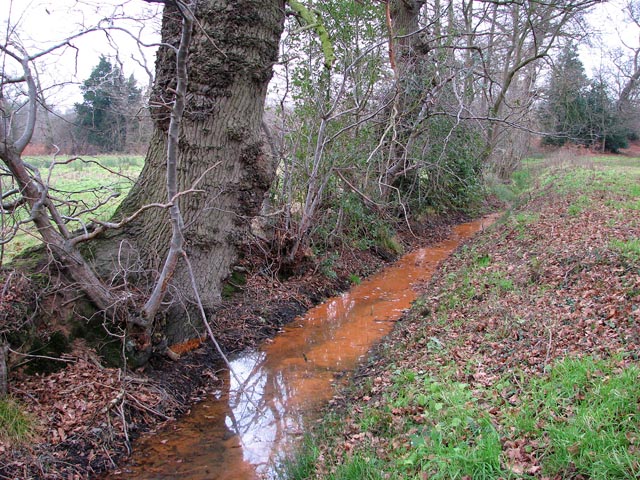
War Water, which is also commonly called Mars Water or Iron Water, is in its most essential form, simply water in which iron has been allowed to rust. The presence of iron in the water gives it a reddish-brown hue, looking a bit like blood even in some cases. Draja Mickaharic makes a good case for why iron’s presence in the water empowers it:

“Iron is the metal of the planet Mars, the planet astrologers credit with ruling warfare and combat, as well as sex. Used either for defense or attack, war water is a strong carrier of the negative emotional energy used in magical battles” (Century of Spells, p. 27).

Mickaharic also points out that the formula was originally used to treat anemia (an iron deficiency in the blood), though far better treatments are now available. Cat Yronwode notes on her site that the Martian association indicates that it is not originally an African recipe: “Since the Roman god Mars was the god of war and his symbolic metal was iron, it seems pretty clear that War Water is a European contribution to hoodoo” (“War Water” par. 1). Despite its origins, however, this particular magical mixture is firmly planted in hoodoo and conjure practice now.

So how does a person make War Water? Almost every source—except one—agree that the basic recipe involves putting cut iron of some type into a container, covering it with a bit of water, and letting it rust. There are plenty of variations, sometimes depending on the intent, and sometimes just depending on who’s telling you how to make it. Judika Illes breaks down the formula by intent:

Protective War Water

  • Iron nails (cut iron), ones that rust easily
  • Enough water to cover nails in a mason jar
  • Let rust for about 7-10 days (open periodically to allow oxidation)
  • Keep adding water as the rust builds
  • Strain and use as needed (but discard if bacteria form)

Malevolent War Water

  • Thunderstorm water in a jar
  • Rusty nails, sulfur, and urine

(Encylopedia of 5000 Spells, p. 1080)

This formulation is essentially the same as the one found in Draja Mickaharic’s Century of Spells, though Mickaharic’s version is a bit looser, calling for about 3/4 pound of cut iron nails in a 2 quart bottle. These are covered with tap water and allowed to rust. After the rust begins, more water is added, and the bottle is covered (though occasionally uncovered for rusting purposes).

The alternative recipe comes from the normally quite reputable Zora Neale Hurston’s “Hoodoo in America,” in which she describes War Water as “Oil of Tar in water (filtered)” (p. 412). Oil of Tar is essentially a thick distillate of creosote or burned pine resin—which is carcinogenic and dangerous. A reasonable substitution for Oil of Tar would be turpentine, another pine distillate with slightly less caustic properties. However, almost every formulary I found other than Hurston’s had separate distinctions for War Water and a formula called “Tar Water,” which is much more like Hurston’s recipe and which is used to remove psychic sludge from one’s life. I would then conclude that Hurston recorded the Tar Water recipe as a War Water recipe in error, or quite possibly an editor inserted this formula without knowing the difference (which commonly happened to Hurston’s work).

There are also additional ingredients that you can add to the water to help “flavor” it for your magical purposes. One of the most common additions is Spanish moss, a dense vegetal beard which covers trees in the Deep South. Once it begins to rot in the liquid, it turns the mixture black and gives it a decaying scent. Adding sulphur or gunpowder would also give it a powerfully aggressive and dangerous vibe. My teacher, Stephanie Palm, makes a formula that basically takes Mississippi River water and turns it into War Water with these sorts of additions in it, which she calls “Swamp Water.”

Once you have War Water, how do you use it? There are several methods for deploying this water, depending on just what your final intent might be. If you only intend to use the most basic rust-water formula for protective purposes, here are some ways you might apply it:

  • As an addition to a spiritual bath
  • As a wash for the outside of your home or business
  • As a sprinkle for any letters or papers you might be sending out to someone hostile to you (such as legal papers)

The most common use of War Water, however, is as a component of psychic warfare. Cat Yronwode says of it:

“To use it, you shake a bottle up and hurl it at the doorstep of your enemy, where it should break, leaving a rusty, dangerously sharp mess for him or her to step in. When i was a young woman coming up in the East Bay in the 1960s, War Water was used by fractious root workers to declare occult war on each other. Since these folks were already at odds to the extent that they could not simply walk into each other’s yards and smash the glass bottle on the doorstep, they would make “drive by” attacks, rumbling through the residential streets of Oakland in the midnight hour and tossing bottles of War Water into the yards of their enemies, like occult Molotov cocktails. Ah, those were the days …” (“War Water” par. 4).

In Jim Haskins’ Voodoo & Hoodoo, he says that to use War Water you should “obtain the nest of a dirt dauber, break it apart and mix it with graveyard dirt. Put the mixture in a bottle with War Water and shake it up. Smash it on the person’s walkway” (p. 130).  Hurston does not mention smashing the bottle, but she does call for sprinkling it in front of an enemy’s house. She also provides a secondary method which requires that you “take a fresh black hen’s egg, make a hole big enough to get the egg out and take the names, pepper sauce and mustard and fill the egg up and soak it in War Water for nine days and throw ito ver the house, and it will cross the house and they will have to move away” (“Hoodoo in America,” p. 375).

As a final note, if you are considering starting a psychic war, Draja Mickaharic makes a good case for having sturdy defenses in place before beginning any attack:

“If you are going to declare psychic war on someone you should mop your stairs, porch, doorway, and any outside surfaces of your home on which anything can be cast or thrown before you begin the war. This ensures that you will be protected when the other person’s inevitable counterattack comes. In most cases War Water will cause any spell which is placed on your doorstep to rebound instantly to the sender.” (Century of Spells, p. 28)

So that’s War Water. My own personal inclinations with this water would be to use a railroad spike, coffin nails, and urine in a jar for defensive and protective magic, while perhaps using coffin nails, goofer dust, red pepper, sulphur/gunpowder, and Spanish moss for a more aggressive formula. But that’s just me, and quite frankly I have yet to need either of these formulas. My only real experience with War Water thusfar is as a spiritual bath for protection, and in that case only in it’s iron-and-water form. It seemed to work fine, so unless the need for a more advanced concoction presents itself, that’s probably as far as I’d take it.

If you have used this formula or one like it and want to share, please do.

Thanks for reading!

-Cory