Blog Post 195 – Old Betty Booker and Witch Bridles

John Henry Fuseli, “The Nightmare” (1781 – via Wikimedia)

Author’s Note: This post is largely based on material I gathered for an entry in the upcoming ABC-CLIO three-volume series, American Myths, Legends, & Tall Tales: An Encyclopedia of American Folklore. The views and lore presented here, however, do not explicitly reflect the views of that publisher, and are entirely my own.

American history—and more generally, legend—contains its share of witches. In most cases, we hear or read about a witch at the receiving end of a lot of harsh accusations: milk stealing, poisoning livestock, and so forth. Not infrequently, however, a witch’s story takes a slightly different turn, and she becomes something more like a protagonist than a villain, albeit one with shades of gray around her morals. One of the best examples of just such a story is from rural nineteenth-century Maine, and it tells of a woman named “Old Betty Booker,” who gets a bit of a raw deal from a local captain and brings the full brunt of her witchcraft to bear on him for a bit of gleeful justice. The account below is found in Benjamin Botkin’s collection, A Treasury of New England Folklore:

HOW OLD BETTY BOOKER RODE SKIPPER PERKINS DOWN TO YORK

These two skippers, Mitchell and Perkins, were both Kittery salts, but of the two Skipper Perkins was the worst curried. Old Betty Booker wanted some fish, and she suggested her need to the skipper, “Bring me a bit o’ hal’but, skipper, when you git in—.”

“Show me your sixpence, ma’am,” was the thrifty reply.
And with an ill-boding scowl, and a shake of—
“Her wicked head, with its wild gray hair,
And nose of a hawk, and eyes like a snake,”

She watched the skipper sail away. The sea beat him up and down. The gale tore his sails, and the fish sheered away from his trawls. His men got sick, and his schooner came home poorer than she went. Then it got bruited about that Betty Booker was making a witch-bridle for the skipper, and was going to ride him down to York some wild night, whereat, the skipper, when it came to his ears, got into a mortal terror. He was sure to be at home, always, before dusk; and his doors were barred double, and he quaked and shivered and shook until the sun came up. Finally Betty sent the skipper word that the first stormy night she would ride him to York…

[H]e waited for Betty Booker; nor was she long in coming. An unearthly wail came down the wind, and there was a scratching of a hundred witch-claws on his door, and above all sounded the cracked notes of Betty Booker’s voice—

“Bring me a bit o’ hal’but, skipper!”…

With the cry of the hag, the gale rose higher, and with rougher buffetings it smote the old door that was built to look out on the sea; and then it began to open so the skipper felt a spatter of rain on his face. He heard the wild chatter of the witches, but he still held to his pushing, until he felt himself sliding along the rough floor. He made a leap for his bed, winding himself about in its coverings; the door flew open and in trooped the witches. They pounced upon the skipper, and stripped him to his skin; and while he cowered in his fear, old Betty bridled him and got upon his back, while the other witches climbed upon hers, and off they raced through the gale to York Harbor. When he lagged, they pricked him with their claws to make him go faster; and so they rode him as long as they wished, to get him back to Kittery before cock-crow, more dead than alive.

“Don’t say sixpence, skipper, to a poor old woman again,” was Betty booker’s parting admonition, as she and her familiars vanished into the mists of the darkest part of the night.

After that the skipper took to his bed, where for three weeks he nursed his wounds and told his story to his neighbors.

Botkin reports that the legend of Old Betty Booker may have been in some part based in real witchcraft performed in the York area, or at least in the practice of regional and maritime folk magic. He notes that one of the Kittery houses was torn down and inside a “witch-bridle” was found, composed of horsehair, tow, and yellow birch. Witch-bridles were thought to be a tool essentially similar in design a horse’s bridle, which a witch could slip over the head and into the mouth of a person or animal to force it to do her bidding. Accounts from both sides of the Atlantic describe situations in which witches use the bridles to force someone (or in some instances, a neighbor’s horse or other livestock) to become a mode of transport for the witch. Belief in witch-bridling was widespread during the Colonial era, and the phenomenon even appeared during the infamous witch trials of Salem. As a mode of transportation, they are coequal to flying ointments and broomsticks in most accounts. In the collection of Irish folktales assembled by Lady Gregory and William Butler Yeats, similar stories of spectral bridling pepper legends of witches. George Lyman Kittredge’s Witchcraft in Old and New England contains an account of a man bridled in the same way as Skipper Perkins. In almost all instances, the victim remains aware of what is happening throughout the ride, but his or her memories of the event quickly fade in the morning, leaving only bruises and a battered, weary body as proof of any supernatural occurrence. The folk phenomenon of “hag riding,” which has been linked to sleep apnea and sleep paralysis in modern medical diagnosis, may offer some explanations to the stories behind the malady, if one is inclined to make such connections (I personally tend to keep the two ideas only loosely connected for my purposes, and try not to make assumptions about medical conditions two centuries hence without at least entertaining the supernatural explanation with equal credence). A person under the influence of the witch-bridle felt no control of his or her body, but remained lucid and felt the pressure of someone on top of him or her. In the medical phenomenon of sleep paralysis, sufferers report a feeling like a great weight on their bodies and an inability to control their limbs, which very much resembles the conditions described in the folklore (see Baughman motif G241.2 “Witch rides a person”).

Possibly my favorite element of the Betty Booker story is its clear assumption that Booker is not out of order for her treatment of Perkins. The story seems to recognize that Booker is in a vulnerable position in the community, and that Perkins is not doing his duty by acting in such a miserly way. Women like Old Betty provided social good in some ways, selling outbound sailors magical charms to raise winds or prevent drowning. For example, cords with knots tied in them could be used to raise winds on a becalmed ship, and dried cauls (amniotic sacs which sometimes surround a baby’s head after birth) taken from newborn infants were alleged to protect sailors from drowning. Widowed women and social outcasts were particularly susceptible to suspicions of witchcraft. In stories like that of Old Betty, witches were seen as a form of moral enforcement. The sailor’s miserly behavior goes counter to acceptable standards, and even the structure of the narrative seems to blame him for the misfortunes that follow. Maine witches in other stories often have righteous retribution as motivation for their occult activities. In one tale, a witch named Emma Alley gets slighted by a fish boat skipper in much the same way as Old Betty Booker, and curses him for his stinginess, which results in him not catching anything else for the remainder of the season.

Old Betty is associated with several other witches who lived in the “Brimstone Hill” area of Kittery, namely Mary Greenland and a woman named “Aunt” Polly Belknap. She may also have taken on other names during her tenure as resident witch, including Betsy Booker, Easter Booker (who is also referred to as Esther Booker and associated with a woman named Betty Potter, further adding to the confusion) or a character called “Black Dinah,” who reputedly used weather-pans in her magic and dowsed for buried treasure. According to George Alexander Emery, Old Betty’s home was on the land between Kittery and York, marked by “a stone wall extending north-west and south-east,” on which she and a companion raised a meager patch of vegetables and some chickens. An 1896 newspaper account from the Boston Evening Transcript recounts the Skipper Perkins story, but attributes the storm-raising and subsequent torments directed against the captain to a witch named Hetty Moye, and relocates the narrative to within fifty miles of Boston (to be fair, Maine was a part of Massachusetts until 1820, so the fine line between one state and the other can be muddled in tales from the early-to-mid nineteenth century).

Witch Woodcut (via Wikimedia Commons)

None of this is to say that Old Betty comes out with a completely clean nose in all narratives. Other tales associate her firmly with diabolical activities. In one story, she allegedly dances with the devil out on the village green to fiddle music on moonlit nights. Additionally, witches were believed to have control over weather and storms by using devices such as “weather-pans,” which a sorceress would heat up over a fire to release a tempest out at sea.

In at least one account, however, I find it extremely heartening that a witch comes out very well, even dispensing a bit of needed justice without doing too much serious harm in the process. That seems much better than days spent stealing milk or blighting cattle, in my opinion, which are often ways in which a witch might express her ire in folklore. What do you make of Old Betty? Is she the sort of witch you would include in your spiritual ancestry as an American witch? Or do you see her story as just another sensational portrayal with a slightly positive twist?

Thanks for reading!

-Cory

REFERENCES:

  1. Beck, Horace P. 1957. The Folklore of Maine. Philadelphia: Lippincott.
  2. Bliss, William Root. 1893. The Old Colony and Other Sketches. New York: Houghton Mifflin Co.
  3. Botkin, Benjamin, ed. 1947. A Treasury of New England Folklore. New York: Crown Publishers.
  4. Dorson, Richard M. 1946. Jonathan Draws the Long Bow. Cambridge, MA: Harvard Univ. Press.
  5. Dorson, Richard M. 1964. Buying the Wind: Regional Folklore in the United States. Chicago: Univ. of Chicago Press.
  6. Emery, George Alexander. 1873. The Ancient City of Georgiana and the Modern Town of York (Maine) from its Earliest Settlement to the Present Time. Boston: G.A. Emery.
  7. Gregory, Isabella Augusta, and William Butler Yeats. 1988. A Treasury of Irish Myth, Legend, & Folklore. New York: Gramercy.
  8. Kittredge, George Lyman. 1956. Witchcraft in Old and New England. New York: Russell & Russell.
  9. Muise, Peter. “The Witch Bridle: Ride ‘Em Cowgirl!” New England Folklore Blog. April 10, 2010.
  10. Sylvester, Herbert M. 1909. Maine Pioneer Settlements: Old York. Boston: W.B. Clarke Co.

“Witchcraft Today: The Belief in Supernatural Feats in a New England Town.” Oct. 10, 1896. Boston Evening Transcript.

Podcast 77 – What Do Witches Do

Summary:

We make a concerted effort to mine history and folklore while attempting to discover where witches come from, and more importantly, just what they do.

Play:

Download: New World Witchery – Episode 77

-Sources-

We draw a good bit upon Aradia, by C.G. Leland, for questions about witch mythology and abilities.

For a nice rundown of different witchcraft traditions (as touched upon in this episode) I heartily recommend the post “Introduction to Traditional Witchcraft,” by Sarah Anne Lawless, and her series of posts on various witchcraft traditiosn found in that article.

The Element Encyclopedia of Witches & Witchcraft, by Judika Illes, has lots of lovely background on the history and folklore of witches. It’s out of print, but you can usually find it secondhand. You can also check her Weiser Field Guide to Witches, which covers some of the same sort of ground. I’d also recommend The Silver Bullet, by Hubert J. Davis, for some other examples of American folklore about witches.

I mention Harold Roth, a brilliant herbal alchemist and proprieter of Alchemy Works.

Since we discuss Salem and its witchcraft at a bit of length, I would definitely recommend the following books about that period of American history:

We announce the winners of our Spring Lore 2015 contest, so listen in to see if you won one of our prizes!

Upcoming Appearances
Cory will be at two upcoming events, and will likely be holding talks/discussions at both of them, which you might find interesting:

If you have feedback you’d like to share, email us or leave a comment. We’d love to hear from you!

Don’t forget to follow us at Twitter! And check out our Facebook page! For those who are interested, we also now have a page on Pinterest you might like, called “The Olde Broom.”

Promos & Music
Title music:  “Homebound,” by Jag, from Cypress Grove Blues.  From Magnatune.

Promos:

  1. Lakefront Pagan Voice
  2. Betwixt & Between

Blog Post 194 – Plugging (Healing with Trees)

Kirkridge Shelter sign, Appalachian Trail near Fox Gap, Monroe and Northampton Counties. Photo by Nicholas A. Tonelli (Wikimedia)

Exploring American folk magic means looking under lots of stones, poking about in the weeds on the roadside, and scaring furry little critters out of their hiding spots as we try to discover the methods that have been used to solve problems throughout the years. Whether it’s using potatoes to cure warts or making your spare change break an incoming hex, the techniques of folk magic demonstrate a masterful application of resources at hand to get the results a body needs. Which brings me to the subject of this article, the practice of “plugging” to heal disease.

Largely found in the mountain regions of America, although it also appears in a few other places as well, the basic practice of plugging consists of measuring a person against a tree, boring a hole in the tree, then filling and stuffing the hole (or “plugging” it, obviously). Some folks also call the practice “pegging” rather than “plugging,” since the bored out chunk of tree forms a natural peg (and since the image of a peg may have a more biblical connotation to some practitioners, since a tent peg is used in the Book of Judges to kill an enemy of the Israelites). Once the person measured against the tree grows past the height of the hole, he or she should be cured of the disease. Of course, this means that the person must still be growing, which essentially means this method is used to help children with chronic illness rather than adults. There are a few variants in the practice, which we’ll get to, and some of those provide relief for adults, but for now let’s look at some of the typical examples:

“Drill a hole in a black oak or sourwood tree just above the head of the victim [of asthma], and put a lock of his hair in the hole. When he passes that spot in height, he will be cured. (Another person told us that if the person died, the tree would also.)” –Foxfire Book, p. 231

This is probably the most basic version of the method, although it is more specific about the tree than many versions. For the most part, the remedies simply say “a tree,” although some will indicate a preferred species to affect a cure. One Southern spell says that “chills can be driven away by boring a deep hole in the sunny side of an oak tree, blowing your breath into it, and plugging up the hole, with the result that the tree dies” (Botkin, Treasury of Southern Folklore, p. 630). Variants from the Foxfire 40th Anniversary book also say you can do the remedy with a black gum tree, and interestingly, you can use a detached form of the plugging remedy: “Take a sourwood stick the size [height] of the child when he’s two or three years old. Put it in the top of the house where it won’t get wet. When the child outgrows the stick, the asthma will be gone. This also works for hay fever, and some say it can be done with any “dry stick” by placing it “under the doorstep” (p. 349). The last examples show that the power to heal is not directly tied to a living tree, but simply to the qualities of wood, since the twigs are detached form their trunk before use in the spell.

Plugging is hardly an Appalachian phenomenon, however. A bit of lore from Indiana is very similar to the mountain method: “Measure the baby’s height on a tree and make a hole at this point in the tree. Then cut off a lock of the baby’s hair and put it in the hole. When the bark of the tree grows so as to cover the place, the baby will be well” (Grace Smith, “Folklore from ‘Egypt’,” p. 70). John George Hohman reports a version of plugging which resembles the detached plugging in the sourwood stick example above: “Cut three small twigs from a tree — each to be cut off in one cut — rub one end of each twig in the wound, and wrap them separately in a piece of white paper, and put them in a warm and dry place” (Hohman, Long-lost Friend). One collection of lore from Louisiana is rife with examples of plugging:

379. To cure a child of asthma stand him up by a post and lay a knife on his head and run it into the post. When the child grows above this knife he will no longer have asthma.
380. Negroes cure asthma by taking some of the victim’s hair, tying it up in red flannel, and putting it in the crack of the door.
381. To cure a child of asthma stand him up against a tree and bore a hole just above his head. Into this hole put some of the child’s hair and then stop it up. When the child grows above the hair he will no longer have the asthma.
382. To cure a child of croup stand him up against a tree and run a knife through his hair into the tree burying some of his hair. When the child grows above the hair he will no longer have the croup…
385. A way to cure croup is to bore a hole in the wall behind a door at the height of the child’s head. Put some of the child’s hair into the hole and cork it up. The child will no longer have croup…
389. To keep a child from having whooping-cough take him to a house that is just being built, stand him against the wall, and bore a small hole in it just above his head. Then put some of his hair into it, plug up the hole, and cut the hair off. As he grows above this he will not have the whooping-cough. (Hilda Roberts, “Louisiana Superstitions”)

Many of these are in “Superstitions from Oregon,” by Donald Hines, demonstrating that the practice is hardly a unilocal one. Henry Middleton Hyatt recorded dozens of incidents of plugging in his “Folklore of Adams Co., Illinois” collection. One such example somewhat resembles the practice of plugging without the use of a tree mentioned in the collection above:

  1. “If you have asthma, take and stand the person up against a door — the door must be an outside door — bore a hole in the door at the top of their head, save the sawdust, then put a lock of their hair in this hole, then the sawdust, then the plug. When the person grows above that hole, they will be well. Do you see that hole in the kitchen door over there? Well, that is where we tried this on my niece, and she got well.” (Hyatt).

The use of the wall or door as a substitute for a tree may stem from the fact that—at least in most homes prior to very recent times—these objects would have all been made of wood, and so might have retained the general properties of trees. Since it is unlikely that those doing the boring would know exactly what wood their walls or doors are made of (although in some older cases they might have known), I think this demonstrates the point that the type of tree used for the cure was less important than the fact that it was a tree.

While a number of these techniques do specifically apply to children, in some cases the practice was extended to adult patients as well. In several of Hyatt’s examples, plugging is used to cure excessive bleeding without any relationship to the patient’s growth:

  1. Profuse bleeding in a horse is stopped by boring a hole into a tree, putting in it some of the blood, and plugging up the hole with a wooden peg.”
  2. To check a bleeding caused by a cut, bore a hole into a soft maple tree and plug up in this hole some of the blood”

In this pair of examples, we can see a general sympathetic magical principle at work, since the stopping of the hole represents the stopping of the wound, and the symbolic transfer of the hurt to the tree. In many cases, the plugging action creates a symbiotic enchantment between the patient and the tree. Several accounts claim that if the tree sickens and dies at some point in the future, so will the person healed by its intervention.

Healing is not always the aim of the plugging, either. One Appalachian plugging says, “When you pull a tooth, drive it in an apple tree, and good luck will follow” (Gainer, 125). Likewise, the healing accomplished in some cases may not be physical, but mental. Some Appalachian lore says that putting hair from a recent haircut under a rock will prevent headaches, a sort of form of plugging (probably because birds can’t get the hair and weave it into their nests, which is believed to cause headaches or madness). Surprisingly, plugging has received little attention as a magical practice (although I somewhat suspect that its lack of marketability and a general inclination against drilling holes in things in the modern age have something to do with that). I hope this brief glimpse into the practice gives readers a chance to explore plugging a bit further, as we really only have the very tip of a rather large iceberg here. If you have additional information on plugging you’d like to share, we’d love to hear it!

Thanks for reading,

-Cory

Podcast 74 – Grimoires with Atticus Hob

Summary:

For February 2015, we bring Atticus Hob on as our guest co-host to discuss magical book traditions, especially grimoires old and new.

Play:

Download: New World Witchery – Episode 74

-Sources-

Please keep Laine in your thoughts and prayers, as she is dealing with a serious (but thankfully not life-threatening) medical issue.

Some of the old grimoires we mention in this episode include The Black Pullet, The 6th & 7th Book of Moses, The Petit Albert, The Key of Solomon and the Goetia, the Romanus Buchlein, Secrets of Albertus Magnus, the Enchiridion of Pope Leo, and of course, the Bible.

Some of the smaller modern grimoire presses we mention are Hadean Press, Scarlet Imprint, Troy Books, Three Hands Press, and Xoanon Publishing.

You can find Cory’s article on magical books, including Joshua Gordon’s Commonplace Book, in Witches & Pagans magazine. He also mentions Rob Chapman’s Pow-wow Grimoire, and both discuss Grimoires by Owen Davies. We also both recommended the recend Llewellyn edition of Hohman’s Long-lost Friend, edited by Daniel Harms. Hob highly recommends Jim Baker’s Cunning Man’s Handbook.

Please stop by Hob’s current website, the Orphan’s Almanac, which is a wonderful fusion of the esoteric, the poetic, and the curious.

If you have feedback you’d like to share, email us or leave a comment. We’d love to hear from you!

Don’t forget to follow us at Twitter! And check out our Facebook page!

Promos & Music

Title music:  “Homebound,” by Jag, from Cypress Grove Blues.  From Magnatune.

Promos:

  1. Lamplighter Blues
  2. Backstory Radio

Blog Post 192 – Eating Your Luck


Salting down pork, Calvert County, Maryland. From Library of Congress.

Since we just passed that high holy day of good fortune, January 1st, luck has been on my mind. We’ve certainly discussed a lot of tradiitons associated with the New Year and good luck before, so this isn’t going to be a particularly in-depth post, but I had the tickling little idea in my head that it might be interesting to round up a number of the different ways in which people “eat their luck,” especially in conjuction with New Year’s Day (be it the January date or an alternative annual commemoration, such as Chinese New Year). I, of course, eat my black-eyed peas every year for good fortune and health in the coming twelvemonth, but since I’ve covered that before, I’ll skip it here and instead start with some of the other staples from the table of Fortuna.

Cakes

I’ve covered cakes more generally in a separate post, but I wanted to mention here the typical Epiphany treat for Mexican and Mexican American families, the rosca de los reyes (or Kings’ Bread, after the three wisemen/kings who visited Jesus on Epiphany according to some Christian lore). The cake would include a number of fruits, nuts, and spices, all of which had connotations of prosperity. According to the book Mexican-American Folklore, “The bread is formed into a ring resembling a crown, and baked into it are a tiny doll representing the Baby Jesus, along with whole almonds and coins…Anyone who weats a piece of the bread with a coin or almond in it is assured of good luck for the coming year; the finder of the Baby Jesus is expected to give a party for the group on the Feast of Candelaria, February 2nd” (p.219).

Cakes also show up in some Gypsy/Romany lore, with a bit more of an emphasis on luck in love. According to A Romany Tapestry, by Michael Hoadley, Gypsy girls would indicate their approval of a potential love-match by tossing him a cake with a coin inside over a hedge (p. 33).

Pork & Cabbage

When I moved to Pennsylvania this past year, I knew I was entering the heart of a highly folk-oriented culture, and during the holiday season a number of folk traditions became near and dear to me. One new tradition we incorporated into our New Year’s festivities was the eating of pork and sauerkraut (athough we actually did roasted cabbage lightly treated with lemon juice, so it wasn’t completely traditional). The lore surrounding the consumption of these dishes on New Year’s in Pennsylvania Dutch culture ties to the need for forward momentum and prosperity in the coming year. According to the American Folklife Center, “Some traditional foods include pork, because the hog roots forward, symbolic of progress (chicken or other fowl is avoided because it scratches backwards).” Don Yoder, the dean of PA-German folklore, devotes an entire chapter to the subject in his book, Discovering American Folklife.

The tradition of eating pork and sauerkraut (or some other variant cabbage dish) has imbued New Year’s with a connection to pigs beyond the handed-down menus of ethnic groups. Jack Santino, in his classic holiday survey All Around the Year, mentions a fabricated event called the Hungry Hog Society dinner, which features a “hog cake” designed to fill and warm those who eat it, and leave them feeling fat and happy as hogs. The holiday, which was developed by the Blaho family of Ohio, now also include pig-shaped cookies and other pig memorabilia as well (p. 27-29). Cabbage can also be substituted for collard greens (at least as far as symbolism goes), in Appalachian areas.

Beans

We know about black-eyed peas (I think, anyway; I’m fairly sure we covered it in our episode on New Year’s traditions). The culinary site Epicurious also notes that other beans and legumes carry a fair load of luck for those who consume them on New Year’s Day. “Legumes including beans, peas, and lentils are also symbolic of money. Their small, seedlike appearance resembles coins that swell when cooked so they are consumed with financial rewards in mind. In Italy, it’s customary to eat cotechino con lenticchie or sausages and green lentils, just after midnight.” Pork shows up again, of course. The site also lists rice as a popular accompaniment to the protein-laden lucky dishes as they have a similar symbolic association with money and abundance (hence the “lucky green rice” sometimes found in curio shops).

Noodles

In Chinese cooking traditions, as well as some other Asian ones, the use of noodles provides an extra boost of luck and longevity to those who consume them. Frequently noodles are served for birthdays, anniversaries, or other festivals marking passages of time. According an article on the Washington Post website, “noodle dishes are a staple for birthdays and Chinese New Year because they signify a long life for whoever is eating them — as long as the noodles are not cut short. The longer they are, the better.” Chinese lore also ascribes longevity to other foods, such as peaches (I won’t be making any dishes that combine noodles and peaches anytime soon, though, if you’re wondering).

There are plenty of other interesting beliefs about food and luck which are not as widely distributed as the ones noted above. A small potpourri of interesting culinary superstitions includes:

  • It is bad luck to eat peanuts in the dressing rooms of theaters. (Lynell Burns from Muriel Hite) (“Beliefs of New Mexico,” James Penrod, 182).
  • At automobile races it is unlucky to eat peanuts in the pits. (Florine Hop- kins from Monty Owens) (“Beliefs of New Mexico,” James Penrod, 183)
  • Some believe that the luckiest food on New Year’s is whatever you have on hand, so long as your pantry is fully stocked. An English proverb states “Empty pokets or an empty cupboard portend a year of poverty” (The Oxford Dictionary of Superstitions, by Opie & Tatem, p. 295).
  • According to an article in the 2009-2010 Witches’ Almanac, when you make hot chocolate you should whisk it until it’s nice and foamy, then sever, because “Montezuma belived the foam contained the spirit of a god” (p. 42).

These are hardly extensive or even cursory examinations of the many, many foodways associated with luck and good fortune. Do you have food traditions related to luck in your family? If so, I’d be very interested to hear them!

Thanks for reading,

-Cory

Podcast 71 – Yuletide Cheer! 2014 (Part Two)

Podcast 71 – Yuletide Cheer! 2014 (Part Two)

Summary:
In the second holiday episode, we have a short documentary on the annual celebration of Krampuslauf in Philadelphia and an interview with author Linda Raedisch, who the book on Christmas monsters.

Play:
Download: New World Witchery – Episode 71

-Sources-
Check out the Krampuslauf Philadelphia webpage for more on that celebration. Many thanks to Amber Dorko Stopper and the entire Krampuslauf entourage for making space for me to do this documentary.

You hear Robert Schriewer (who was on a previous episode of our show as well) in the interviews. Please check out his book The First Book of Urglaawe Myths, and see the Urglaawe site for more information on Pennsylvania Deitsch Heathenry.

Big thanks are due to Timothy Essig of the Landis Valley Museum for his help and information as well.

We must recommend The Old Magic of Christmas, by Linda Raedisch, and we thank her highly for being on the show! Also check out her book on Walpurgisnacht as well.

I also highly recommend this little site, which explores several of the critters we discuss.

For information on the Belsnickel, I point you to Alfred Shoemaker’s Christmas in Pennsylvania and Earl Haag’s Pennsyvaanisch Deitsche, as well as Gerald C. Milnes’ Signs, Cures, & Witchery. Chris Bilardi’s Red Church and Jack Santino’s All Around the Year also informed this episode.

If you have feedback you’d like to share, email us or leave a comment. We’d love to hear from you!

Don’t forget to follow us at Twitter! And check out our Facebook page!

Promos & Music
Title music:  “Homebound,” by Jag, from Cypress Grove Blues.  From Magnatune.

Promos:

  1. Welcome to Night Vale

Down at the Crossroads

Podcast 65 – The Slender Man Discussion (with Fire Lyte)

Summary:
This episode features an extended discussion with Fire Lyte of Inciting a Riot about the recent Slender Man stabbing incident, mental health and treatment, folk belief, and faith-directed action in the magical spirituality community.

Play:
Download: New World Witchery – Episode 65

-Sources-
While the discussion ranges widely, here are some highlights:

  1. If you don’t already listen to Fire Lyte’s show, Inciting a Riot, you should check it out
  2. The primary story we’re discussing is the Slender Man stabbing incident. While I cannot guarantee every subsection of the NBC news feed on the subject protects the rights of the minors involved, at least at a high level it doesn’t seem to broadcast names, so I’m linking there if you want more on that incident.
  3. If you want to know more about Slender Man, I’d recommend the Wikipedia page, the Something Awful form (NSFW), and/or Creepypasta. Just please remember, this is an internet meme/netlore. Please DO NOT take these sites as gospel or hurt anyone because of what you find on them. They are ENTERTAINMENT ONLY.
  4. Fire Lyte mentions and recommends the skeptical inquiry show Oh No Ross and Carrie
  5. Fire Lyte cites an article on auditory hallucinations in schizophrenia.
  6. Cory talks about auto-flaggelation and self-immolation (specifically Thich Quang Duc) as an aspect of darker faith-based action which complicates our understanding of ‘right’ and ‘wrong’ action.

Keep watching for information on the next Pagan Podkin Supermoot, hosted by Fire Lyte in Chicago (in conjunction with the Pagan Pride Day up there).

If you have feedback you’d like to share, email us or leave a comment. We’d love to hear from you!

Don’t forget to follow us at Twitter! And check out our Facebook page!

Promos & Music
Title music:  “Homebound,” by Jag, from Cypress Grove Blues.  From Magnatune.
Promos:
1)      Inciting a Riot
2)      Betwixt and Between

Blog Post 187 – Magical Hats

Cowboy hats for sale in Austin, TX (photo by Nika Vee, via Wikimedia Commons)

There’s a line from the classic (well, sort of) movie Smokey & the Bandit in which Burt Reynolds’s character explains to his lady of the film that he only takes his hat off for one thing, to which his female companion (Sally Field), of course, replies: ‘Take off your hat.’

Costume is frequently a reflection of ceremonial, ritual, or even magical operation, an outer manifestation of inner desire or power. A nun’s habit or a burqa can both represent a commitment to religious life, and inspire reactions from those around them. The ceremonial robes of a Thelemic magician frequently conform to specific standards to enhance invocations and rituals. The Encyclopedia of American Folklore notes:

Folklorists who discuss adornment have concentrated on costume’s socializing force and its relationship to the maintenance of individual and group identities. According to Don Yoder (1972), folk costume expresses identity in a symbolic way; functioning as an outward “badge” of community identity and expressing an individual’s manifold relationships to and within that community (Brunvand 341).

One of the items frequently associated with magicians is the magic hat—whether it’s the shiny tophat of a stage magician concealing a rabbit in its depths or the pointy, star-spangled adornment of a fantasy wizard. In American lore the hat has a special place as a magical item, frequently providing either symbolic guidance, otherworldly taboo, or a method of deployment in spell-casting.

When people think of American hats, possibly the most iconic is the cowboy’s ten-gallon hat (which, of course, does not hold ten gallons, but the galon hatband worn by Southwestern vaqueros). I remember teaching overseas and asking about impressions of America, and the most common response was that we tend to wear cowboy hats and smile a lot.

The cowboy hat—as well as a number of other elements of ‘rugged’ American folk costume—was borrowed from other cultures:

Many specifically American types of costume emerged from the interaction of diverse costume traditions in dialogue with indigenous materials and environments. Recognizable forms in Western regional costume, for example, are creolized forms resulting from the interaction of different traditions of dress. The costume of mountain men who charted new Western territory—fringed buckskin coats, breeches and shirts, fur “coonskin” hats, and thick, colorful blanket jackets—was an adaptation of Native American costume forms suitable for native environments and constructed with indigenous materials. The occupational costume of the American cowboy was also the result of the interaction of various cultural forms in dialogue with the demands of occupation and environment. Many of the recognizable elements of the classic American cowboy costume, such as spurs, hat, boots, and chaps, were the result of cultural exchanges between working Anglo and Mexican cowboys, known as vaqueros. Vaqueros were known by their wide-brimmed hats, short jackets, colorful neckerchiefs, red sashes, elaborate spurs, and protective leather leggings (Brunvand 343)

Given the emblematic nature of the Stetson and its kin and the frequently superstitious nature of life in the Old West, it is hardly surprising that lore has arisen surrounding this headgear. Probably the most common belief surrounding the cowboy hat has to do with what to do when you’re not wearing it. There seems to be an absolute taboo on placing a hat on the bed, which appears in everything from Southwestern rodeo lore to Oregon folk belief.

In both the American South and West, a particular custom of hat-burning following the birth of the first baby (or sometimes only the firstborn son) of a miner prevails. From Vance Randolph’s Ozark Magic & Folklore comes the following account:

In some clans, when a baby boy is born, a sister of the babe’s father comes to the house, looks at the child, and then burns the first hat she finds. No matter whose it is, nor how valuable, she just picks up a hat and throws it into the fireplace. Many people laugh at this and pretend to take it lightly, but it is never omitted in certain families. I know of one case where there was some doubt about the child’s paternity, and the husband’s family were by no means friendly to the young mother, but despite all this one of the sisters came and burned the hat; she did it silently and grudgingly and most ungraciously, but she did it. This practice is never discussed with outsiders, but it is sufficiently known that a series of funny stories has grownup about hats being burned by mistake, strangers’ hats missing, doctors leaving their hats at home, and so on (Randolph 205)

This practice was also found in California by folklorist Wayland Hand, where “[o]n occasion of a miner’s first trip to the mine after the arrival of the firstborn, his comrades simply seize his hat and burn it despite any resistance or protests offered” (Hand 52). This act functions both as an initiatory rite and as a method of preventing bad luck for the child. Hand also notes that the baby was usually made to touch the hat if possible prior to its cremation. A soldier’s hat could also be worn by a woman in labor to give her strength during the birth, furthering the link between children and hats.

A number of traditions from African American folklore have been attached to hats. In most cases, headgear serves as a method for the transference of contagious magic, sometimes almost in a medical sense: “if one borrows a hat from a diseased person, and the wearer sweats round the forehead where the hat rests, he will take the disease” (Steiner 267). Harry Hyatt recorded a string of beliefs among African Americans surrounding hat lore:

9750. If a girl puts a man’s hat on her head, she desires him to kiss her; if a man puts his hat on a girl’s head, he desires to kiss her.
9751. A girl should never put a man’s hat on her head; it will cause quarrels with him.
9752. The girl who tries on a man’s hat will not get him for a husband.
9753. If a woman throws her hat and gloves on a man’s bed, she wants to sleep with him; if a man throws his hat on a woman’s bed, he wants to sleep with her.
9754. A girl can strengthen a sweetheart’s love by laying his hat on her bed when he comes to see her.
9755. The significance of a beau refusing to hand his hat to his girl when he calls on her is love growing cold. 9756. A girl stepping on a man’s hat will soon marry the owner.
9757. “The girls did this when I was young: in the spring stamp with your thumb in the palm of your hand the first twenty-seven straw hats you see and you will meet your beau.”
9758. If a girl takes the bow out of the hat of each man liked, she will marry the owner of the seventh hat.
9759. Let a girl take as many bows as possible from the hats of men liked and wear them on her garter; the bow staying on longest will reveal who among these men loves her best (Hyatt 231)

Clearly some of these are contradictory, as in the piece about one gender wearing the other’s hat breeding either contempt or desire. There does seem to be a very strong connection between hats and sexuality, however, perhaps because the hat sits so close to the brain and retains the warmth of the head, it may be seen to cause ‘feverish’ behavior, such as love, lust, or even fighting. The divinatory rites surrounding hats are also interesting, although I suspect these performances have less to do with any direct effect upon the mind and more to do with other counting rituals related to love forecasting. Several tricks in the practice of old-style hoodoo involve acquiring the band from a man’s chapeau and using it to deploy any number of tricks, mostly designed to influence him in love (or occasionally business).

A bit of lore from the Southern mountains tells about how a person can reverse bad luck caused by unfortunate omens (in particular a fearsome rabbit crossing one’s path): [If a] Rabbit runs cross yur path, turn yur hat ‘roun’. (Wear your hat with the back part in front.)” (Duncan 236). This is not much different from the idea of turning around if a black cat crosses one’s path or even turning a key or coin over in one’s pocket after seeing an unlucky sign. In an era when hats are frequently worn backward (if worn at all), this sort of act is probably much less out of place today than it would have been half a century or so ago.

Hats, then, can be deeply magical objects to those that wear them. It’s hardly surprising that Lyle Lovett sings of his size-7 Stetson, “Well if it’s her you want, I don’t care about that/ You can have my girl, but don’t touch my hat.”

So what about you? Do you have any hat-related lore? What kinds of hats hold particular magic for you? The pointy costume ‘witch’ hat? A trucker’s cap owned by a favorite grandfather? I’d love to hear what makes your hat special and whether you ever ascribe anything magical to it.

Thanks for reading!

-Cory

Blog Post 186 – The Seventies Witch

Borrowed from Pinterest user shuttlecock (click for link)

Or, “Myrtle Snow is my Power Animal.”

[NOTE: The original version of this article contained a phrase that, used in this context, is insensitive and appropriative towards several Native cultural traditions. I leave the original above with a strikethrough to indicate that such use was a mistake. My mistake. I regret the choice of phrase and I apologize for any discomfort or harm it causes to anyone. I don’t want to completely erase the original because I worry that doing so will look like I’m trying to hide the mistake, which I’m not trying to do. I want others to see and know this was not a good choice on my part, and that I am sorry for it.]

(A few AHS: Coven spoilers below, but no major plot points)

For those who, like me, spent the past four months or so riveted to the meandering and bizarre plots of the American Horror Story: Coven television series, the ride is now over and we’re all left sorting out wheat from chaff from eyeballs from  axe-murdering ghosts living in knotty pine hell. One of the most interesting and unusual characters in this season was Myrtle Snow (portrayed by the luminous Frances Conroy), a complicated, artistic, eccentric witch that is just about everything you could dream of having in a crazy aunt who can cast spells and is willing to melon-ball out the eyes of her enemies to restore your own sight. Myrtle plays the theremin, knows fashion inside and out (one of the best moments in the series was her screaming “Balenciaga!” at a crucial moment in the final episode), and has a palate for classic French and continental cuisine. She is, in short, a child of the seventies. More importantly, she is a child of the seventies witch.

Today I wanted to briefly look at that decade (which I’m treating as a “long” decade, starting in around 1965 and going through the very early 80s), which spawned a very particular witchy aesthetic.  It was the decade of Stevie Nicks (another AHS trope) and saw a marked growth in the popularity of occult themes across all sectors of American—and international—society. This is not going to be comprehensive, of course, and I know this is not exactly folk magic drawn from a weather-beaten nineteenth-century almanac, but I think that we should be cognizant of the role of recent (well, as recent as almost half-a-century ago, anyway) history in the development of modern magic and witchcraft. If the Victorian era was the early bloom of occultism, the seventies was the springtime explosion of color, dripping nectar, and bloody thorns which allowed a lot of the witchcraft we have today to re-surge, and it even helped fuel some of the studies of folk magic which have been so crucial to us in contemporary times.

In 1958, the film Bell, Book, & Candle featuring Kim Novak, James Stewart, and Jack Lemmon appeared in movie houses following a popular run of the play on Broadway. The sympathetic witch, played by Novak, and her hep-cat brother Nicky (Lemmon) mark some of the earliest American pop-culture portrayals of sorcerers who are not scary and evil, but hip, cool, and attractive. The success of the film eventually fed into the production of the classic television show Bewitched, which ran from 1964 to 1972, which starred Elizabeth Montgomery as the beautiful and charming Samantha. These portrayals are occasionally problematic—the film requires Novak’s character to give up witchcraft in the name of love, and the show was centered around Samantha’s struggles to sublimate her magic so that her husband could lead a comfortable suburban life (although that magic frequently saves his proverbial bacon)—but these glowing women brought glamor to the popular American experience of witchcraft, and the occult looked a lot less intimidating.

Knock, knock!

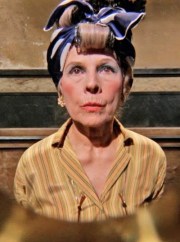
Then, in 1967, Ira Levin published his book Rosemary’s Baby. The following year, Roman Polanski adapted the book into a film the following year, and the eerie occult was back, with full-on Satanic conspiracies lurking behind Manhattan closet doors. Even in Rosemary’s Baby, however, the glamor persisted—the eccentric but resplendent witches-next-door, Roman and Minnie Castavet (played by Ruth Gordon and Sidney Blackmer), were magnetic, and served frosty cocktails in their spacious New York flat. There Satanic witch-cult even seems more like an anarchy art clique than a sinister magical lodge for the most part. The film put the fear of witches back into the American mind, however, with a new twist—witches were spooky, but spooky was cool. Incidentally, another classic occult film, The Devil Rides Out, appeared in theaters the same year as Rosemary, and lit its own subtle fires under the cauldron.

With this new-found social capital, witchcraft and the occult took the world by storm in the seventies. Some of the occult films which appeared during the decade were hallmarks of art and cult cinema: Simon, King of the Witches (1971); The Devil’s Daughter (1973); The Exorcist (1973—not a true ‘witch’ film, but one with strong occult ties and influence); The Wicker Man (1973); Season of the Witch (1973, directed by zombie-genre great George A. Romero); Lisa & the Devil (1974); and the highly glamorous Suspira (1977), a veritable precursor to 2010’s creepy art-dance film Black Swan. In essentially all of these films, the presence of the occult is a trope, and does not have any of the benign or jovial qualities of Bell, Book, & Candle or Bewitched. Yet each film features a mixture of eroticism, fashion, and allure layered over the tale of black magic driving the story. Liberation, sexual empowerment, and countercultural energy augment the horror of the films, and the gray space between forbidden occultism and fashionable society becomes a gulf.

Art and music also experienced an occult florescence during the seventies. The aforementioned Stevie Nicks—the “White Witch” of music—joined the group Fleetwood Mac along with boyfriend Lindsey Buckingham in 1974, and in 1975 the group experienced mainstream success with an album featuring witchy hits like “Rhiannon.” Her flowing shawls, black gowns, and stage twirls bewitched audiences, and her fashion became a standard of young, hip women seeking to look a little out of the mainstream—a little “witchy.” The occult music craze started well before Nicks, of course, and bands like Coven and Black Widow had experienced some chart success with their Satanic/witchy black rock during the late 60s. In 1970, Santana recorded and released Fleetwood Mac’s song “Black Magic Woman,” on their (fairly occult-named album) Abraxas, taking it to no. 1 on the pop music charts. In 1972, the Eagles released “Witchy Woman,” another big hit glamorizing witches, and in 1974 Cher released “Dark Lady,” about a love triangle involving a witchy fortune teller. Cher herself cultivated a glam-witch look throughout the decade, further expanding the cultural capital of witchcraft fashion. Other rockers who adopted elements of the occult into their songs, performances, and fashions include David Bowie, Jimmy Page, and, of course, Jim Morrison. Patti Smith notes the heavy influence of the occult on the Greenwich Village music scene in her memoir Just Kids, and especially the huge artistic influence that it had on artists like Robert Mapplethorpe. Penthouse magazine did erotic spreads centered on occult themes as well, such as this one featuring Babetta Lanzilli from 1974.

In the ‘real-world’ of witchcraft, a number of stars were aligning to add fuel to the magical fire. Chas Clifton outlines a number of the groups which were exploding onto the scene in his book Her Hidden Children, including the Psychedelic Venus Church and Anton LaVey’s Satanic Church, which also released a film called Satanis in 1970 (there are some great pictures of a 1969 LaVey here). Alex Sanders, the progenitor of Alexandrian Wicca, released an album revealing some of the workings of Wicca called A Witch is Born in 1970. Wicca had arrived stateside with Raymond Buckland in 1968 (although it may have had some early seeds from other sources, too). Buckland expanded on witchcraft religion through books like Witchcraft Ancient & Modern and Witchcraft from the Inside. The hugely influential publication of Robert Heinlein’s Stranger in a Strange Land in 1967 led to the foundation of The Church of All Worlds (CAW) and shaped practices in other groups as well (such as the aforementioned Psychedelic Venus Church).  The mass-marketing of witchcraft became a staple of the 70s, with sales of “black magic ritual kits” hitting store shelves and a variety of occult-inspired board games. The Ouija game was purchased by Parker Bros. in 1966, and they began to push it as a party game rather than a spiritual tool. There was also a push towards legitimacy. Journalist Hans Holzer published his mainstream apologetic (and sensationalist at times) text The Truth About Witchcraft and opened the door to public discussions of its practices as legitimate, if fringe, activities done by regular people. Wicca and neo-Paganism in general underwent a rapid expansion and transformation, and the end of the decade saw the journalistic survey of new witchcraft (and other alternative) faiths in Margot Adler’s Drawing Down the Moon (1979). That same year, Starhawk published The Spiral Dance, which crystallized the evolving feminist Wicca movement. A busy, busy decade for witchcraft.

I should point out that these different aspects of witchcraft may have occasionally interacted with one another, but they were not in strict conversation through the decade. Instead, the popular conception of the occult and witchcraft grew in one direction—often sensational and glamorous—and the nature-based religions that were gaining momentum in fringe spiritual culture. Yet there does seem to be a shared zeitgeist from that era that drove ever more people into the black-robed arms and beshawled shoulders of witches. For a number of people, the ecological spiritualism which was fueling part of the neo-Pagan segment was a complete non-starter. Instead, the sex, drugs, & rock-and-roll aspects of witchery worked as an artistic medium of self-expression. Both segments were connected to counterculture, but with different aims and methods. Following this decade, with its chaos and beauty, the occult got heavily mired in a number of problems, most notably the “Satanic panic” of the 80s. With the recent popularity of witchcraft in media, I’d be hardly surprised to find a resurgence of people claiming to have been harmed or attacked by evil cults over the next two decades or so. Let’s hope there’s been some growth on that front and that the information age will keep it in check, but I somehow doubt the ripples aren’t already in motion for the next “panic.”

So what does all this have to do with Myrtle Snow and the Diane von Furstenburg  wrap dress (“the greatest invention of the century,” according to dear Auntie Myrtle)? I think that it can be very easy to lose sight of just how diverse witches are, for one thing. Dressing in black (despite AHS:Coven’s edict that “On Wednesdays we wear black”) may be a statement, but so is sporting a pair of black-and-red Pleasers for ritual sex, and there’s nothing wrong with a Pier 1 altar and a little P90X before ritual. I don’t want this to devolve into a post on there being no one type of witch, or on what witches should or shouldn’t look or act like, but I do think that the recent witchcraft revival in pop culture means that there’s room for some real glamor in witchery again. Folk magic performed with embedded style and power—a flair for the dramatic—could be a very refreshing thing. I’d like to see witches embracing their own high-fashion spins on tried and true witchcrafts—not so much glitter in conjure oils, but a really knowledgeable mixologist of a witch brewing enchanted herb rinses for bewitching cocktail hours, for example. I certainly don’t want to see the folk magic I study and practice cheapened by commercial interests, of course, but I would love to see a few more Myrtles playing the theremin around bonfires, while our cultural capital is so ascendant.

What about you? Is there a place for glamor and high fashion in your witchcraft? Are the seventies still alive in your spells?

Thanks for reading!

-Cory

Borrowed from KPopStarz (click for link)

Blog Post 184 – Comets

The Comet of 1680, by Lieve Verschuier (via Wikimedia Commons)

“Like a comet burn’d
That fires the length Ophiuchus huge
In the Arctic sky, and from his horrid hair
Shakes pestilence and war” (Milton, Paradise Lost)

With the ISON comet drawing eyes to the night sky, I started thinking a lot about the superstitions and magical beliefs surrounding the appearance of comets in the sky. Comets have long inspired people in strange, occasionally beautiful, and sometimes disturbing ways. Mark Twain’s life was framed by the appearance of Haley’s Comet, a point the author himself noted. The Heaven’s Gate cult engaged in a group suicide surrounding the arrival of the Hale-Bopp comet.

Increase Mather, famed early American religious writer, dedicated an entire work to explaining the spiritual importance of comets in his Kometographia of 1683. He was responding to the presence of the Great Comet of 1680, which had captured the attention of most of the Western world, and felt that many people would be afraid at this sign and misunderstand it as a phenomenon which directly influenced the course of events on earth, rather than a sign from God of some important event to come (see more here). Generally speaking, comets have historically been associated with strife and woe to come. My Opie/Tatem Dictionary of Superstitions gives a laundry list of examples of ill-omen presaged by what the Venerable Bede called “long-haired stars”:

  • A comet as portending a change in governance (Tacitus, Annals)
  • Famine or pestilence or war or “fearful storms” (Byrhtferth, Manual)
  • A comet [the Great Comet of 1680] appeared two days before the Duke of Monmouth died, and all over Europe before the death of Charles II (J. Case, Angelical Guide)
  • An appearance before the plague struck London (Defoe, Journal of a Plague Year)
  • A wry observation that those who laugh at comets as tokens of disaster will studiously insist on “times and situations proper for intellectual performances” (Johnson, The Idler)

In the New World, comets seem to have retained much of their wicked reputation. In some cases the danger foretold by the comet is vague and ill-defined: “When a comet appears there will be trouble” (Roberts, “Louisiana Superstitions”). In other places, the significance of the hairy star was more direct and its consequences very  clearly understood: “A comet is a sign of war” (Thomas, Kentucky Superstitions).  Why should these astronomical phenomena, which had been showing up in night skies for ages, have such a bad rap? Considering even Classical authors like Tacitus cite the comet as woeful, the impulse must run deep. The unique cosmological view of Calvinism, though, which influenced much of Atlantic American colonization, both denigrated occult practices like witchcraft and supported an enchanted view of a univers under Divine direction:

“The Calvinism of the colonial awakenings also paralleled important occult ideas. The fatalism inherent in Calvinism’s concept of predestination found an occult equivalent in the idea fundamental to astrology that motions of star and planets revealed a future that individuals could not control. Calvinist evangelists and occult practitioners also explained catastrophes in similar ways. Believers in occult ideas thought the coming of comets and eclipses had inescapable and usually disastrous consequences; not even kings and queens escaped their verdicts. No one escaped judgment by the Calvinist God either. Sometimes He damned seemingly model Christians simply to demonstrate His sovereign” (Butler, “Magic, Astrology, & the Early American Religious Heritage”).

The shared cosmology of the colonists saw the universe as inhabited by spiritual consciousness, and an intelligence that wished to convey its meaning to human beings for one reason or another. Signs, omens, and portents were one such method. Comets, with their placement among the stars, their strange and ill-understood movement, and temporary nature made perfect fodder for prognosticators of all stripes—religious, occult, and both (they did exist, even during the Colonial period).

Lest we make the mistake of thinking that the observation of comets was the purview of only a few dusty old white occultists or a lot of fiery former Englishmen with strong religious convictions, I’d also like to point out that the cosmology which imbued comets with significance stretched across a broad swath of New World denizens, including Native Americans, Spanish and French colonists, and of course, the imported Black slaves.

“English Protestants often read unusual events as evidence of the divine presence in everyday life, acknowledging the activity of a creator deity who operated through omens and portents within the natural order, or signs and wonders in the heavens, philosophy known as Providentialism. “Comets, hailstorms, monster births and apparitions” and other disruptions of the ordinary were demonstrations that foretold God’s will or signaled His displeasure withhumankind. Africans’ understandings of the universe were also inspired by visible manifestations of spiritual forces within nature. They too viewed thunder, lightning, and other elements as heralds of sacred hierophanies,the awesome presence of numerous divine beings.” (Chireau, Black Magic).

The Providentialism Chireau notes fits the cosmology of the English and other European settlers, but it is clearly not unique to them. A world with Divine presence not only innate to its component parts, but in which those component parts act as mediums for communicating with humans, is also very much an African perspective. And while it is tempting to think that such beliefs can be relegated to history’s dustbin, we should also remember that in our time comets stir up a lot of strange excitement. Religious scholar Camile Paglia notes, for example:

“The Children of God, founded in 1968 as Teens for Christ by “Moses” David Berg in Huntington Beach, California, were negligible in number but came to public attention when they loudly prophesied that the us would be destroyed by Comet Kohoutek in January 1974. The group continues under the name “The Family” and is regularly excoriated by conserva tive Christian watchdog groups for its practice of free love (called “Flirty Fishing”) as well as its heretical beliefs that Jesus was sexually active and that God is a woman. (Paglia, “Cults and Cosmic Consciousness”)

Paglia also references the Hale-Bopp comet mentioned earlier, and Marshall Applewhite’s Heaven’s Gate cult. I have, so far, not heard of any particularly distressing phenomena surrounding ISON’s appearance, but if nuclear war breaks out, I may have to blame that particular “long-haired star.”

If you have comet lore you’d like to share, please do so in the comments!

As always, thanks for reading!

-Cory