Blog Post 158 – The Doctrine of Signatures

Greetings everyone!

In this entry, I want to talk a little bit about a concept that can get very sticky, and which may very well put me at the outer limits of credibility. Before I dig into the meat of the subject, however, I think I should remind everyone that THIS IS NOT A MEDICAL BLOG. NO INFORMATION PRESENTED HERE IS INTENDED TO DIAGNOSE, TREAT, OR OTHERWISE PROVIDE MEDICAL ADVICE FOR ANY ILLNESS, AILMENT, OR CONDITION. IF YOU HAVE A MEDICAL NEED, PLEASE SEE YOUR PHYSICIAN OR QUALIFIED HEALTH PROVIDER. ALL INFORMATION CONTAINED HEREIN IS STRICTLY IN THE INTEREST OF PRESENTING FOLKLORE AND PERSONAL OPINION.

Now that the big, scary, all-caps part of the post is done, let’s talk about the Doctrine of Signatures. I was actually rather surprised after our last episode to hear from several people that the concept of the DOS was unfamiliar to them. I realized at some point that the ideas founding the DOS were so internalized, and I was assuming that most people who worked with herbs had heard of those concepts. Now I’m thinking that I may have just been sort of lucky to have picked that information up early on (I know my mother shared a bit of that with me based on herbs she grew and I learned a lot of it from my first few years as a practicing neo-Pagan hanging around rock and herb shops).

So what is the Doctrine of Signatures? In this case, I think I’ll leave the general explanation to better folklorists than myself. First, I’m going to quote a somewhat neutral (though erring on the side of skepticism) article by folklorist Wayland D. Hand:

“Advocates of nature’s way in natural and organically grown foods, probably still have a lingering belief in the doctrine that for every illness with which man is afflicted God himself has provided a healing agent. All one has to do is to learn to seek out these wondrous plants. It was on this essential premise that the Doctrine of Signatures was enunciated by Paracelsus, Giambattista Porta and the early botanists. This theory is most ably stated by William Turner, an English botanist, who in his The New Herbal of 1551, wrote: ‘God hath imprinted upon plants, herbs, and flowers, as it were, a hieroglyphic, the very  signature of their vertues, as on the nutmeg, which, being cut, resembles the brain.’ Writing a half a century later, Johannes Franck, one of the leading German botanists of his day, compiled a book which  he called Signature, that is, a Basic and True Description of Plants Created by God and Nature. This doctrine went somewhat beyond the shape and color of plants to their activity and function. One of the earliest examples of this kind of sympathetic connection is found in the writings of Pliny the Elder who flourished in the first century, A.D. Calcifrage was recommended to combat the stone. This prescription  comes form the fact that this hardy plant which could penetrate the fissures of the hardest face of a cliff, would certainly be able to break up kidney and gallstones, as the name of the plant itself suggests:  calci-frage, ‘stone breaking.’” (Hand, “Magical Medicine,” Western Folklore)

Next, let’s look at a much older (and much more cynical) opinion about this idea, from plant folk-lorist T.F. Thiselton-Dyer, whose Folk Lore of Plants is something of a classic:

“The old medical theory, which supposed that plants by their external character indicated the particular diseases for which Nature had intended them as remedies, was simply a development of the much older notion of a real connection between object and image. Thus, on this principle, it was asserted that the properties of substances were frequently denoted by their colour; hence, white was regarded as refrigerant, and red as hot. In the same way, for disorders of the blood, burnt purple, pomegranate seeds, mulberries, and other red ingredients were dissolved in the patient’s drink; and for liver complaints yellow substances were recommended. But this fanciful and erroneous notion ‘led to serious errors in practice,’ and was occasionally productive of the most fatal results.” (Dyer, TFLOP, Chapter XVI)

The idea of plants bearing the divine mark which indicated their use is a very old concept. Hand notes that Pliny the Elder recorded such an idea, and it was debated even in his time with question to the validity of this method.  The idea—in one form or another—appears in herbal medicinal systems throughout the world, including Chinese traditional herbalism and Indian Ayurvedic medicine.  Many people swear by it, and a number of ‘yarb doctors’ have treated ailments with it for centuries with relative success. Yet at the same time, the doctrine has been misused, misapplied, or just plain wrong in some cases and has caused an increase in illness or injury.

I bring up the DOS at all because it’s so fundamental to New World magical concepts. The idea that God, the Creator, or some other spiritual force has set in motion a world which bears hallmarks of its design seems to have been taken as de facto truth among many early settlers in America, particularly poor folks with limited access to medical treatment. An entire profession of folk herbalism, or “yarb doctors” arose in the Appalachians, and similar practices (such as curanderismo in the Southwest) appeared elsewhere. In most cases, these medicine men and women did not make their primary living off of their knowledge of herbs and plants, but rather in many cases refused payment for such services, feeling that it was their God-given duty to render help when help was needed. Of course, such high-mindedness was not universal, but even in cases where money or goods changed hands, yarb doctors cost less than a typical doctor in most instances.

Determining which plants have which signatures is a strange and murky process. For instance, an herb with heart-shaped leaves might be good for treating a physical heart problem, an emotional disorder, working a love charm, etc. The hairy stems of mint might indicate that it has the ability to ‘prickle’ the lungs and stimulate respiration, or they might signal that rubbing mint on one’s scalp would stimulate hair growth. The tall and showy joe pye weed, which has the nickname ‘gravel root,’ is used to treat kidney stones—frequently referred to as ‘gravel’—but its hollow stems might signal a use in treating sore throats as well as problems of the urinary tract, which both feature hollow tubes leading to external orifices. In this latter case, we can see another important aspect of the Doctrine, in which many plants receive their folk names based on their folk medical uses (boneset, feverfew, eyebright, etc.). Critics of the DOS sometimes point out that the retroactive ascription of signs to the plants, such as noticing that joe pye weed has hollow stems and therefore would be good for urinary problems, does not indicate a heavenly marking of use, but rather makes for an easy mnemonic device for remembering what plants are good for what ailments.  Further complicating the matter, some signatures are not visual markings, but rather based on sounds the plant makes when shaken, for example, or perhaps on a specific odor the plant emits.

There are also potential problems separating out a ‘signature’ from a legendary or mythical ascription of plant demarcation. Passionflower, which I’ve written about previously, is a good example of layered interpretation, with the numerical and color symbology of the plant being so closely linked to Christian mythology that the flower essentially contains a sermon. Was passionflower marked, given its unusual structure by a Creator to illustrate a story? Likewise, a number of plants are reputed to have some tie to the Crucifixion in Christian myth, such as the holly berry. Thiselton-Dyer also records a similar blood-staining myth related to poppies, in which they have been dyed by the blood of St. Margaret. In these cases, the plants are ‘marked,’ but not necessarily for use. They bear the signs of an interested and involved divine power, but are not strictly Doctrine of Signatures material since those signs illustrate a story and not a practical application. Yet, by a stretch of imagination, one could link the poppy’s use as an opiate and intoxicant to the story of St. Margaret, who famously battled a dragon. Since the use of poppy-derived-opium (and its relative, heroin) was known for a time as “chasing the dragon,” the connection does, by a bizarre happenstance, make some degree of sense. But was the flower marked with foreknowledge of the phrase, and thus was it pre-figurative? Or is all of this just strange coincidence?

It’s probably time for me to come clean, as I’ve been sort of dancing around my opinion on the Doctrine of Signatures. I’m a believer. Not a hard-and-fast, every-plant-bears-a-signature-and-medical-science-is-quackery kind of believer, but I tend to think that the DOS has some validity. My personal work with herbs and plants has led me to see the connections between their form and their functions. I don’t think that we necessarily understand every signature in every plant, and I do think that we frequently misinterpret the signs we see, but I do think that there’s an element of deliberate design within most flora that has to do with its use. This probably hedges a bit close to the Intelligent Design argument for some folks, and I don’t want to get bogged down in that discussion. I don’t make claims as to who marked the plants—perhaps they mark themselves in some way, for all I know. And I don’t necessarily think that I could wander into a meadow, find a foot-shaped plant, and use it to treat bunions and corns. I tend to agree with the skeptics about the retro ascription of plant signatures that human understanding of the plant signatures comes after we figure out what they are used for. But that does not diminish—to me—the idea that the design is implicitly connected to the use. It only emphasizes that we should be paying much more attention to what plants have to teach us, and to the hidden language of the world working around us.

So that’s my nutshell version of the Doctrine of Signatures. There are many authors who discuss this concept more handily than I have here, so please do some research and see what you think of the whole thing. Have you ever noticed signatures in plants (or even in animals, weather phenomena, etc., which are sometimes included in an extended version of this doctrine)?

Thanks for reading!

-Cory

Blog Post 157 – Peaches

I love a good summer peach. Or peach cobbler. Or homemade peach ice cream. And I can’t tell you how much I miss my mother’s homemade brandied peaches (which were amazing over some hand-churned vanilla). If you live in North America, it’s likely you’ve encountered peaches everywhere from grocery stores to roadside stands to neighbors’ backyards. They’re ubiquitous, which also means they’ve been a major player in the foodways of America.

Today I’m going to briefly look at the peach from another folkloric perspective, focusing on its relevance in magical lore as opposed to its purely culinary uses (though I imagine the two are not ever to be completely disentangled from one another).

The flesh of the peach is frequently regarded as a nearly sacred food in its homeland of China, where it is thought to aid immortality. The lore of the peach is extensive there, with every part of the tree and fruit making an appearance. Peach pits are worn as amulets to ward off demons, while blossoms are used to enhance love, luck, & beauty. Peaches are left in family shrines, and feature prominently in the literature and art of China. You can read a good deal more about the role of the peach in Chinese lore here and here.

Peaches were highly valued in places like the Appalachian Mountains, too.  According to the third Foxfire book, one of the most common varieties was the Indian peach, a shrubby variety with small, firm peaches:

“Indian peaches are small trees, spreading with scraggly branches, said to be descendants of those trees planted by the Cherokees around their villages…The fruit of the Indian peach is white with a rosy cheek, white-meated with a red heart…All have a most delicious flavor, raw or cooked. Peaches are rich in iron, and peach leaf tea was a medicine for bladder troubles or used as a sedative” (Foxfire 3 303)

In North American folklore, all parts of the peach have their value as well. In Folk Medicine in Southern Appalachia, one of the author’s informants says this of the peach tree:  “The peach tree was justifiably described by herbalist Tommie Bass of northern Alabama as ‘a drugstore on its own’ in recognition of its many medicinal uses” (Cavender 64-5). Below you’ll see a sampling of the many different magical and/or medicinal uses of the peach and its parts:

Tree/Wood

  • “A baby that refuses to come can be brought at once and the labor pains will stop, if the woman drinks tea made from bark scraped downwards off a young peach tree.” (Hyatt #2972) Hyatt also states in several other places that peach branches were used to help bring a baby into the world by magical means.
  • “Peach tree root or bark was also commonly used [to treat diarrhea]” (Cavender 88)
  • Peach wood can be used in a magical cure for warts by cutting as many notches in a peach branch as one has warts (Thomas #1493) (see also “Leaves”)
  • Peach wood is one of the reputed choices for making dowsing forks, according to many sources (Thomas #105; Brunvand 432, Steiner 271, Randolph 83)
  • Ozark lore specifies that peach bark scraped upward prevents vomiting and/or diarrhea, but scraped downward it is a strong emetic (Randolph 95)
  • “A mess of peach roots, ground up and mixed with lard, is said to cure the seven-year itch” (Randolph 109)

Fruit

  • A piece of Kentucky lore states that twinned peaches found together indicate that you will be married soon (Thomas #593)
  • Eating a peach pecked by a bird is said to lead to poisoning (Steiner 267)

Pit

  • John George Hohman mentions the use of “peach-stones” as a cure for “gravel” (kidney stones). He attests to it especially because it cured him of his own gravel (Long-Lost Friend #84)
  • Hohman attests that peach pits can also be taken to remedy drunkenness (#185)
  • The seeds reputedly can help stimulate hair growth in some people (Todd 55)
  • Vance Randolph describes an Ozark love charm consisting of a carved peach stone filled with “some pinkish, soap-like material” which he could not identify (Randolph 166)
  • Both Randolph and Newbell Niles Puckett mention the peach-pit charm as a powerful one, akin to the lucky rabbit’s foot charm (Puckett 437)

Leaves

  • Peach leaves were thought to be a Colonial-era cure for worms (Black 199)
  • Cat Yronwode mentions using dried peach leaves in wisdom oil blends to help students focus on studies (HHRM 143)
  • Kentucky lore says that rubbing warts with peach-leaves, then burying them will remove warts (Thomas #1492)
  • The leaves were frequently made into a poultice, which could be used to treat headaches, bruises, and “pumpknots (bumps caused by a blow or knock to the head)” (Cavender 98, 109)
  • One of the Foxfire informants recommended a peach leave poultice mixed with salt and cornmeal to treat an abscessed tooth (Foxfire 9 70).
  • Herbalist Jude C. Todd recommends the use of peach leaves as a part of a dandruff treatment (Todd 53)

Flowers

  • Hohman says that “The flowers of the peach-tree, prepared like salad, opens the bowels, and is of use in the dropsy” (Long-Lost Friend #185)
  • Hohman also recommends the use of the flowers as a cure for worms and constipation (#185)
  • Girls in the Ozarks pierce their ears when peaches are in bloom, believing that piercing them any other time will lead to infection (Randolph 164)

Vance Randolph has a great bit of lore regarding the planting of peaches as well:

“In planting peach trees, it is always well to bury old shoes or boots near the roots. Not far from Little  Rock, Arkansas, I have known farmers to drive into town and search the refuse piles for old shoes to be buried in peach orchards. The older and more decayed the leather, the better it works as fertilizer” (Randolph 39)

From my own perspective, I really like the dowsing power of the peach, but I also have a great fondness for the carved peach pit charms. They seem like they would be beautiful and incognito ways of carrying natural amulets about on one’s person. I can also easily see using the flesh of a peach like the flesh of an apple, carving things into it before eating to absorb those qualities. The peachy pulp, which bears such a strong resemblance in so many ways to human flesh, also suggests a use as a makeshift dolly. When the “heart” of the peach, its stone, is considered, this is likely a very apt application of magic to the rosy-golden fruit.

I thought I’d finish up today with something non-magical, but which certainly has an enchanting power: brandied peaches like my mother used to make (I sadly do not have her exact recipe anymore, so the one I’m sharing is adapted from the excellent Putting Food By, by Greene, Herzberg, & Vaughan). We used to have a spoonful of these over ice cream after dinner sometimes, and they were simply otherworldly. They’re not as sweet as you might think, but that’s part of their charm. Plus, you can’t go wrong with a little booze in your dessert. I hope you enjoy!

Ingredients:
Peaches (1 lb.)
1 cup sugar
1 cup water
Good brandy
Whole cloves (optional)
Whole cinnamon sticks (optional)

Clean & dry your one-pint canning jars. Score skin of peaches, then blanch them in boiling water and dunk them into an ice bath. Slip the skins off and slice the peaches into halves and quarters (removing stones).

Make a simple syrup by boiling the cup of sugar with the water. Cook the peaches in the sugar syrup for about 5 minutes, then transfer peaches into individual jars. To each jar add 1-3 cloves  (optional), 1 cinnamon stick (optional), and 2-3 tablespoons of brandy. Seal jars and process in a hot water bath for about 20-25 minutes, then carefully remove the jars and allow them to seal.

I hope you’ve enjoyed this look at peaches. If you have any other ideas about using peaches in magic, please leave them in here or drop us a line.

Thanks for reading!

-Cory

Blog Post 156 – Passionflower

Greetings blog subscribers (and casual readers, too)!

When I first stumbled on today’s gorgeous botanical subject in the hilly areas around Chattanooga, I couldn’t believe what I was seeing. The passionflower is one of the most outlandish, garish, over-the-top, and beautiful blooms I’ve encountered in the wild. It looks as thought it would be more at home in a tropical nursery than growing in the foothills of the Appalachians, and yet this clinging vine with big, showy blossoms is right at home among sweetgum trees, sassafras, and tulip poplars.

The flower is sort of ‘leveled,’ with a base of beautiful petals which come in vibrant colors like purple and pink upon which rest elevated pistils and soaring stamens in a delicate (and highly symbolic) pattern. The passionflower goes by several names, including the maypop, herb of the Cross, and maracuja. The latter name comes from Spanish-speaking localities in which the twining vine blooms, and the flower has definitely found a home in the folklife of Hispanic herbalists. But before I get ahead of myself with all of that, let’s look briefly at some of the Old World lore about this lovely bit of flora.
Here’s a description of how the passionflower got its name, from perennial (pardon the pun) favorite, T. F. Thiselton-Dyer’s The Folk-lore of Plants:

“The passion-flower has been termed Holy Rood flower, and it is the ecclesiastical emblem of Holy Cross Day, for, according to the familiar couplet:—

‘The passion-flower long has blow’d
To betoken us signs of the Holy Rood.’ (CH XVII)”

“A plant closely connected by tradition with the crucifixion is the passion-flower. As soon as the early Spanish settlers in South America first glanced on it, they fancied they had discovered not only a marvellous symbol of Christ’s passion, but received an assurance of the ultimate triumph of Christianity. Jacomo Bosio, who obtained his knowledge of it from certain Mexican Jesuits, speaks of it as ‘the flower of the five wounds,’ and has given a very minute description of it, showing how exactly every part is a picture of the mysteries of the Passion. ‘It would seem,’ he adds, ‘as if the Creator of the world had chosen it to represent the principal emblems of His Son’s Passion; so that in due season it might assist, when its marvels should be explained to them, in the condition of the heathen people, in whose country it grew.’” [21] (CH XIX)

The passionflower naturally fits into a schema of religious botany, then, and would seem to be a sort of pinnacle representation of the Doctrine of Signatures, which essentially states that every plant (or creatrure, for that matter) bears certain visual, olfactory, or other cues indicating what the divine intends us to do with it.

Medicinally, this plant has a powerful sedative effect, though not one so strong as something like valerian root. This can be seen as a sort of ‘peace,’ bestowed by the plant as its creator would bestow divine peace. You can read a good bit about its medicinal qualities here and here, where they are able to get much more into the hows and whys of passionflower’s sedative effects. [Though I will note here, as I always do, THIS IS NOT A MEDICAL BLOG, AND I DO NOT PROVIDE MEDICAL ADVICE. PLEASE CONSULT YOUR PHYSICIAN FOR MEDICAL INFORMATION ABOUT HERBS, SUPPLEMENTS, OR ANY OTHER TREATMENTS YOU ARE CONSIDERING].

Moving into passionflower’s magical side, there is surprisingly little to do with its ability to inspire religious faith, offer any kind of divine protection, or even be used as a decoration on altars to holy saints, which greatly surprises me. I would think those uses would be nearly the first use I’d put them to, but wiser workers than I would note that passionflower’s real power is not just in its blossom, but in its less showy bits: the tangly and highly clinging vine which supports the gorgeous floral display.

Cat Yronwode describes the passionflower as an ingredient in the Chuparrosa (or “hummingbird” in Spanish) charm, which is used to foster feelings of love and attachment (hence the clinging-vine quality):

“Dried Passion Flower leaves or pieces of the root may be carried in a red flannel bag dressed with Love Me Oil. Mexicans are known to add such a bag a charm to the Divine Hummingbird, or Chuparrosa. In the old days this would have been dried hummingbird heart, but it is illegal to kill hummingbirds or to possess their body parts in some states now—and with good reason, as the birds are under tremendous habitat destruction pressure from human beings. A metal charm of a hummingbird sewn to the bag or carried inside will do just as well” (Hoodoo Herb & Root Magic, 142)

Beyond its love-bringing and binding qualities, the flower also seems to bring feelings of peace and contentment between lovers and members of a household, likely due to its soporific effects in its medical applications.

In Latin American countries, the passionflower has similar applications, including use as a love-binder and spiritual sedative. It’s also used in a Brazilian floral horoscope, where it represents the month of June. Again, I’m surprised at its limited appeal as a holy or divine flower, as I think it would likely be an excellent addition to offering altars to Marian incarnations or to do work with Jesus in various forms. But that’s merely speculation on my part, so I digress.

If you’ve had any experiences, magical or otherwise, with this amazing bloom, we’d love to hear about them! Feel free to leave a comment below or email us if you know more about this beautiful, intriguing addition to American flora.

Thanks for reading!

-Cory

Blog Post 154 – Buckeyes

I imagine that I’ll get a sharp increase in visitors from Ohio with this article. Today’s featured botanical is the buckeye, which is both the name of the tree and the fruit (or nut) of that tree. It grows in a wide variety of locations, including all over Europe and North America, and is also frequently referred to as a “horse chestnut” (which is actually a very specific species within the bigger buckeye family). Since you can find a great deal of botanical information on the tree elsewhere (like at the USDA Plants database), I’ll narrow my focus here to the folklore and magical uses of the nut.

T.F. Thiselton-Dyer, author of the botanical mythography classic The Folk-lore of Plants, makes the following observations about the horse-chestnut:

“A Worcestershire name for a horse-chestnut is the ‘oblionker tree.’ According to a correspondent of Notes and Queries (5th Ser. x. 177), in the autumn, when the chestnuts are falling from their trunks, boys thread them on string and play a ‘cob-nut’ game with them. When the striker is taking aim, and preparing for a shot at his adversary’s nut, he says:—

‘Oblionker!

My first conker (conquer).’

The word oblionker apparently being a meaningless invention to rhyme with the word conquer, which has by degrees become applied to the fruit itself.” (CH XVIII)

Already I love this plant, don’t you? Essentially they seem to be used as marbles in children’s games (give them one point for that), and they also have a nice phonetic connection to the powerful hoodoo charm, John the Conqueror root, which is frequently called John de Conker (and that’s another point to the buckeye!). They actually look llike smoother versions of High John roots in some ways, so it doesn’t surprise me to find that they sometimes get substituted in for their powerful underground counterpart:

“Buckeye nuts are believed by some hoodoo “doctors” to increase a man’s sexual power. Shaped like miniature testicles, they are sometimes carried in the pants pockets as charms to bring men “good fortune in sexual matters.” In the southern and eastern regions of the United States, buckeyes are carried in mojo bags to cure or prevent such ailments as arthritis, rheumatism, and migraine headaches” (Gerina Dunwich, Herbal Magic, 86).

Cat Yronwode similarly cites buckeyes as charms for increasing male potency. Both Yronwode and Dunwitch, however, make it clear that a buckeye’s primary powers are to aid as a gambling charm and to help stave off aches and pains—particularly rheumatism and headaches. This view is heavily supported by a number of folklore sources:

From Newbell Niles Puckett, Folk Beliefs of the Southern Negro

  • Where the left hind foot of a graveyard rabbit, a buckeye, a horse chestnut, and a luck bone from a pig ham are put together for good luck [A charm for good luck] (316)
  • A buckeye carried in the pocket will surely bring one good luck (314)
  • A buckeye carried in the left pocket is generally supposed to work a cure for rheumatism as well as for piles, a belief apparently English (360)
  • Red pepper rubbed up and down the back ‘warms up de system,’ as does also a new domestic sack half full of salt into which nine grains of red pepper and four buckeyes have been put. Wear this around your waist and you will never again be bothered with chills (366)
  • In Mississippi and Alabama it is believed that if one carries buckeyes in the pocket he will have no chills through the year (366)

From Harry M. Hyatt, Folklore of Adams Co., Illinois

  • 1328. “My brother always carries a buckeye in his pocket to get money.” (28)
  • 1329. “I always carry three buckeyes in my pocket to always have money. My grandfather did this through the Civil War, my mother did this, and I am carrying three buckeyes too.” (28)
  • 4534. The person who carries a buckeye in the pocket never becomes sick. (99)
  • 4688. The person who carries a buckeye in the pocket never suffers from backache. (103)
  • 5233. A buckeye carried in your pocket or the band of your hat prevents headache. (118)
  • 5588. As a treatment for piles, a buckeye is worn: in the pocket (usually the left), or one in each pocket, or one pinned to the underclothes, or one round the neck, or one rolled in the top of each stocking. (126)
  • 5684. One buckeye is worn in one of several places as a rheumatism remedy: about the neck, on the breast, in a pocket (especially a hip pocket), round the waist, and under the bend of the knee.  Sometimes, they say buckeyes are ineffective for rheumatism, unless you begin by using an unripe one. Moreover, it is occasionally said, to lose this nut in the process of curing yourself brings bad luck. And finally, because a buckeye is also called a horse chestnut, the real chestnut is worn as a substitute, but this seems to be rare. (129)
  • 5685. Buckeyes used for curing rheumatism should always be carried in pairs. This also makes you lucky at the same time. (129)
  • 5686. “If you carry three buckeyes in a sack so they will be on your skin, good for rheumatism; if the buckeyes dry all up when wearing, then they are doing you good; but if they don’t dry all up, they are doing you no good.” (129)
  • 11073. It is lucky to keep a buckeye in your purse, on your person, or in your house. (262)
  • 13443. Keep a buckeye in your pocket while playing baseball and you will have good luck. (310)
  • 13984. You obtain good luck for a card game, if a buckeye is worn in your right pocket. (319)

From Daniel & Lucy Thomas, Kentucky Superstitions:

  • 1224 – One subject to a headache may prevent it by carrying a buckeye in his pocket (105)
  • 1288 – Carry a horse chestnut [another name for a buckeye] in the pocket, to avert piles (110)
  • 1299 – To avert rheumatism, carry a horse-chestnut in the pocket (111)
  • 2887 – You will have good luck if you carry a horse-chestnut (219)

Kentucky Superstitions also has this rather fantastic bit of lore about the good ole horse-chestnut:

  • 2889 – If one eats a buckeye, his head will turn around (219)

Vance Randolph devotes a sizeable amount of space to the folklore of buckeyes among the hillfolk of the Ozarks, also pointing out their strong associations with healing and protection from painful diseases. He relates an excellent story about just how deeply ingrained the belief in buckeye powers was in the mountains:

There is an old saying that no man was ever found dead with a buckeye in his pocket, but this is not to be taken seriously. Most people who carry buckeyes regard them as a protection against rheumatism, or hemorrhoids. One of the most successful physicians in southwest Missouri always carries a buckeye ; when it was mislaid once he was very much disturbed and let an officeful of patients wait until his pocket piece was recovered. It is very bad luck to lose a buckeye. I asked this doctor about it once. “No, I’m not superstitious,” he said grinning, “I just don’t want to get the rheumatism!” (Ozark Magic & Folklore, 153)

There is some excellent lore about the buckeye and just why it became the namesake for Ohio from the Ohio Department of Natural Resources website. They mention the lucky association, likening it to a four-leaf clover or rabbit’s foot, and links the state nickname to William Henry Harrison or alternatively to Col. Ebenezer Sproat (a simply fantastic name), both Ohioans of historic and heroic stature.

Probably my favorite bit of folklore concerning the lovely horse-chestnut comes from an online forum I found while researching this topic. You can read the full thread here, but I simply cannot fail to mention this fantastic tidbit:

There is a belief by some that only half the buckeye is poisonous, and that only squirrels know which half that might be in a particular nut. Squirrels do sometimes eat a part of the nut.

There you have it: squirrels are smarter than we are. But I’ve known that for a while (at least in my case it’s true).

At any rate, the buckeye can be carried as a lucky charm or worked into other magical preparations, and it has a huge body of lore associated with it. So much, in fact, that I’ve barely (prepare for pun) cracked the shell here. If you know of great buckeye lore and magic, I’d love to hear about it! Or if you just want to pelt me with horse-chestnuts for making bad puns, I’ll be here all day.

Thanks for reading!

-Cory

Blog Post 153 – American Ginseng

Hello dedicated (and not abandoned!) readers!

This month, I’m going to be spending a lot of time looking at various botanicals found throughout North American magical practice. What with it being springtime and all, I thought a little stroll through our native meadows, forests, fields, and fens would be a good way to get back in the swing of things, and might even open up some new avenues of exploration for somebody. As always let me emphasize that THIS IS NOT A  MEDICAL BLOG, AND THE INFORMATION HERE IS NOT INTENDED TO DIAGNOSE, TREAT, OR OTHERWISE MEDICALLY PROVIDE FOR ANY ILLNESS OR AILMENT. ALL INFORMATION IS PROVIDED AS FOLKLORE ONLY!!!

I’m starting with a plant that may or may not be familiar to most people: American Ginseng (panax quinquefolia).  This plant can be found throughout the mountainous regions of North America ranging from Canada down to the Southern states. It’s long been highly valued in Chinese medicine, and has been considered a panacea (hence its botanical Latinate name of panax) for a wide variety of complaints. You can read a good bit about the botanical and medical side of the plant at its Botanical.com entry, so I’ll focus today more on the folklore side of this incredibly useful root.

When I was growing up in the rural South, I had a good friend in high school whose father would regularly take him ginseng hunting (or “sanging”) in the hills and mountain areas a few hours away. It was a profitable side business for them, as it has been for mountain folk for nearly three centuries. In the Foxfire Book #3, which includes a whole chapter dedicated to ginseng, there’s a history dating back to the early 18th century in which Father Joseph Lafitau had local Mowhawk tribes in Canada begin gathering and curing native ginseng for sale on the Chinese market (244). At one point, ginseng was reputed to be worth its weight in gold, literally. Jude’s Herbal Home Remedies includes this tidbit about the economic value of the root: “Even Daniel Boone gathered it [ginseng] to sell because it was more profitable than hunting and trapping” (18). Unfortunately this demand led to an overzealous glut of wild harvesting, and ginseng’s botanical population dwindled steadily into the early 20th century. It’s made something of a comeback in the last 50-60 years due to stricter laws governing its harvesting, but as my story about my friend’s family demonstrates, it’s still a very common practice and hard to regulate.

Mountain communities have long known the curative and tonic value of ginseng root. Looking again to Foxfire #3, we find the following:

“The early colonists not only gathered ginseng for sale, but used it in tea to encourage the appetite or strengthen the digestion, especially of elderly persons or puny children. Ginseng plus black cherry and yellowroot made a potent tonic, especially with the addition of some home made whiskey. An early herbal suggested gathering ginseng root and steeping it with chamomile flowers for fainting females” (247)

Its primary powers are to enhance male vigor, and its described as a potent aphrodisiac in a number of sources. This may be due to either its stimulant effect on the circulatory system or the distinctively humanoid shape of the root (a factor which has earned aphrodisiac and potentcy attributions for other roots like mandrake and ginger). Preparations vary from chewing slices of the fresh root to brewing teas to even more unorthodox decoctions. One informant’s method:

“‘You can take the roots that are dry and take a sausage mill or something and grind’em up and drop a pretty good little handful down into your vial of conversation juice [moonshine]. Take this ginseng and liquor and pour out just a small little amount of that ina teacup and set it afire. Strike a match to it, you know, and it’ll burn. And I mean burn it good. And then turn it up and drink it. It’s an awful bitter dose to swallow, but if it don’t do you some good you better get to a doctor and pretty durn fast. It really is good for that [male vigor]. And it’s also good for female disorders. Very good, they tell me, for that’”(Foxfire #3 250-1)

In one example I found, the act of finding ginseng has its own value. From Folk Medicine in Southern Appalachia: “For some, the pursuit of ‘sang’ and other herbs is a therapeutic activity in itself. A ninety-year-old woman from eastern Tennessee said: ‘When I feel down in the dumps, I go sangin’” (60).

Therapeutic uses of ginseng in modern preparations reflect its historical value. Jude’s Herbal Home Remedies recommends it as a tonic and aphrodisiac, and gives this recipe for a male tonic:

“TONIC FOR MEN: Mix ½ ounce each of ginseng, shepherd’s purse, corn silk and parsley. Mix well and add 1 teaspoon of the mixture to 1 cup of boiling water. Let steep 15 minutes, covered. Strain and sweeten if desired. Drink several cups per day for 1 week. This helps to tone up the male reproductive organs. The stimulation to the prostate is helpful to all parts of the system” (120)

It also considers ginseng one of the great coffee subsitutes available in the wild. It is still considered a great digestive aid, as well. The folklore tome Kentucky Superstitions calls it “A sure remedy for all kinds of stomach trouble” (107).

In the folk magical realm, ginseng again parallels its medicinal uses, as well as adding a few new tricks to its repertoire. Cat Yronwode describes a recipe for soaking a ginseng root in Holy Oil which can then be used to anoint the male genetalia to enhance sexual performance. She also mentions it’s a key component of an old-timey gambling mojo, too. The root seems to have made its way into curanderismo practice as well, as the Curious Curandera lists the following uses for it: “Love, wishes, protection, luck, spirit communication, visions, divination, male vigor, gambling luck, to control another.” And Judika Illes, in her oft-recommended tome The Encylopedia of 5000 Spells, gives a number of great magical applications for ginseng root:

  • Tie a red thread around a ginseng root and carry with you for beauty and grace (1026)
  • Wrapping the first dollar earned at a new business around a ginseng root w/ red thread will help improve income (167)
  • Mentions its name as “Wonder of the World root,” and tells how it can be used in hoodoo to enhance longevity, libido, & performance in sexual situations (527). Also says you can carve a wish on a whole root & toss it into running water to gain what you desire (763).
  • Can be burned to break curses (598)

This incredibly verstatile root definitely has a place in a folk magician’s cupboard, though I would recommend acquiring it from legal sources. While I’m normally an advocate of wild harvesting roots for practice, in ginseng’s case three centuries of such harvesting have taken a toll, and since it grows well in cultivation I’d rather see the wild stocks remain alive and untouched for a long time to come.

If you have experience with ginseng or know of any unique magical applications for it, I’d love to hear them! Until next time, thanks for reading!

-Cory

Blog Post 151 – New World Tricksters

Trickster, by torchandpaintbrush

The trickster figure seems to be in every culture’s mythology, folklore, or fairy tales. He (for it is frequently a male figure, though female tricksters do show up from time to time) is one of the archetypes frequently exploited in popular studies of anthropology, psychology, literature, and any number of other humanity-based academic pursuits. He’s often popular and a sort of anti-hero, though there are many stories where he can be more sinister or dangerous.  He’s frequently an animal, though a highly anthropomorphized one. Rather than trying to examine and interpret this figure as an archetype, which I think has been done to death in other arenas (including here recently), I thought I’d spend today simply presenting a few of the tricksters found in American lore just as they are. They all have their own unique brand of tricksy behavior, and they all have distinct personalities despite being part of a larger archetype. I’m taking a bit of a cue from Judika Illes here, too (particularly her Encyc. of Mystics, Saints, & Sages and her Encyc. of Spirits), offering you a bit of their lore along with some ideas how you could make offerings, encounter them, or work with them in general—all of which I’m basing on stories about them rather than correspondence tables or the like. Also, I should note that this list is far from comprehensive, and merely represents an entry point for a broad field of study (and enjoyment). I hope it’s useful to you!

Anansi
The African spider-trickster, Anansi, has proven to be an enduring and popular (if not universally known) figure in folklore. He is sometimes very clever and wise, sometimes very foolish and easy to subvert. Sometimes he almost seems diabolical, and often he’s rather funny. He figures in folktales from West Africa, the Caribbean, and even the sea islands off of the Georgia coast (where he’s known as “Aunt Nancy”). I talked a bit about him in the last post on trickster-figures, and he is frequently both the fooler and the fool in the same tale. Several of the stories collected from Surinam show Anansi as having a strange relationship with Dog. In one tale, Anansi loans a pair of pants to the Dog so he can attend a dance, but when the dog tries to dance, he nearly rips the pants and Anansi swipes them back (leaving the dog naked to this day). In another tale, Anansi cannot figure out how the Dog can eat so much until a cat comes and the Dog bares his teeth, showing how big his mouth is. In both of these tales, Anansi is less tricking than curious (Courlander 210-11). When he wants something, he tends to get it, though he frequently regrets the price he has to pay to do so.

Where to Find Him: Spiderwebs, vegetable gardens, and anyplace there’s an abundance of food. He also sems to like parties.
Suggested Offerings: Yams and other tubers, rum, animal parts, fine clothing.
Works Well For: Anything where you need to “catch” someone, such as a thief or a gossip. Also outwitting or tricking others into doing your bidding.

Ti Malice
This tricky figure from Haitian folklore has a lot in common with both Anansi and with the African rabbit character. His name literally means “Uncle Michief,” and his delight is in practical jokes, especially ones that benefit him or his stomach. Harold Courlander says this about him: “Probably the most popular of the charcters [in Haitian folklore] are Uncle Bouki and his perpetual antagonist, Ti Malice. Bouki is ineffective, boastful, sometimes greedy, continually hungry, foolish, and often gently touching. Ti Malice is quick, conniving, and ready to deceive either for an advantage or a joke. Together, Uncle Bouki and Ti Malice form a combination for plot and counterplot, usually funny, sometimes with amoral humor. Existing evidence suggests that Bouki evolved out of an original animal character…Like Uncle Bouki, Ti Malice may also have developed form an animal character. According to the Haitian scholar Jean Price-Mars, some country people refer occasionally to Ti Malice as lapin, the rabbit. Both Bouki and Ti Malice play roles in tales that in West Africa had only animal participants” (60). In fact, there’s a proverb in Haitian Creole which goes “Bouki fait gombo, Lapin mange li” or “Bouki makes the gumbo, but Rabbit eats it” (565) – meaning someone is taking advantage of another’s hard work. In “Bouki and Ti Malice Go Fishing,” Ti Malice convinces his counterpart to give up his share of fish every day until Bouki catches on. A chase ensues, ending with Bouki accidentally helping to free Ti Malice once he has him trapped. In “Baptizing the Babies,’ Ti Malice tricks Bouki into clearing his fields for him while Ti Malice sits in the shade drinking all of their refreshments (he does so by claiming to hear people calling him to come be godfather to their babies, which Bouki believes).

Where to Find Him: Haiti would be a good starting place, but you can also find him anyplace that has food he can lay hands on, and he would be at home in bars and saloons, too. I’d also venture to say that some stories show him as lazy and a bit of a squatter, so abandoned shacks and houses might be good, too.
Suggested Offerings: Food, and lots of it. He would also take rum, fish, and anything he might be able to use in a practical joke (like a whoopee coushin or joy buzzer, for instance).
Works Well For: Getting others to do work for you, gaining quick luck or prosperity, and practical joking.

Brer Rabbit
The tricky and cunning rabbit of Southern African-American folklore seems to be an outgrowth or evolution of the Bouki character brought over from Africa (or possibly a derivation of Anansi). He is probably most widely known for his appearances in Joel Chandler Harris’s Uncle Remus tales, and the later adaptation of those stories by Disney in the (sadly unavailable) Song of the South. Many folks know about the “Tar Baby” story, in which Brer Rabbit (Brer being a contraction of “Brother,” by the way) is himself tricked by Brer Bear and Brer Fox into sticking himself to a little doll made of black tar, which allows them to capture him. Brer Rabbit thinks quickly and convinces his captors the worst fate he could face is being thrown into the thorny briar patch (which is, of course, a very natural home for a rabbit). Brer Rabbit uses his wits well—to the point that he is frequently called lazy because he is able to avoid work due to his clever nature.  In another story, he avoids clearing a patch of land with his companions and becomes stuck in a well, only to convince Brer Fox that he intends to be stuck in the well because it is so comfortable. He gets Brer Fox to switch places with him and manages to avoid clearing the land, a double-victory for the sharp-witted rabbit.

Where to Find Him: The briar patch, of course! Also in any place frequented by rabbits: hedgerows, meadows, etc.
Suggested Offerings: Blackberries, tobacco and/or snuff, collard greens or other leafy green vegetables, anything denoting leisure time such as dice or cards
Works Well For: Getting out of trouble, and also for general good luck with things like gambling or money.

Coyote
In Aztec mythology, Huehuecoyotl is a coyote with human hands and feet who serves as a trickster spirit. His name in Nahuatl means “very old coyote” and legends about the clever, world-wise coyote permeate the cultures which have derived from Aztec roots. The coyote appears as a trickster in a number of legends throughout the American Southwest and Mexico. In some of his guises, he’s a more-fooled-than-fooling type of figure, but he also frequently gets the best of his adversaries. An Apache legend recorded in Jane Yolen’s Favorite Folktales from Around the World tells of Coyote battling a figure of sticky, resinous pitch much the same way Brer Rabbit battles the tar baby.  Instead of a briar patch, he manages to avoid being boiled alive by tricking a fox to take his place, thus being both tricked and trickster in the same tale. In a Karuk myth, Coyote also has the powers of a shapeshifter, willing himself into the shape of driftwood in order to convince several young women to ‘play’ a game with him. The next morning the girls, of course, find that they are all pregnant (see Myths, Legends, & Folktales of America by Leeming & Page for the full story).

Where to Find Him: One recurring theme in many Coyote tales is that he frequents places with water—rivers, lakes, etc., so those are good places to look for him. Anyplace you might find real coyotes (such as Southwestern deserts or waste areas of rural land) would be likely spots as well. I’d also suggest crossroads as a decent place to look.
Suggested Offerings: A big bowl of food is a great offering, as he seems to be very hungry. Dog food might make sense, but corn meal (and anything made from it) works great, too. Water is good, and he appreciates good red meat, too.
Works Well For: Fooling enemies, acting as a guide for spiritual seekers, and warning of impending danger.

Crow/Raven
There are certainly strong European precedents to acknowledging corvids as either tricksters or easily tricked creatures. Aesop records several fables which feature crows prominently in either of these roles (think “The Fox & the Crow” and “Crow & Pitcher,” for example). In North American lore, however, crows and ravens appear in Native legends involving everything from creation to rites of passage. A Tsimshian (from the Pacific Northwest) tale of Raven paints him as Prometheus, taking fire from Heaven to light the world for mankind (and himself in the process). He is also a shapeshifter, much like Coyote sometimes is, and turns himself into a leaf in a bucket of water so that he might impregnate a daughter of Heaven (Leeming & Page).

Where to Find Him: Anyplace you find corvids, though he often shows up near fresh water as well.
Suggested Offerings: Food (as in the aforementioned cheese from Aesop), other refreshments, bones, meat, fire-based offerings.
Works Well For: Gaining knowledge and insight, problem-solving.

Raccoon/Azeban
The bandit-masked raccoon is a natural choice for a trickster figure in the wild kingdom. He’s thought of as a thief due to his nocturnal hunting habits (which frequently involve raiding garbage cans) and his natural markings don’t help his case very much. Native American tribes, like the Abenaki and Penobscot, tell tales in which Azeban (as the raccoon is known) either perpetrates wicked jokes or is outwitted by something he does not understand. In raccoon’s stories, he is less threatening than some of the other cunning fellows on this list, leaning more towards mischief than outright mayhem.

Where to Find Him: Here I’m going to be a bit literal and say you could probably leave offerings to Raccoon the Trickster by leaving offerings where you might find raccoons in general. Wooded areas, hollow logs, and especially bodies of natural fresh water are good spots to make contact with him.
Suggested Offerings; Shiny things, food (especially fish), tobacco.
Works Well For: Practical jokes, finding lost objects or treasure, invisibilty, theft.

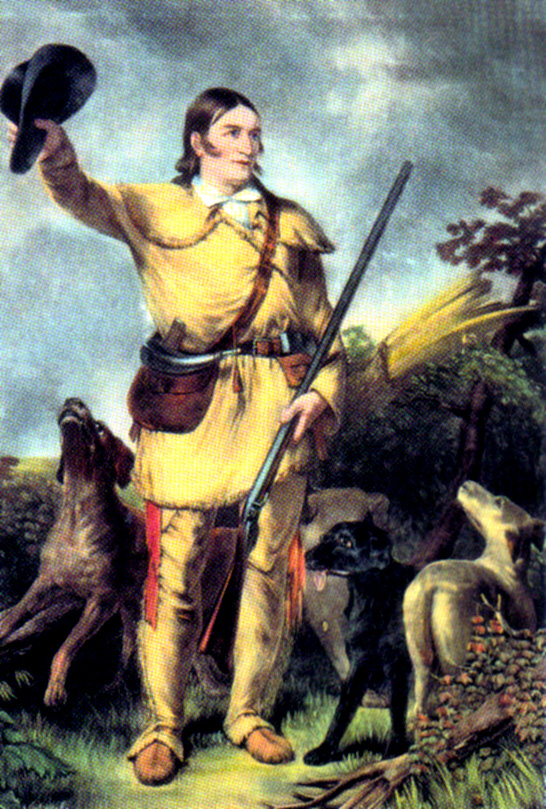
Davy Crockett
Here’s someone that exists within the pages of recorded history, but whose legends have completely outstripped him and left him in the realm of myth and story. Davy Crockett (1786 – 1836), the famous statesman, frontiersman, and tragic hero of the Alamo, was known for spinning tall tales about himself and presenting a bigger-than-life persona to those around him. Many of the stories about him pit his cunning, rough, backwoods wit against a more polished Washingtonian bureaucracy or performing clever tricks to gain the trust and support of those around him. In one such tale related by S.E. Schlosser, Crockett attempts to gain some votes by buying drinks for his supporters, but finds himself low on funds. He immediately goes out, shoots a raccoon (another trickster), and brings the skin back as payment for the booze. He then surreptitiously steals the skin, and uses it over and over to buy more and more drinks for the swelling crowd eager to support their new drinking buddy in his political campaign. Crockett lived and died a legend, and to some extent, a rather clever trickster.

Where to Find Him: In the mountains of East Tennessee (where he grew up), cities like Alamo, TN or Fort Crockett near Houston, and of course, the Alamo.
Suggested Offerings: Good Tennessee whiskey, animal skins, equipment like pocket knives or compasses (owing to his frontiersman nature), a recording of his famous song, jokes, or if you’re feeling a bit silly, a coonskin cap.
Works Well For: Situations in which bravado and bravery are required, political aspirations, hunting and trapping, putting on an air of success and triumph.

Stagolee
Another of the ‘based-in-history’ type of trickster heroes is Stagolee, whose legend as a fierce and amoral figure made him an inspiration to many enslaved African Americans in the nineteenth century. His origins may come from any number of men with names similar to his, such as Stacker Lee of Missouri, who killed a man for trying to steal his hat, which was reportedly imbued with shapeshifting magical powers. He’s certainly a man who doesn’t seem to care who gets hurt, so long as he gets his own way, but his callousness is a very thin mask for the bubbling frustration felt by millions of enslaved people who so desperately wanted the type of freedome Stagolee represented. The legends say that Stagolee left the plantation where he was born at an early age, carrying only a guitar on his back (to play blues and seduce women),  a deck of cards in one pocket (so he could win money whenever he needed it), and a .44 pistol in the other (in case he didn’t much like someone, or a card game wasn’t going his way) (Leeming & Page). Stagolee veers into the realm of tall tale as well, and most of his tricksy aspects have to do with the hyperbolic ways in which he confronts various people of authority. A sherrif who tried to arrest him once found out the hard way that he was not a man to be messed with. Stagolee hit him with an upper cut, drew his gun, shot the sherrif three times, put his gun away, finished his drink, and walked out the door before the sherrif’s body hit the ground. One of his victims (the one who tried to steal his hat), had a widow whom Stack immediately married following the funeral. I’m not sure if that qualifies as a trick exactly, but it sure seems like some slick work to me.

Where to Find Him: First of all, I’m not entirely sure you want to find him, but if you do, he was reputed to have spent much time in Memphis and St. Louis. I imagine another good place to look for him would be dive bars and places with unsavory characters aplenty. A word of caution here—he did not care for white men in his lifetime, and so there’ s no reason to think he’d be much likely to start working with white men now.  Connect with him at your own risk.
Suggested Offerings: Booze. He had a legendary thirst for whiskey and moonshine, so these are good options. You might also consider leaving him a nice Stetson hat, some bullets and/or gunpowder, or deck of playing cards.
Works Well For: Black empowerment, any situation which requires you to overcome authorities, any sort of mercenary magic, getting revenge on enemies, overcoming legal hurdles, and anytime you think you might need a little help in a fight.

Clever Jack
You know Jack, don’t you? Jack of Jack and the Beanstalk made his ways over to America by way of the British Isles and found a new home in the stories and tall tales of the Appalachian Mountains. Combining a bit of foolishness with a bit more cleverness and a lot of luck, Jack manages to get himself in and out of scrapes varying from the aforementioned beanstalk (or bean tree as it’s sometimes called in the mountains), outwitting the Devil, or rising above the meager poverty in which he almost always begins a story. Frequently, the cunning hero is called upon to perform incredible tasks, and most Jack tales involve him embarking on a quest away from home and eventually meeting a girl whom he marries (frequently a king’s daughter). Jack’s often helped by strange old men on his journeys, as in “Soldier Jack” or “Jack and the North West Wind.” He seems to like being able to provide for his family, especially his oft-suffering mother, and a good meal means a lot to him.

Where to Find Him: This is a litte tough, as his location is always changing. Generally speaking, though, roads and pathways are a good place to try and contact him.
Suggested Offerings: A big plate of food, especially mountain fare with lots of veggies, biscuits, and other vittles. He’d probably enjoy a nice jar full of mountain dew (aka moonshine) as well.
Works Well For: Anything where you need a lot of luck on your side. He’s always coming through by the skin of his teeth, so situations where you need a little push from Lady Luck are his specialty. Likewise travel and journeys have his special blessing, and anything involving pulling a little gold and silver (or your money of choice) into your life could use his help.

John the Conqueror
If you’re a regular reader of this blog, you’ve probably seen me post about John the Conqueror root before. That root is allegedly named after an African American folk hero, a slave who refused to accept subservience and used his tremendous cleverness and skill to perpetually rule his master, although his master never seems to know it. Zora Neale Hurston publicized this character fairly strongly, even giving him his own section of her book The Sanctified Church. She also includes a story about him as the opening tale in her (essential) book Mules and Men. In this story, John must fetch water for his master in the middle of the night, but sees a frog which he thinks is a ghost and flees without collecting the water. John is portrayed as foolish and sycophantic, but in reality he manages to convince his master not to send him out in the middle of the night, thus getting his way in the end. John’s cleverness and power waxes and wanes depending on the tale, sometimes reaching the nearly mythical levels of a John Henry or a Paul Bunyan, but often showing him as more a man of brains than brawn.

Where to Find Him: This one’s tough, as many of the tales take place on plantations in the South (which would be a good suggestion, but rather limiting). He periodically takes trips on roads or rivers, though, so I think those might be reasonable as well.
Suggested Offerings: A High John root, some whiskey or rum, and money.
Works Well For: Outwitting superiors (like bosses), getting your way in an argument, travel and freedom.

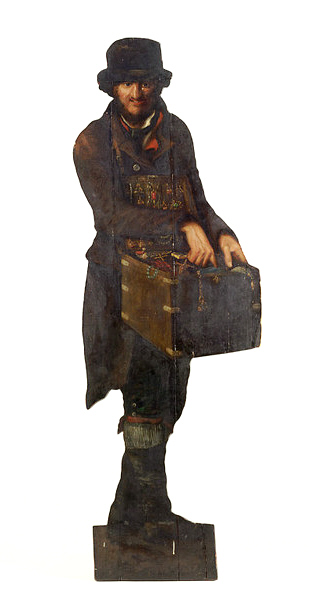
The Yankee Pedlar
Our final fellow is a trickster figure who appears in the 19th century and who becomes somewhat ubiquitous in the post-Civil War folklore. He is more of a con artist with a silver tongue than a practical joker, and frequently his buyers and audience know that they stand a good chance of being tricked or played upon by his sharp wit, but the opportunity to trade barbs proves too strong to resist. In a tale from the 1850s, a pedlar and a group of local townsfolk get into an exchange. The pedlar manages to flatter the ladies and outfox the men, who accuse him of selling useless items like “goose yokes” and “wooden nutmegs.” He does not deny the charges, but instead notes how well such things sell in that part of the country and implies that perhaps they would like to keep up with the yokel Joneses by placing an order with him (Leeming & Page, 143).

Where to Find Him: Places of commerce and exchange, such as marketplaces. The road (or other commercial travel route).
Suggested Offerings: Money (including fake money to play on his tricky side). Knick-knacks and small collectibles.
Works Well For: Business-related matters, especially if you want to get the most out of the customers who come to you. Also good for con artists.

So that’s my “short” post on some American trickster figures. I hope that if nothing else, they’ll inspire you to look at their stories and learn more about them. They’re all quite interesting and funny, and really open up the field of lateral thinking to a new level.

I hope this post felt worth the wait! Until next time…

Thanks for reading!

-Cory

Blog Post 145 – Wart Charming

The image of the fairy-tale witch often comes complete with a big, nasty wart perched at the end of her nose. The association of witches with warts could come from a variety of folk beliefs and superstitions: the close ties between warty toads and witches, the idea of a ‘devil’s mark’ which the witch uses to suckle her familiar, or even just a desire to make a something ugly out of something ‘evil.’ The association is not always a purely negative one, however. Folk magicians in the New World (as well as those in the old, though I’ll not be addressing them here) have a long-standing history of curing warts through magical means. In fact, that is frequently one of the most commonly found magical services provided by a community magician (or faith-healer, traiteur, pow-wow, etc.).

Today I thought it would be good to look at a few different methods, stories, and charms associated with wart-removal in American folk magic. I’d like to start in Pennsyvlania-Dutch country, with some of the wart charms found in Chris Bilardi’s The Red Church:

WARTS, CORNS (GEWECKS, GEWEX, WARZ)

[Do whole body Brauche treatment to eliminate any root causes of warts. Bilardi then gives an extensive treatment involving the mimicking of cutting the wart off using an imaginary knife, a process I will refrain from detailing here as it is somewhat lengthy and I’d rather encourage you to buy his book by leaving a little mystery to it…]

To remove warts using the moon: instruct the patient to go somewhere s/he can observe the moon. This is one of the very few wart charms that utilize the waxing moon. Once the moon in in sight, the afflicted wil say:

‘Was ich raib, nem ab; was ich sen, nem tsu.’
English, ‘What I rub, decrease; what I see, increase.’

The Brauche is done three nights in a row. This is begun two nights prior to the moon being full (251).

In the braucherei tradition, then, there is a sense that warts have a spiritual side, hence the full-body treatment before the specific attempt to cure the wart and the influence of lunar cycles on wart growth or removal. Yet they are also a practical matter, dealt with by simple folk magic and a relatively unassuming charm. Other methods listed in The Red Church:

  • Rubbing warts with cloths that have touched a dead body
  • Scratching a wart with a coffin nail
  • Rubbing the wart with a freshly killed eel or rooster, then burying the body part under the eaves of one’s house
  • Rubbing the wart with pebbles which are then thrown into a grave
  • Using a red string with as many knots as there are warts, rubbing each wart with a knot, then burying the string under the house’s eaves (252-3):

Moving down into the Appalachians, there are a number of variant methods for dealing with warts that parallel—if they don’t exactly duplicate—the methods described by Bilardi. In the hills of West Vriginia, we find these wart cures from Patrick W. Gainer’s Witches, Ghosts, & Signs:

  • To cure warts, wash your hands in stump water.
  • A ninth son can remove warts.
  • Drop dirt from a newly-made grave on a wart and the wart will disappear.
  • To cure warts, pick them with a pin and bury the pin.
  • To cure warts, take a hair from the tail of a gray horse and wind the hair around the warts.
  • To cure warts, steal a dishrag and rub it on the warts, then bury the dishrag. When it rots, the wart will disappear.
  • To cure warts, cut as many notches in a stick as there are warts, throw the stick in a swamp, then bury the dishrag.
  • To cure warts, rub a rock ovr the warts, wrap it in a neat package and throw it away. Whoever finds the package will get the warts.

Already we can see some patterns developing in wart cures. There are essentially three methods which appear over and over again: 1) Rubbing the wart with something and burying it to decay the wart, 2) Scratching or pricking the wart and disposing of either the scratching implement or something marked with blood from the wart, and 3) Passing the warts to someone else in a variant of magical commerce. There are exceptions or variations in each of these, of course. The corpse-touching method might be seen as a way of passing the wart to the corpse, but it may also be seen as symbolically burying it. The stump water method doesn’t fit neatly into any of these categories. And the notion of a ninth son removing warts is strange, as it does not indicate exactly how they are able to do this (I mentioned in the post on Coins that my brother-in-law’s grandfather could charm warts using pennies because he was the seventh son of a seventh son, but that may be more specific to our region).  From these three methods, most other treatments become variants, though exceptions do still occur.

Exchanging the Appalachians for the Ozarks, we find more variants of this type, and a few new tricks. From Vance Randolph’s Ozark Magic & Folklore:

  • He mentions the notched stick method referenced above, but also adds “bury the stick on the north side of the cabin and never mention it to a living soul”
  • Suggests using an onion for a wart cure: cut the onion in half, rub the wart with one half and bury it, then eat the other half. When the onion rots, the wart disappears.
  • Spitting on a hot stovelid, once for each wart, gets rid of them
  • Letting a grasshopper or katydid bite a wart will make it go away
  • Touching a wart with the hand of a corpse will remove them

Here again we have the burial method, the pricking/bleeding method (with the grasshoppers), and the transference method (with the corpse). But we also have the novel stove-top method, which is interesting to me because of the mixture of sympathetic and contagious magic it contains: the spittle on the hot stove looks like a wart sizzling away into nothingness (sympathetic) and it is the spit of the person with the wart which is evaporated (a sort of inverted contagious magic).  Randolph also includes an interesting charm associated with the corpse method:

At the funeral of a close friend, a ‘warty feller’ is supposed to touch his warts and repeat the following jingle:

They are ringing the funeral bell,
What I now grasp will soon be well,
What ill I have do take away
Like jn the grave does lay.

This is believed to benefit tumors, sores, boils, and even cancers as well as warts. (131)

In my Apples post, I cited some Kentucky lore about using that fruit to do the rubbing-and-burial method. A reader mentioned that they had heard something similar to that technique, only using potatoes (which I’ve also heard as well, especially in relation to Irish folk magic or some Appalachian charms). The book I cited, Kentucky Superstitions, mentions the potato method, and also has these interesting variants on wart charming:

  • There are a number of ‘burying’ charms, involving the interment of things like beans, steak, bacon, peach tree leaves, potatoes, walnuts, etc.
  • ‘Picking’ cures are also popular, in which a wart is bled by puncturing it with a brass pin, corn kernels, needles, etc.
  • A variety of substances, including cat’s blood, coffee grounds, dandelion juice, eggs, fish, goose feathers, chicken gizzards, etc. are also rubbed on warts to remove them
  • One of the most popular and common cures involves bleeding the wart, dabbing the blood on corn kernels, then feeding those to chickens—especially a neighbor’s hens—to remove the offending blemish
  • Lemon juice or milkweed are supposed to be good cures for warts
  • Warts can be charmed off by some people with a gift for doing so; some are able to ‘count’ warts off, others can pray them off, and still others ‘buy’ the warts off of someone
  • Warts can be magically passed to another person by leaving them at a crossroads; simply leave a paper spotted with blood from the wart in the middle of the crossing, and walk away without looking back; whoever picks up the paper picks up the warts
  • The stick-notch method or knotted cord method are two popular remedies for warts in which the number of warts is counted by notching a stick or tying a cord, then the burying it or dropping it into running water (121-30)

The corn method is something I found in several places, including Harry M. Hyatt’s Folklore of Adams County. In many cases, the corn must be fed to a neighbor’s chicken, which makes me think it is another technique for passing the warts to someone else, just in a very roundabout way. Hyatt also mentions many of these cures in his books, and offers an interesting addition to the bark-notch method of curing: “I know this works, for my daughter had a wart. She tried several things, and this took her wart away: walk up to a young apple tree — if you have a wart — walk around to the opposite side and cut two notches in the bark, then rub your wart over the two notches, then walk back the same way you came; when the bark grows over the cut places, your wart will be gone” (146).

As always, there’s much more to say on the subject of charming warts, but hopefully this gives a nice broad look at the subject. I need to be very clear, of course, that none of the charms, lore, techniques, or superstitions here are presented as medical advice—a good doctor can freeze a wart off without making you go through the trouble of finding an eel to kill or figuring out which of your neighbors might have some hungry chickens around. But for those interested, wart charming seems to be a simple way to get into traditional folk magic, and who knows, you might just have a knack for it. At the very least, hopefully the warts on that old witch’s nose in the storybook won’t seem so scary anymore.

Thanks for reading!

-Cory

Blog Post 144 – Walnuts

“As soft as silk,
As white as milk,
As bitter as gall,
A strong wall,
And a green coat covers me all”
Walnut riddle from H.M. Hyatt, Adams Co., Entry No. 14379

Continuing with the Thanksgiving ingredient theme (i.e. Apples), I thought today it would be good to look at a fairly common tree and nut that has been woven into magic for hundreds of years. I’m speaking of course of the unassuming but delicious walnut which tops brownies, finds its way into salads, and makes a delicious candied treat. Don’t worry, though, my next topic will not be mayonnaise and I am not subtly leading up to any kind of enchanted Waldorf salad.

I’d like to briefly start in the Old World and mention a legend which had some influence on 19th-century occult folklorist Charles Leland. In “Neopolitan Witchcraft” by J.B. Andrews and James Frazer, a rhyme appears which translates roughly:

Beneath the water and beneath the wind,
Beneath the walnut trees of Benevento,
Lucibello bring me where I need to go.

This charm would help a witch magically fly to her Sabbat, supposedly. The idea of witches gathering beneath a walnut tree in Benevento, Italy clearly impacted Leland, who includes a tale in his “witch gospel” Aradia called “The House of the Wind” (which is what Benevento means in English). [EDIT: See comments below for a correction on this translation] Myth Woodling, who runs a marvelous set of pages on Italian folk magic and witchcraft, has this to say about the walnut:

Walnut shells, in Italian fairy tales, were often used to contain something precious or magical. A walnut branch was said to protect one from lightening. There were stories of witches and spirits gathering under walnut trees”

In the New World, walnuts gained a number of powers and attributes, while the lore about walnuts and lightning becomes reversed, as found in Vance Randolph’s Ozark Magic & Folklore, where he tells how black walnuts are now thought to draw lightning and hillfolk refuse to plant these trees near their homes for that reason (72). Some of Randolph’s other interesting tidbits about walnuts are here:

  • “A big crop of walnuts indicates cold weather to come” (26)
  • A good season for tomatoes is a bad season for walnuts (39)
  • Fresh walnut leaves scattered about the house can deter insects (68)
  • Walnut shells must not be burned, or bad luck will come (71)
  • The juice of a green walnut can help cure ringworm (110)
  • “The shell of a black walnut is supposed to represent the human skull, and the meat is said to resemble  the brain, therefore people who show signs of mental aberration are encouraged to eat walnuts. I know of one case in which an entire family devoted most of the winter to cracking walnuts for a feebleminded boy. They kept it up for years, and I believe the poor fellow ate literally bushels of walnut goodies” (114)
  • “A mountain girl of my acquaintance placed a lock of her hair under a stone in a running stream,  believing that the water would make her hair glossy and attractive. Another way to promote the growth of hair is to bury a “twist” of it under the roots of a white walnut tree, in the light of the moon” (165)

Similar lore exists in the Bluegrass State of Kentucky, with the addition of magical wart charming ascribed to the humble walnut. Daniel & Lucy Thomas, in their Kentucky Superstitions, say that green walnuts can be rubbed on warts, then buried to charm the wart away. This makes for an interesting variant on the standard wart-charming method of cutting a fruit or vegetable in half before using it to cure the wart (but I’ll address those ideas in a different post entirely). Heading into Illinois, Henry Hyatt reports a mix of magical and medical uses for walnuts:

  • Thin walnut shells mean a light winter, while thick shells mean a heavy one
  • A black walnut carried at all times prevents headaches
  • A mixture of boiled walnut leaves, water, and sulphur makes a powerful anti-itch wash
  • Dreaming of opening or eating walnuts means money is coming soon

In this latter example, we can see the walnut being used as a divinatory aid, which makes sense when we think of the strong ‘brain’ association with the little wrinkled nut (since it has a brain, it must know something, so why not the future, right?). Hyatt also shares a lovely little love divination with walnuts:

9033. Her future husband’s occupation can be learned by a girl who grates three nuts — a hazelnut, nutmeg and walnut — mixes these grated nuts with butter and sugar, makes pills of this paste, and swallows nine of them on going to bed: if she dreams of wealth, she will marry a gentleman; of white linen, a clergyman; of darkness, a lawyer; of noises, a tradesman or laborer; of thunder and lightning, a soldier or sailor; and of rain, a servant

This sense of a walnut as a ‘knowing’ curio seems to be tied again to its brain-like appearance, but also with the idea of the little nut containing some special knowledge the way it contained magical charms in an Old World context. The tree even seems to know what is growing around it in some cases. Patrick Gainer says that the presence of a white walnut tree indicates ginseng growing underneath it (120).

Another key use of the walnut in magic has to do—or at least I think it does—with its bitterness and perhaps the deep blackness of the flesh surrounding the nut. Walnuts can strip away negativity nearly as well as eggs, lemons, salt, or any of the other major magical cleansing agents. Draja Mickaharic includes a cleansing bath which uses walnuts in order to sever ties with an unwanted person or influence. He warns that it can only be used once, and that going back to the person after ties are severed will have dire results. The basic formula involves boiling six unshelled walnuts in a pot for three hours, adding water if needed. After that time, there will be a black broth that should be added to a bathtub, and the person using the bath should immerse themselves seven times in it, saying prayers as appropriate (Spiritual Cleansing 58).The dark color absorbs all negativity, and the galling nature of the fruit works the way a lemon does to sever evil from one’s person. Cat Yronwode suggests a similar bath to Mickaharic, adding the important step of disposing of the used bathwater at a crossroads. She also indicates that walnut leaves can be used in a spell to hurt an enemy’s luck (Hoodoo Herb & Root Magic 205).

One use for a walnut I’ve never seen but which I really think would be interesting to try would be as a head for a doll baby working. Considering the brain associations and the fleshiness of the fruit, I’m not sure why this is not a common-place use of the walnut, but c’est la vie. If you happen to know why they’re not used in doll magic, I’d love to hear it! Or if you have any other uses of walnuts in New World folk magic, please feel free to share!

Thanks for reading!

-Cory

Blog Post 143 – Apples

Inside a red barn,
A white star…
-Part of a riddle, the solution to which is “an apple”

Do you remember that moment in Snow White & the Seven Dwarves when the evil Queen is using all manner of occult ephemera to poison a single apple which she will use to kill Snow White? What about all those baroque and medieval paintings of the Garden of Eden showing a dispassionate Eve holding a bitten apple in one hand? Or the Greek myth of the golden apple given to Prince Paris of Troy that he might award it to the fairest of the goddesses (thus sparking the Trojan War).

Apples appear throughout folklore and myth as symbols of magical power, sacred knowledge, and intoxicating sweetness. American lore has its own apple-toting legend in the form of John Chapman, a.k.a. Johnny Appleseed, who crossed the upper Midwest planting apple orchards as he went (Michael Pollan’s excellent book The Botany of Desire explores how Chapman—a mystical Christian practicing a philosophy called Swedenborgianism—actually planted orchards not for eating apples, but for making hard cider, thus linking him to the magical practice of brewing as well).  Today I thought I’d look at some of the magical manifestations of this ubiquitous fruit. After all, it is as American as, well, apple pie.

I’d like to start with some of the apple lore and superstitions found in Vance Randolph’s Ozark Magic & Folklore, primarily because I love one of the first tidbits I found:

  • “A bad woman can’t make good applesauce” (65)

I have no idea about the veracity, implications, or thought processes behind this statement, but it was just too wonderful to pass up. So if you can’t make good applesauce, you should clearly consider it a moral failing of some kind. Randolph also lists a number of other bits of common apple lore:

  • A goiter can be removed or reduced by rubbing it with half an apple, burying it in the cemetery, then eating the other half (148)
  • Two apple seeds, named for a boy and a girl, dropped onto a hot shovel can predict love. If they move closer together, they will marry; if they part, the love will not last (184)

I’ve covered a bit of the love magic involving apples in another post and podcast episode, but this latter method is one I’d not seen before, and has a very ‘country’ feel to it. Listener and fellow folk-magic blogger Claire shared that instead of peeling the apple in one strip, she and her childhood playmates would twist the stem, saying a letter with each twist, until the thing came loose revealing the initial of one’s future beau.

Many of Randolph’s recorded superstitions can be found in other places as well, such as these wonderful examples from Kentucky folklore:

  • Breaking an apple in two means luck in love (especially if you “name” the apple for someone special)
  • An apple peel removed in a single strip then tossed over the shoulder will land in the shape of a lover’s initial
  • Apple seeds can be counted like flower petals in the “loves me, loves me not” style
  • Apple seeds are used to tell which direction a lover will come from by spitting them in the air, or can be used to divine how long it will take before one sees a sweetheart again by slapping a handful against one’s forehead—the number that stick are the days until the lover arrives.
  • Naming apples on Halloween and then bobbing or playing ‘snap-apple’ for them predicts a future mate
  • Finding twinned apples (or any fruit really) on a tree means a marriage soon
  • Warts can be cured with apples, either by burying an apple and saying ‘As this apple decays, so let my wart go away,” or by scarring an apple tree’s bark—when the bark grows over, the wart will disappear
  • Apples gathered in moonlight will not bruise or rot
  • “If you can break an apple with your hands, you will always be your own boss”

(from Kentucky Superstitions, by Daniel & Lucy Thomas)

Vance Randolph also references the wart-removal charm which involves cutting notches in an apple tree, although in this case it’s a stranger’s apple tree and done in secret, as ‘stolen’ things have tremendous magical curing power (130).

Henry Middleton Hyatt also has several pieces of folklore about apples, some of which contradict the Kentucky beliefs above:

  • Apples which fall in moonlight get ‘soft-rot,’ while apples falling during a dark moon get ‘dry-rot’
  • If you want your next calf to be a female, bury the placenta from the most recent calf birth under an apple tree
  • Girls eat the first apple of June and count the seeds to see how many children they will have
  • Eating ‘twinned’ apples is said to cause twin births
  • Rubbing a piece of apple over a newborn’s tongue ensures that they will have a beautiful singing voice
  • Apple peels, especially those in June, can be rubbed on the face to improve complexion
  • Eating an apple on an empty stomach on Easter ensures good health
  • Menstrual flow can be regulated by boiling the inner bark (or cambium) of an apple tree
  • If you always burn your apple peelings you will never have cancer

Hyatt also reiterates the wart cures involving rubbing sliced apples over the wart and burying them, usually under the eaves of a house (Folklore of Adams County, 146).

In New England, apples also have a love association, as well as some rather more foreboding connotations. The excellent blog New England Folklore provides a wonderful rhyme for counting apple seeds here. The blog author, Peter M., also shares a bit of the darker lore of apples, including the strange coincidence of deaths with apples in New England lore. And what could be creepier than an apple tree eating a person?

Finally, looking towards the deep South and the folk magic of hoodoo, I found that the apple can be used for a variety of purposes. Cat Yronwode suggests using the apple as an agent in sweetening spells, especially those for love. She points out that it can be used as a receptacle for sweetening agents like honey or sugar and it provides sweetness itself in the spell (Hoodoo Herb & Root Magic, 32-3). Denise Alvarado mentions that the Voodoo lwa known as Papa Guede appears as a skeletal figure with a tophat and an apple in one hand in her Voodoo Hoodoo Spellbook. And then there’s this very interesting spell involving apples and court-case work:

Take green and yellow candles, enough to last for nine days, and with a sharp object write on them the names of the chief prosecution witness, the judge, and the district attorney, in that order. Burn the candles upside down to ‘upset the heads’ of these people. Bore a hole in each of three apples and put the name of each of the three above-mentioned persons in the apples. Set them before the candles while they burn the requisite nine days. At the end of nine days take the apples to the vicinity of the jail. Roll one from the entrance, one from the right side, and one from the left side, thereby rolling the prisoner out of jail (Haskins, Voodoo & Hoodoo, 185).

This spell is supposed to be used during an appeals process or after a new trial has been ordered. Perhaps it is tied to the sweetening effect mentioned by Yronwode as a way of urging a new judge or jury to look upon your case favorably?

In any case, the apple has certainly earned its place in American magical lore. If you know of other magical uses for the apple, feel free to post them here. And next time you’re eating an apple, do as the wicked queen suggests—make a wish, take a bite.

Thanks for reading!

-Cory

Blog Post 142 – Coins

Coins as magical objects in folklore are ubiquitous, appearing in multiple forms and for multiple purposes. Just think of the common-place act of flipping a coin, which is essentially allowing chance (or Fate) to decide the outcome to a given situation. People frequently carry lucky pennies or coins from their birth year to provide a little extra good fortune in their lives. Many people collect coins from foreign lands because of their exotic and seemingly mystical nature (the I Ching coins of Asia are a good example). Today I thought I’d take a very brief look at magical coins in American folklore. I’ll primarily focus on two key denominations, the dime and the penny, though these will be entry points for examining other aspects of coin magic, too.

Silver Dimes
The most famous of these magical coins is the “Mercury dime.” While actually inscribed with a picture of embodied Liberty, the idea of Mercury has long been attached to this coin. Cat Yronwode says “this makes sense, because Mercury was the Roman god who ruled crossroads, games of chance, and sleight of hand tricks” and associates him as well with Papa Legba (Hoodoo Herb & Root Magic). Coins from a leap year between 1916 and 1946 are especially lucky. Yronwode lists it as among one of the most potent hoodoo tokens, and tells of its uses in aiding gamblers, helping one get a job, or fighting off evil. In this last capacity, the easiest method is to simply punch a small hole in the dime and tie it with a red thread around one’s ankle. The dime will turn black in the case of magical attack, simultaneously deflecting it and warning of its presence. In her book Black Magic: Religion & the African-American Conjuring Tradition, Yvonne P. Chireau mentions this use of the dime, along with several other forms of dime divination, including boiling the dime with items suspected to be tricks to see if they contained malefic magic. According to Chireau, a person suspected of being jinxed could put a dime under his or her tongue to detect the presence of evil work, too.

Silver coins in general are thought to be useful in counteracting witchcraft.  From A Collection of Folklore by Undergraduate Students of East Tennessee State University: “The method to ward off witches was to carry a piece of silver money or to wear a piece of silver on a string around the neck. The coin most commonly used was a dime” (64). In a story called “A Doll and a Bag of Money,” from The Silver Bullet by Hubert J. Davis,  a woman named Aunt Nan Miller tells a tale in which a bag of silver and gold coins magically comes to her. One of those silver coins later saves her family when they melt it down and use it to shoot a doll of a witch who has been plaguing them.

A silver coin placed under a butter churn could help counteract minor witchcraft and get butter to come unless the spell was severe. In that case the milk was scalded in fire or whipped with switches to torment the witch spelling the churn. An informant cited in Gerald C. Milne’s Signs, Cures, & Witchery seemed to think that the coin should be heated to a high temperature and added to the churn, and that the presence of the words “In God We Trust” on the coin had something to do with its power, though that would only date the practice to the 1860’s, when that motto first appeared on U.S. coinage.

The presence of silver in the coin seems to be its key to potency, as modern dimes (those produced after 1963 when the U.S. Mint drastically reduced the silver content of the coins) are not frequently used to the same effect.

Lucky Pennies
The concept of the lucky penny is widespread in America. I even have a lucky penny keychain given to me by my younger brother from a trip he made to Las Vegas. They apparently sell them in the casino lobby.  Patrick Gainer describes a lucky penny worn as a podiatric accessory: “If you wear a penny in your shoe, it will bring good luck” (Witches, Ghosts, & Signs 123). This is quite likely the origin of penny loafers. And of course, there’s always the nursery rhyme/thinly-veiled-bit-of-witchery:

See a penny, pick it up,
All the day you’ll have good luck.
See a penny, let it lay,
Bad luck follows you all day (this is my own recollection of the rhyme, and there are many variants of it)

The “Indian Head” cent, a copper coin produced between 1859 and 1909 in the United States, is thought to be an especially useful incarnation of the lucky penny, able to perform almost conscious acts of magic on their own. Yronwode describes them as ‘Indian Scouts’ which can be used to keep the law away from your property (especially if you are engaged in illicit activity). The easiest way is to simply nail them around doors or windows. One method described by Yronwode has the penny being placed between two nails which are then flattened into an ‘X’ shape over it to cross out the law’s power to find the place.

Yronwode’s Lucky W Archive has a very in-depth study of lucky coins, including the penny, which I will avoid quoting as simply visiting her site will provide far more insight than any summation I can give here. We also discussed lucky pennies and coins a bit in Podcast 13 – Lucky Charms, so give that a listen, too.

Magical coins aren’t solely limited to these denominations, of course. The more general idea of a magical coin appears in a variety of literature and folklore. In Melville’s Moby Dick, for example, Captain Ahab nails a coin to the mast of the ship as a temptation to the men to seduce them into his quest for the white whale. This is related to maritime folklore in which coins would be nailed to the mast for good winds and luck (American Folklore 962). From Hubert Davis comes the story of Pat  who tricks the Devil into becoming a coin to pay a bartab and then puts him in an enchanted purse (this is a variation on a Jack tale in which Jack outwits the Devil—in the Jack variants he frequently uses a Bible or something marked with a cross to contain the Devil). Pat refuses to free him until the Devil promises never to take Pat to hell. This becomes the story of the Jack-o-Lantern in some versions, of course (Davis 163-166).

One of the most interesting applications of magical coins I’ve found comes out of Appalachia (and has precedents going back further) and has to do with curing warts. People with a certain gift could rub a person’s wart with a coin, usually a penny, and then tell him or her to spend the penny and thus give away the wart. My brother-in-law’s grandfather reputedly had this ability, being the seventh son of a seventh son. He had an upstanding reputation as a good Christian man, but he was able to do both wart charming and well dowsing, showing (to me at least) that magic can easily transcend religious barriers. This sort of curing is also described in Milne’s book, along with other wart cures favored by Appalachian healers (Milne 159). Coins can also be used to pay the dead who work with you; my own teacher taught me that graveyard dirt should be bought with three pennies and a shot of whiskey or rum. And a court spell from Voodoo & Hoodoo by Jim Haskins also mentions the coin as a useful component of love spells, particularly ones which require someone to stick close b you physically (Haskins 185).

There are many other bits of lore regarding coins and magic, of course, but sadly I must draw this entry to a close somewhere, and for now I think it’s best to cash out here. If you have good magical uses of coins, please feel free to share them!

Thanks for reading,

-Cory