Blog Post 98 – Critter Bits (Magical Animals, Part III)

So I had mentioned a couple of weeks ago that I wanted to talk a little about the use of animal parts in magic.  Animals and magic have gone hand-in-hand for a very long time.  The reading of entrails from ritually slaughtered animals has been used as a divination technique since at least the pre-Roman era.  Talismans designed to imbue the carrier with the particular power of an animal were often made from that animal’s fur, bone, or skin.  Owen Davies chronicles the frequent use of virgin parchment—a type of scroll medium made from a highly treated animal skin, usually from a creature like a lamb or goat—in the construction of ancient Near Eastern and Mediterranean grimoires (in his book appropriately entitled Grimoires).  The thought was that this particular material would endow whatever was written on it with an extra layer of power, thereby charging sigils, elevating incantations, and generally adding a little va-voom to the inscribed workings of magicians.

On North American soil, many of the old rituals and magical practices found in places like Europe and Africa took root.  Some of them changed quite a bit as they grew here, and some stayed more or less recognizable.  I thought a brief survey of the common animal curios used in witchcraft—both folklorically and practically—might be a good way of seeing the connection between critters and crafting.  Please take note now, I AM NOT ADVOCATING THE INJURY, SENSELESS SLAUGHTER, TORTURE, OR HARM OF ANY ANIMAL.  This information is for educational purposes.  If you choose to use this information in your own practice, please do so responsibly and without resorting to cruelty.  There are lots of ways to gather magical tools and ingredients from animals which are already dead (see Ms. Graveyard Dirt’s excellent site for some great examples).  Okay, now that that’s out of the way, let’s look at some of these critter bits:

1)      Rabbit’s Foot – We’ve covered this here in the podcast (on Episode #13) and the blog (in the Lucky Rabbit’s Foot entry), so I won’t spend a lot of electrons on it here.  It suffices to say that the rabbit’s foot remains one of the most popular luck charms in the canon of animal curios.  It may have significant underworld ties, and it may simply be related to speed and fertility. Whatever its originally intended meaning, it stands for good luck now, especially in gambling.

2)      Toad’s Bone/Black Cat Bone – These are some of the darkest and most disturbing of animal curios, as the rituals required to obtain them are brutal.  The Toad’s Bone is mostly found in British magical lore, and was written about extensively by Andrew Chumbley, former Magister of the Cultus Sabbati.  Scholar Ronald Hutton also details the significance of this bone to members of the Toadsmen, a secret society along the lines of Freemasonry, in his excellent history of modern witchcraft Triumph of the Moon.   This ritual artifact was obtained (at least in one version—there are multiple ways this ritual can play out, depending on what source  you look to) by burying a toad alive in an anthill and letting the ants  strip it down to the bones.  The bones are then taken to a stream and floated one by one until one bone floats agains the current.  This bone is then the magic bone, and can imbue the witch carrying it with all sorts of interesting powers from spirit summoning to invisibility.  The black cat version of this same rite is even more gruesome.  As it is recounted in Mules & Men by Zora Neale Hurston, the cat is thrown into a pot of boiling water (also alive), and cooked until all the flesh falls from the bones.  The bones are then either floated in a stream (the same as the toad’s bones) or passed under the tongue of the magician.  The magic bone in this tradition turns the user invisible, and can also be used in some powerful love spells.  Most places selling this bone today are actually selling chicken bones painted black, and hopefully few people are actually performing this ritual as it occurs in folklore.  Again, I don’t condone this rite, and present it as a curiosity of history and culture rather than a suggested magical practice.

3)      Racoon Penis Bone – This is a popular charm in hoodoo, used in luck and love magic.  The bone itself, which is usually very thin and has a curved shape, has no disturbing ritual for obtaining it, but can simply be taken from an animal killed for meat or even from a roadkill hit (though I’d suggest being very careful how you handle remains of this nature, as they can often be riddled with diseases).  Cat Yronwode suggests that this particular curio entered American magical practice by way of Native American sources, and points out that the Pawnee often placed these bones along with ears of corn into sacred bundles.  I’ve heard that in the Appalachian and Ozark Mountains, it was common for boys to give girls these bones on red thread necklaces as love tokens (though I’ve not yet found a primary source for this claim).  Raccoons are not the only animal to have this bone—or “baculum”—and in fact many mamal species have it.  Other animals like foxes and dogs also have these bones, and occasionally these will turn up in magical charms, too.

4)      Rattlesnake Rattle – Snakes in general have a lot of lore about them, but the rattlesnake is particularly of note because its rattlemakes it a unique member of its family.  The rattles themselves have been collected for years as lucky charms.  Cat Yronwode suggests uses including:

  • A charm to help musicians play well
  • A simple “Live Things in You” curse
  • A personal power token
  • A gambling charm to bring luck

Rattlesnake rattles are fairly delicate things, especially once they’ve been dessicated for use in crafts and magic.  You can occasionally find one which has been turned into a key ring or charm, but the best way to handle these is to put them in a little vial or a small box of some kind and carry that with you.

5)      Snake Fangs/Bones/Skin – As I said earlier, snakes generally have all sorts of magical connotations.  You can look back at our blog entry on them (Snakes) and find out a good bit there, but here are some highlights:

  • Fangs can be worn as necklaces or carried as tokens of protection (from snakebite in some cases)
  • The bones or skin can be powdered and added to food to cause a “Live Things in You” curse
  • The skin of a snake soaked in vinegar can be used to treat boils in the Ozark magical tradition
  • The shed skins can be powdered and added to all sorts of crossing and jinxing formulae, including goofer dust and a variant on hot foot powder

Many pet stores will happily give you any leftover snake sheds they have if you call and ask politely, and if you develop a good enough relationship, you can sometimes wrangle dead snakes and/or bones out of them, too.  Roadkilled snakes are also good, but be absolutely sure they’re dead before approaching them.

6)      Dog/Cat Hair – These curios are nice because the animals don’t have to be hurt to acquire them.  Usually black hair is used, and preferably from all-black animals.  When the two hair types are mixed together in a mojo bag or vinegar jar, they can cause people to fight “like cats and dogs.”  Black cat hair can also be used to gain good luck, and black dog hair can be used to inspire feelings of loyalty or obedience in others.  If you have a black cat or dog, you probably have plenty of this available to you on furniture, carpet, etc. (I speak from experience here).  If you don’t, you might find a friend who does and see if they will let you have some of it for use in your magical workings.  At worst, you might have to snip off a little from the animal, but thankfully that does no harm (unless it’s the middle of winter and you leave a bald patch—don’t do that).

7)      Chicken Legs/Feet/Feathers – Chickens are popular creatures for magic, mostly because they are expendable (I call them like I see them) and ubiquitous.  Black hens and their feathers are wonderful for curse-breaking, according to Cat YronwodeStarr Casas, a notable rootworker from Texas, often speaks of using chicken legs or feet during cleansing work.  Even just having chickens can be particularly magical, since they will scratch up and destroy any curses laid for you on your property.  A Pow-wow charm from John George Hohman suggests that you do the following to prevent house-fires:

Take a black chicken, in the morning or evening, cut its head off and throw it upon the ground; cut its stomach out, yet leave it altogether; then try to get a piece of a shirt which was worn by a chaste virgin during her terms, and cut out a piece as large as a common dish from that part which is bloodiest. These two things wrap up together, then try to get an egg which was laid on maunday{sic} Thursday. These three things put together in wax; then put them in a pot holding eight quarts, and bury it under the threshold of your house, with the aid of God, and as long as there remains a single stick of your house together, no conflagration will happen. If your house should happen to be on fire already in front and behind, the fire will nevertheless do no injury to you nor to your children. This is done by the power of God, and is quite certain and infallible. If fire should break out unexpectedly, then try to get a whole shirt in which your servant-maid had her terms or a sheet on which a child was born, and throw it into the fire, wrapped up in a bundle, and without saying anything. This will certainly stop it. (#114)

The chicken’s wings can also be used to make a fan which some magical folk use to direct smoke during spiritual fumigations.  So popular is this animal in magic that one of my favorite grimoires is actually called The Black Pullet (a pullet being another name for a hen).

8)      Eggs – These are often used for spiritual cleansing, across several traditions.  In Mexican folk healing (curanderismo), an egg can be used to sweep, massage, and mark a person’s body to remove the Evil Eye (mal ojo) or harmful witchcraft.  The egg can also be “read” after this process to determine things like spiritual attachments, disease, bad luck, etc.  Another Pow-wow cure with a curious resemblance to the Toad’s Bone ritual earlier mentioned directs anyone suffering from failing health to catch rain water in a pot before sunrise without speaking to anyone, boil an egg in it, poke holes in the shell, and leave the egg on an anthill to be devoured.  This will supposedly allow the ailment to be “eaten” by the ants.  Eggshells also have some magical significance.  When powdered, they become cascarilla, which is used in Afro-Caribbean magic.  Cat Yronwode also lists several really interesting spells that can be done with black hens’ eggs.  For example, boiling a black hen’s egg and feeding half to a black cat and half to a black dog while saying two people’s names will cause them to have a falling out.  There is also a rather fascinating magical detective spell that can be done by placing an egg in each of a murder victim’s hands.  After the burial, the eggs will rot and eventually burst, at which time the murderer will return and be caught.

9)      Animal Fat – This is less of a curio than an ingredient, and the different fats from different animals (often referred to as that animal’s “grease”) have distinct properties.  According to Hoodoo Herb & Root Magic, “Rattlesnake fat is a powerful ointment.  Rub it on any painful body part, or stroke the whole body downward to expel conjure poisons” (p. 162).  Ozark healers commonly used “skunk grease” to cure various rhumetoid conditions.  Vance Randolph says “The grease from skunks or civet cats, mixed with peppermint leaves, is highly praised by some hillfolk as a lubricant for rheumatic joints. It is said that the fat of a male wildcat is best of all” (OM&F, p. 108).   In Pow-wow magic, a range of animal fats is used to make a potent anti-rust treatment for firearms:

Take an ounce of bear’s fat, half an ounce of badger’s grease, half an ounce of snake’s fat, one ounce of almond oil, and a quarter of an ounce of pulverized indigo, and melt it altogether in a new vessel over a fire, stir it well, and put it afterward into some vessel. In using it, a lump as large as a common nut must be put upon a piece of woollen cloth and then rubbed on the barrel and lock of the gun, and it will keep the barrel from rusting.  (#110)

Wild animal fat has mostly gone out of use, though it can occasionally still be found, particularly in the mountain regions of America.

10)   Bear/Badger/Other Teeth – These curios are usually gambling, luck, or protection charms.  Hohman mentions the badger’s tooth as a wonderful gambling talisman.  Bear teeth appear in protective necklaces (along with claws in many cases).  One of Vance Randolph’s stories from the Ozarks recounts a man who kept a big boar’s tooth on a leather thong over his fireplace.  Whenever any of his children would get a toothache, he’d make them wear the necklace until the pain went away.  These charms are common in many places, and hardly unique to the New World (the badger is an Old World animal, after all).  Plenty of places, including the wonderful site The Bone Room, sell teeth, bones, and other animal curious for use in crafts, magical or otherwise.

I think that will end our survey for today.  There are still plenty of parts and pieces I’ve missed, including gator paws and heads, various animal skins, porcupine quills, and the myriad insect charms that could still be discussed (and hopefully will be at some future date or dates—ants alone obviously have plenty of magical uses).  If you can think of other charms, I’d love to hear them, and feel free to share your folklore regarding animal remnants and magic in the comments section!

Until next time, thanks for reading!

-Cory

Blog Post 97 – Shop Recommendations

While we get our Etsy shop slowly up to speed (there are more products on the way soon, I promise!), I thought I’d take today to recommend a couple of sites where you can find fantastically witchy supplies.  I’ve had good, long conversations with both shop owners and found them to be incredibly knowledgeable about their products and about magic in general.  Without further ado, here they are:

Forest Grove Botanica – The store of Sarah, the Witch of Forest Grove, whom we’ve had on our show before.  Now, I’ve linked to her shop in the past, but as of yesterday, she launched her site independently, so it no longer relies on Etsy to provide transactions and listings.  And it looks like she has really been expanding her wares, too.  She’s including all sorts of wonderful products, like Witches’ Salves, herbal smokes, oils, potions, and incenses.   I’ve already placed my first order, and I’m sure I’ll be getting lots more from her in the future (especially once she gets her Art section up and running).

Alchemy Arts – This is the store I mentioned from the Chicago-land area in Podcast 17 (and which I incorrectly called “Alchemy Works,” sorry!).  I seriously spent a lot of time and money in this shop, and I wish I could have spent more of both there.  This was a phenomenal place, and the owner really knows his stuff.   If you’re in the area, stop by.  Or you can call him and he’ll help you get exactly what you need at a fair price.

If you have favorite shops you’d like to recommend, please comment and do so (if you can provide links, that’s helpful, too)!

Thanks for reading!

-Cory

Blog Post 96 – Critters 2 (Magical Animals, Part II)

Hi all!

This is a continuation from the last post about magical animals, so you may want to look at that one before diving into this one.  Or not.  It’s up to you really.  Either way, here’s some more on North American animals showing up in magical folklore.

(More) American Magical Animals

Deer – Legends about magical deer are hardly new, nor are they limited to the New World.  White stags appear in Arthurian legends, and the label of Jagermeister liqueur bears the image of an enchanted cervid.  Charlemagne also had a stag legend associated with him.   In American folktales, they retain similar significance, though often they lead hunters astray or into mischief.  In a tale from Gilmer Co., WV, a normally gifted hunter encounters a doe he can’t shoot, even at close range when he knows he should be able to.  He decides to try shooting it with a silver bullet and succeds in hitting it in the leg, and then follows the blood trail back to a cabin where an old woman is nursing her bleeding leg, thus revealing her as a shape-shifting witch (Gainer p.157).  In New York State, there’s also the tale of “Auntie Greenleaf and the White Deer,” which bears a strong resemblance to the Gainer tale.  The Huichol natives of Mexico engage in a type of spiritual quest called the Peyote Hunt in which the peyote (a type of hallucinogenic cactus) is treated as a magical deer to be caught:

The Hunt is a symbolic re-creation of “original times” before the present separation occurred between man, the gods, plants and animals; between life and death; between natural and supernatural; be-tween the sexes. On the Peyote Hunt, the men who return to their homeland become the gods, and at the climatic moment of the ceremony, they slay and eat the peyote, which is equated with the deer and with maize (“The Deer-Maize-Peyote Symbol Complex…” by Barbara G. Myerhoff, Anthropological Quarterly, Apr. 1970)

It’s not surprising that a continent whose inhabitants until only fairly recently depended upon deer for food would assign it such a high mythical value, and there are plenty of good stories about witch deer or helper deer to be found in every region.

Rabbit/Hare – This is the animal most associated with witches in folklore (other than perhaps the black cat).  North American magical tales are no exception, and there are a plethora of rabbit-related witch stories out there.  As I mentioned in the Spiders/Insects section, Anansi has an avatar in the form of a rabbit in the New World, a form probably best known and realized through his appearance in Joel Chandler Harris’s Uncle Remus stories.  The Trickster Rabbit of these tales became so ingrained in our cultural psyche that we turned him into an icon recognized worldwide, even though he is distinctly American in attitude:  Bugs Bunny.  Native American legends also provide Trickster Rabbit stories, such as “Rabbit Plays Tug-of-War” from the Creek tribe.  Hares could also be less mirthful magical creatures, and often appear in American folklore as witches in disguise.  Richard Dorson records a tale in Buying the Wind of a witch-hare that could not be caught or killed by anyone.  Even when they trapped it and set everything around it on fire, the rabbit still managed to escape.  Finally a hunter thought that perhaps this hare might be a witch in disguise, and so drew a picture of it and shot it in the leg with a silver bullet.  Not long after, he found out that a local woman with a rather witchy reputation had fallen and broken her leg while sweeping the floor.  The hare was not seen again (Dorson, p. 316-17).  Stories like this are echoed in the Deer and Cat stories mentioned above and other tales of witches becoming hares can be found in the collections from Patrick W. Gainer and Hubert J. Davis, too.

Bear – The figure of the Bear is a mainstay in several traditions of American lore.  He appears as Brother/Brer Bear in the aforementioned Uncle Remus tales, where he comes off as a bit of a brute.  The bear is a key figure in Native American lore, appearing as a spiritual totem animal for chiefs and warriors, as in the tale of the “Spirit Lodge” from the Nariticong people in the northeastern U.S. A curious tale from the Pacific Northwest features a comical (and obviously fictional) encounter between a Sasquatch, a black bear, and a river boat captain.   In northern Mexico, the story of “The Bear’s Son” describes a mytho-magical quest undertaken by a brave young man.  The repeated motif of strength and battle seems to be the bear’s primary contribution to North American folklore.  Yet occasionally bears appear as guides or wise teachers as well—even unintentional ones, as in the Maine tale of “The Fisherman and the Bear,” in which a clever ursine demonstrates a remarkably effective method of fishing to a hungry human.

Birds – This is a pretty broad category, and there are many different types of birds which appear in American magical tales.  The most common appearances of birds are as magical omens or forerunners of good and bad luck.  We touched a bit on this in our Weather Lore posts, but we also had to leave a number of bits out, so I’ll share a couple of them here:

  • A bird building a nest out of your hair will cause madness or headaches.
  • A bird building a nest in any piece of your clothing (shoes, hat, pockets, etc.) means you should prepare to die within the year.
  • Loons portend bad weather (because they are the souls of dead sailors).
  • Whippoorwills calling indicate death or bad luck soon to follow (I prefer Gillian’s interpretation of this, which is that a whippoorwill call means that you’ve done a good day’s work).
  • Killing barn swallows will cause your cows to give bloody milk.
  • To cure a backache, wait until you hear a whippoorwill call then roll on the ground three times.
  • It is bad luck for a hen to crow.

(These examples are taken from Ozark Magic & Folklore by Vance Randolph, Witches, Ghosts, & Signs by Patrick Gainer, and “Odds & Ends of North American Folklore on Birds” by W. L. McAtee [in Midwest Folklore, 1955])

There are truly endless numbers of folk spells, omens, signs, stories, and legends regarding animals in North America.  And there are plenty of animals I didn’t cover here that probably deserve some attention.  Critters like possums, raccoons, gators, eagles, buffalo, cattle, sheep, pigs, mountain lions, and any number of other animals all have abundant magical lore surrounding them, which I will hopefully be able to cover someday.  For now, though, I hope this couple of posts has helped open up some areas for you to explore with regards to animals and magic.  I’m hoping to get at least one more post out this week or early next week focusing on animal parts in magic, so stay tuned for that, too.  And if you have animal lore you’d like to share, feel free to comment on the blog or email us!

And thanks for reading!

-Cory

Blog Post 95 – Critters (Magical Animals, Part I)

Hi everyone!

A recent episode of 5-Star Spells discussed the use of animals in magic.  The Lovely Sarah over at Forest Grove also did an excellent post on the use of bones in magic (a topic I’m also working on but which will probably not be nearly as comprehensive as her fantastic article).  Gillian’s creature-feature over at Iron Powaqa has also gotten me thinking more and more about animals and their use or place within magical work.

I’ve covered animals a bit before (see my post on Snakes for example) and I’ll likely continue to explore those individual species in other articles, but today I thought I’d tackle the topic generally.  When animals appear in American magical lore, which ones crop up most often?  Are they alive or dead?  Are their parts used in magic (like the Rabbit’s Foot), or do they themselves represent something more significant as whole, intact creatures?

American Magical Animals

There are a number of animals that show up repeatedly in North American magical lore.  In fact, there are few animals which are not associated in some way with magic.  For the sake of keeping this entry simple, however, let’s look at some of the most common and popular creatures:

Cat – The ubiquitous black cat of magical lore appears in all sorts of stories.  Patrick W. Gainer relates a tale about a witch who turns herself into a cat and then murders the men her father hires to work in his mill.  In Spooky South, S. E. Schlosser describes a blacksmith whose wife slips in and out of a catskin every night until he outwits her by salting her human skin while she’s away.  There’s also the story of the Wampus Cat, a fearsome cat-like beast which terrified Native Americans and early colonists in the Southern Appalachians.  And of course, the powerful magical charm of the black cat bone has been discussed on the blog and podcast before.  There are probably dozens, if not hundreds, of cat-related stories connected to witchcraft and magic in North America, and while having a black cat weaving about one’s feet certainly isn’t a requirement for witchery, it does seem to be encouraged.

Dogs/Coyotes/Wolves – Everyone knows about Jack London’s Call of the Wild and White Fang, with their requisite images of the faithful companion to the bold pioneers and adventurers on the frontier.  So it should come as little surprise that dogs and their relatives show up in magical lore here, too.  The Native American trickster spirit, Coyote, remains a popular figure in storytelling (and as fodder for Roadrunner cartoons).  Black dog hair is used in hoodoo spells, sometimes in conjunction with black cat hair.   The famous “Man in Black” at the crossroads in hoodoo lore sometimes appears as a black dog, too:

“Well, people say yo’ meet de devil, but tell de truth ’bout de thing, ah don’t know if it wus de devil or not. It wus a black something othah jes’ ’bout dat high — sorta mind me of a dog. He had han’s lak a dog when ah fus’ seen him but fust and last his han’ wus jes’ lak mine only it wus jes’ as hot as could be.” From the work of Harry M. Hyatt [Fayetteville, North Carolina, (1438), 2581:1.]

There are also a number of stories from all around the country related to ghostly black or white dogs who presage death or misfortune.  These seem to be similar to the “Black Shuck” dogs found in English folklore (and which served as a roundabout inspiration for the Sherlock Holmes tale “The Hound of the Baskervilles”).  Wolves show up from time to time in Northern and Pacific Northwestern lore, though they usually do not have the fearsome associations found in European stories but rather serve as guides or helpers to lost or wounded folks.  Though the element of danger sometimes hovers around the magical canine, for the most part they seem to act as allies to magical folk in North America.

Snakes – As I said earlier, I’ve posted on snakes before, but a quick rehash can’t hurt.  The reputation of the serpent in North America seems to have been tainted by the negative impressions of it transmitted through Christianity.   Yet it remains one of the most significant magical animals in American magic, too.  Even some Christians engage in ceremonies with snakes, handling them as a test of faith in accordance with Mark 16: 17-18.  Marie Laveau was known to dance with a large snake called Zombi during her famous St. John’s Eve celebrations in New Orleans (described in Zora Neale Hurston’s Mules and Men), thus cementing the serpent into the NOLA Voodoo tradition.  Snake parts are common in magical practice, with rattlesnake rattles being lucky and the shed skins and eggs being useful for cursing and negative work.  I like using snakes myself, as I enjoy their chthonic symbolism and ambivalent quality.  I remember making a rather nice Damballah altar jar for a friend containing a long snakeskin and bones, inscribed with the lwa’s veve on the front—it was beautiful and felt like it radiated power when I finished it.  So yeah, I’ve got a fondness for the slithery beasts.  At least, when I’m wearing boots I do.

Spiders/Insects– Moving from one creepy-crawlie thing to another, bugs show up a bit in the magical lore of North America, too.  In The Silver Bullet, by Hubert J. Davis, one witch uses a little black beetle as her familiar, traveling with it in and out of keyholes.  Much like snake eggs, spider eggs are used to create the “Live Things in You” spells so greatly feared in hoodoo work, as described in Yronwode’s Hoodoo Herb & Root MagicAnansi, a powerful spirit and/or deity imported from West Africa, appears in the magical lore of places like Florida and the Coastal South, where he was sometimes transformed into another magical creature on this list—the rabbit.  This shift in emphasis may be explained by several factors.  According to Newbell Puckett:

Only the spider, a great favorite in African folk-lore, has been almost entirely dropped from the folk-tales of the Negro, and this may perhaps be due to a falling away of African religious beliefs, since on the Gold Coast the spider is regarded as the Creator of all men, and is supposed to speak through the nose as the local demons are said to do. It also may be that the spiders of the South, being smaller and less terrifying than the African type, have caused that creature to lose its prestige.  (Folk Beliefs, p.34)

Vance Randolph also mentions spiders and insects as being connected to weather lore:  they either swarm into the house before a big storm, or if a spider is crushed in the home it can cause a dry spell of seven days.  Finally, there’s a curious little rhyme mentioned by Patrick W. Gainer which can help one find lost objects:

“Spitter, Spitter, spider, tell me wher that (name of the article) is and I’ll give you a drink of cider” (p. 125).

There are plenty of other little bits of lore regarding six-and-eight-legged creatures, but I’ll save those for a longer entry sometime in the future.

I’m going to stop here for today, but we’re not done with magical creatures yet, by any stretch of the imagination.  If you have animal lore you’d like to share about any of the creatures mentioned so far, though, please do!

Thanks for reading!

-Cory

Quick Reminder

Just a quick reminder to everyone that if you want a chance to meet me (Cory) in person, this weekend is your opportunity!  I, along with a number of other witchy podkin, will be at:

Pagan Podkin Meet and Greet
Saturday, Oct. 2nd, from 11am – 2pm
@ Witchy Wearables
4459 147th St Ste D
Midlothian, IL 60445

So if you get a chance to come out, we’d love to see you!

Talk to you again after the weekend!

-Cory

Blog Post 94 – Compass & Key Relaunch!

It’s here! Sooner than expected, though far too long in the making.  We’re working on lots and lots of products at the moment, but our initial offering includes:

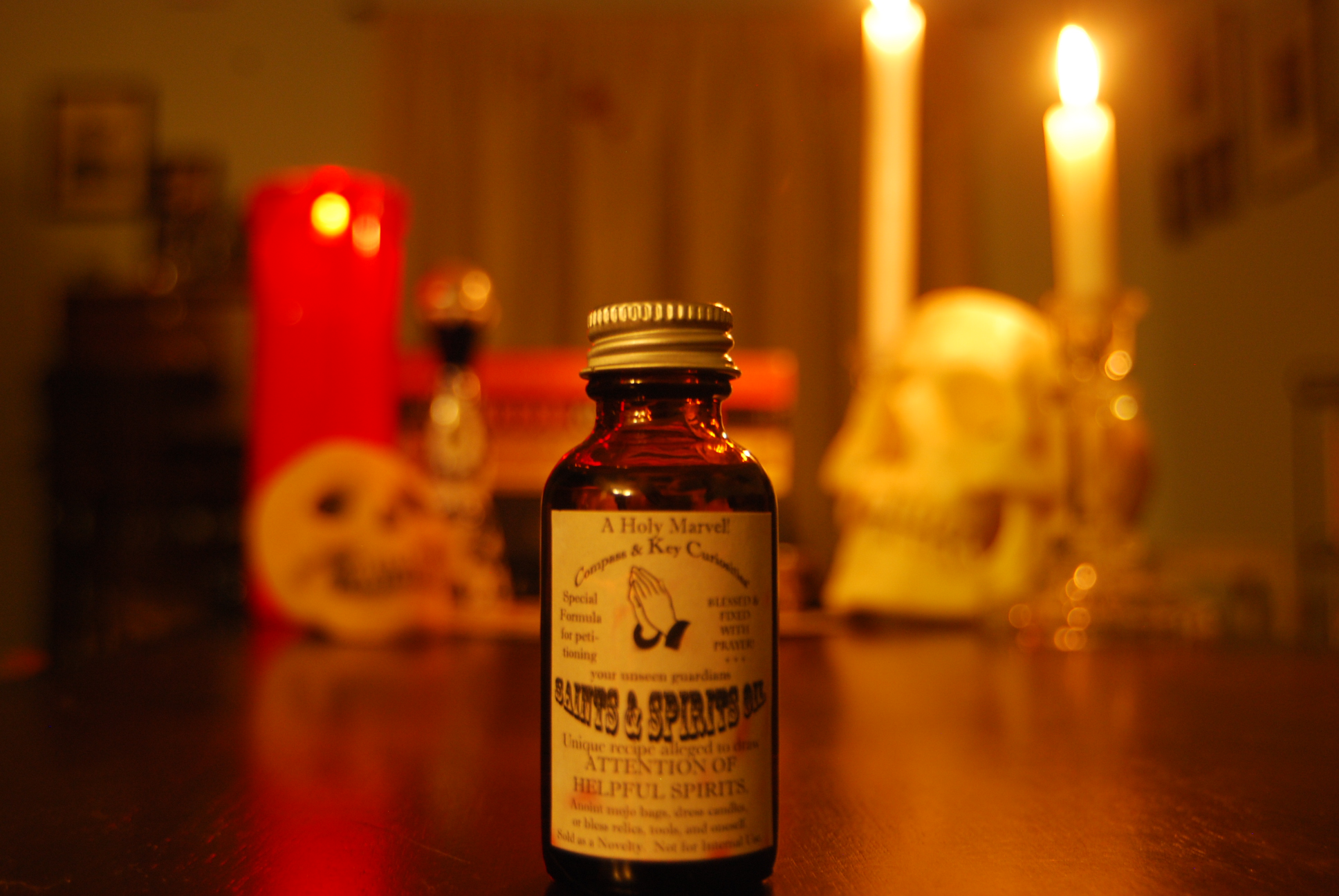
Saints & Spirits Oil – This oil is attuned to the spirit realm, and can be used to anoint offering candles or to work spells relying on the aid of spiritual forces.  It’s got a “churchy” smell offset by lavender for a peaceful, pleasant effect.

Wall of Flame Oil – If you need to keep bad influences out of your life, this oil is right up your alley.  It’s like laying down a ring of fire around you and the people and things you love.  Sharp, clean, and hot smelling, it sends back any hurtful energies directed at you to their sources.

Uncrossing Oil – When you’ve got troubles that just don’t seem to quit, and it feels like your luck has just plain run out, this is the oil to use.  A little of this worn on the body (particularly the hands and feet—though do be careful if you have sensitive skin) or burned while praying can do wonders to knock any curses off of you.

Within the next few days we also hope to be able to offer these:

Crown of Success Oil – One of our favorites!  This sweet, spicy blend is designed for general purpose success spells.  It can also be applied to any more focused mojo, like a simple gambling hand or money drawing bag, in order to bring increased potency.

Crown of Success Mojo Bags – Just like the oil, these general purpose mojos are designed to generate some serious success in your life.  They should be fed at least weekly and carried in a pocket, purse, or somewhere out of sight.  They’re red cotton cloth and smell rather nicely, too!

And we’re also working on these items as well, though they will probably be another week or two away:

Attraction Oil – Need to bring something good your way?  Luck, money, or love?  Well this might be the oil you’re looking for.  It works like a magnet for drawing things to you.  Annoint a little of your money before you spend it and it will come back to you with more in tow eventually.  Dab a little on before going out for the evening and you may find yourself bringing home a new lover.  It’s warm and citrusy with floral notes, and a real pleasure to smell!

Uncrossing Soap – Like the oil, this soap helps peel away the spiritual grime that may be hanging around you.  If you can’t manage to take a full spiritual bath, this soap makes a nice alternative.  Smells great and is made with skin-friendly goat’s milk.

Crown of Success Soap – This richly scented olive-oil based soap can help to bring prosperity and good fortune to those who use it.  Use as a hand soap and wash before leaving the house every day, or as a body soap for occasional boosts to your luck and fortunes.

Saints & Spirits Soap – If you need to get spiritually clean, or just want a nice spiritual cast to your day, this is a great soap for you!  It has a holy scent and peaceful pieces of lavender mixed into it.  It’s a lovely way to get clean, right down to your soul!

Once we get things going, I’m going to start making package sales, where you can buy a mojo and an oil of the same type for a discounted price if you get them together.  I also plan to eventually release that print edition of the cartomancy guide through the Etsy site, but I want it to be a little better quality if I’m asking people to pay for it, of course.

I should say that for legal reasons, all of our products are sold as novelties and are NOT to be ingested!  I offer them as folkloric specimens and results will vary from person to person.

If you have products you’d like to see us offer, by the way, please send us a message!  We’re always interested in seeing what people want.  We tend to lean towards prosperity and blessing-type products at the moment, but we’re not opposed to branching out.

We hope you’ll stop by the store!  Until then, thanks for reading!

-Cory

Blog Post 93 – Sneak Peek

Hi everyone!

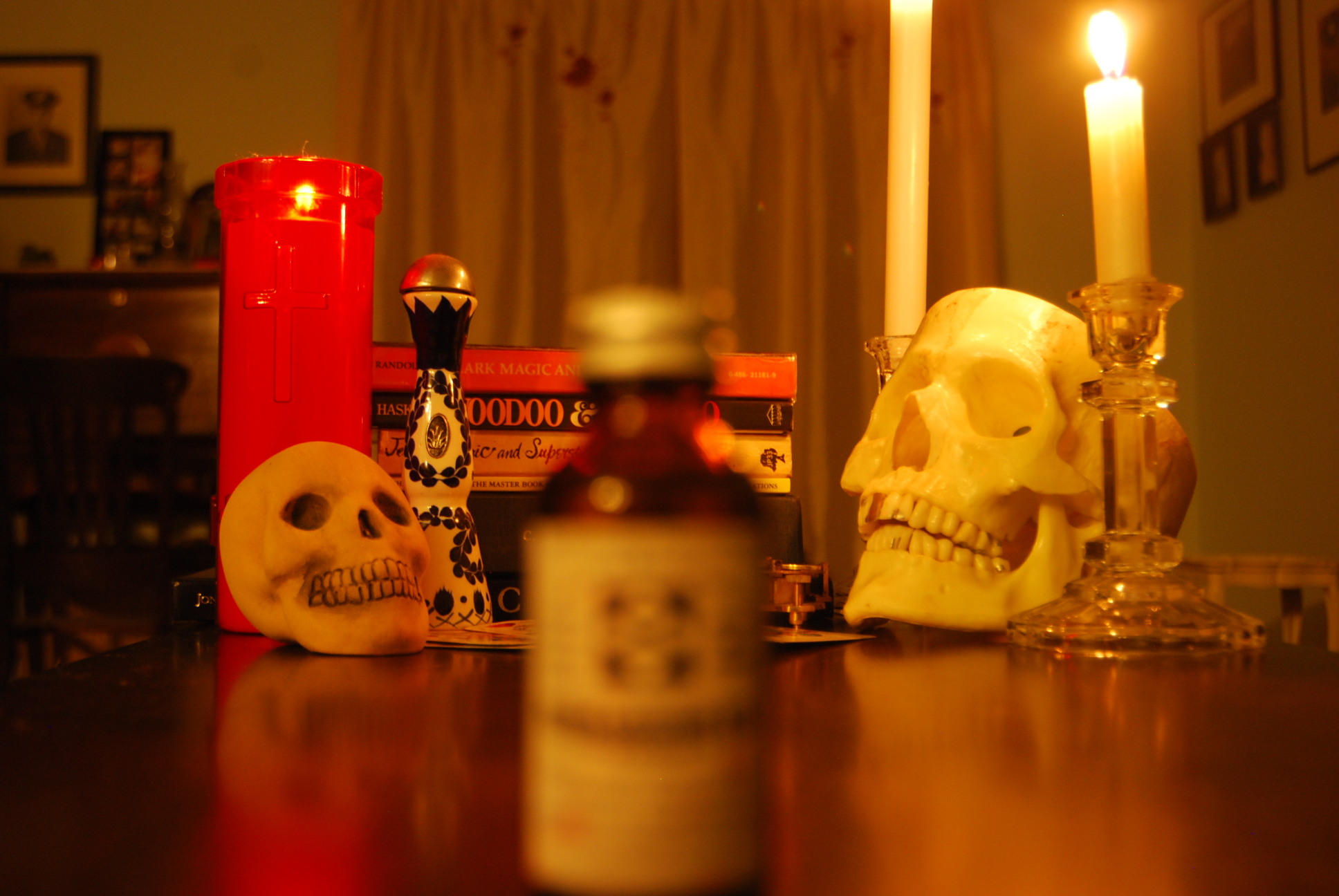
Today I’ve got a few photos of things to tease and entice you.  We’ve got something happening in the very near future and I wanted to let you blog readers be the first to know about it.  You can probably guess from the pictures what the announcement will be.

Be watching for an update soon!  Until then, thanks for reading!

-Cory


Blog Post 92 – Upcoming Event

Hi everyone!

As some of you may know from other sources at this point, several of us witchy podfolk are going to be in the Chicagoland area on Saturday, Oct. 2nd.  If you’d like a chance to meet and greet Velma Nightshade from Witches Brewhaha, Fire Lyte from Inciting a Riot, Gillian from Iron Powaqa, Jasmine & Isaac from Pagan Hooligans, Scarlett from Lakefront Pagan Voice, Britney of the Urban Green Witch, and of course me, stop by Witchy Wearables in Midlothian, IL between 11am and 1pm on 10/2.  We’ll be doing a little chat, and there’s going to be a witchy craft fair that day, too.  It’s a good chance to come out and put faces with names and voices, and maybe pick our brains a little (what will be left of them after jet lag, anyway).

Here’s the short version of the info:
Pagan Podkin Meet and Greet
Saturday, Oct. 2nd, from 11am – 2pm
@ Witchy Wearables
4459 147th St Ste D
Midlothian, IL 60445

Many thanks to Witchy Wearables for hosting this event, and to all the wonderful podkin who have made this community feel so close.  And, of course, thanks to our marvelous audiences, who we are very eager to meet.  We hope to see you there!

Thanks for reading!

-Cory

Blog Post 91 – Some Weekend Reading

Hi all!

I’ve not got a long or involved post to share today, just some links to articles of interest.  The first two are about a recently excavated site in Maryland which turned up a football-sized “spirit bundle” with some very clear African magical paraphernalia inside of it.  Finds like this are not exactly rare, but neither are they well documented at this point, so it’s fun to see American magic (or rather, African magic in America) getting some attention from the scientific press.  As a bonus, the location of the burial was once apparently a crossroads!  Neat!

http://www.sciencedaily.com/releases/2008/10/081021120755.htm
http://www.archaeology.org/0005/newsbriefs/hoodoo.html

The last link I have for you today is about Brice House, an historical site (also in Maryland) in which a number of interesting magical and spiritual artifacts have been found.  Known as a “hoodoo cache,” the dig revealed a bottle and several pierced coins buried in an “X” pattern near a bricked up doorway.  It’s pretty cool stuff!

http://www.bsos.umd.edu/anth/aia/james_brice_house.htm

Special thanks to Rebecca on the Traditional Witchcraft Yahoo! Group for passing those links along!

Enjoy your weekend, and thanks for reading!

-Cory

Blog Post 90 – The Popular Pagan

J Peterman Fall 2010 Catalog

Yesterday, when I went to the mailbox, I pulled from amidst the circulars and credit card pre-approvals the always-entertaining J. Peterman Catalog.  For those who don’t know anything about this catalog, it’s basically a clothing and accessories shop with its ad copy in the form of mini-travelogues.  The company’s charismatic founder, J. Peterman, allegedly visits exotic locales and has wonderful adventures, then brings back inspirations for different lines of shirts, dresses, hats, and fragrances.  He’ll spend a summer evening in Chile camped out in the Andes and come back with a rugged but stylish belt.  He’ll recall a wonderful oyster dinner at a café in Paris and design a dress after his dinner companion’s outfit that night.  And so on.  The company is also fairly famous for being Elaine’s job on Seinfeld for a few TV seasons.

The clothing is expensive, though it certainly looks nice and has an air of romance about it.  But that’s not really what I’ll get into here today.  As I walked up my driveway, I flipped open the catalog to a random page, and found an interesting womens’ top with the following description:

The Crystals of the Sabbat are being polished.

The cry for more myrrh is heard.

An open call for fire dancers is taking place.

The healing masters are calling their travel agents.

They’ll be outdoing themselves at the Mabon Pagan Autumn Festival this year.

So what are you wearing?

Something exotic from India perhaps?

Vintage Pagan Embroidered Jacket (No. 2803).  Tie front closure.  Which means you can keep it tied or, depending on what the ceremony calls for, open.  Embroidery continues along front, short sleeves, shoulder, yoke, and hem.  Black piping on sleeves and around neckline.  Very casual and easy.  You can wear long sleeves under it.

And you know how good pagan looks with jeans.  Imported.

Hopefully the scan of the catalog page above will let you see this advert in all its glory, but I think you get the gist.

I’m not going to get on any high horse here.  I’m not offended by the catalog or the company.  In fact, I am pretty tickled by it.  Fire Lyte posted a blog entry yesterday about fear-mongering in the Pagan community, and I thought that this ad was a rather serendipitous arrival as I pondered on his points.  While I don’t take a hard stance on Jason Pitzl-Waters’ Wild Hunt Blog (I’ve never noticed the paranoia Fire Lyte mentioned myself, but that certainly doesn’t mean it’s not there as an undercurrent).  Fire Lyte’s broader point about the persecution complex prevalent in some Pagan circles seems valid to me, though.  If I’m being honest, I experience almost no persecution, despite being in the Bible belt and regularly attending a church with people who know I’m not Christian and have magic books.  Sure, hot button issues flare up from time to time, but they mostly tend to be ideological (such as the Creation vs. Evolution debate) rather than religious (though I readily admit that one of the first five questions a new acquaintance asks is “So where do you go to church?” in this part of the country).  But I just don’t see the witch-hunting that seems to be implied in many cases.

That’s not to say there aren’t a number of folks genuinely experiencing some kind of enforced closeting or living in a state of anxiety over their belief system.  I know there are.  But I don’t know anyone who’s lost a job due to religion, myself, unless they made a big deal out of it and generally became a pest or nuisance.  I’ve visited federal prisons (not as an inmate, if you’re wondering) and generally seen a very pluralistic attitude toward religion.  In fact, it appeared as though religion was encouraged no matter which branch or denomination it was—copies of the Quran, the Bible, the Talmud, Buddhist texts, and even a “new age” book or two all sat on the rolling library cart.

What I’m really getting at is the other side of this particular coin.  While there are plenty of folks upset over being hounded by Christians and conservative groups and bemoaning the presentation of witchcraft on “Bones” as a bleak cult phenomenon, I think there are ever more positive images of Pagans, witches, and magical folk surfacing in the world.  The J. Peterman catalog is one example of someone taking the stereotype of the “hippie witch” and playing with it to create a little romance and allure—all in the name of capitalism, of course.  I’m sure some would accuse this catalog (or me even) of “Uncle Tom” passivity over the commercialization of sacred traditions, but honestly I’m just pleased as punch that they referenced one of the much-less discussed holidays on the general Pagan calendar (though it’s not on my personal calendar, but that’s beside the point).  Anyone will mention witches and Pagans at Halloween—who talks about Mabon, though?

I’ve noticed that this sort of “popular Paganism” has been surfacing more and more, which is rather heartening to me.  On a Simpsons episode recently, Lisa temporarily joins a Wiccan coven, then stops the town from engaging in a full-on witch-hunt.  An episode of Futurama from a few years ago showed main character Leela wishing to be a witch, but only “As long as I get to hurt people and not just dance around at the equinox.”  I even seem to recall an episode of the animated Batman series from the 90’s where Batman needed the help of a Wiccan coven to solve a case (why is it that cartoons are so dang progressive?).  I’m not saying that I think all of these portrayals are accurate, but they are all positive (Leela’s desire to be a “wicked witch” notwithstanding—she does portray non-wicked witches in fairly benign terms).

I don’t usually go into posts like this here at New World Witchery, and I don’t plan to make a habit of it going forward.  I just found the lovely coincidence of the catalog arriving just as I was thinking about Fire Lyte’s post to auspicious to pass up.  But I’d love to hear your thoughts, too.  Do you see Pagans, witches, animists, and other magical folk as persecuted?  Have you experienced outright persecution in your life (not a fear of it, but actually losing custody of a child or getting fired from a job because of it)?  Do you see popular examples of paganism elsewhere?  Do you think the public perception of Pagans is going less from “scary weirdos” to “funny eccentrics” as I do?  Please leave your comments and your thoughts!

Okay, enough op-ed for the day from me!  Thanks for reading!

-Cory

P.S.  To all you wonderful folks who have commented or emailed and not received responses, I promise I’ll be getting back to you soon!  Sorry for the delay!