Podcast 41 – Spring Lore Spectacular!

-SHOWNOTES FOR EPISODE 41

Summary
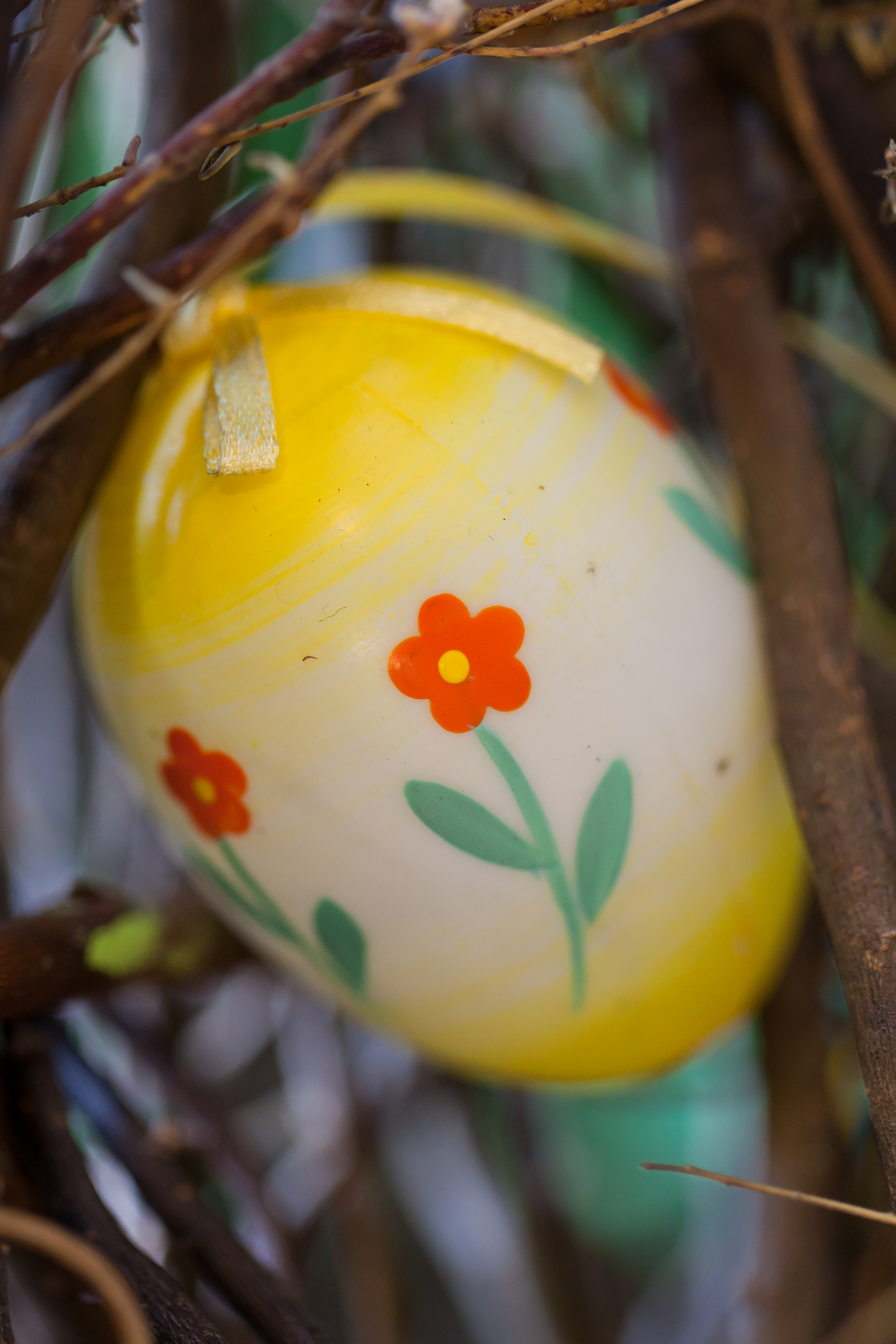
This episode is all about the various springtime lore we received for our recent contest. It’s lots of bunnies, eggs, and the occasional swat on the behind in this show! Plus we have our contest winners announced.

Play:
DownloadNew World Witchery – Episode 41

-Sources-

Almost all the lore was listener submitted, but we do have a few links to share:

1. We received some great lore from Peter M, who runs a stellar blog on New England folklore. Check it out!
2. You should also check out folklore submitter Jen’s blog, Rue & Hyssop, which is delightful!
3. If you want to know more about gardening and astrology, we did several posts on the topic: Blog Posts 18, 19, & 20.
4. We mentioned two books: Old Wives’ Lore for Gardeners by Maureen & Brigit Boland, and Grimoire for the Apprentice Wizard by Oberon Zell-Ravenheart
5. In case you can’t get enough of Cory, he was also on the March episode of Inciting a Brewhaha
6. You should definitely also listen to the 2012 episode of Between the Earth and Stars by Oraia Helene. It’s amazing!

Congratulations to our Spring Lore Contest winners!

1. Jen at Rue & Hyssop won the Card Reading from Cory
2. Kelly won the copy of Etched Offerings: Voices from the Cauldron of Story
3. StarRider won the Compass & Key Apothecary prize pack

Many thanks to all who entered! We think this was a great show and couldn’t have done it without you!

You can now request Card Readings from Cory via email, if you are so inclined.

Don’t forget to follow us at Twitter!

Promos & Music
Title music:  “Homebound,” by Jag, from Cypress Grove Blues.  From Magnatune.

Promo 1 – Between the Earth & Stars
Promo 2 – Lakefront Pagan Voice
Promo 3 – Pagan in Portland

Blog Post 154 – Buckeyes

I imagine that I’ll get a sharp increase in visitors from Ohio with this article. Today’s featured botanical is the buckeye, which is both the name of the tree and the fruit (or nut) of that tree. It grows in a wide variety of locations, including all over Europe and North America, and is also frequently referred to as a “horse chestnut” (which is actually a very specific species within the bigger buckeye family). Since you can find a great deal of botanical information on the tree elsewhere (like at the USDA Plants database), I’ll narrow my focus here to the folklore and magical uses of the nut.

T.F. Thiselton-Dyer, author of the botanical mythography classic The Folk-lore of Plants, makes the following observations about the horse-chestnut:

“A Worcestershire name for a horse-chestnut is the ‘oblionker tree.’ According to a correspondent of Notes and Queries (5th Ser. x. 177), in the autumn, when the chestnuts are falling from their trunks, boys thread them on string and play a ‘cob-nut’ game with them. When the striker is taking aim, and preparing for a shot at his adversary’s nut, he says:—

‘Oblionker!

My first conker (conquer).’

The word oblionker apparently being a meaningless invention to rhyme with the word conquer, which has by degrees become applied to the fruit itself.” (CH XVIII)

Already I love this plant, don’t you? Essentially they seem to be used as marbles in children’s games (give them one point for that), and they also have a nice phonetic connection to the powerful hoodoo charm, John the Conqueror root, which is frequently called John de Conker (and that’s another point to the buckeye!). They actually look llike smoother versions of High John roots in some ways, so it doesn’t surprise me to find that they sometimes get substituted in for their powerful underground counterpart:

“Buckeye nuts are believed by some hoodoo “doctors” to increase a man’s sexual power. Shaped like miniature testicles, they are sometimes carried in the pants pockets as charms to bring men “good fortune in sexual matters.” In the southern and eastern regions of the United States, buckeyes are carried in mojo bags to cure or prevent such ailments as arthritis, rheumatism, and migraine headaches” (Gerina Dunwich, Herbal Magic, 86).

Cat Yronwode similarly cites buckeyes as charms for increasing male potency. Both Yronwode and Dunwitch, however, make it clear that a buckeye’s primary powers are to aid as a gambling charm and to help stave off aches and pains—particularly rheumatism and headaches. This view is heavily supported by a number of folklore sources:

From Newbell Niles Puckett, Folk Beliefs of the Southern Negro

  • Where the left hind foot of a graveyard rabbit, a buckeye, a horse chestnut, and a luck bone from a pig ham are put together for good luck [A charm for good luck] (316)
  • A buckeye carried in the pocket will surely bring one good luck (314)
  • A buckeye carried in the left pocket is generally supposed to work a cure for rheumatism as well as for piles, a belief apparently English (360)
  • Red pepper rubbed up and down the back ‘warms up de system,’ as does also a new domestic sack half full of salt into which nine grains of red pepper and four buckeyes have been put. Wear this around your waist and you will never again be bothered with chills (366)
  • In Mississippi and Alabama it is believed that if one carries buckeyes in the pocket he will have no chills through the year (366)

From Harry M. Hyatt, Folklore of Adams Co., Illinois

  • 1328. “My brother always carries a buckeye in his pocket to get money.” (28)
  • 1329. “I always carry three buckeyes in my pocket to always have money. My grandfather did this through the Civil War, my mother did this, and I am carrying three buckeyes too.” (28)
  • 4534. The person who carries a buckeye in the pocket never becomes sick. (99)
  • 4688. The person who carries a buckeye in the pocket never suffers from backache. (103)
  • 5233. A buckeye carried in your pocket or the band of your hat prevents headache. (118)
  • 5588. As a treatment for piles, a buckeye is worn: in the pocket (usually the left), or one in each pocket, or one pinned to the underclothes, or one round the neck, or one rolled in the top of each stocking. (126)
  • 5684. One buckeye is worn in one of several places as a rheumatism remedy: about the neck, on the breast, in a pocket (especially a hip pocket), round the waist, and under the bend of the knee.  Sometimes, they say buckeyes are ineffective for rheumatism, unless you begin by using an unripe one. Moreover, it is occasionally said, to lose this nut in the process of curing yourself brings bad luck. And finally, because a buckeye is also called a horse chestnut, the real chestnut is worn as a substitute, but this seems to be rare. (129)
  • 5685. Buckeyes used for curing rheumatism should always be carried in pairs. This also makes you lucky at the same time. (129)
  • 5686. “If you carry three buckeyes in a sack so they will be on your skin, good for rheumatism; if the buckeyes dry all up when wearing, then they are doing you good; but if they don’t dry all up, they are doing you no good.” (129)
  • 11073. It is lucky to keep a buckeye in your purse, on your person, or in your house. (262)
  • 13443. Keep a buckeye in your pocket while playing baseball and you will have good luck. (310)
  • 13984. You obtain good luck for a card game, if a buckeye is worn in your right pocket. (319)

From Daniel & Lucy Thomas, Kentucky Superstitions:

  • 1224 – One subject to a headache may prevent it by carrying a buckeye in his pocket (105)
  • 1288 – Carry a horse chestnut [another name for a buckeye] in the pocket, to avert piles (110)
  • 1299 – To avert rheumatism, carry a horse-chestnut in the pocket (111)
  • 2887 – You will have good luck if you carry a horse-chestnut (219)

Kentucky Superstitions also has this rather fantastic bit of lore about the good ole horse-chestnut:

  • 2889 – If one eats a buckeye, his head will turn around (219)

Vance Randolph devotes a sizeable amount of space to the folklore of buckeyes among the hillfolk of the Ozarks, also pointing out their strong associations with healing and protection from painful diseases. He relates an excellent story about just how deeply ingrained the belief in buckeye powers was in the mountains:

There is an old saying that no man was ever found dead with a buckeye in his pocket, but this is not to be taken seriously. Most people who carry buckeyes regard them as a protection against rheumatism, or hemorrhoids. One of the most successful physicians in southwest Missouri always carries a buckeye ; when it was mislaid once he was very much disturbed and let an officeful of patients wait until his pocket piece was recovered. It is very bad luck to lose a buckeye. I asked this doctor about it once. “No, I’m not superstitious,” he said grinning, “I just don’t want to get the rheumatism!” (Ozark Magic & Folklore, 153)

There is some excellent lore about the buckeye and just why it became the namesake for Ohio from the Ohio Department of Natural Resources website. They mention the lucky association, likening it to a four-leaf clover or rabbit’s foot, and links the state nickname to William Henry Harrison or alternatively to Col. Ebenezer Sproat (a simply fantastic name), both Ohioans of historic and heroic stature.

Probably my favorite bit of folklore concerning the lovely horse-chestnut comes from an online forum I found while researching this topic. You can read the full thread here, but I simply cannot fail to mention this fantastic tidbit:

There is a belief by some that only half the buckeye is poisonous, and that only squirrels know which half that might be in a particular nut. Squirrels do sometimes eat a part of the nut.

There you have it: squirrels are smarter than we are. But I’ve known that for a while (at least in my case it’s true).

At any rate, the buckeye can be carried as a lucky charm or worked into other magical preparations, and it has a huge body of lore associated with it. So much, in fact, that I’ve barely (prepare for pun) cracked the shell here. If you know of great buckeye lore and magic, I’d love to hear about it! Or if you just want to pelt me with horse-chestnuts for making bad puns, I’ll be here all day.

Thanks for reading!

-Cory

Blog Post 153 – American Ginseng

Hello dedicated (and not abandoned!) readers!

This month, I’m going to be spending a lot of time looking at various botanicals found throughout North American magical practice. What with it being springtime and all, I thought a little stroll through our native meadows, forests, fields, and fens would be a good way to get back in the swing of things, and might even open up some new avenues of exploration for somebody. As always let me emphasize that THIS IS NOT A  MEDICAL BLOG, AND THE INFORMATION HERE IS NOT INTENDED TO DIAGNOSE, TREAT, OR OTHERWISE MEDICALLY PROVIDE FOR ANY ILLNESS OR AILMENT. ALL INFORMATION IS PROVIDED AS FOLKLORE ONLY!!!

I’m starting with a plant that may or may not be familiar to most people: American Ginseng (panax quinquefolia).  This plant can be found throughout the mountainous regions of North America ranging from Canada down to the Southern states. It’s long been highly valued in Chinese medicine, and has been considered a panacea (hence its botanical Latinate name of panax) for a wide variety of complaints. You can read a good bit about the botanical and medical side of the plant at its Botanical.com entry, so I’ll focus today more on the folklore side of this incredibly useful root.

When I was growing up in the rural South, I had a good friend in high school whose father would regularly take him ginseng hunting (or “sanging”) in the hills and mountain areas a few hours away. It was a profitable side business for them, as it has been for mountain folk for nearly three centuries. In the Foxfire Book #3, which includes a whole chapter dedicated to ginseng, there’s a history dating back to the early 18th century in which Father Joseph Lafitau had local Mowhawk tribes in Canada begin gathering and curing native ginseng for sale on the Chinese market (244). At one point, ginseng was reputed to be worth its weight in gold, literally. Jude’s Herbal Home Remedies includes this tidbit about the economic value of the root: “Even Daniel Boone gathered it [ginseng] to sell because it was more profitable than hunting and trapping” (18). Unfortunately this demand led to an overzealous glut of wild harvesting, and ginseng’s botanical population dwindled steadily into the early 20th century. It’s made something of a comeback in the last 50-60 years due to stricter laws governing its harvesting, but as my story about my friend’s family demonstrates, it’s still a very common practice and hard to regulate.

Mountain communities have long known the curative and tonic value of ginseng root. Looking again to Foxfire #3, we find the following:

“The early colonists not only gathered ginseng for sale, but used it in tea to encourage the appetite or strengthen the digestion, especially of elderly persons or puny children. Ginseng plus black cherry and yellowroot made a potent tonic, especially with the addition of some home made whiskey. An early herbal suggested gathering ginseng root and steeping it with chamomile flowers for fainting females” (247)

Its primary powers are to enhance male vigor, and its described as a potent aphrodisiac in a number of sources. This may be due to either its stimulant effect on the circulatory system or the distinctively humanoid shape of the root (a factor which has earned aphrodisiac and potentcy attributions for other roots like mandrake and ginger). Preparations vary from chewing slices of the fresh root to brewing teas to even more unorthodox decoctions. One informant’s method:

“‘You can take the roots that are dry and take a sausage mill or something and grind’em up and drop a pretty good little handful down into your vial of conversation juice [moonshine]. Take this ginseng and liquor and pour out just a small little amount of that ina teacup and set it afire. Strike a match to it, you know, and it’ll burn. And I mean burn it good. And then turn it up and drink it. It’s an awful bitter dose to swallow, but if it don’t do you some good you better get to a doctor and pretty durn fast. It really is good for that [male vigor]. And it’s also good for female disorders. Very good, they tell me, for that’”(Foxfire #3 250-1)

In one example I found, the act of finding ginseng has its own value. From Folk Medicine in Southern Appalachia: “For some, the pursuit of ‘sang’ and other herbs is a therapeutic activity in itself. A ninety-year-old woman from eastern Tennessee said: ‘When I feel down in the dumps, I go sangin’” (60).

Therapeutic uses of ginseng in modern preparations reflect its historical value. Jude’s Herbal Home Remedies recommends it as a tonic and aphrodisiac, and gives this recipe for a male tonic:

“TONIC FOR MEN: Mix ½ ounce each of ginseng, shepherd’s purse, corn silk and parsley. Mix well and add 1 teaspoon of the mixture to 1 cup of boiling water. Let steep 15 minutes, covered. Strain and sweeten if desired. Drink several cups per day for 1 week. This helps to tone up the male reproductive organs. The stimulation to the prostate is helpful to all parts of the system” (120)

It also considers ginseng one of the great coffee subsitutes available in the wild. It is still considered a great digestive aid, as well. The folklore tome Kentucky Superstitions calls it “A sure remedy for all kinds of stomach trouble” (107).

In the folk magical realm, ginseng again parallels its medicinal uses, as well as adding a few new tricks to its repertoire. Cat Yronwode describes a recipe for soaking a ginseng root in Holy Oil which can then be used to anoint the male genetalia to enhance sexual performance. She also mentions it’s a key component of an old-timey gambling mojo, too. The root seems to have made its way into curanderismo practice as well, as the Curious Curandera lists the following uses for it: “Love, wishes, protection, luck, spirit communication, visions, divination, male vigor, gambling luck, to control another.” And Judika Illes, in her oft-recommended tome The Encylopedia of 5000 Spells, gives a number of great magical applications for ginseng root:

  • Tie a red thread around a ginseng root and carry with you for beauty and grace (1026)
  • Wrapping the first dollar earned at a new business around a ginseng root w/ red thread will help improve income (167)
  • Mentions its name as “Wonder of the World root,” and tells how it can be used in hoodoo to enhance longevity, libido, & performance in sexual situations (527). Also says you can carve a wish on a whole root & toss it into running water to gain what you desire (763).
  • Can be burned to break curses (598)

This incredibly verstatile root definitely has a place in a folk magician’s cupboard, though I would recommend acquiring it from legal sources. While I’m normally an advocate of wild harvesting roots for practice, in ginseng’s case three centuries of such harvesting have taken a toll, and since it grows well in cultivation I’d rather see the wild stocks remain alive and untouched for a long time to come.

If you have experience with ginseng or know of any unique magical applications for it, I’d love to hear them! Until next time, thanks for reading!

-Cory

Quick Update! – Spring Lore Contest Reminder

Hi folks!

This is just a reminder that if you want to get into the drawing for our Spring Lore Contest, there’s never been a better time than now!  You’ve only got five days left—until March 21, 2012! We’re looking for Springtime Lore this time around: seed planting rituals & customs, fertility charms, spring cleaning spells, etc. Anything and everything related to Easter eggs, baby animals, April showers, and (shudder) bunnies. We’re trying to put together an episode featuring folklore, ritual, and practice from all over the country and the world relating to rebirth, green grass, renewal, etc. and we need your help to do it! So if you’ve been hanging on to a killer magical gardening tip, a clever and enchanted use for chocolate rabbits, or a story about dancing naked around a maypole, fire up your email and send it in!

So what’s in it for you if you send us lore? Prizes!

The Prizes

  • A copy of Etched Offerings: Voices from the Cauldron of Story from Misanthrope press (an anthology of pagan fiction featuring stories from several podcasters like Oraia Helene, Saturn Darkhope, & me!)
  • An email card reading from Cory, with a 1-2 page card report featuring a 2-card split and 7-card layout, plus interpretations and a fairy-tale recommendation to connect your reading to a story you can turn to for more inspiration.
  • A goody box from Compass & Key Apothecary featuring several of our oils, curios, and mojo bags. While actual contents of the box are subject to change, they will likely have at least 2 oils, 2 mojo bags, 1-2 curios (like rabbits’ feet, gator paws, or Mercury dimes), and 3-4 herbal samples.

How to Enter

Send your entries to compassandkey@gmail.com to enter, and be sure to put “Spring Lore” in your subject line.

We hope to hear from you soon! Remember, the deadline is midnight on March 21st, 2012, so get those entries in before then!

All the best, and thanks for everything you do!

-Cory

Blog Post 152 – What’s Happening & What’s Yet to Come

Howdy everyone!

First of all, I hope that the blog hasn’t been too much of a let-down to you lately. Things in real life sped up, so blog stuff (and by extension, podcast stuff) had to slow down a little. But we are still trying to get several posts a month and at least two shows a month up on the site. The new resource button on the side bar should also be useful if you’re jonesing for a NWW fix, as you can now browse through the back catalog of posts by looking at their subject matter, and probably get a heck of a lot of reading done (if you’ve read every post we’ve written, you’ve gone through 180,000 words or so…go you!). There’s a lot here to peruse on a variety of subjects, so get comfy and enjoy.

In the process of creating that resources page, I noticed several things. First of all, I noticed that some areas have been heavily covered, and others much less so. When it comes to magical systems, I have tended to write about the things I know, or at least the things I’m actively learning about.  There are some systems that I’ve written relatively little about, so as I start organizing my “to-do” list I’ll be thinking about ways to cover those other systems a bit. I probably won’t ever write as much about Afro-Caribbean magic as I do about hoodoo or braucherei, but I know I’ve got questions about the former, so I may bring you along as I ask those questions. My posts on holidays are severely lacking, too, so I think I’m going to force myself to really tackle some of those.

I also noticed that a poll we did a while back indicated that most readers want more practical stuff (techniques, methods, recipes, etc.) and information on herbs, roots, and curios than anything else. So I’ll try to add some of that in, as well.  I think some book lists covering reading suggestions broken down by magical system may be in order, too.

None of this may happen at a breakneck pace—I still have a lot of real-life stuff keeping me busy, too—but there’s a good chance you’ll see some good articles coming up over the next few months on things like ‘gipsy’ magic, the magical uses of honeysuckle and passionflower, St. John’s Eve, and/or Ouija boards. There will probably be more folktales and lore to share, techniques for hot-footing and stop-gossiping folks, and maybe even a recipe or two for magical oils.

Whatever we wind up covering, I hope you’ll come along with us. The journey through the landscape of magical folklore in North America is far from over, and I think there’s still a lot for me to learn (which hopefully means a lot for you to read!).

So much potential! And Spring is in the air, breathing new life into the world! Enjoy, and stick with us! I think you’ll enjoy it. I hope you will.

Thanks for reading,

-Cory

Podcast Special – Tricksters

-SHOWNOTES FOR PODCAST SPECIAL – TRICKSTERS

Summary
This is a storytelling episode featuring several tales, songs, and rhymes about various New World trickster figures.

Play:
Download: New World Witchery Special – Tricksters

-Sources-
The tales today come from a variety of sources:
Mules & Men, by Zora Neale Hurston
A Treasury of Afro-American Folklore, by Harold Courlander
Favorite Folktales from Around the World, by Jane Yolen
AmericanFolklore.net – A site by author S.E. Schlosser
The Tar Baby and Other Rhymes of Uncle Remus, by Joel Chandler Harris
Myths, Legends, & Folktales of America, by David Leeming & Jake Page

Scholarly sources cited include:
The Witch Must Die, by Sheldon Cashdan
The Uses of Enchantment, by Bruno Bettelheim

We also have two blog posts that might be of interest:
Blog Post 150 – The Trickster’s Web
Blog Post 151 – New World Tricksters

We’ve got a Spring Lore Contest going on until March 21, 2012! We’re looking for Springtime Lore this time around: seed planting rituals & customs, fertility charms, spring cleaning spells, etc. Anything and everything related to Easter eggs, baby animals, April showers, and (shudder) bunnies. Send your entries to compassandkey@gmail.com to enter, and be sure to put “Spring Lore” in your subject line.  Three participants will win one of three prizes: a copy of Etched Offerings: Voices from the Cauldron of Story from Misanthrope press (an anthology of pagan fiction featuring stories from several podcasters like Oraia Helene, Saturn Darkhope, & me!), an email card reading from Cory, and a goody box from Compass & Key Apothecary featuring several of our oils, curios, and mojo bags. More details coming soon!

You can now request Card Readings from Cory via email, if you are so inclined.

Don’t forget to follow us at Twitter!

Promos & Music
Title music:  “Stagolee” by Hogman Maxey (from Archive.org).
Featured Songs:
Tough Titty Cupcakes,” by Tricky Pixie
Coyote Chant,” by Michael Drake
Raven Song,” by Michael Drake

Tales from the Witching Hour No. 2

Shownotes
This little episode finds us just back from a crossroads working, so we are discussing crossroads as magical spaces. You can find out more on crossroads at the Lucky Mojo page on them.

Also check out www.ismercuryinretrograde.com (just for fun!)

Listen: Tales from the Witching Hour No. 2

Play: 

Music
“Serenade,” by Schubert. From http://www.archive.org/

Blog Post 150 – The Trickster’s Web

I’ve been thinking a lot lately about the importance of tricksters in folklore and fairy tales. I know it’s fairly well-trod ground to start looking at the mythical value of tricksters like Coyote and Loki and Hermes and all the other devious deities and demigods who so love to upend the orderly world in favor of a little creative chaos. I’m not going to dive into specific tricksters here (though I do intend to do some exploring of North American tricksters in the not too distant future), but I wanted to look instead at the folkloric need for these figures. After all, they’re not exactly protagonists, and they’re not exactly antagonists, but they are something else entirely. Their very identification and definition is tricky. So what is the trickster’s role in the tales we tell? According to Jane Yolen, author/editor of Favorite Folktales from Around the World:

“The figure of the trickster can be found in every folklore tradition. The trickster as hero or as god plays an important role: Anansi in Africa is sometimes heroic, sometimes foolish, with definite supernatural powers. LIkewise his famous Native American counterparts, Coyote and Rabbit, act as both fooler and fooled….The German Tyll Ulenspiegel, a popular peasant jester, actually lived in the fourteenth century, but within another two centuries had become a legend around whose names volumes of anecdotes and jests had accumulated…Whether the trickster is an animal such as Brer Rabbit or Raven or the wily fox, or supremely human like the German master thief, he plays his tricks out to the end. And sometimes it is a bloody and awful ending” (From section “Tricksters, Rogues, & Cheats,” 127).

So then the trickster can be both a guide for overcoming adversity and self-empowerment, and he can be a sacrificial victim to fate—sometimes illustrating the tragically comic cycle of life and death we all must go through. In this latter capacity, the trickster attempts to operate outside the web of Fate (or natural order, if you prefer), and becomes deeply entangled in the threads he or she tried to avoid. I think here of Anansi, the spider, who in one tale learns of a magic spell which causes anyone who says the word “five” to drop dead on the spot and thus begins tricking various creatures to say that word so that he may eat them. Of course, the trick gets turned around on him, and he accidentally says “five” when a clever bird refuses to play by his rules, thus ending his own life. It is a storytelling picture of a spider weaving one web inside of another, only to be caught by the bigger web he didn’t see.

Why then do we need to have clever characters that can be so easily duped or destroyed? Do they play a similar role to folkloric devils, existing simultaneously as a threat and a challenge (and thus also functioning as teachers in some ways)?  I would assert here that when a trickster is overcome by his own tricks, it is because his deceit has crossed a line. Knowing how and when to play a trick is deeply important. Teachers understand that the process of discovery is very important to really gaining understanding as opposed to simply forcing short-term rote memorization (a topic we discussed in our recent podcast on riddles). I’ll get to the role of deceit a bit more in depth in a moment, but first let me briefly detour back to the ide of a trickster as an empowering figure.

Without diving too deeply into the sticky issues of what is “moral” in fairy and folk tales, I think it’s relevant to point out that concepts of “good” and “bad” or “right” and “wrong” form central pillars around which many stories are built. At the same time, there remains an intense ambiguity about just about every “moral” decision in a fairy tale—the witch in “Hansel and Gretel” does seem to deserve to die, as she wants to kill and eat children, but is it a particularly happy ending for the children to return to a father who willingly (if reluctantly) abandoned them to that horrible ordeal? Bruno Bettelheim, in his controversial and classic fairy tale exegesis The Uses of Enchantment has this to say:

“Amoral fairy tales show no polarization or juxtaposition of good and bad persons; that is because these amoral stories serve an entirely different purpose. Such tales or type figures as ‘Puss in Boots,’ who arranges for the hero’s success through trickery, and Jack, who steals the giant’s treasure, build character not by promoting choices between good and bad, but by giving the child the hope that even the meekest can succeed in life” (10).

So then, the child, who knows intuitively that he or she is not as strong and capable in many ways as the adults around him or her, needs to understand that strength and physical skill are not the only methods for overcoming adversity. Brains count for something, too. For those of us who have outgrown the age of childhood (though you’ll be hard-pressed to convince me I’ve outgrown it in any way but the number of years shown on my driver’s license), that lesson can still be immensely invaluable. When we are faced with an ogrish boss or a monstrous task or a devilish choice, we need to believe that we have a tool in our arsenal that can beat the odds—and that’s where the trickster becomes more than a comical prop or sacrificial victim. As Bettelheim says, “Children know that, short of doing adults’ bidding, they have only one way to be safe from adult wrath: through outwitting them” (28). We, too, as adults and as magical folk, deal with a number of dangerous situations all the time, and we must adopt the trickster’s cleverness if we hope to overcome the challenges we face in one piece. To illustrate this point, Bettelheim relates the tale of the “Fisherman and the Jinny” (one we’ve mentioned a lot), in which a fisherman is threatened by a genie that he releases and must trick him back into the bottle or be killed by him. The genie is clearly bigger and more powerful, and only by means of deviousness can the fisherman preserve his life.  If you want to lend a magical quality to your life, think about how often you bottle the genie of a ferocious argument with a lover or friend by a few carefully placed words or a well-timed gesture.

Still, one moral lesson that we so often teach our children (and one which we repeat to ourselves ad nauseum) is: don’t lie. Lies are bad. Always tell the truth. Except, of course, when you shouldn’t. And here we come to my last point of examination in the role of the trickster. In The Witch Must Die, scholar Sheldon Cashdan looks at lies and deceit by examining three fairy tales: “The Goose Girl,” in which lying is punished brutally when it is found out; “Rumpelstiltskin,” in which lies are accommodated and made true by the intervention of magic and/or fate; and “Puss in Boots,” in which trickery is rewarded because it is cleverly executed. What Cashdan uncovers by contrasting these stories is that trickery when performed for the sake of trickery is ambivalent, and when done in the service of another person (or a righteous cause) is praiseworthy, but deceit performed for the sake of harm to another must bring judgement or punishment down on the deceiver/trickster. As he puts it:

“[I]t is the intent behind the lie that counts rather than the lie itself. In other words, there may be instances in which telling lies is justified…These contrasting approaches to deception reflect the ambivalence people harbor about telling the truth. On the one hand, we know that lying is wrong. At the same time, it is hard, as Diogenes discovered, to find an honest man…In some fairy tales, lying is not merely treated with ambivalence but is actually rewarded” (140).

For an a magical practitioner, then, the power of the trickster is power that can be used reactively (to combat an attack or overcome an obstacle) or chaotic (to inspire the topsy-turvy energy that seems to surge up periodically in Nature), but if it is used offensively it must be justified. Willfully entrapping someone by magical means—and here I’d venture away from magic and say this principle extends to social behavior, too—has to have some solid reasoning behind it, or else the universe has a way of bringing its own justice down on the tricksy person who did the ensnaring.

What the trickster seems to say to me, then, is this: If you are a spider, spin for the beauty of your web; spin that you may catch the food you need; spin to keep your enemies away. But beware weaving the web of greed and harm, because there’s likely a bigger web you do not see, and a bigger spider who is very hungry dangling not far overhead.

Whew, enough philosophy, right? What are your thoughts on tricksters, especially as teachers? Do you agree about the idea of justification? Have you ever experienced a trickster in your own life or practice? Let us know in the comments below!

Thanks for reading!

-Cory
Podcast 40 – Rhymes, Games, and Riddles

-SHOWNOTES FOR EPISODE 40

Summary
Today we look at a toychest full of children’s nursery rhymes, playground games, and riddles. We talk about how these sing-song verses can sometimes hide bits and pieces of valuable witch lore, as well as how they can be incorporated into one’s practice.

Play:

Download: New World Witchery – Episode 40

-Sources-

  • The book I used for many of the rhymes herein contained is my son’s copy of Mother Goose by Tomie dePaola (the illustrations are excellent and very folk-arty). Some of the rhymes you hear are “The Crooked Sixpence,” “Old Mother Goose,” “Rabbit and Crow,” “Jack and Jill,” and “Two Blackbirds”
  • I mention The White Goddess by Robert Graves as a source of witchy riddle lore.
  • I also pull several riddles from Buying the Wind by Richard Dorson.
  • We have several posts on our blog focused on these topics. Check out “Blog Post 53 – Riddle Me This,” “Blog Post 54 – The Devil’s Nine Questions,” and “Blog Post 55 – Games” for more info.
  • I also highly recommend checking out Peter Paddon’s Crooked Path site, as he frequently discusses riddles and rhymes as a part of witchcraft practice.
  • The excellent article that kicked off this whole topic was “Rhyming Witchcraft,” by Elizabeth Yetter, submitted by listener Anastasia. Thanks!

We’ve got a Spring Lore Contest going on until March 21, 2012! We’re looking for Springtime Lore this time around: seed planting rituals & customs, fertility charms, spring cleaning spells, etc. Anything and everything related to Easter eggs, baby animals, April showers, and (shudder) bunnies. Send your entries to compassandkey@gmail.com to enter, and be sure to put “Spring Lore” in your subject line.  Three participants will win one of three prizes: a copy of Etched Offerings: Voices from the Cauldron of Story from Misanthrope press (an anthology of pagan fiction featuring stories from several podcasters like Oraia Helene, Saturn Darkhope, & me!), an email card reading from Cory, and a goody box from Compass & Key Apothecary featuring several of our oils, curios, and mojo bags. More details coming soon!

You can now request Card Readings from Cory via email, if you are so inclined.

Don’t forget to follow us at Twitter!

Promos & Music
Title music:  “Homebound,” by Jag, from Cypress Grove Blues.  From Magnatune.

Incidental songs and rhymes are from the Alan Lomax folk recording collection at the Library of Congress.

Promo 1 – Forest Grove Botanica
Promo 2 – The iPod Witch
Promo 3 – Druidcast

Quick Update – Spring Lore Contest!

Howdy everyone!

We’ve got a Spring Lore Contest going on until March 21, 2012! We’re looking for Springtime Lore this time around: seed planting rituals & customs, fertility charms, spring cleaning spells, etc. Anything and everything related to Easter eggs, baby animals, April showers, and (shudder) bunnies. We’re trying to put together an episode featuring folklore, ritual, and practice from all over the country and the world relating to rebirth, green grass, renewal, etc. and we need your help to do it! But because we like you an awful lot, we also want to give you the chance to win shiny and wonderful things from us when you send us your lore!

The Prizes

  • A copy of Etched Offerings: Voices from the Cauldron of Story from Misanthrope press (an anthology of pagan fiction featuring stories from several podcasters like Oraia Helene, Saturn Darkhope, & me!)
  • An email card reading from Cory, with a 1-2 page card report featuring a 2-card split and 7-card layout, plus interpretations and a fairy-tale recommendation to connect your reading to a story you can turn to for more inspiration.
  • A goody box from Compass & Key Apothecary featuring several of our oils, curios, and mojo bags. While actual contents of the box are subject to change, they will likely have at least 2 oils, 2 mojo bags, 1-2 curios (like rabbits’ feet, gator paws, or Mercury dimes), and 3-4 herbal samples.

How to Enter

Send your entries to compassandkey@gmail.com to enter, and be sure to put “Spring Lore” in your subject line.

We hope to hear from you soon! Remember, the deadline is midnight on March 21st, 2012, so get those entries in before then!

All the best, and thanks for everything you do!

-Cory