Blog Post 84 – Diamonds and Clubs (Cards, part III)

Okay, so today I’m going to look at individual cards and their significance in my readings.  I’ll basically tell you a few key words, then elaborate a bit on potential interpretations of these cards.  Most of my system comes out of years of practice using playing cards for divination, as well as for games.  I have found that in some cases, my personal work with a particular card has shown me a meaning different from the one I originally learned.  When it comes to these sorts of fortune-telling methods, practice makes perfect.

Now, onto the cards!  Let’s start with:

Diamonds

Remember that diamonds in general signify money, fortune, luck, and happiness.  They also can relate to messages or news, or social interaction.

Ace – A letter; A coin.  The Ace of Diamonds indicates some new money or new information entering the questioner’s life.  It can also have to do with a sudden shift in luck—if preceded and followed by spades, that could mean bad luck.  Additionally, due to the solitary nature of the pip, it could mean being very careful with your news, luck, or money—keeping it to yourself, as it were.

Two – Birds (as in “a little birdie told me”); Exchange of funds.  This card is about sharing, whether that’s news and gossip (like the birds), or sharing your luck or fortune with someone else.  It can indicate a partnership of some kind, but usually not a business one so much as a financial one.  For example, if it were paired with a card connected to a friend or lover, you might be moving in with that person soon (because you’ll be yoking yourself to them financially).

Three – Gifts; A fountain.  The Three of Diamonds shows generosity—sometimes even unwilling generosity.  Someone who draws this card likely “throws his/her money away,” just like one throws pennies in a fountain (if you’re singing “Three Coins in a Fountain” right now, I sympathize with you).  This may seem like a sign of irresponsibility, but it can also simply receiving a gift, or an expansion of fortunes which allows the person to be generous.

Four – The purse/money bag; No news.  With the Four of Diamonds, the reader will need to figure out if the reading is about money or information, as it changes the card’s meaning a bit.  If the question is financial, thefour indicates a stable monetary situation, but also one without any chance of growing—much like a closed purse neither receives nor spends money.  In the case of information, this card indicates a dull waiting period, possibly a prolonged one.  This can mean “no news is good news,” or that the client must wait on tenterhooks for a proper resolution to his/her situation.

Five – Good luck; Laughter.  This card shows the subject surrounded by friends, fortune, and happiness.  It’s not the all-encompassing joy found in other cards like the Ten of Diamonds but it’s generally positive nonetheless.  Depending on context, however, it can also mean something like “the last laugh,” and have slightly more sinister connotations.

Six – Streets of Gold; Good decisioins.  No, not the Yellow Brick Road, but the idea’s the same.  The client’s on the right path and merely needs to continue doing what he/she is doing and success will come.  Paired with a card like an Ace, this card may mean recent decisions have been good; paired with a King or a Queen the client is probably getting very good advice from someone.

Seven – Lies; Deceit and falsehood.  The Seven of Diamonds indicates that the questioner is being lied to by someone.  This lie may or may not have to do with money, but almost always has to do with happiness.  Perhaps the client is happy being lied to, and little white lies sustain him/her—this could certainly be the case if a Jack of Diamonds, Clubs, or Hearts were nearby.  More often, though, the lies indicate trouble to come.

Eight – Gossip; Idle chatter.  Much like the Two of Diamonds, this card means an exchange of information, although it usually is information of little value.  It can also indicate talking about money, getting good news about one’s fortunes or finances, or someone’s natural wit.  Paired with something like the Two of Spades, it might mean something like “loose lips sink ships,” and that one should hold one’s tongue for a while.

Nine – Daydreams; Peace and contentment.  Think of this card as a leisurely day spent in the sun with nothing particular to do.  It’s a card of relative idleness, but without any real negativity.  It’s a well-earned rest, a chance to plan for the future, and time to stop and smell the flowers.  Beware, though, if it’s paired with a four of any kind, as it may mean that all one’s plans are but pipe dreams, destined to disappear like clouds in an afternoon sky.  Or something like that.

Ten – A treasure chest; Sunlight; Joy.  With the Ten of Diamonds, the client can expect great happiness.  In the context of other good luck cards, this may mean an unexpected windfall or a sudden improvement in circumstances.  The Ten of Diamonds leaves little room for any sorrow or woe, and generally indicates the fulfillment of financial goals and personal derams.  Of course, as Willy Wonka said, “Do you know what happened to the boy who suddenly got everything he ever wanted?”  Oh, wait, he lived happily ever after…

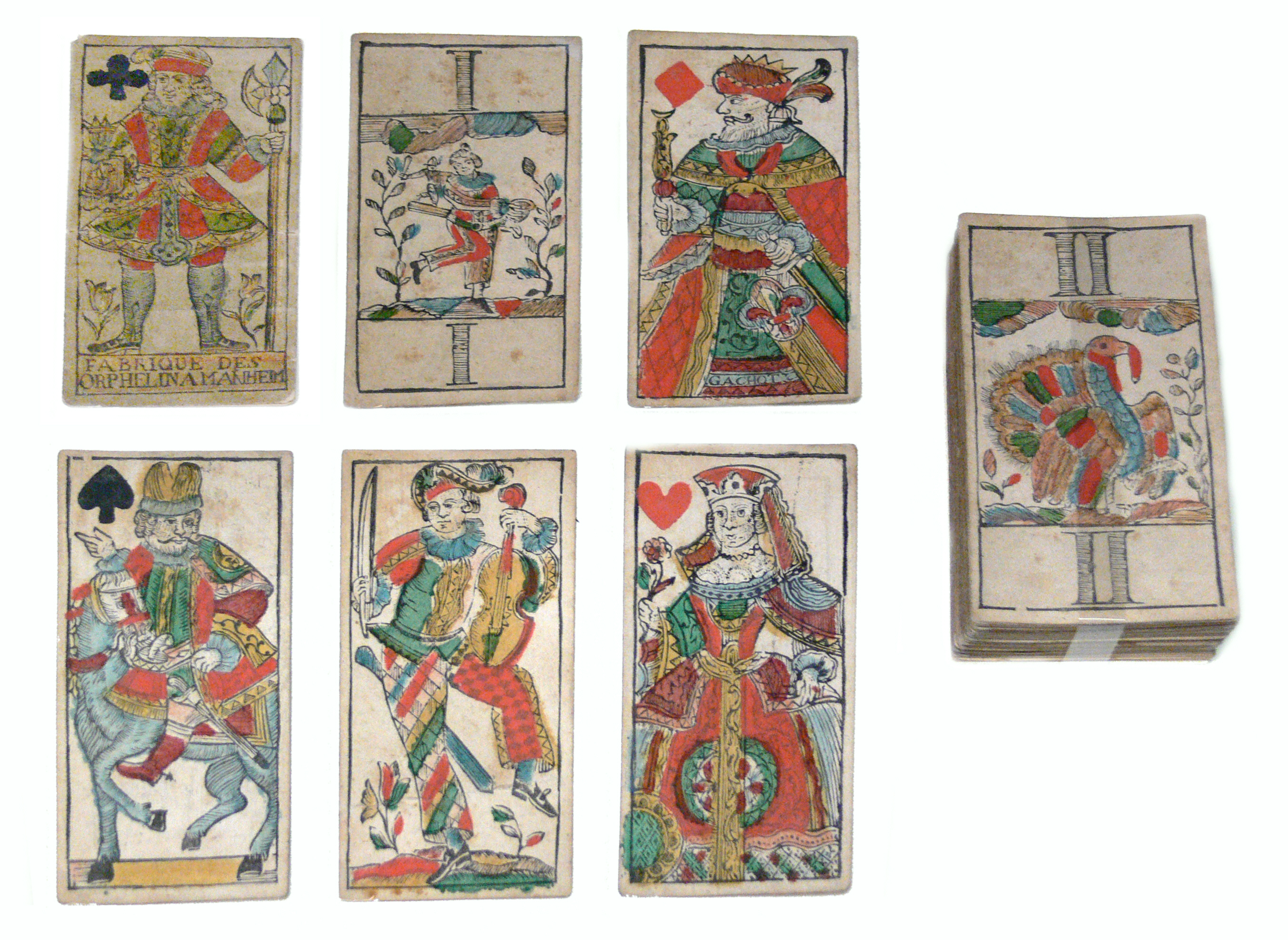
Jack – Good news; A girl.  This card displays a young boy (or possibly a young girl, hence the card’s alternate meaning).  At one time these cards were known as Knaves instead of Jacks, and would have been similar to a knight’s squire.  In the context of a card reading, this Jack means that some good news is about to arrive. Or that a beautiful girl is about to arrive.  Which might also be good news, depending on  your point of view.

Queen – The good wife; A wedding; Sensuality.  This Queen is all about duty and splendor.  She could be a mother or wife in the questioner’s life who inspires joy and happiness, or provides sound financial advice.  More likely, though, she indicates someone who does what must be done or a woman with a deeply sexual side.  She can also mean a wedding (and thus a large expense and a large celebration), or in some cases a big party (for instance if she appeared alongside “friend” cards like the Queen or Jack of Clubs).

King – A bank; A civil trial; Wisdom with money.  The King of Diamonds means power through money or fortune.  Pulled with several spades, the client can expect to face some financial trials (literally in a courtroom or possibly only figuratively).  Alternately, pulled with clubs or diamonds, this card probably means that money is being invested wisely, or that there is a man in the questioner’s life who provides very good advice when it comes to luck and money.

Clubs

Clubs are work, destiny, plans and debate.  Remember that as you do your readings.

Ace – A cave; Solitary contemplation.  This card tells the reader that the subject should take some time to really evaluate his or her life.  Has he/she got goals?  Is he/she working to reach them, or should there be some reevaluation of priorities.  This is a lonely card, but not necessarily a bad one—often we need moments of intense personal reflection before we can move on to do the great things we are capable of.

Two – A handshake; Business partnership.  The Two of Clubs shows an agreement or arrangement made between two people, often for the sake of business or stability.  It can indicate a treaty or alliance of some kind, or a pairing up to overcome obstacles in the way.  Pulled with something like a Two of Spades, it may mean the impending end of a previous business partnership.

Three – A stone wall; Obstacles.  In most cases, threes indicate wishes or growth, so this card may seem odd.  However, the setbacks provided by a good obstacle also provide the impetus to overcome them oftentimes.  Usually this card means that whatever challenges the subject faces, whether they be business troubles or a lack of personal direction, he/she can and will overcome them.  Paired with something like a Three of Hearts or Diamonds, such progress is likely just around the bend.

Four – A horse and cart; A plowed field.  This card is about potential.  The Four of Clubs definitely means that for the moment nothing is happening, but that now is the time to prepare for inevitable change.  By “tilling” and “plowing” oneself or one’s business plans, the eventual outcome will be far better than one would get just sitting on one’s hands.  If this card  appears with a Nine of Clubs, that outcome is ripe and should show up very soon.

Five – A barn; A healthy body.  The Five of Clubs is encouraging.  It can represent either a full barn (which in turn stands for abundance and hard work paying off) or a strong, healthy body.  If this card were at the end of a reading full of cards which indicated illness (such as a Five or Nine of Spades), a recovery should be expected.  An inversion of that order might mean deteriorating health, however, so context is important.

Six – Footprints; A clear trail.  A person who gets this card in his/her reading probably has a definitive sense of purpose, or has recently begun some activity that he/she finds very fulfilling.  This can be a career, a hobby, or even a friendship of some kind.  If the appropriate King or Queen of Hearts comes after this card, it might be a sign that true love (“wuv…twue wuv”) is on the horizon.

Seven – Doubts/Worries.  The Seven of Clubs indicates that the client is very troubled by something.  So troubled, in fact, that it is likely hindering or debilitating the questioner in some way.  Paired with something like the Seven of Spades and/or the Ace of Clubs, he/she likely spends a lot of time alone and crying over something that he/she feels powerless to change.  The nice thing about this card (and there is a nice thing) is that for the most part, all the troubles are really in the asker’s head.  They can be overcome, but it may take a mental sea change to effect that change.

Eight – Shop talk; A table or bench.  When the work day finishes, it’s nice to crowd around a table with friends, family, and sometimes even co-workers for a drink or a meal.  Often the events of the day get rehashed, with details added or subtracted as conversation directs.  That’s what this card is all about.  It shows people getting together to share the tricks of their particular trades, make plans for times ahead, or even occasionally plumb the mysteries of the universe, depending on how much beer is at the table.

Nine – Reaping; A forest.  The Nine of Clubs shows things that have grown and how we deal with them as human beings.  In some cases, we reap what we’ve sown and prepare for hard times ahead, hoping that what we have will be enough.  Sometimes, we wander through the trees getting lost, hoping we’ll find our way back again.  A questioner finding this card may be having trouble making sense of his or her life, but there is still plenty of hope left.  Followed by something like a Ten of Hearts or Clubs, this card simply means that a dark night soon reveals a bright dawn.

Ten – A herd or flock; Clouds.  This card is abundance, completion, and satisfaction.  It is definitely all about rewards, comfort, and a job well done.  It completes the sense of accomplishment found in the Five of Clubs, and adds the element of restfulness.  The seeker’s found his or her calling, home life is happy and stable, and/or business is steady and fulfilling.  The clouds, heavy with rain on the horizion, are pouring down copiously.  This is the “pat on the back” or “Miller time” card.

Jack – A friend; A sibling.  The Jack of Clubs is a peer, whether that’s a co-worker, a good friend, or a sibling.  This is someone with whom the questioner has a mutual respect.  The Jack can also indicate business news of some kind (especially if an Ace or Two of Diamonds or an Eight of Clubs shows up), and may also indicate a young boy entering the client’s life.

Queen – A mother; A nurse; A wise woman.  This is a card indicating someone very smart, very strong, and very helpful.  The seeker probably knows exactly who this card represents when he/she sees it, and also probably knows exactly what kind of advice this person would give (think of this as a conscience card).  This card can also mean a mother hen, too, though likely only if connected to an argumentative card, like the Eight of Spades.  Conflict in the Clubs is productive, however, so even a mother hen has her place.  Finally, this card indicates nurturing.  Paired with something like an Ace of Clubs, it likely means taking the time to heal old emotional wounds before moving forward with something or someone new.

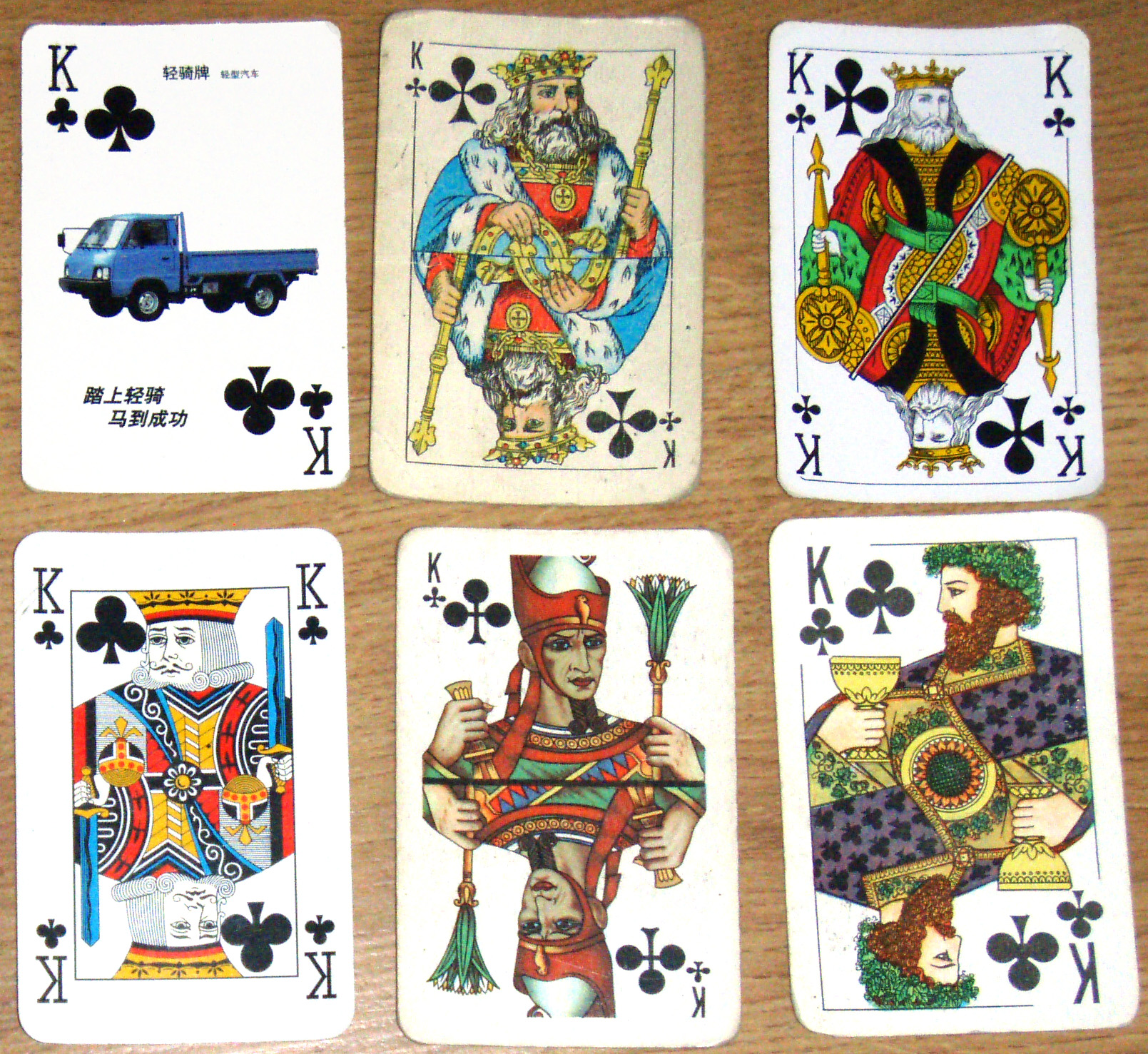
King – A father; A judge; A general.  The King of Clubs is someone with authority, someone who can give an order and get things done.  He may not always be nice about it, but he has his reasons for driving people so hard.  This person is someone wise, though perhaps also someone very stubborn and set in his ways.  For those who have issues with feeling judged all the time, this card could be troubling, but it may also mean that the questioner must face his or her fears and forge ahead.  This is a card about what must be done, and living up to expectations.

Wow, a long post today.  I hope someone out there finds this useful.  Let me know if you do!  Next post we’ll finish up the individual cards.  Until then…
Thanks for reading!

-Cory

Blog Post 83 – Pips and Faces (Cards, part II)

Today I’m continuing the card-reading discussion from the last post.  I’m going to tackle this on a card-by-card basis, but I thought it might be helpful to add a little bit on enumeration and face cards as a whole.  I really should have done this on yesterday’s post, but, well, I didn’t.  So it’s going to be in today’s instead.

There are lots of different systems of interpreting the card numbers and the royals.  Some are fairly simplistic (mine definitely are) and some get incredibly detailed, looking at astrological and numerological significance in kabbalistic and ceremonial magical contexts.  I’m not a particularly good ceremonialist, so I tend to use a fairly straightforward system focusing on key concepts associated with each number.  I can probably demonstrate better than I can explain, so here’s my numbering system.

Aces – Beginnings; Primary or Solitary things

Twos – Pairs; Couples; Exchange

Threes – Growth; Wishes

Fours – Decisions; Stagnation; Choices

Fives – Groups; Bodily things; Gains/Losses

Six – Paths

Sevens – Epitome cards*; Inversions; Trouble

Eights – Talking; Ideas

Nines – Patience; Ambition; Expansion

Tens – Completion; Endings

Jacks – Youth; Children; Messages; Peers

Queens – Women or a particular woman; Beauty; Mothers; Nurses; Teachers

Kings – Men or a particular man; Wisdom; Age; Power; Judges

*A note on “epitome” cards – the Sevens of each suit represent the most concentrated form of that suit.  Often, there’s a somewhat negative connotation to this intensity.  Yet, this does not necessarily mean all good or all bad.  For example, the seven of spades can mean “tears” as an epitome card, but if those tears are near lots of red cards, they are likely tears of joy.

The number combinations can also lead to a certain amount of interpretation.  For instance, if you had several threes and nines, that would guide you towards a reading about opportunities and very quick growth (because both cards are about growth/expansion).  A seven, five, and four might indicate bad choices and losses that come out of those choices.  A king with a six might mean a teacher or elder is going to help guide the questioner in a new direction.

Royal cards (or “face cards”) also have a certain potency that the numeric cards lack.  I sometimes include aces as a face card, but this really depends on the reading and the number of other face cards around it.  It’s sort of like spiritual blackjack—it can be the highest or lowest value depending on the other cards.  The other face cards usually represent particular people or major events in the subject’s life.  Getting a king and a queen of the same suit can often indicate “parents” or the parental guidance which shaped the questioner’s life.  You’ll see more about these as we explore them in depth later on, but for now just know that royals, aces, and sevens all mean “pay attention to this reading.”  There are some divinatory systems (such as the card-reading taught in curanderismo) which also remove the queens from the deck before reading.  This dates back to a European practice based on a specific deck, but don’t be surprised if you don’t see them in someone’s reading.  As a final word on royals, there are two special royals in my system of divination:  the king and queen of hearts.  Depending on the gender of the client, one of these cards will represent him or her (the king for a man, the queen for a woman).  We’ll look at how that works later on, though.

All of these interpretations are also deeply linked to the suits, of course, and to where they fall during the reading.

Okay, now with that out of the way, we’ll be moving on to individual cards in the next post.  Please let me know if you have any questions, though!

Thanks for reading!

-Cory

Blog Post 82 – Cards, an Overview

Hello readers!

Let me first say that I know it would be fairly impossible for me to explain a divination system thoroughly in one post. So this will likely be the first of several posts addressing the use of playing cards as a magical tool.  What I would like to do is explain my personal system of card divination, as well as some of the variants and influences which have shaped my practice.   I’m not going to dive into an extensive history of playing cards or tarot cards, as those subjects are well-covered and well-documented in other sources.  However, a little of the history that sometimes slips through the cracks (especially regarding playing cards) might be worth mentioning here.

While the absolute origin of pictographic cards is unknown, many folks believe they came out of India, China, or Turkey, or with the travelling Romany people (also frequently called “Gypsies”).  What is known is that by the 1500’s, playing cards were very popular with the lower classes, and often cited as a vice by clerical and governmental documents throughout Europe.  They received wide-spread appreciation from the highest ranks, including Bohemian emperor Rudolph II and Napoleon’s spiritual advisor, Madame Lenormand.  Yet cards have almost always been popular among the lower classes, too.  Cards came to America with settlers, sailors, and soldiers.  In fact, in the late 1700’s, a popular ballad called “The Soldier’s Prayer-Book” described the suits, pips, and enumeration of playing cards in terms of biblical metaphor.  For example, the fives represent the five wounds of Christ, the nines are the nine lepers healed by Jesus, and the tens are the Ten Commandments.  While this song may have been a white-wash for gambling soldiers eager to keep one of the few portable entertainments allowed them, it does register an important point:  cards make wonderful tools for metaphoric interpretation.

So why playing cards instead of tarot cards?  For one thing, playing cards have been more or less easily accessible since the 1600’s, and are versatile.  The cards you play a game of blackjack with one day can be used to reveal the future the next.  They also travel well in a pocket and are easily replaced if they get torn or damaged.  Plantation owners in the antebellum South often thought little of slaves having decks of playing cards to amuse themselves in their few off hours (though in some places stricter masters prohibited them altogether).  William Wells Brown, who provided a slave narrative for a character named “Uncle Frank,” claimed that each plantation also had at least one fortune-teller somewhere on the premises, and at least few of them used playing cards.  Today, playing cards are an excellent way of divining even in plain sight.  No one thinks much of two people over a table full of diamonds, spades, clubs, and hearts, while a Devil or Lovers card might raise eyebrows.

My own system of playing card divination is largely based on the book It’s All in the Cards, by Chita Lawrence and the rhyme “For the Witch of Poor Memory” by Dawn Jackson, with a significant amount of additional material I’ve picked up from other books, teachers, and experiences over time.  What I outline here will be my own understanding of these cards, so please do not take it as gospel, and find a method that works for you.

Like most who practice cartomancy, I break the major meanings of the cards down by color and suits.  However, unlike a lot of other practitioners, I don’t ascribe these suits to tarot parallels or elemental attributes.  There are some connections, of course, as hearts and cups both signal emotion-based interpretations, but it’s not a hard-and-fast link.

First, black cards indicate “negative” or “no” answers, while red cards are “positive” or “yes” answers.  This is most important in short readings, which I’ll address in a later post.  Some will say that having more black cards than red is a sign of negativity, but honestly, the only truly “negative” cards in an extended reading are the spades, in my opinion.  For me, I look at the suits in the following way:

Hearts – Family, friends, love, and lovers.  Also emotions and things which are deeply felt.
Clubs – Work and business.  One’s “calling” or destiny.  Also conflict, discussion, and debate.
Diamonds – Money, luck, fortune, happiness.  Also news, letters, and socializing.
Spades – Tears, suffering, woe.  War, fighting, violence.  Also change, warning, and doubts/fears.

I’ll get into each of these suits a little more when I break down the individual cards, but this should give you some idea what I see when I do a layout for a reading.  If I see lots of diamonds and clubs, I know that someone’s got some good work he or she will be well compensated for coming around the bend.  All hearts means that the client is emotionally invested in the reading, or that he or she is dealing with deep family or friendship questions.  Spades and clubs together would be a sign that the client’s job might be in jeopardy, or that work is very unfulfilling for him or her.

In the next post, we’ll get into the actual significance of particular cards, but it is good to keep the overall meanings of the suits in mind as we go forward.  If you have any questions, please ask, and I’ll be happy to answer as best I can (from my own personal perspective…did I mention that yet?).

For today though, thanks for reading!

-Cory

Podcast 13 – Lucky 13

-SHOWNOTES FOR EPISODE 13-

Summary
On this, our Lucky 13th episode, released on Friday the 13th, we’re looking at luck charms and where they come from.  We’ve also got a money bowl spell in WitchCraft, and Van Van oil in Spelled Out.

Play:

Download:  New World Witchery – Episode 13

-Sources-
We reference lots of sources, including:
-Cat Yronwode’s Lucky W Amulet Archive
-The Uncle Remus stories by Joel Chandler Harris
-Harry M. Hyatt’s Hoodoo – Conjuration – Witchcraft – Rootwork
-The article “Charles Chestnutt & the Doctrine of Conjuration”) by Bettye Jo Crissler Carr
-Judika Illes’s book Encyclopedia of 5000 Spells
– Ozark Magic & Folklore by Vance Randolph
-The Chan Chu money frog of Chinese lore
-Richard Dorson’s Buying the Wind

Promos & Music
Title music:  “Homebound,” by Jag, from Cypress Grove Blues.  From Magnatune.
Promo 1- Witchery of One
Promo 2- Media Astra ac Terra
Promo 3- Borealis Meditation
Promo 4 – Iron Powaqa

Podcast 12 – Spell Failures

-SHOWNOTES FOR EPISODE 12-

Summary
This episode is a follow-up to our recent special on spell successes.  We look at spells that have not ended successfully, and discuss how we reacted to these failures.  In WitchCraft, Laine looks at the magic of calligraphy, and in Spelled Out, Cory examines the Green Devil Pay Me Now Spell.

Play:

Download:  New World Witchery – Episode 12

-Sources-
Our own experiences, of course!

We also mentioned the book Encyclopedia of 5000 Spells by Judika Illes again.
Laine mentioned the book Learn Calligraphy, by Margaret Shepherd in the WitchCraft segment.
Cory referenced the Lucky Mojo site as a source for things like the green devil figural candles and Pay Me incense in the Spelled Out segment.
Other sites to find Pay Me-type products (many don’t have “Pay Me Now” oil, but various kinds of commanding and money-drawing incenses and oils, which can be used in a similar way):  Queen of Pentacles Conjure, Music City Mojo, Forest Grove Botanica, Toads Bone Apotheca, and The Conjure Doctor.

Promos & Music
Title music:  “Homebound,” by Jag, from Cypress Grove Blues.  From Magnatune.
Promo 1 – Inciting a Riot
Promo 2-  Pennies in the Well

Blog Post 71 – How I Spent My Summer Vacation

Hello everyone!

We’re almost at the end of this hiatus, and I haven’t posted anything really since right before I went off to grad school for the summer.  But that doesn’t mean I haven’t been up to some witchy business in the meantime.  Today I thought I’d share a few of the things I’ve been doing over the past six weeks (well, other than performing detailed exegeses of 18th-century English poetry and seeing about 27 different versions of Shakespearean performances).

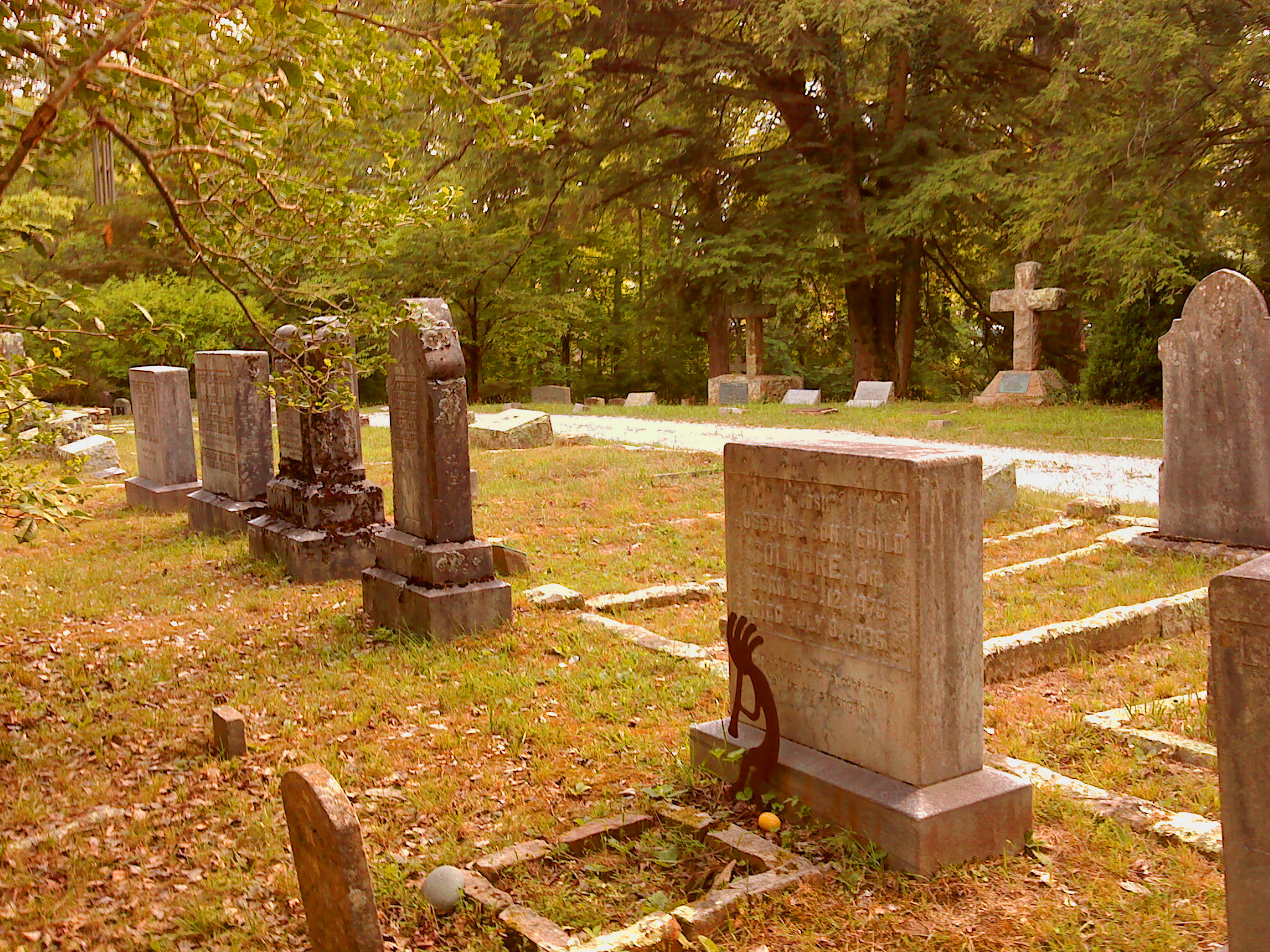
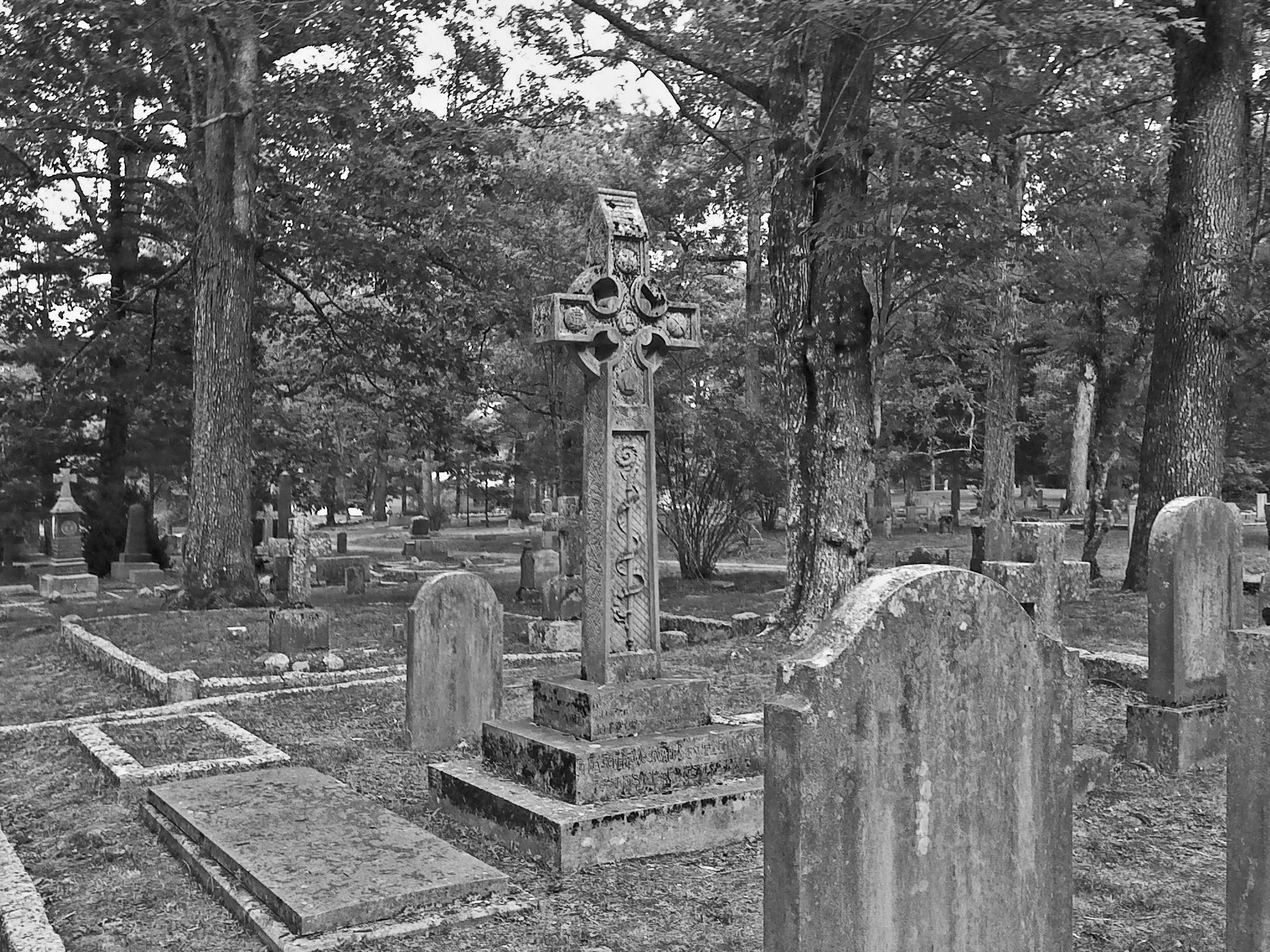
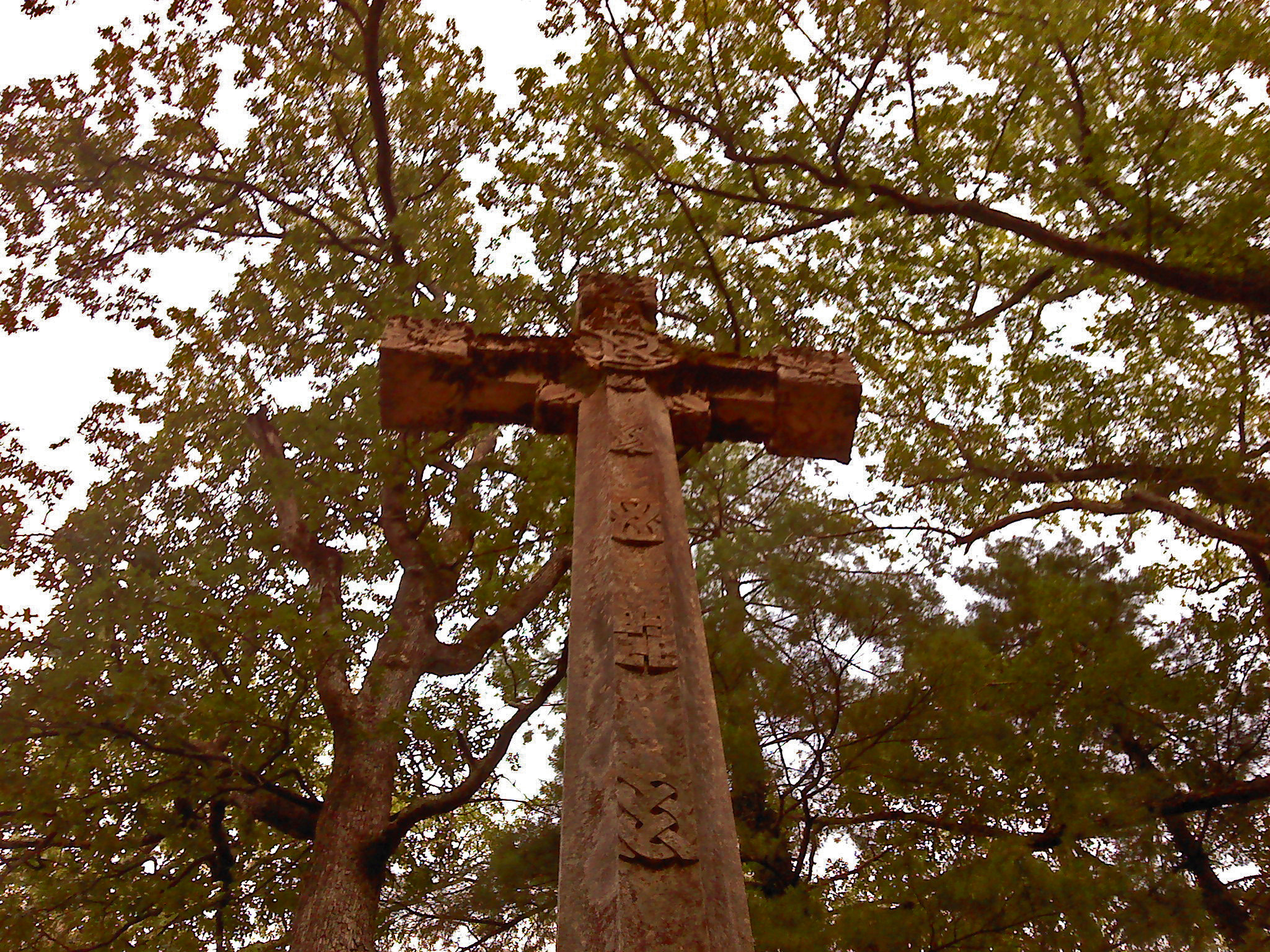
The first thing I should tell you is that I was living on campus, and this campus just happens to be a beautiful rural campus right at the edge of Appalachia.  My access to folklore primary sources was much abetted, and my opportunities to get out in the woods increased a good bit.  Secondly, my dorm was immediately across from a beautiful old cemetery.  As you can probably guess, I spent a good bit of my time there.  Here are some photos of the amazing graves and other funerary décor found in the old boneyard.The graves here date back to around the mid-nineteenth century, so they aren’t incredibly old, but many of them are gorgeous.  And they are certainly older than lots of other cemeteries in the area.

This also happens to be a religious school, so there are plenty of beautiful crosses here, too.  Since it’s as close to Appalachia as it is, the cemetery has a strong Celtic influence in the stonework.

The time I spent here mostly involved taking late night (or often midnight) walking tours of the area.  Among all those graves and under a very starry sky, it was pretty amazing.  If you’re wondering whether or not I encountered “anyone,” though, I have to say the answer is no.  I did bring offerings of food and whiskey several times, leaving them near the small side gate rather than any specific grave (since I wasn’t trying to contact anyone in particular, that made sense to me).  Wildlife abounds near this cemetery, so I often heard things wandering out in the dark just beyond the light’s cast.  I even occasionally met other folks taking late night constitutionals among the headstones.

Since I wanted to do well in my schoolwork, I also made up a potent little mojo bag, which I carried in my pocket.  I anointed it daily with either Crown of Success oil or some local whiskey, depending on what seemed appropriate for the day.  As far as I can tell, it worked magnificently (though I’m still waiting to get final grades back…mojo don’t fail me now!).  I may outline just how I made this specific mojo bag later this week in case there are other students looking for a little “oomf” in their studies.

Of course, a huge portion of my time was dedicated to reading completely non-magical texts (Paradise Lost, vast quantities of Shakespeare, a number of Restoration-era authors like Swift, Pope, and Dryden, etc.), but I also had time to work my way through a few magically inclined books as well.  I’ll be posting some reviews of those as time permits this coming week, so stay tuned for those.

The beautiful natural surroundings of the school also afforded ample opportunities to get outdoors.  Though the heat was stifling some days, trees always provided comforting shade and occasional mountain breezes helped cool me off, too.  So many of the plants that grow in that area have magical connections:  elder, sumac, sweet gum, passionflower, poke berries, and blackberries all grow wild.  I did some harvesting, particularly a good bunch of sassafras, so I’ll try to get some info up on that at some point, too.

Last, but certainly not least, I also had long drives to and from school on the weekends, so I filled up my iPod with lots of witchy podcasts and caught up on some of my favorites.  I also got to hear some new ones (at least new to me) that were excellent.  If you haven’t checked out Pagan Hooligans yet, it’s a great show and the hosts are a lot of fun.  They’re recording their adventures in paganism from day one, and it’s really a refreshing perspective!  I’ve also started really listening to and enjoying Iron Powaqa Radio, which has a decidedly sassy side and always makes me smile.

So that was my summer in a nutshell, I suppose.  I’m going to be trying to get back in the swing of regular posts as soon as possible, and hopefully there will be another podcast up fairly soon, too.  Until then, thank you all for your patience and support!  Feel free to post, email, discuss, and generally share your own New World Witchery here, and we’ll look forward to hearing from you!  Thanks for reading!

All the best, and be well,

-Cory

Podcast Special – Spellcasting Greatest Hits

-SHOWNOTES FOR SPECIAL – SPELLCASTING GREATEST HITS-

Summary
This mid-hiatus special is all about successful spellcasting.  We discuss our most effective spells, our favorite techniques, and some of the philosophy and mechanics of potent magical practice.

Play:

Download:  New World Witchery – Podcast Special – Spellcasting Greatest Hits

-Sources-
*The Lucky Mojo page on “Honey Jars” contains great information on this lovely little family of spells.
*Here are a few pages on lost item spells, particularly the St. Anthony charm mentioned by Cory.
*John George Hohman’s Long Lost Friend contains the Pow-wow spells mentioned in this show.
*The Encyclopedia of 5000 Spells, by Judika Illes, contains many wonderful spells, and is a book we both turn to often.

Music
“Grifos Muertos” by Jeffery Luck Lucas, from his album What We Whisper, on Magnatune.com

Blog Post 70 – Elder

I’ve been noticing a lot of the elder trees blooming in my neck of the woods lately, so I thought I might take a stab at sharing some information on that particular plant.

Elder is a tree that has a long history with humanity.  Its uses are broad, including medicinal, culinary, and magical aspects.  Generally speaking, elder comprises anything in the genus Sambucus, with species names like nigra, canadensis, peruviana, etc. depending on region and appearance.  Elders can be very shrubby, or full-grown trees reaching up to 25 feet tall.  They have white flowers which bloom in the summer in bunches called corymbs (these are very prominent, so much so in fact that I felt compelled to write a blog post on them).  The blue-black berries, which appear in late summer and early fall, are a foodstuff used in everything from jams to vinegars.  The shoots of the elder have even been used as toys.  According to Botanical.com:

“The popular pop-gun of small boys in the country has often been made of Elder stems from which the pith has been removed, which moved Culpepper to declare: ‘It is needless to write any description of this (Elder), since every boy that plays with a pop-gun will not mistake another tree for the Elder.’ Pliny’s writings also testify that pop-guns and whistles are manufactures many centuries old!”

Medicinally, elders different parts have different uses (a quick note:  I am not a medical professional.  Please seek professional medical advice before using any plant medicinally).  The flowers have been used in tisanes to help alleviate all manner of ailments: sore throats, swollen tonsils, flu symptoms, etc.  The cooled elder tea could also be used topically on sunburns or to alleviate sore eyes.  The leaves of the elder can be used as a poultice or turned into an unguent to treat bruises, cuts, and abrasions.  The bark can be used as a potent purgative, though the inner bark is better for this than the outer.

As food, elder berries are most commonly consumed as elderberry jam.  They can also be turned into a syrup, and made into a delicious cordial for the adults in the crowd.  A sweet and slightly spicy wine can also be made from the berries, which seems to be very popular among the brew-it-yourself crowd.  I remember an old herbal book of mine which also contained a recipe for drinks like elderberry fizz and elderberry flip, which are essentially cocktails made from either the wine or the cordial.

Magically, elder has appeared in many cultures with many different purposes.  Some of the Old World magical associations with elder include:

  • Driving away evil spirits (Russian)
  • Magically removing fever (Czech)
  • Protection against witchcraft (English)
  • Good luck at weddings (Serbian)
  • Preventing theft (Sicilian)
  • Bad luck if burned (Romany)

The Danes believe that furniture made from elder wood is haunted by a spirit called Hylde-Moer (or “Elder Mother”), who may bear a connection to Mother Holle in Teutonic mythology.

On this side of the Atlantic, elder shows up in several systems.  John George Hohman’s Long Lost Friend recommends frying elder leaves with tobacco leaves in butter to make a healing salve.  In hoodoo, elder is used primarily for protection.  Hung in a bag near the entrance to the home, elder wood and flowers prevents intruders from coming in.  When mixed with the potent devil’s shoestring herb, it can prevent any unwanted guest from getting close to your home.  Catherine Yronwode’s Hoodoo Herb & Root Magic recommends elder as part of a Law-Keep-Away spell:

“Determine how many ways there are to enter the place where you conduct your business, and for each way, cut an elder stick five inches long, and get a small piece of John the Conqueror root.  On each elder stick carve five notches, one-half inch apart, then cut a sharpened point on each stick.  About fifty feet down each path leading to the place, drive a hole into the ground.  Put a piece of John the Conqueror root at the bottom of the hole, followed by an elder stick, pointed end down, with all the notches facing North.  It is said that no law officer will walk or drive over those elder pegs”  (HHRM p.90).

Yronwode also recommends drawing a circle around oneself with an elder branch and making a wish.  If you try this out, I’d love to hear your results!

There are probably dozens of other things I’m missing about elder, but hopefully this is a good start.  If you have uses of elder or experiences with the plant you’d like to share, please feel free to do so!

Thanks for reading,

-Cory

Blog Post 69 – Charmed Again


Today I’m going to add to Blog Post 67’s charm list and look at a few other simple, word-based spells.  Most of these are rooted in Pow-wow practices, but they are also found throughout other systems as well.  A caveat before I begin, however:  do not take these charms in place of medical advice.  They have their uses and are worth learning, but I am not a medical professional and you should not construe these bits of folk life as prescribed physiological recommendations.  If you get burned or are bleeding badly, seek professional help.

Okay, now on to the charms!

Dealing with Enemies

Overcoming an Enemy (Pow-wow)
This charm to gain advantage over someone who is trying to bully you comes from Hohman’s text, and again I have had little occasion to use it but I rather like the poetry of it:

A CHARM TO GAIN ADVANTAGE OF A MAN OF SUPERIOR STRENGTH.
I [name] breathe upon thee. Three drops of blood I take from thee: the first out of thy heart, the other out of thy liver, and the third out of thy vital powers; and in this I deprive thee of thy strength and manliness.

This particular spell veers very close to a curse, though it also falls into a “self-defense” category, I think.  You don’t, of course, get the three drops of blood from them, though I imagine if you could it would make this spell something much more powerful and possibly much more dangerous.

Healing Charms

Blood-stopping Verse (Pow-wow, Granny Magic, Mountain Magic)
This may be one of the best known mountain charms.  When spoken, this little spell stops a bleeding wound (a non-critical one that is…serious wounds require medical attention!).  There are a few variations on it, and the rules change a bit from person to person, but the words are pretty much the same:

“And when I passed by thee, and saw thee polluted in thine own blood, I said unto thee when thou wast in thy blood, Live; yea, I said unto thee when thou wast in thy blood, Live.”

Those of you who are Bible-savvy probably know this already, but this is simply a passage from Ezekiel 16:6.  It is similar, though not the same as, Psalmic magic (see below).  This charm is mentioned in The Red Church by Chris Bilardi, and has also been featured on Dave Tabler’s excellent Appalachian History blog.  The passage of this charm is typically supposed to be from male-to-female, though it seems there are ways around this restriction (such as “telling” the charm to an inanimate object while someone else in the room is listening).  As to effectiveness, all I can say is that I’ve used it three times and all three times it has worked.

Another Blood-stopping Charm (Pow-wow)
Here’s a different blood-stopping verse from Hohman’s Long Lost Friend:

TO STOP BLEEDING.
I walk through a green forest;
There I find three wells, cool and cold;
The first is called courage, p. 34
The second is called good,
And the third is called stop the blood.

Hohman actually lists about half-a-dozen blood-stopping charms, so I highly recommend looking into his book for more information on the topic.

Stopping Burns (Pow-wow, Mountain Magic)
Here are two charms used to help heal burns and alleviate the pain associated with them (both from Hohman):

HOW TO CURE A BURN.
Three holy men went out walking,
They did bless the heat and the burning;
They blessed that it might not increase;
They blessed that it might quickly cease!

+ + +

(The “+++” means that you make the sign of the cross with your hand over the burn three times)

ANOTHER REMEDY FOR BURNS.
Clear out, brand, but never in; be thou cold or hot, thou must cease to burn. May God guard thy blood and thy flesh, thy marrow and thy bones, and every artery, great or small. They all shall be guarded and protected in the name of God against inflammation and mortification, in the name of God the Father, the Son, and the Holy Ghost. Amen.

I’ve used the first of these charms a couple of times, and noticed a temporary effect.  The pain may not go away entirely but it’s a lot less and the burns didn’t scar, so that might be a good sign.  Or a placebo effect of some kind.  But I leave it up to you to figure it out for yourself.

Psalms (Curanderismo, Pow-wow, Hoodoo, Mountain Magic, most American folk magic systems)

Finally, I thought I’d list a few Psalm fragments which can be written and carried or spoken aloud in times of need.   I personally LOVE Psalmic magic.  You can feel free to use the whole Psalm or just the pertinent portions depending on your spell, but I highly recommend this method of magic.  The Bible, I seem to find more and more, is just loaded with magic, if you know where to look.  And almost no one questions you if you happen to say or write a Bible verse.  Of course, if you have problems with Judeo-Christian religion, this might not be the course for you.  You can find a great list of Psalms and their uses in the Appendix to Chris Bilardi’s The Red Church, the Curious Curandera’s Library Page, and the Lucky Mojo site has a good list, too.

Here’s a sample of Psalms as charms:
Headaches – Psalm 3 – “Thou, O LORD, art a shield for me; my glory, and the lifter up of mine head”
Protection & Peace – Psalm 22 – “be not thou far from me, O LORD: O my strength, haste thee to help me” (This is the Psalm Jesus sang upon the cross)
Against Enemies – Psalm 35 – “Contend, O GOD, with those that contend with me”
Success & Good Fortune – Psalm 65 – “Thou crownest the year with thy goodness; and thy paths drop fatness”
Safe Travels – Psalm 121 – “I will lift up mine eyes unto the hills, from whence cometh my help”

The topic of Psalm magic could be a post in itself, or a book even.  Several books, actually.  In fact, there are plenty of wonderful books on this subject, and I recommend tracking them down if you can.

That’s it for today’s charmed life.   If you have any charms to share, please feel free to do so!

Thanks for reading!

-Cory

Blog Post 68 – Be Our Guest?

So running with an idea (and a title lovingly borrowed) from Juniper over at Walking the Hedge and Standing Stone and Garden Gate, I’m putting out a call for submissions to our wonderful readers.  I know we probably have at least a couple of writers out there as well, and we’d love to have you do a guest post for New World Witchery.

We’re going to have about 6-8 weeks of low posting from me, and we’d like to be able to post at least 3 articles per week if possible.  So that means we need 18-24 well-written, proofread, researched, reasoned, resonant, and remarkable entries.  Something tells me we’ve got a few folks who might just be up to the task, so if you’re interested, here’s the submissions guide:

1)      Each article should be no less than 300 words, and no more than 2000.  500-800 words is usually ideal length, but there is some flexibility.
2)      MS Word (.doc) attachments are ideal, with inline email text being a secondary preference.
3)      Please include all links with your submission.  I may have to tweak them slightly to get them on the site, but I definitely can’t chase down links for you.  Footnotes or endnotes should be similarly included.
4)      Any artwork must be in the public domain (try Wikimedia Commons to start) or your own original picture/art with authorization to use it on the site.
5)      All work must be your own.  Citations are fine, along with short passages of material presented in a scholarly fashion, but please, no plagiarism.
6)      Please proofread your work.  Excessive typos and grammar snafus will not be corrected or posted.
7)      You retain all publication rights to your material other than the first-time online publication rights.  In other words, you’re free to submit this on a site like Witchvox or to a print publication, as long as you say that it was first published on this site.  (I’ll also assume the right to reprint passages or references to your work in future publications, but I will not publish your article in its entirety without your permission).

Of course, I’m always happy to get nice, scholarly articles on the topics of hoodoo, pow-wow, curanderismo, witchcraft, etc.  But what I’d really like is to get articles on the following topics, specifically:

  • Personal or family magical lore (such as magical practices, divinations, weather signs, etc.).  Please include your family background (such as region or ethnic heritage), too, so we know where these things come from.
  • Regional magical lore, including things like witch stories, magical places, spells, famous witches, etc.  Of course, please let us know which region you’re writing about (you don’t have to be too specific—“Appalachia” or “New England” would be sufficient).
  • Spell-work hits and misses.  Tell us about spells you’ve done, ingredients you’ve used, charms you’ve said and what your results were.
  • Botanical or animal curios and your personal experiences with them.  Are there ones you favor?  Ones you shy away from?
  • Favorite spells and practices.  Do you particularly like working with the dead?  Do you have a favorite way to communicate with the Ancestors?  Are you a sharp-shooter when it comes to love mojos?  Tell us what you do and how you got so dang good at it!
  • Magical book reviews are also welcome, especially ones dealing with North American folk magic and witchcraft (not Wicca—there are lots of reviews on Wiccan books, so we don’t really want those here).  History, folklore, and regionally specific spellbooks (like conjure or brujeria books) are all excellent candidates for review.

Other topics are welcome; just email and ask about them first.  Not every article may get published on the site, so if we don’t select yours or if we suggest some revisions first, please don’t take it personally.

“Geez!” you say.  “That’s an awful lot of work for not getting paid!”  Ah, but there’s the twist in the plot!  While we’re still a relatively poor blog and podcast, we’re gearing up for another contest.  Anyone who writes a guest article that we post on New World Witchery will be entered for that contest.   We’ve still got to work out just what we’re going to give out, but right now we’re looking at having three winners drawn at random.  If you submit multiple posts and we publish them, you get an entry for every article we put up!  Each winner will get a different, unique prize, so this could shape up to be a very interesting contest.

So, yes, technically you’re still not getting paid exactly, but you may wind up with something cool in the end.  And you’ll be adding to the wealth of knowledge found here, so you are benefitting a whole wide world of witchy folk.  Isn’t that a nice feeling?

So, if you’re interested in being a part of New World Witchery, email us your articles and maybe win a prize in the process!  In case you can’t get the email from that link, it’s compassandkey@gmail.com.

Many thanks, and we look forward to hearing from you!

-Cory