Podcast Special – Zombies

SHOWNOTES FOR PODCAST SPECIAL – ZOMBIES

Summary
Tonight we celebrate everyone’s favorite Deadite, the zombie:

We begin with “Chapter 13: Zombies,” from Tell My Horse, by Zora Neale Hurston
Then we hear a short story from Voodoo: Strange & Fascinating Tales & Lore, edited by John Richard Stephens
A selection of text from Maya Deren’s Divine Horsemen: The Living Gods of Haiti finishes the show.

Apologies for the audio glitches near the middle of the episode!

Play
Special Episode – Zombies

Music
“Grifos Muertos” by Jeffery Luck Lucas, from his album What We Whisper, on Magnatune.com

Incidental Music: “Ouch” (Be Your Own PET); “Play with Fire” (Cobra Verde); “Sixteen Shells from a Thirty-Ought-Six” (Tom Waits); “John the Revelator” (Blind Willie Johnson); “This Old World is Going Down” (The Modulations)

Podcast Special – American Devils

SHOWNOTES FOR PODCAST SPECIAL – AMERICAN DEVILS

Summary
This evening we hear two tales about diabolical creatures from American folklore:

Play
Special Episode – American Devils

Music
“Grifos Muertos” by Jeffery Luck Lucas, from his album What We Whisper, on Magnatune.com

Podcast Special – Native Creatures

SHOWNOTES FOR PODCAST SPECIAL – NATIVE CREATURES

Summary
Tonight we hear three tales from Native American sources about strange and unusual creatures:

Play
Special Episode – Native Creatures

Music
“Grifos Muertos” by Jeffery Luck Lucas, from his album What We Whisper, on Magnatune.com

Podcast Special – Hairy Men and Bloody Bones

SHOWNOTES FOR PODCAST SPECIAL – HAIRY MEN & BLOODY BONES

Summary
In our first Halloween storytelling episode, we look at two folktales: “WIley & the Hairy Man,” (as retold by Diane de las Casas) and “Raw Head & Bloody Bones” (as retold by S.E. Schlosser)

Play
Speical Episode – Hairy Men and Bloody Bones

Music
“Grifos Muertos” by Jeffery Luck Lucas, from his album What We Whisper, on Magnatune.com

Podcast Special – Learning Witchcraft

Podcast Special – Learning Witchcraft

Summary: In this episode, I’ll be telling stories from American folklore about how people learn witchcraft. We’ll hear tales of initiation and apprenticeship, solitary witches, witch apprenticeships, and find out just what witches do.

Play:

Download:  New World Witchery Special – Learning Witchcraft


Stories:


Promos & Music
“Grifos Muertos” by Jeffery Luck Lucas, from his album What We Whisper, on Magnatune.com

All incidental music comes from the group Falling You, from the album Touch,  on Magnatune. Songs include:

  • “Sadness of the Witch”
  • “The Art of Possession”
  • “Less Likely to Believe”
  • “Something About Eve”
  • “Reading the Leaves”

Podcast Special – Magical Saints

-SHOWNOTES FOR PODCAST SPECIAL-

Summary
In our only June 2012 episode (sorry! I’ll be back from school soon!) Cory tells a few tales of magical saints. The saints range from canonical choices to folk tales to at least one very American folk saint.

Play:

Download:  Special Episode – Magical Saints

-Sources-

The sources today come mostly from the following books:

Promos & Music
“Grifos Muertos” by Jeffery Luck Lucas, from his album What We Whisper, on Magnatune.com

All incidental music comes from the group Zephyrus, on Magnatune (except for one incidental bumper which I sampled from YouTube)

(also, I used Audacity instead of GarageBand for this episode, so the sound may be a bit different)

Podcast Special – Memphis Mojo

-SHOWNOTES FOR PODCAST SPECIAL – MEMPHIS MOJO

Summary
In this episode, Cory takes you along with him on a trip to Memphis, Tennessee, to discover that city’s magical and mystical side.

Play:
Download: New World Witchery Special – Memphis Mojo

-Sources-
Places:
Ebbo Spiritual Supply
Tater Red’s on Beale St.
A. Schwab’s on Beale St.
The Center for Southern Folklore
The Crystal Grotto at the Memorial Park Cemetery

Information:
Nation Sack” from Lucky Mojo Curio Co. by Catherine Yronwode
Voodoo Village” from Haunted America Tours

You can now request Card Readings from Cory via email, if you are so inclined.

Don’t forget to follow us at Twitter!

-Music-
Memphis Minnie: “Hoodoo Lady Blues
Robert Johnson: “Come on in My Kitchen
Marideth Sisco & Blackberry Winter: “Cold, Rain, & Snow,” and “On a Hill Lone & Gray
Blind Mississippi Morris: “Mysterious Woman Blues

Blog Post 155 – Radiolab and Robert Johnson at the Crossroads

Hi all!

I know this isn’t the botanical lore I was promising for the month of April, but don’t worry, there’s more of that coming. I just had to share something that my very dear and wonderful friend Kathleen alerted me to. One of my favorite non-magical podcasts in the world, Radiolab, just did a really interesting mini-show on a topic which intersects with our work here!

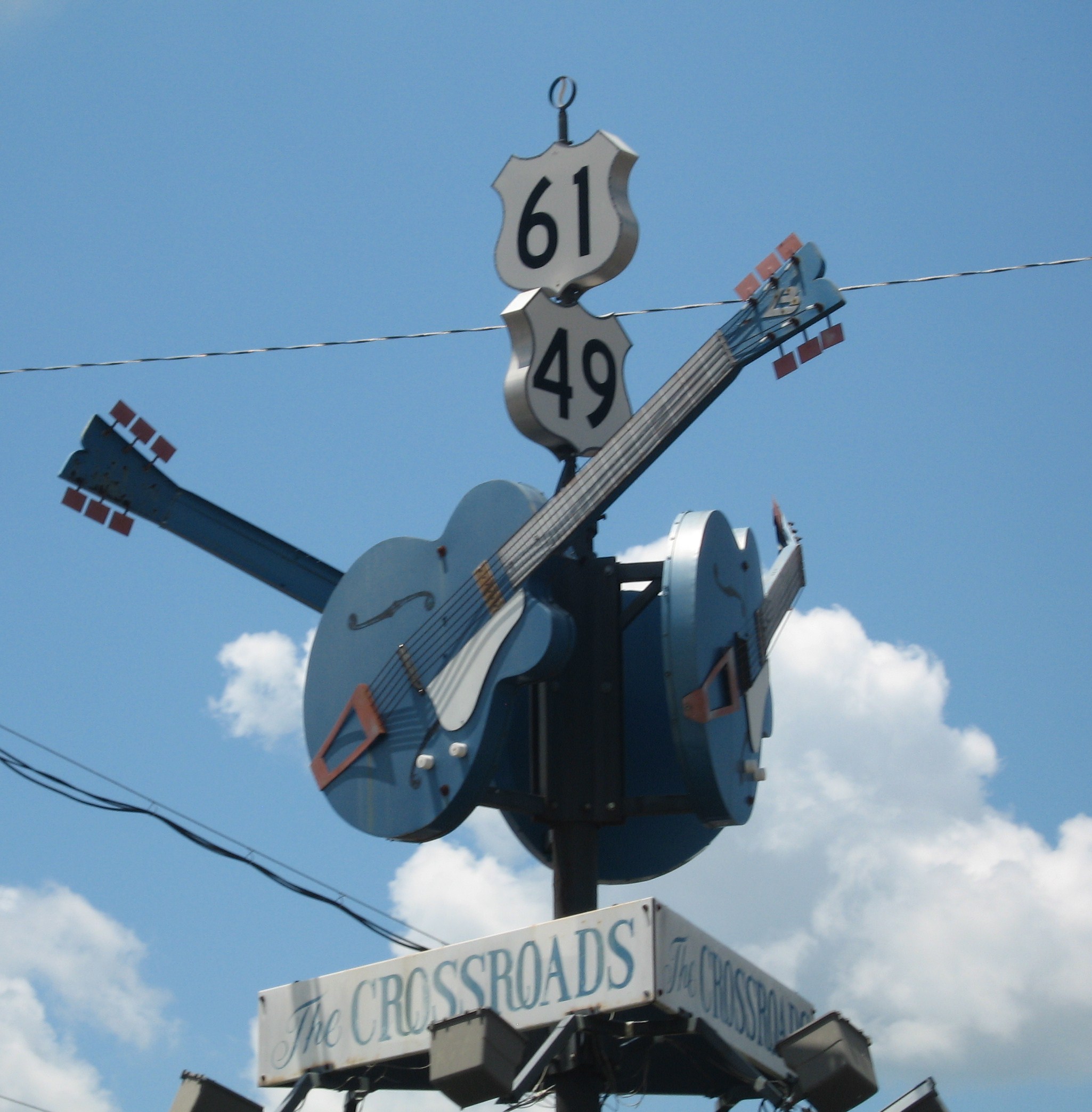
Please hop over and check out the 30 minute Radiolab short on the Crossroads, specifically the tangled crossroads legend surrounding blues players Robert Johnson (to whom the myth of selling his soul to become a great blues player is frequently ascribed) and Tommy Johnson (who may actually have done the crossroads ritual). There are fantastic interviews with music historians, blues experts, and even Tommy Johnson’s brother, all of which help shed light on the strange and gorgeous African American folk tale about gaining new power at the crossroads.

I should point out that they come at this from a scientific and historical perspective, and really are pursuing the true story about the musicians rather than doing much to get at the folkloric roots of the crossroads phenomenon. They specifically wind up ignoring the existence of the story in other African American literary and folklore sources, such as these:

  • The multiple incidents of crossoroads conjure recorded by Harry M. Hyatt between 1935-1939 (found at the bottom of the Lucky Mojo page linked above), which would have pre-dated the “creation” of this story as described in the Radiolab short
  • The numerous incidences of crossroads as places of healing, particularly trading things like a wart or a sty to a mysterious stranger, in Southern and African American folklore (which can be found in Hyatt’s work, the work of Vance Randolph, and Newbell Niles Puckett).
  • Puckett’s description of the crossroads ritual as an origin for folk hero Jack, which was published in 1926 and states:

Various legends are in vogue among the Negroes to account for the origin of this creature.  One illustrating the common theme, was told me by a root-doctor last summer.  Jack sold himself to the devil at the crossroads one night at twelve o’clock. For seven years all power was given to him to do as he pleased, but at the end of that period his soul belonged to the devil. [This eventually goes on to tell the story of Jack-o-Lantern, but the crossroads portion of it is given here as illustration of my particular point]

  • Zora Neale Hurston’s 1931 article on African American folk magic, which has the following item in it:

How to Have a Slick Hand with People.

On the dark moon of any Friday night, dress yourself in black. Sit flat in the fork of a cross road at exactly twelve o’clock and sell yourself out to the devil. After which you shall have power to do anything you wish to do (“Hoodoo in America,” 392)

  • The appearance of crossroads in European folk magic (such as that found in Charles Leland’s Gypsy Sorcery & Fortune-telling, published in 1891, long before the legends being described in the blues tales)

There are so many other appearances of crossroads in folklore that it would be daunting to tackle them here (though I will probably try to do a bigger article on them some day). My real point is just to say that while I love the Radiolab story, they definitely overlooked a large amount of crossroads material so that they could focus more on the story of two real blues musicians, which is understandable.

I really do hope you’ll give this particular show a listen. It’s great, especially in its ability to untangle the two legends from one another, and you get to hear some really hauntingly good blues, too.  Let me know what you think of it!

All the best, thanks for reading, and see you down at the crossroads…

-Cory
Quick Update! – Spring Lore Contest Reminder

Hi folks!

This is just a reminder that if you want to get into the drawing for our Spring Lore Contest, there’s never been a better time than now!  You’ve only got five days left—until March 21, 2012! We’re looking for Springtime Lore this time around: seed planting rituals & customs, fertility charms, spring cleaning spells, etc. Anything and everything related to Easter eggs, baby animals, April showers, and (shudder) bunnies. We’re trying to put together an episode featuring folklore, ritual, and practice from all over the country and the world relating to rebirth, green grass, renewal, etc. and we need your help to do it! So if you’ve been hanging on to a killer magical gardening tip, a clever and enchanted use for chocolate rabbits, or a story about dancing naked around a maypole, fire up your email and send it in!

So what’s in it for you if you send us lore? Prizes!

The Prizes

  • A copy of Etched Offerings: Voices from the Cauldron of Story from Misanthrope press (an anthology of pagan fiction featuring stories from several podcasters like Oraia Helene, Saturn Darkhope, & me!)
  • An email card reading from Cory, with a 1-2 page card report featuring a 2-card split and 7-card layout, plus interpretations and a fairy-tale recommendation to connect your reading to a story you can turn to for more inspiration.
  • A goody box from Compass & Key Apothecary featuring several of our oils, curios, and mojo bags. While actual contents of the box are subject to change, they will likely have at least 2 oils, 2 mojo bags, 1-2 curios (like rabbits’ feet, gator paws, or Mercury dimes), and 3-4 herbal samples.

How to Enter

Send your entries to compassandkey@gmail.com to enter, and be sure to put “Spring Lore” in your subject line.

We hope to hear from you soon! Remember, the deadline is midnight on March 21st, 2012, so get those entries in before then!

All the best, and thanks for everything you do!

-Cory

Blog Post 150 – The Trickster’s Web

I’ve been thinking a lot lately about the importance of tricksters in folklore and fairy tales. I know it’s fairly well-trod ground to start looking at the mythical value of tricksters like Coyote and Loki and Hermes and all the other devious deities and demigods who so love to upend the orderly world in favor of a little creative chaos. I’m not going to dive into specific tricksters here (though I do intend to do some exploring of North American tricksters in the not too distant future), but I wanted to look instead at the folkloric need for these figures. After all, they’re not exactly protagonists, and they’re not exactly antagonists, but they are something else entirely. Their very identification and definition is tricky. So what is the trickster’s role in the tales we tell? According to Jane Yolen, author/editor of Favorite Folktales from Around the World:

“The figure of the trickster can be found in every folklore tradition. The trickster as hero or as god plays an important role: Anansi in Africa is sometimes heroic, sometimes foolish, with definite supernatural powers. LIkewise his famous Native American counterparts, Coyote and Rabbit, act as both fooler and fooled….The German Tyll Ulenspiegel, a popular peasant jester, actually lived in the fourteenth century, but within another two centuries had become a legend around whose names volumes of anecdotes and jests had accumulated…Whether the trickster is an animal such as Brer Rabbit or Raven or the wily fox, or supremely human like the German master thief, he plays his tricks out to the end. And sometimes it is a bloody and awful ending” (From section “Tricksters, Rogues, & Cheats,” 127).

So then the trickster can be both a guide for overcoming adversity and self-empowerment, and he can be a sacrificial victim to fate—sometimes illustrating the tragically comic cycle of life and death we all must go through. In this latter capacity, the trickster attempts to operate outside the web of Fate (or natural order, if you prefer), and becomes deeply entangled in the threads he or she tried to avoid. I think here of Anansi, the spider, who in one tale learns of a magic spell which causes anyone who says the word “five” to drop dead on the spot and thus begins tricking various creatures to say that word so that he may eat them. Of course, the trick gets turned around on him, and he accidentally says “five” when a clever bird refuses to play by his rules, thus ending his own life. It is a storytelling picture of a spider weaving one web inside of another, only to be caught by the bigger web he didn’t see.

Why then do we need to have clever characters that can be so easily duped or destroyed? Do they play a similar role to folkloric devils, existing simultaneously as a threat and a challenge (and thus also functioning as teachers in some ways)?  I would assert here that when a trickster is overcome by his own tricks, it is because his deceit has crossed a line. Knowing how and when to play a trick is deeply important. Teachers understand that the process of discovery is very important to really gaining understanding as opposed to simply forcing short-term rote memorization (a topic we discussed in our recent podcast on riddles). I’ll get to the role of deceit a bit more in depth in a moment, but first let me briefly detour back to the ide of a trickster as an empowering figure.

Without diving too deeply into the sticky issues of what is “moral” in fairy and folk tales, I think it’s relevant to point out that concepts of “good” and “bad” or “right” and “wrong” form central pillars around which many stories are built. At the same time, there remains an intense ambiguity about just about every “moral” decision in a fairy tale—the witch in “Hansel and Gretel” does seem to deserve to die, as she wants to kill and eat children, but is it a particularly happy ending for the children to return to a father who willingly (if reluctantly) abandoned them to that horrible ordeal? Bruno Bettelheim, in his controversial and classic fairy tale exegesis The Uses of Enchantment has this to say:

“Amoral fairy tales show no polarization or juxtaposition of good and bad persons; that is because these amoral stories serve an entirely different purpose. Such tales or type figures as ‘Puss in Boots,’ who arranges for the hero’s success through trickery, and Jack, who steals the giant’s treasure, build character not by promoting choices between good and bad, but by giving the child the hope that even the meekest can succeed in life” (10).

So then, the child, who knows intuitively that he or she is not as strong and capable in many ways as the adults around him or her, needs to understand that strength and physical skill are not the only methods for overcoming adversity. Brains count for something, too. For those of us who have outgrown the age of childhood (though you’ll be hard-pressed to convince me I’ve outgrown it in any way but the number of years shown on my driver’s license), that lesson can still be immensely invaluable. When we are faced with an ogrish boss or a monstrous task or a devilish choice, we need to believe that we have a tool in our arsenal that can beat the odds—and that’s where the trickster becomes more than a comical prop or sacrificial victim. As Bettelheim says, “Children know that, short of doing adults’ bidding, they have only one way to be safe from adult wrath: through outwitting them” (28). We, too, as adults and as magical folk, deal with a number of dangerous situations all the time, and we must adopt the trickster’s cleverness if we hope to overcome the challenges we face in one piece. To illustrate this point, Bettelheim relates the tale of the “Fisherman and the Jinny” (one we’ve mentioned a lot), in which a fisherman is threatened by a genie that he releases and must trick him back into the bottle or be killed by him. The genie is clearly bigger and more powerful, and only by means of deviousness can the fisherman preserve his life.  If you want to lend a magical quality to your life, think about how often you bottle the genie of a ferocious argument with a lover or friend by a few carefully placed words or a well-timed gesture.

Still, one moral lesson that we so often teach our children (and one which we repeat to ourselves ad nauseum) is: don’t lie. Lies are bad. Always tell the truth. Except, of course, when you shouldn’t. And here we come to my last point of examination in the role of the trickster. In The Witch Must Die, scholar Sheldon Cashdan looks at lies and deceit by examining three fairy tales: “The Goose Girl,” in which lying is punished brutally when it is found out; “Rumpelstiltskin,” in which lies are accommodated and made true by the intervention of magic and/or fate; and “Puss in Boots,” in which trickery is rewarded because it is cleverly executed. What Cashdan uncovers by contrasting these stories is that trickery when performed for the sake of trickery is ambivalent, and when done in the service of another person (or a righteous cause) is praiseworthy, but deceit performed for the sake of harm to another must bring judgement or punishment down on the deceiver/trickster. As he puts it:

“[I]t is the intent behind the lie that counts rather than the lie itself. In other words, there may be instances in which telling lies is justified…These contrasting approaches to deception reflect the ambivalence people harbor about telling the truth. On the one hand, we know that lying is wrong. At the same time, it is hard, as Diogenes discovered, to find an honest man…In some fairy tales, lying is not merely treated with ambivalence but is actually rewarded” (140).

For an a magical practitioner, then, the power of the trickster is power that can be used reactively (to combat an attack or overcome an obstacle) or chaotic (to inspire the topsy-turvy energy that seems to surge up periodically in Nature), but if it is used offensively it must be justified. Willfully entrapping someone by magical means—and here I’d venture away from magic and say this principle extends to social behavior, too—has to have some solid reasoning behind it, or else the universe has a way of bringing its own justice down on the tricksy person who did the ensnaring.

What the trickster seems to say to me, then, is this: If you are a spider, spin for the beauty of your web; spin that you may catch the food you need; spin to keep your enemies away. But beware weaving the web of greed and harm, because there’s likely a bigger web you do not see, and a bigger spider who is very hungry dangling not far overhead.

Whew, enough philosophy, right? What are your thoughts on tricksters, especially as teachers? Do you agree about the idea of justification? Have you ever experienced a trickster in your own life or practice? Let us know in the comments below!

Thanks for reading!

-Cory