Podcast 32 – Voodoo Hoodoo with Denise Alvarado

-SHOWNOTES FOR EPISODE 32-

Summary
This episode looks at the particular practices of Voodoo and Hoodoo around New Orleans. We have an interview with spellbook author Denise Alvarado, several excerpts from folkloric and magical texts, and even some music.

Play:

Download:  New World Witchery – Episode 32

-Sources-
First, my apologies for the sudden cut-off in the interview. That was a technical difficulty on my end, but we still got almost a full 30 minutes of discussion with a stellar guest, so enjoy!

Books
Mules & Men, by Zora Neale Hurston
Voodoo in New Orleans, by Robert Tallant
Black & White Magic of Marie Laveau, by NDP Bivens
Music
All songs were taken from the Florida Folklife collection, and are available here: http://www.floridamemory.com/collections/folklife
The songs were “Crow Dance” and “Oh Mr. Brown,” both sung by Zora Neale Hurston, and “Sissy in the Barn,” sung by the children of Carver Elementary School in 1954.

Guest & Announcements
Denise Alvarado can be found at her website, Mystic Voodoo.

Please also check out her books, The Voodoo Hoodoo Spellbook (soon to be released in an expanded edition by Weiser Books), Voodoo Dolls in Magic & Ritual, and The Voodoo Doll Spellbook. You should also subscribe to her journal, Hoodoo & Conjure Quarterly.

Don’t forget about the Second Annual Pagan Podkin Supermoot in Salem, MA, on the weekend of Sept. 17th, 2011.  Find out more details about the event and opportunities to come meet us in person at the PPSM2 Website. [Laine respectfully asks that she not be in any photographs, due to privacy concerns—Cory will be happy to wear a wig and pretend to be Laine, however].

I’ll also be at the West KY Hoodoo Rootworker Heritage Festival (event site) teaching a course on “Biblical Magic & Sorcery.”

Promos & Music
Title music:  “Homebound,” by Jag, from Cypress Grove Blues.  From Magnatune.
Promo 1 – Conjure Doctor Magical Supplies
Promo 2 – Lakefront Pagan Voice
Promo 3 – Druidcast

Blog Post 130 – War Water

In my Spelled Out section of Podcast 30, I gave the recipe and basic uses of a conjure formula called War Water. For those who didn’t have a pen handy, I thought now would be a good time to provide a little of the provenance, process, and practice surrounding this mixture.

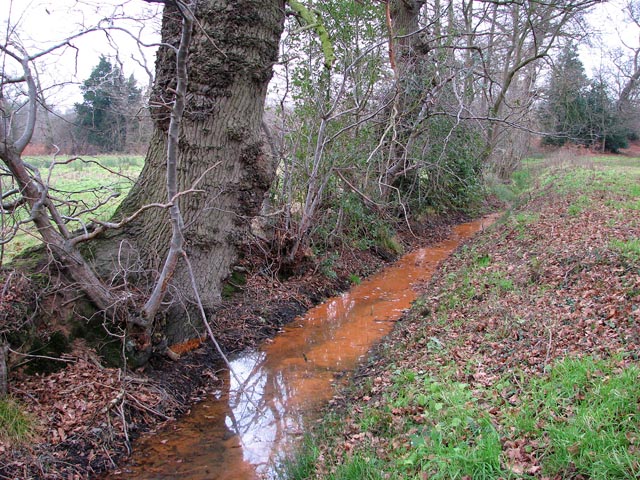
War Water, which is also commonly called Mars Water or Iron Water, is in its most essential form, simply water in which iron has been allowed to rust. The presence of iron in the water gives it a reddish-brown hue, looking a bit like blood even in some cases. Draja Mickaharic makes a good case for why iron’s presence in the water empowers it:

“Iron is the metal of the planet Mars, the planet astrologers credit with ruling warfare and combat, as well as sex. Used either for defense or attack, war water is a strong carrier of the negative emotional energy used in magical battles” (Century of Spells, p. 27).

Mickaharic also points out that the formula was originally used to treat anemia (an iron deficiency in the blood), though far better treatments are now available. Cat Yronwode notes on her site that the Martian association indicates that it is not originally an African recipe: “Since the Roman god Mars was the god of war and his symbolic metal was iron, it seems pretty clear that War Water is a European contribution to hoodoo” (“War Water” par. 1). Despite its origins, however, this particular magical mixture is firmly planted in hoodoo and conjure practice now.

So how does a person make War Water? Almost every source—except one—agree that the basic recipe involves putting cut iron of some type into a container, covering it with a bit of water, and letting it rust. There are plenty of variations, sometimes depending on the intent, and sometimes just depending on who’s telling you how to make it. Judika Illes breaks down the formula by intent:

Protective War Water

  • Iron nails (cut iron), ones that rust easily
  • Enough water to cover nails in a mason jar
  • Let rust for about 7-10 days (open periodically to allow oxidation)
  • Keep adding water as the rust builds
  • Strain and use as needed (but discard if bacteria form)

Malevolent War Water

  • Thunderstorm water in a jar
  • Rusty nails, sulfur, and urine

(Encylopedia of 5000 Spells, p. 1080)

This formulation is essentially the same as the one found in Draja Mickaharic’s Century of Spells, though Mickaharic’s version is a bit looser, calling for about 3/4 pound of cut iron nails in a 2 quart bottle. These are covered with tap water and allowed to rust. After the rust begins, more water is added, and the bottle is covered (though occasionally uncovered for rusting purposes).

The alternative recipe comes from the normally quite reputable Zora Neale Hurston’s “Hoodoo in America,” in which she describes War Water as “Oil of Tar in water (filtered)” (p. 412). Oil of Tar is essentially a thick distillate of creosote or burned pine resin—which is carcinogenic and dangerous. A reasonable substitution for Oil of Tar would be turpentine, another pine distillate with slightly less caustic properties. However, almost every formulary I found other than Hurston’s had separate distinctions for War Water and a formula called “Tar Water,” which is much more like Hurston’s recipe and which is used to remove psychic sludge from one’s life. I would then conclude that Hurston recorded the Tar Water recipe as a War Water recipe in error, or quite possibly an editor inserted this formula without knowing the difference (which commonly happened to Hurston’s work).

There are also additional ingredients that you can add to the water to help “flavor” it for your magical purposes. One of the most common additions is Spanish moss, a dense vegetal beard which covers trees in the Deep South. Once it begins to rot in the liquid, it turns the mixture black and gives it a decaying scent. Adding sulphur or gunpowder would also give it a powerfully aggressive and dangerous vibe. My teacher, Stephanie Palm, makes a formula that basically takes Mississippi River water and turns it into War Water with these sorts of additions in it, which she calls “Swamp Water.”

Once you have War Water, how do you use it? There are several methods for deploying this water, depending on just what your final intent might be. If you only intend to use the most basic rust-water formula for protective purposes, here are some ways you might apply it:

  • As an addition to a spiritual bath
  • As a wash for the outside of your home or business
  • As a sprinkle for any letters or papers you might be sending out to someone hostile to you (such as legal papers)

The most common use of War Water, however, is as a component of psychic warfare. Cat Yronwode says of it:

“To use it, you shake a bottle up and hurl it at the doorstep of your enemy, where it should break, leaving a rusty, dangerously sharp mess for him or her to step in. When i was a young woman coming up in the East Bay in the 1960s, War Water was used by fractious root workers to declare occult war on each other. Since these folks were already at odds to the extent that they could not simply walk into each other’s yards and smash the glass bottle on the doorstep, they would make “drive by” attacks, rumbling through the residential streets of Oakland in the midnight hour and tossing bottles of War Water into the yards of their enemies, like occult Molotov cocktails. Ah, those were the days …” (“War Water” par. 4).

In Jim Haskins’ Voodoo & Hoodoo, he says that to use War Water you should “obtain the nest of a dirt dauber, break it apart and mix it with graveyard dirt. Put the mixture in a bottle with War Water and shake it up. Smash it on the person’s walkway” (p. 130).  Hurston does not mention smashing the bottle, but she does call for sprinkling it in front of an enemy’s house. She also provides a secondary method which requires that you “take a fresh black hen’s egg, make a hole big enough to get the egg out and take the names, pepper sauce and mustard and fill the egg up and soak it in War Water for nine days and throw ito ver the house, and it will cross the house and they will have to move away” (“Hoodoo in America,” p. 375).

As a final note, if you are considering starting a psychic war, Draja Mickaharic makes a good case for having sturdy defenses in place before beginning any attack:

“If you are going to declare psychic war on someone you should mop your stairs, porch, doorway, and any outside surfaces of your home on which anything can be cast or thrown before you begin the war. This ensures that you will be protected when the other person’s inevitable counterattack comes. In most cases War Water will cause any spell which is placed on your doorstep to rebound instantly to the sender.” (Century of Spells, p. 28)

So that’s War Water. My own personal inclinations with this water would be to use a railroad spike, coffin nails, and urine in a jar for defensive and protective magic, while perhaps using coffin nails, goofer dust, red pepper, sulphur/gunpowder, and Spanish moss for a more aggressive formula. But that’s just me, and quite frankly I have yet to need either of these formulas. My only real experience with War Water thusfar is as a spiritual bath for protection, and in that case only in it’s iron-and-water form. It seemed to work fine, so unless the need for a more advanced concoction presents itself, that’s probably as far as I’d take it.

If you have used this formula or one like it and want to share, please do.

Thanks for reading!

-Cory

Blog Post 104 – (A Little) More Colonial (and Native American) Magic

I thought in honor of the recent Thanksgiving festivities—at least those here in the US (and with a belated bow to the harvest feasting in Canada), I would take a brief look at some of the magical practices circulating around the time of that “first Thanksgiving.”  The people who arrived in places like Plymouth and Massachusetts Bay to settle the New World—never mind it was already quite settled by its native inhabitants—are commonly referred to as Pilgrims, and contemporarily would have been known as Separatists.  Thinking about that late autumn gathering, when the local Pawtuxet tribe and the Separatists who had survived the harsh New England winter and managed to put together enough bounty for the coming cold season gathered at the table, is a sort of fond romance or fantasy.  Often we imagine the Indians in their deerskins and the Pilgrims in their blackest hats with the shiniest buckles on them.  The staunch Calvinism of the Separatists contrasts with the “noble savage” imagery of the Natives, their shared meal demonstrating two very different worlds breaking bread together.  Yet both groups shared many things in common, including a set of magical practices aimed at protecting their homes and blessing themselves with prosperity.

The fear of malefic witchcraft—which would eventually go on to spawn the famous “witch hunts” of Colonial America—stirred hearts on both sides of the table.  Each group had its own charms, talismans, prayers, and formulas for dealing with the dangers of spiteful magic.  The Pilgrims, drawing on their English heritage, had all sorts of magical tricks up their black-and-white sleeves for defeating evil witches and devils:

“Legal actions against malefic witchcraft merely represented the final point of defense against what were perceived as destructive magical powers.  Prior to entering his complaint into the legal domain, the colonial villager could draw upon a variety of protective magical formulas to maintain some sort of equilibrium between good and evil mystical forces.  Several of these techniques—by no means an exhaustive list—were mentioned in a sermon delivered by Deodat Lawson…’The Sieve and Scyssers [Scissors]; the Bible and Key; the white of an Egge in the Glass; the Horse-shoe nailed on the threshold; a stone hung over a rack in the Stable.’” (Weisman 40)

Looking at these specific examples, we can see a few things which indicate that magic among the Pilgrims was not so uncommon.

The Sieve & Scissors – These items were commonly used in fortune telling games by young girls, particularly on exciting nights like Halloween.  They could also be used to confuse or cut a witch, magically speaking.  The Sieve and Shears appear in Aggripa’s Three Books of Occult Philosophy, as well.

The Bible & Key – The Bible was considered to have inherent magical and protective abilities, and the key likely held the symbolism of “locking away” or “locking out” any harmful witchcraft.  The use of the two together also formed the basis of a spell recounted in Reginald Scot’s Discoverie of Witchcraft:  “Popish preests …doo practice with a psalter and a keie fastned upon the 49[th] psalme, to discover a theefe” (Scot, Chapter V).

The Egg White in a Glass – This is another method of divination involving cracking an egg into a clear glass or jar of water, then reading the resulting shapes, strings, bubbles, and colors found in the glass.  Curanderismo continues to use this method as a regular part of cleansing and reading practice even today.

The Horse-shoe on the Threshold – This particular charm moves out of the realm of divination and into prosperity and protection magic.  We covered horseshoes on our Lucky Charms podcast, and you can read all about them at the Lucky W Amulet Archive page on the subject.  The iron in the shoe, plus the somewhat mystical nature of the animal associated with it, imbued this charm with the power to block witchcraft and provide good luck to those passing under it as they entered a Pilgrim’s household.

The Stone in the Stable – The stone referred to in this charm would likely have been a holed stone, one which had been naturally eroded to leave a gap by which it was then hung in places needing protection from malefic activity.  Sarah over at Forest Grove wrote a bit about these holed stones, saying “In the UK it was used as a protection charm as the locals believed that by tying their front door key or the stable door key to a hole stone they would protect the building it hung upon.”  This, much like the horseshoe, was primarily protective, but a holed stone could also be used to “see” witches and other Otherworldly entities by peering through the gap.

Looking to the Natives’ side of the table, we find that charms to provide protection and blessing were also common among the Algonquin tribes of New England (Algonquin being a language and not an actual tribe, I use the term here to blanket a wide number of groups sharing a more-or-less common landscape and tongue).  Charles Leland (admittedly a questionable source on some matters of folklore, but not without his merits) wrote of many New England Native magical practices.  He compares the workings of Native shamans with the work of Catholic priests in one passage of his book The Algonquin Legends of New England: Tales of Magic:

“For wherever Shamanism exists, there is to be found, in company with it, an older sorcery, or witchcraft, which it professes to despise, and against which it does battle. As the Catholic priest, by Bible incantations or scriptural magic, exorcises devils and charms cattle or sore throats, disowning the darker magic of older days, so the Shaman acts against the real wizard.”

Leland recounts several legends of warriors and magical Indians doing battle with terrible spirits, the dead, and other dangerous forces.  In one tale, a chief’s son, described as “a great hunter, and skilled in mysteries” decides to marry.  In his efforts to get a wife, he sets out on a journey in which he acquires many talismanic and shamanic tools.  One of them is a golden key pulled from a whale’s mouth, which the whale tells him has great protective power:  “While you have it you will be safe against man, beast, or illness. The foe shall not harm you; the spirits which haunt the wilderness shall pass you by; hunger and pain shall not know you; death shall not be in your road.”  The key, then, appears in both the European and Native magical traditions as a powerful amulet.

As a final note on the magic of Native Americans, let us turn from the groaning board of the Thanksgiving feast and look at another magical practice:  fasting.  In an 1866 article entitled “Indian Superstitions,” Francis Parkman describes the use of ritual fasting in order to acquire a Manitou, or guardian spirit:

“Each primitive Indian has his guardian manitou, to whom he looks for counsel, guidance, and protection. These spiritual allies are acquired by the following process. At the age of fourteen or fifteen, the Indian boy smears his face with black, retires to some solitary place, and remains for days without food. Superstitious expectancy and the exhaustion of famine rarely fail of their results. His sleep is haunted by visions, and the form which first or most often appears is that of his guardian manitou, a beast, a bird, a fish, a serpent, or some other object, animate or inanimate. An eagle or a bear is the vision of a destined warrior ; a wolf, of a successful hunter; while a serpent foreshadows the future medicine man, or, according to others, portends disaster…The young Indian thenceforth wears about his person the object revealed in his dream, or some portion of it—as a bone, a feather, a snake-skin, or a tuft of hair. This, in the modern language of the forest and prairie, is known as his “medicine.” The Indian yields to it a sort of wor ship, propitiates it with offerings of tobacco, thanks it in prosperity, and upbraids it in disaster. If his medicine fails to bring him the desired success, he will sometimes discard it and adopt another” (Parkman 4).

Feast or famine, magic has long been on American soil (and Canadian, Central American, & South American soils as well).  So as you eat your turkey leftovers, you could crack an egg into a glass of water, pull out some scissors and a sieve, or maybe even think about putting the food aside for a while and seeing what comes to you in your dreams.  It might add a little New World Witchery to your holiday.  Which, of course, makes me feel pretty darn thankful.

Thanks for reading!

-Cory

Blog Post 103 – The Chapbook Tradition

My ambitions got ahead of my time last week, so I am behind in posting about magical books in American traditions.  I thought today, though, I’d start at the cheap and plentiful end of the spectrum in the hopes that I might make up for any lack of posting.

Chapbooks—small, cheaply made books usually containing no more than a hundred pages or so—have been a part of the New World landscape since Colonial times.  Many of the most important texts leading up to the Revolutionary War were published in chapbook format, such as Thomas Paine’s Common Sense.  These booklets, which were also frequently referred to as “tracts” or “pamphlets,” were cheap to make and cheap to buy, and could often be found in the stock of travelling peddlars (also known as “chapmen,” where the term chapbook comes from).

In addition to political messages, these little books frequently served as repositories for folklore and folk music, fairy tales, religious information, poetry, fiction, almanacs, and most importantly to us, magic.  I’ll be addressing the topic of almanacs separately, as they have had a tremendous influence on the occult in America, so in this post I’ll focus primarily on the booklets of magic which circulated in North America from the 1600’s until modern times.

Early occult chapbooks generally originated in places like London or Scotland, and bore titles such as Dreams and Moles with Their Interpretation and Signification (London, 1750), The Fortune Teller & Experienced Farrier (Exeter, 1794) or the Spaewife, or Universal Fortune-teller (Scotland, 1860’s).  They contained advice on interpreting signs, reading palms and other body parts, and performing basic divination such as taseomancy (tea-leaf reading).  Some examples of the esoteric knowledge they contained:

  • When a woman dreams she is a man, and is not married, she will have a husband; or if she’s without children, she’ll have a son, but if married ‘twill be ill to have a son; and to a maid-servant, much incumbrance [sic]; ‘tis very fortunate to a harlot, because she will forsake her evil ways. (Dreams & moles)
  • Either he or she that has a mole on the upper part of the ear, and on the right side of his belly, shews the party guilty of such crimes as may endanger their life. (Dreams & moles)
  • [On Palmistry:]  The liver line, if it be straight and crossed by other lines, shews the person to be of sound judgement. (Fortune Teller)
  • To dream you are pleasantly sailing on calm water, denotes a peaceable and quiet life. (Fortune Teller)
  • A Mole on the hip, shows that the person will have many children. (Spaewife)
  • A face naturally pale denotes the person very amorous. (Spaewife)
  • He that hath a great and broad mouth is shameless, a great babbler and liar, proud to an excess, and ever abounding in quarrelsome words. (Spaewife)
  • He that hath a decent beard, handsome and thick of hair, is good-natured and reasonable. (Spaewife)

Some of these books gave medical advice as well, and instructions for livestock management.  In The Fortune Teller & Experience Farrier, author Ezra Pater tells anyone with a horse suffering from a cough to “take five or six eggs, and lay them in a sharp white-wine vinegar, till the shells be somewhat soft, then fling them down his [the horse’s] throat and it will cure forthwith.”   Such remedies would go on to be de rigueur for magical practitioners in rural locations, and especially in the New World.  The reasons for the popularity of such simple guides probably stems from their low cost, but also may have something to do with the rough medicine of frontier life.  In many cases, settlers lived days away from good medical or veterinary care, and so a small practical guide would be indispensible to a rural family.  As for magic’s entanglement with practical medicine, I can only reiterate that until very recently (the mid-to-late twentieth century really) there was no separation between the two, especially not in rural communities.  Not everyone used every remedy, and not everyone used magic, but they were not at odds with each other, either.  I find the best analogy here is a cookbook:  just because you have one hundred recipes doesn’t mean you cook all of them.  In most cases, you specialize and repeat the recipes you like or are best at, and those become your signature dishes.

Over time, other chapbooks emerged and became more and more popular.  In rural and farm communities, such as the Pennsylvania Dutch areas of the middle Appalachians and the Ohio Valley, little books like Hohman’s Long Lost Friend became household texts.  Individual families would also compile their own books, not unlike family recipe books, which might be kept on the same shelf as the family Bible.  In many cases, these chapbooks would be the only texts in the home other than the Bible and perhaps a cherished tome or two of literature like Shakespeare.  In more urban areas, cheap editions of Grimoires found their way into chapbooks, with publishers like Chicago’s William Delaurence producing a number of pirated works in reduced pamphlet form, including The Egyptian Secrets of Albertus Magnus, The Sixth & Seventh Books of Moses, and Hindu Magic and Indian Occultism. In Owen Davies’ excellent history of magical books entitled Grimoires, he explores the influence of the occult in Chicago:

Chicago may have an image as a grim, grey industrial city, but in the early twentieth century it was also a hotbed of mystical, magical, and prophetic activity.  Rural Pennsylvania may have been the cetre of pow wow and New Orleans the home of hoodoo, but Chciago was the undoubted centre of organized occultism and grimoire publication…[it] proved fertile ground for mystical and magical groups. (p.210-11)

Other cities, like Chicago, also began producing quantities of occult chapbooks.  Detroit—which had and continues to have a strong tie to hoodoo—was home to countelss candle shops with shelves full of pamphlets on luck, love, and money magic.  In Harlem, stores like the Hindu Mysterious Store were selling racks of booklets on occult topics into the mid-to-late twentieth century.  Some of the many titles included:

Books like these, especially the dream books (which purported to interpret dream symbols into lucky numbers to be used in lotteries), were tremendously popular.  While the number of shops carrying such literature has diminished recently, the occult pamphlet remains popular and can still be found in many urban magical retailers.

Today, chapbooks still exist and continue to be published, though in two distinct veins.  Some occultists (myself included) like to produce very limited runs of such booklets as artisan items.  The publishing company responsible for the marvelous Witches’ Almanac also issues lovely chapbooks such as Spells & Incantations, Magical Creatures, and Magic Charms from A to Z.  I’m still working on the illustrations and additional material for our New World Witchery cartomancy chapbook, which will eventually be sold through our Etsy shop.  Many classic chapbooks are also still available, such as Henri Gamache’s Master Book of Candle Burning.

The other form in which one can find modern chapbooks will likely lead to scowls from some readers.  If you’re ever standing in line at the grocery store, however, look over at the racks of gum and magazines, and usually near the top there will be small, palm-sized books of cheap newsprint paper and glossy stock covers.  Some of them are all about alleged dieting secrets and pop psychology, but occasionally you can find little tomes of herbal lore, astrological information, and even love spells.  While it may seem unsavory to think of magical literature as an impulse buy in the checkout lane, I would recommend perusing them.  They’re often incredibly cheap and sometimes have good information in them, as well as guideposts to other resources that might be even more worthwhile.  Of course, you may also find all you can do is line your familiar’s cage with them, too, so browse before buying.

I hope this has been useful to you!  If you have any favorite chapbooks or magical booklets, I’d love to know about them!  Please leave a comment or send an email and share them with us.

Thanks for reading!

-Cory

Blog Post 98 – Critter Bits (Magical Animals, Part III)

So I had mentioned a couple of weeks ago that I wanted to talk a little about the use of animal parts in magic.  Animals and magic have gone hand-in-hand for a very long time.  The reading of entrails from ritually slaughtered animals has been used as a divination technique since at least the pre-Roman era.  Talismans designed to imbue the carrier with the particular power of an animal were often made from that animal’s fur, bone, or skin.  Owen Davies chronicles the frequent use of virgin parchment—a type of scroll medium made from a highly treated animal skin, usually from a creature like a lamb or goat—in the construction of ancient Near Eastern and Mediterranean grimoires (in his book appropriately entitled Grimoires).  The thought was that this particular material would endow whatever was written on it with an extra layer of power, thereby charging sigils, elevating incantations, and generally adding a little va-voom to the inscribed workings of magicians.

On North American soil, many of the old rituals and magical practices found in places like Europe and Africa took root.  Some of them changed quite a bit as they grew here, and some stayed more or less recognizable.  I thought a brief survey of the common animal curios used in witchcraft—both folklorically and practically—might be a good way of seeing the connection between critters and crafting.  Please take note now, I AM NOT ADVOCATING THE INJURY, SENSELESS SLAUGHTER, TORTURE, OR HARM OF ANY ANIMAL.  This information is for educational purposes.  If you choose to use this information in your own practice, please do so responsibly and without resorting to cruelty.  There are lots of ways to gather magical tools and ingredients from animals which are already dead (see Ms. Graveyard Dirt’s excellent site for some great examples).  Okay, now that that’s out of the way, let’s look at some of these critter bits:

1)      Rabbit’s Foot – We’ve covered this here in the podcast (on Episode #13) and the blog (in the Lucky Rabbit’s Foot entry), so I won’t spend a lot of electrons on it here.  It suffices to say that the rabbit’s foot remains one of the most popular luck charms in the canon of animal curios.  It may have significant underworld ties, and it may simply be related to speed and fertility. Whatever its originally intended meaning, it stands for good luck now, especially in gambling.

2)      Toad’s Bone/Black Cat Bone – These are some of the darkest and most disturbing of animal curios, as the rituals required to obtain them are brutal.  The Toad’s Bone is mostly found in British magical lore, and was written about extensively by Andrew Chumbley, former Magister of the Cultus Sabbati.  Scholar Ronald Hutton also details the significance of this bone to members of the Toadsmen, a secret society along the lines of Freemasonry, in his excellent history of modern witchcraft Triumph of the Moon.   This ritual artifact was obtained (at least in one version—there are multiple ways this ritual can play out, depending on what source  you look to) by burying a toad alive in an anthill and letting the ants  strip it down to the bones.  The bones are then taken to a stream and floated one by one until one bone floats agains the current.  This bone is then the magic bone, and can imbue the witch carrying it with all sorts of interesting powers from spirit summoning to invisibility.  The black cat version of this same rite is even more gruesome.  As it is recounted in Mules & Men by Zora Neale Hurston, the cat is thrown into a pot of boiling water (also alive), and cooked until all the flesh falls from the bones.  The bones are then either floated in a stream (the same as the toad’s bones) or passed under the tongue of the magician.  The magic bone in this tradition turns the user invisible, and can also be used in some powerful love spells.  Most places selling this bone today are actually selling chicken bones painted black, and hopefully few people are actually performing this ritual as it occurs in folklore.  Again, I don’t condone this rite, and present it as a curiosity of history and culture rather than a suggested magical practice.

3)      Racoon Penis Bone – This is a popular charm in hoodoo, used in luck and love magic.  The bone itself, which is usually very thin and has a curved shape, has no disturbing ritual for obtaining it, but can simply be taken from an animal killed for meat or even from a roadkill hit (though I’d suggest being very careful how you handle remains of this nature, as they can often be riddled with diseases).  Cat Yronwode suggests that this particular curio entered American magical practice by way of Native American sources, and points out that the Pawnee often placed these bones along with ears of corn into sacred bundles.  I’ve heard that in the Appalachian and Ozark Mountains, it was common for boys to give girls these bones on red thread necklaces as love tokens (though I’ve not yet found a primary source for this claim).  Raccoons are not the only animal to have this bone—or “baculum”—and in fact many mamal species have it.  Other animals like foxes and dogs also have these bones, and occasionally these will turn up in magical charms, too.

4)      Rattlesnake Rattle – Snakes in general have a lot of lore about them, but the rattlesnake is particularly of note because its rattlemakes it a unique member of its family.  The rattles themselves have been collected for years as lucky charms.  Cat Yronwode suggests uses including:

  • A charm to help musicians play well
  • A simple “Live Things in You” curse
  • A personal power token
  • A gambling charm to bring luck

Rattlesnake rattles are fairly delicate things, especially once they’ve been dessicated for use in crafts and magic.  You can occasionally find one which has been turned into a key ring or charm, but the best way to handle these is to put them in a little vial or a small box of some kind and carry that with you.

5)      Snake Fangs/Bones/Skin – As I said earlier, snakes generally have all sorts of magical connotations.  You can look back at our blog entry on them (Snakes) and find out a good bit there, but here are some highlights:

  • Fangs can be worn as necklaces or carried as tokens of protection (from snakebite in some cases)
  • The bones or skin can be powdered and added to food to cause a “Live Things in You” curse
  • The skin of a snake soaked in vinegar can be used to treat boils in the Ozark magical tradition
  • The shed skins can be powdered and added to all sorts of crossing and jinxing formulae, including goofer dust and a variant on hot foot powder

Many pet stores will happily give you any leftover snake sheds they have if you call and ask politely, and if you develop a good enough relationship, you can sometimes wrangle dead snakes and/or bones out of them, too.  Roadkilled snakes are also good, but be absolutely sure they’re dead before approaching them.

6)      Dog/Cat Hair – These curios are nice because the animals don’t have to be hurt to acquire them.  Usually black hair is used, and preferably from all-black animals.  When the two hair types are mixed together in a mojo bag or vinegar jar, they can cause people to fight “like cats and dogs.”  Black cat hair can also be used to gain good luck, and black dog hair can be used to inspire feelings of loyalty or obedience in others.  If you have a black cat or dog, you probably have plenty of this available to you on furniture, carpet, etc. (I speak from experience here).  If you don’t, you might find a friend who does and see if they will let you have some of it for use in your magical workings.  At worst, you might have to snip off a little from the animal, but thankfully that does no harm (unless it’s the middle of winter and you leave a bald patch—don’t do that).

7)      Chicken Legs/Feet/Feathers – Chickens are popular creatures for magic, mostly because they are expendable (I call them like I see them) and ubiquitous.  Black hens and their feathers are wonderful for curse-breaking, according to Cat YronwodeStarr Casas, a notable rootworker from Texas, often speaks of using chicken legs or feet during cleansing work.  Even just having chickens can be particularly magical, since they will scratch up and destroy any curses laid for you on your property.  A Pow-wow charm from John George Hohman suggests that you do the following to prevent house-fires:

Take a black chicken, in the morning or evening, cut its head off and throw it upon the ground; cut its stomach out, yet leave it altogether; then try to get a piece of a shirt which was worn by a chaste virgin during her terms, and cut out a piece as large as a common dish from that part which is bloodiest. These two things wrap up together, then try to get an egg which was laid on maunday{sic} Thursday. These three things put together in wax; then put them in a pot holding eight quarts, and bury it under the threshold of your house, with the aid of God, and as long as there remains a single stick of your house together, no conflagration will happen. If your house should happen to be on fire already in front and behind, the fire will nevertheless do no injury to you nor to your children. This is done by the power of God, and is quite certain and infallible. If fire should break out unexpectedly, then try to get a whole shirt in which your servant-maid had her terms or a sheet on which a child was born, and throw it into the fire, wrapped up in a bundle, and without saying anything. This will certainly stop it. (#114)

The chicken’s wings can also be used to make a fan which some magical folk use to direct smoke during spiritual fumigations.  So popular is this animal in magic that one of my favorite grimoires is actually called The Black Pullet (a pullet being another name for a hen).

8)      Eggs – These are often used for spiritual cleansing, across several traditions.  In Mexican folk healing (curanderismo), an egg can be used to sweep, massage, and mark a person’s body to remove the Evil Eye (mal ojo) or harmful witchcraft.  The egg can also be “read” after this process to determine things like spiritual attachments, disease, bad luck, etc.  Another Pow-wow cure with a curious resemblance to the Toad’s Bone ritual earlier mentioned directs anyone suffering from failing health to catch rain water in a pot before sunrise without speaking to anyone, boil an egg in it, poke holes in the shell, and leave the egg on an anthill to be devoured.  This will supposedly allow the ailment to be “eaten” by the ants.  Eggshells also have some magical significance.  When powdered, they become cascarilla, which is used in Afro-Caribbean magic.  Cat Yronwode also lists several really interesting spells that can be done with black hens’ eggs.  For example, boiling a black hen’s egg and feeding half to a black cat and half to a black dog while saying two people’s names will cause them to have a falling out.  There is also a rather fascinating magical detective spell that can be done by placing an egg in each of a murder victim’s hands.  After the burial, the eggs will rot and eventually burst, at which time the murderer will return and be caught.

9)      Animal Fat – This is less of a curio than an ingredient, and the different fats from different animals (often referred to as that animal’s “grease”) have distinct properties.  According to Hoodoo Herb & Root Magic, “Rattlesnake fat is a powerful ointment.  Rub it on any painful body part, or stroke the whole body downward to expel conjure poisons” (p. 162).  Ozark healers commonly used “skunk grease” to cure various rhumetoid conditions.  Vance Randolph says “The grease from skunks or civet cats, mixed with peppermint leaves, is highly praised by some hillfolk as a lubricant for rheumatic joints. It is said that the fat of a male wildcat is best of all” (OM&F, p. 108).   In Pow-wow magic, a range of animal fats is used to make a potent anti-rust treatment for firearms:

Take an ounce of bear’s fat, half an ounce of badger’s grease, half an ounce of snake’s fat, one ounce of almond oil, and a quarter of an ounce of pulverized indigo, and melt it altogether in a new vessel over a fire, stir it well, and put it afterward into some vessel. In using it, a lump as large as a common nut must be put upon a piece of woollen cloth and then rubbed on the barrel and lock of the gun, and it will keep the barrel from rusting.  (#110)

Wild animal fat has mostly gone out of use, though it can occasionally still be found, particularly in the mountain regions of America.

10)   Bear/Badger/Other Teeth – These curios are usually gambling, luck, or protection charms.  Hohman mentions the badger’s tooth as a wonderful gambling talisman.  Bear teeth appear in protective necklaces (along with claws in many cases).  One of Vance Randolph’s stories from the Ozarks recounts a man who kept a big boar’s tooth on a leather thong over his fireplace.  Whenever any of his children would get a toothache, he’d make them wear the necklace until the pain went away.  These charms are common in many places, and hardly unique to the New World (the badger is an Old World animal, after all).  Plenty of places, including the wonderful site The Bone Room, sell teeth, bones, and other animal curious for use in crafts, magical or otherwise.

I think that will end our survey for today.  There are still plenty of parts and pieces I’ve missed, including gator paws and heads, various animal skins, porcupine quills, and the myriad insect charms that could still be discussed (and hopefully will be at some future date or dates—ants alone obviously have plenty of magical uses).  If you can think of other charms, I’d love to hear them, and feel free to share your folklore regarding animal remnants and magic in the comments section!

Until next time, thanks for reading!

-Cory
Podcast 16– An Interview with Judika Illes and Listener Feedback

-SHOWNOTES FOR EPISODE 16-

Summary
Today we answer some listener questions and present some feedback.  Then we have an interview with magical author Judika Illes.

Play:

Download:  New World Witchery – Episode 16

-Sources-

Books by Judika Illes:
The Encyclopedia of Spirits
The Encyclopedia of 5000 Spells
Magic When You Need It
Pure Magic
The Weiser Field Guide to Witches

Author Website:  http://www.judikailles.com/

Promos & Music
Title music:  “Homebound,” by Jag, from Cypress Grove Blues.  From Magnatune.
Promo 1 – Iron Powaqa
Promo 2 – Witches Brewhaha

Blog Post 93 – Sneak Peek

Hi everyone!

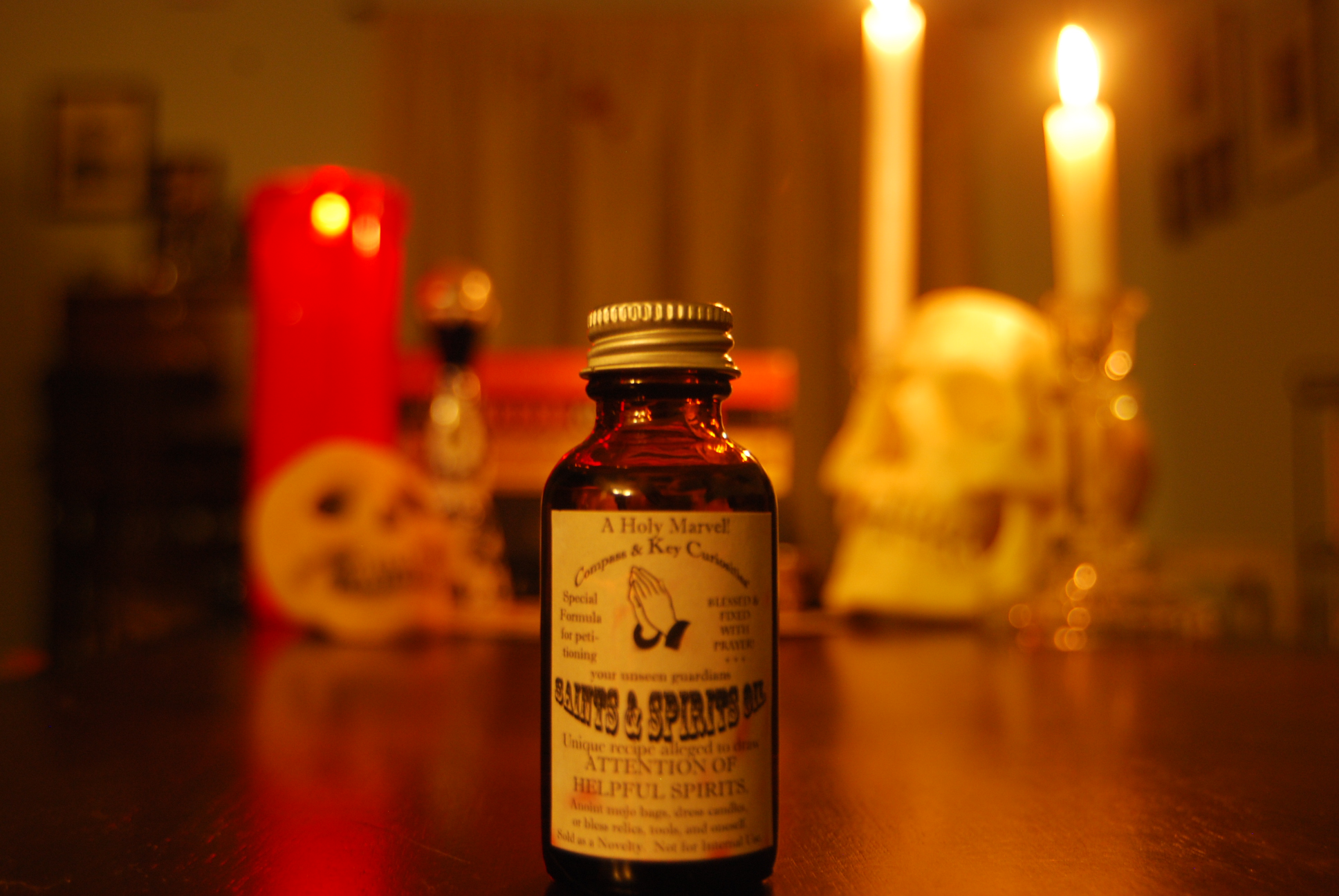
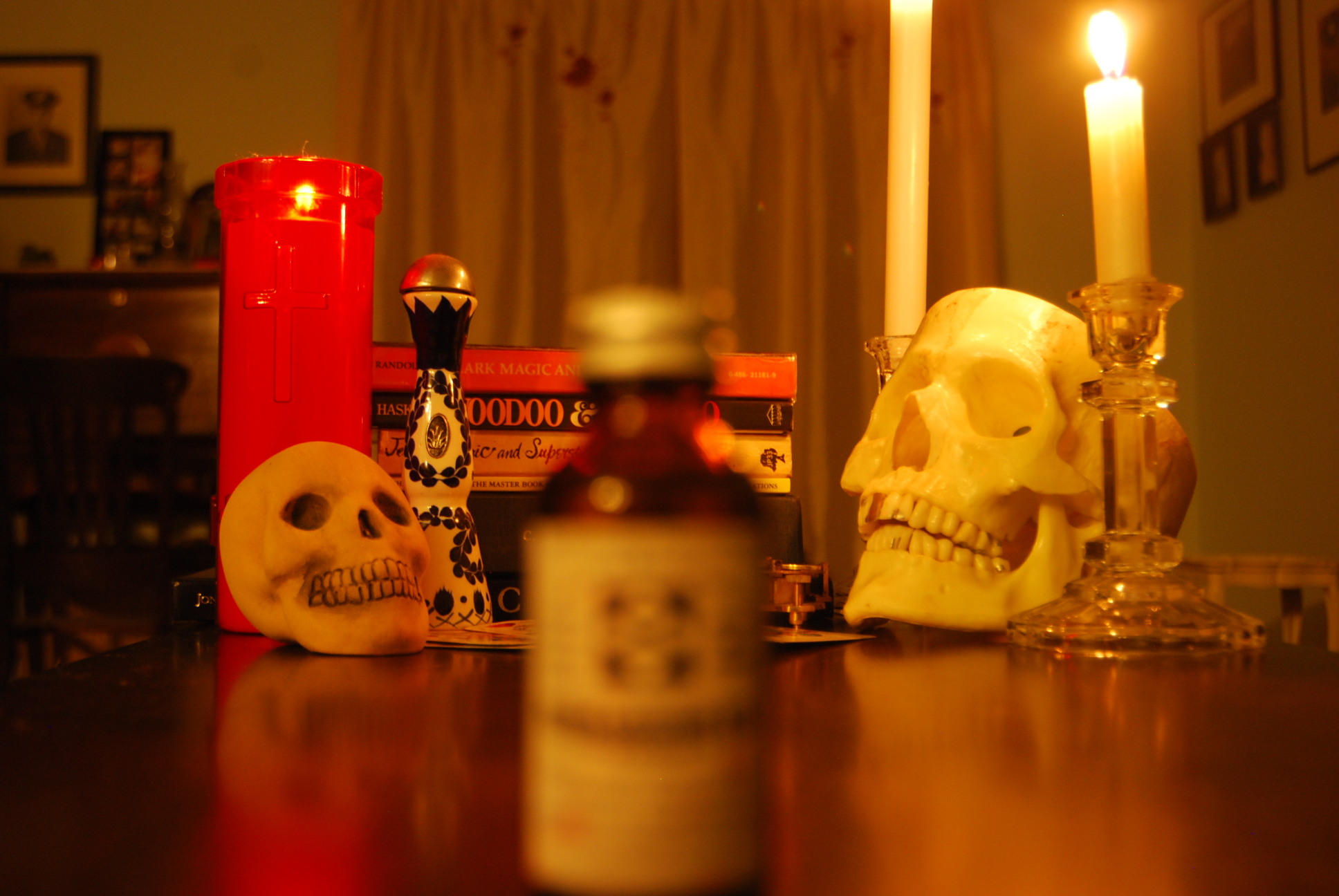
Today I’ve got a few photos of things to tease and entice you.  We’ve got something happening in the very near future and I wanted to let you blog readers be the first to know about it.  You can probably guess from the pictures what the announcement will be.

Be watching for an update soon!  Until then, thanks for reading!

-Cory


Blog Post 87 – Podcast Recommendation

Hi everyone!

I promise I will eventually get the rest of the cartomancy thread and look at how to do an actual reading, but I’ve not had time to take the photos I want to use for that yet.  So today, I wanted to recommend something I only found last week.  It’s a podcast called “5-Star Spells” and it’s found on BlogTalk Radio.  For those who don’t know about BlogTalk, it’s a phone-in format open radio site that lets people broadcast their shows without having podcasting equipment.  The radio shows go out live at specific times, then get recorded and transferred to a podcast feed for posterity (and for those of us who just prefer podcasts).

5-Star Spells is a show with a group of some of the most talented and knowledgeable root workers and readers around.  I’ll get into them individually in a moment, but as a whole they represent some of the best minds, hearts, and hands in the conjure business today.  What’s even better, they all interact like family, with a tremendous amount of positivity towards each other, even when it’s clear they aren’t exactly alike.  They pass on lots of useful information, a good bit of personal philosophy (anecdotally, which is my favorite way to get philosophy), and a lot of laughter, which is pretty refreshing, actually.  Oraia Sphinx actually tipped me off to them at almost the exact same time I had downloaded their first episode, so that was serendipitious, I thought.  The show’s most frequent callers are:

Rev. Mother Susan Asselin – The show’s primary host, she operates out of a Little Italy-style neighborhood in Providence, RI.  She and Sindy Todo refer to each other as “cousins” as they recently discovered they share some branches on their family trees.  I’ll be honest and say I probably know the least about Mother Asselin, but from what I hear on the show, she’s knowledgeable, spirit-filled, and wise.  Her website is called MotherMystic.

Dara Anzlowar – The owner of HoodooRoots.com, and the owner and manufacturer of Hoodoo Roots and Folk-Magic Traditional Spiritual Supplies.  She also runs two Yahoo groups, Hyatt Spells and Conjure.  I’ve followed Dara’s posts in those groups for a while now, and having a voice to put with the brilliant insights is very nice.  She works in a very traditional style, and provides a strong traditionalist viewpoint in the discussions that come up on the show, though she is also immensely cordial and kind in conversation.

Susan Diamond – She owns the Serpents Kiss occult shop and co-owns the 2Hoodoos site with Orion Foxwood.  She has a very sweet disposition on the show, but also provides a lot of interesting information (listen for her contributions in the Family Folklore episode).  She and Orion provide the most “pagan” voices on the program, but they also have some very traditional leanings as well.  She offers a wide variety of services and products, so check her out.  She’s also a member of the Association of Independent Readers and Rootworkers (AIRR).

Orion Foxwood – I know many folks already know who Orion is, but there are probably a number of people who don’t.  The sole regular male voice on the show, Orion grew up in the southern Appalachian Mountains surrounded by the magical and mystical traditions of the area.  He says he was born with a caul (also called a “veil” sometimes) which is commonly associated with having second sight or visions.  He’s published several books on his Faery Seership tradition, and has a bevy of websites including the aforementioned 2Hoodoos, the House of Brigh, and the Foxwood Temple of the Old Religion.

“Auntie” Sindy Todo – One of my favorite voices on the show, Sindy Todo provides sass, humor, warmth, and a heckuva lot of good information on 5-Star Spells.  She always has something nice to say, blessings to pass out, and good news to share.  She is based in Seattle, and has a website called Todo Mojo which offers her magical services.  She’s also a member of AIRR, and seems like one of the most genuinely likeable people I’ve ever heard.

Starr – A Texas based conjure woman working in the old-style tradition, Starr is another favorite voice of mine (they’re all wonderful in their own ways, of course!  I just have a thing for sassy women with southern accents).  She specializes in spiritual cleansings and also is one of the foremost experts on working with the Native American spirit Black Hawk.  She doesn’t appear on every show, but when she’s on, she’s a great participant and a wonderful resource for good, solid hoodoo information.  She’s a member of AIRR, too, and operates a website called Old Style Conjure.

One of the most amazing things about this group of folks is that they all get on so well.  Well enough, in fact, that they’re all getting together in November for a weekend of conjure classes and socializing!  I’m hoping to provide more info about this sometimes oon, but for now you can read all about it at the Traditional Folk Magic Festival website.   And you can hear all about it on 5-Star Spells, which, again, I highly recommend.

Okay, that’s it for my recommendation today!  I hope you can forgive the delay in the cartomancy finale, but I’ll have that soon.  Until then, thanks for reading!

-Cory

Blog Post 78 – More Mojos for Success

Back in Blog Post 76, I mentioned that I’d be following up with some other types of success mojos.  Academic success is fantastic, but if you’re not in school it’s probably not going to help you much.  So today I thought I’d take that scholastic success mojo hand and rework it for a few other needs.  I hope it helps!

Building upon the basic Crown of Success mojo, which would generally include a John the Conqueror root in a red flannel sack anointed with Crown of Success oil, you could vary your specific ingredients for particular results:

Better Business – Add herbs like sassafras, five-finger grass, or cinnamon, plus a lodestone and magnetic sand.  Try to use an odd number of ingredients.  Pray Psalm 8 or a similar prayer.

Gentle Judge – A court-case success hand.  Use gravel root, little John to chew/galangal, cascara sagrada  bark, sugar, and tobacco.  Pray Psalm 36 or a similar prayer.

High Rollers – This is a gambling success mojo.  Use Job’s tears, a gator paw, a badger or gator tooth, a raccoon penis bone, a rabbit’s foot, and/or a four-leaf clover charm (primarily use curios for this one).  Pray Psalm 41 or Psalm 62 or a similar prayer.

Lucky in Love – With this success hand, it’s less about attracting a new love and more about strengthening one that exists (say, for example, during the process of courtship and marriage).  Add angelica root, violets, and roses (if trying to court a woman) or vanilla, tobacco, and dragon’s blood resin (for courting a man).  You can use lavender if you’re courting someone of the same sex, as well.  Pray Psalm 139 or a similar prayer.

Make It Rain Money – Add cinnamon, collard seeds, beans or peas, lucky hand root, rice, and/or rose of Jericho (things like seeds, beans, peas, and rice all signify abundance).  Add a lucky penny or a silver dime if you like, or a silver charm like a four-leaf clover.  Pray Psalm 126 or a similar prayer.

There are so many variations on these types of mojos, so please try them out and experiment.  I’ve had a lot of success (and the irony of that is not lost on me) working with these types of hands, so I encourage everyone to give them a try.

I’d like to close this post by sharing something one of our wonderful readers mentioned to me.  Odom of the Evil Eye recently wrote me about an academic success hand he’s working on, and he included an ingredient that struck me as just perfect for that kind of work:  coffee.  He made an excellent point that as a stimulant coffee can help keep one awake and alert, and that the university coffee house is such a ubiquitous piece of the college landscape it almost serves as a shrine to this kind of work.  So good eye for that connection, Odom!

Thanks for reading,
-Cory

Blog Post 77 – Book Review

For today’s entry, I thought I’d approach two books which share a lot in common and which can be useful to people who really enjoy candle magic.  First up, there’s The Master Book of Candle Burning by Henri Gamache.   This is a classic in many hoodoo circles, and falls into the same category of early 20th-century magical texts as the reprints of Black & White Magic by Marie Laveau and Mysteries of the Long Lost 8th, 9th, and 10th Books of Moses, also by Gamache.  All of these small books (usually only around 100 pages each) contain lots of great information on their particular magical subjects, and all are the source of much debate regarding authorship (Marie Laveau most definitely did not write Black & White Magic, which is usually attributed to “N.D.P. Bivins,” whoever that might be).

Candle Burning, though, holds a special place in my heart.  In its pages, Gamache outlines the “Philosophy of Fire” which he traces through a number of the world’s religions, especially linking it to Judeo-Christian and Zoroastrian practice.  Most of what he describes is pseudo-history, though it offers some good food for thought, at times.  What makes this book so invaluable to a magic worker are its spells.  In its pages, it offers spells, prayers, and psalmic rituals for:

  • Gaining Happiness
  • Overcoming an Enemy
  • Obtaining Money
  • Stopping Slander
  • Healing a Troubled Marriage
  • Getting a Promotion
  • Defeating Feelings of Depression

There are so many wonderful rituals in this book, covering a wide variety of problems, that I can’t help but recommend it.  The prayers (and psalms) are all centered around Judeo-Christian religious philosophy, but in a fairly non-denominational way (emphasizing God as a powerful force rather than as part of a Trinity or some particular theological concept).  One of my favorite spells is the last one in the book:

TO CONQUER FEAR

Light your two Monthly Vibratory Candles [candles dressed to match you astrologically], two Daily Cross Candles [crucifix candles or candles inscribed with a cross], and the following Special Purpose Candle:  one Red symbolizing faith and one Gold to soothe nerves.  Read Psalm 3 giving special attention to verse 3:

“But thou, O Lord, art a shield for me; my glory, and the lifter up of mine head.”

Affirmation [prayer]:  “Dear Lord I ask you to help me with my needs in this life and smooth my way.  Protect me so that no one may cause me harm.  In your light, darkness flees.  I fear not, knowing you are with me.”   (p.106)

The book has its issues, of course.  It makes heavy use of “black” versus “white” magic.  It denounces the black magic as a “perversion” but then proceeds to provide numerous candle rituals for things like breaking up a couple or causing confusion.  Still, if one can forgive it these foibles, it’s a great text to have on hand.

Similarly, The Magical Power of the Saints by Rev. Ray T. Malbrough proves itself a useful text full of practical candle burning rituals.  There are many who do not like Malbrough, primarily because he blends hoodoo and Wicca in some of his books without letting the reader know which is which (his Charms, Spells, & Formulas is guilty of this, and apparently his Hoodoo Mysteries is even worse about it).  However, most of the rootworkers who discuss him seem to offer at least some praise for Saints.

Malbrough focuses on the Catholic saints in candle form (and a number of condition candles, which are designed to invite specific conditions into a person’s life—e.g. Anima Sola/Lonely Soul, Just Judge, Lucky Bingo, etc.).  When I picked up the book I thought it would mostly be about the cult of certain saints like Dr. Jose Gregorio or Santa Muerte or the Infant Jesus of Prague.  Instead, I found it’s mostly candle magic focused on specific spells, much like Gamache’s text.  It definitely has a flavor of Catholicism about it, and actually falls pretty close to what I would think of as New Orleans-style Voodoo (though the connections to things like the Seven African Powers are only cursorily glossed).  For comparison, here’s Malbrough’s overcoming fear spell:

TO OVERCOME FEAR

Sometimes fear can be difficult to shake off when it gets hold of you.  Then there are those people who get a thrill from putting fear and superstition in your mind.

  1. Controlling candle, dressed with Controlling oil.  Write your name nine times.
  2. St. Dymphna candle, dressed with Peace oil.  Write your name nine times.
  3. Guardian Angel candle, dressed with Peace oil.  Write your name three times.
  4. Psalms 11, 31, and 141 [to be read aloud]
  5. Take an Uncrossing spiritual bath made with sweet basil, boneset, elder, and bay leaves.  To this tea add ¼ cup of John the Conqueror bath and floor wash.  Immerse yourself three times in the water, and soak twenty minutes.  Take this spiritual bath every three days until you have taken twenty-eight baths.  Cary a mojo/gris-gris made with herbs for courage.  This gris-gris must also contain a stone for courage such as agate, amethyst, aquamarine, bloodstone, carnelian, diamond, lapis lazuli, sardonyx, tiger’s eye, red tourmaline, or turquoise.  (p. 134-35)

As you can see, Malbrough is much more complicated than Gamache, and he definitely infuses his rootwork with some more Wiccan ideas (such as the “stones for courage” he mentions for the mojo hand, none of which show up in any of the African-American hoodoo sources I’ve found).  So long as you can separate the wheat from the chaff, though, this is a pretty solid little book with good candle burning rituals.  If you have this and Gamache’s Master Book of Candle Burning you will cover most of your bases as far as hoodoo candle magic goes, so I certainly recommend picking up both.  If you can only do one, I’d start with Gamache and try Malbrough once you’ve gotten the hang of a few of these rituals, though (perhaps an Obtaining Money burning so you can afford to buy the book?).

Thanks for reading!

-Cory