Blog Post 145 – Wart Charming

The image of the fairy-tale witch often comes complete with a big, nasty wart perched at the end of her nose. The association of witches with warts could come from a variety of folk beliefs and superstitions: the close ties between warty toads and witches, the idea of a ‘devil’s mark’ which the witch uses to suckle her familiar, or even just a desire to make a something ugly out of something ‘evil.’ The association is not always a purely negative one, however. Folk magicians in the New World (as well as those in the old, though I’ll not be addressing them here) have a long-standing history of curing warts through magical means. In fact, that is frequently one of the most commonly found magical services provided by a community magician (or faith-healer, traiteur, pow-wow, etc.).

Today I thought it would be good to look at a few different methods, stories, and charms associated with wart-removal in American folk magic. I’d like to start in Pennsyvlania-Dutch country, with some of the wart charms found in Chris Bilardi’s The Red Church:

WARTS, CORNS (GEWECKS, GEWEX, WARZ)

[Do whole body Brauche treatment to eliminate any root causes of warts. Bilardi then gives an extensive treatment involving the mimicking of cutting the wart off using an imaginary knife, a process I will refrain from detailing here as it is somewhat lengthy and I’d rather encourage you to buy his book by leaving a little mystery to it…]

To remove warts using the moon: instruct the patient to go somewhere s/he can observe the moon. This is one of the very few wart charms that utilize the waxing moon. Once the moon in in sight, the afflicted wil say:

‘Was ich raib, nem ab; was ich sen, nem tsu.’
English, ‘What I rub, decrease; what I see, increase.’

The Brauche is done three nights in a row. This is begun two nights prior to the moon being full (251).

In the braucherei tradition, then, there is a sense that warts have a spiritual side, hence the full-body treatment before the specific attempt to cure the wart and the influence of lunar cycles on wart growth or removal. Yet they are also a practical matter, dealt with by simple folk magic and a relatively unassuming charm. Other methods listed in The Red Church:

  • Rubbing warts with cloths that have touched a dead body
  • Scratching a wart with a coffin nail
  • Rubbing the wart with a freshly killed eel or rooster, then burying the body part under the eaves of one’s house
  • Rubbing the wart with pebbles which are then thrown into a grave
  • Using a red string with as many knots as there are warts, rubbing each wart with a knot, then burying the string under the house’s eaves (252-3):

Moving down into the Appalachians, there are a number of variant methods for dealing with warts that parallel—if they don’t exactly duplicate—the methods described by Bilardi. In the hills of West Vriginia, we find these wart cures from Patrick W. Gainer’s Witches, Ghosts, & Signs:

  • To cure warts, wash your hands in stump water.
  • A ninth son can remove warts.
  • Drop dirt from a newly-made grave on a wart and the wart will disappear.
  • To cure warts, pick them with a pin and bury the pin.
  • To cure warts, take a hair from the tail of a gray horse and wind the hair around the warts.
  • To cure warts, steal a dishrag and rub it on the warts, then bury the dishrag. When it rots, the wart will disappear.
  • To cure warts, cut as many notches in a stick as there are warts, throw the stick in a swamp, then bury the dishrag.
  • To cure warts, rub a rock ovr the warts, wrap it in a neat package and throw it away. Whoever finds the package will get the warts.

Already we can see some patterns developing in wart cures. There are essentially three methods which appear over and over again: 1) Rubbing the wart with something and burying it to decay the wart, 2) Scratching or pricking the wart and disposing of either the scratching implement or something marked with blood from the wart, and 3) Passing the warts to someone else in a variant of magical commerce. There are exceptions or variations in each of these, of course. The corpse-touching method might be seen as a way of passing the wart to the corpse, but it may also be seen as symbolically burying it. The stump water method doesn’t fit neatly into any of these categories. And the notion of a ninth son removing warts is strange, as it does not indicate exactly how they are able to do this (I mentioned in the post on Coins that my brother-in-law’s grandfather could charm warts using pennies because he was the seventh son of a seventh son, but that may be more specific to our region).  From these three methods, most other treatments become variants, though exceptions do still occur.

Exchanging the Appalachians for the Ozarks, we find more variants of this type, and a few new tricks. From Vance Randolph’s Ozark Magic & Folklore:

  • He mentions the notched stick method referenced above, but also adds “bury the stick on the north side of the cabin and never mention it to a living soul”
  • Suggests using an onion for a wart cure: cut the onion in half, rub the wart with one half and bury it, then eat the other half. When the onion rots, the wart disappears.
  • Spitting on a hot stovelid, once for each wart, gets rid of them
  • Letting a grasshopper or katydid bite a wart will make it go away
  • Touching a wart with the hand of a corpse will remove them

Here again we have the burial method, the pricking/bleeding method (with the grasshoppers), and the transference method (with the corpse). But we also have the novel stove-top method, which is interesting to me because of the mixture of sympathetic and contagious magic it contains: the spittle on the hot stove looks like a wart sizzling away into nothingness (sympathetic) and it is the spit of the person with the wart which is evaporated (a sort of inverted contagious magic).  Randolph also includes an interesting charm associated with the corpse method:

At the funeral of a close friend, a ‘warty feller’ is supposed to touch his warts and repeat the following jingle:

They are ringing the funeral bell,
What I now grasp will soon be well,
What ill I have do take away
Like jn the grave does lay.

This is believed to benefit tumors, sores, boils, and even cancers as well as warts. (131)

In my Apples post, I cited some Kentucky lore about using that fruit to do the rubbing-and-burial method. A reader mentioned that they had heard something similar to that technique, only using potatoes (which I’ve also heard as well, especially in relation to Irish folk magic or some Appalachian charms). The book I cited, Kentucky Superstitions, mentions the potato method, and also has these interesting variants on wart charming:

  • There are a number of ‘burying’ charms, involving the interment of things like beans, steak, bacon, peach tree leaves, potatoes, walnuts, etc.
  • ‘Picking’ cures are also popular, in which a wart is bled by puncturing it with a brass pin, corn kernels, needles, etc.
  • A variety of substances, including cat’s blood, coffee grounds, dandelion juice, eggs, fish, goose feathers, chicken gizzards, etc. are also rubbed on warts to remove them
  • One of the most popular and common cures involves bleeding the wart, dabbing the blood on corn kernels, then feeding those to chickens—especially a neighbor’s hens—to remove the offending blemish
  • Lemon juice or milkweed are supposed to be good cures for warts
  • Warts can be charmed off by some people with a gift for doing so; some are able to ‘count’ warts off, others can pray them off, and still others ‘buy’ the warts off of someone
  • Warts can be magically passed to another person by leaving them at a crossroads; simply leave a paper spotted with blood from the wart in the middle of the crossing, and walk away without looking back; whoever picks up the paper picks up the warts
  • The stick-notch method or knotted cord method are two popular remedies for warts in which the number of warts is counted by notching a stick or tying a cord, then the burying it or dropping it into running water (121-30)

The corn method is something I found in several places, including Harry M. Hyatt’s Folklore of Adams County. In many cases, the corn must be fed to a neighbor’s chicken, which makes me think it is another technique for passing the warts to someone else, just in a very roundabout way. Hyatt also mentions many of these cures in his books, and offers an interesting addition to the bark-notch method of curing: “I know this works, for my daughter had a wart. She tried several things, and this took her wart away: walk up to a young apple tree — if you have a wart — walk around to the opposite side and cut two notches in the bark, then rub your wart over the two notches, then walk back the same way you came; when the bark grows over the cut places, your wart will be gone” (146).

As always, there’s much more to say on the subject of charming warts, but hopefully this gives a nice broad look at the subject. I need to be very clear, of course, that none of the charms, lore, techniques, or superstitions here are presented as medical advice—a good doctor can freeze a wart off without making you go through the trouble of finding an eel to kill or figuring out which of your neighbors might have some hungry chickens around. But for those interested, wart charming seems to be a simple way to get into traditional folk magic, and who knows, you might just have a knack for it. At the very least, hopefully the warts on that old witch’s nose in the storybook won’t seem so scary anymore.

Thanks for reading!

-Cory

Blog Post 139 – Eggs

In marble walls as white as milk,
Lined with skin as soft as silk,
Within a crystal fountain clear,
A golden apple doth appear.
No doors there are to this stronghold
Yet thieves break in to steal the gold (from “Riddles,” American Folklore: An Encyclopedia, p. 1318)

This riddle (a variant of which appears in Tolkien’s The Hobbit during Bilbo’s riddle-game with Gollum) probably isn’t very hard to figure out.  Eggs are one of the food staples which exist nearly worldwide, and almost every culture has traditions dealing with eggs. They are cooked, painted, dyed, emptied and filled with dioramas, and the shells are even ground up and added to the soil to prevent garden pests.

Today we’re going to look a little at some of the magical traditions surrounding eggs, particularly the ones we find in the New World.

Much of the lore about eggs has to do with their production or bewitchment, such as these tidbits (from Folklore of Adams Co. Illinois, by Harry M. Hyatt):

  • 1772. Hit a hen on the back and she will lay an egg.
  • 1773. A hen never lays eggs near a potato patch.
  • 1774. Eggs are not laid by hens on a windy day.
  • 1823. If you set a hen in the dark of the moon, half of the chicks hatched will be deformed.
  • 1824. Set a hen at sunrise in the light of the moon and all the eggs will hatch.
  • 1825. If you set a hen to hatch in the light of the moon, more of the eggs will be hatched.
  • 1848. To procure chickens of different colors, set the eggs on Sunday morning as the congregation leaves church; the various colors in the clothing of the church-goers produces this result.
  • 1849. Chickens of various colors are procured by setting the eggs on Ash Wednesday.
  • 1892. For white diarrhea among chickens [sometimes believed to be caused by witchcraft], drop a piece of iron into their drinking water and also let them eat corn saturated with urine.

Eggs are frequently used to heal magical illnesses or to help with prophetic work. John George Hohman records several uses of eggs in magic among the Pennsylvania Dutch, including a method for curing “falling away,” a folk sickness characterized by physical weakness, by boiling an egg, putting three holes in the shell, and then leaving it on an anthill to be devoured. A common belief among several traditions says that eggs left in the hands of a murder victim will compel the murder to return and be caught before the eggs rot. A bit of folklore related to Midsummer festivals (which may be from Latin American or Slavic sources, as the book is unclear to which culture it is referring): “In one divination, a girl seeks her betrothed by reading the shape of a  egg white in a glass of water; in another, the index is a wreath floated on a stream” (“Solstices,” Amer. Folklore: An Encyclopedia, p. 1412). This seems to be related to a more general set of European folklore focused on St. John’s Day and Midsummer Eve, such as this ritual from Madeira:

On St. John’s eve at ‘Ave Maria’ the village maidens in Madeira try  their fortunes in various ways. They take a newly laid egg, break  it in a tumbler of cold water, and  place it out of doors in a secluded  place. Should the white rise in lines  that in any way represent a ship,  they will soon take a voyage. If it  at all resembles a house, it means  marriage and settling down. If a coffin or tombstone, it means death (Ecyc. of Superstitions, Folklore & the Occult Sciences, by Cora L.M. Daniels, p. 1551)

This practice may sound familiar, as it is very similar to the curandero method of egg reading done during a limpia, or spiritual cleansing. In that process (which I touched on briefly in Blog Post 137 – Curandero Spells, part I), an egg is used to rub and mark a person’s body in order to cleanse them of curses, witchcraft, bad luck, and general spiritual illness. An Ozark superstition says that if a man eats owl eggs it will cure him of alcoholism (this is not recommended, especially due to the potential environmental damage it could cause).

Eggs can also be used to cause harm as well as to cleanse it. Newbell N. Puckett records that among Southern African Americans eggs put into a couple’s bed will cause them to quarrel and fight (perhaps because they smash the eggs and get into a row about who’s going to clean it up?).  A curious German method recorded by Harry M. Hyatt uses “a glass of salt water that will hold an egg up”and a picture of a person (usually a former lover). The egg is floated in the glass, the picture put upside down over it, and the water swirled around while making a wish for ill (or good, if the conjurer is so inclined) fortune for the person (Folklore of Adams Co., 16006). Hyatt also records that a witch can give a person a ‘gift’ of three eggs in order to curse them. In his extensive masterwork on folk magic (Hoodoo-Conjuration-Witchcraft-Rootwork), Hyatt records a number of other curses using eggs, including using buzzard’s eggs to cause someone harm or this spell, which allegedly forces a straying spouse to be faithful:

WRITE YOUR HUSBAND’S NAME
AND THE NAME OF THE WOMAN HE’S FOOLING AROUND WITH
ON AN EGG.
THROW THE EGG AWAY FROM YOU
IN THE NAME OF THE FATHER,
AGAINST THE EAST CORNER OF YOUR HOUSE.
DO THIS FOR NINE CONSECUTIVE MORNINGS,
AND THAT AFFAIR WILL BE OVER.

Yes, ah learnt dis on chicken aigs.  Yo’ take a aig, if a woman is runnin’ wit yore husband, an’ yo’ git chew a aig an’ bust a aig fo’ nine mawnin’s – an’ write dere names on dat aig – an’ bust de aig in [the] east fo’ nine mawnin’s.  Throw it away from yo’ “In the Name of the Father” in de east – in de cornah of de house fo’ nine mawnin’s.  Dat bust ’em up an’ yo’ nevah will be bothahed wit ’em no mo’ – yo’ won’t have tuh worry.  Jes’ write dere names on dose aigs an’ bust ’em fo’ nine mawnin’s – yeah one each mawnin’.

(Whose house do you bust that on, your own house?)
Yore own house, yeah.
(Despite the ‘on’ of my question, these eggs are broken inside the house.  This is a rite to separate a man and woman, not to make someone move from a house.  The eggs are busted against the wall, thrown away from you so that the dangerous substance will not spatter on you.)
[Memphis, TN; A lady who once worked in Louisiana; Informant #1419. D15:3-D23:6 = 2698-2706.] (Vol. 2, p.1581)

Eggshells also have magical uses completely on their own and apart from their high-protein filling. A curious southern tradition involves using eggs as a method to deter predators from killing young chickens on a farm: “Hawks may be kept from catching your chickens by sticking a poker in the fire; by threading eggshells, from which chickens have recently hatched, on a piece of straw (or putting them in a covered tin bucket) and hanging them in the chimney” (Puckett, Folk Beliefs, p.323). Vance Randolph records that a tea made from “toasted egg shells in water” was taken by a girl near Forsyth, Missouri, for ailments unknown, but likely related to stomach issues. And I would be much remiss if I didn’t mention the magical ingredient of cascarilla, or powdered eggshell, which is used in Santeria/Lukumi as well as a few other traditions. It is usually sold in little paper cups (though it is not hard to produce yourself if you just wash and save your eggshells from a few breakfasts), and used to ward off evil and occasionally to draw sigils for ritual work.

Dreaming of eggs is supposed to be good luck, indicating everything from monetary gain to a wedding or children on the horizon. Traditions conflict about whether the eggs must be whole or broken to indicate good news, with convincing arguments presented on both sides (a fragile relationship situation—such as one affected by a lover’s quarrel–could be deemed finished by dreaming of broken eggs, or the possession of whole eggs might mean wealth, for instance). Randolph records this tidbit about the use of eggs to produce prophetic dreams:

Sometimes a mountain damsel boils an egg very hard, then removes the yolk and fills the cavity with salt. Just before bedtime she eats this salted egg. In the night, according to the old story, she will dream that somebody fetches her a gourd filled with water. The man who brings her the water is destined to be her husband. It is surprising how many young women have tried this, and how many feel that there may be something in it (Ozark Magic & Folkore, p. 174)

While this method seems popular, I think it would probably not be good for anyone’s blood pressure.

Wow, that’s a lot of material about eggs! And I’ve only scratched the surface here. There are so many more superstitions, spells, and sayings about eggs that I couldn’t begin to cover them all. So I’ll just recommend that if you want a good, easily available household tool for magic, you just can’t beat the humble egg.  Hm, speaking of beaten eggs, I wonder if there are any magical meringues out there?

Thanks for reading!

-Cory

Blog Post 132 – The Value of Silence

It’s been a while, hasn’t it? But it’s good to see you all again, to get the chance to rejoin the conversation. Except that today, I’m going to be talking about silence, which makes for a rather one-sided discussion, right?

I thought this would be an appropriate topic as I’ve been away for over a month at this point, with very little feedback flowing towards our listeners and readers and almost no new material on the blog or podcast. We’ve been in a realm of silence here at New World Witchery, but maybe that’s not such a bad thing. After all, silence has its uses.

The famous “Witch’s Pyramid,” for example, contains the four sides of a (Wiccan) witch’s code of conduct: To know, to will, to dare, and to keep silent. That’s a fairly modern code, of course, but because it is a complex system expressed in simple language, it taps into some fairly old ideas, including the keeping silent part. There are lots of interpretations of this idea; some say it means one should not discuss one’s magic after the working (one of Shivian Balaris’s interesting Twitter #WitchTips said “never sharing what magick you’ve done is felt to protect the spell so that it can complete properly; plus keeps ego in check,” for example-July 25, 2011). Others think that the silence is designed to insulate practitioners of the “Old Ways” from the persecutions they might suffer if their practices were openly discussed. Still more maintain that the silence in magical practice forms a core component of its spiritual nature; in other words, the silence maintains the mystery, which is very important in a Mystery tradition. I personally think elements of all three positions can be present in a magical practice, though not everyone agrees, of course (fellow podcaster Fire Lyte has mentioned on several shows that he does not like the secrecy and cloak-and-dagger-style mystery that accompanies some of these practices, as they create elitism and insulate seekers from knowledge, for example).

Turning to folklore (as you knew I would), there are several examples of silence serving one of the aforementioned functions. Of course there’s the common practice of observing a “moment of silence” in honor of a fallen hero or a significant event. Folk tales abound in quiet characters. In the story of “The Yellow Ribbon” from Minnesota (which I’ve also heard as “The Black Ribbon”), a woman’s silence guards a mystery that literally means life or death to her. An Old World fairy tale called “The Dwarfs’ Tailor” tells the story of a foolish and loquatious young tailor who must serve a group of dwarves in their enchanted mountain forest home in order to win the love of his old master’s daughter. The dwarves beat the tailor every time he tries to speak or ask questions, and so he learns to serve them in silence, and thus cures his foolish tongue-wagging and becomes a master tailor in his own right. And in the classic Grimm’s tale “The Six Swans,” a young princess must sew six shirts for her six brothers—enchanted into the shape of swans—during a six-year silence in order to release her brothers from the spell upon them. Other stories contain themes of silence, of course, from “The Little Mermaid” to “The Silent Princess” to the (creepy and captivating) episode of Buffy the Vampire Slayer entitled “Hush.”

Within the magical continuum, calls for silence or secrecy appear in several traditions. In the Pow Wow practice, you can find this spell:

A GOOD REMEDY FOR THE FEVER.
Good morning, dear Thursday! Take away from [name] the 77-fold fevers. Oh! thou dear Lord Jesus Christ, take them away from him! + + + [here make the sign of the cross three times]

This must be used on Thursday for the first time, on Friday for the second time, and on Saturday for the third time; and each time thrice. The prayer of faith has also to be said each time, and not a word dare be spoken to anyone until the sun has risen. Neither dare the sick person speak to anyone till after sunrise; nor eat pork, nor drink milk, nor cross a running water, for nine days. (from The Long-Lost Friend by J.G. Hohman)

Here the silence seems to be an integrated part of the spell, a purification of the operator in the same way avoiding pork or milk might work (as they are foods often associated with unclean spirits and witchcraft).  It might then be comparable to fasting, a way of conditioning the body to respond to magic, or of preparing it for magical action. Other spells use magical silence to maintain a solemness and help maintain focus, as in this one from the Ozarks:

Some hillfolk say that a girl can call up a phantom of the man she is to marry by wrapping a lock of hair with some of her fingernail clippings in a green leaf and thrusting them into the ashes in the fireplace. Then she sits down before the fire. When the hair and fingernails begin to get warm, the ghostly appearance of her future husband is supposed to rescue them from the fire. Sometimes several girls try this at once. The door must be left open, and everyone must maintain absolute silence (Randolph, OM&F, p. 177-8)

This particular spell is rather reminiscent of the Dumb Supper, of course, though much simplified. The Dumb Supper itself is fascinating as a ritual of silence, but is a topic too big to tackle here. And since I’ve already given a good overview of it in my Halloween article from last year, I’ll leave it be for now.

Still other magical performances use silence as a cipher for secrecy, maintaining that certain things must not be spoken of, or at least, not spoken of frequently. Another Ozark account describes the passing of a specific sorcerous power—fire-drawing (or burn healing)—as a ritual wrapped in secrecy:

A gentleman near Crane, Missouri, has enjoyed a great success in relieving the pain from superficial burns. He just blows gently upon the burned place, touches it with his finger tips, and whispers a little prayer. The prayer may be told to persons of the other sex, but never imparted to one of the same sex. This man said he had learned the magic from Mrs. Molly Maxwell, an old woman who lived in Galena, Missouri. Since he could not tell me, I asked a young woman to get the secret words from him. This is what she heard : ‘One little Indian, two little Indians, One named East, one named West, The Son and the Father and the Holy Ghost, In goes the frost, out comes the fire, Ask it all in Jesus’ name, Amen.’ In teaching this prayer to a member of the opposite sex, the healer said, one should whisper it three times and no more. If a person cannot learn the prayer after hearing three repetitions, I was told, “he aint fit to draw out fire nohow !” (Randolph, OM&F, p. 121-2).

This idea of passing on magical powers in secrecy, carefully revealing them only to the chosen, the initiated, or those otherwise deemed “right” by the magician (or whatever higher power is in charge of the spell/tradition) is central to some practices. Others disavow the entire idea of such secrecy, preferring to work almost entirely in the open. Both seem to have their reasons, and both seem to do effective magic, though I will say that as folk magic goes the rule of silence shows up too often for me to ignore it entirely. I prefer to circumvent it by the time-honored technique of trickery, so that if I pass on secret magical knowledge I do so not by telling a person, but by speaking to an object in the room in such a way that anyone who happens to be in the room might well eavesdrop in on the “secret.”

From what I understand, whoever is in charge of magic seems to appreciate trickery as much as he or she appreciates silence. So that works out well.

Thanks for reading!

-Cory

Blog Post 123 – Corn

[A note here:  This is NOT a medical blog, and the information here should not be treated as medical information. I present only folkloric examples of practices historically done by certain people at certain times. If you choose to put into practice anything you find here, you take responsibility for your own actions.  Leave me out of it.  Thank you!]

Today’s topic may not exactly pop out at you as a magical one (I beg forgiveness in advance for the bevy of bad puns this article may include), but corn is actually spiritually and magically significant in several parts of the North American continent.

Corn, or as most of the rest of the world knows it, maize (of the species Zea mays) is a crop which was domesticated by early Mesoamerican cultures and which has been a native staple food for thousands of years now (though its widespread use throughout all of North America may only be about one millennium old).  It has proven both extremely useful and occasionally problematic.  It is fairly easy to grow, and can be processed into any number of products, from food and food additives to industrial lubricants and even plastics.  I’m not going to get into the heavily heated debate about corn as a commodity crop and its place in modern economics and agriculture, as this is not a blog about either of those topics.  I will say, however, that while corn may have its downsides, it also has much to offer culturally and culinary, especially the homegrown sweet varieties (can’t imagine a summer barbecue without it!).

Native Americans depended greatly on corn for survival, and it figured in several native mythologies.  One of the best known stories is that of Kana’ti and Selu, the Hunter and the Corn Mother, from Cherokee mythology.  In this story, mother Selu tells her children that they must drag her body over the land when she dies and that corn will sprout wherever her corpse has been.  In this respect, her tale is not so very different than the John Barleycorn legend.  Folklorist James Mooney demonstrated that this story has parallels in Huron mythology as well (he also mentions that the Iroquois grow a specific type of magical tobacco, which is the subject of an upcoming post).

Picture of a Mid-Atlantic Cornfield with a Remnant Corn Offering, via listener Chet

Listener Chet wrote in with a bit of folklore regarding the Corn Mother from the Central Atlantic coast:

“I read an article, while researching the corn maiden aspect, that covered the offering and adoration of a field spirit not only in NA culture, but all over the world…what quite a few would do is, leave a section of the field uncut, as an offering to the Maiden. I had seen these areas, the past few years where I live, and really had no idea what the uncut areas were about until I read this article. So here we are at harvest time again, and I am seeing these areas once again. So I took a pic of one (see attached corn pic). I have a feeling these farmers are not actually making an offering to the Miaden per se, but the tradition seems to have carried over, so maybe it’s bad luck, to not leave part of the field uncut.”

Chet also included a bit of information on his own practices, including his practice of reburying part of any harvest as an offering to the Corn Mother.  Big thanks to him for the local lore and for the photo!

Moving into the Appalachians, corn becomes magical and medicinal, depending upon its application.  A variety of sources indicate that tea made from corn silk (the long, slightly sticky strands which jut out from the top of the ear and which serve as pollination conduits during the corn’s growth cycle) is excellent for clearing up kidney and urinary tract ailments.  This sentiment popped up in Foxfire 9, Anthony Cavendar’s Folk Medicine in Southern Appalachia, and even Karl Herr’s Hex & Spellwork (which indicates to me that it found a home with the PA-Dutch and the mountain folk alike).  Patrick Gainer shares an interesting West Virginian folk magical technique for healing warts.  According to his Witches, Ghosts, & Signs, warts are cured by making them bleed, rubbing the blood on corn kernels, and feeding the kernels to chickens.  This could be very similar to jinx-removing practices in hoodoo which also use chickens.

Folk Medicine in Southern Appalachia rates corn as a top botanical panacea for mountain people:

“It may come as a surprise to some that Southern Appalahcians used cultigens like apples, corn, [etc.] as much as, if not more than, herbs for many illnesses.  The juice, silk, kernels, and shucks of corn, for example, wereused for a variety of illnesses” (p. 64).

Some of the cures listed in the book’s pages:

  • Corn milk/juice used to treat skin irritation
  • Warm cornmeal to treat sprains and mastitis
  • Corn fodder burned to smoke/sweat out measles

In the Ozark Mountains, Vance Randolph records a couple of bits of lore about corn, one of which is quite unique: “Some hillfolk of Indian descent insist on sprinkling a little cornmeal over a corpse, just before burial” (p. 315).  In light of Chet’s lore about burying corn as an offering to a Mother-figure and/or the land, I think this is pretty fascinating.  Is the corn an offering, and if so, is it for the actual deceased person, or for the land which will be surrounding that person soon?  Randolph also mentions a bit of weather lore, noting that the thickness of corn shucks indicates the severity of the coming winter.

Finally, I can’t discuss corn without at least mentioning the corn dolly which is so ubiquitous around Imbolc/Candlemas.  I won’t go into that particular association, as it seems to be well covered in other places, but I will say a corn dolly makes a very useful poppet for working figure magic, especially since it’s easy and cheap to find the basic materials you need (if you don’t have corn growing anywhere around you, look in the Hispanic portion of your local grocery—husks are almost always available there as tamale wrappers, and usually quite inexpensively as well).  Recent New World Witchery interviewee Dr. E mentioned the corn dolly poppet, if you’ll recall, and I think it’s an excellent way to craft a magical doll, especially one for burial or burning.  They tend to be easy to stuff with herbs and things like hair or fingernail clippings, and they can be made without requiring much skill (trust me on this, I know from experience, or rather, obvious inexperience). There are plenty of great places to learn dolly-making, but since I like the series so much I’ll go ahead and eagerly recommend the corn dolly tutorial found in Foxfire 3 (on pp. 453-460).

That’s it for corn (at least for now).  If you’ve got some magical lore regarding the use of corn, I’d love to read it!  Until next time, thanks for reading!

-Cory

Blog Post 98 – Critter Bits (Magical Animals, Part III)

So I had mentioned a couple of weeks ago that I wanted to talk a little about the use of animal parts in magic.  Animals and magic have gone hand-in-hand for a very long time.  The reading of entrails from ritually slaughtered animals has been used as a divination technique since at least the pre-Roman era.  Talismans designed to imbue the carrier with the particular power of an animal were often made from that animal’s fur, bone, or skin.  Owen Davies chronicles the frequent use of virgin parchment—a type of scroll medium made from a highly treated animal skin, usually from a creature like a lamb or goat—in the construction of ancient Near Eastern and Mediterranean grimoires (in his book appropriately entitled Grimoires).  The thought was that this particular material would endow whatever was written on it with an extra layer of power, thereby charging sigils, elevating incantations, and generally adding a little va-voom to the inscribed workings of magicians.

On North American soil, many of the old rituals and magical practices found in places like Europe and Africa took root.  Some of them changed quite a bit as they grew here, and some stayed more or less recognizable.  I thought a brief survey of the common animal curios used in witchcraft—both folklorically and practically—might be a good way of seeing the connection between critters and crafting.  Please take note now, I AM NOT ADVOCATING THE INJURY, SENSELESS SLAUGHTER, TORTURE, OR HARM OF ANY ANIMAL.  This information is for educational purposes.  If you choose to use this information in your own practice, please do so responsibly and without resorting to cruelty.  There are lots of ways to gather magical tools and ingredients from animals which are already dead (see Ms. Graveyard Dirt’s excellent site for some great examples).  Okay, now that that’s out of the way, let’s look at some of these critter bits:

1)      Rabbit’s Foot – We’ve covered this here in the podcast (on Episode #13) and the blog (in the Lucky Rabbit’s Foot entry), so I won’t spend a lot of electrons on it here.  It suffices to say that the rabbit’s foot remains one of the most popular luck charms in the canon of animal curios.  It may have significant underworld ties, and it may simply be related to speed and fertility. Whatever its originally intended meaning, it stands for good luck now, especially in gambling.

2)      Toad’s Bone/Black Cat Bone – These are some of the darkest and most disturbing of animal curios, as the rituals required to obtain them are brutal.  The Toad’s Bone is mostly found in British magical lore, and was written about extensively by Andrew Chumbley, former Magister of the Cultus Sabbati.  Scholar Ronald Hutton also details the significance of this bone to members of the Toadsmen, a secret society along the lines of Freemasonry, in his excellent history of modern witchcraft Triumph of the Moon.   This ritual artifact was obtained (at least in one version—there are multiple ways this ritual can play out, depending on what source  you look to) by burying a toad alive in an anthill and letting the ants  strip it down to the bones.  The bones are then taken to a stream and floated one by one until one bone floats agains the current.  This bone is then the magic bone, and can imbue the witch carrying it with all sorts of interesting powers from spirit summoning to invisibility.  The black cat version of this same rite is even more gruesome.  As it is recounted in Mules & Men by Zora Neale Hurston, the cat is thrown into a pot of boiling water (also alive), and cooked until all the flesh falls from the bones.  The bones are then either floated in a stream (the same as the toad’s bones) or passed under the tongue of the magician.  The magic bone in this tradition turns the user invisible, and can also be used in some powerful love spells.  Most places selling this bone today are actually selling chicken bones painted black, and hopefully few people are actually performing this ritual as it occurs in folklore.  Again, I don’t condone this rite, and present it as a curiosity of history and culture rather than a suggested magical practice.

3)      Racoon Penis Bone – This is a popular charm in hoodoo, used in luck and love magic.  The bone itself, which is usually very thin and has a curved shape, has no disturbing ritual for obtaining it, but can simply be taken from an animal killed for meat or even from a roadkill hit (though I’d suggest being very careful how you handle remains of this nature, as they can often be riddled with diseases).  Cat Yronwode suggests that this particular curio entered American magical practice by way of Native American sources, and points out that the Pawnee often placed these bones along with ears of corn into sacred bundles.  I’ve heard that in the Appalachian and Ozark Mountains, it was common for boys to give girls these bones on red thread necklaces as love tokens (though I’ve not yet found a primary source for this claim).  Raccoons are not the only animal to have this bone—or “baculum”—and in fact many mamal species have it.  Other animals like foxes and dogs also have these bones, and occasionally these will turn up in magical charms, too.

4)      Rattlesnake Rattle – Snakes in general have a lot of lore about them, but the rattlesnake is particularly of note because its rattlemakes it a unique member of its family.  The rattles themselves have been collected for years as lucky charms.  Cat Yronwode suggests uses including:

  • A charm to help musicians play well
  • A simple “Live Things in You” curse
  • A personal power token
  • A gambling charm to bring luck

Rattlesnake rattles are fairly delicate things, especially once they’ve been dessicated for use in crafts and magic.  You can occasionally find one which has been turned into a key ring or charm, but the best way to handle these is to put them in a little vial or a small box of some kind and carry that with you.

5)      Snake Fangs/Bones/Skin – As I said earlier, snakes generally have all sorts of magical connotations.  You can look back at our blog entry on them (Snakes) and find out a good bit there, but here are some highlights:

  • Fangs can be worn as necklaces or carried as tokens of protection (from snakebite in some cases)
  • The bones or skin can be powdered and added to food to cause a “Live Things in You” curse
  • The skin of a snake soaked in vinegar can be used to treat boils in the Ozark magical tradition
  • The shed skins can be powdered and added to all sorts of crossing and jinxing formulae, including goofer dust and a variant on hot foot powder

Many pet stores will happily give you any leftover snake sheds they have if you call and ask politely, and if you develop a good enough relationship, you can sometimes wrangle dead snakes and/or bones out of them, too.  Roadkilled snakes are also good, but be absolutely sure they’re dead before approaching them.

6)      Dog/Cat Hair – These curios are nice because the animals don’t have to be hurt to acquire them.  Usually black hair is used, and preferably from all-black animals.  When the two hair types are mixed together in a mojo bag or vinegar jar, they can cause people to fight “like cats and dogs.”  Black cat hair can also be used to gain good luck, and black dog hair can be used to inspire feelings of loyalty or obedience in others.  If you have a black cat or dog, you probably have plenty of this available to you on furniture, carpet, etc. (I speak from experience here).  If you don’t, you might find a friend who does and see if they will let you have some of it for use in your magical workings.  At worst, you might have to snip off a little from the animal, but thankfully that does no harm (unless it’s the middle of winter and you leave a bald patch—don’t do that).

7)      Chicken Legs/Feet/Feathers – Chickens are popular creatures for magic, mostly because they are expendable (I call them like I see them) and ubiquitous.  Black hens and their feathers are wonderful for curse-breaking, according to Cat YronwodeStarr Casas, a notable rootworker from Texas, often speaks of using chicken legs or feet during cleansing work.  Even just having chickens can be particularly magical, since they will scratch up and destroy any curses laid for you on your property.  A Pow-wow charm from John George Hohman suggests that you do the following to prevent house-fires:

Take a black chicken, in the morning or evening, cut its head off and throw it upon the ground; cut its stomach out, yet leave it altogether; then try to get a piece of a shirt which was worn by a chaste virgin during her terms, and cut out a piece as large as a common dish from that part which is bloodiest. These two things wrap up together, then try to get an egg which was laid on maunday{sic} Thursday. These three things put together in wax; then put them in a pot holding eight quarts, and bury it under the threshold of your house, with the aid of God, and as long as there remains a single stick of your house together, no conflagration will happen. If your house should happen to be on fire already in front and behind, the fire will nevertheless do no injury to you nor to your children. This is done by the power of God, and is quite certain and infallible. If fire should break out unexpectedly, then try to get a whole shirt in which your servant-maid had her terms or a sheet on which a child was born, and throw it into the fire, wrapped up in a bundle, and without saying anything. This will certainly stop it. (#114)

The chicken’s wings can also be used to make a fan which some magical folk use to direct smoke during spiritual fumigations.  So popular is this animal in magic that one of my favorite grimoires is actually called The Black Pullet (a pullet being another name for a hen).

8)      Eggs – These are often used for spiritual cleansing, across several traditions.  In Mexican folk healing (curanderismo), an egg can be used to sweep, massage, and mark a person’s body to remove the Evil Eye (mal ojo) or harmful witchcraft.  The egg can also be “read” after this process to determine things like spiritual attachments, disease, bad luck, etc.  Another Pow-wow cure with a curious resemblance to the Toad’s Bone ritual earlier mentioned directs anyone suffering from failing health to catch rain water in a pot before sunrise without speaking to anyone, boil an egg in it, poke holes in the shell, and leave the egg on an anthill to be devoured.  This will supposedly allow the ailment to be “eaten” by the ants.  Eggshells also have some magical significance.  When powdered, they become cascarilla, which is used in Afro-Caribbean magic.  Cat Yronwode also lists several really interesting spells that can be done with black hens’ eggs.  For example, boiling a black hen’s egg and feeding half to a black cat and half to a black dog while saying two people’s names will cause them to have a falling out.  There is also a rather fascinating magical detective spell that can be done by placing an egg in each of a murder victim’s hands.  After the burial, the eggs will rot and eventually burst, at which time the murderer will return and be caught.

9)      Animal Fat – This is less of a curio than an ingredient, and the different fats from different animals (often referred to as that animal’s “grease”) have distinct properties.  According to Hoodoo Herb & Root Magic, “Rattlesnake fat is a powerful ointment.  Rub it on any painful body part, or stroke the whole body downward to expel conjure poisons” (p. 162).  Ozark healers commonly used “skunk grease” to cure various rhumetoid conditions.  Vance Randolph says “The grease from skunks or civet cats, mixed with peppermint leaves, is highly praised by some hillfolk as a lubricant for rheumatic joints. It is said that the fat of a male wildcat is best of all” (OM&F, p. 108).   In Pow-wow magic, a range of animal fats is used to make a potent anti-rust treatment for firearms:

Take an ounce of bear’s fat, half an ounce of badger’s grease, half an ounce of snake’s fat, one ounce of almond oil, and a quarter of an ounce of pulverized indigo, and melt it altogether in a new vessel over a fire, stir it well, and put it afterward into some vessel. In using it, a lump as large as a common nut must be put upon a piece of woollen cloth and then rubbed on the barrel and lock of the gun, and it will keep the barrel from rusting.  (#110)

Wild animal fat has mostly gone out of use, though it can occasionally still be found, particularly in the mountain regions of America.

10)   Bear/Badger/Other Teeth – These curios are usually gambling, luck, or protection charms.  Hohman mentions the badger’s tooth as a wonderful gambling talisman.  Bear teeth appear in protective necklaces (along with claws in many cases).  One of Vance Randolph’s stories from the Ozarks recounts a man who kept a big boar’s tooth on a leather thong over his fireplace.  Whenever any of his children would get a toothache, he’d make them wear the necklace until the pain went away.  These charms are common in many places, and hardly unique to the New World (the badger is an Old World animal, after all).  Plenty of places, including the wonderful site The Bone Room, sell teeth, bones, and other animal curious for use in crafts, magical or otherwise.

I think that will end our survey for today.  There are still plenty of parts and pieces I’ve missed, including gator paws and heads, various animal skins, porcupine quills, and the myriad insect charms that could still be discussed (and hopefully will be at some future date or dates—ants alone obviously have plenty of magical uses).  If you can think of other charms, I’d love to hear them, and feel free to share your folklore regarding animal remnants and magic in the comments section!

Until next time, thanks for reading!

-Cory

Blog Post 53 – Riddle Me This

Which is the Maid without a Tress?
Which is the Tower without a Crest?
Which is the Water without any Sand?
And which is the King without any Land?
Where is no Dust in all the Road?
Where is no Leaf in all the Wood?
Which is the Fire that never Burnt?
And which is the Sword without any Point?

-Riddles from Dawn Jackson’s (sadly defunct) Hedgewytchery site (a version still exists at Archive.org, however)

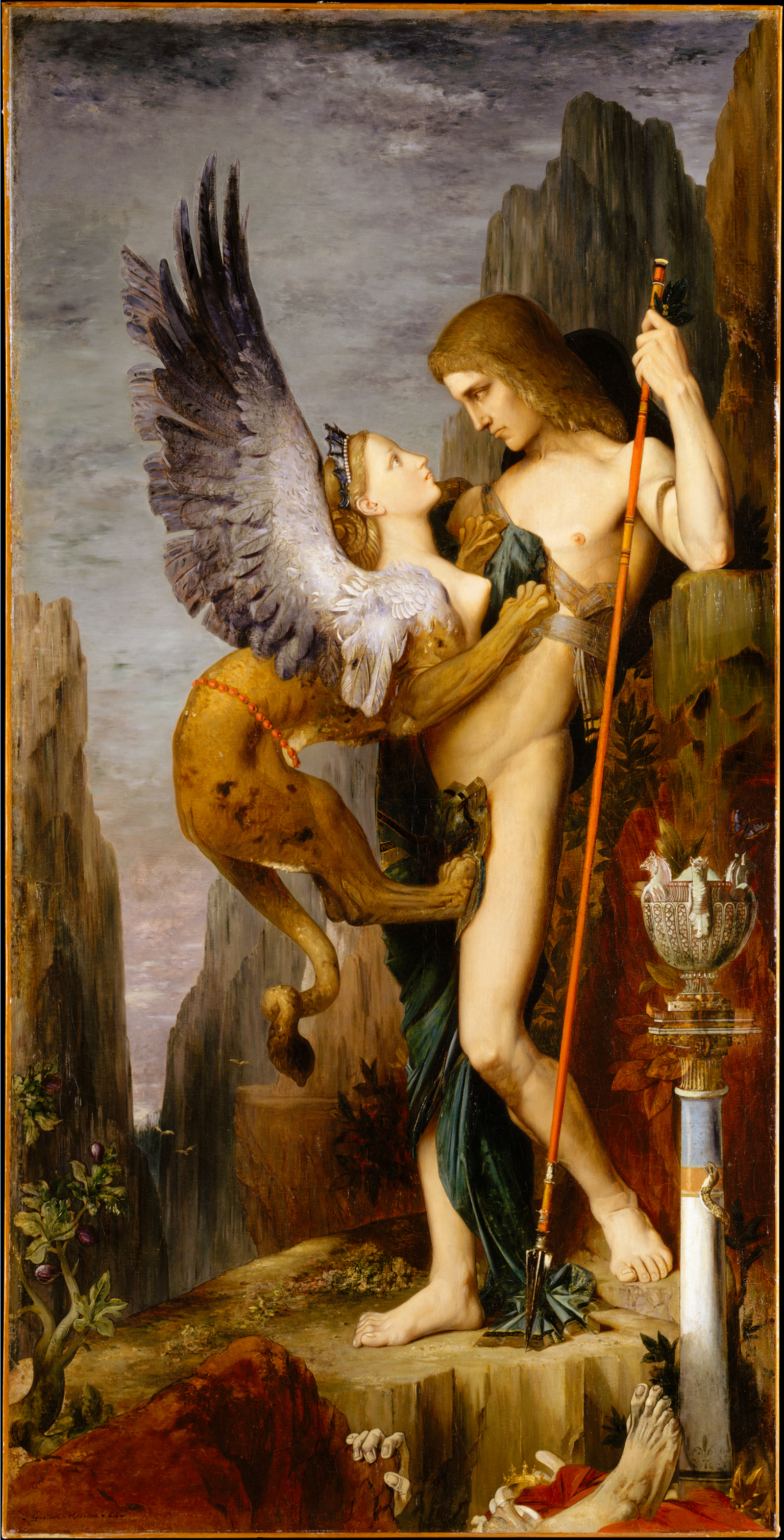
I love riddles.  I’ve always enjoyed letting them roll around in my brain until I can figure them out.  I’m that way with many brain-teasers, but there’s something very special about riddles, I think.  As a witch, I value riddling because riddles have had a place in mystical practice for a long time now (just think about Oedipus facing off with the Sphinx’s riddle).   I think they have the potential to help move one into an altered state of consciousness, and to force the brain to stop thinking in a simply linear, rational fashion.  The mindset which comes after a little riddling is an ideal one for magic, because connections that aren’t immediately obvious suddenly become apparent.  Or such is my opinion on the subject.

Today I’m going to look at a few riddles from American folklore (though some of them may be older in origin).  I’ll post a response in the comments section with the answers in case you don’t want to see those right away.  I’ll also try to point out anything that might have magical significance as I go along.  Without further ado, the riddles (from Richard Dorson’s Buying the Wind):

From the South:

The ole man shook it an’ shook it;
The ole woman pulled up her dress an’ took it.
(The solution to this one is simple, but I like the sexual connotations to the riddle itself.)

About six inches long, an’ a mighty pretty size;
Not a lady in the country but what will take it between her thighs.
(Again with the sexual innuendo…apparently we Southerners are a dirty-minded lot.  The solution to this one, though, is interesting because of the idea of “riding” to the witches’ Sabbat—in may folkloric versions, there is a sexual side to this riding).

From the Pennsylvania Dutch:

What goes and goes,
And yet stands and stands?
(Solve this one and you’ve got an interesting way to look at one version of a witch’s magical circle).

What poor fellow passes up and down the steps on his head?
(No witchy significance I can see; I just like this one)

What has its heart in its whole body?
(The answer to this one is worth remembering, for naturally-inclined folk)

What resembles half a chicken?
(A simple answer, but exactly the kind of riddling answer that I like, because it is both slightly funny and a little weird—it does a nice job of making the brain shut out its over-analytical side, for me at least)

From the Louisiana Cajuns:

If a man can lift two hundred and fifty barrels of rice when it is not raining, what can he lift during the rain?
(Again, this one isn’t really magical, but helps to get that child-like mindset which can be very useful in witchcraft)

What goes to the bayou laughing and returns crying?
(This one has more to do with sound than anything else, and getting the guesser to use his or her imagination a little)

What was it that was given to you that belongs to you only but that your friends use more than you?
(This one has particular significance for a witch, I think—if you think of “friends” in this context as covenmates, gods, spirits, etc., it makes sense, at least to me)

So what about you all out there?  Do you have any favorite riddles?  Do you ever use riddles as a way to get yourself into a magical mindset?  I’d love to hear what you have to say, so please feel free to leave a comment!

Thanks for reading,

-Cory

Blog Post 37 – Some Weekend Reading

Howdy everyone!

I thought that I’d finish up this week with another essay, this time one that I won’t actually be posting on the New World Witchery site.  Instead, I’m going to provide a link to an excellent essay I found on Pow-wow magic, and then some notes I made while reading it.

The essay itself is written by David W. Kriebel, Ph.D.  and has a distinctly academic tone.  It focuses on the history and practice of braucherei in the Pennsylvania area, as well as examining some modern practitioners (most notably Don Yoder and Silver Ravenwolf (aka Jenine Trayer).  It’s an interesting read, I think, but I’ll let you decide for yourself.

Here’s the essay:  http://www.esoteric.msu.edu/VolumeIV/Powwow.htm

Some of the thoughts I had while reading this were:

  • Why is Pow-wow fading from the magical stage so steadily?  Many spiritual and magical traditions have received increased attention in the past 30-40 years as the shiny patina of atomic-age wonder has begun to fade, yet Pow-wow still seems to be on the decline.
  • Is Pow-wow evolving into something else altogether?  Kriebel mentions Ravenwolf’s book, which has had a mixed reception at best in the magical community.  But her version of Pow-wow may just be where the practice is headed.  Is that a good thing, a bad thing, or just a thing, period?
  • The old books of Pow-wow, such as The Long Lost Friend and the Sixth and Seventh Books of Moses, get a good bit of attention in this essay.  How relevant are they to the current practice of this magical system?
  • I love the story about Mountain Mary.  It makes me wonder just how many of my local folk heroes might have been magically inclined.
  • The three levels of magical ritual (I, II, and III) which Kriebel mentions correspond well to various practices I’ve seen elsewhere (a simple charm from Hohman might be a I or a II, while Chris Bilardi’s complete brauche circuit in The Red Church is more of a III, I think).  I wonder if the idea presented here about Pow-wow would hold true for other magical systems, like hoodoo.
  • One of the best things I come away with from this essay is in his conclusion, where he notes a 90% effectiveness rating for Pow-wow curing, which is remarkably good for any healing practice.  In the end, I think that kind of a result defies any attempts to explain magic as pure superstition, but I may be wrong.  What do you think?

That’s it for this week!  Have a great weekend, and as always, thanks for reading!

-Cory

Blog Post 36 – Questions to a Braucher, Part II


Hello again!

Today we’ve got Part II of the question-and-answer article by Chris Bilardi. I won’t spend a lot of time introducing it, as I think Chris does a marvelous job of presenting his information without all of my gum-flapping beforehand 🙂 Onto the article!

How important is God in braucherei healing?

God is of paramount importance in braucherei. There is no real healing outside of God. Those two statements, I know, sound horribly pious. But, I cannot change the fact of who the real Source of this work is. Before a powwow session the braucher will ask every new ‘patient’ if they belief in God. If the response is ‘no’ the appointment ends right there. There has been some disagreement if one needs to be specifically Christian in order to be treated, or if one only needs to accept the God of the Bible. It is difficult for some to grasp the importance of this. Today we live in a very secularized, humanistic culture. Man has become the measure of all things in an imperfect existentialist universe of largely impersonal forces. Even “spiritual” power, when acknowledged, is made palatable by putting ‘it’ on the same level as electricity, for example. The healing power is “orgone”, “vril”, “animal magnetism”, “chi” – it is anything but God Almighty. But, that is not the world of a traditional braucher. This is not to say that there are no such energies, but in the view of traditional powwowers, it is the Holy Ghost that directs all power. In the Christian belief, the Holy Ghost is not a “what” but a “Who” — the Third Person of the Holy Trinity. The Pennsylvania Germans have traditionally been mainly of the Lutheran and Reformed confessions (although there are many other denominations as well), and it is within that ‘universe’ that old time practitioners had (and have) their foundation and points of reference. Therefore, it is important to note that braucherei is not a religion, but simply a multi-rooted, varied set of folk practices that have grown out of medieval Central European Christian culture. The roots of braucherei practice are many, indeed, and do have some pre-Christian antecedents. But, these pre-Christian bits and pieces are all operative, or practical. All pieces are subsumed in Christ.

Can you give the history of braucherei in a specific location?

Yes, Williams Township, Pennsylvania, specifically around the area of Easton and Raubsville.  During the 18th and 19th centuries, braucherei in this area was dominated by two families of powwowers: the Wilhelms and the Seilers (Saylors).  The patriarch of the Seilers was Johann Peter Seiler (1721 b. – 1803 d.). He and his wife Margaret (nee Maurer) were the parents of Johannes, Daniel, Frederick and Peter. Johann Seiler was a braucher and passed the practice to his youngest son Dr. Peter Saylor (1809 b. – 1868 d.). Dr. Saylor and his father, in turn taught powwowing and general medicine to John Henry Wilhelm (1816 b. – 1886 d.), who was much loved in his community and sorely missed when he passed away. At one point in his career as a braucher, a disgruntled local had Dr. Wilhelm arrested for practicing medicine without a diploma. Around this time Jacob Saylor (1793 b. – 1865 d.), grandson of Johann Peter Seiler, was practicing powwow as well. Prior to John Henry, his grandfather, Jacob Wilhelm (1744 b. – 1821 d.) was a braucher from Germany who passed along his book of charms, which remains to this day with his descendents.  John Henry’s son Eugene Wilhelm was equally loved by his community and practiced until his death in 1905. The interesting thing to note about Dr. Eugene’s practice is that he incorporated magnetic treatments into his powwowing. It was not unusual for powwow doctors to add new fads, trends, or advances in “alternative medicine” to their powwowing. When Mesmerism was the rage, many powwowers would borrow from the Mesmerists.  Dr. Arthur Wilhelm (1879 b. – 1950 d.), Dr. Eugene’s son, incorporated orthodox, allopathic medicine with homeopathy, powwow, and other “alternative” methods in his practice. One of the many things that is interesting about these two families is that the practice of braucherei has had same-gender transmission – not only among blood family members, but between families. Of course, the Saylors and the Wilhelms are related by marriage, which may have accounted for this. This method of teaching powwow differs from most noted traditions that insist on cross-gender transmission: that is, male to female; female to male.  Another interesting note is that Dr. Peter Saylor began the tradition of transferring illness, curses, and evil entities to a local peak called “The Hexenkopf” (which means “the witch’s head”) where it was believe that demons dwelled and evil witches held their Sabbaths. Usually powwow doctors will transfer illness, and other maladies, to smaller objects such as trees, rocks, pieces of metal, etc., making Dr. Henry’s receptor unique. All of the above information regarding these families can be found in Ned Heindel’s excellent book Hexenkopf: History, Healing & Hexerei. I have chosen to highlight this particular area and set of families to illustrate the consistency and persistence of powwow’s transmission as whole lineages.

Is there any difference in the healing of animals vs. the healing of humans?

There is really no differences beyond the types of illnesses – for example, humans don’t get “windgalls” – cysts in horse legs. However, many of the same charms used on humans are used on animals. There are general forms of powwow practice that can cover any illness for man or beast, such as was taught to me that I call “The General Brauche Circuit” in my book.  A notable difference in powwowing animals is that they can be nervous and wiggly and not stay still for longer sessions of powwow work – the same as human children. However, many brauchers have a knack at calming down nervous animals, so there are often no issues to be had.

How can a person get started learning braucherei?
Reading and researching is the first way to begin, unless one knows of someone who powwows and is willing to teach. By researching and keeping an ear to the ground, one will create a network that will make finding an established practitioner easier. However, once a braucher is found there is no guarantee that she or he will take on apprentices or students. Get the old powwow manuals: The Long Lost Friend, Egyptian Secrets of Albertus Magnus, Secrets of Sympathy, just to name three. Also, find books, magazines, and articles on Pennsylvania German (Dutch) folklore, such as issues of “The Pennsylvania Dutchman” (long out of print). My own book, The Red Church, contains much information and a large bibliography for those who want to go farther and do their own research. Despite all of these written sources, nothing can ever take the place of having the tradition passed on by a live human being. That last comment reminds me that spirits can, and do, teach people much when they begin this work. Sometimes this sort of teaching is not always obvious. In other cases it can be more dramatic where a braucher can have ‘visions’ or dreams where they obtain spirit guides, ‘Indian’ guides, and such. I, myself, have received some teaching at this level in the form of highly lucid dreams. Last, but certainly not the least, the Holy Bible is of paramount importance in braucherei practice. Many powwowers will not use any charms other than lines taken directly from Scripture. I highly suggest that a person who wants to be a braucher get acquainted with that book. If one does begin to practice, what s/he will notice in time is that one has a knack for certain types of healing or activity over all others.  Really read up on Pennsylvania German culture and try to immerse oneself in it as much as possible. For those who are outside of the cultural areas, which are mainly in Pennsylvania, Ohio, Indiana, and certain parts of Carolinas, West Virginia, and Canada, it will be more difficult to do this. For those who live in or near North Dakota, there are the so-called “Volga Germans” or Germans from Russia (who are not Pennsylvania Germans), and have braucherei in their culture which is virtually indistinguishable from the PA German variety. Take the time to get some familiarity with the German language, both the standard usage, and the Deitsch dialect; this will make it easier to understand the things found during research work. One last suggestion: pray for guidance, this is probably the most important of all.

I hope y’all enjoyed that! I know I did. Many thanks to Chris for contributing to us here at New World Witchery. He’s a real friend to us here, and we’re immensely grateful that he took time out of his life to put together this phenomenal essay. If you liked what you read here, please head over to Amazon (or to your book dealer of choice) and pick up a copy of his master-work on braucherei, The Red Church.

Thanks for reading!

-Cory

Blog Post 35 – Questions to a Braucher, Part I

Greetings, all!

This week, we’re very lucky to be able to host a new article by the rather brilliant author of The Red Church, Chris Bilardi.  The article will be put up in two parts over two days.  It’s a thoughtful and well-composed question-and-answer session from a traditional Pow-wow practitioner’s (or braucher’s) perspective.  If you enjoyed my introduction to Pow-wow series, have been looking for straight answers on the magical traditions of the Pennsylvania Germans, or just have an interest in folk magic and healing in general, I think you’re in for a real treat.

Now, without further delay, the article:

Questions to a Braucher

Below is a list of questions regarding the present-day practice of Pennsylvania German Braucherei, or otherwise known as Pow-Wow.

How does one find a braucher nearby and contact them?

Traditionally, one finds a braucher by word of mouth. Prior to the so-called York “Hex Murder” of the braucher Nelson Rehmeyer in 1928, there were many full-time, professional powwowers who hung out a shingle and advertised. After Rehmeyer’s murder, the Commonwealth of Pennsylvania began a sever crackdown on the practice of braucherei. With that stated, it must be said that even prior to the shocking events of 1928, most practitioners did not advertise, charge, or hang out a ‘shingle’ that they were in practice. In fact, the norm was, and still is, that of the private individual, the knowledge of whose powwowing activity is passed by word of mouth, and who practices mainly among family, friends, friends of friends, and so-on. At this point, there are still very few publically known powwow doctors. One who wishes to go to one must still keep an ear to the ground, and then make discrete inquiries. Pennsylvania Dutchmen tend to be shy (or even in some cases hostile) when the subject is broached. These reactions are a mixture of embarrassment (for fear of being seen as “backward”), and disbelief (such as some who see the practice as devil’s work, or just superstitious nonsense). It would also be accurate to say that there are many ethnic Dutchmen today who have never heard of powwowing. Reticence on speaking of a known powwower is also a way of protecting a practitioner’s privacy (and ensuring their safety).

What kind of services does a braucher perform?

What services one can get depends upon the individual practitioner. The way it tends to work is like this: each powwower finds that s/he is particularly good at one sort of activity, and then specializes in that type of activity. For example, some are only good at removing warts; others have a knack for getting rid of inflammations, and so on. There are others who will try their hand at any sort of powwowing with the belief that it does not hurt give it a whirl. Some types of powwowing, such as I was taught, in a way fall into the latter category; in this case, there is only one method that is applicable to all conditions. Services have traditionally included any of the following: pain-relieve, inflammatory problems, colic, fever, warts and other lesions, folk-illnesses such as abnemmes or opnema (“the take off” – a wasting disease), aagewachse (“Livergrown”) and rotlaufa (which falls under red inflammatory conditions); also sore throats, heart disease, persistent cough, and any other physical ailment one can think of. Some brauchers believe that they cannot ‘try’ for congenital illnesses, only those acquired throughout life. Other services can include the preparation of charms and talismans, such as the himmelsbrief or a “fire and pestilence letter” (both are written talismans that bless and ward away illness, evil spirits and catastrophes).  Some brauchers are also exorcists; they have the ability to banish ghosts, hauntings, and demonic entities. The reasoning behind these activities is that all Christians are called by Christ to do these things to the glory of God and the good of His children. Not the least of this sort of activity is the breaking of a ferhext (cursed) condition, and the destruction of all acts of witchcraft. Some powwowers have “the sight” and are able to foretell events and find lost objects.

Is this stuff witchcraft?

Short answer: no. Long answer: it depends upon what a person thinks “witchcraft” is. Braucherei is a spiritual, energetic folk practice or modality of healing; traditionally, hexerei (i.e. “witchcraft”) has always been seen as a harmful practice. This is not the witchcraft of Neo-Paganism, or Wicca. The hexe was seen as one whose main purpose for existing was to make life miserable for others: “far die leid gwele”. Fundamentally, hexerei is an abuse of spiritual power. To some people braucherei with all of its seemingly ‘odd’ prayers, hand movements, herbs, and mysterious objects is nothing but dyed-in-the-wool witchery.   For the Neo-Pagan it looks from the outside like what they’ve come to know as “witchcraft”; for the Christian who is turned off by powwow, it equally looks from the outside as what they’ve been told witchcraft is supposed to look like. The common denominator in both of these superficial views is powwow’s “shamanistic” approach to the spiritual world. One of the reasons that Dutchmen have been cautious about helping others get involved in powwow is the very real danger of someone getting tangled up with black magic. It is far too easy for a poorly trained person to use their new-found knowledge abusively. Powwow does demand a good degree of spiritual discernment.

Does one need to pay for braucherei treatment?

Another short answer: no. Unfortunately, there is a long answer here too. In the past there were practitioners (the “professionals” with their shingles hanging outside) that did charge a set fee for healing, despite claiming that their power came “from Jesus”.  Some readers of this article will doubtlessly know of some folk healing traditions that demand the exchange of money (“crossing the palm with silver”) in order for it to work. In no uncertain terms, please understand that braucherei is not one of these traditions. By tradition, if one goes to a powwow doctor, s/he might leave a donation. The powwower will not ask for a donation. I was taught that a person can leave some money underneath the powwower’s Bible. Some practitioners will, in turn, not keep this money, but donate it to their church or to a charity.  As I made note of in The Red Church, there are some activities to which there are legitimate charges, such as the creation of a himmelsbrief or fire and pestilence letter – especially if it entails calligraphic fraktur work. In other words, any activity that demands the time and resources of the powwower can be legitimately charged to the client. However, the bulk of a powwower’s time is spent in healing work, and one is to never charge for healing. It is God who is the real doctor on these occasions, and no human being can take credit (or remuneration) for that work.

That’s it for Part I.  Tomorrow I’ll put up the rest of the article, which will deal a little more with the philosophy of the practice, and advice on getting started.

Thanks for reading!

-Cory

Podcast 5 – Signs and Omens

-SHOWNOTES FOR EPISODE 5-

Summary
Today we have some listener feedback, as well as some exciting news.  Then, we discuss signs and omens.

Play:

Download:  New World Witchery – Episode 05

-Sources-

Books
Some of the books referenced in today’s show:
Buying the Windby Richard M. Dorson
Signs, Cures, and Witchery – by Gerald C. Milnes
Ozark Magic and Folklore – by Vance Randolph

Promos & Music
Title music:  “Homebound,” by Jag, from Cypress Grove Blues.  From Magnatune.
Promo 1-The Standing Stone and Garden Gate Podshow
Promo 2- Media Astra ac Terra
Promo 3- A Pagan in the Threshold
Promo 4 – Inciting a Riot Podcast

P.S.  This is just a quick apology for the lateness of this episode, as well as occasional shifts in sound quality.  We have been having trouble with our podcast recording software, and had to re-record parts of our show via Skype.  We should have this issue resolved by our next episode, so thanks for bearing with us.