Blog Post 182 –Lost in the Supermarket (Part I)

Customer making purchase in WWII grocery (via Wikimedia Commons)

If you have that song by the Clash in your head now, congratulations, that was my primary purpose in writing this article. Kidding.

Last time I took you on a quick but fun tour of my home to show how I’ve applied some of the folk magic I’ve picked up over the years in my personal life. Today, I’m drawing some inspiration from Sarah Lawless, whose article on “Pantry Folk Magic” is one of the finest pieces on using what’s at hand for practical spellwork that I’ve ever read. I’m also inspired by an article on “Grocery Store Magic,” in The Black Folder, a compilation of workshop notes by Cat Yronwode (which I recently reviewed), and I’ll be citing both of these sources as well as several others in the coming few paragraphs.

There are plenty of articles out there on doing magic from the grocery store, but I wanted to go beyond the spice aisle a bit and look at the vast number of folk magical items that may go a little under the radar in a standard shopping trip.

Before we go much further, I do want to mention that I don’t think the grocery store is the end-all be-all of magical supply houses. I prefer by far to grow or wildcraft my own botanicals, use hand-crafted incenses from a local occult shop, and carry talismans picked up at the nearby Catholic bookstore in a lot of cases. Supporting community commerce and doing work oneself fits in as well or better with most magical practices than grabbing a mass-produced box of incense from a five-and-dime shelf, but there are always going to be cases where magic must be done on short notice or with supplies not readily purchased at the witchy store. In some of the cases below, it should also be noted that the grocery stores where one can find these ingredients are not the big chains, but rather local bodegas or international markets.  You are far more likely to find chewing john (galangal root) in an Asian market than in a big chain one, for example. Now, on to the tour!

Candles

One of the big resources that frequently gets missed in grocery store magical item lists is the cornucopia of candles that can sometimes be found. Of course, a lot of stores carry scented jar candles and those are reasonable enough for doing some workings, but if you look in the Latin American or Hispanic section you can often find a number of saint candles as well. I’ve found everything from the standard Virgen de Guadalupe to Santa Muerte, Seven African Powers, Just Judge/Justo Juez, and even a Lucky Lotto Numbers candle just by browsing a little. Below you can see a pair of very cute candles which look like children’s novenas for working with Guadalupe or St. Jude, found at a mid-level chain grocery store.

Little Candles

The novena candles are also frequently available unlabeled and sometimes in multiple colors. It’s fairly easy to customize them to your own needs and do extended spellwork using these tools.

The candles don’t stop there, though. Say you want to do a quick-and-easy candle spell, but you know you won’t have time to burn a candle 1-2 hours per night for nine nights. Stop by the baking section and grab birthday candles, which are small and burn very quickly. Will it change the potency? Perhaps, but you’ll be able to at least do what you want to do. They also frequently have letter or number shaped candles, so you might be able to use those to target a specific goal or person with the spell (especially if you’re knowledgeable about numerology and can figure out the right number(s) for the job).

If your grocery also has a Jewish section with kosher options, check to see if they sell Shabbat candles. They frequently come in boxes at a very reasonable price, and are specifically designed to be used for spiritual purposes (albeit non-magical ones in most cases).  These burn longer than the birthday candles but much more quickly than novenas, and so would be good for mid-range spell work.

Cleaners

We’ve mentioned these a bit in our previous post on Spiritual House Cleaning, but here I mean less of the whole-herb types and more of the mass-produced stuff. Harshly-scented cleaning solutions with abrasive chemicals and artificial odors may not seem like a particularly likely place to find folk magic, but it’s there if you look for it. One of the most common of household cleaning agents, ammonia, acts as a substitute for urine in some spells. Cat Yronwode suggests in her Hoodoo Herb & Root Magic that ammonia can be used in spells focusing on protection and spells designed to improve sales, either at a business or of a home (Yronwode 29). In Spiritual Cleansing, Draja Mickaharic mentions ammonia’s great psychic cleaning powers and notes that putting a little bit down the drain after a house blessing & cleansing will help finish the job.

In a similar vein, we find plenty of uses for that old pantry/laundry/cleaning-closet standby, vinegar. Sarah plainly mentions vinegar as one of her grocery store finds for the working magician. All vinegars can be good for simple crossing work, according to Southern folk magic, and it would be very easy to turn cider or wine vinegars into a variety of Four Thieves Vinegar for both aggressive protection and subtle cursing. I mentioned on our Spell Failures episode that I had attempted to work a vinegar jar with poor results (mostly due to my lack of dedication). I found an interesting hexing combination of both vinegar and ammonia in Zora Neale Hurston’s article on “Hoodoo in America,” too:

i. To Punish.
When you want a person who is indited punished, write the name of the person in jail on a slip of paper and put it in a sugar bowl, or some other receptacle of the kind. Put in red pepper, black pepper, one penny nail, fifteen cents of ammonia and two keys.  Drop one key down in the bowl and lean the other against the side of the bowl. Go to the bowl every day at twelve and turn the key that is standing against the side of the bowl to keep the person locked in jail. Every time you turn the key, add a little vinegar (Hurston 382).

I find it interesting that both ammonia and vinegar seem to be able to perform cleansing functions in a household, but applied to an individual their corrosive nature seems to become destructive. I think this illustrates the principle of the two-sided coin of magic nicely, though, as the same ingredient that can save you from nasty spirits might also be turned around to damn an enemy.

Before I move off of cleaners, I want to mention a couple of the commercial products out there that have some magical history and applications. First, the famous Pine-Sol cleaner, which has been found in grocery stores for almost 60 years. The product was born in Mississipi, and even today contains pine oil to give it cleaning power and its trademark scent (along with a hefty dose of chemical salts and alcohols).  Pine oil is another spiritual cleanser and refresher, in addition to having some mundane cleaning properties as an antibacterial and antiseptic disinfectant. It works a lot like lemon does in spiritual cleansing—so much so that one of Pine-Sol’s first offshoot scents was lemon, although now they have half-a-dozen different aromas to choose from.  While I’d never suggest using a commercial pine cleaner on the body (or in the body especially…that’s a big no-no!), some folk magical traditions have used pine oil-based treatments for medical ailments (there’s a fine example in Hohman’s Long Lost Friend, for instance). So the presence of lemon and pine has the power to cut through spiritual ailments as well as the nasty germs lingering on your kitchen floor. You can make a variant of your own pine oil cleaner by simply adding pine oil to some salted water with some castile soap dissolved in it. It won’t be as strong as Pine-Sol, but it also won’t be quite as harsh. You could even add a bit of lemon juice or lemon oil to that, too, for extra kick (both spiritually and microbially speaking).

Since we’re talking of lemons and soap, I can’t help but at least briefly mention Murphy Oil Soap, which has been treating hardwood floors for over a century (although only in a mass market for about half that time). The cintronella oil in Murphy’s has a citrusy, lemony scent, and is both a lucky and cleansing ingredient in spiritual work (it’s one of the oils used in Van Van Formula). Queen of Pentacles Conjure notes that both Murphy’s and Pine-Sol make great additions to the spirit worker’s cleaning closet. Citronella keeps away mosquitoes, too, which makes me love it even more.

I’m going to pause here before continuing through the aisles, as this article is already quite long. There is plenty more to see as we make our way through the store, though, so stay tuned!

Thanks for reading,

-Cory

Blog Post 181 – The Little Witcheries Tour

I’m taking a cue today from a recent blog post by the excellent Jen at Rue & Hyssop entitled “Little Witcheries,” which focuses on the small, everyday enchantments in her life. She and several other bloggers have been sharing their daily practices, household charms, and domestic talismans so I thought I would offer a bit of the same. I know I don’t tend to make posts entirely personal here, but I do frequently talk about the “secrets in plain sight” that accompany practical witchcraft and folk magic, so it seems like now is a good time to do a quick tour of my home and see how I apply what I have learned in the course of my studies to my real life. I hope you won’t mind the diversion from the more general and academic examinations of folk magic. You’ll still likely get a good feel for folk magic, and I’ll reference any previous posts or sources that might explain further, so hopefully this won’t feel too indulgent.

I’ll mostly be cataloging what sorts of “little witcheries” I have around, rather than giving a lot of expository detail. Basically, I’m treating myself and my home as a folklorist’s test case, because nothing’s more fun than turning the microscope on yourself, right? And so, on with the tour! Come on in!

Exterior

Garden friends
Garden friends

Plant guardians – I have a number of magical plants in my front garden, but my rosemary and rue plants act as my primary sentries. The rosemary started as a pair of six-inch cuttings, and now it’s easily a three-foot-tall shrub.  Theswallowtail caterpillar in the pictures is one that seems to particularly like our rue plant, but it doesn’t do any real harm to it, so we let it alone.

Witch bottle – Buried somewhere along your way to the front door (exactly where is my little secret).

Washes – The door is washed with protective mixture (which Laine has indicated she would rather not touch) and I use a protective foot-wash derived from Irish lore on the porch.

Interior

Entrance – Door has salt & red brick dust lines, plus several paper charms wedged in the lintel.

Cleaning – We have a mostly carpeted space, so instead of floor washes, I sometimes make floor sprinkles with powdered herbs & salts to affect the various rooms. I also use vinegar (including Four Thieves Vinegar) for cleaning & breaking up bad energy. Most of what I do to dress doors, windows, etc. can be found in our posts on magical house cleaning.

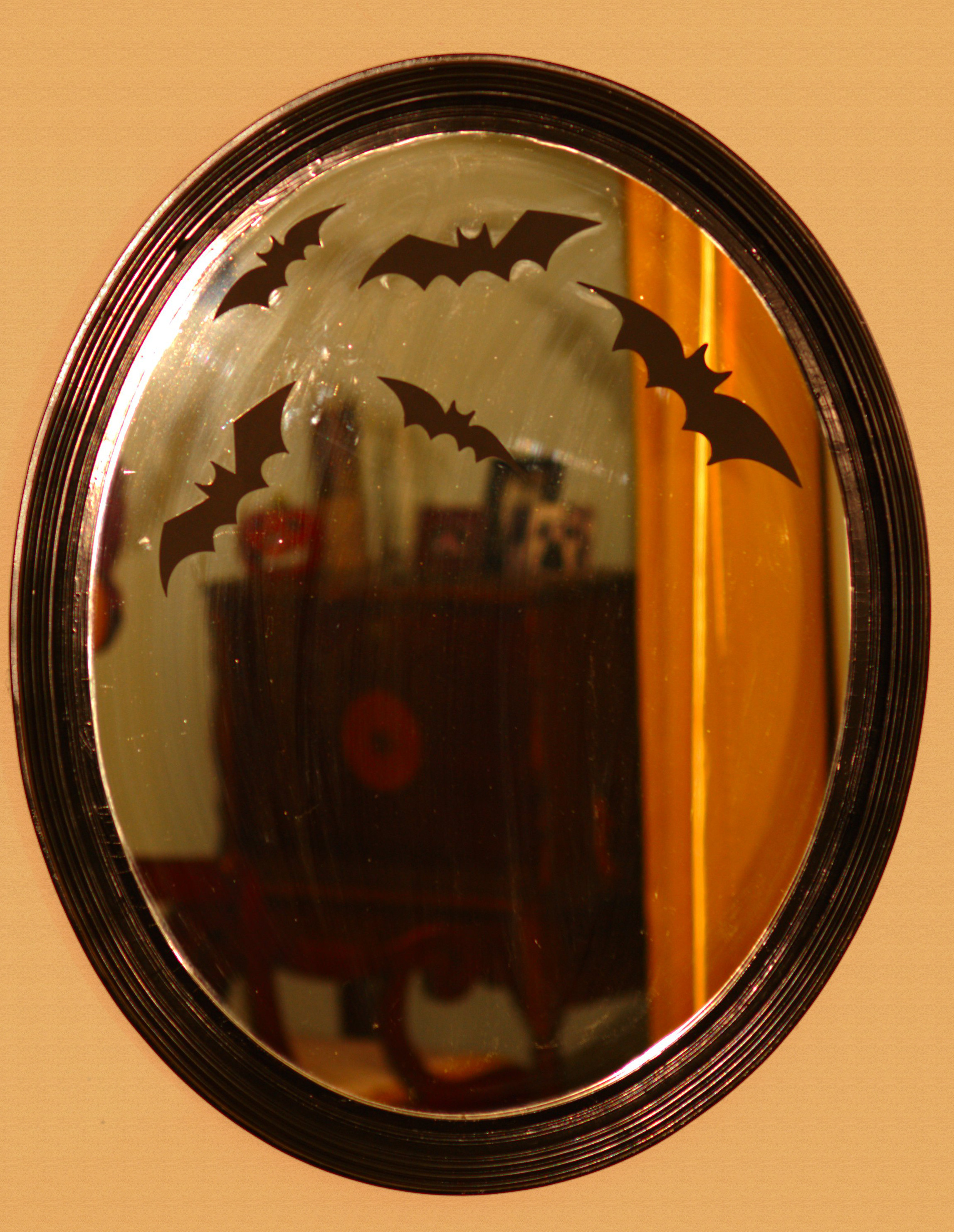
mirror

Mirrors – We keep a mirror behind the door to deflect anything spiritually harmful (currently decorated for Halloween with some bats).

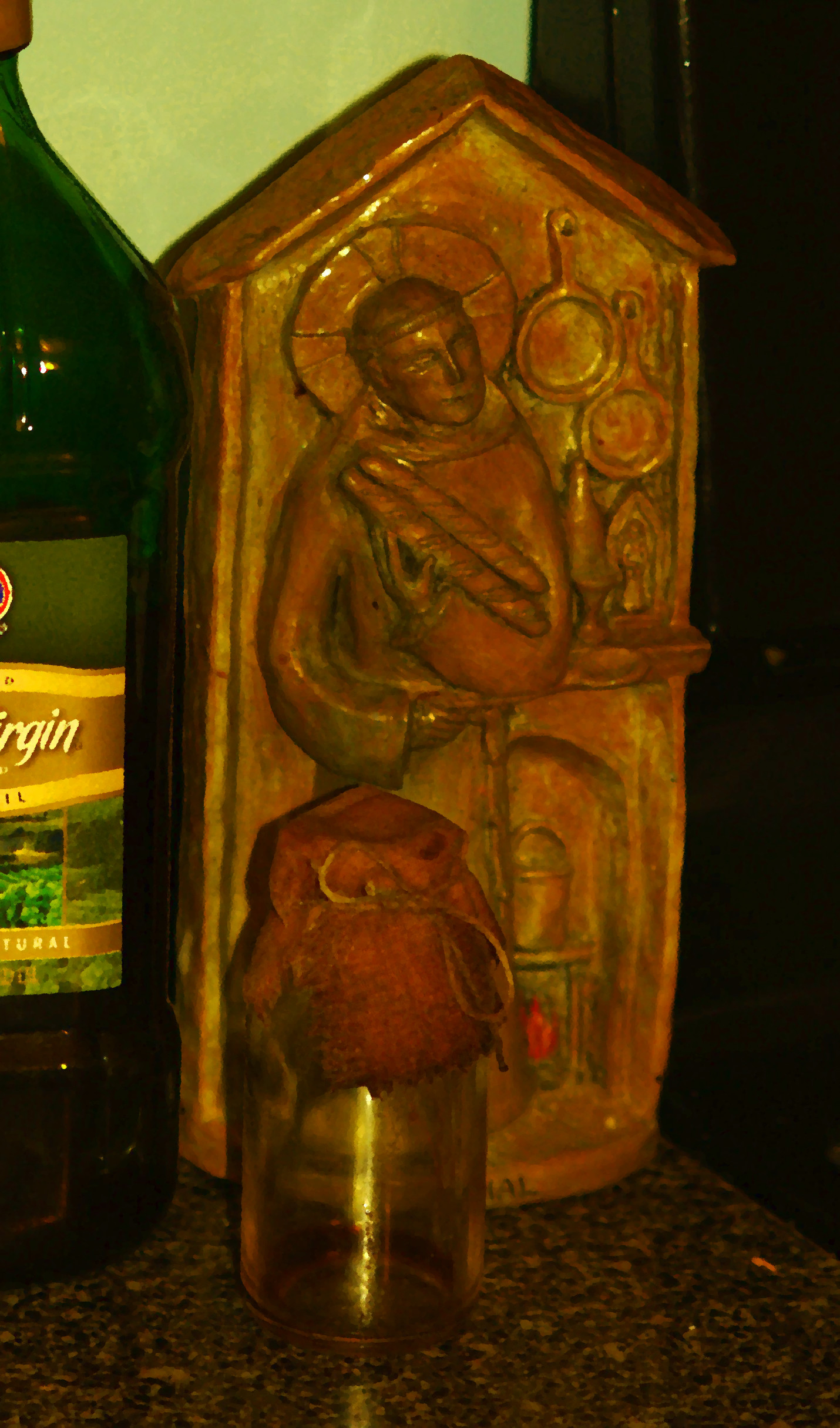
stpaschal
St Paschal & a spirit bottle
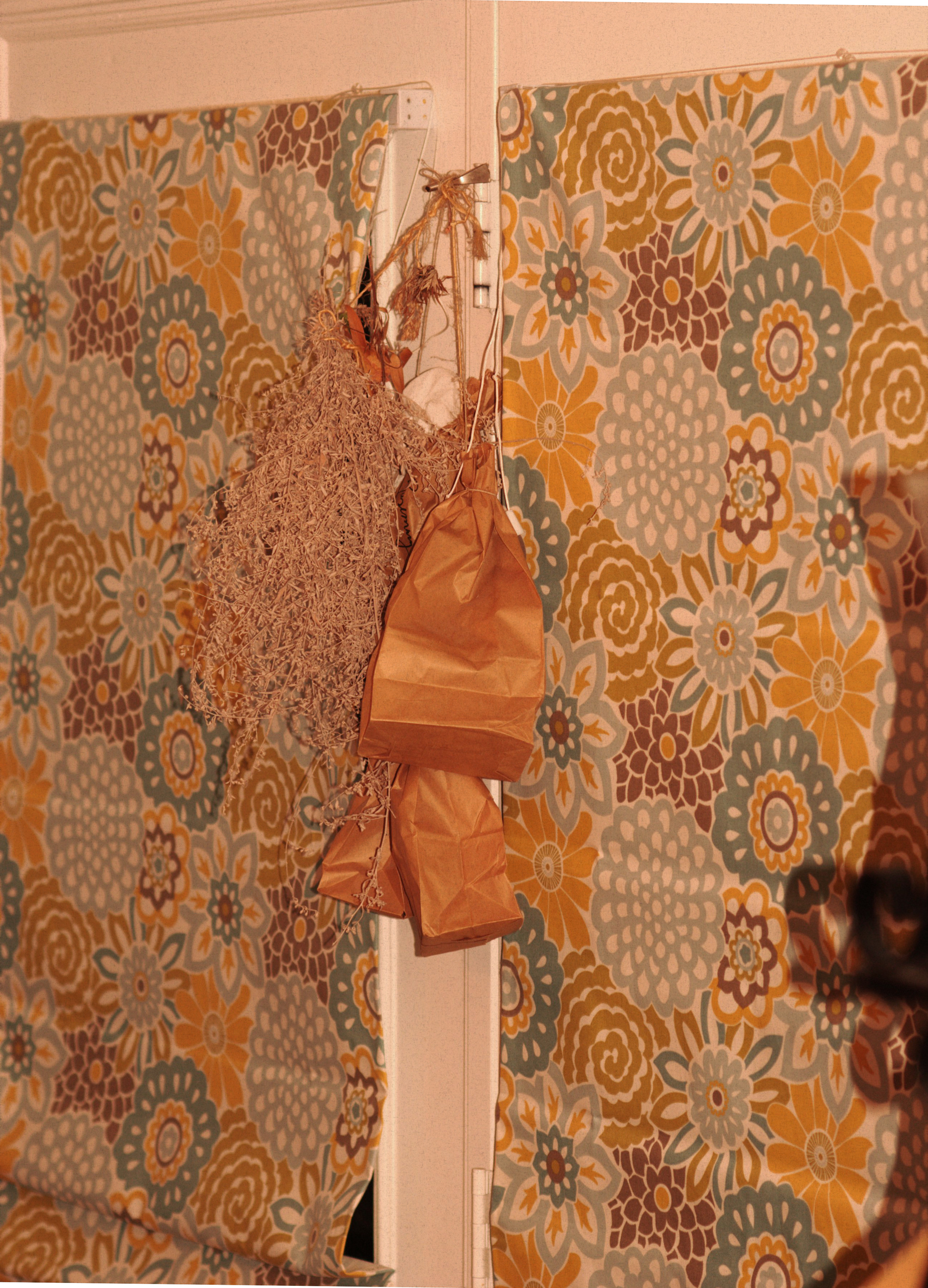
herbswindow
Bundles drying in the kitchen window

herbjars
Tincture of Rue, Four Thieves Vinegar, & Four Thieves Pickles

Kitchen – I’ve always got something brewing. Right now I’ve got some tinctures going (some magical, but most multipurpose, used in magic or cocktails equally), a few herbs drying in bags by the windows, and of course, my Four Thieves Vinegar in the pantry (plus a couple of jars of Four Thieves Pickles, which I put up each year). The kitchen is also home to a few of my spirit helpers, including St. Pascal and my resident house spirit (his bottle may look a bit strange, but he’s been with us almost since we moved in, so I don’t mind his scruffy appearance).

roomaltar
Bedroom Altar
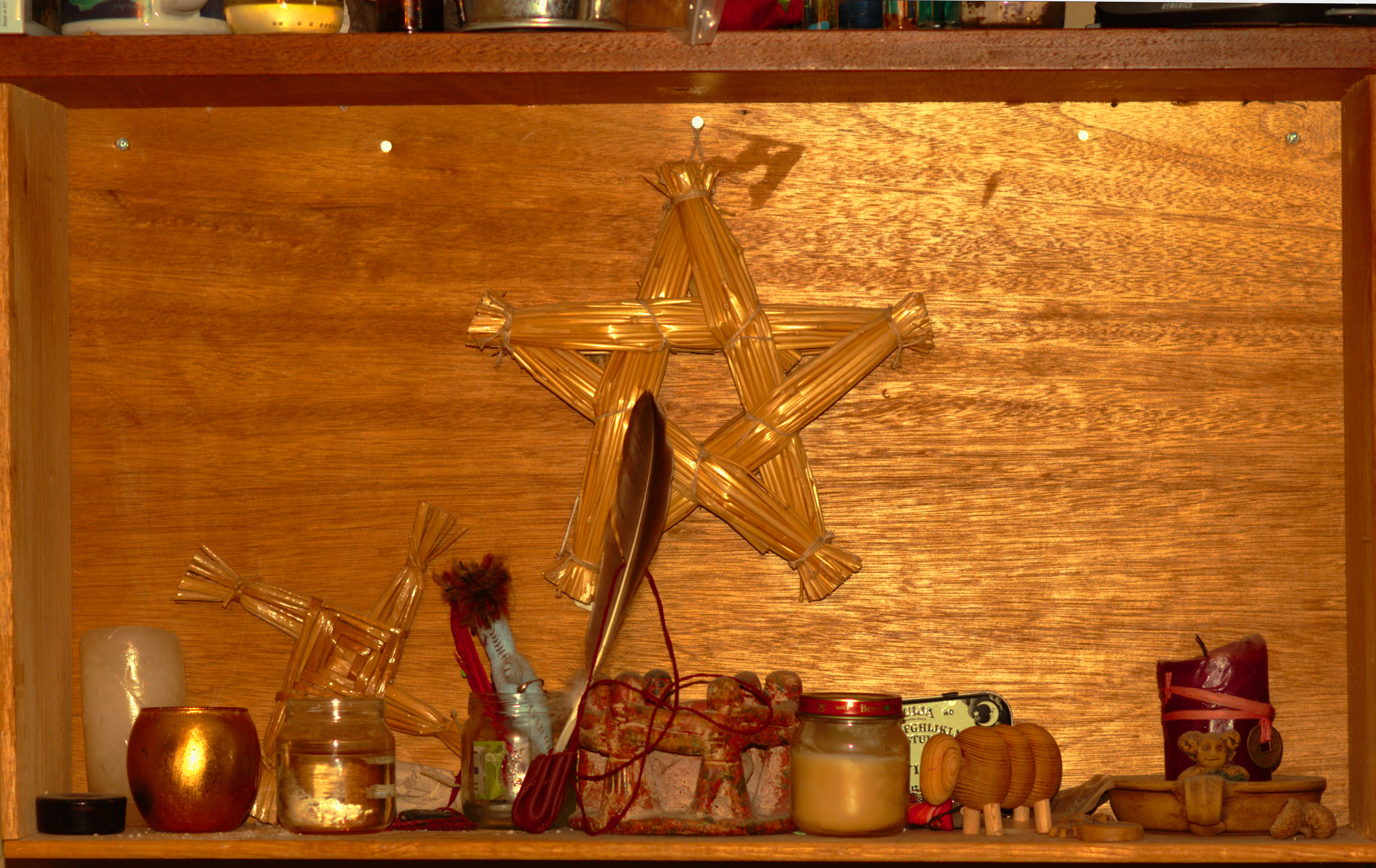
topmainaltar
Top of Main Altar
bottommainaltar
Interior of Main Altar

Altars – I’ve got altars throughout the house. I have a personal altar in the bedroom where I do daily devotionals, and then the main altar in my upstairs office for my weekly communion with my spirit friends and family.

Brooms – I keep brooms near our main entrance doors, bristles up to ward off unwanted visitors.

Cards – Are just everywhere in the house. I collect different decks that interest me, though I have a few favorites for divination.

Hamsa Hands, via Wikimedia Commons

Talismans – I keep a hamsa hand on one of my windows, iron railroad spikes throughout the house (some are visible in the picture of the library shelves), and I will sometimes place small talismans like evil eye beads or saint medallions near the office and the children’s room to ward off any harsh or unwelcome spirits. I’ve also got an Ojo de Dios my mother acquired in New Mexico which acts as a protective charm in the nursery.

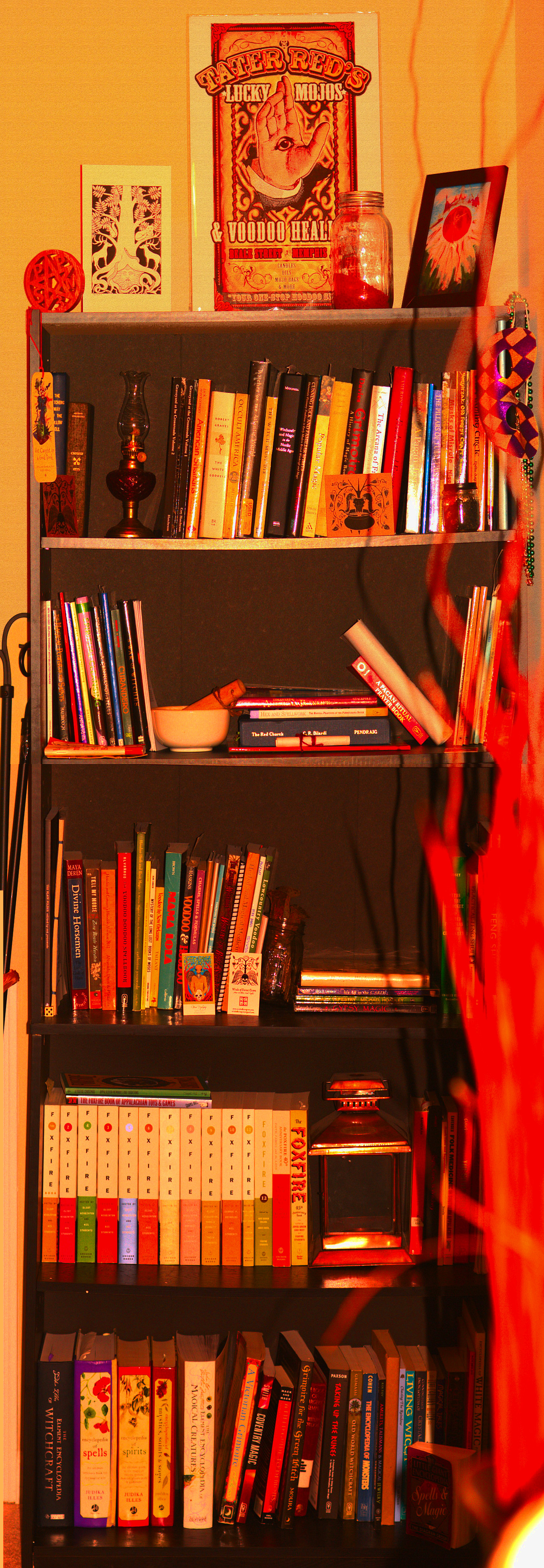
bookshelf
Library Shelf

Library – Not a lot of folk magic, per se, but lots of information on it. I tend to collect chapbooks as well as full print editions. I also keep my herbal & gardening library in here (not visible from this angle), along with most of my dried herbs. I usually have something hanging to dry in here as well. A few small charms are floating around, as well as many of the spell ingredients I turn to frequently (oils, herbs, etc.). I keep most of my folklore and fairy tale library near this one, as well.

So that’s the tour for the day. I hope it wasn’t too distracting of a diversion from the typical examination of folk magic, but I was so enticed by the series of posts I saw emerging from Jen’s topic that I couldn’t resist.  I will likely be using my next post to do a similar “tour,” but of a non-personal space in the interest of showing how many folk magicians acquire ingredients without necessarily having a “witchy shop” nearby.

Until next time, thanks for visiting, er, reading!

-Cory

Podcast 55 – The State of Conjure

Summary
This episode features a special one-hour interview with the cast of Conjure Crossroads, discussing the state of conjure in the US. We’ll hear about art, magic, New Orleans, and what conjure looks like today among  current practitioners.

Play:
Download: New World Witchery – Episode 55

 -Sources-
You can find our guests from this episode at the following links:

  1. Starr Casas – Old Style Conjure (she also has her own podcast of the same name)
  2. Sindy Todo – Todo Mojo (be sure to check out her gorgeous railroad spike art)
  3. Susan Diamond & Wolf – Serpent’s Kiss, Two Hoodoos,  and Shimmering Wolf Studios
  4. Orion Foxwood – Two Hoodoos, his personal page, and the House of Brigh (his Faery Seership site)
  5. And of course, check out their show, Conjure Crossroads on Blogtalk Radio

You can find out more about the New Orleans Folk Magic Festival here, and more about ConjureCon here.

Several of our guests also have some great books on conjure available, including:

If you have feedback you’d like to share, email us or leave a comment. We’d love to hear from you!

Don’t forget to follow us at Twitter! And check out our Facebook page!

Keep an eye out for more info on the New Orleans Magical Meetup on Novemer 8-10, 2013! You can follow the official Facebook page, or watch the website for more details!

 Promos & Music
Title music:  “Homebound,” by Jag, from Cypress Grove Blues.  From Magnatune.

Promos:

  1. Lamplighter Blues
  2. Witches’ Brewhaha

Blog Post 180 – New World Witchery Cartulary No. 4

Greetings and salutations! It has been a phenomenally busy end-of-summer around here. We’ve got a show in the works, and I’ve got articles brewing for the website, the Witches & Pagans site, and several print publications as well, so keep an eye out for those. Today I thought it would be good to have a brief cartulary post, though, so that while you’re waiting on tenterhooks for more New World Witchery (and you are waiting on those tenterhooks, aren’t you?), you won’t get too bored.

First of all, it’s the birthday of Howard Phillips Lovecraft, the noted author of some of the best weird and horror fiction of the twentieth century. If you’ve ever heard of Cthulhu or the Necronomicon, those are Lovecraft’s brainchildren, as are so many modern horror elements. What makes him of interest here is that he blends the occult with the scientific, creating a strange but wonderful mythology that is very easy to get sucked into. Much of his work has entered the public domain, and you can frequently find good collections of it cheaply, such as this Kindle collection of his work for less than a dollar. If you want to spend a little more, pick up the truly excellent Library of America collection, which also contains a chronology of Lovecraft’s life and a thorough annotation to the stories. If you’re a podcast listener, you should also definitely check out the HP Lovecraft Literary Podcast, who record dramatized versions of the author’s eerie tales.

I recently reviewed a couple of books on conjure, both of which fall into the non-fiction camp, but since we’re talking about weird tales, I think a few recommendations of conjure fiction would be worthwhile. First, I have to recommend the collection Mojo: Conjure Stories, edited by the wonderful Nalo Hopkinson. I’ve reviewed this book before, so I won’t say more than it is definitely worth a read. Fire Lyte sent me a wonderful collection of late 19th and early 20th century conjure tales called Voodoo: Strange & Fascinating Tales & Lore, edited by John Richard Stephens. The editor unfortunately bowdlerized a number of the stories, but you can find a number of great tales in here anyway, by authors like H.G. Wells and Charles Chesnutt. If you’re looking for a great collection of hoodoo stories just by Chesnutt, I received the marvelous Norton Critical Edition of his Conjure Stories back at Christmas, and it definitely rewards a reader with an interest in folkways , magic, and good literary storytelling.

I can’t recall if I mentioned it or not, but I recently watched a few classic “voodoo” films via Netflix and/or Amazon Instant that may be of interest to folks here. The classic White Zombie stars Bela Lugosi and features all sorts of ridiculous fun. The 1988 film The Serpent and the Rainbow was more enjoyable than I thought it would be at first. It’s based on a book of the same name by anthropologist Wade Davis, who theorized that the “zombie powders” of Vodoun might be a form of bufotoxin or tetradotoxin found in poisonous animals which induced corpse-like comas in victims. The movie obviously mangles the research a bit in the name of good storytelling (well, storytelling of some kind, anyway), but it still makes for a harrowing look at the political and spiritual life of Haiti under the dictatorship of Papa Doc and Baby Doc Duvalier.

Finally, I wanted to mention a few musical items of interest. Firstly, I picked up a really fun compilation CD put out by the Lucky Mojo Company called cat yronwode’s Hoodoo Jukebox. It’s part of a 2-CD set which includes a CD-ROM full of hoodoo-related graphics (mostly in the Lucky Mojo style). The music CD is basically a collection of old country or backwoods blues tunes by the likes of the Memphis Jug Band, Johnnie Temple, and Blind Willie McTell. It’s essentially all tunes coming from public domain sources, so I’m not sure if any of the proceeds go to the artists’ families, but I imagine with Yronwode’s usually ardent position on intellectual property and copyrights she’s found some way to do good things with the funds. Most of these songs you could find by digging around in archives or on the internet long enough, but Cat has done a marvelous job assembling them in one place and providing a really rich commentary on them in the liner notes. If you like blues or even just music about magical things (and I’m looking at you and your upcoming Halloween episode, Velma Nightshade), this is a good collection to have.

I also cannot help but shamelessly plug a friend of mine’s latest release. If you’ve not heard of Amanda Shires, you probably will, and soon. Her new CD, Down Fell the Doves, is the deeply haunting sort of alt-country record I can’t resist. It’s relevant here because several of the tracks have deeply folkloric elements. “Bulletproof” talks about animal curios given to Shires by a man named “Tiger Bill” with the assurance “That’ll make you bulletproof.” The song “Deep Dark Below” speaks of a devil who plays a fiddle with a bow made of bone that “sounds like your deepest desires.” If you like good, spooky music touched by rock, blues, country, and folk influences (somewhat similar to the marvelous band Devil Makes Three, which Sarah Lawless introduced me to), give Down Fell the Doves a listen.

Thanks for reading!

-Cory

Blog Post 178 – Book Reviews

This seems to be a great time to work with American folk magic. Not only have a number of people begun working with the systems that have evolved here (like hoodoo, pow-wow, and all the other flavors of North American magic you probably come to this site to investigate), but the vast amount of information on the various branches has become legion. Thanks very much to author-teachers like Cat Yronwode, Conjureman Ali, and Denise Alvarado, the opportunity to learn folk magic has expanded beyond a few internet sites and hard-to-find instructors to entire shelves of books and even folk magic festivals where students can gather together and learn from a bevy of the brightest minds in practical magic today.

Keeping up with the tremendous reading list available to someone interested in folk magic is no easy task. My current pace is roughly a book a week to a book every two weeks, and that includes the books I review for the Journal of American Folklore, texts on folk magic, books on literature and criticism, science writing, etc. Occasionally I manage to squeeze one in for fun, too!

That’s not to say that my ‘required’ reading list can’t be fun, too, of course. Two recent entries into the pile of texts on folk magic that have been absolute pleasures to read are The Black Folder, compiled by Cat Yronwode and The Conjure Workbook, v. 1: Working the Root, by Starr Casas.

The Black Folder is the assembly of a number of workshop handouts from a variety of events and educational opportunities presented by Yronwode’s Lucky Mojo Curio Company and Missionary Independent Spiritual Church over the past decade or so. Many of the entries, particularly the early ones, are by Yronwode herself. Her section on working hoodoo based on items you can pick up at the grocery store or pull from your pantry is first-rate, and doesn’t simply focus on the spice rack but includes work with onions and other produce as well. Other top-notch contributors include Conjureman Ali, Sindy Todo, Robin York, Dr. E, Starr Casas, and many others. Topics range from the oft-covered bottle spells and honey jars to very detailed and unique pieces on foot-washing, the use of skulls in magic, and even some Swedish troll-magic courtesy of Dr. Johannes Gardback. The design of the book really looks like a collection of newsletters that have been bound up in a black cover (it is, however, a trade paperback version of the original Black Folder, which Yronwode used to keep up with all the informational pamphlets used by teachers in Lucky Mojo’s courses). Reading through this book provides a bit of a biography of Lucky Mojo as well, as the evolution of the company and its teaching role can be seen in the more-or-less chronological progression of the pamphlets.  The work provided varies in quality according to the author, with some authors giving standout spells and methods, and some which focus more on theory than technique. I found a few entries that seemed more conjectural and less based on inherited practices or research, but for the most part the book is an absolute treasure-trove of information. While it does not replace the opportunity to learn from these folks in person, it certainly does a phenomenal job of feeling like field notes from working magicians. It is published by Lucky Mojo, so you can buy it directly from them or through Amazon and other booksellers.  Because of the difficult layout work that must be required to piece together all those pamphlets, it seems like the kind of text that will not likely ever appear in eBook format, so a physical copy is the only way to go, but highly worth the purchase price.

In The Conjure Workbook, Casas—who contributed to The Black Folder as well, noted above—also does a tremendous amount of assembly, piecing together essentially an entire lifetime of conjure knowledge in a little under 300 pages. Casas has been teaching and writing for several years, and has formerly produced texts on doll baby work, money magic, basic Southern conjure, and Blackhawk independently. For this endeavor, however, she has joined up with Pendraig Publishing (Peter Paddon’s company). At the very outset, I will say the biggest problem with the book has nothing to do with the work presented, but rather the frequent typos, spelling errors, and odd edits that plague the text. Hopefully future volumes and editions will corret those issues, though, because this book is highly valuable and informative. Starr’s workbook reads like a master class with a highly skilled and practiced conjure worker. She makes no bones about the type of work she does, which she labels as specifically Southern conjure and ties to working with the Bible (please note, she does not say one must be a Christian to do this work, but that one must be comfortable with the Bible as a source of spellwork and power—this point frequently gets misunderstood in her writing). She has been practicing within a Catholic strain of the work for many years, so the Saints make a strong entry into this book. She doesn’t shy away from the darker side of saints like St. Lucy and St. Ramon, and includes work with Mary and several of the prophets, too—which are spirits that receive relatively little attention in other works on Biblically-framed folk magic despite their powerful natures. Casas puts the work first in this book, and if you’re looking for actual spells to do, this is certainly the kind of text to keep handy. She also does not regurgitate anyone else’s spellwork (at least as far as I can see) and gives the reader a piece of her own history and philosophy in between the spells. More than anything, this book reads like a conversation with her, and provides loads of new conjure projects to an aspiring worker, including doll babies made with shrunken apple heads, medicine bottle spells, and even a good reason to invest in getting a box of chalk from the dollar store to keep handy. Starr has put together a book that, despite its proofreading issues, manages to be absolutely invaluable to anyone who likes to get their hands a little dirty in folk magic.

Both of these books are born from years of practical experience, and they both have more of a classroom feel than most titles on folk magic do, which may make them more accessible than other texts on similar subjects. It is highly likely both books will be the initial entries into multi-volume series as well, which hopefully means that classes will continue, so to speak, for a long time to come.

Yronwode and Lucky Mojo have also begun producing a number of smaller books, like The Art of Hoodoo Candle Magic in Rootwork (by Ms. Cat) and Hoodoo Honey & Sugar Spells (by Deacon Millet), but I’ve yet to read most of those. Casas also has released a small book on reading “conjure cards,” and she’s put out a deck and a special deluxe set that includes the cards, book, and blessing oil through Pendraig. They look absolutely stellar, though I’ve not laid hands on a set yet, only seen the online previews. I mention these because both Pendraig and Lucky Mojo seem to be strong contenders in terms of putting out useful texts on folk magic now, and I’m very happy to see them expanding their offerings. Hopefully that means an ever-growing source of knowledge and spellwork for all of us.

There are plenty of other texts I’d love to explore (including one that I’ll try to get to with a bit of fanfare soon, called Fifty-Four Devils, by Cory Thomas Hutcheson, who seems a rather promising fellow, if a bit silly at times), but for now I hope you’ll check out The Black Folder and Working the Root and let me know what you think.

Wishing you all the best, and happy reading!

-Cory

Blog Post 176 – Summer Saints, part III (Folk Saints)

Shrine to Elvis, by theogeo, from Flickr (used under Creative Commons license)

It’s not quite officially summer yet, technically speaking, but the days are longer and the air is warmer, so I thought this would be a good time to revisit a subject which I explored last summer and add a new chapter to the book of New World Witchery. Today I’ll be looking again at Saints, but veering away from the orthodox and the official and into the realm of popular or “folk” saints.

The process of canonization frequently involves a great deal of waiting and confirming and bureaucracy on the part of the Catholic church, and sometimes folk saints are simply people who are on the way to becoming official saints but who still lack whatever final paperwork might be required to get their membership card into the elect order. In other cases, folk saints have little or nothing to do with the Catholic Church, and instead are simply incredibly popular figures who’ve developed devotional cults which make sacred pilgrimages or maintain shrines to a particular figure. Some of this was discussed on the Podcast Special on Magical Saints a while back, where I highlighted both official and unofficial saints, so some of the information below may be a bit repetitive, but it can’t hurt to have a little more information.

So what sets a folk saint apart from a revered ancestor, then? How is that “sainthood” bestowed, if not through the channels of a legitimizing body like the church? In general, the holiness of the saint empowers him or her—the saint is either directly in communion with the divine or is a transformed divinity him- or herself. Take for example, Teresa Urrea, whom we examine below in a bit more detail. She underwent a number of ecstatic ‘fits,’ during which she attended the court of God:

A mythology quickly grew up around each of the folk saints, attracting ever more adherents. The content of this cycle of stories is remarkably similar, although the parallels here are closer between Teresa and [folk saint Nino] Fidencio, than between these two and [San] Damian [of Sonora]. Teresa was thought to be in continual contact with supernatural beings during her ecstatic attacks. When these occurred, an immense multitude of people approached her, kneeling, praying, and weeping. When she returned to herself, she announced that she had been with God and his angels who gave her advice on morality (Macklin 94).

The divine actions of these saints frequently came at great personal expense. Some gave away worldly possessions, and others sacrificed their health and well-being for the aid of those who came to them:

These folk healers worked hard, sometimes seeing hundreds of people per day, and sometimes getting little sleep for long periods of time. Both El Nino and Teresita are conjectured to have died young partly as a result of exhaustion from years of labor. They also worked for little or no compensation. These old-time curanderos were regarded as folk saints while they were still alive—that is, they were recognized by la gente (the people) as holy beings, even while they were not officially canonized as such by the church (Torres 6).

Still, there are cases where a saint does not act particularly saintly and yet develops a strong following. Maximon, the Guatemalan folk saint who likely derives from a native deity very loosely wrapped in a Catholic guise—his name derives from the name San Simon, or St. Simon, but clearly even that name doesn’t stick—can be fickle and demanding, and generally provides assistance to people through wealth rather than health. Jesus Malverde works on behalf of the narcotraficantes and other outlaws. While Elvis certainly accomplished a lot in his lifetime, no one is making the case for his sainthood based on his receiving angelic lessons on morality during ecstatic trances.

The cult of folk saints is widely practiced and very popular among Hispanic populations, although it is not exclusively limited to them by any means. In some cases, the folk saint in question is a cultural hero of some kind (see Pancho Villa below), and the combination of exalted personality and the practice of Catholic ceremony merge to form the folk saint reverence tradition. In other situations, displaced native spirits have been overlaid with legitimate or semi-legitimate identities (see Maximon and La Guadalupe). However, any iconic figure can inspire intense devotion, and that devotion can eventually translate into folk sainthood.

The methods for revering folk saints can include anything from simply maintaining an image of that person to praying to them for intercession and making votive offerings to elaborate undertakings like pilgrimages. Most saints have likes and dislikes, preferences for particular appeasements, etc. Some are quite specific (Expedite requires a slice of Sara Lee pound cake for the performance of his brand of intercession, for example). Others seem happy with any heartfelt act of devotion.

The remainder of this article will be devoted to looking—very briefly—at half a dozen or so common folk saints based out of North America. This is hardly a complete list, nor are the entries here going into nearly enough detail on any of the saints mentioned, but hopefully it will provide a reasonable jumping-off point for learning more.

Teresita – “Teresita Urrea the curandera, who passed through New Mexico around the turn of last century and who left behind her the rumor of her great legend” (Torres 91). Apprenticed to a curandera named Huila, the woman born Teresa Urrea who became affectionately known as Teresita came from an aristocratic father and peasant mother. In addition to healing, she could heal and hypnotize. Photos of her performing healings can be found in the book Curandero: A Life in Mexican Folk Healing, by Eliseo ‘Cheo’Torres, and you can see one at this link as well. At a young age, she suffered a coma and near death after an attempted rape. Upon her recovery, she took up curanderismo and became famous for her tireless healings of the poor and marginalized communities in the Mexican-American borderlands. She was described as “[w]orking herself toward an early grave from the beginning” (Torres 97). Teresita befriended the Yaqui Indians, and was revered by many as a living saint within her lifetime. Known as the Saint of Cabora, she sought to heal anyone and right political wrongs done the native and mestizo peoples she worked with. She died in 1906 after working to the point of exhaustion. Cheo Torres acknowledges that “at least a couple of different versions of the story have circulated over the years” (Torres 101).

El Nino Fidencio – A deeply religious young man from Espinazo, Mexico, who performed a number of faith healings and miracles during his lifetime, Jose Fidencio Sintora Constantino showed promise in his calling from a very early age (which is why he was given the epithet “el nino,” or “the child”). His abilities were so great he was reputed to be able to perform miracles from miles away. He managed to do not just distance healing, but amputations and surgeries to remove illness. He had a variety of other unorthodox and alternative healing methods as well. He is said to have kept a garden with two hundred herbs which he processed into cures, and he frequently “prescribed herbal baths, nutritional therapy, and laughter. He rolled people in dirt. He sat the mentally ill on children’s swings and incorporated singing and dance into his cures” (Illes 285). The church where he is buried has “mementoes included such items as desiccated body parts in glass jars that El Nino had removed through amputation or excision, and the broken bottles that he had sometimes used to perform the surgeries” (Torres 21). El Nino Fidencio is sought in hopeless cases and has a highly active cult following. He died young, only about 40 years old. While he’s not officially recognized as a saint, his propensity for performing miraculous healings and his religious faith (he was a devout Catholic) make him resemble other canonized saints fairly closely. Some of his devotees keep “little boxes” through which his healing power is supposed to be channeled (“Nino Fidencio” Wikipedia).

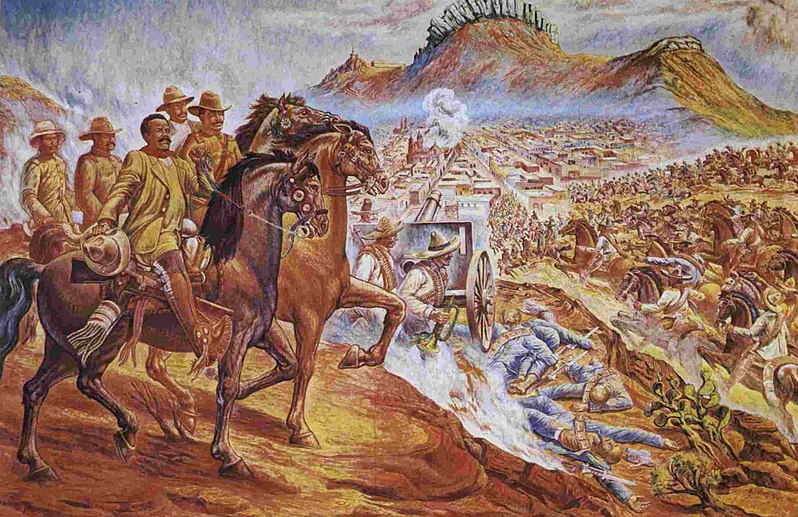
Pancho Villa taking Zacatecas, by Angel Boliver (via Wikimedia Commons)

Pancho Villa – This historical figure was seen as a military hero by some and a scandalous villain by others. He was a general who led the division del norte during the Mexican Revolution, and he had a very Robin Hood-esque reputation. While his guerilla tactics included train robbery and land confiscation, he frequently distributed his takings among his soldiers and the local poor, which made him—unsurprisingly—tremendously popular. He was born Jose Doroteo Villa (he and I share a birthday, which makes me like him even more), and he demonstrated a strong combination of political and military savvy very quickly in his career. In the United States, we know him best for his attacks in the Texas/New Mexico region, but his activity in Mexico was much wider, including governorship of the state of Chihuaha and serving a primary pro-democracy leader during the period of Mexican civil war. He was assassinated in his car in 1923, and was reportedly “found in the driver seat of the car, with one hand reaching for his gun” (“Pancho Villa” Wikipedia). “Give Pancho Villa cheap cigars, cigarettes, and tequila. The general despised the pretentious, overpriced, or refined. This doesn’t mean that he didn’t have good taste. If you can offer him something cheap and good, all the better!” (Illes 553-4). It is said that he likes to grope or pinch women who attract his attention.

Maximon –This Guatemalan folk saint bears a striking resemblance to the “Man in Black” found in other traditions like African Amercican hoodoo. He is seen as a saint syncretized to St. Simon Peter, but any adoption into the Catholic assembly of saints is superficial and tenuous. He likely derives from “a pre-Columbian Mayan god of the underworld formerly known as Maam (‘grandfather’)” (Lucky Mojo 1). He is offered rum and cigarettes (statues of the saint frequently smoke the cigarettes as part of the offering ritual) and is thought to provide aid to his votaries in matters of love, health, and money, but also in exacting vengeance on enemies.  His cult is particularly strong in the town of Santiago Atitlan, where his attendants remain constantly with his effigy. Judika Illes recommends washing the clothing from the Maximon “doll” with citronella and lemongrass oil, then keeping the rinse water to use in magical work (Illes 506).


St. Expedite Shrine on Reunion Island, by David Monniaux (via Wikimedia Commons)

St. Expedite –  This saint inhabits a tenuous space in the heavenly assembly—no one is quite sure if he existed, or if he might just be the result of a shipping mistake in which another saint’s statue was labeled for fast delivery—in a box labeled ‘EXPEDITE’, or sometimes the Italian ‘SPEDITO’—and the name stuck to the figure (or in some versions, the body of an unknown saint) and became a holy helper in its own right. The official Catholic story of Expeditus (as he is sometimes known) places him in the fourth century CE, a late Roman imperial soldier whose iconography shows him stepping on a crow which calls out ‘cras!,’ a sound similar to a caw but which also means “tomorrow” in Latin, hence his reputation for getting things done today (Catholic Online 1).  “Saint Expedite is controversial. He has a reputation for unscrupulousness. He is rumored to assist sorcerors with curses and revenge spells; although some devotees vociferously deny that this is true, insisting that he will only fulfill benign petitions” (Illes 281). Offerings for Expedite include a slice of Sara Lee pound cake or red carnations. He’s become incredibly popular in folk Catholicism and some branches of hoodoo, and his devotional images and candles are usually readily available.

Elvis – Being a southerner, I can’t help but mention Elvis. The King of Rock and Roll serves as a sort of patron saint to his fans, who embody their fantaticism with all the hallmarks of religious devotion, including pilgrimages to his home at Graceland in Memphis and by setting up altars with his image on them. He also has a folk mythology surrounding him, including appearances from beyond the grave, miraculous healings, and even the persistent myth that he is still alive. His cult is part kitsch and part true devotion, and it’s very distinct. Some dress like Elvis as a way to honor him or perpetuate his memory, and some leave out offerings of peanut-butter-and-banana sandwiches (a favorite food of the King, though he appreciated just about any rich southern dish). He can be petitioned for any number of needs, including healing, musical and artistic inspiration, wisdom and guidance, and overcoming addictions. I think of Elvis as a very special sort of folk saint—one in living memory for many of his devotees and deeply flawed in his personal life, but one who provided joy for millions of people both during and after his time as a mortal. I was an enormous Elvis fan for much of my childhood, despite not having been born at the time of his death.  The King has found an especial home in the Latin American community, where he is frequently depicted in skeletal form in Day of the Dead (dia de muertos) celebrations and decorations (Illes 267). Another recommended offering for him? Teddy bears.

Jesus Malverde – In the realm of controversial and unofficial saints, Jesus Malverde is right at the top, alongside a similar roguish hero, Pancho Villa. Known as a “narco-Saint,” this figure guards and protects those involved in illegal activities, particularly those working in the drug trafficking trade. His depictions make him look less like a Catholic Christ figure and far more like a landowning Hispanic gentleman from the nineteenth or early twentieth century. This is fitting, as one legend describes him as “a Robin Hood figure of the early 1900’s that was hanged by the governor. He himself did not traffic drugs, but after his death his reputation for working miracles drew faith strongest among Sinaloa’s poor and highland residents, the classes from which narco-traffickers emerged. Malverde has become the patron saint for many drug smugglers, though the local diocese says the Malverde chapel is an embarrassment. The priests lament the glorification of a man who robbed and killed, though citizens of Sinaloa have found it harder to have faith in a political system that enforces a drug war responsible for the many deaths of their own people. Historians cannot seem to find documentation of his existence, but even still miracles such as the healing of the blind and crippled, the returning of lost cattle, and the saving of a drowning man have been attributed to him” (U. Texas Library 1). In some ways he resembles the folk outlaw figure Zorro, but with less of a penchant for clean living. Malverde’s shrine is used by those who deal with the drug trade, not only those who transport the drugs but families who pray for his protection over loved ones facing criminal charges.

As you can probably guess, the practice of folk-saint veneration is strongest in communities with a heavy Catholic background, and all of the saints above either come from Hispanic backgrounds or have been added into Hispanic folk practices (as in the case of Elvis). There are many folk saints who do not have the strong Hispanic connections mentioned here, of course, and hopefully one day I’ll get around to some of them as well. For now, I hope this has at least whetted your appetite to know more about the intriguing and enchanting pantheon of folk saints in the Americas.
Thanks for reading!

-Cory

SOURCES

  1. Illes, Judika. The Encyclopedia of Mystics, Saints, & Sages (HarperOne, 2011).
  2. Jesus Malverde: El Narco-Santon,” U. Texas Library – Narcocorridos site.
  3. Knab, Timothy J. A War of Witches: A Journey into the Underworld of Contemporary Aztecs (Harper San Francisco, 1997).
  4. Macklin, Barbara J. and N. Ross Crumrine. “Three North Mexican Folk Saint Movements,” Comparative Studies in Society & History (Cambridge UP, Jan. 1973).
  5. Mestizo & Indigineous Culture Pinterest board: Teresa Urrea (photo credit).
  6. Nino Fidencio,” from Wikipedia.
  7. Pancho Villa,” from Wikipedia.
  8. St. Expeditus,” Catholic Online.
  9. Torres, Eliseo ‘Cheo.’ Curandero: A Life in Mexican Folk Healing (Univ. of New Mexico Press, 2005).
  10. Yronwode, Catherine. “Maximon,” from the Lucky Mojo webpage.

Quick Update – Contest Ending This Weekend!

Hi everyone!

First of all, sorry for the long silence on both the podcasting and blogging fronts. I’ve had a busy couple of weeks covering an extra workload while my boss is out on maternity leave and I’ve had writing for school that I had to finish up as well. I’ve got several things in the works, including a new episode of the show and some new material for the blog, but I may have to beg your indulgence and patience for a little longer, so please bear with us.

I have NOT, however, forgotten about our current contest, and I hope you haven’t either! We’ve received a number of excellent contest entries so far, but there’s still time to get your name in the hat! You can read the complete contest description at Blog Post 169 – A New Year, A New Contest, but in brief we’re looking for your magical folklore. It can be on any number of topics: love, money, luck, etc. We are asking that you submit the lore using a specific format, like this:

[Name – preferably one we can use in the show, but let us know if you’d rather us keep it anonymous]
[Region/Location – as localized as possible; we don’t need an address, but “Southern Illinois” or “Foothills of the Rockies” would be lovely]
[Ethnic/Cultural Association – if applicable; such as “Italian-American” or “based on something my Lakota Sioux grandmother told me”]
[Type of Lore – love, luck, money, etc.]
[Your bit of lore]

You can send in as many pieces of lore as you like, and each piece gets your name entered in the hat. So if you send in ten pieces of lore, you’ve got your name in our kitty ten times and your odds improve.

We do have a few rules, of course:

  • You can only win one prize.
  • No entering under multiple names/emails.
  • While we are looking primarily for North American lore, we welcome lore from around the world as well.

And I’m sure you remember the prizes:

  1. The Braucher Basket – featuring a copy of Hex & Spellwork by Karl Herr, a copy of the new translation of The Long Lost Friend by Daniel Harms, a small folio of hand-written/painted charms, and a few other little goodies.
  2. Granny’s Gunny-Sack – featuring a copy of Ozark Magic & Folklore, by Vance Randolph, a copy of The Candle & the Crossroads by Orion Foxwood, and a little sack full of curios, herbs, and magical charms from the Appalachians.
  3. The Hoodoo Hamper – featuring Hoodoo Herb & Root Magic by Catherine Yronwode, The Master Book of Candle Burning by Henri Gamache, a candle or two, a lucky rabbit’s foot, and a selection of oils from our Compass & Key Apothecary.

So if you haven’t entered (or heck, if you have and want to up your chances of winning), send us your folklore and get yourself in the mix for these lovely prize packages!

We’re closing the contest at midnight on Sunday, March 31st, 2013. Entries received after that time won’t count. We’ll be drawing names on the next episode recorded after that date (sometime in mid-April, though prize winners may be notified earlier for addresses).
Here’s wishing you good luck! Thanks for all your entries so far, and best wishes to you all!

-Cory

Blog Post 172 – Ashes

“Remember, man, that thou art dust, and unto dust thou shalt return.” –Priest’s admonition during Ash Wednesday liturgy, based on Genesis 3:19.

On Wednesday, I attended the Ash Wednesday mass at a Catholic church near my workplace, which begins the Lenten season. The pull of tradition sometimes brings me back to the church rituals of my childhood, and while I’m spiritually aligned else wise now, I take comfort in some of these practices, too. The ashes used in Ash Wednesday services are a powerful ritual tool, made from the palms left from the previous year’s Palm Sunday, mixed with incense and holy water, and blessed by the priest. They mark the bearer as a member of the church, a mortal person living in a mortal world, and someone aware of death’s role in our lives. The ashes, which serve as a spiritual tool for unification with divinity and with mortality, got me to thinking about some of the other ways in which ashes can be used in folk religious or magical practices.

And so today, I thought we’d explore the very rich traditions of magical work which incorporate ashes. I shall endeavor to stay focused on the practical application of ashes, rather than the mere presence of ashes in a spell, but in some cases that line blurs (or smudges) a bit. In researching the topic, I was astounded to see how many different methods for working with ashes I found: banishing, cursing, healing, money work, omens about bad luck and loss, and even some quasi-magical gardening tips. This, to me, is an example of how an extraordinarily normal item—ashes—can be a useful magical tool if a practitioner knows a little about what to do with them. Truly, a clever witch or magical worker can read his or her environment and see it loaded with enchantment and possibility, but I digress. On to the ash spells!

 One of the most common ways to counteract bewitchment was to burn the affected object—usually a cow, butter-churn, etc.—“to ashes” which would render the witch who cast the enchantment powerless or cause her tremendous pain. Often the ashes would have to be dispersed even more extensively by being scattered to the four winds to render the spellcaster completely impotent and/or destroyed. Similarly, feathers from black fowls could be burned and the ashes sprinkled or blown over a bewitched person to remove the bewitchment.

An account of a Bell Witch-style haunting in Wiltshire, North Carolina, noted that the wicked spirit “sprinkled ashes in the beds” (Cross 243). Some hoodoo spells deploy the ashes of particularly nasty spells in the way one might lay a magical powder, sprinkling at someone’s doorstep so that they must step in the baneful trick.

Cat Yronwode mentions rubbing alfalfa ashes on one’s money to improve business, especially if the money is in a cash register. She also has this excellent and interesting recipe for a floorwash designed to bring clientele to a cathouse:

To Draw Trade to a Whorehouse: On a Friday morning, build a fire outdoors and burn a man’s worn-out left SHOE with a pinch of SUGAR in it. Put the SHOE ashes, a tablespoonful each of AMMONIA, SALT, and SUGAR, plus your own URINE, into a bucketful of water.  Mop from the sidewalk inward, to attract men (Yronwode 29).

Ashes can also be used in hoodoo love charms (perhaps in conjunction with the above business charm?), as in this method from Zora Neale Hurston:

Cut some hair from under your left arm-pit and some from the right side of the groin. Then cut some from the right arm-pit and from the left side of the groin. Burn this hair with a wish for this man to love you.  Put the ashes – made into fine dust – in his food secretly and he will love you and do as you wish (Hurston 361-2).

A magical charm called the “Chinese Snake Stone” from an account of North Carolina witchcraft tells how the amulet could be used to draw poison and how ashes were used to re-charge it after its work was done:

Directions for using The Chinese Snake Stone. Scarify the wound before applying the Stone-take it off every morning and evening-put the Stone at each time, when taken off, into a glass of milk-warm water, and let it remain a few minutes, until it discharges itself of the poison-wash the wound in a strong solution of salt water, and scarify again, if necessary. After taking the Stone from the water, rub it dry in moderately warm ashes, and apply as before. This course should be repeated for the space of nine days, when a cure will be effected (Cross 264)

In some cases, ashes have to be handled carefully in order to prevent illness from getting worse. When someone in a family is sick, for example, removing the ashes from the fireplace and taking them out of the building is said to be very bad luck, possibly even fatal to the ailing person.

A Pow-wow hair removal charm taken from older European sources recommends burning a frog to ashes and mixing them with water to make an ointment “that will, if put on any place covered with hair, destroy the hair and prevent it from growing again” (Hohman 14). I also found the same cure echoed in witchcraft practices from North Carolina.

Curandera recipes sometimes call for white ashes, which are powdery and fine and must be sifted from the gray and black ashes. Mrs. Mercedes Castorena of Sonoma gave the following recipe for dealing with empacho, a stomach and intestinal ailment:

“You crack an egg and get the yolk, being very careful not to break the yolk, because it has to be all in one piece. Then lay the sick person on the bed, put the egg on his stomach and let the egg slide all over the stomach. Wherever the spot is (where the food is stuck), the egg yolk will break. You leave the egg here. Then you take some herb called rosa de castilla, and some ashes-just the white part of the ashes-and put this on the stomach and wrap a bandage around the stomach to keep it on. Then you give them a dose of Baby Percy (a patent medicine)” (Neighbors 251).

Mrs. Castorena also mentioned a cure involving mixing avocado seed ashes with oil to treat indigestion. Ashes are also used in other home remedies from other traditions: “To cure toothache, place a bag of warm wood ashes on the side of the face where the tooth is aching” (Farr 327). Vance Randolph mentions the Ozark method of treating an itch using a mix of gunpowder, wood ashes, and sweet cream. He also talks about a method of staunching a wound using the ashes of a man’s shoe.

In the garden, ashes can be mixed into soil around fruit trees to improve their growth. My mother used to have me take our fireplace ashes and put them around our blueberry bushes at the beginning of the spring to promote big, juicy berries later on. Supposedly, doing this on Ash Wednesday ensured a pest-free garden all year long (I don’t recall if I was usually enjoined to this particular chore in conjunction with the holiday or not, but our plants were not bug-free).

Harry M. Hyatt recorded a number of beliefs about sprinkling ashes around a hen-house to prevent lice on the birds (and he also mentions the Ash Wednesday ritual for gardening success). Some of the other magical ash-lore he shared includes:

  • “Epileptic attacks are checked, if you remove the person’s undershirt immediately after an attack, let it smolder on live coals, mix a teaspoonful of these ashes in a glass of holy water, and say In the Name of the Father, Son and Holy Ghost. These ashes in holy water must be administered three times a day.”
  • “An old shoe should be burned and the ashes used in washing out the mouth of a child with thrush.”
  • Several of his informants recommended burying objects that have touched a wart in ashes in order to cure the growth
  • Dreaming about ashes is very bad luck, usually foretelling a significant loss or a death in the near future

Strangely, dreaming of fire is frequently a good sign, but the ashes tend to be a bad-luck indicator.

As you can see, even the lowly ashes from your fireplace can become useful magical aids if you know what to do with them. I hope this little exploration is useful to you! Please feel free to share your own ash lore in the comments below.
Thanks for reading,

-Cory

Sources

  1. Bivens, N.D.P. Black & White Magic of Marie Laveau (1994, new ed.)
  2. Cross, Tom. “Witchcraft in North Carolina.” Studies in Philology (Jul. 1919).
  3. Farr, T. J. “Riddles & Superstitions of Middle Tennessee.” Journal of American Folklore (Dec. 1935)
  4. Hohman, John George. The Long Lost Friend (1820).
  5. Hurston, Zora Neale. “Hoodoo in America.” Journal of American Folklore (Dec. 1931).
  6. Hyatt, Harry M. Folklore of Adams Co., Illinois (1935, 1965).
  7. Neighbors, Keith A. “Mexican-American Folk Disease.” Western Folklore (Oct. 1969).
  8. Randolph, Vance. Ozark Magic & Folklore (1964).
  9. Snow, Loudell F. “Mail Order Magic: The Commercial Exploitation of Folk Belief.” Journal of the Folklore Institute (Aug. 1979)
  10. Yronwode, Catherine. Hoodoo Herb & Root Magic (2002).

Blog Post 169 – A New Year, A New Contest!

Hi everyone!

If you’ve been following us on Twitter, you know we’ve passed some milestones recently and have been thinking of fun ways to celebrate. So what are we excited about?

  1. We just passed 666 followers on Twitter. Who doesn’t get excited about nefarious numbers?
  2. We’ve received over 100 reviews on iTunes, making us one of the top-reviewed magical/pagan shows there. Can we just say how much y’all rock for that?!?
  3. We’re entering our 4th season, which means we’ve got three years of New World Witchery under our belts!
  4. It’s a new year! Lucky 2013! What’s not to celebrate about that?!?
  5. Laine recently taught my wife and I how to play Cards Against Humanity. It’s sort of the cherry on the sundae of celebration we’ve got going on.

With all that cause for excitement, we thought it would be high time for a contest. We’re going to have a somewhat broader focus this year, and hopefully spend some time looking at spiritual and magical paths from places across the country, so in order to do that, we want some of your lore and magic! We’ve done this before for holiday lore, but this time around we want lore related to the following categories:

  • Love (example: “When your nose itches, someone wants to kiss you”)
  • Luck (example: “Babies born at 12:12 on 12/12/12 are considered extra lucky”)
  • Money (example: “An itch in your left palm means money’s coming your way soon”)
  • Health & Healing (example: “Putting a wad of chewing tobacco on a bee sting will stop the pain and heal it faster”)
  • Fortune-telling/Predicting the Future (example: “Monday’s child is fair of face…”)
  • Protection from Harm: (example: “Putting a piece of lightning-struck wood in your rafters will prevent storm damage and fires”)

Now, obviously, don’t use any of the ones from that list, but otherwise, it’s pretty much fair game what you want to send in. Each bit of lore gets you an entry in the contest. Just make sure that if you send multiple entries in the same email, you number them separately (i.e. in a numbered list, if possible).

When you do send your entry in, please use the following format guide:

[Name – preferably one we can use in the show, but let us know if you’d rather us keep it anonymous]
[Region/Location – as localized as possible; we don’t need an address, but “Southern Illinois” or “Foothills of the Rockies” would be lovely]
[Ethnic/Cultural Association – if applicable; such as “Italian-American” or “based on something my Lakota Sioux grandmother told me”]
[Type of Lore – love, luck, money, etc.]
[Your bit of lore]

So a sample entry might look like this:

Nigel Aloysius Gimmelschtump (but call me “Smackdown” on the show, please)
Western Kentucky
Something from my German-English grandfather’s family
Money
“You should always hold on to the first dollar you make at any job. As long as you have it, you cannot be fired from that job.”

That might seem a little complicated, but it will be enormously helpful if you can follow that format. And, hey, free contest, right? Also, my apologies to Nigel Aloysius Gimmeschtump, wherever he may be. And to anyone calling themselves “Smackdown,” for any reason at all.

So what’s in it for you? Good question! Well, we’re putting together three prizes, based on three areas of North American folk magic:

  1. The Braucher Basket – featuring a copy of Hex & Spellwork by Karl Herr, a copy of the new translation of The Long Lost Friend by Daniel Harms, a small folio of hand-written/painted charms, and a few other little goodies.
  2. Granny’s Gunny-Sack – featuring a copy of Ozark Magic & Folklore, by Vance Randolph, a copy of The Candle & the Crossroads by Orion Foxwood, and a little sack full of curios, herbs, and magical charms from the Appalachians.
  3. The Hoodoo Hamper – featuring Hoodoo Herb & Root Magic by Catherine Yronwode, The Master Book of Candle Burning by Henri Gamache, a candle or two, a lucky rabbit’s foot, and a selection of oils from our Compass & Key Apothecary.

See? Good stuff! Send us a couple of emails and you could win one of these awesome prizes! Just because I’m nitpicking, here are some other rules though:

  • You can only win one prize. If your name comes up after you’ve already won once, we’ll pull another name for the next prize. Let’s not get greedy.
  • No entering under multiple names/emails. If we catch you doing that, you get no prizes. Possibly we will also curse you. Or sell your name to telemarketers. Sort of the same thing.
  • While we are looking primarily for North American lore, we welcome lore from around the world as well.

This contest is going to have a deadline of March 31st 2013, so please get your entries in by then!

Thank you all so much for three great years of New World Witchery! We love y’all to bits and pieces, so good luck in the contest!

All the best, and thanks for reading & listening,

-Cory

Podcast 45 – The Bag Lady Show

Summary
This episode is a grab-bag of different items: a recap of PPSM3, some music from artist Leslie Fish, a recording of a mini-class, and listener feedback. Think “Mary Poppins’ traveling bag,” but full of NWW goodies.

Play:
Download: Episode 45 – The Bag Lady Show
Play:

 -Sources-

If you have feedback you’d like to share, email us or leave a comment. We’d love to hear from you!

Don’t forget to follow us at Twitter!

 Promos & Music
Title music:  “Homebound,” by Jag, from Cypress Grove Blues.  From Magnatune.

We feature three songs by artist Leslie Fish, from her album Avalon is Risen: ““Hallows Dirge,” “Hymn to the Night-mare,” & “Lucifer”

Promo 1-Inciting a Riot
Promo 2-Lakefront Pagan Voice
Promo 3-Pennies in the Well
Promo 4-Borealis Meditation