Blog Post 69 – Charmed Again


Today I’m going to add to Blog Post 67’s charm list and look at a few other simple, word-based spells.  Most of these are rooted in Pow-wow practices, but they are also found throughout other systems as well.  A caveat before I begin, however:  do not take these charms in place of medical advice.  They have their uses and are worth learning, but I am not a medical professional and you should not construe these bits of folk life as prescribed physiological recommendations.  If you get burned or are bleeding badly, seek professional help.

Okay, now on to the charms!

Dealing with Enemies

Overcoming an Enemy (Pow-wow)
This charm to gain advantage over someone who is trying to bully you comes from Hohman’s text, and again I have had little occasion to use it but I rather like the poetry of it:

A CHARM TO GAIN ADVANTAGE OF A MAN OF SUPERIOR STRENGTH.
I [name] breathe upon thee. Three drops of blood I take from thee: the first out of thy heart, the other out of thy liver, and the third out of thy vital powers; and in this I deprive thee of thy strength and manliness.

This particular spell veers very close to a curse, though it also falls into a “self-defense” category, I think.  You don’t, of course, get the three drops of blood from them, though I imagine if you could it would make this spell something much more powerful and possibly much more dangerous.

Healing Charms

Blood-stopping Verse (Pow-wow, Granny Magic, Mountain Magic)
This may be one of the best known mountain charms.  When spoken, this little spell stops a bleeding wound (a non-critical one that is…serious wounds require medical attention!).  There are a few variations on it, and the rules change a bit from person to person, but the words are pretty much the same:

“And when I passed by thee, and saw thee polluted in thine own blood, I said unto thee when thou wast in thy blood, Live; yea, I said unto thee when thou wast in thy blood, Live.”

Those of you who are Bible-savvy probably know this already, but this is simply a passage from Ezekiel 16:6.  It is similar, though not the same as, Psalmic magic (see below).  This charm is mentioned in The Red Church by Chris Bilardi, and has also been featured on Dave Tabler’s excellent Appalachian History blog.  The passage of this charm is typically supposed to be from male-to-female, though it seems there are ways around this restriction (such as “telling” the charm to an inanimate object while someone else in the room is listening).  As to effectiveness, all I can say is that I’ve used it three times and all three times it has worked.

Another Blood-stopping Charm (Pow-wow)
Here’s a different blood-stopping verse from Hohman’s Long Lost Friend:

TO STOP BLEEDING.
I walk through a green forest;
There I find three wells, cool and cold;
The first is called courage, p. 34
The second is called good,
And the third is called stop the blood.

Hohman actually lists about half-a-dozen blood-stopping charms, so I highly recommend looking into his book for more information on the topic.

Stopping Burns (Pow-wow, Mountain Magic)
Here are two charms used to help heal burns and alleviate the pain associated with them (both from Hohman):

HOW TO CURE A BURN.
Three holy men went out walking,
They did bless the heat and the burning;
They blessed that it might not increase;
They blessed that it might quickly cease!

+ + +

(The “+++” means that you make the sign of the cross with your hand over the burn three times)

ANOTHER REMEDY FOR BURNS.
Clear out, brand, but never in; be thou cold or hot, thou must cease to burn. May God guard thy blood and thy flesh, thy marrow and thy bones, and every artery, great or small. They all shall be guarded and protected in the name of God against inflammation and mortification, in the name of God the Father, the Son, and the Holy Ghost. Amen.

I’ve used the first of these charms a couple of times, and noticed a temporary effect.  The pain may not go away entirely but it’s a lot less and the burns didn’t scar, so that might be a good sign.  Or a placebo effect of some kind.  But I leave it up to you to figure it out for yourself.

Psalms (Curanderismo, Pow-wow, Hoodoo, Mountain Magic, most American folk magic systems)

Finally, I thought I’d list a few Psalm fragments which can be written and carried or spoken aloud in times of need.   I personally LOVE Psalmic magic.  You can feel free to use the whole Psalm or just the pertinent portions depending on your spell, but I highly recommend this method of magic.  The Bible, I seem to find more and more, is just loaded with magic, if you know where to look.  And almost no one questions you if you happen to say or write a Bible verse.  Of course, if you have problems with Judeo-Christian religion, this might not be the course for you.  You can find a great list of Psalms and their uses in the Appendix to Chris Bilardi’s The Red Church, the Curious Curandera’s Library Page, and the Lucky Mojo site has a good list, too.

Here’s a sample of Psalms as charms:
Headaches Psalm 3 – “Thou, O LORD, art a shield for me; my glory, and the lifter up of mine head”
Protection & PeacePsalm 22 – “be not thou far from me, O LORD: O my strength, haste thee to help me” (This is the Psalm Jesus sang upon the cross)
Against EnemiesPsalm 35 – “Contend, O GOD, with those that contend with me”
Success & Good FortunePsalm 65 – “Thou crownest the year with thy goodness; and thy paths drop fatness”
Safe TravelsPsalm 121 – “I will lift up mine eyes unto the hills, from whence cometh my help”

The topic of Psalm magic could be a post in itself, or a book even.  Several books, actually.  In fact, there are plenty of wonderful books on this subject, and I recommend tracking them down if you can.

That’s it for today’s charmed life.   If you have any charms to share, please feel free to do so!

Thanks for reading!

-Cory

Blog Post 67 – Charms

Whew!  Sorry about that, folks.  Last week was a heckuva beast so I didn’t wind up getting to post all that much.  Or at all, other than the podcast.  I’m hoping that I’ll have more this week, especially considering that after this week, posts will be rather infrequent for the next two months due to grad school.  Anyhow, enough about me; on to the topic!

Today I thought I’d talk a little about charms.  The problem with talking about charms, though, is that it’s hard to define just what a “charm” is.  For some, they’re spoken words used along with other spell components to get results.  Others may take the view that charms are talismans or magical objects, usually fairly small, which are carried like a portable personal spell.  Some think of them as written spells, others mainly include love spells in this category, and some simply think of “charm” as another word for spells.

For my own purposes, though, I’m going to define “charm” thusly:  A spell composed of words, spoken or written.  There, now that’s settled.  So now we have the question, what’s so special about charms?  Well, for one thing, they’re usually simple.  Simple enough, in fact, that ordinary folk who might not otherwise engage in magical practice often work a charm without giving it a second thought.  There are lots of these kinds of little workings to be found throughout the various New World magical systems, but here are a few of my favorites:

Finding Lost Objects

St. Anthony Prayer (Catholic, Strega, Saint-based Hoodoo, Curanderismo)
This prayer is used when an item (or sometimes person) is lost and you need to find it in a hurry. The first version is slightly formal (though not nearly so formal as the prayer on his prayer card).  From the Lucky Mojo site:
St. Anthony, St. Anthony
Please come down
Something is lost
And can’t be found

My own family used a variant of this which was much more informal:
Tony, Tony,
Look around,
Help me find
What can’t be found
I always repeat the prayer at least once out loud and then under my breath as I search for the missing item.  I’d say I have about a 75-80% success rate with this one.  I do know that traditionally if you find your missing item, you should give to the poor in St. Anthony’s name (a practice called “St. Anthony’s Bread”).  This can be as simple as writing “Thank you St. Anthony!” on the edge of a dollar bill and giving it to a homeless person (or leaving it in a poorbox collection of some kind).

Halting a Thief

Three Lilies Charm  ( Pow-wow)
This one comes from John George Hohman’s Long Lost Friend.  I’ve had no reason to use it yet, thankfully, but I like the poetry of this one (or at least, I think it sounds very poetic).  The portions where you see the “+++” symbols indicate making the sign of the cross in the air with your hand as part of the charm:

A GOOD CHARM AGAINST THIEVES.
There are three lilies standing upon the grave of the Lord our God; the first one is the courage of God, the other is the blood of God, and the third one is the will of God. Stand still, thief! No more than Jesus Christ stepped down from the cross, no more shalt thou move from this spot; this I command thee by the four evangelists and elements of heaven, there in the river, or in the shot, or in the judgment, or in the sight. Thus I conjure you by the last judgment to stand still and not to move, until I see all the stars in heaven and the sun rises again. Thus I stop by running and jumping and command it in the name of + + +. Amen.

This must be repeated three times.

Protection

INRI Cross (Pow-wow, Hoodoo, Mountain Magic, most folk magical systems)
This one can again be found in Hohman’s book, as well as many other magical texts.  It’s a written charm, primarily used against harmful magic directed against you, as well as fire.  There are plenty of ways to use this charm, from marking it in a magical oil or water on your door to putting it on a small piece of paper and hiding it in the lintel of your doorframe.  It can also be carried with you for magical protection.  This is the version from Hohman:

A CHARM TO BE CARRIED ABOUT THE PERSON
Carry these words about you, and nothing can hit you: Ananiah, Azariah, and Missel, blessed be the Lord, for he has redeemed us from hell, and has saved us from death, and he has redeemed us out of the fiery furnace and has preserved us even in the midst of the fire; in the same manner may it please him the Lord that there be no fire.

I

N         I          R

I

The simple form of this is to just draw out that last bit, rather than worrying about the prayer before it, but the prayer can also be a powerful addition to the charm.

SATOR Square (Pow-wow, Hoodoo, Mountain Magic, Curanderismo, most folk magical systems)
Another powerful and widely found magical charm, the SATOR square is written out and used much like the INRI cross:
SATOR
AREPO
TENET
OPERA
ROTAS
These words are written out (try to make them as “square” as you can) and again posted or carried to protect you from harm, theft, fire, and any number of other ills.

St. Michael the Archangel (Catholic, Strega, Saint-based Hoodoo, Curanderismo)
This is a common prayer among Catholics facing spiritual struggles, and it’s made its way into magical practice, too.  In the film The Gangs of New York, a priest (played by Liam Neeson) recites this prayer before leading his band of Irish immigrants into battle with another gang.  It’s particularly effective if done in conjunction with the St. Michael medal or candle, but I think you can use it on its own as well.  The main target of this protective charm is evil—if you feel beleaguered by any harmful person or force (and you don’t have a problem invoking this particular spirit), this is a very potent way to deflect that trouble:

Great Archangel Michael Archangel, defend us in battle,
be our defense against the wickedness and snares of the
devil.

May God rebuke our enemies, we humbly pray; and
do thou, O Prince of the heavenly host, by the power of
God, thrust into Hell the Adversary and all other evil
spirits who prowl about the world for the ruin of
souls.  Amen.
I like to use all of these protective charms, though the SATOR square is my favorite.  I generally renew these charms once per year in conjunction with a few other key rituals (and a particular holiday, which I’ll get to eventually).

Well, I’m not quite through with charms yet, but there is plenty here to digest, so I’ll save the rest of them for another day.  Thank you all for being patient, and for being such a wonderful readership!  I’ll be trying to catch up with blog responses and emails over the next day or two, so don’t hesitate to keep up the fantastic comments!

Thanks for reading!

-Cory

Podcast 11 – Magical Tools

-SHOWNOTES FOR EPISODE 11-

Summary
Today we announce the upcoming break due to Cory’s grad school (don’t worry, we’ll be back sooner than you think!).  Then we talk about magical tools in American witchcraft, and we have our WitchCraft and Spelled Out segments.

Play:

Download:  New World Witchery – Episode 11

-Sources-
Mules & Men, by Zora Neale Hurston – mentioned in the show
Lucky Mojo site – particularly rabbits’ feet, gator parts, and raccoon bones
Hoodoo Root & Herb Magic, by Catherine Yronwode – lots of info on magical curios
Mojo:  Conjure Stories, by Nalo Hopkinson – the book I’m reading now which I mentioned when discussing gator heads

Promos & Music
Title music:  “Homebound,” by Jag, from Cypress Grove Blues.  From Magnatune.
Promo 1 – Iron Powaqa
Promo 2-  Witches’ Brewhaha

Blog Post 64 – City Spirits

Today’s post is going to be a little different.  I’m not going to cite any outside sources (at least, I don’t think I will…I may not be able to fight the urge).  Instead, I’m going to present some thoughts I have had which were spurred on by discussions about modernization last week, and in particular a comment from Crystal on Podcast 10.  She mentioned that as a city witch, she often feels the pull to get back to nature, which got me thinking:  can cities, buildings, and skylines be a part of nature, too?

Now, I know this isn’t an original thought, and that there are deeper philosophical questions here about whether people are a part of nature and therefore whether their creations are also a part of nature, but that’s not really what I’m getting at.  When I talk about “nature” above, I really mean the whole of nature, encompassing the spiritual dimension as well.  I’m thinking more in terms of whether the Otherworld might well have city elements in it.

Do buildings have specific spirits?  Like spirits of the land do?  Can you tap into a building’s spirit and use it in magic?  These are the questions that are swirling about in my head.  For example, there are definite precedents in hoodoo for using things like dirt from a courthouse or a bank or a hospital, because it’s assumed that the land upon which those structures reside will have absorbed a particular type of energetic influence which the root worker can then use for his or her own ends.  Is using that energy akin to using a little bit of the spirit of those places, or is the conjurer simply using accumulated human energy?

Even more to the point, are there places in cities that echo the kind of spiritual resonance found in locations like the Rollright Stones or Stonehenge?  After all, those structures were, at least to some extent, man-made (though I won’t begin to deny that they may be sitting on top of very particularly powerful places that have nothing to do with people).  But why can’t the Empire State Building or Beacon Hill in Boston or the Ryman Auditorium in Nashville have their own resident spirit (or spirits)?  And moreover, why not use places like that to do magic—not just in terms of collecting dirt or knick-knacks for spells, but actually deploying spells there, or finding subtle ways to contact spirits and interact with them in those locations?

For me, train stations have always had this very powerful Otherworldly significance.  I imagine that after death, there’s this sort of “waiting” place which always seems like a train platform to me.  Trains come and go, taking each person off to different post-mortem existences, or sometimes allowing them to just ride and enjoy the scenery for a bit.  There are food cars, drinks, other passengers to play cards with if being dead gets boring…er, at least, that’s how I envision it.  But lately I’m thinking that going to a train station is a lot like going to the Crossroads in traditional hoodoo practice.  I think I may try out a few things at our city train station and see how it goes.  If I do, I’ll be sure to post on that and let y’all know about it.

This is, of course, not an extensive discussion of this idea.  And there are probably lots of better sources for reading and thinking about urban magical practice than our little blog.  In fact, Velma Nightshade over at Witches Brewhaha recently did an episode discussing city witchery that’s well worth checking out (I couldn’t resist the opportunity to link to something).  But I just had to let some of these thoughts out, as they were making a lot of noise in my head and the gerbil that lives there was getting upset.

What about your thoughts and opinions?  Any strong inclinations on city magic?  Does it depend upon specific places?  Is there some way to turn a city landscape of concrete and steel into the same kind of magical place an ancient grove might be?   Do you practice this kind of city magic yourself?  Inquiring minds want to know!

Thanks for reading!

-Cory

PS – I will be closing the current polls at 5pm today, so if you still haven’t voted, please do!  See the top right of the sidebar to vote.

Blog Post 63 – Black Pepper

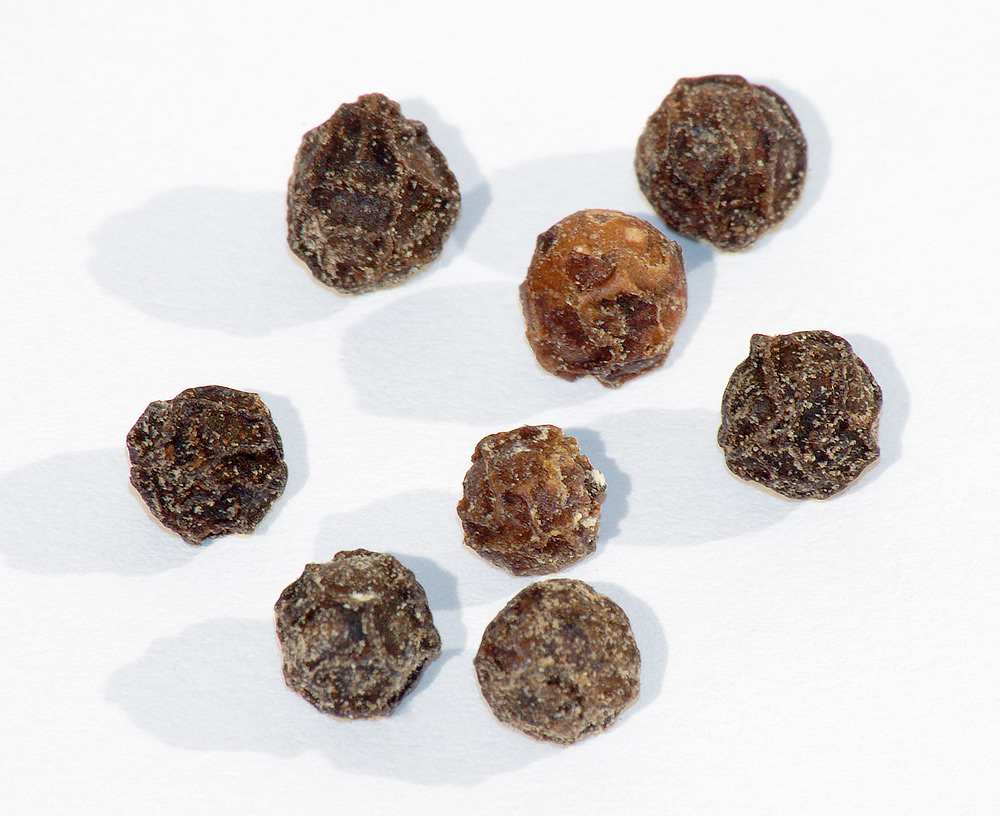
Today I thought I’d take a brief look at a magical ingredient which most everyone has on hand:  Black Pepper.  There are many uses for this dried fruit of the Piper nigrum plant.  Of course it’s valued for its ability to enhance food with a bit of heat, but it also has medicinal properties, and is very common in hoodoo practice as well.

Botanical.com lists the black peppercorn’s medicinal properties as being a febrifuge (fever reducer) and a stimulant and carminative.  For those with enflamed throats or ailments of the uvula, the site recommends using an infusion of black peppercorns as a gargle, and also suggests using the herb for constipation and urinary troubles.

In Appalachian practice, Granny women would sometimes use an infusion of black pepper to help induce labor in an expectant mother, because of its stimulatory nature.  They might also have the mother “snuff” or “quill” black pepper for the same results:

“Snuffing entailed having the mother sniff black pepper…from a plate placed under her nose; quilling involved blowing the same substances directly into the mother’s nostrils or throat with a goose quill, reed, or rolled piece of paper.  Either way, the objective was to cause a violent sneezing attack that would induce labor” (Folk Medicine of Southern Appalachia p.130).

In hoodoo, the black peppercorn is used primarily to harm or protect.  It’s often added to things like Hot-Foot powders or crossing tricks to facilitate an uncomfortable “heat” in the target’s life.  Catherine Yronwode also notes that black pepper can be used to stave off a jinx, particularly one which has been stepped in:

“To shield yourself from anyone doing these things [poisoning you through the feet via powder or other foot-track magic]…sprinkle black pepper powder or a mixture of black pepper and Fear Not to Walk Over Evil Powder in your shoes.  It is said that your track will be invisible or invulnerable to harm, and even if someone does throw for you or lift your foot track, they won’t be able to affect you in any way” (HHRM, p.53).

She also mentions that black pepper can be mixed with salt and thrown after someone when they leave your home to prevent them from ever returning or doing you harm.  Since salt and pepper are rather easy to come by in most homes, doing a spell like this is simple, and because the ingredients are so common most people don’t think twice about seeing them on the ground.  In fact, a light sprinkling of these ingredients would probably go unnoticed even in a busy apartment complex, and would be easily vacuumed up later, which makes a spell like this good for the urban root worker or witch (in my opinion, of course).  I’d combine it with the practice of leaving a broom behind the door just to double up the protection from unwanted visitors, too.

There are several potent curses which can be levied using black pepper, too.  Catherine Yronwode’s Hoodoo Herb & Root Magic book has an excellent entry on these, so I’ll not rehash everything in her entry here.  I will say that the spell she mentions involving a black candle and 99 peppercorns taken to a crossroads sounds particularly nasty, and would be well worth learning, if only to have an idea how to undo it should someone do it to you.

That’s it for today!  I wish you all a wonderful weekend.  Please don’t forget to vote in our polls, too!  They’ll be open through the weekend, and you can find them in Blog Post 61 or at the top right of the sidebar.  Thanks for voting, and as always, thanks for reading!

-Cory

Blog Post 62 – More Ideas for Urban Witchcraft

Greetings everyone!

Following on yesterday’s topic of urban conjure and rootwork, I thought today it might be fun to take a look at some spells that have roots in traditional American folk magic, but which use certain modern adaptations to accommodate contemporary life.

Courtcase Spell
In the past, courthouses were often wooden-floored buildings outfitted with spittoons for the convenience of trial attendees with a chaw of tobacco in their mouths.  Hoodoo developed a fairly ingenious way to exert some influence over a case by taking advantage of the spitting habit so prevalent in that day and age.  A defendant would keep a gob of Little John to Chew (the root known as galangal now—readily available in Asian markets) in his or her cheek, and then spit the juice onto the courthouse floor while ostensibly aiming for a spittoon nearby.  This sort of contagious magic would then bring favor in the case from anyone who walked on or near the spit.

Nowadays, spitting in court is probably a good way to lose your case.  Most courthouses are kept fairly secure, and tobacco products are seldom allowed in any government building (not that Little John is a tobacco product, but it’s supposed to look like it is, so either way, it’s out).  But there’s still a fairly simple way to work a spell in your favor:

1)      Get some dirt or water from the courthouse area – This can be dirt from a flower bed, from near the back of the building, or even from a potted plant somewhere on the premises if you can manage it.  Or, if the courthouse has a fountain out front, you can collect water from that, or fill a drinking bottle with water from the drinking fountain in the courthouse (or from the bathroom, etc.).  Barring all of these options, you  can scrape the side of the building and try to gather even just a little bit of dust from it, then mix it with soil from the closest source you can find.

2)      Take some Little John to Chew (galangal root) and work up a good bit of spit.  Spit the juice into the dirt or water, while reciting a petition or prayer appropriate to your situation (such as Psalm 35, “Contend, O Lord, with those who contend with me…”).  If you have only a little bit of dirt, you can add the dirt to some water and make a sort of “tea” out of it and the spit.  If you have only a little bit of water, you can dilute it with some more water (add a little whiskey to it to give it a kick).

3)      Take the dirt or water and go back to the courthouse.  Sprinkle your mixture in a circle around the building, as close as you can get (if you have to walk a block, sprinkling a little as you go, that’s fine—just make sure the entire building is encircled).  Whenever the judge who tries your case crosses that line, he will be disposed to favor you.

This trick relies on the same contagious magic as the older trick.  Why not just chew and spit at the front steps to the courthouse, you ask?  Well, you can’t be sure that your judge will come up those steps, and you need him to come into contact with your trick.  Unless he or she lives somewhere in the courthouse, your judge will have to cross the ring you make around the area in order to get inside, and so you should be able to affect him or her that way.

Git-Gone! Spell
Hot Footing someone to get rid of them is an old hoodoo trick.  In the past, it was accomplished by either mixing dirt from someone’s footprint with a special mixture of potent spices called “Hot Foot Powder” (see here, here, and here to buy) or by sprinkling that powder where a target would walk over it.  While it’s still possible to work the latter trick in a modern setting without much trouble, getting someone’s footprint-dirt isn’t easy anymore.  Additionally, the older version of the trick requires deployment in running water or throwing it away on a road heading out of town.

To bring a trick like this into the modern age, however, is not difficult.  City dwellers who can’t pick up dirty foot-tracks can work around that requirement by laying hold of a sock or shoe (or any article of clothing from the target, really).  Once you have something of theirs, you simply mix the Hot Foot Powder and wrap it in their clothing (or in the case of a shoe, give the sole a good sprinkling).

Deploying the trick can be done a couple of ways.  The simplest is to return the clothing to the target and hope they wear it without noticing the powder first (this is best with shoes).  Often, in apartment buildings, this kind of work is fairly easy to do because people will leave wet shoes in the hallway to dry out (much to the chagrin of their neighbors on warm days).

If giving the item of clothing back seems like it would cause raised eyebrows, or just doesn’t strike you as the best method, there are a couple of other distinctly modern deployment techniques that might be worth considering.  Since deployment in running water is a traditional method, consider chucking the Hot Footed sock into a sewer (which contains running water, after all, along with all manner of nastiness to help convince your target the time to leave is now).  Or, instead of finding a road out of town, you could go down to a train yard or a bus station and toss the sock onto a boxcar or bus heading out of the city.  In a lot of ways, a bus station is like a modern-age crossroads with the constant traffic coming and going, so sending someone away via outbound bus is actually a pretty smart way to go about your work.  I’d also suggest the same is true of airports, but sneaking things onto planes is a BAD idea, especially right now.  You’d really be asking for more trouble than a trick like this is worth.  Stick with bus stations and trains.

Send Away Your Troubles
There’s a bit of American folk magic that involves a rather sneaky method for healing common ailments.  The person with the disease (usually something like boils, warts, or corns) creates a small packet and “passes” the disease to the materials in the packet.  Then he or she drops the bundle in a road.  Whoever finds and opens it then receives the disease, and the person who passed the disease is cured of it.  Vance Randolph describes the procedure in conjunction with warts:

“Another way to ‘pass’ a wart is to spit on it, rub a bit of paper in the spittle, fold the paper, and drop it in the road; the wart is supposed to pass to the first person who picks up the paper and unfolds it. Children are always trying this, and one can find these little folded papers in the road near most any rural schoolhouse” (OM&F, p.127).

In the modern age, very few folks are walking along our roads, and few of those are going to stop to pick up a strange packet.  Motorists zooming by at high speeds never see them and people walking through cities for the most part avoid picking up litter from the walkways.  So how can one adapt this sort of spell to work today?

The United States Postal Service processes over 500 million pieces of mail per day (according to their website).  So why not put that big, churning system to work for you?  Here’s what I suggest:

1)      Just like in the old version of the spell, take a piece of paper and rub it against the afflicted part of your body.  If you want, you can even write a short petition on the paper asking that it remove illness from you and carry it far away.

2)      When you feel like you’ve imbued the paper with the disease, put it in an envelope.  Address the envelope, either by selecting a real person to send it to (which I actually don’t recommend—it just seems like an awfully trite way to get vengeance on an enemy and it certainly doesn’t make you any friends) or by writing a “dead letter.”  A dead letter is addressed to someone fictional (like Santa Claus, Professor Moriarty, Xenu, etc.) or someone dead (this could be an ancestor or just a spirit you think might be willing to help you by taking your disease off of you and into the grave).

3)      Don’t use a return address, and post the letter from a public mailbox.  You might, for example, send your disease to:

Mephistopheles
First Circle
Hell, the Universe

This letter will then carry your disease away from you and into a sort of “limbo” space.

The only downside to this method is the same one that comes with the old method:  if someone ever does open up your letter, they may catch your illness.  But all magic comes with risk, so if it sounds like a useful spell to you, please feel free to use it.

That’s it for today.  I’d love to hear from other city witches and urban rootworkers if you have suggestions for tricks that might be traditional-yet-modern.  Feel free to comment or email us.

Thanks for reading!

-Cory

Podcast 10 – Urban Conjure and an Interview with Rootworker Stephanie Palm

-SHOWNOTES FOR EPISODE 10-

Summary
In this episode, we share some thanks with our listeners and readers.  Then, we have an interview with urban rootworker Stephanie Palm.  We finish things up with our WitchCraft and Spelled Out segments

Play:

Download:  New World Witchery – Episode 10

-Sources-

Interview
Music City Mojo – The online store for our guest, Stephanie.   It features products and services as well as contact information.

WitchCraft
Drag Me to Hell – We mention this comedy/horror movie as a source of button-lore.

Magic Spelled Out
Lucky Mojo Freezer Spells – This has a good, concise history of the “Shut Your Mouth” tongue/freezer spells.

Promos & Music
Title music:  “Homebound,” by Jag, from Cypress Grove Blues.  From Magnatune.
Promo 1 – Witchery of One
Promo 2- Standing Stone and Garden Gate Podshow
Promo 3 – Inciting a Riot (a custom-made promo from wunderkind and friend of NWW, Fire Lyte!)

Podcast 9 – Relationships and Witchcraft

Summary

Today we’re looking at the various types of relationships we have in our lives, and how those relationships are affected by witchcraft.  Plus, we have our WitchCraft and Spelled Out segments!

Play:


Download:  New World Witchery – Episode 9

-Sources-

We mention separation powders, like the ones found at Lucky Mojo.

Laine also mentions the Book of Hours, by Galen Gillotte.

And here’s a video demonstration on how to make a friendship bracelet like the ones Laine mentions in her WitchCraft segment.

Promos & Music
Title music:  “Homebound,” by Jag, from Cypress Grove Blues.  From Magnatune.
Promo 1- Witches’ Brewhaha with Velma Nightshade
Promo 2- Pennies in the Well with Saturn Darkhope
Promo 3- Media Astra ac Terra with Oraia the Sphinx

Blog Post 55 – Games

May Day is just around the corner, and since I’ve been talking about songs and riddles this week, I thought it might be fun to talk a little about games.  Sport and fun may not seem like a particularly witchcraft-tinged topic, but au contraire! I say.  There are lots of magical subtexts to games, from the sacrificial-animal nature of a colorful piñata to the gambling mojo or lucky rabbit’s foot stuffed in a card-player’s pocket.

Getting Lucky
Winning games by magic is a primary focus of many types of hoodoo workings.  Some of the various techniques for improving one’s luck include:

  • The creation of gambling mojo hands, often “fed” with a woman’s urine (because of her connection to Lady Luck)
  • The appropriately named “Lucky Hand” root, which resembles a human hand and which is reputed to bring good luck to one in games of chance
  • A buckeye with a hole bored in it, filled with liquid mercury (quicksilver), and sealed with wax was considered incredibly lucky.  WARNING:  Don’t do this.  Mercury is VERY dangerous and VERY poisonous, even in tiny amounts.  Modern root workers often use sliver Mercury-head dimes instead.
  • The popular alligator-foot or rabbit-foot keychains found in roadside stops throughout the country are considered potent gambling charms.
  • One of my favorites is the “coon dong” charm, which is a raccoon penis bone wrapped in a currency note (the higher the better, of course) to ensure continued luck.

Of course, there are lots of other hoodoo charms related to luck and good fortune.  Simply carrying a High John root in your pocket is a good way to ensure luck at all you do, including games.  Another big game-related piece of hoodoo magic comes in the form of “dream books,” which purport to help the dreamer turn symbols and images from the night’s slumber into winning lottery numbers.  Catherine Yronwode has an excellent page on this topic, so I’ll just suggest you visit her site for more on those.

Magical Games
There are many games that have interesting magical undertones (or overtones…maybe highlights or roots?).  I thought it might be fun to include a few games that you could include in your own May Day celebrations today.  I’m skipping out on the traditional Maypole as that is well documented in many places.  I hope you enjoy them!

From Central Illinois (in Richard Dorson’s Buying the Wind, paraphrased)

LONDON BRIDGE IS FALLING DOWN

Two players are named “Takers,” and each chooses an object or idea that represents him/her (such as one player being “bees” and the other “flowers,” or one the “sun” and the other “the moon.”  The Takers do not tell the other players which Taker is which object however.  The other players form a circle, and the Takers join hands, one outside the circle and one inside.  They raise their arms, and the circle begins to turn as everyone sings:

London Bridge is falling down, falling down, falling down;
London Bridge is falling down, and caught my true love in it.

The Takers can drop their arms at any point during the singing, and the circle stops.   Whoever the Takers have “trapped” must choose one of the objects and whisper it to the Takers.  The Taker whose object is named grabs the trapped player and moves them behind him/her, and then the Takers raise their joined hands again.  The singing and circling continues in this way until all the players have been caught and moved behind their chosen Taker.

The Takers keep their hands joined and each player wraps his/her hands around the player before them, forming two human chains linked by the Takers.  The game ends with a tug-of-war between the two sides.

This game could be a wonderful way to have some fun while enacting a sort of ritualized drama, such as the struggle between light and dark.  It is best with a large group of people of course, and the “prize” for winning could have to do with the losing side serving the winning side at a feast, or something to that effect.  Or winning could just be its own very fun reward.

From Appalachia (in Foxfire 6)

DEVIL IN THE PROMISED LAND

“We played a game called ‘The Devil in the Promised Land.’  A big branch went down through our pasture.  Some places it was wide and some places were narrow enough to jump across pretty good.  There’d be about eight or ten of us on one side.  We’d put one on the other side and he was the devil.  Now we had to cross the branch and go around him and jump the branch back.  Now if he caught us before we made the run around him, we had to go on to the devil’s side” (p. 282)

I love this one, and you could definitely play it without having a huge tree or creek (I’m not 100% sure what that informant meant by “branch”).  Just making a big circle with rope or setting boundaries for the “Devil’s land” with stones would be pretty easy.  You could also think of this as “a witch and her spirits,” with the Witch being the primary tagger, and her Spirits being the players she catches, who help her catch other players (I would say they can’t “tag” a player, but might help to corral the other players towards the Witch…but that’s just my take on it).

From the Southwest and Mexico

THE PINATA

The piñata has an interesting history dating back to at least Mayan times, and possibly even back to China.  There’s an excellent short history of the game here, including many traditional rhymes and songs associated with the game, such as:

“Dale, dale, dale, no perdas el tino,
porque si lo perdes, pierdes el camino.
Esta piñata es de muchas mañas, sólo contiene naranjas y cañas.”

Hit, hit, hit.
Don’t lose your aim,
Because if you lose, you lose the road.
This piñata is much manna, only contains oranges and sugar cane.”

Making paper mache representations of animals, spirits, demons, gods, stars, or almost anything magical would add to the occult significance of a game like this.  After the candy’s been collected, some of it could be turned into an offering as well, if that’s part of your tradition.  The bright colors of most piñatas make them perfect for May Day gatherings, in my opinion.

There are lots of other games you could play as well, like Nature Bingo or Horseshoes, that would fit a spring or summer gathering.  This post is already plenty long, though, so I’m going to end it here.  Feel free to share your own witchy games, if you have them!

Thanks for reading!

-Cory

Blog Post 52 – Some Monday Reading

Good morning all!

Just a quick post this morning to share an article I found on Witchvox over the weekend.  It looks like the concept of New World Witchcraft is catching on as more and more people are taking an active interest in it!  I think that’s pretty fantastic, myself.

This article talks about several of the systems we’ve discussed here, as well as a few others we’ve not gotten into yet.  The author’s blog also has some interesting reposts of articles on various New World magical subjects.  I’ll be interested to know what everyone thinks about it, so feel free to leave a comment and discuss!

Happy Monday!  Be well, and thanks for reading!

-Cory