Blog Post 76 – Making an Academic Crown of Success Mojo

Today I thought I’d share some of the nuts and bolts (or roots and herbs, rather) I used in my recent Crown of (Academic) Success mojo bag.  The hand I made was specifically designed for help with schoolwork, and focused on memory, hard work, a strong will, and a little bit of luck.  After I go over this basic bag, I’ll try to offer some alternatives for various situations not related to school, but which could use a shot of success.

The ingredients:

  • High John root (a whole one, but you could use chips if that’s all you’ve got)
  • Gravel Root
  • Rosemary (dried)
  • Sage (dried)
  • Frankincense tears
  • Small psalm scroll*
  • Red flannel square
  • Twine
  • Crown of Success oil

(*In most general Crown of Success workings, I use a passage from Psalm 65: “You crown the year with success; your paths drip fatness,” which would be fine.  But after discussing it with commenter Odom the other day, I’m reasonably sure I used Psalm 119, specifically the verses “I have declared myself and you heard me; teach me your statutes/make me to understand your ways so I may tell of your wondrous works”)

The herb and root ingredients all relate to success (gravel root, High John, Crown of Success oil), focus and concentration (sage, frankincense, rosemary), wisdom (sage, frankincense), luck (gravel root, Crown of Success oil), memory and calm (rosemary), and study (sage).  I know that some folks out there would chide me for using rosemary as a memory herb when Cat Yronwode’s book doesn’t provide that association, but its longstanding folk association with that quality made me comfortable with using it in that capacity.  And since I spent a good deal of time studying Shakespeare over the summer, I’ll back up my claim by quoting Ophelia in Hamlet, Act IV, scene v: “There’s rosemary; that’s for remembrance.”  So, yeah.  That’s that.

When I did this spell, I dressed a small candle with Crown of Success and burned it while I combined the ingredients in the center of the red flannel square.  Once I had the herbs and roots together, I wrote out the psalm scroll and added it to the ingredients.  I bundled it all up and wrapped the bag’s “neck” up with the twine.  I prayed Psalm 119 over it three times (that’s an acrostic psalm, so I only read the pertinent section of it), then singed the ends of the twine in the candle flame.  I dressed the bag with the Crown of Success oil and blew out the candle, and voila!  One back-to-school mojo!

I fed the bag every day I had class, just before leaving my room.  I alternated using Crown of Success oil and whiskey to splash the bag, and I recited Psalm 65 every time I did it (mostly because that’s the one I remember better—you may have more luck with Psalm 119).

Now that I’m done with it for this year, I’ve got it sitting by my bedside (though I should probably put it in my altar desk instead).  I’ll bring it back out next year, or if I do some intensive studying (as I’m prone to do every few months), I may use it again, then.  When my time at school is done, I’ll probably bury it somewhere on campus.

So that’s the Scholar’s Success bag.  I hope that was of some use to someone out there—well, other than me, of course.  If you do this spell or something similar, post a comment and let us all know about it!  I know I’d like to hear any tips for succeeding in education, especially before next summer when I go back to school!

Thanks for reading!

-Cory

Blog Post 74 – Sassafras

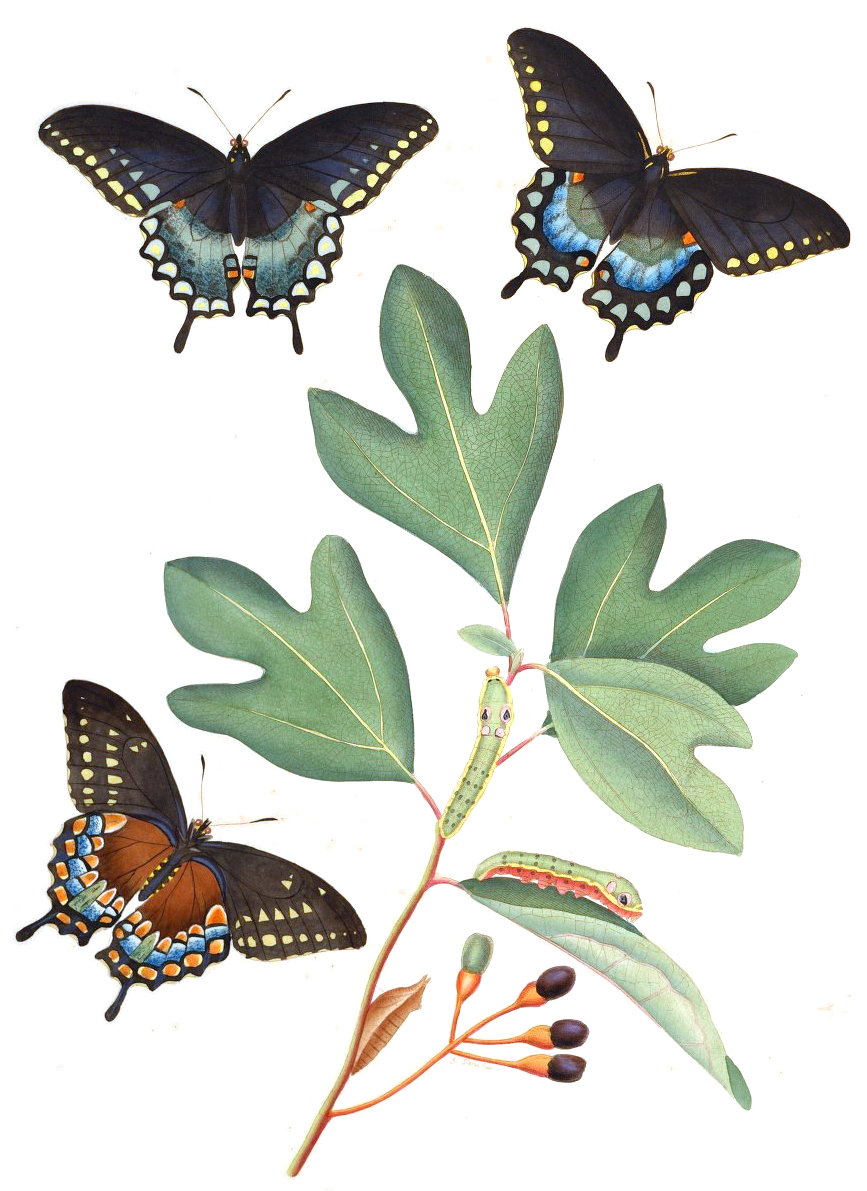
While passing by the cemetery on campus one day, I noticed a few little sprouted saplings with very particularly-shaped leaves.  I got very excited when I moved in closer and saw the definitive “mitten” shape of some of the leaves.  I pinched one and sniffed, smelling a strong spicy aroma almost immediately.  I knew at that point I was dealing with sassafras.

Sassafras is one of those herbs that you can’t avoid in the South.  It grows in all sorts of adverse environments:  roadsides, hedgerows, waste spaces, etc.  It can be short and bushy in its early years of development, but becomes a full-sized tree given enough time.  The roots and bark have long been used in culinary and medicinal applications.  If you’ve ever had a root beer, there’s a chance that you have tasted this plant, as sassafras and sarsaparilla were the two primary flavors in that drink for a long time.  In recent years (since 1960), active ingredient in sassafras, called safrole, has been officially banned by the USDA as potential carcinogen.  So most of the root beer sold now uses artificial flavors to reproduce the sassafras and sarsaparilla taste.  The leaves of sassafras also feature in Cajun cooking; dried and powdered, they become file powder, which is used to thicken stews like gumbo.

Medicinally, sassafras is a tricky root to use.  According to botanical.com, “Oil of Sassafras is chiefly used for flavouring purposes, particularly to conceal the flavour of opium when given to children. In the United States of America it is employed for flavouring effervescing drinks…Aromatic, stimulant, diaphoretic, alterative. It is rarely given alone, but is often combined with guaiacum or sarsaparilla in chronic rheumatism, syphilis, and skin diseases.”  It also seems to have a strong effect on women’s reproductive systems, easing menstrual pain, but also potentially causing abortions.  Several health problems have been connected to consuming overdoses of safrole, including vomiting, collapse, pupil dilation, and cancer.  WARNING!  Consult a physician before taking ANY herb or root internally!  Sassafras is NO EXCEPTION!

Sassafras bark and root have long been made into teas in the Appalachians.  In Foxfire 4, informant Pearl Martin showed students Bit Carver and Annette Sutherland how to gather the herb and make the drink:

“Sassafras is a wild plant that grows in the Appalachians…The spicy, distinct flavor of sassafras makes the tea a popular beverage, served hot or cold…Pearl told us that she could gather roots any time of the year without affecting the taste of the tea.  However, the roots should be gathered young, so they will be tender…She chops the roots from the plants, then washes the roots in cold water.  Next she scrapes off the outer layer of bark and discards it.  Either the roots or the bark can be used in making the tea, but Pearl prefers the roots.  They can be used dried or green.  She brings the roots to a boil in water.  The longer they are boiled, the stronger the tea.  To make a gallon of tea, she boils four average-sized roots [which appear to be about a foot long and an inch thick] in a gallon of water for fifteen to twenty minutes.  She then strains it, and serves it either hot or iced, sweetened with either sugar or honey” ( p. 444).

While the safrole content of the tea is relatively low, again you should consult with a physician before drinking this tea.

Magically speaking, sassafras is a money root.  It attracts business success and material wealth.  Putting a little sassafras root in one’s wallet or purse keeps money from running out.  Catherine Yronwode has several good charms in her Hoodoo Herb & Root Magic book, including a business attracting sidewalk scrub made from sassafras, allspice, and cinnamon (which has the added bonus of a pleasant aroma), and this powerful little Money-Stay-with-Me mojo hand:

“Jam a silver dime into an alligator foot [available from Lucky Mojo and other botanicas and curiosity shops] so that it looks like the ‘gator is grabbing the coin.  Wrap it tightly with three windings around of red flannel, sprinkling sassafras root chips between each layer as you wind, and sew it tight.  Just as the alligator foot holds the coin and won’t let go, so will you be able to save instead of spend” (p. 179).

Sounds like a pretty wonderful charm to know, in my opinion.  I’ve not seen anything particularly about burning sassafras as incense, but I did find a book called A Collection of Folklore by Undergraduate Students of East Tennessee State University edited by Thomas G. Burton and Ambrose N. Manning which records a bit of superstition claiming that bad luck comes if you “burn sassafras wood” (p. 74).  The lore in this particular collection is all from first-hand sources, so I tend to think it’s got some weight.  A similar folklore collection from Kentucky elaborates on this point, saying, “If you burn sassafras wood or leaves, a horse or a mule of yours will die within a week” (from Kentucky Superstitions, #2993).  I tend to think this refers to burning wood in a fire or fireplace as opposed to using a little bit of it as incense, but take your chances as you see fit.  Particularly if your horses or mules are dear to you.

I hope this post has been of some use to you!  Enjoy the slowly waning summer, and get out in the woods to find some sassafras and other plants!

Thanks for reading,

-Cory

Blog Post 70 – Elder

I’ve been noticing a lot of the elder trees blooming in my neck of the woods lately, so I thought I might take a stab at sharing some information on that particular plant.

Elder is a tree that has a long history with humanity.  Its uses are broad, including medicinal, culinary, and magical aspects.  Generally speaking, elder comprises anything in the genus Sambucus, with species names like nigra, canadensis, peruviana, etc. depending on region and appearance.  Elders can be very shrubby, or full-grown trees reaching up to 25 feet tall.  They have white flowers which bloom in the summer in bunches called corymbs (these are very prominent, so much so in fact that I felt compelled to write a blog post on them).  The blue-black berries, which appear in late summer and early fall, are a foodstuff used in everything from jams to vinegars.  The shoots of the elder have even been used as toys.  According to Botanical.com:

“The popular pop-gun of small boys in the country has often been made of Elder stems from which the pith has been removed, which moved Culpepper to declare: ‘It is needless to write any description of this (Elder), since every boy that plays with a pop-gun will not mistake another tree for the Elder.’ Pliny’s writings also testify that pop-guns and whistles are manufactures many centuries old!”

Medicinally, elders different parts have different uses (a quick note:  I am not a medical professional.  Please seek professional medical advice before using any plant medicinally).  The flowers have been used in tisanes to help alleviate all manner of ailments: sore throats, swollen tonsils, flu symptoms, etc.  The cooled elder tea could also be used topically on sunburns or to alleviate sore eyes.  The leaves of the elder can be used as a poultice or turned into an unguent to treat bruises, cuts, and abrasions.  The bark can be used as a potent purgative, though the inner bark is better for this than the outer.

As food, elder berries are most commonly consumed as elderberry jam.  They can also be turned into a syrup, and made into a delicious cordial for the adults in the crowd.  A sweet and slightly spicy wine can also be made from the berries, which seems to be very popular among the brew-it-yourself crowd.  I remember an old herbal book of mine which also contained a recipe for drinks like elderberry fizz and elderberry flip, which are essentially cocktails made from either the wine or the cordial.

Magically, elder has appeared in many cultures with many different purposes.  Some of the Old World magical associations with elder include:

  • Driving away evil spirits (Russian)
  • Magically removing fever (Czech)
  • Protection against witchcraft (English)
  • Good luck at weddings (Serbian)
  • Preventing theft (Sicilian)
  • Bad luck if burned (Romany)

The Danes believe that furniture made from elder wood is haunted by a spirit called Hylde-Moer (or “Elder Mother”), who may bear a connection to Mother Holle in Teutonic mythology.

On this side of the Atlantic, elder shows up in several systems.  John George Hohman’s Long Lost Friend recommends frying elder leaves with tobacco leaves in butter to make a healing salve.  In hoodoo, elder is used primarily for protection.  Hung in a bag near the entrance to the home, elder wood and flowers prevents intruders from coming in.  When mixed with the potent devil’s shoestring herb, it can prevent any unwanted guest from getting close to your home.  Catherine Yronwode’s Hoodoo Herb & Root Magic recommends elder as part of a Law-Keep-Away spell:

“Determine how many ways there are to enter the place where you conduct your business, and for each way, cut an elder stick five inches long, and get a small piece of John the Conqueror root.  On each elder stick carve five notches, one-half inch apart, then cut a sharpened point on each stick.  About fifty feet down each path leading to the place, drive a hole into the ground.  Put a piece of John the Conqueror root at the bottom of the hole, followed by an elder stick, pointed end down, with all the notches facing North.  It is said that no law officer will walk or drive over those elder pegs”  (HHRM p.90).

Yronwode also recommends drawing a circle around oneself with an elder branch and making a wish.  If you try this out, I’d love to hear your results!

There are probably dozens of other things I’m missing about elder, but hopefully this is a good start.  If you have uses of elder or experiences with the plant you’d like to share, please feel free to do so!

Thanks for reading,

-Cory

Blog Post 69 – Charmed Again


Today I’m going to add to Blog Post 67’s charm list and look at a few other simple, word-based spells.  Most of these are rooted in Pow-wow practices, but they are also found throughout other systems as well.  A caveat before I begin, however:  do not take these charms in place of medical advice.  They have their uses and are worth learning, but I am not a medical professional and you should not construe these bits of folk life as prescribed physiological recommendations.  If you get burned or are bleeding badly, seek professional help.

Okay, now on to the charms!

Dealing with Enemies

Overcoming an Enemy (Pow-wow)
This charm to gain advantage over someone who is trying to bully you comes from Hohman’s text, and again I have had little occasion to use it but I rather like the poetry of it:

A CHARM TO GAIN ADVANTAGE OF A MAN OF SUPERIOR STRENGTH.
I [name] breathe upon thee. Three drops of blood I take from thee: the first out of thy heart, the other out of thy liver, and the third out of thy vital powers; and in this I deprive thee of thy strength and manliness.

This particular spell veers very close to a curse, though it also falls into a “self-defense” category, I think.  You don’t, of course, get the three drops of blood from them, though I imagine if you could it would make this spell something much more powerful and possibly much more dangerous.

Healing Charms

Blood-stopping Verse (Pow-wow, Granny Magic, Mountain Magic)
This may be one of the best known mountain charms.  When spoken, this little spell stops a bleeding wound (a non-critical one that is…serious wounds require medical attention!).  There are a few variations on it, and the rules change a bit from person to person, but the words are pretty much the same:

“And when I passed by thee, and saw thee polluted in thine own blood, I said unto thee when thou wast in thy blood, Live; yea, I said unto thee when thou wast in thy blood, Live.”

Those of you who are Bible-savvy probably know this already, but this is simply a passage from Ezekiel 16:6.  It is similar, though not the same as, Psalmic magic (see below).  This charm is mentioned in The Red Church by Chris Bilardi, and has also been featured on Dave Tabler’s excellent Appalachian History blog.  The passage of this charm is typically supposed to be from male-to-female, though it seems there are ways around this restriction (such as “telling” the charm to an inanimate object while someone else in the room is listening).  As to effectiveness, all I can say is that I’ve used it three times and all three times it has worked.

Another Blood-stopping Charm (Pow-wow)
Here’s a different blood-stopping verse from Hohman’s Long Lost Friend:

TO STOP BLEEDING.
I walk through a green forest;
There I find three wells, cool and cold;
The first is called courage, p. 34
The second is called good,
And the third is called stop the blood.

Hohman actually lists about half-a-dozen blood-stopping charms, so I highly recommend looking into his book for more information on the topic.

Stopping Burns (Pow-wow, Mountain Magic)
Here are two charms used to help heal burns and alleviate the pain associated with them (both from Hohman):

HOW TO CURE A BURN.
Three holy men went out walking,
They did bless the heat and the burning;
They blessed that it might not increase;
They blessed that it might quickly cease!

+ + +

(The “+++” means that you make the sign of the cross with your hand over the burn three times)

ANOTHER REMEDY FOR BURNS.
Clear out, brand, but never in; be thou cold or hot, thou must cease to burn. May God guard thy blood and thy flesh, thy marrow and thy bones, and every artery, great or small. They all shall be guarded and protected in the name of God against inflammation and mortification, in the name of God the Father, the Son, and the Holy Ghost. Amen.

I’ve used the first of these charms a couple of times, and noticed a temporary effect.  The pain may not go away entirely but it’s a lot less and the burns didn’t scar, so that might be a good sign.  Or a placebo effect of some kind.  But I leave it up to you to figure it out for yourself.

Psalms (Curanderismo, Pow-wow, Hoodoo, Mountain Magic, most American folk magic systems)

Finally, I thought I’d list a few Psalm fragments which can be written and carried or spoken aloud in times of need.   I personally LOVE Psalmic magic.  You can feel free to use the whole Psalm or just the pertinent portions depending on your spell, but I highly recommend this method of magic.  The Bible, I seem to find more and more, is just loaded with magic, if you know where to look.  And almost no one questions you if you happen to say or write a Bible verse.  Of course, if you have problems with Judeo-Christian religion, this might not be the course for you.  You can find a great list of Psalms and their uses in the Appendix to Chris Bilardi’s The Red Church, the Curious Curandera’s Library Page, and the Lucky Mojo site has a good list, too.

Here’s a sample of Psalms as charms:
Headaches Psalm 3 – “Thou, O LORD, art a shield for me; my glory, and the lifter up of mine head”
Protection & PeacePsalm 22 – “be not thou far from me, O LORD: O my strength, haste thee to help me” (This is the Psalm Jesus sang upon the cross)
Against EnemiesPsalm 35 – “Contend, O GOD, with those that contend with me”
Success & Good FortunePsalm 65 – “Thou crownest the year with thy goodness; and thy paths drop fatness”
Safe TravelsPsalm 121 – “I will lift up mine eyes unto the hills, from whence cometh my help”

The topic of Psalm magic could be a post in itself, or a book even.  Several books, actually.  In fact, there are plenty of wonderful books on this subject, and I recommend tracking them down if you can.

That’s it for today’s charmed life.   If you have any charms to share, please feel free to do so!

Thanks for reading!

-Cory

Blog Post 67 – Charms

Whew!  Sorry about that, folks.  Last week was a heckuva beast so I didn’t wind up getting to post all that much.  Or at all, other than the podcast.  I’m hoping that I’ll have more this week, especially considering that after this week, posts will be rather infrequent for the next two months due to grad school.  Anyhow, enough about me; on to the topic!

Today I thought I’d talk a little about charms.  The problem with talking about charms, though, is that it’s hard to define just what a “charm” is.  For some, they’re spoken words used along with other spell components to get results.  Others may take the view that charms are talismans or magical objects, usually fairly small, which are carried like a portable personal spell.  Some think of them as written spells, others mainly include love spells in this category, and some simply think of “charm” as another word for spells.

For my own purposes, though, I’m going to define “charm” thusly:  A spell composed of words, spoken or written.  There, now that’s settled.  So now we have the question, what’s so special about charms?  Well, for one thing, they’re usually simple.  Simple enough, in fact, that ordinary folk who might not otherwise engage in magical practice often work a charm without giving it a second thought.  There are lots of these kinds of little workings to be found throughout the various New World magical systems, but here are a few of my favorites:

Finding Lost Objects

St. Anthony Prayer (Catholic, Strega, Saint-based Hoodoo, Curanderismo)
This prayer is used when an item (or sometimes person) is lost and you need to find it in a hurry. The first version is slightly formal (though not nearly so formal as the prayer on his prayer card).  From the Lucky Mojo site:
St. Anthony, St. Anthony
Please come down
Something is lost
And can’t be found

My own family used a variant of this which was much more informal:
Tony, Tony,
Look around,
Help me find
What can’t be found
I always repeat the prayer at least once out loud and then under my breath as I search for the missing item.  I’d say I have about a 75-80% success rate with this one.  I do know that traditionally if you find your missing item, you should give to the poor in St. Anthony’s name (a practice called “St. Anthony’s Bread”).  This can be as simple as writing “Thank you St. Anthony!” on the edge of a dollar bill and giving it to a homeless person (or leaving it in a poorbox collection of some kind).

Halting a Thief

Three Lilies Charm  ( Pow-wow)
This one comes from John George Hohman’s Long Lost Friend.  I’ve had no reason to use it yet, thankfully, but I like the poetry of this one (or at least, I think it sounds very poetic).  The portions where you see the “+++” symbols indicate making the sign of the cross in the air with your hand as part of the charm:

A GOOD CHARM AGAINST THIEVES.
There are three lilies standing upon the grave of the Lord our God; the first one is the courage of God, the other is the blood of God, and the third one is the will of God. Stand still, thief! No more than Jesus Christ stepped down from the cross, no more shalt thou move from this spot; this I command thee by the four evangelists and elements of heaven, there in the river, or in the shot, or in the judgment, or in the sight. Thus I conjure you by the last judgment to stand still and not to move, until I see all the stars in heaven and the sun rises again. Thus I stop by running and jumping and command it in the name of + + +. Amen.

This must be repeated three times.

Protection

INRI Cross (Pow-wow, Hoodoo, Mountain Magic, most folk magical systems)
This one can again be found in Hohman’s book, as well as many other magical texts.  It’s a written charm, primarily used against harmful magic directed against you, as well as fire.  There are plenty of ways to use this charm, from marking it in a magical oil or water on your door to putting it on a small piece of paper and hiding it in the lintel of your doorframe.  It can also be carried with you for magical protection.  This is the version from Hohman:

A CHARM TO BE CARRIED ABOUT THE PERSON
Carry these words about you, and nothing can hit you: Ananiah, Azariah, and Missel, blessed be the Lord, for he has redeemed us from hell, and has saved us from death, and he has redeemed us out of the fiery furnace and has preserved us even in the midst of the fire; in the same manner may it please him the Lord that there be no fire.

I

N         I          R

I

The simple form of this is to just draw out that last bit, rather than worrying about the prayer before it, but the prayer can also be a powerful addition to the charm.

SATOR Square (Pow-wow, Hoodoo, Mountain Magic, Curanderismo, most folk magical systems)
Another powerful and widely found magical charm, the SATOR square is written out and used much like the INRI cross:
SATOR
AREPO
TENET
OPERA
ROTAS
These words are written out (try to make them as “square” as you can) and again posted or carried to protect you from harm, theft, fire, and any number of other ills.

St. Michael the Archangel (Catholic, Strega, Saint-based Hoodoo, Curanderismo)
This is a common prayer among Catholics facing spiritual struggles, and it’s made its way into magical practice, too.  In the film The Gangs of New York, a priest (played by Liam Neeson) recites this prayer before leading his band of Irish immigrants into battle with another gang.  It’s particularly effective if done in conjunction with the St. Michael medal or candle, but I think you can use it on its own as well.  The main target of this protective charm is evil—if you feel beleaguered by any harmful person or force (and you don’t have a problem invoking this particular spirit), this is a very potent way to deflect that trouble:

Great Archangel Michael Archangel, defend us in battle,
be our defense against the wickedness and snares of the
devil.

May God rebuke our enemies, we humbly pray; and
do thou, O Prince of the heavenly host, by the power of
God, thrust into Hell the Adversary and all other evil
spirits who prowl about the world for the ruin of
souls.  Amen.
I like to use all of these protective charms, though the SATOR square is my favorite.  I generally renew these charms once per year in conjunction with a few other key rituals (and a particular holiday, which I’ll get to eventually).

Well, I’m not quite through with charms yet, but there is plenty here to digest, so I’ll save the rest of them for another day.  Thank you all for being patient, and for being such a wonderful readership!  I’ll be trying to catch up with blog responses and emails over the next day or two, so don’t hesitate to keep up the fantastic comments!

Thanks for reading!

-Cory

Blog Post 63 – Black Pepper

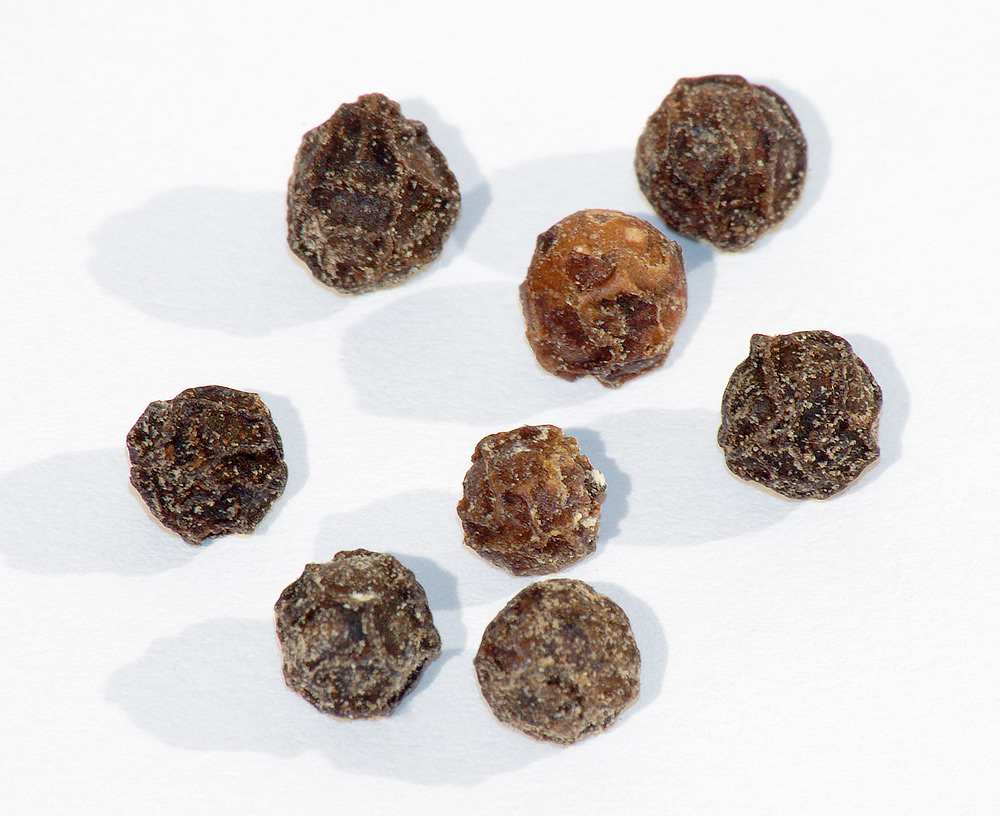
Today I thought I’d take a brief look at a magical ingredient which most everyone has on hand:  Black Pepper.  There are many uses for this dried fruit of the Piper nigrum plant.  Of course it’s valued for its ability to enhance food with a bit of heat, but it also has medicinal properties, and is very common in hoodoo practice as well.

Botanical.com lists the black peppercorn’s medicinal properties as being a febrifuge (fever reducer) and a stimulant and carminative.  For those with enflamed throats or ailments of the uvula, the site recommends using an infusion of black peppercorns as a gargle, and also suggests using the herb for constipation and urinary troubles.

In Appalachian practice, Granny women would sometimes use an infusion of black pepper to help induce labor in an expectant mother, because of its stimulatory nature.  They might also have the mother “snuff” or “quill” black pepper for the same results:

“Snuffing entailed having the mother sniff black pepper…from a plate placed under her nose; quilling involved blowing the same substances directly into the mother’s nostrils or throat with a goose quill, reed, or rolled piece of paper.  Either way, the objective was to cause a violent sneezing attack that would induce labor” (Folk Medicine of Southern Appalachia p.130).

In hoodoo, the black peppercorn is used primarily to harm or protect.  It’s often added to things like Hot-Foot powders or crossing tricks to facilitate an uncomfortable “heat” in the target’s life.  Catherine Yronwode also notes that black pepper can be used to stave off a jinx, particularly one which has been stepped in:

“To shield yourself from anyone doing these things [poisoning you through the feet via powder or other foot-track magic]…sprinkle black pepper powder or a mixture of black pepper and Fear Not to Walk Over Evil Powder in your shoes.  It is said that your track will be invisible or invulnerable to harm, and even if someone does throw for you or lift your foot track, they won’t be able to affect you in any way” (HHRM, p.53).

She also mentions that black pepper can be mixed with salt and thrown after someone when they leave your home to prevent them from ever returning or doing you harm.  Since salt and pepper are rather easy to come by in most homes, doing a spell like this is simple, and because the ingredients are so common most people don’t think twice about seeing them on the ground.  In fact, a light sprinkling of these ingredients would probably go unnoticed even in a busy apartment complex, and would be easily vacuumed up later, which makes a spell like this good for the urban root worker or witch (in my opinion, of course).  I’d combine it with the practice of leaving a broom behind the door just to double up the protection from unwanted visitors, too.

There are several potent curses which can be levied using black pepper, too.  Catherine Yronwode’s Hoodoo Herb & Root Magic book has an excellent entry on these, so I’ll not rehash everything in her entry here.  I will say that the spell she mentions involving a black candle and 99 peppercorns taken to a crossroads sounds particularly nasty, and would be well worth learning, if only to have an idea how to undo it should someone do it to you.

That’s it for today!  I wish you all a wonderful weekend.  Please don’t forget to vote in our polls, too!  They’ll be open through the weekend, and you can find them in Blog Post 61 or at the top right of the sidebar.  Thanks for voting, and as always, thanks for reading!

-Cory

Blog Post 62 – More Ideas for Urban Witchcraft

Greetings everyone!

Following on yesterday’s topic of urban conjure and rootwork, I thought today it might be fun to take a look at some spells that have roots in traditional American folk magic, but which use certain modern adaptations to accommodate contemporary life.

Courtcase Spell
In the past, courthouses were often wooden-floored buildings outfitted with spittoons for the convenience of trial attendees with a chaw of tobacco in their mouths.  Hoodoo developed a fairly ingenious way to exert some influence over a case by taking advantage of the spitting habit so prevalent in that day and age.  A defendant would keep a gob of Little John to Chew (the root known as galangal now—readily available in Asian markets) in his or her cheek, and then spit the juice onto the courthouse floor while ostensibly aiming for a spittoon nearby.  This sort of contagious magic would then bring favor in the case from anyone who walked on or near the spit.

Nowadays, spitting in court is probably a good way to lose your case.  Most courthouses are kept fairly secure, and tobacco products are seldom allowed in any government building (not that Little John is a tobacco product, but it’s supposed to look like it is, so either way, it’s out).  But there’s still a fairly simple way to work a spell in your favor:

1)      Get some dirt or water from the courthouse area – This can be dirt from a flower bed, from near the back of the building, or even from a potted plant somewhere on the premises if you can manage it.  Or, if the courthouse has a fountain out front, you can collect water from that, or fill a drinking bottle with water from the drinking fountain in the courthouse (or from the bathroom, etc.).  Barring all of these options, you  can scrape the side of the building and try to gather even just a little bit of dust from it, then mix it with soil from the closest source you can find.

2)      Take some Little John to Chew (galangal root) and work up a good bit of spit.  Spit the juice into the dirt or water, while reciting a petition or prayer appropriate to your situation (such as Psalm 35, “Contend, O Lord, with those who contend with me…”).  If you have only a little bit of dirt, you can add the dirt to some water and make a sort of “tea” out of it and the spit.  If you have only a little bit of water, you can dilute it with some more water (add a little whiskey to it to give it a kick).

3)      Take the dirt or water and go back to the courthouse.  Sprinkle your mixture in a circle around the building, as close as you can get (if you have to walk a block, sprinkling a little as you go, that’s fine—just make sure the entire building is encircled).  Whenever the judge who tries your case crosses that line, he will be disposed to favor you.

This trick relies on the same contagious magic as the older trick.  Why not just chew and spit at the front steps to the courthouse, you ask?  Well, you can’t be sure that your judge will come up those steps, and you need him to come into contact with your trick.  Unless he or she lives somewhere in the courthouse, your judge will have to cross the ring you make around the area in order to get inside, and so you should be able to affect him or her that way.

Git-Gone! Spell
Hot Footing someone to get rid of them is an old hoodoo trick.  In the past, it was accomplished by either mixing dirt from someone’s footprint with a special mixture of potent spices called “Hot Foot Powder” (see here, here, and here to buy) or by sprinkling that powder where a target would walk over it.  While it’s still possible to work the latter trick in a modern setting without much trouble, getting someone’s footprint-dirt isn’t easy anymore.  Additionally, the older version of the trick requires deployment in running water or throwing it away on a road heading out of town.

To bring a trick like this into the modern age, however, is not difficult.  City dwellers who can’t pick up dirty foot-tracks can work around that requirement by laying hold of a sock or shoe (or any article of clothing from the target, really).  Once you have something of theirs, you simply mix the Hot Foot Powder and wrap it in their clothing (or in the case of a shoe, give the sole a good sprinkling).

Deploying the trick can be done a couple of ways.  The simplest is to return the clothing to the target and hope they wear it without noticing the powder first (this is best with shoes).  Often, in apartment buildings, this kind of work is fairly easy to do because people will leave wet shoes in the hallway to dry out (much to the chagrin of their neighbors on warm days).

If giving the item of clothing back seems like it would cause raised eyebrows, or just doesn’t strike you as the best method, there are a couple of other distinctly modern deployment techniques that might be worth considering.  Since deployment in running water is a traditional method, consider chucking the Hot Footed sock into a sewer (which contains running water, after all, along with all manner of nastiness to help convince your target the time to leave is now).  Or, instead of finding a road out of town, you could go down to a train yard or a bus station and toss the sock onto a boxcar or bus heading out of the city.  In a lot of ways, a bus station is like a modern-age crossroads with the constant traffic coming and going, so sending someone away via outbound bus is actually a pretty smart way to go about your work.  I’d also suggest the same is true of airports, but sneaking things onto planes is a BAD idea, especially right now.  You’d really be asking for more trouble than a trick like this is worth.  Stick with bus stations and trains.

Send Away Your Troubles
There’s a bit of American folk magic that involves a rather sneaky method for healing common ailments.  The person with the disease (usually something like boils, warts, or corns) creates a small packet and “passes” the disease to the materials in the packet.  Then he or she drops the bundle in a road.  Whoever finds and opens it then receives the disease, and the person who passed the disease is cured of it.  Vance Randolph describes the procedure in conjunction with warts:

“Another way to ‘pass’ a wart is to spit on it, rub a bit of paper in the spittle, fold the paper, and drop it in the road; the wart is supposed to pass to the first person who picks up the paper and unfolds it. Children are always trying this, and one can find these little folded papers in the road near most any rural schoolhouse” (OM&F, p.127).

In the modern age, very few folks are walking along our roads, and few of those are going to stop to pick up a strange packet.  Motorists zooming by at high speeds never see them and people walking through cities for the most part avoid picking up litter from the walkways.  So how can one adapt this sort of spell to work today?

The United States Postal Service processes over 500 million pieces of mail per day (according to their website).  So why not put that big, churning system to work for you?  Here’s what I suggest:

1)      Just like in the old version of the spell, take a piece of paper and rub it against the afflicted part of your body.  If you want, you can even write a short petition on the paper asking that it remove illness from you and carry it far away.

2)      When you feel like you’ve imbued the paper with the disease, put it in an envelope.  Address the envelope, either by selecting a real person to send it to (which I actually don’t recommend—it just seems like an awfully trite way to get vengeance on an enemy and it certainly doesn’t make you any friends) or by writing a “dead letter.”  A dead letter is addressed to someone fictional (like Santa Claus, Professor Moriarty, Xenu, etc.) or someone dead (this could be an ancestor or just a spirit you think might be willing to help you by taking your disease off of you and into the grave).

3)      Don’t use a return address, and post the letter from a public mailbox.  You might, for example, send your disease to:

Mephistopheles
First Circle
Hell, the Universe

This letter will then carry your disease away from you and into a sort of “limbo” space.

The only downside to this method is the same one that comes with the old method:  if someone ever does open up your letter, they may catch your illness.  But all magic comes with risk, so if it sounds like a useful spell to you, please feel free to use it.

That’s it for today.  I’d love to hear from other city witches and urban rootworkers if you have suggestions for tricks that might be traditional-yet-modern.  Feel free to comment or email us.

Thanks for reading!

-Cory
Blog Post 55 – Games

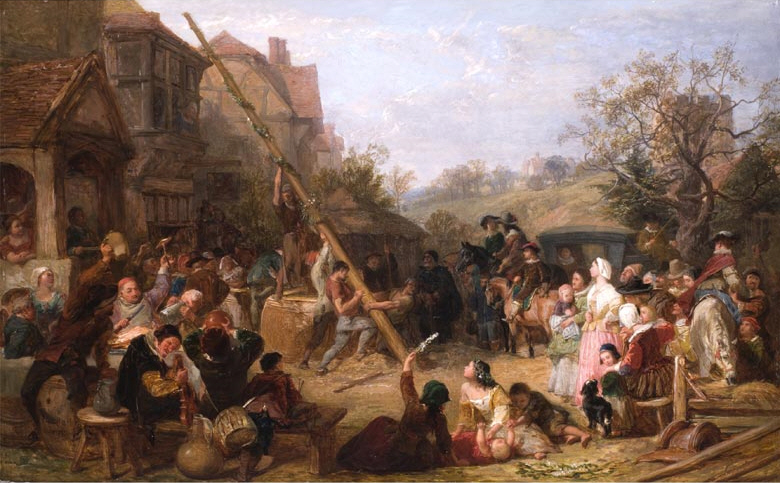
May Day is just around the corner, and since I’ve been talking about songs and riddles this week, I thought it might be fun to talk a little about games.  Sport and fun may not seem like a particularly witchcraft-tinged topic, but au contraire! I say.  There are lots of magical subtexts to games, from the sacrificial-animal nature of a colorful piñata to the gambling mojo or lucky rabbit’s foot stuffed in a card-player’s pocket.

Getting Lucky
Winning games by magic is a primary focus of many types of hoodoo workings.  Some of the various techniques for improving one’s luck include:

  • The creation of gambling mojo hands, often “fed” with a woman’s urine (because of her connection to Lady Luck)
  • The appropriately named “Lucky Hand” root, which resembles a human hand and which is reputed to bring good luck to one in games of chance
  • A buckeye with a hole bored in it, filled with liquid mercury (quicksilver), and sealed with wax was considered incredibly lucky.  WARNING:  Don’t do this.  Mercury is VERY dangerous and VERY poisonous, even in tiny amounts.  Modern root workers often use sliver Mercury-head dimes instead.
  • The popular alligator-foot or rabbit-foot keychains found in roadside stops throughout the country are considered potent gambling charms.
  • One of my favorites is the “coon dong” charm, which is a raccoon penis bone wrapped in a currency note (the higher the better, of course) to ensure continued luck.

Of course, there are lots of other hoodoo charms related to luck and good fortune.  Simply carrying a High John root in your pocket is a good way to ensure luck at all you do, including games.  Another big game-related piece of hoodoo magic comes in the form of “dream books,” which purport to help the dreamer turn symbols and images from the night’s slumber into winning lottery numbers.  Catherine Yronwode has an excellent page on this topic, so I’ll just suggest you visit her site for more on those.

Magical Games
There are many games that have interesting magical undertones (or overtones…maybe highlights or roots?).  I thought it might be fun to include a few games that you could include in your own May Day celebrations today.  I’m skipping out on the traditional Maypole as that is well documented in many places.  I hope you enjoy them!

From Central Illinois (in Richard Dorson’s Buying the Wind, paraphrased)

LONDON BRIDGE IS FALLING DOWN

Two players are named “Takers,” and each chooses an object or idea that represents him/her (such as one player being “bees” and the other “flowers,” or one the “sun” and the other “the moon.”  The Takers do not tell the other players which Taker is which object however.  The other players form a circle, and the Takers join hands, one outside the circle and one inside.  They raise their arms, and the circle begins to turn as everyone sings:

London Bridge is falling down, falling down, falling down;
London Bridge is falling down, and caught my true love in it.

The Takers can drop their arms at any point during the singing, and the circle stops.   Whoever the Takers have “trapped” must choose one of the objects and whisper it to the Takers.  The Taker whose object is named grabs the trapped player and moves them behind him/her, and then the Takers raise their joined hands again.  The singing and circling continues in this way until all the players have been caught and moved behind their chosen Taker.

The Takers keep their hands joined and each player wraps his/her hands around the player before them, forming two human chains linked by the Takers.  The game ends with a tug-of-war between the two sides.

This game could be a wonderful way to have some fun while enacting a sort of ritualized drama, such as the struggle between light and dark.  It is best with a large group of people of course, and the “prize” for winning could have to do with the losing side serving the winning side at a feast, or something to that effect.  Or winning could just be its own very fun reward.

From Appalachia (in Foxfire 6)

DEVIL IN THE PROMISED LAND

“We played a game called ‘The Devil in the Promised Land.’  A big branch went down through our pasture.  Some places it was wide and some places were narrow enough to jump across pretty good.  There’d be about eight or ten of us on one side.  We’d put one on the other side and he was the devil.  Now we had to cross the branch and go around him and jump the branch back.  Now if he caught us before we made the run around him, we had to go on to the devil’s side” (p. 282)

I love this one, and you could definitely play it without having a huge tree or creek (I’m not 100% sure what that informant meant by “branch”).  Just making a big circle with rope or setting boundaries for the “Devil’s land” with stones would be pretty easy.  You could also think of this as “a witch and her spirits,” with the Witch being the primary tagger, and her Spirits being the players she catches, who help her catch other players (I would say they can’t “tag” a player, but might help to corral the other players towards the Witch…but that’s just my take on it).

From the Southwest and Mexico

THE PINATA

The piñata has an interesting history dating back to at least Mayan times, and possibly even back to China.  There’s an excellent short history of the game here, including many traditional rhymes and songs associated with the game, such as:

“Dale, dale, dale, no perdas el tino,
porque si lo perdes, pierdes el camino.
Esta piñata es de muchas mañas, sólo contiene naranjas y cañas.”

Hit, hit, hit.
Don’t lose your aim,
Because if you lose, you lose the road.
This piñata is much manna, only contains oranges and sugar cane.”

Making paper mache representations of animals, spirits, demons, gods, stars, or almost anything magical would add to the occult significance of a game like this.  After the candy’s been collected, some of it could be turned into an offering as well, if that’s part of your tradition.  The bright colors of most piñatas make them perfect for May Day gatherings, in my opinion.

There are lots of other games you could play as well, like Nature Bingo or Horseshoes, that would fit a spring or summer gathering.  This post is already plenty long, though, so I’m going to end it here.  Feel free to share your own witchy games, if you have them!

Thanks for reading!

-Cory

Blog Post 46 – Magic and Mother Goose

I received a comment from reader Chet the other day which inspired this particular blog post.  So, many thanks, Chet!  He mentioned that he’s been listening to his daughter’s music, which includes many nursery rhymes, and hearing not-so-subtle references to fairly adult topics (such as the sexual undercurrents in a song like “There’s a Hole in My Bucket”).  This idea may be old hat to some, but I thought it might be worth taking a few nursery rhymes and dropping them into the cauldron to see what bubbled up.  Please note that my witchy exegesis here may be entirely wrong, but it may also provide some new perspectives on old songs and rhymes.  I welcome all comments on these interpretations (well, all civil comments, that is).

You can find a great list of Mother Goose rhymes here, along with some brief explanations of each one.

Now, onto the rhymes!

Jack-be-Nimble
Jack be nimble
Jack be quick
Jack jump over
The candlestick.

This little rhyme was first published in the 18th century, according to one source.  It may have referred to a clever and quick pirate called “Black Jack,” but  it also likely has something to do with the practice of jumping over fires, as is sometimes done at May Day (or Beltane) celebrations.  In these instances, the leaper jumps over a bonfire in order to gain blessings—like fertility and an easy birth for women—or protection, or to purify one ritually.  Afterwards, the ashes would be scattered over the fields to ensure a fertile crop.  In its diminished form with a candle-stick, a person could leap the candle forwards and backwards three times (or nine times in some cases) while asking for such blessings, and if the candle remained lit, the wish would be granted.  This might make for an interesting spell, though I cannot recommend it for safety reasons—if you choose to do it, you do so at your own risk and would be well advised not to wear loose-fitting or flowing clothes.

Peter Pumpkin Eater
Peter Peter pumpkin eater,
Had a wife and couldn’t keep her!
He put her in a pumpkin shell,
And there he kept her very well!

This rhyme fits in very well at New World Witchery, because it originates in North America.  While many nursery rhymes came from the UK, the mention of the pumpkin in this one tells of its roots (pumpkins are a New World fruit unknown in Europe prior to the colonial era).  But what is it all about?  Well, if a man has a wife he can’t “keep,” it means that she is being generally unfaithful to him, and turning him into a cuckold.  My take on this particular rhyme is that our good fellow Peter knows of his wife’s infidelity and decides to put a stop to it.  He does this by putting something of hers—likely something very intimate like used underclothes—into a pumpkin shell, which as it rots, prevents her from being able to dally with other men.  This sort of spell is common enough in hoodoo, and is generally referred to as binding someone’s “nature” so they cannot sexually perform with another partner.   This is my take only, of course, and your mileage may vary.

For Want of a Nail
For want of a nail the shoe was lost.
For want of a shoe the horse was lost.
For want of a horse the rider was lost.
For want of a rider the battle was lost.
For want of a battle the kingdom was lost.
And all for the want of a horseshoe nail.

This rhyme is used, according to some, as a way of chastising children who do not see the consequences of their actions.  I certainly agree that in that light, this rhyme is a wonderful didactic tool.  However, I also like to think there’s something a little more magical that can be gleaned from this little bit of lore.  For example, there is a great deal of sympathetic magic which focuses on using something small, like a poppet, to affect something bigger, like a person.  Examined thusly, this chant might be a great way to amplify magical activity.  For example, if you were trying to banish something—like a disease—you could take something from the ill party (hair, fingernails, or clothing worn while sick) and bind it into a charm which might be buried, burned, or otherwise permanently disposed of while chanting this rhyme.  In this way, you’d be telling the disease that it no longer has the power to ravage the entire body, because you’ve taken away a part of the “body” from it.  The disease would then give up, having lost its “kingdom.”  The healing example may be a bit of a stretch, though, as the primary way I can see this little spell being used is to banish unwanted persons from your life.

Pat-a-Cake
Pat a cake, Pat a cake, baker’s man
Bake me a cake as fast as you can;
Pat it and prick it and mark it with a ‘B’,
And put it in the oven for Baby and me.

I see two ways that this lovely little rhyme might be given a magical connotation:  1) By baking food and marking it with someone’s initial, you’re essentially creating a poppet of that person, which can be used in many kinds of spells, or 2) This could be a lovely way to help someone with fertility or family blessings, as having a “bun in the oven” is a common euphemism for pregnancy.  In this latter case, when the mother-to-be devours the cake marked with an initial (perhaps the future baby’s, or her own if she hasn’t picked a name yet), she would be putting the “baby” in her belly.  A newly pregnant mother might also do a spell based on this to ensure a healthy baby, and a new mother might then play this game with her child as a way of continuing the blessing for her child (as well as endlessly amusing the little one, which is really what I think this rhyme is all about in the end).

Crooked Man
There was a crooked man and he walked a crooked mile,
He found a crooked sixpence upon a crooked stile.
He bought a crooked cat, which caught a crooked mouse.
And they all lived together in a little crooked house

Finally, we come to one of my personal favorites.  I know that some interpretations put a meaning on this rhyme referring to the unification of Scotland and English under a single ruler, but I tend to think of the rhyme in more esoteric terms.  The repetition of the word “crooked” seems to be almost a mantra, or a chant for moving into another state of mind.  And I think that the “crooked mile” could well be the “crooked path” of witchcraft.  The “crooked stile” is likely the gateway between worlds, too.  So my best use of this charm is to act as a “road opener” between the mundane world and the world of spirits.  There are also plenty of stories about paying a “tithe to hell” before crossing over (see Tam Lin or Thomas the Rhymer), and it’s usually something nominal (or at least, something that seems nominal at the time), so a sixpence would fit the bill. I also wonder if the crooked house is the proverbial witch’s cottage, or something a little more significant. Perhaps the “house” is the line down which a tradition is passed? And because that line sometimes veers out of strict blood ties and into adoptive relationships, it could be seen as a “crooked house.”  Of course, these are all just my speculations, but I like them.

I could go on and on with these rhymes, looking at them through the lens of witchcraft, and probably find something of value in most any nursery rhyme I read.  However, it’s probably best to say here that just because I interpret something with a witchy twist doesn’t mean that historically it has any such meaning.  In many cases, these rhymes are just entertainments for the very young, and a bit of whimsy for the slightly less young.  I like to think that magic and childhood go together, though, so I will happily continue scouring these rhymes for a bit of hidden wonder.  If you do the same, I’d love to hear what you come up with!

Thanks for reading!

-Cory

Blog Post 42 – Five-finger Grass

Catherine Yronwode calls this “the most popular green, leafy herb in hoodoo” (HHRM, p. 95).  It’s known by several names, including Cinquefoil and Tormentil (which is actually a particular species in the broader genus of Potentilla, which also includes Five-finger Grass).  This herb, which is not actually a grass, is one of the best to keep around.  It’s fairly easy to grow from seed, or from root cuttings as it is a rhizome.

The value of this herb has been known for a long time.  Sir Francis Bacon noted that it seemed to attract a particular type of wildlife, saying “The toad will be much under Sage, frogs will be in Cinquefoil” (The Works of Sir Francis Bacon, p. 548).  John George Hohman mentions it in his The Long Lost Friend, saying “If you call upon another to ask for a favor, take care to carry a little of the five-finger grass with you,

and you shall certainly obtain that you desired” (Hohman, #14).

This particular herb is a very positive one.  It’s used for protection because of its hand-like shape (imagine a hand held up to halt evil in its tracks), but also in love spells, money and luck workings, and even travel magic.  Here are some of the basic ways to use it:

  • Take a pinch of cinquefoil and put it behind a mirror (in the space between the mirror and its backing).  Then hang the mirror where it faces your front, or main, door.  A landlord or debt collector will be unable to force you from your home, and anyone coming to see you will be predisposed to show you kindness.
  • Carried with Comfrey Root and Lodestone in a black bag and dressed with Commanding Oil, it prevents you from getting lost in your travels (this spell is from Catherine Yronwode, HHRM, p. 95)
  • According to Judika Illes’ Encyclopedia of 5000 Spells, burning Cinquefoil as incense before bed will let you dream of your lover
  • Mixed with Deer’s Tongue and Calamus root and powdered, it can be used to dress love letters in order to encourage loving thoughts from your intended.
  • Putting a pinch of the grass in your wallet or purse will keep you lucky with your money, helping you to spend it wisely, find good bargains, and have luck when you risk it at games of chance.
  • Add it to a mojo bag with a Lucky Hand Root and an Alligator Foot or Rabbit Foot charm, then feed the bag with Hoyt’s Cologne or another lucky scent for help when you’re playing cards.
  • Made into a strong tea and used as a floor wash (or combined with another floor treatment like Chinese Wash) Five-finger Grass will remove curses put upon your household.  You can also add other protective herbs like Rue or Rosemary to help with this.

Botanical.com mentions that the herb has also had reputed healing qualities ascribed to it for quite some time.  In days of yore, it was used to heal aches and sores (esp. those which were ulcerous, such as sores in the mouth), and also to help ease coughs.  Today, they say that “the dried herb is more generally now employed, for its astringent and febrifuge properties.”

You can grow or buy this herb, and it’s definitely a good one to have around your front door (remember the protective qualities; it might even keep the Jehovah’s Witnesses away!), if there’s a sunny spot for it—it prefers full sun and does well in rock gardens.  It’s got very pretty little yellow flowers, similar to a strawberry plant’s.  However you get it, I definitely recommend having it on hand if you are going to be doing hoodoo for luck or money.  Or any number of other spells, for that matter.  I hope you’ve enjoyed this herb, and this week’s posts!

Thanks for reading!

-Cory