Podcast Special – The Horned Women

-SHOWNOTES FOR SPECIAL – THE HORNED WOMEN-

Summary

A very short special in which Cory reads the fairy tale “The Horned Women,” then discusses a bit of the witchcraft in it.  Happy Walpurgisnacht/May Eve/Beltane everyone!

Play:

Download:  New World Witchery – Podcast Special – The Horned Women

-Sources-

“The Horned Women,” from Fairy & Folk Tales of the Irish Peasantry, by W.B. Yeats and Lady Gregory.

Music

“Grifos Muertos” by Jeffery Luck Lucas, from his album What We Whisper, on Magnatune.com

Blog Post 56 – Walpurgisnacht

A caveat before I begin today’s post:  Walpurgisnacht is not terribly “New World.”  Most of it will be related to the British Isles and Europe, though I will include a little bit on New World practices, too.  But I think it’s still relevant to witchery, so I’m going to write about it anyway.  Mostly because, well, I really want to.

This is quite possibly my favorite witchy holiday, with the conditional exception of All Hallows/Halloween.  I do like May Day/Beltane celebrations, of course, but the night before is really what I love.  The association of this night with witchcraft seems to go back a long way.  The name of the holiday comes from a Catholic Saint who died in the year 777 C.E, St. Walburga.  Rosemary Ellen Guiley, in her Encyclopedia of Witches & Witchcraft, says this about the holiday:

“In the Middle Ages, Walpurgisnacht, or Walpurgis Night, was believed to be a night of witch revelry throughout Germany, the Low Countries and Scandinavia.  Witches mounted their brooms and few to the mountaintops, where they carried on with wild feasting, dancing and copulation with demons and the Devil…In Germany, the Brocken, a dominant peak in the Harz Mountains, was the most infamous site of the witch sabbats…[S]o common was the belief in the sabbats that maps of the Harz drawn in the 18th century almost always depicted witches on broomsticks converging upon the Brocken” ( EW&W, p.347)

What shifted the focus from holy martyrdom and sainthood to witch-filled revels?  Well, there’s no single reason why that I’ve found, but the date is directly opposite Halloween in the calendar year, so that might have something to do with it (what, you thought witches would be content with one night of fun a year?).

There are lots of stories about this night.  One from the Isle of Man between Scotland and Ireland tells the story of two witches and their (mis)adventures on Old May Eve.  Dennis Wheatly’s occult novel The Devil Rides Out features a Walpurgisnacht ritual rather prominently, as it does in Goethe’s Faust tragedy.  The scene at the end of the original Fantasia film featuring Mussorgsky’s “Night on Bald Mountain” also makes heavy reference to the revelries of Walpurgisnacht (I think I mentioned this in the Media Episode, too).  There are also many unusual traditions associated with this night.  When I was living in Prague, they had a tradition of building huge bonfires on hilltops on this night, and burning brooms or effigies of witches to keep evil spirits at bay, for example (it was really more of an excuse to drink around the bonfire).  Vance Randolph, in his Ozark Magic & Folklore, describes an Ozark tradition for May Eve:

“On the last night of April, a girl may wet a handkerchief and hang it out in a cornfield. Next morning the May sun dries it, and the wrinkles are supposed to show the initial of the man she is to marry. Or she may hold a bottle of water up to the light on the morning of May 1, just at sunrise, and see apicture of outline of the boy who is to be her husband” (OM&F, p.176)

My personal practice incorporates a storytelling bent, and there’s one story that I turn to every year as part of my Walpurgisnacht ritual.  “The Horned Women,” as recorded by Lady Wilde (in a collection with many tales also recorded by W.B. Yeats which I’ve mentioned before—Fairy & Folk Tales of the Irish Peasantry), is not explicitly about this wild night.  Yet certain elements—the assembly of a coven of witches, and the prominent mention of a mountain where they revel, especially—have always called to mind this tale in relation to May Eve.  I glean much in the way of magic from this story, and incorporate things from it into my workings (such as the use of “feet water” to guide all harmful forces away from my home).

Walpurgisnacht doesn’t register on everyone’s radar.  Some are definitely drawn towards the Beltane side of this holiday, and I rather love that celebration, too.  But Walpurgisnacht will always have a special place in my heart.  There’s no night I more earnestly wish I could climb on a broomstick and sail off into a moonlit sky than this one.

Thanks for reading!

-Cory

Blog Post 55 – Games

May Day is just around the corner, and since I’ve been talking about songs and riddles this week, I thought it might be fun to talk a little about games.  Sport and fun may not seem like a particularly witchcraft-tinged topic, but au contraire! I say.  There are lots of magical subtexts to games, from the sacrificial-animal nature of a colorful piñata to the gambling mojo or lucky rabbit’s foot stuffed in a card-player’s pocket.

Getting Lucky
Winning games by magic is a primary focus of many types of hoodoo workings.  Some of the various techniques for improving one’s luck include:

  • The creation of gambling mojo hands, often “fed” with a woman’s urine (because of her connection to Lady Luck)
  • The appropriately named “Lucky Hand” root, which resembles a human hand and which is reputed to bring good luck to one in games of chance
  • A buckeye with a hole bored in it, filled with liquid mercury (quicksilver), and sealed with wax was considered incredibly lucky.  WARNING:  Don’t do this.  Mercury is VERY dangerous and VERY poisonous, even in tiny amounts.  Modern root workers often use sliver Mercury-head dimes instead.
  • The popular alligator-foot or rabbit-foot keychains found in roadside stops throughout the country are considered potent gambling charms.
  • One of my favorites is the “coon dong” charm, which is a raccoon penis bone wrapped in a currency note (the higher the better, of course) to ensure continued luck.

Of course, there are lots of other hoodoo charms related to luck and good fortune.  Simply carrying a High John root in your pocket is a good way to ensure luck at all you do, including games.  Another big game-related piece of hoodoo magic comes in the form of “dream books,” which purport to help the dreamer turn symbols and images from the night’s slumber into winning lottery numbers.  Catherine Yronwode has an excellent page on this topic, so I’ll just suggest you visit her site for more on those.

Magical Games
There are many games that have interesting magical undertones (or overtones…maybe highlights or roots?).  I thought it might be fun to include a few games that you could include in your own May Day celebrations today.  I’m skipping out on the traditional Maypole as that is well documented in many places.  I hope you enjoy them!

From Central Illinois (in Richard Dorson’s Buying the Wind, paraphrased)

LONDON BRIDGE IS FALLING DOWN

Two players are named “Takers,” and each chooses an object or idea that represents him/her (such as one player being “bees” and the other “flowers,” or one the “sun” and the other “the moon.”  The Takers do not tell the other players which Taker is which object however.  The other players form a circle, and the Takers join hands, one outside the circle and one inside.  They raise their arms, and the circle begins to turn as everyone sings:

London Bridge is falling down, falling down, falling down;
London Bridge is falling down, and caught my true love in it.

The Takers can drop their arms at any point during the singing, and the circle stops.   Whoever the Takers have “trapped” must choose one of the objects and whisper it to the Takers.  The Taker whose object is named grabs the trapped player and moves them behind him/her, and then the Takers raise their joined hands again.  The singing and circling continues in this way until all the players have been caught and moved behind their chosen Taker.

The Takers keep their hands joined and each player wraps his/her hands around the player before them, forming two human chains linked by the Takers.  The game ends with a tug-of-war between the two sides.

This game could be a wonderful way to have some fun while enacting a sort of ritualized drama, such as the struggle between light and dark.  It is best with a large group of people of course, and the “prize” for winning could have to do with the losing side serving the winning side at a feast, or something to that effect.  Or winning could just be its own very fun reward.

From Appalachia (in Foxfire 6)

DEVIL IN THE PROMISED LAND

“We played a game called ‘The Devil in the Promised Land.’  A big branch went down through our pasture.  Some places it was wide and some places were narrow enough to jump across pretty good.  There’d be about eight or ten of us on one side.  We’d put one on the other side and he was the devil.  Now we had to cross the branch and go around him and jump the branch back.  Now if he caught us before we made the run around him, we had to go on to the devil’s side” (p. 282)

I love this one, and you could definitely play it without having a huge tree or creek (I’m not 100% sure what that informant meant by “branch”).  Just making a big circle with rope or setting boundaries for the “Devil’s land” with stones would be pretty easy.  You could also think of this as “a witch and her spirits,” with the Witch being the primary tagger, and her Spirits being the players she catches, who help her catch other players (I would say they can’t “tag” a player, but might help to corral the other players towards the Witch…but that’s just my take on it).

From the Southwest and Mexico

THE PINATA

The piñata has an interesting history dating back to at least Mayan times, and possibly even back to China.  There’s an excellent short history of the game here, including many traditional rhymes and songs associated with the game, such as:

“Dale, dale, dale, no perdas el tino,
porque si lo perdes, pierdes el camino.
Esta piñata es de muchas mañas, sólo contiene naranjas y cañas.”

Hit, hit, hit.
Don’t lose your aim,
Because if you lose, you lose the road.
This piñata is much manna, only contains oranges and sugar cane.”

Making paper mache representations of animals, spirits, demons, gods, stars, or almost anything magical would add to the occult significance of a game like this.  After the candy’s been collected, some of it could be turned into an offering as well, if that’s part of your tradition.  The bright colors of most piñatas make them perfect for May Day gatherings, in my opinion.

There are lots of other games you could play as well, like Nature Bingo or Horseshoes, that would fit a spring or summer gathering.  This post is already plenty long, though, so I’m going to end it here.  Feel free to share your own witchy games, if you have them!

Thanks for reading!

-Cory

Blog Post 54 – The Devil’s Nine Questions

Today’s post is going to focus on one very specific set of riddles:  The Devil’s Nine Questions.  This is a series of riddles which has been set down in the form of a folk song, and which has come over from English traditional music by way of the Appalachians and mid-Atlantic colonies.  The theme of the piece involves the Devil asking a series of nine riddles, which the song’s protagonist (“the weaver’s bonny”) must solve or be taken off to Hell.  There are numerous variants on this motif, and on this specific song.  It is recorded as one of the famous Child Ballads (#1), and you can hear a version of it here.

The version I’m posting here is not necessarily the most “authentic” or “original” version (as this song may have grown out of Elizabethan folk music and is rather hard to pin down as far as origins go).  But it is a version that I think bears examination by the inquisitive witch.

THE DEVIL’S NINE QUESTIONS

If you don’t answer my questions nine
Sing ninety-nine and ninety,
I’ll take you off to hell alive,
And you are the weaver’s bonny.

What is whiter than milk?
Sing ninety-nine and ninety;
What is softer than silk?
Say you’re the weaver’s bonny.”

Snow is whiter than milk,
Sing ninety-nine and ninety;
Down is softer than silk,
And I’m the weaver’s bonny.”

What is louder than a horn?
Sing ninety-nine and ninety;
What is sharper than a thorn?
Sing I am the weaver’s bonny.

Thunder’s louder than a horn,
Sing ninety-nine and ninety ;
Death is sharper than a thorn,
Sing I’m the weaver’s bonny.

What is higher than a tree?
Sing ninety-nine and ninety;
What is deeper than the sea?
Sing I’m the weaver’s bonny.

Heaven’s higher than a tree,
Sing ninety-nine and ninety;
And hell is deeper than the sea,
Sing I’m the weaver’s bonny.

What is innocenter than a lamb?
Sing ninety-nine and ninety;
What is worse than womankind?
Say I’m the weaver’s bonny.

A babe is innocenter than a lamb,
Sing ninety-nine and ninety ;
The devil’s worse than womankind,
Sing I’m the weaver’s bonny.”

You have answered me questions nine,
Sing ninety-nine and ninety;
You are God’s, you’re not my own,
And you’re the weaver’s bonny.”

From Bronson, Singing Traditions of Child’s Popular Ballads
Collected Mrs. Rill Martin, Virginia, 1922

Looking at this from an occult perspective, I see several things which stand out.  For instance:

  • The repetition about being “the weaver’s bonny,” which in my opinion may relate to being one of those who can change (or at least manipulate) Fate, the great weaver.
  • The efforts of the Devil to claim the “bonny” for his own reminds me a bit of the practice of initiation, which I covered recently (though in this case the person responding remains unmoved by the Devil’s efforts)
  • There’s an interesting bit of business in the part about trees, seas, Heaven, and Hell.  It’s almost a “Land, Sea, and Sky” image, but it also seems to be referencing the celestial, earthly, and underworldly realms.  Those are the realms a witch must go between, so I like to think there’s something to that part.

Of course, there are lots of other images in here which come out of Christian folklore, such as innocent lambs, the wickedness of womankind, etc.  In some of the variants, these change a bit (though usually the reference to Eve’s “original sin” remains in some form).  Some of the other variations include naming Love as softer than silk, rather than Down, and making Death “colder than the clay” instead of “sharper than the thorn.”   What I love about all of this imagery is that it relates one thing to another, connecting the senses to specific images in a very evocative way.  Associating Death with Thorns makes me think of going into the Underworld via the Hedge; Milk and Snow make me think of Mother images, like Mother Holle, who shook her downy blankets to stir up snow on earth; and thinking of Thunder as a Horn, summoning me out into a wild storm…well, let’s just say it makes my pointy hat dance on my head.

With songs like this, it’s often hard to know just what changed and when, and what the original meaning of certain parts are.  What I like about it, though, is the folkloric elements of being able to outwit the Devil and get one’s way, bending Fate to one’s will.  I would think this kind of a tune might be an excellent song for singing when gathering together with other witches, as a sort of  call-and-response as each witch is welcomed among the company (solving a riddle could serve as a “password” in effect).  Or, it could just be a good fun song to sing one night while passing a bottle around and telling jokes, stories, and riddles.  But what do you think?  Do you see anything witchy I missed?  Or do you think that dwelling on a song like this is wasting valuable time that could be devoted to a new root work herb of the week?  Is it all just a big stretch for something purely designed for entertainment?  Leave a comment and let me know!

Thanks for reading!

-Cory

Blog Post 53 – Riddle Me This

Which is the Maid without a Tress?
Which is the Tower without a Crest?
Which is the Water without any Sand?
And which is the King without any Land?
Where is no Dust in all the Road?
Where is no Leaf in all the Wood?
Which is the Fire that never Burnt?
And which is the Sword without any Point?

-Riddles from Dawn Jackson’s (sadly defunct) Hedgewytchery site (a version still exists at Archive.org, however)

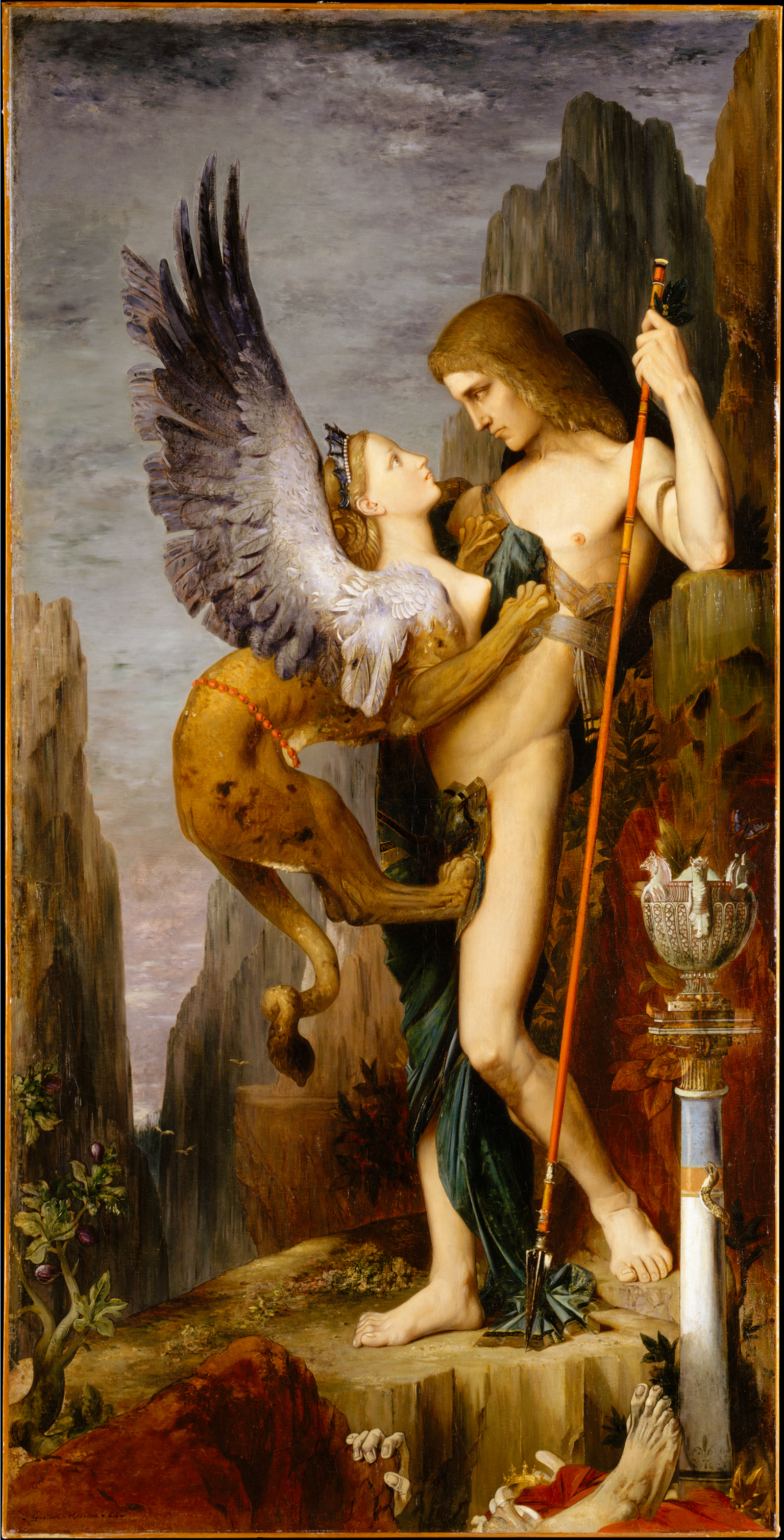
I love riddles.  I’ve always enjoyed letting them roll around in my brain until I can figure them out.  I’m that way with many brain-teasers, but there’s something very special about riddles, I think.  As a witch, I value riddling because riddles have had a place in mystical practice for a long time now (just think about Oedipus facing off with the Sphinx’s riddle).   I think they have the potential to help move one into an altered state of consciousness, and to force the brain to stop thinking in a simply linear, rational fashion.  The mindset which comes after a little riddling is an ideal one for magic, because connections that aren’t immediately obvious suddenly become apparent.  Or such is my opinion on the subject.

Today I’m going to look at a few riddles from American folklore (though some of them may be older in origin).  I’ll post a response in the comments section with the answers in case you don’t want to see those right away.  I’ll also try to point out anything that might have magical significance as I go along.  Without further ado, the riddles (from Richard Dorson’s Buying the Wind):

From the South:

The ole man shook it an’ shook it;
The ole woman pulled up her dress an’ took it.
(The solution to this one is simple, but I like the sexual connotations to the riddle itself.)

About six inches long, an’ a mighty pretty size;
Not a lady in the country but what will take it between her thighs.
(Again with the sexual innuendo…apparently we Southerners are a dirty-minded lot.  The solution to this one, though, is interesting because of the idea of “riding” to the witches’ Sabbat—in may folkloric versions, there is a sexual side to this riding).

From the Pennsylvania Dutch:

What goes and goes,
And yet stands and stands?
(Solve this one and you’ve got an interesting way to look at one version of a witch’s magical circle).

What poor fellow passes up and down the steps on his head?
(No witchy significance I can see; I just like this one)

What has its heart in its whole body?
(The answer to this one is worth remembering, for naturally-inclined folk)

What resembles half a chicken?
(A simple answer, but exactly the kind of riddling answer that I like, because it is both slightly funny and a little weird—it does a nice job of making the brain shut out its over-analytical side, for me at least)

From the Louisiana Cajuns:

If a man can lift two hundred and fifty barrels of rice when it is not raining, what can he lift during the rain?
(Again, this one isn’t really magical, but helps to get that child-like mindset which can be very useful in witchcraft)

What goes to the bayou laughing and returns crying?
(This one has more to do with sound than anything else, and getting the guesser to use his or her imagination a little)

What was it that was given to you that belongs to you only but that your friends use more than you?
(This one has particular significance for a witch, I think—if you think of “friends” in this context as covenmates, gods, spirits, etc., it makes sense, at least to me)

So what about you all out there?  Do you have any favorite riddles?  Do you ever use riddles as a way to get yourself into a magical mindset?  I’d love to hear what you have to say, so please feel free to leave a comment!

Thanks for reading,

-Cory

Blog Post 52 – Some Monday Reading

Good morning all!

Just a quick post this morning to share an article I found on Witchvox over the weekend.  It looks like the concept of New World Witchcraft is catching on as more and more people are taking an active interest in it!  I think that’s pretty fantastic, myself.

This article talks about several of the systems we’ve discussed here, as well as a few others we’ve not gotten into yet.  The author’s blog also has some interesting reposts of articles on various New World magical subjects.  I’ll be interested to know what everyone thinks about it, so feel free to leave a comment and discuss!

Happy Monday!  Be well, and thanks for reading!

-Cory

Blog Post 51 – Book Review

Happy Friday, all.  Today, to make up for a rather long post yesterday, I’m just doing a quick blurb on a book I’ve not referenced much here, but which will likely be cropping up as we get into discussions of things like curanderismo and brujeria.  The book I’m looking at is called Spiritual Cleansing by Draja Mickaharic.

Mickaharic was an immigrant from Central Europe who arrived in the U.S. just as World War II was dawning.  The occult seems to have interested him from a relatively young age, and he’s produced copious volumes on various magical themes.  What strikes me as unique is that despite his Old World roots, most of his magical writings focus on what I would call New World systems, such as Caribbean, Southern, and Mexican folk magic.

Spiritual Cleansing is, according to its subtitle, “a handbook of psychic self-protection.”  Much like Dion Fortune’s Psychic Self-Defense, this book is mostly aimed at beginning practitioners or those with little experience in occult topics.  It’s chief goal is to help a person who might be facing all sorts of spiritual afflictions to remove those problems and prevent future recurrences.  Mickaharic is very insistent in this text that his work is not to be taken as medical advice (which is a sound if common legal disclaimer in works like this), but also that it is only for basic spiritual cleansing and protection.  He advises those with serious afflictions to seek out the help of a professional spiritual practitioner, and therein lies some of his charm.  He takes his subject very seriously, and his tone comes across a bit like an admonition from a grandparent.  This is probably because he was nearly 70 when the book was first published in 1982.  A more recent edition came out in 2003 with additional material, including a chapter on “Quieting the Mind.”

Mickaharic’s work is incredibly practical.  He discusses a lot of different spiritual cleansing techniques without high-flown language.  Some of the topics he addresses are:

-Dealing with Malochio (the Evil Eye)
-Cleansing oneself with spiritual baths
-Using eggs to remove negative energy
-Burning incenses to fumigate oneself for protection
-The proper use of Holy Water

One thing that some readers may be turned off by is the matter-of-fact way he says to do things.  For example, of burning incense he says “If we burn incense with no real purpose, we may find the forces  [higher powers] decide we are calling a wrong number—and they will not act in harmony with our desires…To be able to use an incense properly we must first understand these rules” ( p. 78).  He then goes into the rules as he sees them.  In another passage, he advises against using rain water for spiritual cleansing because “Rain water is difficult to use as it has variable vibrations…[and] should not be used for any spiritual work except by those who have been specifically told to use it by a spiritual practitioner” (p. 67).  I know such “this is this and that is that” statements are a big turn-off for many magical folk (and I have a feeling Laine would strongly disagree with Mickaharic on his perspective concerning rain water).  But I’d like to offer up, as some small defense of this work, that it is written for an inexperienced magical practitioner.  Someone with a better understanding of magic very well may be able to bend his “rules,” but Mickaharic is more concerned with the well-being of the reader he’s never met and wants to make sure they don’t get into anything they can’t handle.

Many of the spells and workings in this book are wonderful.  Some bear striking similarities to hoodoo work (his home sweetening spells involve burning brown sugar, which is very common in hoodoo), and many are very close to curanderismo practices (the egg cleansings in particular strike this note with me).  Some things in this book seem a little pedantic to me, of course, but then again I’ve been reading magical books for a long time.  In the end, I still think the good of this book outweighs anything bad I can say of it, and so I’m recommending it to you.  If you have an interest in spiritual cleansing and protection, or in Mexican folk magic, hoodoo, and other natural magical systems, this is a book well worth tracking down.

Have a great weekend!  Thanks for reading!

-Cory

Blog Post 50 – A Witch’s Initiation

For my 50th blog post, I thought I’d do something special, something that really tickles my fancy.  I’ll be talking about the various types of witch initiations found in New World folklore.   I’ve already touched on this in Blog Post 45 – Witches, but today let’s expand a little bit on the concept.

In general, witch initiations in North American folklore share a few commonalities:

  • The renunciation of Christianity, often through a ritual like repeating the Lord’s Prayer backwards
  • The giving of oneself to an otherworldly entity, such as the Devil or a “Man in Black” in exchange for magical powers
  • An act of exposure, such as being naked or sexual union of some kind, though in some cases this is not necessary
  • A sign or omen of the candidate’s acceptance as a witch
  • The transmission of magical knowledge in a ceremonial way, and/or the presentation of a familiar or fetch animal

Not all of these components are found in every case, of course, and the nature of the witch may be such that he or she is not an “initiated” practitioner, but merely someone who has picked up magic throughout his or her life.  This last circumstance is often found in places where magic is prevalently mixed with Christian practice, such as in the Appalachians (Granny magic) or among the Pennsylvania-Dutch (Pow-wow).  Of course, in these cases, the magical worker is seldom called a “witch,” though sometimes the term “witch doctor” is used.  It’s funny, to me anyway, to think about how a witch is “made” through initiation, much like someone can be “made” in the Mafia.  But I digress…

Now let’s take a look at how witches were/are initiated according to specific folklore examples.  From German Appalachian lore, there are stories of witches being initiated by obtaining a “Black Bible.”  Scholar Gerald C. Milnes links this tome to the Key of Solomon, a grimoire with many reputed magical properties and a host of instructions  on how to accomplish various magical tasks.  One of his informants outlines the basic ritual thusly:

“Now say you’re going to be a witch.  Okay, now I don’t know where you get ‘em, but they call e’m the little Black Bible.  Take that little Bible and you go to a spring where it’s a-running from the sun…not towards the sun, away from the sun…Take that little Black Bible and go to that stream, strip off, and wash in there—take a bath in that water—and tell God you’re as free from him as the water on your body” (Signs, Cures, & Witchery, p. 162).

Milnes also describes a similar Appalachian rite of this nature involves taking dirt and shaking it off of a plate or dish while stating aloud that you are as clear of Jesus Christ as the dish is of dirt.  Something more is added to this folklore:

“If, through a pact, the devil is granted your soul in exchange for some talent, gift, or magical power, it is thought that he then receives some gift of the body in return.  This could be a fingernail or even a withered finger” (SC&W, p.164).

Such a “sacrifice” is not uncommon in witch-lore, with the physical offering being anything from a bit of blood to sign a pact to a body part like a finger or toe to—at the extreme end—the death of a loved one.  This is a story commonly applied to many chthonic cult deities or spirits.  Santa Muerte in the Latin-American magical traditions has also been accused of this sort of thing.

I outlined one type of witch-initiation culled from Hubert Davis’s The Silver Bullet in Blog Post 45, an initiation which involved a type of blood offering in exchange for the presentation of a magical imp.  That version of initiation is only one of many methods presented by Davis.  Here’s another one, from Wise County, Virginia:

“She [Granny, the narrator of the tale] began: ‘I’ve been told thet annuder way to git to be a witch is to fust go to the top of a high mountain, throw rocks at the moon and cuss God Almighty.  Then, go find a spring where the water runs due east.  Take a brand new knife and wash hit in the spring just as the sun rises.  Say, “I want my soul to be as free from the savin’ blud of Jesus Christ as this knife is of sin.”  Do this fer twelve days in a row.  Effen on the thirteenth day the sun rises a drippin’ blud, hit’s a shore sign thet you’re becomin’ a witch’” (TSB, p. 11).

This variant is interesting, to me, because of a few elements.  First, in this initiation, the spring must flow east (or towards the rising sun, though against the natural path of the sun), which seems to be different than in the Milnes version.  In this initiation, too, the witch isn’t naked, but a new knife is washed in the stream while a renunciation is made.  Finally, the bloody sunrise is a sign to the witch indicating acceptance or denial of the initiation—this feature is common in several variations of the rite.  Davis also mentions another witch-making method which bears some of the trademarks of the process:

“He [the potential witch] then waited until Friday the thirteenth and returned to the spring as the morning turned gray over the ridge.  He dipped some water from the spring with his ram’s horn and poured it over the pewter plate.  He did this seven times and repeated the verses Liz [a witch] had taught him:

‘As I dip the water with a ram’s horn,
Cast me cruel with a heart of thorn,
As I now to the Devil do my soul lease…
May my black and evil soul be
Of Christian love and grace free
As this plate is of grease’ (TSB, p. 24).

This, to me, bears a strong similarity to the dirt-and-plate version of the ritual outlined in Signs, Cures, & Witchery.

I mentioned a ritual involving the reversed Lord’s Prayer from Vance Randolph’s Ozark Magic & Folklore in my post the other day.  Randolph discusses several other ways of becoming a witch in that work, some simple, and some more complicated:

  • A woman could fire a silver bullet at the moon and “mutter two or three obscene old sayin’s” (p. 265)
  • Repeating the Lord’s Prayer backwards and firing seven silver bullets at the moon will do the trick
  • Magical information can only passed across gender lines (man-to-woman or vice versa), or between partners united by sexual intercourse
  • Widows were the best candidates for becoming witches, as they only had to learn “the Devil’s language,” whatever that might be.

Randolph goes on to say that the transformation of a person into a witch was a moving one, and often one with a morbid downside:

“I am told, by women who claim to have experienced both, that the witch’s initiation is a much more moving spiritual crisis than that which the Christians call conversion. The primary reaction is profoundly depressing, however, because it inevitably results in the death of some person near and dear to the Witch” (OM&F, p. 268).

In this case, the lost loved one is called a “Witch’s sixpence,” and is the “price” paid for the witch’s powers.  This is not a universal belief, however, as many witches do not lose anyone close to them, and instead gain a new friend:  the familiar, fetch, or imp.  I’ll be doing something more extensive on this aspect of witchcraft in the future, so for now, I will just say that the familiar of the witch is a big subject with as much (often conflicting) information floating around about it as, well, the subject of initiation.

Finally, here are some examples of witch-induction from Kentucky.  I’ve gleaned these from the book Kentucky Superstitions, by Daniel and Lucy Thomas.

  • To become a witch, go to a mountain top at dawn, shoot through a handkerchief at the rising sun, curse Jehovah three times, and own the Devil as master. When you shoot through the handkerchief, blood will fall from it (Mountains, #3773)
  • To become a witch: the candidate goes with the Devil to the top of the highest hill at sunrise nine successive days and curses God; the Devil then places one hand on the candidate’s head and one on his feet, and receives the promise that all between his hands shall be devoted to his service.  (Mountains, #3774)
  • To become a witch, you shoot at the moon nine times with a silver bullet, cursing God each time (Mountains, #3775)
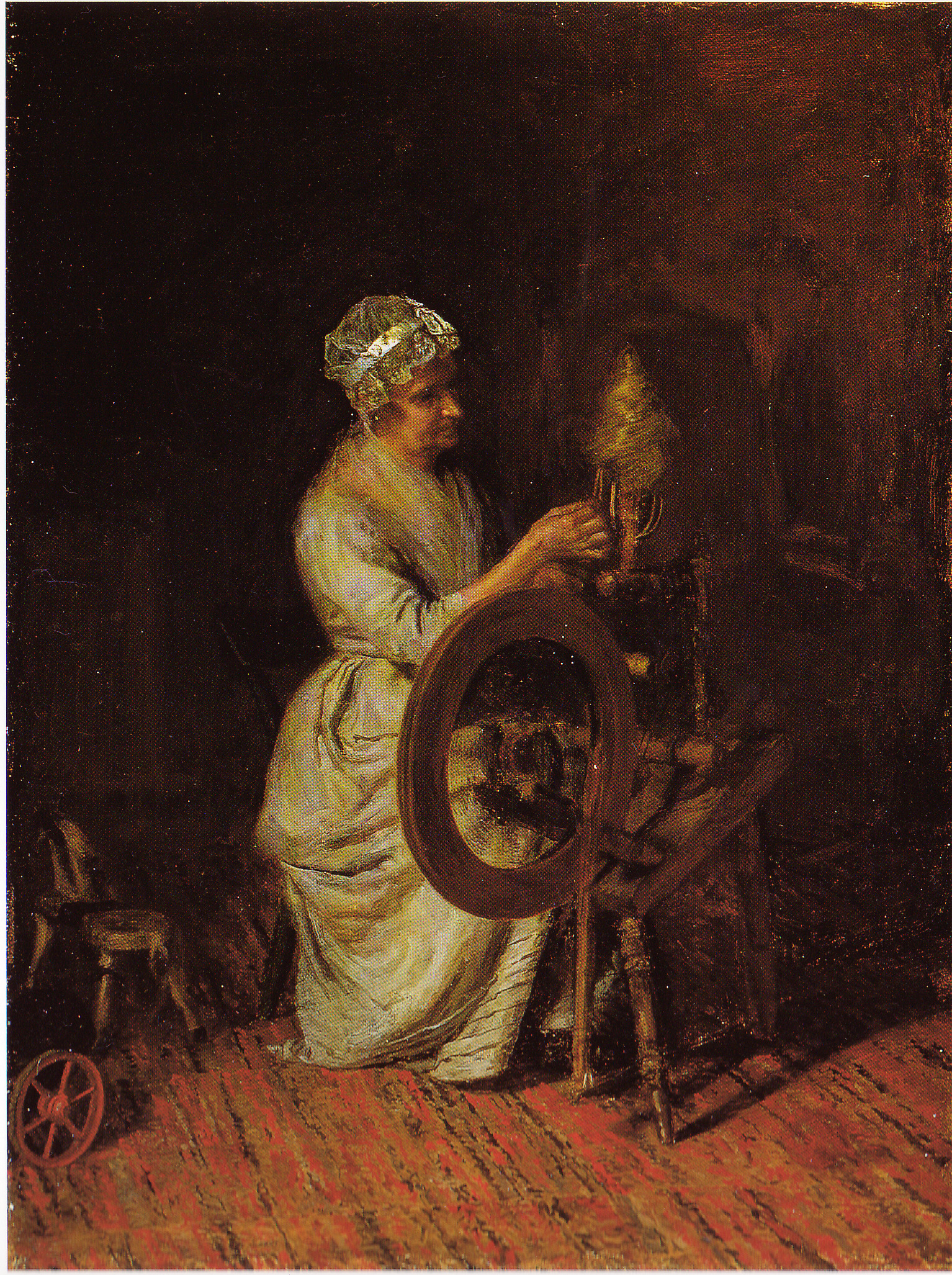
  • You can become a witch by taking a spinning-wheel to the top of a hill, giving yourself up to the Devil, and waiting until the wheel begins to turn. The witches will then come to instruct you (Mountains, #3776)

These are similar to other folkloric initiation ceremonies already discussed, with the exception of the last one.  The inclusion of the spinning wheel here is interesting to me, because it seems to be connected to an idea I find very witchy: the threads of Fate.  It also reminds me of the Irish folktale “The Horned Women,” which is a story I glean much in the way of witchery from.  In this case, the wheel’s turning is much like the rising of a bloody sun—it provides an omen that the witch has been accepted into the fold of witches before her.

So what do I make of all of this?  Well, my own opinion (and I stress that it is only my take on the phenomenon of witch initiations, and no one else’s) is that each of these stories contains little pieces of initiatory lore, but always with a layer of sensationalism on top.  These folk tales were intended to amuse and spark curiosity, after all, so it doesn’t surprise me that a small offering of blood, say on an new witch’s cingulum or a few drops in a cup of wine poured out to the god, gods, or spirits to which the witch is binding herself, has become exaggerated into the death of a family member or the withering of a limb.  I think that initiations have a profound impact on those that undergo them, and that many of the common elements (the renunciation, the vow to serve a witch-god/goddess/devil/etc., and the granting of magical gifts like certain charms or familiars) are profound acts that may well belong in an initiation ceremony. Many of these features are also found in other initiation ceremonies and Traditional Witchcraft works, such as Paul Huson’s Mastering Witchcraft or Nigel Jackson’s Call of the Horned Piper. I also think that some elements are overlooked in these sorts of folkloric imaginings of “witch-making”.  For instance, one thing Sarah at Forest Grove mentioned in her post on initiations is that once one becomes a witch (or takes initiation), one finds “Growth and strength of abilities and experiences the more one practices and keeps their promises.”  Most stories about witches seem to either end at the oaths taken upon becoming a witch, or to start in medias res of a witch’s career, showing a witch operating in one way, unchanging, until she is (inevitably) defeated.  That makes for good storytelling, but perhaps not for so much good practical witchery.  Witchcraft is wonderful in that the more you do it, the better it gets!

In the end, I like this topic, but I should say one more thing.  I don’t think that a person-to-person initiation is necessary to practice witchcraft.  If you’ve not taken an initiation, or don’t ever plan to, but find you are good at witchcraft anyway, keep doing it.  You certainly don’t need anyone to validate your magic if it’s working, and if whatever forces you draw your magic from one day choose to initiate you, I have a feeling that much like Don Corleone, they’ll make you an offer you can’t refuse.

My apologies if this post has been overlong, but I hope it’s useful to somebody out there.   If nothing else, you’ve worked out your scrolling finger for today.

All the best, be well, and thanks for reading!

-Cory

Blog Post 49 – Snakes

I hope you’ve got your good boots on today, because we’re getting into the tall grass and looking for snakes!  Snakes have had a place in magical lore for a very long time.  In Ancient Greece, Artemis and Apollo were sometimes associated with snakes.  Apollo was famous for slaying the great serpent Python (see Ovid’s Metamorphoses, Book I), and his priestesses were ever afterwards known as the Pythia.  Artemis, offended by King Admetus’s oversight of an offering due her, filled his bed with serpents.  In Vodoun tradition, the Creator figure is a great serpent, Damballah.  Stories of creation and snakes seem to go hand in hand across many cultures.

In the New World, snakes have a mixed significance.  On the one hand, the biblical story of Eden in Genesis lays a lot of the blame for humanity’s disobedience on the serpent in the garden.  At the same time, humanity would be without knowledge without the snake, so there’s more than one way to look at the story.  However, if you ask many Christians today who the snake was, they will answer “the Devil” or “Satan,” so for all intents and purposes, mainstream culture takes a fairly negative view of these slithering creatures.  That does not mean, however, that all snakes are viewed as little devils, and many folks actually like them.  Farmers like snakes because they keep rodent populations down in barns and fields, for example.

In magic, snakes are one of the most potent animals you can use.  There are several different magical traditions surrounding snakes or their various parts and pieces.  Catherine Yronwode notes that “the blood, eggs, heads, flesh, sheds, and skins of all species of snakes are used in jinxing and crossing” and the manufacture of various hoodoo mixtures, like Goofer Dust or Live Things In You poisons (HHRM p. 186).  She also mentions that the sheds can be used to calm one’s mind.  Other hoodoo-related uses of snake sheds and bones include situations where cunning might be needed, or for luck and power.  In this last case, rattlesnake bones and rattles are often used.  Musicians who wish to play well and win contests often keep a rattle with their instruments, according to Yronwode.

In the case of the Live Things In You curse, powdered snake parts—usually eggs or sheds—are mixed into a victim’s food.  The target then feels as though the creature is wriggling around in his body, causing him pain and distress, as well as the feeling that he might be going crazy.  You can read more about this kind of baleful working in Superstitions & Folklore of the South, by Charles W. Chestnutt, at the University of Virginia website.

Vance Randolph recorded several bits of magical lore concerning snakes in his Ozark Magic & Folklore:

  • To cause a rain, a snake could be hung belly-up on a fence (p. 30)
  • Burning shoes in the fireplace will drive away snakes (p. 68)
  • Snake-skin soaked in vinegar is applied to boils to reduce them (p. 101)
  • Snake-bites treated by doctors will always ache on the anniversary of the bite (p. 159)

Randolph also mentions the snake-handling “Holy Roller” churches sometimes found in rural areas of the South.  These churches base their practice on an admonition in Mark 16: 17-18:   “And these signs shall follow them that believe; In my name shall they cast out devils; they shall speak with new tongues; They shall take up serpents; and if they drink any deadly thing, it shall not hurt them; they shall lay hands on the sick, and they shall recover” (KJV).

A final tale from the Ozarks concerns a family that had a secret method of dealing with snakes:

“Miss Jewell Perriman, of Jenkins, Missouri, tells me that her Uncle Bill had a secret method of curing snake bite, and people came from miles around for treatment. Uncle Bill belonged to a family of which it was said ‘them folks don’t kill snakes.’ This is very unusual in the Ozarks, where most people do kill every snake they see. When a large copperhead was found in the Perriman house, Uncle Bill caught it with the tongs, carried it out into the orchard, and released it unharmed. His cure for snake bite was known in the family for at least a hundred years…The secret is lost now, for Uncle Bill is long dead, and his son died suddenly without issue. All that Miss Perriman knows of the snake-bite cure is that the snake must not be injured, and that Uncle Bill had a strip of ancient buckskin in which he tied certain knots as part of the treatment. She showed me the buckskin. It was about half an inch wide, perhaps twelve inches long, carefully rounded at the ends. Three knots had been tied in it, one in the middle and one at either end” (Randolph, Ozark Magic & Folklore, p. 159).

Wouldn’t you love to know what that secret was?  I sure would!

I suspect that snakes will always have a place in magical lore.  They have the ability to slide between upper and lower worlds easily.  Some can kill with a bite, but also provide useful services to us in many ways.  They seem to show up everywhere in the world (except Ireland…but that’s a completely different subject) and they always connect to something primal in us: fear, knowledge and gnosis, or even sexuality.  I’ll be keeping my good boots on when dealing with them, but I definitely have a particular love for these critters.

Thanks for reading!

-Cory

Blog Post 48 – Comparing Tales

Greetings everyone!  On Podcast 8, I mentioned two stories which share remarkable similarities.  I was speaking of a story in the W. B. Yeats collection Fairy & Folk Tales of the Irish Peasantry, specifically a story called “The Witches’ Excursion” (I incorrectly called it something like “James and the Red Cap” on the podcast…my apologies to Yeats and anyone who went poring over that tome looking for that non-existent title).  For comparison, I cited the tale “Greasy Witches,” in The Granny Curse, by Randy Russell.  You can read most of that story here, on Google Books (though I can’t guarantee how long that much of the book will remain free to read).  Briefly, I thought it might be fun to go over a few of the similarities and commonalities found in these tales, for the sake of seeing how Old World witch lore migrates and transforms in the New World.

In the Appalachian version, the cabin is located on Roan Mountain.  In this case, I think that the “roan” referred to could be tied into the “red” of the red cap being used to induce magical flight in the Yeats tale.  Or, “roan” could be a variant on “rowan,” which is a mountain ash tree (which derives its name from its red berries, and thus could still have the “red” connection).  The rowan tree is loaded with magical significance—some of the most potent anti-witchcraft charms are crosses made from rowan twigs bound with red thread.  However, it could also be used to make magical tools as well, such as wands or staves.  Oh, I should also point out that Roan Mountain is actually a real mountain on the Tennessee/North Carolina border.  (Side note:  would there be any interest in me doing a sort of “Witch’s Travel Guide” to various parts of the US?  Places with strong witch lore or with a history of magical activity, perhaps?  Comment/email and let us know!)

There’s a strong indication that the Dobbs sisters use a powerful sleeping draught on Riley the same way that Madge and her cohorts attempted to drug James in the Irish version of the story.  I’m not sure if I’d prefer my witch-administered pharmaceuticals via nightcap or squirrel soup, though.

The unguent used in both stories seems to be, basically, a flying ointment.  In the version from Yeats, I would lean towards a mixture that uses amanita muscaria, but I base that almost entirely on the fact that the “red cap” is a key feature of the tale.  It’s not unthinkable that such entheogens  would grow on Roan Mountain, but it is a bit less likely.  In both stories, the mixture is activated by the recitation of a short, rhyming phrase, which seems to be a common enough way to trigger witch-flight in many stories.  In some tales, the non-witch makes a mistake, it causes some sort of comic misfortune, like being lifted up and dropped to the floor unexpectedly.

An interesting difference between the two tales comes during the heavy drinking portion of the tale (don’t all interesting things come during the heavy drinking portion of the tale?).  In the Irish story, Red James never tries to go home once he starts drinking—he just passes out.  Riley, in the American version, does try to leave (which is when he notices his body “felt like feathers or fur,” a sure sign of shape-shifting.  Another difference worth noting is that in the Old World version, James knows his witch-lore and remains silent while in flight, but in the “Greasy Witches” variant, Riley has to say additional magical words while in flight to follow the Dobbs sisters.  I’ve had a gifted witch tell me that when making a profound crossing like this, silence is better, and I trust that idea.   But there’s clearly some flexibility, too.

The stories end quite differently, with Riley finally having to do what the witches have been manipulating him into doing the whole time:  marrying one of them.  Red James faces no such fate, but merely gets his red cap back and flies off at the last possible moment, avoiding his hanging in dramatic fashion.  But they do both get away, and both with a little magical aid from witchcraft.  It’s nice to know we witches are good for something other than breaking-and-entering, right?

I’m interested in your opinions on these tales.  Is it all just metaphorical hedgewitchery?  Do you think these sorts of events might have happened?  And most importantly, do you think that as these stories evolve, anything is being lost or gained in the process?  I personally love how much alike they are, but I also find myself pausing over the differences, too.  What about you?

Thanks for reading!

-Cory