Podcast 7 – Weather Magic and Lore

-SHOWNOTES FOR EPISODE 7-

Summary
Today we’ll look at some weather folklore and magic.  Then, we’ll be introducing two new sections:  WitchCraft with Laine, and Magic Spelled Out with Cory.

Play:

Download:  New World Witchery – Episode 7

-Sources-
Main Topic
The Foxfire BookSpecifically the chapter on weather lore
Smoky Mountain Weather Lore – With some interesting weather folklore from the Appalachians
Buying the Wind by Richard Dorson
Grimoire for the Green Witch, by Ann Moura
Dog Predicting Earthquake – http://www.youtube.com/watch?v=1MFzcl-kZHo&feature=related
And of course, weather lore provided by our wonderful listeners!

WitchCraft
“Knitting Witchcraft” by Olivia O’Meir, in Llewellyn’s 2007 Magical Almanac
The Knitter’s Book of Yarn, by Clara Parkes
knittingdaily.com
theanticraft.com
ravelry.com

Magic Spelled Out
Earth Power, by Scott Cunningham
Encyclopedia of 5000 Spells, by Judika Iles

Promos & Music
Title music:  “Homebound,” by Jag, from Cypress Grove Blues.  From Magnatune.
WitchCraft Intro: “Down on the Farm” by Chubby Parker
Magic Spelled Out Intro: “Evil Devil Woman Blues” by Joe McCoy
Promo 1 – Witchery of One (Hooray!  Jay’s back!)
Promo 2- Pennies in the Well

Blog Post 24 – Book Review

Hello everyone,

So today I’d like to offer a review of a book I’ve cited several times on the blog already, Richard Dorson’s Buying the Wind.  It’s a book of folklore divided by region and focusing on the different stories, beliefs, and practices of those who inhabit those regions.  The regions he covers are broken down as follows:

  • Maine Down-Easters
  • Pennsylvania Dutchmen
  • Southern Mountaineers
  • Louisiana Cajuns
  • Illinois Egyptians
  • Southwest Mexicans
  • Utah Mormons

Each section then goes into further detail regarding the specific folklore of the regional group examined.  For example, under Southwest Mexicans, there is a section called “Proverbios” which contains the bits of folk wisdom like:

Dar atole con el dedo.

“To give gruel with the finger.”  (To deceive with words or acts, especially to deceive one’s husband).

Entre menos burros, mas olotes.

“The fewer donkeys, the more cobs.”  (The fewer, the better…corncobs, dried as well as green, are given burros to eat).

And under Louisiana Cajuns, in the section “Riddles,” we find:

What has a tongue and does not speak?  A shoe

What has teeth but does not bite?  A comb

If a man can lift two hundred and fifty barrels of rice when it is not raining, what can he lift during a rain?  An umbrella

Each section has its own unique attributes.  Some have the songs and proverbs of their region, some have stories and even some loose versions of “spells.”  I say loose because they aren’t exactly how-to’s on spellcraft, but provide some information that could be turned into a how-to pretty easily.  For example, the Louisiana Cajuns section has information on Hoodoo, including a tale from one informant who described a luck mojo bag that “was a little bag of linen and it had like nerves and then bones.”  The nerves are from a vulture, and the bones from a snake, which both could be used in a lucky mojo hand (though I’ve never heard of nerves being used, per se, but that’s what makes these accounts so interesting—their variety).

The entire book is loaded with bits of magic like this, as well as stories of witchcraft and magic which, while more fanciful, give insight into what the occult practices of those areas might be.  In the Southern Mountaineers section, for instance, there’s an interesting account of a “witch-ball,” which is a bit of hair, wax, and other substances rolled into a ball and “shot” at a victim to curse them.  I’ve seen similar stories in other books of American folklore, especially based in the Appalachian areas, so it’s interesting to me to see how prominent such a magical tool seems to be in that area, though it is largely forgotten elsewhere.

I learned a great deal from this book—the entire section on Illinois Egyptians, for example, was a revelation to me, and has opened up a whole new area of interest for me regarding New World Witchery.  And the stories, songs, and proverbs are fantastic!  I can’t get enough of the Southern “Jack” tales!

I should point out that Dorson uses the Aarne-Thompson system of folklore classification, which divides tales into various types for ease of cross-referencing.  It is definitely a book aimed at folklorists and not particularly at a wide audience, but I think anyone can get a great deal from reading it.  And it may open up a whole new love of folklore as a field of study for some folks.

I’ve been reading a borrowed copy from my public library, and it’s just about due to go back there, which was going to be a sad loss, as I still find myself referencing Buying the Wind frequently.  But thanks to a generous donation from reader/listener Amber (many, many thanks to her!), we’ll be able to procure a copy for future reference now.  So hooray for Amber!

That’s all for now!  Thanks for reading!

-Cory

Blog Post 23 – Congratulations!, and Something New

A big congratulations to Anica, who won our Weather Lore contest!  We’ll be getting a copy of Cat Yronwode’s book off to you soon.

Many thanks to all those who entered–we received some fantastic bits of weather lore we’ll be incorporating into an episode sometime in the near future.  We have wonderful readers and listeners, and we greatly appreciate you all!  Keep watching the blog and listening to the show for future contests.

Also, some of you may have noticed we now have a “Donate” button on our site.  While this blog and podcast are now and will remain free, we thought that if any of our fans wanted to chip a couple of bucks our way, we certainly didn’t want to stop them.   Any funds donated will be used to enhance the site or procure research materials for future New World Witchery posts and podcasts.  Please don’t feel obligated to donate, of course, but we will welcome any support offered.

Also, if you’re a magical merchant or author and you’re interested in sending us a sample of your craft/work for use as a contest prize, please contact us at compassandkey@gmail.com.

Again, many thanks to all of our wonderful readers and listeners!  You really have made us feel immensely loved so far!  We’ve got some really tremendous surprises coming in the near future, so stay tuned!

All the best,

-Cory

Blog Post 22 – Thank You to All Contest Entrants!

This is just a quick thank you to everyone who participated in our Weather Lore giveaway! We got some wonderful bits of lore we’ll be bringing you in the near future. The contest is closed now, and we should have a winner to announce this week (depending on when Laine and I can get together to do the hat-drawing ceremony). Again, many thanks to our readers and listeners!

All the best, and be well!

-Cory

Blog Post 21– Final Call for Contest Entries!

Hi everyone!

Only a little less than three days left in our first-ever contest!  We’re giving a copy of Cat Yronwode’s Hoodoo Root & Herb Magic to one randomly chosen reader/listener who provides us with a little bit of weather folk lore from his or her family or region.  All you have to do is email us or leave a comment on Blog Post 10 – Weather Work with your general area (you can say “South” or “East Coast” if you like) and a tidbit about what folks say about the weather in your neck of the woods.  The deadline is February 28th at midnight, Central Time, so please get your submissions in before then.  We’ll be using these entries for a podcast on weather magic and folklore, so please write in!

Good luck!

Thanks for reading!

-Cory

Blog Post 17 – Contest Reminder

Hi everyone!

Just a quick reminder that there’s only a little over a week left in our first giveaway.  We’re offering a copy of Cat Yronwode’s Hoodoo Root & Herb Magic to one randomly chosen reader/listener.  All you have to do is email us or leave a comment on Blog Post 10 – Weather Work with some weather lore, preferably from your area or family.  The deadline is February 28th at midnight, Central Time, so please get your submissions in before then.  We’ll likely be putting together a show on weather lore soon and we’d love to have some field reports from out there in the wider magical community.

So good luck, and we look forward to hearing from you!

Thanks for reading!

-Cory

Blog Post 11 – A Contest!

Hi everyone!

I loosely alluded to this in a previous post, but we’ve decided that we want your weather lore!  We’re putting together a show based on weather magic and folklore, and we need good field reports.  So, we’re having a little contest here at New World Witchery.  From now until the end of February 2010 (the 28th), anyone who:  1) posts a comment on Blog Post 10 – Weather Work, or 2) sends us an email describing any kind of weather-related magic or lore, especially family or local lore, will have their name entered into a drawing.  Also include what part of the country/continent you’re from (you don’t need to give us specific locations, unless you win, of course…then we’ll need an address to ship to 🙂 ).  All entries must be date-stamped before midnight CST on the 28th to be considered.  And if you’ve already posted a comment with weather lore, don’t worry, we’ll count you, too!

On March 1st (or thereabouts), we’ll be drawing a name from the thousands of entries we receive (we’re optimistic) and one lucky reader/listener will receive a free copy of Catherine Yronwode’s Hoodoo Root & Herb Magic.  For those of you unfamiliar with this text, it’s the quintessential text on the botanicals and curios used in the practice of Southern-style hoodoo and conjure magic.

From the Lucky Mojo website (slightly abridged):

Hoodoo Herb and Root Magic, paperback by Catherine Yronwode
Originally published in 2002.
From the proprietor of the Lucky Mojo Curio Company comes the most thorough, complete, and authentic book on how roots and herbs are used in traditional African-American folk magic. 500 herbs, roots, minerals, and zoological curios are listed, along with their scientific names, so you will know exactly what to harvest or buy from an herb dealer. Included are an amazing 750 spells, formulas, mojo hand combinations, and candle rites, all given in workable, practical detail. Medical usages for many of the herbs, supplementary botanical notes, a series of cross-indexes listing herbs by the magical conditions for which they are recommended, plus 50 beautiful black and white illustrations of herbs and vintage herb packaging round out this informative reference volume. There is no other herb encyclopedia like this one. This is the book to get if you are working traditional conjure and herb magic. 224 pages, trade paperback.

  • 500 herbs, roots, minerals, and rare zoological curios, with taxonomic (“Latin”) names for proper identification.
  • 750 traditional spells, tricks, and magical recipes.
  • 50 black and white line illustrations of common magical herbs and roots of North America.
  • 6 handy charts in which dozens of conditions — such as love-drawing or protection — are listed and the herbs for each condition are given in alphabetical order.
  • Cross-referencing: Every herb is accompanied by at least one spell.
  • Bibliography: Authentic recipes are drawn from first-hand experience and 100 years of solid folkloric research.

I own this book and let me assure you, it’s one of the best magical herbals out there.  No fluff, no repetitive 101 stuff; just good, solid information backed by great research.

So, if you want to contribute to the wealth of knowledge and lore in the witchy world, plus have a chance to get a fantastic magical reference book, please submit!  We’ll also be announcing this on the next podcast, too, so if you primarily keep up with us that way, you won’t be left out.

Good luck, and thanks for reading!

-Cory

Blog Post 10 – Weather Work

We recently received a nice blanketing of snow here (which is somewhat rare for our area), and it got me to thinking about weather magic.   When I was little, before we moved to the farm, I used to go out to the dirt hill near our house with a big staff in my hands and shout at the wind, seeing if I could get it to gust up or gentle down.  I remember feeling like I always had a strong connection to weather, particularly those winds.  When we moved out to the farm, my understanding of weather changed dramatically.  Our house was on a hill at the top of our acreage, and we were exposed to a number of tempests, some of which were quite severe.  When we had snow, 4-foot drifts piled up off of our back porch, deep enough that when I jumped into them I was buried up to my chest.  And  I still remember waking up one morning and looking out the window only to see a tornado receding back into the clouds after having passed but a quarter-of-a-mile or so from the house and uprooting a number of trees.  Being a teenager, I had slept through it, of course.

What I learned on that farm was that weather was wild, and would always be wild.  It’s something we can react to, prepare for, run from, or attempt to block out, but we can never really control it the way we like to think we control so many other things—the cleanliness of our water or where our next meal comes from, for example.  Magic seems to have the advantage over empirical science here, as many magicians swear by inherited techniques that allow them to control or predict the weather to one degree or another.

Today I thought it might be worthwhile to take a look at a few techniques, charms, and proverbs regarding the weather from various North American sources.

From Nova Scotia (in Folklore of Nova Scotia, by Mary L. Fraser):

“An Acadian boy would not dare to kill a toad or a spider, for his outdoor pleasure would then be spoiled by the downpour of rain that was sure to follow. A boy of Scotch or Irish descent would be deterred from doing so because it would bring him bad luck.

‘If you wish to live, not die,

Let the spider go alive.’”

I’ve heard this before as an admonition not to harm toads (and for some reason, I always assumed lizards) when out of doors, for fear of bringing on bad weather.  The spider is a new twist for me, but I generally try not to disturb any of the bite-ier creatures out in the wild world.

Mary Fraser also reports a weather-predicting system I’ve seen in a couple of places.  She mentions that the twelve nights between Christmas and Epiphany represent the coming twelve months of the year.  In other words, if you have cold, wet weather on the third day after Christmas, you can expect a rather clammy and dismal March.

From the Pennsylvania Dutch (in The Long-Lost Friend, by J. G. Hohman):

For protection of one’s home against storms, say “Beneath thy guardianship I am safe against all tempests and all enemies, J. J. J.”  (These three Js signify Jesus three times.)

Chris Bilardi, in his excellent book on PA-Dutch braucherei, The Red Church, suggests the following Psalms for weather-work:

  • Psalm 2 – For danger at sea (storms); also for headache
  • Psalm 21 – For dangerous storms at sea
  • Psalms 24 and 25 – For dangers of nature—especially the danger of floods
  • Psalm 76 – For averting danger from water

From the Appalachians (in the Foxfire series of books):

It will be a bad winter if –

  • Squirrels’ tails grow bushier
  • Crows gather together
  • The wooly worm has a heavy coat
  • Onions grow more layers
  • Blackberry blooms are especially heavy

It will rain –

  • Within three days if the horns of the moon point down
  • If  leaves show their backs
  • If cows are lying down in the pasture
  • If there is a ring around the moon (count the stars in the ring and it will rain within that many days)

The weather will be fair if –

  • You hear a screech owl
  • Smoke rises
  • Crickets holler (the temperature will rise)

Additionally, here are some bits of lore from the Appalachians:

  • If it’s cloudy and smoke rises, there’s a chance of snow
  • The number of days old the moon is at the first snow tells how many snows there will be that winter
  • For every frost or fog in August, there will be a snowy day in winter
  • A late frost means a bad winter
  • The darker green the grass is during the summer, the harder the winter
  • If it rains on Easter Sunday, it will rain every Sunday for seven weeks
  • If it rains on ‘Blasting Days’ (the three longest days of the year, there won’t be any ‘mast’ (acorns, chestnuts, etc.) for animals like hogs to feed on

From the Ozarks (in Ozark Superstitions and Ozark Magic and Folklore, by Vance Randolph):

Rain will come –

  • If the tall grass is bone dry in the morning, or if there is heavy dew
  • If rabbits play in a dusty road
  • If dogs start eating grass
  • If sheep turn their backs to the wind
  • If cats sneeze, wash behind their ears, or lick their fur against the grain

Signs of dry weather –

  • A red sunset promises at least twenty-four hours of dry weather
  • A rainbow in the evening means clear weather (but a rainbow at morning tells of a storm in the next twenty-four hours)
  • A ‘sundog,’ or a circle around the sun, indicates prolonged dry weather, or at least a radical change in weather soon
  • When the crescent moon travels ‘horns up,’ there will be no rain for some time

And finally, one of the most interesting weather-predictors around, also from the Ozarks:

“The blood of a murdered man—bloodstains on a floor or garments—will liquefy on even dry sunshiny days, as a sign that a big rain is coming”

This is only a small sampling of everything out there.  I’ve used many of these predictors (leaves turning their backs or cattle lying in a pasture) to prepare for bad weather, and there are many I’ve never even thought to pay mind to (rabbits in a dusty road, for example).  So what about you, dear readers?  Do you have any family or local lore regarding the weather you’d like to share?  If so, please post a comment or send us an email, and indicate roughly what part of the world you’re in and what your weather charm or proverb is.  We may do a show on these if we get enough interest!

I’d also like to issue a friendly challenge to you:  make mental note of a few of these and start paying attention to them.  See if they actually do predict or cause weather patterns for you in your area.  Report your findings back here and share your observations with the rest of us.  Who knows, we may read your results on the podcast, or something better (he said slyly).

I hope wherever you are, the weather’s treating you fair.  If it’s not, you can always contact your neighborhood witch.

Thanks for reading!

-Cory
Blog Post 9 – Groundhog Day

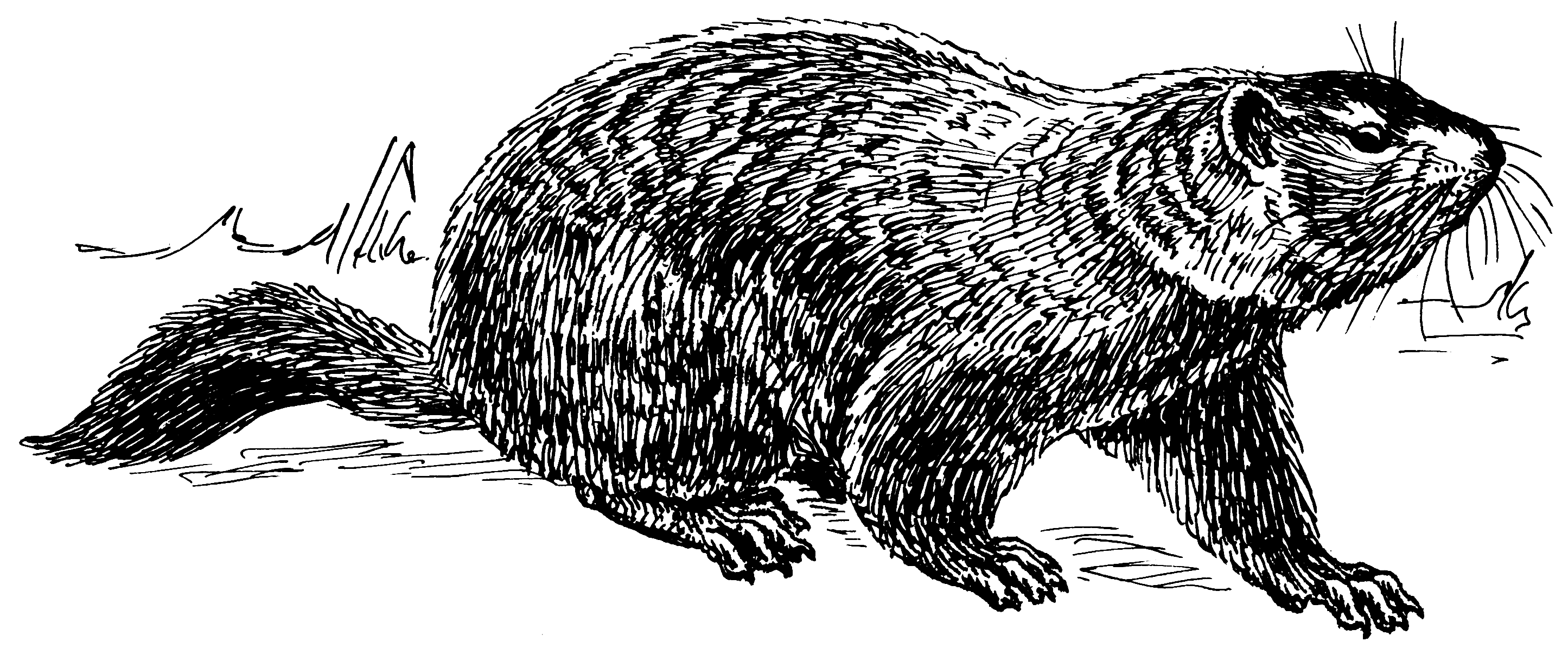
Today we’re migrating a little bit outside of New England proper and into territory which we’ll be covering more extensively at a later date.  But in honor of Groundhog Day, I thought it would be fitting topay a visit to Punxatawney Phil, the ground-dwelling rodent whose annual weather prediction is the subject of great ceremony (and a rather funny film featuring Bill Murray).

Most people know the traditions associated with this holiday (or its sister holiday, Candlemas), but in case you have been living—like Phil–under a rock, in a cave, or in a town library attended to by men in top-hats—if the holiday marmot pokes his head outside after sunrise on February 2nd and sees his shadow, winter will linger for a while longer.  If he doesn’t, you can expect an early spring.  There are dozens of variations on the exact way to interpret that weather prediction.  My personal favorite is the absurd truism “if he doesn’t see his shadow, only 6 weeks until spring; if he does, 6 more weeks of winter.”   I’ve already referenced one proverb about this holiday in a previous post, but there are a couple of poems related to this holiday which illustrate its lore.  The first is Scottish in origin:

“If Candlemas be fair and bright
Winter will have another flight
If Candlemas be cloud and rain
Winter will be gone and not come again”

And here’s one from 17th-century poet Robert Herrick (whom you may know as the author of “To the Virgins, to Make Much of Time”):

Ceremony upon Candlemas Eve

“Down with the rosemary, and so
Down with the bays and misletoe;
Down with the holly, ivy, all
Wherewith ye dress’d the Christmas hall;
That so the superstitious find
No one least branch there left behind;
For look, how many leaves there be
Neglected there, maids, trust to me,
So many goblins you shall see.”

The lore surrounding this day comes from a couple of key sources.  The best known is probably the European tradition of the Candlemas Bear or Badger.  These animals would stir (or in some cases, be coaxed) from their winter dormancy, and observers would make note of their reaction to the environment outside.  Then a prediction of spring’s eventual arrival could be made and plans could be laid for things like tilling and planting crops.  The selection of the groundhog as the New World substitute is outlined by Gerald C Milnes in his Signs, Cures, and Witchery:

“The badger was…used as a weather predictor in Germany, but in the New World, Pennsylvania Germans substituted the groundhog for this role because skunks [whose fat or ‘grease’ the author notes was used as Old World healers used badger fat], unlike badgers, do not hibernate…German Protestants brought the old weather-predicting tradition to Pennsylvania, where it is still actively observed in some German communities.  Groundhogs were substituted for the badger (and bear) traditions o fEurope.  Now the hibernating groundhog has their supposed powers to predict the weather.”

But why did this holiday catch on so widely when so many other holidays and traditions—such as First Footing or Belsnicking (see Milne for more on this mumming tradition)—remained highly localized?  Well, it is certainly a fun holiday, and seems antiquated without being stuffy.  In Punxatawney, Phil is cared for by a group known as the Inner Circle, town elders who dress formally for the occasion of Phil’s prognostication in what sometimes seems a silly parody of Lodge traditions like the Masons.  The general good humor of the occasion (other than the poor rodent, who probably just wants to go back to sleep) has likely fueled its popularity.  But my favorite explanation comes from Jack Santino, in his book All Around the Year:  Holidays and Celebrations in American Life:

“In spite of all this obvious phoniness, we still pay attention to the groundhog’s prediction, as trumped up as it may be.  This probably has to do with the fact that Groundhog Day is the first time that we direct our attention in any formal way towards the coming, much-anticipated spring.  It works for us because after a long January, winter is getting old.  February is a difficult month to get through, even though it is short.  Any indication of an early spring is eagerly welcomed, and Groundhog Day is the first tentative look ahead.”

Santino also connects the groundhog’s celebration to another February holiday:  Valentine’s day.  He notes that the original date for Groundhog Day (in the pre-Gregorian calendar) was on the 13th or 14th of February.  Likewise, the Candlemas bear became a diminished cutie—the teddy bear often given to a loved one on Valentine’s.  I find this connection a bit tenuous, but fun to consider nonetheless.

I should also note that Phil is not the sole weather-predicting critter in the business today.  There are also such famed meteorological marmots as Buckeye Chuck (in Ohio, naturally), Woodstock Willie (Illinois), and Balzac Billy (in Alberta).  Silly as all this may be, I would once again submit that the attentive witch can learn something on Groundhog Day.  Sure, there’s the witchy notion that observing the animals can help predict future events, but I’m more inclined to say the lesson here is that sometimes, it’s okay to smile and laugh at tradition.  There’s a time and a place for the somber and serious, but there’s also a time and a place for a little mirth in the mix.

For those seeking to balance Groundhog Day out with something a little more significant, Candlemas itself is still a holiday for Catholics, as well as some Protestant denominations and even some Pagans and neo-Pagans (myself included).  In the Christian tradition this is the day for the presentation of Jesus at the temple by his mother, Mary.  Christians bring candles to the church to be blessed so that they can be burned throughout the year for loved ones.  Many neo-Pagans celebrate the first or second day of February as Imbolg, dedicating it to goddesses like Brigid or Hestia.  All of them, though, share something in common with Phil:  they’re all looking forward to warmer days and brighter times.

So whatever you’re celebrating today—Groundhog Day, Imbolg, Candlemas, or even an early Lupercalia—I wish you a joyous day and a warm fire to keep you through the remains of winter.

Thanks for reading!

-Cory