Blog Post 82 – Cards, an Overview

Hello readers!

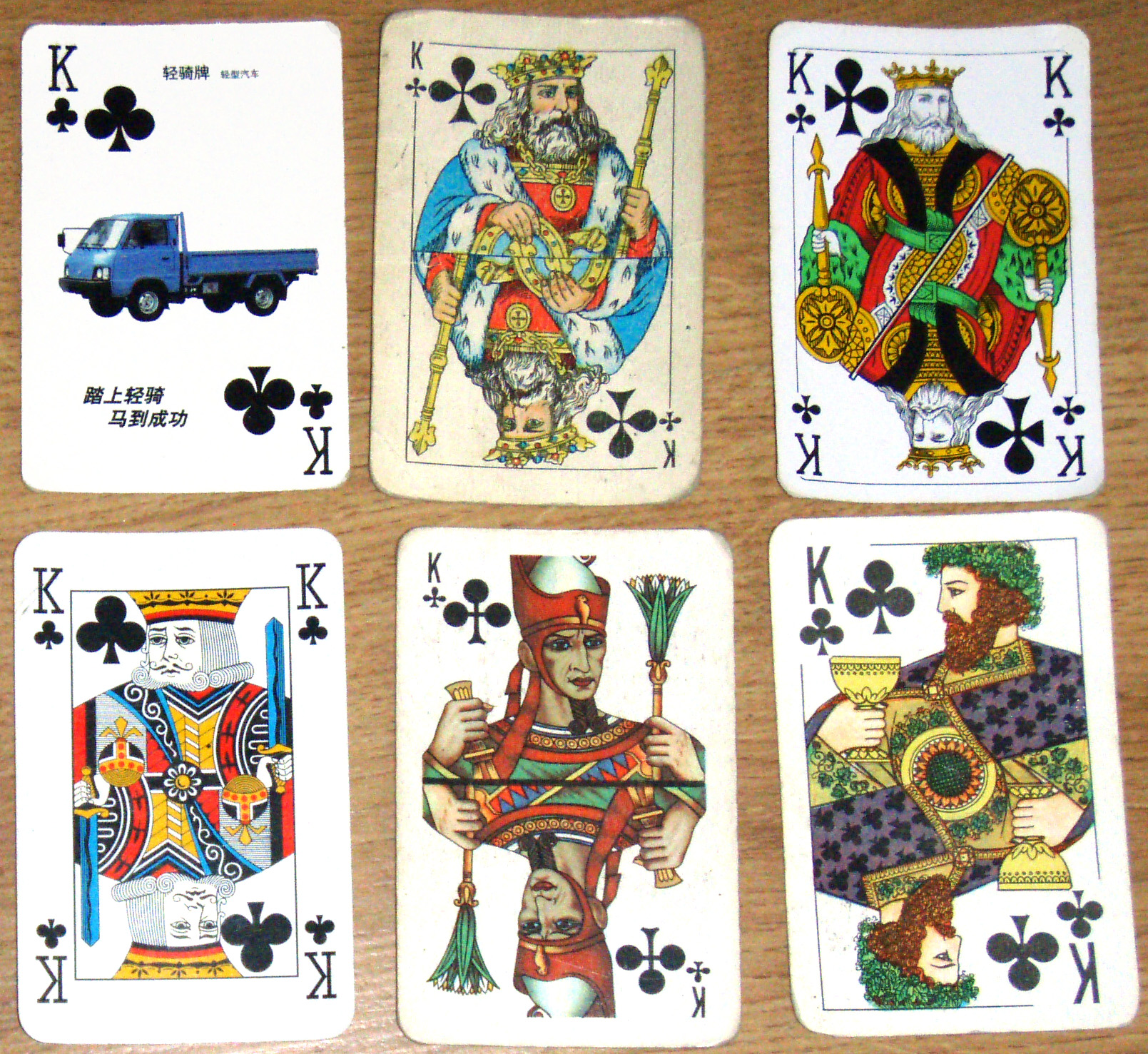
Let me first say that I know it would be fairly impossible for me to explain a divination system thoroughly in one post. So this will likely be the first of several posts addressing the use of playing cards as a magical tool.  What I would like to do is explain my personal system of card divination, as well as some of the variants and influences which have shaped my practice.   I’m not going to dive into an extensive history of playing cards or tarot cards, as those subjects are well-covered and well-documented in other sources.  However, a little of the history that sometimes slips through the cracks (especially regarding playing cards) might be worth mentioning here.

While the absolute origin of pictographic cards is unknown, many folks believe they came out of India, China, or Turkey, or with the travelling Romany people (also frequently called “Gypsies”).  What is known is that by the 1500’s, playing cards were very popular with the lower classes, and often cited as a vice by clerical and governmental documents throughout Europe.  They received wide-spread appreciation from the highest ranks, including Bohemian emperor Rudolph II and Napoleon’s spiritual advisor, Madame Lenormand.  Yet cards have almost always been popular among the lower classes, too.  Cards came to America with settlers, sailors, and soldiers.  In fact, in the late 1700’s, a popular ballad called “The Soldier’s Prayer-Book” described the suits, pips, and enumeration of playing cards in terms of biblical metaphor.  For example, the fives represent the five wounds of Christ, the nines are the nine lepers healed by Jesus, and the tens are the Ten Commandments.  While this song may have been a white-wash for gambling soldiers eager to keep one of the few portable entertainments allowed them, it does register an important point:  cards make wonderful tools for metaphoric interpretation.

So why playing cards instead of tarot cards?  For one thing, playing cards have been more or less easily accessible since the 1600’s, and are versatile.  The cards you play a game of blackjack with one day can be used to reveal the future the next.  They also travel well in a pocket and are easily replaced if they get torn or damaged.  Plantation owners in the antebellum South often thought little of slaves having decks of playing cards to amuse themselves in their few off hours (though in some places stricter masters prohibited them altogether).  William Wells Brown, who provided a slave narrative for a character named “Uncle Frank,” claimed that each plantation also had at least one fortune-teller somewhere on the premises, and at least few of them used playing cards.  Today, playing cards are an excellent way of divining even in plain sight.  No one thinks much of two people over a table full of diamonds, spades, clubs, and hearts, while a Devil or Lovers card might raise eyebrows.

My own system of playing card divination is largely based on the book It’s All in the Cards, by Chita Lawrence and the rhyme “For the Witch of Poor Memory” by Dawn Jackson, with a significant amount of additional material I’ve picked up from other books, teachers, and experiences over time.  What I outline here will be my own understanding of these cards, so please do not take it as gospel, and find a method that works for you.

Like most who practice cartomancy, I break the major meanings of the cards down by color and suits.  However, unlike a lot of other practitioners, I don’t ascribe these suits to tarot parallels or elemental attributes.  There are some connections, of course, as hearts and cups both signal emotion-based interpretations, but it’s not a hard-and-fast link.

First, black cards indicate “negative” or “no” answers, while red cards are “positive” or “yes” answers.  This is most important in short readings, which I’ll address in a later post.  Some will say that having more black cards than red is a sign of negativity, but honestly, the only truly “negative” cards in an extended reading are the spades, in my opinion.  For me, I look at the suits in the following way:

Hearts – Family, friends, love, and lovers.  Also emotions and things which are deeply felt.
Clubs – Work and business.  One’s “calling” or destiny.  Also conflict, discussion, and debate.
Diamonds – Money, luck, fortune, happiness.  Also news, letters, and socializing.
Spades – Tears, suffering, woe.  War, fighting, violence.  Also change, warning, and doubts/fears.

I’ll get into each of these suits a little more when I break down the individual cards, but this should give you some idea what I see when I do a layout for a reading.  If I see lots of diamonds and clubs, I know that someone’s got some good work he or she will be well compensated for coming around the bend.  All hearts means that the client is emotionally invested in the reading, or that he or she is dealing with deep family or friendship questions.  Spades and clubs together would be a sign that the client’s job might be in jeopardy, or that work is very unfulfilling for him or her.

In the next post, we’ll get into the actual significance of particular cards, but it is good to keep the overall meanings of the suits in mind as we go forward.  If you have any questions, please ask, and I’ll be happy to answer as best I can (from my own personal perspective…did I mention that yet?).

For today though, thanks for reading!

-Cory

Blog Post 80 – Horseshoes

Following in the vein of recent posts, today I’m looking at another luck charm:  the horseshoe.  One thing Laine and I discussed in Podcast 13 was that the horseshoe seems to be a rather ubiquitous talisman.  It is so ubiquitous, in fact, that many folks may not even realize it has any magical connotation at all.  In an article from Western Folklore entitled “Lucky Horseshoes,” Jeannine E. Talley writes:

The horseshoe as a bestower of luck is so frequently encountered that it has become a cliche, but at the same time an isolated belief without a context. Barnet’s comment that the mule has been “pounding it full of luck” provides not only the ‘logic’ explaining why the horseshoe is full of luck but also reveals that luck is ac-cumulative. His insistence that the old nails must be used to hang the shoe is not found in standard collections for folk belief, but is akin to the notion that if the hardware is hung with prongs down, the luck will “run out.” This instance is a prime example that collecting the item is not enough; the contextual background of any item is of equal importance since it often contains the rationale which makes the belief credible. (p. 129)

I like this particular examination of the horseshoe because it details two points:  1) the horseshoe’s luck comes from its association with the horse itself and 2) as Talley states, the luck is accumulative, so the longer a shoe has been on a horse, the luckier it is.

Of course, there are plenty of other theories about why a horseshoe might be lucky.  Robert M. Lawrence, in his article,  “The Folk-Lore of the Horseshoe” describes the horseshoe as a talismanic emblem with many possible folkloric connections, including:

  • The Jewish Passover – like blood spread on doorposts/lintels and rowan trees in Scotland
  • Serpent emblem – “In front of a church in Crendi, a town in the southern part of the island of Malta, there is to be seen a statue having at its feet a protective symbol in the shape of a half-moon encircled by a snake”
  • Moon emblem – “the brass crescent, an avowed charm against the evil eye, is very commonly attached to the elaborately decorated harnesses of Neapolitan draught horses, and is used in the East to embellish the trappings of elephants.”
  • Phallic Emblem of some kind
  • Prong-shamed talisman – like protective horns of animals (connected to African symbols)
  • Horse as Sacred Animal (as mentioned above)
  • Iron as “Virtuous” metal capable of dispelling harmful forces (Journal of American Folklore, v.9, n.35, 1896, p. 288-292)

I hope to get into some of these symbols and ideas in other posts at another time—particularly iron, which shows up a lot in fairy doctoring practices and other magical systems—so for now I think it suffices to say that horseshoes have a lot of lore to build upon and are quite lucky, though no one seems to know exactly why they are so.

So how does one use horseshoes?  First of all, the shoe needs to be one which actually has been on a horse at some point (remember all that pounding of luck into it in Jeannine Talley’s article?).  Likewise, there are some who say that hanging a horseshoe involves using a spent horseshoe nail, too.  That seems to be a slightly less stringent requirement, but if you happen to have a spare horseshoe nail with your horseshoe, why not use it?

The issue of which way the “horns” of the shoe are pointing seems to be hotly contested by those who concern themselves with such things.  Both opinions seem to have some sound reasoning behind them, which I mentioned in the most recent podcast.  The general idea boils down to whether you think the horns up are “holding in the luck” or whether the horns down are “pouring the luck out on you.”  Either way, I think this is where instinct kicks in.  If you feel like you’ve hung it the “wrong way,” you probably have and  you should switch it.  But if you feel like your luck’s in good condition and your horseshoe’s “right,” then leave it be.

As to how specifically a horseshoe might be used, Harry M. Hyatt has a few examples of horseshoes in hoodoo work:

1) From Vol.2,p.1547

NAIL A HORSESHOE UP
OVER YOUR FRONT DOOR.
NAIL A PENNY DOWN IN THE FRONT
DOOR TOO. SCRUB IT ALL THE TIME.*
THESE WILL BRING YOU GOOD LUCK.

Dey kin use a horseshoe. Yo’ take a horseshoe an’ yo’ kin nail it up
ovah yore front do’ an’ take a penny an’ nail it down in de front do’; an’
yo’ jes’ let dat penny stay dere all de time an’ yo’ scrub ovah dat penny
all de time, an’ jes’ leave it dere an’ dat’ll be good luck fo’ yo’.
[Savannah, GA; Madam Pauline; Informant #1274. C575:1-C586:10 = 2136-2167.]

2) From Vol.2,p.1443

A HORSESHOE OVER THE DOOR
KEEPS SPOOKS OUT AND BRINGS LUCK.
& A MULESHOE OVER THE DOOR OF A BUSINESS
BRINGS BUSINESS SUCCESS

Keep a horseshoe – keep it ovah de do’ to keep de spook outa dere an’
fo’ luck, specially a man who does business. He’d have a new [mule] shoe ovah
de do’ – like he do’s a business roun’ in a shop or a restaurant or somepin
lak dat, because a mule is a hard-workin’ thing, hard-workin’. All right.
An’ jes’ lak ah’d have de mule when he hitch out an’ go to his stall to
eat, people be coming to his place and say….
[Sumter, SC; Informant #1387; Cylinders C885:1-C902:4 = 2366-2383]

(Both of these can be found in Hyatt’s book or in the excellent Yahoo! Group  “HyattSpells”)

I like the first example because it combines the lucky penny with the lucky horseshoe, and places luck at your head and your feet, so every time you enter a door,  you get caught between the two and get a double dose of luck.  I also like the rationale for using a mule shoe to boost business (because the mule is so hard-working).

Finally, Vance Randolph describes the Ozark methods of horseshoe deployment in Ozark Magic & Folklore:

  • Most hillfolk of my acquaintance use a horseshoe instead of the stone (to protect chickens from hawks), and some think that a muleshoe is even better. It is frequently fastened in the firebox of the stove rather than in the oven. In the old days the muleshoe was hung up in the fireplace, or even set into the mortar at the back of the chimney (p. 43)
  • Many hillfolk think that the man who finds a horseshoe with the closed end toward him will do well to “leave it lay.” If the open end is toward the finder, he sometimes spits on it and throws it over his left shoulder, a procedure which is supposed to bring good fortune. Or he may place it in a tree or on a fence,saying: “Hang thar, all my bad luck!” In this case, whoever touches the hanging horseshoe falls heir to the misfortune of the man who placed it there (p. 62)
  • Probably the commonest way to keep witches out of the house is to nail a horseshoe over the door; this is regarded as a sort of general prophylactic against witches, bad luck, contagious disease, and other evil influences (p. 283)

So that’s the lucky horseshoe.  Another long article, so I apologize for that, but hopefully you aren’t too bored.  Skimming is probably a good skill to apply when reading these blogs.  At any rate, if you have any questions or comments about horseshoes, please feel free to post them!

As always, thanks for reading!

-Cory

Blog Post 73 – Book Review

I know, I know, two book reviews in a row may seem excessive, but I spent a lot of time reading over the past few weeks, so bear with me.  Plus, you may find some new books to investigate!

Today’s book is Blue Roots by Roger Pinckney.  It’s about rootwork, hoodoo, and conjure, but not the broad, general kind so often discussed in other books and on blogs and webpages (including this one).  Instead, Pinckney focuses on the healing and magical traditions of one particular group:  the Gullahs.  Primarily associated with the Savannah, Georgia area, the Gullah people inhabit a large swathe of the lower Atlantic seaboard, especially the islands just off the coast of George and South Carolina.   They are often referenced as an “untouched” enclave of African-American culture, and portrayed as a sort of quaint and folksy pocket of rural Americana.

Pinckney does little to disabuse the reader of those notions, creating a fairly warm, nostalgic book about folk healing practices (and a little bit of magic, too) found on the Southern Atlantic coast.  The author also spends a good bit of time examining the spiritual practices of the Gullah, with an emphasis on spirits, the dead, ancestors, and African Diaspora remnants.  From a section on the “haint blue” paint commonly found around doors, windows, and porches in the Southeast:

“Prior to the [American] Revolution when coastal plantations produced indigo dye for English cloth, planters gave their slaves the dregs from the boiling pots, which the slaves used to decorate window frames and porch posts, in the believe the blue color kept the plentiful spirits at bay.  When indigo cultivation declined in the 1780s, Gullah slaves continued the custom with blue paint.  It is a practice that survives to this day, perhaps no longer for a spiritual repellent, but as a tradition, nevertheless” (p. 72).

The book generally does a good job of highlighting some of the beliefs and practices associated with the Gullah, and also pays wider homage to the Southern incarnations of hoodoo and African religion.  Pinckney sometimes seems uncomfortable with rootwork as a magical practice, and prefers to refer to those who use herbs, roots, and animal parts as “root doctors” rather than “conjurers.”  His attitude in general is that of a journalist who does not believe most of what he’s told, but who really wants to.  He explains a lot of rootwork’s more magical components as methods of psychological intimidation.  In his chapter “The Power of the Root,” he describes an hypothetical visit to a root doctor in detail, then concludes with this sentiment:

“And will the root actually help him?  Probably so.  If rootwork were not effective, the practice would have died out centuries ago.  Most likely, one of the man’s [the client] confidants will mention the conjuration to another, and the news will go whispering through the community until the rejected woman [the target] hears that she has been rooted.  And since she knows in her heart that all her subversion was wrong in the first place, she will immediately desist her sundry annoyances” (p. 62).

This perspective is not one I particularly endorse, as I truly think rootwork has power in and of itself, and that the spiritual and magical components are far greater than the psychological ones, but it is certainly not an invalid point of view.

Some of the best chapters in this book are about Sherriff J. E. McTeer and his battles with the infamous Dr. Buzzard.  I mentioned both of these famous conjure men in my post on Who’s Who in Hoodoo, Part II, and they both feature prominently in Jack Montgomery’s work, American Shamans.  Pinckney spends a lot of time on their lore and their recorded history, which sometimes differ quite a bit.  Actually, the lore he presents in most of his chapters is quite good, and he uses a journalist’s nose for facts to substantiate or repudiate certain points, while never discounting the broader nature of a story’s “truth.”

This is a book that I recommend to those interested in Southern rootwork, particularly its history and social relevance.  It’s not one you can learn a lot of new tricks from, but you can certainly pick up a few things as you read.  If nothing else, Pinckney has a deep love and reverence for the Gullah, the South, and rootworkers at large, so the book feels like a conversation with a good friend.  If you think hoodoo, particularly the kind found in the Carolina/Georgia islands, is your thing, check out Blue Roots.

Blog Post 68 – Be Our Guest?

So running with an idea (and a title lovingly borrowed) from Juniper over at Walking the Hedge and Standing Stone and Garden Gate, I’m putting out a call for submissions to our wonderful readers.  I know we probably have at least a couple of writers out there as well, and we’d love to have you do a guest post for New World Witchery.

We’re going to have about 6-8 weeks of low posting from me, and we’d like to be able to post at least 3 articles per week if possible.  So that means we need 18-24 well-written, proofread, researched, reasoned, resonant, and remarkable entries.  Something tells me we’ve got a few folks who might just be up to the task, so if you’re interested, here’s the submissions guide:

1)      Each article should be no less than 300 words, and no more than 2000.  500-800 words is usually ideal length, but there is some flexibility.
2)      MS Word (.doc) attachments are ideal, with inline email text being a secondary preference.
3)      Please include all links with your submission.  I may have to tweak them slightly to get them on the site, but I definitely can’t chase down links for you.  Footnotes or endnotes should be similarly included.
4)      Any artwork must be in the public domain (try Wikimedia Commons to start) or your own original picture/art with authorization to use it on the site.
5)      All work must be your own.  Citations are fine, along with short passages of material presented in a scholarly fashion, but please, no plagiarism.
6)      Please proofread your work.  Excessive typos and grammar snafus will not be corrected or posted.
7)      You retain all publication rights to your material other than the first-time online publication rights.  In other words, you’re free to submit this on a site like Witchvox or to a print publication, as long as you say that it was first published on this site.  (I’ll also assume the right to reprint passages or references to your work in future publications, but I will not publish your article in its entirety without your permission).

Of course, I’m always happy to get nice, scholarly articles on the topics of hoodoo, pow-wow, curanderismo, witchcraft, etc.  But what I’d really like is to get articles on the following topics, specifically:

  • Personal or family magical lore (such as magical practices, divinations, weather signs, etc.).  Please include your family background (such as region or ethnic heritage), too, so we know where these things come from.
  • Regional magical lore, including things like witch stories, magical places, spells, famous witches, etc.  Of course, please let us know which region you’re writing about (you don’t have to be too specific—“Appalachia” or “New England” would be sufficient).
  • Spell-work hits and misses.  Tell us about spells you’ve done, ingredients you’ve used, charms you’ve said and what your results were.
  • Botanical or animal curios and your personal experiences with them.  Are there ones you favor?  Ones you shy away from?
  • Favorite spells and practices.  Do you particularly like working with the dead?  Do you have a favorite way to communicate with the Ancestors?  Are you a sharp-shooter when it comes to love mojos?  Tell us what you do and how you got so dang good at it!
  • Magical book reviews are also welcome, especially ones dealing with North American folk magic and witchcraft (not Wicca—there are lots of reviews on Wiccan books, so we don’t really want those here).  History, folklore, and regionally specific spellbooks (like conjure or brujeria books) are all excellent candidates for review.

Other topics are welcome; just email and ask about them first.  Not every article may get published on the site, so if we don’t select yours or if we suggest some revisions first, please don’t take it personally.

“Geez!” you say.  “That’s an awful lot of work for not getting paid!”  Ah, but there’s the twist in the plot!  While we’re still a relatively poor blog and podcast, we’re gearing up for another contest.  Anyone who writes a guest article that we post on New World Witchery will be entered for that contest.   We’ve still got to work out just what we’re going to give out, but right now we’re looking at having three winners drawn at random.  If you submit multiple posts and we publish them, you get an entry for every article we put up!  Each winner will get a different, unique prize, so this could shape up to be a very interesting contest.

So, yes, technically you’re still not getting paid exactly, but you may wind up with something cool in the end.  And you’ll be adding to the wealth of knowledge found here, so you are benefitting a whole wide world of witchy folk.  Isn’t that a nice feeling?

So, if you’re interested in being a part of New World Witchery, email us your articles and maybe win a prize in the process!  In case you can’t get the email from that link, it’s compassandkey@gmail.com.

Many thanks, and we look forward to hearing from you!

-Cory

Blog Post 60 – Appalachian Mountain Magic, Part III

Today I’m finishing up the introduction to the magic of Appalachia by looking at “yarb Doctors” and some of the other magical oddities of the mountains.

Yarb Doctors
The final part of the mountain magical triumvirate is the “Yarb Doctor.”  These are often seen as the male counterparts to the Granny women already discussed.  These were folks who knew enough herbal medicine to make cures and remedies for all manner of ailments.  Vance Randolph describes them thusly:

“Besides the regular and irregular physicians, who live mostly in the villages, the backwoods country swarms with ‘yarb doctors’…who have never studied medicine at all. Some of these nature doctors are women, others are preachers who do a little doctorin’ on the side, and many of them are unable to read or write. They rely mainly upon herbs, barks, roots, and the like. For internal medication these substances are steeped in hot water, and “horse doses” of the resulting teas are administered at frequent intervals. In some cases the tea is boiled down to a thick paste called ooze, or mixed with strained honey to make a syrup” (OM&F, p.92)

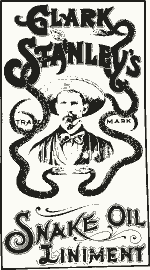
Often, this is what we think of when we talk about “snake oil salesmen.”  The yarb Doctor basically dealt in herbal formulas for treating common ailments.  Some of these formulas became fairly well-known.  When a particular yarb Doctor’s formula reached a particular level of renown (and often even if it didn’t and an unscrupulous “doctor” was simply chasing a dollar) these medicines would become a famous “patent medicine.”   This is not to say that the yarb Doctor (variously known as an “herb doctor,” “rubbing doctor,” or “nature doctor”) was simply a quack making money off of ignorant mountain folk.  In most cases, these were locals with a knack for making formulas and medicines from the indigenous flora of the area, including roots, barks, flowers, and leaves.  Some of the mixtures are still in use today, albeit changed much from their original purpose.  Root beer is a prime example of what happens when you make a patent medicine out of sarsaparilla and sassafras roots and mix it with a little sugar and soda water.  Appalachian yarb Doctors had good reason to make medicines:  they lived in the pharmaceutical breadbasket of the country.  According to Dave Tabler’s Appalachian History blog:

“Big Pharma had not yet perfected the widespread manufacture of synthetic drugs in 1932. Instead, the industry relied on ‘western North Carolina, southwestern Virginia, eastern Kentucky, and eastern Tennessee [to] furnish 75% of the crude botanical drugs which the continent of North America supplies to the drug markets of the world,’ according to an article in Economic Geography that summer”

The remedies proffered by yarb Doctors were not limited only to plants and their components, but often included a few more unusual ingredients.   For example, dealing with a toothache was a common enough problem in the mountains, where access to regular dental care was limited or non-existent:

“There were many treatments for a toothache.  Some of the more common ones were holding tobacco smoke, a sip of red oak bark decoction, or whiskey in the mouth; chewing ragweed leaves; applying cinnamon or clove oil, camphor, or persimmon juice to the tooth and gum; placing a ball of cotton soaked in paregoric, camphor, turpentine, or kerosene on top of the tooth; and holding a bag of warm ashes or salt against the cheek.  If a large cavity was present, it was stuffed with soda, salt, cow manure, spider webs, aspirin, burned alum, dried and pulverized buckeye skin, or crushed puff-balls” (FMSA, p.107)

There are a number of remedies used by these mountain medicine men which are still in common practice.  Clove oil, for example, is still used to numb the pain of a toothache.  Some methods, though, such as packing a cavity with cow dung, seem to have fallen by the wayside (I’ll not say whether I think that a good or bad thing, though I’m less than eager to put cow dung in my own mouth if I’m being entirely honest).

Other Aspects of Mountain Magic
There are, of course, many areas of mountain magic which don’t fall neatly into the three categories I’ve laid out here.  yarb Doctors and Granny women had much in common and there is a great deal of crossover in their particular lines of work.  Likewise, one who could dowse for water could usually also perform some other occult action, such as simple curing.  I have an in-law whose great-grandfather (the seventh son of a seventh son, no less) could dowse and “buy” warts off of people in order to effect a cure, for example.

Other aspects of mountain magic have already been touched on in this blog.  Some of the areas we’ve covered here which have a huge place in the folk magical practices of Appalachian peoples include:

One of the biggest areas I’ve not yet covered in detail is the Appalachian preoccupation with death, dying, corpses, and graveyards.  Edain McCoy’s In a Graveyard at Midnight includes a great deal of this lore in her chapter on “Death, Dying, and ‘Haints,’” which focuses mostly on the rituals surrounding death and burial as well as protection from the dead.  At some point, I’ll be doing a bit more on this topic, but for now I think the most important thing to note is that death and birth were—and are—the two most important events in a human life, and the mountain folk treated them with respect, awe, and not a little fear.

A final area of interest for mountain dwellers where the occult was concerned had to do with divining the future.  Rather than foreseeing events having to do with money or fame or anything like that, almost all Appalachian divinations performed in the home had to do with love.  This is, again, a topic I’ll be delving into with more depth at another time.  But often the “games” played by young girls in the mountains revolved almost entirely around divining the name, appearance, or attributes of a future husband.  And there are also plenty of tales which deal with the terrible consequences of treating these sorts of divinations lightly (such as the story of the “dumb supper” which eventually leads to a young girl’s brutal murder).  Suffice to say, Appalachian folk know that life has its dark side, and they aren’t afraid to talk about it.

That’s it for mountain magic this week.  I hope this has been a useful introduction.  This, like many of the other topics here, only scratches the surface, and I hope to return and look at Granny women, yarb Doctors, dowsers, power doctors, signs and omens, death lore, and just about everything in more depth at a later date.  But for now, I’ll wish you a happy weekend.
Thanks for reading!

-Cory

Blog Post 59 – Appalachian Mountain Magic, Part II

Today, I’m continuing the look at Appalachian mountain magic by focusing on a few of the specific “jobs” performed by mountain magicians.

Grannys, Dowsers, and Yarb Doctors

In general, the current incarnation of Appalachian magic is broken into a few categories.  Mountain witches may do only one “magical” thing all their lives, or they may perform a broad array of tasks for their communities, some magical and some not.  Often, the word “witch” never enters the picture or has a negative connotation (with one very key exception, explained below).  But the basic functions of a mountain magician can be broken down into a set of roles, as follows.

Granny Women
This is probably the best known and most ambiguously defined magical “job” in the mountains.  Granny women filled several roles in the community:

  • They acted as healers in communities where trained doctors were scarce, nonexistent, or deeply distrusted.
  • They assisted doctors when professional medicine was required, and often during childbirth.
  • They acted as midwives and postpartum caretakers for new babies and mothers.
  • They might be called upon to perform blessings for livestock or land before planting, owing to their roles as birth-helpers (thus helping the earth and one’s livestock birth the food one would eat for the coming year).
  • In some cases, they might also perform basic divinations, like determining the sex of a baby by dangling a wedding ring over the woman’s palm or belly.

Often the work done by these women was broader in scope than mere medicine.  It took into account a patient’s whole state, including spiritual or psychological.  Sometimes the work done by Grannies baffled the doctors performing the births, though they obviously were a great comfort to the mothers:

“Granny-women might perform a number of rituals which doctors found silly and irrational. Some were designed to give the mother psychological, if not physical, relief from her pain. She might give the woman her husband’s hat to hold during the ordeal, thus bringing him symbolically into the delivery room. If the labor were particularly severe, she would place an axe or knife under the bed to “cut” the pain in two. Sometimes, weather permitting, she would throw open every door and window in the house, in a symbolic representation of opening the birth canal” (from “In Defense of Granny Women,” by Janet Allured)

The term “Granny women” isn’t exactly accurate, either.  Many women were not particularly old when they learned about midwifery from their own female relatives, and even some men were known to assist during childbirth.  While much of the training to become a Granny was on-the-job, there were surprisingly sophisticated teaching materials as well:

“To train them [potential midwives], we had a very large wooden box.  At the bottom and on the top, there was a simulated abdomen and perineum—just like the mother—so we could actually teach them the mechanism of labor, and so we could teach them what was going on inside” (Foxfire 2, p.277)

Payment for a Granny woman’s services varied, often depending on the economic state of those she helped (which was usually fairly poor).  A passage from Folk Medicine in Southern Appalachia, by Anthony Cavender, illustrates the point:

“A typical fee charged by a physician in Kentucky for delivering a baby in the latter part of the nineteenth century was about $10, a substantial sum for an average farming family.  Physicians were often paid in commodities, such as corn, timber, pigs, cows, and corn mash whiskey, or labor in kind.  Some granny women charged a modest fee of a dollar or two or its equivalent in materials, but many did not” (FMSA, p.129)

These women served a vital role in their communities, and while some of them were labeled as “witches,” they seldom endured physical persecution as they were far too valuable.

Dowsers
The exception to the rule of bad “witches” were the dowsers, often called “water witches.”  These were people—most often men, though women were certainly known to perform water witching as well—who could locate underground streams through the use of various magical techniques.  The most common method was to use a forked branch cut from a witch hazel tree (some sources list other trees, like willow) and to walk slowly along a piece of property until the rod reacted by bobbing up and down or giving some other sign.  Despite being called “water witches,” there were seldom any negative connotations to the profession, as it was an absolutely necessary service in a time when digging wells was costly and difficult business.  Vance Randolph describes them thusly:

“Nearly all of the old settlers…believe that certain persons can locate underground streams by ‘cunjurin’ round’ with forked sticks. These characters are called water witches or witch wigglers, and the forked switches they carry are known as witch sticks. Despite this sinister terminology, the waterfinder has no dealings with the Devil, is not regarded as dangerous by his neighbors, and has  nothing to do with witchcraft proper…Nearly all of the really old wells…were located by witch wigglers. Even today there are many substantial farmers who would never think of drilling a well without getting one of these fellows to witch the land” (OM&F, p.82)

In addition to locating underground water currents, dowsers could also locate other materials, like oil or precious metals.  Some practiced what is called “map dowsing,” where a map would be laid out in front of the dowser and he or she would use a pendulum to figure out where to start the search for whatever material was being sought.  This practice is very well accepted in the mountains and throughout the rural parts of North America.  In Signs, Cures, & Witchery, Gerald C. Milnes  examines the widespread nature of dowsing, as well as some of its history:

“Water witching (rhabdomancy) is very common in West Virginia.  According to a study done about fifty years ago, at that time there were twenty-five thousand practicing water witches in this country.  The actual practice of divining with a forked stick, as we know it, began in the late fifteenth or early sixteenth century in Germany.  Martin Luther believed the practice violated the first commandment.  Through the ages it has been roundly denounced as the devil’s work and praised as a remarkable aid to a basic necessity of rural life—finding water.  It is often categorized with such rural customs as planting by the signs” (SC&W, p.133)

There have been many efforts to scientifically prove or disprove dowsing, all with varying degrees of success and failure.  It seems that there is something to it, but that it may have a great deal more to do with the person doing the dowsing than the actual practice itself, at least as far as science is concerned.  However, from my personal point of view, the practice of water witching is akin to pendulum divination of any kind and something worth adding to a witch’s repertoire.  In one of Peter Paddon’s Crooked Path episodes, for example, he talks about ley lines and the currents of magical energy flowing through the world.  Dowsing is a great way to help detect those currents and to tap into and work with them to improve one’s witchcraft (again, in my opinion).

Whew!  This is already getting to be a long post, so I’m going to stop here for today and save the last little bit of this topic for tomorrow.  Please feel free to add any comments or questions, and if you have any family stories about Grannies or dowsers, I’d love to hear them!

As always, thanks for reading!

-Cory

Blog Post 58 – Appalachian Mountain Magic, Part I

Today, I thought I’d start to tackle in brief a subject which deserves its own book.  Or several books.  Perhaps even a library.  I’d like to do an overview of the loose collection of occult, healing, and divinatory practices practiced by the mountain folk found in the Appalachian range.  This is not going to be a comprehensive post, just a general snapshot of the different components of mountain magic, so if I don’t cover something in detail I will likely be coming back to it again eventually.  First, though, let’s start with a little bit about where this system comes from.

History
When European settlers moved into these mountains, they found that the lore and landscape they suddenly occupied was not entirely different than what they’d left behind in Europe.  Many of the Native American tribes like the Cherokee and Shawnee already associated these ancient mountains with magic and otherworldly power.  There were even beings which very much resembled fairies living in those ridges and valleys, as illustrated in the Cherokee tale of the “Forever Boy”:

“As he looked behind him, there they were, all the Little People. And they were smiling at him and laughing and running to hug him. And they said, ‘Forever Boy you do not have to grow up. You can stay with us forever. You can come and be one of us and you will never have to grow up… Forever Boy thought about it for a long time. But that is what he decided he needed to do, and he went with the Little People” (Native American Lore Index – Legends of the Cherokee).

The presence of fairies in the mountains would have been familiar to groups like the Germans and the Scots-Irish, the latter of whom had their own tradition of “fairy doctoring” which would eventually shape a portion of Appalachian magical practice.

Germans also brought in astrology, particularly astrology associated with things like planting, healing, and weather.  Despite a strongly Christian background (and strongly Protestant and Calvinist at that), most settlers accepted a certain amount of magical living in the mountains.  As George Milnes says in his Signs, Cures, & Witchery:

“Among the early German settlers in West Virginia, religion was thoroughly mixed with not only astrology but also esoteric curing practices tied to cosmic activity.  Folk curing bridged a gap between the religious and the secular mind-set.  And forms of white magic were not disdained; in fact, they were practiced by the early German clergy” (SC&W, p. 31).

The Scots and Scots-Irish who settled in the mountains were often displaced due to land struggles back home.  After long struggles with England for an independence which clearly would never be theirs, clan leaders traveled across the Atlantic and began building new territories.  The mountains running between Georgia and West Virginia were a perfect fit for them, according to Edain McCoy:

“The Scots found the southern Appalachians very remote, like their Highland home, a place where they could resume their former lifestyle and live by their ancient values without interference from the sassenach, or outsiders.  So isolated were they that many of the late medieval speech patterns and terms remained intact in the region until well into [the 20th] century” (In a Graveyard at Midnight, p. 6).

Once these various elements were situated in the mountains together, they began to merge and blend, mixing Native and European sources to create something else.  The introduction of hoodoo elements eventually changed the mixture again, though much later, and there are still old-timers in the hills practicing many of these techniques even now, though it is unlikely the entire system will remain intact for more than a generation or two as many mountain folk are being forced by poverty or circumstance to give up their highland homes.  Still, for the moment, there are lots of people trying to get Appalachian folkways recorded and preserved before they perish from the earth (this blog being one very infinitesimal drop in the bucket as far as that goes).   So for that, at least, we can be thankful.

Okay, I’ll stop here for today.  Tomorrow, I’ll be picking up with a little bit on each of the current components of Appalachian magical practice.  Until then…

Thanks for reading!

-Cory

Blog Post 54 – The Devil’s Nine Questions

Today’s post is going to focus on one very specific set of riddles:  The Devil’s Nine Questions.  This is a series of riddles which has been set down in the form of a folk song, and which has come over from English traditional music by way of the Appalachians and mid-Atlantic colonies.  The theme of the piece involves the Devil asking a series of nine riddles, which the song’s protagonist (“the weaver’s bonny”) must solve or be taken off to Hell.  There are numerous variants on this motif, and on this specific song.  It is recorded as one of the famous Child Ballads (#1), and you can hear a version of it here.

The version I’m posting here is not necessarily the most “authentic” or “original” version (as this song may have grown out of Elizabethan folk music and is rather hard to pin down as far as origins go).  But it is a version that I think bears examination by the inquisitive witch.

THE DEVIL’S NINE QUESTIONS

If you don’t answer my questions nine
Sing ninety-nine and ninety,
I’ll take you off to hell alive,
And you are the weaver’s bonny.

What is whiter than milk?
Sing ninety-nine and ninety;
What is softer than silk?
Say you’re the weaver’s bonny.”

Snow is whiter than milk,
Sing ninety-nine and ninety;
Down is softer than silk,
And I’m the weaver’s bonny.”

What is louder than a horn?
Sing ninety-nine and ninety;
What is sharper than a thorn?
Sing I am the weaver’s bonny.

Thunder’s louder than a horn,
Sing ninety-nine and ninety ;
Death is sharper than a thorn,
Sing I’m the weaver’s bonny.

What is higher than a tree?
Sing ninety-nine and ninety;
What is deeper than the sea?
Sing I’m the weaver’s bonny.

Heaven’s higher than a tree,
Sing ninety-nine and ninety;
And hell is deeper than the sea,
Sing I’m the weaver’s bonny.

What is innocenter than a lamb?
Sing ninety-nine and ninety;
What is worse than womankind?
Say I’m the weaver’s bonny.

A babe is innocenter than a lamb,
Sing ninety-nine and ninety ;
The devil’s worse than womankind,
Sing I’m the weaver’s bonny.”

You have answered me questions nine,
Sing ninety-nine and ninety;
You are God’s, you’re not my own,
And you’re the weaver’s bonny.”

From Bronson, Singing Traditions of Child’s Popular Ballads
Collected Mrs. Rill Martin, Virginia, 1922

Looking at this from an occult perspective, I see several things which stand out.  For instance:

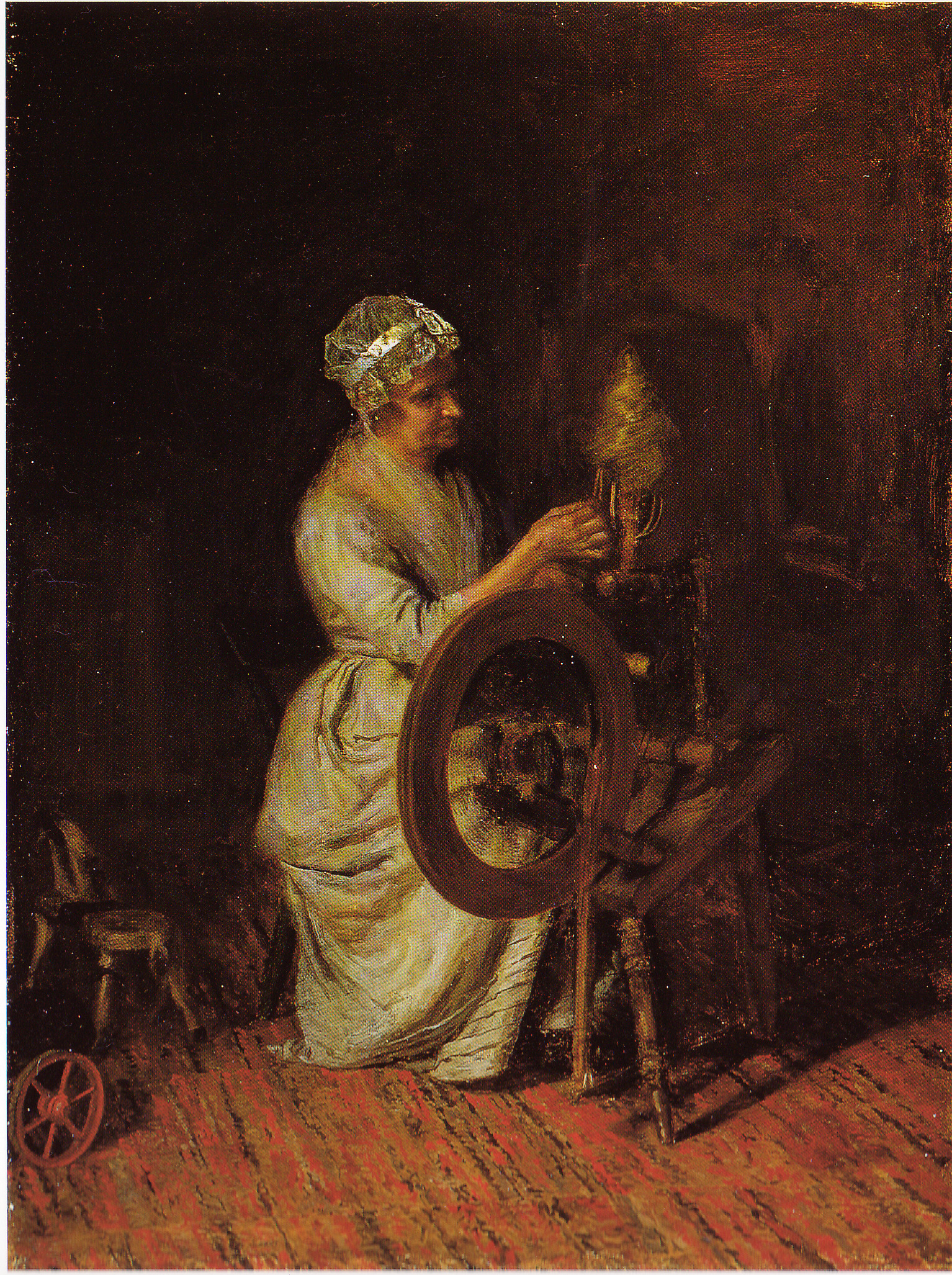
  • The repetition about being “the weaver’s bonny,” which in my opinion may relate to being one of those who can change (or at least manipulate) Fate, the great weaver.
  • The efforts of the Devil to claim the “bonny” for his own reminds me a bit of the practice of initiation, which I covered recently (though in this case the person responding remains unmoved by the Devil’s efforts)
  • There’s an interesting bit of business in the part about trees, seas, Heaven, and Hell.  It’s almost a “Land, Sea, and Sky” image, but it also seems to be referencing the celestial, earthly, and underworldly realms.  Those are the realms a witch must go between, so I like to think there’s something to that part.

Of course, there are lots of other images in here which come out of Christian folklore, such as innocent lambs, the wickedness of womankind, etc.  In some of the variants, these change a bit (though usually the reference to Eve’s “original sin” remains in some form).  Some of the other variations include naming Love as softer than silk, rather than Down, and making Death “colder than the clay” instead of “sharper than the thorn.”   What I love about all of this imagery is that it relates one thing to another, connecting the senses to specific images in a very evocative way.  Associating Death with Thorns makes me think of going into the Underworld via the Hedge; Milk and Snow make me think of Mother images, like Mother Holle, who shook her downy blankets to stir up snow on earth; and thinking of Thunder as a Horn, summoning me out into a wild storm…well, let’s just say it makes my pointy hat dance on my head.

With songs like this, it’s often hard to know just what changed and when, and what the original meaning of certain parts are.  What I like about it, though, is the folkloric elements of being able to outwit the Devil and get one’s way, bending Fate to one’s will.  I would think this kind of a tune might be an excellent song for singing when gathering together with other witches, as a sort of  call-and-response as each witch is welcomed among the company (solving a riddle could serve as a “password” in effect).  Or, it could just be a good fun song to sing one night while passing a bottle around and telling jokes, stories, and riddles.  But what do you think?  Do you see anything witchy I missed?  Or do you think that dwelling on a song like this is wasting valuable time that could be devoted to a new root work herb of the week?  Is it all just a big stretch for something purely designed for entertainment?  Leave a comment and let me know!

Thanks for reading!

-Cory

Blog Post 49 – Snakes

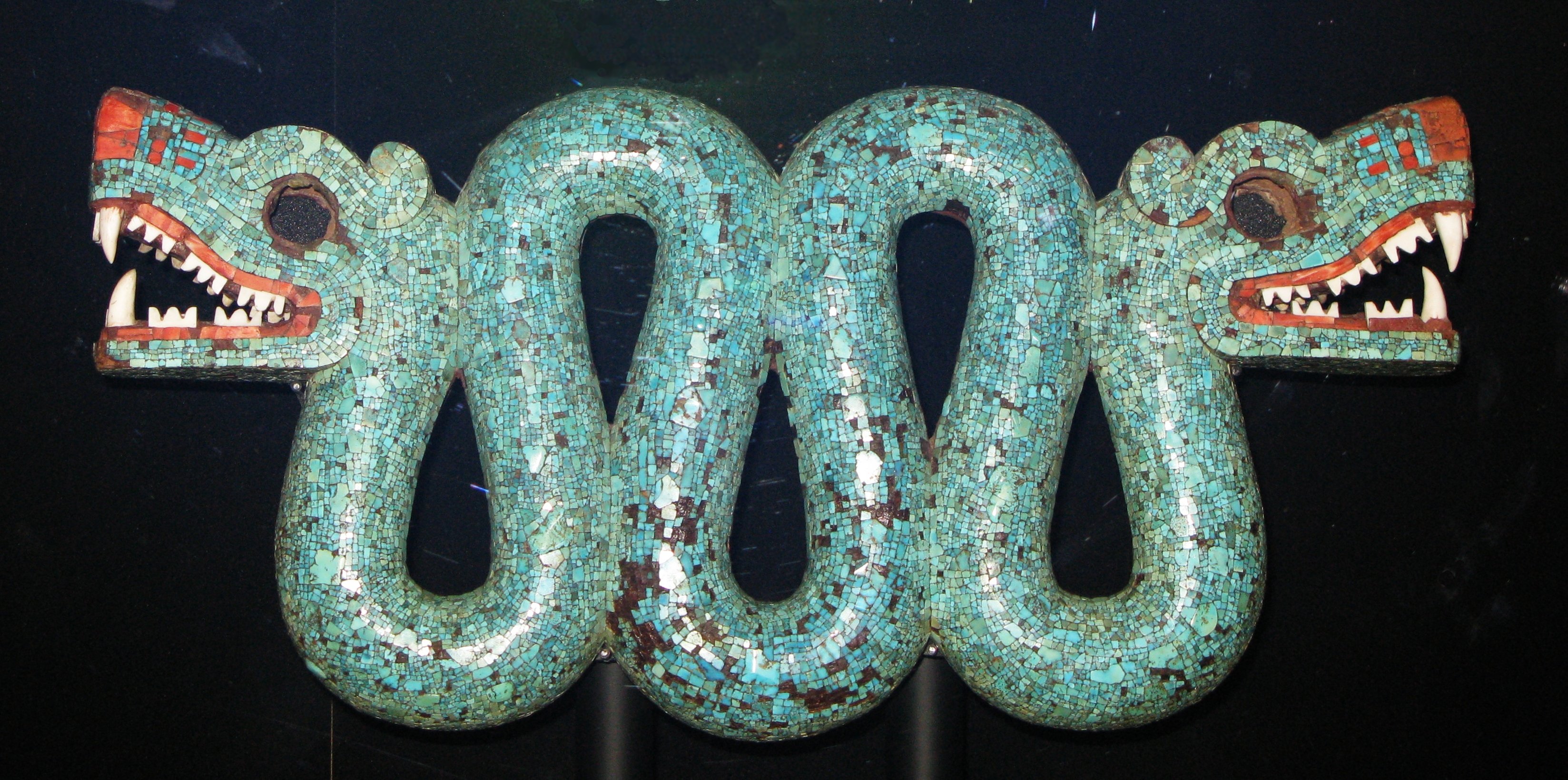
I hope you’ve got your good boots on today, because we’re getting into the tall grass and looking for snakes!  Snakes have had a place in magical lore for a very long time.  In Ancient Greece, Artemis and Apollo were sometimes associated with snakes.  Apollo was famous for slaying the great serpent Python (see Ovid’s Metamorphoses, Book I), and his priestesses were ever afterwards known as the Pythia.  Artemis, offended by King Admetus’s oversight of an offering due her, filled his bed with serpents.  In Vodoun tradition, the Creator figure is a great serpent, Damballah.  Stories of creation and snakes seem to go hand in hand across many cultures.

In the New World, snakes have a mixed significance.  On the one hand, the biblical story of Eden in Genesis lays a lot of the blame for humanity’s disobedience on the serpent in the garden.  At the same time, humanity would be without knowledge without the snake, so there’s more than one way to look at the story.  However, if you ask many Christians today who the snake was, they will answer “the Devil” or “Satan,” so for all intents and purposes, mainstream culture takes a fairly negative view of these slithering creatures.  That does not mean, however, that all snakes are viewed as little devils, and many folks actually like them.  Farmers like snakes because they keep rodent populations down in barns and fields, for example.

In magic, snakes are one of the most potent animals you can use.  There are several different magical traditions surrounding snakes or their various parts and pieces.  Catherine Yronwode notes that “the blood, eggs, heads, flesh, sheds, and skins of all species of snakes are used in jinxing and crossing” and the manufacture of various hoodoo mixtures, like Goofer Dust or Live Things In You poisons (HHRM p. 186).  She also mentions that the sheds can be used to calm one’s mind.  Other hoodoo-related uses of snake sheds and bones include situations where cunning might be needed, or for luck and power.  In this last case, rattlesnake bones and rattles are often used.  Musicians who wish to play well and win contests often keep a rattle with their instruments, according to Yronwode.

In the case of the Live Things In You curse, powdered snake parts—usually eggs or sheds—are mixed into a victim’s food.  The target then feels as though the creature is wriggling around in his body, causing him pain and distress, as well as the feeling that he might be going crazy.  You can read more about this kind of baleful working in Superstitions & Folklore of the South, by Charles W. Chestnutt, at the University of Virginia website.

Vance Randolph recorded several bits of magical lore concerning snakes in his Ozark Magic & Folklore:

  • To cause a rain, a snake could be hung belly-up on a fence (p. 30)
  • Burning shoes in the fireplace will drive away snakes (p. 68)
  • Snake-skin soaked in vinegar is applied to boils to reduce them (p. 101)
  • Snake-bites treated by doctors will always ache on the anniversary of the bite (p. 159)

Randolph also mentions the snake-handling “Holy Roller” churches sometimes found in rural areas of the South.  These churches base their practice on an admonition in Mark 16: 17-18:   “And these signs shall follow them that believe; In my name shall they cast out devils; they shall speak with new tongues; They shall take up serpents; and if they drink any deadly thing, it shall not hurt them; they shall lay hands on the sick, and they shall recover” (KJV).

A final tale from the Ozarks concerns a family that had a secret method of dealing with snakes:

“Miss Jewell Perriman, of Jenkins, Missouri, tells me that her Uncle Bill had a secret method of curing snake bite, and people came from miles around for treatment. Uncle Bill belonged to a family of which it was said ‘them folks don’t kill snakes.’ This is very unusual in the Ozarks, where most people do kill every snake they see. When a large copperhead was found in the Perriman house, Uncle Bill caught it with the tongs, carried it out into the orchard, and released it unharmed. His cure for snake bite was known in the family for at least a hundred years…The secret is lost now, for Uncle Bill is long dead, and his son died suddenly without issue. All that Miss Perriman knows of the snake-bite cure is that the snake must not be injured, and that Uncle Bill had a strip of ancient buckskin in which he tied certain knots as part of the treatment. She showed me the buckskin. It was about half an inch wide, perhaps twelve inches long, carefully rounded at the ends. Three knots had been tied in it, one in the middle and one at either end” (Randolph, Ozark Magic & Folklore, p. 159).

Wouldn’t you love to know what that secret was?  I sure would!

I suspect that snakes will always have a place in magical lore.  They have the ability to slide between upper and lower worlds easily.  Some can kill with a bite, but also provide useful services to us in many ways.  They seem to show up everywhere in the world (except Ireland…but that’s a completely different subject) and they always connect to something primal in us: fear, knowledge and gnosis, or even sexuality.  I’ll be keeping my good boots on when dealing with them, but I definitely have a particular love for these critters.

Thanks for reading!

-Cory

Blog Post 47 – Fairy Tale Resources

For this week’s final post, I’m giving you a list of books, stories, websites, and other resources which you can use to dig into folklore and fairy tale magic a bit further.  It’s not comprehensive, but just a few things to scout for at libraries and book stores, and which have something to say about magic without being tucked into the “New Age” section.

Books

Haints, Witches, & Boogers, by Charles E. Price – This book is chock-full of neat ghost stories, plus a few witch tales and some bits about magic in the Appalachian region.  It definitely focuses more on the paranormal than the purely “fairy” aspects of things, but it also gives you locations for each of the stories, so you’d be able to visit them and connect the tale to a particular place, which I like.

Fairy & Folk Tales of the Irish Peasantry, by W.B. Yeats – So why am I including this book on a blog about American fairy tales?  Well, if you look at these stories, and then look at fairy tales from the Appalachians (or anyplace where Irish immigrants settled), you’re going to see uncanny similarities.  This book provides a lot of good stories about “fairy doctoring,” too, a practice which resembles the root work, shamanism, and witch doctoring found in North America.

The Granny Curse and Other Ghosts and Legends of East Tennessee, by Randy Russell – This is another one that is focused mostly on ghosts, but also has some really wonderful stories about magical beings, too.  “Greasy Witches” is especially worth noting, because it is one of those stories that parallels an Irish tale found in the Yeats collection I previously mentioned.

Silver Bullet, by Hubert J. Davis – I discussed this book in Tuesday’s post, but I will reiterate that this is a book worth getting if you can.  The stories are all sourced to their original tellers (mostly American sources east of the Mississippi) and provide a good overview of witchcraft in America (non-religious witchcraft, that is).  Definitely worth scouting for at used bookstores.

Favorite Folktales from Around the World, by Jane Yolen – Again, not one specifically devoted to America, though there are several Native American stories here.  What I like is that this book is a lot like North America in that it takes many disparate cultures and mixes them all together by common thread.  If you’re looking for stories about magic, check out the sections “Not Quite Human,” “Shape Shifters,” and “Fooling the Devil.”  They all have lots to say about witchcraft, without ever actually having to tell you that’s what they’re about.

Grimm’s Fairy Tales, by Jacob and Wilhelm Grimm – If you like fairy tales, you probably already have this.  If you don’t, you should, in my opinion.  Just try to find an unabridged copy, as there have been numerous versions which “clean up” some of the scarier bits of the stories (where the witchy stuff lies, usually).

Spooky America Series,  by S.E. Schlosser – This may be one of my favorite book series ever.  S. E. Schlosser also runs a great website devoted to American folklore which will give you a good idea what her books are like.  There are individual books for multiple American regions, including Spooky South, Spooky New England, and Spooky Southwest, as well as titles on individual states like Spooky New York or Spooky California.  I love this work, and while it is somewhat more focused on ghost stories, there are plenty of tales about magic, witches, and mystical beings to be found.  I cannot recommend this series highly enough.

I’m not mentioning Vance Randolph’s Ozark Magic & Folklore in detail here because I think I’ve said a lot about it already.  But it is also worth reading for witchy folklore (albeit in less of a “story” format).

Websites

Sur la Lune – This is one of my favorite sites for fairy tales.  It contains annotated versions of classics like Snow White and Red Riding Hood, with references to variant versions and symbolism interpretation.  It doesn’t have just tons of stories, but there are at least a couple dozen of the best, and they’re wonderful.  Plus, the art on the site is gorgeous.

Nursery Rhymes:  Lyrics, Origins, and History – I referenced this site a few times in the post on Mother Goose, and it’s certainly a site worth checking out.  It has little historical or folkloric notes on each of the rhymes it presents, as well as the words to the rhyme and some accompanying illustration.

Faerie Magick – This site, hosted by Fiona Broome, a paranormal researcher and enthusiast of the unseen, has a lot of interesting information on different kinds of fairies.  Most of what she writes, she relates back to folklore, which is a big plus for me.

That’s it for this week!  I hope you’ve enjoyed this little foray in to folklore.  I’ll probably come back to this topic eventually, so if you have any questions or topics you’d like to know more about, please leave a comment or email us and I’ll be happy to try and work them in next time around.

Thanks for reading!

-Cory