Blog Post 136 – Papisticall Charmes (More Catholic-flavored Magic)

Howdy-do!

Today I’m going to be following along the course of my previous entries on brujeria/curanderismo and Catholic folk magic in general by looking at some specific elements, tools, charms, and spells from within those traditions. I should go ahead and note that while Psalm magic is found within all of these streams, I’m not covering it here because it is a huge topic in and of itself, and one which I’ve already explored a bit in posts 115 and 116. I’ll also only briefly touch on any Saint-specific magic, because that could be its own topic, too (and hopefully will be at some point).

That being said, I would like to point out the presence of a number of folk saints in pseudo-Catholic magical practices. These are not officially recognized saints (even Mother Theresa and Pope John Paul II have not been fully canonized yet), but rather people reputed to be intensely holy and capable of performing miraculous feats. They can also be spirits with special powers and areas of influence who do not have a human counterpart, but rather seem to be almost archetypical entities. Some of the most widely petitioned and patronized of these folk saints include:

  • Don Pedrito Jaramillo – healing
  • Teresa Urrea (“Teresita”) – healing
  • El Nino Fidencio – healing & spiritual purification
  • Santa Muerte (“La Santisima,” “La Huesada”) – protection, prosperity, family life, love, and a number of other powers
  • Saint Michael (Archangel) – protection & spiritual warfare
  • Saint Raphael (Archangel) – safe travels, spiritual medicine, & exorcism of evil spirits

(for more information on these folk saints, see Curandero by Cheo Torres and Magical Powers of the Saints by Ray T. Malbrough)

Many people simply burn candles with images of these saints emblazoned on the glass or with picture prayer cards placed nearby. Small votive offerings might be left out for them, including small amounts of liquor, coffee, or tobacco, or specific items might be given to specific saints. For example, Saint Michael’s altar would be decorated by war memorabilia, such as medals, maps, or pictures of soldiers. More explicitly spell-like operations can also be performed, such as this method for creating a powerful “fortune magnet”:

Get a candle or statue of Santa Muerte and put her on an altar by herself (she does not like to share altar space, though she has been known to tolerate St. Michael at times). Place a lodestone beside her, and a glass of water on the other side of her. Put a basket of brightly colored fruit (lemons and oranges, for example) in front of her, and place yellow flowers upon her altar. Light a charcoal in a brazier and burn a holy incense (such as Gloria Incense or even just some frankincense). Add a pinch of soil from your homeland (or even hometown) to the burning coal, and say:

Towards you I inclilne, Holy Lady
I bring you water and yellow flowers,
Incense and the dust from which I am made.
Please make the world to twist and turn,
Allowing luck and fortune to cross my path,
Cutting the bitter ties that bind me.
In your honor I shall please you with scented offerings,
I shall plant trees in forests,
I shall give you fruits
In return for your goodwill towards me.

Allow the candle to burn for at least an hour. If possible, allow the candle to burn out on its own. Let the stone sit overnight, rising before dawn and wrapping it in a dark cloth. Keep this with you at all times, and do not unwrap it in direct sunlight. [Adapted from a spell in an anonymously authored chapbook called The Magical Powers of the Holy Death picked up in a botanica]

How’s that for not dwelling on Saint magic? Moving on, then, let’s look at some other spells from other sources. This one, which I’m transcribing from The Red Church and which comes from John G. Hohman’s Long Lost Friend, is not explicitly Catholic, but the presence of latinate words and Christian symbols certainly allows it to fit right in with the whole “magical Catholic” idea:

A Written Charm of Exorcism

Below is a charm paper entitled ‘Against Evil Spirits and Witchcrafts.’ This charm was given to me by ‘Daisy.’ With the exception of a few minor details it is exactly like the one that appears in Hohman’s The Long Lost Friend

I.
N. I. R.
I.
Sanctus.   Spiritus.
I.
N. I. R.
I.

All this be guarded, here in time, and there in eternity. Amen. +++ (TRC, p. 273-4)

Chris Bilardi goes on to describe several ways in which you might deploy this charm, including folding it into a tight triangle and slipping it into the frames and jambs of doors and windows in your home (but you must use no metal to affix it). He also mentions putting it into a wallet or binding it with a red string if it is intended to be carried.

Another home protection and blessing charm comes out of ancient Jewish practice, too. Joshua Trachtenberg’s quintessential text on the topic, Jewish Magic & Superstition, describes an excellent blessing charm which consists very simply of bread and salt either ingested to defeat evil spirits or brought into a new home “as a symbolic of the hope that food may never be lacking there” (JM&S p.161). In my own family, we called this the ‘Polish House Blessing’ and included a penny as well (we were Polish through my grandfather’s family). It’s something I still use when someone mooves into a new house in order to bless their new home. I simply put the salt (kosher, please), a piece of bread, and a penny in a small jar (like a baby food jar) and wrap the lid in pretty paper, often with a Psalm written on the underside of it to provide protection and domestic bliss (Psalms 46 and 61 are both good for this).

One of my personal favorite books of the Bible is Jonah, which is also one of the shortest books in the whole book. It’s read every year on Yom Kippur in synagogues, and it has a bizarre blend of folklore, humor, and philosophy in it that I just find delightful. For a magical practitioner, it can also be a very good source of magical phrases. One very simple spell which Draja Mickaharic lists in his Magical Spells of the Minor Prophets is for abating someone’s anger:

To Turn Away Another Person’s Anger

Required: Only the verse

Spell: In the presence of an angry person, say the verse to yourself three times.

Verse: Jonah 4:4 (“Then said the lord, Does thou well to be angry?”)

NOTE: This verse should be memorized and used for this purpose whenever desired (MSMP, p. 52-3)

There are a number of great non-Psalm verses that can be used for various magical purposes. Most of these are simply spoken, though sometimes they can be written down and carried in pockets, purses, etc. for magical aid. A list (hardly exhaustive) of such verses:

  • Amos 2:13 – Against an Opressor
  • Obadiah 1:6 – To Find that Which Has Been Lost
  • Habakkuk 2:2-3 – For Aid in Automatic Writing
  • Zechariah 4:13-14 – To Learn Who Your Teacher or Guide Is
  • Ezekiel 16:6 – The Blood Verse (for stopping small wounds)
  • Genesis 49:18 – For Protection at Night
  • Deuteronomy 18:13 – Against Wild Beasts
  • Deuteronomy 33:3-4 – For Intelligence

(The above primarily from Magical Spells of the Minor Prophets and Jewish Magic & Supersition)

I’m sure with enough effort, nearly any book of the Bible will yield some magical content, though I’ve not tested that theory.

Finally, I couldn’t reisist including some of the “popish and magicall cures” found in Reginald Scot’s Discoverie of Witchcraft. The following are cures “For direct cure to such as are bewitched in the privie members” (i.e. to deal with impotence, especially impotence caused by witchcraft):

For direct cure to such as are bewitched in the privie members, the first and speciall is confession: then follow in a row, holie water, and those ceremoniall trumperies, Ave Maries, and all maner of crossings; which are all said to be wholesome, except the witchcraft be perpetuall, and in that case the wife maie have a divorse of course.

  • Item, the eating of a haggister or pie helpeth one bewitched in that member.
  • Item, the smoke of the tooth of a dead man.
  • Item, to annoint a mans bodie over with the gall of a crow.
  • Item, to fill a quill with quicke silver, and laie the same under the cushine, where such a one sitteth, or else to put it under the threshold of the doore of the house or chamber where he dwelleth.
  • Item, to spet into your owne bosome, if you be so bewitched, is verie good.
  • Item, to pisse through a wedding ring. If you would know who is hurt in his privities by witchcraft; and who otherwise is therein diseased,Hostiensis answereth: but so, as I am ashamed to english it: and therefore have here set down his experiment in Latine; Quando virga nullatenùs movetur, & nunquam potuit cognoscere; hoc est signum frigiditatis: sed quando movetur & erigitur, perficere autem non potest, est signum maleficii. [Dialect from original text preserved here]

I hope this post has been entertaining and interesting for you. Please also check out the recent posts on curanderismo and Catholic folk magic, as well as our most recent episode on biblical sorcery.

I don’t know if I’ll get another post up before the Salem trip, so if I don’t, I will hope to see some of you there. And the rest of you I’ll look forward to speaking to when I get back!
Thanks for reading!

-Cory
Podcast 32 – Voodoo Hoodoo with Denise Alvarado

-SHOWNOTES FOR EPISODE 32-

Summary
This episode looks at the particular practices of Voodoo and Hoodoo around New Orleans. We have an interview with spellbook author Denise Alvarado, several excerpts from folkloric and magical texts, and even some music.

Play:

Download:  New World Witchery – Episode 32

-Sources-
First, my apologies for the sudden cut-off in the interview. That was a technical difficulty on my end, but we still got almost a full 30 minutes of discussion with a stellar guest, so enjoy!

Books
Mules & Men, by Zora Neale Hurston
Voodoo in New Orleans, by Robert Tallant
Black & White Magic of Marie Laveau, by NDP Bivens
Music
All songs were taken from the Florida Folklife collection, and are available here: http://www.floridamemory.com/collections/folklife
The songs were “Crow Dance” and “Oh Mr. Brown,” both sung by Zora Neale Hurston, and “Sissy in the Barn,” sung by the children of Carver Elementary School in 1954.

Guest & Announcements
Denise Alvarado can be found at her website, Mystic Voodoo.

Please also check out her books, The Voodoo Hoodoo Spellbook (soon to be released in an expanded edition by Weiser Books), Voodoo Dolls in Magic & Ritual, and The Voodoo Doll Spellbook. You should also subscribe to her journal, Hoodoo & Conjure Quarterly.

Don’t forget about the Second Annual Pagan Podkin Supermoot in Salem, MA, on the weekend of Sept. 17th, 2011.  Find out more details about the event and opportunities to come meet us in person at the PPSM2 Website. [Laine respectfully asks that she not be in any photographs, due to privacy concerns—Cory will be happy to wear a wig and pretend to be Laine, however].

I’ll also be at the West KY Hoodoo Rootworker Heritage Festival (event site) teaching a course on “Biblical Magic & Sorcery.”

Promos & Music
Title music:  “Homebound,” by Jag, from Cypress Grove Blues.  From Magnatune.
Promo 1 – Conjure Doctor Magical Supplies
Promo 2 – Lakefront Pagan Voice
Promo 3 – Druidcast

Blog Post 130 – War Water

In my Spelled Out section of Podcast 30, I gave the recipe and basic uses of a conjure formula called War Water. For those who didn’t have a pen handy, I thought now would be a good time to provide a little of the provenance, process, and practice surrounding this mixture.

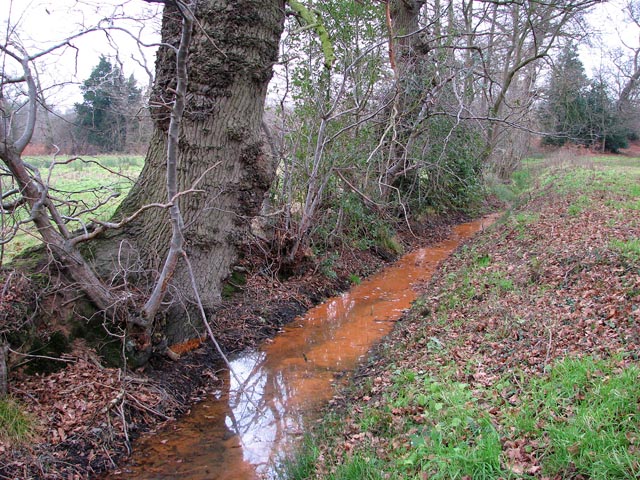
War Water, which is also commonly called Mars Water or Iron Water, is in its most essential form, simply water in which iron has been allowed to rust. The presence of iron in the water gives it a reddish-brown hue, looking a bit like blood even in some cases. Draja Mickaharic makes a good case for why iron’s presence in the water empowers it:

“Iron is the metal of the planet Mars, the planet astrologers credit with ruling warfare and combat, as well as sex. Used either for defense or attack, war water is a strong carrier of the negative emotional energy used in magical battles” (Century of Spells, p. 27).

Mickaharic also points out that the formula was originally used to treat anemia (an iron deficiency in the blood), though far better treatments are now available. Cat Yronwode notes on her site that the Martian association indicates that it is not originally an African recipe: “Since the Roman god Mars was the god of war and his symbolic metal was iron, it seems pretty clear that War Water is a European contribution to hoodoo” (“War Water” par. 1). Despite its origins, however, this particular magical mixture is firmly planted in hoodoo and conjure practice now.

So how does a person make War Water? Almost every source—except one—agree that the basic recipe involves putting cut iron of some type into a container, covering it with a bit of water, and letting it rust. There are plenty of variations, sometimes depending on the intent, and sometimes just depending on who’s telling you how to make it. Judika Illes breaks down the formula by intent:

Protective War Water

  • Iron nails (cut iron), ones that rust easily
  • Enough water to cover nails in a mason jar
  • Let rust for about 7-10 days (open periodically to allow oxidation)
  • Keep adding water as the rust builds
  • Strain and use as needed (but discard if bacteria form)

Malevolent War Water

  • Thunderstorm water in a jar
  • Rusty nails, sulfur, and urine

(Encylopedia of 5000 Spells, p. 1080)

This formulation is essentially the same as the one found in Draja Mickaharic’s Century of Spells, though Mickaharic’s version is a bit looser, calling for about 3/4 pound of cut iron nails in a 2 quart bottle. These are covered with tap water and allowed to rust. After the rust begins, more water is added, and the bottle is covered (though occasionally uncovered for rusting purposes).

The alternative recipe comes from the normally quite reputable Zora Neale Hurston’s “Hoodoo in America,” in which she describes War Water as “Oil of Tar in water (filtered)” (p. 412). Oil of Tar is essentially a thick distillate of creosote or burned pine resin—which is carcinogenic and dangerous. A reasonable substitution for Oil of Tar would be turpentine, another pine distillate with slightly less caustic properties. However, almost every formulary I found other than Hurston’s had separate distinctions for War Water and a formula called “Tar Water,” which is much more like Hurston’s recipe and which is used to remove psychic sludge from one’s life. I would then conclude that Hurston recorded the Tar Water recipe as a War Water recipe in error, or quite possibly an editor inserted this formula without knowing the difference (which commonly happened to Hurston’s work).

There are also additional ingredients that you can add to the water to help “flavor” it for your magical purposes. One of the most common additions is Spanish moss, a dense vegetal beard which covers trees in the Deep South. Once it begins to rot in the liquid, it turns the mixture black and gives it a decaying scent. Adding sulphur or gunpowder would also give it a powerfully aggressive and dangerous vibe. My teacher, Stephanie Palm, makes a formula that basically takes Mississippi River water and turns it into War Water with these sorts of additions in it, which she calls “Swamp Water.”

Once you have War Water, how do you use it? There are several methods for deploying this water, depending on just what your final intent might be. If you only intend to use the most basic rust-water formula for protective purposes, here are some ways you might apply it:

  • As an addition to a spiritual bath
  • As a wash for the outside of your home or business
  • As a sprinkle for any letters or papers you might be sending out to someone hostile to you (such as legal papers)

The most common use of War Water, however, is as a component of psychic warfare. Cat Yronwode says of it:

“To use it, you shake a bottle up and hurl it at the doorstep of your enemy, where it should break, leaving a rusty, dangerously sharp mess for him or her to step in. When i was a young woman coming up in the East Bay in the 1960s, War Water was used by fractious root workers to declare occult war on each other. Since these folks were already at odds to the extent that they could not simply walk into each other’s yards and smash the glass bottle on the doorstep, they would make “drive by” attacks, rumbling through the residential streets of Oakland in the midnight hour and tossing bottles of War Water into the yards of their enemies, like occult Molotov cocktails. Ah, those were the days …” (“War Water” par. 4).

In Jim Haskins’ Voodoo & Hoodoo, he says that to use War Water you should “obtain the nest of a dirt dauber, break it apart and mix it with graveyard dirt. Put the mixture in a bottle with War Water and shake it up. Smash it on the person’s walkway” (p. 130).  Hurston does not mention smashing the bottle, but she does call for sprinkling it in front of an enemy’s house. She also provides a secondary method which requires that you “take a fresh black hen’s egg, make a hole big enough to get the egg out and take the names, pepper sauce and mustard and fill the egg up and soak it in War Water for nine days and throw ito ver the house, and it will cross the house and they will have to move away” (“Hoodoo in America,” p. 375).

As a final note, if you are considering starting a psychic war, Draja Mickaharic makes a good case for having sturdy defenses in place before beginning any attack:

“If you are going to declare psychic war on someone you should mop your stairs, porch, doorway, and any outside surfaces of your home on which anything can be cast or thrown before you begin the war. This ensures that you will be protected when the other person’s inevitable counterattack comes. In most cases War Water will cause any spell which is placed on your doorstep to rebound instantly to the sender.” (Century of Spells, p. 28)

So that’s War Water. My own personal inclinations with this water would be to use a railroad spike, coffin nails, and urine in a jar for defensive and protective magic, while perhaps using coffin nails, goofer dust, red pepper, sulphur/gunpowder, and Spanish moss for a more aggressive formula. But that’s just me, and quite frankly I have yet to need either of these formulas. My only real experience with War Water thusfar is as a spiritual bath for protection, and in that case only in it’s iron-and-water form. It seemed to work fine, so unless the need for a more advanced concoction presents itself, that’s probably as far as I’d take it.

If you have used this formula or one like it and want to share, please do.

Thanks for reading!

-Cory

Blog Post 129 – Upcoming Events

Good news everyone!

Today I have some very fun events to share with y’all about events coming up later in the year.  These will be opportunities to meet with one or both of your New World Witchery hosts, as well as to meet and greet other great people as well.

The Second Annual Pagan Podkin Supermoot
We mentioned this in our last episode, but both Laine and Cory will be attending the Second Annual Pagan Podkin Supermoot in Salem, MA, on the weekend of Sept. 17th, 2011.  This is a gathering of Pagan and witchy podcasters from across the continent (we even have Canadians coming!), and there will be a big meet-and-greet on Saturday, Sept. 17th, at the Omen store. Fans are encouraged to come out and meet us, ask questions, be horribly disappointed in how boring we really are, etc. Some of the other podcasters who will be there include:

Other podcasters may come, too, though they haven’t been able to confirm yet. There may be workshops and classes as well, though details are still being worked out at this point. We will probably also have a group lunch that day which fans will be able to attend, too.  If you want to stay up to date on happenings with this event, check out the PPSM2 Website, and watch for tags like #ppsm2 on Twitter and Facebook.

A note on this event: While we both want to meet our fans and get to know you all, we do please ask that you not take any photos of Laine—she is still in the broom closet and can’t risk exposure. We’ll try to come up with something clever to allow you to still get a photo (maybe Cory in a wig or a sock puppet of some kind), but we hope you’ll understand about this issue.

West KY Hoodoo Rootworker Heritage Festival
This event will be taking place the weekend following PPSM2, from Sept. 23-25, 2011. It’s going to be focused on Southern Conjure practices, with an emphasis on hoodoo, rootwork, Pow-wow, granny magic, Vodoun, and Santeria/Lukumi. Some of the guest presenters will be:

  • Jack Montgomery, author of American Shamans, NWW friend & interviewee
  • Stephanie Palm, owner of Music City Mojo and Cory’s conjure teacher
  • Temperance, owner of Temperance Alchemy and magician, healer, & interfaith minister extraordinaire
  • Cory, from New World Witchery (hey, that’s me!…still not sure what I’m going to teach, but I’ll post that as soon as I figure it out)
  • Telling Point, a musical act featuring a deep tribal rock sound

This festival is still in its early planning stages, but it will likely be growing and adding new guests, performers, and workshops between now and the end of summer.

The Heritage Festival is put on by the Spirit of the Earth Church and will take place near Hopkinsville, KY. It’s a multi-day camp-out type of festival, so be aware that you’ll need to bring your own tent or find a hotel nearby.  Cory will definitely be attending at least part of the weekend.  For more information, check out the event website. Updates will likely be made frequently, and we’ll try to mention it again as time gets closer for it.

There may be other events we mention or post as time goes on, but for now these are the two places you will be able to find at least one of us in person.

Hope to see you all soon!  As always, thanks for reading!

-Cory

Podcast 30: Magical Professions

-SHOWNOTES FOR EPISODE 30-

Summary
This episode is all about the magical professions found in folk and fairy tales. Laine discusses weaving in WitchCraft, and Cory looks at iron and War Water in Spelled Out.

Play:

Download:  New World Witchery: Episode 30

-Sources-
The Element Encyclopedia of Witches & Witchcraft, by Judika Illes

Some of the fairy tales and folklore we reference are:

We’d like to ask our listeners to consider giving to funds like the Tuscaloosa Disaster Relief Fund or the Heart of Missouri United Way in light of recent natural disasters in those areas.

Please also consider donating to the Red Cross Disaster Relief Fund, which is currently helping victims of severe weather across the country.

Finally, both Laine and Cory will be attending the Second Annual Pagan Podkin Supermoot in Salem, MA, on the weekend of Sept. 17th, 2011.  Find out more details about the event and opportunities to come meet us in person at the PPSM2 Website. [Laine respectfully asks that she not be in any photographs, due to privacy concerns—Cory will be happy to wear a wig and pretend to be Laine, however].

Promos & Music
Title music:  “Homebound,” by Jag, from Cypress Grove Blues.  From Magnatune.
Promo 1 – The Infinite & the Beyond
Promo 2 – Lakefront Pagan Voice
Promo 3 – Pennies in the Well

Blog Post 128 – Iron

North American history has a funny relationship with iron.  On the one hand, iron is largely behind the early expansion that allowed Europeans to dominate the continent so completely with weapons, locomotives, and durable goods and architecture.  On the other hand, it has also been a curse used to inflict injury and death on undeserving people and leading others to rip the very soil of the land apart in search of it.  So maybe it’s not so much of a “funny” relationship as it is one fraught with difficulty and complexity.

American folklore, however, has largely good things to say about iron.  It’s a powerful anti-witchcraft charm and can be used to repel things like wicked fairies attempting to replace a baby with a changeling.  It can come in the form of nails, railroad spikes, horseshoes, or even just random flakes falling as refuse from a blacksmith’s anvil.

Today I thought I’d look at a few of the bits of folklore regarding iron.  Before we look at the New World side of things, though, let’s look at iron in a slightly older context: Roman superstition.

“The taboo on iron dates from the beginning of the Iron Age when religious conservatism forbade the use of the strange new material in place of the usual bronze. It has been suggested that the magic significance of iron arose from its susceptibility to magnetism which, as the superstitious Romans often believed, it derived from witchcraft” (from Taboo, Magic, Spirits, by E.E. Burriss)

Here we see that iron is associated with witchcraft and has a somewhat negative reputation.  Even the Romans, though, were not averse to using witchcraft to fight witchcraft, and so iron became a de facto tool for combating wicked witchery, and by extension, any other harmful supernatural force (ghosts, demons, fairies, etc.).

Other cultures picked up the thread (or started their own threads), seeing iron as a powerful magical tool.  African, pan-Celtic, and Northern European cultures all had particular beliefs about iron and its more enchanted properties, so it probably surprises no one that the Old World traditions regarding iron became the standard beliefs in the New World.

So what are those New World beliefs?  Let’s look at some examples from a few different areas:

From the Colonial Period, South Carolina
In the Joshua Gordon “Witchcraft Book,” (also sometimes called a Commonplace Book) dated from 1784, there is an example of the type of charm typically imported to the colonies from places like England and Ireland in which a heated iron is used to scald milk from a bewitched cow in order to undo witchcraft:

“A cow losing milk could be cured if its owners would ‘take a heather belonging to a box Iron, put it in the fire, and make it Red hot [and then] take the milk of the cows thats hurt [and] power [i.e., pour] on the hot iron repeating the names of the blessed trinity’” (from “ Magic, Astrology, and the Early American Religious Heritage, 1600-1760,” by Jon Butler in The American Historical Review).

This method is commonly found in folktales from Appalachia, such as the next entry.

From the late 19th- or early 20th-century, Tennessee (Appalachian foothills)
Again, a hot iron is used to scald milk and thus undo bewitchment:

“Another case of the use of heat, combined with iron and steel, is shown in the following account, also resulting in injury to the witch and her exorcism. Lewis Hopkins, formerly of Big Creek just beyond the park bounds [The Great Smoky Mountains National Park] told this unusual tale:
My grandmother’s folk had a cow and she give bloody milk.  An old lady, a Phillips, was accused of being a witch. So they got to talkin’ to Sam Evans who said he was a witch doctor and knowed about witches. The witch doctor told the folks to put a baker lid [i.e., the lid of a Dutch oven] in the fire. So they pecked it on with a reap hook [like a scythe or sickle]. So this old women Phillips come to this old man Evans and raised a fuss with him about tellin’ him what to do. They got into a fight and this old man pulled her dress up and they saw the pecks where they was a reap hook a-hackin’ at her. [But] she jumped out and got away from him” (from A Tennessee Folklore Sampler, by Ted Olson, et al).

Other cases of heated irons being used to procure magical results also abound, as we shall see momentarily.

From the 19th-century, Mississippi
In some places, iron implements are not so much valued as remnants of iron from a blacksmith’s shop.  Here is one account of “anvil dust” as it relates to Southern conjure practices:

“Anvil dust is also greatly valued as conjure material. One educated blacksmith of Columbus, Miss., tells me that people are constantly coming into his shop to get the black flakes that fall from the hot iron when it is pounded, although they always look ashamed and give a fictitious reason as to why they want it” (from Folk Beliefs of the Southern Negro by Newbell N. Puckett).

This anvil dust is basically iron filings or flakes, and can be found in hoodoo practice as food for magically empowered lodestones.  Or it can be used to help create a cursing formula known as War Water (I’ll hopefully address the creation of this product in a separate post).  Interestingly, these two uses would seem diametrically opposed, with one being the food for an attracting magical fetish, and the other being an ingredient in a banishing potion. I would assert, however, that in these cases the iron serves a similar function on a magical level—with the lodestone it helps broaden the field of attraction for the stone while simultaneously running bad luck away, and in the War Water it’s repelling evil.  So in both cases, there is an element of something being turned away.  That is simply a way for me to reconcile these differences, however, and my come down to rationalization.

From the 19th– or 20th– Century, Ozark Mountains
Old favorite of New World Witchery, Vance Randolph, lists several methods for using iron as a magical tool (I omit the horseshoe lore which I have previously covered in another post, however):

  • “Nails taken from a gallows are supposed to protect a man against venereal disease and death by violence. Country blacksmiths used to secure these nails and hammer them out into finger rings”
  • “A little iron wire worn as a necklace, according to some power doctors, will protect a child from whooping cough”
  • “The water in which a blacksmith cools his irons is supposed to be good for witched cattle and is  sometimes given to human beings also, particularly children” (from Ozark Magic & Folklore, by Vance Randolph)

The last method mentioned is one I found repeated in several sources.  The power and provenance of “anvil water” or “slack water” seems to be well known across several cultures.

From the 20th-century, Illinois
To illustrate my point from the last section, I thought I’d share a bit of folklore from the Midwest, collected by ethnographer Harry M. Hyatt (who famously collected much of the lore about Southern conjure and hoodoo practices):

  • “A piece of old iron hung over the front and back door prevents the spirit of the recent dead from haunting you”
  • “Five nails driven into the trunk prevent the fruit from falling off the tree.  ‘My father did this when fruit was dropping off: drive those old- fashion square iron nails in the tree to hold the fruit on the tree. Never use wire nails; it must be the old iron nails’”
  • “Water from the tub in which a blacksmith cools hot iron is a good wash for the sore udders of a cow”
  • “A broken-winded horse (a horse with heaves) becomes well, if given water in which a blacksmith cools hot iron”
  • “Your looks will be improved if you wash your face frequently with the water in which a blacksmith cools hot iron”
  • “Slack-water, the water in which a blacksmith cools hot iron, is a good wash for poison ivy” (from Folklore of Adams County, by Harry M. Hyatt).

The first two bits are interesting, especially with the death connection, but the last four show that the slack water was considered a sort of cure-all magical formula.  I don’t know about you, but I think I need to make friends with a blacksmith, and quickly!

That’s it for iron, for now at least.  What I’ve written here is only the tip of a very large and ferrous iceberg.  As I said, I didn’t get into the related topic of War Water in the hopes it will appear in another post at a later date.  And I also didn’t touch on the lore of blacksmiths, specifically, as I hope to cover that in some depth later (our next podcast will have a bit about them, in fact).

If you have any local or family lore regarding iron and its magical properties, I would love to hear them!

Thanks for reading,

-Cory

Podcast 29 – An American Shaman

-SHOWNOTES FOR EPISODE 29-

Summary
Today we talk with author and American folk magician/shaman Jack Montgomery.  Then we have some listener feedback and a few announcements.

Play:

Download:  New World Witchery – Episode 29

-Sources-
American Shamans, by Jack Montgomery
Strange Experience: The Autobiography of a Hexenmeister, by Lee Gandee
Fifty Years as a Low Country Witch Doctor, by Sheriff J. E. McTeer
High Sheriff of the Low Country, by Sheriff J. E. McTeer

If you would like to donate to the Japanese relief effort, here is the Peter Dybing page we mentioned in the show.
Please also consider donating to the Red Cross Disaster Relief Fund, which is currently helping victims of the Alabama Tornado.

Promos & Music
Title music:  “Homebound,” by Jag, from Cypress Grove Blues.  From Magnatune.
Promo 1 – Irish & Celtic Music Podcast
Promo 2 – Dr. E’s Conjure Doctor Products
Promo 3 – Magick & Mundane
Promo 4 – Forest Grove Botanica

Blog Post 127 – Summoning Devils

In Blog Post 126 we looked a little bit at the Devil as a folkloric figure in American witchcraft.  One of the questions I received in response to that post was, “but how do I meet him?”  Is the Devil an entity anyone can just summon up?  Do you have to be careful to call the “right” devil so as not to wind up with more on your plate than you can handle?  And if you do meet the Devil, how do you come away with your soul intact (assuming you want to)?

Today I thought I’d look at some of the ways, folklorically speaking, that people have been known to get into contact with the Devil or other “dark” spirits.  Some of these are based on old European folk traditions, and some call a figure which may or may not be the Devil, but which certainly shares traits with him (trickster nature, otherworldly knowledge, granting of gifts, etc.).  A word of warning before we dive in, though: Do NOT attempt any spiritual summoning work or diabolical contact without the proper precautions—while dark spirits can be powerful allies, they also can have a dangerous side and should be treated with respect and caution.

So, with that being said, let’s look at some of the main ways to meet your devil.

Invocation & High Magic

If you’ve ever read Christopher Marlowe’s Faustus, you’ll be quite familiar with this method.  In this late 16th century play, Dr. Faustus (quite possibly based on a real person), learns the art of high magic and uses a magic circle to call forth a devil named Mephistopholes, who will act as his servitor on Earth in exchange for his soul.  He seals his pact with blood, and pretty much gets what he wants for a while (including Helen of Troy), then gets dragged off to hell for his final punishment.

In Marlowe’s version, the imp is a distinct entity, and in some versions of the legend he takes on the form of a dog or other animal to serve Faustus as a familiar.  Shakespeare, contemporary to Marlowe, also knew a bit about diabolic invocation through high magic.  In his Henry VI, part 2, Shakespeare demonstrates a different version of how such a meeting might go.  In Act I, scene iv, a conjurer named Bolingbroke summons the spirit of a devil named Asmath into a witch named Margaret Jourdain (based on a real woman and accused witch named Margery Jourdayne), then proceeds to interrogate the demon for information.  He dismisses the devil just before royal authorities break in and arrest everyone present for heresy and treason.

So here we have two methods inherited from the grimoire traditions of old Europe: direct appearance and possession.  Owen Davies gives an excellent overview of these traditions in his appropriately titled Grimoires: a history of magic books.  These late-antiquity and medieval methods of making contact with nefarious forces also found popularity in the New World, mostly through grimoires like the Grimoire Verum, Albertus Magnus’ Egyptian Secrets, and derivative texts drawn from such sources.  These tomes influenced magical systems like Pow-wow and hoodoo, though the specifically diabolic elements were often highly diminished by the time they reached the hands of folk practitioners.  The exception to this is that the seals found in the Sixth and Seventh Books of Moses were still used for magical purposes, and several of those seals are specifically designed to invoke diabolic aid from entities like Mephistopholes and Leviathan.

Should you get the urge to perform any of these types of invocations—and I reiterate my warning about being prepared and knowing what you’re doing first—here are several rituals you might try:

  • The Grimoire Verum – This text says that America is ruled by the devil Astaroth, whose sigils are included for your invocational purposes.  Please note that you should probably learn a little bit about basic Solomonic invocation and banishing from the Key of Solomon first, though the Grimoire Verum does give a little instruction in these areas as well.
  • The Sixth & Seventh Books of Moses – There is a lot less instruction here than you would find in some of the other grimoires, so if you’re not versed in summoning and dispelling, you may need to look elsewhere.
  • Dr. Faustus – Here is the text used by Marlowe for his Faustian invocation.  Bear in mind that this was designed to be staged, so use it more as a guide than a rote ritual to be followed.
  • Henry VI, part 2 – Shakespeare’s text for invocation and bansishment.  Take with the same grain of salt you used with Marlowe’s work.

Meeting the Devil

On the more folkloric side of things, the common method for contacting a devil of some kind involves a journey to a liminal or wild place where he is thought to reside.  In most cases, the Devil can be found either at a crossroads or in a forest of some kind, though there are exceptions (many modern stories of meeting the Devil involve transportation or big cities, e.g. Robert Bloch’s Hell-Bound Train, Ray Bradbury’s Something Wicked this Way Comes, and the cult film Rosemary’s Baby).  Probably the most famous ritual is the crossroads ritual, which I’ve mentioned here before.  As I’m planning to do an article on the crossroads as an independent magical space, I won’t go into great detail, but rather just say that Cat Yronwode has a great entry on the crossroads for those who are interested.

The forest or wild place meeting is a common folkloric theme across many cultures.  There are, of course, the Teutonic tales of meeting various wild spirits or devils in the forest, as in the Grimms’ tales of the Devil (see “The Devil’s Sooty Brother,” or “The Devil’s Grandmother”).  There are biblical precedents for these sorts of meetings as well—Moses encounters the burning bush in the desert, which is at least terrifying if not outright diabolic.  Three of the gospels also recount the story of Jesus being tempted in the desert (an analog for wilderness in biblical terms).  American folklore picks up this thread, and stories of meeting the devil in wilderness are quite common.  “Young Goodman Brown,” by Nathaniel Hawthorne, features such a meeting, and at least one scholar has brought the idea into the twentieth century by suggesting that “Men in Black” sightings associated with UFO’s in rural areas may be connected to devil lore.

The other alternative to the forest meeting is the graveyard meeting.  Usually in this version of the story, the person meeting the Devil must also do battle with him.  It can be a battle of wits, but just as often it is a physical wrestling match which parallels the interior struggle of the person confronting his or her fears by meeting the Devil in a graveyard in the firstplace.

So how does someone put this kind of meeting into practice?  Will devils always show up in graveyards after dark?  Will someone wandering in the forest or through a crossroads inevitably meet a Man in Black of some kind?  Sadly, I have no answers here.  All I can say is that if you’re truly moved to attempt these sorts of rituals, the Devil tends to show up in some form or fashion.  So if you’re interested in pursuing this line of contact, you could:

  • Attempt the Toad’s Bone ritual, which terminates with a graveyard wrestling session or a bout in a river
  • Give the Greased Plate method a try (mentioned in Blog Post 50 and found in The Silver Bullet, p.24)
  • See what happens if you do a Crossroads Ritual for a certain amount of time
  • Or, just wander to any of these kinds of places, swear yourself to the Devil (or in many cases, against God), and call out to the Devil to come and offer you terms of some kind—a new skill, riches, knowledge, etc. in exchange for service or something intangible like, oh, say, your soul.

One final thing I should mention is that the best-case scenario in many of these stories usually involves a person quick-witted enough to outsmart the Devil.  So always be aware of just what you say to any devil you meet, and make sure you leave loopholes for yourself if you promise them anything.  They seem to enjoy a good trick, so it’s a win-win if you can outsmart them.

Again, please be careful with this sort of magic. It has the potential to be dangerous, and at the very least it’s a little intense and can run you afoul of the law if you’re not cautious (loitering at crossroads or in graveyards tends to get the police rather grumpy).  If you do have any good experiences with this sort of work, though, please share!  I’d love to hear it!

Thanks for reading,

-Cory

Blog Post 124 – Tobacco

[A note here:  This is NOT a medical blog, and the information here should not be treated as medical information. I present only folkloric examples of practices historically done by certain people at certain times. Additionally, I am NOT condoning the use of cigarettes, snuff, or any other tobacco product, especially for minors. If you choose to put into practice anything you find here, you take responsibility for your own actions.  Leave me out of it.  Thank you!]

This particular magical herb/plant/ingredient is rather controversial. As a reformed smoker, I know the power of tobacco’s hold on a person—it’s not just the nicotine, but a whole range of psychological dependencies that develop when one is a smoker.  What I’m looking at in this post, however, is not really tobacco as a commodity sold in convenience stores using cartoon animals, but instead the plant found in the Nicotiana genus. Tobacco is a member of the nightshade family (Solanaceae), which includes other rather magical plants like belladonna, datura, and mandrake as well as common (yet mythically significant) edibles like the tomato, potato, and chili pepper.  The plant is also a potent natural insecticide—or insect deterent, rather—and an infusion of tobacco leaves in water is often sprayed in organic garden to keep pests away.

Tobacco, like corn, is deeply significant to certain Native American tribes, who incorporate tobacco into ceremonies and offerings.  Cherokee shamans, for example, would use sacred tobacco in ceremonies designed to combat “night-goers,” evil spirits or people who invaded the dreams of others.  Tobacco smoke was also used as a curative for a number of ailments, and these uses filtered into non-Native practices over time (which we’ll see in just a moment).

When tobacco met European colonists, it experienced a boom in popularity that has kept it one of the top cash crops worldwide ever since—for better or for worse.  It has been deeply wound up in the lives of most North Americans for centuries now, including in their folk medical and magical practices.  One oft-repeated use of the leaf was as a treatment for insect stings and bites, as well as other types of wounds:

  • Tobacco used as a poultice to soothe “abdominal pain…cuts, stings, bites, bruises, and even bullet wounds.” It is thought to “draw out poison” (Randolph, p. 98)
  • “TOBACCO. The leaves are put on a wound to stop bleeding or to prevent infection” (Gainer, p.109)
  • Tobacco, especially homegrown, is good for insect stings and bites (Foxfire 9, p. 66)
  • Wet leaves are wrapped on feet to prevent infection of “full sores” (Cavendar, p. 118-9)
  • Tobacco juice/tea used to wash wounds from snake/dog bites (Cavendar, p. 118-9)
  • A personal informant told me that her grandmother used to put wads of chewing tobacco on cuts, bug bites, and stings to help heal them (informant “Darlene”)

The other chief folk medicinal use for tobacco was the application of smoke to sick or troubled persons.  There were almost as many mentions of this method as there were of the poultice method.  Here are a few:

  • Tobacco smoke can be held in the mouth as a cure for a toothache (Cavendar, p. 118-19)
  • Smoke was blown into an ear for an earache, accompanied by the rhyme “Hurt, Hurt, go away/go into a bale of hay” (Cavendar, p. 118-9)
  • Tobacco smoke is blown into the clothes of colicky children to quiet them, or blown through a straw and “bubbled” in milk as a sedative (Randolph, p.98)

This method clearly derives (I think, anyway) from the Native American medical practices which Europeans adopted in the New World.

The use of tobacco has always had its controversies, of course.  Some objected to it on aesthetic grounds, thinking the act of smoking vulgar and primitive.  Others were disgusted by the smoke and smell associated with the burning leaves.  Still others thought it a waste of money or even a diabolical entrapment for hapless Christians.  One poem I found was circulated in the middle-Appalachians during the nineteenth century and covered all these points:

“Tobacco is an Indian weed,

The Devil himself sowed the seed;

Robs your pockets, burns your clothes,

And makes a chimney out of your nose” (Milne, p. 58)

The religious objections to tobacco were primarily on its use as a vice and an intoxicant.  According to Foxfire 7, the Jehovah’s Witnesses had especial objections to it, and for quite intriguing reasons:  “Smoking has always been completely out of vogue among Jehovah’s Witnesses…As the Society researched the derivations of tobacco and smoking, they found it to be associated with spiritism.”  They also related tobacco to “drugs” used by “priests in pagan ceremony and worship” (Foxfire 7, p. 152-3).

When it comes to purely magical uses of tobacco, the information I found varied a good bit.  Zora Neale Hurston mentions it as a cursing ingredient in a powerful separation spell.  She also tells a very interesting story about a man who takes shelter in an abandoned house only to be joined by a mysterious old man who begins spitting tobacco across the fire at him. When the man attempts to fight the old fellow, he finds himself thrown across the room over and over again.  In this context, there seems to be a subtle current relating the “old man” of the story to the Crossroads Man, Papa Legba, or perhaps the Devil (or maybe even all three from a certain perspective).

One article from 1890 indicated that tobacco was included in mojo bags made with the famous lucky rabbit’s foot.

Cat Yronwode recommends tobacco as an ingredient in court case and spirit contact work.  In this latter capacity, I’ve see tobacco used as an offering to various spirits, particularly crossroads entities and spirits of the dead (Central American folk-saint/crossroads spirit Maximon frequently smokes cigarettes or cigars).  Denise Alvarado’s Voodoo-Hoodoo Spellbook indicates that tobacco is frequently offered to Baron Samedi in the New Orleans Voodoo tradition.

I would also suggest that due to the calmative and drawing effects that tobacco exhibits in folk medicine, it makes a useful addition to house-cleansing and blessing incenses.  A very small pinch added to another incense blend in a well-ventilated house should draw evil spirits out of your home and welcome friendly (and particularly, ancestral) spirits into it.  If you or anyone you live with cannot abide tobacco smoke, however, consider burying a little cut tobacco leaf at the four corners of your property to produce a similar effect.

Lastly, if you choose to smoke tobacco in a ritual context, consider whispering prayers as you exhale smoke.  It makes a fantastic visual focus point to see your requests and adoration slowly rising from your mouth and into the air.  Again, I don’t condone smoking (especially not outside of a very occasional ritual setting), but if you do incorporate it into your practices, I hope that this suggestion helps.

That’s it for the devil-weed tobacco!  I hope this proves useful to some of you out there.  Please let me know if you have any other magical or folk remedy uses for tobacco leaf in the comments below.

As always, thanks for reading!

-Cory

Blog Post 123 – Corn

[A note here:  This is NOT a medical blog, and the information here should not be treated as medical information. I present only folkloric examples of practices historically done by certain people at certain times. If you choose to put into practice anything you find here, you take responsibility for your own actions.  Leave me out of it.  Thank you!]

Today’s topic may not exactly pop out at you as a magical one (I beg forgiveness in advance for the bevy of bad puns this article may include), but corn is actually spiritually and magically significant in several parts of the North American continent.

Corn, or as most of the rest of the world knows it, maize (of the species Zea mays) is a crop which was domesticated by early Mesoamerican cultures and which has been a native staple food for thousands of years now (though its widespread use throughout all of North America may only be about one millennium old).  It has proven both extremely useful and occasionally problematic.  It is fairly easy to grow, and can be processed into any number of products, from food and food additives to industrial lubricants and even plastics.  I’m not going to get into the heavily heated debate about corn as a commodity crop and its place in modern economics and agriculture, as this is not a blog about either of those topics.  I will say, however, that while corn may have its downsides, it also has much to offer culturally and culinary, especially the homegrown sweet varieties (can’t imagine a summer barbecue without it!).

Native Americans depended greatly on corn for survival, and it figured in several native mythologies.  One of the best known stories is that of Kana’ti and Selu, the Hunter and the Corn Mother, from Cherokee mythology.  In this story, mother Selu tells her children that they must drag her body over the land when she dies and that corn will sprout wherever her corpse has been.  In this respect, her tale is not so very different than the John Barleycorn legend.  Folklorist James Mooney demonstrated that this story has parallels in Huron mythology as well (he also mentions that the Iroquois grow a specific type of magical tobacco, which is the subject of an upcoming post).

Picture of a Mid-Atlantic Cornfield with a Remnant Corn Offering, via listener Chet

Listener Chet wrote in with a bit of folklore regarding the Corn Mother from the Central Atlantic coast:

“I read an article, while researching the corn maiden aspect, that covered the offering and adoration of a field spirit not only in NA culture, but all over the world…what quite a few would do is, leave a section of the field uncut, as an offering to the Maiden. I had seen these areas, the past few years where I live, and really had no idea what the uncut areas were about until I read this article. So here we are at harvest time again, and I am seeing these areas once again. So I took a pic of one (see attached corn pic). I have a feeling these farmers are not actually making an offering to the Miaden per se, but the tradition seems to have carried over, so maybe it’s bad luck, to not leave part of the field uncut.”

Chet also included a bit of information on his own practices, including his practice of reburying part of any harvest as an offering to the Corn Mother.  Big thanks to him for the local lore and for the photo!

Moving into the Appalachians, corn becomes magical and medicinal, depending upon its application.  A variety of sources indicate that tea made from corn silk (the long, slightly sticky strands which jut out from the top of the ear and which serve as pollination conduits during the corn’s growth cycle) is excellent for clearing up kidney and urinary tract ailments.  This sentiment popped up in Foxfire 9, Anthony Cavendar’s Folk Medicine in Southern Appalachia, and even Karl Herr’s Hex & Spellwork (which indicates to me that it found a home with the PA-Dutch and the mountain folk alike).  Patrick Gainer shares an interesting West Virginian folk magical technique for healing warts.  According to his Witches, Ghosts, & Signs, warts are cured by making them bleed, rubbing the blood on corn kernels, and feeding the kernels to chickens.  This could be very similar to jinx-removing practices in hoodoo which also use chickens.

Folk Medicine in Southern Appalachia rates corn as a top botanical panacea for mountain people:

“It may come as a surprise to some that Southern Appalahcians used cultigens like apples, corn, [etc.] as much as, if not more than, herbs for many illnesses.  The juice, silk, kernels, and shucks of corn, for example, wereused for a variety of illnesses” (p. 64).

Some of the cures listed in the book’s pages:

  • Corn milk/juice used to treat skin irritation
  • Warm cornmeal to treat sprains and mastitis
  • Corn fodder burned to smoke/sweat out measles

In the Ozark Mountains, Vance Randolph records a couple of bits of lore about corn, one of which is quite unique: “Some hillfolk of Indian descent insist on sprinkling a little cornmeal over a corpse, just before burial” (p. 315).  In light of Chet’s lore about burying corn as an offering to a Mother-figure and/or the land, I think this is pretty fascinating.  Is the corn an offering, and if so, is it for the actual deceased person, or for the land which will be surrounding that person soon?  Randolph also mentions a bit of weather lore, noting that the thickness of corn shucks indicates the severity of the coming winter.

Finally, I can’t discuss corn without at least mentioning the corn dolly which is so ubiquitous around Imbolc/Candlemas.  I won’t go into that particular association, as it seems to be well covered in other places, but I will say a corn dolly makes a very useful poppet for working figure magic, especially since it’s easy and cheap to find the basic materials you need (if you don’t have corn growing anywhere around you, look in the Hispanic portion of your local grocery—husks are almost always available there as tamale wrappers, and usually quite inexpensively as well).  Recent New World Witchery interviewee Dr. E mentioned the corn dolly poppet, if you’ll recall, and I think it’s an excellent way to craft a magical doll, especially one for burial or burning.  They tend to be easy to stuff with herbs and things like hair or fingernail clippings, and they can be made without requiring much skill (trust me on this, I know from experience, or rather, obvious inexperience). There are plenty of great places to learn dolly-making, but since I like the series so much I’ll go ahead and eagerly recommend the corn dolly tutorial found in Foxfire 3 (on pp. 453-460).

That’s it for corn (at least for now).  If you’ve got some magical lore regarding the use of corn, I’d love to read it!  Until next time, thanks for reading!

-Cory