Podcast 20 – Magical Animals

Podcast 20 – Magical Animals
-SHOWNOTES FOR EPISODE 20-

Summary
Today we’re looking at animals and their role in magical practice.  We’ll talk about different species, shapeshifting, and familiars.  In WitchCraft, Laine talks about making Black Cat Oil.  Cory looks at one way to attune with a familiar in SpelledOut.  Don’t forget about the Winter Lore Contest!
Play:

Download:  New World Witchery – Episode 20

-Sources-
Some of the works we cite are:
Patrick Gainer’s WItches Ghosts & Signs
Vance Randolph’s Ozark Magic & Folklore
Ronald Hutton’s Triumph of the Moon
The Foxfire book series
Magical Creatures, from Elizabeth Pepper & Barbara Stacy of The Witch’s Almanac
We mention the Bible, particularly Leviticus 16 (the scapegoat). 16:8 in many translations refers to Azazel (wiki article.  Also, we mention Mark 16: 17-18 (the passage on snake-handling).
We also mention Auntie Greenleaf, whose tale can be found at Americanfolklore.net
You might also be interested in our New World Witchery blog entry on Snakes.
And, of course, we mention Judika Iles’ 5000 Spells again.

Promos & Music
Title music:  “Homebound,” by Jag, from Cypress Grove Blues.  From Magnatune.
Promo 1 – Inciting a Riot
Promo 2 – Borealis Meditations
Promo 3 – RadioLab

Blog Post 98 – Critter Bits (Magical Animals, Part III)

So I had mentioned a couple of weeks ago that I wanted to talk a little about the use of animal parts in magic.  Animals and magic have gone hand-in-hand for a very long time.  The reading of entrails from ritually slaughtered animals has been used as a divination technique since at least the pre-Roman era.  Talismans designed to imbue the carrier with the particular power of an animal were often made from that animal’s fur, bone, or skin.  Owen Davies chronicles the frequent use of virgin parchment—a type of scroll medium made from a highly treated animal skin, usually from a creature like a lamb or goat—in the construction of ancient Near Eastern and Mediterranean grimoires (in his book appropriately entitled Grimoires).  The thought was that this particular material would endow whatever was written on it with an extra layer of power, thereby charging sigils, elevating incantations, and generally adding a little va-voom to the inscribed workings of magicians.

On North American soil, many of the old rituals and magical practices found in places like Europe and Africa took root.  Some of them changed quite a bit as they grew here, and some stayed more or less recognizable.  I thought a brief survey of the common animal curios used in witchcraft—both folklorically and practically—might be a good way of seeing the connection between critters and crafting.  Please take note now, I AM NOT ADVOCATING THE INJURY, SENSELESS SLAUGHTER, TORTURE, OR HARM OF ANY ANIMAL.  This information is for educational purposes.  If you choose to use this information in your own practice, please do so responsibly and without resorting to cruelty.  There are lots of ways to gather magical tools and ingredients from animals which are already dead (see Ms. Graveyard Dirt’s excellent site for some great examples).  Okay, now that that’s out of the way, let’s look at some of these critter bits:

1)      Rabbit’s Foot – We’ve covered this here in the podcast (on Episode #13) and the blog (in the Lucky Rabbit’s Foot entry), so I won’t spend a lot of electrons on it here.  It suffices to say that the rabbit’s foot remains one of the most popular luck charms in the canon of animal curios.  It may have significant underworld ties, and it may simply be related to speed and fertility. Whatever its originally intended meaning, it stands for good luck now, especially in gambling.

2)      Toad’s Bone/Black Cat Bone – These are some of the darkest and most disturbing of animal curios, as the rituals required to obtain them are brutal.  The Toad’s Bone is mostly found in British magical lore, and was written about extensively by Andrew Chumbley, former Magister of the Cultus Sabbati.  Scholar Ronald Hutton also details the significance of this bone to members of the Toadsmen, a secret society along the lines of Freemasonry, in his excellent history of modern witchcraft Triumph of the Moon.   This ritual artifact was obtained (at least in one version—there are multiple ways this ritual can play out, depending on what source  you look to) by burying a toad alive in an anthill and letting the ants  strip it down to the bones.  The bones are then taken to a stream and floated one by one until one bone floats agains the current.  This bone is then the magic bone, and can imbue the witch carrying it with all sorts of interesting powers from spirit summoning to invisibility.  The black cat version of this same rite is even more gruesome.  As it is recounted in Mules & Men by Zora Neale Hurston, the cat is thrown into a pot of boiling water (also alive), and cooked until all the flesh falls from the bones.  The bones are then either floated in a stream (the same as the toad’s bones) or passed under the tongue of the magician.  The magic bone in this tradition turns the user invisible, and can also be used in some powerful love spells.  Most places selling this bone today are actually selling chicken bones painted black, and hopefully few people are actually performing this ritual as it occurs in folklore.  Again, I don’t condone this rite, and present it as a curiosity of history and culture rather than a suggested magical practice.

3)      Racoon Penis Bone – This is a popular charm in hoodoo, used in luck and love magic.  The bone itself, which is usually very thin and has a curved shape, has no disturbing ritual for obtaining it, but can simply be taken from an animal killed for meat or even from a roadkill hit (though I’d suggest being very careful how you handle remains of this nature, as they can often be riddled with diseases).  Cat Yronwode suggests that this particular curio entered American magical practice by way of Native American sources, and points out that the Pawnee often placed these bones along with ears of corn into sacred bundles.  I’ve heard that in the Appalachian and Ozark Mountains, it was common for boys to give girls these bones on red thread necklaces as love tokens (though I’ve not yet found a primary source for this claim).  Raccoons are not the only animal to have this bone—or “baculum”—and in fact many mamal species have it.  Other animals like foxes and dogs also have these bones, and occasionally these will turn up in magical charms, too.

4)      Rattlesnake Rattle – Snakes in general have a lot of lore about them, but the rattlesnake is particularly of note because its rattlemakes it a unique member of its family.  The rattles themselves have been collected for years as lucky charms.  Cat Yronwode suggests uses including:

  • A charm to help musicians play well
  • A simple “Live Things in You” curse
  • A personal power token
  • A gambling charm to bring luck

Rattlesnake rattles are fairly delicate things, especially once they’ve been dessicated for use in crafts and magic.  You can occasionally find one which has been turned into a key ring or charm, but the best way to handle these is to put them in a little vial or a small box of some kind and carry that with you.

5)      Snake Fangs/Bones/Skin – As I said earlier, snakes generally have all sorts of magical connotations.  You can look back at our blog entry on them (Snakes) and find out a good bit there, but here are some highlights:

  • Fangs can be worn as necklaces or carried as tokens of protection (from snakebite in some cases)
  • The bones or skin can be powdered and added to food to cause a “Live Things in You” curse
  • The skin of a snake soaked in vinegar can be used to treat boils in the Ozark magical tradition
  • The shed skins can be powdered and added to all sorts of crossing and jinxing formulae, including goofer dust and a variant on hot foot powder

Many pet stores will happily give you any leftover snake sheds they have if you call and ask politely, and if you develop a good enough relationship, you can sometimes wrangle dead snakes and/or bones out of them, too.  Roadkilled snakes are also good, but be absolutely sure they’re dead before approaching them.

6)      Dog/Cat Hair – These curios are nice because the animals don’t have to be hurt to acquire them.  Usually black hair is used, and preferably from all-black animals.  When the two hair types are mixed together in a mojo bag or vinegar jar, they can cause people to fight “like cats and dogs.”  Black cat hair can also be used to gain good luck, and black dog hair can be used to inspire feelings of loyalty or obedience in others.  If you have a black cat or dog, you probably have plenty of this available to you on furniture, carpet, etc. (I speak from experience here).  If you don’t, you might find a friend who does and see if they will let you have some of it for use in your magical workings.  At worst, you might have to snip off a little from the animal, but thankfully that does no harm (unless it’s the middle of winter and you leave a bald patch—don’t do that).

7)      Chicken Legs/Feet/Feathers – Chickens are popular creatures for magic, mostly because they are expendable (I call them like I see them) and ubiquitous.  Black hens and their feathers are wonderful for curse-breaking, according to Cat YronwodeStarr Casas, a notable rootworker from Texas, often speaks of using chicken legs or feet during cleansing work.  Even just having chickens can be particularly magical, since they will scratch up and destroy any curses laid for you on your property.  A Pow-wow charm from John George Hohman suggests that you do the following to prevent house-fires:

Take a black chicken, in the morning or evening, cut its head off and throw it upon the ground; cut its stomach out, yet leave it altogether; then try to get a piece of a shirt which was worn by a chaste virgin during her terms, and cut out a piece as large as a common dish from that part which is bloodiest. These two things wrap up together, then try to get an egg which was laid on maunday{sic} Thursday. These three things put together in wax; then put them in a pot holding eight quarts, and bury it under the threshold of your house, with the aid of God, and as long as there remains a single stick of your house together, no conflagration will happen. If your house should happen to be on fire already in front and behind, the fire will nevertheless do no injury to you nor to your children. This is done by the power of God, and is quite certain and infallible. If fire should break out unexpectedly, then try to get a whole shirt in which your servant-maid had her terms or a sheet on which a child was born, and throw it into the fire, wrapped up in a bundle, and without saying anything. This will certainly stop it. (#114)

The chicken’s wings can also be used to make a fan which some magical folk use to direct smoke during spiritual fumigations.  So popular is this animal in magic that one of my favorite grimoires is actually called The Black Pullet (a pullet being another name for a hen).

8)      Eggs – These are often used for spiritual cleansing, across several traditions.  In Mexican folk healing (curanderismo), an egg can be used to sweep, massage, and mark a person’s body to remove the Evil Eye (mal ojo) or harmful witchcraft.  The egg can also be “read” after this process to determine things like spiritual attachments, disease, bad luck, etc.  Another Pow-wow cure with a curious resemblance to the Toad’s Bone ritual earlier mentioned directs anyone suffering from failing health to catch rain water in a pot before sunrise without speaking to anyone, boil an egg in it, poke holes in the shell, and leave the egg on an anthill to be devoured.  This will supposedly allow the ailment to be “eaten” by the ants.  Eggshells also have some magical significance.  When powdered, they become cascarilla, which is used in Afro-Caribbean magic.  Cat Yronwode also lists several really interesting spells that can be done with black hens’ eggs.  For example, boiling a black hen’s egg and feeding half to a black cat and half to a black dog while saying two people’s names will cause them to have a falling out.  There is also a rather fascinating magical detective spell that can be done by placing an egg in each of a murder victim’s hands.  After the burial, the eggs will rot and eventually burst, at which time the murderer will return and be caught.

9)      Animal Fat – This is less of a curio than an ingredient, and the different fats from different animals (often referred to as that animal’s “grease”) have distinct properties.  According to Hoodoo Herb & Root Magic, “Rattlesnake fat is a powerful ointment.  Rub it on any painful body part, or stroke the whole body downward to expel conjure poisons” (p. 162).  Ozark healers commonly used “skunk grease” to cure various rhumetoid conditions.  Vance Randolph says “The grease from skunks or civet cats, mixed with peppermint leaves, is highly praised by some hillfolk as a lubricant for rheumatic joints. It is said that the fat of a male wildcat is best of all” (OM&F, p. 108).   In Pow-wow magic, a range of animal fats is used to make a potent anti-rust treatment for firearms:

Take an ounce of bear’s fat, half an ounce of badger’s grease, half an ounce of snake’s fat, one ounce of almond oil, and a quarter of an ounce of pulverized indigo, and melt it altogether in a new vessel over a fire, stir it well, and put it afterward into some vessel. In using it, a lump as large as a common nut must be put upon a piece of woollen cloth and then rubbed on the barrel and lock of the gun, and it will keep the barrel from rusting.  (#110)

Wild animal fat has mostly gone out of use, though it can occasionally still be found, particularly in the mountain regions of America.

10)   Bear/Badger/Other Teeth – These curios are usually gambling, luck, or protection charms.  Hohman mentions the badger’s tooth as a wonderful gambling talisman.  Bear teeth appear in protective necklaces (along with claws in many cases).  One of Vance Randolph’s stories from the Ozarks recounts a man who kept a big boar’s tooth on a leather thong over his fireplace.  Whenever any of his children would get a toothache, he’d make them wear the necklace until the pain went away.  These charms are common in many places, and hardly unique to the New World (the badger is an Old World animal, after all).  Plenty of places, including the wonderful site The Bone Room, sell teeth, bones, and other animal curious for use in crafts, magical or otherwise.

I think that will end our survey for today.  There are still plenty of parts and pieces I’ve missed, including gator paws and heads, various animal skins, porcupine quills, and the myriad insect charms that could still be discussed (and hopefully will be at some future date or dates—ants alone obviously have plenty of magical uses).  If you can think of other charms, I’d love to hear them, and feel free to share your folklore regarding animal remnants and magic in the comments section!

Until next time, thanks for reading!

-Cory
Podcast Special – The Devil’s Marriage

-SHOWNOTES FOR PODCAST SPECIAL-


Summary
The story of a brother, a sister, the devil, and a helpful witch.  From the folklore of North Carolina.

Play:

Download:  New World Witchery Special – The Devils Marriage

-Sources-
Tales from Guilford County, North Carolina,” by Elsie Clews Parsons.  In The Journal of American Folklore, v. 30, no. 116, 1917.
“The Devil’s Marriage,” retold by S.E. Schlosser, in her collection Spooky South.


Promos & Music
“Grifos Muertos” by Jeffery Luck Lucas, from his album What We Whisper, on Magnatune.com

Podcast Special – The Black Cat Murders

-SHOWNOTES FOR PODCAST SPECIAL-


Summary
A short retelling of “The Black Cat Murders” to help set the stage for Halloween!

Play:

Download:  New World Witchery Special – The Black Cat Murders

-Sources-
Witches, Ghosts, & Signs by Patrick Gainer


Promos & Music
“Grifos Muertos” by Jeffery Luck Lucas, from his album What We Whisper, on Magnatune.com

Special Episode – The Black Cat Murders

New World Witchery Special – The Black Cat Murders
A short retelling of “The Black Cat Murders” to help set the stage for Halloween! (complete shownotes at https://newworldwitchery.wordpress.com)

Blog Post 80 – Horseshoes

Following in the vein of recent posts, today I’m looking at another luck charm:  the horseshoe.  One thing Laine and I discussed in Podcast 13 was that the horseshoe seems to be a rather ubiquitous talisman.  It is so ubiquitous, in fact, that many folks may not even realize it has any magical connotation at all.  In an article from Western Folklore entitled “Lucky Horseshoes,” Jeannine E. Talley writes:

The horseshoe as a bestower of luck is so frequently encountered that it has become a cliche, but at the same time an isolated belief without a context. Barnet’s comment that the mule has been “pounding it full of luck” provides not only the ‘logic’ explaining why the horseshoe is full of luck but also reveals that luck is ac-cumulative. His insistence that the old nails must be used to hang the shoe is not found in standard collections for folk belief, but is akin to the notion that if the hardware is hung with prongs down, the luck will “run out.” This instance is a prime example that collecting the item is not enough; the contextual background of any item is of equal importance since it often contains the rationale which makes the belief credible. (p. 129)

I like this particular examination of the horseshoe because it details two points:  1) the horseshoe’s luck comes from its association with the horse itself and 2) as Talley states, the luck is accumulative, so the longer a shoe has been on a horse, the luckier it is.

Of course, there are plenty of other theories about why a horseshoe might be lucky.  Robert M. Lawrence, in his article,  “The Folk-Lore of the Horseshoe” describes the horseshoe as a talismanic emblem with many possible folkloric connections, including:

  • The Jewish Passover – like blood spread on doorposts/lintels and rowan trees in Scotland
  • Serpent emblem – “In front of a church in Crendi, a town in the southern part of the island of Malta, there is to be seen a statue having at its feet a protective symbol in the shape of a half-moon encircled by a snake”
  • Moon emblem – “the brass crescent, an avowed charm against the evil eye, is very commonly attached to the elaborately decorated harnesses of Neapolitan draught horses, and is used in the East to embellish the trappings of elephants.”
  • Phallic Emblem of some kind
  • Prong-shamed talisman – like protective horns of animals (connected to African symbols)
  • Horse as Sacred Animal (as mentioned above)
  • Iron as “Virtuous” metal capable of dispelling harmful forces (Journal of American Folklore, v.9, n.35, 1896, p. 288-292)

I hope to get into some of these symbols and ideas in other posts at another time—particularly iron, which shows up a lot in fairy doctoring practices and other magical systems—so for now I think it suffices to say that horseshoes have a lot of lore to build upon and are quite lucky, though no one seems to know exactly why they are so.

So how does one use horseshoes?  First of all, the shoe needs to be one which actually has been on a horse at some point (remember all that pounding of luck into it in Jeannine Talley’s article?).  Likewise, there are some who say that hanging a horseshoe involves using a spent horseshoe nail, too.  That seems to be a slightly less stringent requirement, but if you happen to have a spare horseshoe nail with your horseshoe, why not use it?

The issue of which way the “horns” of the shoe are pointing seems to be hotly contested by those who concern themselves with such things.  Both opinions seem to have some sound reasoning behind them, which I mentioned in the most recent podcast.  The general idea boils down to whether you think the horns up are “holding in the luck” or whether the horns down are “pouring the luck out on you.”  Either way, I think this is where instinct kicks in.  If you feel like you’ve hung it the “wrong way,” you probably have and  you should switch it.  But if you feel like your luck’s in good condition and your horseshoe’s “right,” then leave it be.

As to how specifically a horseshoe might be used, Harry M. Hyatt has a few examples of horseshoes in hoodoo work:

1) From Vol.2,p.1547

NAIL A HORSESHOE UP
OVER YOUR FRONT DOOR.
NAIL A PENNY DOWN IN THE FRONT
DOOR TOO. SCRUB IT ALL THE TIME.*
THESE WILL BRING YOU GOOD LUCK.

Dey kin use a horseshoe. Yo’ take a horseshoe an’ yo’ kin nail it up
ovah yore front do’ an’ take a penny an’ nail it down in de front do’; an’
yo’ jes’ let dat penny stay dere all de time an’ yo’ scrub ovah dat penny
all de time, an’ jes’ leave it dere an’ dat’ll be good luck fo’ yo’.
[Savannah, GA; Madam Pauline; Informant #1274. C575:1-C586:10 = 2136-2167.]

2) From Vol.2,p.1443

A HORSESHOE OVER THE DOOR
KEEPS SPOOKS OUT AND BRINGS LUCK.
& A MULESHOE OVER THE DOOR OF A BUSINESS
BRINGS BUSINESS SUCCESS

Keep a horseshoe – keep it ovah de do’ to keep de spook outa dere an’
fo’ luck, specially a man who does business. He’d have a new [mule] shoe ovah
de do’ – like he do’s a business roun’ in a shop or a restaurant or somepin
lak dat, because a mule is a hard-workin’ thing, hard-workin’. All right.
An’ jes’ lak ah’d have de mule when he hitch out an’ go to his stall to
eat, people be coming to his place and say….
[Sumter, SC; Informant #1387; Cylinders C885:1-C902:4 = 2366-2383]

(Both of these can be found in Hyatt’s book or in the excellent Yahoo! Group  “HyattSpells”)

I like the first example because it combines the lucky penny with the lucky horseshoe, and places luck at your head and your feet, so every time you enter a door,  you get caught between the two and get a double dose of luck.  I also like the rationale for using a mule shoe to boost business (because the mule is so hard-working).

Finally, Vance Randolph describes the Ozark methods of horseshoe deployment in Ozark Magic & Folklore:

  • Most hillfolk of my acquaintance use a horseshoe instead of the stone (to protect chickens from hawks), and some think that a muleshoe is even better. It is frequently fastened in the firebox of the stove rather than in the oven. In the old days the muleshoe was hung up in the fireplace, or even set into the mortar at the back of the chimney (p. 43)
  • Many hillfolk think that the man who finds a horseshoe with the closed end toward him will do well to “leave it lay.” If the open end is toward the finder, he sometimes spits on it and throws it over his left shoulder, a procedure which is supposed to bring good fortune. Or he may place it in a tree or on a fence,saying: “Hang thar, all my bad luck!” In this case, whoever touches the hanging horseshoe falls heir to the misfortune of the man who placed it there (p. 62)
  • Probably the commonest way to keep witches out of the house is to nail a horseshoe over the door; this is regarded as a sort of general prophylactic against witches, bad luck, contagious disease, and other evil influences (p. 283)

So that’s the lucky horseshoe.  Another long article, so I apologize for that, but hopefully you aren’t too bored.  Skimming is probably a good skill to apply when reading these blogs.  At any rate, if you have any questions or comments about horseshoes, please feel free to post them!

As always, thanks for reading!

-Cory
Podcast 13 – Lucky 13

-SHOWNOTES FOR EPISODE 13-

Summary
On this, our Lucky 13th episode, released on Friday the 13th, we’re looking at luck charms and where they come from.  We’ve also got a money bowl spell in WitchCraft, and Van Van oil in Spelled Out.

Play:

Download:  New World Witchery – Episode 13

-Sources-
We reference lots of sources, including:
-Cat Yronwode’s Lucky W Amulet Archive
-The Uncle Remus stories by Joel Chandler Harris
-Harry M. Hyatt’s Hoodoo – Conjuration – Witchcraft – Rootwork
-The article “Charles Chestnutt & the Doctrine of Conjuration”) by Bettye Jo Crissler Carr
-Judika Illes’s book Encyclopedia of 5000 Spells
Ozark Magic & Folklore by Vance Randolph
-The Chan Chu money frog of Chinese lore
-Richard Dorson’s Buying the Wind

Promos & Music
Title music:  “Homebound,” by Jag, from Cypress Grove Blues.  From Magnatune.
Promo 1- Witchery of One
Promo 2- Media Astra ac Terra
Promo 3- Borealis Meditation
Promo 4 – Iron Powaqa

Blog Post 74 – Sassafras

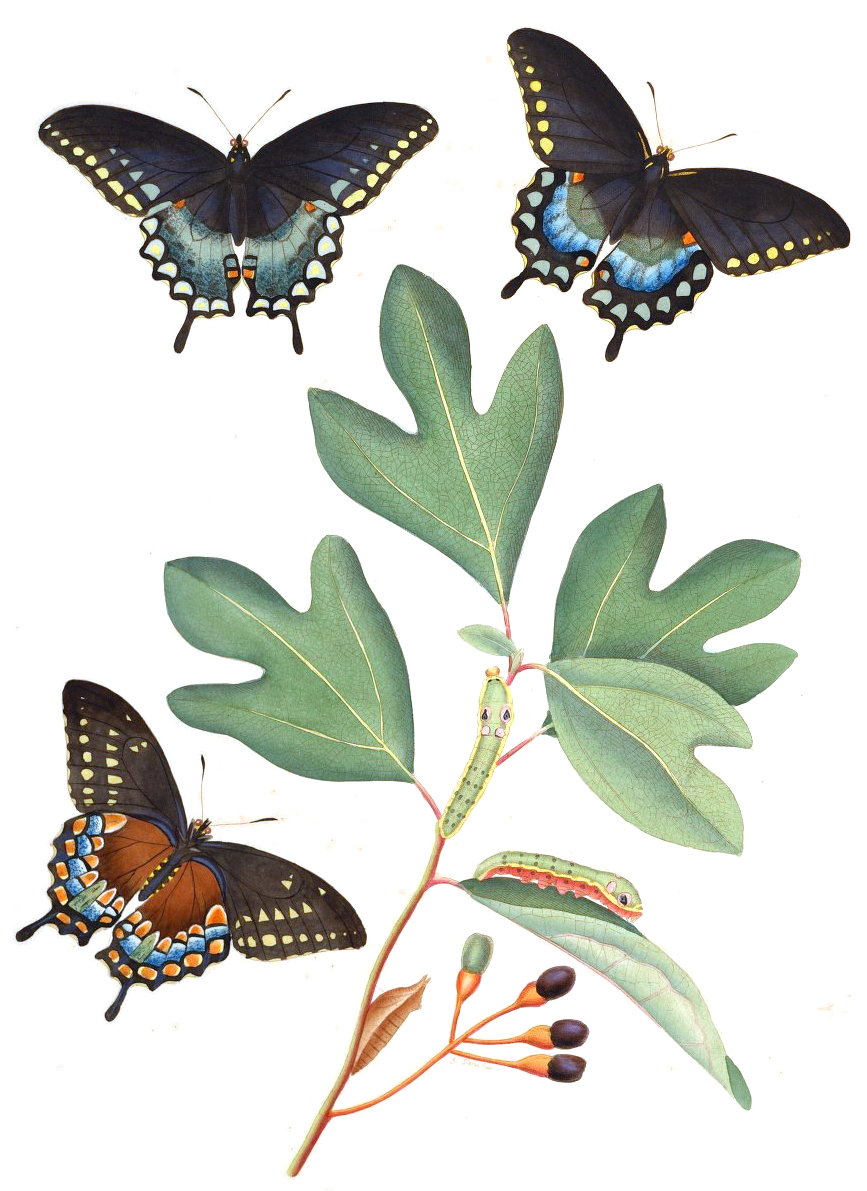
While passing by the cemetery on campus one day, I noticed a few little sprouted saplings with very particularly-shaped leaves.  I got very excited when I moved in closer and saw the definitive “mitten” shape of some of the leaves.  I pinched one and sniffed, smelling a strong spicy aroma almost immediately.  I knew at that point I was dealing with sassafras.

Sassafras is one of those herbs that you can’t avoid in the South.  It grows in all sorts of adverse environments:  roadsides, hedgerows, waste spaces, etc.  It can be short and bushy in its early years of development, but becomes a full-sized tree given enough time.  The roots and bark have long been used in culinary and medicinal applications.  If you’ve ever had a root beer, there’s a chance that you have tasted this plant, as sassafras and sarsaparilla were the two primary flavors in that drink for a long time.  In recent years (since 1960), active ingredient in sassafras, called safrole, has been officially banned by the USDA as potential carcinogen.  So most of the root beer sold now uses artificial flavors to reproduce the sassafras and sarsaparilla taste.  The leaves of sassafras also feature in Cajun cooking; dried and powdered, they become file powder, which is used to thicken stews like gumbo.

Medicinally, sassafras is a tricky root to use.  According to botanical.com, “Oil of Sassafras is chiefly used for flavouring purposes, particularly to conceal the flavour of opium when given to children. In the United States of America it is employed for flavouring effervescing drinks…Aromatic, stimulant, diaphoretic, alterative. It is rarely given alone, but is often combined with guaiacum or sarsaparilla in chronic rheumatism, syphilis, and skin diseases.”  It also seems to have a strong effect on women’s reproductive systems, easing menstrual pain, but also potentially causing abortions.  Several health problems have been connected to consuming overdoses of safrole, including vomiting, collapse, pupil dilation, and cancer.  WARNING!  Consult a physician before taking ANY herb or root internally!  Sassafras is NO EXCEPTION!

Sassafras bark and root have long been made into teas in the Appalachians.  In Foxfire 4, informant Pearl Martin showed students Bit Carver and Annette Sutherland how to gather the herb and make the drink:

“Sassafras is a wild plant that grows in the Appalachians…The spicy, distinct flavor of sassafras makes the tea a popular beverage, served hot or cold…Pearl told us that she could gather roots any time of the year without affecting the taste of the tea.  However, the roots should be gathered young, so they will be tender…She chops the roots from the plants, then washes the roots in cold water.  Next she scrapes off the outer layer of bark and discards it.  Either the roots or the bark can be used in making the tea, but Pearl prefers the roots.  They can be used dried or green.  She brings the roots to a boil in water.  The longer they are boiled, the stronger the tea.  To make a gallon of tea, she boils four average-sized roots [which appear to be about a foot long and an inch thick] in a gallon of water for fifteen to twenty minutes.  She then strains it, and serves it either hot or iced, sweetened with either sugar or honey” ( p. 444).

While the safrole content of the tea is relatively low, again you should consult with a physician before drinking this tea.

Magically speaking, sassafras is a money root.  It attracts business success and material wealth.  Putting a little sassafras root in one’s wallet or purse keeps money from running out.  Catherine Yronwode has several good charms in her Hoodoo Herb & Root Magic book, including a business attracting sidewalk scrub made from sassafras, allspice, and cinnamon (which has the added bonus of a pleasant aroma), and this powerful little Money-Stay-with-Me mojo hand:

“Jam a silver dime into an alligator foot [available from Lucky Mojo and other botanicas and curiosity shops] so that it looks like the ‘gator is grabbing the coin.  Wrap it tightly with three windings around of red flannel, sprinkling sassafras root chips between each layer as you wind, and sew it tight.  Just as the alligator foot holds the coin and won’t let go, so will you be able to save instead of spend” (p. 179).

Sounds like a pretty wonderful charm to know, in my opinion.  I’ve not seen anything particularly about burning sassafras as incense, but I did find a book called A Collection of Folklore by Undergraduate Students of East Tennessee State University edited by Thomas G. Burton and Ambrose N. Manning which records a bit of superstition claiming that bad luck comes if you “burn sassafras wood” (p. 74).  The lore in this particular collection is all from first-hand sources, so I tend to think it’s got some weight.  A similar folklore collection from Kentucky elaborates on this point, saying, “If you burn sassafras wood or leaves, a horse or a mule of yours will die within a week” (from Kentucky Superstitions, #2993).  I tend to think this refers to burning wood in a fire or fireplace as opposed to using a little bit of it as incense, but take your chances as you see fit.  Particularly if your horses or mules are dear to you.

I hope this post has been of some use to you!  Enjoy the slowly waning summer, and get out in the woods to find some sassafras and other plants!

Thanks for reading,

-Cory

Blog Post 71 – How I Spent My Summer Vacation

Hello everyone!

We’re almost at the end of this hiatus, and I haven’t posted anything really since right before I went off to grad school for the summer.  But that doesn’t mean I haven’t been up to some witchy business in the meantime.  Today I thought I’d share a few of the things I’ve been doing over the past six weeks (well, other than performing detailed exegeses of 18th-century English poetry and seeing about 27 different versions of Shakespearean performances).

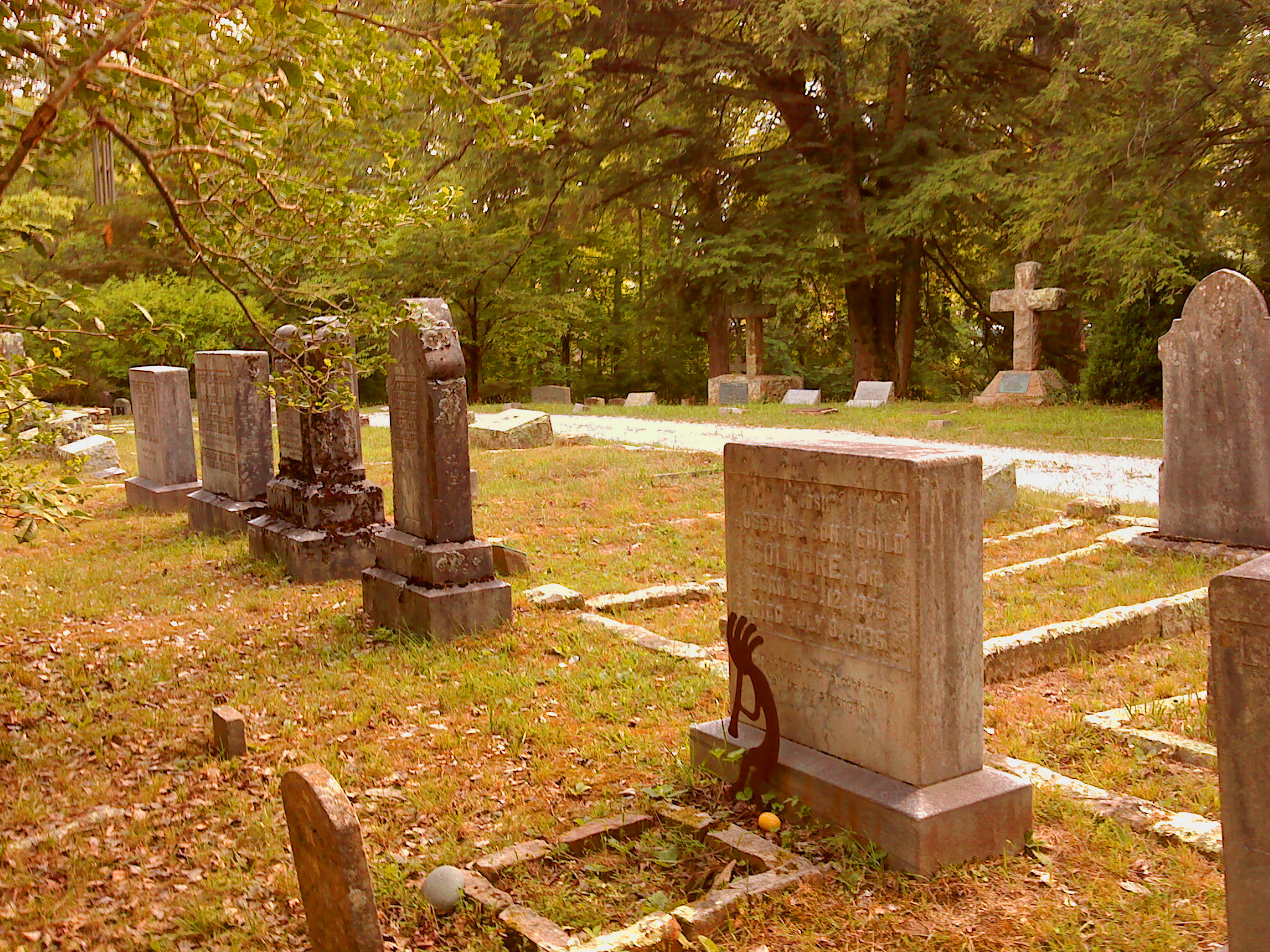
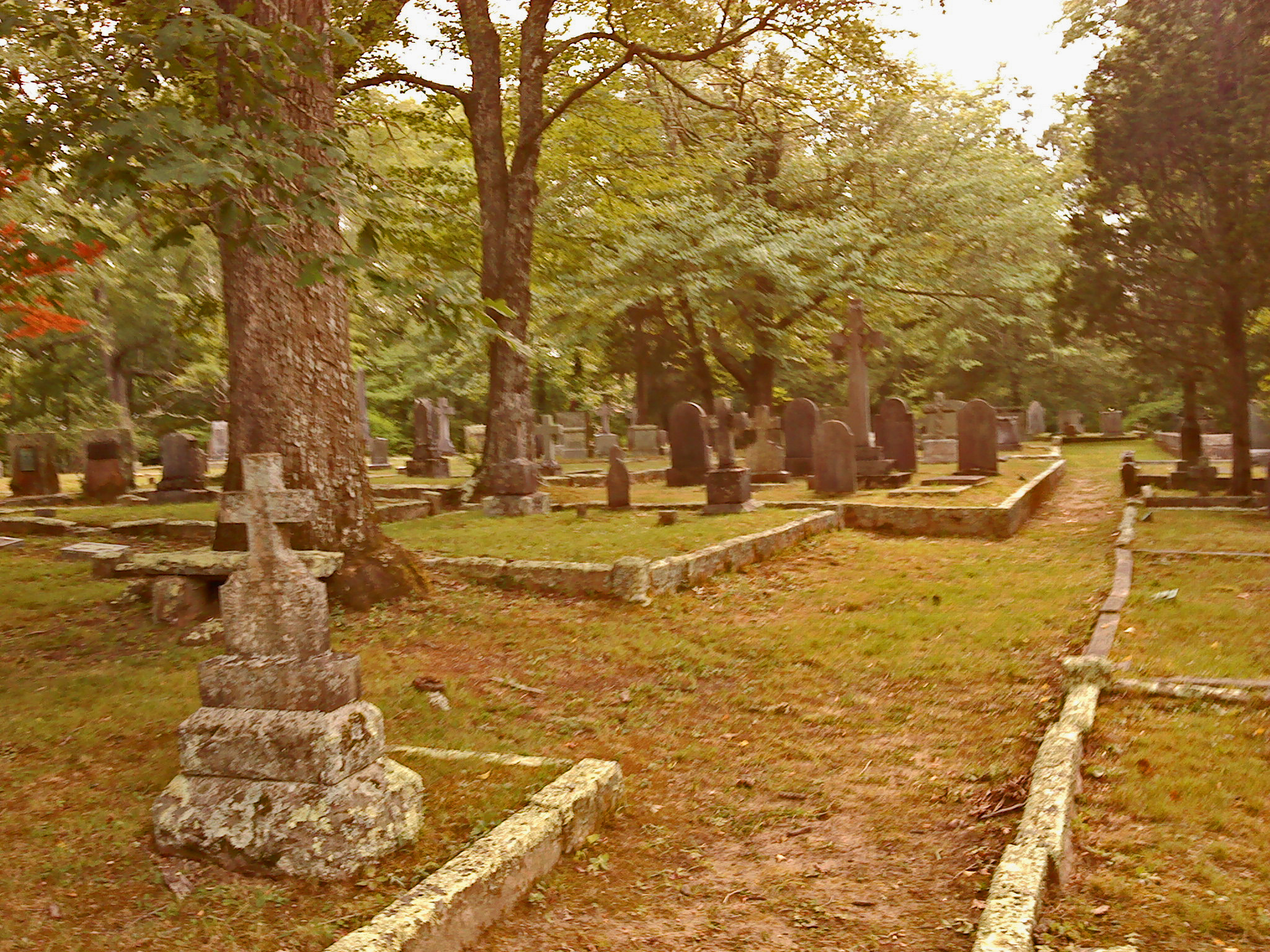
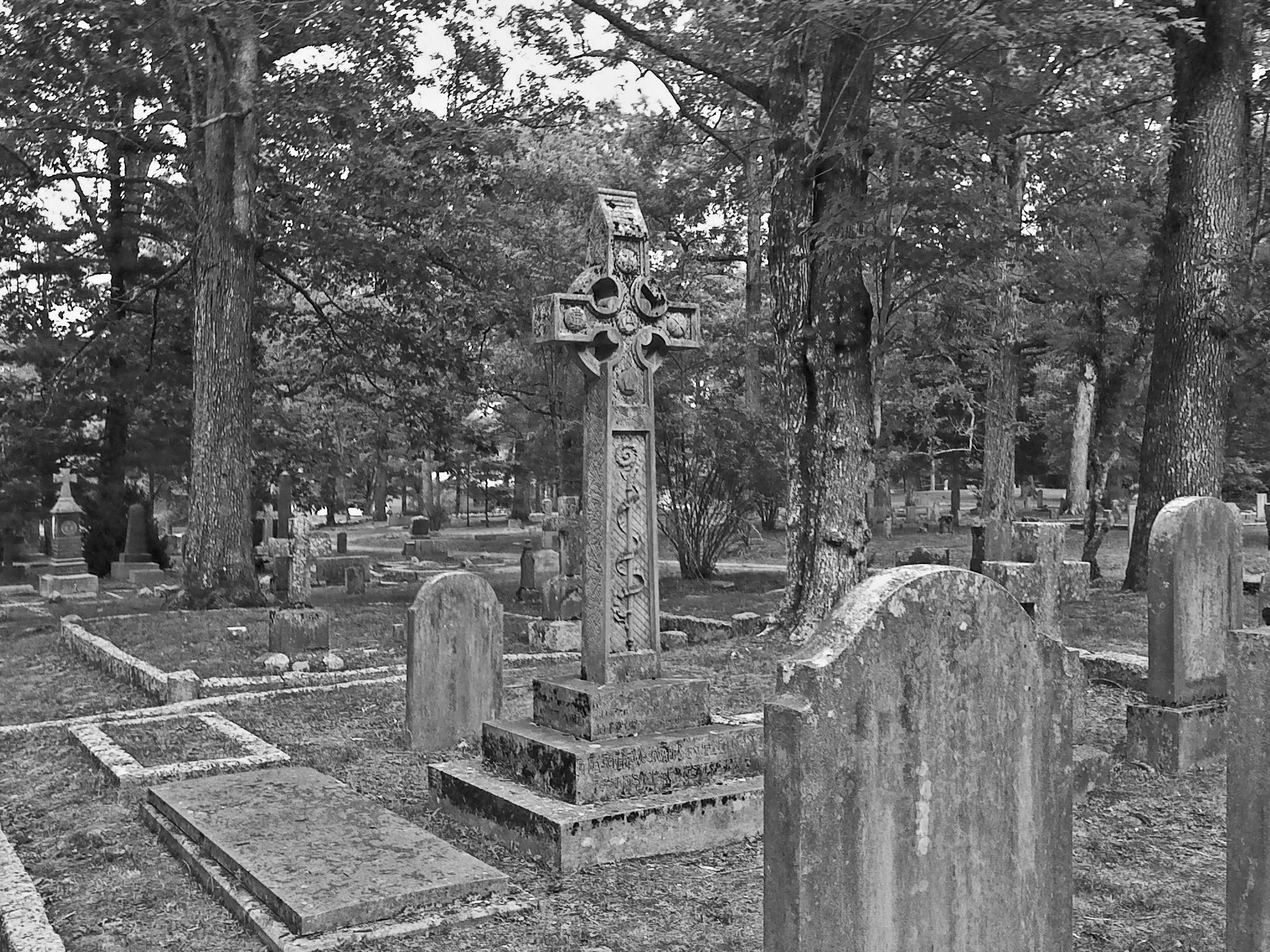
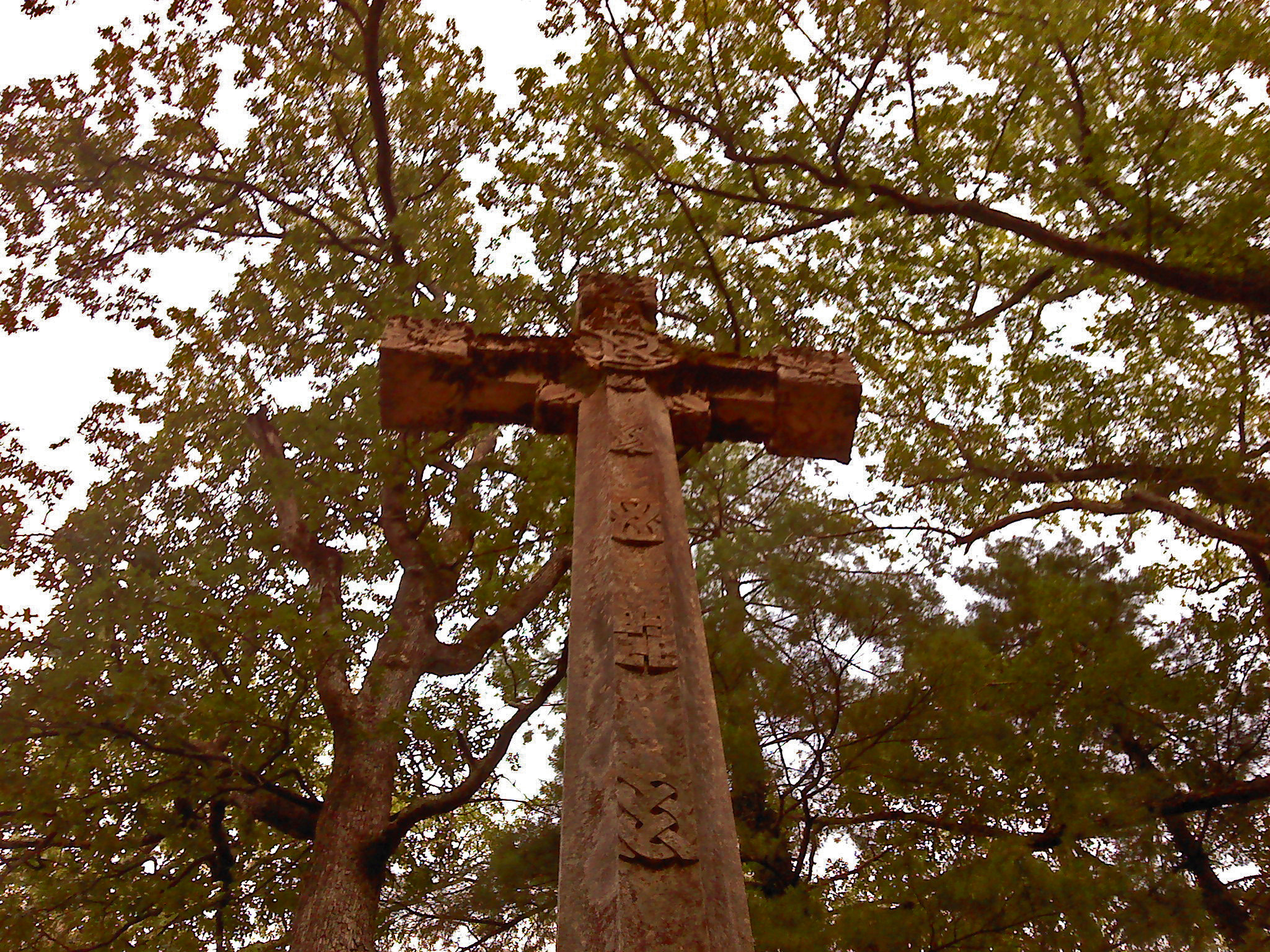
The first thing I should tell you is that I was living on campus, and this campus just happens to be a beautiful rural campus right at the edge of Appalachia.  My access to folklore primary sources was much abetted, and my opportunities to get out in the woods increased a good bit.  Secondly, my dorm was immediately across from a beautiful old cemetery.  As you can probably guess, I spent a good bit of my time there.  Here are some photos of the amazing graves and other funerary décor found in the old boneyard.The graves here date back to around the mid-nineteenth century, so they aren’t incredibly old, but many of them are gorgeous.  And they are certainly older than lots of other cemeteries in the area.

This also happens to be a religious school, so there are plenty of beautiful crosses here, too.  Since it’s as close to Appalachia as it is, the cemetery has a strong Celtic influence in the stonework.

The time I spent here mostly involved taking late night (or often midnight) walking tours of the area.  Among all those graves and under a very starry sky, it was pretty amazing.  If you’re wondering whether or not I encountered “anyone,” though, I have to say the answer is no.  I did bring offerings of food and whiskey several times, leaving them near the small side gate rather than any specific grave (since I wasn’t trying to contact anyone in particular, that made sense to me).  Wildlife abounds near this cemetery, so I often heard things wandering out in the dark just beyond the light’s cast.  I even occasionally met other folks taking late night constitutionals among the headstones.

Since I wanted to do well in my schoolwork, I also made up a potent little mojo bag, which I carried in my pocket.  I anointed it daily with either Crown of Success oil or some local whiskey, depending on what seemed appropriate for the day.  As far as I can tell, it worked magnificently (though I’m still waiting to get final grades back…mojo don’t fail me now!).  I may outline just how I made this specific mojo bag later this week in case there are other students looking for a little “oomf” in their studies.

Of course, a huge portion of my time was dedicated to reading completely non-magical texts (Paradise Lost, vast quantities of Shakespeare, a number of Restoration-era authors like Swift, Pope, and Dryden, etc.), but I also had time to work my way through a few magically inclined books as well.  I’ll be posting some reviews of those as time permits this coming week, so stay tuned for those.

The beautiful natural surroundings of the school also afforded ample opportunities to get outdoors.  Though the heat was stifling some days, trees always provided comforting shade and occasional mountain breezes helped cool me off, too.  So many of the plants that grow in that area have magical connections:  elder, sumac, sweet gum, passionflower, poke berries, and blackberries all grow wild.  I did some harvesting, particularly a good bunch of sassafras, so I’ll try to get some info up on that at some point, too.

Last, but certainly not least, I also had long drives to and from school on the weekends, so I filled up my iPod with lots of witchy podcasts and caught up on some of my favorites.  I also got to hear some new ones (at least new to me) that were excellent.  If you haven’t checked out Pagan Hooligans yet, it’s a great show and the hosts are a lot of fun.  They’re recording their adventures in paganism from day one, and it’s really a refreshing perspective!  I’ve also started really listening to and enjoying Iron Powaqa Radio, which has a decidedly sassy side and always makes me smile.

So that was my summer in a nutshell, I suppose.  I’m going to be trying to get back in the swing of regular posts as soon as possible, and hopefully there will be another podcast up fairly soon, too.  Until then, thank you all for your patience and support!  Feel free to post, email, discuss, and generally share your own New World Witchery here, and we’ll look forward to hearing from you!  Thanks for reading!

All the best, and be well,

-Cory

Blog Post 69 – Charmed Again


Today I’m going to add to Blog Post 67’s charm list and look at a few other simple, word-based spells.  Most of these are rooted in Pow-wow practices, but they are also found throughout other systems as well.  A caveat before I begin, however:  do not take these charms in place of medical advice.  They have their uses and are worth learning, but I am not a medical professional and you should not construe these bits of folk life as prescribed physiological recommendations.  If you get burned or are bleeding badly, seek professional help.

Okay, now on to the charms!

Dealing with Enemies

Overcoming an Enemy (Pow-wow)
This charm to gain advantage over someone who is trying to bully you comes from Hohman’s text, and again I have had little occasion to use it but I rather like the poetry of it:

A CHARM TO GAIN ADVANTAGE OF A MAN OF SUPERIOR STRENGTH.
I [name] breathe upon thee. Three drops of blood I take from thee: the first out of thy heart, the other out of thy liver, and the third out of thy vital powers; and in this I deprive thee of thy strength and manliness.

This particular spell veers very close to a curse, though it also falls into a “self-defense” category, I think.  You don’t, of course, get the three drops of blood from them, though I imagine if you could it would make this spell something much more powerful and possibly much more dangerous.

Healing Charms

Blood-stopping Verse (Pow-wow, Granny Magic, Mountain Magic)
This may be one of the best known mountain charms.  When spoken, this little spell stops a bleeding wound (a non-critical one that is…serious wounds require medical attention!).  There are a few variations on it, and the rules change a bit from person to person, but the words are pretty much the same:

“And when I passed by thee, and saw thee polluted in thine own blood, I said unto thee when thou wast in thy blood, Live; yea, I said unto thee when thou wast in thy blood, Live.”

Those of you who are Bible-savvy probably know this already, but this is simply a passage from Ezekiel 16:6.  It is similar, though not the same as, Psalmic magic (see below).  This charm is mentioned in The Red Church by Chris Bilardi, and has also been featured on Dave Tabler’s excellent Appalachian History blog.  The passage of this charm is typically supposed to be from male-to-female, though it seems there are ways around this restriction (such as “telling” the charm to an inanimate object while someone else in the room is listening).  As to effectiveness, all I can say is that I’ve used it three times and all three times it has worked.

Another Blood-stopping Charm (Pow-wow)
Here’s a different blood-stopping verse from Hohman’s Long Lost Friend:

TO STOP BLEEDING.
I walk through a green forest;
There I find three wells, cool and cold;
The first is called courage, p. 34
The second is called good,
And the third is called stop the blood.

Hohman actually lists about half-a-dozen blood-stopping charms, so I highly recommend looking into his book for more information on the topic.

Stopping Burns (Pow-wow, Mountain Magic)
Here are two charms used to help heal burns and alleviate the pain associated with them (both from Hohman):

HOW TO CURE A BURN.
Three holy men went out walking,
They did bless the heat and the burning;
They blessed that it might not increase;
They blessed that it might quickly cease!

+ + +

(The “+++” means that you make the sign of the cross with your hand over the burn three times)

ANOTHER REMEDY FOR BURNS.
Clear out, brand, but never in; be thou cold or hot, thou must cease to burn. May God guard thy blood and thy flesh, thy marrow and thy bones, and every artery, great or small. They all shall be guarded and protected in the name of God against inflammation and mortification, in the name of God the Father, the Son, and the Holy Ghost. Amen.

I’ve used the first of these charms a couple of times, and noticed a temporary effect.  The pain may not go away entirely but it’s a lot less and the burns didn’t scar, so that might be a good sign.  Or a placebo effect of some kind.  But I leave it up to you to figure it out for yourself.

Psalms (Curanderismo, Pow-wow, Hoodoo, Mountain Magic, most American folk magic systems)

Finally, I thought I’d list a few Psalm fragments which can be written and carried or spoken aloud in times of need.   I personally LOVE Psalmic magic.  You can feel free to use the whole Psalm or just the pertinent portions depending on your spell, but I highly recommend this method of magic.  The Bible, I seem to find more and more, is just loaded with magic, if you know where to look.  And almost no one questions you if you happen to say or write a Bible verse.  Of course, if you have problems with Judeo-Christian religion, this might not be the course for you.  You can find a great list of Psalms and their uses in the Appendix to Chris Bilardi’s The Red Church, the Curious Curandera’s Library Page, and the Lucky Mojo site has a good list, too.

Here’s a sample of Psalms as charms:
Headaches Psalm 3 – “Thou, O LORD, art a shield for me; my glory, and the lifter up of mine head”
Protection & PeacePsalm 22 – “be not thou far from me, O LORD: O my strength, haste thee to help me” (This is the Psalm Jesus sang upon the cross)
Against EnemiesPsalm 35 – “Contend, O GOD, with those that contend with me”
Success & Good FortunePsalm 65 – “Thou crownest the year with thy goodness; and thy paths drop fatness”
Safe TravelsPsalm 121 – “I will lift up mine eyes unto the hills, from whence cometh my help”

The topic of Psalm magic could be a post in itself, or a book even.  Several books, actually.  In fact, there are plenty of wonderful books on this subject, and I recommend tracking them down if you can.

That’s it for today’s charmed life.   If you have any charms to share, please feel free to do so!

Thanks for reading!

-Cory