Blog Post 96 – Critters 2 (Magical Animals, Part II)

Hi all!

This is a continuation from the last post about magical animals, so you may want to look at that one before diving into this one.  Or not.  It’s up to you really.  Either way, here’s some more on North American animals showing up in magical folklore.

(More) American Magical Animals

Deer – Legends about magical deer are hardly new, nor are they limited to the New World.  White stags appear in Arthurian legends, and the label of Jagermeister liqueur bears the image of an enchanted cervid.  Charlemagne also had a stag legend associated with him.   In American folktales, they retain similar significance, though often they lead hunters astray or into mischief.  In a tale from Gilmer Co., WV, a normally gifted hunter encounters a doe he can’t shoot, even at close range when he knows he should be able to.  He decides to try shooting it with a silver bullet and succeds in hitting it in the leg, and then follows the blood trail back to a cabin where an old woman is nursing her bleeding leg, thus revealing her as a shape-shifting witch (Gainer p.157).  In New York State, there’s also the tale of “Auntie Greenleaf and the White Deer,” which bears a strong resemblance to the Gainer tale.  The Huichol natives of Mexico engage in a type of spiritual quest called the Peyote Hunt in which the peyote (a type of hallucinogenic cactus) is treated as a magical deer to be caught:

The Hunt is a symbolic re-creation of “original times” before the present separation occurred between man, the gods, plants and animals; between life and death; between natural and supernatural; be-tween the sexes. On the Peyote Hunt, the men who return to their homeland become the gods, and at the climatic moment of the ceremony, they slay and eat the peyote, which is equated with the deer and with maize (“The Deer-Maize-Peyote Symbol Complex…” by Barbara G. Myerhoff, Anthropological Quarterly, Apr. 1970)

It’s not surprising that a continent whose inhabitants until only fairly recently depended upon deer for food would assign it such a high mythical value, and there are plenty of good stories about witch deer or helper deer to be found in every region.

Rabbit/Hare – This is the animal most associated with witches in folklore (other than perhaps the black cat).  North American magical tales are no exception, and there are a plethora of rabbit-related witch stories out there.  As I mentioned in the Spiders/Insects section, Anansi has an avatar in the form of a rabbit in the New World, a form probably best known and realized through his appearance in Joel Chandler Harris’s Uncle Remus stories.  The Trickster Rabbit of these tales became so ingrained in our cultural psyche that we turned him into an icon recognized worldwide, even though he is distinctly American in attitude:  Bugs Bunny.  Native American legends also provide Trickster Rabbit stories, such as “Rabbit Plays Tug-of-War” from the Creek tribe.  Hares could also be less mirthful magical creatures, and often appear in American folklore as witches in disguise.  Richard Dorson records a tale in Buying the Wind of a witch-hare that could not be caught or killed by anyone.  Even when they trapped it and set everything around it on fire, the rabbit still managed to escape.  Finally a hunter thought that perhaps this hare might be a witch in disguise, and so drew a picture of it and shot it in the leg with a silver bullet.  Not long after, he found out that a local woman with a rather witchy reputation had fallen and broken her leg while sweeping the floor.  The hare was not seen again (Dorson, p. 316-17).  Stories like this are echoed in the Deer and Cat stories mentioned above and other tales of witches becoming hares can be found in the collections from Patrick W. Gainer and Hubert J. Davis, too.

Bear – The figure of the Bear is a mainstay in several traditions of American lore.  He appears as Brother/Brer Bear in the aforementioned Uncle Remus tales, where he comes off as a bit of a brute.  The bear is a key figure in Native American lore, appearing as a spiritual totem animal for chiefs and warriors, as in the tale of the “Spirit Lodge” from the Nariticong people in the northeastern U.S. A curious tale from the Pacific Northwest features a comical (and obviously fictional) encounter between a Sasquatch, a black bear, and a river boat captain.   In northern Mexico, the story of “The Bear’s Son” describes a mytho-magical quest undertaken by a brave young man.  The repeated motif of strength and battle seems to be the bear’s primary contribution to North American folklore.  Yet occasionally bears appear as guides or wise teachers as well—even unintentional ones, as in the Maine tale of “The Fisherman and the Bear,” in which a clever ursine demonstrates a remarkably effective method of fishing to a hungry human.

Birds – This is a pretty broad category, and there are many different types of birds which appear in American magical tales.  The most common appearances of birds are as magical omens or forerunners of good and bad luck.  We touched a bit on this in our Weather Lore posts, but we also had to leave a number of bits out, so I’ll share a couple of them here:

  • A bird building a nest out of your hair will cause madness or headaches.
  • A bird building a nest in any piece of your clothing (shoes, hat, pockets, etc.) means you should prepare to die within the year.
  • Loons portend bad weather (because they are the souls of dead sailors).
  • Whippoorwills calling indicate death or bad luck soon to follow (I prefer Gillian’s interpretation of this, which is that a whippoorwill call means that you’ve done a good day’s work).
  • Killing barn swallows will cause your cows to give bloody milk.
  • To cure a backache, wait until you hear a whippoorwill call then roll on the ground three times.
  • It is bad luck for a hen to crow.

(These examples are taken from Ozark Magic & Folklore by Vance Randolph, Witches, Ghosts, & Signs by Patrick Gainer, and “Odds & Ends of North American Folklore on Birds” by W. L. McAtee [in Midwest Folklore, 1955])

There are truly endless numbers of folk spells, omens, signs, stories, and legends regarding animals in North America.  And there are plenty of animals I didn’t cover here that probably deserve some attention.  Critters like possums, raccoons, gators, eagles, buffalo, cattle, sheep, pigs, mountain lions, and any number of other animals all have abundant magical lore surrounding them, which I will hopefully be able to cover someday.  For now, though, I hope this couple of posts has helped open up some areas for you to explore with regards to animals and magic.  I’m hoping to get at least one more post out this week or early next week focusing on animal parts in magic, so stay tuned for that, too.  And if you have animal lore you’d like to share, feel free to comment on the blog or email us!

And thanks for reading!

-Cory

Blog Post 95 – Critters (Magical Animals, Part I)

Hi everyone!

A recent episode of 5-Star Spells discussed the use of animals in magic.  The Lovely Sarah over at Forest Grove also did an excellent post on the use of bones in magic (a topic I’m also working on but which will probably not be nearly as comprehensive as her fantastic article).  Gillian’s creature-feature over at Iron Powaqa has also gotten me thinking more and more about animals and their use or place within magical work.

I’ve covered animals a bit before (see my post on Snakes for example) and I’ll likely continue to explore those individual species in other articles, but today I thought I’d tackle the topic generally.  When animals appear in American magical lore, which ones crop up most often?  Are they alive or dead?  Are their parts used in magic (like the Rabbit’s Foot), or do they themselves represent something more significant as whole, intact creatures?

American Magical Animals

There are a number of animals that show up repeatedly in North American magical lore.  In fact, there are few animals which are not associated in some way with magic.  For the sake of keeping this entry simple, however, let’s look at some of the most common and popular creatures:

Cat – The ubiquitous black cat of magical lore appears in all sorts of stories.  Patrick W. Gainer relates a tale about a witch who turns herself into a cat and then murders the men her father hires to work in his mill.  In Spooky South, S. E. Schlosser describes a blacksmith whose wife slips in and out of a catskin every night until he outwits her by salting her human skin while she’s away.  There’s also the story of the Wampus Cat, a fearsome cat-like beast which terrified Native Americans and early colonists in the Southern Appalachians.  And of course, the powerful magical charm of the black cat bone has been discussed on the blog and podcast before.  There are probably dozens, if not hundreds, of cat-related stories connected to witchcraft and magic in North America, and while having a black cat weaving about one’s feet certainly isn’t a requirement for witchery, it does seem to be encouraged.

Dogs/Coyotes/Wolves – Everyone knows about Jack London’s Call of the Wild and White Fang, with their requisite images of the faithful companion to the bold pioneers and adventurers on the frontier.  So it should come as little surprise that dogs and their relatives show up in magical lore here, too.  The Native American trickster spirit, Coyote, remains a popular figure in storytelling (and as fodder for Roadrunner cartoons).  Black dog hair is used in hoodoo spells, sometimes in conjunction with black cat hair.   The famous “Man in Black” at the crossroads in hoodoo lore sometimes appears as a black dog, too:

“Well, people say yo’ meet de devil, but tell de truth ’bout de thing, ah don’t know if it wus de devil or not. It wus a black something othah jes’ ’bout dat high — sorta mind me of a dog. He had han’s lak a dog when ah fus’ seen him but fust and last his han’ wus jes’ lak mine only it wus jes’ as hot as could be.” From the work of Harry M. Hyatt [Fayetteville, North Carolina, (1438), 2581:1.]

There are also a number of stories from all around the country related to ghostly black or white dogs who presage death or misfortune.  These seem to be similar to the “Black Shuck” dogs found in English folklore (and which served as a roundabout inspiration for the Sherlock Holmes tale “The Hound of the Baskervilles”).  Wolves show up from time to time in Northern and Pacific Northwestern lore, though they usually do not have the fearsome associations found in European stories but rather serve as guides or helpers to lost or wounded folks.  Though the element of danger sometimes hovers around the magical canine, for the most part they seem to act as allies to magical folk in North America.

Snakes – As I said earlier, I’ve posted on snakes before, but a quick rehash can’t hurt.  The reputation of the serpent in North America seems to have been tainted by the negative impressions of it transmitted through Christianity.   Yet it remains one of the most significant magical animals in American magic, too.  Even some Christians engage in ceremonies with snakes, handling them as a test of faith in accordance with Mark 16: 17-18.  Marie Laveau was known to dance with a large snake called Zombi during her famous St. John’s Eve celebrations in New Orleans (described in Zora Neale Hurston’s Mules and Men), thus cementing the serpent into the NOLA Voodoo tradition.  Snake parts are common in magical practice, with rattlesnake rattles being lucky and the shed skins and eggs being useful for cursing and negative work.  I like using snakes myself, as I enjoy their chthonic symbolism and ambivalent quality.  I remember making a rather nice Damballah altar jar for a friend containing a long snakeskin and bones, inscribed with the lwa’s veve on the front—it was beautiful and felt like it radiated power when I finished it.  So yeah, I’ve got a fondness for the slithery beasts.  At least, when I’m wearing boots I do.

Spiders/Insects– Moving from one creepy-crawlie thing to another, bugs show up a bit in the magical lore of North America, too.  In The Silver Bullet, by Hubert J. Davis, one witch uses a little black beetle as her familiar, traveling with it in and out of keyholes.  Much like snake eggs, spider eggs are used to create the “Live Things in You” spells so greatly feared in hoodoo work, as described in Yronwode’s Hoodoo Herb & Root MagicAnansi, a powerful spirit and/or deity imported from West Africa, appears in the magical lore of places like Florida and the Coastal South, where he was sometimes transformed into another magical creature on this list—the rabbit.  This shift in emphasis may be explained by several factors.  According to Newbell Puckett:

Only the spider, a great favorite in African folk-lore, has been almost entirely dropped from the folk-tales of the Negro, and this may perhaps be due to a falling away of African religious beliefs, since on the Gold Coast the spider is regarded as the Creator of all men, and is supposed to speak through the nose as the local demons are said to do. It also may be that the spiders of the South, being smaller and less terrifying than the African type, have caused that creature to lose its prestige.  (Folk Beliefs, p.34)

Vance Randolph also mentions spiders and insects as being connected to weather lore:  they either swarm into the house before a big storm, or if a spider is crushed in the home it can cause a dry spell of seven days.  Finally, there’s a curious little rhyme mentioned by Patrick W. Gainer which can help one find lost objects:

“Spitter, Spitter, spider, tell me wher that (name of the article) is and I’ll give you a drink of cider” (p. 125).

There are plenty of other little bits of lore regarding six-and-eight-legged creatures, but I’ll save those for a longer entry sometime in the future.

I’m going to stop here for today, but we’re not done with magical creatures yet, by any stretch of the imagination.  If you have animal lore you’d like to share about any of the creatures mentioned so far, though, please do!

Thanks for reading!

-Cory

Blog Post 87 – Podcast Recommendation

Hi everyone!

I promise I will eventually get the rest of the cartomancy thread and look at how to do an actual reading, but I’ve not had time to take the photos I want to use for that yet.  So today, I wanted to recommend something I only found last week.  It’s a podcast called “5-Star Spells” and it’s found on BlogTalk Radio.  For those who don’t know about BlogTalk, it’s a phone-in format open radio site that lets people broadcast their shows without having podcasting equipment.  The radio shows go out live at specific times, then get recorded and transferred to a podcast feed for posterity (and for those of us who just prefer podcasts).

5-Star Spells is a show with a group of some of the most talented and knowledgeable root workers and readers around.  I’ll get into them individually in a moment, but as a whole they represent some of the best minds, hearts, and hands in the conjure business today.  What’s even better, they all interact like family, with a tremendous amount of positivity towards each other, even when it’s clear they aren’t exactly alike.  They pass on lots of useful information, a good bit of personal philosophy (anecdotally, which is my favorite way to get philosophy), and a lot of laughter, which is pretty refreshing, actually.  Oraia Sphinx actually tipped me off to them at almost the exact same time I had downloaded their first episode, so that was serendipitious, I thought.  The show’s most frequent callers are:

Rev. Mother Susan Asselin – The show’s primary host, she operates out of a Little Italy-style neighborhood in Providence, RI.  She and Sindy Todo refer to each other as “cousins” as they recently discovered they share some branches on their family trees.  I’ll be honest and say I probably know the least about Mother Asselin, but from what I hear on the show, she’s knowledgeable, spirit-filled, and wise.  Her website is called MotherMystic.

Dara Anzlowar – The owner of HoodooRoots.com, and the owner and manufacturer of Hoodoo Roots and Folk-Magic Traditional Spiritual Supplies.  She also runs two Yahoo groups, Hyatt Spells and Conjure.  I’ve followed Dara’s posts in those groups for a while now, and having a voice to put with the brilliant insights is very nice.  She works in a very traditional style, and provides a strong traditionalist viewpoint in the discussions that come up on the show, though she is also immensely cordial and kind in conversation.

Susan Diamond – She owns the Serpents Kiss occult shop and co-owns the 2Hoodoos site with Orion Foxwood.  She has a very sweet disposition on the show, but also provides a lot of interesting information (listen for her contributions in the Family Folklore episode).  She and Orion provide the most “pagan” voices on the program, but they also have some very traditional leanings as well.  She offers a wide variety of services and products, so check her out.  She’s also a member of the Association of Independent Readers and Rootworkers (AIRR).

Orion Foxwood – I know many folks already know who Orion is, but there are probably a number of people who don’t.  The sole regular male voice on the show, Orion grew up in the southern Appalachian Mountains surrounded by the magical and mystical traditions of the area.  He says he was born with a caul (also called a “veil” sometimes) which is commonly associated with having second sight or visions.  He’s published several books on his Faery Seership tradition, and has a bevy of websites including the aforementioned 2Hoodoos, the House of Brigh, and the Foxwood Temple of the Old Religion.

“Auntie” Sindy Todo – One of my favorite voices on the show, Sindy Todo provides sass, humor, warmth, and a heckuva lot of good information on 5-Star Spells.  She always has something nice to say, blessings to pass out, and good news to share.  She is based in Seattle, and has a website called Todo Mojo which offers her magical services.  She’s also a member of AIRR, and seems like one of the most genuinely likeable people I’ve ever heard.

Starr – A Texas based conjure woman working in the old-style tradition, Starr is another favorite voice of mine (they’re all wonderful in their own ways, of course!  I just have a thing for sassy women with southern accents).  She specializes in spiritual cleansings and also is one of the foremost experts on working with the Native American spirit Black Hawk.  She doesn’t appear on every show, but when she’s on, she’s a great participant and a wonderful resource for good, solid hoodoo information.  She’s a member of AIRR, too, and operates a website called Old Style Conjure.

One of the most amazing things about this group of folks is that they all get on so well.  Well enough, in fact, that they’re all getting together in November for a weekend of conjure classes and socializing!  I’m hoping to provide more info about this sometimes oon, but for now you can read all about it at the Traditional Folk Magic Festival website.   And you can hear all about it on 5-Star Spells, which, again, I highly recommend.

Okay, that’s it for my recommendation today!  I hope you can forgive the delay in the cartomancy finale, but I’ll have that soon.  Until then, thanks for reading!

-Cory

Podcast 14 – An Interview with Cat Yronwode

-SHOWNOTES FOR EPISODE 14-


Summary
Today we are truly blessed to have an interview with renowned rootworker and teacher Catherine Yronwode of the Lucky Mojo Co.  Then we briefly discuss Christianity in hoodoo.  Laine tells us about Magical Soap in WitchCraft, and Cory talks about Spiritual Cleansing Baths in Spelled Out.

Play:

Download:  New World Witchery – Episode 14

-Sources-
Some of Cat’s many wonderful sites:
Lucky Mojo – Her main site and online store
Lucky W Amulet Archive – A repository of info on lucky charms
Southern Spirits – Her site on Southern folklore and history
Arcane Archive – An archive of magical lore and practice from around the net
YIPPIE – The Yronwode Institute for the Preservation and Popularization of Indigenous Ethnomagicology
Herb Magic – A site on magical plants and roots
Missionary Independent Spiritual Church – The world’s smallest church, and part of the long tradition of Spiritual Churches in the United States
Association of Independent Readers and Rootworkers (AIRR) – A body of trained, professional rootworkers with experience and accountability
Hoodoo and Rootwork Course – One of the definitive training programs in traditional hoodoo
And, of course, her book Hoodoo Herb & Root Magic is often referenced on the blog and in the show.

Cory also reference’s Draja Mickaharic’s Spiritual Cleansing, a definitive guide on the topic.

Promos & Music
Title music:  “Homebound,” by Jag, from Cypress Grove Blues.  From Magnatune.
Promo 1- Inciting a Riot
Promo 2- Pagan in the Threshold

Blog Post 82 – Cards, an Overview

Hello readers!

Let me first say that I know it would be fairly impossible for me to explain a divination system thoroughly in one post. So this will likely be the first of several posts addressing the use of playing cards as a magical tool.  What I would like to do is explain my personal system of card divination, as well as some of the variants and influences which have shaped my practice.   I’m not going to dive into an extensive history of playing cards or tarot cards, as those subjects are well-covered and well-documented in other sources.  However, a little of the history that sometimes slips through the cracks (especially regarding playing cards) might be worth mentioning here.

While the absolute origin of pictographic cards is unknown, many folks believe they came out of India, China, or Turkey, or with the travelling Romany people (also frequently called “Gypsies”).  What is known is that by the 1500’s, playing cards were very popular with the lower classes, and often cited as a vice by clerical and governmental documents throughout Europe.  They received wide-spread appreciation from the highest ranks, including Bohemian emperor Rudolph II and Napoleon’s spiritual advisor, Madame Lenormand.  Yet cards have almost always been popular among the lower classes, too.  Cards came to America with settlers, sailors, and soldiers.  In fact, in the late 1700’s, a popular ballad called “The Soldier’s Prayer-Book” described the suits, pips, and enumeration of playing cards in terms of biblical metaphor.  For example, the fives represent the five wounds of Christ, the nines are the nine lepers healed by Jesus, and the tens are the Ten Commandments.  While this song may have been a white-wash for gambling soldiers eager to keep one of the few portable entertainments allowed them, it does register an important point:  cards make wonderful tools for metaphoric interpretation.

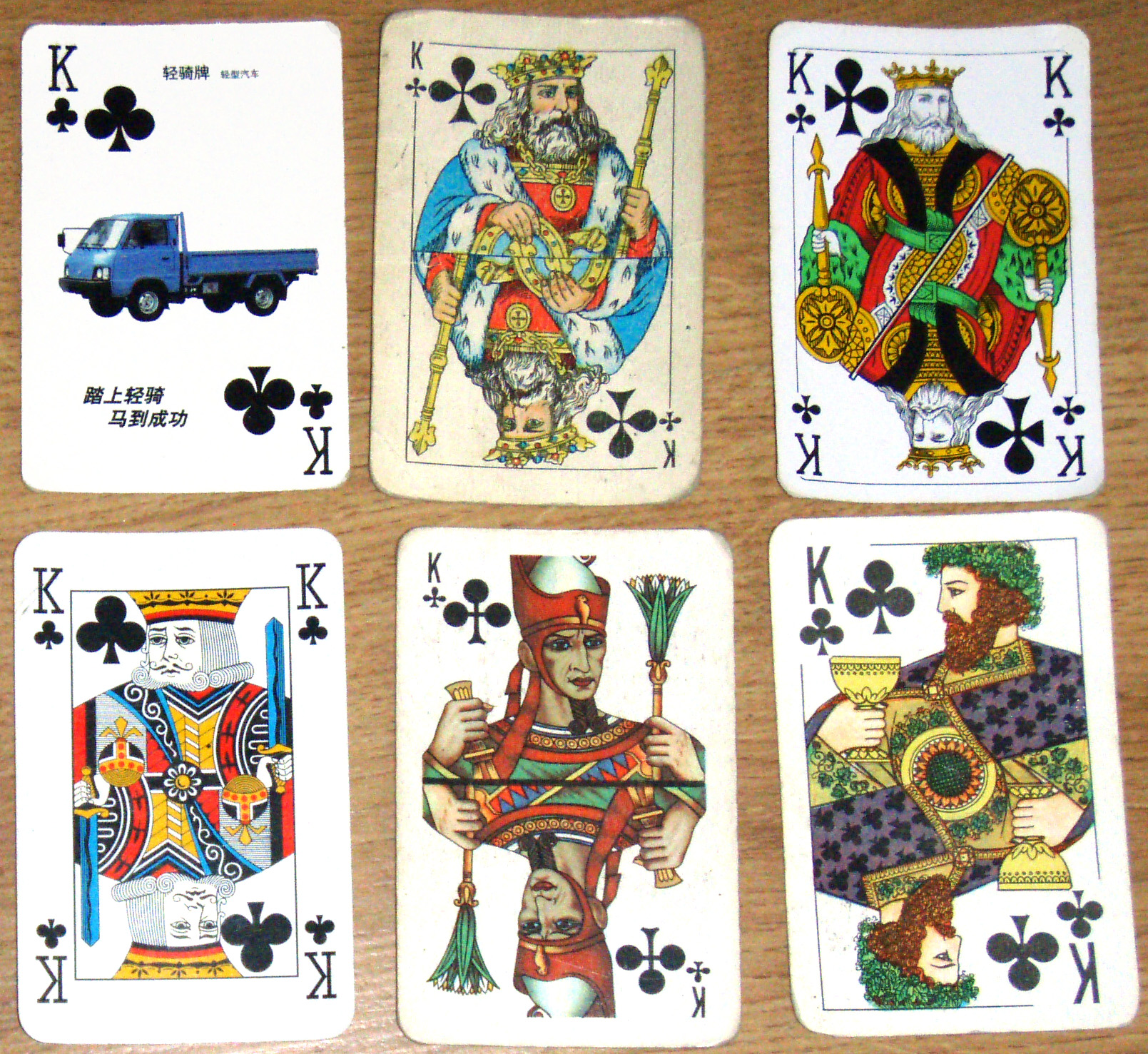
So why playing cards instead of tarot cards?  For one thing, playing cards have been more or less easily accessible since the 1600’s, and are versatile.  The cards you play a game of blackjack with one day can be used to reveal the future the next.  They also travel well in a pocket and are easily replaced if they get torn or damaged.  Plantation owners in the antebellum South often thought little of slaves having decks of playing cards to amuse themselves in their few off hours (though in some places stricter masters prohibited them altogether).  William Wells Brown, who provided a slave narrative for a character named “Uncle Frank,” claimed that each plantation also had at least one fortune-teller somewhere on the premises, and at least few of them used playing cards.  Today, playing cards are an excellent way of divining even in plain sight.  No one thinks much of two people over a table full of diamonds, spades, clubs, and hearts, while a Devil or Lovers card might raise eyebrows.

My own system of playing card divination is largely based on the book It’s All in the Cards, by Chita Lawrence and the rhyme “For the Witch of Poor Memory” by Dawn Jackson, with a significant amount of additional material I’ve picked up from other books, teachers, and experiences over time.  What I outline here will be my own understanding of these cards, so please do not take it as gospel, and find a method that works for you.

Like most who practice cartomancy, I break the major meanings of the cards down by color and suits.  However, unlike a lot of other practitioners, I don’t ascribe these suits to tarot parallels or elemental attributes.  There are some connections, of course, as hearts and cups both signal emotion-based interpretations, but it’s not a hard-and-fast link.

First, black cards indicate “negative” or “no” answers, while red cards are “positive” or “yes” answers.  This is most important in short readings, which I’ll address in a later post.  Some will say that having more black cards than red is a sign of negativity, but honestly, the only truly “negative” cards in an extended reading are the spades, in my opinion.  For me, I look at the suits in the following way:

Hearts – Family, friends, love, and lovers.  Also emotions and things which are deeply felt.
Clubs – Work and business.  One’s “calling” or destiny.  Also conflict, discussion, and debate.
Diamonds – Money, luck, fortune, happiness.  Also news, letters, and socializing.
Spades – Tears, suffering, woe.  War, fighting, violence.  Also change, warning, and doubts/fears.

I’ll get into each of these suits a little more when I break down the individual cards, but this should give you some idea what I see when I do a layout for a reading.  If I see lots of diamonds and clubs, I know that someone’s got some good work he or she will be well compensated for coming around the bend.  All hearts means that the client is emotionally invested in the reading, or that he or she is dealing with deep family or friendship questions.  Spades and clubs together would be a sign that the client’s job might be in jeopardy, or that work is very unfulfilling for him or her.

In the next post, we’ll get into the actual significance of particular cards, but it is good to keep the overall meanings of the suits in mind as we go forward.  If you have any questions, please ask, and I’ll be happy to answer as best I can (from my own personal perspective…did I mention that yet?).

For today though, thanks for reading!

-Cory

Blog Post 80 – Horseshoes

Following in the vein of recent posts, today I’m looking at another luck charm:  the horseshoe.  One thing Laine and I discussed in Podcast 13 was that the horseshoe seems to be a rather ubiquitous talisman.  It is so ubiquitous, in fact, that many folks may not even realize it has any magical connotation at all.  In an article from Western Folklore entitled “Lucky Horseshoes,” Jeannine E. Talley writes:

The horseshoe as a bestower of luck is so frequently encountered that it has become a cliche, but at the same time an isolated belief without a context. Barnet’s comment that the mule has been “pounding it full of luck” provides not only the ‘logic’ explaining why the horseshoe is full of luck but also reveals that luck is ac-cumulative. His insistence that the old nails must be used to hang the shoe is not found in standard collections for folk belief, but is akin to the notion that if the hardware is hung with prongs down, the luck will “run out.” This instance is a prime example that collecting the item is not enough; the contextual background of any item is of equal importance since it often contains the rationale which makes the belief credible. (p. 129)

I like this particular examination of the horseshoe because it details two points:  1) the horseshoe’s luck comes from its association with the horse itself and 2) as Talley states, the luck is accumulative, so the longer a shoe has been on a horse, the luckier it is.

Of course, there are plenty of other theories about why a horseshoe might be lucky.  Robert M. Lawrence, in his article,  “The Folk-Lore of the Horseshoe” describes the horseshoe as a talismanic emblem with many possible folkloric connections, including:

  • The Jewish Passover – like blood spread on doorposts/lintels and rowan trees in Scotland
  • Serpent emblem – “In front of a church in Crendi, a town in the southern part of the island of Malta, there is to be seen a statue having at its feet a protective symbol in the shape of a half-moon encircled by a snake”
  • Moon emblem – “the brass crescent, an avowed charm against the evil eye, is very commonly attached to the elaborately decorated harnesses of Neapolitan draught horses, and is used in the East to embellish the trappings of elephants.”
  • Phallic Emblem of some kind
  • Prong-shamed talisman – like protective horns of animals (connected to African symbols)
  • Horse as Sacred Animal (as mentioned above)
  • Iron as “Virtuous” metal capable of dispelling harmful forces (Journal of American Folklore, v.9, n.35, 1896, p. 288-292)

I hope to get into some of these symbols and ideas in other posts at another time—particularly iron, which shows up a lot in fairy doctoring practices and other magical systems—so for now I think it suffices to say that horseshoes have a lot of lore to build upon and are quite lucky, though no one seems to know exactly why they are so.

So how does one use horseshoes?  First of all, the shoe needs to be one which actually has been on a horse at some point (remember all that pounding of luck into it in Jeannine Talley’s article?).  Likewise, there are some who say that hanging a horseshoe involves using a spent horseshoe nail, too.  That seems to be a slightly less stringent requirement, but if you happen to have a spare horseshoe nail with your horseshoe, why not use it?

The issue of which way the “horns” of the shoe are pointing seems to be hotly contested by those who concern themselves with such things.  Both opinions seem to have some sound reasoning behind them, which I mentioned in the most recent podcast.  The general idea boils down to whether you think the horns up are “holding in the luck” or whether the horns down are “pouring the luck out on you.”  Either way, I think this is where instinct kicks in.  If you feel like you’ve hung it the “wrong way,” you probably have and  you should switch it.  But if you feel like your luck’s in good condition and your horseshoe’s “right,” then leave it be.

As to how specifically a horseshoe might be used, Harry M. Hyatt has a few examples of horseshoes in hoodoo work:

1) From Vol.2,p.1547

NAIL A HORSESHOE UP
OVER YOUR FRONT DOOR.
NAIL A PENNY DOWN IN THE FRONT
DOOR TOO. SCRUB IT ALL THE TIME.*
THESE WILL BRING YOU GOOD LUCK.

Dey kin use a horseshoe. Yo’ take a horseshoe an’ yo’ kin nail it up
ovah yore front do’ an’ take a penny an’ nail it down in de front do’; an’
yo’ jes’ let dat penny stay dere all de time an’ yo’ scrub ovah dat penny
all de time, an’ jes’ leave it dere an’ dat’ll be good luck fo’ yo’.
[Savannah, GA; Madam Pauline; Informant #1274. C575:1-C586:10 = 2136-2167.]

2) From Vol.2,p.1443

A HORSESHOE OVER THE DOOR
KEEPS SPOOKS OUT AND BRINGS LUCK.
& A MULESHOE OVER THE DOOR OF A BUSINESS
BRINGS BUSINESS SUCCESS

Keep a horseshoe – keep it ovah de do’ to keep de spook outa dere an’
fo’ luck, specially a man who does business. He’d have a new [mule] shoe ovah
de do’ – like he do’s a business roun’ in a shop or a restaurant or somepin
lak dat, because a mule is a hard-workin’ thing, hard-workin’. All right.
An’ jes’ lak ah’d have de mule when he hitch out an’ go to his stall to
eat, people be coming to his place and say….
[Sumter, SC; Informant #1387; Cylinders C885:1-C902:4 = 2366-2383]

(Both of these can be found in Hyatt’s book or in the excellent Yahoo! Group  “HyattSpells”)

I like the first example because it combines the lucky penny with the lucky horseshoe, and places luck at your head and your feet, so every time you enter a door,  you get caught between the two and get a double dose of luck.  I also like the rationale for using a mule shoe to boost business (because the mule is so hard-working).

Finally, Vance Randolph describes the Ozark methods of horseshoe deployment in Ozark Magic & Folklore:

  • Most hillfolk of my acquaintance use a horseshoe instead of the stone (to protect chickens from hawks), and some think that a muleshoe is even better. It is frequently fastened in the firebox of the stove rather than in the oven. In the old days the muleshoe was hung up in the fireplace, or even set into the mortar at the back of the chimney (p. 43)
  • Many hillfolk think that the man who finds a horseshoe with the closed end toward him will do well to “leave it lay.” If the open end is toward the finder, he sometimes spits on it and throws it over his left shoulder, a procedure which is supposed to bring good fortune. Or he may place it in a tree or on a fence,saying: “Hang thar, all my bad luck!” In this case, whoever touches the hanging horseshoe falls heir to the misfortune of the man who placed it there (p. 62)
  • Probably the commonest way to keep witches out of the house is to nail a horseshoe over the door; this is regarded as a sort of general prophylactic against witches, bad luck, contagious disease, and other evil influences (p. 283)

So that’s the lucky horseshoe.  Another long article, so I apologize for that, but hopefully you aren’t too bored.  Skimming is probably a good skill to apply when reading these blogs.  At any rate, if you have any questions or comments about horseshoes, please feel free to post them!

As always, thanks for reading!

-Cory

Podcast 13 – Lucky 13

-SHOWNOTES FOR EPISODE 13-

Summary
On this, our Lucky 13th episode, released on Friday the 13th, we’re looking at luck charms and where they come from.  We’ve also got a money bowl spell in WitchCraft, and Van Van oil in Spelled Out.

Play:

Download:  New World Witchery – Episode 13

-Sources-
We reference lots of sources, including:
-Cat Yronwode’s Lucky W Amulet Archive
-The Uncle Remus stories by Joel Chandler Harris
-Harry M. Hyatt’s Hoodoo – Conjuration – Witchcraft – Rootwork
-The article “Charles Chestnutt & the Doctrine of Conjuration”) by Bettye Jo Crissler Carr
-Judika Illes’s book Encyclopedia of 5000 Spells
Ozark Magic & Folklore by Vance Randolph
-The Chan Chu money frog of Chinese lore
-Richard Dorson’s Buying the Wind

Promos & Music
Title music:  “Homebound,” by Jag, from Cypress Grove Blues.  From Magnatune.
Promo 1- Witchery of One
Promo 2- Media Astra ac Terra
Promo 3- Borealis Meditation
Promo 4 – Iron Powaqa

Blog Post 79 – Lucky Rabbit’s Foot

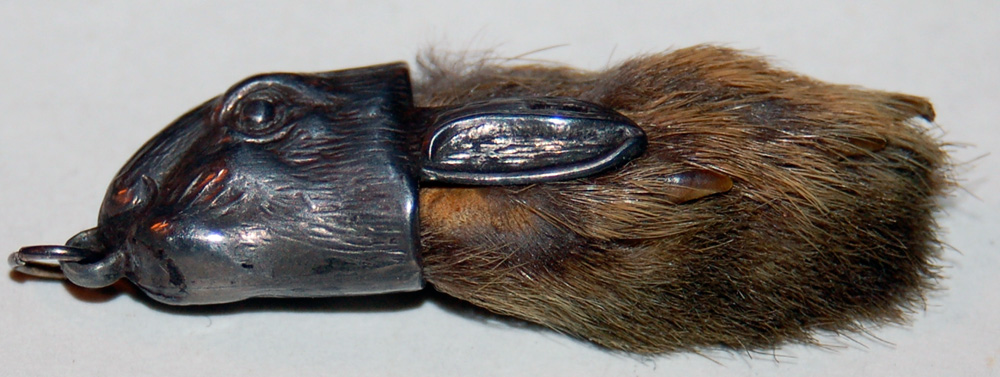
For today’s post, I’m looking at the folklore and magic surrounding one of the most ubiquitous pieces of conjure paraphernalia, the rabbit’s foot.  There are plenty of theories about this particular luck charm, but not much that can be definitely put down regarding its origin or provenance.  Rabbit foot charms have been around since at least the mid-to-late 19th century in North America, and likely predate the Civil War.  They are used for general luck, gambling aids, love enhancers, and other areas where a bit of extra luck might help.

A quick word of warning, however.  Many of the sources I’ll be citing in this post also date from earlier eras, and thus have a great deal of offensive material in them.  There are words that appear here which would likely incite violence if used lightly today, so please understand that I present them here as a piece of the folklore to which they belong.  Just as a smart modern magician finds a reasonable substitution for liquid quicksilver/mercury (and thus avoids madness and poisoning), a wise student of folklore and folk magic remembers that just because a sentiment appears in print doesn’t make it right or appropriate.

There, now let’s move on to some of the good stuff about rabbits’ feet.

Catherine Yronwode provides information on the rabbit’s foot on her Lucky W Amulet Archive, describing  the foot as catalogue offerings from the early-to-mid twentieth century:

As for the foot itself, a circa-1940 mail order catalogue from the Standard O and B Supply Company, a Chicago-based distributor of African-American hoodoo material, offered undyed rabbit foot charms “made with a metal band and a link to attach on chain.” The Johnson-Smith Novelty Company offered identical charms in its 1941 catalogue. The advertisement shown here goes these one better and promises a free vial of Van Van oil with each rabbit’s foot; the formula is a Louisiana hoodoo favourite that “clears away that evil mess” and increases the strength of any good luck charm to which it is applied. Since none of the older catalogues or ads mention any colour when describing rabbit’s foot charms, it can be assumed that the items were undyed and came only in natural tan or white.

She goes on to talk about her uncertainty regarding why a rabbit’s foot might be so lucky:

Why is the rabbit foot lucky? I am not sure. Rabbits are swift and they reproduce prolifically, but the luck of the rabbit foot is monetary and sexual; as far as i know, it is not related to swiftness or fertility. There is considerable evidence that the lucky rabbit foot is a remnant of an African clan totem, an importation related somehow to Br’er Rabbit, the famous protagonist of an African trickster-god myth-cycle.

Yronwode points out that the rabbit’s foot appears in the famous Uncle Remus stories, written by Joel Chandler Harris in 1881.  In a tale entitled “Brother Rabbit and his Famous Foot,” Uncle Remus describes the tricky Br’er (or Brother) Rabbit’s prosperity-drawing mojo bag (which he refers to as a money purse, or dialectically a “money-pus”):

Brer Wolf look at de money-pus, en see w’at in it. Hit ‘uz one er deze yer kinder money-pus wid tossle on de een’ en shiny rings in de middle. Brer Wolf look in afar fer ter see w’at he kin see. In one een’ dey wuz a piece er calamus-root en some collard-seeds, en in de tier een’ dey wuz a great big rabbit foot (Harris p. 223)

So even a rabbit carries a rabbit’s foot for luck and money.  How’s that for strange?  But why is it so lucky?  In a 1973 thesis on conjuration in the works of African-American author (and somewhat accidental folklorist) Charles Chestnutt, Bettye Jo Crisler Carr uncovers some possible reasons behind this talisman:

One might have expected Chesnutt to refer to ghosts who haunt graves, to witches ‘riding’ their hapless victims by night, to conjurers tying bits of roots in tiny bags to ward off evil. But surely his reference to the efficacy of ‘de lef hin’ foot er a graveya’d rabbit, killt by a cross-eyed nigger on a da’k night in de full er de moon’—surely that is something Chesnutt (or Uncle Julius, who seems equally real) has made out of whole cloth.

An examination of folklore sources, however, justifies Chesnutt’s requirements for the rabbit-foot good-luck charm. An informant from Atlanta states that the talisman must, indeed, be the ‘left hind foot of a graveyard rabbit.  Mary Owen, recording her collected tales prior to 1893, adds to the requirement that it must be ‘de lef hine-foot ob er grabe-yahd rabbit kilt in de dahk o’ de moon.’ A Memphis informant states further that the graveyard rabbit must have been killed by a cross-eyed person. Louise Pendleton, also writing before the publication of Chesnutt’s stories, comments that the use of the rabbit foot for good luck ‘may be traced to the fetishism, or worship of guardian spirits dwelling in inanimate objects, of their African ancestors.’ (Carr,  “Charles Chestnutt & the Doctrine of Conjuration”)

So now we can see the process of making the charm has something to do with its luck associations.  If a cross-eyed person could catch a rabbit in a graveyard in the dark, he would indeed have to be very lucky, and thus his luck might transfer to the animal’s foot (this is a bit of a stretch for a reason, in my opinion, but there certainly seems to be a specific tradition involved in collecting this talisman).  Much of this lore is corroborated by Harry M. Hyatt in his five-volume compendium on African-American folk magic, Hoodoo – Conjuration – Witchcraft – Rootwork.   Two prime examples are included here:

Vol.2,p.1541

A RABBIT’S LEFT HIND LEG, TAKEN WHILE THE ANIMAL IS STILL WARM
AND SEWN INTO A BAG, SHOULD BE CARRIED WITH YOU AT ALL TIMES,
AND KEPT UNDER YOUR PILLOW AT NIGHT FOR LUCK.

If yo’ wanta go git a job agin, yo’ could use a rabit’s foot – yo’ use a rabbit’s left foot. Ketch a rabbit, if yo’ kin kill him; if yo’ can’t ketch it, kill it. Well, befo’ he gits cold, take de left laig of dis rabbit off. (Front or back?) De back laig. Take de back laig off while it’s warm an’ yo’ sew it up in some cloth an’ when yo’ go tuh bed at night, yo’ jes’ carry it an’ push it in yore pillah. If yo’ git up tuh go in de daytime, wear it in yore pocket or either yo’ could have it in yore stockin’. Put it in yore hat or shoe or anything an’ jes’ keep it wit chew all de time. Yo’ll have good luck wit de rabbit’s left hind laig. (When you are going out to get a job?) Yes sir.

[Savannah, GA; Madam Pauline; Informant #1274. C575:1-C586:10 = 2136-2167.]

Vol.2,pp.1486-7

A CHARM TO CARRY

BURY THE RIGHT FRONT FOOT OF A RABBIT IN THE CEMETERY.
AFTER NINE DAYS AND NINE NIGHTS, DISINTER IT.
WEAR IT ON A CHAIN OR FASHION IT INTO SOMETHING SIMILAR TO WEAR
AND CARRY IT WITH YOU.

You take off his right feet, yo’ bury it in de cemetery – let it stay dere fo’ nine days an’ nights. Yo’ go an’ git it out from under dere an’ make yo’ a chain an’ put it on yo’ fo’ a locket or either, yo’ know, yo’ kin jes’ have it made into somethin’ den – yo’ know, somethin’-like. Dat’s de rabbit foot. [She laughs.] Den y’ jis’
tote it wit yo’ or either place it fo’ a watch charm or anythin’ like dat – right feet, jes’ one, de front.

[Waycross, GA; Informant # 1125 (Contact man Edwards’s landlady); Cylinder C235:4-C250: 1 = 1816-1831, and C384:1-C392: 5 = 1965-1973]

One of the common threads to the rabbit’s foot seems to be an intimacy with death or the dead.  The rabbit must be freshly killed (or “warm”) or found in a cemetery.  This may have something to do with its luck.  The dead are able to provide luck to the living in some folkloric accounts, and a magical animal like a rabbit which becomes tied to the dead may well be “running” luck back and forth from them to you.  If you are interested in more spells like the two immediately above, by the way, you can find many of Hyatt’s spells transcribed in the Hyatt Spells Yahoo! Group.  If you manage to find actual text volumes of his work and you have an interest in folk magic, buy them.  They will be worth it.

Finally, Ozark folklorist Vance Randolph records a couple of uses of the rabbit’s foot charm in his Ozark Magic & Folklore:

  • Some healers claim to cure hiccoughs by rubbing a rabbit’s foot on the back of the patient’s neck unexpectedly.
  • I recall a girl near Lanagan, Missouri, who wore a peach stone love-charm on one garter and a rabbit’s foot fastened to the other.

This particular lucky charm can be found throughout North America, often sold in roadside stores, children’s candy-and-prize machines, and even gas stations.   It’s commonly rubbed to actually activate the luck, and “fed” with an oil like Fast Luck or Van Van on a regular basis.  If you happen to have one of these in keychain or charm form, I’d love to hear your experiences with it.  Have rabbit’s feet ever brought you extra luck?  Or, as the joke is often made, is it just “unlucky for the rabbit”?

Thanks for reading (and reading and reading)!

-Cory

Blog Post 78 – More Mojos for Success

Back in Blog Post 76, I mentioned that I’d be following up with some other types of success mojos.  Academic success is fantastic, but if you’re not in school it’s probably not going to help you much.  So today I thought I’d take that scholastic success mojo hand and rework it for a few other needs.  I hope it helps!

Building upon the basic Crown of Success mojo, which would generally include a John the Conqueror root in a red flannel sack anointed with Crown of Success oil, you could vary your specific ingredients for particular results:

Better Business – Add herbs like sassafras, five-finger grass, or cinnamon, plus a lodestone and magnetic sand.  Try to use an odd number of ingredients.  Pray Psalm 8 or a similar prayer.

Gentle Judge – A court-case success hand.  Use gravel root, little John to chew/galangal, cascara sagrada  bark, sugar, and tobacco.  Pray Psalm 36 or a similar prayer.

High Rollers – This is a gambling success mojo.  Use Job’s tears, a gator paw, a badger or gator tooth, a raccoon penis bone, a rabbit’s foot, and/or a four-leaf clover charm (primarily use curios for this one).  Pray Psalm 41 or Psalm 62 or a similar prayer.

Lucky in Love – With this success hand, it’s less about attracting a new love and more about strengthening one that exists (say, for example, during the process of courtship and marriage).  Add angelica root, violets, and roses (if trying to court a woman) or vanilla, tobacco, and dragon’s blood resin (for courting a man).  You can use lavender if you’re courting someone of the same sex, as well.  Pray Psalm 139 or a similar prayer.

Make It Rain Money – Add cinnamon, collard seeds, beans or peas, lucky hand root, rice, and/or rose of Jericho (things like seeds, beans, peas, and rice all signify abundance).  Add a lucky penny or a silver dime if you like, or a silver charm like a four-leaf clover.  Pray Psalm 126 or a similar prayer.

There are so many variations on these types of mojos, so please try them out and experiment.  I’ve had a lot of success (and the irony of that is not lost on me) working with these types of hands, so I encourage everyone to give them a try.

I’d like to close this post by sharing something one of our wonderful readers mentioned to me.  Odom of the Evil Eye recently wrote me about an academic success hand he’s working on, and he included an ingredient that struck me as just perfect for that kind of work:  coffee.  He made an excellent point that as a stimulant coffee can help keep one awake and alert, and that the university coffee house is such a ubiquitous piece of the college landscape it almost serves as a shrine to this kind of work.  So good eye for that connection, Odom!

Thanks for reading,
-Cory

Blog Post 74 – Sassafras

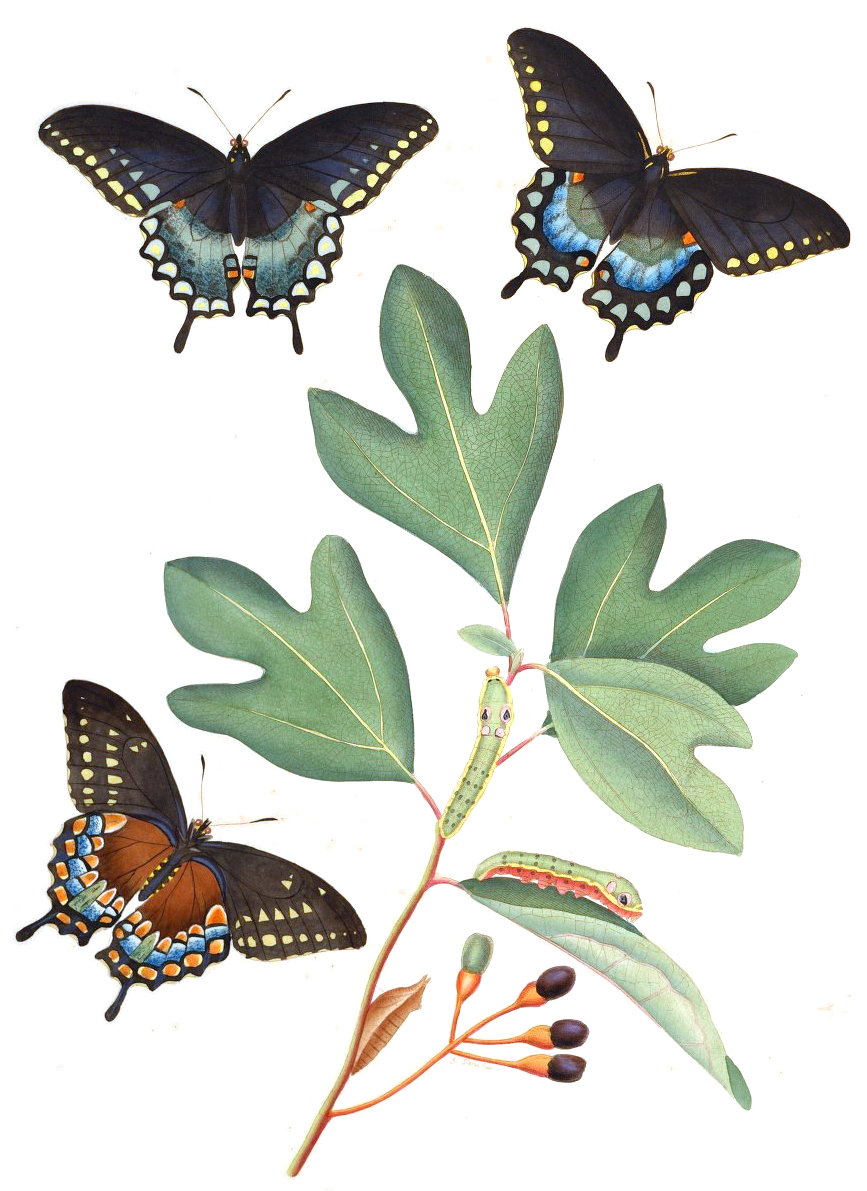
While passing by the cemetery on campus one day, I noticed a few little sprouted saplings with very particularly-shaped leaves.  I got very excited when I moved in closer and saw the definitive “mitten” shape of some of the leaves.  I pinched one and sniffed, smelling a strong spicy aroma almost immediately.  I knew at that point I was dealing with sassafras.

Sassafras is one of those herbs that you can’t avoid in the South.  It grows in all sorts of adverse environments:  roadsides, hedgerows, waste spaces, etc.  It can be short and bushy in its early years of development, but becomes a full-sized tree given enough time.  The roots and bark have long been used in culinary and medicinal applications.  If you’ve ever had a root beer, there’s a chance that you have tasted this plant, as sassafras and sarsaparilla were the two primary flavors in that drink for a long time.  In recent years (since 1960), active ingredient in sassafras, called safrole, has been officially banned by the USDA as potential carcinogen.  So most of the root beer sold now uses artificial flavors to reproduce the sassafras and sarsaparilla taste.  The leaves of sassafras also feature in Cajun cooking; dried and powdered, they become file powder, which is used to thicken stews like gumbo.

Medicinally, sassafras is a tricky root to use.  According to botanical.com, “Oil of Sassafras is chiefly used for flavouring purposes, particularly to conceal the flavour of opium when given to children. In the United States of America it is employed for flavouring effervescing drinks…Aromatic, stimulant, diaphoretic, alterative. It is rarely given alone, but is often combined with guaiacum or sarsaparilla in chronic rheumatism, syphilis, and skin diseases.”  It also seems to have a strong effect on women’s reproductive systems, easing menstrual pain, but also potentially causing abortions.  Several health problems have been connected to consuming overdoses of safrole, including vomiting, collapse, pupil dilation, and cancer.  WARNING!  Consult a physician before taking ANY herb or root internally!  Sassafras is NO EXCEPTION!

Sassafras bark and root have long been made into teas in the Appalachians.  In Foxfire 4, informant Pearl Martin showed students Bit Carver and Annette Sutherland how to gather the herb and make the drink:

“Sassafras is a wild plant that grows in the Appalachians…The spicy, distinct flavor of sassafras makes the tea a popular beverage, served hot or cold…Pearl told us that she could gather roots any time of the year without affecting the taste of the tea.  However, the roots should be gathered young, so they will be tender…She chops the roots from the plants, then washes the roots in cold water.  Next she scrapes off the outer layer of bark and discards it.  Either the roots or the bark can be used in making the tea, but Pearl prefers the roots.  They can be used dried or green.  She brings the roots to a boil in water.  The longer they are boiled, the stronger the tea.  To make a gallon of tea, she boils four average-sized roots [which appear to be about a foot long and an inch thick] in a gallon of water for fifteen to twenty minutes.  She then strains it, and serves it either hot or iced, sweetened with either sugar or honey” ( p. 444).

While the safrole content of the tea is relatively low, again you should consult with a physician before drinking this tea.

Magically speaking, sassafras is a money root.  It attracts business success and material wealth.  Putting a little sassafras root in one’s wallet or purse keeps money from running out.  Catherine Yronwode has several good charms in her Hoodoo Herb & Root Magic book, including a business attracting sidewalk scrub made from sassafras, allspice, and cinnamon (which has the added bonus of a pleasant aroma), and this powerful little Money-Stay-with-Me mojo hand:

“Jam a silver dime into an alligator foot [available from Lucky Mojo and other botanicas and curiosity shops] so that it looks like the ‘gator is grabbing the coin.  Wrap it tightly with three windings around of red flannel, sprinkling sassafras root chips between each layer as you wind, and sew it tight.  Just as the alligator foot holds the coin and won’t let go, so will you be able to save instead of spend” (p. 179).

Sounds like a pretty wonderful charm to know, in my opinion.  I’ve not seen anything particularly about burning sassafras as incense, but I did find a book called A Collection of Folklore by Undergraduate Students of East Tennessee State University edited by Thomas G. Burton and Ambrose N. Manning which records a bit of superstition claiming that bad luck comes if you “burn sassafras wood” (p. 74).  The lore in this particular collection is all from first-hand sources, so I tend to think it’s got some weight.  A similar folklore collection from Kentucky elaborates on this point, saying, “If you burn sassafras wood or leaves, a horse or a mule of yours will die within a week” (from Kentucky Superstitions, #2993).  I tend to think this refers to burning wood in a fire or fireplace as opposed to using a little bit of it as incense, but take your chances as you see fit.  Particularly if your horses or mules are dear to you.

I hope this post has been of some use to you!  Enjoy the slowly waning summer, and get out in the woods to find some sassafras and other plants!

Thanks for reading,

-Cory