Blog Post 14 – An Introduction to Pow-wow, Part I

“Where is the doctor who has ever cured or banished the panting or palpitation of the heart, and hide-boundness? Where is the doctor who ever banished a wheal? Where is the doctor who ever banished the mother-fits? Where is the doctor that can cure mortification when it once seizes a member of the body? All these cures, and a great many more mysterious and wonderful things are contained in this book; and its author could take an oath at any time upon the fact of his having successfully applied many of the prescriptions contained herein.”  -John George Hohman, from the Introduction to POW-WOWS; OR, THE LONG LOST FRIEND

The mysterious folk magic of the Pennsylvania Dutch and their neighbors goes by many names:  Pow-wow, Braucheri, Hexerei, “trying,” etc.  Depending on who you talk to, it may be an extension of Christian prayer or faith healing, a blend of medieval Cabbala and German folk magic, an inherited family practice, a learned set of techniques, an entirely holy healing tradition, or gray-area almost-diabolical sorcery.  There are a range of individual methods to Pow-wow, including written talismans, spoken charms, herbal remedies, and calculated hand-movements.  And I’m not even going to touch the controversial concept of hex-signs on barns yet.

In this series of posts (which will probably go up over the course of the next few days), I want to provide a little bit of background on this rich and interesting magical system, with a few little charms and techniques to try for yourself.  I won’t be getting into great detail yet, as this is a system which many claim takes a lifetime to fully master, but I will be presenting a bit of the lore associated with Pow-wow and pointing you in the direction of a few really solid resources on the subject.

Where does Pow-wow come from?

Because of the syncretic nature of Pow-wow magic, it’s hard to say definitively that Pow-wow comes from one place and one place only.  Very loosely, it stems from German immigrants, but even that isn’t a clear-cut provenance.  As Chris Bilardi puts it in his braucherei text, The Red Church:

“The ‘Germany’ of that period [late 17th century] was, in fact, ‘the Germanies’ – many German principalities and duchies under the Holy Roman Emperor” (p. 41)

Bilardi goes on to point out that many Old World central and northern European cultures migrated here under the German banner, including those from modern-day Poland, Holland, and Scandinavia.  Still, many of these peoples had certain cultural commonalities.  When they came to America, many of these Germanic immigrants pursued unorthodox religious or spiritual paths.  Bilardi refers to two distinct groups of Pennsylvania Germans, the “Plain Dutch” and the “Church Dutch” (‘Dutch’ here being a corruption of the word deustche, the word for the German language).  There was strong religious diversity in the New World, including groups like the Moravians, the Brethren, the Anabaptists (now the Mennonites and the Amish), the Schwenkfelders, and the Lutherans.

In Gerald C. Milne’s text about PA-Dutch and Appalachian German magic, Signs, Cures, & Witchery, he states that, “By 1776, between 110,000 and 150,000 Germans had come to Pennsylvania, many of whom belonged to nonmainstream sects” (p. 5).  This large influx of mystically minded people resulted in a proliferation of distinctly magical practices.  For example, there were the Eckerlin brothers – white-robed Christian ascetic mystics from the late 18th century.  Milne also points out that many of the Germans arriving in America by the 18th century and beyond were well-versed in astrology, and even planted their crops ‘by the signs.’ (p. 31-33).  Old World magical practices, many inherited from grimoire traditions based on dusty tomes like The Egyptian Secrets of Albertus Magnus also came across the Atlantic.  Home remedies, simple magical charms, and astro-agricultural advice began to be collected in almanacs.  The most famous of these was Ben Franklin’s Poor Richard’s Almanack (sic), which held such saws as “Early to bed and early to rise makes a man healthy, wealthy, and wise.”  Milne notes:

“German-language almanacs were widely distributed on the eighteenth-century frontier.  This held secure a distinct occult-centered cosmology in the minds of early German pioneers that went hand in hand with other occult curing and healing methodologies” (p. 32).

The proliferation of these magical pamphlets and almanacs spread the central ideas of what would become known as Pow-wow around the north-central Atlantic coast, the Appalachian mountains, and inland into the frontier-lands.   One such almanac was the famous Long Lost Friend, by John George Hohman, which outlined many of the practices still used today.  I’ll have some of the charms from this book to try out a little later in the series, but for now it’s enough to know that by 1820 (the date of Hohman’s publication), this form of magic had taken on a distinctly American flavor and had become a key part of the Pennsylvania-Dutch cultural landscape.

Okay, that’s it for today.  I’ve got more coming on this topic, so be on the lookout for additional posts this week!

Thanks for reading!

-Cory

Blog Post 10 – Weather Work

We recently received a nice blanketing of snow here (which is somewhat rare for our area), and it got me to thinking about weather magic.   When I was little, before we moved to the farm, I used to go out to the dirt hill near our house with a big staff in my hands and shout at the wind, seeing if I could get it to gust up or gentle down.  I remember feeling like I always had a strong connection to weather, particularly those winds.  When we moved out to the farm, my understanding of weather changed dramatically.  Our house was on a hill at the top of our acreage, and we were exposed to a number of tempests, some of which were quite severe.  When we had snow, 4-foot drifts piled up off of our back porch, deep enough that when I jumped into them I was buried up to my chest.  And  I still remember waking up one morning and looking out the window only to see a tornado receding back into the clouds after having passed but a quarter-of-a-mile or so from the house and uprooting a number of trees.  Being a teenager, I had slept through it, of course.

What I learned on that farm was that weather was wild, and would always be wild.  It’s something we can react to, prepare for, run from, or attempt to block out, but we can never really control it the way we like to think we control so many other things—the cleanliness of our water or where our next meal comes from, for example.  Magic seems to have the advantage over empirical science here, as many magicians swear by inherited techniques that allow them to control or predict the weather to one degree or another.

Today I thought it might be worthwhile to take a look at a few techniques, charms, and proverbs regarding the weather from various North American sources.

From Nova Scotia (in Folklore of Nova Scotia, by Mary L. Fraser):

“An Acadian boy would not dare to kill a toad or a spider, for his outdoor pleasure would then be spoiled by the downpour of rain that was sure to follow. A boy of Scotch or Irish descent would be deterred from doing so because it would bring him bad luck.

‘If you wish to live, not die,

Let the spider go alive.’”

I’ve heard this before as an admonition not to harm toads (and for some reason, I always assumed lizards) when out of doors, for fear of bringing on bad weather.  The spider is a new twist for me, but I generally try not to disturb any of the bite-ier creatures out in the wild world.

Mary Fraser also reports a weather-predicting system I’ve seen in a couple of places.  She mentions that the twelve nights between Christmas and Epiphany represent the coming twelve months of the year.  In other words, if you have cold, wet weather on the third day after Christmas, you can expect a rather clammy and dismal March.

From the Pennsylvania Dutch (in The Long-Lost Friend, by J. G. Hohman):

For protection of one’s home against storms, say “Beneath thy guardianship I am safe against all tempests and all enemies, J. J. J.”  (These three Js signify Jesus three times.)

Chris Bilardi, in his excellent book on PA-Dutch braucherei, The Red Church, suggests the following Psalms for weather-work:

  • Psalm 2 – For danger at sea (storms); also for headache
  • Psalm 21 – For dangerous storms at sea
  • Psalms 24 and 25 – For dangers of nature—especially the danger of floods
  • Psalm 76 – For averting danger from water

From the Appalachians (in the Foxfire series of books):

It will be a bad winter if –

  • Squirrels’ tails grow bushier
  • Crows gather together
  • The wooly worm has a heavy coat
  • Onions grow more layers
  • Blackberry blooms are especially heavy

It will rain –

  • Within three days if the horns of the moon point down
  • If  leaves show their backs
  • If cows are lying down in the pasture
  • If there is a ring around the moon (count the stars in the ring and it will rain within that many days)

The weather will be fair if –

  • You hear a screech owl
  • Smoke rises
  • Crickets holler (the temperature will rise)

Additionally, here are some bits of lore from the Appalachians:

  • If it’s cloudy and smoke rises, there’s a chance of snow
  • The number of days old the moon is at the first snow tells how many snows there will be that winter
  • For every frost or fog in August, there will be a snowy day in winter
  • A late frost means a bad winter
  • The darker green the grass is during the summer, the harder the winter
  • If it rains on Easter Sunday, it will rain every Sunday for seven weeks
  • If it rains on ‘Blasting Days’ (the three longest days of the year, there won’t be any ‘mast’ (acorns, chestnuts, etc.) for animals like hogs to feed on

From the Ozarks (in Ozark Superstitions and Ozark Magic and Folklore, by Vance Randolph):

Rain will come –

  • If the tall grass is bone dry in the morning, or if there is heavy dew
  • If rabbits play in a dusty road
  • If dogs start eating grass
  • If sheep turn their backs to the wind
  • If cats sneeze, wash behind their ears, or lick their fur against the grain

Signs of dry weather –

  • A red sunset promises at least twenty-four hours of dry weather
  • A rainbow in the evening means clear weather (but a rainbow at morning tells of a storm in the next twenty-four hours)
  • A ‘sundog,’ or a circle around the sun, indicates prolonged dry weather, or at least a radical change in weather soon
  • When the crescent moon travels ‘horns up,’ there will be no rain for some time

And finally, one of the most interesting weather-predictors around, also from the Ozarks:

“The blood of a murdered man—bloodstains on a floor or garments—will liquefy on even dry sunshiny days, as a sign that a big rain is coming”

This is only a small sampling of everything out there.  I’ve used many of these predictors (leaves turning their backs or cattle lying in a pasture) to prepare for bad weather, and there are many I’ve never even thought to pay mind to (rabbits in a dusty road, for example).  So what about you, dear readers?  Do you have any family or local lore regarding the weather you’d like to share?  If so, please post a comment or send us an email, and indicate roughly what part of the world you’re in and what your weather charm or proverb is.  We may do a show on these if we get enough interest!

I’d also like to issue a friendly challenge to you:  make mental note of a few of these and start paying attention to them.  See if they actually do predict or cause weather patterns for you in your area.  Report your findings back here and share your observations with the rest of us.  Who knows, we may read your results on the podcast, or something better (he said slyly).

I hope wherever you are, the weather’s treating you fair.  If it’s not, you can always contact your neighborhood witch.

Thanks for reading!

-Cory

Blog Post 9 – Groundhog Day

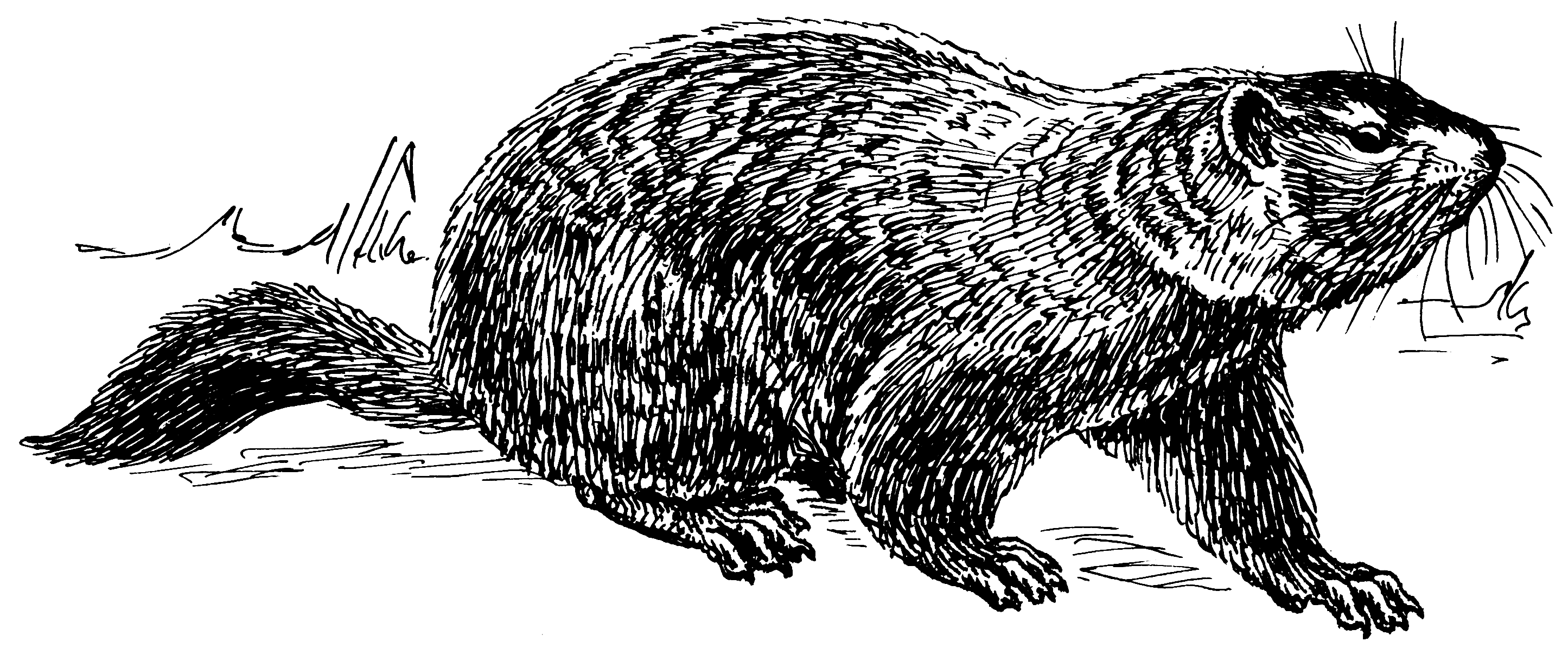
Today we’re migrating a little bit outside of New England proper and into territory which we’ll be covering more extensively at a later date.  But in honor of Groundhog Day, I thought it would be fitting topay a visit to Punxatawney Phil, the ground-dwelling rodent whose annual weather prediction is the subject of great ceremony (and a rather funny film featuring Bill Murray).

Most people know the traditions associated with this holiday (or its sister holiday, Candlemas), but in case you have been living—like Phil–under a rock, in a cave, or in a town library attended to by men in top-hats—if the holiday marmot pokes his head outside after sunrise on February 2nd and sees his shadow, winter will linger for a while longer.  If he doesn’t, you can expect an early spring.  There are dozens of variations on the exact way to interpret that weather prediction.  My personal favorite is the absurd truism “if he doesn’t see his shadow, only 6 weeks until spring; if he does, 6 more weeks of winter.”   I’ve already referenced one proverb about this holiday in a previous post, but there are a couple of poems related to this holiday which illustrate its lore.  The first is Scottish in origin:

“If Candlemas be fair and bright
Winter will have another flight
If Candlemas be cloud and rain
Winter will be gone and not come again”

And here’s one from 17th-century poet Robert Herrick (whom you may know as the author of “To the Virgins, to Make Much of Time”):

Ceremony upon Candlemas Eve

“Down with the rosemary, and so
Down with the bays and misletoe;
Down with the holly, ivy, all
Wherewith ye dress’d the Christmas hall;
That so the superstitious find
No one least branch there left behind;
For look, how many leaves there be
Neglected there, maids, trust to me,
So many goblins you shall see.”

The lore surrounding this day comes from a couple of key sources.  The best known is probably the European tradition of the Candlemas Bear or Badger.  These animals would stir (or in some cases, be coaxed) from their winter dormancy, and observers would make note of their reaction to the environment outside.  Then a prediction of spring’s eventual arrival could be made and plans could be laid for things like tilling and planting crops.  The selection of the groundhog as the New World substitute is outlined by Gerald C Milnes in his Signs, Cures, and Witchery:

“The badger was…used as a weather predictor in Germany, but in the New World, Pennsylvania Germans substituted the groundhog for this role because skunks [whose fat or ‘grease’ the author notes was used as Old World healers used badger fat], unlike badgers, do not hibernate…German Protestants brought the old weather-predicting tradition to Pennsylvania, where it is still actively observed in some German communities.  Groundhogs were substituted for the badger (and bear) traditions o fEurope.  Now the hibernating groundhog has their supposed powers to predict the weather.”

But why did this holiday catch on so widely when so many other holidays and traditions—such as First Footing or Belsnicking (see Milne for more on this mumming tradition)—remained highly localized?  Well, it is certainly a fun holiday, and seems antiquated without being stuffy.  In Punxatawney, Phil is cared for by a group known as the Inner Circle, town elders who dress formally for the occasion of Phil’s prognostication in what sometimes seems a silly parody of Lodge traditions like the Masons.  The general good humor of the occasion (other than the poor rodent, who probably just wants to go back to sleep) has likely fueled its popularity.  But my favorite explanation comes from Jack Santino, in his book All Around the Year:  Holidays and Celebrations in American Life:

“In spite of all this obvious phoniness, we still pay attention to the groundhog’s prediction, as trumped up as it may be.  This probably has to do with the fact that Groundhog Day is the first time that we direct our attention in any formal way towards the coming, much-anticipated spring.  It works for us because after a long January, winter is getting old.  February is a difficult month to get through, even though it is short.  Any indication of an early spring is eagerly welcomed, and Groundhog Day is the first tentative look ahead.”

Santino also connects the groundhog’s celebration to another February holiday:  Valentine’s day.  He notes that the original date for Groundhog Day (in the pre-Gregorian calendar) was on the 13th or 14th of February.  Likewise, the Candlemas bear became a diminished cutie—the teddy bear often given to a loved one on Valentine’s.  I find this connection a bit tenuous, but fun to consider nonetheless.

I should also note that Phil is not the sole weather-predicting critter in the business today.  There are also such famed meteorological marmots as Buckeye Chuck (in Ohio, naturally), Woodstock Willie (Illinois), and Balzac Billy (in Alberta).  Silly as all this may be, I would once again submit that the attentive witch can learn something on Groundhog Day.  Sure, there’s the witchy notion that observing the animals can help predict future events, but I’m more inclined to say the lesson here is that sometimes, it’s okay to smile and laugh at tradition.  There’s a time and a place for the somber and serious, but there’s also a time and a place for a little mirth in the mix.

For those seeking to balance Groundhog Day out with something a little more significant, Candlemas itself is still a holiday for Catholics, as well as some Protestant denominations and even some Pagans and neo-Pagans (myself included).  In the Christian tradition this is the day for the presentation of Jesus at the temple by his mother, Mary.  Christians bring candles to the church to be blessed so that they can be burned throughout the year for loved ones.  Many neo-Pagans celebrate the first or second day of February as Imbolg, dedicating it to goddesses like Brigid or Hestia.  All of them, though, share something in common with Phil:  they’re all looking forward to warmer days and brighter times.

So whatever you’re celebrating today—Groundhog Day, Imbolg, Candlemas, or even an early Lupercalia—I wish you a joyous day and a warm fire to keep you through the remains of winter.

Thanks for reading!

-Cory

Blog Post 8 – Seaside Sorcery

De Windstoot, by Willem van de Velde II (from Wikimedia Commons)

Hello!  Today I’m going to take a look at some of the coastal magic found in Northeastern America and Canada (Southern coastal magic will be in a later post, I hope).  In the early days, American colonies and states depended greatly on foreign trade for supplies.  The wealth of natural resources here were valuable to people across the sea as well, and so much of the commercial backbone of North America during those years depended on seaports and sailing vessels and all those men and women who operated them.

I’ve always found that folks involved in seafaring business are a superstitious lot (and I mean that as a compliment, as I find superstition fascinating and useful in many cases).  At the very least, the vast ocean inspires people to consider their own smallness and to take precautions against their mortal end at the sea’s merciless whim.  With that said, let’s look at some stories, anecdotes, and practices from the Northeastern coasts of North America.

Some stories from Maine:

“The Cursing of Colonel Buck”, as retold by S. E. Schlosser.  In this story, an unscrupulous colonel takes advantage of one of his maids, then turns her out when she bears his sadly misshapen child.  In order to prevent any claims on his name, he accuses her of witchcraft and has her burned at the stake.  She curses him (perhaps his claims of witchcraft were not so unfounded) as she dies, and her leg falls from the pyre, where her son gathers the leg and runs away.  After the colonel dies, his tombstone develops a funny leg-shaped mark on it, which embarrasses the townsfolk.  They toss it in the ocean, but it comes back ashore.  Then they smash it and put up a new stone, but the leg-mark comes back.

So where’s the New World Witchery in this story?  Well, this tale is probably extremely exaggerated.  The main clue is that the witch is burned at the stake, a holdover from European witch-lore, but not a punishment found in the New World.  However, there’s one small fragment of worthwhile witchery in this tale:  the first reaction of the townspeople is to throw the stone into the sea.  The idea that natural water sources, especially moving ones like oceans and rivers, can cleanse cursed objects is solidly founded in other magical lore (see Albertus Magnus or hoodoo trick deployment practices).

Buying the Wind, by Richard M. Dorson, contains several excellent bits of Maine magical lore.  For example, in the title passage, the practice of “buying wind” is discussed.  Captains and crewmembers on becalmed ships would often be tempted to throw money overboard in order to purchase a quantity of wind from God/nature/the sea/etc.  The problem arises in that the quantity purchased is always vastly more than one expected to buy.  As one of Dorson’s informants puts it:

“Never buy wind when you’re on a boat.  You’re daring God Almighty, and he won’t stand for that.  You’ll get all the wind you want.”

In one tale, a captain tosses a quarter overboard, and immediately such a gale rises that it tears off the sails and mast from the ship and pushes it into shore, where it barely holds together as the crew disembarks.  The captain remarks that if he’d known God sold wind so cheaply he’d only have got a nickel’s worth.

Is this witchcraft?  Well, no, not exactly.  But the practice of buying something to control the weather is fairly common witch-lore.  Many tales exist of sailors buying cauls (the membrane which sometimes covers a newborn’s head after emerging from the womb) from dockside witches to prevent drowning at sea.  And those same dockside sorceresses sometimes sold knotted cords to help sailors call up wind as needed—each knot, when undone, would release an increasing amount of wind.  So buying the wind is certainly a magical maritime practice, if not outright witchery.

Magic and Witchcraft in Nova Scotia:

An interesting tale regarding a hidden treasure is recorded in Folklore of Nova Scotia, by Mary L. Fraser.  She writes:

“An old sailor who spent his life as a deep-sea fisherman around the coasts of Nova Scotia and Newfoundland told of a great iron chest that was buried just beneath the water, so that its outline could be seen very distinctly. Every time the crew tried to work around it and, raise it up, thousands of crows, one of which was headless, would swarm around them, so that it was impossible for them to get at it. These crows they believed to be helpers of the decapitated guarding spirit.”

This tale is interesting, to me, because of the clear association of spirit allies with a sacred duty (such as guarding a treasure).   I can’t think of many witchier images than a murder of crows—including a headless one—swarming all over treasure-grabbers.

The same volume has several good bits of weather-lore, too:

  1. “If Candlemas day be fine and fair, The half of the winter’s to come an’ mair.”
  2. “Mackerel skies and mare’s tails, Make lofty ships carry low sails.”
  3. “A rainbow in the morning the sailor’s warning, A rainbow at night is the sailor’s delight.”
  4. “Heavy winds kick up a rain.”

The first of these is an old tradition which most people now know as a component of Groundhog Day.  I plan to do a post specifically on some of the traditions associated with early February sometime soon, so I’ll save further exposition on it here.  The second proverb refers to cloud patterns in the skies.  If high wispy clouds (“mare’s tails”) were seen along with clumpy scale-like cloud patterns (“mackerel skies”), then it was a good indication a storm would be coming soon and the sails should be lowered.  The third bit of wisdom is fairly common, though sometimes in different iterations (I know it as “red skies at morning, sailor take warning; red skies at night, sailor’s delight”).   Basically it just means that the weather conditions at dawn or dusk foretell the weather to come.  And the fourth quote is a logical enough assertion that where high winds blow at sea, rain is sure to follow.

Again, are these witchy?  Only insofar as the astute witch would know such proverbs and make use of them in his or her daily practice.  Reading the signs Nature provides has a lot to do with the mentality of witchcraft, which is constantly looking to the natural-and-other-worlds for guidance, instruction, and wisdom.

A Sailor’s Treasury, by Frank Shay, also supposedly provides a good many of early American sailors’ tales and charms (I cannot give a full recommendation as I have only been able to view snippets online, and no nearby library seems to have a copy of this out-of-print text).

Whew!  I’ve only presented a fragment of the nautical witchcraft out there, and already it’s a lot.  So I’ll save more seaside witchery for another day.

Thanks for reading!

-Cory

Blog Post 6 – More Colonial Witchcraft

I couldn’t resist the urge to share a few more witchy stories and spells from the early American period.  Let’s start with a little history.  Most folks know about the famous Salem, MA (or rather, Danvers, MA to be more accurate) witch trials.  While these were certainly a major phenomenon in our collective history, Massachusetts was only one colony among thirteen.  So what about witchcraft in the other colonies?

Generally speaking, witchcraft was not treated with such a hard nose nor such an iron fist in other parts of Colonial America.  Witchcraft was generally frowned upon, true, but only in that the term “witchcraft” meant intentional magical malfeasance against one’s neighbors.  Any such bad behavior—stealing, slandering, etc.—was met with equal disdain.  There were witchcraft trials, but these were mostly settled with civil penalties rather than criminal punishments, and religious insurrection did not seem to enter into the argument.  Gerald C. Milne, in his tome, Signs, Cures, & Witchery, describes one a Pennsylvania witch trial as overseen by state founder William Penn himself:

“Penn dismissed the charge of bewitching cattle…and suggested (tongue in cheek)that there was no law against ‘riding a broom’ in Pennsylvania.  He found her guilty onlyof having a ‘witch’s reputation’ and ordered her to practice good behavior.”

In Pennsylvania, the growing tradition of Pow-wow meant that most settlers in that area were at least familiar with the idea of magic, and recognized that it could be used to heal as well as harm.  Chris Bilardi, in his excellent book The Red Church, discusses braucheri, or German-American folk magic and healing.  He makes the point that in many communities, a braucher was an essential part of local life, and would no more have been thought of as a “witch” than a country doctor or veterinarian.

In Virginia, by 1706 it was a crime to accuse someone of being a witch at all, as it was a form of slander to a person’s character.  No acts of witchcraft after that time were brought to capital trial in that state.  In North Carolina, a similar legal precedent was set when a case was dismissed against a woman in 1712, despite her clear confession to the practice of witchcraft.  More is available on these incidents here and here.

Still, despite the leniency of most colonies, the chief impressions of American witchcraft from the early days of the Republic have been drawn from those dark days in Salem.  To that end, I thought it would be worth looking at a literary example of witch-lore.

Young Goodman Brown, by Nathaniel Hawthorne (I like this version myself, as it is a PDF, but a quick Google search of the title will yield webpage versions of the tale).

I’ll not reprint the entire story here, but I do recommend reading this chilling—and weirdly funny at times—tale of witchcraft in a Puritan village.  Hawthorne had a conflicted relationship with witches (his great-great grandfather was a judge at the Salem trials, a fact young Nathaniel would do his best to overcome).  The entire tale portrays the spectral encounter of its title character with a town full of occult and devilish witches, and doesn’t make the witches particularly sympathetic at first glance—in fact, the witches seem to be primarily interested in corrupting Goodman Brown and turning him into a diabolical reveler.  However, I tend to take the story’s “wicked witch” bent as being critical of the Puritan society to which Hawthorne was so embarrassed to have been connected.  There are MANY elements of traditional witchcraft embedded in this piece of fiction, including:

  • Meeting a fetch-self/”devil” on a crooked road
  • Crossing thresholds (forest boundaries or doorways, for example)
  • A serpentine staff, not entirely unlike a stang
  • A “flying ointment” recipe, of sorts
  • “Staff-riding” to travel great distances quickly
  • A Witches’ Sabbath, and an initiation (sort of)

In the end, Goodman Brown is unsure if his encounter was a dream or reality, but it leaves him changed anyway, which can be said for many witches and their experiences between the worlds, I think.

Finally, I thought another witchy (and somewhat less grave) story set in those early days might be a good way to end this post.  This one is from Rhode Island, and is recorded in In Old Narraganset, by  Alice Morse Earle-1898 (a word of warning, this tale is recorded from an earlier time, and the author clearly did not have a problem portraying racial stereotypes in the broadest and most demeaning fashion…I present the tale here because its magical significance is real, not because its characters or authorial tone are worthy of emulation).  From archive.org:

“The Witch Sheep” by Alice Morse Earle.

There are a few things I like about this story.  Firstly, that the magical aspects of the tale are fully integrated with daily life—no one questions Tuggie’s abilities, and her occult power doesn’t lead others to shun her unless she’s actually doing a working against them.  That the wife actually likes to have Tuggie around during soap-making because she can charm the project and make it work is particularly noteworthy to me.  Secondly, I think it’s interesting that “Voodoo” (which sounds more like hoodoo in this story) was a part of the magical landscape up in Rhode Island at this point, and that there are several types of spells with good hints as to how they might be executed in this tale.  The rabbit’s foot that Tuggie boils in the pot to work her “project” on Mum Amey makes me think that she was trying to cause her lots of little accidents and stumbles, but nothing seriously harmful.  Well, that or there was some kind of Fatal Attraction thing going on.  And the final thing I enjoy about this tale is that it is funny.  For all the magic in the story, and the hexing and witchery and other toil-an-trouble, in the end it’s a story about a sheep in drag, and that’s downright amusing.  At least to me.

Thanks for reading!

-Cory

Blog Post 3 – Some Examples of Colonial Magic & Witch-lore

Magic in America has been around for a long time.  Today I thought I’d present a few examples of magical lore and charms as practiced in America from its first contact with European culture through around the early 19th century.  Note that this is not an attempt to create any kind of authenticated, unbroken lineage for the practice of religious witchcraft, but rather some illustrations of American witchcraft in its practical and literary forms.  I hope you enjoy!

“[T]his way of discovering Witches [by forcing a confession or demonstration of witchcraft], is no better than that of putting the Urine of the afflicted Person into a Bottle, that so the Witch may be tormented and discovered: The Vanity and Superstition of which practice I have formerly shewed, and testified against. There was a Conjurer his name was Edward Drake who taught a Man to use that Experiment for the Relief of his afflicted Daughter, who found benefit thereby; But we ought not to practice Witchcraft to discover Witches, nor may we make use of a White healing Witch (as they call them) to find out a Black and Bloody one.”

-From The Wonders of the Invisible World, by Cotton & Increase Mather, 1693

In the passage above, taken from a text by two rather notorious witch-hunters in Colonial history, there are a couple of things well worth noting.  First, there’s a good broad reference to the famous witch-bottle, about which there are plenty of theories.  Generally a witch-bottle is a glass or ceramic jar filled with pins, nails, bits of iron and glass, and other unpleasant things.  Urine is then added to the bottle (depending on who you talk to, it may be one’s own urine or the urine of a “target;” some modern witches use spit instead of urine).  The bottle is the buried, again depending on the lore you find, in either one’s yard or far, far away from one’s home.  It then acts to tear apart any harmful spells or spirits that come against the bottle’s creator, or in some cases it may cause a particular wicked witch physical torment, thereby revealing her.  I tend to go with the protective interpretation of it, and the burial on my own property.  In that way it works sort of like a “ward” to me.  But I could go on forever about witch-bottles, and might spend some time on a future podcast discussing them.  For now, their existence in Colonial New England is enough to go forward.  The second point of interest in this passage is the reference to the “White healing Witch” near the end of the entry.  This relates back to the Cunning Folk of Merry Olde England, who were known to repel the spells and works of “Black and Bloody” witches (their “repelling” power earned them the nickname “pellars” or “pellers,”  a term which is sometimes used by modern Wiccans as a derogatory epithet).

Next, let’s look at some of the charms used in rural New England pre-20th century:

“For generations back the Gloucester [Rhode Island] farmers have believed in wizardry.  They will do much of their work only during the full of the moon.  Otherwise they would expect to die or have very bad luck.  Planting must not be done until the signs of the zodiac are propitious, and gardens must never be plowed on Fridays.  Even a tooth must not be pulled unless the stars are right; if it is, it will come hard and cause great suffering.

Pork, if killed during the small of the moon [waning], will shrink to nothing in cooking, while that butchered at the full moon will continue white and firm.  To insure luck in the management of domestic animals, the sign of the zodiac must be in the leg.  The wishbones of all fowls are preserved on sticks.  Some families keep hundreds on hand all the time.  When the zodiacal sign is in the head, then the Gloucester people believe that one can do the most at catching pickerel and can hook the biggest fish.  Hence the almanac hung by the kitchen fireplace in all Gloucester houses is a thing that settlers could not live without.  Its study, if one would reap good harvests, ‘catch’ good clamming tides, and avoid misfortune, is imperative.

These people also believe that if you take up a black snake and bite it your teeth will never decay; that if the nails are pared on a Friday, toothache will be prevented, and that a child born in the heat of the day can see into the future, and will be exempt from the influences of witchcraft.  A ship that has such a one on board they say will never sink.”

-From “Ghosts and Witchcraft:  A region in New England where superstition thrives,” New York Times.  6 April 1889

This little entry—which dates from the late 19th century but relates traditions likely stretching back to pre-Revolutionary times—is loaded with interesting magical lore.  Much of it relates to the practice of farming according to the phases of the moon or the signs of the zodiac (see the excellent first volume of the Foxfire book series for more information on this concept).  The inclusion of healing by the zodiac is also interesting, and I believe that it also shows up along with farming by celestial design in Vance Randolph’s Ozark Magic & Folklore.  The basic idea behind this practice is that the influence of the moon—and to some extent the stars—on the natural cycles of earth and people can be predicted and used to improve conditions.  For example, one would plant root crops and tubers in the dark of the moon because they grow in darkness.  There are many who swear by this kind of farming.

The other scatterings of folk charms and remedies, such as biting a black snake to carry away tooth rot, are based more on the principle of sympathetic magic.  The black snake carries the black rot into the black earth, where it will dissipate and never harm the person again.

What has all this to do with witchcraft, then?  Well, a good witch is usually aware of natural cycles (even if he or she is not an astrologer, a witch should be able to tell you the phase of the moon and pick out a couple of constellations in the sky, in my humble opinion).  And, as a witch would likely be sought out to help bring prosperity or to heal certain afflictions, having this kind of knowledge certainly can’t hurt from a magical standpoint.  Again, in my opinion.

Finally, I thought I’d leave you today with a little bit of lore from rural New York:

CATSKILL GNOMES

Behind the New Grand Hotel, in the Catskills, is an amphitheatre of mountain that is held to be the place of which the Mohicans spoke when they told of people there who worked in metals, and had bushy beards and eyes like pigs. From the smoke of their forges, in autumn, came the haze of Indian summer; and when the moon was full, it was their custom to assemble on the edge of a precipice above the hollow and dance and caper until the night was nigh worn away. They brewed a liquor that had the effect of shortening the bodies and swelling the heads of all who drank it, and when Hudson and his crew visited the mountains, the pygmies held a carouse in his honor and invited him to drink their liquor. The crew went away, shrunken and distorted by the magic distillation, and thus it was that Rip Van Winkle found them on the eve of his famous sleep.

-From Myths and Legends of our Own Land, by Charles M. Skinner, [1896], at sacred-texts.com).

There are lots of lovely craft-related bits to unpack in this tiny tale:  metal-working, shape-changing liquors, supposedly long-dead men cavorting with the living, etc.  But I’ll leave it to the attentive reader to make of this story what he or she will, because I’m just a wee bit diabolical that way.

I will go ahead and point out that Skinner’s story was published in 1896, and while some of his stories in that same volume have precedents dating back to at least the early 19th century, I’ve also seen some indications that he elaborated his tales occasionally, too.  The connection to the Washington Irving tale of “Rip Van Winkle,” however, makes me feel that this story is at least connected to the same folklore that Irving (who published around the 1820’s) was drawing from.

That’s it for today!  Thanks for reading!

-Cory