Blog Post 140 – Pins and Needles

Really, this entry should be called “pins & needles & spikes & nails & all other kinds of spiky things,” but that would have been an overly long title, so I’m standing by my choice. What I’ll be looking at today are folkloric occurrences of piercing devices as magical tools. This will probably overlap a bit with my entry on iron, but I’ll attempt to cover more new ground than old.

Probably one of the first things to come to mind when looking at sharp-and-pointy things is the popular “voodoo doll,” which is essentially a European-style poppet. These poppets are stuffed with botanicals, curious, dirt, rags, and/or personal items from the intended target and then manipulated to control him or her. Films and television frequently portray only harmful magic being done through these dolls, but a witch or conjurer can also use them to cast love spells, healing spells, or even health and wellness spells. I’ll probably try to do a separate entry on doll magic another time, but it’s worth a mention here, too, I think.

There are some African roots to the voodoo doll phenomenon,  including the minkisi minkondi, which were little wooden dolls from Kongo where spirits were thought to live. The doll’s owner would drive a spike into it to “provoke the forces within them” and then the owners would be able to command the spirit to perform certain tasks (Chireau, Black Magic: Religion & the African American Conjuring Tradition). Other cultures have certainly used small effigies of human beings to cause hurt or help, as well. Denise Alvarado has a book which examines these dolls in detail, including a look at corn dollies, fetishes, Greek kolossoi, and other similar magical poppets.

Of course pins and other sharp objects can be used to cause magical harm even without the use of a doll (which makes sense according to the Doctrine of Signatures, which has tremendous influence on much folk magic). Zora Neale Hurston recorded a sinister curse which involved taking nine new pins and nine new needles and boiling them in a nefarious formula called “Damnation Water” in order to cross one’s enemy (Hurston, Hoodoo in America). An old-world carry-over (likely from England, but found in Southern communities where conjure is common) says that burying a pin taken from the clothes of a living person with a dead person will cause the target to die within a year (William G. Black, Folk Medicine).

Probably the most One of the more gruesome application of pin-and-needle magic had little to  do with the magical effects of these tools, and all too much to do with their physical dangers: “One instance is given [in an account from 1895] of ‘toad heads, scorpion heads, hair, nine pins and needles baked in a cake and given to a child who became deathly sick’” (“Conjuring and Conjure-Doctors in the Southern United States,” Journal of American Folklore, p. 143). Curing magical maladies often involved finding pins used in spellwork and disposing of them in a ritual way: “He went at once to the hearth, took up a brick, and found sticking in a cloth six pins and needles. He took them up, put salt on them, and threw them in the river. The needles and pins were said to be the cause of so many pains”( “Conjuring…”, JAF, p.145).

A number of ‘Shut-up’ spells—tricks that involve tying the tongue of a gossip or potential witness against you in court—involve taking a slit tongue from an animal like a cow or sheep, packing it with hot peppers, vinegar, and/or salt along with the name paper of the target, and pinning it up with a number of pins and needles (usually nine, but not infrequently more).

Not all piercing spells used metal points. An account of Clara Walker, a former slave from Arkansas, describes her getting help from a rootworker who made a mud effigy of her master and ran a thron through the back of it, causing severe back pain in him (Chireau, Black Magic…)

Pins and needles needn’t be solely used in malicious work, however. A healing spell from England resembles wart charms in Appalachia and some of the rootworker cures from Hyatt’s Folklore of Adams County, requiring pins that have been used to poke or pierce a wart to be sealed in a bottle and buried in a newly-dug grave (Black, Folk Medicine).  An account of a mojo bag from the days of slavery tells of “a leather bag containing ‘roots, nuts, pins and some other things,’ which was given to [the slave] by an old man” (Chireau, Black Magic…). The purpose of this bag was to prevent whippings on the plantation where the slave toiled, which could be quite severe.

Pins are also frequently used in witch-bottle spells, which cover a number of different magical traditions, including this version from hoodoo: “Bottles of pungent liquids, pins, and needles were interred by practitioners or strung on trees as a snare for invisible forces” (Chireau, Black Magic…). It would be an egregious error of me not to at least mention coffin nails, too, which are frequently applied in hoodoo and conjure preparations. Usually these are used to inscribe candles with signs, figures, names, etc., but they can also be included in things like war water mixtures or mojo bags to cause hurt and violence. Interestingly, they can be used for protection and health, too. Binding two or four nails into a cross with a little wire or red thread creates a powerful anti-evil charm. Vance Randolph recorded that “nails taken from a gallows [not the same as coffin nails, but rather similar] are supposed to protect a man against venereal disease and death by violence” (OM&F). He also describes these nails being turned into rings by blacksmiths to be worn as protective amulets.

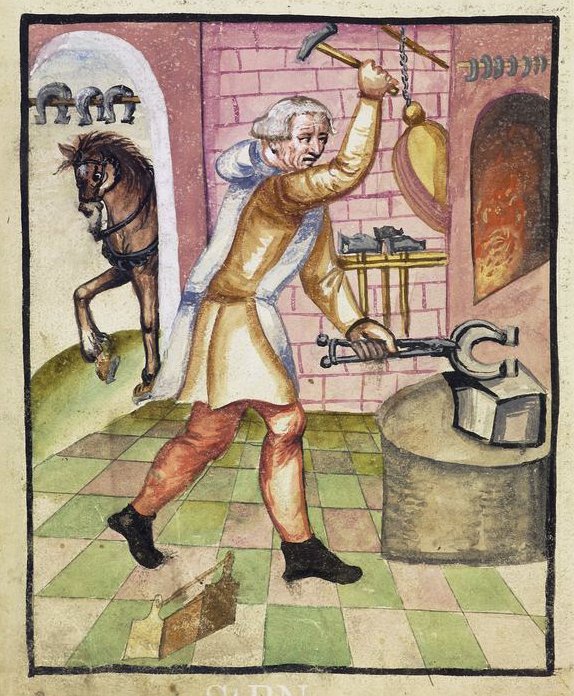
Another hoodoo application involves the use of a series of nails of increasing size, starting with little ‘brad’ nails and getting progressively bigger until you use railroad spikes at the end. The spell is often referred to as “nailing down the house” and requires a practitioner to start by putting the small brads into the corner of each room, and nailing them down, while speaking magic words about protection, prosperity, and stability. Then the conjurer takes bigger nails and nails down the four corners of the house, again praying the magic words. This pattern continues until the conjurer reaches the four corners of the property and nails down iron railroad spikes into the dirt, thus sealing the home from harm and ensuring that the owner will remain in the home and not be evicted. I’ve heard one rootworker say that adding a little urine to each of the nails helps with this work, too, as a way of “marking one’s territory.”

Sewing needles or hairpins can also be used in love spells, as in these from Adams County, Illinois:

  • 9641. The significance of a bending needle is a hug for the sewer.
  • 9650. If a girl tries on a dress pinned for a fitting, each pin catching in her petticoat or slip will represent a kiss before the day is over.
  • 9654. Before going to bed on January 21, a girl may tear off a row of pins (from a new package according to some) , say Let me see my future husband tonight as she pulls out each pin, and then stick them in the sleeve of her nightgown; that night he will be seen in her dream.
  • 9655. If a pin found on the floor or street is picked up and stuck in your coat, you will have a date before the week ends.
  • 9656. The girl who finds and picks up a pin pointing toward her will see her beau that day.
  • 9657. A girl finding and picking up a pin will be dated that night; the man will come from the direction towards which the pin points.
  • 9666. For luck in love a girl may secretly put one of her hairpins in her beau’s left hip pocket; this is also supposed to hold him.
  • 9669. If while walking along you pick up a large safety pin and name it a man you want to see, he will soon be seen; if a small safety pin and
  • name it a girl, she will soon be seen.

The binding power of pins in love spells makes a good bit of sense, and seems deeply entrenched in popular culture; think of high-schoolers being “pinned” (an antiquated notion, I know) or of the description of Cupid shooting arrows or darts to cause romantic feelings in his victim…er..targets. Amorous magic incorporating prickly things is not all lettermen jackets and floating nekkid babies, however. A somewhat heavier love spell from Zora Neale Hurston prevents a lover from straying:

Use six red candles. Stick sixty pins in each candle – thirty on each side. Write the name of the person to be brought back three times on a small square of paper and stick it underneath the candle. Burn one of these prepared candles each night for six nights. Make six slips of paper and write the name of the wanderer once on each slip. Then put a pin in the paper on all four sides of the name. Each morning take the sixty pins left from the burning of the candle. Then smoke the slip of paper with the four pins in it in incense smoke and bury it with the pins under your door step. The piece of paper with the name written on it three times (upon which each candle stands while burning) must be kept each day until the last candle is burned. Then bury it in the same hole with the rest. When you are sticking the pins in the candles, keep repeating:

‘Tumba Walla, Bumba Walla, bring (name of person desired) back to me.’ (Hurston, Hoodoo in America)

There are several agricultural spells which involve driving iron nails or spikes into trees to prevent fruit from dropping off of it (see Randolph, Hyatt, etc.). There’s a lovely bit of distinctly American folklore that says two iron nails driven into your bat will make you a better batter (in the game of baseball, that is).

Finally, I wanted to share an adorably sweet childhood rhyme does not use actual pins, but merely the words as part of a wishing spell performed when two people accidentally speak the same words at the same time. From Hyatt’s Folklore of Adams Co.:

8643. After two persons speak the same thing at the same time, the little finger of the one is held crooked about the little finger of the other and these words spoken alternately:
‘Needles, Pins,
Triplets, Twins,
When a man marries,
His troubles begin,
What goes up the chimney,
Smoke, Knives,
Forks, Longfellow,
Shortfellow.’
They then make a wish and together say Thumbs.

I know there are dozens more applications of pins-and-pokey-bits magic I am not listing here, but hopefully this gives you some idea of what you can do with a simple sewing needle or a couple of iron nails. Magical tools are everywhere, if you know what you’re looking for, and how to use them. But for now, I’ve waxed on long enough about this topic, so let’s stick a pin in it and call it done.

Thanks for reading!

-Cory

Blog Post 139 – Eggs

In marble walls as white as milk,
Lined with skin as soft as silk,
Within a crystal fountain clear,
A golden apple doth appear.
No doors there are to this stronghold
Yet thieves break in to steal the gold (from “Riddles,” American Folklore: An Encyclopedia, p. 1318)

This riddle (a variant of which appears in Tolkien’s The Hobbit during Bilbo’s riddle-game with Gollum) probably isn’t very hard to figure out.  Eggs are one of the food staples which exist nearly worldwide, and almost every culture has traditions dealing with eggs. They are cooked, painted, dyed, emptied and filled with dioramas, and the shells are even ground up and added to the soil to prevent garden pests.

Today we’re going to look a little at some of the magical traditions surrounding eggs, particularly the ones we find in the New World.

Much of the lore about eggs has to do with their production or bewitchment, such as these tidbits (from Folklore of Adams Co. Illinois, by Harry M. Hyatt):

  • 1772. Hit a hen on the back and she will lay an egg.
  • 1773. A hen never lays eggs near a potato patch.
  • 1774. Eggs are not laid by hens on a windy day.
  • 1823. If you set a hen in the dark of the moon, half of the chicks hatched will be deformed.
  • 1824. Set a hen at sunrise in the light of the moon and all the eggs will hatch.
  • 1825. If you set a hen to hatch in the light of the moon, more of the eggs will be hatched.
  • 1848. To procure chickens of different colors, set the eggs on Sunday morning as the congregation leaves church; the various colors in the clothing of the church-goers produces this result.
  • 1849. Chickens of various colors are procured by setting the eggs on Ash Wednesday.
  • 1892. For white diarrhea among chickens [sometimes believed to be caused by witchcraft], drop a piece of iron into their drinking water and also let them eat corn saturated with urine.

Eggs are frequently used to heal magical illnesses or to help with prophetic work. John George Hohman records several uses of eggs in magic among the Pennsylvania Dutch, including a method for curing “falling away,” a folk sickness characterized by physical weakness, by boiling an egg, putting three holes in the shell, and then leaving it on an anthill to be devoured. A common belief among several traditions says that eggs left in the hands of a murder victim will compel the murder to return and be caught before the eggs rot. A bit of folklore related to Midsummer festivals (which may be from Latin American or Slavic sources, as the book is unclear to which culture it is referring): “In one divination, a girl seeks her betrothed by reading the shape of a  egg white in a glass of water; in another, the index is a wreath floated on a stream” (“Solstices,” Amer. Folklore: An Encyclopedia, p. 1412). This seems to be related to a more general set of European folklore focused on St. John’s Day and Midsummer Eve, such as this ritual from Madeira:

On St. John’s eve at ‘Ave Maria’ the village maidens in Madeira try  their fortunes in various ways. They take a newly laid egg, break  it in a tumbler of cold water, and  place it out of doors in a secluded  place. Should the white rise in lines  that in any way represent a ship,  they will soon take a voyage. If it  at all resembles a house, it means  marriage and settling down. If a coffin or tombstone, it means death (Ecyc. of Superstitions, Folklore & the Occult Sciences, by Cora L.M. Daniels, p. 1551)

This practice may sound familiar, as it is very similar to the curandero method of egg reading done during a limpia, or spiritual cleansing. In that process (which I touched on briefly in Blog Post 137 – Curandero Spells, part I), an egg is used to rub and mark a person’s body in order to cleanse them of curses, witchcraft, bad luck, and general spiritual illness. An Ozark superstition says that if a man eats owl eggs it will cure him of alcoholism (this is not recommended, especially due to the potential environmental damage it could cause).

Eggs can also be used to cause harm as well as to cleanse it. Newbell N. Puckett records that among Southern African Americans eggs put into a couple’s bed will cause them to quarrel and fight (perhaps because they smash the eggs and get into a row about who’s going to clean it up?).  A curious German method recorded by Harry M. Hyatt uses “a glass of salt water that will hold an egg up”and a picture of a person (usually a former lover). The egg is floated in the glass, the picture put upside down over it, and the water swirled around while making a wish for ill (or good, if the conjurer is so inclined) fortune for the person (Folklore of Adams Co., 16006). Hyatt also records that a witch can give a person a ‘gift’ of three eggs in order to curse them. In his extensive masterwork on folk magic (Hoodoo-Conjuration-Witchcraft-Rootwork), Hyatt records a number of other curses using eggs, including using buzzard’s eggs to cause someone harm or this spell, which allegedly forces a straying spouse to be faithful:

WRITE YOUR HUSBAND’S NAME
AND THE NAME OF THE WOMAN HE’S FOOLING AROUND WITH
ON AN EGG.
THROW THE EGG AWAY FROM YOU
IN THE NAME OF THE FATHER,
AGAINST THE EAST CORNER OF YOUR HOUSE.
DO THIS FOR NINE CONSECUTIVE MORNINGS,
AND THAT AFFAIR WILL BE OVER.

Yes, ah learnt dis on chicken aigs.  Yo’ take a aig, if a woman is runnin’ wit yore husband, an’ yo’ git chew a aig an’ bust a aig fo’ nine mawnin’s – an’ write dere names on dat aig – an’ bust de aig in [the] east fo’ nine mawnin’s.  Throw it away from yo’ “In the Name of the Father” in de east – in de cornah of de house fo’ nine mawnin’s.  Dat bust ’em up an’ yo’ nevah will be bothahed wit ’em no mo’ – yo’ won’t have tuh worry.  Jes’ write dere names on dose aigs an’ bust ’em fo’ nine mawnin’s – yeah one each mawnin’.

(Whose house do you bust that on, your own house?)
Yore own house, yeah.
(Despite the ‘on’ of my question, these eggs are broken inside the house.  This is a rite to separate a man and woman, not to make someone move from a house.  The eggs are busted against the wall, thrown away from you so that the dangerous substance will not spatter on you.)
[Memphis, TN; A lady who once worked in Louisiana; Informant #1419. D15:3-D23:6 = 2698-2706.] (Vol. 2, p.1581)

Eggshells also have magical uses completely on their own and apart from their high-protein filling. A curious southern tradition involves using eggs as a method to deter predators from killing young chickens on a farm: “Hawks may be kept from catching your chickens by sticking a poker in the fire; by threading eggshells, from which chickens have recently hatched, on a piece of straw (or putting them in a covered tin bucket) and hanging them in the chimney” (Puckett, Folk Beliefs, p.323). Vance Randolph records that a tea made from “toasted egg shells in water” was taken by a girl near Forsyth, Missouri, for ailments unknown, but likely related to stomach issues. And I would be much remiss if I didn’t mention the magical ingredient of cascarilla, or powdered eggshell, which is used in Santeria/Lukumi as well as a few other traditions. It is usually sold in little paper cups (though it is not hard to produce yourself if you just wash and save your eggshells from a few breakfasts), and used to ward off evil and occasionally to draw sigils for ritual work.

Dreaming of eggs is supposed to be good luck, indicating everything from monetary gain to a wedding or children on the horizon. Traditions conflict about whether the eggs must be whole or broken to indicate good news, with convincing arguments presented on both sides (a fragile relationship situation—such as one affected by a lover’s quarrel–could be deemed finished by dreaming of broken eggs, or the possession of whole eggs might mean wealth, for instance). Randolph records this tidbit about the use of eggs to produce prophetic dreams:

Sometimes a mountain damsel boils an egg very hard, then removes the yolk and fills the cavity with salt. Just before bedtime she eats this salted egg. In the night, according to the old story, she will dream that somebody fetches her a gourd filled with water. The man who brings her the water is destined to be her husband. It is surprising how many young women have tried this, and how many feel that there may be something in it (Ozark Magic & Folkore, p. 174)

While this method seems popular, I think it would probably not be good for anyone’s blood pressure.

Wow, that’s a lot of material about eggs! And I’ve only scratched the surface here. There are so many more superstitions, spells, and sayings about eggs that I couldn’t begin to cover them all. So I’ll just recommend that if you want a good, easily available household tool for magic, you just can’t beat the humble egg.  Hm, speaking of beaten eggs, I wonder if there are any magical meringues out there?

Thanks for reading!

-Cory

Blog Post 132 – The Value of Silence

It’s been a while, hasn’t it? But it’s good to see you all again, to get the chance to rejoin the conversation. Except that today, I’m going to be talking about silence, which makes for a rather one-sided discussion, right?

I thought this would be an appropriate topic as I’ve been away for over a month at this point, with very little feedback flowing towards our listeners and readers and almost no new material on the blog or podcast. We’ve been in a realm of silence here at New World Witchery, but maybe that’s not such a bad thing. After all, silence has its uses.

The famous “Witch’s Pyramid,” for example, contains the four sides of a (Wiccan) witch’s code of conduct: To know, to will, to dare, and to keep silent. That’s a fairly modern code, of course, but because it is a complex system expressed in simple language, it taps into some fairly old ideas, including the keeping silent part. There are lots of interpretations of this idea; some say it means one should not discuss one’s magic after the working (one of Shivian Balaris’s interesting Twitter #WitchTips said “never sharing what magick you’ve done is felt to protect the spell so that it can complete properly; plus keeps ego in check,” for example-July 25, 2011). Others think that the silence is designed to insulate practitioners of the “Old Ways” from the persecutions they might suffer if their practices were openly discussed. Still more maintain that the silence in magical practice forms a core component of its spiritual nature; in other words, the silence maintains the mystery, which is very important in a Mystery tradition. I personally think elements of all three positions can be present in a magical practice, though not everyone agrees, of course (fellow podcaster Fire Lyte has mentioned on several shows that he does not like the secrecy and cloak-and-dagger-style mystery that accompanies some of these practices, as they create elitism and insulate seekers from knowledge, for example).

Turning to folklore (as you knew I would), there are several examples of silence serving one of the aforementioned functions. Of course there’s the common practice of observing a “moment of silence” in honor of a fallen hero or a significant event. Folk tales abound in quiet characters. In the story of “The Yellow Ribbon” from Minnesota (which I’ve also heard as “The Black Ribbon”), a woman’s silence guards a mystery that literally means life or death to her. An Old World fairy tale called “The Dwarfs’ Tailor” tells the story of a foolish and loquatious young tailor who must serve a group of dwarves in their enchanted mountain forest home in order to win the love of his old master’s daughter. The dwarves beat the tailor every time he tries to speak or ask questions, and so he learns to serve them in silence, and thus cures his foolish tongue-wagging and becomes a master tailor in his own right. And in the classic Grimm’s tale “The Six Swans,” a young princess must sew six shirts for her six brothers—enchanted into the shape of swans—during a six-year silence in order to release her brothers from the spell upon them. Other stories contain themes of silence, of course, from “The Little Mermaid” to “The Silent Princess” to the (creepy and captivating) episode of Buffy the Vampire Slayer entitled “Hush.”

Within the magical continuum, calls for silence or secrecy appear in several traditions. In the Pow Wow practice, you can find this spell:

A GOOD REMEDY FOR THE FEVER.
Good morning, dear Thursday! Take away from [name] the 77-fold fevers. Oh! thou dear Lord Jesus Christ, take them away from him! + + + [here make the sign of the cross three times]

This must be used on Thursday for the first time, on Friday for the second time, and on Saturday for the third time; and each time thrice. The prayer of faith has also to be said each time, and not a word dare be spoken to anyone until the sun has risen. Neither dare the sick person speak to anyone till after sunrise; nor eat pork, nor drink milk, nor cross a running water, for nine days. (from The Long-Lost Friend by J.G. Hohman)

Here the silence seems to be an integrated part of the spell, a purification of the operator in the same way avoiding pork or milk might work (as they are foods often associated with unclean spirits and witchcraft).  It might then be comparable to fasting, a way of conditioning the body to respond to magic, or of preparing it for magical action. Other spells use magical silence to maintain a solemness and help maintain focus, as in this one from the Ozarks:

Some hillfolk say that a girl can call up a phantom of the man she is to marry by wrapping a lock of hair with some of her fingernail clippings in a green leaf and thrusting them into the ashes in the fireplace. Then she sits down before the fire. When the hair and fingernails begin to get warm, the ghostly appearance of her future husband is supposed to rescue them from the fire. Sometimes several girls try this at once. The door must be left open, and everyone must maintain absolute silence (Randolph, OM&F, p. 177-8)

This particular spell is rather reminiscent of the Dumb Supper, of course, though much simplified. The Dumb Supper itself is fascinating as a ritual of silence, but is a topic too big to tackle here. And since I’ve already given a good overview of it in my Halloween article from last year, I’ll leave it be for now.

Still other magical performances use silence as a cipher for secrecy, maintaining that certain things must not be spoken of, or at least, not spoken of frequently. Another Ozark account describes the passing of a specific sorcerous power—fire-drawing (or burn healing)—as a ritual wrapped in secrecy:

A gentleman near Crane, Missouri, has enjoyed a great success in relieving the pain from superficial burns. He just blows gently upon the burned place, touches it with his finger tips, and whispers a little prayer. The prayer may be told to persons of the other sex, but never imparted to one of the same sex. This man said he had learned the magic from Mrs. Molly Maxwell, an old woman who lived in Galena, Missouri. Since he could not tell me, I asked a young woman to get the secret words from him. This is what she heard : ‘One little Indian, two little Indians, One named East, one named West, The Son and the Father and the Holy Ghost, In goes the frost, out comes the fire, Ask it all in Jesus’ name, Amen.’ In teaching this prayer to a member of the opposite sex, the healer said, one should whisper it three times and no more. If a person cannot learn the prayer after hearing three repetitions, I was told, “he aint fit to draw out fire nohow !” (Randolph, OM&F, p. 121-2).

This idea of passing on magical powers in secrecy, carefully revealing them only to the chosen, the initiated, or those otherwise deemed “right” by the magician (or whatever higher power is in charge of the spell/tradition) is central to some practices. Others disavow the entire idea of such secrecy, preferring to work almost entirely in the open. Both seem to have their reasons, and both seem to do effective magic, though I will say that as folk magic goes the rule of silence shows up too often for me to ignore it entirely. I prefer to circumvent it by the time-honored technique of trickery, so that if I pass on secret magical knowledge I do so not by telling a person, but by speaking to an object in the room in such a way that anyone who happens to be in the room might well eavesdrop in on the “secret.”

From what I understand, whoever is in charge of magic seems to appreciate trickery as much as he or she appreciates silence. So that works out well.

Thanks for reading!

-Cory

Podcast 30: Magical Professions

-SHOWNOTES FOR EPISODE 30-

Summary
This episode is all about the magical professions found in folk and fairy tales. Laine discusses weaving in WitchCraft, and Cory looks at iron and War Water in Spelled Out.

Play:

Download:  New World Witchery: Episode 30

-Sources-
The Element Encyclopedia of Witches & Witchcraft, by Judika Illes

Some of the fairy tales and folklore we reference are:

We’d like to ask our listeners to consider giving to funds like the Tuscaloosa Disaster Relief Fund or the Heart of Missouri United Way in light of recent natural disasters in those areas.

Please also consider donating to the Red Cross Disaster Relief Fund, which is currently helping victims of severe weather across the country.

Finally, both Laine and Cory will be attending the Second Annual Pagan Podkin Supermoot in Salem, MA, on the weekend of Sept. 17th, 2011.  Find out more details about the event and opportunities to come meet us in person at the PPSM2 Website. [Laine respectfully asks that she not be in any photographs, due to privacy concerns—Cory will be happy to wear a wig and pretend to be Laine, however].

Promos & Music
Title music:  “Homebound,” by Jag, from Cypress Grove Blues.  From Magnatune.
Promo 1 – The Infinite & the Beyond
Promo 2 – Lakefront Pagan Voice
Promo 3 – Pennies in the Well

Blog Post 128 – Iron

North American history has a funny relationship with iron.  On the one hand, iron is largely behind the early expansion that allowed Europeans to dominate the continent so completely with weapons, locomotives, and durable goods and architecture.  On the other hand, it has also been a curse used to inflict injury and death on undeserving people and leading others to rip the very soil of the land apart in search of it.  So maybe it’s not so much of a “funny” relationship as it is one fraught with difficulty and complexity.

American folklore, however, has largely good things to say about iron.  It’s a powerful anti-witchcraft charm and can be used to repel things like wicked fairies attempting to replace a baby with a changeling.  It can come in the form of nails, railroad spikes, horseshoes, or even just random flakes falling as refuse from a blacksmith’s anvil.

Today I thought I’d look at a few of the bits of folklore regarding iron.  Before we look at the New World side of things, though, let’s look at iron in a slightly older context: Roman superstition.

“The taboo on iron dates from the beginning of the Iron Age when religious conservatism forbade the use of the strange new material in place of the usual bronze. It has been suggested that the magic significance of iron arose from its susceptibility to magnetism which, as the superstitious Romans often believed, it derived from witchcraft” (from Taboo, Magic, Spirits, by E.E. Burriss)

Here we see that iron is associated with witchcraft and has a somewhat negative reputation.  Even the Romans, though, were not averse to using witchcraft to fight witchcraft, and so iron became a de facto tool for combating wicked witchery, and by extension, any other harmful supernatural force (ghosts, demons, fairies, etc.).

Other cultures picked up the thread (or started their own threads), seeing iron as a powerful magical tool.  African, pan-Celtic, and Northern European cultures all had particular beliefs about iron and its more enchanted properties, so it probably surprises no one that the Old World traditions regarding iron became the standard beliefs in the New World.

So what are those New World beliefs?  Let’s look at some examples from a few different areas:

From the Colonial Period, South Carolina
In the Joshua Gordon “Witchcraft Book,” (also sometimes called a Commonplace Book) dated from 1784, there is an example of the type of charm typically imported to the colonies from places like England and Ireland in which a heated iron is used to scald milk from a bewitched cow in order to undo witchcraft:

“A cow losing milk could be cured if its owners would ‘take a heather belonging to a box Iron, put it in the fire, and make it Red hot [and then] take the milk of the cows thats hurt [and] power [i.e., pour] on the hot iron repeating the names of the blessed trinity’” (from “ Magic, Astrology, and the Early American Religious Heritage, 1600-1760,” by Jon Butler in The American Historical Review).

This method is commonly found in folktales from Appalachia, such as the next entry.

From the late 19th- or early 20th-century, Tennessee (Appalachian foothills)
Again, a hot iron is used to scald milk and thus undo bewitchment:

“Another case of the use of heat, combined with iron and steel, is shown in the following account, also resulting in injury to the witch and her exorcism. Lewis Hopkins, formerly of Big Creek just beyond the park bounds [The Great Smoky Mountains National Park] told this unusual tale:
My grandmother’s folk had a cow and she give bloody milk.  An old lady, a Phillips, was accused of being a witch. So they got to talkin’ to Sam Evans who said he was a witch doctor and knowed about witches. The witch doctor told the folks to put a baker lid [i.e., the lid of a Dutch oven] in the fire. So they pecked it on with a reap hook [like a scythe or sickle]. So this old women Phillips come to this old man Evans and raised a fuss with him about tellin’ him what to do. They got into a fight and this old man pulled her dress up and they saw the pecks where they was a reap hook a-hackin’ at her. [But] she jumped out and got away from him” (from A Tennessee Folklore Sampler, by Ted Olson, et al).

Other cases of heated irons being used to procure magical results also abound, as we shall see momentarily.

From the 19th-century, Mississippi
In some places, iron implements are not so much valued as remnants of iron from a blacksmith’s shop.  Here is one account of “anvil dust” as it relates to Southern conjure practices:

“Anvil dust is also greatly valued as conjure material. One educated blacksmith of Columbus, Miss., tells me that people are constantly coming into his shop to get the black flakes that fall from the hot iron when it is pounded, although they always look ashamed and give a fictitious reason as to why they want it” (from Folk Beliefs of the Southern Negro by Newbell N. Puckett).

This anvil dust is basically iron filings or flakes, and can be found in hoodoo practice as food for magically empowered lodestones.  Or it can be used to help create a cursing formula known as War Water (I’ll hopefully address the creation of this product in a separate post).  Interestingly, these two uses would seem diametrically opposed, with one being the food for an attracting magical fetish, and the other being an ingredient in a banishing potion. I would assert, however, that in these cases the iron serves a similar function on a magical level—with the lodestone it helps broaden the field of attraction for the stone while simultaneously running bad luck away, and in the War Water it’s repelling evil.  So in both cases, there is an element of something being turned away.  That is simply a way for me to reconcile these differences, however, and my come down to rationalization.

From the 19th– or 20th– Century, Ozark Mountains
Old favorite of New World Witchery, Vance Randolph, lists several methods for using iron as a magical tool (I omit the horseshoe lore which I have previously covered in another post, however):

  • “Nails taken from a gallows are supposed to protect a man against venereal disease and death by violence. Country blacksmiths used to secure these nails and hammer them out into finger rings”
  • “A little iron wire worn as a necklace, according to some power doctors, will protect a child from whooping cough”
  • “The water in which a blacksmith cools his irons is supposed to be good for witched cattle and is  sometimes given to human beings also, particularly children” (from Ozark Magic & Folklore, by Vance Randolph)

The last method mentioned is one I found repeated in several sources.  The power and provenance of “anvil water” or “slack water” seems to be well known across several cultures.

From the 20th-century, Illinois
To illustrate my point from the last section, I thought I’d share a bit of folklore from the Midwest, collected by ethnographer Harry M. Hyatt (who famously collected much of the lore about Southern conjure and hoodoo practices):

  • “A piece of old iron hung over the front and back door prevents the spirit of the recent dead from haunting you”
  • “Five nails driven into the trunk prevent the fruit from falling off the tree.  ‘My father did this when fruit was dropping off: drive those old- fashion square iron nails in the tree to hold the fruit on the tree. Never use wire nails; it must be the old iron nails’”
  • “Water from the tub in which a blacksmith cools hot iron is a good wash for the sore udders of a cow”
  • “A broken-winded horse (a horse with heaves) becomes well, if given water in which a blacksmith cools hot iron”
  • “Your looks will be improved if you wash your face frequently with the water in which a blacksmith cools hot iron”
  • “Slack-water, the water in which a blacksmith cools hot iron, is a good wash for poison ivy” (from Folklore of Adams County, by Harry M. Hyatt).

The first two bits are interesting, especially with the death connection, but the last four show that the slack water was considered a sort of cure-all magical formula.  I don’t know about you, but I think I need to make friends with a blacksmith, and quickly!

That’s it for iron, for now at least.  What I’ve written here is only the tip of a very large and ferrous iceberg.  As I said, I didn’t get into the related topic of War Water in the hopes it will appear in another post at a later date.  And I also didn’t touch on the lore of blacksmiths, specifically, as I hope to cover that in some depth later (our next podcast will have a bit about them, in fact).

If you have any local or family lore regarding iron and its magical properties, I would love to hear them!

Thanks for reading,

-Cory

Blog Post 124 – Tobacco

[A note here:  This is NOT a medical blog, and the information here should not be treated as medical information. I present only folkloric examples of practices historically done by certain people at certain times. Additionally, I am NOT condoning the use of cigarettes, snuff, or any other tobacco product, especially for minors. If you choose to put into practice anything you find here, you take responsibility for your own actions.  Leave me out of it.  Thank you!]

This particular magical herb/plant/ingredient is rather controversial. As a reformed smoker, I know the power of tobacco’s hold on a person—it’s not just the nicotine, but a whole range of psychological dependencies that develop when one is a smoker.  What I’m looking at in this post, however, is not really tobacco as a commodity sold in convenience stores using cartoon animals, but instead the plant found in the Nicotiana genus. Tobacco is a member of the nightshade family (Solanaceae), which includes other rather magical plants like belladonna, datura, and mandrake as well as common (yet mythically significant) edibles like the tomato, potato, and chili pepper.  The plant is also a potent natural insecticide—or insect deterent, rather—and an infusion of tobacco leaves in water is often sprayed in organic garden to keep pests away.

Tobacco, like corn, is deeply significant to certain Native American tribes, who incorporate tobacco into ceremonies and offerings.  Cherokee shamans, for example, would use sacred tobacco in ceremonies designed to combat “night-goers,” evil spirits or people who invaded the dreams of others.  Tobacco smoke was also used as a curative for a number of ailments, and these uses filtered into non-Native practices over time (which we’ll see in just a moment).

When tobacco met European colonists, it experienced a boom in popularity that has kept it one of the top cash crops worldwide ever since—for better or for worse.  It has been deeply wound up in the lives of most North Americans for centuries now, including in their folk medical and magical practices.  One oft-repeated use of the leaf was as a treatment for insect stings and bites, as well as other types of wounds:

  • Tobacco used as a poultice to soothe “abdominal pain…cuts, stings, bites, bruises, and even bullet wounds.” It is thought to “draw out poison” (Randolph, p. 98)
  • “TOBACCO. The leaves are put on a wound to stop bleeding or to prevent infection” (Gainer, p.109)
  • Tobacco, especially homegrown, is good for insect stings and bites (Foxfire 9, p. 66)
  • Wet leaves are wrapped on feet to prevent infection of “full sores” (Cavendar, p. 118-9)
  • Tobacco juice/tea used to wash wounds from snake/dog bites (Cavendar, p. 118-9)
  • A personal informant told me that her grandmother used to put wads of chewing tobacco on cuts, bug bites, and stings to help heal them (informant “Darlene”)

The other chief folk medicinal use for tobacco was the application of smoke to sick or troubled persons.  There were almost as many mentions of this method as there were of the poultice method.  Here are a few:

  • Tobacco smoke can be held in the mouth as a cure for a toothache (Cavendar, p. 118-19)
  • Smoke was blown into an ear for an earache, accompanied by the rhyme “Hurt, Hurt, go away/go into a bale of hay” (Cavendar, p. 118-9)
  • Tobacco smoke is blown into the clothes of colicky children to quiet them, or blown through a straw and “bubbled” in milk as a sedative (Randolph, p.98)

This method clearly derives (I think, anyway) from the Native American medical practices which Europeans adopted in the New World.

The use of tobacco has always had its controversies, of course.  Some objected to it on aesthetic grounds, thinking the act of smoking vulgar and primitive.  Others were disgusted by the smoke and smell associated with the burning leaves.  Still others thought it a waste of money or even a diabolical entrapment for hapless Christians.  One poem I found was circulated in the middle-Appalachians during the nineteenth century and covered all these points:

“Tobacco is an Indian weed,

The Devil himself sowed the seed;

Robs your pockets, burns your clothes,

And makes a chimney out of your nose” (Milne, p. 58)

The religious objections to tobacco were primarily on its use as a vice and an intoxicant.  According to Foxfire 7, the Jehovah’s Witnesses had especial objections to it, and for quite intriguing reasons:  “Smoking has always been completely out of vogue among Jehovah’s Witnesses…As the Society researched the derivations of tobacco and smoking, they found it to be associated with spiritism.”  They also related tobacco to “drugs” used by “priests in pagan ceremony and worship” (Foxfire 7, p. 152-3).

When it comes to purely magical uses of tobacco, the information I found varied a good bit.  Zora Neale Hurston mentions it as a cursing ingredient in a powerful separation spell.  She also tells a very interesting story about a man who takes shelter in an abandoned house only to be joined by a mysterious old man who begins spitting tobacco across the fire at him. When the man attempts to fight the old fellow, he finds himself thrown across the room over and over again.  In this context, there seems to be a subtle current relating the “old man” of the story to the Crossroads Man, Papa Legba, or perhaps the Devil (or maybe even all three from a certain perspective).

One article from 1890 indicated that tobacco was included in mojo bags made with the famous lucky rabbit’s foot.

Cat Yronwode recommends tobacco as an ingredient in court case and spirit contact work.  In this latter capacity, I’ve see tobacco used as an offering to various spirits, particularly crossroads entities and spirits of the dead (Central American folk-saint/crossroads spirit Maximon frequently smokes cigarettes or cigars).  Denise Alvarado’s Voodoo-Hoodoo Spellbook indicates that tobacco is frequently offered to Baron Samedi in the New Orleans Voodoo tradition.

I would also suggest that due to the calmative and drawing effects that tobacco exhibits in folk medicine, it makes a useful addition to house-cleansing and blessing incenses.  A very small pinch added to another incense blend in a well-ventilated house should draw evil spirits out of your home and welcome friendly (and particularly, ancestral) spirits into it.  If you or anyone you live with cannot abide tobacco smoke, however, consider burying a little cut tobacco leaf at the four corners of your property to produce a similar effect.

Lastly, if you choose to smoke tobacco in a ritual context, consider whispering prayers as you exhale smoke.  It makes a fantastic visual focus point to see your requests and adoration slowly rising from your mouth and into the air.  Again, I don’t condone smoking (especially not outside of a very occasional ritual setting), but if you do incorporate it into your practices, I hope that this suggestion helps.

That’s it for the devil-weed tobacco!  I hope this proves useful to some of you out there.  Please let me know if you have any other magical or folk remedy uses for tobacco leaf in the comments below.

As always, thanks for reading!

-Cory

Blog Post 123 – Corn

[A note here:  This is NOT a medical blog, and the information here should not be treated as medical information. I present only folkloric examples of practices historically done by certain people at certain times. If you choose to put into practice anything you find here, you take responsibility for your own actions.  Leave me out of it.  Thank you!]

Today’s topic may not exactly pop out at you as a magical one (I beg forgiveness in advance for the bevy of bad puns this article may include), but corn is actually spiritually and magically significant in several parts of the North American continent.

Corn, or as most of the rest of the world knows it, maize (of the species Zea mays) is a crop which was domesticated by early Mesoamerican cultures and which has been a native staple food for thousands of years now (though its widespread use throughout all of North America may only be about one millennium old).  It has proven both extremely useful and occasionally problematic.  It is fairly easy to grow, and can be processed into any number of products, from food and food additives to industrial lubricants and even plastics.  I’m not going to get into the heavily heated debate about corn as a commodity crop and its place in modern economics and agriculture, as this is not a blog about either of those topics.  I will say, however, that while corn may have its downsides, it also has much to offer culturally and culinary, especially the homegrown sweet varieties (can’t imagine a summer barbecue without it!).

Native Americans depended greatly on corn for survival, and it figured in several native mythologies.  One of the best known stories is that of Kana’ti and Selu, the Hunter and the Corn Mother, from Cherokee mythology.  In this story, mother Selu tells her children that they must drag her body over the land when she dies and that corn will sprout wherever her corpse has been.  In this respect, her tale is not so very different than the John Barleycorn legend.  Folklorist James Mooney demonstrated that this story has parallels in Huron mythology as well (he also mentions that the Iroquois grow a specific type of magical tobacco, which is the subject of an upcoming post).

Picture of a Mid-Atlantic Cornfield with a Remnant Corn Offering, via listener Chet

Listener Chet wrote in with a bit of folklore regarding the Corn Mother from the Central Atlantic coast:

“I read an article, while researching the corn maiden aspect, that covered the offering and adoration of a field spirit not only in NA culture, but all over the world…what quite a few would do is, leave a section of the field uncut, as an offering to the Maiden. I had seen these areas, the past few years where I live, and really had no idea what the uncut areas were about until I read this article. So here we are at harvest time again, and I am seeing these areas once again. So I took a pic of one (see attached corn pic). I have a feeling these farmers are not actually making an offering to the Miaden per se, but the tradition seems to have carried over, so maybe it’s bad luck, to not leave part of the field uncut.”

Chet also included a bit of information on his own practices, including his practice of reburying part of any harvest as an offering to the Corn Mother.  Big thanks to him for the local lore and for the photo!

Moving into the Appalachians, corn becomes magical and medicinal, depending upon its application.  A variety of sources indicate that tea made from corn silk (the long, slightly sticky strands which jut out from the top of the ear and which serve as pollination conduits during the corn’s growth cycle) is excellent for clearing up kidney and urinary tract ailments.  This sentiment popped up in Foxfire 9, Anthony Cavendar’s Folk Medicine in Southern Appalachia, and even Karl Herr’s Hex & Spellwork (which indicates to me that it found a home with the PA-Dutch and the mountain folk alike).  Patrick Gainer shares an interesting West Virginian folk magical technique for healing warts.  According to his Witches, Ghosts, & Signs, warts are cured by making them bleed, rubbing the blood on corn kernels, and feeding the kernels to chickens.  This could be very similar to jinx-removing practices in hoodoo which also use chickens.

Folk Medicine in Southern Appalachia rates corn as a top botanical panacea for mountain people:

“It may come as a surprise to some that Southern Appalahcians used cultigens like apples, corn, [etc.] as much as, if not more than, herbs for many illnesses.  The juice, silk, kernels, and shucks of corn, for example, wereused for a variety of illnesses” (p. 64).

Some of the cures listed in the book’s pages:

  • Corn milk/juice used to treat skin irritation
  • Warm cornmeal to treat sprains and mastitis
  • Corn fodder burned to smoke/sweat out measles

In the Ozark Mountains, Vance Randolph records a couple of bits of lore about corn, one of which is quite unique: “Some hillfolk of Indian descent insist on sprinkling a little cornmeal over a corpse, just before burial” (p. 315).  In light of Chet’s lore about burying corn as an offering to a Mother-figure and/or the land, I think this is pretty fascinating.  Is the corn an offering, and if so, is it for the actual deceased person, or for the land which will be surrounding that person soon?  Randolph also mentions a bit of weather lore, noting that the thickness of corn shucks indicates the severity of the coming winter.

Finally, I can’t discuss corn without at least mentioning the corn dolly which is so ubiquitous around Imbolc/Candlemas.  I won’t go into that particular association, as it seems to be well covered in other places, but I will say a corn dolly makes a very useful poppet for working figure magic, especially since it’s easy and cheap to find the basic materials you need (if you don’t have corn growing anywhere around you, look in the Hispanic portion of your local grocery—husks are almost always available there as tamale wrappers, and usually quite inexpensively as well).  Recent New World Witchery interviewee Dr. E mentioned the corn dolly poppet, if you’ll recall, and I think it’s an excellent way to craft a magical doll, especially one for burial or burning.  They tend to be easy to stuff with herbs and things like hair or fingernail clippings, and they can be made without requiring much skill (trust me on this, I know from experience, or rather, obvious inexperience). There are plenty of great places to learn dolly-making, but since I like the series so much I’ll go ahead and eagerly recommend the corn dolly tutorial found in Foxfire 3 (on pp. 453-460).

That’s it for corn (at least for now).  If you’ve got some magical lore regarding the use of corn, I’d love to read it!  Until next time, thanks for reading!

-Cory

Blog Post 121 – Watching Birds

Today we’ll be looking at birds and their place as divinatory aids in the New World, something we touched on briefly in the second post on Magical Animals.  Birds have historically been turned to by humans for secret knowledge, largely owing to their unfettered freedom to fly from place to place.  Virtually all mythologies have some tale of a great mythic bird:  the Roc in the Arabian Nights’ Entertainments, Zeus’s swan-form, the Thunderbird of some Native American stories, and the haunting Crane Dance of Japan are some of the better-known examples. A creation myth of the Haida people of the Queen Charlotte Islands says that a raven, lonely in his long flight, spit upon a clam and opened it up, freeing the first humans (see Magical Creatures by E. Pepper & B. Stacy for more on this).  What have birds to do with divination, though?  Many readers probably already know about the branch of fortune-telling known as augury, but for those who haven’t heard of it, it simply means predicting fate by observing the flights of birds.

So how does one go about performing augury?  Here things get a bit fuzzy—in some cases, the future comes as a vision released by a relaxed mind observing with detachment the loops and turns of soaring birds.  Portuguese writer Paulo Coelho incorporates this type of augury into his novella, The Alchemist when he has a young shepherd accidentally catch a glimpse of coming war while he watches two hawks diving over desert sands.  The other method, and the one which makes up a good bit of North American lore, simply involves noting the behavior of birds and interpreting it by means of known connotations.  This sort of augury has numerous manifestations, and is especially prominent in Appalachian lore.  Folklorist W. L. McAtee recorded a number of bird-related divinations in an essay from 1955:

From “Odds & Ends on North American Folklore on Birds,” by W. L. McAtee:

  • “[I]f ever a bird builds in your shoe or pocket, or any of your clothes, you may prepare to die within the year.”
  • “The loon, a favorite with folklorists, is called ‘Bad Luck Bird’ by the natives [of the Sea Islands of Georgia], who will not speak of it, or if possible even look at it when they meet it in a journey by water.”
  • “While recording the common beliefs as to the storm petrels, that ‘Their appearance portends bad weather,’ Mrs. Simcoe [McAtee’s informant] adds: ‘To kill them is unlucky. Each bird is supposed . . . to contain the soul of a dead sailor.’
  • “The Reverend J. H. Linsley in his Birds of Connecticut (1843) noted that the cry of the bittern is a cause of superstitious fear and recorded that one man hearing it ran a mile, saying, that the Devil was after him.”
  • “’A token,’ said Archibald Rutledge [another informant], writing of the Santee Country, South Carolina, ‘is an apparition foretelling death,’ and cites as examples an eagle feeding with black vultures, a wild turkey standing alone under a certain great oak tree, and an albino robin.”
  • “[An] Abundance of people here look upon [whip-poor-wills] . . . as birds of ill omen, and they are very melancholy if one of them happens to light upon their house, or near their door, and set up his cry (as they will sometimes upon the very threshold) for they firmly believe one of the family will die very soon after.”
  • “Canada Jays are supposed to embody the souls of hunters or lumbermen who die in the north woods and it, therefore, brings bad luck to kill them.”
  • “In western North Carolina, it means seven years of bad luck to kill a raven.”
  • “To end this section on a more cheerful note, we cite the Ozark fancy that ‘If a redbird flies across a girl’s path . . . she will be kissed before night.’”

Other mountain lore about birds tends to focus on weather prediction (a subject we’ve covered in our posts on Signs & Omens to some extent, but you can never have enough weather-prediction lore).  Patrick Gainer observes: “When the geese wander on the hills and fly homeward squawking, there will be a storm within twenty-four hours,” and “When the red birds call in the morning, it will rain before night.”  Vance Randolph records some Ozark lore along the same lines:

  • Chickens or turkeys standing with their backs to the wind and with ruffled feathers mean a storm’s coming.
  • A rooster crowing at nightfall portends rain through the dark hours.
  • A sudden burst of robin-song foretells of bad weather.
  • Kingfishers nesting near the water mean a dry season to come.

Birds seem indelibly linked with concepts of luck and death, too.  Anyone who’s seen the 90’s cult film The Crow probably remembers the voice-over at the movie’s opening telling a pseudomyth about how people once believed that a crow ferried souls between the land of the living and the land of the dead, and occasionally allowed one to come back for vengeance (I call this a pseudomyth not because there’s no truth in it, but rather that I’ve never been able to find exactly that myth borne out in folklore, though there are certainly close correlatives to it—corvids are often associated with death).  There are many other pieces of Appalachian lore in this vein:

  • Barn swallows bring good luck where they nest, and it is bad luck to shoot one. (Randolph, OM&F)
  • Redbirds or roosters lingering near one’s doors or windows tend to mean tragedy will come soon after. (Randolph, OM&F)
  • Whippoorwills nesting at a home mean death will soon come to it. (Randolph, OM&F)
  • If a bird flies in the window, someone in the family will die. (Gainer, WG&S)
  • It is bad luck for a hen to crow. (Gainer, WG&S)
  • “Owls are omens of great ill.  If you spot one nearby while you are inside your home, the direction in which it flies away is an indication of the fate of your household.  If it flies off to the left of the cabin, very bad luck can be expected, but if it flies off to the right, it indicates an evil influence has chosen to pass you by.”(Edain McCoy, In a Graveyard at Midnight)
  • “Many western occult traditions regard peacocks as omens of ill fortune and their feathers as tokens of bad luck.” (Pepper & Stacy, MC)

Finally, in the category of “Odds & Ends,” there are some really spectacularly unique bits of North American folklore about birds which come from all over:

  • Buzzards will vomit upon anyone guilty of incest. (Randolph, OM&F)
  • “When you hear the first robin sing in the spring, sit down on a rock and take off your left stocking.  If there is a hair in it, your sweetheart will call on you soon.” (Gainer, WG&S)
  • “If a bird flies down and gets tangled in your hair, it is an indication that the bird has linked itself with your soul, and whatever befalls the bird is likely to befall you also.” (McCoy, IaGaM)
  • Richard Dorson records a legend in Buying the Wind found amongst Illinois “Egyptians” (or what many would call “Gypsies”) about a mouse, a bird, and a sausage who all keep house together until the sausage is eaten and the mouse accidentally kills himself that feels like it must have some embedded magical meaning, though I’ve yet to figure it out.

That’s it for our bird-watching entry.  If you’ve got lore you’d like to share about birds, we’d love to hear it!  It certainly gives me a good reason to keep watching the skies, so please feel free to comment with any augury methods you’ve got.

As always, thanks so much for reading!

-Cory

Podcast 24 – Love Magic

-SHOWNOTES FOR EPISODE 24-

Summary

Tonight’s show is all about the love…magic!  We discuss different types of love spells, the ethics of casting them, the power of scent to inspire love, and the famous Love Potion #9.

Play:

Download:  New World Witchery – Episode 24

-Sources-
Earth Power – Scott Cunningham
Ozark Magic & Folklore – Vance Randolph
Mules & Men and “Hoodoo in America” – Zora Neale Hurston
Voodoo & Hoodoo – Jim Haskins
Witches, Ghosts, & Signs – Patrick W. Gainer
Buying the Wind – Richard Dorson
The Voodoo Hoodoo Spellbook – Denise Alvarado

Promos & Music
Title music:  “Homebound,” by Jag, from Cypress Grove Blues.  From Magnatune.
Promo 1 – Forest Grove Botanica
Promo 2 – Wigglian Way
Promo 3 – The Infinite & the Beyond

Blog Post 119 – A Little Love Magic

I’m sure with Valentine’s Day just around the corner, I won’t be the only one to cover today’s topic:  love magic.  Yes, I know that Valentine’s is a commercial holiday designed to sell greeting cards (or something like that), but this seems as good a time as any to introduce some of the folklore and magic surrounding that strange, powerful feeling of love which seems to rule over so much of our human existence.  We’ll also look a little at lust, though I’ll likely save a detailed discussion for a sex magic post of some kind.

I should also say that this little article only scratches the surface of the overall material on this enormous branch of magical practice.  Love spells seem to be some of the most commonly sought and most often used enchantments in the world, so any blog post on them will necessarily be rather skint on details.  Also, this particular article is a sort-of companion to our upcoming podcast episode, which will be on this topic as well.  In the episode, we’ll discuss things like the ethics of love spells, so I only really want to touch on the lore and some of the basic spell ideas here.  Of course, if you want to leave comments or send emails regarding questions of ethics, I fully support that!

So what is love magic?  Most people would probably understand a spell cast by a young man on his high school crush to make her go out with him as a type of love spell, but what about a spell cast by a wife on an errant husband to make him stay a little closer to home?  Is a spell to spice up things in the bedroom a love spell, or just a lust spell, or maybe a little of each?  As I pored over the research, I found that there are several distinct categories for love magic:

1)      General-purpose love spells, such as wearing rose quartz, hanging a “loving bell,” spells to help a girl find a beau/husband soon, etc.

2)      Love divinations, like dream interpretations, carrying a four-leaf clover in the bible, catching a bouquet at a wedding, etc.

3)      Lust magic & aphrodisiacs, like the famous Love potion #9, dried turkey bones, powdered bird tongues, vanilla, etc.

4)      Person-specific love spells, which make one particular person fall in love with another, using things like hatbands/socks, mirrors, a particularly ghoulish dead-man’s mojo, etc.

5)      Magic for staying together, common in hoodoo, such as tying a man’s nature, writing bloody initials for reconciliation, menstrual blood in food, etc.

6)      Splitting up work, designed to break a couple apart using things like the black cat/dog hair spell, Hurston’s nine needles spell, etc.

Taking these various categories—which are just my understanding of the material, by the way, and should not be taken as gospel—let’s look at some of the individual spells, beliefs, signs, and ceremonies associated with each one.

A word of warning before we begin: I DO NOT ADVOCATE THE USE OF ANY OF THESE SPELLS. I’m presenting them as matters of folkloric record only.  Many of these techniques and/or formulas can be unsanitary or downright dangerous, so please keep that in mind as you read.

General-Purpose Love Spells

This category is fairly well addressed in modern neo-Pagan magical texts, so I won’t get much into it here.  I recall learning early on from Scott Cunningham’s Earth Power and other books like it that rose quartz could be worn to draw love to you, or just inspire loving feelings in you.  Oraia from Media Astra ac Terra covers the metaphysical properties of rose quartz very well in Episode 20 of that show, so if you want more info, I’d suggest listening to her examination of it.

Cunningham’s book also contains a spell for a “Loving Bell” which involves hanging a small bell somewhere the West Wind can touch it, reciting a little chant, and waiting for the bell to “whisper” your desire for love onto the wind, calling a lover to you (p.46).

Another basic spell from Draja Mickaharic’s A Century of Spells calls for burning a candle anointed with a mixture of basil and almond oil to draw love into one’s life.

As far as North American folklore goes, general-purpose love spells are actually a bit rare.  They most often tend to be focused on getting a spouse or preventing spinsterhood (forgive the sexist language there, but these do seem to be customs targeted at women).  For instance, in Vance Randolph’s Ozark Magic & Folklore he mentiones that Ozark girls will pin pieces of a wasp’s nest inside their clothing to draw courtship from men.  Randolph also mentions a peculiar love charm that he encountered in the mountains and which reputedly brought love into a young girl’s life:

“Many mountain damsels carry love charms consisting of some pinkish, soaplike material, the composition of which I have been unable to discover; the thing is usually enclosed in a carved peach stone or cherry pit and worn on a string round the neck, or attached to an elastic garter. I recall a girl near Lanagan, Missouri, who wore a peach stone love-charm on one garter and a rabbit’s foot fastened to the other.” (p. 166)

It’s not unreasonable to think that the “pinkish, soaplike material” may well be a piece of rose quartz.  Or, it may be something else entirely.  Patrick W. Gainer records the oft-repeated superstion that if someone sweeps under or on top of a girl’s feet, she will never marry, so girls were very careful not to let that happen.  Taking the last bite of any food at the table meant that a girl should kiss the cook or else end up an old maid, too.  Gainer also says that a girl who hold’s a bride’s dress on her lap within ten minutes will marry within a year and that if a girl lends her garter to a bride on her wedding day, she can expect to marry soon, too.

Love Divination

There are so many wide-ranging methods of determining a future lover’s identity that it would likely give me carpal tunnel and send my readers into a glazed-eye coma trying to list them all.  Divining one’s future love life is probably the most common form of divination, and can be found everywhere from the playground to the wedding chapel to the funeral home.  Most folks know about catching bouquets and garters at a wedding to indicate who the next to be married will be.  Some of the more unusual methods of determining one’s romantic future are:

  • Dream of a funeral and attend a wedding
  • Count seven stars for seven nights, and you will dream of the man you will marry.
  • To dream of the man you will marry, take a thumbful of salt the night before Easter
  • Marry soon if you dream of a corpse
  • If two forks are at a place-setting on the table, the one who sits there will be married.
  • Put three holly leaves under your pillow at night and name each leaf.  The one that is turned over in the morning will be the name of your husband.
  • Put a four-leaf clover in the Bible.  The man you meet while you are carrying it will be your husband.
  • On the first day of May before sunrise, if you see a snail within a shell, your future husband will have a house.  If the snail is outside the shell, he will have none.  Sprinkle meal in front of the snail and it will form the initial of the man you are to marry.
  • Walk around a wheat field on the first day of May and you will meet your mate.
  • The white spots on your nails tell how many lovers you will have.
  • On the first day of May, look into a well and you will see the face of your future husband.

There are lots of other methods for determining a future spouse, of course, such as peeling an apple in one long strip and tossing it over your shoulder to determine the initial of one’s eventual husband or wife.  Several Halloween traditions also focus on love divination, such as throwing nuts into the fire to see if they pop or fizzle, thus reflecting the strength of the love between those who threw.  Really, we could be here all day with these, so let’s just say a little reading will reveal a plethora of divinatory options to the curious witch.

Lust & Aphrodisiacs

This is another broad and often-discussed topic, and one which folks can get into heated debates about very easily.  For instance, many people contend that certain foods—chocolate, oysters, strawberries, etc.—act as aphrodisiacs and cite medical reports to back up their claims.  Others cite counter-claims which demonstrate that any aphrodisiac effect from food is purely psychosomatic /placebo effect.  Love potions are incredibly popular, so much so that there’s an enduring pop song by the Searchers entitled “Love Potion No. 9,” which later inspired a popular film of the same name (featuring the lovely Sandra Bullock).  I’m not going to get into the ingredients for that potion here, but if you’re interested in it, the upcoming Spelled Out segment on the podcast will look at one recipe for this famous draught.
In American folklore, many ingredients can be brewed into love potions and used to drive a partner wild.  Randolph records that yarrow is used in love potions given to men, as are dodder/love vine/angel’s hair, lady’s slipper, and mistletoe.  Boys make a love potion from a wild gander’s foot, powdered and put into a girl’s coffee.  The use of bird ingredients in such potions is rampant, inlcluding the use of powdered turtle-dove tongue, chicken hearts, and rooster blood for various love and beauty blends.   Girls in the Ozarks would keep dried turkey bones in their rooms in order to seduce their beaus when the time was right, too.

Randolph also mentions that a woman can surruptetiously touch a man’s back to inspire feelings of lust in him.  Zora Neale Hurston says in her essay “Hoodoo in America” that a potent aphrodisiac charm from Jamaica includes mixing angle worm dust with High John chips and wearing this as a mojo around the waist.  Oils and powders such as “Come to Me Boy/Girl” and “Chuparosa” are also used to intoxicate a lover’s senses and make him/her crazy with lust and love.  There’s also a hoodoo formula called the “Hot Mama Douche” which is juniper berries steeped in vinegar and which is designed to bring a woman all the sex she can stand. Vanilla, dabbed behind the ears, is also reputed to drive men wild.

Person-specific Love Spells

These are the controversial, yet oft-sought after, spells which one person uses on another to command love.  There are a lot of ethical questions involved in these enchantments, and I won’t get into my perspective on them here (though I do talk a bit about it on the show).  As the folklore goes, there are a lot of ways to make someone yours through magic.  Most of them involve putting a little bit of yourself—such as urine, blood, or sweat—into them, often via food.  Wearing the other person’s clothing, especially intimate clothing that has had contact with their skin or which has encircled some part of their body (like a ring, hatband, glove, sock, etc.) will also allow you to command their love.  Some examples:

  • If a girl steals a man’s hatband and wears it as a garter, it will make him fall in love with her (Randolph, OM&F)
  • Socks and hatbands can be used to rule unruly men (Hurston, Mules & Men).
  • Turning down a man’s hatband and pinning two needles in it in a cross-wise fashion makes him love you (Haskins, Voodoo & Hoodoo)

Other spells to gain the love of a person include tying poppets/dolls together, knotting used clothes from each person together, or burying personal items from that person on your property.  In this latter vein, Zora Neale Hurston records an interesting spell using the person’s image captured in a mirror:

“To bind a lover to a place: a) This is for a girl: Let him look into a mirror but don’t you look into it. Take it home. Smash it and bury it under the front steps and wet the spot with water. He cannot leave the place. b) This is for a boy: Take three locks of her hair, throw one over your head, put one in your bosom, and one in the back of your watch. Then do the same thing with a mirror that the girl does and she is tied. You can’t undo this.” (from “Hoodoo in America”)

Similarly, getting a potential lover to walk over or under a charm specifically planted to catch his/her love can be very effective.  Hurston’s Mules & Men contains the following spell:

Use nine lumps each of starch, sugar, & steel dust wet with Jockey Club perfume and put into nine mojo bags tied with red ribbon.  Put these all around his home (or yours), especially at entrances and under rugs, and he will be unable to resist you.

As I mentioned before, the best ways to gain control of a lover tends to be to make him or her ingest something that has a bit of one’s own bodily fluid.  Randolph mentions the use of menstrual blood in drink (though I usually find that more connected to the next section, “Magic for Staying Together”), as well as using whiskey in which fingernail trimmings have been soaked.  In Folk Beliefs of the Southern Negro, Newbell Niles Puckett records a love charm which uses bathwater to similar effect: “a great love charm is made of the water in which the lover has washed, and this, mingled with the drink of the loved one, is held to soften the hardest heart.”

Magic for Staying Together

When a relationship hits a rough patch, people often do all sorts of things they wouldn’t normally do.  While some spells in this category are designed to bolster the already strong bonds between two happily enamored people, more often than not these spells are done out of desperation.  A wife wants to keep her philandering husband at home and away from other women.  A man wants to bring back a lover who has left him.  These aren’t particularly happy spells, but they do make up a good bit of the overall love spell genre, so here are a few of the more common or more interesting ones.

One spell I found repeatedly, and one which I mentioned in the previous section, was the use of menstrual blood in food.  It appeared in the folklore from multiple cultures and always with the same basic idea: a little of a woman’s menses in a man’s food or drink will make him absolutely hers and keep him from ever straying.  Urine occasionally pops up in this method, too, though it is far less common.

Other methods involve attaching something to a man’s clothes to mark him as one’s own.  In Hurston’s “Hoodoo in America” she notes in Section 9 that there is a such a ritual for regaining and binding the affection of an errant man. It is given in the “dialogue with Marie Laveau” style which is also in the N.D.P. Bivens text Black & White Magic of Marie Laveau. It involves using Van Van and Gilead buds placed in the man’s clothes or fashioned into a talisman for him to wear. A picture of Mary is then prayed over, and the man is supposed to stray no more.

Randolph’s Ozark informants revealed a number of methods for keeping or returning a straying lover, including:

  • A girl can write her initials and her sweetheart’s using the blood from the third finger of her left hand in order to reconcile with him after a fight.
  • Salting a fire brings an absent lover home, as does leaving one’s shoes in a “T” formation by the hearth.
  • A girl can clean her fingernails on Saturday, say a “mysterious old sayin’” and make a man visit her on Sunday. Mountain boys even say ‘my gal fixed her nails yesterday’ to indicate they must go courting.

Of course, sometimes it’s not enough to make someone stay a little closer to home.  One hoodoo method for controlling an errant man is to measure his penis with a piece of string (often red) while he is asleep, wet it with his semen, then tie nine knots in it.  This method takes away his “nature” and keeps him from being able to perform with anyone but the woman who has the string.  In some cases, this means that the man is unable to perform entirely unless the woman unknots the string first, which I imagine puts a damper on spontenaity in the bedroom.  However, as the proverb goes, desperate times call for desperate measures (pun very much intended).

Splitting Up

This is an area I’ve got no experience with myself, and one which I shy away from in general.  As such, my research here is a bit thinner than in other categories of love magic, but I do have one or two examples to provide.

Hurston provides a method for making couples fight like cats and dogs using the hair from—you guessed it—cats and dogs:

“To Make a Fuss and Fight. Take a small bit of the hair of a black cat and of a black dog and mix same with nine grains of red pepper seed and names of persons you wish to make fuss or fall out with each other. The names are written nine times crossed. Place this under their house, gallery or bury same at their gate. The articles can be sewed into a bag, and, if possible, place in the pillow or mattress.” (“Hoodoo in America”)

Hurston also mentions a spell using nine broken needles to break up a couple in her book, Mules & Men.

There are a number of products available for break-up work, including figural candles of a man and woman which are burned so that they separate over time.  The Lucky Mojo company sells many of these items, and also has a page outlining other breakup spells, such as feeding two halves of an egg to a black dog and a black cat, or writing a person’s name on the back of a river turtle to send him/her away from a relationship.

Whew! Love is a pretty big topic, and I’ve only given you a few examples here.  There are so many other love spells and magical techniques for gaining love, keeping love, or ending love that trying to list them all would be ridiculous.  I hope, though, that if you’re curious you’ll continue to look into this sort of magic, and let us know what you find.  If you have spells you’ve used in this vein of magic, I’d love to know those, too!  And we’ll have a podcast up soon on this topic, as well, so be listening for that.  Until next time..

Thanks for reading!

-Cory