Blog Post 32 – Hoodoo You Do (Intro, Part IV)

This blog post will primarily deal with types of hoodoo spells, or “tricks.”  It’s not a complete list of all types of hoodoo magic by any stretch of the imagination, but for someone just getting into it, this should give you an idea of what a conjure man/woman does, and give you some places to start if you want to do hoodoo for you.

Mojo Bags – Probably the best known of the hoodoo magical charms, mojos go by many names:  hands, tobys, jomos, etc.  These small talismans are little bags designed to be worn out of sight and usually close to the skin.  A particular type of mojo worn only by women is the “nation sack” of Memphis, TN.  The way these charms are made may vary a bit from place to place or worker to worker, but the general idea is that a small flannel sack, usually red but sometimes other colors, is filled with magical ingredients—usually an odd number of them.  It’s then closed up, and often anointed or “fed” with some offering on a regular basis (whiskey, rum, or other alcohol is a common food for a mojo hand; some of the condition oils found in hoodoo are also appropriate).  I recently heard these bags described as little spirit houses, and to my mind, that’s a perfect description.  The herbs, oils, curios, and other elements of hoodoo are matched together to make a little home for a spirit who can aid the worker in getting what he or she wants.  I often include a written charm in mine (being inclined towards the written word as I am), and usually I make my mojos as part of a larger working, such as a Candle Burning.

Candle Burnings – Also commonly called “setting lights,” candle burnings in hoodoo are similar to candle burnings in any other magical system.  The only real difference is the method (or methods) of dressing the candles.  In hoodoo, when a worker is dressing a candle to draw something (like money, love, health, etc.), he or she will cover the candle in herbs and oils from the bottom-up.  To rid oneself of something (like a jinx), candles are dressed top-down.  Personal concerns, such as a target’s hair or fingernails, are usually incorporated in the dressing, or may be placed beneath an inverted saucer upon which the candle is burned.  Name-papers with written charms may also be used in this manner.  Henri Gamache’s Master Book of Candle Burning is an excellent resource for this type of magic.

Readings – Most rootworkers begin with a reading of some kind.  Whether its tarot cards, palm reading, or just a sort of psychic once-over with second sight, the conjure person will need to get a good idea of what the client needs—not just what he or she wants.  Often, readings are done as part of a larger interview process to really hone in on what kind of work the rootworker will need to do.  I like to use playing cards to read before doing most magical workings, even ones for myself.

Honey Jars – We covered them a bit in our Special Episode recently, but I love these things, so I’ll mention them again here.  Basically, a honey jar is exactly what it sounds like:  a jar full of honey.  Into this sweet-and-sticky pot you place the names (and personal concerns in some cases) of those you wish to “sweeten up.”  These jars are also known as “sweetening jars,” and can actually contain almost any kind of pure sweetener, such as brown or white sugar, molasses, or syrup.  This is a good way to start doing hoodoo, because it is a very positive type of magic (you’re only making your relationships with those you sweeten better, after all) and it also teaches you to get your hands a little dirty (because you must push the names into the jar with your fingers, and then lick them clean…a nice reward for your efforts!).  You can make jars for each person you want to sweeten if you’re working more elaborate spells on them, or keep one jar with lots of names in it for general sweetening.  You can also make vinegar or “souring” jars, which is a form of Hexing.  I’d generally wait to do a souring jar until after you’ve tried a few sweetening ones, though.

Foot-track Magic – This type of magic stems from African Traditional practices, in which the footprint of a person could be used magically against them (or to help them, but usually harmful magic is associated with foot tracks).  The basic idea behind this kind of spell is that the feet come in contact with a magical potion, powder, or other ingredient and draw the psychic contagion up into the body.  One of the most famous examples of foot-track magic is the use of goofer dust on someone.  The hexing dust is sprinkled somewhere where the target will walk over it, and the poisonous influence of the powder will cause the target’s body to swell and fill with pain, and possibly even die.  Of course, it’s possible to do helpful spells with foot-track work, like laying a prosperity blend in someone’s path to ensure they have good luck, but this is a less common use of this magic.

Washing/Bathing – While I love the fact that hoodoo gets down and dirty, I also really like the emphasis it puts on cleanliness.  There are lots of formulae designed exclusively for things like washing one’s floors to banish harmful things and/or draw beneficial ones.  For example, you can wash your business doorstep or the sidewalk in front of your shop with a money drawing blend (such as bayberry, cinnamon, and rose-of-jericho water) from the outside-in to draw customers to you.  Bathing is also important in hoodoo, particularly ritual bathing performed over a series of 3, 5, 7, or 9 days.  Much like in Candle Burning, if you take a hoodoo bath, you’ll want to stand in the tub and wash up to draw something (like money) and down to get rid of something (like a bad habit).  Prayers, psalms, and other magical phrases may be recited while bathing, and usually at least some of the bath water is saved and later disposed of ritually (by pouring at a crossroads, for example).   I highly recommend Draja Mickaharic’s Spiritual Cleansing if you want to learn more on this subject.
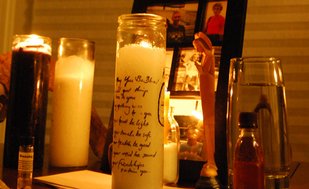
Cleansings/Uncrossing Work – Related to Washing/Bathing is the concept of a Cleansing or an Uncrossing.  These workings are usually done to remove the effects of harmful witchcraft or hexing, and can be done by a rootworker or by a client under a worker’s direction.  Some common methods of uncrossing involve the aforementioned ritual bathing while using downward motion and uncrossing herbs (like rue, hyssop, and salt), marking the client with the “five-spot” or quincunx pattern using an uncrossing oil, or even running a raw egg around the client’s body to absorb negative spiritual energies (this is similar to cleansings found in other systems, like curanderismo).  A rootworker may also smoke or fumigate a client, using a sheet to tent the seated client from the shoulders down and burning incense beneath the chair to fill the tent with sacred smoke.  There are related areas of hoodoo spellwork which are more protective than cleansing which involve putting down salt, chalk, or brick dust lines around a person’s home to prevent harm from reaching them, but these are usually done after a cleansing has been performed on both the client and his/her house.

Jinxing/Hexing – So I know it seems backwards to discuss this after Cleansing/Uncrossing, but I generally feel like it’s better to know how to stop a harmful spell before you get started, so that’s why I mentioned the other first.  However, Jinxing/Hexing is a big part of hoodoo.  From the harmful forms of Foot-track Magic mentioned earlier to more fearsome curses (such as the disgusting but terrifying “Live Things in You” curse, in which a target is tricked into swallowing powdered snake skin, spider eggs, or other unsavory items so that they begin to feel like things are literally crawling around inside them).  Learning to hex someone with hoodoo isn’t hard, though it often requires a strong stomach.  One simple and quite grave curse is to make a doll-baby (stuffed poppet) with the person’s name paper or personal concerns inside of it, then put that into a small coffin and bury it in a graveyard.  The victim should feel their own life-force fading as long as the buried doll remains in the cemetery (a word of warning, though—in most places digging so much as a single spoonful of dirt is considered vandalism and is quite illegal, therefore I do not advocate it).  A simpler and much tamer curse is the vinegar jar I mentioned in our Witch Bottle Special.  By simply placing someone’s name into a jar of vinegar, along with things like red pepper flakes, black pepper, and garlic, you can sour their life pretty effectively.  Shaking the jar every time you think about it can help “stir up” more trouble for them.  Cursing someone for fun, by the way, is always a bad idea.  You never know when it might backfire and wind up dragging you right into trouble, so make sure you’re working “justified,” perhaps by doing a Reading first.

Love Spells – The simplest of these is a type of Honey Jar in which two people’s names are kept and a candle burned over the top of it.  This sweetens them to each other and helps set magic in motion to keep them sweet on one another.  Love spells in hoodoo, though, are not always so nice.  There are plenty of spells aimed at separating lovers (candles are even sold which look like married couples and which, when burned, come apart and lead to divorce or estrangement).  There are also more intense love spells aimed less at finding that one true love than at exercising power over the target (see Controlling Spells for more on that).  Many love spells, though, are more like the sweetening spells, and simply help a person find or catch that perfect mate.  There are some extremely simple love spells in hoodoo which involve little more than tying two dirty socks—one from each mate—together and hiding them away so that love will remain forever “bound” between them.  Of course, for those coming from a background where this sort of manipulation is a magical no-no, even a fairly benign hoodoo love spell can seem a little sinister.  But then, no one says you have to do every spell in the hoodoo spellbook, right?

Controlling/”Bend Over” Spells – I saved these spells for last because I find them incredibly interesting.  They are so antithetical to the kind of magic I did for years, because they completely ignore the idea of non-manipulation.  These spells are all about manipulation, in fact.  Controlling spells (and their sister workings, “Compelling” and “Bend Over” spells) usually involve forcing another person to do what you want them to do.  Sometimes, as in the case of Compelling or Pay Me Now! spells, the force is simply making the target fulfill a promise they’ve already made.  But often these tricks are laid in order to keep an errant spouse from philandering about, or to make a boss give you that raise you’ve been after.  Using roots like licorice and calamus, as well as personal effects from the target (name papers are much less effective in this kind of work, in my experience), a rootworker can do a heckuva number on someone.  One of the most famous methods of using this kind of magic involves a woman putting a bit of her menstrual blood in her husband or lover’s food, thereby making him remain faithful to her.  She can also “tie his nature” by measuring his penis with a string, then soaking it in his semen and tying knots in it.  That way, he will find himself useless unless she releases him, which presumably will only happen when he’s with her.  It’s intense stuff!  But it also makes sense.  For many folks, these workings are last-resort measures.  In some cases—such as using Courtcase formulae or spitting galangal root juice on a courthouse floor—they are the only methods available to poor folks being ground down by the gears of the legal system.  Who wouldn’t want magical reassurance that the judge was on their side?  While I don’t recommend starting with these kinds of spells, I will say I’ve gotten to really like them over time.  They’ve proven useful, and a good rootworker knows how to set limits when using Controlling magic.

Like I said, this isn’t an exhaustive list of all hoodoo techniques and spells, but it should at least give you an idea what kinds of magic are available in the rootworking system.  As always, I recommend checking out the Lucky Mojo site for more info on many of these methods, and if you have any comments or questions, you can email us or leave a comment and I’ll be happy to respond!

Thanks for reading!

-Cory

Blog Post 16 – An Introduction to Pow-wow, Part III

Hi folks!  Here is the final installment in my introductory Pow-wow series.  I hope you’re enjoying them!  Now, on to the magic!

Where can I find out more about Pow-wow?

There are many phenomenal resources on this subject.  Here are some of the books I like:

The Red Church, by Chris Bilardi
American Shamans, by Jack Montgomery
Signs, Cures, & Witchery, by Gerald C. Milne
Buying the Wind, by Richard M. Dorson (chapter on “Pennsylvania Dutchmen”)

And, of course, Pow-wows; or The Long Lost Friend, by John George Hohman (also available free at sacred-texts.com).

Additionally, I like this website and its accompanying newsletter:
Three Sisters Center for the Healing Arts

There are other books and resources which I’ve encountered either by proxy or by reputation which I’d also recommend seeking out, though I cannot give a strong opinion on their validity myself, yet:

Strange Experience: The Autobiography of a Hexenmeister, by Lee R. Gandee
Hex and Spellwork, by Karl Herr
The Pennsylvania German Broadside, by Don Yoder
The Pennsylvania German Society

Some Pow-wow Charms & Proverbs

Finally, as promised, here are some Pow-wow charms you can try out yourself.  I’d love to hear how they work for you, so please feel free to leave comments or email us about your results!  Please also note that I provide these for cultural, spiritual, and magical value.  They do not replace conventional medical or legal advice; please see a professional if you have needs in those areas.

First, a few from Hohman’s book:

HOW TO BANISH THE FEVER.

Write the following words upon a paper and wrap it up in knot-grass, and then tie it upon the body of the person who has the fever:

Potmat sineat,
Potmat sineat,
Potmat sineat.

TO STOP BLEEDING.

I walk through a green forest;
There I find three wells, cool and cold;
The first is called courage,
The second is called good,
And the third is called stop the blood

TO REMOVE BRUISES AND PAINS.

Bruise, thou shalt not heat;
Bruise, thou shalt not sweat;
Bruise, thou shalt not run,
No-more than Virgin Mary shall bring forth another son.
+ + +

(The three “+” signs at the end indicate making three crosses in the air over the patient or afflicted area, also sometimes saying the three High Names of the Father, the Son, and the Holy Ghost)

ANOTHER WAY TO STILL-BIND THIEVES.

Ye thieves, I conjure you, to be obedient like Jesus Christ, who obeyed his Heavenly Father unto the cross, and to stand without moving out of my sight, in the name of the Trinity. I command you by the power of God and the incarnation of Jesus Christ, not to move out of my sight, + + + like Jesus Christ was standing on Jordan’s stormy banks to be baptized by John. And furthermore, I conjure you, horse and rider, to stand still and not to move out of my sight, like Jesus Christ did stand when he was about to be nailed to the cross to release the fathers of the church from the bonds of hell.. Ye thieves, I bind you with the same bonds with which Jesus our Lord has bound hell; and thus ye shall be bound; + + + and the same words that bind you shall also release you.

(The conventional wisdom on releasing the thief is that the entire spell must be read backwards.  It’s nice to hold all the cards sometimes.  This charm is almost entirely lifted from entry #22 of the Romanus Buchlein, or Little Book of the Roma, a late 18th century grimoire and prayer book).

Here is a pair of charms which I am citing from Jack Montgomery’s American Shamans, but which he cites from an article entitled “Magical Medical Practice in South Carolina,” from Popular Science Monthly, 1907:

TO HEAL A SPRAIN

Christian Version

“Our Lord rode, his foal’s foot slade [slid],
Down he lighted, his foal’s foot righted,
Bone to bone,
Sinew to sinew,
Flesh to flesh,
Heal, in the name of the Father, the Son, and the Holy Ghost.  Amen”

Pagan Version

“Phol and Woden went to the wood, there was Balder’s colt his foot wrenched,
Then Sinthgunt charmed it and Sunna her sister,
Then Frua charmed it and Volla her sister, then Woden charmed it as he well could,
As well the bone-wrench,
As the blood-wrench,
Bone to bone,
Blood to blood,
Joint to joint,
As if they were glued together.”

(Montgomery, American Shamans, p. 102)

A classic Pow-wow blood-stopping charm, also from Jack Montgomery (and derived from a passage in Ezekiel, I believe):

And when I passed by thee and saw thee polluted in thine own blood, I said unto thee when thou wast in thy blood, Live; yea, I said unto thee when thou wast in thy blood, Live. (p. 253)

Here’s a more modern charm for protection during automobile travel:

“This is a written prayer that is used for protecting cars and other vehicles.  It can be simply folded and placed in the glovebox.

Our Heavenly Father, we ask this day a particular blessing.  As we take the wheel of our car, grant us safe passage through all the perils of trouble.  Shelter those who accompany us and provide us from harm by Thy mercy.  Steady our hands and quicken our eyes that we may never take another’s life.  Guide us to our destination safely, confident in the knowledge that Thy blessing be with us through darkness and light, sunshine and showers, forever and ever.  Amen.” (Bilardi, The Red Church, p. 284)

And I’ll conclude with a few proverbs from the Pennsylvania Dutch, as recorded in Buying the Wind, by Richard M. Dorson (pp.138-141).  Note that “German” here connotes the Pennsylvania-German dialect, not necessarily European German.

-German:  D’r hammer wert aus faerm ambos.
-English:  The anvil outlasts the hammer.

-German:  Waers erscht in di mil kummt grikt’s erscht gimale.
-English:  He that cometh first to the mill, grindeth first.

-German:  En blini sau finnt a alsemol en echel.
-English:  Even a blind pig will sometimes find an acorn.

I hope this series has been informative to you!  This won’t be the last time Pow-wow comes up here, of course, but I think it may be enough to get your feet wet on the subject.  If you try out any of these charms and have results to report or have any thoughts on the different folklore and opinions recorded here, I hope you will leave a comment or send an email and share them with us.

Thanks for reading!

-Cory

Blog Post 10 – Weather Work

We recently received a nice blanketing of snow here (which is somewhat rare for our area), and it got me to thinking about weather magic.   When I was little, before we moved to the farm, I used to go out to the dirt hill near our house with a big staff in my hands and shout at the wind, seeing if I could get it to gust up or gentle down.  I remember feeling like I always had a strong connection to weather, particularly those winds.  When we moved out to the farm, my understanding of weather changed dramatically.  Our house was on a hill at the top of our acreage, and we were exposed to a number of tempests, some of which were quite severe.  When we had snow, 4-foot drifts piled up off of our back porch, deep enough that when I jumped into them I was buried up to my chest.  And  I still remember waking up one morning and looking out the window only to see a tornado receding back into the clouds after having passed but a quarter-of-a-mile or so from the house and uprooting a number of trees.  Being a teenager, I had slept through it, of course.

What I learned on that farm was that weather was wild, and would always be wild.  It’s something we can react to, prepare for, run from, or attempt to block out, but we can never really control it the way we like to think we control so many other things—the cleanliness of our water or where our next meal comes from, for example.  Magic seems to have the advantage over empirical science here, as many magicians swear by inherited techniques that allow them to control or predict the weather to one degree or another.

Today I thought it might be worthwhile to take a look at a few techniques, charms, and proverbs regarding the weather from various North American sources.

From Nova Scotia (in Folklore of Nova Scotia, by Mary L. Fraser):

“An Acadian boy would not dare to kill a toad or a spider, for his outdoor pleasure would then be spoiled by the downpour of rain that was sure to follow. A boy of Scotch or Irish descent would be deterred from doing so because it would bring him bad luck.

‘If you wish to live, not die,

Let the spider go alive.’”

I’ve heard this before as an admonition not to harm toads (and for some reason, I always assumed lizards) when out of doors, for fear of bringing on bad weather.  The spider is a new twist for me, but I generally try not to disturb any of the bite-ier creatures out in the wild world.

Mary Fraser also reports a weather-predicting system I’ve seen in a couple of places.  She mentions that the twelve nights between Christmas and Epiphany represent the coming twelve months of the year.  In other words, if you have cold, wet weather on the third day after Christmas, you can expect a rather clammy and dismal March.

From the Pennsylvania Dutch (in The Long-Lost Friend, by J. G. Hohman):

For protection of one’s home against storms, say “Beneath thy guardianship I am safe against all tempests and all enemies, J. J. J.”  (These three Js signify Jesus three times.)

Chris Bilardi, in his excellent book on PA-Dutch braucherei, The Red Church, suggests the following Psalms for weather-work:

  • Psalm 2 – For danger at sea (storms); also for headache
  • Psalm 21 – For dangerous storms at sea
  • Psalms 24 and 25 – For dangers of nature—especially the danger of floods
  • Psalm 76 – For averting danger from water

From the Appalachians (in the Foxfire series of books):

It will be a bad winter if –

  • Squirrels’ tails grow bushier
  • Crows gather together
  • The wooly worm has a heavy coat
  • Onions grow more layers
  • Blackberry blooms are especially heavy

It will rain –

  • Within three days if the horns of the moon point down
  • If  leaves show their backs
  • If cows are lying down in the pasture
  • If there is a ring around the moon (count the stars in the ring and it will rain within that many days)

The weather will be fair if –

  • You hear a screech owl
  • Smoke rises
  • Crickets holler (the temperature will rise)

Additionally, here are some bits of lore from the Appalachians:

  • If it’s cloudy and smoke rises, there’s a chance of snow
  • The number of days old the moon is at the first snow tells how many snows there will be that winter
  • For every frost or fog in August, there will be a snowy day in winter
  • A late frost means a bad winter
  • The darker green the grass is during the summer, the harder the winter
  • If it rains on Easter Sunday, it will rain every Sunday for seven weeks
  • If it rains on ‘Blasting Days’ (the three longest days of the year, there won’t be any ‘mast’ (acorns, chestnuts, etc.) for animals like hogs to feed on

From the Ozarks (in Ozark Superstitions and Ozark Magic and Folklore, by Vance Randolph):

Rain will come –

  • If the tall grass is bone dry in the morning, or if there is heavy dew
  • If rabbits play in a dusty road
  • If dogs start eating grass
  • If sheep turn their backs to the wind
  • If cats sneeze, wash behind their ears, or lick their fur against the grain

Signs of dry weather –

  • A red sunset promises at least twenty-four hours of dry weather
  • A rainbow in the evening means clear weather (but a rainbow at morning tells of a storm in the next twenty-four hours)
  • A ‘sundog,’ or a circle around the sun, indicates prolonged dry weather, or at least a radical change in weather soon
  • When the crescent moon travels ‘horns up,’ there will be no rain for some time

And finally, one of the most interesting weather-predictors around, also from the Ozarks:

“The blood of a murdered man—bloodstains on a floor or garments—will liquefy on even dry sunshiny days, as a sign that a big rain is coming”

This is only a small sampling of everything out there.  I’ve used many of these predictors (leaves turning their backs or cattle lying in a pasture) to prepare for bad weather, and there are many I’ve never even thought to pay mind to (rabbits in a dusty road, for example).  So what about you, dear readers?  Do you have any family or local lore regarding the weather you’d like to share?  If so, please post a comment or send us an email, and indicate roughly what part of the world you’re in and what your weather charm or proverb is.  We may do a show on these if we get enough interest!

I’d also like to issue a friendly challenge to you:  make mental note of a few of these and start paying attention to them.  See if they actually do predict or cause weather patterns for you in your area.  Report your findings back here and share your observations with the rest of us.  Who knows, we may read your results on the podcast, or something better (he said slyly).

I hope wherever you are, the weather’s treating you fair.  If it’s not, you can always contact your neighborhood witch.

Thanks for reading!

-Cory

Blog Post 3 – Some Examples of Colonial Magic & Witch-lore

Magic in America has been around for a long time.  Today I thought I’d present a few examples of magical lore and charms as practiced in America from its first contact with European culture through around the early 19th century.  Note that this is not an attempt to create any kind of authenticated, unbroken lineage for the practice of religious witchcraft, but rather some illustrations of American witchcraft in its practical and literary forms.  I hope you enjoy!

“[T]his way of discovering Witches [by forcing a confession or demonstration of witchcraft], is no better than that of putting the Urine of the afflicted Person into a Bottle, that so the Witch may be tormented and discovered: The Vanity and Superstition of which practice I have formerly shewed, and testified against. There was a Conjurer his name was Edward Drake who taught a Man to use that Experiment for the Relief of his afflicted Daughter, who found benefit thereby; But we ought not to practice Witchcraft to discover Witches, nor may we make use of a White healing Witch (as they call them) to find out a Black and Bloody one.”

-From The Wonders of the Invisible World, by Cotton & Increase Mather, 1693

In the passage above, taken from a text by two rather notorious witch-hunters in Colonial history, there are a couple of things well worth noting.  First, there’s a good broad reference to the famous witch-bottle, about which there are plenty of theories.  Generally a witch-bottle is a glass or ceramic jar filled with pins, nails, bits of iron and glass, and other unpleasant things.  Urine is then added to the bottle (depending on who you talk to, it may be one’s own urine or the urine of a “target;” some modern witches use spit instead of urine).  The bottle is the buried, again depending on the lore you find, in either one’s yard or far, far away from one’s home.  It then acts to tear apart any harmful spells or spirits that come against the bottle’s creator, or in some cases it may cause a particular wicked witch physical torment, thereby revealing her.  I tend to go with the protective interpretation of it, and the burial on my own property.  In that way it works sort of like a “ward” to me.  But I could go on forever about witch-bottles, and might spend some time on a future podcast discussing them.  For now, their existence in Colonial New England is enough to go forward.  The second point of interest in this passage is the reference to the “White healing Witch” near the end of the entry.  This relates back to the Cunning Folk of Merry Olde England, who were known to repel the spells and works of “Black and Bloody” witches (their “repelling” power earned them the nickname “pellars” or “pellers,”  a term which is sometimes used by modern Wiccans as a derogatory epithet).

Next, let’s look at some of the charms used in rural New England pre-20th century:

“For generations back the Gloucester [Rhode Island] farmers have believed in wizardry.  They will do much of their work only during the full of the moon.  Otherwise they would expect to die or have very bad luck.  Planting must not be done until the signs of the zodiac are propitious, and gardens must never be plowed on Fridays.  Even a tooth must not be pulled unless the stars are right; if it is, it will come hard and cause great suffering.

Pork, if killed during the small of the moon [waning], will shrink to nothing in cooking, while that butchered at the full moon will continue white and firm.  To insure luck in the management of domestic animals, the sign of the zodiac must be in the leg.  The wishbones of all fowls are preserved on sticks.  Some families keep hundreds on hand all the time.  When the zodiacal sign is in the head, then the Gloucester people believe that one can do the most at catching pickerel and can hook the biggest fish.  Hence the almanac hung by the kitchen fireplace in all Gloucester houses is a thing that settlers could not live without.  Its study, if one would reap good harvests, ‘catch’ good clamming tides, and avoid misfortune, is imperative.

These people also believe that if you take up a black snake and bite it your teeth will never decay; that if the nails are pared on a Friday, toothache will be prevented, and that a child born in the heat of the day can see into the future, and will be exempt from the influences of witchcraft.  A ship that has such a one on board they say will never sink.”

-From “Ghosts and Witchcraft:  A region in New England where superstition thrives,” New York Times.  6 April 1889

This little entry—which dates from the late 19th century but relates traditions likely stretching back to pre-Revolutionary times—is loaded with interesting magical lore.  Much of it relates to the practice of farming according to the phases of the moon or the signs of the zodiac (see the excellent first volume of the Foxfire book series for more information on this concept).  The inclusion of healing by the zodiac is also interesting, and I believe that it also shows up along with farming by celestial design in Vance Randolph’s Ozark Magic & Folklore.  The basic idea behind this practice is that the influence of the moon—and to some extent the stars—on the natural cycles of earth and people can be predicted and used to improve conditions.  For example, one would plant root crops and tubers in the dark of the moon because they grow in darkness.  There are many who swear by this kind of farming.

The other scatterings of folk charms and remedies, such as biting a black snake to carry away tooth rot, are based more on the principle of sympathetic magic.  The black snake carries the black rot into the black earth, where it will dissipate and never harm the person again.

What has all this to do with witchcraft, then?  Well, a good witch is usually aware of natural cycles (even if he or she is not an astrologer, a witch should be able to tell you the phase of the moon and pick out a couple of constellations in the sky, in my humble opinion).  And, as a witch would likely be sought out to help bring prosperity or to heal certain afflictions, having this kind of knowledge certainly can’t hurt from a magical standpoint.  Again, in my opinion.

Finally, I thought I’d leave you today with a little bit of lore from rural New York:

CATSKILL GNOMES

Behind the New Grand Hotel, in the Catskills, is an amphitheatre of mountain that is held to be the place of which the Mohicans spoke when they told of people there who worked in metals, and had bushy beards and eyes like pigs. From the smoke of their forges, in autumn, came the haze of Indian summer; and when the moon was full, it was their custom to assemble on the edge of a precipice above the hollow and dance and caper until the night was nigh worn away. They brewed a liquor that had the effect of shortening the bodies and swelling the heads of all who drank it, and when Hudson and his crew visited the mountains, the pygmies held a carouse in his honor and invited him to drink their liquor. The crew went away, shrunken and distorted by the magic distillation, and thus it was that Rip Van Winkle found them on the eve of his famous sleep.

-From Myths and Legends of our Own Land, by Charles M. Skinner, [1896], at sacred-texts.com).

There are lots of lovely craft-related bits to unpack in this tiny tale:  metal-working, shape-changing liquors, supposedly long-dead men cavorting with the living, etc.  But I’ll leave it to the attentive reader to make of this story what he or she will, because I’m just a wee bit diabolical that way.

I will go ahead and point out that Skinner’s story was published in 1896, and while some of his stories in that same volume have precedents dating back to at least the early 19th century, I’ve also seen some indications that he elaborated his tales occasionally, too.  The connection to the Washington Irving tale of “Rip Van Winkle,” however, makes me feel that this story is at least connected to the same folklore that Irving (who published around the 1820’s) was drawing from.

That’s it for today!  Thanks for reading!

-Cory