Blog Post 190 – Some Military Superstitions

“Jubilant American soldier hugs motherly English woman,” PFC Melvin Weiss (via the National Archives)

With the timing of Memorial Day (for those reading in the U.S., that is) and my brother’s recent entry into the American Armed Forces (he’s been in for just under a year), I thought it might be worthwhile to highlight a few of the superstitions surrounding life as a soldier, sailor, pilot, or marine. Some of these practices are magical in nature, and some simply traditional or an interesting way of adding a layer of significance to the world from folks who already make significant contributions to it. I will not attempt to paint any glossy pictures of military service, nor will I touch on some of the lore which might be construed as highly disrespectful in light of the holiday. I also doubt I’ll cover even a fraction of the total lore around these branches of service, as that could easily fill volumes, and I’m going to attempt to keep this under two thousand words.

For the sake of simplicity, I will look at the beliefs more or less by branch, although in fact it will essentially be by domain—land, sea, and sky. The Marines, while ostensibly a seafaring force and part of the Naval Department, are for all intents and purposes the force that crosses those three boundaries (although I should note that in the modern military, an Air Force pilot on a Naval carrier would not be unusual, and other service members work across branches frequently). I will basically be looking at lore for soldiers, sailors, and pilots, and cross-pollination of belief can be inferred as appropriate.

Soldier Lore
Some of the chief superstitions surrounding life in the Army focus on protection in battle, naturally. Protection from bullets, mortars, bombs, and any of the other myriad dangers on the battlefield is essential, and here are some of the magical methods used:

  • Soldiers would often wear bibles “tucked or pinned over the portion of a uniform covering the soldier’s heart” to fend off bullets (Watts 419).
  • Soldiers in World War I would sew black cats onto their uniforms for good luck (contrary to the traditional ‘bad luck’ association with the animal)
  • Mistletoe could provide protection for a solder, when pinned inside his or her uniform
  • “[S]hells etched with the soldier’s name” were considered lucky amulets (Brunvand 766)
  • The 91st Psalm would be carried or worn inside a uniform for luck and protection
  • Hair, clothing, or jewelry from a loved one back home would sometimes offer some safety from harm
  • A bit of clothing from a personal or national hero could be worn to provide vigor, courage, and insulation from battle damage
  • A soldier should always eat all the food on his plate before battle to ensure he survives it

In addition to tokens and talismans, a number of stories circulated surrounding apparitions which portended good or bad fortune for soldiers during wartime. For example:

“Legends about folk saints defending soldiers and citizens abounded. Variations include the saint appearing as an old man before or during battle, prayers by the soldier or a family member resulting in miracles, the saint healing injuries and aiding prisoners of war to survive or escape, or the saint appearing in a dream. Saints were also credited with disabling enemy weapons and altering the direction of enemy planes and missiles” (Brunvand 766).

Some of the saints to whom a soldier might appeal would include Saint Michael Archangel, for victory in battle, or Saint Christopher, for a safe journey back home. A Cross of Caravaca might also be worn to symbolize such divine protection.

One of the entities who seemed to travel everywhere the soldiers did was the astounding Kilroy. With his eyes, nose, and fingers peeping over the top of a fence, he was always first on the scene, and became something of a traditional bit of graffiti for soldiers:

“Kilroy lore calls for GIs to place drawings of the character in the most remote and unlikely locations, signifying the power and reach of the U.S. military. It is also customary for soldiers to claim that the marking was discovered rather than placed, making Kilroy always the first to arrive at a host of sites. He is rumored to adorn a range of places from the Statue of Liberty’s torch to the surface of the Moon” (Watts 237).

In addition to protective and comical apparitions (or drawings, in Kilroy’s case), there were also the less pleasant ‘death tokens’ which precluded a loss in battle or the death of a soldier. One such creature is the Ghost Dog of Flordia Island in Guadalcanal, essentially a derivation of the ‘Black Shuck’ figure of British lore, a demond dog who spells doom for those who see him.

A good bit of lore sprang up around soldiers who wanted to get a quick discharge from their unit, including such strange techniques as “eating a large stack of pancakes or sleeping with soap under both armpits” (Brunvand 767). Often, these were essentially hazing techniques other soldiers would use on those with cold feet rather than rituals that could actually earn a fast pass out of service.

Civilians could aslo help soldiers in their efforts in some cases, using magical methods. Children during World War II would jump on cracks in the belief that every time they did so, a Nazi soldier would fall. Wives of soldiers were told not to ask about missions, including ones the soldier had survived, and to refrain from watching their soldiers as they left for their tour of duty. Even the symbolic act of saluting or showing a ‘V for Victory’ with the hands and fingers was thought to bolster the soldier’s strength (and his or her morale).

Perhaps the saddest lore surrounding soldiers involves the fallen ones. There are many stories of ghost soldiers and even entire ghost units still fighting battles long after the wars are over (I had a personal experience with a group of Civil War soldiers, which I believe I mentioned on the show, for example). Akira Kurosawa’s film Dreams, features a vignette of just such an occurance, where a lone soldier returning from battle meets his entire platoon of fallen comrades and tries to explain what happened to them.

Finally, I can’t resist mentioning the story of the “Soldier’s Almanack & Prayer Book,” in which a soldier accused of keeping gambling accessories (i.e. playing cards) defends himself by demonstrating that the deck actually functions as an almanac of sorts and a reminder of biblical stories and prayers. There’s a full account of it in the appendix of my book, 54 Devils, and you can find a slightly longer description of it with links to additional material in the short version of that book, “The New World Witchery Guide to Cartomancy.”

Sailor Lore
There are so many superstitions and customs surrounding the life of a sailor, it’s hard to know where to begin. We’ve covered a few of these in previous articles, notably the post on “Seaside Sorcery,” so I’ll try to mostly stick with new material here, but if I repeat myself please pardon the gaffe.

I will start with one reiterated bit of lore on cauls, the thin membrane which surrounds the head of some newborn babies. I did discuss these items briefly in the above-mentioned post, but I found a bit of expanded lore on them which I thought would be appropriate here:

“Many captains and crews would not leave port unless a cawl from a recently born baby was aboard the ship they were to be sailing on. Cawls were often traded from one vessel to another, as one ship came home and another sailed off to distant lands. Having a cawl aboard was a guarantee that the ship wouldn’t sink, and they were often sold to sea captains and shipowners for large sums of money” (Cahill 15).

The part that most interested me in this was the trading from one ship to another, a sort of ‘passing of luck’ from one boat to another. I imagine that to those who used such tools, a caul which had kept a crew safe through one set of voyages would seem doubly powerful to the next crew to inherit it. The enormous cost of the cauls is also worth noting, especially in the context of it being a captain’s purchase—I can imagine some sailors taking it as a bad sign that a captain was too stingy to purchase such an elementary piece of luck for their ship.

Among some of the other pertinent bits of folk belief for life onboard ship we find a similar theme to the soldiers—protection—with the added need for charms which allow a ship stuck in the doldrums to make its way out before the crew starve or go mad. Some of the most popular beliefs:

  • Perhaps the best known bit of sailor lore: Shooting an albatross as bad luck (see Coleridge’s “Rime of the Ancient Mariner”).
  • A bucket lost at sea was a bad omen of impending drowning
  • A broom or a mop would likewise have been an ill omen if lost
  • Wearing gold earrings prevent drowning (so THAT’S why pirates have them!)
  • Eggs have a bad luck connotation to them, as they are reputed to conjure up bad storms and winds. The taboo is so strong that in some cases, sailors might not even say the word ‘egg,’ but instead use a euphemism, such as calling it a ‘roundabout.’
  • Other taboo words: Knife, salt, rat, mouse, salmon, and rabbit or hare.
  • Speaking of knives, a knife stuck in the main mast would summon a wind leading whichever direction the handle of the knife pointed
  • Pigs were sometimes kept on old ships because it was believed that a pig in water would always swim directly to the nearest land, even if it couldn’t see it. A ship off its navigational course would toss a pig overboard and follow the pig.

Animals on a ship have much lore surrounding them. Many people probably know about the idea of rats fleeing a sinking ship (sometimes even before that ship left port), but what about cats? There is a strange mix of lore surrounding cats, with some sailors claiming that you could raise a wind (or storm) by throwing a cat overboard (which might be good news for a becalmed ship during the days of sail power) and the somewhat more broadly accepted belief that a cat who drowned portended very bad luck for an entire voyage.

The weather was and is a major consideration for those out to sea, and sailors developed an extensive body of lore around buying wind (see the Seaside Sorcery post for more on that) and raising or quelling storms and predicting the weather. Whistling on board a ship was very bad most of the time, because it would stir up the wind and storms. However, if a ship were unable to move, whistling might be turned to as a way of encouraging the sea to offer up some wind. The best and luckiest day to go to sea was on a Sunday, especially if you could wait until after the morning service to embark. In fact, a counterpart to the famous ‘Red skies at morning…’ rhyme is the less-known but far more interesting: Sunday sail, never fail; Friday sail, bad luck and gales” (Cahill 14).

The final bit of lore concerns mermaids:

“It may be for this reason [mermaids acting as sirens to lure sailors to their doom] that a mermaid sighting is frequently regarded as a portent of imminent danger. The mermaid’s influence is not always unfortunate, however, and in some cases she holds the power and disposition to grant the sailor wishes” (Watts 266)

All of these superstitions barely begin to scratch the surface of maritime lore, and the sheer volume of traditions, practices, and omens observed by sailors throughout history fills a number of books.

The Gremlins, by Roald Dahl (picture via Wikimedia Commons)

Aviator Lore
Since the Air Force has been around significantly less time than the Army, Navy, or Marines, its body of lore is somewhat less robust in terms of sheer volume. What it lacks in quantity, however, it certainly makes up for in quality, as some of the most ritualistic performances of folk belief appear in Air Force stories. Some of the best ones:

  • Like soldiers, a pilot frequently keeps a bible or verse on his person as a protective talisman
  • “Aviators wore mismatched socks and shoes from successful missions, but they avoided apparel from fliers who had been shot down” (Brunvand 766)
  • A pilot would not allow a photograph to be taken of him immediately before flying a mission
  • The pre-flight toast or drink glass should always be tossed in the fire or smashed prior to take-off to ensure safe return
  • Carrying a silver dollar from a year with numbers adding up to thirteen (e.g. a 1903 silver dollar, as 1+9+0+3 = 13) would prevent harm from befalling an aviator
  • A plane with the word ‘boomerang’ somewhere in its name would always fly home safely (e.g. the B-29 Boomerang)

Perhaps one of the most interesting bits of Air Force lore is the ‘clinker’ plane—an aircraft in such bad shape it seems destined to crash right after liftoff. Any pilot who can safely get the plane out on a mission and back again would have been thought to be charmed for life and a safe bet to fly with.

A number of superstitions for airmen and women are more highly personal—a piece of clothing they might insist upon wearing every mission, or a standard phrase or action done immediately before takeoff (similar to the smashing of the glass).

And I would be remiss, of course, if I didn’t mention my favorite bit of superstition and otherworldly interference for pilots: gremlins. No, not the ones from the 1980s movie, but the ones described by numerous air force pilots as intentionally climbing out over moving aircraft parts to destroy and sabotage them midflight. Children’s author Roald Dahl served as a member of the Royal Air Force in Britain and wrote a book about the little creatures (at one time the book was to be made into a Disney cartoon, but in the end its designs and general gist wound up as part of a Bugs Bunny short). The gremlins are sometimes thought to be monsters, and sometimes thought to be aliens, but almost always they are not of earthly realms.

I should also say that if I were to branch off from the magical side of the Air Force superstitions and into the alien-and-UFO side of things, there would be no shortage of material to share. If that’s something you’re interested in, I highly encourage you to look into it further!

So how’d I do? Let’s see, about 2,400 words, so I think that’s enough for this time around. But what about you? Do you know any interesting lore from the Armed Forces? Have you served in the military and heard any of these superstitions, or any ones not included here? I would love to hear them!

Thanks so much for reading,

-Cory


Sources:

  1. Brunvand, Jan, ed. The Encyclopedia of American Folklore (1996).
  2. Cahill, Robert Ellis. Olde New England’s Strange Superstitions (1990).
  3. Dorson, Richard. Buying the Wind (1972).
  4. “Gremlins, The.” Wikipedia. http://en.wikipedia.org/wiki/The_Gremlins
  5. Klesius, Michael. “One More for the Checklist,” Air & Space Magazine (2010).
  6. Opie, Iona, and Moira Tatem, eds. A Dictionary of Superstitions (1989).
  7. Wallrich, T/Sgt. Bill. “Superstition & the Air Force,” Western Folklore (1960).
  8. Watts, Linda S, ed. The Encyclopedia of American Folklore (2007).
Blog Post 188 – Visitors, Guests, & Strangers

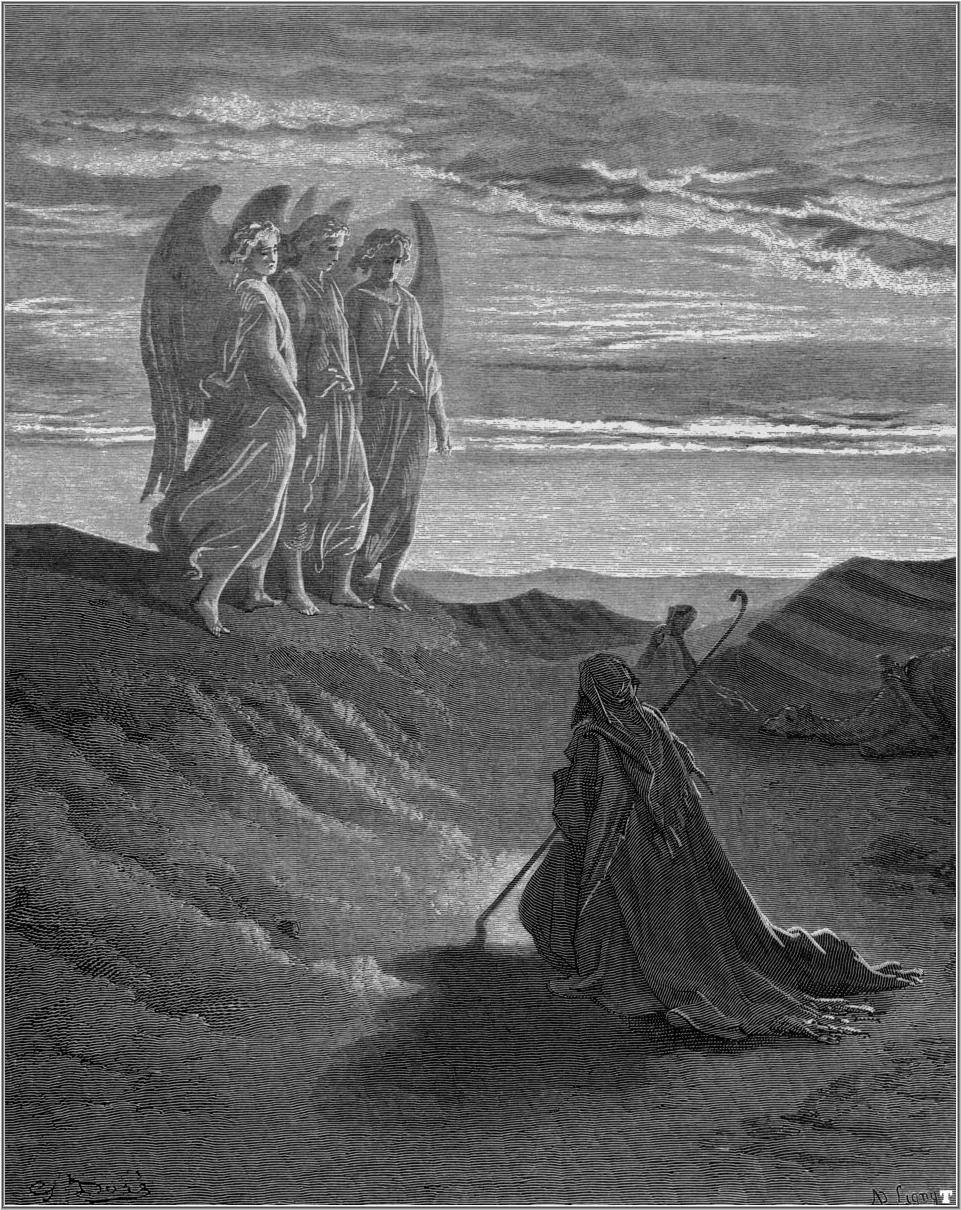
Abraham and the Three Angels, by Gustave Dore (via Wikimedia Commons)

And Moses was content to dwell with the man: and he gave Moses Zipporah his daughter. And she bare him a son, and he called his name Gershom: for he said, I have been a stranger in a strange land. (Exodus 2:22)

And he lift up his eyes and looked, and, lo, three men stood by him: and when he saw them, he ran to meet them from the tent door, and bowed himself toward the ground, And said, My Lord, if now I have found favour in thy sight, pass not away, I pray thee, from thy servant: Let a little water, I pray you, be fetched, and wash your feet, and rest yourselves under the tree: And I will fetch a morsel of bread, and comfort ye your hearts; after that ye shall pass on: for therefore are ye come to your servant. And they said, So do, as thou hast said. And Abraham hastened into the tent unto Sarah, and said, Make ready quickly three measures of fine meal, knead it, and make cakes upon the hearth. And Abraham ran unto the herd, and fetcht a calf tender and good, and gave it unto a young man; and he hasted to dress it. And he took butter, and milk, and the calf which he had dressed, and set it before them; and he stood by them under the tree, and they did eat (Genesis 18:2-8).

Southerners are famous for their hospitality, so much so that the words are coupled together idiomatically in the phrase ‘Southern hospitality.’ Leaving aside potentially ironic implications of that expression (let us not forget that the ‘genteel’ South also maintained a bevvy of Jim Crow laws aimed at making life inordinately inhospitable for Southern Blacks), the concept of being a good host and treating those who arrive at one’s doorstep with dignity, warmth, and grace does have strong roots in American soil. Those roots are not exclusive to that soil, of course; the Ancient Greeks placed a tremendous value on the guest/host relationship, evidenced by numerous ancient writings and even the term the Greeks used for the practice of being a good guest/host, ghosti. Likewise, Hebraic culture values the right treatment of the stranger or alien in one’s land, as in the scriptural passages which launched this article, as well as dozens of other examples throughout the Bible. On American ground, however, this relationship found a variety of expressions among numerous peoples. While the performance of hospitality is inevitably different depending on its cultural context, the surprising homogeneity of value placed on hospitable action speaks to a core of humanity.

The practice of hosting and honoring the unknown guest also appears in a number of folk narratives with a distinctively supernatural bent—hosting angels unwares, so to speak, although in some tales the beings hosted are decidedly non-angelic. In this article we shall see some examples of these supernatural interactions, the rewards and risks involved, and some potential interpretations of the practical application of unearthly hospitality. We will also look at some of the rituals and traditions surrounding hospitality towards mortal beings, which is where we shall begin our examination.

In the Appalachian Mountains, traditions of hospitatlity are very strong, of course, but often mountain people might not see much of others except at major events. Being a good host extends to some of the most private moments in life, including the first night of marriage. The concept of a spontaneous wedding reception, called an ‘infare’ can be summed up thusly: ‘The word infare comes from Old English: in plus faran, to go in. It was a reception held in the home of the newly-married couple. Word was ‘spread around;’ no invitations wer issued, but people in the community knew that they were invited. Refreshments were served and games were played very much as at the play-party [essentially a bridal shower]. Neighbors often brought gifts of food and other things to be used in the home of the newly-wed couple’ (Gainer 32-33). The infare is a concept similar to the charivari or shivaree, which involved friends and neighbors of the newlyweds waking them the morning after with banging pots and pans, bells, whistles, hoots, and a number of innuendos about the wedding night. The function of these hospitality rites centers on a few concepts: celebration of a new union, blessing the happy couple, and community integration.

Sometimes extends to the idea of hospitality as an aspect of place versus people: ‘When you return to the house for something that has been forgotten, sit down in a chair before leaving again to avoid bad luck’ (Gainer 127). In a story from Hoosier folklore, it is neither a person nor place with an expectation of hospitality, but an object—a stove, in this case:

An old lady in St. Francisville sold her cookstove to a man who promised to pay her funeral expenses instead of giving her the price of the stove in ready cash. He didn’t do as he promised. Every time his wife tried to get a meal and cook on the stove, the stove lids would fly off. So he went to the priest and told him about it. “Have you made any promises lately?” asked the priest. Then the man had to confess that he had promised to pay the old woman’s funeral expenses in return for the stove but that he hadn’t done it yet. Then the priest told him to go right away and pay off his debt as quickly as he could. So the man did this and after that he and his wife had no more trouble about being able to cook on the stove, and the stovelids never flew off again (Smith 50).

This last example is essentially a haunting tale, although the aspect of returning a promised favor lets me slip it in edgewise to this look at hospitality. Weddings and ghosts aside, many examples of good housekeeping between the mundane and supernatural realms do follow the ‘angelic’ mode more closely.

In folklore from Mormon sources in the western United States, several stories center on visits from saints and angels. One of the best known versions of such tales is that of the “Three Nephites.”

According to the Book of Mormon, Christ, upon his coming to the American continent, had twelve apostles. When it came time for him to leave, he asked them if there was any wish that he might give them. Nine of them asked to go with him. The other three remained silent. They were told that they would never suffer death. Since then they have roamed the earth in a sort of immortal state. They appear at frequent intervals to give aid to those in distress or to give advice. Mormon literature is full of accounts concerning the mysterious appearance of one of these men and the wonderful things that they have done…Oral versions can be heard in almost every Mormon community (Dorson 500-502).

Dorson then recounts two different versions of the Three Nephites tale. In one, a sick brother is brought back from the brink of death on an isolated plot of land by a wandering stranger, who disappears almost the moment he leaves the house. Other Mormon tales include “The White Bread on the White Cloth,” in which an angelic visitor cures a sick baby from a hospitable household and “The Hungry Missionaries,” which tells the story of a pair of missionary Mormons near starvation who are gifted bread by a kindly stranger, only to find that their parents had given bread to a needy stranger that same night hundreds of miles away. Another version of the visitor tale that pops up frequently in Mormon lore involves the appearance of a “wee small voice” which provided emergency guidance in spiritually challenging situations. Some folklorists have equated the wandering Nephite tales with the tales of the “wandering Jew” found in some European legends (see Gustav Meyrink’s The Green Face for a fictionalized version). While the “wandering Jew” tales frequently bear at least a small amount of anti-Semitic language or tone, Jewish custom also has its own version of the guest, with the empty plate set for Elijah during holy meals. My wife and I adopted a similar custom after seeing Christmas Eve practices in Prague.

Returning to the South, there are a few other places where strangers traveling in strange lands find succor among the locals. In Southern Protestant church circles, there are frequently tales of the wandering preacher being hosted by congregational family members, particularly for meals after Sunday service, often dining with a family while sharing extended prayers, blessings, and occasional sermons. Eventually, he becomes something of a comic character, giving rise to the popular proverb: “When the preacher come by for Sunday dinner it make[s] the chickens cry” (Courlander 500). In some versions, the preacher’s role can be turned into an abuse of power, even something evil or diabolical. Literary examples include Flannery O’Connor’s “Good Country People” and Randall Kennan’s Let the Dead Bury Their Dead. In addition to men (and occasionally women) of the cloth, African American communities put emphasis on the value of storytellers who would move between communities sharing lore and news. In this way, they were similar to a wandering bard figure, but more often the storytellers would be found in a centralized location (porch of a local mercantile—also becomes a literary figure, and a central piece of the narrative in Hurston’s Mules & Men).

The traditions surrounding hospitality, whether Southern or more broadly interpreted, form a core piece of American cosmology. Since one never knows just who one is hosting, graciousness is always a wise decision.

Thanks for reading!

-Cory


Blog Post 187 – Magical Hats

Cowboy hats for sale in Austin, TX (photo by Nika Vee, via Wikimedia Commons)

There’s a line from the classic (well, sort of) movie Smokey & the Bandit in which Burt Reynolds’s character explains to his lady of the film that he only takes his hat off for one thing, to which his female companion (Sally Field), of course, replies: ‘Take off your hat.’

Costume is frequently a reflection of ceremonial, ritual, or even magical operation, an outer manifestation of inner desire or power. A nun’s habit or a burqa can both represent a commitment to religious life, and inspire reactions from those around them. The ceremonial robes of a Thelemic magician frequently conform to specific standards to enhance invocations and rituals. The Encyclopedia of American Folklore notes:

Folklorists who discuss adornment have concentrated on costume’s socializing force and its relationship to the maintenance of individual and group identities. According to Don Yoder (1972), folk costume expresses identity in a symbolic way; functioning as an outward “badge” of community identity and expressing an individual’s manifold relationships to and within that community (Brunvand 341).

One of the items frequently associated with magicians is the magic hat—whether it’s the shiny tophat of a stage magician concealing a rabbit in its depths or the pointy, star-spangled adornment of a fantasy wizard. In American lore the hat has a special place as a magical item, frequently providing either symbolic guidance, otherworldly taboo, or a method of deployment in spell-casting.

When people think of American hats, possibly the most iconic is the cowboy’s ten-gallon hat (which, of course, does not hold ten gallons, but the galon hatband worn by Southwestern vaqueros). I remember teaching overseas and asking about impressions of America, and the most common response was that we tend to wear cowboy hats and smile a lot.

The cowboy hat—as well as a number of other elements of ‘rugged’ American folk costume—was borrowed from other cultures:

Many specifically American types of costume emerged from the interaction of diverse costume traditions in dialogue with indigenous materials and environments. Recognizable forms in Western regional costume, for example, are creolized forms resulting from the interaction of different traditions of dress. The costume of mountain men who charted new Western territory—fringed buckskin coats, breeches and shirts, fur “coonskin” hats, and thick, colorful blanket jackets—was an adaptation of Native American costume forms suitable for native environments and constructed with indigenous materials. The occupational costume of the American cowboy was also the result of the interaction of various cultural forms in dialogue with the demands of occupation and environment. Many of the recognizable elements of the classic American cowboy costume, such as spurs, hat, boots, and chaps, were the result of cultural exchanges between working Anglo and Mexican cowboys, known as vaqueros. Vaqueros were known by their wide-brimmed hats, short jackets, colorful neckerchiefs, red sashes, elaborate spurs, and protective leather leggings (Brunvand 343)

Given the emblematic nature of the Stetson and its kin and the frequently superstitious nature of life in the Old West, it is hardly surprising that lore has arisen surrounding this headgear. Probably the most common belief surrounding the cowboy hat has to do with what to do when you’re not wearing it. There seems to be an absolute taboo on placing a hat on the bed, which appears in everything from Southwestern rodeo lore to Oregon folk belief.

In both the American South and West, a particular custom of hat-burning following the birth of the first baby (or sometimes only the firstborn son) of a miner prevails. From Vance Randolph’s Ozark Magic & Folklore comes the following account:

In some clans, when a baby boy is born, a sister of the babe’s father comes to the house, looks at the child, and then burns the first hat she finds. No matter whose it is, nor how valuable, she just picks up a hat and throws it into the fireplace. Many people laugh at this and pretend to take it lightly, but it is never omitted in certain families. I know of one case where there was some doubt about the child’s paternity, and the husband’s family were by no means friendly to the young mother, but despite all this one of the sisters came and burned the hat; she did it silently and grudgingly and most ungraciously, but she did it. This practice is never discussed with outsiders, but it is sufficiently known that a series of funny stories has grownup about hats being burned by mistake, strangers’ hats missing, doctors leaving their hats at home, and so on (Randolph 205)

This practice was also found in California by folklorist Wayland Hand, where “[o]n occasion of a miner’s first trip to the mine after the arrival of the firstborn, his comrades simply seize his hat and burn it despite any resistance or protests offered” (Hand 52). This act functions both as an initiatory rite and as a method of preventing bad luck for the child. Hand also notes that the baby was usually made to touch the hat if possible prior to its cremation. A soldier’s hat could also be worn by a woman in labor to give her strength during the birth, furthering the link between children and hats.

A number of traditions from African American folklore have been attached to hats. In most cases, headgear serves as a method for the transference of contagious magic, sometimes almost in a medical sense: “if one borrows a hat from a diseased person, and the wearer sweats round the forehead where the hat rests, he will take the disease” (Steiner 267). Harry Hyatt recorded a string of beliefs among African Americans surrounding hat lore:

9750. If a girl puts a man’s hat on her head, she desires him to kiss her; if a man puts his hat on a girl’s head, he desires to kiss her.
9751. A girl should never put a man’s hat on her head; it will cause quarrels with him.
9752. The girl who tries on a man’s hat will not get him for a husband.
9753. If a woman throws her hat and gloves on a man’s bed, she wants to sleep with him; if a man throws his hat on a woman’s bed, he wants to sleep with her.
9754. A girl can strengthen a sweetheart’s love by laying his hat on her bed when he comes to see her.
9755. The significance of a beau refusing to hand his hat to his girl when he calls on her is love growing cold. 9756. A girl stepping on a man’s hat will soon marry the owner.
9757. “The girls did this when I was young: in the spring stamp with your thumb in the palm of your hand the first twenty-seven straw hats you see and you will meet your beau.”
9758. If a girl takes the bow out of the hat of each man liked, she will marry the owner of the seventh hat.
9759. Let a girl take as many bows as possible from the hats of men liked and wear them on her garter; the bow staying on longest will reveal who among these men loves her best (Hyatt 231)

Clearly some of these are contradictory, as in the piece about one gender wearing the other’s hat breeding either contempt or desire. There does seem to be a very strong connection between hats and sexuality, however, perhaps because the hat sits so close to the brain and retains the warmth of the head, it may be seen to cause ‘feverish’ behavior, such as love, lust, or even fighting. The divinatory rites surrounding hats are also interesting, although I suspect these performances have less to do with any direct effect upon the mind and more to do with other counting rituals related to love forecasting. Several tricks in the practice of old-style hoodoo involve acquiring the band from a man’s chapeau and using it to deploy any number of tricks, mostly designed to influence him in love (or occasionally business).

A bit of lore from the Southern mountains tells about how a person can reverse bad luck caused by unfortunate omens (in particular a fearsome rabbit crossing one’s path): [If a] Rabbit runs cross yur path, turn yur hat ‘roun’. (Wear your hat with the back part in front.)” (Duncan 236). This is not much different from the idea of turning around if a black cat crosses one’s path or even turning a key or coin over in one’s pocket after seeing an unlucky sign. In an era when hats are frequently worn backward (if worn at all), this sort of act is probably much less out of place today than it would have been half a century or so ago.

Hats, then, can be deeply magical objects to those that wear them. It’s hardly surprising that Lyle Lovett sings of his size-7 Stetson, “Well if it’s her you want, I don’t care about that/ You can have my girl, but don’t touch my hat.”

So what about you? Do you have any hat-related lore? What kinds of hats hold particular magic for you? The pointy costume ‘witch’ hat? A trucker’s cap owned by a favorite grandfather? I’d love to hear what makes your hat special and whether you ever ascribe anything magical to it.

Thanks for reading!

-Cory

Blog Post 186 – The Seventies Witch

Borrowed from Pinterest user shuttlecock (click for link)

Or, “Myrtle Snow is my Power Animal.”

[NOTE: The original version of this article contained a phrase that, used in this context, is insensitive and appropriative towards several Native cultural traditions. I leave the original above with a strikethrough to indicate that such use was a mistake. My mistake. I regret the choice of phrase and I apologize for any discomfort or harm it causes to anyone. I don’t want to completely erase the original because I worry that doing so will look like I’m trying to hide the mistake, which I’m not trying to do. I want others to see and know this was not a good choice on my part, and that I am sorry for it.]

(A few AHS: Coven spoilers below, but no major plot points)

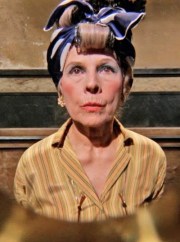
For those who, like me, spent the past four months or so riveted to the meandering and bizarre plots of the American Horror Story: Coven television series, the ride is now over and we’re all left sorting out wheat from chaff from eyeballs from  axe-murdering ghosts living in knotty pine hell. One of the most interesting and unusual characters in this season was Myrtle Snow (portrayed by the luminous Frances Conroy), a complicated, artistic, eccentric witch that is just about everything you could dream of having in a crazy aunt who can cast spells and is willing to melon-ball out the eyes of her enemies to restore your own sight. Myrtle plays the theremin, knows fashion inside and out (one of the best moments in the series was her screaming “Balenciaga!” at a crucial moment in the final episode), and has a palate for classic French and continental cuisine. She is, in short, a child of the seventies. More importantly, she is a child of the seventies witch.

Today I wanted to briefly look at that decade (which I’m treating as a “long” decade, starting in around 1965 and going through the very early 80s), which spawned a very particular witchy aesthetic.  It was the decade of Stevie Nicks (another AHS trope) and saw a marked growth in the popularity of occult themes across all sectors of American—and international—society. This is not going to be comprehensive, of course, and I know this is not exactly folk magic drawn from a weather-beaten nineteenth-century almanac, but I think that we should be cognizant of the role of recent (well, as recent as almost half-a-century ago, anyway) history in the development of modern magic and witchcraft. If the Victorian era was the early bloom of occultism, the seventies was the springtime explosion of color, dripping nectar, and bloody thorns which allowed a lot of the witchcraft we have today to re-surge, and it even helped fuel some of the studies of folk magic which have been so crucial to us in contemporary times.

In 1958, the film Bell, Book, & Candle featuring Kim Novak, James Stewart, and Jack Lemmon appeared in movie houses following a popular run of the play on Broadway. The sympathetic witch, played by Novak, and her hep-cat brother Nicky (Lemmon) mark some of the earliest American pop-culture portrayals of sorcerers who are not scary and evil, but hip, cool, and attractive. The success of the film eventually fed into the production of the classic television show Bewitched, which ran from 1964 to 1972, which starred Elizabeth Montgomery as the beautiful and charming Samantha. These portrayals are occasionally problematic—the film requires Novak’s character to give up witchcraft in the name of love, and the show was centered around Samantha’s struggles to sublimate her magic so that her husband could lead a comfortable suburban life (although that magic frequently saves his proverbial bacon)—but these glowing women brought glamor to the popular American experience of witchcraft, and the occult looked a lot less intimidating.

Knock, knock!

Then, in 1967, Ira Levin published his book Rosemary’s Baby. The following year, Roman Polanski adapted the book into a film the following year, and the eerie occult was back, with full-on Satanic conspiracies lurking behind Manhattan closet doors. Even in Rosemary’s Baby, however, the glamor persisted—the eccentric but resplendent witches-next-door, Roman and Minnie Castavet (played by Ruth Gordon and Sidney Blackmer), were magnetic, and served frosty cocktails in their spacious New York flat. There Satanic witch-cult even seems more like an anarchy art clique than a sinister magical lodge for the most part. The film put the fear of witches back into the American mind, however, with a new twist—witches were spooky, but spooky was cool. Incidentally, another classic occult film, The Devil Rides Out, appeared in theaters the same year as Rosemary, and lit its own subtle fires under the cauldron.

With this new-found social capital, witchcraft and the occult took the world by storm in the seventies. Some of the occult films which appeared during the decade were hallmarks of art and cult cinema: Simon, King of the Witches (1971); The Devil’s Daughter (1973); The Exorcist (1973—not a true ‘witch’ film, but one with strong occult ties and influence); The Wicker Man (1973); Season of the Witch (1973, directed by zombie-genre great George A. Romero); Lisa & the Devil (1974); and the highly glamorous Suspira (1977), a veritable precursor to 2010’s creepy art-dance film Black Swan. In essentially all of these films, the presence of the occult is a trope, and does not have any of the benign or jovial qualities of Bell, Book, & Candle or Bewitched. Yet each film features a mixture of eroticism, fashion, and allure layered over the tale of black magic driving the story. Liberation, sexual empowerment, and countercultural energy augment the horror of the films, and the gray space between forbidden occultism and fashionable society becomes a gulf.

Art and music also experienced an occult florescence during the seventies. The aforementioned Stevie Nicks—the “White Witch” of music—joined the group Fleetwood Mac along with boyfriend Lindsey Buckingham in 1974, and in 1975 the group experienced mainstream success with an album featuring witchy hits like “Rhiannon.” Her flowing shawls, black gowns, and stage twirls bewitched audiences, and her fashion became a standard of young, hip women seeking to look a little out of the mainstream—a little “witchy.” The occult music craze started well before Nicks, of course, and bands like Coven and Black Widow had experienced some chart success with their Satanic/witchy black rock during the late 60s. In 1970, Santana recorded and released Fleetwood Mac’s song “Black Magic Woman,” on their (fairly occult-named album) Abraxas, taking it to no. 1 on the pop music charts. In 1972, the Eagles released “Witchy Woman,” another big hit glamorizing witches, and in 1974 Cher released “Dark Lady,” about a love triangle involving a witchy fortune teller. Cher herself cultivated a glam-witch look throughout the decade, further expanding the cultural capital of witchcraft fashion. Other rockers who adopted elements of the occult into their songs, performances, and fashions include David Bowie, Jimmy Page, and, of course, Jim Morrison. Patti Smith notes the heavy influence of the occult on the Greenwich Village music scene in her memoir Just Kids, and especially the huge artistic influence that it had on artists like Robert Mapplethorpe. Penthouse magazine did erotic spreads centered on occult themes as well, such as this one featuring Babetta Lanzilli from 1974.

In the ‘real-world’ of witchcraft, a number of stars were aligning to add fuel to the magical fire. Chas Clifton outlines a number of the groups which were exploding onto the scene in his book Her Hidden Children, including the Psychedelic Venus Church and Anton LaVey’s Satanic Church, which also released a film called Satanis in 1970 (there are some great pictures of a 1969 LaVey here). Alex Sanders, the progenitor of Alexandrian Wicca, released an album revealing some of the workings of Wicca called A Witch is Born in 1970. Wicca had arrived stateside with Raymond Buckland in 1968 (although it may have had some early seeds from other sources, too). Buckland expanded on witchcraft religion through books like Witchcraft Ancient & Modern and Witchcraft from the Inside. The hugely influential publication of Robert Heinlein’s Stranger in a Strange Land in 1967 led to the foundation of The Church of All Worlds (CAW) and shaped practices in other groups as well (such as the aforementioned Psychedelic Venus Church).  The mass-marketing of witchcraft became a staple of the 70s, with sales of “black magic ritual kits” hitting store shelves and a variety of occult-inspired board games. The Ouija game was purchased by Parker Bros. in 1966, and they began to push it as a party game rather than a spiritual tool. There was also a push towards legitimacy. Journalist Hans Holzer published his mainstream apologetic (and sensationalist at times) text The Truth About Witchcraft and opened the door to public discussions of its practices as legitimate, if fringe, activities done by regular people. Wicca and neo-Paganism in general underwent a rapid expansion and transformation, and the end of the decade saw the journalistic survey of new witchcraft (and other alternative) faiths in Margot Adler’s Drawing Down the Moon (1979). That same year, Starhawk published The Spiral Dance, which crystallized the evolving feminist Wicca movement. A busy, busy decade for witchcraft.

I should point out that these different aspects of witchcraft may have occasionally interacted with one another, but they were not in strict conversation through the decade. Instead, the popular conception of the occult and witchcraft grew in one direction—often sensational and glamorous—and the nature-based religions that were gaining momentum in fringe spiritual culture. Yet there does seem to be a shared zeitgeist from that era that drove ever more people into the black-robed arms and beshawled shoulders of witches. For a number of people, the ecological spiritualism which was fueling part of the neo-Pagan segment was a complete non-starter. Instead, the sex, drugs, & rock-and-roll aspects of witchery worked as an artistic medium of self-expression. Both segments were connected to counterculture, but with different aims and methods. Following this decade, with its chaos and beauty, the occult got heavily mired in a number of problems, most notably the “Satanic panic” of the 80s. With the recent popularity of witchcraft in media, I’d be hardly surprised to find a resurgence of people claiming to have been harmed or attacked by evil cults over the next two decades or so. Let’s hope there’s been some growth on that front and that the information age will keep it in check, but I somehow doubt the ripples aren’t already in motion for the next “panic.”

So what does all this have to do with Myrtle Snow and the Diane von Furstenburg  wrap dress (“the greatest invention of the century,” according to dear Auntie Myrtle)? I think that it can be very easy to lose sight of just how diverse witches are, for one thing. Dressing in black (despite AHS:Coven’s edict that “On Wednesdays we wear black”) may be a statement, but so is sporting a pair of black-and-red Pleasers for ritual sex, and there’s nothing wrong with a Pier 1 altar and a little P90X before ritual. I don’t want this to devolve into a post on there being no one type of witch, or on what witches should or shouldn’t look or act like, but I do think that the recent witchcraft revival in pop culture means that there’s room for some real glamor in witchery again. Folk magic performed with embedded style and power—a flair for the dramatic—could be a very refreshing thing. I’d like to see witches embracing their own high-fashion spins on tried and true witchcrafts—not so much glitter in conjure oils, but a really knowledgeable mixologist of a witch brewing enchanted herb rinses for bewitching cocktail hours, for example. I certainly don’t want to see the folk magic I study and practice cheapened by commercial interests, of course, but I would love to see a few more Myrtles playing the theremin around bonfires, while our cultural capital is so ascendant.

What about you? Is there a place for glamor and high fashion in your witchcraft? Are the seventies still alive in your spells?

Thanks for reading!

-Cory

Borrowed from KPopStarz (click for link)

Blog Post 184 – Comets

The Comet of 1680, by Lieve Verschuier (via Wikimedia Commons)

“Like a comet burn’d
That fires the length Ophiuchus huge
In the Arctic sky, and from his horrid hair
Shakes pestilence and war” (Milton, Paradise Lost)

With the ISON comet drawing eyes to the night sky, I started thinking a lot about the superstitions and magical beliefs surrounding the appearance of comets in the sky. Comets have long inspired people in strange, occasionally beautiful, and sometimes disturbing ways. Mark Twain’s life was framed by the appearance of Haley’s Comet, a point the author himself noted. The Heaven’s Gate cult engaged in a group suicide surrounding the arrival of the Hale-Bopp comet.

Increase Mather, famed early American religious writer, dedicated an entire work to explaining the spiritual importance of comets in his Kometographia of 1683. He was responding to the presence of the Great Comet of 1680, which had captured the attention of most of the Western world, and felt that many people would be afraid at this sign and misunderstand it as a phenomenon which directly influenced the course of events on earth, rather than a sign from God of some important event to come (see more here). Generally speaking, comets have historically been associated with strife and woe to come. My Opie/Tatem Dictionary of Superstitions gives a laundry list of examples of ill-omen presaged by what the Venerable Bede called “long-haired stars”:

  • A comet as portending a change in governance (Tacitus, Annals)
  • Famine or pestilence or war or “fearful storms” (Byrhtferth, Manual)
  • A comet [the Great Comet of 1680] appeared two days before the Duke of Monmouth died, and all over Europe before the death of Charles II (J. Case, Angelical Guide)
  • An appearance before the plague struck London (Defoe, Journal of a Plague Year)
  • A wry observation that those who laugh at comets as tokens of disaster will studiously insist on “times and situations proper for intellectual performances” (Johnson, The Idler)

In the New World, comets seem to have retained much of their wicked reputation. In some cases the danger foretold by the comet is vague and ill-defined: “When a comet appears there will be trouble” (Roberts, “Louisiana Superstitions”). In other places, the significance of the hairy star was more direct and its consequences very  clearly understood: “A comet is a sign of war” (Thomas, Kentucky Superstitions).  Why should these astronomical phenomena, which had been showing up in night skies for ages, have such a bad rap? Considering even Classical authors like Tacitus cite the comet as woeful, the impulse must run deep. The unique cosmological view of Calvinism, though, which influenced much of Atlantic American colonization, both denigrated occult practices like witchcraft and supported an enchanted view of a univers under Divine direction:

“The Calvinism of the colonial awakenings also paralleled important occult ideas. The fatalism inherent in Calvinism’s concept of predestination found an occult equivalent in the idea fundamental to astrology that motions of star and planets revealed a future that individuals could not control. Calvinist evangelists and occult practitioners also explained catastrophes in similar ways. Believers in occult ideas thought the coming of comets and eclipses had inescapable and usually disastrous consequences; not even kings and queens escaped their verdicts. No one escaped judgment by the Calvinist God either. Sometimes He damned seemingly model Christians simply to demonstrate His sovereign” (Butler, “Magic, Astrology, & the Early American Religious Heritage”).

The shared cosmology of the colonists saw the universe as inhabited by spiritual consciousness, and an intelligence that wished to convey its meaning to human beings for one reason or another. Signs, omens, and portents were one such method. Comets, with their placement among the stars, their strange and ill-understood movement, and temporary nature made perfect fodder for prognosticators of all stripes—religious, occult, and both (they did exist, even during the Colonial period).

Lest we make the mistake of thinking that the observation of comets was the purview of only a few dusty old white occultists or a lot of fiery former Englishmen with strong religious convictions, I’d also like to point out that the cosmology which imbued comets with significance stretched across a broad swath of New World denizens, including Native Americans, Spanish and French colonists, and of course, the imported Black slaves.

“English Protestants often read unusual events as evidence of the divine presence in everyday life, acknowledging the activity of a creator deity who operated through omens and portents within the natural order, or signs and wonders in the heavens, philosophy known as Providentialism. “Comets, hailstorms, monster births and apparitions” and other disruptions of the ordinary were demonstrations that foretold God’s will or signaled His displeasure withhumankind. Africans’ understandings of the universe were also inspired by visible manifestations of spiritual forces within nature. They too viewed thunder, lightning, and other elements as heralds of sacred hierophanies,the awesome presence of numerous divine beings.” (Chireau, Black Magic).

The Providentialism Chireau notes fits the cosmology of the English and other European settlers, but it is clearly not unique to them. A world with Divine presence not only innate to its component parts, but in which those component parts act as mediums for communicating with humans, is also very much an African perspective. And while it is tempting to think that such beliefs can be relegated to history’s dustbin, we should also remember that in our time comets stir up a lot of strange excitement. Religious scholar Camile Paglia notes, for example:

“The Children of God, founded in 1968 as Teens for Christ by “Moses” David Berg in Huntington Beach, California, were negligible in number but came to public attention when they loudly prophesied that the us would be destroyed by Comet Kohoutek in January 1974. The group continues under the name “The Family” and is regularly excoriated by conserva tive Christian watchdog groups for its practice of free love (called “Flirty Fishing”) as well as its heretical beliefs that Jesus was sexually active and that God is a woman. (Paglia, “Cults and Cosmic Consciousness”)

Paglia also references the Hale-Bopp comet mentioned earlier, and Marshall Applewhite’s Heaven’s Gate cult. I have, so far, not heard of any particularly distressing phenomena surrounding ISON’s appearance, but if nuclear war breaks out, I may have to blame that particular “long-haired star.”

If you have comet lore you’d like to share, please do so in the comments!

As always, thanks for reading!

-Cory

Blog Post 183 –Lost in the Supermarket (Part II)

Last time, I looked at a few of the standard products found in a typical supermarket which could be easily used within a folk magical context. I’m continuing that theme today, and while I’ll still be doing my best to stay out of the ubiquitous enchanted spice aisle, I will be touching on a few ingestibles. Please note, however, that as I frequently say: THIS IS NOT A MEDICAL BLOG, AND NO INFORMATION PRESENTED HERE SHOULD BE TAKEN AS MEDICAL OR LEGAL ADVICE. Before you start popping things into your mouth or rubbing them on your skin, you should make sure with your doctor that doing so will not lead to genetic mutation, pestilence, plague, or ennui of any kind.

supermarket_herbs_spices

I’m going to start in what my part of the country likes to think of as the “ethnic foods” section, which generally speaking involves a portion of the produce area and an aisle with Asian, Hispanic, and perhaps Italian meal ingredients. It’s where I found the candles I showed in the previous post, but in most of the grocery stores around here, despite the obviously oblivious marginalization that comes with a label like “ethnic” or “international” cuisine, the diversity of the consumer population has made a lot of once-rare items much easier to find. The section of these stores directed at Hispanic consumers provides a number of tools for folk magic that fall under the practices of curanderismo and/or brujeria. I’ve covered supermarket staples like eggs already, so today I thought I’d look at three somewhat more distinctive items: corn husks, hot peppers, and coconuts.

Corn Husks

The papery, stiff-but-pliant corn husk is absolutely essential for making really good tamales. Usually these come in huge packs (because if you’re going to go to the trouble of making tamales, you may as well make a lot of them), and they’re often dirt cheap. In fact, in the late summer, I frequently fine freshly stripped corn husks in buckets next to the corn displays, and few grocery store managers care if you grab a sackful to take home with you for free. So what sorts of magical mischief can you get up to with all those husks?

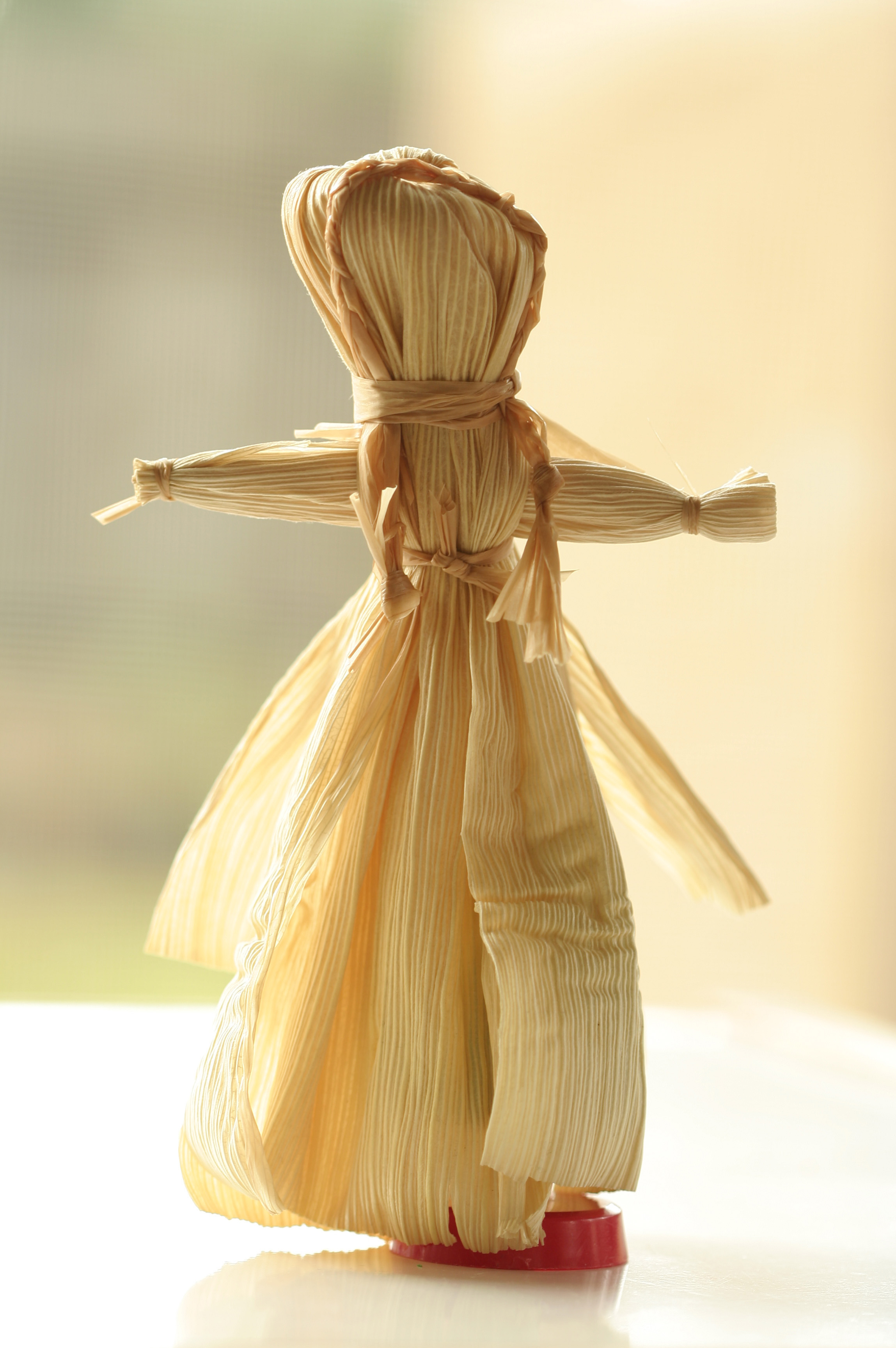
Corn dolly folk art (via Wikimedia Commons)

If you’re not making ensorcelled tamales, you might consider saving a few husks and turning them into doll babies for working various kinds of poppet magic. In some cases, the husks would be bound to the cob, along with various herbs and things like hair or clothing from the intended target to work a spell on them. Texan rootworker Starr Casas describes one such baby in The Conjure Workbook, vol. 1:

“When I was caring my daughter [sic] I was very ill. I was put on bed rest for five months. My Grandma knew this lady and asked her to come to my house and help me during the week. She treated people who were ill. I think that due to her efforts my daughter is alive today. I trusted her because my Grandma trusted her…She prayed over me every day; one day she asked if she could have some of my hair. She could have just taken the hair from my brush, at this time my hair was very long. She told me the hair needed to come from the crown of my head.

A few days later she came with this Dollie. This was the first time I had ever seen a doll like this. The body of the doll was a corn cob and the doll was covered in corn husk. When I asked her what it was for all she told me was to keep me and my baby safe. After I had my daughter the Dollie disappeared. When I asked her about the missing doll she told me the doll wasn’t needed anymore. I have never seen another Conjure doll like that one again” (Casas 246-7).

Starr’s encounter with this type of doll is not typical of conjure practice, something even she notes, but the use of doll baby magic is fairly common and corn husks make a simple, cheap, easy-to-make-and-destroy sort of doll. One reason that Starr may not have seen them since is that they are less directly associated with hoodoo and more directly associated with mountain crafts, particularly the crafts of the Appalachians. In fact, you can find wonderfully detailed instructions and step-by-step photos on constructing corn dollies in Foxfire 3, which records the folk practices of the southern Appalachians (a later compendium called The Foxfire Book of Appalachian Toys & Games also discusses the corn dolls, but doesn’t give the detail the actual anthology book does).  That’s not to say that such dolls are not found in any version of conjure—Dr. E mentions them in his article on doll making, found in The Black Folder, for example—but that they very likely drifted in from non-African sources. Their provenance matters not, though, because they are incredibly useful magical tools in any case.

Hot Peppers

Have you ever seen the sheer plethora of peppers available in a bodega? Even at the chain supermarkets, you can now find dozens of choices, ranging from fresh jalapenos and big, fat Anaheims to the huge sacks of tiny dried japones peppers and the small-but-potent habaneros. So what to do with all those peppers?

Of course, the obvious answer would be hot-foot work in hoodoo, but you can also get a little more creative than that. Using the peppers as a vessel, it takes very little effort (but a good bit of practice and caution) to slit open a habanero, stuff someone’s name inside and bind it back up. Doing that works sort of like a vinegar jar cranked up to eleven, in that it puts a lot of unpleasantness into someone’s life. Peppers don’t have to be all bad, either, as cooking them with something like chocolate creates a very different effect—a good hot cocoa with a hint of chili pepper makes an enlivening winter beverage, and a heck of an aphrodisiac! A little rum in that latter option helps, too, of course.

Speaking of rum, one of the more interesting uses for all those hot peppers in magic—and here I’m stretching the term to incorporate a certain degree of magical religion—is to soak the peppers into an alcohol like rum until it is nigh undrinkable. Why would you do that, you ask? Maya Deren explains the use of the drink during a Vodoun rite in her book, Divine Horsemen: The Living Gods of Haiti:

“As Lord of Eroticism, he [Ghede] embarrasses men with his lascivious sensual gestures; but as God of the Grave he terrifies them with the evidence of the absolutely insensate: he will not blink even when the most fiery liquid is sprayed into his eyes, and only Ghede can swallow his own drink—a crude rum steeped in twenty-one of the hottest spices known. Thus he may alternately remind men that he is their past, their present and their future, that he is master of their compulsive drive to life and the inevitability of their death” (Deren 104).

Deren also notes that anyone claiming possession by Ghede is subject to both of the tests she mentions: having the hot rum sprayed in their eyes and being told to drink it. A truly possessed devotee will have no problem doing so (and likely be able to down the entire bottle of rum and show no effects after the possession ends).

Coconuts

If you ever need to pretend to ride a horse, you will probably automatically feel the need to buy a coconut and bang the two empty halves together to simulate the sound. At least if you grew up watching a lot of Monty Python that’s probably what you’d do. The coconut is good for more than equine simulations, however, and you can use the whole fruit/nut and its liquid for several magical functions.

“Retrato de una señora principal con su negra esclava,” by Vicete Alban (via Wikimedia Commons)

Drilling holes in the coconut will allow you to do two things: firstly you can get at the precious liquid, coconut milk, inside. It’s delicious and a wonderfully refreshing drink, but if you can resist the urge to down it all in one go, save some for later. Now that you have a semi-empty coconut with holes in it, why not stuff it full of name papers, sweet things like raw turbinado sugar (also available in the Hispanic section usually) and create a natural honey-jar spell? This sort of spell will, of course, not last as long as an actual honey-jar, but it has the advantage of being very quick and due to the sympathetic magic connected to the coconut’s skull-like density and shape, it works right on the minds of the folks targeted with the spell.

Speaking of heads, if you saved that liquid, you can turn that into a powerful magical formula as well. An African-derived magical practice known alternately as “feeding the head,” or in Vodoun as a lave tet ceremony (literally “head washing”) involves using a coconut wash on the head and hair during a ritual setting in order to fill it up with good spiritual forces. The feeding usually follows a simple head washing, either with natural water (sea water, spring water, etc.) or a number of aqueous formulae found in various traditions. Then comes the feeding:

“The process of feeding the head is simplicity itself. The coconut milk or cream is scrubbed into the head, just like the head-washing compound or a shampoo. Once the compound has been worked into the head, the hair may be combed out again. However, unlike a head-washing compound, the coconut compound should be left to dry on the head—preferably, overnight. A scarf or towel may be wrapped around the person’s head to insure this…In the morning, the coconut compound may be rinsed out and the person’s hair washed with a shampoo and dried, as it would normally be” (Mickaharic, Spiritual Cleansing, 101).

The richness of the coconut milk causes the spirits which guard a person (frequently though to be connected to a person’s head in African tradition) to be refreshed and take a renewed interest in the person’s well-being. It’s sort of like bribing a guardian angel with a good pina colada, which would be another fun way to use that coconut milk if you’re so inclined.

Of course, you don’t even have to open the coconut up to use it magically. I’ve seen a house cleansing method which involves simply kicking a coconut around a new home, through every room from top to bottom and back to front. You might say a psalm as you go, or repeat the Lord’s Prayer or the Apostles’ Creed. Other traditions use other incantations, songs, or words, but the point is the same: get the coconut all over the house, kicking it as you go, letting it soak up bad vibes like a sponge. When you finish you can either pick it up in your left hand and take it to a far away tree, where you crack it open and leave it at the roots, or you can drop it into running water heading away from your home. It essentially functions as an egg cleansing for a domicile, but coconuts tend to be less messy than eggs when kicked (Mickaharic has a variant on this practice using a head of lettuce in his Spiritual Worker’s Spellbook).

There’s an entire pharmacopeia in a well-stocked bodega, with everything from aloe vera gel (and the live plants) to nopales (prickly pear cactus, sometimes used in curanderismo for treating diabetes) to chicken feet and cattle tongues (both edible, but also both used in various hoodoo spells as well) available to an informed shopper. I mention these three ingredients solely as a way to begin to see the shelves as stocked with more than marketing gimmicks and high-fructose-corn-syrup-laden beverages. While having a good local witch shop is invaluable for many reasons, the grocery store may be your best friend when it comes to simple, practical magic.

I know this article barely scratches the surface of the subject, and I highly encourage you to look at some other sources on making the most of a grocery store’s shelves for your spell work. As I said before, much of my own inspiration came from Sarah Lawless’ post on the topic and Cat Yronwode’s compilation The Black Folder, which features not only an article on grocery store magic (covering things like onions and lemons) by Cat herself, but other useful tidbits such as Norwegian bread charms (from Dr. Johannes Gardback) and an article on “kitchen witchery” by Sister Robin Petersen. Of course there are probably dozens of books on this subject, many of which I’ve sadly neglected here. Do you know of any good grocery-store spells? If so, please feel free to post them to the comments below!

I may eventually come back to this topic another time, but for now I hope this has been a useful glimpse beneath the barcodes into the magic of the market.

Thanks for reading!

-Cory

Blog Post 182 –Lost in the Supermarket (Part I)

Customer making purchase in WWII grocery (via Wikimedia Commons)

If you have that song by the Clash in your head now, congratulations, that was my primary purpose in writing this article. Kidding.

Last time I took you on a quick but fun tour of my home to show how I’ve applied some of the folk magic I’ve picked up over the years in my personal life. Today, I’m drawing some inspiration from Sarah Lawless, whose article on “Pantry Folk Magic” is one of the finest pieces on using what’s at hand for practical spellwork that I’ve ever read. I’m also inspired by an article on “Grocery Store Magic,” in The Black Folder, a compilation of workshop notes by Cat Yronwode (which I recently reviewed), and I’ll be citing both of these sources as well as several others in the coming few paragraphs.

There are plenty of articles out there on doing magic from the grocery store, but I wanted to go beyond the spice aisle a bit and look at the vast number of folk magical items that may go a little under the radar in a standard shopping trip.

Before we go much further, I do want to mention that I don’t think the grocery store is the end-all be-all of magical supply houses. I prefer by far to grow or wildcraft my own botanicals, use hand-crafted incenses from a local occult shop, and carry talismans picked up at the nearby Catholic bookstore in a lot of cases. Supporting community commerce and doing work oneself fits in as well or better with most magical practices than grabbing a mass-produced box of incense from a five-and-dime shelf, but there are always going to be cases where magic must be done on short notice or with supplies not readily purchased at the witchy store. In some of the cases below, it should also be noted that the grocery stores where one can find these ingredients are not the big chains, but rather local bodegas or international markets.  You are far more likely to find chewing john (galangal root) in an Asian market than in a big chain one, for example. Now, on to the tour!

Candles

One of the big resources that frequently gets missed in grocery store magical item lists is the cornucopia of candles that can sometimes be found. Of course, a lot of stores carry scented jar candles and those are reasonable enough for doing some workings, but if you look in the Latin American or Hispanic section you can often find a number of saint candles as well. I’ve found everything from the standard Virgen de Guadalupe to Santa Muerte, Seven African Powers, Just Judge/Justo Juez, and even a Lucky Lotto Numbers candle just by browsing a little. Below you can see a pair of very cute candles which look like children’s novenas for working with Guadalupe or St. Jude, found at a mid-level chain grocery store.

Little Candles

The novena candles are also frequently available unlabeled and sometimes in multiple colors. It’s fairly easy to customize them to your own needs and do extended spellwork using these tools.

The candles don’t stop there, though. Say you want to do a quick-and-easy candle spell, but you know you won’t have time to burn a candle 1-2 hours per night for nine nights. Stop by the baking section and grab birthday candles, which are small and burn very quickly. Will it change the potency? Perhaps, but you’ll be able to at least do what you want to do. They also frequently have letter or number shaped candles, so you might be able to use those to target a specific goal or person with the spell (especially if you’re knowledgeable about numerology and can figure out the right number(s) for the job).

If your grocery also has a Jewish section with kosher options, check to see if they sell Shabbat candles. They frequently come in boxes at a very reasonable price, and are specifically designed to be used for spiritual purposes (albeit non-magical ones in most cases).  These burn longer than the birthday candles but much more quickly than novenas, and so would be good for mid-range spell work.

Cleaners

We’ve mentioned these a bit in our previous post on Spiritual House Cleaning, but here I mean less of the whole-herb types and more of the mass-produced stuff. Harshly-scented cleaning solutions with abrasive chemicals and artificial odors may not seem like a particularly likely place to find folk magic, but it’s there if you look for it. One of the most common of household cleaning agents, ammonia, acts as a substitute for urine in some spells. Cat Yronwode suggests in her Hoodoo Herb & Root Magic that ammonia can be used in spells focusing on protection and spells designed to improve sales, either at a business or of a home (Yronwode 29). In Spiritual Cleansing, Draja Mickaharic mentions ammonia’s great psychic cleaning powers and notes that putting a little bit down the drain after a house blessing & cleansing will help finish the job.

In a similar vein, we find plenty of uses for that old pantry/laundry/cleaning-closet standby, vinegar. Sarah plainly mentions vinegar as one of her grocery store finds for the working magician. All vinegars can be good for simple crossing work, according to Southern folk magic, and it would be very easy to turn cider or wine vinegars into a variety of Four Thieves Vinegar for both aggressive protection and subtle cursing. I mentioned on our Spell Failures episode that I had attempted to work a vinegar jar with poor results (mostly due to my lack of dedication). I found an interesting hexing combination of both vinegar and ammonia in Zora Neale Hurston’s article on “Hoodoo in America,” too:

i. To Punish.
When you want a person who is indited punished, write the name of the person in jail on a slip of paper and put it in a sugar bowl, or some other receptacle of the kind. Put in red pepper, black pepper, one penny nail, fifteen cents of ammonia and two keys.  Drop one key down in the bowl and lean the other against the side of the bowl. Go to the bowl every day at twelve and turn the key that is standing against the side of the bowl to keep the person locked in jail. Every time you turn the key, add a little vinegar (Hurston 382).

I find it interesting that both ammonia and vinegar seem to be able to perform cleansing functions in a household, but applied to an individual their corrosive nature seems to become destructive. I think this illustrates the principle of the two-sided coin of magic nicely, though, as the same ingredient that can save you from nasty spirits might also be turned around to damn an enemy.

Before I move off of cleaners, I want to mention a couple of the commercial products out there that have some magical history and applications. First, the famous Pine-Sol cleaner, which has been found in grocery stores for almost 60 years. The product was born in Mississipi, and even today contains pine oil to give it cleaning power and its trademark scent (along with a hefty dose of chemical salts and alcohols).  Pine oil is another spiritual cleanser and refresher, in addition to having some mundane cleaning properties as an antibacterial and antiseptic disinfectant. It works a lot like lemon does in spiritual cleansing—so much so that one of Pine-Sol’s first offshoot scents was lemon, although now they have half-a-dozen different aromas to choose from.  While I’d never suggest using a commercial pine cleaner on the body (or in the body especially…that’s a big no-no!), some folk magical traditions have used pine oil-based treatments for medical ailments (there’s a fine example in Hohman’s Long Lost Friend, for instance). So the presence of lemon and pine has the power to cut through spiritual ailments as well as the nasty germs lingering on your kitchen floor. You can make a variant of your own pine oil cleaner by simply adding pine oil to some salted water with some castile soap dissolved in it. It won’t be as strong as Pine-Sol, but it also won’t be quite as harsh. You could even add a bit of lemon juice or lemon oil to that, too, for extra kick (both spiritually and microbially speaking).

Since we’re talking of lemons and soap, I can’t help but at least briefly mention Murphy Oil Soap, which has been treating hardwood floors for over a century (although only in a mass market for about half that time). The cintronella oil in Murphy’s has a citrusy, lemony scent, and is both a lucky and cleansing ingredient in spiritual work (it’s one of the oils used in Van Van Formula). Queen of Pentacles Conjure notes that both Murphy’s and Pine-Sol make great additions to the spirit worker’s cleaning closet. Citronella keeps away mosquitoes, too, which makes me love it even more.

I’m going to pause here before continuing through the aisles, as this article is already quite long. There is plenty more to see as we make our way through the store, though, so stay tuned!

Thanks for reading,

-Cory

Blog Post 177 – Treasure Hunting

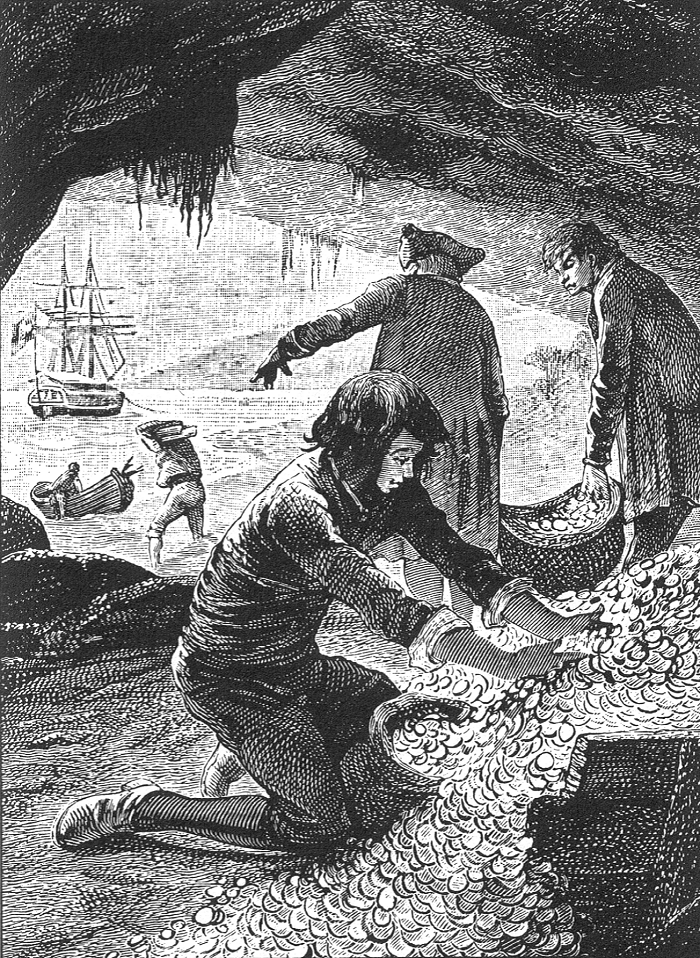
“Jim Hawkins & the Treasure of Treasure Island,” illustration by Georges Roux (via Wikimedia Commons)

A number of modern spells are designed to bring “prosperity” into an individual’s life.  In some cases, Wiccan and Wiccan-influenced spellbooks contain workings that either target specific needs and cash amounts, or which seek to generally enhance the financial stability of the magician or his/her designated target (most Wiccan spellbooks also require that the magician have permission from the target even in beneficial magical workings like this). Certainly, magical practices designed to bring a sense of bounty and abundance into one’s life go back quite far—the cults of Fortuna and Tyche in the ancient world appeal to good luck, and the Roman cult of Pomona pursued the ideal of a fruitful life. Folk magic, however, has generally focused less on meeting a generalized prosperity and has drilled down to specific financial problems and advantages. The Wiccan spells which seek a specific sum of money to cope with a specific issue—a medical bill, a broken radiator, etc.—very much mirror the sorts of spells done by people across multiple times and places as they tried to cope with uncertain finances.

Another brand of folk magic, however, did not work towards a specific sum, nor did it seek to bring a vaguely defined sense of wealth into someone’s life. Instead, many spells targeted getting rich—quick! In some cases, the spell’s target would be a gambler who worked to gain the advantage in games of chance (more on that another day, hopefully). A few stories talk of acts of magical extortion, wherein a magician would either try to low-ball the purchase of land/livestock with the threat that failure to accept a paltry offer would result in the destruction of the commodity in question OR a witch might place a curse on a neighbor and only remove the curse for a fee (you can find several examples of such stories in The Silver Bullet, and Other American Witch Stories by Hubert J. Davis).

If someone wanted to get rich really quickly, however, he or she would turn to magical treasure hunting. Plenty of European grimoires had methods for finding lost treasures, usually with the help of spirits. Some grimoire texts which influenced American practices, such as The Black Pullet, spelled out in detail how to summon treasure-seeking daemons to work on one’s behalf:

Seal4BlackPullet

“This talisman and this ring are not less valuable. They will enable you to discover all the treasures which exist and to ensure you the possession of them. Place the ring on the second finger of your right hand, enclose the talisman with the thumb and little finger of your left hand, and say, Onaim, Perantes, Rasonastos.” I repeated these three words, and seven spirits of a bronze colour appeared, each carrying a large hide bag which they emptied at my feet. They contained gold coins which rolled in the middle of the hail where we were. I had not noticed that one of the spirits had on his shoulder a black bird, its head covered with a kind of hood. “It is this bird,” the old man said to me, “who has made them find all this treasure. Do not think that these are some of what you have seen here. You can assure yourself of this.” I replied, “You are for me the truth itself. My father! Do you believe that I would insult you by doubting?”

He made a sign, and the spirits replaced the gold in the bags and disappeared. “You see, my son, what the virtues of these talismans and rings are. When you know them all, you will be able, without my aid, to perform such miracles as you judge proper” (The Black Pullet, 20-21).

Seals and incantations like these made it into later magical practices, especially in places where grimoire languages like German, Spanish, or French were spoken (to be clear, many grimoires were written in languages like Latin with commentaries in European languages, and these three tongues were hardly the only ones in which grimoires appeared).

Of course, being able to find treasure only helps if treasure is already buried in the earth waiting to be found. In the maritime culture of early New England (as well as the maritimes of other parts of the New World), a widespread belief in hidden golden caches secreted beneath the soil became the basis for a number of magical spells. A Maine man named Daniel Lambert, suddenly flush with money, faced suspicion, for:

Lacking any other apparent explanation, his neighbors attributed Daniel Lambert’s sudden wealth to the discovery of buried pirate treasure. Despite Canaan’s location dozens of miles from navigation, the inhabitants readily believed that Lambert had found a treasure chest because, as Kendall explained, “The settlers of Maine, like all the other settlers in New England indulge an unconquerable expectation of finding money buried in the earth.” Indeed, backcountry folk insisted that troves of pirate treasure guarded by evil spirits pockmarked the New England countryside even in locales far from the coast (Taylor 7).

Since the New World was vast and dangerous, people turned to magic to help find these copious buried (and frequently ‘cursed’) treasures, and to remove any dangers that might arise during the expedition to unearth them. A number of ‘rules’ for enchanted bounty-seeking developed, including:

  • Treasure hunting teams needed at least three members, as that number ensured magical success
  • Magical circles should be inscribed around the digging site to prevent any malevolent spirits from attacking the diggers
  • Implements of silver, such as silver spoons or spades, should be used to dig at least part of the earth to ensure luck in the hunt and to protect the diggers from harm
  • Blood offerings (animals usually) had to be made to quell the guardian spirits protecting the treasure—a belief related to the idea that a guardian spirit was usually a person who was killed and his blood spilled over the burial ground

In addition to maritime treasures, the idea of “Indian” gold became very popular. Some European colonists and conquerors were sure that entire cities of gold were just waiting to be found in the dense, mysterious interiors of North and South America. Gonzalo Pizzaro and Sir Walter Raleigh both mounted expeditions to find such legendary places, frequently referred to as “El Dorado,” or “the golden one.”  In almost every case, however, the site was protected by evil spirits, a curse, ghosts, or some other malevolent force. In some situations, however, the spirit might actually help a seeker find his or her treasure:  “There are many tales about ghosts who speak to people, telling them to dig at such-and-such a place to find a buried treasure. The ghost is usually that of some fellow who died without being able to tell anybody where his treasure was concealed, and who cannot rest quietly until someone gets the money and enjoys it” (Randolph 219). How one ensures that the ghost is not simply walking the magician into a trap is anyone’s guess.

One of the best examples of magical treasure hunting led to an entire religious movement in the New World. While the time has not yet come to explore the full magical heritage of the Latter Day Saints, I would be remiss to omit them here.  Joseph Smith, prophet and founder of the Mormon faith, used to hunt for treasure using methods derived from alchemy and hermetic science/magic. He followed the rules laid out above, frequently offering “sacrificed either pure white or jet black sheep or dogs to lay out magic circles of blood” prior to discovering his golden plates and having his angelic vision (Taylor 12). Smith’s methods were not deviant or unusual. He used seer or peep stones to help find his hidden treasures, and his activity in the highly spiritually active area of New York known as the Burned-Over District was imitative of earlier seekers and followed by those who did the same. In fact, Smith was following very much in his own father’s footsteps, as Joseph Smith, Sr. was an active treasure seeker in Palmyra, New York. He is recorded to have once described his methods to a neighbor, saying “the best time for digging money was in the heat of the summer, when the heat of the sun caused the chests of money to rise to the top of the ground” (Brooke 31). The tradition the Smiths followed required—like many grimoire traditions do—that the seeker be spiritually pure or else he will fail in his pursuits, a concept brought in from hermetics and alchemy. The fervent spirituality and insistence on saintly behavior left a strong mark on the junior Smith, and helped him feel prepared for his prophetic role in revealing the Book of Mormon (which was inscribed on golden plates).

In some cases, treasures of golden pieces and precious gems are not the target of the magic. I have written previously on the phenomenon of dowsing, which allows a person to magically search for substances like water and oil beneath the earth. In some cases, the dowser might also search for veins of gold or silver or other valuable ores like iron. The method for making such a dowsing tool appears in Hohman’s early nineteenth century text, The Long-Lost Friend:

TO MAKE A WAND FOR SEARCHING FOR IRON, ORE OR WATER.

On the first night of Christmas, between 11 and 12 o’clock, break off from any tree a young twig of one year’s growth, in the three highest names (Father, Son and Holy Ghost), at the same time facing toward sunrise. Whenever you apply this wand in searching for anything, apply it three times. The twig must be forked, and each end of the fork must be held in one hand, so that the third and thickest part of it stands up, but do not hold it too tight. Strike the ground with the thickest end, and that which you desire will appear immediately, if there is any in the ground where you strike. The words to be spoken when the wand is thus applied are as follows: Archangel Gabriel, I conjure thee in the name of God, the Almighty, to tell me, is there any water here or not? do tell me! + + +

If you are searching for Iron or Ore, you have to say the same, only mention the name of what you are searching for.

This version of magical dowsing incorporates high magical elements (such as the invocation of Gabriel) and strong folk magical ones (the clipping of the tree twig at sunrise and the simple dowsing methodology).  On the simpler end of the spectrum, one could simply put a bit of whatever was being sought into the tip of the dowsing rod, as in this example from the Ozarks: “Many hillfolk are interested in the search for lost mines and buried treasure, and some of these people have tried to use the witch stick in their quests. If a man is looking for buried gold, he fastens a gold ring to the end of his stick ; if it  is silver that he expects to find, he splits the end of the wand and inserts a silver coin. Rayburn says that to locate mixed ores one uses two different metals usually a dime and a penny” (Randolph 88).

The practice of hunting for buried wealth and riches spanned cultural and geographic boundaries. In many cases, very strict rules were followed, regarding purification and protection as well as actual seeking magic. Spirits would guide a magician to the site of a treasure, and in some cases might even be employed to raise it from the earth. In other cases, the spirits associated with the treasure were deeply malevolent and most of the magic employed was to placate or dis-empower any evil that might be lingering about the dig site. The payoff for an effective treasure hunter could be a sack of coins, a buried chest, or even a new branch of a religion, but the work required up front was heavy and intense. While gambling charms might take longer, the success rate was better overall. In the end, getting rich quick via magical means, it seems, has always been a labor-intensive and time-consuming effort, just like any other job.

Thanks for reading!

-Cory

SOURCES

  1. Anonymous. The Black Pullet (Red Wheel/Weiser, 2007).
  2. Brooke, John L. The Refiner’s Fire: The Making of Mormon Cosmology, 1644-1844 (Cambridge UP, 1996).
  3. Davies, Owen. Grimoires: A History of Magic Books (Oxford UP, 2010).
  4. Davis, Hubert J. The Silver Bullet, and Other American Witch Stories (Jonathan David Pub., 1975).
  5. El Dorado,” Wikipedia (2013).
  6. Gainer, Patrick W. Witches, Ghosts, & Signs: Folklore of the Southern Appalachians (Vandalia Press, 2008).
  7. Hohman, John George. The Long-Lost Friend: A 19th Century American Grimoire, ed. Daniel Harms (Llewellyn, 2012).
  8. Horowitz, Mitch. Occult America: White House Seances, Ouija Circles, Masons, & the Secret Mystic History of Our Nation (Bantam, 2010 reprint).
  9. Hutcheson, Cory. “Blog Post 146 – Dowsing,” New World Witchery, 2011.
  10. Milnes, Gerald C. Signs, Cures, & Witchery (Univ. of Tenn. Press, 2009).
  11. Randolph, Vance. Ozark Magic & Folklore (Dover, 1964).

Taylor, Alan. “The Early Republic’s Supernatural Economy: Treasure Seeking in the American Northeast, 1780-1830.” American Quarterly (Spring, 1986).

Blog Post 176 – Summer Saints, part III (Folk Saints)

Shrine to Elvis, by theogeo, from Flickr (used under Creative Commons license)

It’s not quite officially summer yet, technically speaking, but the days are longer and the air is warmer, so I thought this would be a good time to revisit a subject which I explored last summer and add a new chapter to the book of New World Witchery. Today I’ll be looking again at Saints, but veering away from the orthodox and the official and into the realm of popular or “folk” saints.

The process of canonization frequently involves a great deal of waiting and confirming and bureaucracy on the part of the Catholic church, and sometimes folk saints are simply people who are on the way to becoming official saints but who still lack whatever final paperwork might be required to get their membership card into the elect order. In other cases, folk saints have little or nothing to do with the Catholic Church, and instead are simply incredibly popular figures who’ve developed devotional cults which make sacred pilgrimages or maintain shrines to a particular figure. Some of this was discussed on the Podcast Special on Magical Saints a while back, where I highlighted both official and unofficial saints, so some of the information below may be a bit repetitive, but it can’t hurt to have a little more information.

So what sets a folk saint apart from a revered ancestor, then? How is that “sainthood” bestowed, if not through the channels of a legitimizing body like the church? In general, the holiness of the saint empowers him or her—the saint is either directly in communion with the divine or is a transformed divinity him- or herself. Take for example, Teresa Urrea, whom we examine below in a bit more detail. She underwent a number of ecstatic ‘fits,’ during which she attended the court of God:

A mythology quickly grew up around each of the folk saints, attracting ever more adherents. The content of this cycle of stories is remarkably similar, although the parallels here are closer between Teresa and [folk saint Nino] Fidencio, than between these two and [San] Damian [of Sonora]. Teresa was thought to be in continual contact with supernatural beings during her ecstatic attacks. When these occurred, an immense multitude of people approached her, kneeling, praying, and weeping. When she returned to herself, she announced that she had been with God and his angels who gave her advice on morality (Macklin 94).

The divine actions of these saints frequently came at great personal expense. Some gave away worldly possessions, and others sacrificed their health and well-being for the aid of those who came to them:

These folk healers worked hard, sometimes seeing hundreds of people per day, and sometimes getting little sleep for long periods of time. Both El Nino and Teresita are conjectured to have died young partly as a result of exhaustion from years of labor. They also worked for little or no compensation. These old-time curanderos were regarded as folk saints while they were still alive—that is, they were recognized by la gente (the people) as holy beings, even while they were not officially canonized as such by the church (Torres 6).

Still, there are cases where a saint does not act particularly saintly and yet develops a strong following. Maximon, the Guatemalan folk saint who likely derives from a native deity very loosely wrapped in a Catholic guise—his name derives from the name San Simon, or St. Simon, but clearly even that name doesn’t stick—can be fickle and demanding, and generally provides assistance to people through wealth rather than health. Jesus Malverde works on behalf of the narcotraficantes and other outlaws. While Elvis certainly accomplished a lot in his lifetime, no one is making the case for his sainthood based on his receiving angelic lessons on morality during ecstatic trances.

The cult of folk saints is widely practiced and very popular among Hispanic populations, although it is not exclusively limited to them by any means. In some cases, the folk saint in question is a cultural hero of some kind (see Pancho Villa below), and the combination of exalted personality and the practice of Catholic ceremony merge to form the folk saint reverence tradition. In other situations, displaced native spirits have been overlaid with legitimate or semi-legitimate identities (see Maximon and La Guadalupe). However, any iconic figure can inspire intense devotion, and that devotion can eventually translate into folk sainthood.

The methods for revering folk saints can include anything from simply maintaining an image of that person to praying to them for intercession and making votive offerings to elaborate undertakings like pilgrimages. Most saints have likes and dislikes, preferences for particular appeasements, etc. Some are quite specific (Expedite requires a slice of Sara Lee pound cake for the performance of his brand of intercession, for example). Others seem happy with any heartfelt act of devotion.

The remainder of this article will be devoted to looking—very briefly—at half a dozen or so common folk saints based out of North America. This is hardly a complete list, nor are the entries here going into nearly enough detail on any of the saints mentioned, but hopefully it will provide a reasonable jumping-off point for learning more.

Teresita – “Teresita Urrea the curandera, who passed through New Mexico around the turn of last century and who left behind her the rumor of her great legend” (Torres 91). Apprenticed to a curandera named Huila, the woman born Teresa Urrea who became affectionately known as Teresita came from an aristocratic father and peasant mother. In addition to healing, she could heal and hypnotize. Photos of her performing healings can be found in the book Curandero: A Life in Mexican Folk Healing, by Eliseo ‘Cheo’Torres, and you can see one at this link as well. At a young age, she suffered a coma and near death after an attempted rape. Upon her recovery, she took up curanderismo and became famous for her tireless healings of the poor and marginalized communities in the Mexican-American borderlands. She was described as “[w]orking herself toward an early grave from the beginning” (Torres 97). Teresita befriended the Yaqui Indians, and was revered by many as a living saint within her lifetime. Known as the Saint of Cabora, she sought to heal anyone and right political wrongs done the native and mestizo peoples she worked with. She died in 1906 after working to the point of exhaustion. Cheo Torres acknowledges that “at least a couple of different versions of the story have circulated over the years” (Torres 101).

El Nino Fidencio – A deeply religious young man from Espinazo, Mexico, who performed a number of faith healings and miracles during his lifetime, Jose Fidencio Sintora Constantino showed promise in his calling from a very early age (which is why he was given the epithet “el nino,” or “the child”). His abilities were so great he was reputed to be able to perform miracles from miles away. He managed to do not just distance healing, but amputations and surgeries to remove illness. He had a variety of other unorthodox and alternative healing methods as well. He is said to have kept a garden with two hundred herbs which he processed into cures, and he frequently “prescribed herbal baths, nutritional therapy, and laughter. He rolled people in dirt. He sat the mentally ill on children’s swings and incorporated singing and dance into his cures” (Illes 285). The church where he is buried has “mementoes included such items as desiccated body parts in glass jars that El Nino had removed through amputation or excision, and the broken bottles that he had sometimes used to perform the surgeries” (Torres 21). El Nino Fidencio is sought in hopeless cases and has a highly active cult following. He died young, only about 40 years old. While he’s not officially recognized as a saint, his propensity for performing miraculous healings and his religious faith (he was a devout Catholic) make him resemble other canonized saints fairly closely. Some of his devotees keep “little boxes” through which his healing power is supposed to be channeled (“Nino Fidencio” Wikipedia).

Pancho Villa taking Zacatecas, by Angel Boliver (via Wikimedia Commons)

Pancho Villa – This historical figure was seen as a military hero by some and a scandalous villain by others. He was a general who led the division del norte during the Mexican Revolution, and he had a very Robin Hood-esque reputation. While his guerilla tactics included train robbery and land confiscation, he frequently distributed his takings among his soldiers and the local poor, which made him—unsurprisingly—tremendously popular. He was born Jose Doroteo Villa (he and I share a birthday, which makes me like him even more), and he demonstrated a strong combination of political and military savvy very quickly in his career. In the United States, we know him best for his attacks in the Texas/New Mexico region, but his activity in Mexico was much wider, including governorship of the state of Chihuaha and serving a primary pro-democracy leader during the period of Mexican civil war. He was assassinated in his car in 1923, and was reportedly “found in the driver seat of the car, with one hand reaching for his gun” (“Pancho Villa” Wikipedia). “Give Pancho Villa cheap cigars, cigarettes, and tequila. The general despised the pretentious, overpriced, or refined. This doesn’t mean that he didn’t have good taste. If you can offer him something cheap and good, all the better!” (Illes 553-4). It is said that he likes to grope or pinch women who attract his attention.

Maximon –This Guatemalan folk saint bears a striking resemblance to the “Man in Black” found in other traditions like African Amercican hoodoo. He is seen as a saint syncretized to St. Simon Peter, but any adoption into the Catholic assembly of saints is superficial and tenuous. He likely derives from “a pre-Columbian Mayan god of the underworld formerly known as Maam (‘grandfather’)” (Lucky Mojo 1). He is offered rum and cigarettes (statues of the saint frequently smoke the cigarettes as part of the offering ritual) and is thought to provide aid to his votaries in matters of love, health, and money, but also in exacting vengeance on enemies.  His cult is particularly strong in the town of Santiago Atitlan, where his attendants remain constantly with his effigy. Judika Illes recommends washing the clothing from the Maximon “doll” with citronella and lemongrass oil, then keeping the rinse water to use in magical work (Illes 506).


St. Expedite Shrine on Reunion Island, by David Monniaux (via Wikimedia Commons)

St. Expedite –  This saint inhabits a tenuous space in the heavenly assembly—no one is quite sure if he existed, or if he might just be the result of a shipping mistake in which another saint’s statue was labeled for fast delivery—in a box labeled ‘EXPEDITE’, or sometimes the Italian ‘SPEDITO’—and the name stuck to the figure (or in some versions, the body of an unknown saint) and became a holy helper in its own right. The official Catholic story of Expeditus (as he is sometimes known) places him in the fourth century CE, a late Roman imperial soldier whose iconography shows him stepping on a crow which calls out ‘cras!,’ a sound similar to a caw but which also means “tomorrow” in Latin, hence his reputation for getting things done today (Catholic Online 1).  “Saint Expedite is controversial. He has a reputation for unscrupulousness. He is rumored to assist sorcerors with curses and revenge spells; although some devotees vociferously deny that this is true, insisting that he will only fulfill benign petitions” (Illes 281). Offerings for Expedite include a slice of Sara Lee pound cake or red carnations. He’s become incredibly popular in folk Catholicism and some branches of hoodoo, and his devotional images and candles are usually readily available.

Elvis – Being a southerner, I can’t help but mention Elvis. The King of Rock and Roll serves as a sort of patron saint to his fans, who embody their fantaticism with all the hallmarks of religious devotion, including pilgrimages to his home at Graceland in Memphis and by setting up altars with his image on them. He also has a folk mythology surrounding him, including appearances from beyond the grave, miraculous healings, and even the persistent myth that he is still alive. His cult is part kitsch and part true devotion, and it’s very distinct. Some dress like Elvis as a way to honor him or perpetuate his memory, and some leave out offerings of peanut-butter-and-banana sandwiches (a favorite food of the King, though he appreciated just about any rich southern dish). He can be petitioned for any number of needs, including healing, musical and artistic inspiration, wisdom and guidance, and overcoming addictions. I think of Elvis as a very special sort of folk saint—one in living memory for many of his devotees and deeply flawed in his personal life, but one who provided joy for millions of people both during and after his time as a mortal. I was an enormous Elvis fan for much of my childhood, despite not having been born at the time of his death.  The King has found an especial home in the Latin American community, where he is frequently depicted in skeletal form in Day of the Dead (dia de muertos) celebrations and decorations (Illes 267). Another recommended offering for him? Teddy bears.

Jesus Malverde – In the realm of controversial and unofficial saints, Jesus Malverde is right at the top, alongside a similar roguish hero, Pancho Villa. Known as a “narco-Saint,” this figure guards and protects those involved in illegal activities, particularly those working in the drug trafficking trade. His depictions make him look less like a Catholic Christ figure and far more like a landowning Hispanic gentleman from the nineteenth or early twentieth century. This is fitting, as one legend describes him as “a Robin Hood figure of the early 1900’s that was hanged by the governor. He himself did not traffic drugs, but after his death his reputation for working miracles drew faith strongest among Sinaloa’s poor and highland residents, the classes from which narco-traffickers emerged. Malverde has become the patron saint for many drug smugglers, though the local diocese says the Malverde chapel is an embarrassment. The priests lament the glorification of a man who robbed and killed, though citizens of Sinaloa have found it harder to have faith in a political system that enforces a drug war responsible for the many deaths of their own people. Historians cannot seem to find documentation of his existence, but even still miracles such as the healing of the blind and crippled, the returning of lost cattle, and the saving of a drowning man have been attributed to him” (U. Texas Library 1). In some ways he resembles the folk outlaw figure Zorro, but with less of a penchant for clean living. Malverde’s shrine is used by those who deal with the drug trade, not only those who transport the drugs but families who pray for his protection over loved ones facing criminal charges.

As you can probably guess, the practice of folk-saint veneration is strongest in communities with a heavy Catholic background, and all of the saints above either come from Hispanic backgrounds or have been added into Hispanic folk practices (as in the case of Elvis). There are many folk saints who do not have the strong Hispanic connections mentioned here, of course, and hopefully one day I’ll get around to some of them as well. For now, I hope this has at least whetted your appetite to know more about the intriguing and enchanting pantheon of folk saints in the Americas.
Thanks for reading!

-Cory

SOURCES

  1. Illes, Judika. The Encyclopedia of Mystics, Saints, & Sages (HarperOne, 2011).
  2. Jesus Malverde: El Narco-Santon,” U. Texas Library – Narcocorridos site.
  3. Knab, Timothy J. A War of Witches: A Journey into the Underworld of Contemporary Aztecs (Harper San Francisco, 1997).
  4. Macklin, Barbara J. and N. Ross Crumrine. “Three North Mexican Folk Saint Movements,” Comparative Studies in Society & History (Cambridge UP, Jan. 1973).
  5. Mestizo & Indigineous Culture Pinterest board: Teresa Urrea (photo credit).
  6. Nino Fidencio,” from Wikipedia.
  7. Pancho Villa,” from Wikipedia.
  8. St. Expeditus,” Catholic Online.
  9. Torres, Eliseo ‘Cheo.’ Curandero: A Life in Mexican Folk Healing (Univ. of New Mexico Press, 2005).
  10. Yronwode, Catherine. “Maximon,” from the Lucky Mojo webpage.

Blog Post 175 – Obsidian

Obsidian blade (picture via Wikimedia Commons)

I don’t normally post on stones or gems, as they aren’t a major component of historic folk magic in North America, but some stones do appear and are extremely important. Sometimes the stones in question will be a generic type of stone—one with a natural hole worn in it or sea glass of some kind—but every once in a while we find a North American magical practice which makes specific use of a particular type of mineral.

Today I want to briefly look at the dark, beautiful volcanic glass known as obsidian. It is a very special sort of mineral, because its edge can be sharpened finer than surgical steel and cuts incredibly smoothly, and its glassy black surface seems to be endlessly deep. Both of these attributes have influenced obsidian’s place in folk magic.

Blades made of obsidian have been around for a very long time. They were used as part of Aztec sacrificial rituals as well as implements of war, as you can see from this fragment of Aztec poetry glorifying the role of the sacrificial offering/victim:

O Giver of Life!
Your sacrifice is like emeralds and turquoises.
It is the happiness and wealth of princes
To die at the edge of the obsidian,
To die in war (Kelly 525)

Obsidian was sometimes carved into funerary ornaments as well, and placed with corpses along with other grave goods. The precedents set by native ancestors has translated into the use of obsidian in Hispanic magical work today, such as the practices of curanderos and brujos. The cutting edge of the stone has kept its significance, albeit adapted to an era in which human sacrifice is not common practice.

Dr. Timothy Knab’s War of the Witches mentions flaked obsidian blades as something used for protection:

As soon as the door was closed, we barred it, and then Rubia opened her reed box. Inside, wrapped in an embroidered cloth, were the same dozens of parches of fur, buzzard beaks, and claws from different animals, but there wer also some flakes of obsidian and potsherds that I hadn’t seen in Inocente’s bag. I asked her about those objects first, and she told me they were from the ancestors and that they would help me see and talk with those who still lived in the world of darkeness (Knab 91)

Knab also notes that Rubia told him to use an obsidian blade to help locate his friend in the Otherworld. The ancestral connection and the link to the dead is important. Obsidian is not typically used as a gravestone by itself, yet its dark color and the ease with which it can be used to kill (not to mention that some obsidian even has blood-red flecks and streaks in it) seem to tie it to the realm of death.

A chapbook on prayers to the Holy Death (Santa Muerte) also has a specialized spell focusing on blessing obsidian blades to be placed over the doorways to the home (razor blades or knives can also be used, but it seems obsidian was the original form):

To Protect the Home (Shielding Blades)

Lady of the darkness

Watch over the space and destiny,

For your humble servant and keep the

Loved ones away from those of evil will,

Let them change their ways to please your will,

Let the light come after the dark

So that your kingdom is before us all day long.

Bless these blades,

Allow them to cut the evil winds before they eneter,

To give advice on how to push enemies away,

To keep away the fury of the elements,

Repel negative intentions

And fill my home with joy,

For all this is not possible without you.

(Place blades in the high parts of the doors and windows in places where they will not fall nor be reached by underaged kids. Every full moon they must be replaced. These blades can be small obsidian edges or shaving blades) (Casa 32)

Of course, if you’re using obsidian blades, throwing them away every month is wasteful—so is throwing away a shaving blade, really—so I would be interested to see if some lore may yet surface about recharging the existing blades, perhaps blessing and cleansing them prior to a second use.

While much of the lore of obsidian in magic ties it to Central American and Latin American cultures, I have been able to find it in other places and among other groups as well. One source notes that a California tribe called the Wiyot performed a jumping-dance while holding blades of obsidian (Sparkman 38).  The Pacific Northwest, which has its share of obsidian scattered across the region, also has some Native lore about the ink-dark mineral. The Hoh and Quileute tribes of Washington state have a folktale about “Obsidian Boy,” whose body is so hard it breaks the hands, feet, and heads of those who attempt to strike him (Reagan 333).

When I visited the British Museum a decade or so ago, I got to glimpse Dr. John Dee’s famed magic mirror, which is also said to be made of obsidian taken from the New World. He used it to communicate through his compatriot, Edward Kelley, with angels and discovered Enochian magic. I am not sure of how widespread obsidian’s use might have been in Europe, but Dee clearly valued it highly enough to make one of his primary tools out of the substance.

Obsidian’s sharpness and hardness make it symbolically very powerful for protection, and its murky luster adds to the sense of holiness and mystery. I can very well imagine that it might be used for all its purposes simultaneously, acting as a defensive weapon during shamanistic trance states. Obsidian is still easily found, and some surgeons even use it in place of steel due to its keen edge. Within modern contexts it has become a popular New Age stone, although I couldn’t begin to tell you what its applications are in modern metaphysics. Obsidian, born of fire and earth, used to sacrifice and protect, sacred and mysterious, certainly captures the imagination. If you have any lore regarding its use or meaning, I’d love to hear it!

Thanks for reading,

-Cory

Sources

  1. Casa, Calli. The Magical Powers of the Holy Death, 2010.
  2. Kelley, Patricia Fernandez. “Death in Mexican Folk Culture,” American Quarterly, Dec. 1974.
  3. Knab, Timothy J. A War of Witches: A Journey into the Underworld of Contemporary Aztecs, 1997.
  4. Reagan, Albert B., and L. V. Walters. “Tales from the Hoh and Quileute,” Journal of American Folklore, Winter 1933.
  5. Sparkman, P.S., et. al. “Notes on California Folklore,” Journal of American Folklore, Spring 1908.