Blog Post 142 – Coins

Coins as magical objects in folklore are ubiquitous, appearing in multiple forms and for multiple purposes. Just think of the common-place act of flipping a coin, which is essentially allowing chance (or Fate) to decide the outcome to a given situation. People frequently carry lucky pennies or coins from their birth year to provide a little extra good fortune in their lives. Many people collect coins from foreign lands because of their exotic and seemingly mystical nature (the I Ching coins of Asia are a good example). Today I thought I’d take a very brief look at magical coins in American folklore. I’ll primarily focus on two key denominations, the dime and the penny, though these will be entry points for examining other aspects of coin magic, too.

Silver Dimes
The most famous of these magical coins is the “Mercury dime.” While actually inscribed with a picture of embodied Liberty, the idea of Mercury has long been attached to this coin. Cat Yronwode says “this makes sense, because Mercury was the Roman god who ruled crossroads, games of chance, and sleight of hand tricks” and associates him as well with Papa Legba (Hoodoo Herb & Root Magic). Coins from a leap year between 1916 and 1946 are especially lucky. Yronwode lists it as among one of the most potent hoodoo tokens, and tells of its uses in aiding gamblers, helping one get a job, or fighting off evil. In this last capacity, the easiest method is to simply punch a small hole in the dime and tie it with a red thread around one’s ankle. The dime will turn black in the case of magical attack, simultaneously deflecting it and warning of its presence. In her book Black Magic: Religion & the African-American Conjuring Tradition, Yvonne P. Chireau mentions this use of the dime, along with several other forms of dime divination, including boiling the dime with items suspected to be tricks to see if they contained malefic magic. According to Chireau, a person suspected of being jinxed could put a dime under his or her tongue to detect the presence of evil work, too.

Silver coins in general are thought to be useful in counteracting witchcraft.  From A Collection of Folklore by Undergraduate Students of East Tennessee State University: “The method to ward off witches was to carry a piece of silver money or to wear a piece of silver on a string around the neck. The coin most commonly used was a dime” (64). In a story called “A Doll and a Bag of Money,” from The Silver Bullet by Hubert J. Davis,  a woman named Aunt Nan Miller tells a tale in which a bag of silver and gold coins magically comes to her. One of those silver coins later saves her family when they melt it down and use it to shoot a doll of a witch who has been plaguing them.

A silver coin placed under a butter churn could help counteract minor witchcraft and get butter to come unless the spell was severe. In that case the milk was scalded in fire or whipped with switches to torment the witch spelling the churn. An informant cited in Gerald C. Milne’s Signs, Cures, & Witchery seemed to think that the coin should be heated to a high temperature and added to the churn, and that the presence of the words “In God We Trust” on the coin had something to do with its power, though that would only date the practice to the 1860’s, when that motto first appeared on U.S. coinage.

The presence of silver in the coin seems to be its key to potency, as modern dimes (those produced after 1963 when the U.S. Mint drastically reduced the silver content of the coins) are not frequently used to the same effect.

Lucky Pennies
The concept of the lucky penny is widespread in America. I even have a lucky penny keychain given to me by my younger brother from a trip he made to Las Vegas. They apparently sell them in the casino lobby.  Patrick Gainer describes a lucky penny worn as a podiatric accessory: “If you wear a penny in your shoe, it will bring good luck” (Witches, Ghosts, & Signs 123). This is quite likely the origin of penny loafers. And of course, there’s always the nursery rhyme/thinly-veiled-bit-of-witchery:

See a penny, pick it up,
All the day you’ll have good luck.
See a penny, let it lay,
Bad luck follows you all day (this is my own recollection of the rhyme, and there are many variants of it)

The “Indian Head” cent, a copper coin produced between 1859 and 1909 in the United States, is thought to be an especially useful incarnation of the lucky penny, able to perform almost conscious acts of magic on their own. Yronwode describes them as ‘Indian Scouts’ which can be used to keep the law away from your property (especially if you are engaged in illicit activity). The easiest way is to simply nail them around doors or windows. One method described by Yronwode has the penny being placed between two nails which are then flattened into an ‘X’ shape over it to cross out the law’s power to find the place.

Yronwode’s Lucky W Archive has a very in-depth study of lucky coins, including the penny, which I will avoid quoting as simply visiting her site will provide far more insight than any summation I can give here. We also discussed lucky pennies and coins a bit in Podcast 13 – Lucky Charms, so give that a listen, too.

Magical coins aren’t solely limited to these denominations, of course. The more general idea of a magical coin appears in a variety of literature and folklore. In Melville’s Moby Dick, for example, Captain Ahab nails a coin to the mast of the ship as a temptation to the men to seduce them into his quest for the white whale. This is related to maritime folklore in which coins would be nailed to the mast for good winds and luck (American Folklore 962). From Hubert Davis comes the story of Pat  who tricks the Devil into becoming a coin to pay a bartab and then puts him in an enchanted purse (this is a variation on a Jack tale in which Jack outwits the Devil—in the Jack variants he frequently uses a Bible or something marked with a cross to contain the Devil). Pat refuses to free him until the Devil promises never to take Pat to hell. This becomes the story of the Jack-o-Lantern in some versions, of course (Davis 163-166).

One of the most interesting applications of magical coins I’ve found comes out of Appalachia (and has precedents going back further) and has to do with curing warts. People with a certain gift could rub a person’s wart with a coin, usually a penny, and then tell him or her to spend the penny and thus give away the wart. My brother-in-law’s grandfather reputedly had this ability, being the seventh son of a seventh son. He had an upstanding reputation as a good Christian man, but he was able to do both wart charming and well dowsing, showing (to me at least) that magic can easily transcend religious barriers. This sort of curing is also described in Milne’s book, along with other wart cures favored by Appalachian healers (Milne 159). Coins can also be used to pay the dead who work with you; my own teacher taught me that graveyard dirt should be bought with three pennies and a shot of whiskey or rum. And a court spell from Voodoo & Hoodoo by Jim Haskins also mentions the coin as a useful component of love spells, particularly ones which require someone to stick close b you physically (Haskins 185).

There are many other bits of lore regarding coins and magic, of course, but sadly I must draw this entry to a close somewhere, and for now I think it’s best to cash out here. If you have good magical uses of coins, please feel free to share them!

Thanks for reading,

-Cory

Blog Post 141 – Witch Hazel

Today’s entry is not about the crazed cartoon sorceress from Warner Bros. cartoons (voiced by the inimitable June Foray), but instead we’ll be looking at the remarkable fall-blooming witch hazel tree. Really, the Hamamelis virginiana is not exactly a tree, but a woody shrub which can be found growing near water sources or in forest undergrowth throughout the Eastern United States (as well as in parts of Europe). It bears gorgeous yellow flowers in fall which look almost like a deep yellow honeysuckle bloom or a spidery golden star. It has a number of medical applications (you can usually find an astringent extract of the same name in your pharmacy), and has been used as a tea, poultice, extract, and tincture to treat bleeding wounds for a long time, according to botanical.com.  The handy little book Folk Medicine in Southern Appalachia names witch hazel as a topical treatment for hemorrhoids and sunburn, and mentions it as an infusion for treating menstrual discomfort.

But you’re probably not here for the medical qualities of the plant (although I should quickly make my regular disclaimer that nothing herein contained is intended as medical/legal advice and you should see professional guidance when using any herb, plant, or botanical). So let’s look at the folklore surrounding this plant.

The name is a good jumping-off point. Wikipedia (forgive me, please) indicates that the appellation of “witch” to this plant is related to an Old English word meaning “bendable” or “pliant,” due to witch hazel’s extremely flexible branches. It also tangentially relates it to its folkloric use as a dowsing tool. Since being able to dowse for water or other hidden substances is often referred to as “witching” for such things, connecting the tree name to its application makes some sense. Essentially this could be a chicken-and-egg argument about which idea came first, so I’ll just leave the question hovering in the ether for you to contemplate.

Since we’re mentioning witch hazel’s connection to dowsing, let’s look at one method of using it in this way, from Vance Randolph’s Ozark Magic & Folklore:

“Well, I just cut me a green fork off a peach tree some fellows use witch hazel or redbud, but peach  always works better for me and take one prong in each hand. Then I walk slowly back and forth, holding the fork in front of me, parallel with the ground. When I cross an underground stream the witch stick turns in my hands, so that the main stem points down toward the water. Then I drive a stake in the ground to mark the place, and that’s where I tell ’em to dig their well” (p.83)

In this example, the informant shows a preference to peach branches over witch hazel (which I found in several other sources as well, particularly those focused on the American Southeast). Another informant of Randolph’s, one Mr. A.M. Haswell of Joplin, Missouri, espouses a staunch preference for witch hazel. Regardless of the tree, the technique remains the same. This account does not mention the holding method, which usually involves a palms-up grip, with the thumbs pointing out and away from the body. The stick ‘turning’ is a violent bobbing action, and truly accomplished dowsers can count the bobs to indicate approximately how deep the well is (thirty bobs equals thirty feet, for example).

Witch hazel can be used for other magical applications, too. A technique which seems—to me, anyway—related to its pharmaceutical properties involves using hazel branches to cure warts, scars, or blemishes. The patient takes a hazel stick, cuts three notches into it, applies some blood from the afflicted body part, and casts it into running water (Folklore of Adams County, Hyatt). One version of this method recorded in Folk Medicine by William Black involves writing one’s name on the branch and filling those grooves with blood.

The plant can also be used in protection magic. Randolph mentions that Ozark hillfolk would tie hazel twigs into little crosses and hung on their walls to guard against disease, especially in barns to safeguard the animals (p.284). This is somewhat like the rowan tree charm, which involves crosses of rowan twigs bound by red thread used as protective aids.

So as you are out on your autumn evening walks, keep an eye out for this gorgeous and rather useful magical plant.  Try your hand at dowsing, or just make some healing or protective charms. But make friends with the poor, sweet witch hazel. She gets awfully lonely, and we don’t want her out hunting wabbits, do we?


Thanks for reading!

-Cory

Blog Post 140 – Pins and Needles

Really, this entry should be called “pins & needles & spikes & nails & all other kinds of spiky things,” but that would have been an overly long title, so I’m standing by my choice. What I’ll be looking at today are folkloric occurrences of piercing devices as magical tools. This will probably overlap a bit with my entry on iron, but I’ll attempt to cover more new ground than old.

Probably one of the first things to come to mind when looking at sharp-and-pointy things is the popular “voodoo doll,” which is essentially a European-style poppet. These poppets are stuffed with botanicals, curious, dirt, rags, and/or personal items from the intended target and then manipulated to control him or her. Films and television frequently portray only harmful magic being done through these dolls, but a witch or conjurer can also use them to cast love spells, healing spells, or even health and wellness spells. I’ll probably try to do a separate entry on doll magic another time, but it’s worth a mention here, too, I think.

There are some African roots to the voodoo doll phenomenon,  including the minkisi minkondi, which were little wooden dolls from Kongo where spirits were thought to live. The doll’s owner would drive a spike into it to “provoke the forces within them” and then the owners would be able to command the spirit to perform certain tasks (Chireau, Black Magic: Religion & the African American Conjuring Tradition). Other cultures have certainly used small effigies of human beings to cause hurt or help, as well. Denise Alvarado has a book which examines these dolls in detail, including a look at corn dollies, fetishes, Greek kolossoi, and other similar magical poppets.

Of course pins and other sharp objects can be used to cause magical harm even without the use of a doll (which makes sense according to the Doctrine of Signatures, which has tremendous influence on much folk magic). Zora Neale Hurston recorded a sinister curse which involved taking nine new pins and nine new needles and boiling them in a nefarious formula called “Damnation Water” in order to cross one’s enemy (Hurston, Hoodoo in America). An old-world carry-over (likely from England, but found in Southern communities where conjure is common) says that burying a pin taken from the clothes of a living person with a dead person will cause the target to die within a year (William G. Black, Folk Medicine).

Probably the most One of the more gruesome application of pin-and-needle magic had little to  do with the magical effects of these tools, and all too much to do with their physical dangers: “One instance is given [in an account from 1895] of ‘toad heads, scorpion heads, hair, nine pins and needles baked in a cake and given to a child who became deathly sick’” (“Conjuring and Conjure-Doctors in the Southern United States,” Journal of American Folklore, p. 143). Curing magical maladies often involved finding pins used in spellwork and disposing of them in a ritual way: “He went at once to the hearth, took up a brick, and found sticking in a cloth six pins and needles. He took them up, put salt on them, and threw them in the river. The needles and pins were said to be the cause of so many pains”( “Conjuring…”, JAF, p.145).

A number of ‘Shut-up’ spells—tricks that involve tying the tongue of a gossip or potential witness against you in court—involve taking a slit tongue from an animal like a cow or sheep, packing it with hot peppers, vinegar, and/or salt along with the name paper of the target, and pinning it up with a number of pins and needles (usually nine, but not infrequently more).

Not all piercing spells used metal points. An account of Clara Walker, a former slave from Arkansas, describes her getting help from a rootworker who made a mud effigy of her master and ran a thron through the back of it, causing severe back pain in him (Chireau, Black Magic…)

Pins and needles needn’t be solely used in malicious work, however. A healing spell from England resembles wart charms in Appalachia and some of the rootworker cures from Hyatt’s Folklore of Adams County, requiring pins that have been used to poke or pierce a wart to be sealed in a bottle and buried in a newly-dug grave (Black, Folk Medicine).  An account of a mojo bag from the days of slavery tells of “a leather bag containing ‘roots, nuts, pins and some other things,’ which was given to [the slave] by an old man” (Chireau, Black Magic…). The purpose of this bag was to prevent whippings on the plantation where the slave toiled, which could be quite severe.

Pins are also frequently used in witch-bottle spells, which cover a number of different magical traditions, including this version from hoodoo: “Bottles of pungent liquids, pins, and needles were interred by practitioners or strung on trees as a snare for invisible forces” (Chireau, Black Magic…). It would be an egregious error of me not to at least mention coffin nails, too, which are frequently applied in hoodoo and conjure preparations. Usually these are used to inscribe candles with signs, figures, names, etc., but they can also be included in things like war water mixtures or mojo bags to cause hurt and violence. Interestingly, they can be used for protection and health, too. Binding two or four nails into a cross with a little wire or red thread creates a powerful anti-evil charm. Vance Randolph recorded that “nails taken from a gallows [not the same as coffin nails, but rather similar] are supposed to protect a man against venereal disease and death by violence” (OM&F). He also describes these nails being turned into rings by blacksmiths to be worn as protective amulets.

Another hoodoo application involves the use of a series of nails of increasing size, starting with little ‘brad’ nails and getting progressively bigger until you use railroad spikes at the end. The spell is often referred to as “nailing down the house” and requires a practitioner to start by putting the small brads into the corner of each room, and nailing them down, while speaking magic words about protection, prosperity, and stability. Then the conjurer takes bigger nails and nails down the four corners of the house, again praying the magic words. This pattern continues until the conjurer reaches the four corners of the property and nails down iron railroad spikes into the dirt, thus sealing the home from harm and ensuring that the owner will remain in the home and not be evicted. I’ve heard one rootworker say that adding a little urine to each of the nails helps with this work, too, as a way of “marking one’s territory.”

Sewing needles or hairpins can also be used in love spells, as in these from Adams County, Illinois:

  • 9641. The significance of a bending needle is a hug for the sewer.
  • 9650. If a girl tries on a dress pinned for a fitting, each pin catching in her petticoat or slip will represent a kiss before the day is over.
  • 9654. Before going to bed on January 21, a girl may tear off a row of pins (from a new package according to some) , say Let me see my future husband tonight as she pulls out each pin, and then stick them in the sleeve of her nightgown; that night he will be seen in her dream.
  • 9655. If a pin found on the floor or street is picked up and stuck in your coat, you will have a date before the week ends.
  • 9656. The girl who finds and picks up a pin pointing toward her will see her beau that day.
  • 9657. A girl finding and picking up a pin will be dated that night; the man will come from the direction towards which the pin points.
  • 9666. For luck in love a girl may secretly put one of her hairpins in her beau’s left hip pocket; this is also supposed to hold him.
  • 9669. If while walking along you pick up a large safety pin and name it a man you want to see, he will soon be seen; if a small safety pin and
  • name it a girl, she will soon be seen.

The binding power of pins in love spells makes a good bit of sense, and seems deeply entrenched in popular culture; think of high-schoolers being “pinned” (an antiquated notion, I know) or of the description of Cupid shooting arrows or darts to cause romantic feelings in his victim…er..targets. Amorous magic incorporating prickly things is not all lettermen jackets and floating nekkid babies, however. A somewhat heavier love spell from Zora Neale Hurston prevents a lover from straying:

Use six red candles. Stick sixty pins in each candle – thirty on each side. Write the name of the person to be brought back three times on a small square of paper and stick it underneath the candle. Burn one of these prepared candles each night for six nights. Make six slips of paper and write the name of the wanderer once on each slip. Then put a pin in the paper on all four sides of the name. Each morning take the sixty pins left from the burning of the candle. Then smoke the slip of paper with the four pins in it in incense smoke and bury it with the pins under your door step. The piece of paper with the name written on it three times (upon which each candle stands while burning) must be kept each day until the last candle is burned. Then bury it in the same hole with the rest. When you are sticking the pins in the candles, keep repeating:

‘Tumba Walla, Bumba Walla, bring (name of person desired) back to me.’ (Hurston, Hoodoo in America)

There are several agricultural spells which involve driving iron nails or spikes into trees to prevent fruit from dropping off of it (see Randolph, Hyatt, etc.). There’s a lovely bit of distinctly American folklore that says two iron nails driven into your bat will make you a better batter (in the game of baseball, that is).

Finally, I wanted to share an adorably sweet childhood rhyme does not use actual pins, but merely the words as part of a wishing spell performed when two people accidentally speak the same words at the same time. From Hyatt’s Folklore of Adams Co.:

8643. After two persons speak the same thing at the same time, the little finger of the one is held crooked about the little finger of the other and these words spoken alternately:
‘Needles, Pins,
Triplets, Twins,
When a man marries,
His troubles begin,
What goes up the chimney,
Smoke, Knives,
Forks, Longfellow,
Shortfellow.’
They then make a wish and together say Thumbs.

I know there are dozens more applications of pins-and-pokey-bits magic I am not listing here, but hopefully this gives you some idea of what you can do with a simple sewing needle or a couple of iron nails. Magical tools are everywhere, if you know what you’re looking for, and how to use them. But for now, I’ve waxed on long enough about this topic, so let’s stick a pin in it and call it done.

Thanks for reading!

-Cory

Blog Post 139 – Eggs

In marble walls as white as milk,
Lined with skin as soft as silk,
Within a crystal fountain clear,
A golden apple doth appear.
No doors there are to this stronghold
Yet thieves break in to steal the gold (from “Riddles,” American Folklore: An Encyclopedia, p. 1318)

This riddle (a variant of which appears in Tolkien’s The Hobbit during Bilbo’s riddle-game with Gollum) probably isn’t very hard to figure out.  Eggs are one of the food staples which exist nearly worldwide, and almost every culture has traditions dealing with eggs. They are cooked, painted, dyed, emptied and filled with dioramas, and the shells are even ground up and added to the soil to prevent garden pests.

Today we’re going to look a little at some of the magical traditions surrounding eggs, particularly the ones we find in the New World.

Much of the lore about eggs has to do with their production or bewitchment, such as these tidbits (from Folklore of Adams Co. Illinois, by Harry M. Hyatt):

  • 1772. Hit a hen on the back and she will lay an egg.
  • 1773. A hen never lays eggs near a potato patch.
  • 1774. Eggs are not laid by hens on a windy day.
  • 1823. If you set a hen in the dark of the moon, half of the chicks hatched will be deformed.
  • 1824. Set a hen at sunrise in the light of the moon and all the eggs will hatch.
  • 1825. If you set a hen to hatch in the light of the moon, more of the eggs will be hatched.
  • 1848. To procure chickens of different colors, set the eggs on Sunday morning as the congregation leaves church; the various colors in the clothing of the church-goers produces this result.
  • 1849. Chickens of various colors are procured by setting the eggs on Ash Wednesday.
  • 1892. For white diarrhea among chickens [sometimes believed to be caused by witchcraft], drop a piece of iron into their drinking water and also let them eat corn saturated with urine.

Eggs are frequently used to heal magical illnesses or to help with prophetic work. John George Hohman records several uses of eggs in magic among the Pennsylvania Dutch, including a method for curing “falling away,” a folk sickness characterized by physical weakness, by boiling an egg, putting three holes in the shell, and then leaving it on an anthill to be devoured. A common belief among several traditions says that eggs left in the hands of a murder victim will compel the murder to return and be caught before the eggs rot. A bit of folklore related to Midsummer festivals (which may be from Latin American or Slavic sources, as the book is unclear to which culture it is referring): “In one divination, a girl seeks her betrothed by reading the shape of a  egg white in a glass of water; in another, the index is a wreath floated on a stream” (“Solstices,” Amer. Folklore: An Encyclopedia, p. 1412). This seems to be related to a more general set of European folklore focused on St. John’s Day and Midsummer Eve, such as this ritual from Madeira:

On St. John’s eve at ‘Ave Maria’ the village maidens in Madeira try  their fortunes in various ways. They take a newly laid egg, break  it in a tumbler of cold water, and  place it out of doors in a secluded  place. Should the white rise in lines  that in any way represent a ship,  they will soon take a voyage. If it  at all resembles a house, it means  marriage and settling down. If a coffin or tombstone, it means death (Ecyc. of Superstitions, Folklore & the Occult Sciences, by Cora L.M. Daniels, p. 1551)

This practice may sound familiar, as it is very similar to the curandero method of egg reading done during a limpia, or spiritual cleansing. In that process (which I touched on briefly in Blog Post 137 – Curandero Spells, part I), an egg is used to rub and mark a person’s body in order to cleanse them of curses, witchcraft, bad luck, and general spiritual illness. An Ozark superstition says that if a man eats owl eggs it will cure him of alcoholism (this is not recommended, especially due to the potential environmental damage it could cause).

Eggs can also be used to cause harm as well as to cleanse it. Newbell N. Puckett records that among Southern African Americans eggs put into a couple’s bed will cause them to quarrel and fight (perhaps because they smash the eggs and get into a row about who’s going to clean it up?).  A curious German method recorded by Harry M. Hyatt uses “a glass of salt water that will hold an egg up”and a picture of a person (usually a former lover). The egg is floated in the glass, the picture put upside down over it, and the water swirled around while making a wish for ill (or good, if the conjurer is so inclined) fortune for the person (Folklore of Adams Co., 16006). Hyatt also records that a witch can give a person a ‘gift’ of three eggs in order to curse them. In his extensive masterwork on folk magic (Hoodoo-Conjuration-Witchcraft-Rootwork), Hyatt records a number of other curses using eggs, including using buzzard’s eggs to cause someone harm or this spell, which allegedly forces a straying spouse to be faithful:

WRITE YOUR HUSBAND’S NAME
AND THE NAME OF THE WOMAN HE’S FOOLING AROUND WITH
ON AN EGG.
THROW THE EGG AWAY FROM YOU
IN THE NAME OF THE FATHER,
AGAINST THE EAST CORNER OF YOUR HOUSE.
DO THIS FOR NINE CONSECUTIVE MORNINGS,
AND THAT AFFAIR WILL BE OVER.

Yes, ah learnt dis on chicken aigs.  Yo’ take a aig, if a woman is runnin’ wit yore husband, an’ yo’ git chew a aig an’ bust a aig fo’ nine mawnin’s – an’ write dere names on dat aig – an’ bust de aig in [the] east fo’ nine mawnin’s.  Throw it away from yo’ “In the Name of the Father” in de east – in de cornah of de house fo’ nine mawnin’s.  Dat bust ’em up an’ yo’ nevah will be bothahed wit ’em no mo’ – yo’ won’t have tuh worry.  Jes’ write dere names on dose aigs an’ bust ’em fo’ nine mawnin’s – yeah one each mawnin’.

(Whose house do you bust that on, your own house?)
Yore own house, yeah.
(Despite the ‘on’ of my question, these eggs are broken inside the house.  This is a rite to separate a man and woman, not to make someone move from a house.  The eggs are busted against the wall, thrown away from you so that the dangerous substance will not spatter on you.)
[Memphis, TN; A lady who once worked in Louisiana; Informant #1419. D15:3-D23:6 = 2698-2706.] (Vol. 2, p.1581)

Eggshells also have magical uses completely on their own and apart from their high-protein filling. A curious southern tradition involves using eggs as a method to deter predators from killing young chickens on a farm: “Hawks may be kept from catching your chickens by sticking a poker in the fire; by threading eggshells, from which chickens have recently hatched, on a piece of straw (or putting them in a covered tin bucket) and hanging them in the chimney” (Puckett, Folk Beliefs, p.323). Vance Randolph records that a tea made from “toasted egg shells in water” was taken by a girl near Forsyth, Missouri, for ailments unknown, but likely related to stomach issues. And I would be much remiss if I didn’t mention the magical ingredient of cascarilla, or powdered eggshell, which is used in Santeria/Lukumi as well as a few other traditions. It is usually sold in little paper cups (though it is not hard to produce yourself if you just wash and save your eggshells from a few breakfasts), and used to ward off evil and occasionally to draw sigils for ritual work.

Dreaming of eggs is supposed to be good luck, indicating everything from monetary gain to a wedding or children on the horizon. Traditions conflict about whether the eggs must be whole or broken to indicate good news, with convincing arguments presented on both sides (a fragile relationship situation—such as one affected by a lover’s quarrel–could be deemed finished by dreaming of broken eggs, or the possession of whole eggs might mean wealth, for instance). Randolph records this tidbit about the use of eggs to produce prophetic dreams:

Sometimes a mountain damsel boils an egg very hard, then removes the yolk and fills the cavity with salt. Just before bedtime she eats this salted egg. In the night, according to the old story, she will dream that somebody fetches her a gourd filled with water. The man who brings her the water is destined to be her husband. It is surprising how many young women have tried this, and how many feel that there may be something in it (Ozark Magic & Folkore, p. 174)

While this method seems popular, I think it would probably not be good for anyone’s blood pressure.

Wow, that’s a lot of material about eggs! And I’ve only scratched the surface here. There are so many more superstitions, spells, and sayings about eggs that I couldn’t begin to cover them all. So I’ll just recommend that if you want a good, easily available household tool for magic, you just can’t beat the humble egg.  Hm, speaking of beaten eggs, I wonder if there are any magical meringues out there?

Thanks for reading!

-Cory

Blog Post 130 – War Water

In my Spelled Out section of Podcast 30, I gave the recipe and basic uses of a conjure formula called War Water. For those who didn’t have a pen handy, I thought now would be a good time to provide a little of the provenance, process, and practice surrounding this mixture.

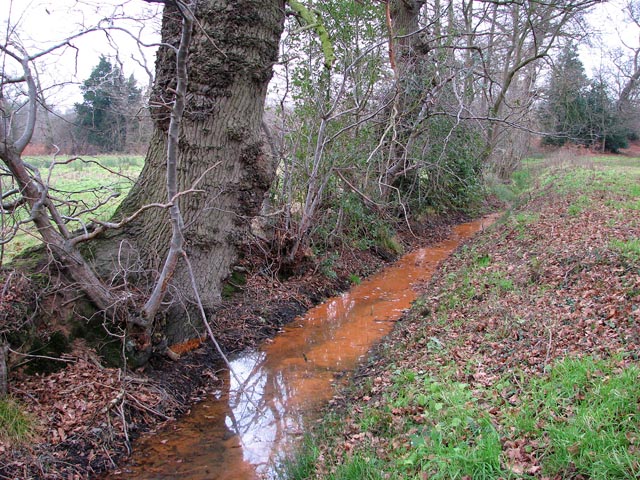
War Water, which is also commonly called Mars Water or Iron Water, is in its most essential form, simply water in which iron has been allowed to rust. The presence of iron in the water gives it a reddish-brown hue, looking a bit like blood even in some cases. Draja Mickaharic makes a good case for why iron’s presence in the water empowers it:

“Iron is the metal of the planet Mars, the planet astrologers credit with ruling warfare and combat, as well as sex. Used either for defense or attack, war water is a strong carrier of the negative emotional energy used in magical battles” (Century of Spells, p. 27).

Mickaharic also points out that the formula was originally used to treat anemia (an iron deficiency in the blood), though far better treatments are now available. Cat Yronwode notes on her site that the Martian association indicates that it is not originally an African recipe: “Since the Roman god Mars was the god of war and his symbolic metal was iron, it seems pretty clear that War Water is a European contribution to hoodoo” (“War Water” par. 1). Despite its origins, however, this particular magical mixture is firmly planted in hoodoo and conjure practice now.

So how does a person make War Water? Almost every source—except one—agree that the basic recipe involves putting cut iron of some type into a container, covering it with a bit of water, and letting it rust. There are plenty of variations, sometimes depending on the intent, and sometimes just depending on who’s telling you how to make it. Judika Illes breaks down the formula by intent:

Protective War Water

  • Iron nails (cut iron), ones that rust easily
  • Enough water to cover nails in a mason jar
  • Let rust for about 7-10 days (open periodically to allow oxidation)
  • Keep adding water as the rust builds
  • Strain and use as needed (but discard if bacteria form)

Malevolent War Water

  • Thunderstorm water in a jar
  • Rusty nails, sulfur, and urine

(Encylopedia of 5000 Spells, p. 1080)

This formulation is essentially the same as the one found in Draja Mickaharic’s Century of Spells, though Mickaharic’s version is a bit looser, calling for about 3/4 pound of cut iron nails in a 2 quart bottle. These are covered with tap water and allowed to rust. After the rust begins, more water is added, and the bottle is covered (though occasionally uncovered for rusting purposes).

The alternative recipe comes from the normally quite reputable Zora Neale Hurston’s “Hoodoo in America,” in which she describes War Water as “Oil of Tar in water (filtered)” (p. 412). Oil of Tar is essentially a thick distillate of creosote or burned pine resin—which is carcinogenic and dangerous. A reasonable substitution for Oil of Tar would be turpentine, another pine distillate with slightly less caustic properties. However, almost every formulary I found other than Hurston’s had separate distinctions for War Water and a formula called “Tar Water,” which is much more like Hurston’s recipe and which is used to remove psychic sludge from one’s life. I would then conclude that Hurston recorded the Tar Water recipe as a War Water recipe in error, or quite possibly an editor inserted this formula without knowing the difference (which commonly happened to Hurston’s work).

There are also additional ingredients that you can add to the water to help “flavor” it for your magical purposes. One of the most common additions is Spanish moss, a dense vegetal beard which covers trees in the Deep South. Once it begins to rot in the liquid, it turns the mixture black and gives it a decaying scent. Adding sulphur or gunpowder would also give it a powerfully aggressive and dangerous vibe. My teacher, Stephanie Palm, makes a formula that basically takes Mississippi River water and turns it into War Water with these sorts of additions in it, which she calls “Swamp Water.”

Once you have War Water, how do you use it? There are several methods for deploying this water, depending on just what your final intent might be. If you only intend to use the most basic rust-water formula for protective purposes, here are some ways you might apply it:

  • As an addition to a spiritual bath
  • As a wash for the outside of your home or business
  • As a sprinkle for any letters or papers you might be sending out to someone hostile to you (such as legal papers)

The most common use of War Water, however, is as a component of psychic warfare. Cat Yronwode says of it:

“To use it, you shake a bottle up and hurl it at the doorstep of your enemy, where it should break, leaving a rusty, dangerously sharp mess for him or her to step in. When i was a young woman coming up in the East Bay in the 1960s, War Water was used by fractious root workers to declare occult war on each other. Since these folks were already at odds to the extent that they could not simply walk into each other’s yards and smash the glass bottle on the doorstep, they would make “drive by” attacks, rumbling through the residential streets of Oakland in the midnight hour and tossing bottles of War Water into the yards of their enemies, like occult Molotov cocktails. Ah, those were the days …” (“War Water” par. 4).

In Jim Haskins’ Voodoo & Hoodoo, he says that to use War Water you should “obtain the nest of a dirt dauber, break it apart and mix it with graveyard dirt. Put the mixture in a bottle with War Water and shake it up. Smash it on the person’s walkway” (p. 130).  Hurston does not mention smashing the bottle, but she does call for sprinkling it in front of an enemy’s house. She also provides a secondary method which requires that you “take a fresh black hen’s egg, make a hole big enough to get the egg out and take the names, pepper sauce and mustard and fill the egg up and soak it in War Water for nine days and throw ito ver the house, and it will cross the house and they will have to move away” (“Hoodoo in America,” p. 375).

As a final note, if you are considering starting a psychic war, Draja Mickaharic makes a good case for having sturdy defenses in place before beginning any attack:

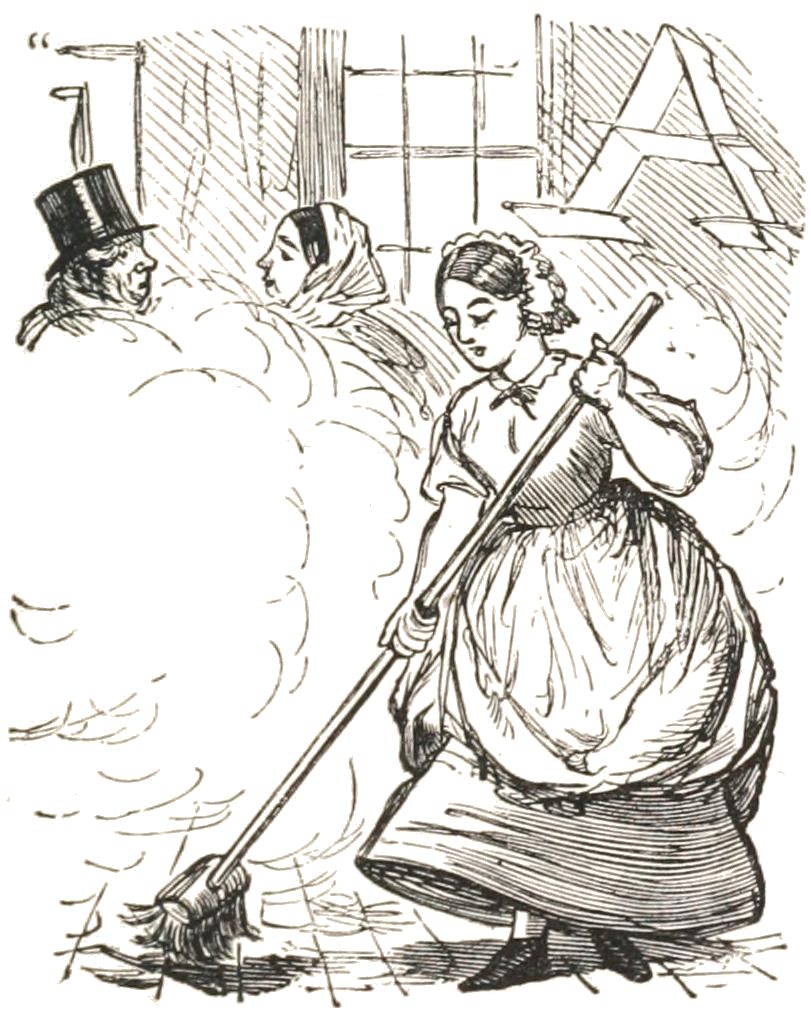
“If you are going to declare psychic war on someone you should mop your stairs, porch, doorway, and any outside surfaces of your home on which anything can be cast or thrown before you begin the war. This ensures that you will be protected when the other person’s inevitable counterattack comes. In most cases War Water will cause any spell which is placed on your doorstep to rebound instantly to the sender.” (Century of Spells, p. 28)

So that’s War Water. My own personal inclinations with this water would be to use a railroad spike, coffin nails, and urine in a jar for defensive and protective magic, while perhaps using coffin nails, goofer dust, red pepper, sulphur/gunpowder, and Spanish moss for a more aggressive formula. But that’s just me, and quite frankly I have yet to need either of these formulas. My only real experience with War Water thusfar is as a spiritual bath for protection, and in that case only in it’s iron-and-water form. It seemed to work fine, so unless the need for a more advanced concoction presents itself, that’s probably as far as I’d take it.

If you have used this formula or one like it and want to share, please do.

Thanks for reading!

-Cory

Blog Post 128 – Iron

North American history has a funny relationship with iron.  On the one hand, iron is largely behind the early expansion that allowed Europeans to dominate the continent so completely with weapons, locomotives, and durable goods and architecture.  On the other hand, it has also been a curse used to inflict injury and death on undeserving people and leading others to rip the very soil of the land apart in search of it.  So maybe it’s not so much of a “funny” relationship as it is one fraught with difficulty and complexity.

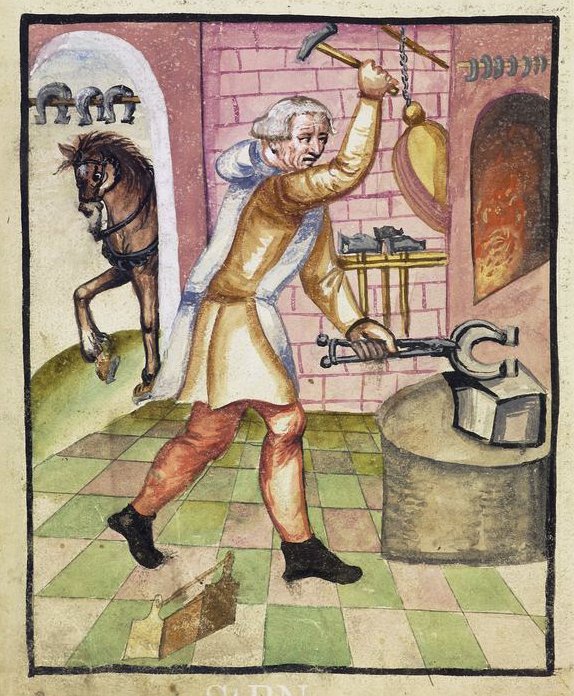
American folklore, however, has largely good things to say about iron.  It’s a powerful anti-witchcraft charm and can be used to repel things like wicked fairies attempting to replace a baby with a changeling.  It can come in the form of nails, railroad spikes, horseshoes, or even just random flakes falling as refuse from a blacksmith’s anvil.

Today I thought I’d look at a few of the bits of folklore regarding iron.  Before we look at the New World side of things, though, let’s look at iron in a slightly older context: Roman superstition.

“The taboo on iron dates from the beginning of the Iron Age when religious conservatism forbade the use of the strange new material in place of the usual bronze. It has been suggested that the magic significance of iron arose from its susceptibility to magnetism which, as the superstitious Romans often believed, it derived from witchcraft” (from Taboo, Magic, Spirits, by E.E. Burriss)

Here we see that iron is associated with witchcraft and has a somewhat negative reputation.  Even the Romans, though, were not averse to using witchcraft to fight witchcraft, and so iron became a de facto tool for combating wicked witchery, and by extension, any other harmful supernatural force (ghosts, demons, fairies, etc.).

Other cultures picked up the thread (or started their own threads), seeing iron as a powerful magical tool.  African, pan-Celtic, and Northern European cultures all had particular beliefs about iron and its more enchanted properties, so it probably surprises no one that the Old World traditions regarding iron became the standard beliefs in the New World.

So what are those New World beliefs?  Let’s look at some examples from a few different areas:

From the Colonial Period, South Carolina
In the Joshua Gordon “Witchcraft Book,” (also sometimes called a Commonplace Book) dated from 1784, there is an example of the type of charm typically imported to the colonies from places like England and Ireland in which a heated iron is used to scald milk from a bewitched cow in order to undo witchcraft:

“A cow losing milk could be cured if its owners would ‘take a heather belonging to a box Iron, put it in the fire, and make it Red hot [and then] take the milk of the cows thats hurt [and] power [i.e., pour] on the hot iron repeating the names of the blessed trinity’” (from “ Magic, Astrology, and the Early American Religious Heritage, 1600-1760,” by Jon Butler in The American Historical Review).

This method is commonly found in folktales from Appalachia, such as the next entry.

From the late 19th- or early 20th-century, Tennessee (Appalachian foothills)
Again, a hot iron is used to scald milk and thus undo bewitchment:

“Another case of the use of heat, combined with iron and steel, is shown in the following account, also resulting in injury to the witch and her exorcism. Lewis Hopkins, formerly of Big Creek just beyond the park bounds [The Great Smoky Mountains National Park] told this unusual tale:
My grandmother’s folk had a cow and she give bloody milk.  An old lady, a Phillips, was accused of being a witch. So they got to talkin’ to Sam Evans who said he was a witch doctor and knowed about witches. The witch doctor told the folks to put a baker lid [i.e., the lid of a Dutch oven] in the fire. So they pecked it on with a reap hook [like a scythe or sickle]. So this old women Phillips come to this old man Evans and raised a fuss with him about tellin’ him what to do. They got into a fight and this old man pulled her dress up and they saw the pecks where they was a reap hook a-hackin’ at her. [But] she jumped out and got away from him” (from A Tennessee Folklore Sampler, by Ted Olson, et al).

Other cases of heated irons being used to procure magical results also abound, as we shall see momentarily.

From the 19th-century, Mississippi
In some places, iron implements are not so much valued as remnants of iron from a blacksmith’s shop.  Here is one account of “anvil dust” as it relates to Southern conjure practices:

“Anvil dust is also greatly valued as conjure material. One educated blacksmith of Columbus, Miss., tells me that people are constantly coming into his shop to get the black flakes that fall from the hot iron when it is pounded, although they always look ashamed and give a fictitious reason as to why they want it” (from Folk Beliefs of the Southern Negro by Newbell N. Puckett).

This anvil dust is basically iron filings or flakes, and can be found in hoodoo practice as food for magically empowered lodestones.  Or it can be used to help create a cursing formula known as War Water (I’ll hopefully address the creation of this product in a separate post).  Interestingly, these two uses would seem diametrically opposed, with one being the food for an attracting magical fetish, and the other being an ingredient in a banishing potion. I would assert, however, that in these cases the iron serves a similar function on a magical level—with the lodestone it helps broaden the field of attraction for the stone while simultaneously running bad luck away, and in the War Water it’s repelling evil.  So in both cases, there is an element of something being turned away.  That is simply a way for me to reconcile these differences, however, and my come down to rationalization.

From the 19th– or 20th– Century, Ozark Mountains
Old favorite of New World Witchery, Vance Randolph, lists several methods for using iron as a magical tool (I omit the horseshoe lore which I have previously covered in another post, however):

  • “Nails taken from a gallows are supposed to protect a man against venereal disease and death by violence. Country blacksmiths used to secure these nails and hammer them out into finger rings”
  • “A little iron wire worn as a necklace, according to some power doctors, will protect a child from whooping cough”
  • “The water in which a blacksmith cools his irons is supposed to be good for witched cattle and is  sometimes given to human beings also, particularly children” (from Ozark Magic & Folklore, by Vance Randolph)

The last method mentioned is one I found repeated in several sources.  The power and provenance of “anvil water” or “slack water” seems to be well known across several cultures.

From the 20th-century, Illinois
To illustrate my point from the last section, I thought I’d share a bit of folklore from the Midwest, collected by ethnographer Harry M. Hyatt (who famously collected much of the lore about Southern conjure and hoodoo practices):

  • “A piece of old iron hung over the front and back door prevents the spirit of the recent dead from haunting you”
  • “Five nails driven into the trunk prevent the fruit from falling off the tree.  ‘My father did this when fruit was dropping off: drive those old- fashion square iron nails in the tree to hold the fruit on the tree. Never use wire nails; it must be the old iron nails’”
  • “Water from the tub in which a blacksmith cools hot iron is a good wash for the sore udders of a cow”
  • “A broken-winded horse (a horse with heaves) becomes well, if given water in which a blacksmith cools hot iron”
  • “Your looks will be improved if you wash your face frequently with the water in which a blacksmith cools hot iron”
  • “Slack-water, the water in which a blacksmith cools hot iron, is a good wash for poison ivy” (from Folklore of Adams County, by Harry M. Hyatt).

The first two bits are interesting, especially with the death connection, but the last four show that the slack water was considered a sort of cure-all magical formula.  I don’t know about you, but I think I need to make friends with a blacksmith, and quickly!

That’s it for iron, for now at least.  What I’ve written here is only the tip of a very large and ferrous iceberg.  As I said, I didn’t get into the related topic of War Water in the hopes it will appear in another post at a later date.  And I also didn’t touch on the lore of blacksmiths, specifically, as I hope to cover that in some depth later (our next podcast will have a bit about them, in fact).

If you have any local or family lore regarding iron and its magical properties, I would love to hear them!

Thanks for reading,

-Cory
Blog Post 118 – Four Thieves Vinegar

Greetings everyone!

I recently received an email regarding a topic we discussed on the podcast a while back:

“Cory, on one episode you mention 4 thieves vinegar and was wondering if you had the recipe. I totally want to make some! I heard what items go into it, but don’t know the proportions.”

I was surprised that I actually haven’t done a post on this yet, as it is such a fundamental formula, and so easy to make.  So today I thought I’d put up some information on this particular recipe.

Let’s start with the history.  The legend is that sometime during the plague years of the 16th and 17th centuries, a story went about that four spice merchants had discovered a secret formula which made them immune to the plague and which they’d rub on their bodies before robbing corpses ravaged by the disease.  That formula was eventually revealed to be a strong red wine vinegar with a number of different spices—reputedly one for each thief—most notably a lot of garlic.  Vinegar and garlic have some strong antiseptic properties, so it’s not hard to imagine that in a time before Leeuwenhoek’s discovery of microorganisms in 1675 any application of anti-microbial formula would help prevent a communicable disease.

Of course, the history provided is the stuff of legend, and may or may not have a basis in fact.  The earliest English reference to the Four Thieves and their famous concoction appears in 1825, in the publication Pharmacologia, where it is referred to as Four Thieves Vinegar or Marseilles Vinegar, after the French region where some legends claim the Thieves operated.  A 1939 article published in Pennsylvania History by Mulford Stough notes that the formula was used in Philadelphia during the outbreak of a plague during the 1790’s.  Stough blames the outbreak on the huge influx of immigrants from Santo Domingo (basically the Haitian Revolution concurrent with that time period sent a large number of Dominicans and Haitians fleeing to America, through major centers like New Orleans and Philadelphia).  While there’s no explicit link between the use of the vinegar formula to battle the disease and the immigrants themselves, I’m inclined to allow myself a bit of speculation here and say that there is a connection.  Whether the European formula entered the immigrants’ magical systems here, or whether the arrival of the immigrants (who may already have been using the formula magically) spurred its resurgence, I cannot say.

What I can say is that the potion did enter into the folk magical practices of America, and has continued to remain popular.   It’s also a flexible formula, one that has been adapted and changed many times over the years, depending on the need of the practitioner.  Here I’d like to give you my own personal recipe and method for making it and tell you a bit about how I use it, then look at some variations from other recipes and magical folk.

Cory’s Four Thieves Vinegar (please feel free to copy, use, distribute, etc. with attribution)

Ingredients

  • One pint mason jar, filled to just about 3/4 full with good cider vinegar
  • One head of garlic, peeled of skins (around 8-12 cloves)
  • One large handful of red chili flakes (probably about 2 tbsp, though I don’t measure that way when I make this stuff)
  • One large handful of black mustard seeds (again, around 2 tbsp, and if you can’t find black mustard, brown will be fine, though you might want to toast them to release their oils and blacken them a bit)
  • One handful of salt (not quite as much, maybe 1.5 tbsp)–kosher or sea salt are best
  • Optional ingredients include: a sprig of rue (I usually include), black peppercorns (small handful of these), rosemary, other types of chilies such as habanero or jalapeno, guinea pepper grains, galangal root, ginger root, etc.  You only need a little bit of any of these to boost the overall strength of the mix.

Put your ingredients into your mason jar, making sure it doesn’t overflow.  Cap and seal, then shake vigorously for 30-60 seconds.  Put it a cool, dark place or a refrigerator.  Shake daily for 2 weeks, then keep stored in a dark pantry or a fridge.

If you want to time your vinegar production magically, set it up to begin when the moon is waxing and finish when the moon is full if you intend to use it  for protection.  Go from full to new moon if you want to use it to banish someone/thing.  If you can make it while the moon is “in Aries,” “in Leo,” or “in Sagittarius” that might boost its power, too.

The ways I use FTV tend to be protective and for uncrossing work.  A little can be added to a bath to help knock off any evil eyes or general bad luck.  During spring cleaning, I usually add a little urine (in a separate bucket, please!) and red brick dust to a wash that I use on the front door and porch steps of my home to repel any harm sent my way.  One of my favorite ways to use FTV is to mix it with some olive oil and put it on a salad as a sort of spring tonic to clear out any lingering malevolence that might have accrued in my body.  Adding a tablespoon of it to a glass of water and drinking every morning is another good way to go (I’ll admit that I did this for a while but eventually let it slide and now just use the salad dressing method instead).

If you want to use it for banishing someone, you can break a bottle of it on their property (much like War Water) or stick their name paper in a jar of the vinegar—maybe with an extra handful of red pepper flakes to really heat up the spell.  Or, and this is probably going to blow your mind, give it to them to eat.  But wait! you say.  I’ve been eating it all along and it’s protecting me.  What’s going on here?  This is one of those weird circumstances where intention seems to play a part.  If you serve it to them with the desire to get them to leave you alone, that seems to be enough.  Of course, if you’ve timed the production to make the vinegar essentially banishing anyway—in which case I hope you’re not eating it—then intention may or may not really be what’s causing the results.

Okay, so now for the variations.  Of course, there are lots of folks who follow the older French recipe and use red wine vinegar instead of cider vinegar.  I just use the latter because it’s more typically American and thus something I have a stronger connection to, but feel free to use either version.  Other variations include one from author Ray T. Malbrough’s Charms, Spells, & Formulas in which he says: “To a gallon of strong cider vinegar add a handful of the following: rosemary, wormwood, lavender, rue, sage, and mint.  Add 1 ounce of powdered camphor gum.”  He goes on to recommend shaking and heating the mix for four days before finally straining it and bottling it, and that would definitely speed up the process.  I would say, however, that ingesting this version might not be a good idea with the camphor gum in it (camphor is poisonous if swallowed).  Malbrough recommends the vinegar as a cursing agent, one that can be used to cross someone’s luck or break up their home.

Cat Yronwode speaks of its uses, saying “Four Thieves Vinegar is used for protection, because it contains garlic, and also to cause confusion and discord among enemies, because it is sour” (p. 203).  Jim Haskins mentions it as “bad vinegar” in his book Voodoo & Hoodoo, and talks of it being used to curse and break up homes.

Draja Mickaharic gives a recipe in his book, A Century of Spells:

“To make the original Four Thieves Vinegar, peel a number of cloves of garlic.  Place the garlic in a clean glass bottle.  When the bottle is full of peeled garlic cloves, wine vinegar is poured over the garlic until the bottle is full.  The bottle can then be capped and placed in the refrigerator, root cellar, or spring house for a week or so.  The vinegar should be used a little at a time, with new wine vinegar being added as some is drawn out.  It will last a year or so before a new batch needs to be made” (p. 130-31).

Mickaharic also says that “Purists use a red Bordeaux wine, and wait for it to turn to vinegar before using it…Apple cider vinegar is not the ‘real thing’ but it works just as well in magic and better for some healing work,” which is basically how I feel about the topic.  He recommends it as a spring tonic and calls it a great salad dressing, too!

Northwoods witch Sarah Lawless says that her FTV uses “the old school recipe which is more a tonic than a crossing blend – onion, garlic, thyme, oregano, rosemary, lavender, peppercorns, bay leaves, and red wine with red wine vinegar”  (Thanks Sarah!).

One of the more unusual recipes I’ve found for this mixture is from Dorothy Morrison’s Utterly Wicked, which lists the recipe as including Adam & Eve Root (a type of endangered orchid found in the eastern U.S.), John the Conqueror root, black pepper, and vetivert.  This is a recipe I also would probably never eat, as the High John root comes from the Ipomoea genus which has demonstrated toxicity.  However, this recipe is very unique as it does not contain most of the key ingredients found in other blends: garlic, red pepper, rosemary, etc.  About the only ingredients it has in common with other recipes are black pepper and, well, vinegar.  I’ve not tested the efficacy of this version, so if anyone out there has, I’d love to know what you think of it!

Four Thieves Vinegar continues to be popular among occultists and witches, but it’s got a broader appeal, as well.  One of the best sites I found while researching this article was Secret of the Thieves, a website which tells the history of FTV and offeres a wide range of products based on the recipe such as toothpaste, mouthwash, hand sanitizer, soap, and even dental floss!

So if you’re looking for a good, widely-used folk-magical formula, I recommend making this rather simple one yourself.  It’s easy, has protective and cursing applications, and keeps for a long time.  If you have other variants, I’d love to hear those, and if you find new applications for the vinegar, please let me know those as well!

Thanks for reading!

-Cory

Blog Post 113 – Spiritual House Cleaning

Home Sweet Home, by Douglas William Jerrold (via Wikimedia Commons)

It’s always nice to start the New Year off with a clean, well-appointed home.  In some traditions, this is not mere vanity or hygiene, but a spiritual necessity that must be done on New Year’s Eve to ensure that the home is clear and ready for the coming year.  Today, I thought I’d look at a few of the magical methods for housecleaning, as well as some of the most common cleaning agents with a magical touch.

Sweeping & Vacuuming – It has to be done.  There’s just no way of getting around it.  The floors must be kept clean, at least within reason, and usually a broom or a vacuum is employed to that end.  Workers in the conjure and hoodoo traditions tend to have specific techniques for sweeping, often going from the topmost floor of the house to the bottom and working from the back of each floor towards the front (though I’ve seen variations on that, often depending on specific needs—getting rid of a bad spirit might involve sweeping out the back door, for example).  While floor washes are the go-to method for spiritually cleansing a house and adding specific magical vibes to the area (see Mopping & Floor Washes below), you can add a degree of magic to the sweeping and vacuuming process, too.  Various powders can be sprinkled on floors and carpets and left there for a bit before sweeping.  These will absorb some spellwork and leave other magic behind.  Some good ones to try out (available at Lucky Mojo):

  • Fear Not to Walk Over Evil – A powerful anti-hex and anti-foottrack magic powder.
  • House Blessing – A simple, very peaceful powder.
  • Crown of Success or Fast Money – To encourage prosperity and abundance.
  • Chuparosa/Hummingbird – To create love and attraction between partners in the home.

Likewise, you might also opt for simple, household items to do some of your mojo work during sweeping and vacuuming.  Many spices make great conjure sweeps (and smell wonderful when taken up by a vacuum and slightly warmed by the machine’s motor—an added aromatic energy).  Some that I like to use:

  • Cinnamon – Creates a sense of prosperity and joviality.  Some use it for business success, but I find it creates more of a personal confidence and comfortability than anything purely financial.
  • Allspice – Another success spice, but also good for stimulating conversation.  I like to vacuum with cinnamon and allspice sprinkled on the carpets before guests come over to encourage a warm, friendly atmosphere.
  • Pine Needles – Good for uncrossing and refreshing a home.  Not a kitchen spice, of course, but still easily accessible.  Be careful though, as too many pine needles can gum up machinery (like vacuums) quickly!
  • Rosemary – Good for domestic bliss, as well as helping those who smell it focus and think clearly.
  • Oregano – Keeps meddlesome influences from interfering in your life.  Makes a nice “law-keep-away” substitute, and discourages nosy neighbors.
  • Garlic Skins – Kills off evil, but it will leave a distinctive odor in the air.
  • Rose Petals – Encourages love and passion when crumbled around the home and left for a bit before sweeping/vacuuming.
  • Salt – Great for stopping any hexes put upon you and removing unwanted spiritual energies from your home.  I use baking soda (a type of salt) sprinkled on carpets before vacuuming to both absorb odors and remove pesky curses.  Jim Haskins records a method of preventing unwanted guests from returning which simply involves sweeping salt after them when they leave.
  • Sugar – A little of this will add a sweetness to your home, though make sure you get it all and don’t use too much—a little sweetness may be great, but a lot of ants aren’t.

The basic method here is to sprinkle everything, let it sit for a bit (if you can stand letting it sit for 24 hours, that is lovely, but probably a little excessive—30 minutes is often plenty of time, and even a 5-minute wait will give you a quick dose of magic).

Mopping & Floor Washes – This is probably one of the best known hoodoo methods of cleansing, blessing, and enchanting a home.  Using a prepared magical floor wash to clean anything that can handle getting wet (including the walls) still makes for great spellwork.  Some of the most famous floor washes are (again from Lucky Mojo):

  • Chinese Wash – An old school formula which reputedly came out of Chinatown (though which Chinatown is not particularly clear).  It’s made from several powerful ingredients, many of which are found in Van Van (see below), with broom straws added for extra oomph.  Good for knocking out any hexes and doing purification work.
  • Van Van – We’ve covered this in Blog Post 81, but briefly this is a blend of several Asian grass extracts, chiefly lemongrass and vetiver root.  It, like Chinese Wash, cleanses and purifies.
  • Peace Water – When made in its most interesting form, peace water is beautiful to look at, with layers of blue and white/clear liquid on top of one another in a mesmerizing stasis.  When mixed up and sprinkled into a floor wash, this helps create feelings of calm, quiet, and tranquility in even very turbulent homes.
  • Rose Water – This very basic addition to a floor wash can be found in many ethnic grocery markets.  It’s not much more than a strong rose tea stabilized with alcohol, so you could easily make your own, but it’s also fairly cheap to buy.  When used in a floor wash, it helps promote feelings of love and agreement.

In addition to these specialty formulas, there are lots of common household cleaners you can use with a magical bent:

  • Pine-Sol – This commercial floor cleaner basically evolved out of hoodoo floor washes.  Cat Yronwode even suggests adding a little Van-Van to a bottle of Pine-Sol and using it as a simple substitute for Chinese Wash.  Traditional pine scent is great, of course, or you can go with…
  • Lemon Pine-Sol – Or any lemon-scented cleanser like it.  Lemons have a cut-and-clear effect on a space, and have long been associated with destroying curses and breaking hexes.  Charles Leland’s Aradia records an anti-evil-eye charm which is fundamentally a pomander made of a lemon and pins.  It leaves a lovely clean smell, too, though a fairly artificial one in most cleansers.  Feel free to add some fresh squeezed lemons to your mop bucket for a rootsier version of lemon-cleanser.
  • Ammonia Draja Mickaharic recommends a simple floor wash of ammonia and salt added to mop water, and it really makes a wonderful cleansing and protecting wash water.  It can really neutralize almost anything thrown at you, magically speaking, and it disinfects beautifully.  Mickaharic also recommends a little ammonia down every drain when you finish cleaning (just a teaspoon or so), to finish off your magical housecleaning.
  • Vinegar – Four Thieves Vinegar is popular as a counter-curse wash, and as a protective mix-in for a mop-water.  But really, any vinegar will help get rid of unwanted energies and protect the home from invaders and malicious forces.  If the scent is strong enough, it may protect you from visitors altogether.
  • Urine – This one is very traditional in hoodoo, though much frowned upon in modern use.  It has, however, been long used as a cleaning agent, and a little urine diluted in some mop water can be very powerful for “marking your territory” and protecting the home.  It can also instill a sense of good luck in the place, and ensure fidelity in your mate and passion from your lover.  If they don’t catch you doing it, of course.

There are lots of other cleaning agents out there that you can use, of course.  Almost anything scented probably has at least some tenuous connection to a magical formula, so a little homework can help you transform that bottle of Mop-N-Glo into a powerful apothecary’s potion.

Windows & Doors – You don’t do windows, you say?  Well, you should at least open them up!  Whenever you do a good house-cleansing, throwing up the windows and letting some fresh air circulate is vital to getting everything “right.”  It helps balance out all the forces in the home, allows bad spirits to leave, and refreshes the air in the house.  It’s cold to do this in winter, of course, but turning the heat off for 10 minutes and letting a little fresh air in can make all the difference in getting a home feeling good and happy again.  Likewise, the doors should be opened for a bit to let the air circulate.

When it comes to washing doors and windows, you can really use any of the same washes I talked about above in the Mopping & Floor Washes section.  You can also use a variety of other ingredients to get things right at all your entrances and exits.  For example, many folks take a little olive oil (or holy oil, which is basically blessed and sometimes lightly scented olive oil) and make a little sigil in the corner of every window, to seal that entrance against evil intrusions.  Some folks put blue bottles in the windows, or jars full of sand or marbles, in the hopes that any witches who might try to get in will be forced to count the contents of the container and be unable to do so before daybreak (when their power ends).  You can make a wash water of red brick dust, urine, and salt in warm water and use it to scrub your door to add a powerful layer of protection.  You can also sprinkle salt or brick dust lines down at the threshold and in the sills of every window to keep out unwanted spirits and spells.

Clearing the Air – Once the house has been aired out and all the windows and doors cleaned and opened for a while, some folks like to light some incense, use room sprays, or even just make a little something in the kitchen to add an element of magic to the home.  I’ve covered some of the holiday scents and their uses in Blog Post 108, and I’ve already mentioned pine and citrus scents as powerful agents for spiritual and physical cleansing.  Other odoriferous offerings to your home can include:

Fresh Bread – One of the best symbols of abundanace and prosperity.  Bake a loaf in your oven and let the scent fill the home.  Cookies are also good for this.

Floral Scents – Like jasmine, rose, or lavender.  All of these have specific uses, and add specific magical “vibrations” to an area (rose fragrances inspire love to many, for example), so look into the flowers you like and figure out what note they will set in your newly cleaned domicile.

Sweeteners – I did mention this in Blog Post 108, but I also said it’s a bit strong when burned.  If you are airing your house out, however, a little honey, brown sugar, molasses, or even table sugar might be a good thing to burn or warm on the stove, as it will provide a sublimely “sweet” feeling to the area.  Draja Mickaharic highly recommends this, and I can’t say I’m against it either.

Nailing It Down – This is a practice particular to conjure and hoodoo, though there are likely variants or similar practices in other magical systems.  The basic idea is that by pounding nails into your home’s corners (and the corners of your property), you fix it there and create a stable environment.  You also assert your ownership of the place, and help to guarantee your continued residence there.  The most commonly used nails for this are the “square-cut” kind, usually sold cheaply at hardware stores.  For doing the corners of your property, you would want to use something bigger, like old railroad spikes.  The basic idea is that you simply nail them into every corner of your home, particularly the ones along outside walls.  You can bless them with oil or holy water or anything else you feel is appropriate, or simply nail them down while saying a little prayer that you remain safe, happy, and comfortable in your home as long as the nails remain in place.  Remove them if you ever have to move away for any reason.

That’s a lot of cleaning!  But it’s always good to have a clean home, for both practical and spiritual reasons, so give some of these a go and see how they work for you!  And if you missed your New Year’s cleaning deadline, well, you can always do these things during your Spring cleaning, too.

I hope this has been useful!  Thanks for reading!

Oh, and Happy New Year!

-Cory

Blog Post 108 – Holiday Magic in the Kitchen

Today I thought I’d look at some of the holiday lore surrounding baking and cooking.  What would the holidays be without the smells of cinnamon and nutmeg and clove and allspice slowly seeping out of the hot oven?  And who imagines a holiday home without the presence of gingerbread or ginger cake of some kind?  Chocolate and peppermint add extra luxury to an already indulgent season.  In short, much of the magic of Christmastime and Yuletide seems to come from the kitchen (I’m sure many kitchen witches reading that chuckle in amusement that such sentiments even need to be typed out).

So let’s start by looking at some of the ingredients in those festive holiday treats:

Cinnamon – This handy kitchen spice has lots of magical uses.  Cat Yronwode recommends it as a business drawing and gambling botanical.  It can be used to make a wash-water which one would then use to scrub down the walkways in front of a business.  This has the effect of drawing in new clients.  In Jim Haskin’s Voodoo & Hoodoo, cinnamon is mixed with sugar and sprinkled in the shoes to increase gambling fortunes.  Draja Mickaharic describes cinnamon as “calming” with a “protective vibration” and also cites its money-making properties in his Century of Spells (which refers not to a unit of time, but rather a unit of enumeration—a century representing the roughly 100 spells found in the book).  Mickaharic also notes that “it has a claming and quieting effect on young children,” though I imagine in cookie form this may not be the case.

Cloves – Mickaharic says these are “psychically protective,” and keep “negative thoughtforms out of the place where it is burned.”  Presumably including cloves in any baked or cooked dish would involve at least heating them, thus releasing some of this power into the kitchen and home.  Yronwode says that “cloves appear in spells for money-drawing, prosperity, room-renting, and friendship” (HHRM, p. 73).  These are also used to make pomanders, clove-studded oranges rolled in orris root powder and hung as protective talismans in the home (well, protective talismans and lovely nosegays to help imbue the house with that sweet, spicy holiday scent).

Nutmeg – This botanical has a mild narcotic effect and has been a staple of magic for some time.  An old hoodoo charm found in Harry Hyatt’s work and later disseminated by other authors involves sealing a small amount of liquid mercury inside a drilled nutmeg, then carrying the charm around as a gambling mojo (this is NOT RECOMMENDED as mercury is highly poisonous—DO NOT DO IT!!!).  Mickaharic describes nutmeg as an herb which inspires conviviality and jovial behavior, and promotes an air of happy friendship in the home.

Allspice – “Good for social gatherings; increases the flow of conversation and the rapport between people” says Mickaharic (CoS, p.50).  These hard, dried berries can also be soaked for a few hours, then strung as a type of herbal rosary using a needle and thread.  Carrying this can help relieve stress and provide peace of mind.  Yronwode recommends this for business and gambling (there’s a pattern here), and also describes a floor wash one can make with ground allspice.   Mixed with cinnamon and burned as incense, Mickaharic says it “places a smooth and witty feeling” in the home.

Ginger – This fiery herb is used to “heat up” or enhance the potency of various other magical ingredients, and also provides a little kick in spells for love or money (HHRM, p.103).  The root can be used as a poppet due to its shape and sometimes-resemblance to a human body, and would be especially effective in a love or lust working.  It can also be carried for protection.

Sugar – Sweetening!  This can be used to add a “sweet” or happy vibration to the home where it is burned (though it can smell very sharp when burned, too…baking it may not have the same oomph as burning it, but will smell better in the long run).  Of course one can keep all of one’s visiting relatives’ name papers in the sugar jar in order to better provide a happy, congenial home during the holidays, but offering them lots of sugary sweets might help ply a good attitude out of them, too.

As you can see, most of these herbs have to do with prosperity and getting along with one another (and a little protection thrown in for good measure).  This makes sense during a season where money might be tight, tension runs high, and houses are full of dangerous things like fire and hot ovens.  So when doing the holiday baking, it might be worth throwing an extra pinch or two of these spices in to up the magical ante of your confections.

I mentioned gingerbread earlier, and it made me think of a couple of stories from early American folklore about bakers whose experiences with cookies certainly have a magical bent:

The Baker’s Dozen” – A piece of reputed folklore recorded by Charles M. Skinner in 1896, this story revolves around a stingy baker and his encounters with an old crone who bewitches his bakery.  Only through the magnanimous efforts of St. Nicolaus (and by swearing better behavior on a gingerbread cookie shaped like him) does he manage to break the spell.

The Gingerbread Man” – This famous story tells of a gingerbread man come to life who flees his baker and eludes capture by the people and animals of the village.  He meets his match in the swift (and often crafty, in various retellings) fox, who finally devours him.

Finally, I’ll leave you with my family recipe for gingerbread:

1 c. sugar
1 c. shortening
1 c. molasses
½ c. hot water
1 Tbs. cinnamon (or to taste)
1 Tbs. ginger (or to taste)
½ tsp. salt
1 tsp. baking soda
1 egg
7 c. flour, plus a little extra for rolling dough

Preheat oven to 350 degrees. Sift flour and mix in dry ingredients.  Add egg, molasses, and shortening and mix.  Slowly add hot water, mixing as you go.  When dough is sticky, begin to work it into a ball.  Dust a flat surface with flour and begin rolling out the dough, working it until you get it about ¼ inch thick.  Cut out shapes with cookie cutters or a knife.   Bake cookies on a lightly greased cookie sheet for about 15 minutes (or until they are crisp at the edges and fully cooked.  Cool on a wire rack, decorate, and eat!

My mother and I used to bake several batches (rather, a whole day’s worth) of gingerbread, then spend time making the finished products into houses, sleighs, people, and animals.  We gave them as gifts, decorated with royal icing and candy, and were often very popular around the holidays.  I hope you enjoy!  It’ll be like taking a little bite out of your New World Witchery host during the holiday season.

Wait, that probably sounds kind of creepy.  Enjoy anyway!

Thanks for reading!

-Cory

Blog Post 104 – (A Little) More Colonial (and Native American) Magic

I thought in honor of the recent Thanksgiving festivities—at least those here in the US (and with a belated bow to the harvest feasting in Canada), I would take a brief look at some of the magical practices circulating around the time of that “first Thanksgiving.”  The people who arrived in places like Plymouth and Massachusetts Bay to settle the New World—never mind it was already quite settled by its native inhabitants—are commonly referred to as Pilgrims, and contemporarily would have been known as Separatists.  Thinking about that late autumn gathering, when the local Pawtuxet tribe and the Separatists who had survived the harsh New England winter and managed to put together enough bounty for the coming cold season gathered at the table, is a sort of fond romance or fantasy.  Often we imagine the Indians in their deerskins and the Pilgrims in their blackest hats with the shiniest buckles on them.  The staunch Calvinism of the Separatists contrasts with the “noble savage” imagery of the Natives, their shared meal demonstrating two very different worlds breaking bread together.  Yet both groups shared many things in common, including a set of magical practices aimed at protecting their homes and blessing themselves with prosperity.

The fear of malefic witchcraft—which would eventually go on to spawn the famous “witch hunts” of Colonial America—stirred hearts on both sides of the table.  Each group had its own charms, talismans, prayers, and formulas for dealing with the dangers of spiteful magic.  The Pilgrims, drawing on their English heritage, had all sorts of magical tricks up their black-and-white sleeves for defeating evil witches and devils:

“Legal actions against malefic witchcraft merely represented the final point of defense against what were perceived as destructive magical powers.  Prior to entering his complaint into the legal domain, the colonial villager could draw upon a variety of protective magical formulas to maintain some sort of equilibrium between good and evil mystical forces.  Several of these techniques—by no means an exhaustive list—were mentioned in a sermon delivered by Deodat Lawson…’The Sieve and Scyssers [Scissors]; the Bible and Key; the white of an Egge in the Glass; the Horse-shoe nailed on the threshold; a stone hung over a rack in the Stable.’” (Weisman 40)

Looking at these specific examples, we can see a few things which indicate that magic among the Pilgrims was not so uncommon.

The Sieve & Scissors – These items were commonly used in fortune telling games by young girls, particularly on exciting nights like Halloween.  They could also be used to confuse or cut a witch, magically speaking.  The Sieve and Shears appear in Aggripa’s Three Books of Occult Philosophy, as well.

The Bible & Key – The Bible was considered to have inherent magical and protective abilities, and the key likely held the symbolism of “locking away” or “locking out” any harmful witchcraft.  The use of the two together also formed the basis of a spell recounted in Reginald Scot’s Discoverie of Witchcraft:  “Popish preests …doo practice with a psalter and a keie fastned upon the 49[th] psalme, to discover a theefe” (Scot, Chapter V).

The Egg White in a Glass – This is another method of divination involving cracking an egg into a clear glass or jar of water, then reading the resulting shapes, strings, bubbles, and colors found in the glass.  Curanderismo continues to use this method as a regular part of cleansing and reading practice even today.

The Horse-shoe on the Threshold – This particular charm moves out of the realm of divination and into prosperity and protection magic.  We covered horseshoes on our Lucky Charms podcast, and you can read all about them at the Lucky W Amulet Archive page on the subject.  The iron in the shoe, plus the somewhat mystical nature of the animal associated with it, imbued this charm with the power to block witchcraft and provide good luck to those passing under it as they entered a Pilgrim’s household.

The Stone in the Stable – The stone referred to in this charm would likely have been a holed stone, one which had been naturally eroded to leave a gap by which it was then hung in places needing protection from malefic activity.  Sarah over at Forest Grove wrote a bit about these holed stones, saying “In the UK it was used as a protection charm as the locals believed that by tying their front door key or the stable door key to a hole stone they would protect the building it hung upon.”  This, much like the horseshoe, was primarily protective, but a holed stone could also be used to “see” witches and other Otherworldly entities by peering through the gap.

Looking to the Natives’ side of the table, we find that charms to provide protection and blessing were also common among the Algonquin tribes of New England (Algonquin being a language and not an actual tribe, I use the term here to blanket a wide number of groups sharing a more-or-less common landscape and tongue).  Charles Leland (admittedly a questionable source on some matters of folklore, but not without his merits) wrote of many New England Native magical practices.  He compares the workings of Native shamans with the work of Catholic priests in one passage of his book The Algonquin Legends of New England: Tales of Magic:

“For wherever Shamanism exists, there is to be found, in company with it, an older sorcery, or witchcraft, which it professes to despise, and against which it does battle. As the Catholic priest, by Bible incantations or scriptural magic, exorcises devils and charms cattle or sore throats, disowning the darker magic of older days, so the Shaman acts against the real wizard.”

Leland recounts several legends of warriors and magical Indians doing battle with terrible spirits, the dead, and other dangerous forces.  In one tale, a chief’s son, described as “a great hunter, and skilled in mysteries” decides to marry.  In his efforts to get a wife, he sets out on a journey in which he acquires many talismanic and shamanic tools.  One of them is a golden key pulled from a whale’s mouth, which the whale tells him has great protective power:  “While you have it you will be safe against man, beast, or illness. The foe shall not harm you; the spirits which haunt the wilderness shall pass you by; hunger and pain shall not know you; death shall not be in your road.”  The key, then, appears in both the European and Native magical traditions as a powerful amulet.

As a final note on the magic of Native Americans, let us turn from the groaning board of the Thanksgiving feast and look at another magical practice:  fasting.  In an 1866 article entitled “Indian Superstitions,” Francis Parkman describes the use of ritual fasting in order to acquire a Manitou, or guardian spirit:

“Each primitive Indian has his guardian manitou, to whom he looks for counsel, guidance, and protection. These spiritual allies are acquired by the following process. At the age of fourteen or fifteen, the Indian boy smears his face with black, retires to some solitary place, and remains for days without food. Superstitious expectancy and the exhaustion of famine rarely fail of their results. His sleep is haunted by visions, and the form which first or most often appears is that of his guardian manitou, a beast, a bird, a fish, a serpent, or some other object, animate or inanimate. An eagle or a bear is the vision of a destined warrior ; a wolf, of a successful hunter; while a serpent foreshadows the future medicine man, or, according to others, portends disaster…The young Indian thenceforth wears about his person the object revealed in his dream, or some portion of it—as a bone, a feather, a snake-skin, or a tuft of hair. This, in the modern language of the forest and prairie, is known as his “medicine.” The Indian yields to it a sort of wor ship, propitiates it with offerings of tobacco, thanks it in prosperity, and upbraids it in disaster. If his medicine fails to bring him the desired success, he will sometimes discard it and adopt another” (Parkman 4).

Feast or famine, magic has long been on American soil (and Canadian, Central American, & South American soils as well).  So as you eat your turkey leftovers, you could crack an egg into a glass of water, pull out some scissors and a sieve, or maybe even think about putting the food aside for a while and seeing what comes to you in your dreams.  It might add a little New World Witchery to your holiday.  Which, of course, makes me feel pretty darn thankful.

Thanks for reading!

-Cory