Blog Post 56 – Walpurgisnacht

A caveat before I begin today’s post:  Walpurgisnacht is not terribly “New World.”  Most of it will be related to the British Isles and Europe, though I will include a little bit on New World practices, too.  But I think it’s still relevant to witchery, so I’m going to write about it anyway.  Mostly because, well, I really want to.

This is quite possibly my favorite witchy holiday, with the conditional exception of All Hallows/Halloween.  I do like May Day/Beltane celebrations, of course, but the night before is really what I love.  The association of this night with witchcraft seems to go back a long way.  The name of the holiday comes from a Catholic Saint who died in the year 777 C.E, St. Walburga.  Rosemary Ellen Guiley, in her Encyclopedia of Witches & Witchcraft, says this about the holiday:

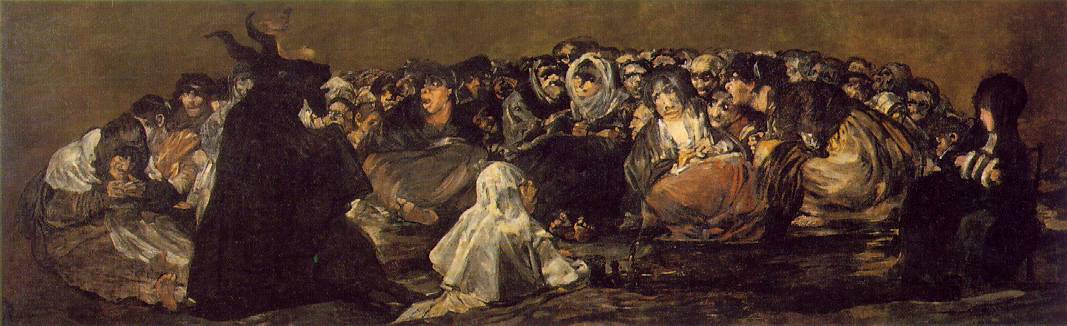
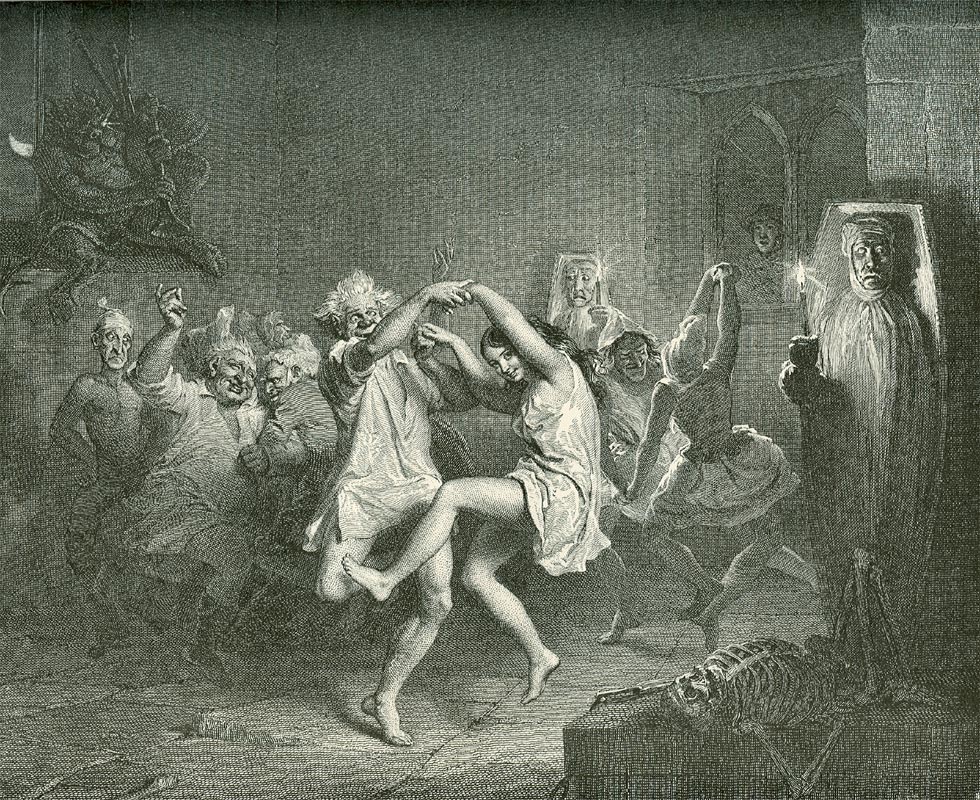
“In the Middle Ages, Walpurgisnacht, or Walpurgis Night, was believed to be a night of witch revelry throughout Germany, the Low Countries and Scandinavia.  Witches mounted their brooms and few to the mountaintops, where they carried on with wild feasting, dancing and copulation with demons and the Devil…In Germany, the Brocken, a dominant peak in the Harz Mountains, was the most infamous site of the witch sabbats…[S]o common was the belief in the sabbats that maps of the Harz drawn in the 18th century almost always depicted witches on broomsticks converging upon the Brocken” ( EW&W, p.347)

What shifted the focus from holy martyrdom and sainthood to witch-filled revels?  Well, there’s no single reason why that I’ve found, but the date is directly opposite Halloween in the calendar year, so that might have something to do with it (what, you thought witches would be content with one night of fun a year?).

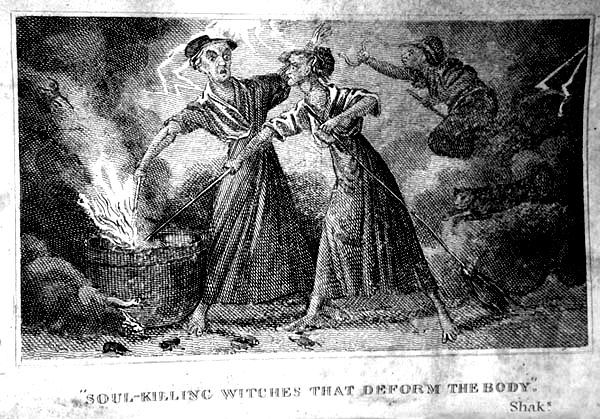
There are lots of stories about this night.  One from the Isle of Man between Scotland and Ireland tells the story of two witches and their (mis)adventures on Old May Eve.  Dennis Wheatly’s occult novel The Devil Rides Out features a Walpurgisnacht ritual rather prominently, as it does in Goethe’s Faust tragedy.  The scene at the end of the original Fantasia film featuring Mussorgsky’s “Night on Bald Mountain” also makes heavy reference to the revelries of Walpurgisnacht (I think I mentioned this in the Media Episode, too).  There are also many unusual traditions associated with this night.  When I was living in Prague, they had a tradition of building huge bonfires on hilltops on this night, and burning brooms or effigies of witches to keep evil spirits at bay, for example (it was really more of an excuse to drink around the bonfire).  Vance Randolph, in his Ozark Magic & Folklore, describes an Ozark tradition for May Eve:

“On the last night of April, a girl may wet a handkerchief and hang it out in a cornfield. Next morning the May sun dries it, and the wrinkles are supposed to show the initial of the man she is to marry. Or she may hold a bottle of water up to the light on the morning of May 1, just at sunrise, and see apicture of outline of the boy who is to be her husband” (OM&F, p.176)

My personal practice incorporates a storytelling bent, and there’s one story that I turn to every year as part of my Walpurgisnacht ritual.  “The Horned Women,” as recorded by Lady Wilde (in a collection with many tales also recorded by W.B. Yeats which I’ve mentioned before—Fairy & Folk Tales of the Irish Peasantry), is not explicitly about this wild night.  Yet certain elements—the assembly of a coven of witches, and the prominent mention of a mountain where they revel, especially—have always called to mind this tale in relation to May Eve.  I glean much in the way of magic from this story, and incorporate things from it into my workings (such as the use of “feet water” to guide all harmful forces away from my home).

Walpurgisnacht doesn’t register on everyone’s radar.  Some are definitely drawn towards the Beltane side of this holiday, and I rather love that celebration, too.  But Walpurgisnacht will always have a special place in my heart.  There’s no night I more earnestly wish I could climb on a broomstick and sail off into a moonlit sky than this one.

Thanks for reading!

-Cory

Blog Post 50 – A Witch’s Initiation

For my 50th blog post, I thought I’d do something special, something that really tickles my fancy.  I’ll be talking about the various types of witch initiations found in New World folklore.   I’ve already touched on this in Blog Post 45 – Witches, but today let’s expand a little bit on the concept.

In general, witch initiations in North American folklore share a few commonalities:

  • The renunciation of Christianity, often through a ritual like repeating the Lord’s Prayer backwards
  • The giving of oneself to an otherworldly entity, such as the Devil or a “Man in Black” in exchange for magical powers
  • An act of exposure, such as being naked or sexual union of some kind, though in some cases this is not necessary
  • A sign or omen of the candidate’s acceptance as a witch
  • The transmission of magical knowledge in a ceremonial way, and/or the presentation of a familiar or fetch animal

Not all of these components are found in every case, of course, and the nature of the witch may be such that he or she is not an “initiated” practitioner, but merely someone who has picked up magic throughout his or her life.  This last circumstance is often found in places where magic is prevalently mixed with Christian practice, such as in the Appalachians (Granny magic) or among the Pennsylvania-Dutch (Pow-wow).  Of course, in these cases, the magical worker is seldom called a “witch,” though sometimes the term “witch doctor” is used.  It’s funny, to me anyway, to think about how a witch is “made” through initiation, much like someone can be “made” in the Mafia.  But I digress…

Now let’s take a look at how witches were/are initiated according to specific folklore examples.  From German Appalachian lore, there are stories of witches being initiated by obtaining a “Black Bible.”  Scholar Gerald C. Milnes links this tome to the Key of Solomon, a grimoire with many reputed magical properties and a host of instructions  on how to accomplish various magical tasks.  One of his informants outlines the basic ritual thusly:

“Now say you’re going to be a witch.  Okay, now I don’t know where you get ‘em, but they call e’m the little Black Bible.  Take that little Bible and you go to a spring where it’s a-running from the sun…not towards the sun, away from the sun…Take that little Black Bible and go to that stream, strip off, and wash in there—take a bath in that water—and tell God you’re as free from him as the water on your body” (Signs, Cures, & Witchery, p. 162).

Milnes also describes a similar Appalachian rite of this nature involves taking dirt and shaking it off of a plate or dish while stating aloud that you are as clear of Jesus Christ as the dish is of dirt.  Something more is added to this folklore:

“If, through a pact, the devil is granted your soul in exchange for some talent, gift, or magical power, it is thought that he then receives some gift of the body in return.  This could be a fingernail or even a withered finger” (SC&W, p.164).

Such a “sacrifice” is not uncommon in witch-lore, with the physical offering being anything from a bit of blood to sign a pact to a body part like a finger or toe to—at the extreme end—the death of a loved one.  This is a story commonly applied to many chthonic cult deities or spirits.  Santa Muerte in the Latin-American magical traditions has also been accused of this sort of thing.

I outlined one type of witch-initiation culled from Hubert Davis’s The Silver Bullet in Blog Post 45, an initiation which involved a type of blood offering in exchange for the presentation of a magical imp.  That version of initiation is only one of many methods presented by Davis.  Here’s another one, from Wise County, Virginia:

“She [Granny, the narrator of the tale] began: ‘I’ve been told thet annuder way to git to be a witch is to fust go to the top of a high mountain, throw rocks at the moon and cuss God Almighty.  Then, go find a spring where the water runs due east.  Take a brand new knife and wash hit in the spring just as the sun rises.  Say, “I want my soul to be as free from the savin’ blud of Jesus Christ as this knife is of sin.”  Do this fer twelve days in a row.  Effen on the thirteenth day the sun rises a drippin’ blud, hit’s a shore sign thet you’re becomin’ a witch’” (TSB, p. 11).

This variant is interesting, to me, because of a few elements.  First, in this initiation, the spring must flow east (or towards the rising sun, though against the natural path of the sun), which seems to be different than in the Milnes version.  In this initiation, too, the witch isn’t naked, but a new knife is washed in the stream while a renunciation is made.  Finally, the bloody sunrise is a sign to the witch indicating acceptance or denial of the initiation—this feature is common in several variations of the rite.  Davis also mentions another witch-making method which bears some of the trademarks of the process:

“He [the potential witch] then waited until Friday the thirteenth and returned to the spring as the morning turned gray over the ridge.  He dipped some water from the spring with his ram’s horn and poured it over the pewter plate.  He did this seven times and repeated the verses Liz [a witch] had taught him:

‘As I dip the water with a ram’s horn,
Cast me cruel with a heart of thorn,
As I now to the Devil do my soul lease…
May my black and evil soul be
Of Christian love and grace free
As this plate is of grease’ (TSB, p. 24).

This, to me, bears a strong similarity to the dirt-and-plate version of the ritual outlined in Signs, Cures, & Witchery.

I mentioned a ritual involving the reversed Lord’s Prayer from Vance Randolph’s Ozark Magic & Folklore in my post the other day.  Randolph discusses several other ways of becoming a witch in that work, some simple, and some more complicated:

  • A woman could fire a silver bullet at the moon and “mutter two or three obscene old sayin’s” (p. 265)
  • Repeating the Lord’s Prayer backwards and firing seven silver bullets at the moon will do the trick
  • Magical information can only passed across gender lines (man-to-woman or vice versa), or between partners united by sexual intercourse
  • Widows were the best candidates for becoming witches, as they only had to learn “the Devil’s language,” whatever that might be.

Randolph goes on to say that the transformation of a person into a witch was a moving one, and often one with a morbid downside:

“I am told, by women who claim to have experienced both, that the witch’s initiation is a much more moving spiritual crisis than that which the Christians call conversion. The primary reaction is profoundly depressing, however, because it inevitably results in the death of some person near and dear to the Witch” (OM&F, p. 268).

In this case, the lost loved one is called a “Witch’s sixpence,” and is the “price” paid for the witch’s powers.  This is not a universal belief, however, as many witches do not lose anyone close to them, and instead gain a new friend:  the familiar, fetch, or imp.  I’ll be doing something more extensive on this aspect of witchcraft in the future, so for now, I will just say that the familiar of the witch is a big subject with as much (often conflicting) information floating around about it as, well, the subject of initiation.

Finally, here are some examples of witch-induction from Kentucky.  I’ve gleaned these from the book Kentucky Superstitions, by Daniel and Lucy Thomas.

  • To become a witch, go to a mountain top at dawn, shoot through a handkerchief at the rising sun, curse Jehovah three times, and own the Devil as master. When you shoot through the handkerchief, blood will fall from it (Mountains, #3773)
  • To become a witch: the candidate goes with the Devil to the top of the highest hill at sunrise nine successive days and curses God; the Devil then places one hand on the candidate’s head and one on his feet, and receives the promise that all between his hands shall be devoted to his service.  (Mountains, #3774)
  • To become a witch, you shoot at the moon nine times with a silver bullet, cursing God each time (Mountains, #3775)
  • You can become a witch by taking a spinning-wheel to the top of a hill, giving yourself up to the Devil, and waiting until the wheel begins to turn. The witches will then come to instruct you (Mountains, #3776)

These are similar to other folkloric initiation ceremonies already discussed, with the exception of the last one.  The inclusion of the spinning wheel here is interesting to me, because it seems to be connected to an idea I find very witchy: the threads of Fate.  It also reminds me of the Irish folktale “The Horned Women,” which is a story I glean much in the way of witchery from.  In this case, the wheel’s turning is much like the rising of a bloody sun—it provides an omen that the witch has been accepted into the fold of witches before her.

So what do I make of all of this?  Well, my own opinion (and I stress that it is only my take on the phenomenon of witch initiations, and no one else’s) is that each of these stories contains little pieces of initiatory lore, but always with a layer of sensationalism on top.  These folk tales were intended to amuse and spark curiosity, after all, so it doesn’t surprise me that a small offering of blood, say on an new witch’s cingulum or a few drops in a cup of wine poured out to the god, gods, or spirits to which the witch is binding herself, has become exaggerated into the death of a family member or the withering of a limb.  I think that initiations have a profound impact on those that undergo them, and that many of the common elements (the renunciation, the vow to serve a witch-god/goddess/devil/etc., and the granting of magical gifts like certain charms or familiars) are profound acts that may well belong in an initiation ceremony. Many of these features are also found in other initiation ceremonies and Traditional Witchcraft works, such as Paul Huson’s Mastering Witchcraft or Nigel Jackson’s Call of the Horned Piper. I also think that some elements are overlooked in these sorts of folkloric imaginings of “witch-making”.  For instance, one thing Sarah at Forest Grove mentioned in her post on initiations is that once one becomes a witch (or takes initiation), one finds “Growth and strength of abilities and experiences the more one practices and keeps their promises.”  Most stories about witches seem to either end at the oaths taken upon becoming a witch, or to start in medias res of a witch’s career, showing a witch operating in one way, unchanging, until she is (inevitably) defeated.  That makes for good storytelling, but perhaps not for so much good practical witchery.  Witchcraft is wonderful in that the more you do it, the better it gets!

In the end, I like this topic, but I should say one more thing.  I don’t think that a person-to-person initiation is necessary to practice witchcraft.  If you’ve not taken an initiation, or don’t ever plan to, but find you are good at witchcraft anyway, keep doing it.  You certainly don’t need anyone to validate your magic if it’s working, and if whatever forces you draw your magic from one day choose to initiate you, I have a feeling that much like Don Corleone, they’ll make you an offer you can’t refuse.

My apologies if this post has been overlong, but I hope it’s useful to somebody out there.   If nothing else, you’ve worked out your scrolling finger for today.

All the best, be well, and thanks for reading!

-Cory

Blog Post 49 – Snakes

I hope you’ve got your good boots on today, because we’re getting into the tall grass and looking for snakes!  Snakes have had a place in magical lore for a very long time.  In Ancient Greece, Artemis and Apollo were sometimes associated with snakes.  Apollo was famous for slaying the great serpent Python (see Ovid’s Metamorphoses, Book I), and his priestesses were ever afterwards known as the Pythia.  Artemis, offended by King Admetus’s oversight of an offering due her, filled his bed with serpents.  In Vodoun tradition, the Creator figure is a great serpent, Damballah.  Stories of creation and snakes seem to go hand in hand across many cultures.

In the New World, snakes have a mixed significance.  On the one hand, the biblical story of Eden in Genesis lays a lot of the blame for humanity’s disobedience on the serpent in the garden.  At the same time, humanity would be without knowledge without the snake, so there’s more than one way to look at the story.  However, if you ask many Christians today who the snake was, they will answer “the Devil” or “Satan,” so for all intents and purposes, mainstream culture takes a fairly negative view of these slithering creatures.  That does not mean, however, that all snakes are viewed as little devils, and many folks actually like them.  Farmers like snakes because they keep rodent populations down in barns and fields, for example.

In magic, snakes are one of the most potent animals you can use.  There are several different magical traditions surrounding snakes or their various parts and pieces.  Catherine Yronwode notes that “the blood, eggs, heads, flesh, sheds, and skins of all species of snakes are used in jinxing and crossing” and the manufacture of various hoodoo mixtures, like Goofer Dust or Live Things In You poisons (HHRM p. 186).  She also mentions that the sheds can be used to calm one’s mind.  Other hoodoo-related uses of snake sheds and bones include situations where cunning might be needed, or for luck and power.  In this last case, rattlesnake bones and rattles are often used.  Musicians who wish to play well and win contests often keep a rattle with their instruments, according to Yronwode.

In the case of the Live Things In You curse, powdered snake parts—usually eggs or sheds—are mixed into a victim’s food.  The target then feels as though the creature is wriggling around in his body, causing him pain and distress, as well as the feeling that he might be going crazy.  You can read more about this kind of baleful working in Superstitions & Folklore of the South, by Charles W. Chestnutt, at the University of Virginia website.

Vance Randolph recorded several bits of magical lore concerning snakes in his Ozark Magic & Folklore:

  • To cause a rain, a snake could be hung belly-up on a fence (p. 30)
  • Burning shoes in the fireplace will drive away snakes (p. 68)
  • Snake-skin soaked in vinegar is applied to boils to reduce them (p. 101)
  • Snake-bites treated by doctors will always ache on the anniversary of the bite (p. 159)

Randolph also mentions the snake-handling “Holy Roller” churches sometimes found in rural areas of the South.  These churches base their practice on an admonition in Mark 16: 17-18:   “And these signs shall follow them that believe; In my name shall they cast out devils; they shall speak with new tongues; They shall take up serpents; and if they drink any deadly thing, it shall not hurt them; they shall lay hands on the sick, and they shall recover” (KJV).

A final tale from the Ozarks concerns a family that had a secret method of dealing with snakes:

“Miss Jewell Perriman, of Jenkins, Missouri, tells me that her Uncle Bill had a secret method of curing snake bite, and people came from miles around for treatment. Uncle Bill belonged to a family of which it was said ‘them folks don’t kill snakes.’ This is very unusual in the Ozarks, where most people do kill every snake they see. When a large copperhead was found in the Perriman house, Uncle Bill caught it with the tongs, carried it out into the orchard, and released it unharmed. His cure for snake bite was known in the family for at least a hundred years…The secret is lost now, for Uncle Bill is long dead, and his son died suddenly without issue. All that Miss Perriman knows of the snake-bite cure is that the snake must not be injured, and that Uncle Bill had a strip of ancient buckskin in which he tied certain knots as part of the treatment. She showed me the buckskin. It was about half an inch wide, perhaps twelve inches long, carefully rounded at the ends. Three knots had been tied in it, one in the middle and one at either end” (Randolph, Ozark Magic & Folklore, p. 159).

Wouldn’t you love to know what that secret was?  I sure would!

I suspect that snakes will always have a place in magical lore.  They have the ability to slide between upper and lower worlds easily.  Some can kill with a bite, but also provide useful services to us in many ways.  They seem to show up everywhere in the world (except Ireland…but that’s a completely different subject) and they always connect to something primal in us: fear, knowledge and gnosis, or even sexuality.  I’ll be keeping my good boots on when dealing with them, but I definitely have a particular love for these critters.

Thanks for reading!

-Cory

Blog Post 45 – Witches

Stories about witches in the New World are plentiful.  Early historical accounts of witch trials in America show that the belief in witchcraft was widespread throughout the colonies, though the degree to which each colony acted on those beliefs varied quite a bit (see Blog Post 3 and Blog Post 6 for some good background on these).

Often, it seems that the stories about witches that appeared in the New World were linked to Old World roots.  Tales of witch-flights in the Appalachians parallel similar stories from the British Isles.  German stories about witches casting spells on hunters’ guns show up in the Ozarks.  In general, many of these stories can be broken up into a few key categories:  how to become a witch, what witches do, and how to deal with witches.

How to Become a Witch

There are several different ways a person (usually a woman in folklore) becomes a witch.  The act of initiation usually involves a pledge of some kind to a dark figure—usually the Devil, though I would argue that this “Devil” is something other than Satanic.  But I digress, and will address this topic further in another post.  In Vance Randolph’s excellent book, Ozark Magic & Folklore, he outlines how the mountain folk thought a witch was initiated:

“Some parts of the witches’ routine are well known, even to people who deny all acquaintance with such matters. The trick of reversing the Lord’s Prayer is a case in point… When a woman decides to become a witch, according to the fireside legends, she repairs to the family buryin’ ground at midnight, in the dark of the moon. Beginning with a verbal renunciation of the Christian religion, she swears to give herself body and soul to the Devil. She removes every stitch of clothing, which she hangs on an infidel’s tombstone, and delivers her body immediately to the Devil’s representative, that is, to the man who is inducting her into the ‘mystery.’  The sexual act completed, both parties repeat certain old sayin’s, terrible words which assemble devils, and the spirits of the evil dead and end by reciting the Lord’s Prayer backwards.  This ceremony is supposed to be witnessed by at least two initiates, also nude, and must be repeated on three consecutive nights.  After the first and second vows the candidate is still free to change her mind, but the third pledge is final. Henceforth the woman is a witch and must serve her new master through all eternity” (Randolph pp. 266-67)

In Appalachia, another witch-making process is described in Foxfire 2:

“JIM EDMONDS:  I heard about a man—a witch said he’d make a witch out a’him if he followed him.  They come to this door and th’witch said ‘Hi-ho, hi-ho!  In th’keyhole I go.’  He went on in and got all he wanted.

Th’old witch came and said, ‘Hi-ho, hi-ho! Out th’keyhole I go,’ and went on out.

Th’old man came and thought he’d do what th’other did and said, ‘Hi-ho, hi-ho!  Up th’high hole I go,’ and fell t’th’floor!

You just had t’pay no ‘tention t’witches.  They can put a spell on you, but they can’t turn you into a witch if you pay them no mind.”  (p. 355)

Hubert J. Davis, in his astoundingly good compilation of American witch-lore entitled The Silver Bullet, outlines another method of becoming a witch:

“’Fust, he’d [the potential witch] have to climb to the top of the highest knob on Witch Mountain and tote either a black cat or a black hen.  Then, he’d have to find the Indian graveyard at the place nigh where two Indian trails cross.  There, he’d have to draw a big ring in the dust ‘bout fifteen feet acrost, and dance in this circle each morning at break of day for eight mornings in a row.  Then, on the ninth morning, he’d have to put one hand on the top of his head and ‘tother on the sole of his foot and say ‘ I give all betwixt my two hands to the Devil…Then the Devil comes…and nips him on the shoulder so hit bleeds.  Then, the Devil tells him to wet his finger in the blood and sign an X to this pact…the Devil will same some magic words over the cat or the hen and change hit into an imp [another name for a familiar]” (Davis pp.14-15)

Various other methods of becoming a witch are recounted in these texts, too, including firing a gun nine times at a full moon, shooting at the rising sun and watching to see if it “bleeds,” or simply being taught the ways of the witch by a family member of the opposite sex.  On this last point, I will note that the writers generally say cross-gender transfer of information is de rigeur, and just because one learns the spells and ways of a witch doesn’t make one an initiate of witchcraft.

I think I should point out that Sarah at Forest Grove did an amazing blog post on initiation recently which I recommend reading.  Particularly because I think there are some pretty strong parallels between the folklore I’m presenting here and the steps towards initiation she mentions in her post.  Let me know what you think, though.

What Witches Do

Having a witch in the neighborhood was a mix of good and bad for early settlers.  On the one hand, witches tended to be able to make potions and counter-charms to help with curses and bad luck, among many other talents.  But on the other hand, a local witch meant that there was a good chance your livestock would end up cursed or dead or both.

A common curse witches could use involved bewitching cattle so that they would not produce milk.  Or rather, the only person who could milk the cow was the witch—she would usually use an axe-handle or an old rag tied to a fence post held over a bucket.  She’d squeeze the object, and milk would pour out, while the cow’s udders slowly drained in a distant pasture.  In one of the stories from The Silver Bullet called “No Milk on Saturday,” Hubert Davis recalls a story about a witch who put a spell on a cow so it would only give bloody milk.  The cow’s owner consulted a witch doctor (see “Dealing with Wicked Witches” below) and figured out how to reverse the curse, eventually.

Witches also had the power to curse people.  One of the main methods of performing such a curse involved the creation of a “witch ball.”  This was a little ball made of black hair from a dog, cat, horse, etc. and wax, which was then thrown or “shot” at the target.  If the victim didn’t get magical remediation immediately, the witch ball could lead to his or her death in fairly short order.  From Ozark Magic & Folklore:

“I have been told of another Ozark witch who killed several of her enemies by means of a “hair ball” just a little bunch of black hair mixed with beeswax and rolled into a hard pellet. The old woman tossed this thing at the persons whom she wished to eliminate, and they fell dead a few hours later. It is said that the fatal hair ball is always found somewhere in the body of a person killed in this manner. In one case, according to my informant, the little ball of combings was taken from the dead girl’s mouth” (Randolph pp.271-272).

Some of the many other sinister tasks a witch might do included bewitching butter churns or soap tubs, causing them to fail to produce any butter or soap.  They could also summon storms and blight crops, as well.  In Randolph’s work, he mentions that one witch ruined a tomato crop by simply drawing a circle inscribed with a cross in the dirt, then spitting in the center.

Of course, the witch could also shapeshift, turning into her animal self easily and slipping off to Sabbaths, into the homes of innocent farmers and their families, or into the bed of a lover while her husband dozed dumbly in bed.  Common shapes for witches included the ubiquitous black cat, the hare, mountain lions, and dogs.  There are plenty of stories about a hunter being unable to shoot a particular animal until he manages to get a silver bullet in his gun.  Then, he mortally wounds the beast, which gets away, and later hears that some local woman is lying in bed missing a hand or a foot—the very part shot off by the hunter!

I’ll refrain from offering too much commentary here on these ideas (though I will be revisiting them at a later date), but I would like to say that many of these common elements have a place in modern witchcraft, albeit not a literal one.  Understanding these stories metaphorically, or understanding the basic kernels of practical witchcraft embedded in these tales, is an exercise worth the undertaking for an aspiring New World witch.

Dealing with Wicked Witches

Randolph makes a key point in his text on Ozark magic that many clairvoyants, mediums, card readers, conjure men, etc. get called “witches” by outsiders, but the Ozark resident made a distinction between them.  Witches were almost always nefarious in purpose, according to Randolph, though he himself revealed that out of nearly two dozen witches he’d interviewed, almost twenty of them reported working against evil rather than for it.

In the Old World, these counter-cursing magical folk were often known as fairy doctors, cunning folk, or pellars.  In the New World, these names sometimes surface, but just as often, they are called witch doctors or conjure folk (which is confusing when you realize that hoodoo and witchcraft cross cultural boundaries in many places, and thus this term may have had different meanings to different people).  In a Works Project Administration report about Tennessee, the folklorist makes the following observation:  “Cunjur [sic] doctors will sell you ‘hands’ or ‘tobies’ enabling you to detect witches and ward off their spells” (Ch. 14, par. 19).  Here, the line between hoodoo (or “cunjur”) and what is typically thought of as European witchcraft is heavily blurred, and the magic of one is used to affect the magic of the other.

Undoing the harm caused by a witch could involve a number of different techniques.  In Hubert Davis’s work, he talks about how the unfortunate farmer with the bloody milk dealt with his problem:

“Steve milked his cow, brought the milk into the cabin and put it in a big flat pan.  Then, he went out on a ridge and cut three birch withes and tied them together.  He built a big fire under the pan of milk and, as it boiled, he flailed as much milk as he could out of the pan into the fire with the birch withes.  As the milk burned with a blue-green flame, Steve saw Granny Lotz’s face in the flames and he knew that it was indeed she who had witched the cow” (Davis p.35)

In the case of a bewitched butter churn, placing a piece of silver under the cursed object would stop the magic sometimes, or burning some of the butter with hot coals would do the trick too.  Other curse-breaking methods included using witch bottles to reverse a curse and shooting an image of the witch with a silver bullet.  This last method could theoretically kill the witch, and often was performed in the nick of time (at least as far as the folklore goes), just before a witch could complete a particularly nasty curse.  Other methods of removing a witch’s curse involved “scoring her” above her eyes, or making her bleed on her forehead.  If that happened, or if you could make her see her own blood in some cases, her powers would be broken.

Another common enchantment involved the bewitching of a hunter’s gun.  A hunter who normally did well would suddenly find he couldn’t hit a thing he aimed at.  In many cases, an elaborate ritual had to be performed to remove such an bewitchment.  As Foxfire informant Jim Edmonds relates:

“Old Billy Jesse claimed he was a witch.  Ol’Gran’daddy couldn’t shoot a thing.  Somebody put a spell on his gun.  He went over to Billy Jesse t’take th’spell off.  He lived in what they call Bitter Mountain Cove.  Told him he wanted him t’take th’spell off him.  Somebody had witched his gun.

So Billy loaded that gun and went t’every corner of th’house and shot sayin’, ‘Hurrah fer th’Devil!’  Run t’every corner and shot—never did load it but once—hollerin’, ‘Hurrah fer th’Devil!’

Billy then said, ‘Now th’next thing you will see will be a great covey of quail.  Now don’t you shoot at nothin’.  Then th’next thing you see will be a big buck.  You can kill him.  Just shoot nothin’ else.

Gran’daddy done just like he told him, and here come a big drove a’birds.  He just held still.  He went on and there was this big ol’ buck.  Shot and killed him.  Th’spell was off his gun.” (Foxfire 2, p.333)

All of this folklore may just be storytelling.  Or it may be a way of hiding secrets in plain sight.  Or it may be to-the-letter true, for all I know.  But at the very least, I know that I enjoy these stories.  And personally, I get a lot out of them that isn’t just related to campfire entertainment.  Though I don’t mind mixing s’mores and witchcraft, should the occasion call for it.

Okay, a long post today, but hopefully a useful one!  Thanks for sticking with it, and as always, thanks for reading!

-Cory
Blog Post 28 – Sign, Sign, Everywhere a Sign…

Do I date myself by referencing that song in the title of this blog post?  Oh well…
I thought I’d wrap up the week with a few more examples of signs, tokens, and omens from American folklore.  We’ll be up in the mountains today, both the Appalachians and the Ozarks.
From the Appalachian History blog:

News Bees

“In both Appalachian and Ozarks folklore, news bees appear as omens to those wise enough to read them.”

News bees are not actually bees, but flower flies from the Syrphidae family.  They are marked with bands of black and yellow, much like bees, but are harmless.  They do look an awful lot like sweat bees, however, which can sting a person (though not as severely as other bees or wasps).

News bees, which also go by names like “sand hornets,” “sweat flies,” or “Russian hornets” derive their folk name from the belief that these hovering insects watch the events of humanity unfold, then fly off to deliver their news to others.  According to the folklore, “There are yellow news bees, which mean that good things are in the offing– it’s good luck if you can get one to perch on your finger–and black news bees, which warn of imminent death. The black news bees fly in the windows and out again, and fly straight for the nearest cemetery; they hover making a sound like a human being talking.” (Tabler, par.2)

From Vance Randolph’s Ozark Magic and Folklore:

Some Animal Lore

“It is very generally believed that the appearance of an albino deer is a bad sign ; some hillfolk think it has something to do with witches’ work, others that it is an indication of disease among the deer, and that venison will be unwholesome for seven years” (p. 241)

“Groundhogs are hunted by boys with dogs, and young groundhogs are very good eating. But some of the old-timers frown on the modern practice of shooting groundhogs. They don’t mind if city sportsmen do it but often forbid their own children to shoot groundhogs, because it is supposed to bring bad luck” (p. 243)

Household Signs & Omens

“The Ozark housewife seldom begins to make a garment on Friday never unless she is sure that she can finish it the same day. Many a mountain man is reluctant to start any sort of job on Saturday, in the belief that he will ‘piddle around’ for six additional Saturdays before he gets it done” (p. 69)

“It is bad luck to burn floor sweepings or shavings that have been produced inside the house. An old-time Ozark housewife seldom sweeps her cabin after dark, and she never sweeps anything out at the front door” (p. 70)

The fantastic Appalachian blog Blind Pig and the Acorn has a fascinating entry on a death omen called a “belled buzzard.”

Belled Buzzards

According to the site, which cites a newspaper story about this phenomenon, in King George County, VA, a buzzard was observed flying low by houses with a bell around its neck and streamers tied to its body.  Similarly adorned birds figure in tales from the Carolinas, Tennessee, Alabama, and Arkansas.  According to the blog’s author:

“Most of the sightings or ‘hearings’ caused folks to believe the belled buzzards foretold death. One legend even tells the story of a belled buzzard harassing a man after he killed his wife-to the point of the man turning himself in for her murder” (Tipper par.2).

So if you happen to see any big birds around your neighborhood with bells, chimes, or any musical instrument on their person, take heed!

Personal Lore

Finally, today, I thought I’d share a few of the things I was brought up believing.  Most of this information is from my mother.

  • When cooking soups, stews, and sauces, she’d often include a bay leaf in the pot.  Whoever found the bay leaf was thought to be in for some good luck.
  • If rain broke out of a clear sky, my mother always said that “the Devil is beating his wife.”
  • She taught me that if your ears burn, someone’s talking about you.  If your nose itches, someone wants to kiss you.  And if your hands itch, money’s coming your way soon.
  • You should never kill a spider or a frog indoors, as it will bring bad luck, she always said.  Unless the spider was a black widow or brown recluse.  Then it seemed to be okay.
  • She always kept an aloe plant in her kitchen window, both for an easy source of bug-bite and sunburn treatment and to bless the house in general with good fortune.

Okay, that will do it for today, I think.  Please feel free to share your own lore.  I’m always eager to hear it!

Thanks for reading!

-Cory

Podcast 5 – Signs and Omens

-SHOWNOTES FOR EPISODE 5-

Summary
Today we have some listener feedback, as well as some exciting news.  Then, we discuss signs and omens.

Play:

Download:  New World Witchery – Episode 05

-Sources-

Books
Some of the books referenced in today’s show:
Buying the Windby Richard M. Dorson
Signs, Cures, and Witchery – by Gerald C. Milnes
Ozark Magic and Folklore – by Vance Randolph

Promos & Music
Title music:  “Homebound,” by Jag, from Cypress Grove Blues.  From Magnatune.
Promo 1-The Standing Stone and Garden Gate Podshow
Promo 2- Media Astra ac Terra
Promo 3- A Pagan in the Threshold
Promo 4 – Inciting a Riot Podcast

P.S.  This is just a quick apology for the lateness of this episode, as well as occasional shifts in sound quality.  We have been having trouble with our podcast recording software, and had to re-record parts of our show via Skype.  We should have this issue resolved by our next episode, so thanks for bearing with us.

Blog Post 10 – Weather Work

We recently received a nice blanketing of snow here (which is somewhat rare for our area), and it got me to thinking about weather magic.   When I was little, before we moved to the farm, I used to go out to the dirt hill near our house with a big staff in my hands and shout at the wind, seeing if I could get it to gust up or gentle down.  I remember feeling like I always had a strong connection to weather, particularly those winds.  When we moved out to the farm, my understanding of weather changed dramatically.  Our house was on a hill at the top of our acreage, and we were exposed to a number of tempests, some of which were quite severe.  When we had snow, 4-foot drifts piled up off of our back porch, deep enough that when I jumped into them I was buried up to my chest.  And  I still remember waking up one morning and looking out the window only to see a tornado receding back into the clouds after having passed but a quarter-of-a-mile or so from the house and uprooting a number of trees.  Being a teenager, I had slept through it, of course.

What I learned on that farm was that weather was wild, and would always be wild.  It’s something we can react to, prepare for, run from, or attempt to block out, but we can never really control it the way we like to think we control so many other things—the cleanliness of our water or where our next meal comes from, for example.  Magic seems to have the advantage over empirical science here, as many magicians swear by inherited techniques that allow them to control or predict the weather to one degree or another.

Today I thought it might be worthwhile to take a look at a few techniques, charms, and proverbs regarding the weather from various North American sources.

From Nova Scotia (in Folklore of Nova Scotia, by Mary L. Fraser):

“An Acadian boy would not dare to kill a toad or a spider, for his outdoor pleasure would then be spoiled by the downpour of rain that was sure to follow. A boy of Scotch or Irish descent would be deterred from doing so because it would bring him bad luck.

‘If you wish to live, not die,

Let the spider go alive.’”

I’ve heard this before as an admonition not to harm toads (and for some reason, I always assumed lizards) when out of doors, for fear of bringing on bad weather.  The spider is a new twist for me, but I generally try not to disturb any of the bite-ier creatures out in the wild world.

Mary Fraser also reports a weather-predicting system I’ve seen in a couple of places.  She mentions that the twelve nights between Christmas and Epiphany represent the coming twelve months of the year.  In other words, if you have cold, wet weather on the third day after Christmas, you can expect a rather clammy and dismal March.

From the Pennsylvania Dutch (in The Long-Lost Friend, by J. G. Hohman):

For protection of one’s home against storms, say “Beneath thy guardianship I am safe against all tempests and all enemies, J. J. J.”  (These three Js signify Jesus three times.)

Chris Bilardi, in his excellent book on PA-Dutch braucherei, The Red Church, suggests the following Psalms for weather-work:

  • Psalm 2 – For danger at sea (storms); also for headache
  • Psalm 21 – For dangerous storms at sea
  • Psalms 24 and 25 – For dangers of nature—especially the danger of floods
  • Psalm 76 – For averting danger from water

From the Appalachians (in the Foxfire series of books):

It will be a bad winter if –

  • Squirrels’ tails grow bushier
  • Crows gather together
  • The wooly worm has a heavy coat
  • Onions grow more layers
  • Blackberry blooms are especially heavy

It will rain –

  • Within three days if the horns of the moon point down
  • If  leaves show their backs
  • If cows are lying down in the pasture
  • If there is a ring around the moon (count the stars in the ring and it will rain within that many days)

The weather will be fair if –

  • You hear a screech owl
  • Smoke rises
  • Crickets holler (the temperature will rise)

Additionally, here are some bits of lore from the Appalachians:

  • If it’s cloudy and smoke rises, there’s a chance of snow
  • The number of days old the moon is at the first snow tells how many snows there will be that winter
  • For every frost or fog in August, there will be a snowy day in winter
  • A late frost means a bad winter
  • The darker green the grass is during the summer, the harder the winter
  • If it rains on Easter Sunday, it will rain every Sunday for seven weeks
  • If it rains on ‘Blasting Days’ (the three longest days of the year, there won’t be any ‘mast’ (acorns, chestnuts, etc.) for animals like hogs to feed on

From the Ozarks (in Ozark Superstitions and Ozark Magic and Folklore, by Vance Randolph):

Rain will come –

  • If the tall grass is bone dry in the morning, or if there is heavy dew
  • If rabbits play in a dusty road
  • If dogs start eating grass
  • If sheep turn their backs to the wind
  • If cats sneeze, wash behind their ears, or lick their fur against the grain

Signs of dry weather –

  • A red sunset promises at least twenty-four hours of dry weather
  • A rainbow in the evening means clear weather (but a rainbow at morning tells of a storm in the next twenty-four hours)
  • A ‘sundog,’ or a circle around the sun, indicates prolonged dry weather, or at least a radical change in weather soon
  • When the crescent moon travels ‘horns up,’ there will be no rain for some time

And finally, one of the most interesting weather-predictors around, also from the Ozarks:

“The blood of a murdered man—bloodstains on a floor or garments—will liquefy on even dry sunshiny days, as a sign that a big rain is coming”

This is only a small sampling of everything out there.  I’ve used many of these predictors (leaves turning their backs or cattle lying in a pasture) to prepare for bad weather, and there are many I’ve never even thought to pay mind to (rabbits in a dusty road, for example).  So what about you, dear readers?  Do you have any family or local lore regarding the weather you’d like to share?  If so, please post a comment or send us an email, and indicate roughly what part of the world you’re in and what your weather charm or proverb is.  We may do a show on these if we get enough interest!

I’d also like to issue a friendly challenge to you:  make mental note of a few of these and start paying attention to them.  See if they actually do predict or cause weather patterns for you in your area.  Report your findings back here and share your observations with the rest of us.  Who knows, we may read your results on the podcast, or something better (he said slyly).

I hope wherever you are, the weather’s treating you fair.  If it’s not, you can always contact your neighborhood witch.

Thanks for reading!

-Cory