Blog Post 76 – Making an Academic Crown of Success Mojo

Today I thought I’d share some of the nuts and bolts (or roots and herbs, rather) I used in my recent Crown of (Academic) Success mojo bag.  The hand I made was specifically designed for help with schoolwork, and focused on memory, hard work, a strong will, and a little bit of luck.  After I go over this basic bag, I’ll try to offer some alternatives for various situations not related to school, but which could use a shot of success.

The ingredients:

  • High John root (a whole one, but you could use chips if that’s all you’ve got)
  • Gravel Root
  • Rosemary (dried)
  • Sage (dried)
  • Frankincense tears
  • Small psalm scroll*
  • Red flannel square
  • Twine
  • Crown of Success oil

(*In most general Crown of Success workings, I use a passage from Psalm 65: “You crown the year with success; your paths drip fatness,” which would be fine.  But after discussing it with commenter Odom the other day, I’m reasonably sure I used Psalm 119, specifically the verses “I have declared myself and you heard me; teach me your statutes/make me to understand your ways so I may tell of your wondrous works”)

The herb and root ingredients all relate to success (gravel root, High John, Crown of Success oil), focus and concentration (sage, frankincense, rosemary), wisdom (sage, frankincense), luck (gravel root, Crown of Success oil), memory and calm (rosemary), and study (sage).  I know that some folks out there would chide me for using rosemary as a memory herb when Cat Yronwode’s book doesn’t provide that association, but its longstanding folk association with that quality made me comfortable with using it in that capacity.  And since I spent a good deal of time studying Shakespeare over the summer, I’ll back up my claim by quoting Ophelia in Hamlet, Act IV, scene v: “There’s rosemary; that’s for remembrance.”  So, yeah.  That’s that.

When I did this spell, I dressed a small candle with Crown of Success and burned it while I combined the ingredients in the center of the red flannel square.  Once I had the herbs and roots together, I wrote out the psalm scroll and added it to the ingredients.  I bundled it all up and wrapped the bag’s “neck” up with the twine.  I prayed Psalm 119 over it three times (that’s an acrostic psalm, so I only read the pertinent section of it), then singed the ends of the twine in the candle flame.  I dressed the bag with the Crown of Success oil and blew out the candle, and voila!  One back-to-school mojo!

I fed the bag every day I had class, just before leaving my room.  I alternated using Crown of Success oil and whiskey to splash the bag, and I recited Psalm 65 every time I did it (mostly because that’s the one I remember better—you may have more luck with Psalm 119).

Now that I’m done with it for this year, I’ve got it sitting by my bedside (though I should probably put it in my altar desk instead).  I’ll bring it back out next year, or if I do some intensive studying (as I’m prone to do every few months), I may use it again, then.  When my time at school is done, I’ll probably bury it somewhere on campus.

So that’s the Scholar’s Success bag.  I hope that was of some use to someone out there—well, other than me, of course.  If you do this spell or something similar, post a comment and let us all know about it!  I know I’d like to hear any tips for succeeding in education, especially before next summer when I go back to school!

Thanks for reading!

-Cory
Blog Post 74 – Sassafras

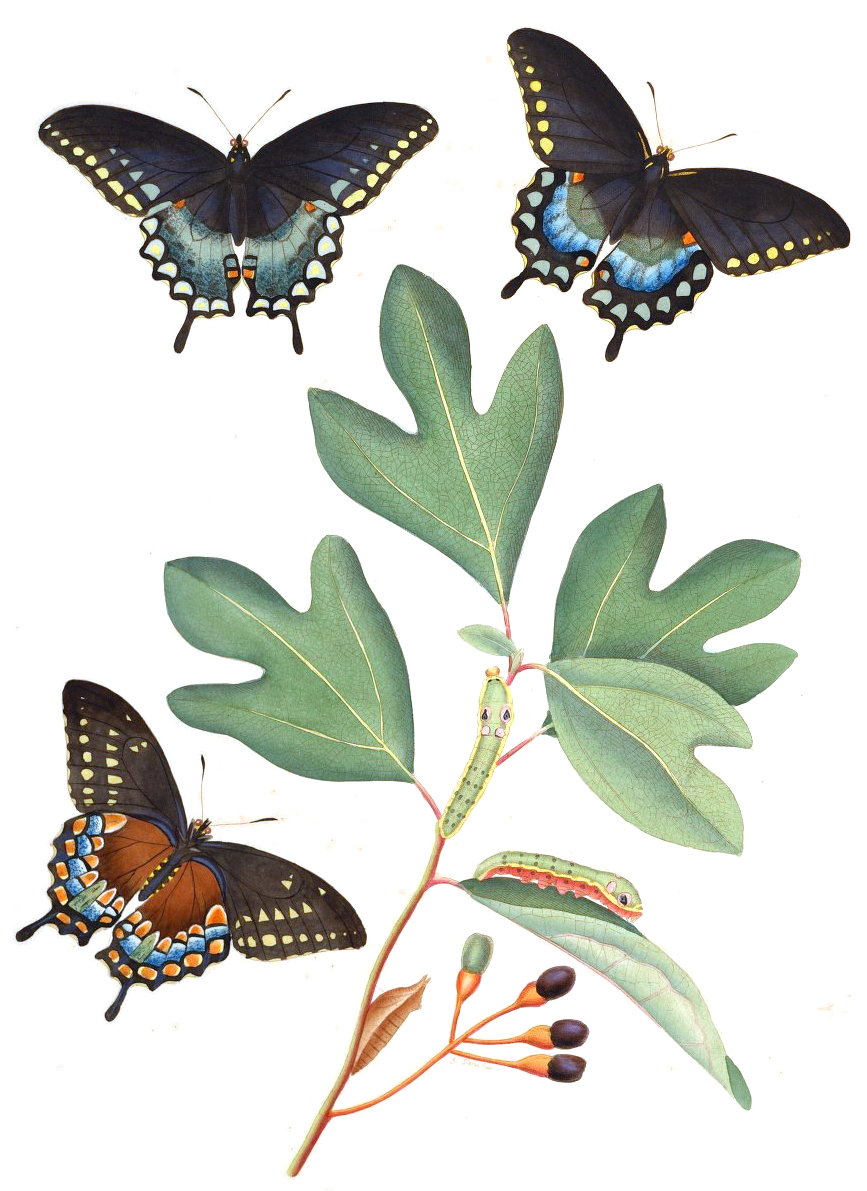
While passing by the cemetery on campus one day, I noticed a few little sprouted saplings with very particularly-shaped leaves.  I got very excited when I moved in closer and saw the definitive “mitten” shape of some of the leaves.  I pinched one and sniffed, smelling a strong spicy aroma almost immediately.  I knew at that point I was dealing with sassafras.

Sassafras is one of those herbs that you can’t avoid in the South.  It grows in all sorts of adverse environments:  roadsides, hedgerows, waste spaces, etc.  It can be short and bushy in its early years of development, but becomes a full-sized tree given enough time.  The roots and bark have long been used in culinary and medicinal applications.  If you’ve ever had a root beer, there’s a chance that you have tasted this plant, as sassafras and sarsaparilla were the two primary flavors in that drink for a long time.  In recent years (since 1960), active ingredient in sassafras, called safrole, has been officially banned by the USDA as potential carcinogen.  So most of the root beer sold now uses artificial flavors to reproduce the sassafras and sarsaparilla taste.  The leaves of sassafras also feature in Cajun cooking; dried and powdered, they become file powder, which is used to thicken stews like gumbo.

Medicinally, sassafras is a tricky root to use.  According to botanical.com, “Oil of Sassafras is chiefly used for flavouring purposes, particularly to conceal the flavour of opium when given to children. In the United States of America it is employed for flavouring effervescing drinks…Aromatic, stimulant, diaphoretic, alterative. It is rarely given alone, but is often combined with guaiacum or sarsaparilla in chronic rheumatism, syphilis, and skin diseases.”  It also seems to have a strong effect on women’s reproductive systems, easing menstrual pain, but also potentially causing abortions.  Several health problems have been connected to consuming overdoses of safrole, including vomiting, collapse, pupil dilation, and cancer.  WARNING!  Consult a physician before taking ANY herb or root internally!  Sassafras is NO EXCEPTION!

Sassafras bark and root have long been made into teas in the Appalachians.  In Foxfire 4, informant Pearl Martin showed students Bit Carver and Annette Sutherland how to gather the herb and make the drink:

“Sassafras is a wild plant that grows in the Appalachians…The spicy, distinct flavor of sassafras makes the tea a popular beverage, served hot or cold…Pearl told us that she could gather roots any time of the year without affecting the taste of the tea.  However, the roots should be gathered young, so they will be tender…She chops the roots from the plants, then washes the roots in cold water.  Next she scrapes off the outer layer of bark and discards it.  Either the roots or the bark can be used in making the tea, but Pearl prefers the roots.  They can be used dried or green.  She brings the roots to a boil in water.  The longer they are boiled, the stronger the tea.  To make a gallon of tea, she boils four average-sized roots [which appear to be about a foot long and an inch thick] in a gallon of water for fifteen to twenty minutes.  She then strains it, and serves it either hot or iced, sweetened with either sugar or honey” ( p. 444).

While the safrole content of the tea is relatively low, again you should consult with a physician before drinking this tea.

Magically speaking, sassafras is a money root.  It attracts business success and material wealth.  Putting a little sassafras root in one’s wallet or purse keeps money from running out.  Catherine Yronwode has several good charms in her Hoodoo Herb & Root Magic book, including a business attracting sidewalk scrub made from sassafras, allspice, and cinnamon (which has the added bonus of a pleasant aroma), and this powerful little Money-Stay-with-Me mojo hand:

“Jam a silver dime into an alligator foot [available from Lucky Mojo and other botanicas and curiosity shops] so that it looks like the ‘gator is grabbing the coin.  Wrap it tightly with three windings around of red flannel, sprinkling sassafras root chips between each layer as you wind, and sew it tight.  Just as the alligator foot holds the coin and won’t let go, so will you be able to save instead of spend” (p. 179).

Sounds like a pretty wonderful charm to know, in my opinion.  I’ve not seen anything particularly about burning sassafras as incense, but I did find a book called A Collection of Folklore by Undergraduate Students of East Tennessee State University edited by Thomas G. Burton and Ambrose N. Manning which records a bit of superstition claiming that bad luck comes if you “burn sassafras wood” (p. 74).  The lore in this particular collection is all from first-hand sources, so I tend to think it’s got some weight.  A similar folklore collection from Kentucky elaborates on this point, saying, “If you burn sassafras wood or leaves, a horse or a mule of yours will die within a week” (from Kentucky Superstitions, #2993).  I tend to think this refers to burning wood in a fire or fireplace as opposed to using a little bit of it as incense, but take your chances as you see fit.  Particularly if your horses or mules are dear to you.

I hope this post has been of some use to you!  Enjoy the slowly waning summer, and get out in the woods to find some sassafras and other plants!

Thanks for reading,

-Cory

Blog Post 70 – Elder

I’ve been noticing a lot of the elder trees blooming in my neck of the woods lately, so I thought I might take a stab at sharing some information on that particular plant.

Elder is a tree that has a long history with humanity.  Its uses are broad, including medicinal, culinary, and magical aspects.  Generally speaking, elder comprises anything in the genus Sambucus, with species names like nigra, canadensis, peruviana, etc. depending on region and appearance.  Elders can be very shrubby, or full-grown trees reaching up to 25 feet tall.  They have white flowers which bloom in the summer in bunches called corymbs (these are very prominent, so much so in fact that I felt compelled to write a blog post on them).  The blue-black berries, which appear in late summer and early fall, are a foodstuff used in everything from jams to vinegars.  The shoots of the elder have even been used as toys.  According to Botanical.com:

“The popular pop-gun of small boys in the country has often been made of Elder stems from which the pith has been removed, which moved Culpepper to declare: ‘It is needless to write any description of this (Elder), since every boy that plays with a pop-gun will not mistake another tree for the Elder.’ Pliny’s writings also testify that pop-guns and whistles are manufactures many centuries old!”

Medicinally, elders different parts have different uses (a quick note:  I am not a medical professional.  Please seek professional medical advice before using any plant medicinally).  The flowers have been used in tisanes to help alleviate all manner of ailments: sore throats, swollen tonsils, flu symptoms, etc.  The cooled elder tea could also be used topically on sunburns or to alleviate sore eyes.  The leaves of the elder can be used as a poultice or turned into an unguent to treat bruises, cuts, and abrasions.  The bark can be used as a potent purgative, though the inner bark is better for this than the outer.

As food, elder berries are most commonly consumed as elderberry jam.  They can also be turned into a syrup, and made into a delicious cordial for the adults in the crowd.  A sweet and slightly spicy wine can also be made from the berries, which seems to be very popular among the brew-it-yourself crowd.  I remember an old herbal book of mine which also contained a recipe for drinks like elderberry fizz and elderberry flip, which are essentially cocktails made from either the wine or the cordial.

Magically, elder has appeared in many cultures with many different purposes.  Some of the Old World magical associations with elder include:

  • Driving away evil spirits (Russian)
  • Magically removing fever (Czech)
  • Protection against witchcraft (English)
  • Good luck at weddings (Serbian)
  • Preventing theft (Sicilian)
  • Bad luck if burned (Romany)

The Danes believe that furniture made from elder wood is haunted by a spirit called Hylde-Moer (or “Elder Mother”), who may bear a connection to Mother Holle in Teutonic mythology.

On this side of the Atlantic, elder shows up in several systems.  John George Hohman’s Long Lost Friend recommends frying elder leaves with tobacco leaves in butter to make a healing salve.  In hoodoo, elder is used primarily for protection.  Hung in a bag near the entrance to the home, elder wood and flowers prevents intruders from coming in.  When mixed with the potent devil’s shoestring herb, it can prevent any unwanted guest from getting close to your home.  Catherine Yronwode’s Hoodoo Herb & Root Magic recommends elder as part of a Law-Keep-Away spell:

“Determine how many ways there are to enter the place where you conduct your business, and for each way, cut an elder stick five inches long, and get a small piece of John the Conqueror root.  On each elder stick carve five notches, one-half inch apart, then cut a sharpened point on each stick.  About fifty feet down each path leading to the place, drive a hole into the ground.  Put a piece of John the Conqueror root at the bottom of the hole, followed by an elder stick, pointed end down, with all the notches facing North.  It is said that no law officer will walk or drive over those elder pegs”  (HHRM p.90).

Yronwode also recommends drawing a circle around oneself with an elder branch and making a wish.  If you try this out, I’d love to hear your results!

There are probably dozens of other things I’m missing about elder, but hopefully this is a good start.  If you have uses of elder or experiences with the plant you’d like to share, please feel free to do so!

Thanks for reading,

-Cory

Blog Post 63 – Black Pepper

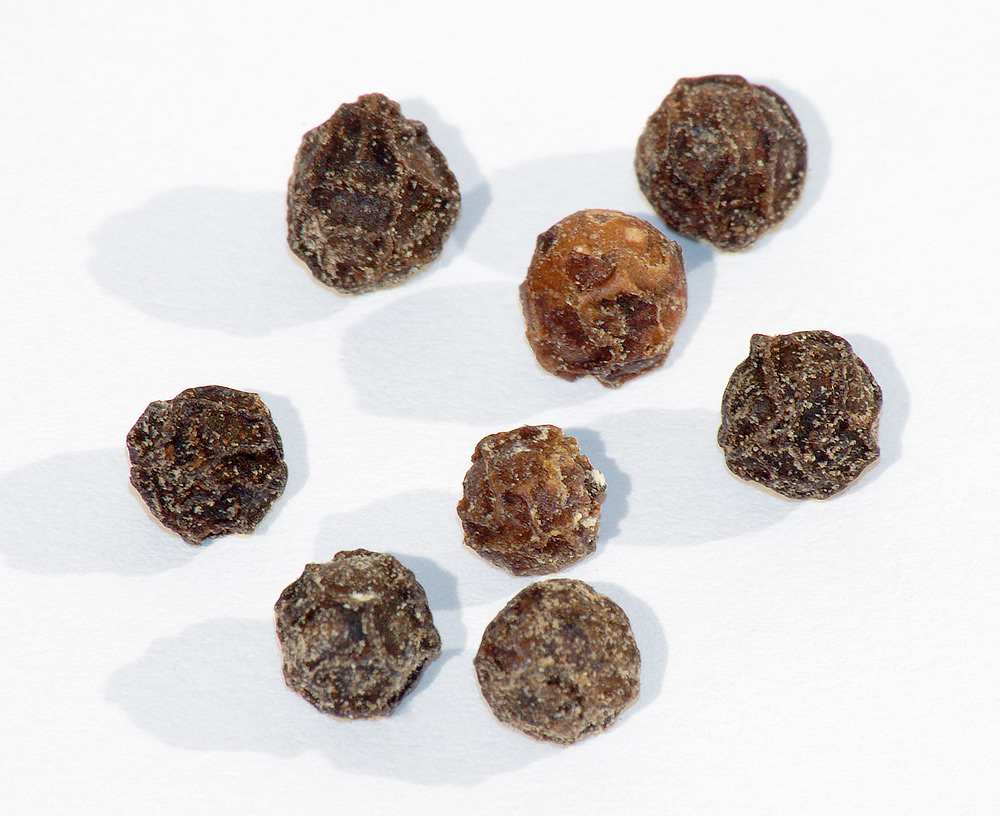
Today I thought I’d take a brief look at a magical ingredient which most everyone has on hand:  Black Pepper.  There are many uses for this dried fruit of the Piper nigrum plant.  Of course it’s valued for its ability to enhance food with a bit of heat, but it also has medicinal properties, and is very common in hoodoo practice as well.

Botanical.com lists the black peppercorn’s medicinal properties as being a febrifuge (fever reducer) and a stimulant and carminative.  For those with enflamed throats or ailments of the uvula, the site recommends using an infusion of black peppercorns as a gargle, and also suggests using the herb for constipation and urinary troubles.

In Appalachian practice, Granny women would sometimes use an infusion of black pepper to help induce labor in an expectant mother, because of its stimulatory nature.  They might also have the mother “snuff” or “quill” black pepper for the same results:

“Snuffing entailed having the mother sniff black pepper…from a plate placed under her nose; quilling involved blowing the same substances directly into the mother’s nostrils or throat with a goose quill, reed, or rolled piece of paper.  Either way, the objective was to cause a violent sneezing attack that would induce labor” (Folk Medicine of Southern Appalachia p.130).

In hoodoo, the black peppercorn is used primarily to harm or protect.  It’s often added to things like Hot-Foot powders or crossing tricks to facilitate an uncomfortable “heat” in the target’s life.  Catherine Yronwode also notes that black pepper can be used to stave off a jinx, particularly one which has been stepped in:

“To shield yourself from anyone doing these things [poisoning you through the feet via powder or other foot-track magic]…sprinkle black pepper powder or a mixture of black pepper and Fear Not to Walk Over Evil Powder in your shoes.  It is said that your track will be invisible or invulnerable to harm, and even if someone does throw for you or lift your foot track, they won’t be able to affect you in any way” (HHRM, p.53).

She also mentions that black pepper can be mixed with salt and thrown after someone when they leave your home to prevent them from ever returning or doing you harm.  Since salt and pepper are rather easy to come by in most homes, doing a spell like this is simple, and because the ingredients are so common most people don’t think twice about seeing them on the ground.  In fact, a light sprinkling of these ingredients would probably go unnoticed even in a busy apartment complex, and would be easily vacuumed up later, which makes a spell like this good for the urban root worker or witch (in my opinion, of course).  I’d combine it with the practice of leaving a broom behind the door just to double up the protection from unwanted visitors, too.

There are several potent curses which can be levied using black pepper, too.  Catherine Yronwode’s Hoodoo Herb & Root Magic book has an excellent entry on these, so I’ll not rehash everything in her entry here.  I will say that the spell she mentions involving a black candle and 99 peppercorns taken to a crossroads sounds particularly nasty, and would be well worth learning, if only to have an idea how to undo it should someone do it to you.

That’s it for today!  I wish you all a wonderful weekend.  Please don’t forget to vote in our polls, too!  They’ll be open through the weekend, and you can find them in Blog Post 61 or at the top right of the sidebar.  Thanks for voting, and as always, thanks for reading!

-Cory

Blog Post 55 – Games

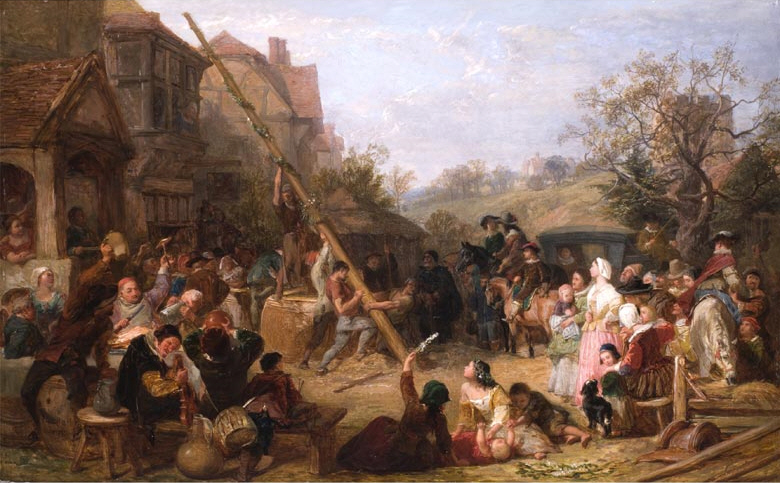
May Day is just around the corner, and since I’ve been talking about songs and riddles this week, I thought it might be fun to talk a little about games.  Sport and fun may not seem like a particularly witchcraft-tinged topic, but au contraire! I say.  There are lots of magical subtexts to games, from the sacrificial-animal nature of a colorful piñata to the gambling mojo or lucky rabbit’s foot stuffed in a card-player’s pocket.

Getting Lucky
Winning games by magic is a primary focus of many types of hoodoo workings.  Some of the various techniques for improving one’s luck include:

  • The creation of gambling mojo hands, often “fed” with a woman’s urine (because of her connection to Lady Luck)
  • The appropriately named “Lucky Hand” root, which resembles a human hand and which is reputed to bring good luck to one in games of chance
  • A buckeye with a hole bored in it, filled with liquid mercury (quicksilver), and sealed with wax was considered incredibly lucky.  WARNING:  Don’t do this.  Mercury is VERY dangerous and VERY poisonous, even in tiny amounts.  Modern root workers often use sliver Mercury-head dimes instead.
  • The popular alligator-foot or rabbit-foot keychains found in roadside stops throughout the country are considered potent gambling charms.
  • One of my favorites is the “coon dong” charm, which is a raccoon penis bone wrapped in a currency note (the higher the better, of course) to ensure continued luck.

Of course, there are lots of other hoodoo charms related to luck and good fortune.  Simply carrying a High John root in your pocket is a good way to ensure luck at all you do, including games.  Another big game-related piece of hoodoo magic comes in the form of “dream books,” which purport to help the dreamer turn symbols and images from the night’s slumber into winning lottery numbers.  Catherine Yronwode has an excellent page on this topic, so I’ll just suggest you visit her site for more on those.

Magical Games
There are many games that have interesting magical undertones (or overtones…maybe highlights or roots?).  I thought it might be fun to include a few games that you could include in your own May Day celebrations today.  I’m skipping out on the traditional Maypole as that is well documented in many places.  I hope you enjoy them!

From Central Illinois (in Richard Dorson’s Buying the Wind, paraphrased)

LONDON BRIDGE IS FALLING DOWN

Two players are named “Takers,” and each chooses an object or idea that represents him/her (such as one player being “bees” and the other “flowers,” or one the “sun” and the other “the moon.”  The Takers do not tell the other players which Taker is which object however.  The other players form a circle, and the Takers join hands, one outside the circle and one inside.  They raise their arms, and the circle begins to turn as everyone sings:

London Bridge is falling down, falling down, falling down;
London Bridge is falling down, and caught my true love in it.

The Takers can drop their arms at any point during the singing, and the circle stops.   Whoever the Takers have “trapped” must choose one of the objects and whisper it to the Takers.  The Taker whose object is named grabs the trapped player and moves them behind him/her, and then the Takers raise their joined hands again.  The singing and circling continues in this way until all the players have been caught and moved behind their chosen Taker.

The Takers keep their hands joined and each player wraps his/her hands around the player before them, forming two human chains linked by the Takers.  The game ends with a tug-of-war between the two sides.

This game could be a wonderful way to have some fun while enacting a sort of ritualized drama, such as the struggle between light and dark.  It is best with a large group of people of course, and the “prize” for winning could have to do with the losing side serving the winning side at a feast, or something to that effect.  Or winning could just be its own very fun reward.

From Appalachia (in Foxfire 6)

DEVIL IN THE PROMISED LAND

“We played a game called ‘The Devil in the Promised Land.’  A big branch went down through our pasture.  Some places it was wide and some places were narrow enough to jump across pretty good.  There’d be about eight or ten of us on one side.  We’d put one on the other side and he was the devil.  Now we had to cross the branch and go around him and jump the branch back.  Now if he caught us before we made the run around him, we had to go on to the devil’s side” (p. 282)

I love this one, and you could definitely play it without having a huge tree or creek (I’m not 100% sure what that informant meant by “branch”).  Just making a big circle with rope or setting boundaries for the “Devil’s land” with stones would be pretty easy.  You could also think of this as “a witch and her spirits,” with the Witch being the primary tagger, and her Spirits being the players she catches, who help her catch other players (I would say they can’t “tag” a player, but might help to corral the other players towards the Witch…but that’s just my take on it).

From the Southwest and Mexico

THE PINATA

The piñata has an interesting history dating back to at least Mayan times, and possibly even back to China.  There’s an excellent short history of the game here, including many traditional rhymes and songs associated with the game, such as:

“Dale, dale, dale, no perdas el tino,
porque si lo perdes, pierdes el camino.
Esta piñata es de muchas mañas, sólo contiene naranjas y cañas.”

Hit, hit, hit.
Don’t lose your aim,
Because if you lose, you lose the road.
This piñata is much manna, only contains oranges and sugar cane.”

Making paper mache representations of animals, spirits, demons, gods, stars, or almost anything magical would add to the occult significance of a game like this.  After the candy’s been collected, some of it could be turned into an offering as well, if that’s part of your tradition.  The bright colors of most piñatas make them perfect for May Day gatherings, in my opinion.

There are lots of other games you could play as well, like Nature Bingo or Horseshoes, that would fit a spring or summer gathering.  This post is already plenty long, though, so I’m going to end it here.  Feel free to share your own witchy games, if you have them!

Thanks for reading!

-Cory

Blog Post 49 – Snakes

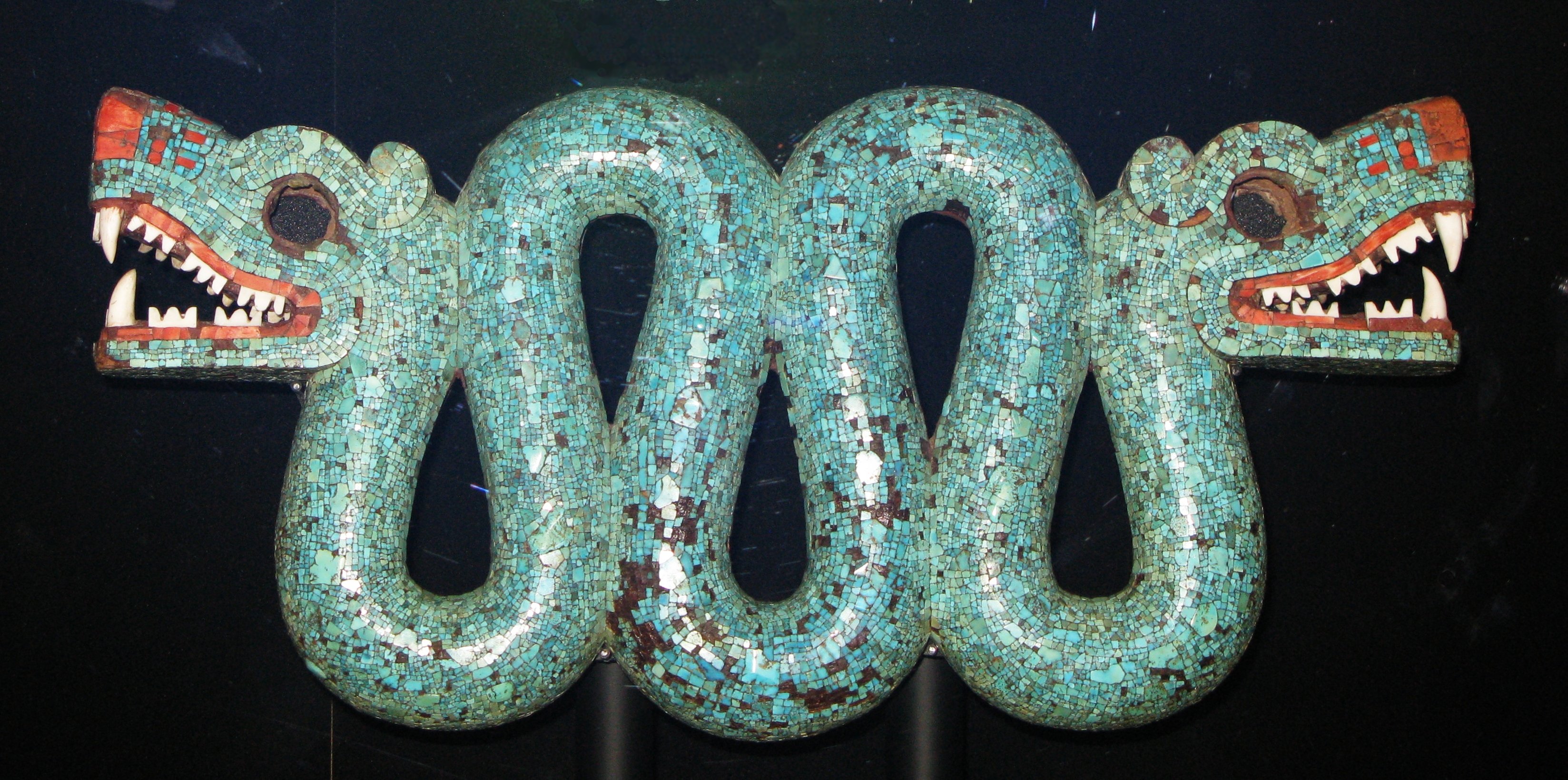
I hope you’ve got your good boots on today, because we’re getting into the tall grass and looking for snakes!  Snakes have had a place in magical lore for a very long time.  In Ancient Greece, Artemis and Apollo were sometimes associated with snakes.  Apollo was famous for slaying the great serpent Python (see Ovid’s Metamorphoses, Book I), and his priestesses were ever afterwards known as the Pythia.  Artemis, offended by King Admetus’s oversight of an offering due her, filled his bed with serpents.  In Vodoun tradition, the Creator figure is a great serpent, Damballah.  Stories of creation and snakes seem to go hand in hand across many cultures.

In the New World, snakes have a mixed significance.  On the one hand, the biblical story of Eden in Genesis lays a lot of the blame for humanity’s disobedience on the serpent in the garden.  At the same time, humanity would be without knowledge without the snake, so there’s more than one way to look at the story.  However, if you ask many Christians today who the snake was, they will answer “the Devil” or “Satan,” so for all intents and purposes, mainstream culture takes a fairly negative view of these slithering creatures.  That does not mean, however, that all snakes are viewed as little devils, and many folks actually like them.  Farmers like snakes because they keep rodent populations down in barns and fields, for example.

In magic, snakes are one of the most potent animals you can use.  There are several different magical traditions surrounding snakes or their various parts and pieces.  Catherine Yronwode notes that “the blood, eggs, heads, flesh, sheds, and skins of all species of snakes are used in jinxing and crossing” and the manufacture of various hoodoo mixtures, like Goofer Dust or Live Things In You poisons (HHRM p. 186).  She also mentions that the sheds can be used to calm one’s mind.  Other hoodoo-related uses of snake sheds and bones include situations where cunning might be needed, or for luck and power.  In this last case, rattlesnake bones and rattles are often used.  Musicians who wish to play well and win contests often keep a rattle with their instruments, according to Yronwode.

In the case of the Live Things In You curse, powdered snake parts—usually eggs or sheds—are mixed into a victim’s food.  The target then feels as though the creature is wriggling around in his body, causing him pain and distress, as well as the feeling that he might be going crazy.  You can read more about this kind of baleful working in Superstitions & Folklore of the South, by Charles W. Chestnutt, at the University of Virginia website.

Vance Randolph recorded several bits of magical lore concerning snakes in his Ozark Magic & Folklore:

  • To cause a rain, a snake could be hung belly-up on a fence (p. 30)
  • Burning shoes in the fireplace will drive away snakes (p. 68)
  • Snake-skin soaked in vinegar is applied to boils to reduce them (p. 101)
  • Snake-bites treated by doctors will always ache on the anniversary of the bite (p. 159)

Randolph also mentions the snake-handling “Holy Roller” churches sometimes found in rural areas of the South.  These churches base their practice on an admonition in Mark 16: 17-18:   “And these signs shall follow them that believe; In my name shall they cast out devils; they shall speak with new tongues; They shall take up serpents; and if they drink any deadly thing, it shall not hurt them; they shall lay hands on the sick, and they shall recover” (KJV).

A final tale from the Ozarks concerns a family that had a secret method of dealing with snakes:

“Miss Jewell Perriman, of Jenkins, Missouri, tells me that her Uncle Bill had a secret method of curing snake bite, and people came from miles around for treatment. Uncle Bill belonged to a family of which it was said ‘them folks don’t kill snakes.’ This is very unusual in the Ozarks, where most people do kill every snake they see. When a large copperhead was found in the Perriman house, Uncle Bill caught it with the tongs, carried it out into the orchard, and released it unharmed. His cure for snake bite was known in the family for at least a hundred years…The secret is lost now, for Uncle Bill is long dead, and his son died suddenly without issue. All that Miss Perriman knows of the snake-bite cure is that the snake must not be injured, and that Uncle Bill had a strip of ancient buckskin in which he tied certain knots as part of the treatment. She showed me the buckskin. It was about half an inch wide, perhaps twelve inches long, carefully rounded at the ends. Three knots had been tied in it, one in the middle and one at either end” (Randolph, Ozark Magic & Folklore, p. 159).

Wouldn’t you love to know what that secret was?  I sure would!

I suspect that snakes will always have a place in magical lore.  They have the ability to slide between upper and lower worlds easily.  Some can kill with a bite, but also provide useful services to us in many ways.  They seem to show up everywhere in the world (except Ireland…but that’s a completely different subject) and they always connect to something primal in us: fear, knowledge and gnosis, or even sexuality.  I’ll be keeping my good boots on when dealing with them, but I definitely have a particular love for these critters.

Thanks for reading!

-Cory

Blog Post 40 – Dirt Dauber Nest

With warmer days just around the bend, lots of our little insect friends are getting out and about.  One of the insects I least liked before studying hoodoo was the wasp (having wandered into a nest of them once while trying to get newborn kittens out of a barn, I feel I had some justification for my squeamishness about them).  However, hoodoo has given me a new appreciation of at least one kind of wasp:  the dirt (or mud) dauber.

This relatively harmless little black wasp (colors vary a bit, but most of the ones I’ve seen have been dark brown to black) likes to build its nests in long “pipes” from mud it gathers near puddles.  This has earned the wasp the occasional nickname of “pipe organ wasp,” and its nest is usually described as a pipe organ nest.  While the dirt dauber is a keen predator, often hunting spiders which it paralyzes and brings back to its nest for food, it seldom stings people unless provoked.  Though I don’t recommend provoking them.

However, if you can find an abandoned mud dauber nest, it’s well worth collecting it and keeping it in a sealed jar (just in case it’s not as abandoned as you thought) or plastic container.  Often, individual tubes may be abandoned and can be harvested for use as long as you’re careful not to bother any of the more active tubes.

In folk magic, these nests have all sorts of uses.  Once you’ve powdered the nest—an easy task since it crumbles readily—you can add it to hot foot workings, break-up spells, good luck hands, business drawing blends, and lots more.  Harry Middleton Hyatt lists several uses of dauber nest in his work, including:

  • Carrying around a bit of nest in your wallet or purse to draw money and luck (Vol. 2, p.1552)
  • Adding it to a vinegar jar with a couple’s name paper (names written crossing each other, of course) and red pepper and beef gall in order to break them up (Vol. 2, p. 1513)
  • Adding it to a Hot Foot working and placing it someone’s shoe to drive them off (Vol.2 , p. 1505)
  • Mixing it with Graveyard Dirt and Sugar in order to help heal a marriage (the wasps are one of the few where the male wasp stays at the nest to guard it, thus ensuring that the “family” is safe and united, which is probably why the dauber is associated with a faithful marriage) (Vol. 2, p. 1325)
  • Adding Dauber Nest to Graveyard Dirt and throwing it on train tracks to kill someone (there’s more to it than this, of course, but I’d rather not get too into that here) (Vol. 2, p. 1089)

Catherine Yronwode mentions many spells involving Dauber Nest in her book, including spells to destroy an enemy, control an errant husband, and draw new customers to a business.  This last spells involves mixing the nest with Grains of Paradise and sprinkling the powder around the business, as high as you can.  According to Yronwode, because daubers build their nests up high, it symbolizes success.

As a final bit of folklore, if you happen to have daubers building nests on your front porch, leave them there.  They will bring peace and protection to the home, and it can be fun to watch them build their nests on a summer day over a glass of iced tea.

Thanks for reading!

-Cory

Blog Post 31 – Who’s Who in Hoodoo, part deux (Intro, Part III)

Today, I’m going to tackle of few of the modern rootworkers I know and/or admire.  This is most certainly is not a comprehensive list of professional hoodoo practitioners in North America, so please don’t start throwing rotten vegetables at me for not listing one of your favorite rootworkers.  But DO feel free to leave a comment on this post with the name/contact info of any professional hoodoo you think the world should know about!

Okay, on with the show!

Modern Rootworkers

Catherine Yronwode – I believe she actually prefers “catherine yronwode,” without capitalization.  If you are reading about hoodoo on the web and you don’t know who she is yet, you should immediately head over to the Lucky Mojo page and read her online text on the history and practice of hoodoo.  She is probably one of the most prominent profiles in modern conjure work, and she runs one of the biggest supply houses for magical and occult goods specializing in traditional hoodoo recipes and formulae.  Yronwode was featured in Christine Wicker’s Not in Kansas Anymore, which profiled magical practitioners across the United States.  She was also a famous comic book artist back in the 1970’s, and judging by the colorful designs on her wares, I’d say she still has an eye for a good picture.  She’s also been instrumental in keeping hoodoo a vital, living tradition rooted in history but adapting to modern times.  Her course for prospective students of hoodoo is almost a pre-requisite for any rootworker, and her Association of Independent Readers and Rootworkers provides a stamp of quality which ensures that those seeking magical help don’t get ripped off.   Seriously, if you’re reading this and don’t know who she is, go to Lucky Mojo right now!

Dr. Christos KioniThis Florida-based rootworker is host of the Lucky Mojo Hoodoo Rootwork Hour.  He is also one of the best known professional conjure men working today, and the active owner of the MyHoodooSpace website.  Dr. K also works very hard to preserve the African Diasporic traditions (such as the ATR practices discussed in the introductory post on hoodoo earlier this week.  I think he works both with the left hand and the right (meaning he will curse if he sees a need for it), though I’m basing that on some of the discussions from his radio show and he may well have changed ideologies since then.  He was also mentioned in Not in Kansas Anymore, and actually knows where to find the grave of Zora Neale Hurston (which very few folks do).  He is definitely a big personality, but he has a friendly and warm demeanor about him, and I believe he’s got a fairly high rate of success with his work, too.  He also happens to be friends with cat yronwode (if you didn’t guess that from the name of his radio program).  As he says of himself “I can hit a straight lick with a crooked stick!”

Michaele Maurer – Miss Michaele (pronounced mi-KAY-luh, I believe) is the owner of the Hoodoo Foundry, a site dedicated to traditional rootwork.  One of the reasons I really like her practice is that she focuses on Southern-style rootwork, including a lot of Bibliomancy and using Biblical prayers and magic to accomplish her goals (not that I think all great rootworkers are Bible-thumping Christians, mind you…see Karma Zain or Papa Toad Bone for contrast).  I really value her deeply traditionalist approach, however, and I also like that she has a broad range of reading styles, including tarot, pendulum, and ceromancy (reading candle wax).  She’s not one who does jinxing or crossing work, but she does at least acknowledge that sometimes it is justified and she helps clients needing those services to find a root worker who will attempt those tricks.   She seems to be very tender-hearted and kind, and works for the good of her clients with deep sincerity.

Starr – An old-fashioned Southern hoodoo woman from Texas, Starr has been steeped in conjure work for most of her life.  She’s quite sassy and funny, and also very straightforward.  She’s another traditionalist who works closely with Christian religious figures, including Saints.  While much of her work is focused on things like spiritual cleansing, sweetening, and healing, she also does vinegar jars, hot foot workings, and as she puts it, “I will do separation and break up work on a case by case basis if so guided by the spirit.”  She also runs the Old Style Conjure site, and offers mini-courses which compliment a broader study of hoodoo quite nicely.

Karma Zain – Ms. Zain is not only a great rootworker, she’s also a bishop in the Franco-Haitian Gnostic Vodoun tradition.  I know, I’ve said I really like old-style conjurers who stick to certain historical precepts regarding the incorporation of Biblical elements, but that doesn’t mean I think all good hoodoo men and women must be Judeo-Christian.   Karma Zain proves that point, because besides being a Vodoun bishop, she’s an honest, straightforward worker who isn’t afraid to say “no” to a client if she doesn’t feel their cause warrants the action they ask for.  She’s the kind of rootworker who isn’t afraid to dig in the dirt and use the less savory curios like bone fragments and fur.  She seems like an incredibly down-to-earth and sensible woman, and one I wouldn’t want t cross!

Papa Toad Bone – This Mississippi based conjure man is the proprietor of the Toad’s Bone Apotheca, one of the funkiest and witchiest sites I’ve seen.  Just looking at his webpage makes me want to lay a trick or two or take a walk to the crossroads.  He’s also Pagan, and very much a non-Christian kind of Pagan, again proving that great conjurers needn’t be entirely wrapped up in the Biblical worldview.  I’ve known him through several different avenues over the last couple of years, and he’s always struck me as someone who really spends time with spirits and understands them incredibly well (I think he even found a great way to play card games with them, but hopefully I’ll get him to tell about that at some point).  He’s also a nitty-gritty sort of worker, spending a good deal of time out in the swamps and wild places gathering materials for his shop and clients.  Again, someone I wouldn’t want to cross, and a rootworker who gets things done.

Carolina Gonzalez – Another Pagan rootworker, Ms. Gonzalez incorporates her Latin roots into her magic, offering a particularly unique blend of brujeria, hoodoo, and witchcraft to her clients.  She runs The Hoodoo Shop on Etsy, and she’s the resident hoodoo expert for sites like The Noble Pagan and The Modern Pagan.  She’s located in the Canary Islands, proof that hoodoo is a worldwide phenomenon at this point.  Her site offers her products as well as courses and LOTS of great information from her many different areas of expertise.

Sarah Lawless – I certainly can’t leave out Sarah, a friend to New World Witchery and a heckuva witch and conjure woman in her own right.  She practices her root work out in the wilds of British Columbia, carefully adapting the fundamental practices of traditional Southern rootwork to her immediate environment.  We’ve talked to and about her a lot on this blog, so rather than sound like a rampaging fan boy, I will simply suggest you go check out her blog and store and see how magical she is for yourself.

Stephanie Palm – The wonderful proprietress of Music City Mojo, and my personal hoodoo teacher.  She is not one to pull punches or sugar-coat things, though she is also incredibly warm and friendly.  Stephanie is the High Priestess of a Traditional Witchcraft coven, as well as a devotee of Vodoun.  She’s a gifted teacher, as well as a gifted conjure woman, and she isn’t afraid to get her hands dirty in a graveyard or to lay down a jinx if the situation calls for it.  More importantly, she isn’t afraid to let someone know that the situation DOESN’T call for a jinx.  I really could go on and on about how much I adore her and how thankful I am to her for all she’s taught me, but for now I’ll just say that if you’re looking for someone who knows their stuff, she’s one to talk to.

I know there are lots more rootworkers out there, and I’d love to hear about them from all of you, so please feel free to post a comment on this blog about your favorite hoodoo men and women.

Thanks for reading!

-Cory

Blog Post 29 – An Introduction to Hoodoo, Part I

This week I’ll be focusing on something that seems to generate a lot of interest:  hoodoo.  This is one of my personal favorites when it comes to magical systems, because it is incredibly practical and anyone can do it.  Plus, it doesn’t shy away from the less savory side of magic, but fully acknowledges that curses exist and must be dealt with (and sometimes dealt out when other attempts at justice have failed).

A (VERY Brief) History
Let’s start by getting the confusing terminology out of the way.  Often, the terms “hoodoo,” “conjure,” and “root work” or “rootwork” will appear as synonyms.  Adding to the confusion, most people also mix “voodoo” into this lexical stewpot.  Hoodoo, however, is NOT Voodoo/Vodoun—the former is a magical system not particularly affiliated with any specific religion, and the latter is a very distinct religion.  The confusion between the two stems from the fact that both are outgrowths of something called African Traditional Religion (or ATR for short).  There are other ATR’s which exist, primarily in South America and the Caribbean, but I’ll leave a discussion of those to someone more knowledgeable than myself.  When African slaves were brought to the West Indies, their native religion mixed with the folk practices of the indigenous tribes on the islands and the Christianity of their European captors.  Vodoun evolved over time, primarily in places like Haiti, as well as coming onto American soil through places like New Orleans.

Many modern Vodoun practitioners are very committed to the ATR religious powers, such as Legba, Oshun, and Yemaya (variants on spelling and pronunciation occur depending on where you are and to whom you’re speaking).  The Voodoo which grew up in New Orleans is quite different from the Vodoun in Haiti, though they do share many common elements.  Zora Neale Hurston’s excellent book Mules and Men details much of this overlap (though I advise readers to take this book with a grain of salt, as some of her folklore is a bit embellished and may not present an accurate picture of her subjects).

A big part of Voodoo, though, was a belief in magic and animism.  While Catholicism (dominant in the islands and French-and-Spanish-influenced Southern coastal regions) was fairly adoptive of these ideas so long as they were couched in terminology like “miracles” and “Saints,” slaves transplanted to Protestant-dominated areas found the religious side of Voodoo quashed.  The numerous spirits and beings found in Voodoo’s pantheon were stripped away, and what was left was a magical system detached from its religious side.  Other ATR’s also met the same fate as they moved into the white, Protestant-dominated sections of the United States.  Beliefs in “witchcrafting” and other magical practices go back to at least the beginning of the 19th century among African-American populations, completely removed from any ATR associations, or any deeply religious connection at all.  Only the practical side of the work was still available to the slaves brutally oppressed in Colonial America, as it was often their only real recourse to justice in any way.

Once this practical magic started working its mojo, so to speak, it began to grow in new ways.  It encountered new herbs via contact with another overrun people, the Native Americans.  European folklore, especially German and Anglo-Irish tales, provided new fodder for the developing system.  And the availability of particular regional curios and ingredients shaped the evolving practice.

So is it Hoodoo, Conjure, or Root Work?
In general, the terms “hoodoo,” “conjure,” and “root  work” still get used interchangeably.  “Hoodoo” is common in the gulf coastal regions, “conjure” in places like Memphis and the mid-South, and “root work” in the Atlantic coastal regions.  All terms, however, can be generally found in all places, so don’t be surprised at the overlap.  Additionally, spelling may vary (I’ve seen at least one WPA folklore collection from Tennessee showing this practice called “cunjur” instead of “conjure”).

In my own mind, I do see a slight difference in the three terms:

  • Hoodoo is the general name for the system of African-American and Southern magic using herbs, roots, and everyday objects to influence people and events in one’s life.
  • Conjure is more specifically related to working with spirits, but also uses much of the same magic hoodoo does.  It also relates to faith-healing (to me, anyway).
  • Root work has to do with the crafting of herbal and curio-filled spell objects, or with the use of such things to heal or harm a target.

There’s not a single consensus on where the actual term “hoodoo” comes from.  Some think it is a corruption of “Voodoo,” but this is not a majority opinion.  Catherine Yronwode has a great discussion of this topic on her website, outlining much of this history in more detail.

Hoodoo Now
During the early-to-mid twentieth century, hoodoo underwent another evolution.  It moved, along with Southern blacks, into cities and became urbanized.  Many merchants began to supply hoodoo practitioners with the oils, herbs, candles and other items they needed to do their work.  A number of these suppliers were Jewish, and a strong Jewish presence can still be seen in hoodoo, mostly in the use of talismans and charms imported from European grimoires like The Black Pullet.  Some, such as scholar Eoghan Ballard, have even made convincing arguments that the word “hoodoo” comes from a particular pronunciation of the word “Jewish.”

The terms Voodoo and hoodoo are still confused, even by those who are in the know.  The very reputable and knowledgeable author Jim Haskins even titled his book about hoodoo Voodoo and Hoodoo.

Modern hoodoo is still growing and changing.  Some of the major centers of hoodoo are Forestville, CA (where Cat Yronwode runs her Lucky Mojo Curio Co.), the Gullah region of South Carolina (discussed in Jack Montgomery’s American Shamans in the section on Sheriff McTeer), cities like Memphis and Savannah, and of course New Orleans.  It is also present in rural areas, like the swamps of Mississippi.  And the general practice of root work seems to have spread to other countries as well, as Sarah from the Forest Grove Botanica in Canada uses many root working techniques in her magic.

As this week goes on, we’ll get into more on those techniques, as well as the specific herbs, roots, and curios found in hoodoo.  For now, though, I think I’ll stop before I write a whole book here.

Thanks for reading!

-Cory

Blog Post 17 – Contest Reminder

Hi everyone!

Just a quick reminder that there’s only a little over a week left in our first giveaway.  We’re offering a copy of Cat Yronwode’s Hoodoo Root & Herb Magic to one randomly chosen reader/listener.  All you have to do is email us or leave a comment on Blog Post 10 – Weather Work with some weather lore, preferably from your area or family.  The deadline is February 28th at midnight, Central Time, so please get your submissions in before then.  We’ll likely be putting together a show on weather lore soon and we’d love to have some field reports from out there in the wider magical community.

So good luck, and we look forward to hearing from you!

Thanks for reading!

-Cory