Podcast 11 – Magical Tools

-SHOWNOTES FOR EPISODE 11-

Summary
Today we announce the upcoming break due to Cory’s grad school (don’t worry, we’ll be back sooner than you think!).  Then we talk about magical tools in American witchcraft, and we have our WitchCraft and Spelled Out segments.

Play:

Download:  New World Witchery – Episode 11

-Sources-
Mules & Men, by Zora Neale Hurston – mentioned in the show
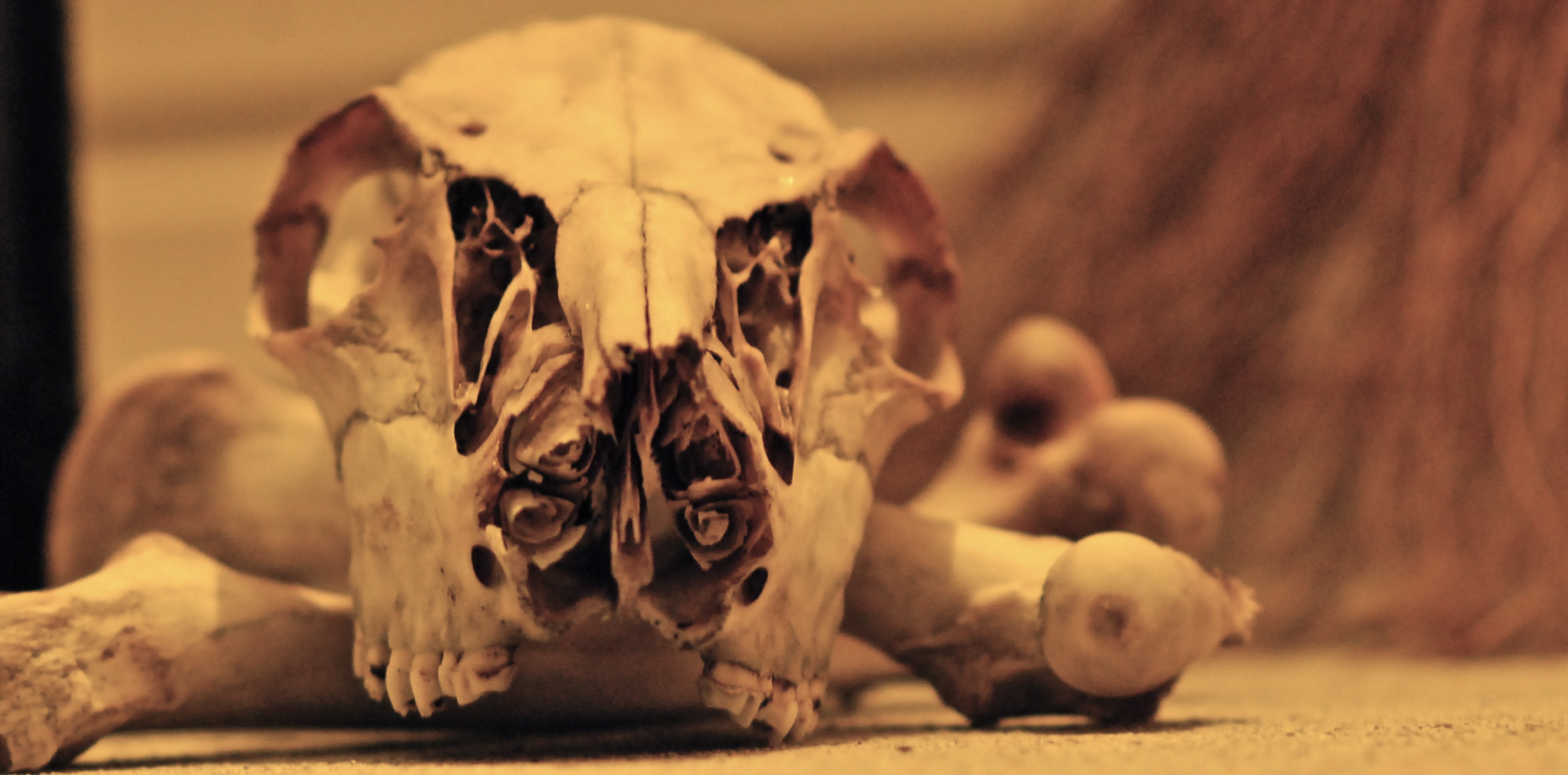
Lucky Mojo site – particularly rabbits’ feet, gator parts, and raccoon bones
Hoodoo Root & Herb Magic, by Catherine Yronwode – lots of info on magical curios
Mojo:  Conjure Stories, by Nalo Hopkinson – the book I’m reading now which I mentioned when discussing gator heads

Promos & Music
Title music:  “Homebound,” by Jag, from Cypress Grove Blues.  From Magnatune.
Promo 1 – Iron Powaqa
Promo 2-  Witches’ Brewhaha

Blog Post 66 – The Moon

In a lot of modern Pagan religions, such as Wicca and Druidism, there is a certain amount of emphasis placed on the moon.  Phases of our celestial companion become symbolic stand-ins for various god and goddess figures, or particular aspects of those figures (as in the famous Maiden/Mother/Crone cycle).  With the full moon upon us, I thought I might take a little look at just how American witchcraft interacts with that lovely sphere.

There is a great deal of lunar lore found in Native American legends.  In one tale from the Kalispel Tribe of Idaho, the moon is equated with the famous trickster/father figure, Coyote:

“Once there was no Moon for someone had stolen it. The people asked “Who will be the Moon?” The Yellow Fox agreed to give it a try but he was so bright it made the Earth hot at night. Then the people asked Coyote to try and he agreed. The Coyote was a good moon, not to bright – not to dim. But from his vantage point in the sky the Coyote could see what everyone was doing. Whenever he saw someone doing something dishonest he would shout “HEY! That person is stealing meat from the drying racks!” or “HEY! That person is cheating at the moccasin game!” Finally, the people who wished to do things in secret got together and said “Coyote is too noisy. Let’s take him out of the sky.” So someone else became the moon. Coyote can no longer see what everyone else is doing but he still tries to snoop into everyone else’s business” (WWU Planetarium American Indian Starlore page).

The Cherokee thought of the Moon as brother to the Sun (an instance of the moon being seen as male, which appears in several cultures).

The image of the Man in the Moon is frequently found in American folklore.  Many of these traditions hail from European lore, including poems found in Mother Goose:

THE MAN IN THE MOON
The Man in the Moon came tumbling down,
And asked the way to Norwich;
He went by the south, and burnt his mouth
With eating cold pease porridge.
(from The Real Mother Goose)

In other cultures, the moon contains figures less familiar to most Americans.  The Old Farmer’s Almanac includes examples of the moon seen as a woman with child, a toad, a giant, a rabbit, and a boy and a girl carrying a bucket (as in “Jack and Jill”).

There are also particular moons associated with particular months.  A good list of them can be found at the Farmer’s Almanac site, here.  Many are linked with agricultural cycles (such as Green Corn Planting Moon or Harvest Moon), and some are clearly linked to hunting (like the Buck Moon).

There is a plethora of magical lore associated with the moon.  My earlier posts on planting by lunar signs and weather lore both have lunar connections within them.  Likewise, the witch initiations post mentions the practice of shooting at the moon to become a witch.  Edain McCoy, in her book In a Graveyard at Midnight, also has a fun bit of moon magic:

“To remove a curse from your home, you can try shooting your shotgun out an open window at the full moon, while shouting a curse at the Devil.  However, don’t try this if you live in a city or populated area, or you will likely find the police at your door” (McCoy, p. 107)

There are also beliefs about marriage and courtship dates associated with lunar phenomena – waxing-to-full moons are best for “tomcattin’” according to Vance Randolph’s Ozark Magic & Folklore.

Of course, witches can find lots to do under a full moon.  Personally I find it to be an ideal time for:

  • Storytelling gatherings (especially around a campfire)
  • Divination and fortune-telling
  • Working with Otherworld entities like spirits, ghosts, fairies, etc.
  • Possession-based magic and shapeshifting
  • Love and beauty magic
  • Crafting magical tools and supplies

These are only my thoughts on the subject, of course, and there are plenty of great sources on lunar folklore out there.  And, of course, your mileage may vary when it comes to making the most of a full moon.  I’d love to hear what you all do with regards to lunar-linked magic.  Please feel free to share your methods, practices, ideas, and thoughts with us here!

Until next time, thanks for reading!

-Cory

Blog Post 63 – Black Pepper

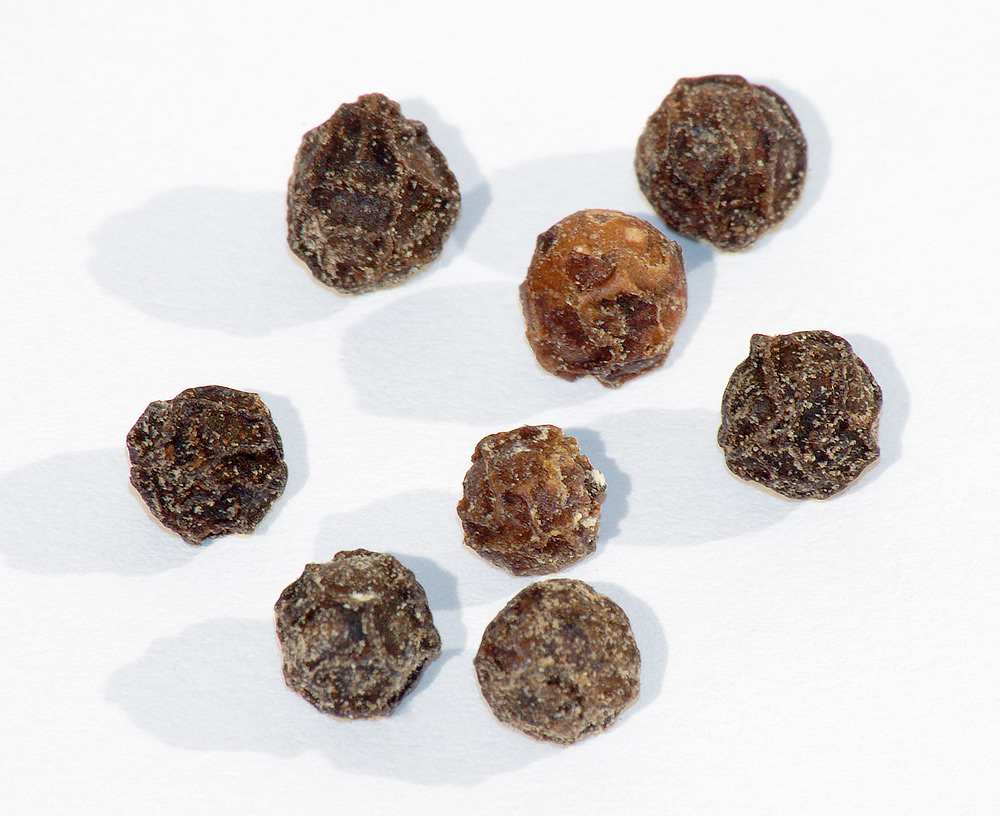
Today I thought I’d take a brief look at a magical ingredient which most everyone has on hand:  Black Pepper.  There are many uses for this dried fruit of the Piper nigrum plant.  Of course it’s valued for its ability to enhance food with a bit of heat, but it also has medicinal properties, and is very common in hoodoo practice as well.

Botanical.com lists the black peppercorn’s medicinal properties as being a febrifuge (fever reducer) and a stimulant and carminative.  For those with enflamed throats or ailments of the uvula, the site recommends using an infusion of black peppercorns as a gargle, and also suggests using the herb for constipation and urinary troubles.

In Appalachian practice, Granny women would sometimes use an infusion of black pepper to help induce labor in an expectant mother, because of its stimulatory nature.  They might also have the mother “snuff” or “quill” black pepper for the same results:

“Snuffing entailed having the mother sniff black pepper…from a plate placed under her nose; quilling involved blowing the same substances directly into the mother’s nostrils or throat with a goose quill, reed, or rolled piece of paper.  Either way, the objective was to cause a violent sneezing attack that would induce labor” (Folk Medicine of Southern Appalachia p.130).

In hoodoo, the black peppercorn is used primarily to harm or protect.  It’s often added to things like Hot-Foot powders or crossing tricks to facilitate an uncomfortable “heat” in the target’s life.  Catherine Yronwode also notes that black pepper can be used to stave off a jinx, particularly one which has been stepped in:

“To shield yourself from anyone doing these things [poisoning you through the feet via powder or other foot-track magic]…sprinkle black pepper powder or a mixture of black pepper and Fear Not to Walk Over Evil Powder in your shoes.  It is said that your track will be invisible or invulnerable to harm, and even if someone does throw for you or lift your foot track, they won’t be able to affect you in any way” (HHRM, p.53).

She also mentions that black pepper can be mixed with salt and thrown after someone when they leave your home to prevent them from ever returning or doing you harm.  Since salt and pepper are rather easy to come by in most homes, doing a spell like this is simple, and because the ingredients are so common most people don’t think twice about seeing them on the ground.  In fact, a light sprinkling of these ingredients would probably go unnoticed even in a busy apartment complex, and would be easily vacuumed up later, which makes a spell like this good for the urban root worker or witch (in my opinion, of course).  I’d combine it with the practice of leaving a broom behind the door just to double up the protection from unwanted visitors, too.

There are several potent curses which can be levied using black pepper, too.  Catherine Yronwode’s Hoodoo Herb & Root Magic book has an excellent entry on these, so I’ll not rehash everything in her entry here.  I will say that the spell she mentions involving a black candle and 99 peppercorns taken to a crossroads sounds particularly nasty, and would be well worth learning, if only to have an idea how to undo it should someone do it to you.

That’s it for today!  I wish you all a wonderful weekend.  Please don’t forget to vote in our polls, too!  They’ll be open through the weekend, and you can find them in Blog Post 61 or at the top right of the sidebar.  Thanks for voting, and as always, thanks for reading!

-Cory

Podcast 10 – Urban Conjure and an Interview with Rootworker Stephanie Palm

-SHOWNOTES FOR EPISODE 10-

Summary
In this episode, we share some thanks with our listeners and readers.  Then, we have an interview with urban rootworker Stephanie Palm.  We finish things up with our WitchCraft and Spelled Out segments

Play:

Download:  New World Witchery – Episode 10

-Sources-

Interview
Music City Mojo – The online store for our guest, Stephanie.   It features products and services as well as contact information.

WitchCraft
Drag Me to Hell – We mention this comedy/horror movie as a source of button-lore.

Magic Spelled Out
Lucky Mojo Freezer Spells – This has a good, concise history of the “Shut Your Mouth” tongue/freezer spells.

Promos & Music
Title music:  “Homebound,” by Jag, from Cypress Grove Blues.  From Magnatune.
Promo 1 – Witchery of One
Promo 2- Standing Stone and Garden Gate Podshow
Promo 3 – Inciting a Riot (a custom-made promo from wunderkind and friend of NWW, Fire Lyte!)

Blog Post 60 – Appalachian Mountain Magic, Part III

Today I’m finishing up the introduction to the magic of Appalachia by looking at “yarb Doctors” and some of the other magical oddities of the mountains.

Yarb Doctors
The final part of the mountain magical triumvirate is the “Yarb Doctor.”  These are often seen as the male counterparts to the Granny women already discussed.  These were folks who knew enough herbal medicine to make cures and remedies for all manner of ailments.  Vance Randolph describes them thusly:

“Besides the regular and irregular physicians, who live mostly in the villages, the backwoods country swarms with ‘yarb doctors’…who have never studied medicine at all. Some of these nature doctors are women, others are preachers who do a little doctorin’ on the side, and many of them are unable to read or write. They rely mainly upon herbs, barks, roots, and the like. For internal medication these substances are steeped in hot water, and “horse doses” of the resulting teas are administered at frequent intervals. In some cases the tea is boiled down to a thick paste called ooze, or mixed with strained honey to make a syrup” (OM&F, p.92)

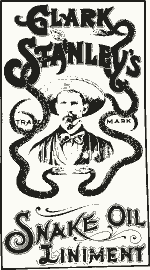
Often, this is what we think of when we talk about “snake oil salesmen.”  The yarb Doctor basically dealt in herbal formulas for treating common ailments.  Some of these formulas became fairly well-known.  When a particular yarb Doctor’s formula reached a particular level of renown (and often even if it didn’t and an unscrupulous “doctor” was simply chasing a dollar) these medicines would become a famous “patent medicine.”   This is not to say that the yarb Doctor (variously known as an “herb doctor,” “rubbing doctor,” or “nature doctor”) was simply a quack making money off of ignorant mountain folk.  In most cases, these were locals with a knack for making formulas and medicines from the indigenous flora of the area, including roots, barks, flowers, and leaves.  Some of the mixtures are still in use today, albeit changed much from their original purpose.  Root beer is a prime example of what happens when you make a patent medicine out of sarsaparilla and sassafras roots and mix it with a little sugar and soda water.  Appalachian yarb Doctors had good reason to make medicines:  they lived in the pharmaceutical breadbasket of the country.  According to Dave Tabler’s Appalachian History blog:

“Big Pharma had not yet perfected the widespread manufacture of synthetic drugs in 1932. Instead, the industry relied on ‘western North Carolina, southwestern Virginia, eastern Kentucky, and eastern Tennessee [to] furnish 75% of the crude botanical drugs which the continent of North America supplies to the drug markets of the world,’ according to an article in Economic Geography that summer”

The remedies proffered by yarb Doctors were not limited only to plants and their components, but often included a few more unusual ingredients.   For example, dealing with a toothache was a common enough problem in the mountains, where access to regular dental care was limited or non-existent:

“There were many treatments for a toothache.  Some of the more common ones were holding tobacco smoke, a sip of red oak bark decoction, or whiskey in the mouth; chewing ragweed leaves; applying cinnamon or clove oil, camphor, or persimmon juice to the tooth and gum; placing a ball of cotton soaked in paregoric, camphor, turpentine, or kerosene on top of the tooth; and holding a bag of warm ashes or salt against the cheek.  If a large cavity was present, it was stuffed with soda, salt, cow manure, spider webs, aspirin, burned alum, dried and pulverized buckeye skin, or crushed puff-balls” (FMSA, p.107)

There are a number of remedies used by these mountain medicine men which are still in common practice.  Clove oil, for example, is still used to numb the pain of a toothache.  Some methods, though, such as packing a cavity with cow dung, seem to have fallen by the wayside (I’ll not say whether I think that a good or bad thing, though I’m less than eager to put cow dung in my own mouth if I’m being entirely honest).

Other Aspects of Mountain Magic
There are, of course, many areas of mountain magic which don’t fall neatly into the three categories I’ve laid out here.  yarb Doctors and Granny women had much in common and there is a great deal of crossover in their particular lines of work.  Likewise, one who could dowse for water could usually also perform some other occult action, such as simple curing.  I have an in-law whose great-grandfather (the seventh son of a seventh son, no less) could dowse and “buy” warts off of people in order to effect a cure, for example.

Other aspects of mountain magic have already been touched on in this blog.  Some of the areas we’ve covered here which have a huge place in the folk magical practices of Appalachian peoples include:

One of the biggest areas I’ve not yet covered in detail is the Appalachian preoccupation with death, dying, corpses, and graveyards.  Edain McCoy’s In a Graveyard at Midnight includes a great deal of this lore in her chapter on “Death, Dying, and ‘Haints,’” which focuses mostly on the rituals surrounding death and burial as well as protection from the dead.  At some point, I’ll be doing a bit more on this topic, but for now I think the most important thing to note is that death and birth were—and are—the two most important events in a human life, and the mountain folk treated them with respect, awe, and not a little fear.

A final area of interest for mountain dwellers where the occult was concerned had to do with divining the future.  Rather than foreseeing events having to do with money or fame or anything like that, almost all Appalachian divinations performed in the home had to do with love.  This is, again, a topic I’ll be delving into with more depth at another time.  But often the “games” played by young girls in the mountains revolved almost entirely around divining the name, appearance, or attributes of a future husband.  And there are also plenty of tales which deal with the terrible consequences of treating these sorts of divinations lightly (such as the story of the “dumb supper” which eventually leads to a young girl’s brutal murder).  Suffice to say, Appalachian folk know that life has its dark side, and they aren’t afraid to talk about it.

That’s it for mountain magic this week.  I hope this has been a useful introduction.  This, like many of the other topics here, only scratches the surface, and I hope to return and look at Granny women, yarb Doctors, dowsers, power doctors, signs and omens, death lore, and just about everything in more depth at a later date.  But for now, I’ll wish you a happy weekend.
Thanks for reading!

-Cory

Blog Post 59 – Appalachian Mountain Magic, Part II

Today, I’m continuing the look at Appalachian mountain magic by focusing on a few of the specific “jobs” performed by mountain magicians.

Grannys, Dowsers, and Yarb Doctors

In general, the current incarnation of Appalachian magic is broken into a few categories.  Mountain witches may do only one “magical” thing all their lives, or they may perform a broad array of tasks for their communities, some magical and some not.  Often, the word “witch” never enters the picture or has a negative connotation (with one very key exception, explained below).  But the basic functions of a mountain magician can be broken down into a set of roles, as follows.

Granny Women
This is probably the best known and most ambiguously defined magical “job” in the mountains.  Granny women filled several roles in the community:

  • They acted as healers in communities where trained doctors were scarce, nonexistent, or deeply distrusted.
  • They assisted doctors when professional medicine was required, and often during childbirth.
  • They acted as midwives and postpartum caretakers for new babies and mothers.
  • They might be called upon to perform blessings for livestock or land before planting, owing to their roles as birth-helpers (thus helping the earth and one’s livestock birth the food one would eat for the coming year).
  • In some cases, they might also perform basic divinations, like determining the sex of a baby by dangling a wedding ring over the woman’s palm or belly.

Often the work done by these women was broader in scope than mere medicine.  It took into account a patient’s whole state, including spiritual or psychological.  Sometimes the work done by Grannies baffled the doctors performing the births, though they obviously were a great comfort to the mothers:

“Granny-women might perform a number of rituals which doctors found silly and irrational. Some were designed to give the mother psychological, if not physical, relief from her pain. She might give the woman her husband’s hat to hold during the ordeal, thus bringing him symbolically into the delivery room. If the labor were particularly severe, she would place an axe or knife under the bed to “cut” the pain in two. Sometimes, weather permitting, she would throw open every door and window in the house, in a symbolic representation of opening the birth canal” (from “In Defense of Granny Women,” by Janet Allured)

The term “Granny women” isn’t exactly accurate, either.  Many women were not particularly old when they learned about midwifery from their own female relatives, and even some men were known to assist during childbirth.  While much of the training to become a Granny was on-the-job, there were surprisingly sophisticated teaching materials as well:

“To train them [potential midwives], we had a very large wooden box.  At the bottom and on the top, there was a simulated abdomen and perineum—just like the mother—so we could actually teach them the mechanism of labor, and so we could teach them what was going on inside” (Foxfire 2, p.277)

Payment for a Granny woman’s services varied, often depending on the economic state of those she helped (which was usually fairly poor).  A passage from Folk Medicine in Southern Appalachia, by Anthony Cavender, illustrates the point:

“A typical fee charged by a physician in Kentucky for delivering a baby in the latter part of the nineteenth century was about $10, a substantial sum for an average farming family.  Physicians were often paid in commodities, such as corn, timber, pigs, cows, and corn mash whiskey, or labor in kind.  Some granny women charged a modest fee of a dollar or two or its equivalent in materials, but many did not” (FMSA, p.129)

These women served a vital role in their communities, and while some of them were labeled as “witches,” they seldom endured physical persecution as they were far too valuable.

Dowsers
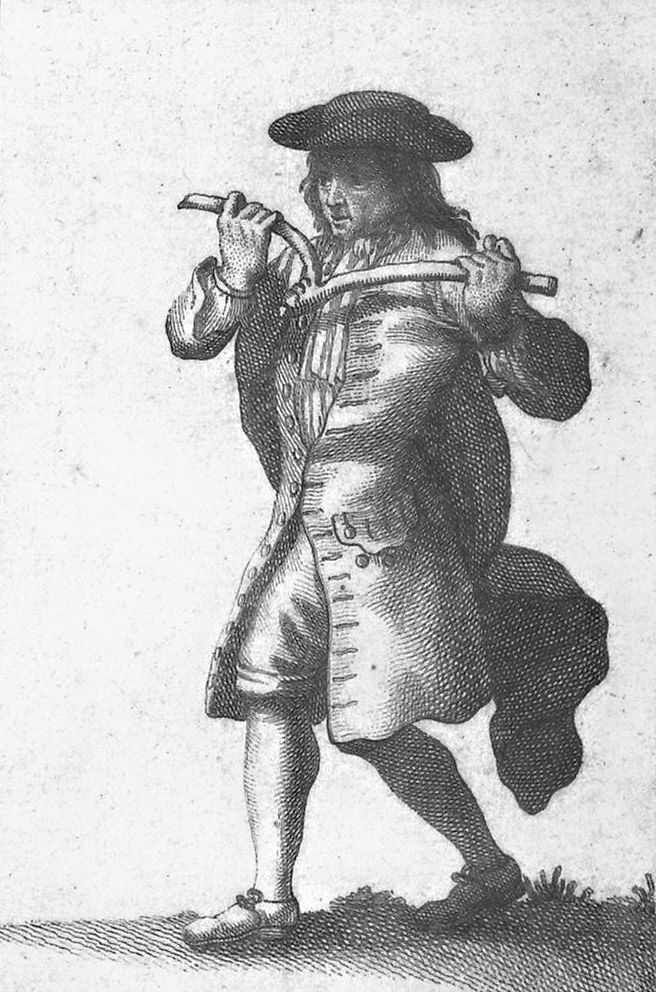
The exception to the rule of bad “witches” were the dowsers, often called “water witches.”  These were people—most often men, though women were certainly known to perform water witching as well—who could locate underground streams through the use of various magical techniques.  The most common method was to use a forked branch cut from a witch hazel tree (some sources list other trees, like willow) and to walk slowly along a piece of property until the rod reacted by bobbing up and down or giving some other sign.  Despite being called “water witches,” there were seldom any negative connotations to the profession, as it was an absolutely necessary service in a time when digging wells was costly and difficult business.  Vance Randolph describes them thusly:

“Nearly all of the old settlers…believe that certain persons can locate underground streams by ‘cunjurin’ round’ with forked sticks. These characters are called water witches or witch wigglers, and the forked switches they carry are known as witch sticks. Despite this sinister terminology, the waterfinder has no dealings with the Devil, is not regarded as dangerous by his neighbors, and has  nothing to do with witchcraft proper…Nearly all of the really old wells…were located by witch wigglers. Even today there are many substantial farmers who would never think of drilling a well without getting one of these fellows to witch the land” (OM&F, p.82)

In addition to locating underground water currents, dowsers could also locate other materials, like oil or precious metals.  Some practiced what is called “map dowsing,” where a map would be laid out in front of the dowser and he or she would use a pendulum to figure out where to start the search for whatever material was being sought.  This practice is very well accepted in the mountains and throughout the rural parts of North America.  In Signs, Cures, & Witchery, Gerald C. Milnes  examines the widespread nature of dowsing, as well as some of its history:

“Water witching (rhabdomancy) is very common in West Virginia.  According to a study done about fifty years ago, at that time there were twenty-five thousand practicing water witches in this country.  The actual practice of divining with a forked stick, as we know it, began in the late fifteenth or early sixteenth century in Germany.  Martin Luther believed the practice violated the first commandment.  Through the ages it has been roundly denounced as the devil’s work and praised as a remarkable aid to a basic necessity of rural life—finding water.  It is often categorized with such rural customs as planting by the signs” (SC&W, p.133)

There have been many efforts to scientifically prove or disprove dowsing, all with varying degrees of success and failure.  It seems that there is something to it, but that it may have a great deal more to do with the person doing the dowsing than the actual practice itself, at least as far as science is concerned.  However, from my personal point of view, the practice of water witching is akin to pendulum divination of any kind and something worth adding to a witch’s repertoire.  In one of Peter Paddon’s Crooked Path episodes, for example, he talks about ley lines and the currents of magical energy flowing through the world.  Dowsing is a great way to help detect those currents and to tap into and work with them to improve one’s witchcraft (again, in my opinion).

Whew!  This is already getting to be a long post, so I’m going to stop here for today and save the last little bit of this topic for tomorrow.  Please feel free to add any comments or questions, and if you have any family stories about Grannies or dowsers, I’d love to hear them!

As always, thanks for reading!

-Cory

Blog Post 58 – Appalachian Mountain Magic, Part I

Today, I thought I’d start to tackle in brief a subject which deserves its own book.  Or several books.  Perhaps even a library.  I’d like to do an overview of the loose collection of occult, healing, and divinatory practices practiced by the mountain folk found in the Appalachian range.  This is not going to be a comprehensive post, just a general snapshot of the different components of mountain magic, so if I don’t cover something in detail I will likely be coming back to it again eventually.  First, though, let’s start with a little bit about where this system comes from.

History
When European settlers moved into these mountains, they found that the lore and landscape they suddenly occupied was not entirely different than what they’d left behind in Europe.  Many of the Native American tribes like the Cherokee and Shawnee already associated these ancient mountains with magic and otherworldly power.  There were even beings which very much resembled fairies living in those ridges and valleys, as illustrated in the Cherokee tale of the “Forever Boy”:

“As he looked behind him, there they were, all the Little People. And they were smiling at him and laughing and running to hug him. And they said, ‘Forever Boy you do not have to grow up. You can stay with us forever. You can come and be one of us and you will never have to grow up… Forever Boy thought about it for a long time. But that is what he decided he needed to do, and he went with the Little People” (Native American Lore Index – Legends of the Cherokee).

The presence of fairies in the mountains would have been familiar to groups like the Germans and the Scots-Irish, the latter of whom had their own tradition of “fairy doctoring” which would eventually shape a portion of Appalachian magical practice.

Germans also brought in astrology, particularly astrology associated with things like planting, healing, and weather.  Despite a strongly Christian background (and strongly Protestant and Calvinist at that), most settlers accepted a certain amount of magical living in the mountains.  As George Milnes says in his Signs, Cures, & Witchery:

“Among the early German settlers in West Virginia, religion was thoroughly mixed with not only astrology but also esoteric curing practices tied to cosmic activity.  Folk curing bridged a gap between the religious and the secular mind-set.  And forms of white magic were not disdained; in fact, they were practiced by the early German clergy” (SC&W, p. 31).

The Scots and Scots-Irish who settled in the mountains were often displaced due to land struggles back home.  After long struggles with England for an independence which clearly would never be theirs, clan leaders traveled across the Atlantic and began building new territories.  The mountains running between Georgia and West Virginia were a perfect fit for them, according to Edain McCoy:

“The Scots found the southern Appalachians very remote, like their Highland home, a place where they could resume their former lifestyle and live by their ancient values without interference from the sassenach, or outsiders.  So isolated were they that many of the late medieval speech patterns and terms remained intact in the region until well into [the 20th] century” (In a Graveyard at Midnight, p. 6).

Once these various elements were situated in the mountains together, they began to merge and blend, mixing Native and European sources to create something else.  The introduction of hoodoo elements eventually changed the mixture again, though much later, and there are still old-timers in the hills practicing many of these techniques even now, though it is unlikely the entire system will remain intact for more than a generation or two as many mountain folk are being forced by poverty or circumstance to give up their highland homes.  Still, for the moment, there are lots of people trying to get Appalachian folkways recorded and preserved before they perish from the earth (this blog being one very infinitesimal drop in the bucket as far as that goes).   So for that, at least, we can be thankful.

Okay, I’ll stop here for today.  Tomorrow, I’ll be picking up with a little bit on each of the current components of Appalachian magical practice.  Until then…

Thanks for reading!

-Cory

Blog Post 55 – Games

May Day is just around the corner, and since I’ve been talking about songs and riddles this week, I thought it might be fun to talk a little about games.  Sport and fun may not seem like a particularly witchcraft-tinged topic, but au contraire! I say.  There are lots of magical subtexts to games, from the sacrificial-animal nature of a colorful piñata to the gambling mojo or lucky rabbit’s foot stuffed in a card-player’s pocket.

Getting Lucky
Winning games by magic is a primary focus of many types of hoodoo workings.  Some of the various techniques for improving one’s luck include:

  • The creation of gambling mojo hands, often “fed” with a woman’s urine (because of her connection to Lady Luck)
  • The appropriately named “Lucky Hand” root, which resembles a human hand and which is reputed to bring good luck to one in games of chance
  • A buckeye with a hole bored in it, filled with liquid mercury (quicksilver), and sealed with wax was considered incredibly lucky.  WARNING:  Don’t do this.  Mercury is VERY dangerous and VERY poisonous, even in tiny amounts.  Modern root workers often use sliver Mercury-head dimes instead.
  • The popular alligator-foot or rabbit-foot keychains found in roadside stops throughout the country are considered potent gambling charms.
  • One of my favorites is the “coon dong” charm, which is a raccoon penis bone wrapped in a currency note (the higher the better, of course) to ensure continued luck.

Of course, there are lots of other hoodoo charms related to luck and good fortune.  Simply carrying a High John root in your pocket is a good way to ensure luck at all you do, including games.  Another big game-related piece of hoodoo magic comes in the form of “dream books,” which purport to help the dreamer turn symbols and images from the night’s slumber into winning lottery numbers.  Catherine Yronwode has an excellent page on this topic, so I’ll just suggest you visit her site for more on those.

Magical Games
There are many games that have interesting magical undertones (or overtones…maybe highlights or roots?).  I thought it might be fun to include a few games that you could include in your own May Day celebrations today.  I’m skipping out on the traditional Maypole as that is well documented in many places.  I hope you enjoy them!

From Central Illinois (in Richard Dorson’s Buying the Wind, paraphrased)

LONDON BRIDGE IS FALLING DOWN

Two players are named “Takers,” and each chooses an object or idea that represents him/her (such as one player being “bees” and the other “flowers,” or one the “sun” and the other “the moon.”  The Takers do not tell the other players which Taker is which object however.  The other players form a circle, and the Takers join hands, one outside the circle and one inside.  They raise their arms, and the circle begins to turn as everyone sings:

London Bridge is falling down, falling down, falling down;
London Bridge is falling down, and caught my true love in it.

The Takers can drop their arms at any point during the singing, and the circle stops.   Whoever the Takers have “trapped” must choose one of the objects and whisper it to the Takers.  The Taker whose object is named grabs the trapped player and moves them behind him/her, and then the Takers raise their joined hands again.  The singing and circling continues in this way until all the players have been caught and moved behind their chosen Taker.

The Takers keep their hands joined and each player wraps his/her hands around the player before them, forming two human chains linked by the Takers.  The game ends with a tug-of-war between the two sides.

This game could be a wonderful way to have some fun while enacting a sort of ritualized drama, such as the struggle between light and dark.  It is best with a large group of people of course, and the “prize” for winning could have to do with the losing side serving the winning side at a feast, or something to that effect.  Or winning could just be its own very fun reward.

From Appalachia (in Foxfire 6)

DEVIL IN THE PROMISED LAND

“We played a game called ‘The Devil in the Promised Land.’  A big branch went down through our pasture.  Some places it was wide and some places were narrow enough to jump across pretty good.  There’d be about eight or ten of us on one side.  We’d put one on the other side and he was the devil.  Now we had to cross the branch and go around him and jump the branch back.  Now if he caught us before we made the run around him, we had to go on to the devil’s side” (p. 282)

I love this one, and you could definitely play it without having a huge tree or creek (I’m not 100% sure what that informant meant by “branch”).  Just making a big circle with rope or setting boundaries for the “Devil’s land” with stones would be pretty easy.  You could also think of this as “a witch and her spirits,” with the Witch being the primary tagger, and her Spirits being the players she catches, who help her catch other players (I would say they can’t “tag” a player, but might help to corral the other players towards the Witch…but that’s just my take on it).

From the Southwest and Mexico

THE PINATA

The piñata has an interesting history dating back to at least Mayan times, and possibly even back to China.  There’s an excellent short history of the game here, including many traditional rhymes and songs associated with the game, such as:

“Dale, dale, dale, no perdas el tino,
porque si lo perdes, pierdes el camino.
Esta piñata es de muchas mañas, sólo contiene naranjas y cañas.”

Hit, hit, hit.
Don’t lose your aim,
Because if you lose, you lose the road.
This piñata is much manna, only contains oranges and sugar cane.”

Making paper mache representations of animals, spirits, demons, gods, stars, or almost anything magical would add to the occult significance of a game like this.  After the candy’s been collected, some of it could be turned into an offering as well, if that’s part of your tradition.  The bright colors of most piñatas make them perfect for May Day gatherings, in my opinion.

There are lots of other games you could play as well, like Nature Bingo or Horseshoes, that would fit a spring or summer gathering.  This post is already plenty long, though, so I’m going to end it here.  Feel free to share your own witchy games, if you have them!

Thanks for reading!

-Cory

Blog Post 54 – The Devil’s Nine Questions

Today’s post is going to focus on one very specific set of riddles:  The Devil’s Nine Questions.  This is a series of riddles which has been set down in the form of a folk song, and which has come over from English traditional music by way of the Appalachians and mid-Atlantic colonies.  The theme of the piece involves the Devil asking a series of nine riddles, which the song’s protagonist (“the weaver’s bonny”) must solve or be taken off to Hell.  There are numerous variants on this motif, and on this specific song.  It is recorded as one of the famous Child Ballads (#1), and you can hear a version of it here.

The version I’m posting here is not necessarily the most “authentic” or “original” version (as this song may have grown out of Elizabethan folk music and is rather hard to pin down as far as origins go).  But it is a version that I think bears examination by the inquisitive witch.

THE DEVIL’S NINE QUESTIONS

If you don’t answer my questions nine
Sing ninety-nine and ninety,
I’ll take you off to hell alive,
And you are the weaver’s bonny.

What is whiter than milk?
Sing ninety-nine and ninety;
What is softer than silk?
Say you’re the weaver’s bonny.”

Snow is whiter than milk,
Sing ninety-nine and ninety;
Down is softer than silk,
And I’m the weaver’s bonny.”

What is louder than a horn?
Sing ninety-nine and ninety;
What is sharper than a thorn?
Sing I am the weaver’s bonny.

Thunder’s louder than a horn,
Sing ninety-nine and ninety ;
Death is sharper than a thorn,
Sing I’m the weaver’s bonny.

What is higher than a tree?
Sing ninety-nine and ninety;
What is deeper than the sea?
Sing I’m the weaver’s bonny.

Heaven’s higher than a tree,
Sing ninety-nine and ninety;
And hell is deeper than the sea,
Sing I’m the weaver’s bonny.

What is innocenter than a lamb?
Sing ninety-nine and ninety;
What is worse than womankind?
Say I’m the weaver’s bonny.

A babe is innocenter than a lamb,
Sing ninety-nine and ninety ;
The devil’s worse than womankind,
Sing I’m the weaver’s bonny.”

You have answered me questions nine,
Sing ninety-nine and ninety;
You are God’s, you’re not my own,
And you’re the weaver’s bonny.”

From Bronson, Singing Traditions of Child’s Popular Ballads
Collected Mrs. Rill Martin, Virginia, 1922

Looking at this from an occult perspective, I see several things which stand out.  For instance:

  • The repetition about being “the weaver’s bonny,” which in my opinion may relate to being one of those who can change (or at least manipulate) Fate, the great weaver.
  • The efforts of the Devil to claim the “bonny” for his own reminds me a bit of the practice of initiation, which I covered recently (though in this case the person responding remains unmoved by the Devil’s efforts)
  • There’s an interesting bit of business in the part about trees, seas, Heaven, and Hell.  It’s almost a “Land, Sea, and Sky” image, but it also seems to be referencing the celestial, earthly, and underworldly realms.  Those are the realms a witch must go between, so I like to think there’s something to that part.

Of course, there are lots of other images in here which come out of Christian folklore, such as innocent lambs, the wickedness of womankind, etc.  In some of the variants, these change a bit (though usually the reference to Eve’s “original sin” remains in some form).  Some of the other variations include naming Love as softer than silk, rather than Down, and making Death “colder than the clay” instead of “sharper than the thorn.”   What I love about all of this imagery is that it relates one thing to another, connecting the senses to specific images in a very evocative way.  Associating Death with Thorns makes me think of going into the Underworld via the Hedge; Milk and Snow make me think of Mother images, like Mother Holle, who shook her downy blankets to stir up snow on earth; and thinking of Thunder as a Horn, summoning me out into a wild storm…well, let’s just say it makes my pointy hat dance on my head.

With songs like this, it’s often hard to know just what changed and when, and what the original meaning of certain parts are.  What I like about it, though, is the folkloric elements of being able to outwit the Devil and get one’s way, bending Fate to one’s will.  I would think this kind of a tune might be an excellent song for singing when gathering together with other witches, as a sort of  call-and-response as each witch is welcomed among the company (solving a riddle could serve as a “password” in effect).  Or, it could just be a good fun song to sing one night while passing a bottle around and telling jokes, stories, and riddles.  But what do you think?  Do you see anything witchy I missed?  Or do you think that dwelling on a song like this is wasting valuable time that could be devoted to a new root work herb of the week?  Is it all just a big stretch for something purely designed for entertainment?  Leave a comment and let me know!

Thanks for reading!

-Cory

Blog Post 50 – A Witch’s Initiation

For my 50th blog post, I thought I’d do something special, something that really tickles my fancy.  I’ll be talking about the various types of witch initiations found in New World folklore.   I’ve already touched on this in Blog Post 45 – Witches, but today let’s expand a little bit on the concept.

In general, witch initiations in North American folklore share a few commonalities:

  • The renunciation of Christianity, often through a ritual like repeating the Lord’s Prayer backwards
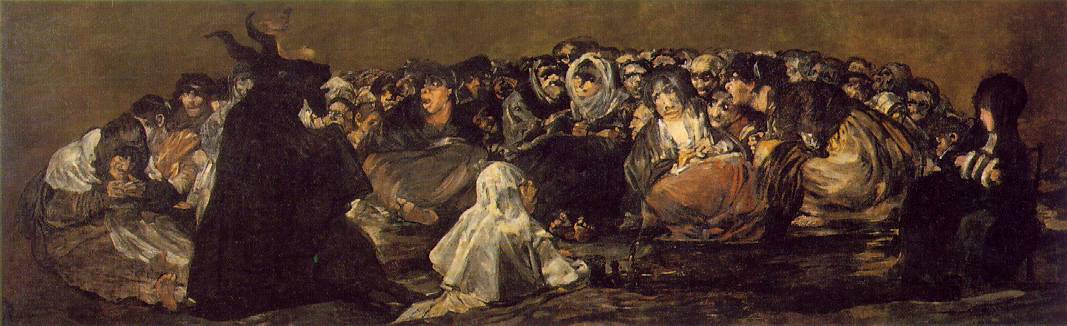
  • The giving of oneself to an otherworldly entity, such as the Devil or a “Man in Black” in exchange for magical powers
  • An act of exposure, such as being naked or sexual union of some kind, though in some cases this is not necessary
  • A sign or omen of the candidate’s acceptance as a witch
  • The transmission of magical knowledge in a ceremonial way, and/or the presentation of a familiar or fetch animal

Not all of these components are found in every case, of course, and the nature of the witch may be such that he or she is not an “initiated” practitioner, but merely someone who has picked up magic throughout his or her life.  This last circumstance is often found in places where magic is prevalently mixed with Christian practice, such as in the Appalachians (Granny magic) or among the Pennsylvania-Dutch (Pow-wow).  Of course, in these cases, the magical worker is seldom called a “witch,” though sometimes the term “witch doctor” is used.  It’s funny, to me anyway, to think about how a witch is “made” through initiation, much like someone can be “made” in the Mafia.  But I digress…

Now let’s take a look at how witches were/are initiated according to specific folklore examples.  From German Appalachian lore, there are stories of witches being initiated by obtaining a “Black Bible.”  Scholar Gerald C. Milnes links this tome to the Key of Solomon, a grimoire with many reputed magical properties and a host of instructions  on how to accomplish various magical tasks.  One of his informants outlines the basic ritual thusly:

“Now say you’re going to be a witch.  Okay, now I don’t know where you get ‘em, but they call e’m the little Black Bible.  Take that little Bible and you go to a spring where it’s a-running from the sun…not towards the sun, away from the sun…Take that little Black Bible and go to that stream, strip off, and wash in there—take a bath in that water—and tell God you’re as free from him as the water on your body” (Signs, Cures, & Witchery, p. 162).

Milnes also describes a similar Appalachian rite of this nature involves taking dirt and shaking it off of a plate or dish while stating aloud that you are as clear of Jesus Christ as the dish is of dirt.  Something more is added to this folklore:

“If, through a pact, the devil is granted your soul in exchange for some talent, gift, or magical power, it is thought that he then receives some gift of the body in return.  This could be a fingernail or even a withered finger” (SC&W, p.164).

Such a “sacrifice” is not uncommon in witch-lore, with the physical offering being anything from a bit of blood to sign a pact to a body part like a finger or toe to—at the extreme end—the death of a loved one.  This is a story commonly applied to many chthonic cult deities or spirits.  Santa Muerte in the Latin-American magical traditions has also been accused of this sort of thing.

I outlined one type of witch-initiation culled from Hubert Davis’s The Silver Bullet in Blog Post 45, an initiation which involved a type of blood offering in exchange for the presentation of a magical imp.  That version of initiation is only one of many methods presented by Davis.  Here’s another one, from Wise County, Virginia:

“She [Granny, the narrator of the tale] began: ‘I’ve been told thet annuder way to git to be a witch is to fust go to the top of a high mountain, throw rocks at the moon and cuss God Almighty.  Then, go find a spring where the water runs due east.  Take a brand new knife and wash hit in the spring just as the sun rises.  Say, “I want my soul to be as free from the savin’ blud of Jesus Christ as this knife is of sin.”  Do this fer twelve days in a row.  Effen on the thirteenth day the sun rises a drippin’ blud, hit’s a shore sign thet you’re becomin’ a witch’” (TSB, p. 11).

This variant is interesting, to me, because of a few elements.  First, in this initiation, the spring must flow east (or towards the rising sun, though against the natural path of the sun), which seems to be different than in the Milnes version.  In this initiation, too, the witch isn’t naked, but a new knife is washed in the stream while a renunciation is made.  Finally, the bloody sunrise is a sign to the witch indicating acceptance or denial of the initiation—this feature is common in several variations of the rite.  Davis also mentions another witch-making method which bears some of the trademarks of the process:

“He [the potential witch] then waited until Friday the thirteenth and returned to the spring as the morning turned gray over the ridge.  He dipped some water from the spring with his ram’s horn and poured it over the pewter plate.  He did this seven times and repeated the verses Liz [a witch] had taught him:

‘As I dip the water with a ram’s horn,
Cast me cruel with a heart of thorn,
As I now to the Devil do my soul lease…
May my black and evil soul be
Of Christian love and grace free
As this plate is of grease’ (TSB, p. 24).

This, to me, bears a strong similarity to the dirt-and-plate version of the ritual outlined in Signs, Cures, & Witchery.

I mentioned a ritual involving the reversed Lord’s Prayer from Vance Randolph’s Ozark Magic & Folklore in my post the other day.  Randolph discusses several other ways of becoming a witch in that work, some simple, and some more complicated:

  • A woman could fire a silver bullet at the moon and “mutter two or three obscene old sayin’s” (p. 265)
  • Repeating the Lord’s Prayer backwards and firing seven silver bullets at the moon will do the trick
  • Magical information can only passed across gender lines (man-to-woman or vice versa), or between partners united by sexual intercourse
  • Widows were the best candidates for becoming witches, as they only had to learn “the Devil’s language,” whatever that might be.

Randolph goes on to say that the transformation of a person into a witch was a moving one, and often one with a morbid downside:

“I am told, by women who claim to have experienced both, that the witch’s initiation is a much more moving spiritual crisis than that which the Christians call conversion. The primary reaction is profoundly depressing, however, because it inevitably results in the death of some person near and dear to the Witch” (OM&F, p. 268).

In this case, the lost loved one is called a “Witch’s sixpence,” and is the “price” paid for the witch’s powers.  This is not a universal belief, however, as many witches do not lose anyone close to them, and instead gain a new friend:  the familiar, fetch, or imp.  I’ll be doing something more extensive on this aspect of witchcraft in the future, so for now, I will just say that the familiar of the witch is a big subject with as much (often conflicting) information floating around about it as, well, the subject of initiation.

Finally, here are some examples of witch-induction from Kentucky.  I’ve gleaned these from the book Kentucky Superstitions, by Daniel and Lucy Thomas.

  • To become a witch, go to a mountain top at dawn, shoot through a handkerchief at the rising sun, curse Jehovah three times, and own the Devil as master. When you shoot through the handkerchief, blood will fall from it (Mountains, #3773)
  • To become a witch: the candidate goes with the Devil to the top of the highest hill at sunrise nine successive days and curses God; the Devil then places one hand on the candidate’s head and one on his feet, and receives the promise that all between his hands shall be devoted to his service.  (Mountains, #3774)
  • To become a witch, you shoot at the moon nine times with a silver bullet, cursing God each time (Mountains, #3775)
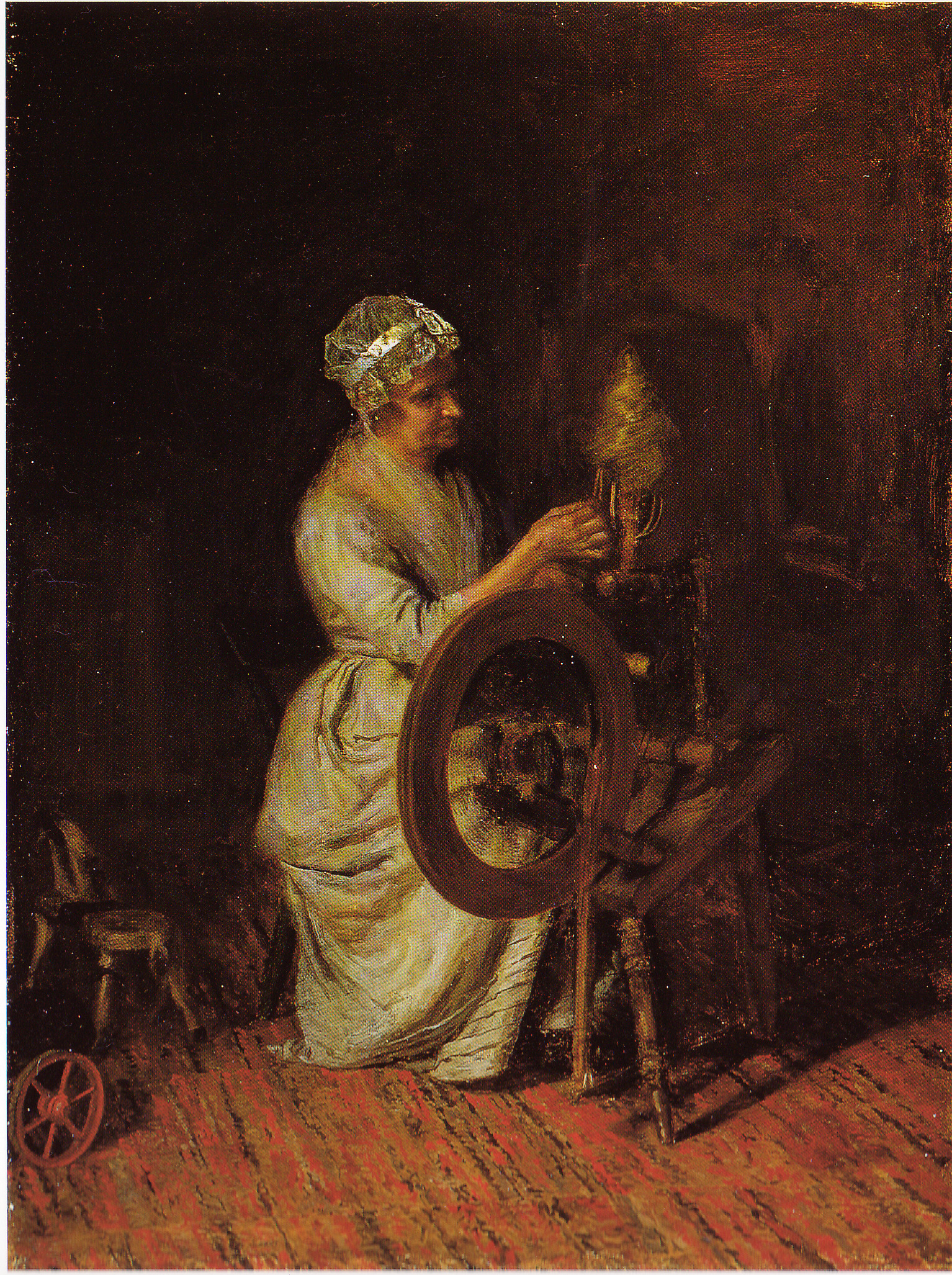
  • You can become a witch by taking a spinning-wheel to the top of a hill, giving yourself up to the Devil, and waiting until the wheel begins to turn. The witches will then come to instruct you (Mountains, #3776)

These are similar to other folkloric initiation ceremonies already discussed, with the exception of the last one.  The inclusion of the spinning wheel here is interesting to me, because it seems to be connected to an idea I find very witchy: the threads of Fate.  It also reminds me of the Irish folktale “The Horned Women,” which is a story I glean much in the way of witchery from.  In this case, the wheel’s turning is much like the rising of a bloody sun—it provides an omen that the witch has been accepted into the fold of witches before her.

So what do I make of all of this?  Well, my own opinion (and I stress that it is only my take on the phenomenon of witch initiations, and no one else’s) is that each of these stories contains little pieces of initiatory lore, but always with a layer of sensationalism on top.  These folk tales were intended to amuse and spark curiosity, after all, so it doesn’t surprise me that a small offering of blood, say on an new witch’s cingulum or a few drops in a cup of wine poured out to the god, gods, or spirits to which the witch is binding herself, has become exaggerated into the death of a family member or the withering of a limb.  I think that initiations have a profound impact on those that undergo them, and that many of the common elements (the renunciation, the vow to serve a witch-god/goddess/devil/etc., and the granting of magical gifts like certain charms or familiars) are profound acts that may well belong in an initiation ceremony. Many of these features are also found in other initiation ceremonies and Traditional Witchcraft works, such as Paul Huson’s Mastering Witchcraft or Nigel Jackson’s Call of the Horned Piper. I also think that some elements are overlooked in these sorts of folkloric imaginings of “witch-making”.  For instance, one thing Sarah at Forest Grove mentioned in her post on initiations is that once one becomes a witch (or takes initiation), one finds “Growth and strength of abilities and experiences the more one practices and keeps their promises.”  Most stories about witches seem to either end at the oaths taken upon becoming a witch, or to start in medias res of a witch’s career, showing a witch operating in one way, unchanging, until she is (inevitably) defeated.  That makes for good storytelling, but perhaps not for so much good practical witchery.  Witchcraft is wonderful in that the more you do it, the better it gets!

In the end, I like this topic, but I should say one more thing.  I don’t think that a person-to-person initiation is necessary to practice witchcraft.  If you’ve not taken an initiation, or don’t ever plan to, but find you are good at witchcraft anyway, keep doing it.  You certainly don’t need anyone to validate your magic if it’s working, and if whatever forces you draw your magic from one day choose to initiate you, I have a feeling that much like Don Corleone, they’ll make you an offer you can’t refuse.

My apologies if this post has been overlong, but I hope it’s useful to somebody out there.   If nothing else, you’ve worked out your scrolling finger for today.

All the best, be well, and thanks for reading!

-Cory