Blog Post 123 – Corn

[A note here:  This is NOT a medical blog, and the information here should not be treated as medical information. I present only folkloric examples of practices historically done by certain people at certain times. If you choose to put into practice anything you find here, you take responsibility for your own actions.  Leave me out of it.  Thank you!]

Today’s topic may not exactly pop out at you as a magical one (I beg forgiveness in advance for the bevy of bad puns this article may include), but corn is actually spiritually and magically significant in several parts of the North American continent.

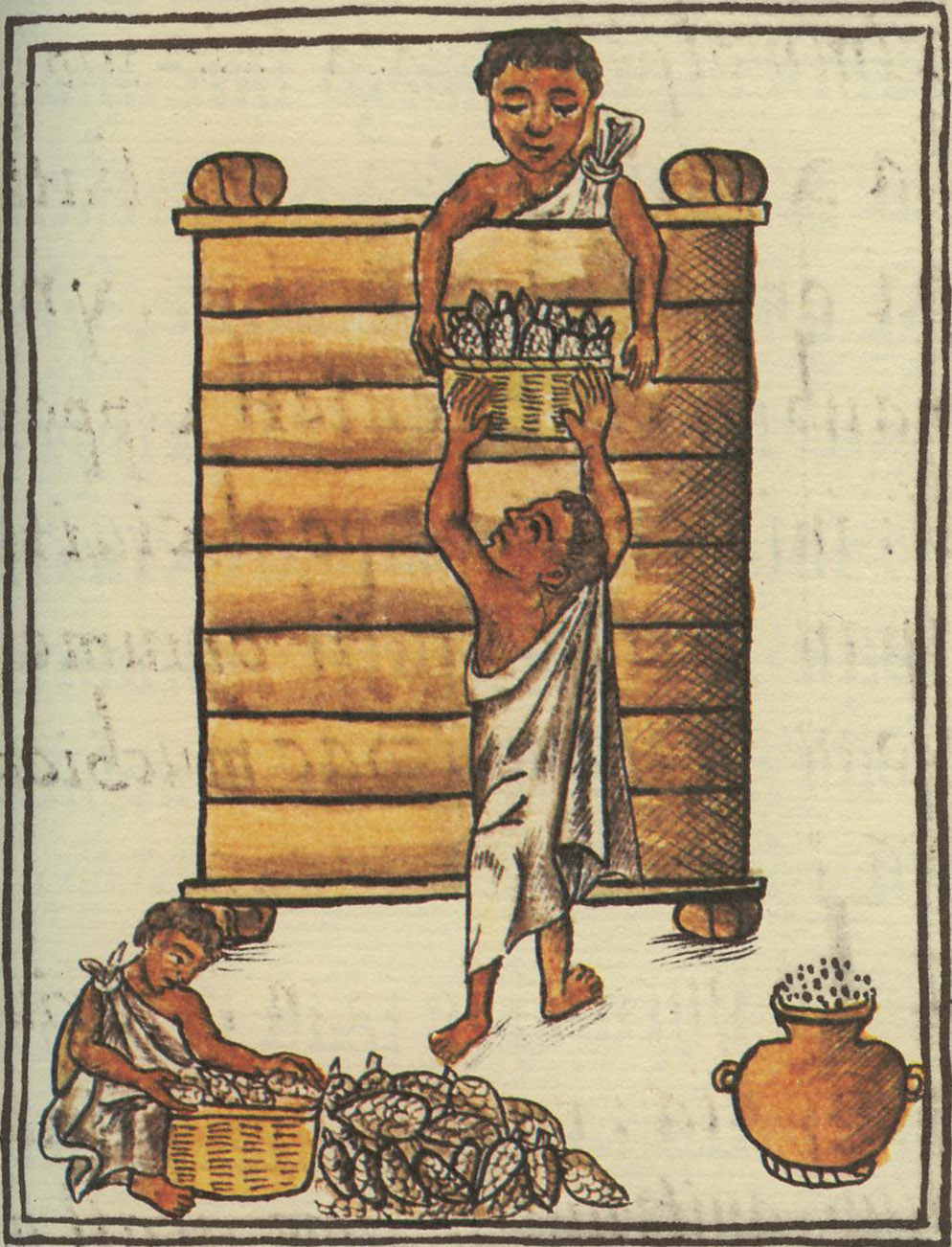
Corn, or as most of the rest of the world knows it, maize (of the species Zea mays) is a crop which was domesticated by early Mesoamerican cultures and which has been a native staple food for thousands of years now (though its widespread use throughout all of North America may only be about one millennium old).  It has proven both extremely useful and occasionally problematic.  It is fairly easy to grow, and can be processed into any number of products, from food and food additives to industrial lubricants and even plastics.  I’m not going to get into the heavily heated debate about corn as a commodity crop and its place in modern economics and agriculture, as this is not a blog about either of those topics.  I will say, however, that while corn may have its downsides, it also has much to offer culturally and culinary, especially the homegrown sweet varieties (can’t imagine a summer barbecue without it!).

Native Americans depended greatly on corn for survival, and it figured in several native mythologies.  One of the best known stories is that of Kana’ti and Selu, the Hunter and the Corn Mother, from Cherokee mythology.  In this story, mother Selu tells her children that they must drag her body over the land when she dies and that corn will sprout wherever her corpse has been.  In this respect, her tale is not so very different than the John Barleycorn legend.  Folklorist James Mooney demonstrated that this story has parallels in Huron mythology as well (he also mentions that the Iroquois grow a specific type of magical tobacco, which is the subject of an upcoming post).

Picture of a Mid-Atlantic Cornfield with a Remnant Corn Offering, via listener Chet

Listener Chet wrote in with a bit of folklore regarding the Corn Mother from the Central Atlantic coast:

“I read an article, while researching the corn maiden aspect, that covered the offering and adoration of a field spirit not only in NA culture, but all over the world…what quite a few would do is, leave a section of the field uncut, as an offering to the Maiden. I had seen these areas, the past few years where I live, and really had no idea what the uncut areas were about until I read this article. So here we are at harvest time again, and I am seeing these areas once again. So I took a pic of one (see attached corn pic). I have a feeling these farmers are not actually making an offering to the Miaden per se, but the tradition seems to have carried over, so maybe it’s bad luck, to not leave part of the field uncut.”

Chet also included a bit of information on his own practices, including his practice of reburying part of any harvest as an offering to the Corn Mother.  Big thanks to him for the local lore and for the photo!

Moving into the Appalachians, corn becomes magical and medicinal, depending upon its application.  A variety of sources indicate that tea made from corn silk (the long, slightly sticky strands which jut out from the top of the ear and which serve as pollination conduits during the corn’s growth cycle) is excellent for clearing up kidney and urinary tract ailments.  This sentiment popped up in Foxfire 9, Anthony Cavendar’s Folk Medicine in Southern Appalachia, and even Karl Herr’s Hex & Spellwork (which indicates to me that it found a home with the PA-Dutch and the mountain folk alike).  Patrick Gainer shares an interesting West Virginian folk magical technique for healing warts.  According to his Witches, Ghosts, & Signs, warts are cured by making them bleed, rubbing the blood on corn kernels, and feeding the kernels to chickens.  This could be very similar to jinx-removing practices in hoodoo which also use chickens.

Folk Medicine in Southern Appalachia rates corn as a top botanical panacea for mountain people:

“It may come as a surprise to some that Southern Appalahcians used cultigens like apples, corn, [etc.] as much as, if not more than, herbs for many illnesses.  The juice, silk, kernels, and shucks of corn, for example, wereused for a variety of illnesses” (p. 64).

Some of the cures listed in the book’s pages:

  • Corn milk/juice used to treat skin irritation
  • Warm cornmeal to treat sprains and mastitis
  • Corn fodder burned to smoke/sweat out measles

In the Ozark Mountains, Vance Randolph records a couple of bits of lore about corn, one of which is quite unique: “Some hillfolk of Indian descent insist on sprinkling a little cornmeal over a corpse, just before burial” (p. 315).  In light of Chet’s lore about burying corn as an offering to a Mother-figure and/or the land, I think this is pretty fascinating.  Is the corn an offering, and if so, is it for the actual deceased person, or for the land which will be surrounding that person soon?  Randolph also mentions a bit of weather lore, noting that the thickness of corn shucks indicates the severity of the coming winter.

Finally, I can’t discuss corn without at least mentioning the corn dolly which is so ubiquitous around Imbolc/Candlemas.  I won’t go into that particular association, as it seems to be well covered in other places, but I will say a corn dolly makes a very useful poppet for working figure magic, especially since it’s easy and cheap to find the basic materials you need (if you don’t have corn growing anywhere around you, look in the Hispanic portion of your local grocery—husks are almost always available there as tamale wrappers, and usually quite inexpensively as well).  Recent New World Witchery interviewee Dr. E mentioned the corn dolly poppet, if you’ll recall, and I think it’s an excellent way to craft a magical doll, especially one for burial or burning.  They tend to be easy to stuff with herbs and things like hair or fingernail clippings, and they can be made without requiring much skill (trust me on this, I know from experience, or rather, obvious inexperience). There are plenty of great places to learn dolly-making, but since I like the series so much I’ll go ahead and eagerly recommend the corn dolly tutorial found in Foxfire 3 (on pp. 453-460).

That’s it for corn (at least for now).  If you’ve got some magical lore regarding the use of corn, I’d love to read it!  Until next time, thanks for reading!

-Cory

Quick Update – Reminders, Thanks, Apologies

Hi everyone!

First of all, I just want to say a HUGE thank you to everyone who’s written, posted, tweeted, or otherwise shown support and love during the past couple of weeks after the arrival of my new daughter.  She’s doing well (other than a little cold which she got from her big brother), and we’re starting to normalize.

I also wanted to apologize very sincerely to anyone who is waiting on a response from me via email or comment.  I always mark incoming emails and comments so that I can get back to them, but it is just taking me a while to get around to responding at this point.  I will be writing to anyone who’s written to us as soon as possible, so thank you for your patience, and sorry again for the delay.

There will be more material up on the site soon (I’m working on a few articles now), and Laine and I are already planning more episodes and lining up more guests.  So if your inbox has been a little light lately due to my absence, rest assured I’ll be burdening you with my insufferable prattle again soon.

Finally, I wanted to remind everyone, especially those of you who write, that there is an open call for submissions from Misanthrope Press right now.  They’ve got a Pagan-themed short story anthology called “Etched Offerings: Voices from the Cauldron of Story” that they are putting together, and they will be accepting your work right through the end of this month.  So if you’ve got a story you’d like to share, please do so!  Complete submission guidelines are here.

Thanks again for all the support and patience!  I’ll be in touch soon!

-Cory

Podcast 27 – Spring Cleaning

-SHOWNOTES FOR EPISODE 27-

Summary:
In this episode, we move away from the philosophical topics and back to the practical necessities of life, namely, Spring Cleaning!  We discuss various magical cleaning methods, then Laine looks at coconuts and Cory talks about floor washes.

Play:

Download:  New World Witchery – Episode 27

-Sources-
Encyclopedia of 5000 Spells, by Judika Illes
Spiritual Cleansing, by Draja Mickaharic
Floor Washes” on the Lucky Mojo site
Blog Post 113 from our own blog

Promos & Music:
Title music:  “Homebound,” by Jag, from Cypress Grove Blues.  From Magnatune.
Promo 1 – Druidcast
Promo 2 – Radiolab
Promo 3 – The Infinite & the Beyond

Episode 27 – Spring Cleaning

New World Witchery – Episode 27
Spring Cleaning, Coconuts, Floor Washes, Corrections
(complete shownotes at https://newworldwitchery.wordpress.com)

Podcast – Z-Day Dispatch #497

SHOWNOTES

Play:


Download: New World Witchery – Z-Day Dispatch 497

References:
Zombie Survival Guide, by Max Brooks
World War Z, by Max Brooks
The Walking Dead, by Robert Kirkman
Shaun of the Dead
Night of the Living Dead
Zombieland
Zombie” by the Cranberries, from No Need to Argue

New World Witchery – Z-Day Dispatch 497

New World Witchery – Z-Day Dispatch 497
News, Tips and Tricks, Culinary Corner, Poetry, Z of the Week
(complete shownotes at https://newworldwitchery.wordpress.com)

Podcast 26 – Storytelling and an Interview with Dr. E

-SHOWNOTES FOR EPISODE 26-

Summary
This episode has Cory flying solo while Laine is away (she’ll be back!). He discusses storytelling, and shares three tales with some common themes from Ashanti, Bahamian, and Southern African-American sources.  Then we have a great interview with Dr. E, a conjure man and Lukumi priest.

Play:

Download:  New World Witchery – Episode 26

Sources
Some great storytelling resources:
The Story-Teller’s Start-up Book, by Margaret Read McDonald
The Storyteller’s Guide, by Bill Mooney
Hedge-Folk Tales, by Sarah Lawless (podcast)

The three tales I told today are:
“Anansi & Anene” from the Ashanti
“Fishing on Sunday” from the Bahamas
“Brer Rabbit and the Well” from the Uncle Remus tales
(all adapted from versions found in A Treasury of Afro-American Folklore, Harold Courlander, ed.)

I recommend the Year in White Podcast for more information on Lukumi practice.

And of course, Dr. E’s Sites:
The Conjure Doctor Blog
The Conjure Doctor Shop
Dr. E on AIRR (Assoc. of Independent Readers & Rootworkers)
Dr. E on Twitter
Dr. E on Facebook
The Lucky Mojo 2011 Open House Hoodoo & Rootwork Weekend, where he will be teaching a class on doll-baby construction

Promos & Music
Title music:  “Homebound,” by Jag, from Cypress Grove Blues.  From Magnatune.
Promo 1 – The Pagan Homesteader
Promo 2 – Witches’ Brewhaha
Promo 3 – Borealis Meditation

Episode 26 – Storytelling and an Interview with Dr. E

New World Witchery – Episode 26
Storytelling
An Interview with Dr. E
Listener Feedback and Updates
(complete shownotes at https://newworldwitchery.wordpress.com)

She’s Here!!!

This is a quick post to announce the newest member of the New World Witchery family, my daughter!  She arrived safe and sound on the evening of March 16th, and is doing quite well.  Mama and daddy are very proud, and her big brother is already giving her kisses (though we don’t expect that to last long).  Here’s a picture of our lovely little girl:

I probably don’t have to say this, but the blog will not be getting much attention for a week or two (though I do have a few articles in the works, and a podcast nearly ready for release, so it won’t be completely silent here).  Likewise, the Etsy shop is down for a bit, though I do have several things already in the works there, too. But for now, I just want to say a big thank you to everyone who’s sent love, support, prayers, spells, and good wishes to us during the difficult past few months.  It’s all paid off beautifully in the form of a gorgeous girl.  Now all I have to decide is what type of pony to get her first…

Thanks for everything!

-Cory

Blog Post 122 – Bibliomancy

I thought today we would take a look at one of the many divinatory systems found in the New World, and one which has remained popular through the centuries:  bibliomancy.  We discussed this topic during our most recent episode, but I have wanted to expand upon it a bit.  The practice of bibliomancy as a form of divination is common enough in the New World that many folks who wouldn’t touch any other type of magical practice might be persuaded to do at least one of the methods below.

Probably the most commonly used book for bibliomancy is the Christian (or in some cases, Hebrew) Bible.  Other texts can be used, however, and it would not be out of place to turn to a favorite book of poetry, a dictionary, an encyclopedia, or any other piece of writing.  The overarching control factor seems to be that the inquiring party must feel the book has some kind of power.  Whether that power is religious/spiritual or simply the force of knowledge or even a fondness born of favoritism does not seem to matter much; just the reverence offered the text is enough to imbue it with oracular power.

The methods for bibliomancy break down into roughly three categories:  scanning the text (either at random or specifically), using interpretive devices such as dice, and a very particular technique involving a key.

Scanning

This is probably the most familiar method, and the one which is least likely to raise eyebrows among laity.  People frequently look for signs from God or at least from somewhere else to help point them towards good decisions in times of doubt (or they like to have signs that affirm their choices, depending on your perspective).  I’ve known even the most skeptical and non-magically inclined folks to flop open a Bible and point at the page without looking in order to find what will hopefully be a relevant quote.  For those who want a little more magic in the process, however, it might help to get into a ritual mindset before posing questions to the Divine.  In Draja Mickaharic’s Magical Spells of the Minor Prophets, he notes:

“When selecting a verse that is pertinent to the situation the person finds themselves in, it is generally necessary that the person looking for the verse compose themselves and place a bible before them, either on their lap or on a table.  They then are to concentrate upon the matter that troubles them.  Once the true question is firmly in the mind of the person seeking an answer, the bible is opened randomly, and without looking at the pages, a finger is set upon some part of the page.  The verse so indicated by the person’s finger would then reveal some advice, or lead to a solution to the question that has been poised, or even reveal a solution to the problem at hand” (p.125)

There are other ways to consult a holy book for heavenly guidance, too.  Jewish folklore and magical practice interprets scriptural passages incidentally, rather than just directly, for instance.  From Jewish Magic & Superstition by Joshua Trachtenberg:

“The familiar use of Scripture in divining (Bibliomancy) was not unknown to Jews. The Romans had thus employed Vergil [sic]; the Bible was already put to this use by Christians before the eight century; in medieval Germany hymn- and prayer-books served the same purpose. But Jews did not have to borrow this device from their neighbors.  In Talmudic times it was common practice to ask children what verses they had studied that day in school, and to accept them as good or bad omens, an expedient that persisted throughout the Middle Ages.  The more usual procedure of opening the Bible at random and taking the first word or sentence that strikes the eye as a portent, was also followed.  Similarly, ‘if, upon awakening, one recalls a Biblical verses, this passage is to be regarded as a”minor prophecy,” and if it is an ominous passage, one should fast.’” [footnoted to   Pa’aneah Raza on Leviticus and Perles’ Beitrege] (p. 216)

Trachtenberg goes on to say that no special skills were required for bibliomancy and anyone can do it, and that it is also connected to the act of sortilege/casting lots (much like the Dice Method).

One of the more peculiar and interesting methods of scanning a text for magical guidance comes from New World Witchery standby Vance Randolph:

“Many hillfolk tell fortunes and predict marriages by means of certain quotations from the Bible.  For example, the twenty-first and thirty-first chapters of Proverbs have thirty-one verses each.  Chapter 21 is the man’s birthday chapter; chapter 31 is the woman’s birthday chapter.  A boy looks up his proper verse in the man’s chapter, according to the date of his birth.  A man born on the twenty-third of any month, for example, reads Proverbs 21:23—the content of this verse is supposed to be equally significant to him” (OM&F, p. 184)

In my case, the Proverb says, “The plans of the diligent lead surely to plenty, /But those of everyone who is hasty, surely to poverty.”  Patience has been a long-standing goal of mine, even from when I was very young, so I do think this method may hold some merit.  Or it may be a strange coincidence.  Either way, I really like it for its unique spin on a traditional method.

Dice

I mentioned this method in Podcast 25, too, but I thought it would be good to write it out here for those who are interested.  Connected to one of the few methods of divination not condemned by the New Testement—casting lots—the use of dice in conjunction with the Bible might raise eyebrows now, but it actually makes a great deal of sense.  And when you consider that dice were (and are) often made of bone, the vaguely necromantic side of this method begins to surface.  The method cited here comes from Judika Illes’ Encyclopedia of 5000 Spells:

Lord Thoth’s Trio

Thoth, Egyptian lunar god, is given credit for inventing books, magic, and dice.  All are combined in the following method.

  1. Formulate your question, while holding dice.
  2. Close your eyes and flip open the book.
  3. Gently, with eyes remaining closed, toss the dice onto the open book.

Read the passage indicated by the location of the fallen dice.  An alternative is to read the passage indicated by the numbers shown on the dice—thus you might begin on the sixth line, third word or similar.  If using numeral coordination, it’s not necessary for the dice to actually land on the page, although both methods can be integrated.

There’s no reason other interpretive items could not be used similarly, though the precedent doesn’t exist to my knowledge.  I can imagine, however, that a deck of cards could be likewise consulted in conjunction with the holy book of choice, and the number or value of the card taken as a guidepost in determining which verse to read.

Keys

Arrow over at the Wandering Arrow blog actually mentioned this a while ago, and it’s her post (and an email she sent me) which really sparked my entire research bender into the subject.  The overall method seems to derive from a folk Catholic practice which was outlined in Reginald Scot’s 1584 treatise on magic, The Discoverie of Witchcraft.  In this book, Scot lampoons the “popish” superstitions of the Catholics, and cites an example of their folk magic involving a scriptural text (a psalter) and a skeleton key:

“Popish preests (saith he) as the Chaldceans used the divination by sive & sheeres for the detection of theft, doo practise with a psalter and a keie fastned upon the 49. psalme, to discover a theefe. And  when the names of the suspected persons are orderlie put into the  pipe of the keie, at the reading of these words of the psalme (If thou  sawest a theefe thou diddest consent unto him) the booke will wagge, and fall out of the fingers of them that hold it, and he whose name remaineth in the keie must be the theefe.” (Ch. 5)

The Psalm cited, the 49th, is full of memento mori imagery, reminding the singer that death comes to all, and none escapes God’s eye.  The connection between this method and the sieve and shears method—both of which involve tenuously suspending something and asking questions until it begins to move—is also interesting, as the sieve and shears appear in witch folklore, too (see “The Horned Women” tale from Ireland).  Scot’s mention of this form of bibliomancy is brief, though, and a a more thorough description of the method can be found in Draja Mickaharic’s Magical Spells of the Minor Prophets:

“In the second method of divining using the bible, a key, one of those old fashioned ‘skeleton keys,’ is used in addition to the bible.  The key is placed somewhere in the bible, keyed end first, so that the turning end protrudes, sticking out of the wide end of the bible.  To keep the key in the bible in this manner, the bible must be tied closed.  This may be done with rubber bands or with string, however the person desiring to read in this manner chooses.  Irregardless of how the bible is held closed, it is important that it be tied or held tightly, as the bible will be suspended from the key when this work of divination is being done.  Once the key when this work of divination is being done.  Once the key is fixed in the bible in this manner, the bible is suspended from the fingers of both hands, usually one finger under each of the keys turning end.  In that precarious position, a question is asked, either having a yes or no answer, or several questions.” (p. 125)

In this method, the person reading must determine what yes and no are before asking the question, whether it turns or wobbles one way or the other.  Mickaharic says this is very effective, and that “the first time I did this, the bible actually jumped from my fingers when the question was answered with a no.”

This method is also backed up by practices within the hexenmeister community.  In Chris Bilardi’s Red Church, he provides an almost identical system for inserting a key into the Bible, binding it, and suspending it while asking questions.  He is more specific about which books to use, however:  “Take the key and place it into the Bible.  Some traditional places to put it are the Book of Ruth (Chapter 1), the Gospel of John (any of the Four Gospels, really), and the Epistle of James” (Red Church, p. 303).  It’s very interesting to me that the Book of Ruth shows up repeatedly in magical bible study.  That might be a topic for another day, though.

So that’s it for basic bibliomancy!  I hope this has been informative and useful to you.  If you have any other examples of this method, or stories to share about using this or similar techniques, we’d love to hear them!

Thanks for reading!

-Cory